By James Bruggers, Inside Climate News

This article originally appeared on Inside Climate News, a nonprofit, non-partisan news organization that covers climate, energy and the environment. Sign up for their newsletter here.


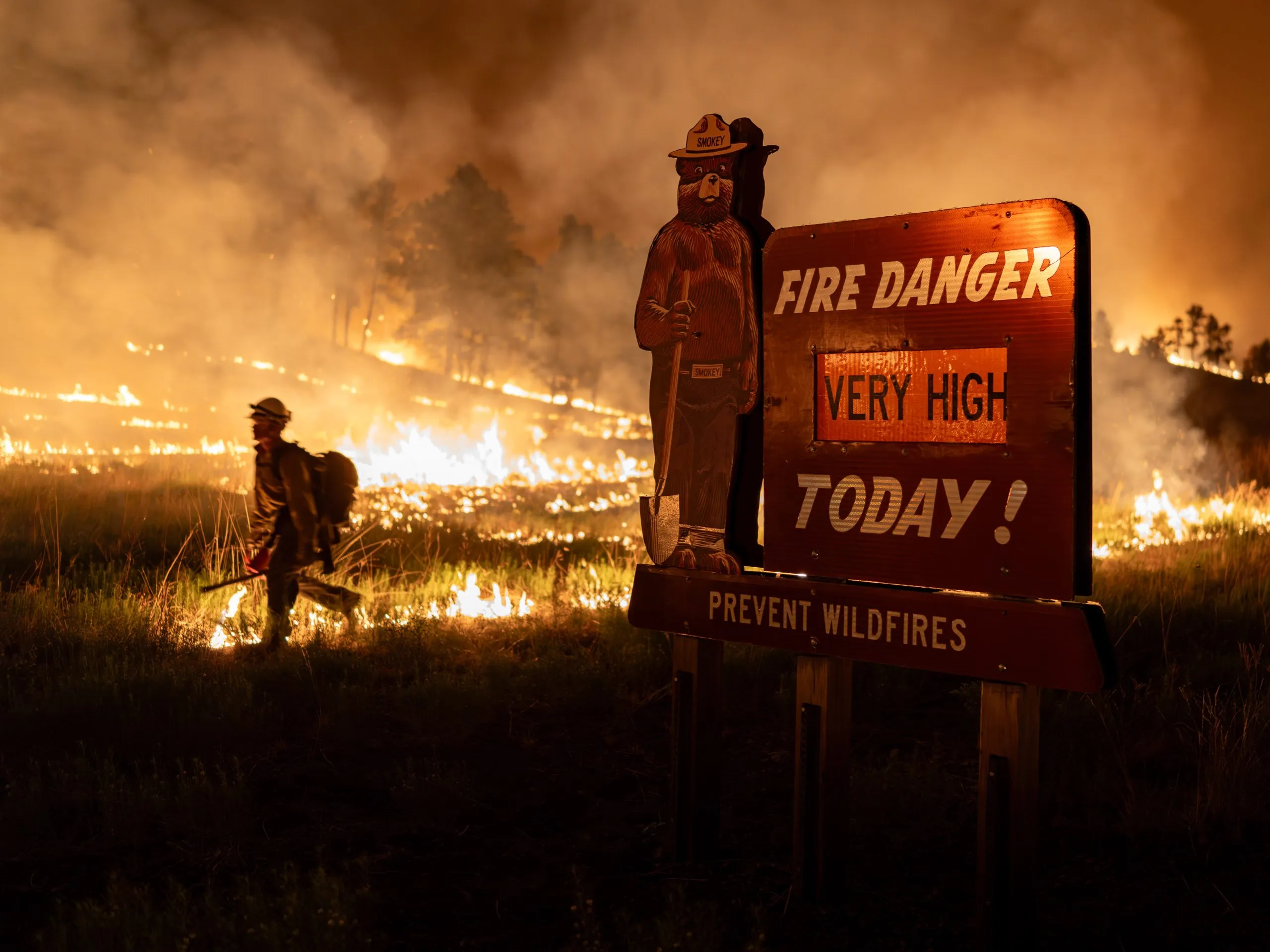
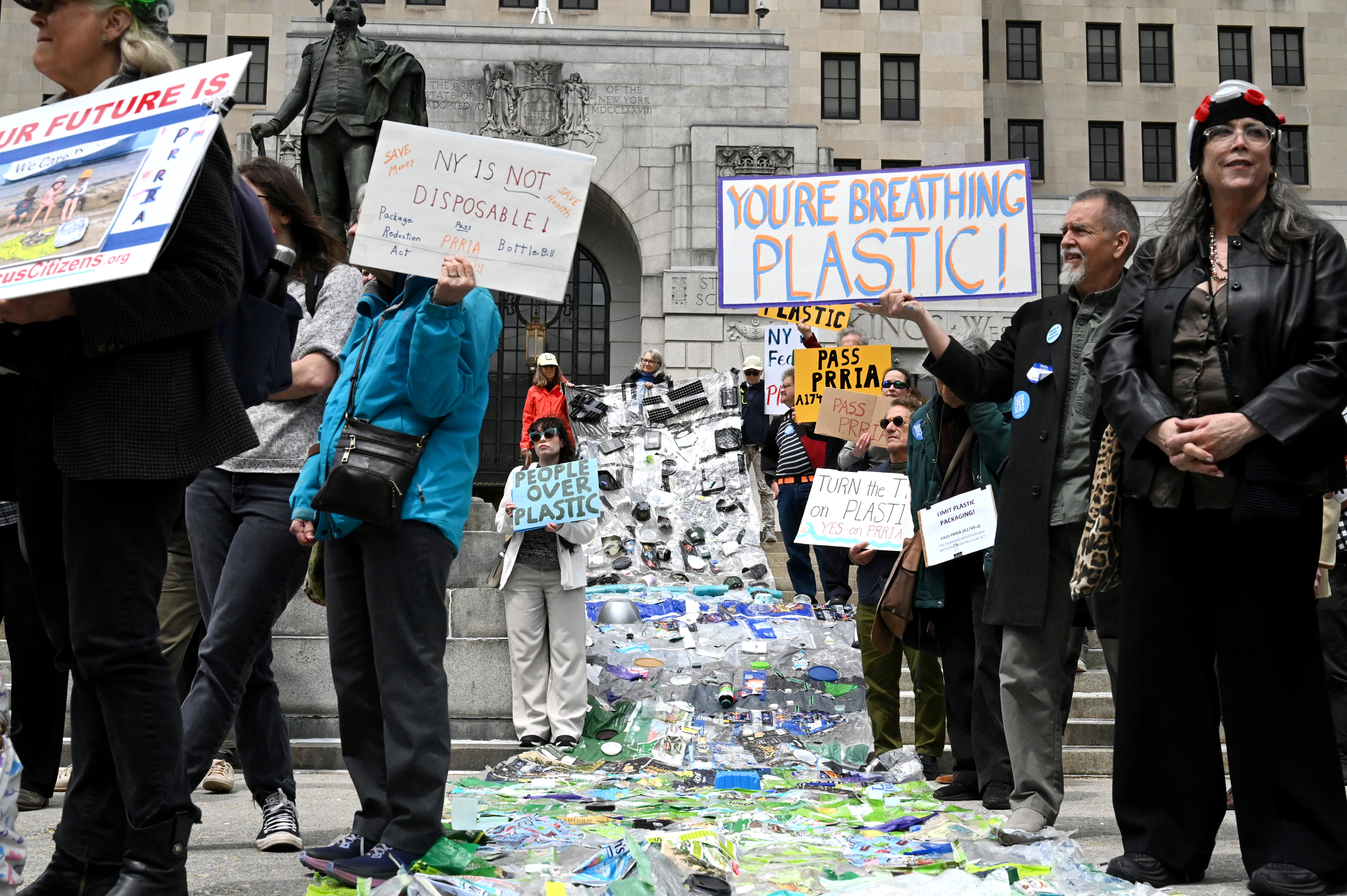
Belching smoke from a new plastic waste processing plant in central Ohio has stirred opposition to an even larger “chemical recycling” factory planned for Arizona by the same company.

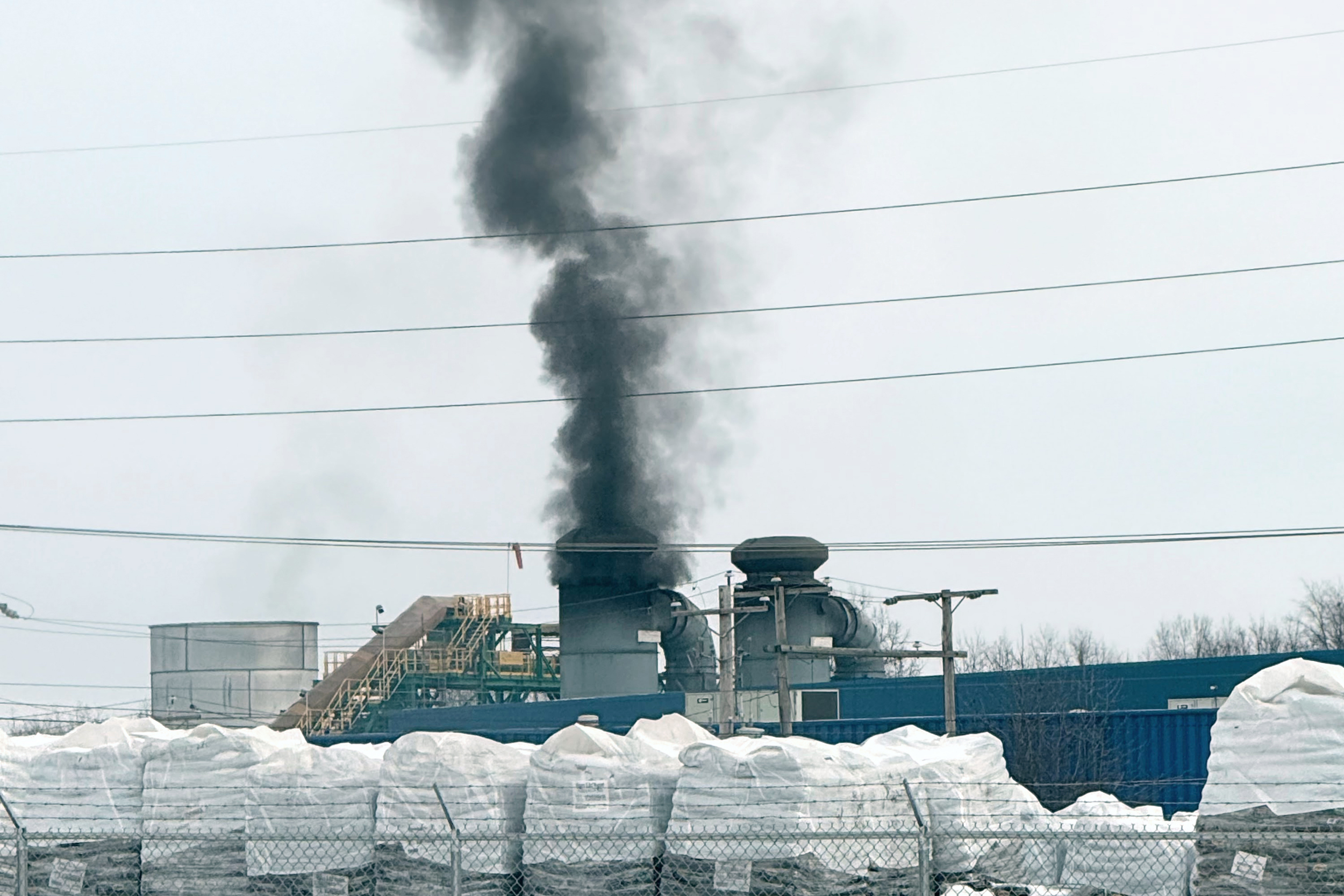
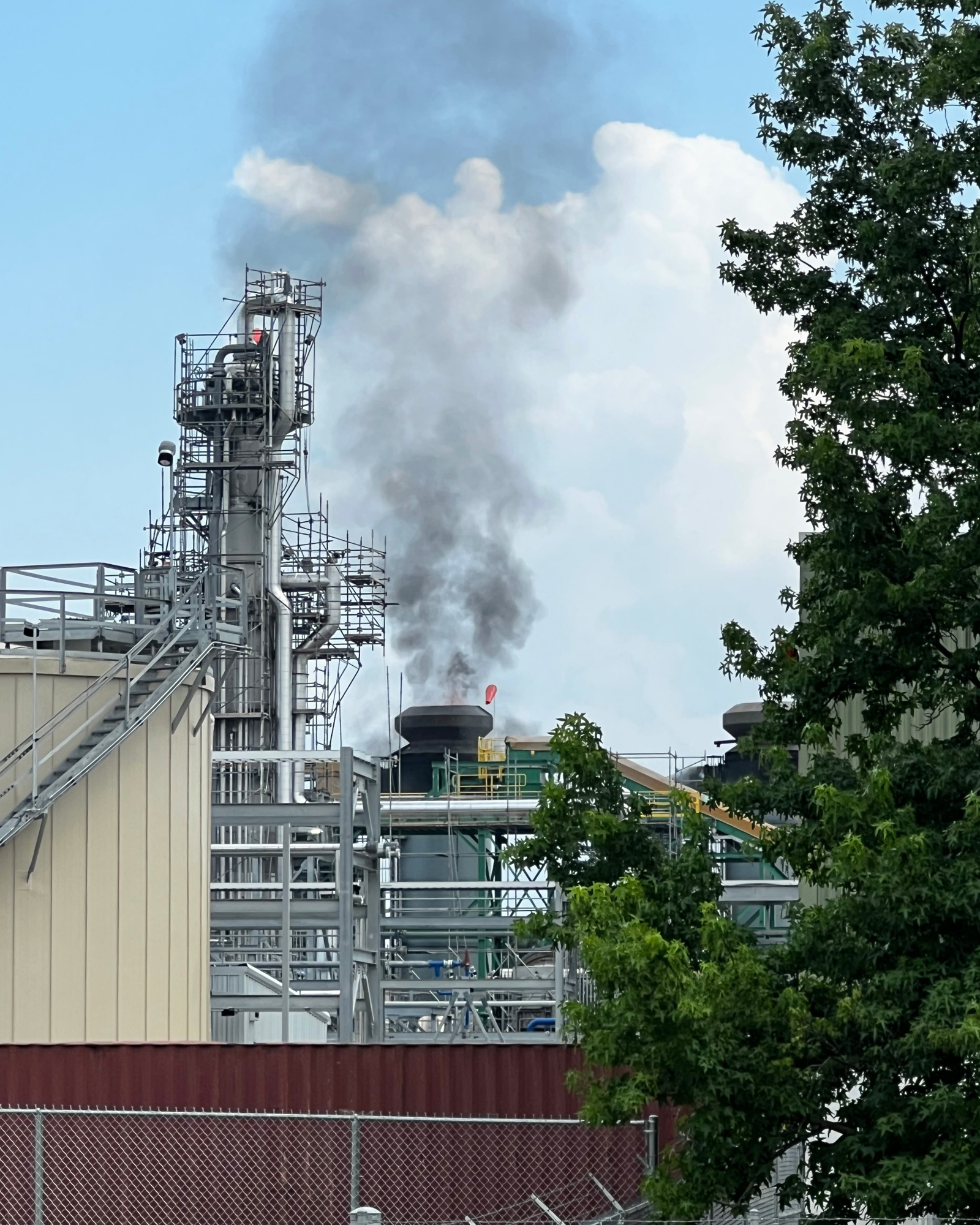
The Freepoint Eco-Systems plant near Hebron, Ohio, fired up its processing kilns for the first time in 2024. Since then, it’s faced multiple citizen complaints about sooty emissions, from black clouds of smoke to flames. Dozens of times, plant operators have bypassed normal pollution controls to vent gases through a flare after upsets in their manufacturing processes, including emergency shutdowns, according to the Ohio Environmental Protection Agency.

The state regulator has issued four notices of violation to the company, according to an agency database, and launched an enforcement case after the latest one in December.  

The Ohio plant’s troubled track record should be a red flag to officials who oversee permitting for the company’s plans for Eloy, Arizona, about 60 miles south of Phoenix on Interstate 10, said Kevin Greene, a pollution-prevention expert who lives in nearby Tucson and retired from the Illinois Environmental Protection Agency.

Another warning should be the industry’s “troubling” underperformance when attempting to use chemical processes to turn mixed plastic waste into fuels or new plastic feedstocks, said Greene. 

“How about a six-month pause on this project while they investigate what’s going on in Hebron and take another look at the industry in general?” Greene suggested in an interview with Inside Climate News.

At least one Eloy city councilmember, Josephine “JoAnne” Galindo, said she’s concerned enough to want to be part of a potential Eloy delegation to visit Ohio, tour the Freepoint plant there and meet with local government and company officials.

“I would want to know more,” Galindo said. “I’m always concerned about the safety of my community.”

Freepoint officials declined a request for an interview on either their Ohio plant’s environmental performance or their proposed Arizona facility. 

In a written statement, the company said it has “invited officials from Arizona to tour our Ohio facility to see the sophistication of our operations and the scale of the plastic waste we are working to process. We’re currently scheduling this visit.”

In Ohio, the company is working with environmental and occupational safety and health officials and the local fire department “to ensure compliance with health, safety and environmental requirements,” the statement said. Freepoint officials, the statement added, “have implemented a number of operational improvements.”

In February, at public meetings in Arizona, a Freepoint representative put a positive spin on the situation.

“You get the benefit of being the second mover,” Geof Storey, the company’s chief development officer, told the Pinal County Board of Supervisors. “We are only going to build this one if the first one works. You are going to get all [the] learnings and all the benefits of that [Ohio] project.”

To the Eloy City Council the same week, he added, “We are still working out some of the kinks.”

The Ohio plant, located about 30 miles east of Columbus near Interstate 70, is designed to process up to 175 million pounds of plastic waste annually. The waste is sourced from plastic packaging companies and community recycling programs throughout the region, including as far away as Louisville, Kentucky. 

Freepoint Eco-Systems, a subsidiary of global trading and finance firm Freepoint Commodities, envisions at least a half-dozen facilities in the United States, Storey told Arizona officials. The Eloy facility would collect waste plastic from as far away as California and Colorado, as well as from Phoenix and Tucson, he added. A company PowerPoint presentation said its capacity would be more than twice the Ohio plant’s.

That would make the Eloy plant one of the largest in the world, said Rita O’Connell, a national organizer with the environmental group Beyond Plastics. But O’Connell also noted that the company’s PowerPoint contains a disclaimer that “there can be no assurances that information relied upon in preparing this presentation will prove accurate or any of the projections will be realized.”

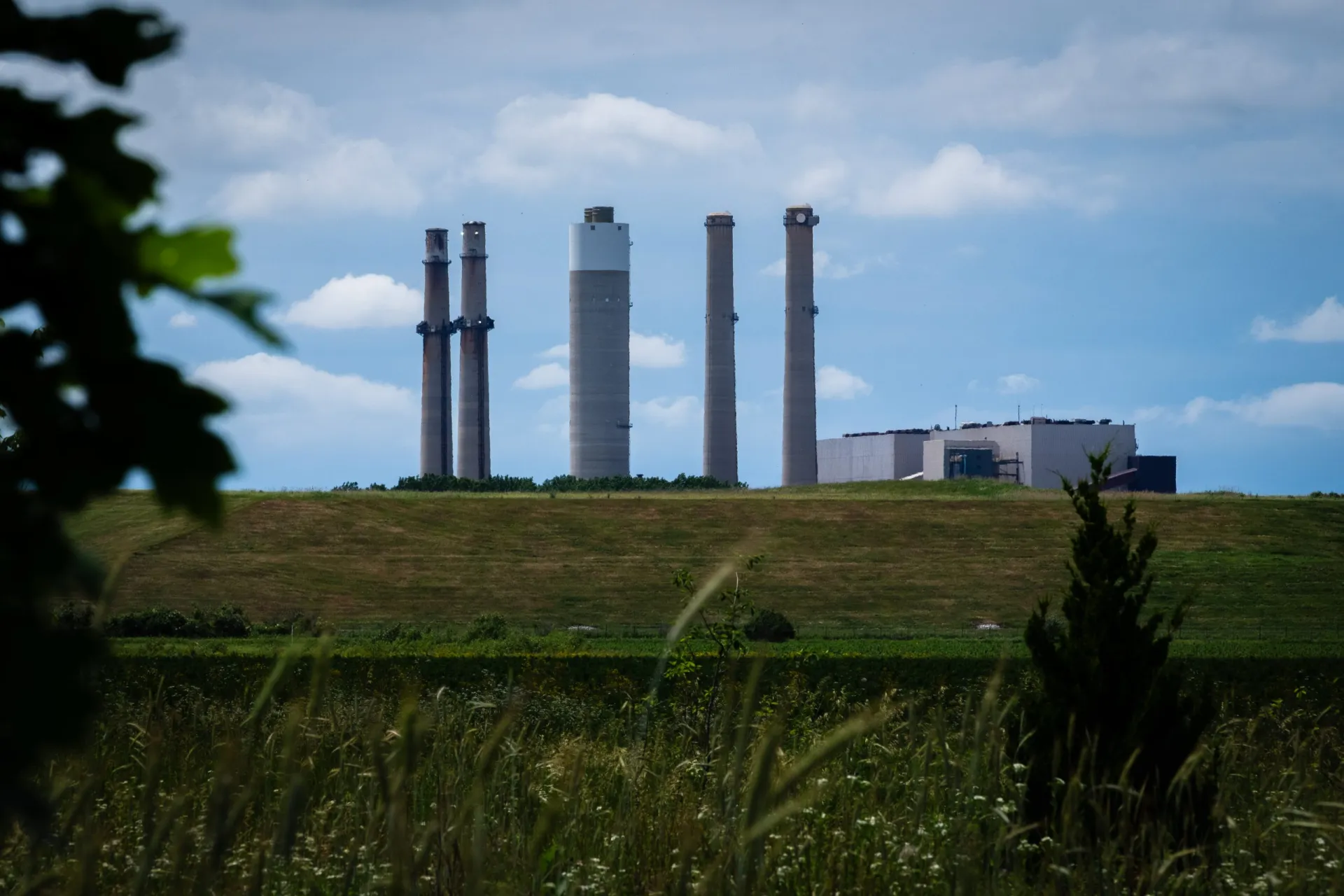
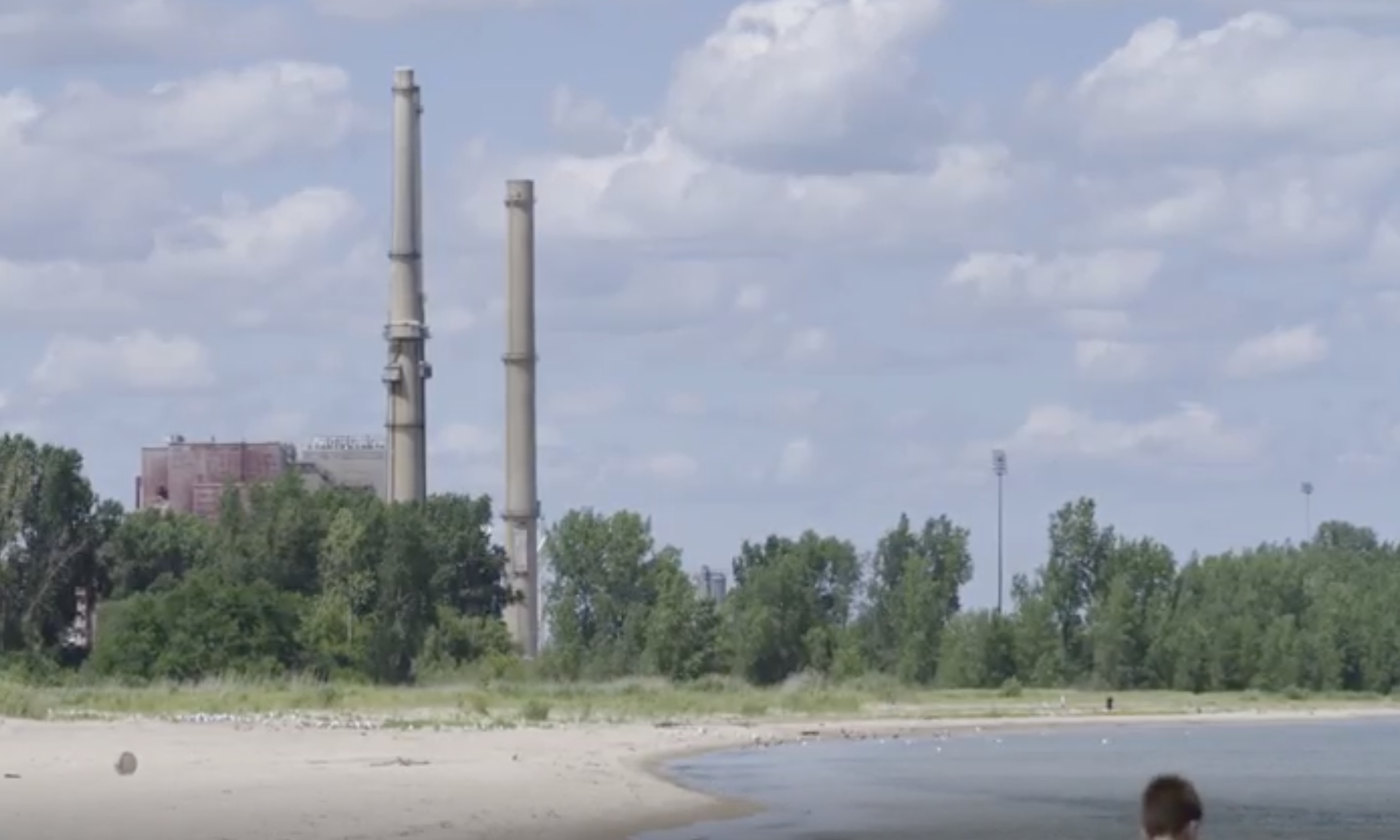
The Freepoint Eco-Systems Hebron chemical recycling plant is seen in July 2025. Photo: Courtesy of Shawn Jones via Inside Climate News

Deregulatory Agenda Boosts Chemical Recycling

Industry officials have advocated for chemical recycling of plastics for years—often under the umbrella term of “advanced recycling”—as a solution to the global plastic waste crisis. 

Typically, that’s done with a technology called pyrolysis, the process of decomposing materials at very high temperatures in an oxygen-free environment. Traditional uses range from making tar from timber for wooden ships to transforming coal into coke for steelmaking.

More recently, major oil companies and small startups alike have sought to develop the technology as an alternative for recycling a wide variety of plastic waste. So far, they’ve been met with limited success and serious pushback from environmental groups viewing it as akin to incineration.

But one of the biggest criticisms is the paucity of plastic waste that pyrolysis actually turns into new plastic. 

For example, a 2024 lawsuit by California Attorney General Rob Bonta—against ExxonMobil’s pyrolysis-based chemical recycling operation at its Baytown complex near Houston—claimed decades of recycling deception contributed to a plastics crisis in California and around the world. In the lawsuit, which is still pending, Bonta asserted that no more than 8 percent of the incoming plastic waste to ExxonMobil’s plant is converted to feedstocks for new plastic. 

The lawsuit claimed the remaining waste becomes fuel, which is subsequently burned. 

After the lawsuit was filed, ExxonMobil responded that “advanced recycling works. To date, we’ve processed more than 60 million pounds of plastic waste into usable raw materials, keeping it out of landfills.”

The United Nations estimates that the world produces roughly 882 billion pounds of plastic waste each year.

Freepoint, which also uses pyrolysis, declined to say how much of the waste plastic it takes in becomes new plastic.

Storey told Arizona officials its plants divert waste from landfills and offset in-the-ground oil demand. 

Company officials said 70 percent of incoming plastic waste is converted into something called pyrolysis oil, or pyoil, which is used as a feedstock to create new products. About 25 percent is converted into gas used to heat the kilns. The rest becomes something called char, what Storey described as “black carbon.”

Storey said the pyoil gets sent to petrochemical customers on the Gulf Coast. There, company officials said, it serves as a “substitute for crude oil to create new plastics and other products.”

“What products our customers manufacture and where they distribute them,” the company said, “is up to our customers.”

The chemical industry has already worked to ease regulations on advanced recycling in dozens of states, including Arizona and Ohio. And in March, after groups of chemical and plastics industry lobbyists visited the U.S. Environmental Protection Agency’s headquarters, the EPA took an initial step to exempt pyrolysis from federal Clean Air Act regulations.

Beyond Plastics’ O’Connell, who is based in New Mexico, said the chemical industry seems to have accelerated its push for chemical recycling as the Trump administration rolls back a wide range of environmental rules. At least three recycling and chemical regulation bills pending in Congress aim to boost chemical recycling of plastic waste, she said.

Fewer than 10 chemical recycling plants are operating in the United States, often in a limited capacity, said O’Connell, whose group follows the industry’s performance.

But Oil and Gas Watch, a petrochemical tracker created by the Environmental Integrity Project, identifies about 40 potential new chemical recycling facilities in the works. Some are proposed, some are in the permitting process and some are approved for construction.

“Given the national atmosphere, it’s possible we’re about to see the lights go on on a bunch of these proposals that haven’t moved in a while, because there seems to be a lot of energy in this direction,” O’Connell said. “It all points to a huge industry push to leverage this Congress and EPA to get chemical recycling rolling nationally.”

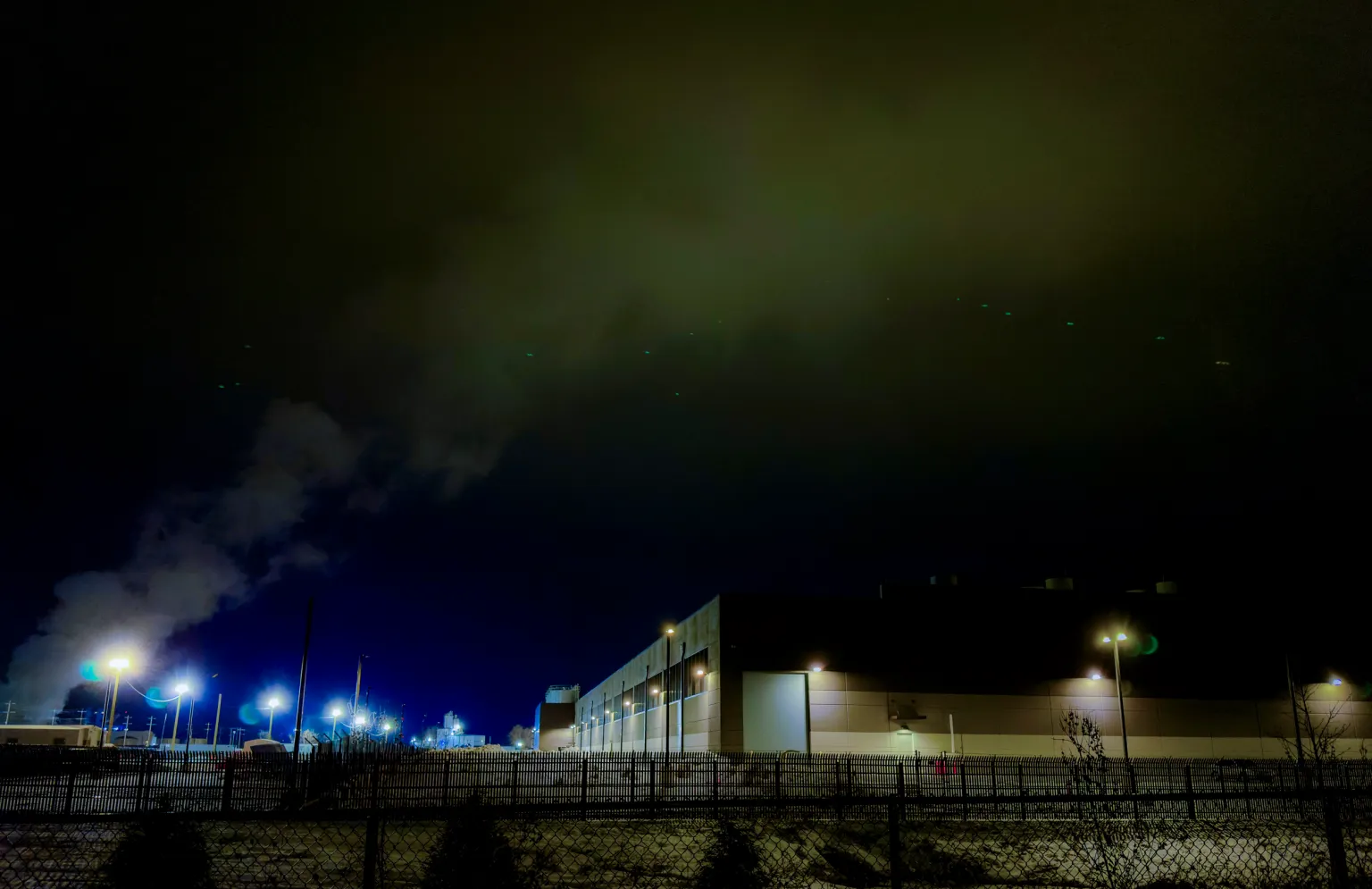
Children play in Hebron’s Evans Park with black smoke emitting from a nearby chemical recycling plant about a mile and a half away in July 2025. Photo: Courtesy of Shawn Jones via Inside Climate News

Ohio EPA Opens an Enforcement Case

It was a little more than a year ago when Amanda Rowoldt, an Ohio organizer with the environmental group Moms Clean Air Force, was driving by the Freepoint facility near Hebron and saw black smoke billowing out of the stacks. She took a video and filed a complaint with the Ohio EPA.

“Long story short, they were found in violation of exceeding their particulate limits,” Rowoldt.

Numerous pollution incidents followed. A local nonprofit newsroom covering Licking County, The Reporting Project, affiliated with Denison University’s journalism program, took notice.

Denison is a small private liberal arts college located about 10 miles away in Granville. Doug Swift, who teaches at Denison and is an advisor of The Reporting Project, said a plastics recycling theme in an investigative reporting track resulted in a series of articles. 

One of the stories, published Feb. 26, revealed the citizen complaints, the state’s violation notices and a 911 call last May from a resident a quarter-mile away reporting “a factory on fire.”

“It was a great series to push out into the community, and it did alert some of our most engaged and knowledgeable citizens to the plant and to a technology most didn’t know anything about,” Swift said. He described the Hebron area as something of a local news desert, often ignored by commercial news outlets in the region.

Hebron Mayor Valerie Mockus said her municipality has no jurisdiction over the plant because it’s located just outside city limits, in an industrial park in Union Township. Still, she said she’s been concerned about environmental incidents there, though she is working to keep an open mind.

“I am very interested in finding ways to address problems with novel solutions,” Mockus said. “We have a problem with too much plastic. Is this a way to address that? But I was disappointed to hear about the negative side effects.”

She described her community as working class, its residents familiar with plumes of evaporated vapor coming from industrial stacks. “When it comes out black,” she added, “everybody pauses.”

According to the company’s air-quality permit from the Ohio EPA, the plant is allowed to emit certain levels of toxic fine particles, volatile organic compounds, nitrogen oxides, hydrochloric acid, and dioxins—pollutants that collectively can damage lungs, cause cancer and create havoc with other bodily systems.

Ohio EPA’s most recent notice in mid-December alleges air-permit violations including excess emissions of particulates, a toxic mix that can include soot, smoke and a variety of chemicals. Since then, the agency has opened an enforcement case against the company, said Max Moore, a spokesman for the Ohio EPA.

The state agency required the company to conduct emissions testing to get a clearer picture of what’s being released into the air, Moore said. Visible particulate emissions exceeded an opacity limit 18 times from Feb. 1 through March 31, he said. Nitrogen oxides from a test in February also exceeded a permit limit, he added.

On April 3, an Ohio EPA official chastised Freepoint for repeatedly failing to quickly notify the agency of plant malfunctions, according to an email that Inside Climate News obtained through a public-records request.

“This issue has been beaten to death at this point, but we still are not receiving immediate notifications of malfunctions,” the state official wrote, citing an example of a late afternoon March 30 notice to regulators of an early morning March 27 malfunction. 

“If it helps, think of it like calling the fire department when there’s a fire,” the official told the company representatives. “That’s immediate. You wouldn’t wait eight hours or until the next day.”

A company representative said that afterward, “we promptly changed our reporting process to ensure it’s in line with their requirements.”

The Ohio EPA’s Moore said the goal “is to get the facility back into compliance.”

Pollution and Fire Videos

Cat Adams, a Columbus-based organizer with the Buckeye Environmental Network, said several workers have sought her out to describe unsafe working conditions, including dust, chemical spills and fire hazards. She hears from area residents about the plant, too.

“There’s a group of people in the community who are worried about it, and they want something done,” Adams said.

Shawn Jones is one of them. He was an eyewitness to the May 27 fire and took a video of it. In subsequent months, he’s kept a close eye, documenting other incidents of billowing smoke. “I’ve probably seen that 15 times,” Jones said, adding that he’s concerned about the health and safety of both people in the community and workers inside the plant.

He said he’s not sure what, if anything, Ohio EPA officials will do to force the company to comply with environmental regulations.

“I’d like them to shut the whole place down,” Jones said. “It’s such a new process. They clearly don’t have it figured out yet.”

He said it feels like Freepoint is “doing sandbox experiments in the backyards of thousands of people. They can, because of the lack of zoning here.”

In Arizona, Greene, the former Illinois environmental official, said he and an Eloy resident, Ralph Atchue, are asking Pinal County air quality officials to strengthen a permit they issued the company three years ago. The reason they’re citing: the company’s pollution record in Ohio. 

Greene also suggests that the city of Eloy should ask for fenceline air-quality monitoring to give the community real-time data on any leaks and equipment failures.

Noting that the company has essentially described its Ohio plant as a test case, Greene added: “I’d like to know what’s going to be redesigned [for Eloy], or what’s going to be improved. But I also want to make sure there will be the appropriate safeguards in place to ensure that it doesn’t happen in Eloy—and that it doesn’t recur in Hebron.”


The post Ohio Plastic Waste Plant to Expand Nationally appeared first on Great Lakes Now.

Original Article

Great Lakes Now

Great Lakes Now

https://www.greatlakesnow.org/2026/04/24/ohio-plastic-waste-plant-to-expand-nationally/

Inside Climate News

This article was republished here with permission from Great Lakes Echo.

By Sonja Krohn, Great Lakes EchoGray wolf. Credit: Department of Natural Resources


Even though the grey wolf is classified as an endangered species, a new study found that the majority of Michigan’s recorded wolf deaths are caused by humans.

Researchers from Michigan State University and their collaborators used GPS collar and mortality data from 608 wolves in Minnesota, Wisconsin and Michigan between 2010 and 2023 to assess their specific cause of death.

The study found that humans caused 65% of them.

In addition to categories like vehicle collisions (10%) and legal kills (14%), illegal kills represented 38% of cases, making it the leading cause of wolf deaths.

Apart from legal kills, which included depredation control and legal hunting, illegal kills included confirmed and suspected poaching through poisoning, shootings and accidental trapping.

“Despite changes in legislation and public attitudes towards large predators, human-caused mortality continues to impact survival and conservation of carnivore species,” the study said.

According to the Michigan Department of Natural Resources, wolves are native to the state, and research suggests that they were once present in all of its counties.

“Wolves were first added to the federal endangered species list in 1974 after being [wiped out] from the Lower Peninsula by the 1930s and nearly disappearing from the Upper Peninsula by 1960,” the department says on its website.

But since then, there has been a back-and-forth approach. Federal protections for wolves were lifted and reinstated on several occasions through political action and court rulings.

Most recently, a 2022 federal court ruling reinstated gray wolves onto the federal list of threatened and endangered species in the contiguous 48 states.

Based on that classification, “they can only be killed if they are a direct and immediate threat to human life,” the department says.

According to the recent study in the journal Global Ecology and Conservation, illegal kills as a leading cause of death have “the potential to influence population dynamics, affecting population growth and recolonization potential.”

Rolf Peterson, a research professor at Michigan Technological University, said the results are consistent with smaller-scale studies. 

Deer are the primary food source of wolves, and illegal kills – especially during deer-hunting season – dominate the population dynamics of wolves in the upper Midwest, he said.

“Yet wolf populations have persisted in what I would characterize as an uneasy peace,” Peterson said, adding that the coexistence of wolves and people in the U.P. – where wolves live – has required adjustments for both species.

At this point, Brian Roell, a DNR wildlife biologist, said illegal takes don’t appear to be harming Michigan’s population, as wolves can survive fairly high death rates.

“The important thing to point back to is that our population has been stable – it’s not decreasing,” he said.

According to Roell, Michigan’s wolf population has been stable since 2011. The department’s last population estimate in 2024 counted 768 wolves. In Michigan, they “have saturated their suitable habitat,” he said.

While the DNR is currently wrapping up a 2026 population estimate, he said, “I fully expect we’re going to be statistically stable again” based on preliminary data.


The post Michigan’s main cause of wolf mortality? People appeared first on Great Lakes Now.

Original Article

Great Lakes Now

Great Lakes Now

https://www.greatlakesnow.org/2026/04/24/michigans-main-cause-of-wolf-mortality-people/

Great Lakes Echo

By Kelly House, Bridge Michigan

The Great Lakes News Collaborative includes Bridge Michigan; Circle of Blue; Great Lakes Now at Detroit PBS; Michigan Public, Michigan’s NPR News Leader; and The Narwhal who work together to bring audiences news and information about the impact of climate change, pollution, and aging infrastructure on the Great Lakes and drinking water. This independent journalism is supported by the Charles Stewart Mott Foundation. Find all the work HERE.


The US Supreme Court has unanimously sided with Michigan Attorney General Dana Nessel in a dispute over which court — state or federal — should oversee Nessel’s lawsuit to shut down the Line 5 pipeline.

The court’s nine justices ruled that Enbridge cannot move the state court case Nessel filed seven years ago to federal court, because the company missed a 30-day deadline to do so.

Jurisdiction matters because federal courts are considered more likely to sympathize with Enbridge’s argument that the pipeline should stay open, while state courts are more likely to sympathize with Nessel’s argument that it should close.

The ruling is the latest development in a yearslong dispute over the fate of the 72-year-old oil pipeline owned by Canadian oil giant Enbridge Energy, which crosses through the open water of the Straits of Mackinac as it transports petroleum products from Wisconsin to Ontario.

The aging pipeline has sustained damage multiple times in recent years, sparking fears that it could rupture and cause an oil spill in the Great Lakes.

Citing those fears, Nessel in 2019 filed a lawsuit in the 30th Circuit Court in Ingham County seeking to shut down the pipeline’s lakebottom segment. But two years into deliberations, Enbridge attempted to move the case into federal court — missing a 30-day statutory deadline to do so.

In a dispute that made its way to the nation’s highest court, the company argued it qualified for an exception to the deadline, while state lawyers accused the company of seeking “an atextual escape hatch.” 

In an opinion authored by Justice Sonia Sotomayor, the justices concluded that Congress authorized limited exceptions to the 30-day deadline, none of which apply to the circumstances of this case.

“Enbridge’s counterarguments are not persuasive,” Sotomayor wrote.

The procedural ruling doesn’t settle the question of the pipeline’s fate. But it remands the case back to Ingham County, where deliberations are paused pending the outcome of a separate case.

In a statement, Nessel said the ruling “makes emphatically clear” that the case belongs in state court.

“For far too long, following years of Enbridge’s delay tactics, the fear of a catastrophic spill from Line 5 has haunted our state, threatening to turn our most vital natural resource into a man-made disaster,” Nessel said.

Enbridge spokesperson Ryan Duffy expressed confidence that the company will prevail in arguing that the line should remain open. 

“The fact remains that the safety of Line 5 is regulated exclusively by the Pipeline and Hazardous Materials Safety Administration,” Duffy wrote. That agency is part of the US Department of Transportation.

In a ruling tied to a separate shutdown dispute between Gov. Gretchen Whitmer and Enbridge, US District Court Judge Robert Jonker ruled in December that federal pipeline safety laws preempt state laws, leaving Michigan with no “power to interfere” in Line 5 operations. The state is appealing the decision and Nessel’s state court case is paused pending the outcome of that appeal.

Prolonged battle

For years, fans and foes of the pipeline have been battling in Michigan and Wisconsin over fears that the pipeline could cause a catastrophic oil spill. Enbridge also owns the line 6B pipeline, which spilled into the Kalamazoo River causing among the worst inland oil spills in US history. Line 5 has been repeatedly struck by ships’ anchors, further heightening pipeline safety concerns.

In 2018, Enbridge pitched a plan to move the Straits section of the pipeline into a concrete-lined tunnel deep beneath the lakebed to alleviate spill concerns. But that plan, too, has been controversial, with some contending the best solution is to remove the pipeline entirely.

It’s a debate that revolves not only around spill risks, but concerns about land disturbances from tunnel construction, infringement on Native American treaty rights in the Straits and the climate implications of building infrastructure that would lock in decades of additional fossil fuel use.

The US Army Corps of Engineers and the Michigan Department of Environment, Great Lakes and Energy are both preparing to issue key permitting decisions tied to the tunnel plan. 

Meanwhile, the Michigan Supreme Court is deliberating over a lawsuit challenging a separate tunnel permit the state already granted.


The post Supreme Court sides with Nessel in Line 5 jurisdiction dispute appeared first on Great Lakes Now.

Original Article

Great Lakes Now

Great Lakes Now

https://www.greatlakesnow.org/2026/04/24/supreme-court-sides-with-nessel-in-line-5-jurisdiction-dispute/

Bridge Michigan

By Kelly House, Bridge Michigan

The Great Lakes News Collaborative includes Bridge Michigan; Circle of Blue; Great Lakes Now at Detroit PBS; Michigan Public, Michigan’s NPR News Leader; and The Narwhal who work together to bring audiences news and information about the impact of climate change, pollution, and aging infrastructure on the Great Lakes and drinking water. This independent journalism is supported by the Charles Stewart Mott Foundation. Find all the work HERE.


The US Supreme Court has unanimously sided with Michigan Attorney General Dana Nessel in a dispute over which court — state or federal — should oversee Nessel’s lawsuit to shut down the Line 5 pipeline.

The court’s nine justices ruled that Enbridge cannot move the state court case Nessel filed seven years ago to federal court, because the company missed a 30-day deadline to do so.

Jurisdiction matters because federal courts are considered more likely to sympathize with Enbridge’s argument that the pipeline should stay open, while state courts are more likely to sympathize with Nessel’s argument that it should close.

The ruling is the latest development in a yearslong dispute over the fate of the 72-year-old oil pipeline owned by Canadian oil giant Enbridge Energy, which crosses through the open water of the Straits of Mackinac as it transports petroleum products from Wisconsin to Ontario.

The aging pipeline has sustained damage multiple times in recent years, sparking fears that it could rupture and cause an oil spill in the Great Lakes.

Citing those fears, Nessel in 2019 filed a lawsuit in the 30th Circuit Court in Ingham County seeking to shut down the pipeline’s lakebottom segment. But two years into deliberations, Enbridge attempted to move the case into federal court — missing a 30-day statutory deadline to do so.

In a dispute that made its way to the nation’s highest court, the company argued it qualified for an exception to the deadline, while state lawyers accused the company of seeking “an atextual escape hatch.” 

In an opinion authored by Justice Sonia Sotomayor, the justices concluded that Congress authorized limited exceptions to the 30-day deadline, none of which apply to the circumstances of this case.

“Enbridge’s counterarguments are not persuasive,” Sotomayor wrote.

The procedural ruling doesn’t settle the question of the pipeline’s fate. But it remands the case back to Ingham County, where deliberations are paused pending the outcome of a separate case.

In a statement, Nessel said the ruling “makes emphatically clear” that the case belongs in state court.

“For far too long, following years of Enbridge’s delay tactics, the fear of a catastrophic spill from Line 5 has haunted our state, threatening to turn our most vital natural resource into a man-made disaster,” Nessel said.

Enbridge spokesperson Ryan Duffy expressed confidence that the company will prevail in arguing that the line should remain open. 

“The fact remains that the safety of Line 5 is regulated exclusively by the Pipeline and Hazardous Materials Safety Administration,” Duffy wrote. That agency is part of the US Department of Transportation.

In a ruling tied to a separate shutdown dispute between Gov. Gretchen Whitmer and Enbridge, US District Court Judge Robert Jonker ruled in December that federal pipeline safety laws preempt state laws, leaving Michigan with no “power to interfere” in Line 5 operations. The state is appealing the decision and Nessel’s state court case is paused pending the outcome of that appeal.

Prolonged battle

For years, fans and foes of the pipeline have been battling in Michigan and Wisconsin over fears that the pipeline could cause a catastrophic oil spill. Enbridge also owns the line 6B pipeline, which spilled into the Kalamazoo River causing among the worst inland oil spills in US history. Line 5 has been repeatedly struck by ships’ anchors, further heightening pipeline safety concerns.

In 2018, Enbridge pitched a plan to move the Straits section of the pipeline into a concrete-lined tunnel deep beneath the lakebed to alleviate spill concerns. But that plan, too, has been controversial, with some contending the best solution is to remove the pipeline entirely.

It’s a debate that revolves not only around spill risks, but concerns about land disturbances from tunnel construction, infringement on Native American treaty rights in the Straits and the climate implications of building infrastructure that would lock in decades of additional fossil fuel use.

The US Army Corps of Engineers and the Michigan Department of Environment, Great Lakes and Energy are both preparing to issue key permitting decisions tied to the tunnel plan. 

Meanwhile, the Michigan Supreme Court is deliberating over a lawsuit challenging a separate tunnel permit the state already granted.


The post Supreme Court sides with Nessel in Line 5 jurisdiction dispute appeared first on Great Lakes Now.

Original Article

Great Lakes Now

Great Lakes Now

https://www.greatlakesnow.org/2026/04/24/supreme-court-sides-with-nessel-in-line-5-jurisdiction-dispute/

Bridge Michigan

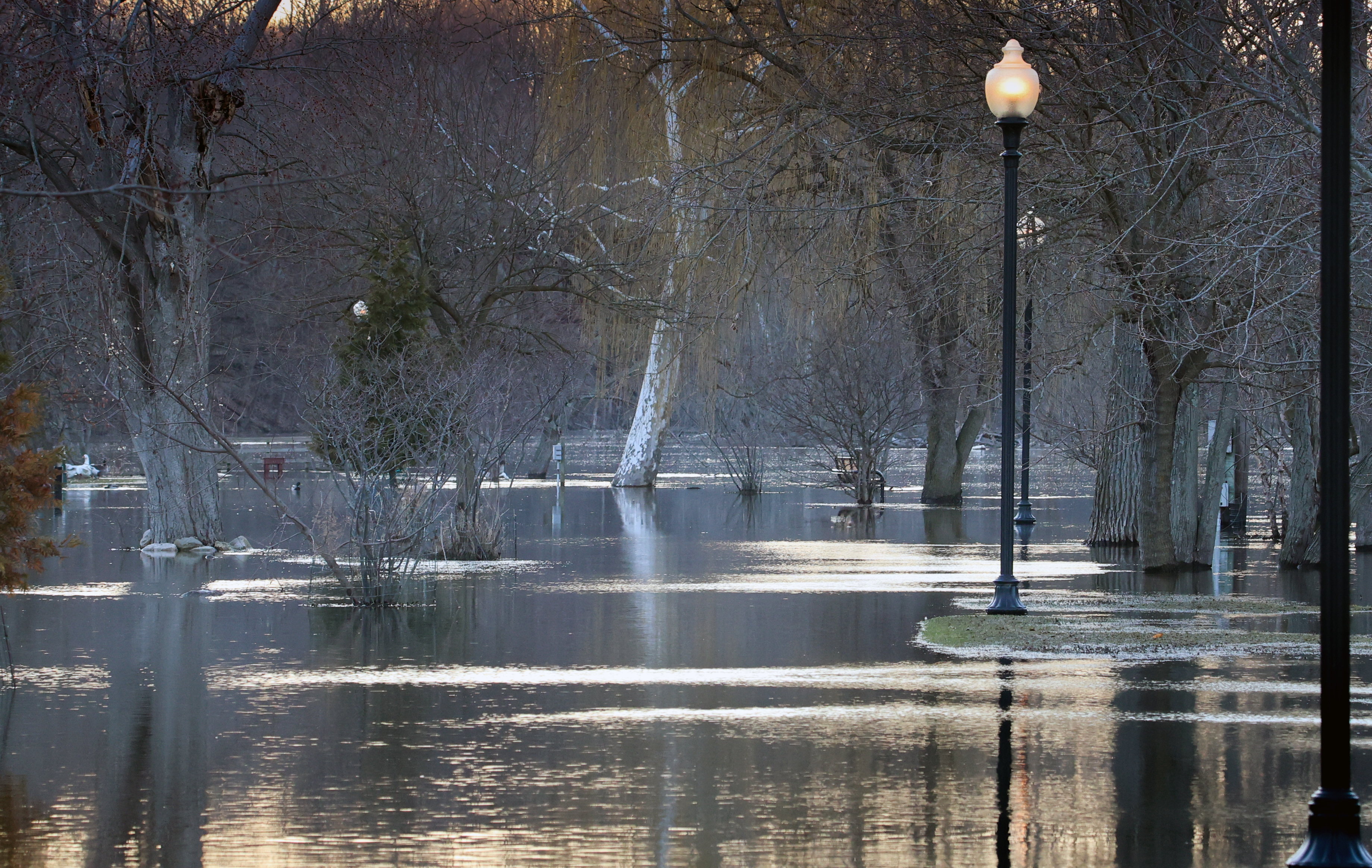
The river flooded the sidewalk and trees on Island Park - Grand Ledge, Michigan, march 2026

Richard B. (Ricky) Rood, University of Michigan

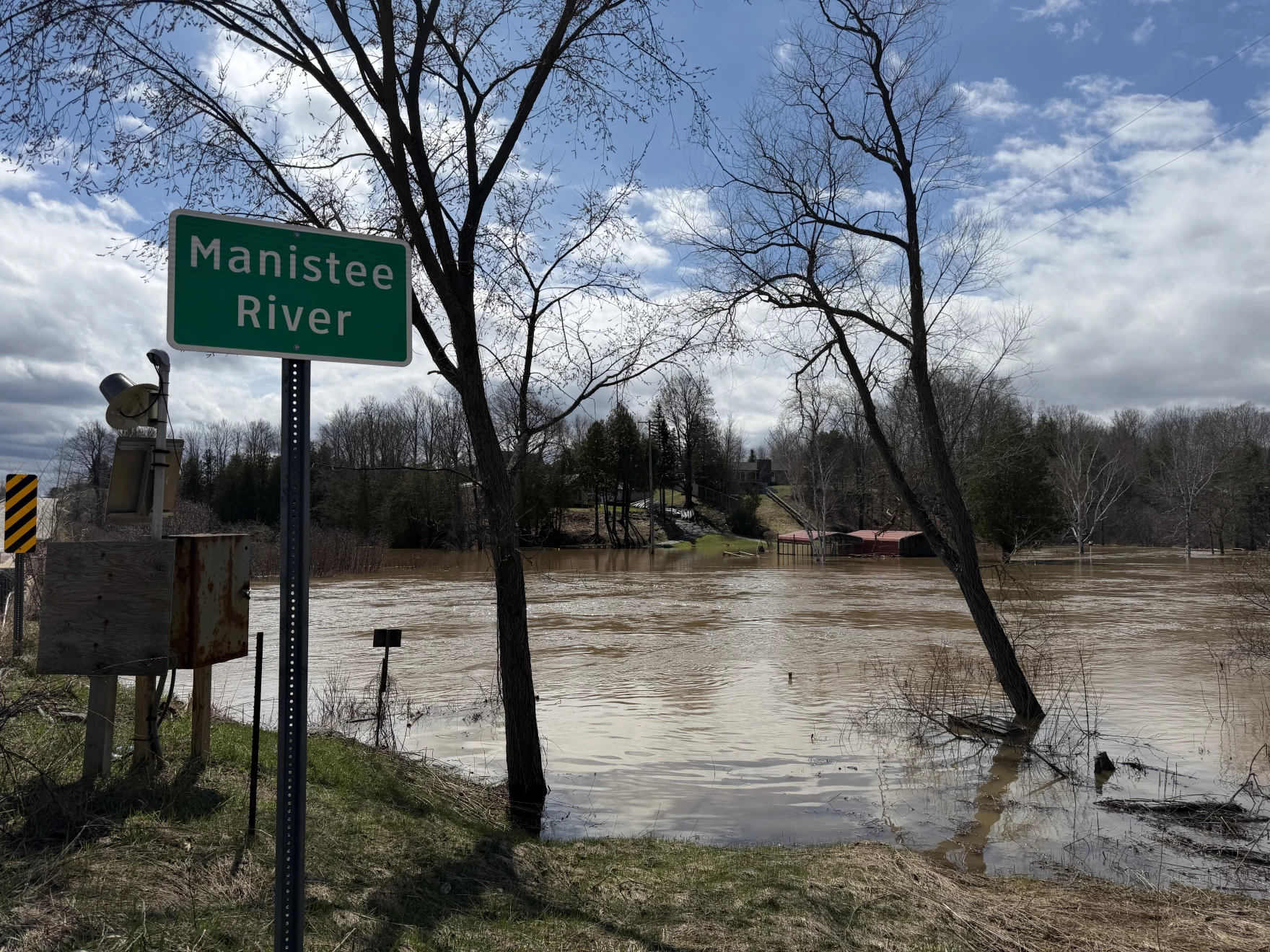
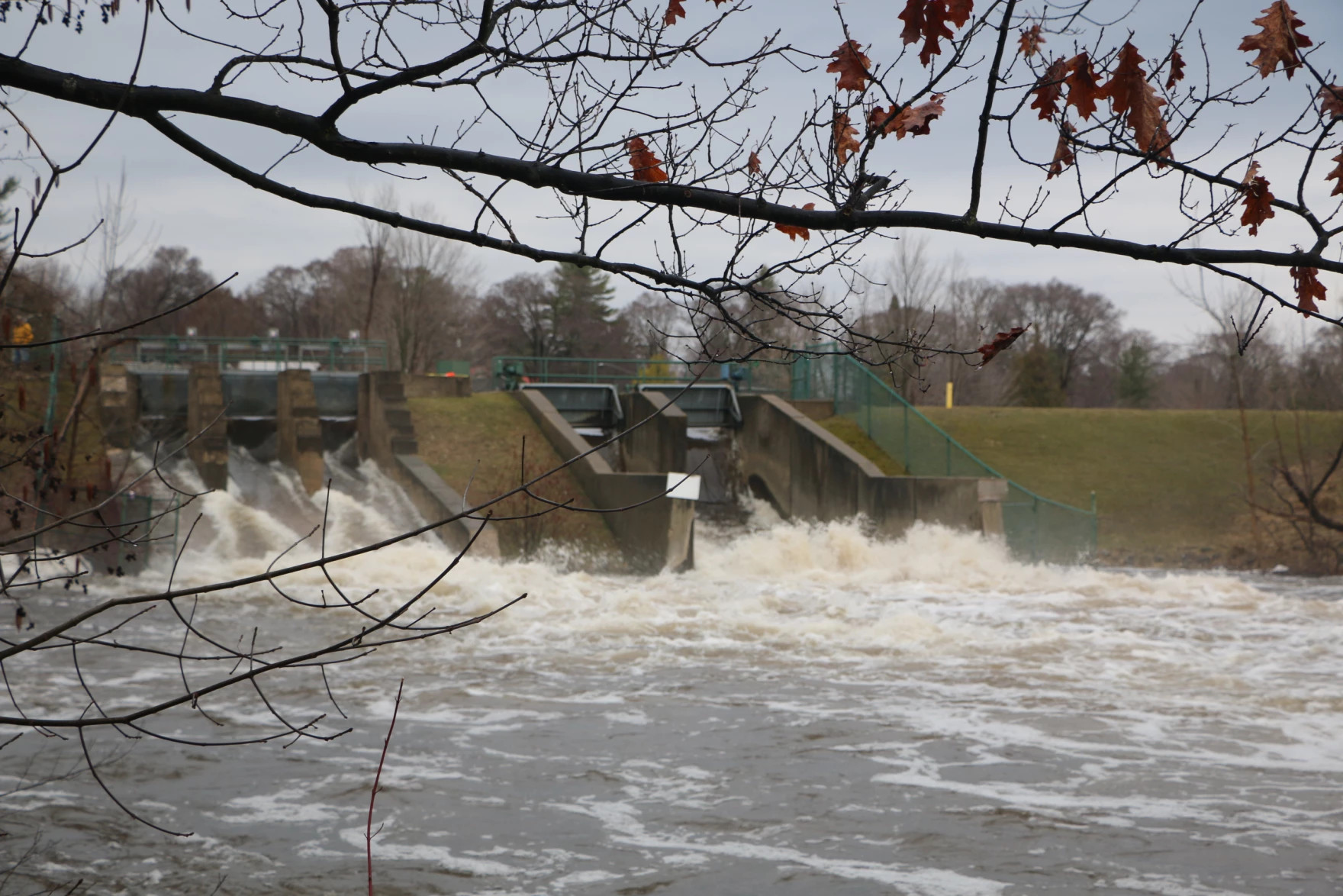
Michigan and parts of Wisconsin are in the midst of a historic flooding event in spring 2026. Days of heavy rainfall on top of snow have sent lakes and rivers over their banks and threatened several dams in both states, forcing people to evacuate homes downstream. By April 20, 2026, nearly half of Michigan’s counties were under a state of emergency. In Cheboygan, Michigan, large pumps were brought in to lower pressure on a century-old dam in the city.

The region’s aging water infrastructure was never designed for the volume of water it is facing. That’s a troubling sign for the future, with flooding becoming more common as global temperatures rise.

In many areas, the damage has been exacerbated by a culture of building homes and cabins on the shores of inland lakes and along riverine lakes behind small, often privately owned dams. Many of these dams were built over 100 years ago, with some long forgotten.

I am a professor emeritus of meteorology at the University of Michigan whose work focuses on helping communities adapt to climate change. The warming climate is worsening the flood risk, and disasters like the one Michigan is experiencing are setting higher benchmarks for safety as communities plan future infrastructure.

Where is all the water coming from?

For much of Michigan and Wisconsin, as well as northern Illinois, 2026 has been the wettest March and April on record.

In March, much of that precipitation fell as snow, including in an enormous blizzard that brought 3 feet of snow to parts of Michigan. In mid-April, persistent rains began. The rain, on top of all that snow, sent floodwaters running into rivers, streets and homes. The water carries large amounts of ice that damages shores, infrastructure and homes.

The moisture for much of these storms has been funneled northward from the warm Gulf of Mexico, thanks in part to a high pressure system sitting over the southeastern U.S.

The problem of warming winters

The kind of flooding Michigan and Wisconsin are experiencing in 2026 is what forecasters expect to see more of as global temperatures rise.

Winters have been warming faster than other seasons across the U.S. In Michigan and Wisconsin, winter months used to be reliably below freezing, but that’s changing. In the Cheboygan area, near the tip of Lower Michigan, March temperatures used to be below freezing on all but a few days. By the 1991-2020 period, the region averaged 10 days above or close to the freezing point – about twice as many as the 1951-1980 period.

The air coming in from the south is also warmer than in the past. Nationally, 2026 was the warmest March on record in 132 years of record-keeping in the contiguous U.S., with an average temperature more than 9 degrees Fahrenheit (5 degrees Celsius) higher than the 30-year average. So, in addition to snowmelt starting earlier, melting is happening faster.

Michigan’s average wintertime temperature rose by more than 4 F (2.3 C) from 1951 to 2023. Though winter 2026 in Michigan was colder than the 1991-2020 average, the Gulf of Mexico, where the moisture originated, was warmer than average, accelerating the snowmelt.

How warming leads to downpours and flooding

A few aspects of a warming climate can lead to flooding.

First, temperatures are increasing. In higher temperatures, moisture evaporates faster from the ground, plants and surface water. That moisture, once in the atmosphere, eventually falls again as precipitation. However, for each degree Celsius that temperatures increase, the atmosphere can hold about 7% more moisture, resulting in more heavy downpours.

A warmer winter also means more melting snow and more rain-on-snow events that can quickly increase the amount of runoff into rivers.

The Great Lakes region and much of the Northeast already experience more precipitation than in the past. Winters with more persistent wetness – not just snow but also rain – prime the region for floods. With continued warming in the coming decades, 2026 might be among the least disruptive in the future.

Data shows that a scenario of persistent wetness, changes in winter and seasonal runoff is part of the future for Michigan and the other states and Canadian provinces along the Great Lakes Basin, as well as New England.

Fixing dams for the future

All of this means communities across the region will have to pay closer attention to the growing risks facing their vital infrastructure – particularly dams.

Even prior to the 2026 floods, Michigan had a well-documented problem with its aging inventory of 2,600 dams. In May 2020, an intense storm system that stalled over the region brought so much rain that the Edenville and Sanford dams both failed near Midland, Michigan, forcing 10,000 people to evacuate and causing an estimated US$200 million in damage.

After that disaster, a state task force issued recommendations for fixing the state’s water control infrastructure to meet the growing risks. But a member of the task force told The Detroit News in April 2026 that little had been done to address those recommendations.

Michigan and parts of Wisconsin are in the midst of a historic flooding event in spring 2026. Days of heavy rainfall on top of snow have sent lakes and rivers over their banks and threatened several dams in both states, forcing people to evacuate homes downstream. By April 20, 2026, nearly half of Michigan’s counties were under a state of emergency. In Cheboygan, Michigan, large pumps were brought in to lower pressure on a century-old dam in the city.

The region’s aging water infrastructure was never designed for the volume of water it is facing. That’s a troubling sign for the future, with flooding becoming more common as global temperatures rise.

In many areas, the damage has been exacerbated by a culture of building homes and cabins on the shores of inland lakes and along riverine lakes behind small, often privately owned dams. Many of these dams were built over 100 years ago, with some long forgotten.

https://www.youtube.com/embed/ik4S2Kgn9ak?wmode=transparent&start=0 Michigan State Police captured scenes of stressed dams and flooding across Cheboygan County, near the tip of the Lower Peninsula, including the century-old dam in the city of Cheboygan that was nearly overwhelmed by flood water.

I am a professor emeritus of meteorology at the University of Michigan whose work focuses on helping communities adapt to climate change. The warming climate is worsening the flood risk, and disasters like the one Michigan is experiencing are setting higher benchmarks for safety as communities plan future infrastructure.

Where is all the water coming from?

For much of Michigan and Wisconsin, as well as northern Illinois, 2026 has been the wettest March and April on record.

In March, much of that precipitation fell as snow, including in an enormous blizzard that brought 3 feet of snow to parts of Michigan. In mid-April, persistent rains began. The rain, on top of all that snow, sent floodwaters running into rivers, streets and homes. The water carries large amounts of ice that damages shores, infrastructure and homes.

The moisture for much of these storms has been funneled northward from the warm Gulf of Mexico, thanks in part to a high pressure system sitting over the southeastern U.S.

The problem of warming winters

The kind of flooding Michigan and Wisconsin are experiencing in 2026 is what forecasters expect to see more of as global temperatures rise.

Winters have been warming faster than other seasons across the U.S. In Michigan and Wisconsin, winter months used to be reliably below freezing, but that’s changing. In the Cheboygan area, near the tip of Lower Michigan, March temperatures used to be below freezing on all but a few days. By the 1991-2020 period, the region averaged 10 days above or close to the freezing point – about twice as many as the 1951-1980 period.

The air coming in from the south is also warmer than in the past. Nationally, 2026 was the warmest March on record in 132 years of record-keeping in the contiguous U.S., with an average temperature more than 9 degrees Fahrenheit (5 degrees Celsius) higher than the 30-year average. So, in addition to snowmelt starting earlier, melting is happening faster.

Michigan’s average wintertime temperature rose by more than 4 F (2.3 C) from 1951 to 2023. Though winter 2026 in Michigan was colder than the 1991-2020 average, the Gulf of Mexico, where the moisture originated, was warmer than average, accelerating the snowmelt.

How warming leads to downpours and flooding

A few aspects of a warming climate can lead to flooding.

First, temperatures are increasing. In higher temperatures, moisture evaporates faster from the ground, plants and surface water. That moisture, once in the atmosphere, eventually falls again as precipitation. However, for each degree Celsius that temperatures increase, the atmosphere can hold about 7% more moisture, resulting in more heavy downpours.

A warmer winter also means more melting snow and more rain-on-snow events that can quickly increase the amount of runoff into rivers.

The Great Lakes region and much of the Northeast already experience more precipitation than in the past. Winters with more persistent wetness – not just snow but also rain – prime the region for floods. With continued warming in the coming decades, 2026 might be among the least disruptive in the future.

Data shows that a scenario of persistent wetness, changes in winter and seasonal runoff is part of the future for Michigan and the other states and Canadian provinces along the Great Lakes Basin, as well as New England.

Fixing dams for the future

All of this means communities across the region will have to pay closer attention to the growing risks facing their vital infrastructure – particularly dams.

Even prior to the 2026 floods, Michigan had a well-documented problem with its aging inventory of 2,600 dams. In May 2020, an intense storm system that stalled over the region brought so much rain that the Edenville and Sanford dams both failed near Midland, Michigan, forcing 10,000 people to evacuate and causing an estimated US$200 million in damage.

After that disaster, a state task force issued recommendations for fixing the state’s water control infrastructure to meet the growing risks. But a member of the task force told The Detroit News in April 2026 that little had been done to address those recommendations.

Because warming will continue for the coming decades, the 2026 flooding should be considered at the lower end of capacity for stormwater infrastructure and dams. Rather than relying on the statistics that described floods in the past, planners will have to anticipate the floods of the future.

Michigan is often touted as a climate haven because it is relatively cool and has plenty of water. The state is not, however, immune to the amped-up weather of a warming climate. Environmental security in the future requires improved and more adaptive infrastructure.


The post Extreme rain on snow is testing aging dams across Michigan and Wisconsin — this is the future in a warming world appeared first on Great Lakes Now.

Original Article

Great Lakes Now

Great Lakes Now

https://www.greatlakesnow.org/2026/04/22/extreme-rain-on-snow-is-testing-aging-dams-across-michigan-and-wisconsin-this-is-the-future-in-a-warming-world/

The Conversation

Yolanda Kondonassis is a musician working in the Great Lakes region, formerly at the Cleveland Institute of Music, she will begin teaching at the University of Michigan School of Music, Theatre and Dance in the fall. Now, the Grammy-nominated harp soloist performs on the harp and drums, on a new album commissioned by the Interlochen Arts Academy, called “Terra Infirma.” 

“Terra Infirma” had its digital premiere on April 17, ahead of Earth Day, and was composed by Reena Esmail for a collaboration with Kondonassis. Esmail started writing the concerto in January 2025, while living in Altadena, CA as the catastrophic wildfires began to enclose her neighborhood. The concerto also references Esmail’s extensive studies of Hindustani music — specifically the raags (or ragas) of Deepak, which are fabled to evoke uncontrollable fire. The piece also required another song or raag of Megh, which brings the rain as it is typically sung during monsoon seasons. 

For Earth Day, Christa Grix from Detroit’s Jazz and Classical station WRCJ 90.9 FM (also owned and operated by Detroit PBS), discusses this groundbreaking new work in conversation with Kondonassis. They also touch on Kondonassis’s nonprofit, Earth at Heart, which encourages conservation awareness and action through music and the arts. 

For the full interview, you can listen here:

The interview below was recorded, transcribed and edited for length and clarity.

Christa Grix: It gives me great pleasure to welcome my guest, Yolanda Kondonassis, a globally renowned harpist, composer, harp pedagogue, author, recording artist and environmental activist.

Yolanda Kondonassis: Thank you so much for having me. 

CG: I have admired you for most of my professional career, and I’m also aware of Reena Esmail. I do the programming at WRCJ, and I heard her music about a year ago, and I said, that is a composer to pay attention to. So, I can’t imagine anything better than the two of you collaborating on this project, “Terra Infirma.” And I’d like you to tell us all about it. 

YK: You know, the best things in life, I think, happen kind of organically, and because of that, they tend to evolve for all the right reasons. Reena and I probably first met virtually about five years ago. And we met through our husbands, who are both very active musicians. 

My first experience with Reena was through my “Five Minutes for Earth” project, which was my most recent album, where I commissioned a whole bunch of folks to write a roughly five minute piece that was inspired by Earth.

She’s just such an intelligent, curious person, and we have very much the same sensibility when it comes to creating art. Our environmental concerns and everything we do to make sure the planet will be around for many, many years to come — art should be approached the same way, that term “sustainability” should apply to both.

And I think her music has sustainability. So much art right now is created extremely quickly; premiered, quickly; consumed, quickly and then almost discarded. We don’t really hear much about it again, and this is not musical fast food.

Portrait of the composer, Reena Esmail. Photo: Rachel Gracia.

CG: No, it is absolutely not.

YK: It had about a four year gestation period. We talked about all sorts of different iterations this might take. And finally, we had one kind of seminal conversation where it was like, what sound, what sonic element would really bring the harp to life in a way it hadn’t been before?

I’ve kind of always been sort of a closet percussionist. And I thought, well, you know, the harp is a percussion instrument. What if you actually wrote a concerto for harp and percussion, and I do both, and how would that look?

It just was such an amazing experience to learn about all these different percussion equipments. I play 18 different percussion pieces, and I’m shoving my harp across the stage, in a sort of a metaphorical journey.

CG: Could you tell me a little bit more about those logistical challenges? Principally, being a harpist, I know it’s no small feat to move a harp. And for our listeners, let me mention that the harp is about six feet tall and weighs about 80 pounds, so when you’re talking about moving — and as I understand— the harp is a main character in a musical drama. Is that correct? 

YK: You said it. I just get excited every time I think about the genesis of this piece. Because initially we thought, okay, we’ll put you on stage. We’ll surround you with a ton of percussion, you may have to get up at some point. And then as we really started talking about the subject matter…

What if the harp actually, and to some degree, me as a performer were like a protagonist in this story of what we face environmentally? And what if the harp almost symbolized Earth as a “not” inanimate protagonist. And as anybody who plays the harp knows, that is not an inanimate object. You’ve got to be a harp whisperer, to play that thing. 

It evolved from the idea of me sitting in one place on stage in my usual concerto position, surrounded by percussion to “what if you walked on stage just without a harp and started doing something percussive?” And from that, it evolved into this idea that my harp starts on one side of the stage. And throughout the journey of this piece, it is a journey, I literally shove it from one percussion battery to another.

CG: So, not on a dolly or anything like that. You shove it?

YK: Yes, and so that shoving was literally built into the choreography. Then, of course, we said, well, this is getting very theatrical. What if one of the movements was incorporated at a theatrical element where you’re literally walking around the stage? Maybe you’re rimming a singing bowl. Maybe you’re exploring while the orchestra does something else. So, it really kind of stretched me to my limit. 

Portrait of harpist and percussionist Yolanda Kondonassis. Photo: Laura Watilo Blake.

CG: We all know that you’re a passionate advocate for the environment. What inspired you to do so much for the environment and for Mother Earth?

TK: I think that when something evolves over time you begin to invest in it, emotionally and otherwise. And really, when I started truly thinking about the environment is when I had my daughter in 2002. As we know, when you have a child, you start thinking farther ahead than we do when we don’t. 

I did an album called “Music of Hovhaness,” a piece on there was called, “Spirit Of Trees.” This was 20 years ago, and I thought, this music is so inspiring to me. This sounds like I’m walking through the woods and this is incredible, just being struck with the way music can conjure both a visual image and inspiration. I thought, wouldn’t it be great if we set it up so that my royalties from this album went to the Rainforest Alliance? And that was kind of the first little foray into all of this. 

That eventually led to establishing my nonprofit called Earth at Heart, and writing a kids book called My Earth, My Home. You know, one thing kind of leads to another. I wanted to kind of wrap my artistic life around this unifying mission. At a certain point, I think during covid, is when I started thinking, okay, great, I’ve been doing this for decades. I played in every part of the world I could have ever dreamed of. I’ve played the traditional repertoire. I’ve commissioned some great pieces. What’s my mission, what’s my unifying idea. 

And so it was a great kind of incubator during the pandemic to develop some ideas and to really have the time to follow through on them, because for busy musicians, that’s the tough part. It’s like we’re always full of ideas, but it’s the time to develop them and let them sit a minute and germinate and marinate before you take the next step. 

It’s been a wonderful way to combine passions. I don’t pretend to be a climate scientist, but what I can do is work on inspiring action, inspiring awareness of things. And what better way to do that than music? I think if anybody hears this piece, “Terra infirma,” they might even be inspired to learn more about it, and in learning more about it, who knows, they might become really inspired to think about environmental concerns in a way they hadn’t before. When they’d been thrown stats and statistics and, quite honestly, very scary stuff. What a better way to reach people than through music?

Both Reena and I talked about how we didn’t want “Terra Infirma” to be some sort of musical Armageddon, even though the reality is very scary. But, I think the only way we address any problem is with hope, hope that we can do something, hope that our actions will have an effect. 

“Terra Infirma” premiered live on October 30, 2025 at Interlochen Arts Academy. As of April 17, listeners will find the album digitally on all streaming platforms.  


The post When Music Meets Climate Crisis: A New Concerto Echoes the Planet’s Fragility appeared first on Great Lakes Now.

Original Article

Great Lakes Now

Great Lakes Now

https://www.greatlakesnow.org/2026/04/21/when-music-meets-climate-crisis-a-new-concerto-echoes-the-planets-fragility/

Lisa John Rogers, Great Lakes Now

By Vivian La and Lyndsey Gilpin

This was originally published on Grist and has been adapted to include up-to-date information for northern Michigan. Find the full toolkit here.


With waters rising around Northern Michigan, the risk of flooding and dam failure is affecting people across the region. That’s why it’s critical to know where to find accurate information and have a plan. Here’s a resource guide with updated information. We will continue to update this and add more response and recovery resources.

How to pack an emergency kit

As you prepare for a disaster, it’s important to have an emergency kit ready in case you lose power or need to leave your home. Review this checklist from the Federal Emergency Management Agency, for what to pack so you can stay safe, hydrated, and healthy. (FEMA has these resources available in multiple languages here.)

Here are some of the most important things to have in your kit:

  • A list of phone numbers for your city or county emergency services, police departments, local hospitals, and health departments
  • Water (one gallon per person per day for several days)
  • Food (at least a several-day supply of non-perishable food) and a can opener
  • Medicines and documentation of your medical needs
  • Identification and proof of residency documents (see a more detailed list below)
  • A flashlight 
  • A battery-powered or hand crank radio
  • Backup batteries
  • Blanket(s) and sleeping bags
  • Change of clothes and closed-toed shoes
  • First aid kit (The Red Cross has a list of what to include)
  • N-95 masks, hand sanitizer, and trash bags 
  • Wrench or pliers 
  • Cell phone with chargers and a backup battery
  • If you have babies or children: diapers, wipes, and food or formula
  • If you have pets: food, collar, leash, and any medicines needed

FEMA has activities for kids to make this process more fun; the ASPCA also has useful guidelines for people with pets.

Don’t forget: Documents

One of the most important things to have in your emergency kit is documents you may need to prove your residence, demonstrate extent of damage, and to vote. FEMA often requires you to provide these documents in order to receive financial assistance after a disaster. Keep these items in a water- and fire-proof folder or container. You can find more details about why you may need these documents here.

  • Government-issued ID, such as a drivers’ license, for each member of your household
  • Proof of citizenship or legal residency for each member of your household (passport, green card, etc.)
  • Social Security card for each member of your household
  • Documentation of your medical needs, including medications or special equipment (oxygen tanks, wheelchairs, etc.)
  • Health insurance card
  • Car title and registration documents
  • Pre-disaster photos of the inside and outside of your house and belongings
  • For homeowners: copies of your deed, mortgage information, and home insurance policy, if applicable
  • For renters: a copy of your lease and renters insurance policy
  • Financial documents such as a checkbook or voided check

Planning for people with disabilities

Disabled people have a right to all disaster alerts in a format that is accessible. The Partnership for Inclusive Disaster Strategies, a disability-led nonprofit focused on disasters, has a list of these rights. The organization also runs a hotline for any questions: (800) 626-4959 or hotline@disasterstrategies.org.

FEMA has a list of specific planning steps for people with disabilities. Some of these recommendations include:

  • Contact your local emergency management office to ask about voluntary registries for people with disabilities to self-identify so they can access targeted assistance during emergencies and disasters. 
  • If you use medical equipment that requires electricity, ask your health care provider about what you may be able to do to keep it running during a power outage.
  • Wear medical alert tags or bracelets. Also add pertinent medical information to your electronic devices.
  • In your emergency kit, have your prescription information and medicines, as well as contact information for people who can help care for you or answer questions.

Finding shelter and staying safe

Shelter

If flooding risk forces you from your home, there are several ways to find a shelter.

Floodwater safety

  • Never wade in floodwaters. They often contain contaminated runoff from sewer systems, animal waste, physical objects, and downed power lines. 
  • If a road is flooded, turn around. According to NWS, it takes just 12 inches of water to carry away most cars. 
  • When you come in contact with flood water, be sure to wash exposed skin immediately. Wear rubber boots, gloves, and goggles. Here are more tips on floodwater safety from the CDC, including emergency wound care.

Power outages

You may experience a power outage before or during a disaster. Here are some ways to prepare and stay safe:

  • Your utility company may alert you of changes, so sign up for texts or calls from them. You can also usually report outages to your utility company by calling or filling out forms online.  
  • Stay away from downed power lines, stray wires, and debris in contact with them, as they can deliver fatal shocks.
  • If your power does go out, keep your refrigerator closed as much as possible and eat perishable food first. Get some coolers with ice if possible, and if you’re in doubt about any food, throw it out. 
  • Unplug appliances and electronics, and use flashlights instead of candles to reduce the risk of fire.
  • If you use a generator, make sure you know the best practices. Find more information about types of generators here, and learn how to use them safely
  • Carbon monoxide poisoning is one of the leading causes of death after a storm that knocks out power. Do not use a gas stove to heat your home and do not use barbecues, grills, or other outdoor cooking equipment inside, because they can generate carbon monoxide. If you have a generator, keep it outside in a well ventilated area away from windows. The Red Cross has more generator safety tips

You can find more power outage safety tips here, from the Energy Education Council.

Water rushing through the spillway at the Bellaire Dam on Monday, April 13, 2026. (Photo: Austin Rowlader/IPR News)

Signs and symptoms of illness

Carbon monoxide poisoning: It can take just minutes to get carbon monoxide poisoning. Be on the lookout for nausea, a mild headache, and shortness of breath. More severe cases can cause confusion, chest pain, dizziness, severe headaches, and loss of coordination. The Mayo Clinic has more information on what to look out for, and FEMA has information on how to prevent carbon monoxide leaks.

Tetanus: This is an infection caused by bacteria. It’s rare, but can be more common after disasters because it’s more likely people come into contact with rusty nails, needles, or contaminated dirt. The most common symptom, which can occur anywhere from three to 21 days after exposure, is lockjaw. Tetanus is easily prevented with a vaccine. Read more here from the CDC.

Mutual aid
Mutual aid is a voluntary, collaborative exchange of resources, money, and services among community members. These groups are often local or regional, and they are more nimble and quick to respond in emergency situations because of their decentralized nature. Depending on how much funding comes in after a disaster, mutual aid groups can directly send money to those in need, purchase supplies, set up distribution sites, and more.

Planning an evacuation route

It is important to have a plan in case there’s an evacuation order in your area, or if you decide you want to evacuate on your own.

FEMA also has a list of key things to know when making an evacuation plan.

  • Choose several places you could go in an emergency — maybe a friend or family member’s house in another city, or a hotel. Choose destinations in different directions so you have options. If you have pets, make sure the place you choose allows them, as shelters usually only allow service animals.  
  • Make sure you know several routes and other means of transportation out of your area, in case roads are closed.
  • Keep a full tank of gas in your car if you know a disaster may be coming, and keep your emergency kit in your car or in an easily accessible place.
  • Come up with a plan to stay in touch with members of your household in case you are separated. Check with your neighbors as well. 
  • Unplug electrical equipment, except for freezers and refrigerators, before you evacuate. If there’s already damage to your home in any way, shut off water, gas, and electricity. 

Always heed the advice of local officials when it comes to evacuations. Your state or county may have specific routes and plans in case there are mandatory evacuations.

Protecting and preparing your home

It’s impossible to know what might happen to your home during a disaster, but there are many best practices to keep your belongings and property as safe as possible.

Below is a list of ways to protect your home from water and wind damage, gathered from the National Flood Insurance Program and local government sources.

  • Take photos of your home and property so you have evidence of what it looked like before any damage occurs, in case you need to file an insurance claim or apply for federal aid.
  • Move your most valued belongings to a high, safe place, such as an attic. 
  • Clear your gutters and downspouts when you know a big rain is coming, and make sure they’re pointed downhill, away from your home.
  • Clear storm drains and drainage ditches of debris.
  • Elevate your utilities, including electrical panels, propane tanks, sockets, wiring, appliances, and heating systems, if possible, and anchor them in place.
  • Get a sump pump if you are a homeowner. A working sump pump and a water alarm can minimize flood damage in your basement. Install a battery-operated backup pump in case the power goes out. 
  • Seal any cracks in your foundation with mortar, caulk, or hydraulic cement. 
  • Secure outdoor items so they don’t blow or wash away.
  • If you’re in a hurricane-prone area, install storm shutters. There are many products for every budget; some are temporary and some are permanent. 
  • Secure loose roof shingles, which can create a domino effect if wind starts to take them off. 

How to document flood damage

Fred Chacon, Bellaire resident of 12 years, places sandbags between his house and the Intermediate River, just downstream of the Bellaire Dam. (Photo: Claire Keenan-Kurgan/IPR News)

If you’ve already seen damage from flooding and it’s safe to return home, it’s critical that you photograph everything that was damaged and gather any documents you can salvage for insurance claims and government aid applications.

Before you begin:

  • Turn off your electricity and gas (here’s how).
  • Have a first aid kit handy.
  • Make sure your tetanus shot is up to date (your state or county health department may offer free tetanus vaccines if you need one; it’s best to call them to find out).
  • Look at the structural integrity of the building before entering, and do not go inside if it looks like there is any potential for something to collapse. Do not touch anything electrical if in doubt about the state it’s in. 
  • Wear protective clothing: long sleeves and pants, goggles, leather, rubber or plastic gloves, closed-toed and/or sturdy boots or shoes, a respirator or N95 mask, and a Tyvek suit if you can find one. Check with your aid distribution sites for tools, personal protective equipment, and cleaning materials. 
  • Do not attempt to drive or wade through floodwaters, which can sweep you away even if it doesn’t seem deep, and can be contaminated or contain dangerous debris. Do not touch any debris or materials that may be contaminated by toxic chemicals (you may need special equipment or PPE to handle burned or flooded debris). 

Take photos and videos

Whether you have insurance and are filing a claim, or you do not have flood insurance and you’re applying for federal assistance from FEMA, you’ll need a lot of evidence to prove the damage was caused by a disaster. 

  • Gather any photos of your house or apartment from before the crisis so you can more easily document your losses. 
  • Take photos of the outside and inside of your home or apartment, including damaged personal property, and label them by room before you remove anything. 

If you have insurance, take photos of the make, model, and serial number for appliances and anything else of value. Provide receipts to your adjuster to document damage for your claim.

This was originally published on Grist and has been adapted to include up-to-date information for northern Michigan. Find the full toolkit here.

The post Here’s how to prepare, as more rain falls on northern Michigan appeared first on Great Lakes Now.

Original Article

Great Lakes Now

Great Lakes Now

https://www.greatlakesnow.org/2026/04/20/heres-how-to-prepare-as-more-rain-falls-on-northern-michigan/
Grist and Interlochen Public Radio

By Héctor Alejandro Arzate

This story was originally published by Grist. Sign up for Grist’s weekly newsletter here.


As a row crop farmer in St. Joseph, Missouri, Joe Lau said he’s noticing more extreme weather these days. 

Warmer seasons throughout the year. Quarter-inch predictions of rain stamped out by storms that bring 3 inches. Increased pressure from pests on his corn. He’s also noticed that spring is coming earlier. 

The USA National Phenology Network shows that this year spring arrived three to five weeks earlier than the average between 1991 to 2020 in much of the central U.S. and two to three weeks earlier in southern Midwest states. 

“I have allergies bad,” said Lau, who also grows soybeans. “And this year in particular, it’s hit me hard. It’s wild that we are talking about allergy issues in winter, but that’s technically the reality of it.”

Last month, Climate Central, a nonprofit specializing in communicating climate science, published an analysis that found that spring is trending to an earlier arrival from 1981 to 2025 in most of the United States.

On average, leaves now emerge six days earlier than they did in 1981 in 88 percent, or 212 out of 242, of major U.S. cities. For example, in Lau’s city of St. Joseph, Missouri, the spring leaves tend to arrive two days earlier. 

An earlier spring could have consequences for the agriculture industry, ecology, and more.

Where are spring leaves arriving earlier?

Climate Central used open-access data that was collected by the USA National Phenology Network, a group of volunteers and researchers who study seasonal events — like when migratory birds arrive, leaves emerge, and fruit ripens —  among plants and animals to determine ecosystem health. 

The analysis is based on the NPN’s first leaf index maps, which use models to predict the start of spring. To work, the models are fed data like temperature and the start date of the annual “leaf-out” — when leaves first emerge —  for the early spring plants of lilacs and honeysuckle, which are found throughout the U.S.

“That very leading edge of spring is drifting earlier and has drifted, in some cases, a whole lot earlier in just that last few decades,” said Theresa Crimmins, the NPN’s director, in a briefing last month.

Climate Central’s analysis found that many Mississippi River basin cities are seeing earlier spring, including Hazard, Kentucky, which is seeing leaves arrive 11 days earlier. Both Memphis, Tennessee, and St. Louis, Missouri, are leafing out seven days earlier. New Orleans, Louisiana, is two days earlier.

While most of the lower 48 states are experiencing an earlier spring, the report did find an exception in the Northern Rockies and Plains region. There, spring temperatures have either cooled or warmed “relatively slowly” since 1970, according to the report.

Kaitlyn Trudeau, a climatologist with Climate Central, said the differences in how much earlier spring is coming from place to place are likely due to what she calls “climate controls” — such as latitude, elevation, wind patterns, proximity to bodies of water, ocean currents, and topography. 

“All of those different factors really dictate what your local climate is like generally,” Trudeau said.

What does early spring mean for agriculture and more?

The early arrival of spring can have widespread impacts, said Trudeau. People with seasonal allergies, like Lau, will be exposed to more pollen because plants get more time to produce and release it.

Warmer temperatures can also cause birds to migrate too soon. One of the busiest migratory routes, or flyways, in North America moves along the Mississippi River. Each year, about half of all migratory bird species on the continent follow it to get from as far north as Canada to Central and South America, and then back.

When birds migrate too soon, said Trudeau, they miss out on the peak abundance of food. They can fall out of sync with insects or the flowers they pollinate, which can affect other species, too.

“That can cause this ecological mismatch,” Trudeau said.

Earlier springs can also put the agriculture industry at financial risk, she said. Whether it’s corn, soybeans, or specialty fruits, these crops can get hit with a hard freeze following an early leaf-out — also known as a false spring. It could lead to major economic damage in the agriculture industry, said Trudeau.

In 2017, a hard freeze in the southeastern U.S. destroyed fruit crops like peaches, pears, blueberries, strawberries, and even grass for livestock. It led to more than $1 billion dollars in losses for the agriculture industry, according to a report from NOAA.

“We are so dependent upon what happens in the natural environment,” Trudeau said. “And so when things start to shift and change, it’s also going to cause pretty widespread impacts for our lives.”

Growers of specialty crops — such as apricot trees or iris flowers — will be particularly vulnerable. Row crop farmers, like Lau, have more technology to aid them. He said seed treatments have allowed soybean farmers to plant earlier and grow longer, increasing their production. 

So the effects of an earlier spring have been “minimal” for him.

“From purely a row-crop production standpoint, the springs have been very favorable for us,” said Lau.

One thing that does have him worried is the bug activity out in his fields — they’ve been plentiful with the warmer weather. 

“I raise all non-GMO corn and so I don’t have the insect traits bred into the corn genetically modified, and so that does concern me that we’re kind of relying on what nature hands us,” Lau said. 

While farmers and communities are doing their part to innovate and adapt to continue producing, Trudeau said addressing the root of climate change is the most urgent need.

“There is no substitute for dramatically reducing our carbon pollution,” she said.

This story is a product of the Mississippi River Basin Ag & Water Desk, an independent reporting network based at the University of Missouri in partnership with Report for America, with major funding from the Walton Family Foundation.

The post Climate experts say spring is coming earlier. How will that affect agriculture and ecosystems? appeared first on Great Lakes Now.

Original Article

Great Lakes Now

Great Lakes Now

https://www.greatlakesnow.org/2026/04/16/climate-experts-say-spring-is-coming-earlier-how-will-that-affect-agriculture-ecosystems/

Grist

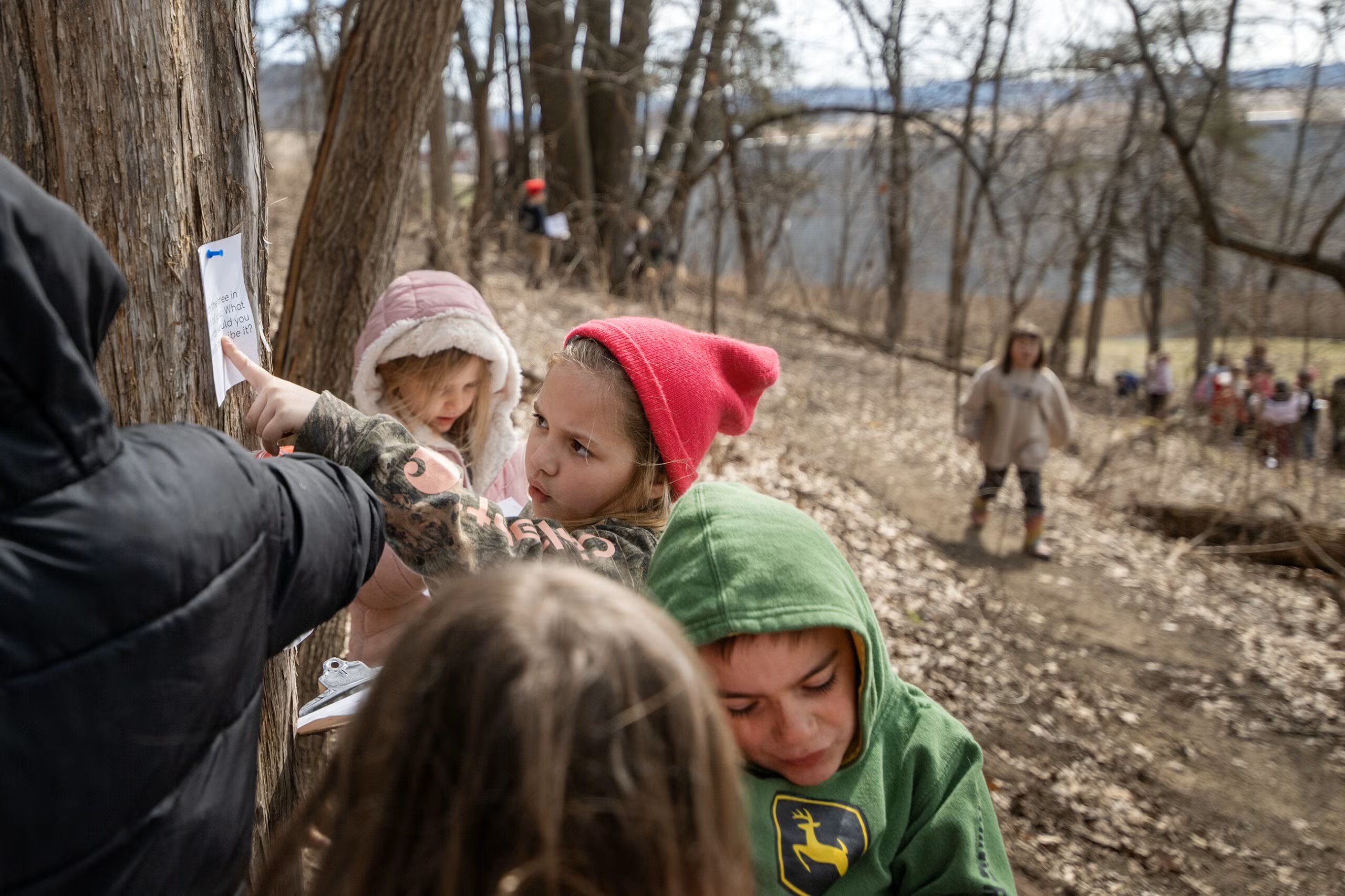
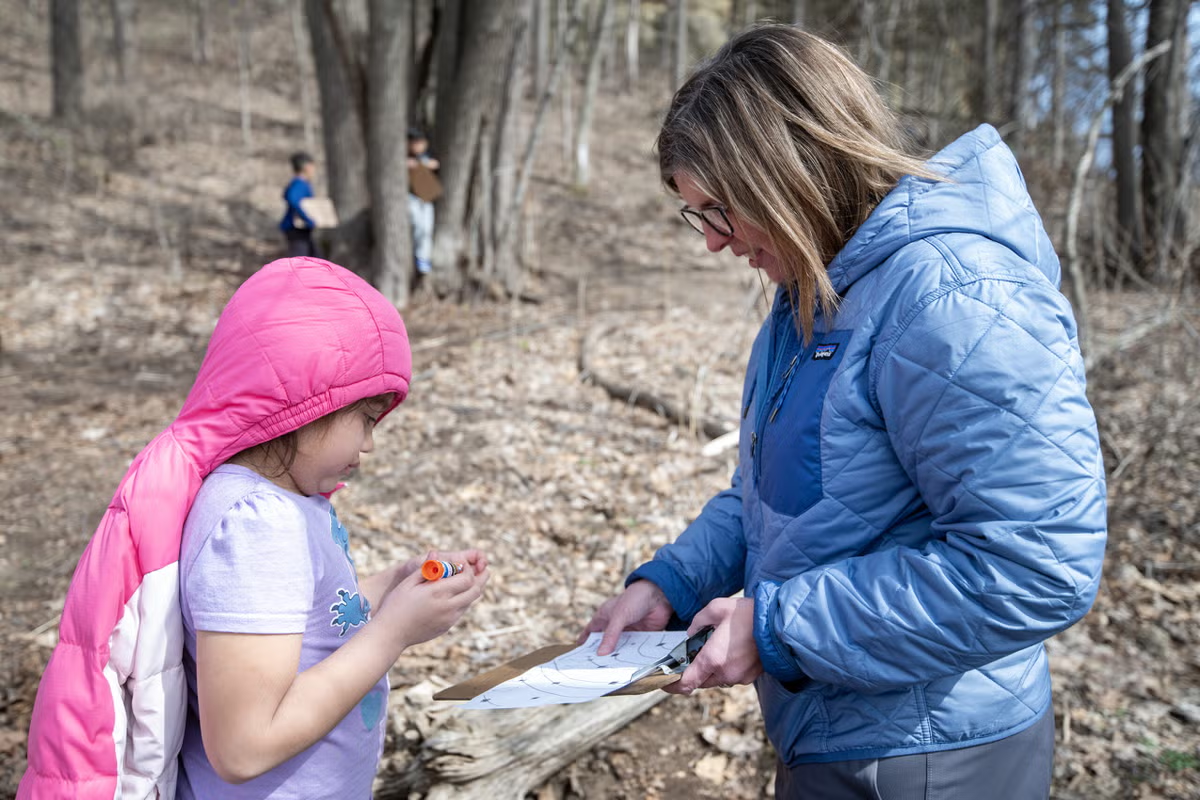
Once a week, first and second graders at Tower Rock Elementary School in Sauk County step into a classroom without walls. 

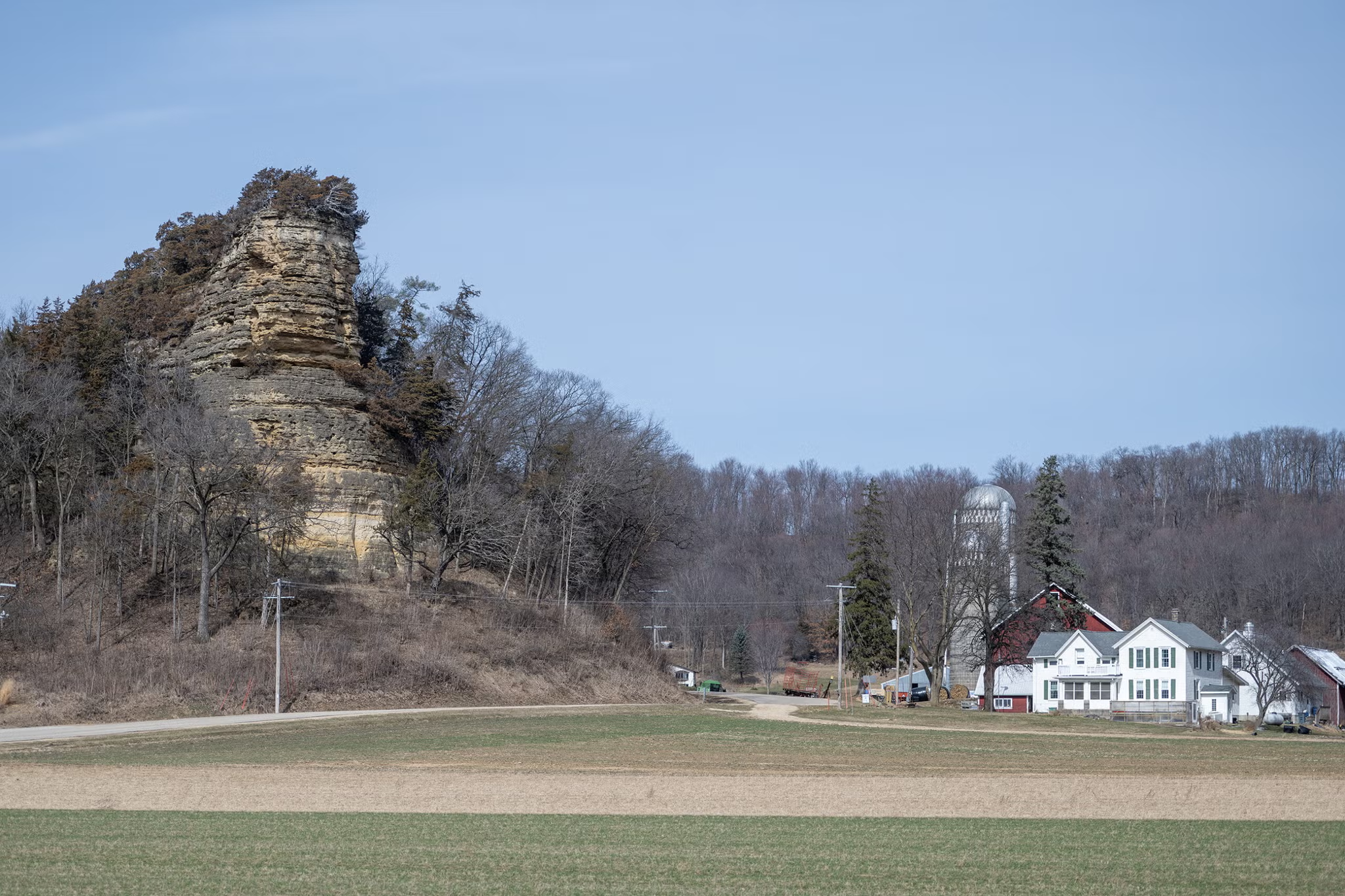
About 25 students, accompanied by three teachers, spend the day in their outdoor classroom tucked into nearby woods with a soaring sculpted bluff — called Tower Rock — in the school’s shadow.

Students follow a science and social studies-based curriculum on topics like insects and space, along with practical lessons like how to dress for the cold. 

In March, days before Blizzard Elsa blanketed the state with snow, first graders in the outdoor learning program prepared to blast off to Saturn. In small groups, students rode an imaginary rocket ship, learning about the planets while in their outdoor environment. 

Angus Mossman, left, leads an outdoor lesson on planets Thursday, March 12, 2026, at Tower Rock Elementary School in Prairie du Sac, Wis. Angela Major/WPR

Nature-based education and outdoor classrooms are expanding in Wisconsin and across the country. The concept of teaching outdoors got a boost during the pandemic. But now, according to Natural Start Alliance, there are more than 1,000 nature classroom programs in pre-schools nationwide. That’s up from a few dozen a decade ago. 

Teachers at Tower Rock want students to learn about the environment under their feet.

“It’s more than sitting in a classroom and saying, ‘We live in a beautiful area, you should protect it.’” JoAnnah Sorg, a teacher at Tower Rock, told WPR’s “Wisconsin Today.” “We go out there and we’re like, ‘Look at all of this. You want this to be here for your family someday. You want to continue to enjoy this, so we need to work to take care of it.’”

The landscape near Tower Rock Elementary School on Thursday, March 12, 2026, in Prairie du Sac, Wis. Angela Major/WPR

Keeping special places special

According to the state Department of Public Instruction, there are at least 17 schools that have a dedicated outdoor learning day in Wisconsin. Tower Rock, which launched its program in 2021, is one of a handful of public, non-charter schools in Wisconsin with this learning model. 

That means all first and second graders who attend Tower Rock participate. There is no waiting list, application or fees. Neurodivergent students and students with disabilities receive accommodations to participate. 

Principal Kelly Petrowski, right, helps a student with a science lesson Thursday, March 12, 2026, at Tower Rock Elementary School in Prairie du Sac, Wis. Angela Major/WPR

The school only cancels the outdoor program when the windchill factor plummets below zero. But this isn’t recess or free play. Every outdoor learning day is guided by a curriculum with a “place-based learning” model in mind, where educators use the local community and environment as a foundation for study. 

Sorg has been at Tower Rock for 15 years. She and two other educators, Dylan Edwards and Angus Mossman, run the program. Together, they build lessons and plan field trips to state parks and protected areas in Sauk County, an agricultural community on the banks of the Wisconsin River. 

Mossman went to Tower Rock and his mother still teaches there. He said many people leave Sauk County not realizing the beauty of it. The majority of the rural community is dedicated to farmland, but there are more than 22,000 acres of dedicated natural parks and open spaces, 63 lakes and nearly 160 miles of rivers and creeks, according to Explore Sauk County, the county’s tourism website.  

“There’s a lot of focus on getting urban students exposed to nature and I think there’s not a lot of focus on exposing kids in rural areas to nature,” Mossman said. 

“I want kids to realize that this is a special place and if people care about it, it will stay a special place. And if people don’t care about it, it might not stay a special place,” Mossman added. “I think (children) have it in their hearts to learn that.”

Students operate an imaginary spaceship with teacher JoAnnah Sorg as they learn about science outdoors Thursday, March 12, 2026, at Tower Rock Elementary School in Prairie du Sac, Wis. Angela Major/WPR
Angus Mossman tells a story as students gather to listen Thursday, March 12, 2026, at Tower Rock Elementary School in Prairie du Sac, Wis. Angela Major/WPR
Teacher Dylan Edwards, left, helps students launch rockets using a water bottle Thursday, March 12, 2026, at Tower Rock Elementary School in Prairie du Sac, Wis. Angela Major/WPR

The wonder of bees and spiders

Since the program started, students have helped to restore a native prairie and learned about the federally endangered rusty patch bumble bee, which is rare, but can be found in Wisconsin. 

“In first and second grade, I was really, really scared of bees,” said Bentley Hughbanks, a fifth grader who went through the outdoor learning program. “I was insanely scared to the point where on a field trip, I didn’t want to go because of the bees. But now I’ve overgrown my fear of bees.”

“I realized that they don’t mess with you unless you mess around with them,” Bentley said. 

There are countless stories from students overcoming fears, educators said. Students who didn’t like spiders now prevent others from squishing them. One student asked his parents to stop using ant poison in the garage. And another wants to be an ornithologist.  

First-grade students participate in a lesson on space Thursday, March 12, 2026, at Tower Rock Elementary School in Prairie du Sac, Wis. Angela Major/WPR

“A powerful thing about outdoor learning and the experience we can give the kids here is that we’re teaching their hearts and not just teaching their minds,” Mossman said. 

Sorg recalled one student who struggled academically in the classroom but on an outdoor learning day found the perfect way to pack snow into a bucket for building a structure, and the other students followed his lead.

“The power that it gave him among his peers to be able to have that opportunity to shine and have that moment — he didn’t get a lot of those moments in the classroom during the day,” she said. 

Finding those moments is one benefit of outdoor learning. Research shows it can also promote concentration, perseverance and creativity, said Christy Merrick, director of the Natural Start Alliance

“(Nature) is a space that is always changing. Nature is not static,” Merrick said. “It’s keeping things interesting for students. It tends to promote very active, hands-on learning, which we know is a very effective way for children to learn when they’re young.”

Students explore the woods during a lesson Thursday, March 12, 2026, at Tower Rock Elementary School in Prairie du Sac, Wis. Angela Major/WPR

An outdoor program like this is unique and requires a reliable funding stream. The teachers say it takes additional work to keep the program going. Each year, they apply for about $5,000 of local and state grants, Mossman said. The Community Foundation of South Central Wisconsin accepts donations on behalf of the school and other programs like it. The school also hopes to create an endowment. 

Outdoor learning is starting to become part of the fabric of attending Tower Rock. Now some fifth graders, like Brooks Mack, have younger siblings there, too.

“I can help (my brother) out. He asks me questions when he gets home, like, ‘We did this today but I didn’t quite understand it.’ So I get to answer those questions and other kids ask me questions, too,” Brooks said. “Sometimes I get to answer, which feels good.”

The post Nature is the classroom at this central Wisconsin elementary school appeared first on Great Lakes Now.

Original Article

Great Lakes Now

Great Lakes Now

https://www.greatlakesnow.org/2026/04/16/nature-is-the-classroom-at-this-central-wisconsin-elementary-school/

Wisconsin Public Radio

By Naveena Sadasivam

This story was originally published by Grist. Sign up for Grist’s weekly newsletter here.


Last month, President Trump sat alongside executives of the largest tech companies in the country as they pledged to pay a fair share of the energy costs of their data center buildout. “Data centers … they need some PR help,” Trump said at the gathering. “People think that if the data center goes in, their electricity is going to go up.”

It’s not an entirely unfounded assumption.

As the tech industry has funneled billions of dollars into the AI boom over the last several years, it has simultaneously been expanding its fleet of computing powerhouses, which require vast amounts of energy to run. These facilities have been cropping up all over the country, from rural communities in eastern Pennsylvania to the cities of northern Utah. 

This boom coincides with a dramatic rise in U.S. electricity prices, driven by inflation and the rising cost of adapting to wildfires, hurricanes, and other extreme weather. But these massive facilities have also strained the grid — and in some cases — contributed to rising prices. For instance, last year, an independent monitor for PJM, the grid operator that serves 13 northeastern states and Washington, D.C., projected that powering data centers would result in higher electricity generation costs, which would ultimately be passed on to consumers. And in cases where the buildout hasn’t yet led to price hikes, utilities and grid operators expect that it’s just a matter of time if tech companies follow through on their plans. Indeed, the Federal Reserve Bank of Dallas estimates that with data center electricity demand expected to double in the next five years, wholesale power prices could rise by as much as 50 percent.

At a time when the cost of living has become untenable for many Americans, and consumers are setting aside ever greater shares of their income to pay energy bills, the possibility of further rate hikes to line the pockets of tech companies has prompted a massive backlash across the country. The White House gathering of tech executives appeared to be a response to the backlash. On March 4 at the event, they signed onto the “Ratepayer Protection Pledge.”

The pledge itself has few specifics or teeth. It’s a voluntary agreement by several prominent tech companies — including Microsoft, Meta, OpenAI, and Amazon — to secure their own power for data centers, pay for any powerlines or other infrastructure that utilities may need to build to move that power, and hire locally from the communities they build in. While in theory the agreement could help prevent Americans from having to bear the cost of the data center expansion, the White House hasn’t set up oversight mechanisms to ensure that they do. Several consumer and environmental advocates called the agreement “meaningless,” “unenforceable,” and ultimately, “nonsense.”

The United States has become ground zero for the global data center boom. The rapid buildout has left developers, tech companies, and the utility industry scrambling to secure more power. As a result, the wait for a data center to connect to the grid can be years in many parts of the country. Hyperscalers — companies that operate large data centers and provide vast computing power — have been trying to get around these wait times by signing long-term power purchase agreements with solar developers, building their own natural gas plants, and even retrofitting jet engines to generate electricity

“Every single data center in the future will be power limited,” said NVIDIA CEO Jensen Huang last year. “We are now a power‑limited industry.”

Outside of the White House, utilities, local regulators, and lawmakers have also been proposing various solutions to address the community backlash and allow for the continued building of more data centers. Some have implemented measures requiring data centers to pay the costs of generating and moving the electricity they use. Others have suggested that data center developers install solar and battery systems on-site, or that rates should be frozen for residents while utilities figure out how to handle the additional costs. And at least 11 states are considering legislation to temporarily ban new data centers while their impact on electricity prices and other concerns are addressed.

“You’re seeing states try to move quickly,” said Meghan Pazik, a senior policy associate in Public Citizen’s climate program. But “every state’s going to have a different approach to how far they want to go on data centers.”  

Many states are utilizing additional tariffs for data centers and other customers that pull large amounts of power from the grid. These facilities — referred to as “large load customers” — are required to pay more to make up for the added infrastructure costs that come with supplying them, as well as the risk if they end up walking away from the project, which would leave consumers on the hook for the investments. More than 30 states have proposed or implemented measures of this sort. 

Some hyperscalers are changing their approaches, too. In Minnesota, Google inked a deal with Xcel Energy, the state’s largest investor-owned utility, to bring 1,900 megawatts of clean energy onto the grid. The company is fully funding wind turbines, solar panels, and battery storage, as well as the costs of grid infrastructure upgrades to serve its data centers. And in Louisiana, Meta signed a deal with Entergy to help fund the construction of seven natural gas plants, more than 200 miles of transmission lines, and battery systems, among other infrastructure upgrades.

A recent report from the Searchlight Institute, a policy think tank, argues that this piecemeal approach to regulating the tech industry misses an opportunity to fund a large-scale upgrade of the grid. Although the surge in demand has largely been framed as a looming crisis, the report contends that the boom also creates a rare policy window: a chance to modernize the country’s electrical system and make long-delayed investments needed for the clean energy transition.

Utilities make roughly $35 billion in investments in transmission infrastructure every year — far short of what’s actually needed. Electricity demand is projected to double or triple in the next 25 years. The Searchlight Institute report proposes creating a dedicated grid infrastructure fund to accelerate the expansion. Under the plan, hyperscalers would pay into the fund in exchange for speedy connections. Money from the fund would be directed to utilities and other companies to build out the system, prioritizing clean energy along the way. And consumer and environmental advocates, along with other policymakers, would oversee the process to ensure funds are being distributed equitably and serve the needs of the public. 

Such a mechanism would ensure increased investments in clean energy, rather than the natural gas projects many tech companies are currently backing, while protecting consumers from increases in electricity prices.

“The hyperscalers need power,” said Jane Flegal, a senior fellow at the Searchlight Institute and author of the report. “They have a ton of capital. And rather than letting them continue to cut these one-off deals with utilities, we’ve got to find a better way to take advantage of the potential upside here and avoid the downside of them basically building a secondary grid behind the existing grid that benefits only them.”


The post Data centers are straining the grid. Can they be forced to pay for it? appeared first on Great Lakes Now.

Original Article

Great Lakes Now

Great Lakes Now

https://www.greatlakesnow.org/2026/04/14/data-centers-are-straining-the-grid-can-they-be-forced-to-pay-for-it/

Grist

This article was republished here with permission from Great Lakes Echo.

By Addie Tussing, Great Lakes Echo


Every year, thousands of hopeful hunters apply for one of only 260 licenses to hunt elk in Michigan. 

The state Department of Natural Resources (DNR) received a record-breaking 47,493 applicants in 2025. 

“It’s a chance for folks in Michigan who are used to some similar hunting experiences, but with the added uniqueness and challenges of pursuing a different animal,” said Brent Rudolph, the deer, moose and elk specialist with the DNR. 

Michigan’s original native elk disappeared in 1875 due to overhunting and habitat loss. They were reintroduced in 1918, and populations have since stabilized, according to Rudolph. 

“We are working on viewing the uniqueness that they bring to the communities where they’re around, and then balance the efforts to manage their population to minimize potential conflicts,” he said.

In 2025, Michigan hunters shot 153 elk. The DNR estimates Michigan’s elk population to be around 1,100 animals.

Every year, the National Resources Commission works alongside the DNR to create quotas to control the number of elk that can be taken. 

“Our five-year average has been around a 72% success rate in fulfilling those quotas,” said Rudolph, while “the 2025 success rate was 64%.”

Brent Henige of New Lothrop shot this-559 pound bull on Dec.13, 2025.

Licenses are awarded to applicants through a random drawing. Once selected, they receive specific information on the hunting period and type of license they have received. 

“Some receive licenses that are ‘any elk,’ which mean they can pursue bulls, which is often the preferred target because they are antlered animals,” said Rudolph. 

Some, however, receive licenses for antlerless-only elk to control the number of females in the population.

There are two hunting periods: The first consists of three independent sessions throughout August and September, and the second from Dec. 13-21. The second period poses challenges to some hunters because of unpredictable weather conditions and proximity to the holiday season. 

When selected, “you will have an opportunity to hunt in one of two core elk range units” said Rudolph. 

Hunters are restricted to the land of the Pigeon River Country State Forest and what is referred to as the “Elk management Unit X” land, both in the Northern Lower Peninsula near Gaylord. 

As the 2025 hunt came to a close, the DNR drafted an alternative to its current Elk Conservation and Management Plan

The proposal aims to lengthen both the first and second hunt periods, and most notably, consolidate the first hunt into one continuous period. 

“We are aiming to make it more convenient for hunters having a more contiguous period so they could choose when they’re able to participate,” says Rudolph, who said that the change will give hunters who aren’t local more leeway, increasing the success rate of the first hunt. 

According to the DNR, the proposed first period would be 30 days from September to the beginning of October, and the second period would run from Dec. 1st to the 15th. 

They intend to shift the first hunt to begin at later dates to avoid hot weather which is both uncomfortable to hunt in and leads to more elk meat spoiling. 

The new dates for the second hunt would be more accessible to hunters who celebrate holidays towards the end of December. 

Michigan residents were given the opportunity for public comment on the proposed regulations. 

Seventy-three residents emailed their thoughts to the DNR before the Jan. 23 cutoff. Rudolph said 63% supported the change and about 27, or 37%, were opposed to some aspect.

While a majority supported the proposed regulations, many were concerned that the new timeline would overlap with the days to hunt bears. 

“Some hunters can pursue bear[s] with dogs, and hounds moving through could make hunters anxious or could just lead to some conflicts,” said Rudolph. 

Chad Sides, who chairs the Michigan Elk Country Association, a conservation organization based in Gaylord, is weighing the benefits of the proposition. 

“It could be beneficial if implemented properly,” Sides said. “It may provide a better experience for the hunters and have a better hunt.” 

On the other hand, Sides said he is apprehensive about the elk population going forward. “I hope that the state realizes that our herd is significantly down from years past.”

A more successful hunt could decrease the population at a more rapid rate, Sides said. 

The regulations will be finalized during the Natural Resources Commission’s April meeting. 

Before then, Rudolph and the DNR will try to reduce conflict with the bear hunting season. “We will be making some adjustments to the proposed dates and lengths to still reach the original objectives.”

Rudolph said the elk hunt is a vital and unique resource in Michigan.

“We’re happy to be able to take input on how we can try and best accommodate some of the diverse opinions people have,” he said.

The post Michigan mulls changes in elk hunt regulations appeared first on Great Lakes Now.

Original Article

Great Lakes Now

Great Lakes Now

https://www.greatlakesnow.org/2026/04/10/michigan-mulls-changes-in-elk-hunt-regulations/

Great Lakes Echo

By Sarah Shemkus

This story was originally published by Canary Media.

Balcony solar is one of the hottest ideas in renewable energy right now. Boosters say the systems — DIY kits that can be plugged right into a standard outlet — save users money without any need for subsidies, government incentives, or utility permission.

As Americans continue to struggle with soaring power prices, about half the states in the U.S. are considering legislation to pave the way for residents to adopt plug-in solar and start generating some of their own electricity from their own backyard or porch.

“It’s about energy affordability,” said Cora Stryker, co-founder of Bright Saver, a nonprofit that promotes plug-in solar. ​“Every legislator wants their constituency to have less trouble meeting their energy demands.”

As these efforts work their way through the legislative process, we will be monitoring the action here, using information from Bright Saver and bill-tracking databases.

Latest action: Maine Gov. Janet Mills (D) signed the state’s plug-in solar bill into law on April 6.

The post Which Great Lakes states are advancing balcony solar? appeared first on Great Lakes Now.

Original Article

Great Lakes Now

Great Lakes Now

https://www.greatlakesnow.org/2026/04/10/which-great-lakes-states-are-advancing-balcony-solar/

Canary Media

By Ethan Bakuli, Planet Detroit

This article was republished with permission from Planet Detroit. Sign up for Planet Detroit’s weekly newsletter here.


In the middle of a five-day power outage brought on by an early spring storm, Woody Gontina’s house appeared to be the only one on his street that still had its lights on.

At the time, Gontina had just installed a 5.4-kilowatt solar-and-battery-storage system at his home.

“Because of the solar and the battery, we had our whole house powered day and night throughout that outage,” recalls Gontina.

While Gontina could not have foreseen the storm’s impact, it was an early proof of concept for the Royal Oak city commissioner, who was in the early stages of encouraging his neighbors to install solar panels on their properties through an initiative called Solarize Royal Oak.

In the past few years, a largely grassroots solar installation trend has taken shape across a handful of Michigan towns and counties, as residents like Gontina have sought to capitalize on group-buy discounts and federal incentives to upgrade their homes.

“There wasn’t really a champion to push (Solarize) forward,” said Gontina. “I had the time and the interest to do it, and I also understood that the city was very challenged in terms of resources and didn’t have the time to meet an initiative like that.”

Now overseen by the Great Lakes Renewable Energy Association, the Solarize program has expanded to Grand Rapids, Lansing, Kalamazoo, as well as Oakland, Washtenaw, and Wayne counties, where city and county officials have taken over administering it to homeowners and businesses.

While federal incentives for solar have shrunk and solar installations have declined under the Trump administration, advocates of Solarize are still encouraging residents and businesses to take advantage of remaining opportunities and to embrace renewable energy sources amid utility rate hikes.

“As we see our energy costs continuing to rise, that’s really the biggest argument for renewables,” said Gontina. “Our electric provider, DTE, has demonstrated that they will not stop continuing to ask for increases at a regular pace until there’s something legislatively done to stop that.”

National grassroots solar installation program appeals to Michigan homeowners

While Solarize has found its footing in Michigan in the past decade, its origins trace back to 2009, when residents in Portland, Or. began hosting neighborhood seminars with local contractors to learn about residential solar panel installation. The program rapidly expanded the city’s solar footprint, according to a report from the Energy Trust of Oregon.

For Ann Arbor energy manager and resident Julie Roth — who now works for the city’s Office of Sustainability & Innovation — hearing about the early success of Solarize was enough of a rationale to try it in her neighborhood in 2019. At the time, she was interested in installing solar panels on her roof but was concerned about the high upfront costs and the wide range of contractor quotes.

“I pitched it to my solar installer (contractor),” said Roth. “I said, ‘Well, what do you think if I get a bunch of people here and we all do it together. Would you give us a discount?’ He said, ‘Sure,’ and came up with a sort of discount structure.”

After she sent out an invite on Nextdoor and Facebook, Roth says, she was surprised at the turnout.

“I thought that I would have three people sitting around my dining room table awkwardly trying not to make eye contact with the installer or me, and then we would all go home, and it would be over,” said Roth.

Instead, 40 people showed up to that first meeting at her house. Within a year, about a dozen people from that night installed solar panel systems on their homes.

“It basically started because we were trying to overcome barriers to adoption,” she said. “We didn’t have any staff. It started as a volunteer thing. We didn’t have any money, and so with no resources and very little bandwidth, what can you do?”

As residents like Gontina and Roth have become ambassadors for Solarize, encouraging neighbors to host their own events and create more group-buy discounts on solar, it’s brought greater interest from county governments and statewide organizations seeking to broaden its appeal.

“We really want to position ourselves as a resource, as an advocate, and relationship builder,” said Julie Lyons Bricker, chief sustainability officer for Oakland County, one of the latest counties to adopt the Solarize program.

Since launching in 2021, the county’s Sustainability Office has focused on both improving energy efficiency across Oakland’s 62 cities, townships, and villages and guiding homeowners and businesses toward available incentives, says Lyons Bricker.

With Solarize Oakland County, the county hopes to raise awareness on how solar works, what’s needed to get it installed, and what people should expect from their contractors. Groups of residents can be matched with GLREA-approved vendors and receive a bulk discount of 5 to 15% on their solar panel purchases.

A diminishing landscape for solar installation

As momentum for solar installations has picked up in some communities across Michigan, the national solar industry has had to contend with tariff pressures and a freeze on approvals for major infrastructure projects, amid a pivot away from the clean energy policies and investments that emerged during the Biden administration.

Solar installations have declined, leading to an industry-wide disruption, with utility-scale solar installations down 16% and community solar down 25% in 2025, according to a recent report from the Solar Energy Industries Association (SEIA).

Last year, the Residential Clean Energy Credit — a 30% federal tax credit on solar, wind, and geothermal home installations — was cut six years short when Trump signed the “One Big Beautiful Bill” in July 2025, ending a credit that had been set to run through 2032.

“It’s an economic investment when you’re thinking about installing a system,” said Gontina. “Anything that is available to help with that investment only makes it easier.”

While the residential tax credit ended in December, multiple financial incentives for businesses and houses of worship remain active through the end of 2027. Bricker says the county is still trying to encourage commercial property owners to take advantage of that opportunity while it lasts.

For renters, lower-income residents, and those with roofs unsuitable for panels, rooftop solar programs like Solarize remain largely out of reach. The Trump administration’s termination of the federal Solar for All program in 2025 eliminated $156 million in Michigan projects designed to expand solar access for low-income households — projects already underway in Detroit, Highland Park, Benton Harbor, and beyond.

Community solar legislation, which would allow residents to subscribe to off-site solar arrays and receive bill credits without owning a system, has bipartisan support in Michigan but has yet to advance.

Solar panel parties spawn citywide energy push

Gontina says that the Solarize Oakland County program could help the rest of the county catch up to what individual towns like Royal Oak are attempting to do.

“You’re bringing a bigger tent to the picture so that more people feel like they have an opportunity to be included,” he said.

Although Solarize is transitioning toward a “top-down” approach, Roth credits the “grassroots” solar parties she and others hosted with helping grow the city’s residential solar installations over the last several years.

“It grows the movement more when you’re talking to your neighbors than when you’re just talking to a city representative,” said Roth. “The community engagement and buy-in and ownership are much higher, especially when you’re not just looking at getting solar up, you’re looking at engaging a community around energy.”

She added: “We’re there as technical experts to some degree, to add legitimacy, and to continue to bring people along, and to make sure that the installers are being responsive.”

Although Ann Arbor Solarize’s numbers have slowed down in recent years, city data shows that the number of residents installing solar panels has increased in tandem with the program’s launch in 2019 and the growth of the solar installation market.

Ann Arbor has averaged about 180 residential solar installations annually since 2020, compared to 17 per year between 2008 and 2019.

Nearly seven years later, the success of Ann Arbor’s Solarize program has contributed, in part, to the city’s push to create a municipal-owned utility designed to help residents and businesses access solar energy and battery storage without upfront costs. The program will be optional, and will supplement, not replace, the use of DTE’s electric grid, according to city documents.

Ann Arbor’s Sustainable Energy Utility, authorized by roughly 80% of voters, is designed in part to address those barriers. Unlike rooftop solar programs, it would allow residents and businesses to access solar and battery storage without upfront costs — with the city owning the equipment and customers paying a monthly rate. Pilot projects targeting lower-income neighborhoods are expected to launch in 2026, with citywide expansion planned for 2027.

Roth hopes the city’s trend in renewable energy adoption and utility ownership can be a model for other communities. These days, she relishes the sight of solar panels around Ann Arbor.

“You walk around, you walk your dog in the neighborhoods, and it’s like, ‘solar there, solar there, solar there,’” she said. “It’s so visible. And that’s really exciting to see the actual physical changes in your community.”


The post Residents across Michigan unite for solar discounts appeared first on Great Lakes Now.

Original Article

Great Lakes Now

Great Lakes Now

https://www.greatlakesnow.org/2026/04/09/residents-across-michigan-unite-for-solar-discounts/

Planet Detroit

By Danielle Kaeding, Wisconsin Public Radio

This article was republished here with permission from Wisconsin Public Radio.


A union leader representing federal Forest Service employees in Wisconsin says workers may have to move as part of the Trump administration’s plan to shutter regional offices.

The Forest Service announced Tuesday that the agency is moving its headquarters to Salt Lake City and closing nine regional offices, including in Milwaukee. Administrative and technical support in those offices will shift to six operational service centers, one of which will be located in Madison. The overhaul will also include 15 state directors to oversee operations in one or more states.

Brian Haas is president of the National Federation of Federal Employees Local 2165. The union represents employees in the Milwaukee regional office and the Chequamegon-Nicolet National Forest. He said the restructuring mostly affects Milwaukee-area employees. Union officials estimate around 50 employees may be affected.

“The regional office actually already was hit a lot harder by people leaving, retiring, taking the different buyouts,” Haas said. “They’re already really down in their numbers.”

Haas said workers have been told they can continue working for the service as long as they’re willing to relocate or change job descriptions. When the reorganization was first announced last year, he said many employees transferred or relocated amid Trump’s return-to-office order.

The number of Forest Service employees in Wisconsin dropped from 645 to 539 between federal fiscal year 2025 and 2026, according to federal workforce data.

The U.S. Department of Agriculture, which houses the Forest Service, has been shifting thousands of employees out of Washington. Around 260 employees in the nation’s capital will be expected to relocate to Salt Lake City, according to the Associated Press.

“This is about building a Forest Service that is nimble, efficient, effective and closer to the forests and communities it serves,” Forest Service Chief Tom Schultz said in a statement.

Trump administration officials said the move will improve forest management, save taxpayer money and boost employee recruitment.

“The official stance from the administration is that it is not a reduction in force, but the reality on the ground is that it is going to continue to drive people to leave the agency,” Haas said.

A USDA spokesperson said employees will receive information about relocation timelines, options and resources to support their decisions. The agency said the number of staff that will be moved beyond the nation’s capital is unknown at this time.

Current and former Forest Service employees say the Trump administration’s actions over the past year have created chaos and uncertainty with few answers. The elimination of regional offices and shift to state-based hubs will take place over the coming year.

No changes for national forest in Wisconsin, research facilities close

The Chequamegon-Nicolet National Forest, or CNNF, has 235 employees who would be unaffected, according to Kaleigh Maze, a forest spokesperson. Maze said the forest and its district offices would see no changes to staffing.

“The Chequamegon-Nicolet National Forest is committed to ensuring that all operations — including wildfire readiness and response — continue without interruption,” Maze said.

Forest Service research facilities in 31 states will also close and be combined under a single research organization in Colorado. The agency’s website shows Rhinelander and Madison research sites would not be affected, but Haas said Rhinelander employees may also be required to move. As of 2023, the agency’s Forest Products Lab in Madison had 80 research scientists and 168 support staff.

Two other facilities are slated for closure in Wisconsin Rapids and Prairie du Chien. Paul Strong, former forest supervisor of the CNNF, said he’s unfamiliar with those sites and questioned whether USDA facilities may have been mistakenly included.

The USDA Forest Products Laboratory on Thursday, Oct. 16, 2025, in Madison, Wis. Angela Major/WPR

The Forest Service said a single research organization would speed up the use of science in forest management and reduce duplication. Strong told WPR’s “Wisconsin Today” it’s unclear what the move will mean for existing and long-term research projects.

“What I think we should be concerned about is what kind of pressure and stress this puts on employees and how they’re being treated as public servants,” Strong said.

Under the reorganization, the Forest Service said there will be no changes to firefighters or their positions. But the Trump administration is seeking to bring firefighting efforts under a single agency, which would affect thousands of employees if implemented.

Former U.S. Forest Service Chief Mike Dombeck served during the Clinton administration and lives in Wisconsin. He said he supports efforts to streamline the agency, noting past proposals to reorganize offices failed due to lacking support from congressional lawmakers.

Even so, he noted a similar attempt to move the Bureau of Land Management during Trump’s first term was later reversed. Dombeck said restructuring will likely cause the agency to lose more staff who choose not to uproot their families. He also fears the agency will lose ground on managing 193 million acres of national forests, climate change and wildland firefighting issues.

“I think this will be a real wake-up call to what the real values of national forests are,” Dombeck said. “We need to really ask this administration: what is the end game when we take a look at this level of chaos?”

Editor’s note: This story was updated with staffing figures on the Chequamegon-Nicolet National Forest from the U.S. Forest Service.

Wisconsin Public Radio, © Copyright 2026, Board of Regents of the University of Wisconsin System and Wisconsin Educational Communications Board.

The post Forest Service workers in Wisconsin may have to move after reorganization, union leader says appeared first on Great Lakes Now.

Original Article

Great Lakes Now

Great Lakes Now

https://www.greatlakesnow.org/2026/04/08/forest-service-workers-in-wisconsin-may-have-to-move-after-reorganization-union-leader-says/

Wisconsin Public Radio

By Tracy Samilton, Michigan Public

The Great Lakes News Collaborative includes Bridge Michigan; Circle of Blue; Great Lakes Now at Detroit PBS; Michigan Public, Michigan’s NPR News Leader; and The Narwhal who work together to bring audiences news and information about the impact of climate change, pollution, and aging infrastructure on the Great Lakes and drinking water. This independent journalism is supported by the Charles Stewart Mott Foundation. Find all the work HERE.


U.S. Secretary of Health and Human Services Robert F. Kennedy Jr. and Environmental Protection Agency Administrator Lee Zeldin announced new initiatives to tackle microplastics in the human body and drinking water on Thursday.

Microplastics are tiny pieces of plastic – as small as nano-sized pieces – that are increasingly ubiquitous in water supplies and in the human body.

Zeldin said the environmental agency will add microplastics and pharmaceuticals to its list of concerning chemicals in drinking water. “For the first time in the program’s history, EPA is designating both microplastics and pharmaceuticals as priority contaminant groups,” he said.

Kennedy said the government will create a $144-million program called STOMP (Systematic Targeting of Microplastics).

“We are focusing on three questions, what is in the body, what’s causing harm, and how do we remove it?” Kennedy said. “We still do not have clear answers about causation or solutions,” Kennedy said. “We do not yet understand how these particles interact with the immune system, the endocrine system or the neurological system, and we do not have validated methods to remove them safely.”

But a number of environmental groups said the actions taken by the government aren’t sufficient.

“Microplastics are a serious – and growing – threat to our health and our environment,” Erin Doran of Food & Water Watch said in a statement. “Without monitoring of our drinking water, we can’t know the full scale of this crisis. Today’s announcement …ultimately falls short on its own. It does not reflect the urgent need for a comprehensive nationwide monitoring program for microplastics in drinking water now.”

Samantha Pickering leads the public and environmental public health program at the Michigan Environmental Council. She said the EPA’s acknowledgment of the problem is a good thing, but there’s more that should be done now, like adding microplastics to the government’s official list of contaminants in drinking water that must be monitored.

She said she agrees with the EPA that much more research needs to be done to determine the health effects of microplastics. But she said there’s enough evidence already that microplastics are bad for the environment and for humans.

“I appreciate that the EPA is acknowledging that they’re going to start watching it. but it needs to be shifted into a precautionary approach. I don’t see why they wouldn’t be able to start taking action,” she said.

Pickering said some states, including California and Michigan, are ahead of the U.S. EPA in tackling the problem. “Having the Great Lakes ecosystem, and so much Great Lakes shoreline, we’re a bit more responsible for our stewardship.”

Michigan will be conducting a pilot to test five different drinking water systems for the contaminants, she noted, and it will also, for the next three years, test about 200 of its inland lakes and streams for microplastics.

And Pickering said California has passed a law requiring the adoption of a system for testing drinking water supplies, as well as projects to keep plastics out of the marine environment.

The post U.S. EPA announces action on microplastics, but Michigan critics say it’s not enough appeared first on Great Lakes Now.

Original Article

Great Lakes Now

Great Lakes Now

https://www.greatlakesnow.org/2026/04/07/u-s-epa-announces-action-on-microplastics-but-michigan-critics-say-its-not-enough/

Michigan Public

By James Bruggers, Inside Climate News

This article originally appeared on Inside Climate News, a nonprofit, non-partisan news organization that covers climate, energy and the environment. Sign up for their newsletter here.


When former top Environmental Protection Agency official Judith Enck noticed a cavalcade of chemical and plastics industry lobbyists visiting the agency’s Washington headquarters in February, she wondered what could be up.

An answer came weeks later: The agency is moving toward resurrecting a proposal from the first Trump administration to ditch Clean Air Act regulations involving one of the industry’s go-to methods for chemically processing plastic waste into new industrial feedstocks or fuels.

The EPA is curiously approaching this by embedding a request for comments on so-called “advanced recycling” via a method known as pyrolysis in a rulemaking on an entirely different category of waste incineration.

“I thought, could it be a mistake, or are they quietly trying to push this through?” Enck, a former EPA regional administrator during the Obama presidency, wondered in an interview on Tuesday. Just one paragraph related to advanced recycling of plastics was included in a 17-page Federal Register notice for a proposed rule on wood incineration.

Either way, the stakes are significant, according to industry and environmental advocates alike. 

For several years, industry officials have pushed chemical processing of plastic waste as a primary solution to the global plastic waste crisis, while advocating for regulatory relief at the state and federal levels. The industry has also pressed for such processing to be a pillar of a possible global plastics treaty. 

“We support policies that recognize the products of advanced recycling as recycling and policies that recognize advanced recycling as a highly engineered manufacturing process that can produce new virgin equivalent plastics and chemicals,” according to the website of the American Chemistry Council, the chemical industry’s primary lobbying group in the United States.

But environmental advocates view much of what the industry calls either chemical recycling or advanced recycling — and particularly the method known as pyrolysis — as a dirty, polluting sham.

“It’s not recycling,” said James Pew, director of the federal clean air practice at the environmental group Earthjustice. “To the extent these incinerators produce anything significant other than toxic pollution, a very small portion of the plastic waste they burn is turned into an oily waste that can be fed back into the chemical production process or burned [as] dirty fuel. And it encourages unlimited production of single-use plastics.”

The EPA’s movement toward easing clean-air rules to boost chemical processing of plastic waste comes amid growing concerns about a global plastics crisis.

The United Nations Environment Programme has estimated that the world produces 430 million metric tons of plastic each year, over two-thirds of which are short-lived products that soon become waste. A growing amount, or 139 million metric tons in 2021, gets tossed after just a single use. 

Plastic production is set to triple by 2060 under a “business-as-usual” scenario, and less than 9 percent is recycled. Plastic production and the mismanagement of plastic waste contribute to climate change, biodiversity loss and pollution, U.N. officials have concluded.

Scientists have also found the smallest of plastic particles inside human bodies, increasing the risk of respiratory, reproductive and gastrointestinal problems and some cancers.

The ExxonMobil Baytown Complex in Baytown, Texas, at dusk in 2023. The company developed what it calls advanced recycling of plastic waste involving pyrolysis in part of this complex. Credit: James Bruggers/Inside Climate News

Plastics’ Chemical Recycling Problem

Because plastics are made of thousands of chemicals, they are not easily recyclable. Most plastic recycling is done through a mechanical process that separates certain types by chemical composition, then cleans, shreds, melts and remolds them. 

Pyrolysis, or the process of decomposing materials at very high temperatures in an oxygen-free environment, has been around for centuries. Traditional uses range from making tar from timber for wooden ships to transforming coal into coke for steelmaking.

More recently, major oil companies and small startups alike have sought to develop the technology as an alternative for recycling a wide variety of plastic waste, with limited success and serious pushback from environmental interests.

A 2023 report from Enck’s Beyond Plastics and the International Pollutants Elimination Network examined 11 chemical recycling plants operating in the United States. Noting low output of recycled plastics and challenges such as fires and spills at production units, the report concluded the technology “has failed for decades, continues to fail, and there is no evidence that it will contribute to resolving the plastics pollution crisis.”

The chemical industry, however, has been steadfast in its backing of chemical recycling, including the pyrolysis method. On the same day the EPA announced it was developing a new rule on advanced recycling, the American Chemistry Council praised the agency. Since no oxygen is involved in pyrolysis, the group said, the process cannot be considered incineration and should not be regulated as such.

“These advanced recycling technologies convert used plastic into valuable feedstocks to make new products, rather than combusting the plastic for energy purposes or landfilling it,” said Ross Eisenberg, president of an arm of the council called America’s Plastic Makers, in a press release. 

Sixteen Industry Lobbyists Visit EPA

The details of what the EPA will propose have not yet been revealed. But the agency’s March 17 announcement and supporting documents point to the kind of regulatory relief it sought to provide during the first Trump term—before running out of time.

Pyrolysis has largely been regulated as incineration for three decades and has therefore had to meet stringent emission requirements for burning solid waste under the federal Clean Air Act. 

In the final months of the first Trump administration, the EPA proposed an industry-friendly rule change stating that pyrolysis does not involve enough oxygen to constitute combustion, and that emissions from the process should therefore not be regulated as incineration.

In 2023, the Biden administration reversed course after much criticism from environmental groups and some members of Congress.

The agency that year noted that it had “received significant adverse comments” on the provision. In taking final action to withdraw the proposal, the agency said the move would “prevent any regulatory gaps and ensure that public health protections are maintained.” 

The EPA’s recent request for comment on pyrolysis was included in a rule-making involving incinerators that burn wood or yard waste, which are sometimes used after natural disasters such as hurricanes. “Revising the definition would clarify that the … rule does not regulate pyrolysis units used in advanced recycling operations,” the agency said.

Beyond Plastics counted 13 representatives from chemical companies or lobbying associations on the EPA headquarters visitor log for Feb. 10, a month before the announcement. Three senior officials from the American Chemistry Council visited on Feb. 12.

“While communities across the country are dealing with the health and environmental costs of plastic pollution, the industry appears to have a direct line to the agency that is supposed to protect us,” Enck said. “These visitor logs are particularly concerning at a time when the Trump administration is rolling back environmental protections and is quietly proposing to remove Clean Air Act requirements from so-called ‘chemical recycling’ facilities. Why did the EPA bury such a major proposed change?”

A written statement from the EPA press office said existing solid waste incineration and pyrolysis regulations were vague, and that the agency is seeking information on an “appropriate remedy.” 

The agency has scheduled an online virtual public hearing for April 6.

Matthew Kastner, senior director of media relations for the American Chemistry Council, pointed to occasions in 2023 and 2024 when Enck appeared on the EPA visitor log. Both his group and hers, he said, “have the right under the First Amendment to petition the government.”

He added that the council’s member companies are regulated by the EPA, “thus engagement on issues ranging from compliance to policy development is both appropriate and expected.”

Earthjustice’s Pew is concerned that the EPA will exempt pyrolysis units from Clean Air Act permitting and any requirement to measure or report their emissions. The result would be, he said, “a perverse incentive” to build more of them.

“As a practical matter, this definition change would mean EPA is completely deregulating a whole class of incinerators, these so-called pyrolysis units,” he added. “And their pollution is really toxic.”


The post After Chemical Industry Lobbying, EPA Considers Dropping Clean Air Protections for Plastic Waste Recycling appeared first on Great Lakes Now.

Original Article

Great Lakes Now

Great Lakes Now

https://www.greatlakesnow.org/2026/04/07/after-chemical-industry-lobbying-epa-considers-dropping-clean-air-protections-for-plastic-waste-recycling/

Inside Climate News

By Vivian La, IPR

This story is made possible through a partnership between Interlochen Public Radio and Grist, a nonprofit environmental media organization.


The company behind the controversial Line 5 tunnel project in the Straits of Mackinac released a report this month that lays out the potential geologic risks a contractor might see during construction — risks that pipeline opponents say underscore the dangers of the proposed tunnel.

Canadian pipeline company Enbridge Energy submitted its geotechnical baseline report on the project to state permitting agencies in early March. The report itself is from 2022. Enbridge says the report is based on data that was already available publicly.

The company wants to replace the existing dual-pipeline infrastructure in the Straits of Mackinac with a tunnel housing a new segment buried under the lakebed.

Opponents said they’re worried about potentially unsafe conditions indicated by the report, including weak bedrock, high water pressure and dangerous gases beneath the Straits.

“The report raises serious concerns about whether it is possible to safely build a tunnel in the Straits of Mackinac,” said Debbie Chizewer, managing attorney with the legal nonprofit Earthjustice, which is involved in litigation against Line 5.

Brian J. O’Mara, a geological engineer with the consultant group Agate Harbor Advisors LLC, said the report confirms his concerns around poor rock quality, suggesting that much of the bedrock won’t be stable for tunneling and could lead to the construction equipment failing.

The report also contains some redacted sentences in sections related to gas conditions and the possible “squeezing” of weak rock under high pressure.

“The report is silent on the risks related to fire, explosions, floods, sinkholes, tunnel collapse and a full-bore rupture release of oil and gas liquids from the pipeline,” O’Mara wrote in an email. He had written in legal filings to permitting agencies about his concerns on the report’s baseline data as early as 2023.

O’Mara notes that he believes the report incorrectly concludes that contractors won’t encounter any gas during tunneling.

Enbridge spokesperson Ryan Duffy said in an email that the geology beneath the Straits is not known to have gas, and that “the question has been thoroughly investigated by Enbridge and independent experts responding to Michigan regulators.”

“The reality is that the new pipeline replacement at the Straits crossing is designed specifically to prevent potential risks to the Great Lakes and its communities,” Duffy said.

Duffy said the “sole purpose” of the report was to inform and negotiate business deals with construction contractors. “Any geotechnical information pertinent to permitting decisions has already been made available to the relevant permitting agencies,” he said.

The report was not included in the case filings for Enbridge’s permit for the project issued by the Michigan Public Service Commission in 2023. The agency declined further comment because an appeal of the permit sits before the Michigan Supreme Court.

Enbridge is still waiting for permits from federal and other state agencies for the proposed project.

The U.S. Army Corps of Engineers reviewed the geotechnical report when it developed the tunnel project’s Environmental Impact Statement, said agency spokesperson Brandon Hubbard.

A spokesperson for the Michigan Department of Environment, Great Lakes and Energy (EGLE) said the agency requested the geotechnical report from Enbridge in late 2025 as part of their permitting process.

“We are continuing to evaluate the application that was submitted. We will include this document, along with many others posted to the EGLE database, as part of our review,” said EGLE spokesperson Scott Dean in an email.

A decision from EGLE on the permit is expected no later than mid-July.

Editor’s note: Enbridge is among IPR’s financial supporters. We cover them as we do any other company.

The post Line 5 opponents raise concerns over report on geologic conditions for proposed tunnel appeared first on Great Lakes Now.

Original Article

Great Lakes Now

Great Lakes Now

https://www.greatlakesnow.org/2026/04/06/line-5-opponents-raise-concerns-over-report-on-geologic-conditions-for-proposed-tunnel/

Interlochen Public Radio

By Carey L. Biron

This story was originally published by Grist. Sign up for Grist’s weekly newsletter here.


When Krystal Steward started knocking on her neighbors’ doors in Ann Arbor, Michigan, in 2021, to discuss energy efficiency and sustainability upgrades, she was met with a lot of blank stares.

She was new to the issues herself, she said. But the longtime social worker kept at her new job doing outreach for Community Action Network, a local nonprofit dedicated to serving under-resourced communities. She slowly started getting people in her neighborhood to take part first in home energy assessments, then a city program to swap out appliances, make structural fixes, and more.

“In the beginning it was kind of hard — a lot of people were reluctant. If someone is knocking on your door and telling you they can fix up your home for free, most people don’t believe that,” Steward said. But, she added, “Once one person tried it out, they’d tell their neighbors, and others would jump on board.”

Now the neighborhood, Bryant, is set to pilot a first-in-the-country program that officials hope will speed the city’s transition to renewables — and offer a new model for how local governments can control their energy future.

The idea is technical, but has sparked enthusiasm across Bryant and Ann Arbor: a new city-created Sustainable Energy Utility, known colloquially as the SEU. Rather than replacing the privately-owned utility that serves Ann Arbor, the plan is for this city agency to run in tandem, offering a supplemental service that residents can opt into. 

If they do, they’ll stay connected to the regular grid, but will be outfitted with solar panels, battery backup systems, or other infrastructure, drawing on that power for their home use and opening up the prospect of selling any excess. The city, meanwhile, would pay for the installation and maintenance of these systems, which Ann Arbor would continue to own — a vision of energy generation and storage distributed across the city.

The plan begins in the coming months in Bryant, a 1970s-era community with about 260 homes, many of which are officially considered “energy burdened.” A quarter of residents pay more than a third of their incomes on utilities, in a neighborhood that is one of Ann Arbor’s only areas of unsubsidized affordable housing, according to Derrick Miller, Community Action Network’s executive director.

The SEU is a major step in a yearslong process to address Bryant’s energy affordability and sustainability concerns — and then expand the approach across the city.

“When we started having a conversation about how to decarbonize the neighborhood about four years ago, it felt outlandish. Now, it doesn’t feel like anyone can stop us,” Miller said.

Two parallel utilities

The appeal of the SEU became clear in November 2024, when a ballot measure on the proposal was approved by nearly 80 percent of Ann Arbor voters. A little over a year later, city officials are ready to implement the vision, said SEU Executive Director Shoshannah Lenski.

In late February, the city announced that it was accepting expressions of interest from residents and businesses to take part, accompanied by a flurry of community meetings, animated videos, and ads in local theater playbills.

Customers who opt in will get two utility bills — one for the power supplied by these new city-owned clean energy systems, and one for any power they’re still drawing from the regular grid — which Lenski and her colleagues say will add up to less than they currently pay.

“Just like customers don’t own a power plant, the city owns and finances the system upfront, and they pay for that electricity through a monthly bill,” Lenski said. She noted that the model could prove particularly helpful for renters, who often get left out of green energy incentives.  Signing up large multifamily buildings will be important to quickly expand the SEU’s size, she said.

In addition to installing clean energy systems at participants’ homes, the SEU could build its own microgrids, something that would set it apart from other municipal clean energy programs. For instance, the agency could install solar panels on a school to supply power when students and teachers are in the building, and that power could go to other SEU customers when classes are out.

Backers say the strategy allows Ann Arbor to build out its green energy system with lower financial risk — and lower potential for political or industry pushback.

“When coupled with DTE’s planned investments in clean energy, these voluntary, fee-based programs help accelerate economy-wide decarbonization while maintaining reliability and affordability,” Ryan Lowry, a spokesperson for DTE Energy, which currently supplies energy to the city, said in an email.

It might seem surprising that DTE, Michigan’s largest electric utility, is supportive of the SEU. But industry experts noted that many investor-owned utilities are struggling under the unprecedented new demands for power. Having a local government try to help manage power needs could be seen as an asset, they suggested — though DTE will have no formal role in the SEU.

So far, more than 1,500 people across Ann Arbor have indicated that they want to sign up. The SEU plans to serve around 100 to 150 customers in Bryant this year, expand out to reach 1,000 next year, and then grow by several thousand annually after that.

A missing 40%

The approach answers a question prompted when Ann Arbor adopted an ambitious climate plan in 2020.

That framework included an electrical grid powered completely by renewable energy within a decade, but a city analysis in 2023 warned it was likely to miss that goal by more than 40 percent. In order to reach it, the city would need to push DTE to accelerate its renewable energy buildout, or lean on state officials to do so — or detach from DTE entirely and create a separate city-owned utility, an idea that does have some support in Ann Arbor. 

But from the city’s perspective, these options seemed too risky or uncertain, Lenski said — until officials realized that the Michigan constitution allows municipalities to create and run their own utility, even if there’s another present.

“That’s where the idea of the SEU was born,” she said.

When University of Michigan researchers compared the four options, they found the SEU model had the greatest potential to lower energy prices and emissions, boost reliability, and help low-income communities.

“Overall, it came down to having some benefits of local control without some of the costs,” said Mike Shriberg, a professor who led the research, noting a similar model should be possible in every state.

Still, some worry the strategy does not go far enough.  Advocates who want the city to break with DTE and replace its services with a utility fully owned by Ann Arbor are seeking a November ballot measure to set that process in motion. (Organizers are currently collecting signatures.)

Brian Geiringer, executive director of the advocacy group Ann Arbor for Public Power, said the SEU plan still leaves too much responsibility for the city’s energy transition with DTE.

But if voters do approve creating a fully public utility, he said, it would not mean an end to the SEU: The two approaches could work together, with the SEU focused on generation within Ann Arbor, and a publicly owned utility able to make its own decisions on purchasing power.

“If you draw a circle around Ann Arbor, the SEU is doing stuff inside the circle. And we’re interested in having the city control what comes in from outside of the circle,” Geiringer said.

Local control

Like Ann Arbor, hundreds of cities are working to implement climate goals — and running into similar gaps between ambition and practicality, especially when it comes to control over energy sources.

“Cities have set these goals, and the utilities aren’t obligated to follow those,” said Matthew Popkin, manager for U.S. cities and communities at RMI, an energy think tank.

“So Ann Arbor’s SEU is an example of cities taking more control of their future without dismantling or acquiring existing utility systems,” said Popkin. “That’s a really interesting model.” 

Other models also exist. In Washington, D.C., for instance, a program called the D.C. Sustainable Energy Utility has been operating for 15 years, overseeing the city’s efforts to help residents use less energy.

The initiative is far narrower than the Ann Arbor vision, functioning not as a utility but rather as an organization contracted by the city to boost energy efficiency and increase access to clean energy through subsidies and rebates. 

The program is a central part of the city’s goals to reduce its greenhouse gas emissions, said managing director Benjamin Burdick, and has helped cut some 10 million metric tons of emissions while saving residents more than $2 billion from reduced energy use.

Nationally, “the conversation that we’re hearing is around how do you continue to talk about climate with affordability,” he said. “Programs like the D.C. SEU are going to continue to be the way that we double down.”

The work in Ann Arbor is now receiving its own attention across the country. 

“What caught my eye about Ann Arbor’s efforts were the references to citizen involvement and co-investment in their own grid,” said Jim Gilbert, a retired medical product designer in Boulder, Colorado, who is now helping the city assess the Ann Arbor model. 

Boulder has dealt with recent power outages due to worsening climate impacts and aging infrastructure, and Gilbert said an SEU could offer a way forward.

Back in Ann Arbor, as the city prepares to launch the initial pilot of its SEU, the plan is to reach half of the Bryant neighborhood by the end of the year — and local residents are “all in,” said Krystal Steward. 

Older members of the community are particularly excited, she said, noting that many are on fixed incomes and will particularly benefit from lower energy bills.

“It’s hard for me to keep up,” Steward said. “Now it’s not me reaching out to residents to sign up — they’re blowing up my phone.”


The post How Ann Arbor, Michigan, is creating its own clean energy utility appeared first on Great Lakes Now.

Original Article

Great Lakes Now

Great Lakes Now

https://www.greatlakesnow.org/2026/04/03/how-ann-arbor-michigan-is-creating-its-own-clean-energy-utility/

Grist

By Leah Borts-Kuperman, The Narwhal

The Great Lakes News Collaborative includes Bridge MichiganCircle of BlueGreat Lakes NowMichigan Public and The Narwhal who work together to bring audiences news and information about the impact of climate change, pollution, and aging infrastructure on the Great Lakes and drinking water. This independent journalism is supported by the Charles Stewart Mott Foundation.

In February 2025, a small freshwater stream in Newmarket, Ont., was saltier than the ocean. The source? Winter road salt, washing off local parking lots and highways into the Lake Simcoe watershed.

As a result, concentrations of chloride — one of two minerals that make up table salt — in Western Creek exceeded 26,000 milligrams per litre of water. Meanwhile seawater typically sits at 19,400 milligrams of chloride per litre of water, according to the local conservation authority

For Christopher Wellen, an environmental scientist focused on hydrology and associate professor at Toronto Metropolitan University, this finding was not surprising: the Simcoe region, and many others across southern Ontario, have big salt problems. 

“It washes away from the roads, but it doesn’t just disappear,” Wellen said. “It goes where the water goes — that’s our groundwater, it’s our lakes, it’s our rivers — and has effects there.” 

For decades, the concentration of road salt in Lake Simcoe has been on the rise: 120,000 tonnes of it are used by communities in the watershed annually, Lake Simcoe Region Conservation Authority has reported. That amounts to roughly 227 kilograms of salt per person in the region every year.

Heavy salting in winter is not unusual, but Lake Simcoe has been monitored for decades, so it can act as a case study of exactly what happens when this much road salt is being applied. And it illuminates the environmental impact across the province where high-traffic areas, surrounded by cities, towns and a dense network of roadways, are inundated with salt.

Road salt and fresh water

Road salt is primarily made up of sodium chloride and is used to remove ice from roadways in the winter. But oversalting has widespread impacts on ecosystems, harming aquatic life and depleting biodiversity year-round.

“Every organism that lives in streams and rivers and lakes … has tolerances for all sorts of things like temperature fluctuations and salt fluctuations,” Wellen said. “If the water becomes too salty, they can find it really difficult to reproduce and thrive and continue to exist, basically.”

All this chloride does not break down, or simply wash away. It accumulates over time. 

“It’s quite possible that, if things don’t change, the food web could be quite affected,” Wellen added. The problem starts at the bottom of the food chain, he said, and makes its way up.

Since fish are mobile, they can generally avoid areas with high salt concentrations. The pronounced impacts are on the more stationary species, like critters that live in riverbeds. They also make up the base of the food chain, so when they are unable to survive the salty water, organisms higher up lose their food supply.

The Lake Simcoe Region Conservation Authority says on its website that winter salt has become a topic of “great concern” in the watershed, particularly because there isn’t an effective way to remove it. And Lake Simcoe, the largest lake wholly in southern Ontario, supplies drinking water for hundreds of thousands of residents — with hundreds of thousands more relying on groundwater aquifers in the watershed.

How salty is Lake Simcoe?

In Canada, the federal government provides long- and short-term guidelines for exposure to chloride before aquatic life is affected. At a concentration of 640 milligrams of chloride per litre of water for as little as 24 hours, aquatic life could be severely affected. For longer-term exposure, concentrations beyond 120 milligrams of chloride​ per litre of water would see harm to aquatic life such as a fish species declining over time.

David Lembcke, director of watershed science and monitoring at Lake Simcoe Region Conservation Authority, jokingly equates the latter threshold to a pack-a-day cigarette habit: “You’re going to have long-term impacts from that. There are some sensitive biota in the lake that will probably have reproductive, developmental, long-term impacts at those levels.” 

The authority produced a report more than a decade ago that already showed chloride concentrations were impacting these aquatic species in 64 per cent of the Lake Simcoe watershed.

In the lake itself, the concentration in February was around 61 milligrams of chloride​ per litre of water, Lembcke said, which is about half of the long-term exposure guideline set by the province. But that level has been steadily increasing by 0.7 milligrams of chloride per litre of water annually, according to the conservation authority. Elsewhere in the watershed, especially in tributaries in urban areas like Hotchkiss Creek and West Holland River, concentrations regularly exceed both guidelines, Lembcke said, and long after winter ends.

“We have this incredibly persistent, relentless increasing trend in lake [salt] concentrations,” Lembcke said. “Certainly the potential is there: if we don’t curb the amount of salt that we’re using, drinking water could be impacted.”

For drinking water, the Ontario objective is 250 milligrams of chloride​ per litre of water, but this is based on taste, not health considerations. For people who need to limit their sodium intake for things like high blood pressure, or kidney or liver diseases, Health Canada recommends that salt in water shouldn’t exceed 20 milligrams per litre.

In Waterloo, Ont., groundwater and consequently drinking water has already been impacted; given high concentrations in some areas, the city has to mix groundwater from different wells to average out chloride levels across the region. They’ve campaigned hard for curbing road salt use, since current water and wastewater treatment doesn’t remove salt, and the municipality explains on their website that removing it requires expensive, energy-intensive treatment. And that would mean higher water costs for the community.

How do you solve a problem like road salt?

While some communities look to solutions such as replacements for road salt, they also carry their own challenges: alternatives like beet juice or sodium acetate can be prohibitively expensive, and their long-term effects on ecosystems aren’t entirely known. 

Some experts and activists are looking to stop the problem at its source. Commercial parking lots are among the biggest culprits for oversalting, likely since they are liable for any injury that occurs on snow or ice on their properties.

“The problem that we keep seeing is that small businesses or big parking lots are oversalting, and it’s a perverse incentive structure where they feel like they have to do it to protect themselves against the slip and fall [lawsuits],” Jonathan Scott, executive director of the Rescue Lake Simcoe Coalition, said. Scott is chair of the Nottawasaga Valley Conservation Authority and a Bradford West Gwillimbury councillor.

“It’s not any safer. It’s worse for the environment. It’s worse for small businesses in terms of increased costs,” he said.

Proponents including Scott and Lembcke are arguing to modernize the law by offering limited liability, or a stronger defence against being sued, to those businesses who get an accepted certification such as Smart About Salt, and learn how to implement best salting practices for public safety and the environment alike. 

“If you’re following best practices and if you’re doing the right thing as a winter maintenance operator, that should be a defence for the operator and the property owner against slip and fall claims,” Scott said. “It seems like such a simple pro-business, pro-environment legal reform that wouldn’t cost us anything.” 

Scott points to New Hampshire, a state with comparable winter conditions to Ontario, as an example. The state reduced its salt pollution by 25 to 45 per cent by granting limited liability protection to certified commercial salt applicators. 

Wellen and his team have done modelling studies to see what would happen if a legal reform like this was adopted in the Lake Simcoe area; he said the results are promising, finding it could decrease the concentrations in the lake significantly by the end of the century.

But the province, who would have to make that regulatory change, has yet to sign on.

“It seems to be one of those problems that’s entirely of our own making, in which case it should be something that we can fix,” Lembcke said. “I’m optimistic that it’s something that we can address.”

— With files from Fatima Syed

The post Winter road salt is threatening Lake Simcoe and Ontario watersheds year-round appeared first on Great Lakes Now.

Original Article

Great Lakes Now

Great Lakes Now

https://www.greatlakesnow.org/2026/03/18/winter-road-salt-is-threatening-lake-simcoe-and-ontario-watersheds-year-round/

The Narwhal

By Brian Allnutt, Planet Detroit

This article was republished with permission from Planet Detroit. Sign up for Planet Detroit’s weekly newsletter here.


Water levels on the Great Lakes and Lake St. Clair continued to decline below long-term averages over the winter, just a few years after lakes hit record highs in 2019 and 2020.

Lake levels are expected to begin their seasonal rise and stay close to long-term averages, according to the U.S. Army Corps of Engineers’ six-month forecast issued March 4.  

The recent decline in Great Lakes water levels hasn’t been especially steep, but the overall trajectory of lake levels is one of increasing variability, according to Yi Hong, a research scientist at the Cooperative Institute for Great Lakes Research.

Lake Michigan and Lake Huron, which are technically two lobes of a single lake, saw record highs in 2020 less than a decade after being hit by record lows in 2012 and 2013, Corps records show.

Climate change-driven extreme storms and heatwaves are influencing lake level variability, but there isn’t enough data to show if levels will trend lower or higher over the long-term, Hong said.

Over the next six months, the Corps predicts water levels will stay below long-term averages on all the lakes, except possibly Lake Ontario.

Lake Michigan and Lake Huron will be the farthest below average. From March to August, levels will be 4 to 7 inches below last year’s levels and 11 to 12 inches below the long-term average. Closer to Detroit, Lake St. Clair will see water levels 6 to 10 inches below last year and 5 to 7 inches below the long-term average.

Megan Royal, a Corps hydraulic engineer, said the agency doesn’t anticipate any water level issues in the shipping channels and harbors used by Great Lakes freighters. Sediment can occasionally move into navigation channels and harbors, requiring emergency dredging, she said.

In an interview with Maritime Reporter TV, Eric Peace, vice president of the Lake Carriers Association, said Great Lakes shipping is negatively impacted by several factors, including severe weather over the fall and early ice cover. Dredging will continue to be a challenge for the industry, he said. 

Dry falls, hot summers contribute to lake level declines

A pattern of dry fall seasons from 2023-2025 contributed to the Great Lakes’ falling water levels, Royal told Planet Detroit.

Last summer’s heat also led to near record-high lake temperatures, producing significant evaporation when the winter’s extremely cold air passed over relatively warm water, she said.

“Evaporation is very difficult to measure because of just how large the lakes are,” Royal said, adding that modeling showed evaporation from all the lakes except Lake Erie was above average from October to January.

The rate of decline in lake levels is beginning to stabilize as a drought eases in parts of the Great Lakes Basin and snowmelt drives runoff into the lakes, she said.  

The National Weather Service’s Climate Prediction Center forecasts above normal precipitation across nearly all the U.S. portion of the Great Lakes Basin over the next three months. Temperatures in these areas mostly have equal chances of being above or below normal over the same time period.

The post Great Lakes water levels decline from record highs: What the forecast says appeared first on Great Lakes Now.

Original Article

Great Lakes Now

Great Lakes Now

https://www.greatlakesnow.org/2026/03/10/great-lakes-water-levels-decline-from-record-highs-what-the-forecast-says/

Planet Detroit

By Richelle Wilson, Wisconsin Public Radio

This article was republished here with permission from Wisconsin Public Radio.


Paul Ehorn started scuba diving as a teenager in the early 1960s. On his first dive, he was wearing a self-assembly wetsuit he purchased from a Montgomery Ward catalog for $28.

“The water’s cold, probably the low 40s, and I came up just shivering uncontrollably,” Ehorn told WPR’s “Wisconsin Today.” “All I could say was, ‘How long before we can go back in?’”

“I was hooked. That was it,” he added. “It just became a passion and obsession.”

After that, it wasn’t long before Ehorn picked up some sonar gear and started what would become a lifelong career as a shipwreck hunter. Now 80 years old, he has discovered 15 shipwrecks in the Great Lakes. 

His latest find, which he announced to the public in February, is Lac La Belle, a luxury steamer that sank in Lake Michigan more than 150 years ago. The ship has been on Ehorn’s radar from the beginning due to his interest in wooden steamers and because it’s “close to home,” he said in the press release. 

After nearly 60 years of searching, Ehorn got the clue he needed and finally located the sunken wreckage about 20 miles offshore between Racine and Kenosha.

“It was just a wonderful day,” Ehorn said. “Beautiful wreck, it turned out.”

A scuba diver approaches the bow of the Lac La Belle. Photo courtesy of Paul Ehorn

Ehorn and his crew first found the wreckage of Lac La Belle in 2022, but he waited to publicly share his discovery until conditions were right to go down for a dive to film the ship and create a 3D model. Documenting the shipwreck is an important part of the process to educate the public and give historians a unique view into the past.

“All of our wrecks on the Great Lakes have a shelf life — they’re not going to look like this in 100 years,” said Brendon Baillod, president of the Wisconsin Underwater Archaeology Association. “I have to commend Paul for really wanting to do that photogrammetry model, because that’s a good standard for recording exactly how that wreck was at the time he found it.”

As a maritime historian, Baillod has researched a number of Great Lakes shipwrecks. His book “Fathoms Deep But Not Forgotten: Wisconsin’s Lost Ships” includes an entry for Lac La Belle that details its history carrying passengers and cargo — first between Cleveland and Lake Superior starting in 1864, and later on a trade route between Milwaukee and Grand Haven, Michigan. 

On Oct. 13, 1872, the ship sank a couple hours after departing Milwaukee due to a leak that sprung during a storm. The ship was carrying cargo and 53 passengers. Eight people died after one of the lifeboats capsized.

“The Lac La Belle is a time capsule. It’s an underwater museum from 1872,” Baillod told “Wisconsin Today.” “It played such a pivotal role not just in the industrialization of America, but in Milwaukee’s history.”

The steamer Lac La Belle docked in Milwaukee in 1872. This image is from an original stereoview by W. H. Sherman. Image courtesy of Brendon Baillod

A ‘golden age’ of shipwreck discovery

The Great Lakes are home to an estimated 6,000 to 10,000 shipwrecks, most of which remain undiscovered, according to the Wisconsin Water Library

But more of these sunken ships are being found, Baillod said, due to advancements in affordable technology and with the help of citizen scientists who are becoming more aware of shipwreck history.

“It’s kind of the golden age, I guess you might say, of shipwreck discovery on the Great Lakes,” he said, “and a tremendous opportunity for us to tell the stories of these ships that played such a huge role in the cultural history of the Midwest, and Wisconsin in particular.”

And the race is on to find more of these wrecks, as invasive quagga mussels congregate around shipwrecks and damage what remains.

For shipwreck hunters, the mussels are a double-edged sword: Despite the damage they cause, the mussels also are clarifying the water, making shipwrecks easier to spot. Whereas Lake Michigan used to have only about 5 or 10 feet of visibility underwater, now divers have a much clearer view.

“We called it ‘Braille diving.’ You’d go down and you’d have to get within a couple of feet of the shipwreck,” Baillod said. “Now, you go down there and you can see sometimes 50, 80, 100 feet — you can see the whole ship.”

While that has created opportunities for “beautiful underwater photos of these shipwrecks” and raised public awareness, Baillod said, the quagga mussels are ultimately decimating the food web and changing Lake Michigan’s biome, leading to the collapse of native species like whitefish.

Baillod is one of the founders of the Ghost Ships Festival, an annual community event to promote research, education and public awareness of Wisconsin’s shipwreck history. This year, the event is being held in Manitowoc on Friday, March 6 and Saturday, March 7 and includes a presentation from Ehorn about his discovery of the Lac La Belle.

“We’re trying to educate the public about the Great Lakes maritime history and about the role these ships played in building America back in the 1800s,” Baillod said. “And we’re having a lot of success — people are learning about it.”

The post Shipwreck hunter discovers sunken 150-year-old luxury liner off the coast of Wisconsin appeared first on Great Lakes Now.

Original Article

Great Lakes Now

Great Lakes Now

https://www.greatlakesnow.org/2026/03/10/shipwreck-hunter-discovers-sunken-150-year-old-luxury-liner-off-the-coast-of-wisconsin/

Wisconsin Public Radio

How to check if your Michigan water system is replacing lead pipes

By Nina Misuraca Ignaczak, Planet Detroit

This article was republished with permission from Planet Detroit. Sign up for Planet Detroit’s weekly newsletter here.

Lead exposure remains a serious health risk in Michigan, but many residents don’t know whether their water system complies with state rules or whether their service line contains lead.

Read Now at Great Lakes Now.

Original Article

Great Lakes Now

Great Lakes Now

https://www.greatlakesnow.org/2025/12/how-to-check-if-your-michigan-water-system-is-replacing-lead-pipes/

Planet Detroit

By Nina Misuraca Ignaczak, Planet Detroit

This article was republished with permission from Planet Detroit. Sign up for Planet Detroit’s weekly newsletter here.


Lead exposure remains a serious health risk in Michigan, but many residents don’t know whether their water system complies with state rules or whether their service line contains lead.

Utilities must notify customers of sampling results and the presence of lead or galvanized lines. Yet, these notices don’t always reach people — leaving families unsure about their potential exposure and what steps to take.

Depending on where you live in Michigan, you may have recently received updates from your water utility about compliance with state and federal Lead and Copper Rule requirements.

Most utilities completed their annual lead and copper sampling by Sept. 30, and Michigan regulators have since notified communities that exceeded the lead action level. If you live in one of those areas, you should have been told.

Utilities must also notify all residents served by lead, unknown, or galvanized-previously-connected service lines. You should have received this notice last November, and the next round is due by Dec. 31.

Michigan is simultaneously working to remove an estimated 580,030 lead and galvanized service lines statewide. About 11% — roughly 69,891 lines — were replaced from 2021 to 2024. Progress varies by water system, and many still lack complete inventories or are behind on required reporting.

To help residents see the whole picture, Planet Detroit and Safe Water Engineering created the Michigan Lead Service Line Tracker. This statewide dashboard shows how much progress each water system is making in identifying and replacing lead service lines. This guide explains what the dashboard includes, how to use it, how to protect yourself from drinking water risks, and what to do if your community is not keeping pace with Michigan’s Lead and Copper Rule.

The Michigan Department of Environment, Great Lakes, and Energy (EGLE) releases lead sampling data on a separate timeline, so limited information is available: the full set of 2024 compliance results and the 2025 action-level exceedances.

Without a complete 2025 dataset, we chose not to include 2025 sampling results in the dashboard at this time. Stay tuned for future updates as more data becomes publicly available.

Why this matters

Lead exposure remains a major environmental health threat across Michigan. Lead is a well-documented neurotoxin with no safe level of exposure. Even small amounts can affect learning, behavior, and long-term health. Planet Detroit’s reporting has highlighted several statewide concerns:

  • Children face the greatest risk. Lead can harm brain development, lower IQ, and affect attention and learning. Infants who consume formula mixed with contaminated water are particularly vulnerable.
  • Pregnant people are also at higher risk. Lead exposure is linked to high blood pressure, premature birth, miscarriage, and reduced fetal growth.
  • Adults can experience cardiovascular and kidney impacts. Long-term exposure is associated with hypertension, decreased kidney function, and increased risk of heart disease.
  • Exposure often tracks with inequity. Many of the state’s highest concentrations of lead service lines — and some of the slowest replacement rates — are in communities that have faced historic underinvestment.
  • Installation work can temporarily increase lead levels. Disturbing old pipes during replacement can cause short-term spikes, underscoring the need for filters and clear public communication.

Michigan’s 20-year replacement mandate is designed to reduce these risks, but the pace of removal varies, and residents often struggle to get clear information about what’s happening in their communities.

Many drinking water systems still have thousands of known or suspected lead lines, and some continue to exceed state or federal lead limits. Planet Detroit’s reporting has shown:

  • Significant regional differences in replacement speed, with some systems moving quickly and others reporting little to no progress.
  • Inconsistent public notification, including instances where residents weren’t told about lead exceedances, construction schedules, or mandatory notification that a lead or unknown service line serves a home.
  • Higher risks in historically under-resourced communities, where lead lines and aging infrastructure tend to be concentrated.

Checking the dashboard is one of the simplest ways for residents to understand how their water system is performing under Michigan’s 20-year replacement mandate.

How to use the lead service line dashboard

Follow these steps to look up your water system and interpret what you’re seeing.

In the middle, click Search Systems and type the name of your water system — usually a city, township, or regional authority. Select it from the dropdown to open its profile.

2. Review your system’s profile card

Each water system has a standardized card with key information required under Michigan’s Lead and Copper Rule. The card shows:

  • Population Served: The estimated number of people receiving water from the system.
  • Known Lead Lines: Service lines confirmed to be made of lead. These are the highest-priority lines for replacement. Example: 1,999 lead lines.
  • Lines Replaced: The number of lead or galvanized lines that have been removed and replaced with safer materials between 2021 and 2024.
    Example: 96 lines replaced.
  • Galvanized (GPCL)  Lines that are galvanized steel but were previously connected to lead pipe. These are considered “galvanized requiring replacement” under federal rules.
  • Unknown Material Service lines where the material is not yet confirmed. To protect your health, these should be treated as though they are lead until they are confirmed to be a non-lead material.
  • Total to Be Identified and/or Replaced: The combined number of known lead lines, GPCL lines, plus all unknowns that must be resolved through inspection or replacement.
  • Replacement Progress: The percentage of replacements completed between 2021 and 2024. During this four-year period, water systems were required by the Michigan Lead and Copper Rule, as enforced by EGLE, to complete an average of 20% of their total lead service line replacements.
  • Compliance Status: Indicates whether the utility has met state inventory and reporting requirements. Systems that have replaced at least 20% of the required lines between 2021 and 2024 are compliant.

This card is your quick snapshot of how well your water system is doing compared with state requirements and nearby communities.

3. Check the statewide map for context

The map shows systems by color:

  • Green: Compliant
  • Red: Not compliant

If your system appears in red while neighboring systems are green, that may signal slow progress or reporting problems.

4. Look for missing or incomplete data

If the card shows large numbers of unknown materials, low replacement counts, or a noncompliance flag, the system may be struggling to meet Michigan’s 20-year replacement mandate. A large, future project can bring a water utility into compliance.

The sooner the lead pipes are removed, the sooner the residents experience the public health benefits.

What the numbers mean for your household

  • Lead or galvanized lines: These carry the highest risk of lead release, especially during construction or partial replacements.
  • Unknown lines: To protect your health, treat these as lead until they are confirmed to be non-lead materials. Many Michigan systems still have thousands of unknown materials.
  • Low replacement progress: Systems with single-digit progress may struggle to meet Michigan’s 20-year requirement, leaving residents with long wait times and extended exposure to lead in drinking water.
  • Exceedances: If your system exceeds the lead action level, it must accelerate replacement and notify residents.

If your water system has a high proportion of lead or unknown lines, or if you know or think you have a lead service line, request or purchase a certified lead-reducing filter. The Michigan Department of Health and Human Services has some filter distribution programs targeted to specific communities in Michigan. You can also check whether your service line is lead using your utility’s inspection program.


Featured image: Close up shot of some metal pipes. (Photo Credit: iStock)

The post How to check if your Michigan water system is replacing lead pipes appeared first on Great Lakes Now.

Original Article

Great Lakes Now

Great Lakes Now

https://www.greatlakesnow.org/2025/12/10/how-to-check-if-your-michigan-water-system-is-replacing-lead-pipes/

Planet Detroit

The Next Deluge May Go Differently

By Christian Thorsberg, Circle of Blue

The Great Lakes News Collaborative includes Bridge Michigan, Circle of Blue, Great Lakes Now at Detroit PBS, Michigan Public and The Narwhal who work together to bring audiences news and information about the impact of climate change, pollution, and aging infrastructure on the Great Lakes and drinking water.

Read Now at Great Lakes Now.

Original Article

Great Lakes Now

Great Lakes Now

https://www.greatlakesnow.org/2025/12/the-next-deluge-may-go-differently/

Circle of Blue

By Christian Thorsberg, Circle of Blue

The Great Lakes News Collaborative includes Bridge Michigan, Circle of Blue, Great Lakes Now at Detroit PBS, Michigan Public and The Narwhal who work together to bring audiences news and information about the impact of climate change, pollution, and aging infrastructure on the Great Lakes and drinking water. This independent journalism is supported by the Charles Stewart Mott Foundation. Find all the work HERE.


In early August, days after thousand-year rain fell on southeastern Wisconsin, officials waded through the devastation’s wake — and liked what they saw.

Beyond the overflowing banks of the Little Menomonee River, which surged six feet in less than 10 hours, floodwaters were deep enough to support swimming beavers and waterfowl. On farmland near the northern border of Milwaukee, 70 acres of standing rainwater overtopped boots. Further south, in the town of Oak Creek, another 114 acres of public grassland resembled an aboveground pool.

These inundated sites worked exactly as intended. All were purposefully restored wetlands, which are often called “nature’s kidneys” for their ability to absorb excess water that would otherwise cause harm to infrastructure, homes, and sewage systems during storms.

“Water needs space to expand, to flow,” said Kristin Schultheis, a senior project planner with the Milwaukee Metropolitan Sewerage District (MMSD). “It’s not destructive when it has its room.”

The three locations were recently completed Greenseams projects, a flood mitigation program that acquires and protects undeveloped wetlands. The effort is a testament to a long-standing cohesion of environmental policy, dedicated funding, and sound climate science in Wisconsin.

Over 25 years, Greenseams has applied $30 million in state and federal grants to conserve 5,825 acres of wetlands in the Milwaukee area. Their collective storage capacity totals 3.2 billion gallons of water. Though neither MMSD nor the state Department of Natural Resources (DNR) quantified the role wetlands played in August’s storm, the Union of Concerned Scientists estimate these natural floodplains prevent $4.56 billion each year in flood-related damages in Wisconsin.

“As catastrophic as the flooding was, it would have been so much worse without the investments that MMSD and others have made,” Democratic state Rep. Deb Andraca told Circle of Blue.

Despite these benefits, Wisconsin’s wetland development program is in serious trouble, just as they are in other Great Lakes states. On both the state and federal levels, legislation that safeguards surface waters that produce wetlands is eroding. A lapse in federal disaster assistance means the importance of local, preventive action has never been greater.

This week, wetland protections took an additional, drastic hit on the federal level. The Trump Administration’s EPA and Army Corps of Engineers proposed new rules that would strip protections for up to 85 percent of the country’s wetlands, totaling 55 million acres.

“We’ve forgotten that we have clean water because of the Clean Water Act,” Jim Murphy, the National Wildlife Federation’s senior director of legal advocacy, said in a statement. “This rule would further strip protection from streams that flow into the rivers and lakes that supply our drinking water. The wetlands now at risk of being bulldozed filter our water supplies and protect us from floods.”

And a funding source in Wisconsin specifically intended to conserve land that can be used to produce new wetlands — called the Knowles-Nelson Stewardship Fund — faces an uncertain future in the state Legislature.

Created in 1989, the state has invested more than $1.3 billion into the stewardship fund. As of 2020, more than 90 percent of Wisconsin residents lived within a mile of property that received Knowles-Nelson investments. A significant portion of these projects have gone to wetland restoration. Of the $30 million MMSD has spent on lands for Greenseams wetlands, $7 million has come from the Knowles-Nelson fund.

But amid ongoing tensions between Gov. Evers, a Democrat, and the Republican-led Wisconsin Senate, the new two-year state budget, signed in July, did not renew the Knowles-Nelson Stewardship Fund.

Both Republican and Democratic lawmakers have introduced dueling bills this legislative session to save the fund, which would otherwise expire in 2026 and leave a massive financial hole for environmental groups.

“It’s just another example of partisanship getting in the way of a project that we know so many Wisconsinites like,” Rep. Andraca said. “I get more mail on Knowles-Nelson than anything else, from people wanting to save it.”

A Wetter Climate Means Future Flooding

Added up, the flurry of changes amount to weakening government support for conserving existing wetlands and developing new ones. It couldn’t come at a worse time. 

Fueled by warmer air lifting water into the atmosphere, climate change is projected by century’s end to dump 6 more inches of annual rainfall on Great Lakes states, according to NOAA data.

In Wisconsin, precipitation has already increased by 20 percent since 1950, and is expected to continue to rise. The likelihood of flooding remains high, with these deluges predicted to come in erratic, concentrated bursts.

But the landscape now is ill-suited to receive more moisture. Across the Great Lakes basin, floodplains have been overwhelmingly filled, to communities’ detriment. Recent damaging floods in IndianaOhio, and Illinois — which have each lost between 85 percent and 90 percent of their own historic wetlands — serve as a costly reminder of this change.

Wisconsin, which has retained roughly half of its wetland cover since pre-colonization, now finds itself at an uncertain tipping point. Decisions made today will affect lives during the next great deluge.

“I think everyone should have a new appreciation for wetlands. We need to recognize that making small investments helps all of us,” Rep. Andraca said. “If we’re cutting back on basic science, staff, and people who have expertise, we’re not going to make smart decisions, and that’s going to impact everyone down the road.”

Communities Left ‘On Their Own’ After Floods

In Milwaukee-area neighborhoods without substantial floodplains, August’s storm and subsequent flash flooding prompted emergency evacuations and swift-water rescues. Crop fields submerged. Cars deteriorated in city lots. Suburban roads were made inaccessible. Nearly 50,000 residences and businesses across six counties lost power.

After the storm, Gov. Evers estimated the flooding had caused at least $33 million worth of home damages alone, with another $43 million accrued in public sector losses. Later that month, he requested $26.5 million in federal assistance.

The governor’s appeals for assistance were denied. The Trump administration has apparently politicized FEMA’s disaster aid programs. In a reversal from earlier commitments made by the Trump administration, FEMA announced in October it would halt all aid for the state the president flipped red in the 2024 election. Of the six counties in need of funds, two — Milwaukee and Door — voted Democrat that year.

“Denying federal assistance doesn’t just delay recovery, it sends a message to our communities that they are on their own,” Evers, who has recently feuded with Trump over immigration policy and other spending cuts, said in a statement.

The denial stands out amidst a backdrop of recently approved flood-assistance packages for Republican-led Missouri, Nebraska, North Dakota, and Alaska.

FEMA “categorically refutes” that their funding follows partisan lines. This month a coalition of 12 states — including Michigan and Wisconsin — filed suit against the agency and Department of Homeland Security for restricting grants, an act amounting to what they say is “an inconsistent patchwork of disaster response across the Nation.”

They also accused the agency of slowly unloading the responsibility of disaster financing solely onto states altogether, a move that magnifies the importance of local momentum for pre-emptive flood mitigation.

“In southeast Wisconsin in particular, this issue exemplifies how the protection or lack of protection in an area can impact such a wide swath of stakeholders,” said Tressie Kamp, assistant director of the Center for Water Policy at University of Wisconsin-Milwaukee.

State and Federal Protections Weaken

For the better part of the last 20 years, wetlands in Wisconsin were doubly protected by both state and federal environmental legislation. But key changes on both levels, in quick succession, have left thousands of acres of floodplains vulnerable to filling.

The first action came in 2018, when the Wisconsin Legislature introduced an exemption in state law allowing for the filling of wetlands that were not protected by the federal government. At the time, this constituted a relatively small amount of habitat in Wisconsin.

But this change had massive consequences just a few years later, when, in 2023, the U.S. Supreme Court significantly rolled-back its definition of federally protected waters. Suddenly, wetlands in Wisconsin and across the country that were not permanently connected to a navigable stream, river, or lake were legally eligible to be filled.

In the two years since this decision, officials in Wisconsin have noted developers taking advantage of its large swath of unprotected areas. “It makes it easier [to fill wetlands] when there’s only one entity regulating it,” said Chelsey Lundeen, the wetlands mitigation coordinator for the Wisconsin DNR.

The U.S. Army Corps of Engineers determines if a wetland is eligible to be filled. According to Joseph Shoemaker, the Corp’s Wisconsin East Branch Chief, Section 404 of the Clean Water Act — which pertains to wetland filling or dredging — is now “the most common reason people request that we review federal jurisdiction over aquatic resources,” he said.

Between 2018 and 2022, the number of acres of wetlands filled steadily rose each year, from 2.5 acres to 40 acres, according to Kamp. This rise is likely to continue, she said, as the Army Corps streamlines their permitting processes.

In January, the matter was addressed with even greater haste when President Trump issued an executive order directing the Corps to speed up its review for filling wetlands, encouraging more development projects.

The southeast region of Wisconsin, which receives the highest number of requests, is particularly vulnerable to these fillings, said Tom Nedland, a wetland identification coordinator with the Wisconsin DNR. “As the state’s largest population center,” he said, “development pressure is high.”

Reliable Funding Sources Disappear

The state’s looming loss of the Knowles-Nelson Stewardship Fund is magnified by the Trump Administration’s freezing and outright cancellation of hundreds of millions of dollars of federal grants for conservation initiatives.

In Ozaukee County, several wetland restoration projects — completed just before August’s historic flooding, supported by the federal Great Lakes Restoration Initiative  — are telling examples of what might be missed during the next great deluge.

Wetlands at Mineral Springs Creek, Mequon County Park and Golf Course, and the Little Menomonee Fish and Wildlife Preserve all showed “proof of concept” this summer, said Andrew Struck, the county’s director of planning and parks.

“We didn’t get any complaints about flooding that we were constantly hearing about,” Struck said. “We retained a good amount of water during that event…so I think we’ve seen that as being very successful.”

But big challenges lay ahead, with potentially devastating consequences. For county neighbors living along Lake Michigan’s shoreline — where unchecked drainage and stormwater runoff are causing erosion and slumping — the future of wetland restoration could very well determine the fate of their properties.

“We’re also trying to do some of this work on private lands,” Struck said. “We have a comprehensive goal of managing the water, and also managing infrastructure. But we face a lot of challenges. Funding is disappearing from the landscape.”


Catch more news at Great Lakes Now: 

Intense rainfall means more floods. What can we do?

This wetland fight could go to the Supreme Court


Featured image: Wetlands at Tendick Nature Park in Saukville, Wisconsin. Photo by Christian Thorsberg/Circle of Blue.

The post The Next Deluge May Go Differently appeared first on Great Lakes Now.

Original Article

Great Lakes Now

Great Lakes Now

https://www.greatlakesnow.org/2025/12/09/the-next-deluge-may-go-differently/

Circle of Blue

Tensions flare as Line 5 public comment deadline nears

By Ellie Katz, Interlochen Public Radio

This article was republished with permission from Interlochen Public Radio.

The U.S. Army Corps of Engineers recently revived an alternative to the Line 5 tunnel. The new option was proposed in a supplemental environmental impact statement published by the federal agency last month.

Read Now at Great Lakes Now.

Original Article

Great Lakes Now

Great Lakes Now

https://www.greatlakesnow.org/2025/12/tensions-flare-as-line-5-public-comment-deadline-nears/

Interlochen Public Radio

By Ellie Katz, Interlochen Public Radio

This article was republished with permission from Interlochen Public Radio.


The U.S. Army Corps of Engineers recently revived an alternative to the Line 5 tunnel. The new option was proposed in a supplemental environmental impact statement published by the federal agency last month.

The Army Corps is now proposing to use a technique called horizontal directional drilling, or HDD, which was tabled as an option for replacing the pipeline in 2018. HDD would create a narrow borehole to house the pipeline in the Straits of Mackinac, as opposed to the tunnel that’s been at the center of criticism and lawsuits for several years.

Public comment on the Army Corps’ new proposal is due by the end of the week. An online public comment session on Wednesday went for nearly three hours. The majority of those speaking were against the project, raising fears about a potential oil spill in the Straits of Mackinac and voicing frustration with the new drilling option.

“This proposal before you is a bait and switch,” said Lauren Sargent of Ann Arbor. “We were talking about a tunnel. Now what we’re talking about is essentially fracking technology below the Straits.”

Horizontal drilling is not the same as fracking, but is sometimes used to drill wells for fracking.

Joseph Torres, a business agent for Pipeliners Local Union 798, spoke in favor of the continued operation of Line 5 regardless of the method used to replace it.

“Building this pipeline, whether going through a tunnel or by HDD, is a safer option compared to transporting resources by railcar or truck,” Torres said. “I do believe that maintaining the integrity of Line 5 is crucial and shutting it down will impact citizens and our economy.”

In email to Interlochen Public Radio, an Enbridge spokesperson Ryan Duffy said there is confusion surrounding the new horizontal directional drilling alternative.

“This is not something we proposed,” Duffy wrote. “Nothing has changed on our end, we are still planning to build the tunnel.”

According to an online timeline, U.S. Army Corps expects to issue a decision on the Line 5 project in spring 2026.


Featured image: A view of part of the Enbridge Energy Line 5 pumping station near Mackinaw City, Michigan on the south side of the Straits of Mackinac. (Photo: Lester Graham/Michigan Radio)

The post Tensions flare as Line 5 public comment deadline nears appeared first on Great Lakes Now.

Original Article

Great Lakes Now

Great Lakes Now

https://www.greatlakesnow.org/2025/12/05/tensions-flare-as-line-5-public-comment-deadline-nears/

Interlochen Public Radio

In world of AI, Michigan State University Extension bets on human expertise

By Kelly House, Bridge Michigan

The Great Lakes News Collaborative includes Bridge Michigan; Circle of Blue; Great Lakes Now at Detroit PBS; Michigan Public, Michigan’s NPR News Leader; and The Narwhal who work together to bring audiences news and information about the impact of climate change, pollution, and aging infrastructure on the Great Lakes and drinking water.

Read Now at Great Lakes Now.

Original Article

Great Lakes Now

Great Lakes Now

https://www.greatlakesnow.org/2025/12/in-world-of-ai-michigan-state-university-extension-bets-on-human-expertise/

Bridge Michigan

Trump administration moves to weaken federal protections for waterways and wetlands

By Aidan Hughes, Inside Climate News

This article originally appeared on Inside Climate News, a nonprofit, non-partisan news organization that covers climate, energy and the environment. Sign up for their newsletter here.

The Environmental Protection Agency and the Department of the Army announced a proposal last week to further define, and scale back, the number of waterways and wetlands protected by the federal government under the Clean Water Act, a bedrock environmental law.

Read Now at Great Lakes Now.

Original Article

Great Lakes Now

Great Lakes Now

https://www.greatlakesnow.org/2025/11/trump-administration-moves-to-weaken-federal-protections-for-waterways-and-wetlands/

Inside Climate News

$18M approved in bill credits for Pennsylvania customers in ‘forever chemicals’ settlement

Catch the latest updates on what’s happening with PFAS in the Great Lakes region. Check back for more PFAS news roundups every other week on our website.


The Pennsylvania Public Utility Commission recently approved a proposal from the Pennsylvania-American Water Company (PAWC) to issue over $18 million in bill credits to customers.

Read Now at Great Lakes Now.

Original Article

Great Lakes Now

Great Lakes Now

https://www.greatlakesnow.org/2025/11/more-than-18m-approved-in-bill-credits-for-pennsylvania-customers-in-forever-chemicals-settlement/

Lisa John Rogers, Great Lakes Now

The history of taming the Great Black Swamp

This is an excerpt from the book “The Great Black Swamp: Toxic algae, toxic relationships, and the most interesting place in America that nobody’s ever heard of.” Available for purchase on November 11, 2025, by Belt Publishing.

“The Worst Road in America”

Disasters do not happen overnight. 

Read Now at Great Lakes Now.

Original Article

Great Lakes Now

Great Lakes Now

https://www.greatlakesnow.org/2025/11/the-history-of-taming-the-great-black-swamp/

Patrick Wensink

Stanton Yards development merges art, nature on Detroit River, envisions ‘thriving new community destination’

This story is published in partnership with Planet Detroit

Stanton Yards, a Detroit riverfront development, aims to be a gathering place where people find inspiration in art and reconnect with nature.

The waterfront attraction is planned as an extension of the Little Village cultural corridor developed by Library Street Collective co-founders Anthony and JJ Curis.

Read Now at Great Lakes Now.

Original Article

Great Lakes Now

Great Lakes Now

https://www.greatlakesnow.org/2025/11/detroit-riverfront-cultural-hub/

John Hartig

Roads in the Great Lakes region get riskier after daylight saving ends

Drivers around the Great Lakes region beware. In the weeks following “fall back,” once daylight saving time ends, collisions between wildlife and vehicles rises by 16%. According to data from insurance company State Farm, October, November and December are the most dangerous for animal-related collisions, making up 41% of all animal collision claims.

Read Now at Great Lakes Now.

Original Article

Great Lakes Now

Great Lakes Now

https://www.greatlakesnow.org/2025/11/roads-in-the-great-lakes-region-get-riskier-after-daylight-saving-ends/

Lisa John Rogers, Great Lakes Now

Fifty years later: The little-known story of the families the Fitz left behind

Wrecked: The Edmund Fitzgerald and the Sinking of the American Economy” is a new book by Thomas Nelson with Jeremy Podair. Below is an adapted excerpt from the chapter “Just Call Toby,” that details the legal mess families were put through after losing their loved ones on the Edmund Fitzgerald. 

Read Now at Great Lakes Now.

Original Article

Great Lakes Now

Great Lakes Now

https://www.greatlakesnow.org/2025/11/fifty-years-later-the-little-known-story-of-the-families-the-fitz-left-behind/

Thomas Nelson

Going Country at Farrand Hall

Situated in a town of a little over a thousand people in Colon, Michigan, is an idyllic and pastoral outdoor dining experience just 250 feet from a main road. Guests are recommended to order a glass of wine, wander the property grounds, and soak in their surroundings before taking a seat at a banquet-style table.

Read Now at Great Lakes Now.

Original Article

Great Lakes Now

Great Lakes Now

https://www.greatlakesnow.org/2025/11/going-country-at-farrand-hall/

S. Nicole Lane

Ontario is subsidizing an energy project in Georgian Bay despite expert advice

By Fatima Syed, The Narwhal

The Great Lakes News Collaborative includes Bridge Michigan, Circle of Blue, Great Lakes Now at Detroit PBS, Michigan Public and The Narwhal who work together to bring audiences news and information about the impact of climate change, pollution, and aging infrastructure on the Great Lakes and drinking water.

Read Now at Great Lakes Now.

Original Article

Great Lakes Now

Great Lakes Now

https://www.greatlakesnow.org/2025/11/ontario-is-subsidizing-an-energy-project-in-georgian-bay-despite-expert-advice/

The Narwhal

Sludge is used as fertilizer across Wisconsin. How much is tainted by PFAS?

By Danielle Kaeding, Wisconsin Public Radio

This article was republished here with permission from Wisconsin Public Radio.

On a Saturday in June, Nancy Sattler bats away flies while standing in the shade of the Moen Lake boat landing near the town of Stella.

Read Now at Great Lakes Now.

Original Article

Great Lakes Now

Great Lakes Now

https://www.greatlakesnow.org/2025/11/sludge-is-used-as-fertilizer-across-wisconsin-how-much-is-tainted-by-pfas/

Wisconsin Public Radio

Illinois one step closer to keeping invasive carp out of Great Lakes

By Juanpablo Ramirez-Franco, WBEZ

This coverage is made possible through a partnership between WBEZ and Grist, a nonprofit, independent media organization dedicated to telling stories of climate solutions and a just future. Sign up for WBEZ newsletters to get local news you can trust.

Read Now at Great Lakes Now.

Original Article

Great Lakes Now

Great Lakes Now

https://www.greatlakesnow.org/2025/10/illinois-one-step-closer-to-keeping-invasive-carp-out-of-great-lakes/

WBEZ

New study links seasonal pollen to higher suicide risk, experts warn

A new study between researchers at the University of Michigan and Wayne State University, looked at suicide rates in metropolitan areas around the United States. When looking at data from 2000 to 2018, they found a direct correlation to rises in seasonal pollen. While it is still unknown how exactly allergies work as a tipping point for some people, the research adds to a burgeoning body of work that shows this parallel exists.  

Read Now at Great Lakes Now.

Original Article

Great Lakes Now

Great Lakes Now

https://www.greatlakesnow.org/2025/10/new-study-links-seasonal-pollen-to-higher-suicide-risk-experts-warn/

Lisa John Rogers, Great Lakes Now

In “The Gales of November,” author John U. Bacon investigates the sinking of the Edmund Fitzgerald

By Doug Tribou, John U. Bacon and Caoilinn Goss, Michigan Public

The Great Lakes News Collaborative includes Bridge Michigan; Circle of Blue; Great Lakes Now at Detroit PBS; Michigan Public, Michigan’s NPR News Leader; and The Narwhal who work together to bring audiences news and information about the impact of climate change, pollution, and aging infrastructure on the Great Lakes and drinking water.

Read Now at Great Lakes Now.

Original Article

Great Lakes Now

Great Lakes Now

https://www.greatlakesnow.org/2025/10/in-the-gales-of-november-author-john-u-bacon-investigates-the-sinking-of-the-edmund-fitzgerald/

Michigan Public

Points North: How ‘Bout Them Apples?

By Austin Rowlader, Interlochen Public Radio

Points North is a biweekly podcast about the land, water and inhabitants of the Great Lakes.

This episode was shared here with permission from Interlochen Public Radio. 

Luke Marion is on Beaver Island in Lake Michigan looking for apple trees.

Read Now at Great Lakes Now.

Original Article

Great Lakes Now

Great Lakes Now

https://www.greatlakesnow.org/2025/10/points-north-how-bout-them-apples/

Interlochen Public Radio

Ohio to fast-track energy at former coal mines and brownfields

By Kathiann M. Kowalski

This story was originally published by Canary Media.

A new law in Ohio will fast-track energy projects in places that are hard to argue with: former coal mines and brownfields.

But how much the legislation benefits clean energy will depend on the final rules for its implementation, which the state is working out now.

Read Now at Great Lakes Now.

Original Article

Great Lakes Now

Great Lakes Now

https://www.greatlakesnow.org/2025/10/ohio-to-fast-track-energy-at-former-coal-mines-and-brownfields/

Canary Media

A bitcoin mine came to Michigan’s Upper Peninsula, and Dafter Township isn’t happy

By Tom Perkins, Inside Climate News

This article originally appeared on Inside Climate News, a nonprofit, non-partisan news organization that covers climate, energy and the environment. This is the last of three articles about Michigan communities organizing to stop the construction of energy-intensive computing facilities.

Read Now at Great Lakes Now.

Original Article

Great Lakes Now

Great Lakes Now

https://www.greatlakesnow.org/2025/10/a-bitcoin-mine-came-to-michigans-upper-peninsula-and-dafter-township-isnt-happy/

Inside Climate News

What to know about Michigan whitefish crisis, from limits to solutions

By Kelly House, Bridge Michigan

The Great Lakes News Collaborative includes Bridge Michigan; Circle of Blue; Great Lakes Now at Detroit PBS; Michigan Public, Michigan’s NPR News Leader; and The Narwhal who work together to bring audiences news and information about the impact of climate change, pollution, and aging infrastructure on the Great Lakes and drinking water.

Read Now at Great Lakes Now.

Original Article

Great Lakes Now

Great Lakes Now

https://www.greatlakesnow.org/2025/10/what-to-know-about-michigan-whitefish-crisis-from-limits-to-solutions/

Bridge Michigan

A Michigan town hopes to stop a data center with a 2026 ballot initiative

By Tom Perkins, Inside Climate News

This article originally appeared on Inside Climate News, a nonprofit, non-partisan news organization that covers climate, energy and the environment. This is the second of three articles about Michigan communities organizing to stop the construction of energy-intensive computing facilities.

Read Now at Great Lakes Now.

Original Article

Great Lakes Now

Great Lakes Now

https://www.greatlakesnow.org/2025/10/michigan-town-effots-to-stop-data-center/

Inside Climate News

Los Alamos and University of Michigan want to build a national security ‘data center’ in Ypsilanti. Residents and local officials see few benefits.

By Tom Perkins, Inside Climate News

This article originally appeared on Inside Climate News, a nonprofit, non-partisan news organization that covers climate, energy and the environment. It’s the first of three articles about Michigan communities organizing to stop the construction of energy-intensive computing facilities.

Read Now at Great Lakes Now.

Original Article

Great Lakes Now

Great Lakes Now

https://www.greatlakesnow.org/2025/10/los-alamos-university-of-michigan-national-security-data-center/

Inside Climate News

How Buffalo, New York has adapted to and embraced an influx of climate migrants

Buffalo is not a place that typically makes national headlines outside of football season. But in late July, the city did exactly that for one hugely significant reason: it became the last large city in the U.S. Lower 48 to have never reached 100 F.

At a time of rising temperatures and water levels, along with the threat of wildfires and smoke, many are reassessing where to live and Buffalo is embracing the “climate haven” tag.

Read Now at Great Lakes Now.

Original Article

Great Lakes Now

Great Lakes Now

https://www.greatlakesnow.org/2025/10/how-buffalo-new-york-has-adapted-to-and-embraced-an-influx-of-climate-migrants/

Stephen Starr, Great Lakes Now

How Buffalo, New York has adapted to and embraced an influx of climate migrants

Buffalo is not a place that typically makes national headlines outside of football season. But in late July, the city did exactly that for one hugely significant reason: it became the last large city in the U.S. Lower 48 to have never reached 100 F.

At a time of rising temperatures and water levels, along with the threat of wildfires and smoke, many are reassessing where to live and Buffalo is embracing the “climate haven” tag.

Read Now at Great Lakes Now.

Original Article

Great Lakes Now

Great Lakes Now

https://www.greatlakesnow.org/2025/10/how-buffalo-new-york-has-adapted-to-and-embraced-an-influx-of-climate-migrants/

Stephen Starr, Great Lakes Now

Millions in loans to replace lead pipes pumping water into Chicago homes remain unspent

By Keerti Gopal & Juanpablo Ramirez-Franco

This story is a partnership between GristInside Climate News, and WBEZ, a public radio station serving the Chicago metropolitan region. 

Millions of dollars in federal and city loans dedicated to replacing lead pipes that pump water into people’s homes remain unused, a city official said, at the same time that officials are struggling to keep up with state and federal deadlines to warn people of the risks.

Read Now at Great Lakes Now.

Original Article

Great Lakes Now

Great Lakes Now

https://www.greatlakesnow.org/2025/10/lead-pipes-chicago-city-council-notification-federal-loans-unspent/

Inside Climate News and Grist

The ready access to nature and winter sports is what prompted Elizabeth Scott and her family to up sticks from Portland, Oregon, to Houghton on Michigan’s Keweenaw Peninsula in summer 2021.

With 29% of Michigan’s territory and only 3% of its population, to many, the Upper Peninsula (U.P.) might appear a dream place to start over.

Read Now at Great Lakes Now.

Original Article

Great Lakes Now

Great Lakes Now

https://www.greatlakesnow.org/2025/09/climate-migrations-impact-on-michigans-upper-peninsula/

Stephen Starr, Great Lakes Now