By Danielle Kaeding, Wisconsin Public Radio

This article was republished here with permission from Wisconsin Public Radio.


A union leader representing federal Forest Service employees in Wisconsin says workers may have to move as part of the Trump administration’s plan to shutter regional offices.

The Forest Service announced Tuesday that the agency is moving its headquarters to Salt Lake City and closing nine regional offices, including in Milwaukee. Administrative and technical support in those offices will shift to six operational service centers, one of which will be located in Madison. The overhaul will also include 15 state directors to oversee operations in one or more states.

Brian Haas is president of the National Federation of Federal Employees Local 2165. The union represents employees in the Milwaukee regional office and the Chequamegon-Nicolet National Forest. He said the restructuring mostly affects Milwaukee-area employees. Union officials estimate around 50 employees may be affected.

“The regional office actually already was hit a lot harder by people leaving, retiring, taking the different buyouts,” Haas said. “They’re already really down in their numbers.”

Haas said workers have been told they can continue working for the service as long as they’re willing to relocate or change job descriptions. When the reorganization was first announced last year, he said many employees transferred or relocated amid Trump’s return-to-office order.

The number of Forest Service employees in Wisconsin dropped from 645 to 539 between federal fiscal year 2025 and 2026, according to federal workforce data.

The U.S. Department of Agriculture, which houses the Forest Service, has been shifting thousands of employees out of Washington. Around 260 employees in the nation’s capital will be expected to relocate to Salt Lake City, according to the Associated Press.

“This is about building a Forest Service that is nimble, efficient, effective and closer to the forests and communities it serves,” Forest Service Chief Tom Schultz said in a statement.

Trump administration officials said the move will improve forest management, save taxpayer money and boost employee recruitment.

“The official stance from the administration is that it is not a reduction in force, but the reality on the ground is that it is going to continue to drive people to leave the agency,” Haas said.

A USDA spokesperson said employees will receive information about relocation timelines, options and resources to support their decisions. The agency said the number of staff that will be moved beyond the nation’s capital is unknown at this time.

Current and former Forest Service employees say the Trump administration’s actions over the past year have created chaos and uncertainty with few answers. The elimination of regional offices and shift to state-based hubs will take place over the coming year.

No changes for national forest in Wisconsin, research facilities close

The Chequamegon-Nicolet National Forest, or CNNF, has 235 employees who would be unaffected, according to Kaleigh Maze, a forest spokesperson. Maze said the forest and its district offices would see no changes to staffing.

“The Chequamegon-Nicolet National Forest is committed to ensuring that all operations — including wildfire readiness and response — continue without interruption,” Maze said.

Forest Service research facilities in 31 states will also close and be combined under a single research organization in Colorado. The agency’s website shows Rhinelander and Madison research sites would not be affected, but Haas said Rhinelander employees may also be required to move. As of 2023, the agency’s Forest Products Lab in Madison had 80 research scientists and 168 support staff.

Two other facilities are slated for closure in Wisconsin Rapids and Prairie du Chien. Paul Strong, former forest supervisor of the CNNF, said he’s unfamiliar with those sites and questioned whether USDA facilities may have been mistakenly included.

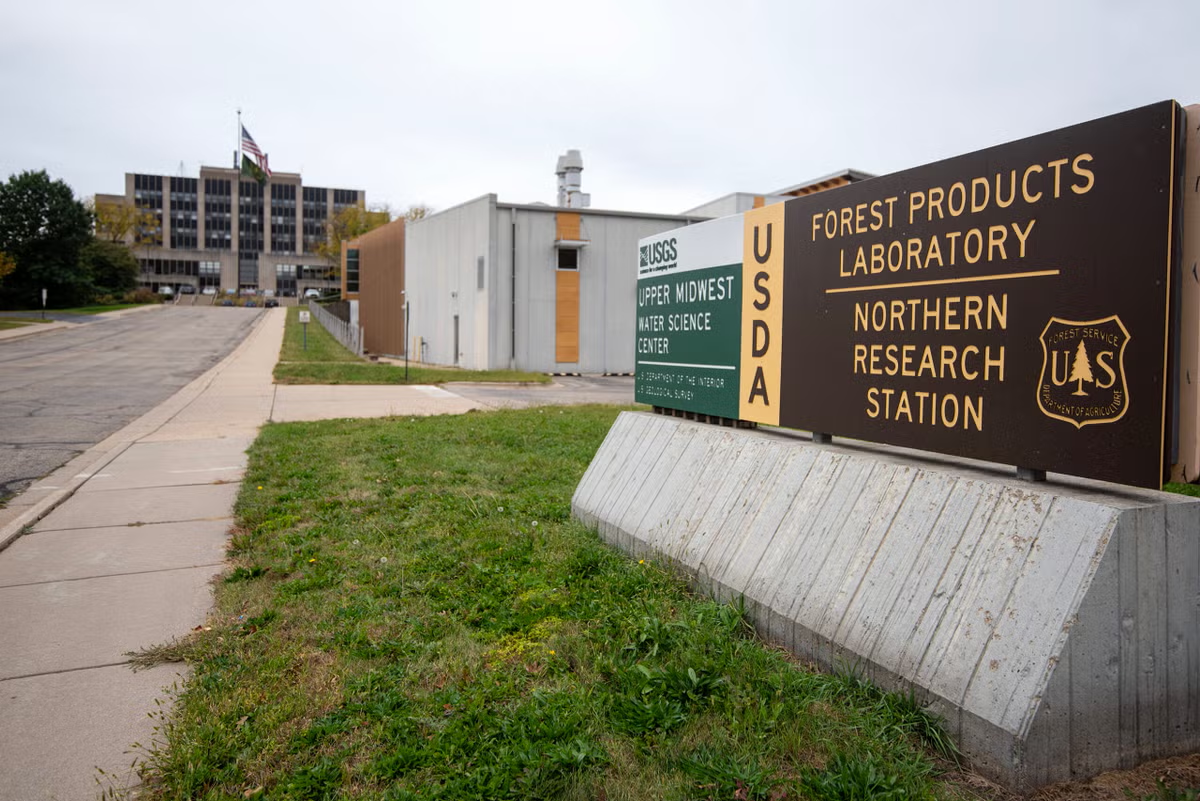
The USDA Forest Products Laboratory on Thursday, Oct. 16, 2025, in Madison, Wis. Angela Major/WPR

The Forest Service said a single research organization would speed up the use of science in forest management and reduce duplication. Strong told WPR’s “Wisconsin Today” it’s unclear what the move will mean for existing and long-term research projects.

“What I think we should be concerned about is what kind of pressure and stress this puts on employees and how they’re being treated as public servants,” Strong said.

Under the reorganization, the Forest Service said there will be no changes to firefighters or their positions. But the Trump administration is seeking to bring firefighting efforts under a single agency, which would affect thousands of employees if implemented.

Former U.S. Forest Service Chief Mike Dombeck served during the Clinton administration and lives in Wisconsin. He said he supports efforts to streamline the agency, noting past proposals to reorganize offices failed due to lacking support from congressional lawmakers.

Even so, he noted a similar attempt to move the Bureau of Land Management during Trump’s first term was later reversed. Dombeck said restructuring will likely cause the agency to lose more staff who choose not to uproot their families. He also fears the agency will lose ground on managing 193 million acres of national forests, climate change and wildland firefighting issues.

“I think this will be a real wake-up call to what the real values of national forests are,” Dombeck said. “We need to really ask this administration: what is the end game when we take a look at this level of chaos?”

Editor’s note: This story was updated with staffing figures on the Chequamegon-Nicolet National Forest from the U.S. Forest Service.

Wisconsin Public Radio, © Copyright 2026, Board of Regents of the University of Wisconsin System and Wisconsin Educational Communications Board.

The post Forest Service workers in Wisconsin may have to move after reorganization, union leader says appeared first on Great Lakes Now.

Original Article

Great Lakes Now

Great Lakes Now

https://www.greatlakesnow.org/2026/04/08/forest-service-workers-in-wisconsin-may-have-to-move-after-reorganization-union-leader-says/

Wisconsin Public Radio

The Trump administration plans to close four US Forest Service research facilities in Michigan, shifting scientists out of the state as it reorganizes and consolidates the agency.

Officials have not announced a closure date for the facilities, located in the Lower Peninsula communities of East Lansing and Wellston, between Manistee and Cadillac, and the Upper Peninsula communities of Houghton and L’Anse, saying changes will be implemented over the next year.

The Forest Service headquarters will also move from Washington, DC, to Salt Lake City in what Agriculture Secretary Brooke Rollins described as a measure to save money, boost logging and put workers “closer to the landscapes we manage.”

“Establishing a western headquarters in Salt Lake City and streamlining how the Forest Service is organized will position the Chief and operation leaders closer to the landscapes we manage and the people who depend on them,” Rollins said in a news release.

The announcement prompted dismay in Houghton, where workers with the US Forest Service Northern Research Station collaborate closely with researchers at Michigan Technological University and the Michigan Department of Natural Resources. A smaller group in L’Anse conducts forest inventories and analysis.

“It’s very disappointing,” said David Flaspohler, dean of the university’s College of Forest Resources and Environmental Science. “I understand priorities change from one administration to the next, and this administration is interested in increasing the volume of timber that is coming off of the national forests. To do that in a sustainable, safe way, you have to have people that are trained in the latest science and silviculture.”

Flaspohler estimated between 20 and 25 people work at the Houghton station, including scientists and other staff. The station has a “multidecadal history of partnerships” with researchers and foresters in the UP, he said. 

The heavily forested Upper Peninsula contains more than 8 million acres of forestland, split roughly evenly between private or locally owned timberland and state and federal forests.

Beyond conducting research that aims to keep northern forests healthy and productive, Flaspohler said, the lab is an important economic contributor to a region with scarce jobs.

“This lab with its many employees — who all had salaries and invested in the region just like any employed person does — that’s going to be lost.”

Two-thirds of facilities cut 

The Michigan facilities are part of a network of 57 nationwide. Nineteen will remain following the closures, with the Forest Service instead establishing regional hubs that serve multiple states. 

A Madison, Wisconsin, hub will serve Michigan, Illinois, Indiana, Iowa, Wisconsin, Minnesota and Missouri.

Michigan DNR spokesperson John Pepin said leaders in the state Forestry Resources Division are not yet sure how the changes will affect the state agency, which works closely with federal partners. 

“It’s pretty apparent that the details and individual impacts to a lot of programs are not worked out yet,” Pepin said. 

The biggest change appeared to be in Houghton, Pepin said. The facility houses the Northern Institute for Applied Climate Science, which Pepin said is relocating to Fort Collins, Colorado.

He said DNR and university officials in Michigan and other Great Lakes states “have worked closely” with the institute for many years assessing the climate vulnerability of forests, developing adaptation strategies and applying it to forest management.

It wasn’t clear whether layoffs would occur as part of the reorganization, but the administration’s announcement emphasized the reduction of “administrative duplication.”

“The Forest Service will provide employees and partners with detailed transition guidance as different milestones approach,” stated an agency release.

Agency spokespeople did not immediately respond to emailed questions from Bridge Michigan. 

Phone calls to Forest Service facilities in Houghton and Lansing were not answered. A person who picked up the phone in the Huron-Manistee National Forest, which includes the Wellston office, declined to comment. Bridge Michigan was unable to locate a phone number for the L’Anse facility.

While an agency press release described the move as a “structural reset and a common-sense approach to improve mission delivery,” some critics have described it as an effort to shrink the Forest Service and shift its mission away from protecting forests and toward logging and privatization.

Utah has been a frequent battleground for debates about public lands, from the fight over Bears Ears National Monument to a lawsuit by the state of Utah that aimed to take control of millions of acres of federal land and Utah Senator Mike Lee’s repeated efforts to sell off public land

“This reorganization will wreak havoc on the Forest Service management and organization, adding fuel to the unpopular narrative by officials like Senator Mike Lee that public lands should be sold off to private industry” said Josh Hicks, Conservation Campaigns Director at The Wilderness Society. “At a time when wildfires are getting worse, and access to public lands is already under strain, the last thing we need is an unnecessary reorganization.”

The post Trump administration plans closure of 4 Michigan forestry research centers appeared first on Great Lakes Now.

Original Article

Great Lakes Now

Great Lakes Now

https://www.greatlakesnow.org/2026/04/06/trump-administration-plans-closure-of-4-michigan-forestry-research-centers/

Bridge Michigan

By Brian Allnutt, Planet Detroit

This article was republished with permission from Planet Detroit. Sign up for Planet Detroit’s weekly newsletter here.


Water levels on the Great Lakes and Lake St. Clair continued to decline below long-term averages over the winter, just a few years after lakes hit record highs in 2019 and 2020.

Lake levels are expected to begin their seasonal rise and stay close to long-term averages, according to the U.S. Army Corps of Engineers’ six-month forecast issued March 4.  

The recent decline in Great Lakes water levels hasn’t been especially steep, but the overall trajectory of lake levels is one of increasing variability, according to Yi Hong, a research scientist at the Cooperative Institute for Great Lakes Research.

Lake Michigan and Lake Huron, which are technically two lobes of a single lake, saw record highs in 2020 less than a decade after being hit by record lows in 2012 and 2013, Corps records show.

Climate change-driven extreme storms and heatwaves are influencing lake level variability, but there isn’t enough data to show if levels will trend lower or higher over the long-term, Hong said.

Over the next six months, the Corps predicts water levels will stay below long-term averages on all the lakes, except possibly Lake Ontario.

Lake Michigan and Lake Huron will be the farthest below average. From March to August, levels will be 4 to 7 inches below last year’s levels and 11 to 12 inches below the long-term average. Closer to Detroit, Lake St. Clair will see water levels 6 to 10 inches below last year and 5 to 7 inches below the long-term average.

Megan Royal, a Corps hydraulic engineer, said the agency doesn’t anticipate any water level issues in the shipping channels and harbors used by Great Lakes freighters. Sediment can occasionally move into navigation channels and harbors, requiring emergency dredging, she said.

In an interview with Maritime Reporter TV, Eric Peace, vice president of the Lake Carriers Association, said Great Lakes shipping is negatively impacted by several factors, including severe weather over the fall and early ice cover. Dredging will continue to be a challenge for the industry, he said. 

Dry falls, hot summers contribute to lake level declines

A pattern of dry fall seasons from 2023-2025 contributed to the Great Lakes’ falling water levels, Royal told Planet Detroit.

Last summer’s heat also led to near record-high lake temperatures, producing significant evaporation when the winter’s extremely cold air passed over relatively warm water, she said.

“Evaporation is very difficult to measure because of just how large the lakes are,” Royal said, adding that modeling showed evaporation from all the lakes except Lake Erie was above average from October to January.

The rate of decline in lake levels is beginning to stabilize as a drought eases in parts of the Great Lakes Basin and snowmelt drives runoff into the lakes, she said.  

The National Weather Service’s Climate Prediction Center forecasts above normal precipitation across nearly all the U.S. portion of the Great Lakes Basin over the next three months. Temperatures in these areas mostly have equal chances of being above or below normal over the same time period.

The post Great Lakes water levels decline from record highs: What the forecast says appeared first on Great Lakes Now.

Original Article

Great Lakes Now

Great Lakes Now

https://www.greatlakesnow.org/2026/03/10/great-lakes-water-levels-decline-from-record-highs-what-the-forecast-says/

Planet Detroit

Great Lakes scientists discover new lifeform microbe, name it ShipGoo1

By Emilio Perez Ibarguen, Bridge Michigan

The Great Lakes News Collaborative includes Bridge Michigan; Circle of Blue; Great Lakes Now at Detroit PBS; Michigan Public, Michigan’s NPR News Leader; and The Narwhal who work together to bring audiences news and information about the impact of climate change, pollution, and aging infrastructure on the Great Lakes and drinking water.

Read Now at Great Lakes Now.

Original Article

Great Lakes Now

Great Lakes Now

https://www.greatlakesnow.org/2025/07/great-lakes-scientists-discover-new-lifeform-microbe-name-it-shipgoo1/

Bridge Michigan

Toxic algae blooms are lasting longer in Lake Erie − why that’s a worry for people and pets

By Gregory J. Dick, University of Michigan

 is an independent and nonprofit source of news, analysis and commentary from academic experts.

Federal scientists released their annual forecast for Lake Erie’s harmful algal blooms on June 26, 2025, and they expect a mild to moderate season.

Read Now at Great Lakes Now.

Original Article

Great Lakes Now

Great Lakes Now

https://www.greatlakesnow.org/2025/06/toxic-algae-blooms-are-lasting-longer-in-lake-erie-why-thats-a-worry-for-people-and-pets/

The Conversation

Sinking cities: Great Lakes cities not immune from under-recognized threat

Significant areas of the Earth’s surface across continents are gradually sinking and that process brings environmental, social and economic consequences to urban centers in the United States. Great Lakes cities Detroit and Chicago are among those at risk.

That’s the conclusion of a recent study conducted by Columbia University researchers, published by the science journal Nature Cities.

Read Now at Great Lakes Now.

Original Article

Great Lakes Now

Great Lakes Now

https://www.greatlakesnow.org/2025/05/sinking-cities-great-lakes-cities-not-immune-from-under-recognized-threat/

Gary Wilson, Great Lakes Now

Millions of People Depend on the Great Lakes’ Water Supply. Trump Decimated the Lab Protecting It.

By Anna Clark, ProPublica

This story was originally published by ProPublica.

Just one year ago, JD Vance was a leading advocate of the Great Lakes and the efforts to restore the largest system of freshwater on the face of the planet.

As a U.S.

Read Now at Great Lakes Now.

Original Article

Great Lakes Now

Great Lakes Now

https://www.greatlakesnow.org/2025/05/millions-of-people-depend-on-the-great-lakes-water-supply-trump-decimated-the-lab-protecting-it/

ProPublica

As bird flu wreaks havoc in the Midwest, researchers say vaccines offer a way out

This article is the first in a series called The Great Lakes Promise: Cost, Resilience and Refuge. This series was made possible in partnership between Great Lakes Now and Planet Detroit. 

Bird flu has hit the Great Lakes region hard this winter, killing nearly 5 million birds — including laying hens, ducks and other fowl — in Ohio and Indiana in the past two months.

Read Now at Great Lakes Now.

Original Article

Great Lakes Now

Great Lakes Now

https://www.greatlakesnow.org/2025/04/as-bird-flu-wreaks-havoc-in-the-midwest-researchers-say-vaccines-offer-a-way-out/

Brian Allnutt

As bird flu wreaks havoc in the Midwest, researchers say vaccines offer a way out

This article is the first in a series called The Great Lakes Promise: Cost, Resilience and Refuge. This series was made possible in partnership between Great Lakes Now and Planet Detroit. 

Bird flu has hit the Great Lakes region hard this winter, killing nearly 5 million birds — including laying hens, ducks and other fowl — in Ohio and Indiana in the past two months.

Read Now at Great Lakes Now.

Original Article

Great Lakes Now

Great Lakes Now

https://www.greatlakesnow.org/2025/04/as-bird-flu-wreaks-havoc-in-the-midwest-researchers-say-vaccines-offer-a-way-out/

Brian Allnutt

As bird flu wreaks havoc in the Midwest, researchers say vaccines offer a way out

This article is the first in a series called The Great Lakes Promise: Cost, Resilience and Refuge. This series was made possible in partnership between Great Lakes Now and Planet Detroit. 

Bird flu has hit the Great Lakes region hard this winter, killing nearly 5 million birds — including laying hens, ducks and other fowl — in Ohio and Indiana in the past two months.

Read Now at Great Lakes Now.

Original Article

Great Lakes Now

Great Lakes Now

https://www.greatlakesnow.org/2025/04/as-bird-flu-wreaks-havoc-in-the-midwest-researchers-say-vaccines-offer-a-way-out/

Brian Allnutt

What would the Great Lakes region be like with bullet trains?

A few months ago, I was riding on Amtrak’s new Borealis line from St. Paul, Minn., to Chicago. The train was packed that day, and the new line has proved popular.

My coach seat was much nicer than any airline. Plus, I didn’t have to go through security.

Read Now at Great Lakes Now.

Original Article

Great Lakes Now

Great Lakes Now

https://www.greatlakesnow.org/2025/03/what-would-the-great-lakes-region-be-like-with-bullet-trains/

Sean Ericson, Great Lakes Now

One world, two Great Lakes

A tropical lake in Central Africa might not seem like the first place you would look to gain insights into North America’s Great Lakes. But that’s just what researchers from Bowling Green State University (BGSU) in Ohio have been doing for the past three years.

Lake Victoria is the largest of Africa’s Great Lakes, the second largest in the world after Lake Superior.

Read Now at Great Lakes Now.

Original Article

Great Lakes Now

Great Lakes Now

https://www.greatlakesnow.org/2025/03/one-world-two-great-lakes/

Brian Owens, Great Lakes Now

Stunning new research reveals the Great Lakes pre-date North America

It is widely known by lovers of the Great Lakes that their unique shape was caused by glaciers melting and receding northward. That was approximately 20,000 years ago. However, new research published in Geophysical Research Letters suggests this treasured landmass started forming hundreds of millions of years ago, long before the theory of plate tectonics, when Pangea likely separated into the continents we recognize today. 

Read Now at Great Lakes Now.

Original Article

Great Lakes Now

Great Lakes Now

https://www.greatlakesnow.org/2025/03/stunning-new-research-reveals-the-great-lakes-pre-date-north-america/

Lisa John Rogers, Great Lakes Now

Great Lakes scientists among latest round of Trump cuts in Michigan

By Kelly House, Bridge Michigan

The Great Lakes News Collaborative includes Bridge Michigan; Circle of Blue; Great Lakes Now at Detroit PBS; Michigan Public, Michigan’s NPR News Leader; and The Narwhal who work together to bring audiences news and information about the impact of climate change, pollution, and aging infrastructure on the Great Lakes and drinking water.

Read Now at Great Lakes Now.

Original Article

Great Lakes Now

Great Lakes Now

https://www.greatlakesnow.org/2025/03/great-lakes-scientists-among-latest-round-of-trump-cuts-in-michigan/

Bridge Michigan

Are the ash trees doomed?

The emerald ash borer (EAB) has devastated ash trees across North America. But researchers in Ohio discovered something unexpected — some ash trees are surviving. These ‘lingering ash’ not only resist EAB but can even kill its larvae.

Scientists suspected genetic resistance and tested their theory by cloning and crossbreeding surviving trees.

Read Now at Great Lakes Now.

Original Article

Great Lakes Now

Great Lakes Now

https://www.greatlakesnow.org/2025/02/are-the-ash-trees-doomed/

Great Lakes Now

Saving mussels one dive at a time

Biological collection specialists are divers who travel around the country relocating freshwater mussels and other vulnerable aquatic species before river restoration projects begin.

In September of 2024, a team of 20 divers scoured 40,000 square meters of the Grand River in downtown Grand Rapids, Michigan. In just two weeks, the team found, identified, marked, tagged, and relocated every native freshwater mussel within their search area.

Read Now at Great Lakes Now.

Original Article

Great Lakes Now

Great Lakes Now

https://www.greatlakesnow.org/2025/02/saving-mussels-one-dive-at-a-time/

Great Lakes Now

Iced out? Research on the Great Lakes goes ahead amid funding chaos.

By Izzy Ross, Grist

This coverage is made possible through a partnership with Grist and Interlochen Public Radio in Northern Michigan.

The chaos surrounding the future of scientific research in the Trump administration’s first weeks has meant a bumpy beginning for a new program where ice fishing anglers and others on the frozen Great Lakes record ice thickness for research.

Read Now at Great Lakes Now.

Original Article

Great Lakes Now

Great Lakes Now

https://www.greatlakesnow.org/2025/02/iced-out-research-on-the-great-lakes-goes-ahead-amid-funding-chaos/

Grist

Blue Tech challenge aims at gathering business solutions to Great Lakes problems

By Izzy Ross, Interlochen Public Radio

This coverage is made possible through a partnership with IPR and Grist, a nonprofit independent media organization dedicated to telling stories of climate solutions and a just future.

A business competition to tackle environmental and infrastructure issues in the Great Lakes kicked off last week.

Read Now at Great Lakes Now.

Original Article

Great Lakes Now

Great Lakes Now

https://www.greatlakesnow.org/2025/02/blue-tech-challenge-aims-at-gathering-business-solutions-to-great-lakes-problems/

Interlochen Public Radio

Points North: A Sticky Solution for Microplastics

By Michael Livingston, Interlochen Public Radio

Points North is a biweekly podcast about the land, water and inhabitants of the Great Lakes.

This episode was shared here with permission from Interlochen Public Radio. 

Microplastics are everywhere.

Read Now at Great Lakes Now.

Original Article

Great Lakes Now

Great Lakes Now

https://www.greatlakesnow.org/2025/01/points-north-a-sticky-solution-for-microplastics/

Interlochen Public Radio

A Great Lakes ‘Pompeii’? Lake Huron’s depths hold secrets of human history

By Kelly House and Aaron Martin, Bridge Michigan

The Great Lakes News Collaborative includes Bridge Michigan; Circle of Blue; Great Lakes Now at Detroit PBS; Michigan Public, Michigan’s NPR News Leader; and The Narwhal who work together to bring audiences news and information about the impact of climate change, pollution, and aging infrastructure on the Great Lakes and drinking water.

Read Now at Great Lakes Now.

Original Article

Great Lakes Now

Great Lakes Now

https://www.greatlakesnow.org/2025/01/a-great-lakes-pompeii-lake-hurons-depths-hold-secrets-of-human-history/

Bridge Michigan

NOAA to study Great Lakes climate change with underwater robots

This article was republished here with permission from Great Lakes Echo.

By Georgia Hill, Great Lakes Echo

As climate change increasingly shapes the Great Lakes region’s ecology and economy, scientists plan to use underwater robots to gather previously inaccessible data they say will help communities adapt.

Read Now at Great Lakes Now.

Original Article

Great Lakes Now

Great Lakes Now

https://www.greatlakesnow.org/2024/12/noaa-to-study-great-lakes-climate-change-with-underwater-robots/

Great Lakes Echo

Environmentalists, Industry Divided Over Energy Permitting Bill

Melting ice. Wildfire smoke. Crop losses. Climate change is already having an impact on the Great Lakes region. According to a 2022 report by the Intergovernmental Panel on Climate Change, in order to limit global warming to 2 degrees Celsius, humanity would have to reach net-zero emissions by the 2070s.

Read Now at Great Lakes Now.

Original Article

Great Lakes Now

Great Lakes Now

https://www.greatlakesnow.org/2024/11/environmentalists-industry-divided-over-energy-permitting-bill/

Sean Ericson, Great Lakes Now

Can environmental law move beyond bedrock 1970’s legislation, while adapting to current and future challenges?

A 2022 report titled Promises Half Kept at the Half Century Mark, by the Environmental Integrity Project, released on the Clean Water Act’s 50th anniversary said the law is “falling short of its original goals.”

Michigan, for example, has the 4th largest number of impaired lakes, reservoirs and streams assessed for water contact recreation in the U.S.

Read Now at Great Lakes Now.

Original Article

Great Lakes Now

Great Lakes Now

https://www.greatlakesnow.org/2024/11/can-environmental-law-move-beyond-bedrock-1970s-legislation-while-adapting-to-current-and-future-challenges/

Gary Wilson, Great Lakes Now

Students at Michigan State and Wisconsin win EPA funding for environmental health innovations

This article was republished here with permission from Great Lakes Echo.

By Isabella Figueroa, Great Lakes Echo

Student researchers from Michigan State University and the University of Wisconsin are among the winners of an Environmental Protection Agency contest for innovations in sustainability.

Read Now at Great Lakes Now.

Original Article

Great Lakes Now

Great Lakes Now

https://www.greatlakesnow.org/2024/11/students-at-michigan-state-and-wisconsin-win-epa-funding-for-environmental-health-innovations/

Great Lakes Echo

Great Lakes most unwanted: Top 10 invasive species

Long after the Halloween season has ended, some of the Great Lakes’ most infamous invasive species remain a scary sight: blood-sucking parasites with suction-cup mouths, thousands of rotting fish carcasses washed ashore and sharp mussel shells that puncture the feet of unsuspecting beachgoers.

At least 188 nonnative aquatic species have been introduced to the Great Lakes, and over a third have become invasive, meaning they can have negative health, ecological and socioeconomic impacts when introduced to new ecosystems.

Read Now at Great Lakes Now.

Original Article

Great Lakes Now

Great Lakes Now

https://www.greatlakesnow.org/2024/10/great-lakes-most-unwanted-top-10-invasive-species/

Lily Stewart, Great Lakes Now

I Speak for the Fish: Where’s the line in fisheries research?

I Speak for the Fish is a monthly column written by Great Lakes Now Contributor Kathy Johnson, coming out the third Monday of each month. Publishing the author’s views and assertions does not represent endorsement by Great Lakes Now or Detroit Public Television. 

Read Now at Great Lakes Now.

Original Article

Great Lakes Now

Great Lakes Now

https://www.greatlakesnow.org/2024/10/i-speak-for-the-fish-wheres-the-line-in-fisheries-research/

Kathy Johnson, Great Lakes Now

The lonely Lake Superior caribou and a lesson in limits

By Emma McIntosh, The Narwhal

Emma and photographer Christopher Katsarov Luna spent four days in northwestern Ontario, reporting from the shore of Lake Superior.

The Great Lakes News Collaborative includes Bridge Michigan, Circle of Blue, Great Lakes Now at Detroit PBS, Michigan Public and The Narwhal who work together to bring audiences news and information about the impact of climate change, pollution, and aging infrastructure on the Great Lakes and drinking water.

Read Now at Great Lakes Now.

Original Article

Great Lakes Now

Great Lakes Now

https://www.greatlakesnow.org/2024/10/the-lonely-lake-superior-caribou-and-a-lesson-in-limits/

Mila Murray

How do fish survive in large urban waterways, like the Chicago River?

How fish adapt to life in large urban rivers, like the Chicago River, is one of the questions Dr. Austin Happel is trying to answer at the Shedd Aquarium.

“Knowing where different fish species are hanging out, we can look around that area and kind of understand what that habitat looks like and what it’s providing for them,” Happel said.

Read Now at Great Lakes Now.

Original Article

Great Lakes Now

Great Lakes Now

https://www.greatlakesnow.org/2024/09/how-do-fish-survive-in-large-urban-waterways-like-the-chicago-river/

Kathy Johnson, Great Lakes Now

Points North: The Last to Leave

By Daniel Wanschura

Points North is a biweekly podcast about the land, water and inhabitants of the Great Lakes.

This episode was shared here with permission from Interlochen Public Radio.

Kathleen Knight was doing some research in a forest in Ohio.

Read Now at Great Lakes Now.

Original Article

Great Lakes Now

Great Lakes Now

https://www.greatlakesnow.org/2024/09/points-north-the-last-to-leave/

Interlochen Public Radio

Beaver Island takes early steps to test wave energy in its waters

By Izzy Ross, Interlochen Public Radio

This coverage is made possible through a partnership with IPR and Grist, a nonprofit independent media organization dedicated to telling stories of climate solutions and a just future.

A project off the shore of Beaver Island could harness the power of Lake Michigan’s waves to generate renewable energy.

Read Now at Great Lakes Now.

Original Article

Great Lakes Now

Great Lakes Now

https://www.greatlakesnow.org/2024/07/beaver-island-takes-early-steps-to-test-wave-energy-in-its-waters/

Interlochen Public Radio

Finding creative new ways to manage invasive cattails

Hot dog on a stick. Water torch. Supermarket of the swamp.

Cattails go by many names, but almost everyone can recognize the pervasive wetland plant  that grows along lakes, ponds, marshes, and swamps.

Their thin green stems and leaves can reach up to nearly ten feet in height.

Read Now at Great Lakes Now.

Original Article

Great Lakes Now

Great Lakes Now

https://www.greatlakesnow.org/2024/04/finding-creative-new-ways-to-manage-invasive-cattails/

Lily Stewart, Great Lakes Now

Through a Glass Darkly

Increasingly, scientists and regulators are concerned about the presence of pharmaceutical pollution in our waterways, including in the Great Lakes region. This contamination has the potential to harm wildlife and make antibiotics less effective. However, more research needs to be done to understand this issue, according to scientists who have studied pharmaceuticals and other contaminants.

Read Now at Great Lakes Now.

Original Article

Great Lakes Now

Great Lakes Now

https://www.greatlakesnow.org/2024/03/through-a-glass-darkly/

Sean Ericson, Great Lakes Now

The solar eclipse is a great opportunity for students and citizen scientists alike

On April 8, a solar eclipse will march from Maine to Mexico, darkening the skies during midday. The moon’s shadow will black out the sun completely just south of Michigan, but folks in the southeast part of the state will be close to the action and also experience almost complete darkness.

Read Now at Great Lakes Now.

Original Article

Great Lakes Now

Great Lakes Now

https://www.greatlakesnow.org/2024/03/the-solar-eclipse-is-a-great-opportunity-for-students-and-citizen-scientists-alike/

Sarah Derouin, Great Lakes Now

Fewer fish and more algae? Scientists seek to understand impacts of historic lack of Great Lakes ice

By Todd Richmond, Associated Press

RACINE, Wis. (AP) — Michigan Tech University biologists have been observing a remote Lake Superior island’s fragile wolf population every winter since 1958, but they had to cut this season’s planned seven-week survey short after just two weeks.

The ski plane they study the wolves from uses the frozen lake as a landing strip because there’s nowhere to touch down on the island.

Read Now at Great Lakes Now.

Original Article

Great Lakes Now

Great Lakes Now

https://www.greatlakesnow.org/2024/03/ap-fewer-fish-and-more-algae-scientists-seek-to-understand-impacts-of-historic-lack-of-great-lakes-ice/

The Associated Press

Teachers and scientists work together on the Lake Guardian 

The Lake Guardian is currently in its winter home, nestled along the docks in Milwaukee, Wisconsin. In warmer months, the Environmental Protection Agency (EPA) uses this ship to gather data on water quality, and has for over forty years. And each year since 1991, a group of lucky educators has squeezed on board and, for nine days, also called this ship home. 

Read Now at Great Lakes Now.

Original Article

Great Lakes Now

Great Lakes Now

https://www.greatlakesnow.org/2024/02/teachers-and-scientists-work-together-on-the-lake-guardian/

Lisa John Rogers, Great Lakes Now

Preserving Minnesota’s bogs could fight climate change

This article was republished here with permission from Great Lakes Echo.

By Kayla Nelsen, Great Lakes Echo

Researchers in Minnesota are creating a national map to identify peatlands – soggy areas of slowly decaying organic matter – and guides for how to restore them.

Read Now at Great Lakes Now.

Original Article

Great Lakes Now

Great Lakes Now

https://www.greatlakesnow.org/2024/02/preserving-minnesotas-bogs-could-fight-climate-change/

Great Lakes Echo

The future of water management, with Curt Wolf

In order to do meaningful things at scale, everyone has to be at the table. This is what Curt Wolf, Managing Director of the University of Michigan’s Urban Collaboratory, said about the Michigan Center for Freshwater Innovation in an interview with Great Lakes Now. Last month, he explained the benefits of pulling together stakeholders, the Great Lakes Water Authority, and major universities like the University of Michigan, Wayne State, and Michigan State to all work alongside each other to collaborate on grand challenges, like catastrophic flooding in the region.  

Read Now at Great Lakes Now.

Original Article

Great Lakes Now

Great Lakes Now

https://www.greatlakesnow.org/2024/02/the-future-of-water-management-with-curt-wolf/

Lisa John Rogers

As Michigan winters vanish, researchers study snow for clues about what’s next

By Kelly House, Bridge Michigan

The Great Lakes News Collaborative includes Bridge Michigan; Circle of Blue; Great Lakes Now at Detroit Public Television; Michigan Public, Michigan’s NPR News Leader; and The Narwhal who work together to bring audiences news and information about the impact of climate change, pollution, and aging infrastructure on the Great Lakes and drinking water.

Read Now at Great Lakes Now.

Original Article

Great Lakes Now

Great Lakes Now

https://www.greatlakesnow.org/2024/02/as-michigan-winters-vanish-researchers-study-snow-for-clues-about-whats-next/

Bridge Michigan

Warm weather forces park officials to suspend Isle Royale wolf count for first time in decades

By Todd Richmond, Associated Press

A stretch of unusually warm weather has forced federal officials to suspend researchers’ annual wolf-moose count in Isle Royale National Park for the first time in more than six decades.

Isle Royale is a 134,000-acre (54,200-hectare) island situated in far western Lake Superior between Grand Marais, Minnesota, and Thunder Bay, Canada.

Read Now at Great Lakes Now.

Original Article

Great Lakes Now

Great Lakes Now

https://www.greatlakesnow.org/2024/02/ap-warm-weather-forces-park-officials-to-suspend-isle-royale-wolf-count-for-first-time-in-decades/

The Associated Press

Smart buoys help brace Great Lakes for environmental challenges

This article was republished here with permission from Great Lakes Echo.

By Daniel Schoenherr, Great Lakes Echo

Lake Erie is the first of the Great Lakes getting connected to the internet with a series of offshore “smart” buoys.

And it’s not just for sending texts on the water.

Read Now at Great Lakes Now.

Original Article

Great Lakes Now

Great Lakes Now

https://www.greatlakesnow.org/2024/01/smart-buoys-help-brace-great-lakes-for-environmental-challenges/

Great Lakes Echo

Consortium of Great Lakes universities and tech companies gets $15M to seek ways to clean wastewater

MADISON, Wis. (AP) — The National Science Foundation has given a consortium of Great Lakes-area universities and tech companies $15 million to develop ways to extract harmful substances from wastewater.

The foundation announced Monday that it has named the Great Lakes ReNEW group as one of 10 regional innovation engines across the country.

Read Now at Great Lakes Now.

Original Article

Great Lakes Now

Great Lakes Now

https://www.greatlakesnow.org/2024/01/ap-consortium-of-great-lakes-universities-and-tech-companies-gets-15m-to-seek-ways-to-clean-wastewater/

The Associated Press

You can’t stop the lake

In Douglas, Michigan, houses dot the coast of Lake Michigan, with wooden stairs — some newly built, others with broken steps — descending the steep hillside to give shoreline residents access to the narrow sandy beach. When winds grow fierce, waves crash against the boulders and large sandbags stacked along the base of these homes.  

Read Now at Great Lakes Now.

Original Article

Great Lakes Now

Great Lakes Now

https://www.greatlakesnow.org/2024/01/you-cant-stop-the-lake/

Astrid Code

The Toxic Sands Threatening Fish in Lake Superior

By Shantal Riley, Undark

Shantal Riley is an award-winning health and environmental reporter, focused on water quality in communities of color. Her work has been featured by Frontline PBS, NOVA PBS, the Washington Post Magazine, and other publications.

This story was supported in part by The Uproot Project, which is operationally and financially supported by Grist. 

Read Now at Great Lakes Now.

Original Article

Great Lakes Now

Great Lakes Now

https://www.greatlakesnow.org/2024/01/the-toxic-sands-threatening-fish-in-lake-superior/

Undark

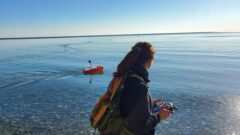
Coastal erosion researcher appeals for help in finding her remote-control boat

Chelsea Volpano’s coastal erosion study began drawing attention on social media last week, but not for the reasons you would expect.

The University of Wisconsin-Madison student was gathering the final data set for her Ph.D. on October 30 when her small boat stopped responding to the remote control.

Read Now at Great Lakes Now.

Original Article

Great Lakes Now

Great Lakes Now

https://www.greatlakesnow.org/2023/11/coastal-erosion-researcher-appeals-for-help-in-finding-her-remote-control-boat/

Sharon Oosthoek

Science Says What? How eDNA research is evolving to create a new era in conservation

Science Says What? is a monthly column written by Great Lakes now contributor Sharon Oosthoek exploring what science can tell us about what’s happening beneath and above the waves of our beloved Great Lakes and their watershed.

Thirteen years ago, a live bighead carp was caught within swimming distance of Lake Michigan.

Read Now at Great Lakes Now.

Original Article

Great Lakes Now

Great Lakes Now

https://www.greatlakesnow.org/2023/10/science-says-what-how-edna-research-is-evolving-to-create-a-new-era-in-conservation/

Sharon Oosthoek

New University of Michigan led initiative expands climate research across borders

When it comes to fostering resilience in the face of climate change in the waters that border the U.S. and Canada, hydrologist Drew Gronewold wants the region to be a “role model for the world.”

Gronewald is leading a new U.S. – Canada and sovereign nations effort to establish a research center designed to strengthen climate change resilience in communities that span international boundaries and jurisdictions.

Read Now at Great Lakes Now.

Original Article

Great Lakes Now

Great Lakes Now

https://www.greatlakesnow.org/2023/10/new-university-michigan-led-initiative-expands-climate-research-across-borders/

Gary Wilson

Researchers: Current Great Lakes stewardship is “ill-equipped” to handle future challenges

The Great Lakes are facing an era of challenges and opportunities that will require new stewardship principles, and leaders who are able to work across disciplines including science, policy, economics and social science.

That is the message from an ad hoc collaborative of University of Michigan researchers in a recent paper titled Leadership for the next generation of Great Lakes stewardship.

Read Now at Great Lakes Now.

Original Article

Great Lakes Now

Great Lakes Now

https://www.greatlakesnow.org/2023/09/researchers-current-great-lakes-stewardship-ill-equipped-handle-future-challenges/

Gary Wilson

Great Lakes Moment: University of Windsor to build capacity for Canada’s national urban parks

Eighty percent of Canadians live in urban areas, and most are disconnected from nature. To help address this, Canada is creating a network of national urban parks not only to conserve nature, but to connect people with it, and advance reconciliation with Indigenous peoples.

Now, the University of Windsor has become a partner by creating the first university-based National Urban Park Hub.

Read Now at Great Lakes Now.

Original Article

Great Lakes Now

Great Lakes Now

https://www.greatlakesnow.org/2023/09/great-lakes-moment-university-windsor-build-capacity-canada-national-urban-parks/

John Hartig

Energy News Roundup: Climate action plan in Illinois, Offshore wind project in Lake Erie

Keep up with energy-related developments in the Great Lakes area with Great Lakes Now’s biweekly headline roundup.

Click on the headline to read the full story:


Illinois

Wind, solar training facility opens in Bloomington — Pantagraph

Officials unveil a new technical training center in Bloomington, Illinois, that will train at least 100 people annually for wind and solar jobs.

Read Now at Great Lakes Now.

Original Article

Great Lakes Now

Great Lakes Now

https://www.greatlakesnow.org/2023/08/energy-news-roundup-climate-action-plan-illinois-offshore-wind-lake-erie/

Kathy Johnson

Toxins from cyanobacterial blooms can be airborne, but the threat to public health is unclear

By Lester Graham, Michigan Radio

The Great Lakes News Collaborative includes Bridge Michigan; Circle of Blue; Great Lakes Now at Detroit Public Television; and Michigan Radio, Michigan’s NPR News Leader; who work together to bring audiences news and information about the impact of climate change, pollution, and aging infrastructure on the Great Lakes and drinking water.

Read Now at Great Lakes Now.

Original Article

Great Lakes Now

Great Lakes Now

https://www.greatlakesnow.org/2023/08/toxins-cyanobacterial-blooms-airborne-threat-to-public-health-unclear/

Michigan Radio