By Sarah Shemkus

This story was originally published by Canary Media.

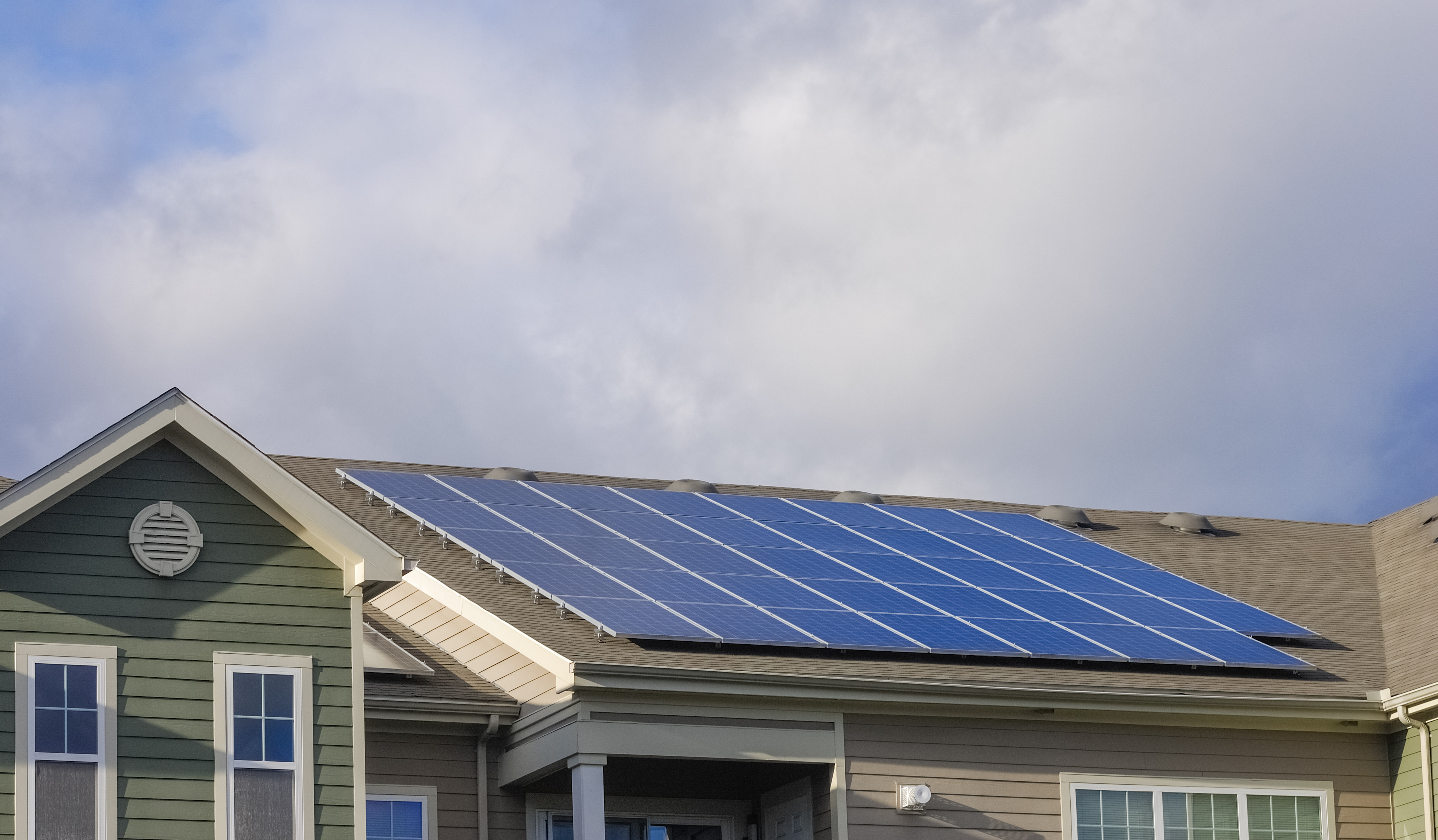
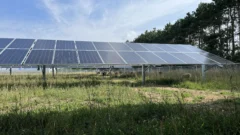
Balcony solar is one of the hottest ideas in renewable energy right now. Boosters say the systems — DIY kits that can be plugged right into a standard outlet — save users money without any need for subsidies, government incentives, or utility permission.

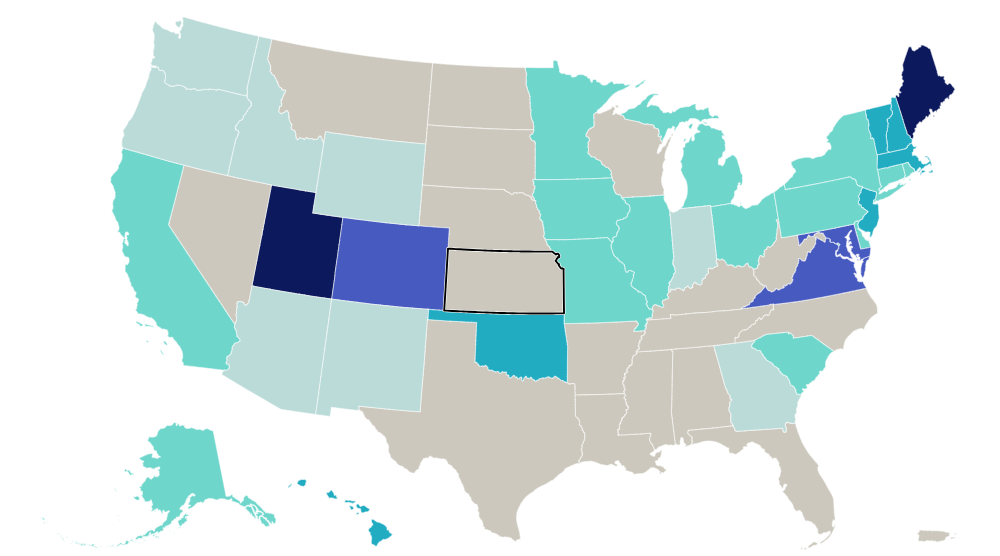
As Americans continue to struggle with soaring power prices, about half the states in the U.S. are considering legislation to pave the way for residents to adopt plug-in solar and start generating some of their own electricity from their own backyard or porch.

“It’s about energy affordability,” said Cora Stryker, co-founder of Bright Saver, a nonprofit that promotes plug-in solar. ​“Every legislator wants their constituency to have less trouble meeting their energy demands.”

As these efforts work their way through the legislative process, we will be monitoring the action here, using information from Bright Saver and bill-tracking databases.

Latest action: Maine Gov. Janet Mills (D) signed the state’s plug-in solar bill into law on April 6.

The post Which Great Lakes states are advancing balcony solar? appeared first on Great Lakes Now.

Original Article

Great Lakes Now

Great Lakes Now

https://www.greatlakesnow.org/2026/04/10/which-great-lakes-states-are-advancing-balcony-solar/

Canary Media

By Ethan Bakuli, Planet Detroit

This article was republished with permission from Planet Detroit. Sign up for Planet Detroit’s weekly newsletter here.


In the middle of a five-day power outage brought on by an early spring storm, Woody Gontina’s house appeared to be the only one on his street that still had its lights on.

At the time, Gontina had just installed a 5.4-kilowatt solar-and-battery-storage system at his home.

“Because of the solar and the battery, we had our whole house powered day and night throughout that outage,” recalls Gontina.

While Gontina could not have foreseen the storm’s impact, it was an early proof of concept for the Royal Oak city commissioner, who was in the early stages of encouraging his neighbors to install solar panels on their properties through an initiative called Solarize Royal Oak.

In the past few years, a largely grassroots solar installation trend has taken shape across a handful of Michigan towns and counties, as residents like Gontina have sought to capitalize on group-buy discounts and federal incentives to upgrade their homes.

“There wasn’t really a champion to push (Solarize) forward,” said Gontina. “I had the time and the interest to do it, and I also understood that the city was very challenged in terms of resources and didn’t have the time to meet an initiative like that.”

Now overseen by the Great Lakes Renewable Energy Association, the Solarize program has expanded to Grand Rapids, Lansing, Kalamazoo, as well as Oakland, Washtenaw, and Wayne counties, where city and county officials have taken over administering it to homeowners and businesses.

While federal incentives for solar have shrunk and solar installations have declined under the Trump administration, advocates of Solarize are still encouraging residents and businesses to take advantage of remaining opportunities and to embrace renewable energy sources amid utility rate hikes.

“As we see our energy costs continuing to rise, that’s really the biggest argument for renewables,” said Gontina. “Our electric provider, DTE, has demonstrated that they will not stop continuing to ask for increases at a regular pace until there’s something legislatively done to stop that.”

National grassroots solar installation program appeals to Michigan homeowners

While Solarize has found its footing in Michigan in the past decade, its origins trace back to 2009, when residents in Portland, Or. began hosting neighborhood seminars with local contractors to learn about residential solar panel installation. The program rapidly expanded the city’s solar footprint, according to a report from the Energy Trust of Oregon.

For Ann Arbor energy manager and resident Julie Roth — who now works for the city’s Office of Sustainability & Innovation — hearing about the early success of Solarize was enough of a rationale to try it in her neighborhood in 2019. At the time, she was interested in installing solar panels on her roof but was concerned about the high upfront costs and the wide range of contractor quotes.

“I pitched it to my solar installer (contractor),” said Roth. “I said, ‘Well, what do you think if I get a bunch of people here and we all do it together. Would you give us a discount?’ He said, ‘Sure,’ and came up with a sort of discount structure.”

After she sent out an invite on Nextdoor and Facebook, Roth says, she was surprised at the turnout.

“I thought that I would have three people sitting around my dining room table awkwardly trying not to make eye contact with the installer or me, and then we would all go home, and it would be over,” said Roth.

Instead, 40 people showed up to that first meeting at her house. Within a year, about a dozen people from that night installed solar panel systems on their homes.

“It basically started because we were trying to overcome barriers to adoption,” she said. “We didn’t have any staff. It started as a volunteer thing. We didn’t have any money, and so with no resources and very little bandwidth, what can you do?”

As residents like Gontina and Roth have become ambassadors for Solarize, encouraging neighbors to host their own events and create more group-buy discounts on solar, it’s brought greater interest from county governments and statewide organizations seeking to broaden its appeal.

“We really want to position ourselves as a resource, as an advocate, and relationship builder,” said Julie Lyons Bricker, chief sustainability officer for Oakland County, one of the latest counties to adopt the Solarize program.

Since launching in 2021, the county’s Sustainability Office has focused on both improving energy efficiency across Oakland’s 62 cities, townships, and villages and guiding homeowners and businesses toward available incentives, says Lyons Bricker.

With Solarize Oakland County, the county hopes to raise awareness on how solar works, what’s needed to get it installed, and what people should expect from their contractors. Groups of residents can be matched with GLREA-approved vendors and receive a bulk discount of 5 to 15% on their solar panel purchases.

A diminishing landscape for solar installation

As momentum for solar installations has picked up in some communities across Michigan, the national solar industry has had to contend with tariff pressures and a freeze on approvals for major infrastructure projects, amid a pivot away from the clean energy policies and investments that emerged during the Biden administration.

Solar installations have declined, leading to an industry-wide disruption, with utility-scale solar installations down 16% and community solar down 25% in 2025, according to a recent report from the Solar Energy Industries Association (SEIA).

Last year, the Residential Clean Energy Credit — a 30% federal tax credit on solar, wind, and geothermal home installations — was cut six years short when Trump signed the “One Big Beautiful Bill” in July 2025, ending a credit that had been set to run through 2032.

“It’s an economic investment when you’re thinking about installing a system,” said Gontina. “Anything that is available to help with that investment only makes it easier.”

While the residential tax credit ended in December, multiple financial incentives for businesses and houses of worship remain active through the end of 2027. Bricker says the county is still trying to encourage commercial property owners to take advantage of that opportunity while it lasts.

For renters, lower-income residents, and those with roofs unsuitable for panels, rooftop solar programs like Solarize remain largely out of reach. The Trump administration’s termination of the federal Solar for All program in 2025 eliminated $156 million in Michigan projects designed to expand solar access for low-income households — projects already underway in Detroit, Highland Park, Benton Harbor, and beyond.

Community solar legislation, which would allow residents to subscribe to off-site solar arrays and receive bill credits without owning a system, has bipartisan support in Michigan but has yet to advance.

Solar panel parties spawn citywide energy push

Gontina says that the Solarize Oakland County program could help the rest of the county catch up to what individual towns like Royal Oak are attempting to do.

“You’re bringing a bigger tent to the picture so that more people feel like they have an opportunity to be included,” he said.

Although Solarize is transitioning toward a “top-down” approach, Roth credits the “grassroots” solar parties she and others hosted with helping grow the city’s residential solar installations over the last several years.

“It grows the movement more when you’re talking to your neighbors than when you’re just talking to a city representative,” said Roth. “The community engagement and buy-in and ownership are much higher, especially when you’re not just looking at getting solar up, you’re looking at engaging a community around energy.”

She added: “We’re there as technical experts to some degree, to add legitimacy, and to continue to bring people along, and to make sure that the installers are being responsive.”

Although Ann Arbor Solarize’s numbers have slowed down in recent years, city data shows that the number of residents installing solar panels has increased in tandem with the program’s launch in 2019 and the growth of the solar installation market.

Ann Arbor has averaged about 180 residential solar installations annually since 2020, compared to 17 per year between 2008 and 2019.

Nearly seven years later, the success of Ann Arbor’s Solarize program has contributed, in part, to the city’s push to create a municipal-owned utility designed to help residents and businesses access solar energy and battery storage without upfront costs. The program will be optional, and will supplement, not replace, the use of DTE’s electric grid, according to city documents.

Ann Arbor’s Sustainable Energy Utility, authorized by roughly 80% of voters, is designed in part to address those barriers. Unlike rooftop solar programs, it would allow residents and businesses to access solar and battery storage without upfront costs — with the city owning the equipment and customers paying a monthly rate. Pilot projects targeting lower-income neighborhoods are expected to launch in 2026, with citywide expansion planned for 2027.

Roth hopes the city’s trend in renewable energy adoption and utility ownership can be a model for other communities. These days, she relishes the sight of solar panels around Ann Arbor.

“You walk around, you walk your dog in the neighborhoods, and it’s like, ‘solar there, solar there, solar there,’” she said. “It’s so visible. And that’s really exciting to see the actual physical changes in your community.”


The post Residents across Michigan unite for solar discounts appeared first on Great Lakes Now.

Original Article

Great Lakes Now

Great Lakes Now

https://www.greatlakesnow.org/2026/04/09/residents-across-michigan-unite-for-solar-discounts/

Planet Detroit

Catch the latest energy news from around the region. Check back for these monthly Energy News Roundups.

Ohio prosecutors are back to square one in their corruption case against two former FirstEnergy executives. Prosecutors accused former CEO Chuck Jones and senior vice president Mike Dowling of paying a state energy regulator a $4.3 million bribe. But the high-profile case ended in a mistrial after the jury couldn’t agree whether Jones and Dowling were guilty, even though others (including Ex-Ohio House Speaker Larry Householder) have been convicted and sentenced to prison in connection with the energy bribery scandal. A retrial is expected.

The Trump administration ordered two aging Indiana coal plants to be kept open another 90 days, through mid-June, at a cost utilities say is climbing into the hundreds of millions. The U.S. Department of Energy first moved to block the plants’ planned retirement in December, citing a need to prevent electricity shortages. Days after the administration extended its order, the Illinois and Minnesota attorneys general sued, arguing in separate filings that keeping the plants open would increase costs for ratepayers in their states.

A Wisconsin coal plant’s retirement is being delayed — again. Utility We Energies said it will continue operating the Oak Creek Power Plant’s two remaining coal units through the end of 2027 to ensure energy reliability and affordability. The utility previously pushed back the units’ retirement from 2024 to 2025, then to 2026, citing high energy demand. Groups opposed to extending the plant’s life said it will have negative environmental and health impacts and lead to higher costs for ratepayers.

The Trump administration and Japanese partners plan to build a massive data center in Ohio powered by its own gas plant, at a cost in the tens of billions of dollars. If completed as planned, the Pike County technology campus would be the largest single private-sector investment in state history, Cleveland.com reported. There are already questions, though, about the kinds of delays a project of this scale could face.

And northwest Indiana could lose 12,000 jobs by the mid-2030s if the steel sector continues business as usual, according to a new report from the Indiana University Environmental Resilience Institute. If companies instead adopt cleaner technologies, the state could gain jobs while reducing carbon emissions and negative health impacts, the report found. Steelmaker, U.S. Steel, challenged some of the findings in the report that comes as Cleveland-Cliffs, another steelmaker, appears poised to recommit to coal at an Ohio steel mill.

More energy news, in case you missed it:

The post Ohio energy corruption case goes nowhere after jury deadlocks over bribery charges appeared first on Great Lakes Now.

Original Article

Great Lakes Now

Great Lakes Now

https://www.greatlakesnow.org/2026/04/08/ohio-energy-corruption-case-goes-nowhere-after-jury-deadlocks-over-bribery-charges/

Nicole Pollack, Great Lakes Now

By Kathiann M. Kowalski

This story was originally published by Canary Media.


Ohio regulators have blocked yet another major solar project because of local pushback, even though a significant number of public comments opposing the array appear to be fabricated. It’s the latest blow to solar in a state that defers to local governments on renewable energy, but not on fossil fuels.

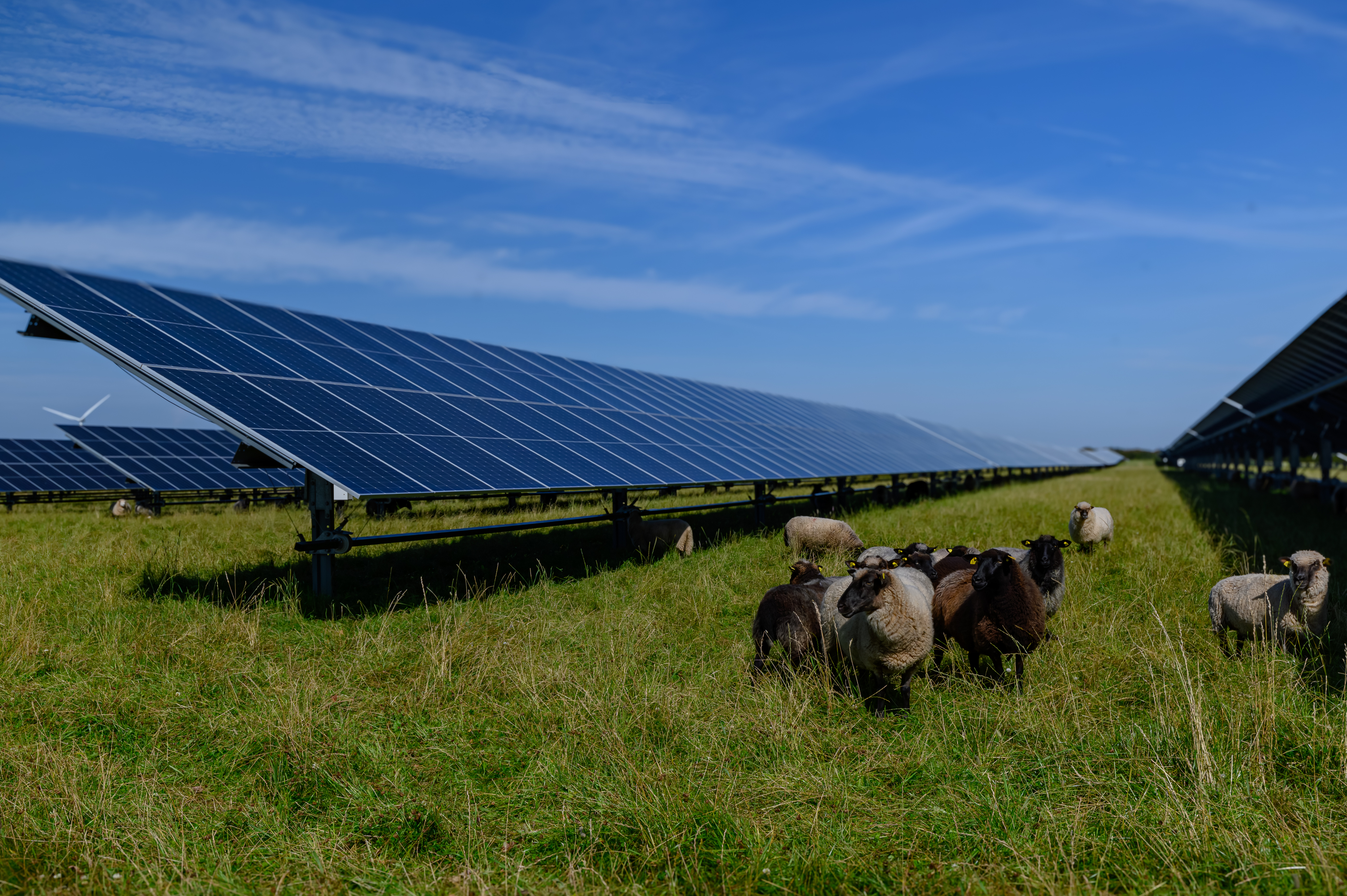
The Ohio Power Siting Board decided last Thursday to deny a permit for the 94-megawatt Crossroads Solar Grazing Center, which would combine solar panels with sheep grazing in central Ohio. Although the project otherwise met all legal requirements, the board concluded that it ​“fails to serve the public interest.”

Regulators acknowledged that Crossroads Solar would have statewide benefits, create jobs, and increase local tax revenue. But they said the project’s merits are outweighed by the existence of ​“consistent and substantial opposition” from local governments and nearby residents.

Critics of the decision are troubled that the regulators basically shrugged off the fact that a substantial number of public comments filed in opposition to Crossroads Solar were duplicative, anonymous, or seemingly faked. A recent Canary Media review found that dozens of comments contained apparent lies about people’s names or residence in Morrow County, where the project site is located. The board acknowledged those concerns in its ruling but asserted that substantial public opposition existed regardless of the potentially fabricated comments.

The controversy about those false comments, along with anonymous or multiple submissions, feeds into broader criticism that the board has reduced renewable energy siting to a local popularity contest.

“When the volume of public input is prioritized over its substance, it weakens trust in the process and makes it harder to build the energy system Ohio needs,” said Nathan Rutschilling, managing director of energy policy for the Ohio Environmental Council.

Like many states, Ohio faces soaring electricity demand and rising power bills. Clean energy could help address those challenges — provided it can get built.

“If we’re going to deny solar the ability to compete in Ohio’s marketplace, I think that’s going to result in an artificially high price for Ohio consumers,” said Democratic state Sen. Kent Smith, who is a nonvoting member of the siting board. He described the board’s Crossroads Solar denial as ​“a dangerous thing for the state in terms of both affordability and reliability.”

An uphill battle for Crossroads Solar

State and local restrictions on renewable energy have proliferated across the country in recent years, and Ohio is no exception. The state’s wind and solar developers face hurdles that fossil fuel companies do not, thanks to a 2021 law that lets counties ban renewable energy developments — an authority they do not have over oil, gas, and coal projects.

Morrow County instituted such a ban across half its townships last year. But because Crossroads Solar was in the regional grid operator’s queue before the 2021 state law took effect, it is exempt from the blanket prohibition.

However, for the past few years, the Ohio Power Siting Board and its staff have denied or recommended against permits for solar farms when all nearby local governments have been against a project. The Ohio Supreme Court has not yet ruled on a legal challenge to that practice, even though oral argument was held more than a year ago.

Initially, it seemed as if Crossroads Solar might escape this fate. Although Morrow County commissioners and the boards of trustees in two townships where parts of the project would be built were against it, the board in a third township — Cardington — remained neutral. Since opposition wasn’t unanimous, the siting board’s staff recommended in early December that regulators deem the project in the public interest.

But shortly after that recommendation, meeting minutes show that one Cardington township trustee changed his position because the staff report ​“did not set well with him.” That led the Cardington trustees to pass a 2–1 resolution opposing Crossroads Solar. The switch-up ultimately resulted in the siting board staff reversing its stance, filing testimony in January that encouraged regulators to rule against the project.

The Power Siting Board relied on that reversal to declare that Crossroads Solar was not in the public interest. It also asserted that there was ​“strong, united opposition to the project” by people in the area. It’s worth noting, however, that many locals supported Crossroads Solar. Its developer, Open Road Renewables, found that nearly half the public comments from people in nearby towns approved of the project, once the duplicate, anonymous, and unverifiable submissions were removed.

Siting practices under fire

The Crossroads Solar case exposes deeper flaws in Ohio’s renewable energy siting process, some say.

It’s problematic that a single person’s vote on a town council ​“essentially derailed the whole project,” said Heidi Gorovitz Robertson, a professor at Cleveland State University’s College of Law. She argued that instead of reciting objections, regulators should evaluate whether those concerns have a factual basis and whether a developer’s plans already address them — and then decide whether any remaining issues actually justify denying a permit.

In the case of Crossroads Solar, Open Road Renewables agreed to address specific concerns about the project. In a late December settlement with the Ohio Environmental Council, the Ohio Chamber of Commerce, and various landowners, the company promised to follow best practices to keep roads clear and clean, use panels with an antireflective coating, minimize impacts to agriculture during construction, file a sheep-grazing plan to manage vegetation, work with a landscaping company to screen the panels from public view, and more.

But the Power Siting Board wasn’t swayed by the compromise, noting that the local governments and individual opponents who intervened in the case didn’t take part in the settlement negotiations, despite being invited to do so.

The board also appeared to buy into several obviously unfounded objections to Crossroads Solar, said Craig Adair, vice president of development at Open Road Renewables. For example, its ruling cited community skepticism about the company’s intention to graze sheep around the panels, since no contracts for such an arrangement had yet been signed. The board also noted opponents’ fears that the permit would later be transferred to another firm that wouldn’t make good on Open Road Renewables’ promises.

But the application’s commitment to use sheep would become part of the permit conditions, Adair noted. And, as a matter of basic contract law, any company that acquired the project would be subject to the same conditions as Open Road Renewables regarding permits, leases, easements, and other agreements.

The board also didn’t examine whether local governments’ objections to Crossroads Solar were based on misinformation, such as a laundry list of concerns about fires, contaminated drinking water, heat islands, and stray voltage.

“It’s taking fact and truth out of the equation, and it’s truly about concerns and politics,” said Doug Herling, a vice president at Open Road Renewables.

Instead, the board ​“denied a project that has no fuel requirements while we’re in the middle of an oil and gas crisis,” Herling continued, referencing the current supply disruptions caused by war in the Middle East. He also pointed out that solar can be built faster than gas plants, which face yearslong supply chain backlogs, and it doesn’t emit planet-warming and health-harming pollution.

Herling and Adair said the company plans to ask the board to reconsider its ruling. 

Meanwhile, the permit denial ​“sends a dangerous signal to investors,” Adair said.

“I wish the state of Ohio luck in meeting its power needs and keeping power prices from going through the roof,” he said. For renewable energy developers, ​“it’s now a game of Russian roulette as to whether you would get a permit and what those criteria are.” 

The post Ohio blocks big solar farm, despite apparently fake public comments appeared first on Great Lakes Now.

Original Article

Great Lakes Now

Great Lakes Now

https://www.greatlakesnow.org/2026/03/26/ohio-blocks-big-solar-farm-despite-apparently-fake-public-comments/

Canary Media

Ontario is subsidizing an energy project in Georgian Bay despite expert advice

By Fatima Syed, The Narwhal

The Great Lakes News Collaborative includes Bridge Michigan, Circle of Blue, Great Lakes Now at Detroit PBS, Michigan Public and The Narwhal who work together to bring audiences news and information about the impact of climate change, pollution, and aging infrastructure on the Great Lakes and drinking water.

Read Now at Great Lakes Now.

Original Article

Great Lakes Now

Great Lakes Now

https://www.greatlakesnow.org/2025/11/ontario-is-subsidizing-an-energy-project-in-georgian-bay-despite-expert-advice/

The Narwhal

Trump administration orders 63-year-old Michigan coal plant to stay open — again

Catch the latest energy news from around the region. Check back for these bimonthly Energy News Roundups.

The Trump administration is keeping a Michigan coal plant open even longer past its planned retirement. The 63-year-old J.H. Campbell coal plant in the far western part of the state, near Lake Michigan, was supposed to close for good at the end of May.

Read Now at Great Lakes Now.

Original Article

Great Lakes Now

Great Lakes Now

https://www.greatlakesnow.org/2025/09/trump-administration-orders-63-year-old-michigan-coal-plant-to-stay-open-again/

Nicole Pollack, Great Lakes Now

Michigan’s historic nuclear plant restart still a go, federal regulators say


Catch the latest energy news from around the region. Check back for these bimonthly Energy News Roundups.


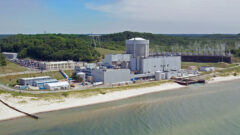
A mothballed nuclear power plant in Michigan just took a huge step toward being the first in the country to start back up after retiring.

Read Now at Great Lakes Now.

Original Article

Great Lakes Now

Great Lakes Now

https://www.greatlakesnow.org/2025/08/michigans-historic-nuclear-plant-restart-still-a-go-federal-regulators-say/

Nicole Pollack, Great Lakes Now

Great Lakes energy bills are rising: Federal cuts could add to the pain

This article is the first in a series called The Great Lakes Promise: Cost, Resilience and Refuge. This series was made possible in partnership between Great Lakes Now and Planet Detroit. 

Sherita Hamlin has watched her utility bills more than double in recent years. On Chicago’s West Side, summer air conditioning is a luxury she now rations.

Read Now at Great Lakes Now.

Original Article

Great Lakes Now

Great Lakes Now

https://www.greatlakesnow.org/2025/07/great-lakes-energy-bills-are-rising-federal-cuts-could-add-to-the-pain/

Brian Allnutt

What will the rise of floating solar panels mean for wildlife?

By Matt Simon, Grist

This story was originally published by Grist. Sign up for Grist’s weekly newsletter here.

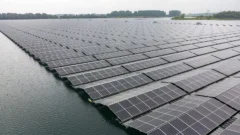
The newest, hottest power couple doesn’t live in Hollywood. It’s actually the marriage of solar panels and water reservoirs: Known as floating photovoltaics, or floatovoltaics, the devices bob on simple floats, generating power while providing shade that reduces evaporation.

Read Now at Great Lakes Now.

Original Article

Great Lakes Now

Great Lakes Now

https://www.greatlakesnow.org/2025/06/what-will-the-rise-of-floating-solar-panels-mean-for-wildlife/

Grist

A guide to the federal review of the Line 5 tunnel

By Izzy Ross, IPR and Teresa Homsi, WCMU

This coverage is made possible through a partnership between Interlochen Public Radio and Grist, a nonprofit environmental media organization.

The final day for the public to comment on a federal environmental review of the Line 5 tunnel is approaching on June 30.

Read Now at Great Lakes Now.

Original Article

Great Lakes Now

Great Lakes Now

https://www.greatlakesnow.org/2025/06/a-guide-to-the-federal-review-of-the-line-5-tunnel/

Interlochen Public Radio

Trump administration review backs controversial oil pipeline tunnel under Great Lakes’ Straits of Mackinac

Catch the latest energy news from around the region. Check back for these bimonthly Energy News Roundups

The draft environmental review of Enbridge’s Line 5 tunnel project under the Straits of Mackinac is out at last. While the findings are preliminary, the U.S.

Read Now at Great Lakes Now.

Original Article

Great Lakes Now

Great Lakes Now

https://www.greatlakesnow.org/2025/06/trump-administration-review-backs-controversial-oil-pipeline-tunnel-under-great-lakes-straits-of-mackinac/

Nicole Pollack, Great Lakes Now

Why an Ohio ban on settlements to close ​‘base load’ power plants matters for clean energy

By Kathiann M. Kowalski

This story was originally published by Canary Media.

A decade ago, the Sierra Club and other environmental groups, trade organizations, and companies found themselves in a regulatory standoff with American Electric Power over operating costs for six coal-fired power plants in Ohio.

Read Now at Great Lakes Now.

Original Article

Great Lakes Now

Great Lakes Now

https://www.greatlakesnow.org/2025/06/why-an-ohio-ban-on-settlements-to-close-base-load-power-plants-matters-for-clean-energy/

Canary Media

Northern Michigan moves to clean up ice storm debris — by making energy

By Izzy Ross, Interlochen Public Radio

This coverage is made possible through a partnership between Interlochen Public Radio and Grist, a nonprofit environmental media organization.

At a giant dirt lot off a side road in Emmet County, the air smells sharply of pine.

Read Now at Great Lakes Now.

Original Article

Great Lakes Now

Great Lakes Now

https://www.greatlakesnow.org/2025/05/northern-michigan-moves-to-clean-up-ice-storm-debris-by-making-energy/

Interlochen Public Radio

Rising utility bills have Americans worried

By Akielly Hu

This story was originally published by Canary Media.

As electric and gas bills rise across the country, a poll released today finds that an overwhelming majority of people in the U.S. are concerned about growing energy costs — and experiencing greater financial stress because of them.

Read Now at Great Lakes Now.

Original Article

Great Lakes Now

Great Lakes Now

https://www.greatlakesnow.org/2025/04/rising-utility-bills-have-americans-worried/

Canary Media

What would the Great Lakes region be like with bullet trains?

A few months ago, I was riding on Amtrak’s new Borealis line from St. Paul, Minn., to Chicago. The train was packed that day, and the new line has proved popular.

My coach seat was much nicer than any airline. Plus, I didn’t have to go through security.

Read Now at Great Lakes Now.

Original Article

Great Lakes Now

Great Lakes Now

https://www.greatlakesnow.org/2025/03/what-would-the-great-lakes-region-be-like-with-bullet-trains/

Sean Ericson, Great Lakes Now

Cleveland Hopkins Airport sets 100% emission reduction goal by 2050

By Zaria Johnson, Ideastream Public Media

This story was originally published by Ideastream.

Cleveland Hopkins International Airport has announced a sustainability plan as part of larger, city-wide efforts to reduce greenhouse gas emissions.

The plan outlines six focus areas to improve energy efficiency, including incorporating EV charging infrastructure and expanding solar and renewable energy options.

Read Now at Great Lakes Now.

Original Article

Great Lakes Now

Great Lakes Now

https://www.greatlakesnow.org/2025/03/cleveland-hopkins-airport-sets-100-emission-reduction-goal-by-2050/

Ideastream Public Media

How Trump’s trade war could impact US electricity prices — and state climate plans

By Zoya Teirstein

This story was originally published by Grist. Sign up for Grist’s weekly newsletter here.

On Tuesday, President Donald Trump initiated a trade war with Canada and Mexico, America’s two largest trading partners. Following through on weeks of threats, he imposed 25 percent tariffs on imported goods from Mexico and Canada and a lower 10 percent tariff on imports of Canadian energy resources.

Read Now at Great Lakes Now.

Original Article

Great Lakes Now

Great Lakes Now

https://www.greatlakesnow.org/2025/03/how-trumps-trade-war-could-impact-us-electricity-prices-and-state-climate-plans/

Grist

Oil and gas projects fast-tracked, while Minnesota Power plans to quit fossil fuels

Catch the latest energy news from around the Great Lakes region. Check back for these biweekly Energy News Roundups

Hundreds of energy projects may have their permits fast-tracked by the Trump administration, including Enbridge’s tunnel for Line 5 in the Straits of Mackinac and a roughly $1 billion gas plant in Superior.

Read Now at Great Lakes Now.

Original Article

Great Lakes Now

Great Lakes Now

https://www.greatlakesnow.org/2025/03/oil-and-gas-projects-fast-tracked-while-minnesota-power-plans-to-quit-fossil-fuels/

Nicole Pollack, Great Lakes Now

Michigan Residents Push for an Environmental Impact Statement Before Restarting the Palisades Nuclear Plant

By Carrie Klein, Inside Climate News

This article originally appeared on Inside Climate News, a nonprofit, non-partisan news organization that covers climate, energy and the environment. Sign up for their newsletter here.

Michigan’s Palisades Nuclear Generating Station is one step closer to becoming the first nuclear power plant in the United States to reopen.

Read Now at Great Lakes Now.

Original Article

Great Lakes Now

Great Lakes Now

https://www.greatlakesnow.org/2025/02/michigan-environmental-impact-statement-palisades-nuclear-plant-restart/

Inside Climate News

Trump tries to block EV charger money — again. Michigan impact ‘clear as mud’

By Kelly House, Bridge Michigan

The Great Lakes News Collaborative includes Bridge Michigan; Circle of Blue; Great Lakes Now at Detroit PBS; Michigan Public, Michigan’s NPR News Leader; and The Narwhal who work together to bring audiences news and information about the impact of climate change, pollution, and aging infrastructure on the Great Lakes and drinking water.

Read Now at Great Lakes Now.

Original Article

Great Lakes Now

Great Lakes Now

https://www.greatlakesnow.org/2025/02/trump-tries-to-block-ev-charger-money-again-michigan-impact-clear-as-mud/

Bridge Michigan

Public comment opens on a plan to clear trees for solar near Gaylord

By Izzy Ross, Interlochen Public Radio and Teresa Homsi, WCMU

This coverage is made possible through a partnership with IPR and Grist, a nonprofit independent media organization dedicated to telling stories of climate solutions and a just future.

Read Now at Great Lakes Now.

Original Article

Great Lakes Now

Great Lakes Now

https://www.greatlakesnow.org/2025/01/public-comment-opens-on-a-plan-to-clear-trees-for-solar-near-gaylord/

Interlochen Public Radio

Energy transition sees small wins, major uncertainty in the Upper Midwest

Catch the latest energy news from around the Great Lakes region. Check back for these biweekly Energy News Roundups


Chicago’s commitment to using 100% renewable energy at city-owned buildings went into effect Jan.

Read Now at Great Lakes Now.

Original Article

Great Lakes Now

Great Lakes Now

https://www.greatlakesnow.org/2025/01/energy-transition-small-wins-uncertainty-upper-midwest/

Nicole Pollack, Great Lakes Now

Chicago keeps its New Year’s resolution: All city buildings now use 100% clean power

By Juanpablo Ramirez-Franco, WBEZ

This coverage is made possible through a partnership between WBEZ and Grist, a nonprofit, independent media organization dedicated to telling stories of climate solutions and a just future. Sign up for WBEZ newsletters to get local news you can trust.

Read Now at Great Lakes Now.

Original Article

Great Lakes Now

Great Lakes Now

https://www.greatlakesnow.org/2025/01/chicago-renewable-energy-black-diamond-solar/

Grist

Canada is one step closer to burying nuclear waste in northwestern Ontario

By Fatima Syed, The Narwhal

The Great Lakes News Collaborative includes Bridge Michigan, Circle of Blue, Great Lakes Now at Detroit PBS, Michigan Public and The Narwhal who work together to bring audiences news and information about the impact of climate change, pollution, and aging infrastructure on the Great Lakes and drinking water.

Read Now at Great Lakes Now.

Original Article

Great Lakes Now

Great Lakes Now

https://www.greatlakesnow.org/2024/12/canada-is-one-step-closer-to-burying-nuclear-waste-in-northwestern-ontario/

The Narwhal

Energy News Roundup: Line 5’s potential reroute plus mining permits stoke fears of contamination

Wisconsin officials put a controversial pipeline reroute one step closer to construction last week when they issued permits for Enbridge Energy, a Canadian oil company, to move a section of Line 5 off of Tribal land in the far northern part of the state. Construction and agricultural industry groups cheered the Wisconsin Department of Natural Resources’ decision.

Read Now at Great Lakes Now.

Original Article

Great Lakes Now

Great Lakes Now

https://www.greatlakesnow.org/2024/11/energy-news-roundup-line-5s-potential-reroute-plus-mining-permits-stoke-fears-of-contamination/

Nicole Pollack, Great Lakes Now

Local governments appeal state implementation of renewable siting law

By Izzy Ross, Interlochen Public Radio

This coverage is made possible through a partnership with IPR and Grist, a nonprofit independent media organization dedicated to telling stories of climate solutions and a just future.

More than 70 townships and several counties are suing the Michigan Public Service Commission, challenging whether the commission went through the right process to put in place a law giving the state authority to approve those projects.

Read Now at Great Lakes Now.

Original Article

Great Lakes Now

Great Lakes Now

https://www.greatlakesnow.org/2024/11/local-governments-appeal-state-implementation-of-renewable-siting-law/

Grist

Environmentalists, Industry Divided Over Energy Permitting Bill

Melting ice. Wildfire smoke. Crop losses. Climate change is already having an impact on the Great Lakes region. According to a 2022 report by the Intergovernmental Panel on Climate Change, in order to limit global warming to 2 degrees Celsius, humanity would have to reach net-zero emissions by the 2070s.

Read Now at Great Lakes Now.

Original Article

Great Lakes Now

Great Lakes Now

https://www.greatlakesnow.org/2024/11/environmentalists-industry-divided-over-energy-permitting-bill/

Sean Ericson, Great Lakes Now

New Federal Funds Aim to Cut Carbon Emissions and Air Pollution From US Ports

By Kristoffer Tigue, Inside Climate News

This article originally appeared on Inside Climate News, a nonprofit, non-partisan news organization that covers climate, energy and the environment. Sign up for their newsletter here.

Raquel Garcia has been fighting for years to clean up the air in her neighborhood southwest of downtown Detroit.

Read Now at Great Lakes Now.

Original Article

Great Lakes Now

Great Lakes Now

https://www.greatlakesnow.org/2024/11/new-federal-funds-aim-to-cut-carbon-emissions-and-air-pollution-from-us-ports/

Inside Climate News

He’ll try, but Trump can’t stop the clean energy revolution

By Matt Simon

This story was originally published by Grist. Sign up for Grist’s weekly newsletter here.

During his first time around as president, Donald Trump rolled back a bevy of environmental rules, withdrew from the Paris Agreement, and boosted the fossil fuel industry.

Read Now at Great Lakes Now.

Original Article

Great Lakes Now

Great Lakes Now

https://www.greatlakesnow.org/2024/11/hell-try-but-trump-cant-stop-the-clean-energy-revolution/

Grist

Energy News Roundup: More energy transition ups and downs

Ford is suspending production of the F-150 Lightning electric pickup truck at its plant in Dearborn, Michigan, from mid-November until early 2025 as EV sales continue to lag behind expectations. Since the electric pickup’s launch a couple of years ago, when Ford fielded more demand than it was able to meet, momentum has slowed, and the automaker has this year halved production of the Lightning and reduced its hourly workforce at the Dearborn plant by two-thirds.

Read Now at Great Lakes Now.

Original Article

Great Lakes Now

Great Lakes Now

https://www.greatlakesnow.org/2024/11/energy-news-roundup-more-energy-transition-ups-and-downs/

Nicole Pollack, Great Lakes Now

The race for clean energy is local

By Emily Jones and Gautama Mehta, Grist

This story was originally published by Grist. Sign up for Grist’s weekly newsletter here.

The U.S. power grid is at a critical crossroads. Electricity generation, like every other industry, needs to rid itself of fossil fuels if the country is to play its role in combating the climate crisis — a transition that will have to happen even as energy providers scramble to meet what they claim is an unprecedented spike in electricity demand, attributed to the rise of AI.

Read Now at Great Lakes Now.

Original Article

Great Lakes Now

Great Lakes Now

https://www.greatlakesnow.org/2024/11/the-race-for-clean-energy-is-local/

Grist

Competing Visions for U.S. Auto Industry Clash in Presidential Election, With the EV Future Pressing at the Border

By Marianne Lavelle and Dan Gearino, Inside Climate News

This article originally appeared on Inside Climate News, a nonprofit, non-partisan news organization that covers climate, energy and the environment. Sign up for their newsletter here.

Read Now at Great Lakes Now.

Original Article

Great Lakes Now

Great Lakes Now

https://www.greatlakesnow.org/2024/10/competing-visions-for-u-s-auto-industry-clash-in-presidential-election-with-the-ev-future-pressing-at-the-border/

Inside Climate News

Energy News Roundup: Retirement is in sight for another huge coal plant

Retirement is in sight for one of the country’s largest coal plants. Ohio’s James M. Gavin plant, the third most gargantuan in the Midwest and sixth nationwide, will likely be closed or converted to run on gas by 2031, Inside Climate News reported. The two coal plants in the region with more generating capacity — the Gibson plant in Indiana and the Monroe plant in Michigan — are set to retire in 2038 and 2032, respectively, after electric utility Duke Energy proposed a couple of weeks ago to delay the Gibson plant’s closure or conversion by three years from its previous target of 2035.

Read Now at Great Lakes Now.

Original Article

Great Lakes Now

Great Lakes Now

https://www.greatlakesnow.org/2024/10/energy-news-roundup-retirement-is-in-sight-for-another-huge-coal-plant/

Nicole Pollack, Great Lakes Now

What a Trump vs. Harris presidency might mean for the Great Lakes

The 2024 presidential election campaign is in the homestretch and results in the Great Lakes states of Michigan and Wisconsin could determine the winner. Vice-President Kamala Harris and former President Donald Trump covet the electors in both states and polling indicates they could go either way.

Great Lakes Now selected three key topics — Great Lakes restoration, Line 5 and groundwater — and asked veteran policy experts Rob Sisson and Lana Pollack for their views on how a Harris or Trump presidency may deal with them.

Read Now at Great Lakes Now.

Original Article

Great Lakes Now

Great Lakes Now

https://www.greatlakesnow.org/2024/10/what-a-trump-vs-harris-presidency-might-mean-for-the-great-lakes/

Gary Wilson, Great Lakes Now

Energy News Roundup: Kwik Trip goes electric as federal funds flow in

Midwestern convenience store giant Kwik Trip is breaking into the charging business. The chain, known for its gas and grocery offerings, will install electric vehicle chargers at “a strategic number of its stores” through its new Kwik Charge program. The announcement comes a few months after Kwik Trip received about $23 million in federal funds aimed at establishing a statewide EV charging network in Wisconsin.

Read Now at Great Lakes Now.

Original Article

Great Lakes Now

Great Lakes Now

https://www.greatlakesnow.org/2024/10/energy-news-roundup-kwik-trip-goes-electric-as-federal-funds-flow-in/

Nicole Pollack, Great Lakes Now

Traverse City lawyer gets national recognition for making economic arguments against coal

By Izzy Ross, Interlochen Public Radio

This coverage is made possible through a partnership with IPR and Grist, a nonprofit independent media organization dedicated to telling stories of climate solutions and a just future.

Environmental advocates have long focused on how coal harms the climate and environment.

Read Now at Great Lakes Now.

Original Article

Great Lakes Now

Great Lakes Now

https://www.greatlakesnow.org/2024/09/traverse-city-lawyer-national-recognition-for-making-an-economic-arguments-against-coal/

Interlochen Public Radio

Michigan’s ambitious clean energy laws face a peninsula-sized hurdle

By Izzy Ross, Grist

This story was originally published by Grist. Sign up for Grist’s weekly newsletter here.

This coverage is made possible through a partnership with Grist and Interlochen Public Radio in Northern Michigan.

Last year, Michigan became one of the latest states to adopt a clean energy standard, passing sweeping legislation that calls for utilities there to use 100 percent clean electricity by 2040 and sets targets for renewable energy development, among other requirements.

Read Now at Great Lakes Now.

Original Article

Great Lakes Now

Great Lakes Now

https://www.greatlakesnow.org/2024/09/michigans-ambitious-clean-energy-laws-face-peninsula-sized-hurdle/

Grist

Michigan’s electric energy future could be wasting away in a junk drawer

By Gabrielle Nelson, Bridge Michigan

The Great Lakes News Collaborative includes Bridge Michigan; Circle of Blue; Great Lakes Now at Detroit Public Television; Michigan Public, Michigan’s NPR News Leader; and The Narwhal who work together to bring audiences news and information about the impact of climate change, pollution, and aging infrastructure on the Great Lakes and drinking water.

Read Now at Great Lakes Now.

Original Article

Great Lakes Now

Great Lakes Now

https://www.greatlakesnow.org/2024/08/michigans-electric-energy-future-could-be-wasting-away-in-a-junk-drawer/

Bridge Michigan

Energy News Roundup: Amid national attention, Great Lakes states continue their push to electrify

The 2024 presidential race is heating up, and politicians from the Great Lakes region are in the spotlight on both sides of the aisle. Energy can be a divisive issue around here. The state lawmakers in contention for vice president reflect that. Former President Donald Trump’s running mate, Ohio Sen.

Read Now at Great Lakes Now.

Original Article

Great Lakes Now

Great Lakes Now

https://www.greatlakesnow.org/2024/08/energy-news-roundup-amid-national-attention-great-lakes-states-continue-their-push-to-electrify/
Nicole Pollack, Great Lakes Now

Beaver Island takes early steps to test wave energy in its waters

By Izzy Ross, Interlochen Public Radio

This coverage is made possible through a partnership with IPR and Grist, a nonprofit independent media organization dedicated to telling stories of climate solutions and a just future.

A project off the shore of Beaver Island could harness the power of Lake Michigan’s waves to generate renewable energy.

Read Now at Great Lakes Now.

Original Article

Great Lakes Now

Great Lakes Now

https://www.greatlakesnow.org/2024/07/beaver-island-takes-early-steps-to-test-wave-energy-in-its-waters/

Interlochen Public Radio

Environmentalists appeal Michigan regulators’ approval of pipeline tunnel project

By Todd Richmond, Associated Press

Environmentalists are challenging Michigan regulators’ decision to approve encasing part of an aging Enbridge Energy oil pipeline that runs beneath a channel connecting two Great Lakes, arguing that they failed to properly consider alternatives that would minimize climate impacts.

The Environmental Law & Policy Center and the Michigan Climate Action Network filed a brief with a state appellate court Thursday.

Read Now at Great Lakes Now.

Original Article

Great Lakes Now

Great Lakes Now

https://www.greatlakesnow.org/2024/07/environmentalists-appeal-michigan-regulators-approval-of-pipeline-tunnel-project/

The Associated Press

EPA head Regan defends $20B green bank: ‘I feel really good about this program’

By Matthew Daly, Associated Press

PHILADELPHIA (AP) — The head of the Environmental Protection Agency on Friday defended a new $20 billion federal “green bank” program, saying it will finance a variety of projects to create low-carbon solutions to combat climate change, including in disadvantaged communities that are most affected by pollution.

Read Now at Great Lakes Now.

Original Article

Great Lakes Now

Great Lakes Now

https://www.greatlakesnow.org/2024/04/epa-head-regan-defends-20b-green-bank-i-feel-really-good-about-this-program/

The Associated Press

Energy News Roundup: Even the solar eclipse is an energy issue

In Ohio and other states in the path of Monday’s total solar eclipse, tons of harried officials are busy dealing with concerns like traffic congestion and hotel capacity. At least a few are also conscious of the fact that demand for electricity is going to spike at the same time that the supply of solar power temporarily plummets.

Read Now at Great Lakes Now.

Original Article

Great Lakes Now

Great Lakes Now

https://www.greatlakesnow.org/2024/04/energy-news-roundup-even-the-solar-eclipse-is-an-energy-issue/

Nicole Pollack, Great Lakes Now

Cleveland, Cuyahoga County leaders urge EPA to finalize federal clean car standards

By Stephanie Metzger-Lawrence, Ideastream Public Media

This story was originally published by Ideastream.

Cleveland Mayor Justin Bibb and Cuyahoga County Executive Chris Ronayne want stronger federal clean car standards to protect Northeast Ohioans from health problems resulting from air pollution.

“We call on the EPA to enact the strongest possible clean car standards and urge them to finalize this rule this March,” Bibb said at a press conference Friday.

Read Now at Great Lakes Now.

Original Article

Great Lakes Now

Great Lakes Now

https://www.greatlakesnow.org/2024/02/cleveland-cuyahoga-county-leaders-urge-epa-to-finalize-federal-clean-car-standards/

Ideastream Public Media

Enbridge appeals to vacate an order that would shut down its pipeline

By Todd Richmond, Associated Press

MADISON, Wis. (AP) — An attorney for the energy company Enbridge tried to persuade a federal appellate court Thursday to vacate an order that would shut down part of a pipeline running through a Wisconsin tribal reservation.

About 12 miles (19 km) of Enbridge’s Line 5 pipeline runs across the Bad River Band of Lake Superior Chippewa’s reservation.

Read Now at Great Lakes Now.

Original Article

Great Lakes Now

Great Lakes Now

https://www.greatlakesnow.org/2024/02/ap-enbridge-appeals-to-vacate-an-order-that-would-shut-down-pipeline/

The Associated Press

Parts of Detroit could be radically transformed by city solar plan, for better or worse

This article was republished here with permission from Planet Detroit.

By Brian Allnutt, Planet Detroit

Neighborhoods east of Palmer Park could soon be transformed by a city plan to power municipal buildings with six solar fields, and neighbors are divided over the prospect.

Read Now at Great Lakes Now.

Original Article

Great Lakes Now

Great Lakes Now

https://www.greatlakesnow.org/2024/01/parts-of-detroit-could-be-radically-transformed-by-city-solar-plan-for-better-or-worse/

Planet Detroit

Michigan lawmakers have more energy priorities in 2024

By Kelly House, Bridge Michigan

The Great Lakes News Collaborative includes Bridge Michigan; Circle of Blue; Great Lakes Now at Detroit Public Television; and Michigan Public, Michigan’s NPR News Leader; who work together to bring audiences news and information about the impact of climate change, pollution, and aging infrastructure on the Great Lakes and drinking water.

Read Now at Great Lakes Now.

Original Article

Great Lakes Now

Great Lakes Now

https://www.greatlakesnow.org/2024/01/michigan-lawmakers-have-more-energy-priorities-in-2024/

Bridge Michigan

Energy News Roundup: Line 5 approval is appealed by tribes and environmental groups

Keep up with energy-related developments in the Great Lakes area with Great Lakes Now’s biweekly headline roundup.

Click on the headline to read the full story:


Illinois 

Utility co-op aims to stay ahead of the power curve —  Southern Illinoisan 

A new Illinois law that took effect on Jan.

Read Now at Great Lakes Now.

Original Article

Great Lakes Now

Great Lakes Now

https://www.greatlakesnow.org/2024/01/energy-news-roundup-line-5-approval-is-appealed-by-tribes-and-environmental-groups/

Kathy Johnson

Cleveland’s Icebreaker Wind project on hold due to rising costs, pushback

By Zaria Johnson, Ideastream Public Media

This story was originally published by Ideastream.

Cleveland’s off-shore wind turbine project has been halted after the project’s private development partner pulled financial support.

The Lake Erie Energy Development Corp, or LEEDCo, is leading the Icebreaker Wind project.

Read Now at Great Lakes Now.

Original Article

Great Lakes Now

Great Lakes Now

https://www.greatlakesnow.org/2023/12/clevelands-icebreaker-wind-project-on-hold-due-to-rising-costs-pushback/

Ideastream Public Media

Lake Erie is full of algae again. Southwestern Ontario’s exploding greenhouse sector won’t help

By Matt McIntosh, The Narwhal

Photography by Kati Panasiuk

This story first ran on The Narwhal, a non-profit news organization that publishes in-depth stories about Canada’s natural world.

For a couple of decades at the end of the last century, it seemed like the blue-green algae problem in Lake Erie had been solved, or at least managed, thanks to a concerted cross-border effort.

Read Now at Great Lakes Now.

Original Article

Great Lakes Now

Great Lakes Now

https://www.greatlakesnow.org/2023/12/lake-erie-is-full-of-algae-again-southwestern-ontarios-exploding-greenhouse-sector-wont-help/

The Narwhal