By Kelly House, Bridge Michigan

The Great Lakes News Collaborative includes Bridge Michigan; Circle of Blue; Great Lakes Now at Detroit PBS; Michigan Public, Michigan’s NPR News Leader; and The Narwhal who work together to bring audiences news and information about the impact of climate change, pollution, and aging infrastructure on the Great Lakes and drinking water. This independent journalism is supported by the Charles Stewart Mott Foundation. Find all the work HERE.


The US Supreme Court has unanimously sided with Michigan Attorney General Dana Nessel in a dispute over which court — state or federal — should oversee Nessel’s lawsuit to shut down the Line 5 pipeline.

The court’s nine justices ruled that Enbridge cannot move the state court case Nessel filed seven years ago to federal court, because the company missed a 30-day deadline to do so.

Jurisdiction matters because federal courts are considered more likely to sympathize with Enbridge’s argument that the pipeline should stay open, while state courts are more likely to sympathize with Nessel’s argument that it should close.

The ruling is the latest development in a yearslong dispute over the fate of the 72-year-old oil pipeline owned by Canadian oil giant Enbridge Energy, which crosses through the open water of the Straits of Mackinac as it transports petroleum products from Wisconsin to Ontario.

The aging pipeline has sustained damage multiple times in recent years, sparking fears that it could rupture and cause an oil spill in the Great Lakes.

Citing those fears, Nessel in 2019 filed a lawsuit in the 30th Circuit Court in Ingham County seeking to shut down the pipeline’s lakebottom segment. But two years into deliberations, Enbridge attempted to move the case into federal court — missing a 30-day statutory deadline to do so.

In a dispute that made its way to the nation’s highest court, the company argued it qualified for an exception to the deadline, while state lawyers accused the company of seeking “an atextual escape hatch.” 

In an opinion authored by Justice Sonia Sotomayor, the justices concluded that Congress authorized limited exceptions to the 30-day deadline, none of which apply to the circumstances of this case.

“Enbridge’s counterarguments are not persuasive,” Sotomayor wrote.

The procedural ruling doesn’t settle the question of the pipeline’s fate. But it remands the case back to Ingham County, where deliberations are paused pending the outcome of a separate case.

In a statement, Nessel said the ruling “makes emphatically clear” that the case belongs in state court.

“For far too long, following years of Enbridge’s delay tactics, the fear of a catastrophic spill from Line 5 has haunted our state, threatening to turn our most vital natural resource into a man-made disaster,” Nessel said.

Enbridge spokesperson Ryan Duffy expressed confidence that the company will prevail in arguing that the line should remain open. 

“The fact remains that the safety of Line 5 is regulated exclusively by the Pipeline and Hazardous Materials Safety Administration,” Duffy wrote. That agency is part of the US Department of Transportation.

In a ruling tied to a separate shutdown dispute between Gov. Gretchen Whitmer and Enbridge, US District Court Judge Robert Jonker ruled in December that federal pipeline safety laws preempt state laws, leaving Michigan with no “power to interfere” in Line 5 operations. The state is appealing the decision and Nessel’s state court case is paused pending the outcome of that appeal.

Prolonged battle

For years, fans and foes of the pipeline have been battling in Michigan and Wisconsin over fears that the pipeline could cause a catastrophic oil spill. Enbridge also owns the line 6B pipeline, which spilled into the Kalamazoo River causing among the worst inland oil spills in US history. Line 5 has been repeatedly struck by ships’ anchors, further heightening pipeline safety concerns.

In 2018, Enbridge pitched a plan to move the Straits section of the pipeline into a concrete-lined tunnel deep beneath the lakebed to alleviate spill concerns. But that plan, too, has been controversial, with some contending the best solution is to remove the pipeline entirely.

It’s a debate that revolves not only around spill risks, but concerns about land disturbances from tunnel construction, infringement on Native American treaty rights in the Straits and the climate implications of building infrastructure that would lock in decades of additional fossil fuel use.

The US Army Corps of Engineers and the Michigan Department of Environment, Great Lakes and Energy are both preparing to issue key permitting decisions tied to the tunnel plan. 

Meanwhile, the Michigan Supreme Court is deliberating over a lawsuit challenging a separate tunnel permit the state already granted.


The post Supreme Court sides with Nessel in Line 5 jurisdiction dispute appeared first on Great Lakes Now.

Original Article

Great Lakes Now

Great Lakes Now

https://www.greatlakesnow.org/2026/04/24/supreme-court-sides-with-nessel-in-line-5-jurisdiction-dispute/

Bridge Michigan

By Kelly House, Bridge Michigan

The Great Lakes News Collaborative includes Bridge Michigan; Circle of Blue; Great Lakes Now at Detroit PBS; Michigan Public, Michigan’s NPR News Leader; and The Narwhal who work together to bring audiences news and information about the impact of climate change, pollution, and aging infrastructure on the Great Lakes and drinking water. This independent journalism is supported by the Charles Stewart Mott Foundation. Find all the work HERE.


The US Supreme Court has unanimously sided with Michigan Attorney General Dana Nessel in a dispute over which court — state or federal — should oversee Nessel’s lawsuit to shut down the Line 5 pipeline.

The court’s nine justices ruled that Enbridge cannot move the state court case Nessel filed seven years ago to federal court, because the company missed a 30-day deadline to do so.

Jurisdiction matters because federal courts are considered more likely to sympathize with Enbridge’s argument that the pipeline should stay open, while state courts are more likely to sympathize with Nessel’s argument that it should close.

The ruling is the latest development in a yearslong dispute over the fate of the 72-year-old oil pipeline owned by Canadian oil giant Enbridge Energy, which crosses through the open water of the Straits of Mackinac as it transports petroleum products from Wisconsin to Ontario.

The aging pipeline has sustained damage multiple times in recent years, sparking fears that it could rupture and cause an oil spill in the Great Lakes.

Citing those fears, Nessel in 2019 filed a lawsuit in the 30th Circuit Court in Ingham County seeking to shut down the pipeline’s lakebottom segment. But two years into deliberations, Enbridge attempted to move the case into federal court — missing a 30-day statutory deadline to do so.

In a dispute that made its way to the nation’s highest court, the company argued it qualified for an exception to the deadline, while state lawyers accused the company of seeking “an atextual escape hatch.” 

In an opinion authored by Justice Sonia Sotomayor, the justices concluded that Congress authorized limited exceptions to the 30-day deadline, none of which apply to the circumstances of this case.

“Enbridge’s counterarguments are not persuasive,” Sotomayor wrote.

The procedural ruling doesn’t settle the question of the pipeline’s fate. But it remands the case back to Ingham County, where deliberations are paused pending the outcome of a separate case.

In a statement, Nessel said the ruling “makes emphatically clear” that the case belongs in state court.

“For far too long, following years of Enbridge’s delay tactics, the fear of a catastrophic spill from Line 5 has haunted our state, threatening to turn our most vital natural resource into a man-made disaster,” Nessel said.

Enbridge spokesperson Ryan Duffy expressed confidence that the company will prevail in arguing that the line should remain open. 

“The fact remains that the safety of Line 5 is regulated exclusively by the Pipeline and Hazardous Materials Safety Administration,” Duffy wrote. That agency is part of the US Department of Transportation.

In a ruling tied to a separate shutdown dispute between Gov. Gretchen Whitmer and Enbridge, US District Court Judge Robert Jonker ruled in December that federal pipeline safety laws preempt state laws, leaving Michigan with no “power to interfere” in Line 5 operations. The state is appealing the decision and Nessel’s state court case is paused pending the outcome of that appeal.

Prolonged battle

For years, fans and foes of the pipeline have been battling in Michigan and Wisconsin over fears that the pipeline could cause a catastrophic oil spill. Enbridge also owns the line 6B pipeline, which spilled into the Kalamazoo River causing among the worst inland oil spills in US history. Line 5 has been repeatedly struck by ships’ anchors, further heightening pipeline safety concerns.

In 2018, Enbridge pitched a plan to move the Straits section of the pipeline into a concrete-lined tunnel deep beneath the lakebed to alleviate spill concerns. But that plan, too, has been controversial, with some contending the best solution is to remove the pipeline entirely.

It’s a debate that revolves not only around spill risks, but concerns about land disturbances from tunnel construction, infringement on Native American treaty rights in the Straits and the climate implications of building infrastructure that would lock in decades of additional fossil fuel use.

The US Army Corps of Engineers and the Michigan Department of Environment, Great Lakes and Energy are both preparing to issue key permitting decisions tied to the tunnel plan. 

Meanwhile, the Michigan Supreme Court is deliberating over a lawsuit challenging a separate tunnel permit the state already granted.


The post Supreme Court sides with Nessel in Line 5 jurisdiction dispute appeared first on Great Lakes Now.

Original Article

Great Lakes Now

Great Lakes Now

https://www.greatlakesnow.org/2026/04/24/supreme-court-sides-with-nessel-in-line-5-jurisdiction-dispute/

Bridge Michigan

By Paula Gardner, Kelly House and Ron French, Bridge Michigan

The Great Lakes News Collaborative includes Bridge Michigan; Circle of Blue; Great Lakes Now at Detroit PBS; Michigan Public, Michigan’s NPR News Leader; and The Narwhal who work together to bring audiences news and information about the impact of climate change, pollution, and aging infrastructure on the Great Lakes and drinking water. This independent journalism is supported by the Charles Stewart Mott Foundation. Find all the work HERE.


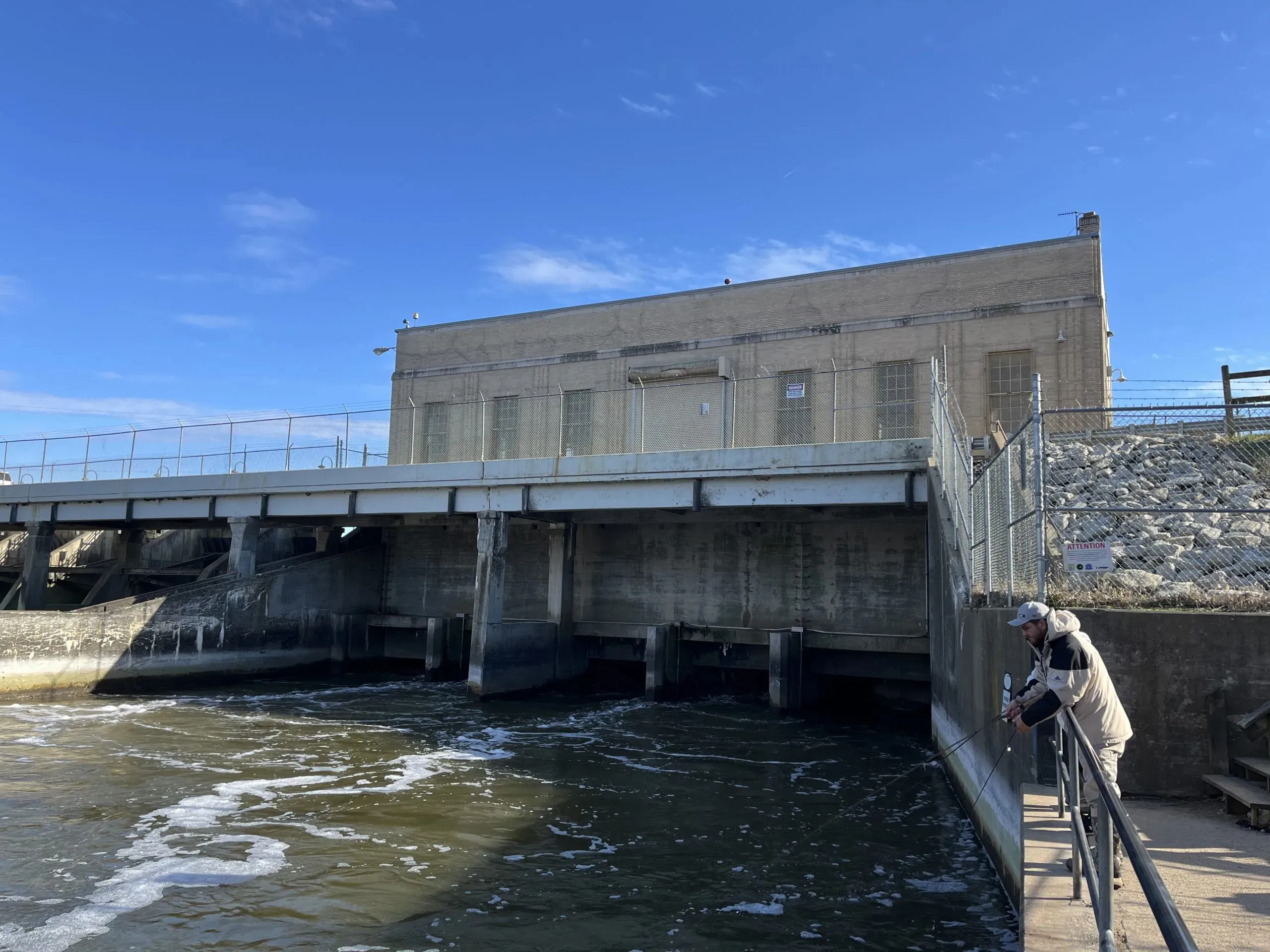
CHEBOYGAN — Local, state and federal officials were aware of the dangers posed by the Cheboygan Lock and Dam for years before floodwaters pushed it to the brink of collapse, records show.

Yet they failed to compel private owners to repair the nonfunctional hydro plant connected to the publicly-owned dam —  a critical piece of its ability to pass floodwaters downstream. 

The facility that houses the plant, once a Charmin toilet paper mill, changed hands repeatedly over decades as it fell into disrepair. 

Now taxpayers are helping bankroll a desperate effort to bring the plant back online before the dam fails and sends a wall of water toward downtown Cheboygan.

“I’m very concerned that this was not handled properly,” said Richard Sangster, a Cheboygan County commissioner and former Cheboygan mayor, about federal regulatory actions over several years.

The property is now owned by Hom Paper XI, LLC, a business controlled by former NFL linebacker Thomas Homco. He did not return voicemails left by Bridge Michigan. 

State and local officials did what they could, Cheboygan County Sheriff Todd Ross said Thursday.

“We didn’t wait ‘til the last minute,” Ross said. “It’s privately owned. There’s only so much we can do.”

A public tally of taxpayer costs associated with the round-the-clock repair wasn’t available Thursday, but estimates from a few years ago indicated the plant needed at least $1 million in repairs.

‘Safety concerns have been raised many times’

Records show the agency that primarily regulates hydropower dams, the Federal Energy Regulatory Commission, sent warning letters for years to a shifting cast of owners while granting multiple extensions.

Among the issues they cited: missing inspection records and malfunctioning equipment that was crucial to passing water in the event of a flood.  

As far back as 2019, regulars warned about cracked concrete and damaged retaining walls and gates that could help the dam manage flooding, records show.

In 2021, FERC told the plant’s then owners that “multiple items are overdue and completion dates are rapidly approaching.”

The plant was cited 16 times in 10 months for safety violations by Occupational Safety and Health Administration before a fire closed it altogether in September 2023, records indicate.

That prompted more orders for repairs and more extensions from FERC. Records indicate state officials said they were aware of the issues but had no role in enforcement.

“Safety concerns have been raised many times,” Sangster said, adding “you wouldn’t even be able to measure how detrimental” a dam failure would be. 

“In my eyes, it appears like total neglect on their behalf,” he added about FERC.

‘No simple answer’

FERC spokesperson Celeste Miller did not respond to detailed questions from Bridge about oversight of the hydro plant property and instead put out a statement noting the agency’s role in the ongoing emergency response in Cheboygan.

“Above all, our priority is to coordinate with all involved partners to safeguard both the community and the environment,” Miller wrote.

The crisis comes six years after the privately-owned Midland dams failed following a similar pattern of regulatory delay. Michigan legislators vowed to make dam safety a priority after Midland, but ultimately didn’t act on proposed reforms.

A solution “keeps getting kicked down the road …  now we’ve got a whole community in peril because it was mismanaged by (private owners),” state Sen. John Damoose, R-Harbor Springs, said after touring the dam with Gov. Gretchen Whitmer.

“This is a problem that could happen all over the state,” Damoose said. “‘It got our attention a few years ago in Midland, but now we’re seeing that it was not an isolated thing and we need to take some serious looks at how we allow this to go on.”

Whitmer said “there’s no simple answer” due to a “complicated web of privately owned and publicly owned (dams.)”

“We have made some long overdue investments in some of our infrastructure,” she said.

Complicated history

Like many dams in Michigan, the Cheboygan complex was once owned by utilities to generate power for the region. 

By 1967, when Consumers Energy sold it to the state of Michigan for $1, it was no longer generating power but the deeper Cheboygan River created by the dam had become a valued link between Lake Huron and the Inland Waterway, a 40-mile-long network of popular rivers and lakes.

In 1983, Procter & Gamble took over the hydroelectric side of the facility, securing a licensing exemption from FERC and striking a deal to give the state some continued say over water flows through the now-privatized portion of the complex. 

But soon after pouring millions into upgrading the hydro facility, the company shuttered its Cheboygan operation in 1990, eliminating 300 jobs and commencing the slow decline of the historic mill. 

Eventually, a company named Great Lakes Tissue bought the plant and was urged by FERC for years to make repairs.

It sold the business before a June 2022 deadline to ensure the gates that allowed water to flow through the hydro plant were functioning properly.

It’s not clear whether the work was ever completed. Nor is it clear whether federal regulators were aware of subsequent ownership changes.

Great Lakes Tissue Company was still the listed owner on FERC’s license exemption well into 2025.

Tug-of-war

While the hydro side of the dam complex sat idle following the fire, state Department of Natural Resources officials in charge of the rest of the dam publicly warned its closure would make it hard to manage water levels in the Cheboygan River.

The plant had accounted for about 30% of the river’s flow to Lake Huron, they said.

“Boaters and residents … may experience larger water level fluctuations,” stated a 2024 agency announcement.

Bridge Michigan was not able to discern what steps, if any, DNR officials took to try to compel action.

Agency spokesperson Ed Golder said he was not able to immediately answer related questions from Bridge Michigan while the agency deals with emergency response in Cheboygan.

Josef Greenberg, a spokesperson for the Michigan Department of Environment, Great Lakes and Energy, which regulates dams in the state that are not regulated by FERC, said state officials had communicated with federal counterparts about the issues at the dam, but did not play a regulatory role.

In the fire’s aftermath, federal officials continued issuing letters flagging unresolved safety issues at the hydro plant, some of them dating back years.

They pressed current and past owners for clarity about who was in charge, a process complicated by a flurry of legal disputes between parties with a stake in the floundering business.

Eventually, Hom Paper emerged as the rightful owner in FERC’s eyes, and the agency ordered the company to either restore the hydro plant to working condition or risk losing the license exemption that allows it to generate hydropower.

Company lawyer Tyler Tennent initially responded that doing so was no longer economically feasible: “Hom Paper XI, LLC no longer intends or desires to operate the hydroelectric machinery,” Tennent wrote in August 2025.

Then Hom Paper found a potential buyer, asking FERC for repeated extensions of time to repower the plant while it worked to finalize the deal.

The would-be buyer: HydroMine Cheboygan LLC, a Wyoming-based corporation spearheaded by Roy Davis, a self-proclaimed  “blue-collar mechanic that fixes things,” who has restarted power operations at other aging dams in Eaton Rapids and Hubbardston.

“Hom Paper and HydroMine are very near to having a signed agreement,” Hom’s lawyer, Tyler Tennent, wrote to FERC in January.

Tennent told regulators HydroMine was negotiating water management agreements with the DNR and working with Consumers Energy to repower the site.

“We appreciate FERC’s continued patience,” he wrote.

Three months later, the plant remained nonfunctional Thursday night, reducing the Cheboygan dam’s ability to pass floodwater that had climbed within five inches of its crest.

Residents in the floodzone have been urged to prepare for evacuation in case of dam failure.

Looking ahead

An estimated 75 Consumers Energy workers have been at the dam to get the privately owned hydroelectric power plant running, Michigan State Police said Thursday. 

By Thursday evening, signs pointed that restoration would be imminent, said Bruce Straub, Consumers’ incident commander.

Preserving dam integrity across northern Michigan will be important to the region once the crisis abates, said Sharen Lange, a Cheboygan business owner active in economic development, including on Cheboygan Commons.

Many in the area keep talking about who should own the hydro plant, Lange said. Others are saying that the city or county could take action. 

“We know that it being in private hands has produced a really bad result,” Lange said. 

The post Michigan feared Cheboygan Dam danger for years before rains pushed it to brink appeared first on Great Lakes Now.

Original Article

Great Lakes Now

Great Lakes Now

https://www.greatlakesnow.org/2026/04/17/michigan-feared-cheboygan-dam-danger-for-years-before-rains-pushed-it-to-brink/

Bridge Michigan

By Héctor Alejandro Arzate

This story was originally published by Grist. Sign up for Grist’s weekly newsletter here.


As a row crop farmer in St. Joseph, Missouri, Joe Lau said he’s noticing more extreme weather these days. 

Warmer seasons throughout the year. Quarter-inch predictions of rain stamped out by storms that bring 3 inches. Increased pressure from pests on his corn. He’s also noticed that spring is coming earlier. 

The USA National Phenology Network shows that this year spring arrived three to five weeks earlier than the average between 1991 to 2020 in much of the central U.S. and two to three weeks earlier in southern Midwest states. 

“I have allergies bad,” said Lau, who also grows soybeans. “And this year in particular, it’s hit me hard. It’s wild that we are talking about allergy issues in winter, but that’s technically the reality of it.”

Last month, Climate Central, a nonprofit specializing in communicating climate science, published an analysis that found that spring is trending to an earlier arrival from 1981 to 2025 in most of the United States.

On average, leaves now emerge six days earlier than they did in 1981 in 88 percent, or 212 out of 242, of major U.S. cities. For example, in Lau’s city of St. Joseph, Missouri, the spring leaves tend to arrive two days earlier. 

An earlier spring could have consequences for the agriculture industry, ecology, and more.

Where are spring leaves arriving earlier?

Climate Central used open-access data that was collected by the USA National Phenology Network, a group of volunteers and researchers who study seasonal events — like when migratory birds arrive, leaves emerge, and fruit ripens —  among plants and animals to determine ecosystem health. 

The analysis is based on the NPN’s first leaf index maps, which use models to predict the start of spring. To work, the models are fed data like temperature and the start date of the annual “leaf-out” — when leaves first emerge —  for the early spring plants of lilacs and honeysuckle, which are found throughout the U.S.

“That very leading edge of spring is drifting earlier and has drifted, in some cases, a whole lot earlier in just that last few decades,” said Theresa Crimmins, the NPN’s director, in a briefing last month.

Climate Central’s analysis found that many Mississippi River basin cities are seeing earlier spring, including Hazard, Kentucky, which is seeing leaves arrive 11 days earlier. Both Memphis, Tennessee, and St. Louis, Missouri, are leafing out seven days earlier. New Orleans, Louisiana, is two days earlier.

While most of the lower 48 states are experiencing an earlier spring, the report did find an exception in the Northern Rockies and Plains region. There, spring temperatures have either cooled or warmed “relatively slowly” since 1970, according to the report.

Kaitlyn Trudeau, a climatologist with Climate Central, said the differences in how much earlier spring is coming from place to place are likely due to what she calls “climate controls” — such as latitude, elevation, wind patterns, proximity to bodies of water, ocean currents, and topography. 

“All of those different factors really dictate what your local climate is like generally,” Trudeau said.

What does early spring mean for agriculture and more?

The early arrival of spring can have widespread impacts, said Trudeau. People with seasonal allergies, like Lau, will be exposed to more pollen because plants get more time to produce and release it.

Warmer temperatures can also cause birds to migrate too soon. One of the busiest migratory routes, or flyways, in North America moves along the Mississippi River. Each year, about half of all migratory bird species on the continent follow it to get from as far north as Canada to Central and South America, and then back.

When birds migrate too soon, said Trudeau, they miss out on the peak abundance of food. They can fall out of sync with insects or the flowers they pollinate, which can affect other species, too.

“That can cause this ecological mismatch,” Trudeau said.

Earlier springs can also put the agriculture industry at financial risk, she said. Whether it’s corn, soybeans, or specialty fruits, these crops can get hit with a hard freeze following an early leaf-out — also known as a false spring. It could lead to major economic damage in the agriculture industry, said Trudeau.

In 2017, a hard freeze in the southeastern U.S. destroyed fruit crops like peaches, pears, blueberries, strawberries, and even grass for livestock. It led to more than $1 billion dollars in losses for the agriculture industry, according to a report from NOAA.

“We are so dependent upon what happens in the natural environment,” Trudeau said. “And so when things start to shift and change, it’s also going to cause pretty widespread impacts for our lives.”

Growers of specialty crops — such as apricot trees or iris flowers — will be particularly vulnerable. Row crop farmers, like Lau, have more technology to aid them. He said seed treatments have allowed soybean farmers to plant earlier and grow longer, increasing their production. 

So the effects of an earlier spring have been “minimal” for him.

“From purely a row-crop production standpoint, the springs have been very favorable for us,” said Lau.

One thing that does have him worried is the bug activity out in his fields — they’ve been plentiful with the warmer weather. 

“I raise all non-GMO corn and so I don’t have the insect traits bred into the corn genetically modified, and so that does concern me that we’re kind of relying on what nature hands us,” Lau said. 

While farmers and communities are doing their part to innovate and adapt to continue producing, Trudeau said addressing the root of climate change is the most urgent need.

“There is no substitute for dramatically reducing our carbon pollution,” she said.

This story is a product of the Mississippi River Basin Ag & Water Desk, an independent reporting network based at the University of Missouri in partnership with Report for America, with major funding from the Walton Family Foundation.

The post Climate experts say spring is coming earlier. How will that affect agriculture and ecosystems? appeared first on Great Lakes Now.

Original Article

Great Lakes Now

Great Lakes Now

https://www.greatlakesnow.org/2026/04/16/climate-experts-say-spring-is-coming-earlier-how-will-that-affect-agriculture-ecosystems/

Grist

By Naveena Sadasivam

This story was originally published by Grist. Sign up for Grist’s weekly newsletter here.


Last month, President Trump sat alongside executives of the largest tech companies in the country as they pledged to pay a fair share of the energy costs of their data center buildout. “Data centers … they need some PR help,” Trump said at the gathering. “People think that if the data center goes in, their electricity is going to go up.”

It’s not an entirely unfounded assumption.

As the tech industry has funneled billions of dollars into the AI boom over the last several years, it has simultaneously been expanding its fleet of computing powerhouses, which require vast amounts of energy to run. These facilities have been cropping up all over the country, from rural communities in eastern Pennsylvania to the cities of northern Utah. 

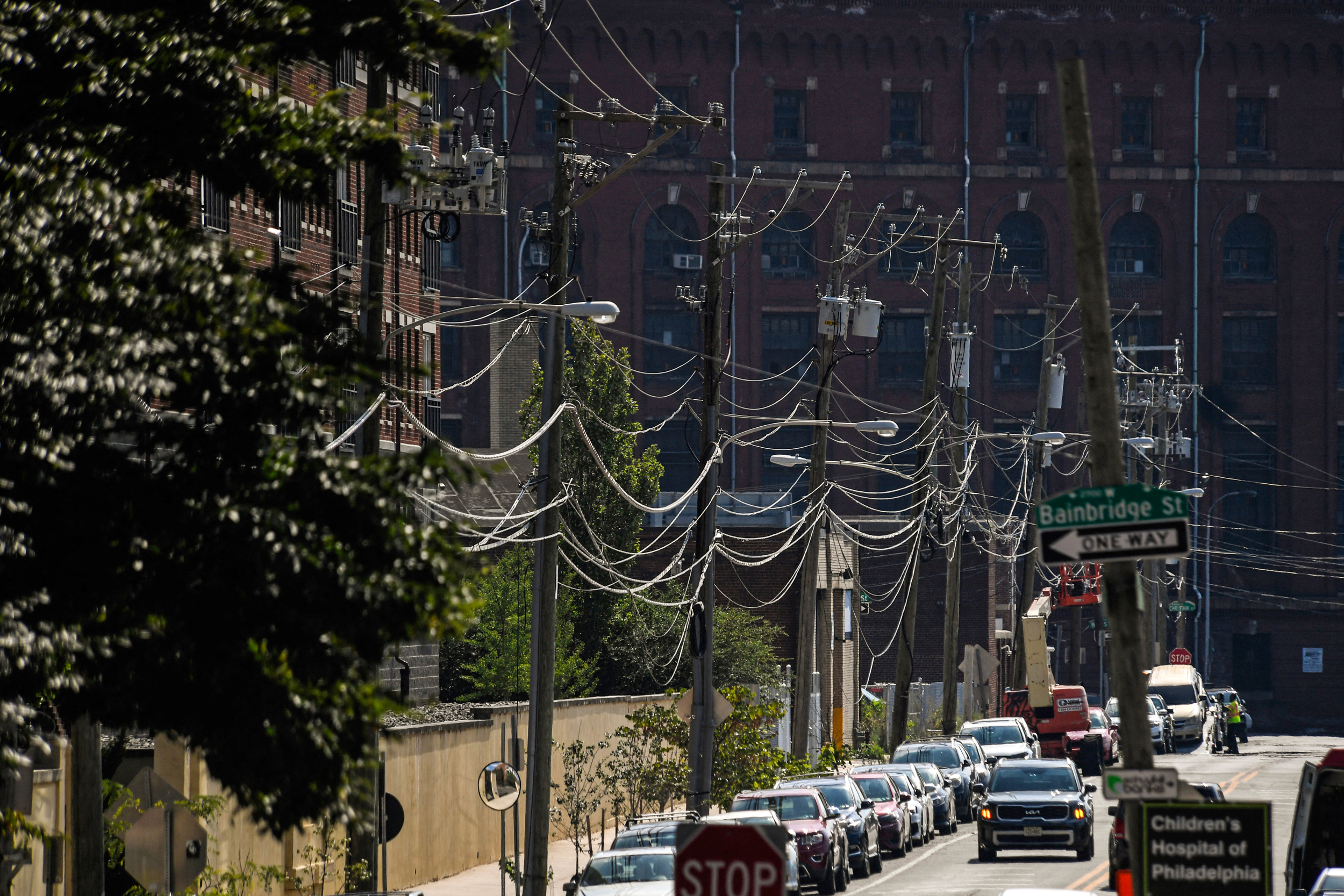
This boom coincides with a dramatic rise in U.S. electricity prices, driven by inflation and the rising cost of adapting to wildfires, hurricanes, and other extreme weather. But these massive facilities have also strained the grid — and in some cases — contributed to rising prices. For instance, last year, an independent monitor for PJM, the grid operator that serves 13 northeastern states and Washington, D.C., projected that powering data centers would result in higher electricity generation costs, which would ultimately be passed on to consumers. And in cases where the buildout hasn’t yet led to price hikes, utilities and grid operators expect that it’s just a matter of time if tech companies follow through on their plans. Indeed, the Federal Reserve Bank of Dallas estimates that with data center electricity demand expected to double in the next five years, wholesale power prices could rise by as much as 50 percent.

At a time when the cost of living has become untenable for many Americans, and consumers are setting aside ever greater shares of their income to pay energy bills, the possibility of further rate hikes to line the pockets of tech companies has prompted a massive backlash across the country. The White House gathering of tech executives appeared to be a response to the backlash. On March 4 at the event, they signed onto the “Ratepayer Protection Pledge.”

The pledge itself has few specifics or teeth. It’s a voluntary agreement by several prominent tech companies — including Microsoft, Meta, OpenAI, and Amazon — to secure their own power for data centers, pay for any powerlines or other infrastructure that utilities may need to build to move that power, and hire locally from the communities they build in. While in theory the agreement could help prevent Americans from having to bear the cost of the data center expansion, the White House hasn’t set up oversight mechanisms to ensure that they do. Several consumer and environmental advocates called the agreement “meaningless,” “unenforceable,” and ultimately, “nonsense.”

The United States has become ground zero for the global data center boom. The rapid buildout has left developers, tech companies, and the utility industry scrambling to secure more power. As a result, the wait for a data center to connect to the grid can be years in many parts of the country. Hyperscalers — companies that operate large data centers and provide vast computing power — have been trying to get around these wait times by signing long-term power purchase agreements with solar developers, building their own natural gas plants, and even retrofitting jet engines to generate electricity

“Every single data center in the future will be power limited,” said NVIDIA CEO Jensen Huang last year. “We are now a power‑limited industry.”

Outside of the White House, utilities, local regulators, and lawmakers have also been proposing various solutions to address the community backlash and allow for the continued building of more data centers. Some have implemented measures requiring data centers to pay the costs of generating and moving the electricity they use. Others have suggested that data center developers install solar and battery systems on-site, or that rates should be frozen for residents while utilities figure out how to handle the additional costs. And at least 11 states are considering legislation to temporarily ban new data centers while their impact on electricity prices and other concerns are addressed.

“You’re seeing states try to move quickly,” said Meghan Pazik, a senior policy associate in Public Citizen’s climate program. But “every state’s going to have a different approach to how far they want to go on data centers.”  

Many states are utilizing additional tariffs for data centers and other customers that pull large amounts of power from the grid. These facilities — referred to as “large load customers” — are required to pay more to make up for the added infrastructure costs that come with supplying them, as well as the risk if they end up walking away from the project, which would leave consumers on the hook for the investments. More than 30 states have proposed or implemented measures of this sort. 

Some hyperscalers are changing their approaches, too. In Minnesota, Google inked a deal with Xcel Energy, the state’s largest investor-owned utility, to bring 1,900 megawatts of clean energy onto the grid. The company is fully funding wind turbines, solar panels, and battery storage, as well as the costs of grid infrastructure upgrades to serve its data centers. And in Louisiana, Meta signed a deal with Entergy to help fund the construction of seven natural gas plants, more than 200 miles of transmission lines, and battery systems, among other infrastructure upgrades.

A recent report from the Searchlight Institute, a policy think tank, argues that this piecemeal approach to regulating the tech industry misses an opportunity to fund a large-scale upgrade of the grid. Although the surge in demand has largely been framed as a looming crisis, the report contends that the boom also creates a rare policy window: a chance to modernize the country’s electrical system and make long-delayed investments needed for the clean energy transition.

Utilities make roughly $35 billion in investments in transmission infrastructure every year — far short of what’s actually needed. Electricity demand is projected to double or triple in the next 25 years. The Searchlight Institute report proposes creating a dedicated grid infrastructure fund to accelerate the expansion. Under the plan, hyperscalers would pay into the fund in exchange for speedy connections. Money from the fund would be directed to utilities and other companies to build out the system, prioritizing clean energy along the way. And consumer and environmental advocates, along with other policymakers, would oversee the process to ensure funds are being distributed equitably and serve the needs of the public. 

Such a mechanism would ensure increased investments in clean energy, rather than the natural gas projects many tech companies are currently backing, while protecting consumers from increases in electricity prices.

“The hyperscalers need power,” said Jane Flegal, a senior fellow at the Searchlight Institute and author of the report. “They have a ton of capital. And rather than letting them continue to cut these one-off deals with utilities, we’ve got to find a better way to take advantage of the potential upside here and avoid the downside of them basically building a secondary grid behind the existing grid that benefits only them.”


The post Data centers are straining the grid. Can they be forced to pay for it? appeared first on Great Lakes Now.

Original Article

Great Lakes Now

Great Lakes Now

https://www.greatlakesnow.org/2026/04/14/data-centers-are-straining-the-grid-can-they-be-forced-to-pay-for-it/

Grist

By Sarah Shemkus

This story was originally published by Canary Media.

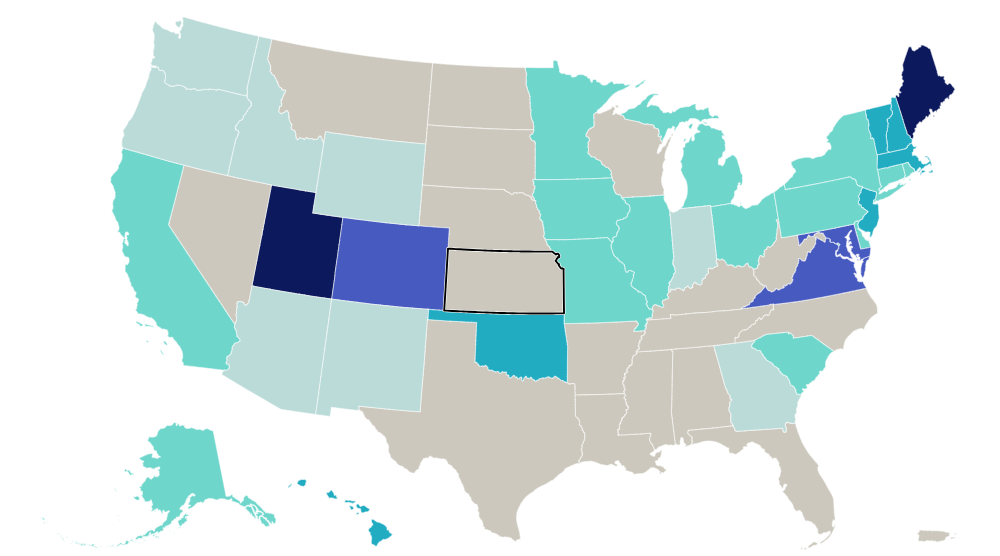
Balcony solar is one of the hottest ideas in renewable energy right now. Boosters say the systems — DIY kits that can be plugged right into a standard outlet — save users money without any need for subsidies, government incentives, or utility permission.

As Americans continue to struggle with soaring power prices, about half the states in the U.S. are considering legislation to pave the way for residents to adopt plug-in solar and start generating some of their own electricity from their own backyard or porch.

“It’s about energy affordability,” said Cora Stryker, co-founder of Bright Saver, a nonprofit that promotes plug-in solar. ​“Every legislator wants their constituency to have less trouble meeting their energy demands.”

As these efforts work their way through the legislative process, we will be monitoring the action here, using information from Bright Saver and bill-tracking databases.

Latest action: Maine Gov. Janet Mills (D) signed the state’s plug-in solar bill into law on April 6.

The post Which Great Lakes states are advancing balcony solar? appeared first on Great Lakes Now.

Original Article

Great Lakes Now

Great Lakes Now

https://www.greatlakesnow.org/2026/04/10/which-great-lakes-states-are-advancing-balcony-solar/

Canary Media

By Ethan Bakuli, Planet Detroit

This article was republished with permission from Planet Detroit. Sign up for Planet Detroit’s weekly newsletter here.


In the middle of a five-day power outage brought on by an early spring storm, Woody Gontina’s house appeared to be the only one on his street that still had its lights on.

At the time, Gontina had just installed a 5.4-kilowatt solar-and-battery-storage system at his home.

“Because of the solar and the battery, we had our whole house powered day and night throughout that outage,” recalls Gontina.

While Gontina could not have foreseen the storm’s impact, it was an early proof of concept for the Royal Oak city commissioner, who was in the early stages of encouraging his neighbors to install solar panels on their properties through an initiative called Solarize Royal Oak.

In the past few years, a largely grassroots solar installation trend has taken shape across a handful of Michigan towns and counties, as residents like Gontina have sought to capitalize on group-buy discounts and federal incentives to upgrade their homes.

“There wasn’t really a champion to push (Solarize) forward,” said Gontina. “I had the time and the interest to do it, and I also understood that the city was very challenged in terms of resources and didn’t have the time to meet an initiative like that.”

Now overseen by the Great Lakes Renewable Energy Association, the Solarize program has expanded to Grand Rapids, Lansing, Kalamazoo, as well as Oakland, Washtenaw, and Wayne counties, where city and county officials have taken over administering it to homeowners and businesses.

While federal incentives for solar have shrunk and solar installations have declined under the Trump administration, advocates of Solarize are still encouraging residents and businesses to take advantage of remaining opportunities and to embrace renewable energy sources amid utility rate hikes.

“As we see our energy costs continuing to rise, that’s really the biggest argument for renewables,” said Gontina. “Our electric provider, DTE, has demonstrated that they will not stop continuing to ask for increases at a regular pace until there’s something legislatively done to stop that.”

National grassroots solar installation program appeals to Michigan homeowners

While Solarize has found its footing in Michigan in the past decade, its origins trace back to 2009, when residents in Portland, Or. began hosting neighborhood seminars with local contractors to learn about residential solar panel installation. The program rapidly expanded the city’s solar footprint, according to a report from the Energy Trust of Oregon.

For Ann Arbor energy manager and resident Julie Roth — who now works for the city’s Office of Sustainability & Innovation — hearing about the early success of Solarize was enough of a rationale to try it in her neighborhood in 2019. At the time, she was interested in installing solar panels on her roof but was concerned about the high upfront costs and the wide range of contractor quotes.

“I pitched it to my solar installer (contractor),” said Roth. “I said, ‘Well, what do you think if I get a bunch of people here and we all do it together. Would you give us a discount?’ He said, ‘Sure,’ and came up with a sort of discount structure.”

After she sent out an invite on Nextdoor and Facebook, Roth says, she was surprised at the turnout.

“I thought that I would have three people sitting around my dining room table awkwardly trying not to make eye contact with the installer or me, and then we would all go home, and it would be over,” said Roth.

Instead, 40 people showed up to that first meeting at her house. Within a year, about a dozen people from that night installed solar panel systems on their homes.

“It basically started because we were trying to overcome barriers to adoption,” she said. “We didn’t have any staff. It started as a volunteer thing. We didn’t have any money, and so with no resources and very little bandwidth, what can you do?”

As residents like Gontina and Roth have become ambassadors for Solarize, encouraging neighbors to host their own events and create more group-buy discounts on solar, it’s brought greater interest from county governments and statewide organizations seeking to broaden its appeal.

“We really want to position ourselves as a resource, as an advocate, and relationship builder,” said Julie Lyons Bricker, chief sustainability officer for Oakland County, one of the latest counties to adopt the Solarize program.

Since launching in 2021, the county’s Sustainability Office has focused on both improving energy efficiency across Oakland’s 62 cities, townships, and villages and guiding homeowners and businesses toward available incentives, says Lyons Bricker.

With Solarize Oakland County, the county hopes to raise awareness on how solar works, what’s needed to get it installed, and what people should expect from their contractors. Groups of residents can be matched with GLREA-approved vendors and receive a bulk discount of 5 to 15% on their solar panel purchases.

A diminishing landscape for solar installation

As momentum for solar installations has picked up in some communities across Michigan, the national solar industry has had to contend with tariff pressures and a freeze on approvals for major infrastructure projects, amid a pivot away from the clean energy policies and investments that emerged during the Biden administration.

Solar installations have declined, leading to an industry-wide disruption, with utility-scale solar installations down 16% and community solar down 25% in 2025, according to a recent report from the Solar Energy Industries Association (SEIA).

Last year, the Residential Clean Energy Credit — a 30% federal tax credit on solar, wind, and geothermal home installations — was cut six years short when Trump signed the “One Big Beautiful Bill” in July 2025, ending a credit that had been set to run through 2032.

“It’s an economic investment when you’re thinking about installing a system,” said Gontina. “Anything that is available to help with that investment only makes it easier.”

While the residential tax credit ended in December, multiple financial incentives for businesses and houses of worship remain active through the end of 2027. Bricker says the county is still trying to encourage commercial property owners to take advantage of that opportunity while it lasts.

For renters, lower-income residents, and those with roofs unsuitable for panels, rooftop solar programs like Solarize remain largely out of reach. The Trump administration’s termination of the federal Solar for All program in 2025 eliminated $156 million in Michigan projects designed to expand solar access for low-income households — projects already underway in Detroit, Highland Park, Benton Harbor, and beyond.

Community solar legislation, which would allow residents to subscribe to off-site solar arrays and receive bill credits without owning a system, has bipartisan support in Michigan but has yet to advance.

Solar panel parties spawn citywide energy push

Gontina says that the Solarize Oakland County program could help the rest of the county catch up to what individual towns like Royal Oak are attempting to do.

“You’re bringing a bigger tent to the picture so that more people feel like they have an opportunity to be included,” he said.

Although Solarize is transitioning toward a “top-down” approach, Roth credits the “grassroots” solar parties she and others hosted with helping grow the city’s residential solar installations over the last several years.

“It grows the movement more when you’re talking to your neighbors than when you’re just talking to a city representative,” said Roth. “The community engagement and buy-in and ownership are much higher, especially when you’re not just looking at getting solar up, you’re looking at engaging a community around energy.”

She added: “We’re there as technical experts to some degree, to add legitimacy, and to continue to bring people along, and to make sure that the installers are being responsive.”

Although Ann Arbor Solarize’s numbers have slowed down in recent years, city data shows that the number of residents installing solar panels has increased in tandem with the program’s launch in 2019 and the growth of the solar installation market.

Ann Arbor has averaged about 180 residential solar installations annually since 2020, compared to 17 per year between 2008 and 2019.

Nearly seven years later, the success of Ann Arbor’s Solarize program has contributed, in part, to the city’s push to create a municipal-owned utility designed to help residents and businesses access solar energy and battery storage without upfront costs. The program will be optional, and will supplement, not replace, the use of DTE’s electric grid, according to city documents.

Ann Arbor’s Sustainable Energy Utility, authorized by roughly 80% of voters, is designed in part to address those barriers. Unlike rooftop solar programs, it would allow residents and businesses to access solar and battery storage without upfront costs — with the city owning the equipment and customers paying a monthly rate. Pilot projects targeting lower-income neighborhoods are expected to launch in 2026, with citywide expansion planned for 2027.

Roth hopes the city’s trend in renewable energy adoption and utility ownership can be a model for other communities. These days, she relishes the sight of solar panels around Ann Arbor.

“You walk around, you walk your dog in the neighborhoods, and it’s like, ‘solar there, solar there, solar there,’” she said. “It’s so visible. And that’s really exciting to see the actual physical changes in your community.”


The post Residents across Michigan unite for solar discounts appeared first on Great Lakes Now.

Original Article

Great Lakes Now

Great Lakes Now

https://www.greatlakesnow.org/2026/04/09/residents-across-michigan-unite-for-solar-discounts/

Planet Detroit

Catch the latest energy news from around the region. Check back for these monthly Energy News Roundups.

Ohio prosecutors are back to square one in their corruption case against two former FirstEnergy executives. Prosecutors accused former CEO Chuck Jones and senior vice president Mike Dowling of paying a state energy regulator a $4.3 million bribe. But the high-profile case ended in a mistrial after the jury couldn’t agree whether Jones and Dowling were guilty, even though others (including Ex-Ohio House Speaker Larry Householder) have been convicted and sentenced to prison in connection with the energy bribery scandal. A retrial is expected.

The Trump administration ordered two aging Indiana coal plants to be kept open another 90 days, through mid-June, at a cost utilities say is climbing into the hundreds of millions. The U.S. Department of Energy first moved to block the plants’ planned retirement in December, citing a need to prevent electricity shortages. Days after the administration extended its order, the Illinois and Minnesota attorneys general sued, arguing in separate filings that keeping the plants open would increase costs for ratepayers in their states.

A Wisconsin coal plant’s retirement is being delayed — again. Utility We Energies said it will continue operating the Oak Creek Power Plant’s two remaining coal units through the end of 2027 to ensure energy reliability and affordability. The utility previously pushed back the units’ retirement from 2024 to 2025, then to 2026, citing high energy demand. Groups opposed to extending the plant’s life said it will have negative environmental and health impacts and lead to higher costs for ratepayers.

The Trump administration and Japanese partners plan to build a massive data center in Ohio powered by its own gas plant, at a cost in the tens of billions of dollars. If completed as planned, the Pike County technology campus would be the largest single private-sector investment in state history, Cleveland.com reported. There are already questions, though, about the kinds of delays a project of this scale could face.

And northwest Indiana could lose 12,000 jobs by the mid-2030s if the steel sector continues business as usual, according to a new report from the Indiana University Environmental Resilience Institute. If companies instead adopt cleaner technologies, the state could gain jobs while reducing carbon emissions and negative health impacts, the report found. Steelmaker, U.S. Steel, challenged some of the findings in the report that comes as Cleveland-Cliffs, another steelmaker, appears poised to recommit to coal at an Ohio steel mill.

More energy news, in case you missed it:

The post Ohio energy corruption case goes nowhere after jury deadlocks over bribery charges appeared first on Great Lakes Now.

Original Article

Great Lakes Now

Great Lakes Now

https://www.greatlakesnow.org/2026/04/08/ohio-energy-corruption-case-goes-nowhere-after-jury-deadlocks-over-bribery-charges/

Nicole Pollack, Great Lakes Now

By Vivian La, IPR

This story is made possible through a partnership between Interlochen Public Radio and Grist, a nonprofit environmental media organization.


The company behind the controversial Line 5 tunnel project in the Straits of Mackinac released a report this month that lays out the potential geologic risks a contractor might see during construction — risks that pipeline opponents say underscore the dangers of the proposed tunnel.

Canadian pipeline company Enbridge Energy submitted its geotechnical baseline report on the project to state permitting agencies in early March. The report itself is from 2022. Enbridge says the report is based on data that was already available publicly.

The company wants to replace the existing dual-pipeline infrastructure in the Straits of Mackinac with a tunnel housing a new segment buried under the lakebed.

Opponents said they’re worried about potentially unsafe conditions indicated by the report, including weak bedrock, high water pressure and dangerous gases beneath the Straits.

“The report raises serious concerns about whether it is possible to safely build a tunnel in the Straits of Mackinac,” said Debbie Chizewer, managing attorney with the legal nonprofit Earthjustice, which is involved in litigation against Line 5.

Brian J. O’Mara, a geological engineer with the consultant group Agate Harbor Advisors LLC, said the report confirms his concerns around poor rock quality, suggesting that much of the bedrock won’t be stable for tunneling and could lead to the construction equipment failing.

The report also contains some redacted sentences in sections related to gas conditions and the possible “squeezing” of weak rock under high pressure.

“The report is silent on the risks related to fire, explosions, floods, sinkholes, tunnel collapse and a full-bore rupture release of oil and gas liquids from the pipeline,” O’Mara wrote in an email. He had written in legal filings to permitting agencies about his concerns on the report’s baseline data as early as 2023.

O’Mara notes that he believes the report incorrectly concludes that contractors won’t encounter any gas during tunneling.

Enbridge spokesperson Ryan Duffy said in an email that the geology beneath the Straits is not known to have gas, and that “the question has been thoroughly investigated by Enbridge and independent experts responding to Michigan regulators.”

“The reality is that the new pipeline replacement at the Straits crossing is designed specifically to prevent potential risks to the Great Lakes and its communities,” Duffy said.

Duffy said the “sole purpose” of the report was to inform and negotiate business deals with construction contractors. “Any geotechnical information pertinent to permitting decisions has already been made available to the relevant permitting agencies,” he said.

The report was not included in the case filings for Enbridge’s permit for the project issued by the Michigan Public Service Commission in 2023. The agency declined further comment because an appeal of the permit sits before the Michigan Supreme Court.

Enbridge is still waiting for permits from federal and other state agencies for the proposed project.

The U.S. Army Corps of Engineers reviewed the geotechnical report when it developed the tunnel project’s Environmental Impact Statement, said agency spokesperson Brandon Hubbard.

A spokesperson for the Michigan Department of Environment, Great Lakes and Energy (EGLE) said the agency requested the geotechnical report from Enbridge in late 2025 as part of their permitting process.

“We are continuing to evaluate the application that was submitted. We will include this document, along with many others posted to the EGLE database, as part of our review,” said EGLE spokesperson Scott Dean in an email.

A decision from EGLE on the permit is expected no later than mid-July.

Editor’s note: Enbridge is among IPR’s financial supporters. We cover them as we do any other company.

The post Line 5 opponents raise concerns over report on geologic conditions for proposed tunnel appeared first on Great Lakes Now.

Original Article

Great Lakes Now

Great Lakes Now

https://www.greatlakesnow.org/2026/04/06/line-5-opponents-raise-concerns-over-report-on-geologic-conditions-for-proposed-tunnel/

Interlochen Public Radio

By Janelle D. James, Bridge Michigan

The Great Lakes News Collaborative includes Bridge Michigan; Circle of Blue; Great Lakes Now at Detroit PBS; Michigan Public, Michigan’s NPR News Leader; and The Narwhal who work together to bring audiences news and information about the impact of climate change, pollution, and aging infrastructure on the Great Lakes and drinking water. This independent journalism is supported by the Charles Stewart Mott Foundation. Find all the work HERE.


More than a decade after the idea first surfaced, a revamped proposal to buy Belle Isle and turn the public park into a privately funded housing, entertainment and retail district is drawing sharp criticism from Michigan officials and the Belle Isle Conservancy, who call the idea unrealistic. 

Southfield-based real estate developer Rodney Lockwood has proposed buying Detroit’s Belle Isle for $1 billion and transforming it into a high-density “special economic zone” with high-income housing, mixed-use developments and more than 100 restaurants.

Lockwood’s firm stirred debate last week with the release of a poll it had commissioned. But the Michigan Department of Natural Resources, which manages the island as a state park under a 30-year lease agreement with the city, told Bridge Michigan it has no plans to take Lockwood up on the offer. 

“This proposal is not something the Michigan DNR has been involved in and it’s not something the state is considering,” Tom Bissett, assistant chief of the DNR’s Parks and Recreation Division, said in a statement. 

“Since assuming management of Belle Isle in 2014 through a lease with the city, the state has focused on investing in the historic park, recognizing the central role Belle Isle plays in the life of Detroit and its residents,” he said.

The Belle Isle Conservancy, a nonprofit that partners with the state and city to protect the island, was even more forceful in dismissing Lockwood’s redevelopment plans. 

“Belle Isle is a public park. Period,” said Meagan Elliott, president and CEO of the Belle Isle Conservancy. “The Belle Isle Conservancy has not been consulted at all on this dystopian plan. Our face-to-face community engagement this summer touched 12,000 people, showing that residents endorsed the idea of the Belle Isle Commons and more recreation offerings.” 

Lockwood could not be reached for comment. 

The idea, which he first wrote about in a 2013 novel set 30 years in the future, would rely on private investment, with the aim of turning the island into a global hub like Singapore or Dubai. It’s estimated that the project would create 20,000 construction jobs over 10 years and generate nearly $200 million in annual tax revenue, he told a local news outlet last week.

Lockwood first floated the idea more than a decade ago, before the island became a state park, when it was under city control and facing years of deferred maintenance, budget shortfalls, deteriorating infrastructure, reduced services and concerns about safety and upkeep.

It’s the latest proposal from Lockwood for Detroit land in recent years. In 2019, along with businessman Larry Mongo, Lockwood sought to redevelop a golf course that makes up about half of Palmer Park.

A Mitchell Research & Communications poll conducted for Lockwood’s company — Belle Isle Freedom City — and released last week purported to show state and local support for the concept.

But a press release noted the many steps it would require — passage of legislation by Congress, the state and the city to create the “special economic zone” — and critics noted a small number of Detroit residents were surveyed. 

“The (poll) Mitchell Research released this week had a sample of less than 200 people,” said Elliott, the Belle Isle Conservancy CEO. “This ridiculous plan is a great reminder of just how lucky we are to have this world-class park as a public asset for everyone.”

The Belle Isle Conservancy has its own plans for the island. The Belle Isle Commons proposal includes a public square near the aquarium and conservatory designed to improve connectivity and create gathering spaces without relying on cars.

The state, meanwhile, has invested more than $178 million in improvements at Belle Isle, which is the most visited state park with 5.5 million annual visitors, according to the DNR. 

The post Michigan shuts down Belle Isle redevelopment plan critics call ‘dystopian’ appeared first on Great Lakes Now.

Original Article

Great Lakes Now

Great Lakes Now

https://www.greatlakesnow.org/2026/04/03/michigan-shuts-down-belle-isle-redevelopment-plan-critics-call-dystopian/

Bridge Michigan

By Carey L. Biron

This story was originally published by Grist. Sign up for Grist’s weekly newsletter here.


When Krystal Steward started knocking on her neighbors’ doors in Ann Arbor, Michigan, in 2021, to discuss energy efficiency and sustainability upgrades, she was met with a lot of blank stares.

She was new to the issues herself, she said. But the longtime social worker kept at her new job doing outreach for Community Action Network, a local nonprofit dedicated to serving under-resourced communities. She slowly started getting people in her neighborhood to take part first in home energy assessments, then a city program to swap out appliances, make structural fixes, and more.

“In the beginning it was kind of hard — a lot of people were reluctant. If someone is knocking on your door and telling you they can fix up your home for free, most people don’t believe that,” Steward said. But, she added, “Once one person tried it out, they’d tell their neighbors, and others would jump on board.”

Now the neighborhood, Bryant, is set to pilot a first-in-the-country program that officials hope will speed the city’s transition to renewables — and offer a new model for how local governments can control their energy future.

The idea is technical, but has sparked enthusiasm across Bryant and Ann Arbor: a new city-created Sustainable Energy Utility, known colloquially as the SEU. Rather than replacing the privately-owned utility that serves Ann Arbor, the plan is for this city agency to run in tandem, offering a supplemental service that residents can opt into. 

If they do, they’ll stay connected to the regular grid, but will be outfitted with solar panels, battery backup systems, or other infrastructure, drawing on that power for their home use and opening up the prospect of selling any excess. The city, meanwhile, would pay for the installation and maintenance of these systems, which Ann Arbor would continue to own — a vision of energy generation and storage distributed across the city.

The plan begins in the coming months in Bryant, a 1970s-era community with about 260 homes, many of which are officially considered “energy burdened.” A quarter of residents pay more than a third of their incomes on utilities, in a neighborhood that is one of Ann Arbor’s only areas of unsubsidized affordable housing, according to Derrick Miller, Community Action Network’s executive director.

The SEU is a major step in a yearslong process to address Bryant’s energy affordability and sustainability concerns — and then expand the approach across the city.

“When we started having a conversation about how to decarbonize the neighborhood about four years ago, it felt outlandish. Now, it doesn’t feel like anyone can stop us,” Miller said.

Two parallel utilities

The appeal of the SEU became clear in November 2024, when a ballot measure on the proposal was approved by nearly 80 percent of Ann Arbor voters. A little over a year later, city officials are ready to implement the vision, said SEU Executive Director Shoshannah Lenski.

In late February, the city announced that it was accepting expressions of interest from residents and businesses to take part, accompanied by a flurry of community meetings, animated videos, and ads in local theater playbills.

Customers who opt in will get two utility bills — one for the power supplied by these new city-owned clean energy systems, and one for any power they’re still drawing from the regular grid — which Lenski and her colleagues say will add up to less than they currently pay.

“Just like customers don’t own a power plant, the city owns and finances the system upfront, and they pay for that electricity through a monthly bill,” Lenski said. She noted that the model could prove particularly helpful for renters, who often get left out of green energy incentives.  Signing up large multifamily buildings will be important to quickly expand the SEU’s size, she said.

In addition to installing clean energy systems at participants’ homes, the SEU could build its own microgrids, something that would set it apart from other municipal clean energy programs. For instance, the agency could install solar panels on a school to supply power when students and teachers are in the building, and that power could go to other SEU customers when classes are out.

Backers say the strategy allows Ann Arbor to build out its green energy system with lower financial risk — and lower potential for political or industry pushback.

“When coupled with DTE’s planned investments in clean energy, these voluntary, fee-based programs help accelerate economy-wide decarbonization while maintaining reliability and affordability,” Ryan Lowry, a spokesperson for DTE Energy, which currently supplies energy to the city, said in an email.

It might seem surprising that DTE, Michigan’s largest electric utility, is supportive of the SEU. But industry experts noted that many investor-owned utilities are struggling under the unprecedented new demands for power. Having a local government try to help manage power needs could be seen as an asset, they suggested — though DTE will have no formal role in the SEU.

So far, more than 1,500 people across Ann Arbor have indicated that they want to sign up. The SEU plans to serve around 100 to 150 customers in Bryant this year, expand out to reach 1,000 next year, and then grow by several thousand annually after that.

A missing 40%

The approach answers a question prompted when Ann Arbor adopted an ambitious climate plan in 2020.

That framework included an electrical grid powered completely by renewable energy within a decade, but a city analysis in 2023 warned it was likely to miss that goal by more than 40 percent. In order to reach it, the city would need to push DTE to accelerate its renewable energy buildout, or lean on state officials to do so — or detach from DTE entirely and create a separate city-owned utility, an idea that does have some support in Ann Arbor. 

But from the city’s perspective, these options seemed too risky or uncertain, Lenski said — until officials realized that the Michigan constitution allows municipalities to create and run their own utility, even if there’s another present.

“That’s where the idea of the SEU was born,” she said.

When University of Michigan researchers compared the four options, they found the SEU model had the greatest potential to lower energy prices and emissions, boost reliability, and help low-income communities.

“Overall, it came down to having some benefits of local control without some of the costs,” said Mike Shriberg, a professor who led the research, noting a similar model should be possible in every state.

Still, some worry the strategy does not go far enough.  Advocates who want the city to break with DTE and replace its services with a utility fully owned by Ann Arbor are seeking a November ballot measure to set that process in motion. (Organizers are currently collecting signatures.)

Brian Geiringer, executive director of the advocacy group Ann Arbor for Public Power, said the SEU plan still leaves too much responsibility for the city’s energy transition with DTE.

But if voters do approve creating a fully public utility, he said, it would not mean an end to the SEU: The two approaches could work together, with the SEU focused on generation within Ann Arbor, and a publicly owned utility able to make its own decisions on purchasing power.

“If you draw a circle around Ann Arbor, the SEU is doing stuff inside the circle. And we’re interested in having the city control what comes in from outside of the circle,” Geiringer said.

Local control

Like Ann Arbor, hundreds of cities are working to implement climate goals — and running into similar gaps between ambition and practicality, especially when it comes to control over energy sources.

“Cities have set these goals, and the utilities aren’t obligated to follow those,” said Matthew Popkin, manager for U.S. cities and communities at RMI, an energy think tank.

“So Ann Arbor’s SEU is an example of cities taking more control of their future without dismantling or acquiring existing utility systems,” said Popkin. “That’s a really interesting model.” 

Other models also exist. In Washington, D.C., for instance, a program called the D.C. Sustainable Energy Utility has been operating for 15 years, overseeing the city’s efforts to help residents use less energy.

The initiative is far narrower than the Ann Arbor vision, functioning not as a utility but rather as an organization contracted by the city to boost energy efficiency and increase access to clean energy through subsidies and rebates. 

The program is a central part of the city’s goals to reduce its greenhouse gas emissions, said managing director Benjamin Burdick, and has helped cut some 10 million metric tons of emissions while saving residents more than $2 billion from reduced energy use.

Nationally, “the conversation that we’re hearing is around how do you continue to talk about climate with affordability,” he said. “Programs like the D.C. SEU are going to continue to be the way that we double down.”

The work in Ann Arbor is now receiving its own attention across the country. 

“What caught my eye about Ann Arbor’s efforts were the references to citizen involvement and co-investment in their own grid,” said Jim Gilbert, a retired medical product designer in Boulder, Colorado, who is now helping the city assess the Ann Arbor model. 

Boulder has dealt with recent power outages due to worsening climate impacts and aging infrastructure, and Gilbert said an SEU could offer a way forward.

Back in Ann Arbor, as the city prepares to launch the initial pilot of its SEU, the plan is to reach half of the Bryant neighborhood by the end of the year — and local residents are “all in,” said Krystal Steward. 

Older members of the community are particularly excited, she said, noting that many are on fixed incomes and will particularly benefit from lower energy bills.

“It’s hard for me to keep up,” Steward said. “Now it’s not me reaching out to residents to sign up — they’re blowing up my phone.”


The post How Ann Arbor, Michigan, is creating its own clean energy utility appeared first on Great Lakes Now.

Original Article

Great Lakes Now

Great Lakes Now

https://www.greatlakesnow.org/2026/04/03/how-ann-arbor-michigan-is-creating-its-own-clean-energy-utility/

Grist

By Maria Gallucci and Kathiann M. Kowalski

This story was originally published by Canary Media.


Cleveland-Cliffs appears poised to lock its Middletown Works steel mill into using fossil fuels for at least the next two decades.

The steel manufacturer had already abandoned its plan to replace a coal-based blast furnace at the southwest Ohio plant with cleaner, hydrogen-ready technology and electric furnaces. That project, which won a $500 million federal grant during the Biden administration, was meant to mark America’s entry into the global race to make greener steel.

Now, Cliffs seems ready to refurbish its old Middletown blast furnace so that it can keep running on coal, and to add a cogeneration plant that makes electricity and steam from waste gas. The company has not ruled out the possibility that it might pay for part or all of the work using money from the grant — which Congress required the Department of Energy to spend for the purpose of accelerating industrial decarbonization.

Cliffs described the project in an air-permit application submitted in late February to the Ohio Environmental Protection Agency, though the steelmaker hasn’t yet publicly announced the initiatives.

The filings represent the latest twist for the Middletown steel mill, the longtime economic engine of Vice President JD Vance’s hometown.

Cliffs’ plans have been murky ever since the company ditched its hydrogen ambitions last year. In a July earnings call, CEO Lourenco Goncalves said only that Cliffs was working with the DOE to develop a new scope for the federally funded project, in a way that will ​“preserve and enhance” Middletown’s use of coal and fossil gas. Goncalves later confirmed that Cliffs’ grant remained intact, having been spared from the Trump administration’s sweeping cancellation of other DOE-backed efforts to decarbonize U.S. industrial facilities.

It is unclear whether the company and energy agency will come to any agreement on revamping the project, and if they do, how much of the federal funding the company might use for the work now planned at Middletown. The DOE has not responded to Canary Media’s repeated requests for comment.

Cliffs received its award in 2024 through the $6.3 billion Industrial Demonstrations Program, which was primarily funded by the 2022 Inflation Reduction Act. In appropriating those dollars, Congress stipulated that the DOE should help companies deploy ​“advanced industrial technology” that is ​“designed to accelerate greenhouse gas emission reduction progress to net zero” at U.S. manufacturing facilities.

The steelmaker’s plan to adopt hydrogen-ready technology could have eliminated roughly 1 million tons of greenhouse gas emissions per year from Middletown Works. It was also expected to create 170 new permanent jobs, in addition to safeguarding 2,500 positions at the facility. Cliffs’ latest proposal, which focuses on energy-efficiency improvements, is unlikely to deliver anywhere near the potential emissions reductions that would have resulted from the original project.

For green-steel proponents, Cliffs’ effort to squeeze more life out of its existing coal-based capacity is a missed opportunity to invest in cleaner and modern alternatives.

Relining blast furnaces is typically done about every 20 years, while building cogeneration plants is a fairly standard way for heavy industry to boost energy efficiency and improve the performance of older factories. Neither step represents the sort of transformative solutions that the federal awards were meant to support, according to former energy staffers who worked on the industrial-decarbonization initiative.

The DOE program’s goal ​“was to invest in early-stage, commercial-scale deployments of next-generation industrial technologies that can help plants be more efficient — and also to reduce emissions and make air and water cleaner for the people who live around these facilities, and the workers who work in them,” said Ian Wells, a senior advocate for the Natural Resources Defense Council.

Wells said he was concerned about the possibility of federal grants ​“being used to double down on more legacy technologies, instead of using public funding to take the risk on new approaches that could be better in the long term.”

The Ohio Environmental Protection Agency will have until mid-August, or 180 days from the filing of the application, to either approve or deny a permit to Cliffs. The company has not received funding from the Ohio EPA for any part of the project, said Anthony Chenault, a public information officer for the agency.

Cliffs intends to start construction on its so-called Energy Recovery and Advanced Efficient Ironmaking Project on Sept. 29, according to its application. As for its federal grant, any DOE money provided through the Inflation Reduction Act must be obligated by the end of this fiscal year, on Sept. 30, and spent within five years.

The decarbonization that might have been

Cliffs’ pivot away from hydrogen in Middletown is a major about-face for a company that previously won recognition from the DOE for cutting its U.S. operations’ greenhouse gas emissions by nearly a third.

In March 2024, the energy agency chose the steel mill as the place to unveil its broader effort to decarbonize and modernize key U.S. manufacturing sectors for steel, cement, chemicals, and even food processing. ​“What you do here in Middletown, we’ll be looking at how we can replicate that in places all across the country,” then–Energy Secretary Jennifer Granholm said at the 2,800-acre site.

At the time, Cliffs planned to replace Middletown’s old blast furnace — a hulking facility that melts iron ore with purified coal, or ​“coke,” and limestone to make molten iron. About 70% to 80% of the planet-warming emissions that result from conventional steelmaking are associated with using coke and coal in blast furnaces.

In its stead, Cliffs intended to build a ​“direct reduced iron” facility that could be fueled by fossil gas, which would reduce the carbon-intensity from ironmaking by more than half. The plant would also be able to use a mix of gas and hydrogen, or hydrogen alone. If the hydrogen was made using renewable electricity, then it could have reduced the facility’s carbon-intensity by over 90%.

The steelmaker also planned to install two electricity-powered melting furnaces that would feed iron from the new DRI facility into an existing basic oxygen furnace — a heated vessel that blows oxygen over iron to produce steel. Cliffs said it expected to invest $1.3 billion, on top of the $500 million federal grant, and complete the project by 2029.

That was all before President Donald Trump took office in January 2025 and began gutting federal investments in clean domestic manufacturing.

To be sure, shifting to hydrogen-based production was always going to be challenging for Cliffs and other steelmakers, in large part because green hydrogen is expensive and in scarce supply. The Swedish firm SSAB backed out of its own $500 million DOE grant during Biden’s term after the company’s green-steel project in Mississippi ran into hydrogen supply troubles.

Still, the Trump administration canceled several of the hydrogen hubs meant to boost domestic production of the fuel and bring down its cost. The Mid-Atlantic Clean Hydrogen Hub, which would have supplied Middletown Works, remains approved but in limbo. Nonetheless, Cliffs decided to call it quits.

“It’s clear by now that we will not have availability of hydrogen,” Goncalves said during that July earnings call. ​“So, there is no point in pursuing something that we know for sure that’s not going to happen.”

Cliffs’ application with the Ohio EPA proposes replacing and repairing major equipment at the 73-year-old No. 3 blast furnace. Cliffs said the fixes could lower energy consumption and reduce the amount of coke that’s used for every ton of hot metal the furnace produces. The steelmaker is separately preparing to reline a blast furnace at its Burns Harbor facility in Indiana in 2027, which will likely cost hundreds of millions of dollars.

Cliffs’ new plan for Middletown also include installing a cogeneration plant with four industrial boilers that would primarily burn blast furnace gas — a by-product of ironmaking that is otherwise flared — to supply high-pressure steam and drive turbines that can generate about 70 megawatts of net electricity for use at the steel mill. The company already produces power this way at its Burns Harbor and Indiana Harbor sites, which get 75% and 100% of their electricity from by-product gases, respectively.

Cliffs isn’t the first to contemplate cogeneration for the Middletown mill. AK Steel, which owned the site before Cliffs acquired the company in 2020, considered installing such a system in 2010, which would have also harnessed blast furnace gas to produce electricity and steam. But AK Steel and its partner, Air Products, later determined their $315 million project wasn’t economically viable and canceled it in 2012.

It’s hard to say how the latest plan will affect the significant amounts of carbon dioxide and air pollution that stem from the Middletown facility. Among more than 600 major emitters in Ohio, the steel mill ranked ninth for its output of ozone-causing and lung-irritating nitrogen oxides (NOx) and health-harming particulate matter (PM2.5), according to a 2024 analysis by the decarbonization advocacy group Industrious Labs.

The new cogeneration plant will improve the mill’s energy efficiency, according to Cliffs. It should also offset greenhouse gas emissions that otherwise would have been released by buying electricity from the grid.

Still, in its filings, Cliffs indicated that Middletown could possibly see elevated emissions of NOx, PM2.5 and other pollutants, owing largely to the increased use of its renovated blast furnace.

The overall plan might ultimately be more financially feasible for the steelmaker than a dramatic overhaul in its operations. But the newer projects fall far short of what might have been achieved under Cliffs’ initial DOE grant proposal, said Ariana Criste, the deputy communications director for Industrious Labs.

“This was supposed to be a blueprint for how the industry can move beyond coal and transition an existing facility, without leaving its workers behind,” she said.

The post What’s next for Ohio’s former green steel project? More coal, it seems. appeared first on Great Lakes Now.

Original Article

Great Lakes Now

Great Lakes Now

https://www.greatlakesnow.org/2026/04/01/whats-next-for-ohios-former-green-steel-project-more-coal-it-seems/

Canary Media

By Vivian La, IPR

This story is made possible through a partnership between Interlochen Public Radio and Grist, a nonprofit environmental media organization.


No one wants to drive in an ice storm.

But one year ago — during the devastating northern Michigan ice storm that knocked down trees, snapped utility poles, and took out power for thousands — Wanda Whiting had to get her husband to a hospital. He was having a heart episode and calling an ambulance to their rural home in Lewiston would take too long. She had no choice but to brave the roads.

While driving the route almost exactly a year later, Whiting recalled the mess of dropped power lines and broken poles “like matchsticks” that littered the highway shoulder along the 20-mile stretch to Gaylord

“These were all down. Everything was down. These poles are all broken, snapped,” she said. Whiting remembered getting lost on dark roads with dead streetlights. She was trying to meet an ambulance at a halfway point. Arriving at the rendezvous parking lot, she had to drive across thick wires that had fallen on the roadway.

Her husband made it to the hospital. And eventually, in the weeks that followed, the power lines and poles went back up.

But Whiting can’t help but wonder how those wires will fare whenever she sees a forecast for snow and ice. And if there’s an alternative solution.

“And if it meant going underground, then by God, go underground,” she said.

After the storm

Burying power lines often comes up as a potential solution for preventing outages and minimizing the costs of storm recovery. And for good reason — underground wires are proven to increase reliability, according to researcherselectric utilities and regulators.

Now, as recovery from the ice storm continues a year later, some residents are calling for a more reliable grid that can withstand worsening extreme weather.

But burying lines is expensive, and utilities say those costs often outweigh potential benefits.

Last year, the storm knocked out power for some 200,000 people. Recovery cost utilities hundreds of millions of dollars, leading to increased electric bills for ratepayers across the region, as emergency federal aid hit delays.

The state’s largest electric co-op, Great Lakes Energy Cooperative, saw more than 66,000 power outages last year from the storm, and recovery costs totaled more than $150 million. In response to the storm, the co-op implemented a policy in December that requires any new lines to be installed underground, in an effort to increase resiliency.

“I think there’s reliability benefits for our membership, because it’s going to help prevent outages over the long term,” said Shari Culver, chief operating officer for Great Lakes Energy.

IPR reached out to the other hard-hit electric cooperative — Presque Isle Electric & Gas Co-Op — for comment about burying lines, but they declined due to ongoing discussions with federal agencies about pending storm relief funds.

Consumers Energy, another large electric provider in the region, says they hear from customers “consistently” about burying more lines. Last week, the Michigan Public Service Commission approved a $276.6 million rate hike for Consumers Energy — the largest increase in decades — to improve reliability for customers, which includes undergrounding some lines. Regulators said a typical residential customer using 500 kilowatt-hours a month will see an increase of $6.46, or 6.1%, in their monthly bill.

“There’s no better way to improve the resilience of the grid than just to get the lines out of the way of all the trees and ice and wind. Now, it comes at a cost,” said Greg Salisbury, Consumers Energy’s senior vice president of electric distribution. The company estimates it’s about $400,000 per mile to bury a line.

This year, Consumers Energy plans to bury more than 10 miles of lines around the state. That’s a small number, compared to the nearly 100,000 miles in the utility’s system, of which about 15% is already underground.

“Our viewpoint is that each circuit needs to be treated with the right interventions to get the best outcomes for the best cost for those customers,” Salisbury said.

To bury or not to bury

Burying power lines is relatively easier and cheaper with new construction, as crews install other utilities like water or gas. It’s in relocating the existing overhead lines where expenses for construction, labor and materials can add up quickly.

Burying electric lines isn’t a one-size-fits-all approach, either. Smaller utilities like Traverse City Light & Power (TCLP) are dealing with a different environment than rural co-ops, for example. In the city, there are more sidewalks, buildings, streets and other wires.

“There’s just not a lot of room to place that equipment in town without getting easements and such,” said Tony Chartrand, director of electric engineering and operations for TCLP, which has more than 170 miles of electric lines over 16 square miles in the city.

But, Chartrand said, for the municipal electric utility, there are still situations where burying makes more sense than stringing wires from poles. About half of TCLP’s lines are already buried, most running through conduit pipes, which protect wires from the elements or from accidental damage from other utility work.

TCLP tries to be proactive with burying power lines in hard-to-reach areas, like in people’s backyards, Chartrand said. In some cases, burying a residential line is cheaper than the costs of repairing aboveground wires after a tree falls on it.

Still, buried lines present their own challenges if there’s an outage. Unlike the clear visual cue of a branch hanging from overhead wires, problems underground require more equipment to find and fix.

“There’s times where, even if it is in conduit, we can’t just pull the wire out. We actually have to dig it up. And of course, that’s a whole ordeal and takes a lot of time,” Chartrand said.

There’s a lot of attention on grid reliability right now, he said.

“Part of that solution is undergrounding lines. But it’s not necessarily undergrounding everything. It’s trying to balance that cost with the benefit that we’re trying to do,” Chartrand said.

Ice storms and climate change

That balance could get harder to find as extreme weather worsens with climate change. Research suggests that northern Michigan could see more ice storms in the future, as a warming world shifts the range for freezing rain further north.

“Places where it used to be cold, below freezing all the time, it’s not always below freezing anymore,” said Richard B. Rood, a professor emeritus at the University of Michigan who studies how ice and freezing rain are changing.

It often takes big storms, like last year’s, for governments, utilities and people to spend money on planning for a warming world. And Rood sees that as a problem.

“You can’t think of what we’re experiencing as, ‘this is how it used to be, and this is where it will be.’ You are right in the middle of the change here,” Rood said.

Some policy experts say we won’t see more buried lines without significantly bringing down the costs to utilities. Eric Paul Dennis, research associate of infrastructure policy at the Citizens Research Council, said that could involve improving how we coordinate infrastructure projects so you only “dig once.”

“No one thinks that the best option is to operate outdated unreliable infrastructure and just fix it when it goes down,” he said. “But there are trade-offs. Investments must be recovered in rates. No option will be one hundred percent reliable.”

Still, only considering costs to utilities leaves out how much society benefits from having reliable electric service — roads are safer, food doesn’t spoil, people contribute to the economy.

“This is not because the utilities or people who run them don’t care, this is just the system we have,” Dennis said.

The post The northern Michigan ice storm battered the electric grid. Is burying power lines the solution? appeared first on Great Lakes Now.

Original Article

Great Lakes Now

Great Lakes Now

https://www.greatlakesnow.org/2026/03/30/the-northern-michigan-ice-storm-battered-the-electric-grid-is-burying-power-lines-the-solution/

Interlochen Public Radio

By Juanpablo Ramirez-Franco

This coverage is made possible through a partnership between WBEZ and Grist, a nonprofit environmental media organization.

Illinois is in the midst of a public health crisis. Nearly 1.5 million service lines — the pipes that carry drinking water to homes and businesses — contain or are suspected to contain lead, a neurotoxin linked to cognitive, reproductive and cardiovascular problems.

Now, public health and workforce advocates want to turn the state’s long-overdue pipe replacement backlog into a statewide economic engine, creating up to 90,000 jobs over a decade.

A recent report proposes a plan to replace the state’s staggering inventory of toxic lead pipes and create tens of thousands of jobs. To do so, the analysis calls on state and local officials to fast-track pipe replacements for communities that have suffered from the most lead exposure and to use the projects to build a more diverse local workforce. It also urges the Illinois General Assembly to help plug a multibillion-dollar budget gap for lead pipe replacements.

“The longer we put off taking care of our water infrastructure, the more expensive it’s going to get, the more that we’re going to be looking at water rates increasing to deal with that, and the more people are going to be in the position where they’re not going to have access to safe and clean drinking water,” said Justin Williams, a senior manager at the Metropolitan Planning Council, one of the policy think tanks that helped develop the plan. “And that’s not a situation we should be in as a state or region.”

Several other regional and national nonprofits also worked on the analysis, including Current, a water solutions hub; Elevate, an organization working on water and energy affordability issues; and HIRE360, a workforce development group.

Illinois has the most lead pipes in the country. The state estimates it has 667,000 known lead service lines and another 820,000 suspected lines. Chicago alone accounts for nearly 30 percent of those pipes.

Replacing these service lines is expensive. In a 2022 report, the Illinois Environmental Protection Agency found that a single service line replacement can cost anywhere from $4,000 to $13,000 across the state. In Chicago, the price tag is even higher: City officials estimated that replacements cost more than $30,000 per line on average.

State officials have estimated that replacing all the known or suspected lead pipes across Illinois could cost between $6 billion and $10 billion. The Biden-era Infrastructure Investment and Jobs Act, also known as the bipartisan infrastructure law, set aside $15 billion over five years to help states replace lead pipes. Illinois is estimated to receive about $1 billion, but given the state’s unique needs, that number “is probably on the low side,” Williams said.

The report makes the case that state lawmakers must approve dedicated, sustained and predictable funding to close the multibillion-dollar shortfall. Without long-term guarantees, replacements will likely remain inefficient and delayed.

“It’s a bit of a chicken and egg: Unless you know how much money is going to be allocated to this — how many opportunities are coming down the pipe — they’re not going to add additional people to apprenticeship programs,” said Jay Rowell, executive director at HIRE360.

Using workforce projections from the American Water Works Association and the U.S. Environmental Protection Agency, the report’s authors calculated that already allocated federal funds could generate approximately 2,000 direct jobs and 9,000 indirect jobs. If legislatures closed the multibillion-dollar funding gap, those figures could jump substantially to 35,000 direct jobs and 55,000 indirect jobs — a total of 90,000 jobs over a decade.

“We’re calling attention not only to the problem, but also to some of the opportunities to get more candidates engaged in apprenticeships,” Rowell said. “This is a really big problem that needs very thoughtful, state-led solutions.”

A major pillar of the report is diversifying the building trades. An analysis of Chicago’s workforce found that only 3.8% of registered apprentices are women and just 10% are Black. To bridge this gap, the report advocates for requiring utilities and municipalities to include diversity and equity requirements in project contracts.

The report’s authors argue that Illinois has the rare opportunity to tackle two challenges at once: address its toxic legacy while laying the groundwork for a more inclusive economy. The financial and political hurdles remain high, but advocates say the cost of inaction is higher.

“We are the envy of the world in terms of our access to fresh drinking water,” Williams said. “We need to be really thoughtful stewards of that, and that means investing in that the same way we invest in other infrastructure.”

The post Can replacing Illinois’ toxic lead pipes lead to a workforce boom? appeared first on Great Lakes Now.

Original Article

Great Lakes Now

Great Lakes Now

https://www.greatlakesnow.org/2026/03/30/can-replacing-illinois-toxic-lead-pipes-lead-to-a-workforce-boom/

WBEZ

By Kathiann M. Kowalski

This story was originally published by Canary Media.


Ohio regulators have blocked yet another major solar project because of local pushback, even though a significant number of public comments opposing the array appear to be fabricated. It’s the latest blow to solar in a state that defers to local governments on renewable energy, but not on fossil fuels.

The Ohio Power Siting Board decided last Thursday to deny a permit for the 94-megawatt Crossroads Solar Grazing Center, which would combine solar panels with sheep grazing in central Ohio. Although the project otherwise met all legal requirements, the board concluded that it ​“fails to serve the public interest.”

Regulators acknowledged that Crossroads Solar would have statewide benefits, create jobs, and increase local tax revenue. But they said the project’s merits are outweighed by the existence of ​“consistent and substantial opposition” from local governments and nearby residents.

Critics of the decision are troubled that the regulators basically shrugged off the fact that a substantial number of public comments filed in opposition to Crossroads Solar were duplicative, anonymous, or seemingly faked. A recent Canary Media review found that dozens of comments contained apparent lies about people’s names or residence in Morrow County, where the project site is located. The board acknowledged those concerns in its ruling but asserted that substantial public opposition existed regardless of the potentially fabricated comments.

The controversy about those false comments, along with anonymous or multiple submissions, feeds into broader criticism that the board has reduced renewable energy siting to a local popularity contest.

“When the volume of public input is prioritized over its substance, it weakens trust in the process and makes it harder to build the energy system Ohio needs,” said Nathan Rutschilling, managing director of energy policy for the Ohio Environmental Council.

Like many states, Ohio faces soaring electricity demand and rising power bills. Clean energy could help address those challenges — provided it can get built.

“If we’re going to deny solar the ability to compete in Ohio’s marketplace, I think that’s going to result in an artificially high price for Ohio consumers,” said Democratic state Sen. Kent Smith, who is a nonvoting member of the siting board. He described the board’s Crossroads Solar denial as ​“a dangerous thing for the state in terms of both affordability and reliability.”

An uphill battle for Crossroads Solar

State and local restrictions on renewable energy have proliferated across the country in recent years, and Ohio is no exception. The state’s wind and solar developers face hurdles that fossil fuel companies do not, thanks to a 2021 law that lets counties ban renewable energy developments — an authority they do not have over oil, gas, and coal projects.

Morrow County instituted such a ban across half its townships last year. But because Crossroads Solar was in the regional grid operator’s queue before the 2021 state law took effect, it is exempt from the blanket prohibition.

However, for the past few years, the Ohio Power Siting Board and its staff have denied or recommended against permits for solar farms when all nearby local governments have been against a project. The Ohio Supreme Court has not yet ruled on a legal challenge to that practice, even though oral argument was held more than a year ago.

Initially, it seemed as if Crossroads Solar might escape this fate. Although Morrow County commissioners and the boards of trustees in two townships where parts of the project would be built were against it, the board in a third township — Cardington — remained neutral. Since opposition wasn’t unanimous, the siting board’s staff recommended in early December that regulators deem the project in the public interest.

But shortly after that recommendation, meeting minutes show that one Cardington township trustee changed his position because the staff report ​“did not set well with him.” That led the Cardington trustees to pass a 2–1 resolution opposing Crossroads Solar. The switch-up ultimately resulted in the siting board staff reversing its stance, filing testimony in January that encouraged regulators to rule against the project.

The Power Siting Board relied on that reversal to declare that Crossroads Solar was not in the public interest. It also asserted that there was ​“strong, united opposition to the project” by people in the area. It’s worth noting, however, that many locals supported Crossroads Solar. Its developer, Open Road Renewables, found that nearly half the public comments from people in nearby towns approved of the project, once the duplicate, anonymous, and unverifiable submissions were removed.

Siting practices under fire

The Crossroads Solar case exposes deeper flaws in Ohio’s renewable energy siting process, some say.

It’s problematic that a single person’s vote on a town council ​“essentially derailed the whole project,” said Heidi Gorovitz Robertson, a professor at Cleveland State University’s College of Law. She argued that instead of reciting objections, regulators should evaluate whether those concerns have a factual basis and whether a developer’s plans already address them — and then decide whether any remaining issues actually justify denying a permit.

In the case of Crossroads Solar, Open Road Renewables agreed to address specific concerns about the project. In a late December settlement with the Ohio Environmental Council, the Ohio Chamber of Commerce, and various landowners, the company promised to follow best practices to keep roads clear and clean, use panels with an antireflective coating, minimize impacts to agriculture during construction, file a sheep-grazing plan to manage vegetation, work with a landscaping company to screen the panels from public view, and more.

But the Power Siting Board wasn’t swayed by the compromise, noting that the local governments and individual opponents who intervened in the case didn’t take part in the settlement negotiations, despite being invited to do so.

The board also appeared to buy into several obviously unfounded objections to Crossroads Solar, said Craig Adair, vice president of development at Open Road Renewables. For example, its ruling cited community skepticism about the company’s intention to graze sheep around the panels, since no contracts for such an arrangement had yet been signed. The board also noted opponents’ fears that the permit would later be transferred to another firm that wouldn’t make good on Open Road Renewables’ promises.

But the application’s commitment to use sheep would become part of the permit conditions, Adair noted. And, as a matter of basic contract law, any company that acquired the project would be subject to the same conditions as Open Road Renewables regarding permits, leases, easements, and other agreements.

The board also didn’t examine whether local governments’ objections to Crossroads Solar were based on misinformation, such as a laundry list of concerns about fires, contaminated drinking water, heat islands, and stray voltage.

“It’s taking fact and truth out of the equation, and it’s truly about concerns and politics,” said Doug Herling, a vice president at Open Road Renewables.

Instead, the board ​“denied a project that has no fuel requirements while we’re in the middle of an oil and gas crisis,” Herling continued, referencing the current supply disruptions caused by war in the Middle East. He also pointed out that solar can be built faster than gas plants, which face yearslong supply chain backlogs, and it doesn’t emit planet-warming and health-harming pollution.

Herling and Adair said the company plans to ask the board to reconsider its ruling. 

Meanwhile, the permit denial ​“sends a dangerous signal to investors,” Adair said.

“I wish the state of Ohio luck in meeting its power needs and keeping power prices from going through the roof,” he said. For renewable energy developers, ​“it’s now a game of Russian roulette as to whether you would get a permit and what those criteria are.” 

The post Ohio blocks big solar farm, despite apparently fake public comments appeared first on Great Lakes Now.

Original Article

Great Lakes Now

Great Lakes Now

https://www.greatlakesnow.org/2026/03/26/ohio-blocks-big-solar-farm-despite-apparently-fake-public-comments/

Canary Media

This story is part of a Great Lakes News Collaborative series called Shockwave: Rising energy demand and the future of the Great Lakes. The Great Lakes region is in the midst of a seismic energy shakeup, from skyrocketing data center demand and a nuclear energy boom, to expanding renewables and electrification. In 2026, the Great Lakes News Collaborative will explore how shifting supply and demand affect the region and its waters.

The collaborative’s five newsrooms — Bridge Michigan, Circle of Blue, Great Lakes Now, Michigan Public and The Narwhal — are funded by the Charles Stewart Mott Foundation.


The energy system in the Great Lakes region, as in most parts of North America, is wasteful. Stupendously wasteful.

Consider these data points. Two-thirds of the energy generated by the 2,100-megawatt Pickering Nuclear Generating Station, east of Toronto, comes in the form of heat, not electricity. The excess heat is transferred to cooling water that is dumped into Lake Ontario.

For data centers, a booming, voracious energy user, nearly all the electricity that enters a facility to power servers turns into heat. Ejecting that heat so that the servers continue to support Zoom calls and ChatGPT queries can consume gobs of energy and water.

Even underground business and household waste holds wasted energy. Sewage flows in pipes at an average temperature of roughly 60 degrees F, a thermal energy source waiting for an enterprising soul to tap into and extract the heat.

A movement is underway to do just that – mine the region’s power plants, data centers, and sewers for heat and use it to develop cleaner, cheaper energy that helps reduce or remove carbon emissions from heating and cooling. The same practices cut the expense of adding new electric generating capacity.

Such a transformation is certainly possible and has been embraced in northern Europe. But it will not be easy here. Though the physics and equipment for waste-heat recovery are tested and proven, other barriers – financial, organizational, and political – are more formidable hurdles for a region and a country in which energy efficiency is less valued than energy expansion.

“It’s not a technology issue,” said Luke Gaalswyk, president and CEO of Ever-Green Energy, a district energy company based in St. Paul, Minnesota, that is eyeing wastewater as a heat source. “The engineering of this is well understood. It’s an awareness issue, it’s a funding issue, it’s a priority issue. We, the United States, don’t have the same policy frameworks or funding mechanisms that Europeans do as it relates to these sorts of projects and incentivizing waste-heat recovery.”

Gaalswyk and others see tantalizing opportunities for waste heat in aiding the region’s electric transition. The benefits include cheaper energy, less exposure to fossil fuel price fluctuations, fewer carbon emissions, less land disruption to build new generating and transmission capacity, and less thermal pollution into waterways. But getting there, they say, requires foundational shifts in understanding, attitudes, and public policy. 

Digital Crossroad, a data center facility in Hammond, Indiana, sits on the shore of Lake Michigan. Nearly all the electricity that enters a data center turns into waste heat. Photo © J. Carl Ganter/Circle of Blue

A New Energy Scenario 

Electricity demand in the Great Lakes is growing, in some states for the first time in decades. If the projected buildout occurs, data centers will gobble electricity while the climate-friendly push to electrify everything boosts demand for electrons. 

Thermal networks, such as district heating systems that circulate hot water or steam to multiple buildings, garner less attention. Comparable to a home radiator at scale, they have been part of the urban energy landscape for more than a century, predating the invention of the gas-powered automobile. College campuses have them, as do hospital complexes. Cities like St. Paul, Chicago, Rochester, and Lansing use district heating or cooling in their downtown cores. Toronto has a district cooling system that uses water drawn from deep in Lake Ontario to cool 80 buildings.

Waste heat – or, heat that is currently regarded as waste – could be a new reservoir of energy for district heating systems.

To find one source, building owners need only to look beneath their basements. Promoting sewer thermal energy is a passion project for Paul Kohl, the board chair of the Sewer Thermal Energy Network, a trade association founded in 2023 to advocate for an unsung energy source. “We thought, let’s get people talking about it,” he said.

Kohl’s primary pitch is that sewer thermal energy goes hand-in-hand with reducing greenhouse gas emissions from buildings. Say an office complex wants to stop burning fuel oil for heat and instead wants to install a heat pump. An air-source heat pump, which extracts heat from ambient air, is a common option. But it can be problematic in an era of constrained electricity supply.

“What we’re finding is there are certain entities that are really excited about electrifying their building stock but they’re running into electrical demand problems,” Kohl said. “They can’t get enough electricity from the supplier.”

Enter sewer thermal. The building owner could instead tap into the sewer line running beneath the property and circulate the wastewater through a water-based heat pump that extracts the heat. The sewage is always contained and is not a health risk for those in the building. The water-based heat pump still uses electricity, but because of water’s superior capacity to transfer heat, its electricity demand is about half that of an air-based unit. In short, the well-understood thermal dynamics of water translates into substantial energy savings.

The sewer is a heat resource that constantly renews itself – people take showers, do laundry, and wish dishes every day, using hot water in the process. The heat that went into the water could be used again. So why aren’t there more such systems? Kohl cited two major obstacles. One is knee-jerk revulsion, typically from the general public. “The ‘ick’ factor,” he said. 

The second is an unwillingness from utilities to allow other organizations to access their pipe infrastructure when it is not the utility’s mandate to do so. The utilities, he said, are more concerned with regulatory compliance and ensuring the integrity of their pipes.

Asked if his organization operates like a matchmaker, uniting parties that otherwise might not have met, Kohl turned the analogy around. A matchmaker works only if there are willing participants, he said. “A lot of water and wastewater utilities are the consummate bachelors. So they’re like, ‘If I never have to do this, great.’”

What brings utilities into the market? Progressive leadership, Kohl said.

The 800-megawatt Palisades Nuclear Plant, in Covert Township, Michigan, shuttered in 2022. Holtec, the plant owner, is preparing to restart the facility while also building a pair of 340-megawatt small modular reactors on the site. Photo J. Carl Ganter/Circle of Blue

Leading Lights

That leadership is on display in pockets around the Great Lakes region, from both the public and private sectors. 

In St. Paul, Ever-Green Energy has drawn up plans to tap the heat in the 172,000,000 gallons of wastewater that flows daily out of the Metropolitan Council’s treatment plant and into the Mississippi River. The $150 million project would use the wastewater heat to replace the natural gas that currently fuels half of the district energy system, which is the largest hot water system in the United States.

Project proponents, including the City of St. Paul and Ever-Green, applied for the U.S. Environmental Protection Agency’s climate pollution reduction grant in 2024 but they were not selected. (Ever-Green’s wastewater heat project in Duluth also was not selected for the grant.) Though Clean Heat St. Paul, as the project is known, is currently unfunded, leaders continue to advocate for it.

“It presents an enormous opportunity for our community, for our state, to build a project that would generate global recognition around what’s possible with linking up wastewater and district heating,” Gaalswyk said.

Across the border, Toronto Western Hospital, part of the city’s leading hospital system, partnered with Noventa, an energy company, to install the world’s largest raw sewage thermal system. Completed in 2025, the project provides about 90 percent of the hospital’s heating and cooling. 

Also in Toronto, Enwave, a district energy company, operates the Deep Lake Water Cooling system that uses cold water drawn from Lake Ontario to cool 115 buildings before the water is sent to taps as drinking water. Enwave, which operates systems across eastern Canada, is now adapting that system to utilize waste heat from the cooling operations so that heating and cooling work in tandem. At the same time, the company is considering sewer heat recovery from a wastewater treatment plant in Mississauga, Ontario.

“The idea is you’re trying to capture waste heat in whatever form you can find it in,” said Carson Gemmill, vice president for solutions and innovations at Enwave.

More trade associations are embracing that logic. The Boltzmann Institute, a group of engineers focused on obstacles to electrification, persuaded the Ontario Society of Professional Engineers to start a campaign in September 2025 to advocate for thermal energy systems. Since the province is considering new nuclear power plants and building small modular reactors, including four 300-megawatt units at Darlington Nuclear Generating Station, the institute would like to see their designs incorporate waste heat reuse.

“In Ontario, the heat rejected from nuclear power plants is quite a bit greater than the heat required for heating with natural gas in the whole province,” said Michael Wiggin, a Boltzmann Institute director who is also leading OSPE’s thermal energy advocacy. “So there’s an enormous possibility to use the heat from these power plants to heat cities.”

Waste heat can flip conventional narratives on their head. Data centers today are maligned for their energy needs. Yet what if their waste heat was put to beneficial use? 

That’s the objective in Lansing, Michigan, where Deep Green, a London-based company, has proposed a 24-megawatt, $120 million data center project that would transfer its waste heat into a district heating system run by the Lansing Board of Water and Light, a water and power provider. The Lansing City Council is set to vote on the project on April 6.

“Previously, we didn’t consider heat as an asset because we didn’t need to,” Mark Lee, CEO of Deep Green, wrote in a January 2026 blog post. “There was an abundance of power, cheap energy, and less awareness of environmental impact. That’s changing: electricity prices are high, grids are congested, and there’s pressure to meet net-zero and [environmental, social, and governance] targets.”

Barriers to Entry

Even with these first steps, energy experts agree that North America, as a whole, is playing catch-up. Scandinavian countries have been reusing waste heat for decades. Stockholm has a 3,000-kilometer district energy pipe network that serves 800,000 residents and more than 90 percent of the city’s buildings. More than 30 data centers feed waste heat into the system. In Oslo, sewer thermal provided nearly 7 percent of the energy for the city’s district heating system in 2025. As a whole, the system provides 30 percent of Oslo’s heating and hot water demand. China, a more-recent entrant in the market, has developed world-champion projects in Qingdao and elsewhere.

Committed cities and governments can reach scale quickly. “The Chinese had nothing hardly in the early 90s, now they’ve got perhaps the most district heating installed capacity in the world,” Wiggin said.

Rapid growth in waste-heat recovery will not happen in the Great Lakes region on its own. Without policy signals, electric companies, data center operators, and water utilities don’t have the incentives to innovate and cooperate, Kohl said. And for waste heat, collaboration is the key to success.

What are those policy signals? Gaalswyk focused on carrots: tax breaks for companies that install heat recovery systems and a quicker permitting process for those that incorporate efficiency measures.

Wiggin, by contrast, outlined the sticks. A tax on waste heat. State or provincial efficiency standards.

Kohl mentioned both measures. Massachusetts, he noted, set aside state funds for waste-heat recovery feasibility studies. New York, meanwhile, passed a law in 2022 to develop a regulatory framework for thermal energy networks. The law requires the largest investor-owned utilities to submit pilot projects for development.

Those in the district energy industry see waste heat as a massive opportunity, one that begins in the early stages of project development, whether it’s a data center or a nuclear power station. Incorporating waste-heat recovery into a project’s initial design is easier than retrofitting the facility in the future.

“Our thesis is data center projects that are bringing additional layers of community benefit to communities will find more success in building trust and gaining the necessary social license to operate,” Gaalswyk said. “A really important aspect of that is heat recovery, free heat.  Again, it’s not a technology issue. We have the heat pumps, we have the industry that can design heat offtake. It’s a matter of figuring out how to get a diverse stakeholder group to work together to realize these benefits in tandem.”

The post The Great Lakes Are Wasting a Massive Source of Clean Energy appeared first on Great Lakes Now.

Original Article

Great Lakes Now

Great Lakes Now

https://www.greatlakesnow.org/2026/03/24/the-great-lakes-are-wasting-a-massive-source-of-clean-energy/

Brett Walton, Circle of Blue

Catch the latest energy news from around the region. Check back for these monthly Energy News Roundups.

The disputed reroute of the Line 5 pipeline is officially underway. Energy company Enbridge started clearing trees in late February for a segment of pipeline planned to go around the Bad River Reservation, almost seven years after the Bad River Band of Lake Superior Chippewa sued to have the pipeline removed from its land. The tribe has fought against the reroute since then. And while Enbridge is currently free to proceed, new lawsuits could force work to stop.

Separately, Michigan Attorney Dana Nessel and Enbridge lawyers faced off before the U.S. Supreme Court late last month as part of another yearslong legal battle: Nessel wants the part of Line 5 that runs under the Straits of Mackinac shut down over fears a spill could cause ecological disaster in the Great Lakes. The Supreme Court is weighing in on whether the case should continue in state court or be moved to federal court, as Enbridge requested. Meanwhile, key decisions are expected soon on the controversial tunnel Enbridge wants to build beneath the lakebed to house the pipeline.

A group of private equity investors including a BlackRock subsidiary is planning to buy the utility that serves more than 520,000 people around Indianapolis. The parent company of AES Indiana, among the state’s largest investor-owned utilities, announced last Monday it agreed to be purchased and could go private as soon as this year. The $33 billion deal has some state leaders worried private ownership will worsen already rising electric rates.

A major Michigan utility isn’t budging on plans to sell its hydroelectric dams. If state regulators block Consumers Energy from selling 13 dams to a private equity firm, the utility will decommission them all instead, an executive wrote in testimony last week. The sale agreement faces a host of recommended conditions meant to protect Consumers Energy customers. But the utility said it’s not willing to negotiate the terms of the sale despite concerns from state officials and ratepayer advocates.

And who will pay to run the coal plants the Trump administration is keeping open past their retirement dates? Federal regulators will have to decide. The U.S. Department of Energy issued emergency orders in December to delay the closure of two Indiana coal plants, citing an energy reliability emergency. Now the utilities that operate the plants are asking regulators to spread the cost of keeping them open to ratepayers throughout the region, not just local customers.

More energy news, in case you missed it:

The post Legal fights continue as reroute of Line 5 pipeline begins appeared first on Great Lakes Now.

Original Article

Great Lakes Now

Great Lakes Now

https://www.greatlakesnow.org/2026/03/11/legal-fights-continue-as-reroute-of-line-5-pipeline-begins/

Nicole Pollack, Great Lakes Now

“This story was originally published by Grist. Sign up for Grist’s weekly newsletter here.”

The Canadian oil pipeline giant Enbridge will pay Wisconsin law enforcement for riot suits, training, and hours spent policing protests, according to an agreement approved by two counties last week. The secretive arrangement offers an uncapped funding source to local sheriffs as the company prepares for disruptive, Indigenous-led resistance to the controversial Line 5 reroute.

Last Tuesday, Enbridge began construction on a 41-mile segment of Line 5, which carries around 540,000 barrels of oil and natural gas liquids daily from a transfer point in Superior, Wisconsin, to Sarnia, Ontario. The pipeline is designed to send fossil fuels from Canada’s tar sands region and the Bakken fracking fields to U.S. refineries before shipping much of the refined products back into Canada. 

The proposed reroute comes after the Bad River Band of Lake Superior Chippewa fought for years to force Enbridge to shut down an existing 12-mile segment of the pipeline that passes through the tribe’s reservation. After several of the pipeline’s easements expired in 2013, the Bad River Band declined to renew them over concerns about a potential oil spill. Enbridge continued operating, and in 2023, a federal judge ruled that the company was illegally trespassing and ordered it to shut down the reservation segment by June 2026. 

Enbridge appealed, and last Friday, the same judge that issued the trespass decision lifted the June deadline until the appeal is resolved. Bad River’s leaders want the pipeline stopped altogether, arguing that the reroute would surround the reservation and threaten the tribe’s treaty-protected watershed and wild rice beds. Tribal nations have also joined the state of Michigan in demanding that a separate section of corroding Line 5 pipeline be shut down under the Straits of Mackinac, which connects Lake Huron and Lake Michigan. However, under President Donald Trump, the federal government has repeatedly weighed in in favor of keeping Line 5 oil flowing. Shortly after taking office, Trump declared a national energy emergency to speed up the development of fossil fuel projects. Under this directive, the Army Corps of Engineers expedited a permit last spring to build a tunnel for Line 5 under the straits. The move prompted several tribal nations in the region to withdraw from pipeline talks in protest.

Anticipating significant public pushback against the reroute construction, Enbridge and the Wisconsin Counties Association negotiated the Public Safety Expense Reimbursement Agreement. The agreement is designed specifically to address the cost of potential protests, allowing police and public safety agencies along Line 5 to submit invoices for an array of expenses. Eligible costs include daily patrols of the construction area, crowd control, police coordination with Enbridge, education programs, and Enbridge trainings on “human trafficking and cultural awareness” — an attempt to thwart transient construction workers who use trafficked women for sex. Firearms, tasers, K-9 units, and recording devices will not be reimbursed. 

An account manager appointed by the Wisconsin Counties Association will review the reimbursement requests before Enbridge pays the police via an escrow account. 

At Ashland County’s Board of Supervisors meeting last week, about a dozen people spoke out against the account. Riley Clave, a community member, told the board the agreement “would be turning our public service into private security.” Another commenter, Soren Bvennehe, called the agreement “a blatant conflict of interest,” arguing that paying the sheriff’s office incentivizes preferential treatment for the company.

Wenipashtaabe Gokee, a citizen of the Red Cliff Band of Lake Superior Chippewa, raised concerns about the disproportionate policing of Indigenous people in the area. She noted that the Ashland County Sheriff’s Office, which would be tasked with policing Indigenous-led protests against Line 5, already has a presence on the Bad River Reservation — in 2017, her 14-year-old nephew, Jason Pero, was killed by an Ashland County sheriff’s deputy in front of his home. “We’re already targeted,” Gokee said during the hearing. She also pointed to a 2019 state law making it a felony to trespass on the property of oil pipeline companies, part of a wave of anti-protest legislation passed nationwide following the 2016 Dakota Access pipeline protests. 

Those in favor of the agreement repeatedly expressed their desire to avoid raising taxes or using sparse county resources to police the pipeline. County officials asserted that they would rather have local law enforcement respond to protests than private security. Andy Phillips, a lawyer for the Wisconsin Counties Association, estimated the counties will face “millions” in pipeline-related public safety expenses. The agreement includes no cap on reimbursements and does not specify that the money has to come from Enbridge. “We didn’t care where it came from,” Phillips said, so long as the burden did not fall on taxpayers.

Bayfield County Sheriff Tony Williams noted his chief deputy is already making a list of equipment, including helmets and shields. “I think that cost was up to $60,000,” Williams said, adding, “I don’t know if it’s fair to put the cost back on the community and the taxpayers if we can get a billion-dollar company to pay us back.” 

Ashland and Iron counties ultimately approved the agreement, while Bayfield County rejected it.

The approved agreement includes a clause stating that all communications regarding the reimbursements are highly confidential, citing unspecified risks to public health and safety. “The clause in the agreement is wildly over broad,” said Bill Lueders, president of the Wisconsin Freedom of Information Council, arguing that it looks like an attempt to “tip the balance” of the state’s public records laws. 

Enbridge spokesperson Juli Kellner said, “Enbridge does not believe local communities and taxpayers should be saddled with these extra costs associated with Line 5 construction and offered a constructive solution.” 

Funding arrangements like this emerged after the 2016 Standing Rock protests against the Dakota Access pipeline, which cost North Dakota $38 million in policing and other protest-related bills. The state spent years in court attempting to get the federal government to pay the costs, even after Energy Transfer donated $15 million to offset the bill. In 2019, South Dakota, under then-governor Kristi Noem, drafted legislation to establish a protest-policing fund for the Keystone XL pipeline, before the project was canceled by the Biden administration.

The model was successfully tested in Minnesota during construction of Enbridge’s Line 3 pipeline expansion. There, the state Public Utilities Commission established an Enbridge-funded escrow account that ultimately reimbursed $8.6 million to 97 public agencies for everything from energy drinks to zip ties and porta potties. 

In the aftermath of Line 3, several people arrested during the protests pursued legal motions arguing that the escrow account created an unconstitutional police bias that violated their rights to due process.

While Minnesota’s escrow manager was state-appointed, Wisconsin’s manager will be appointed by the Wisconsin Counties Association — an organization that a judge ruled in 2014 is not subject to public records requests. The Wisconsin Counties Association did not reply to requests for comment.

Dawn Goodwin, a White Earth Nation member who worked with the nonprofit Indigenous Environmental Network to fight Line 3 in Minnesota, attended the recent Ashland County meeting. She said she watched trust in law enforcement deteriorate in counties that accepted Enbridge’s reimbursements. In her own county, however, the sheriff decided not to submit any invoices to the company.

“Our sheriff told me he took an oath to uphold the First Amendment,” Goodwin recalled. ”He held to that.”

This article originally appeared in Grist at https://grist.org/indigenous/enbridge-paid-police-to-protect-one-pipeline-now-it-wants-to-do-it-again-in-wisconsin/.

Grist is a nonprofit, independent media organization dedicated to telling stories of climate solutions and a just future. Learn more at Grist.org

The post Enbridge paid police to protect one pipeline. Now it wants to do it again in Wisconsin. appeared first on Great Lakes Now.

Original Article

Great Lakes Now

Great Lakes Now

https://www.greatlakesnow.org/2026/03/09/enbridge-paid-police-to-protect-one-pipeline-now-it-wants-to-do-it-again-in-wisconsin/

Grist

This story is part of a Great Lakes News Collaborative series called Shockwave: Rising energy demand and the future of the Great Lakes. The Great Lakes region is in the midst of a seismic energy shakeup, from skyrocketing data center demand and a nuclear energy boom, to expanding renewables and electrification. In 2026, the Great Lakes News Collaborative will explore how shifting supply and demand affect the region and its waters.

The collaborative’s five newsrooms — Bridge Michigan, Circle of Blue, Great Lakes Now, Michigan Public and The Narwhal — are funded by the Charles Stewart Mott Foundation.


COVERT TOWNSHIP, Mich. – As a study in troubled operation, the Palisades Nuclear Plant once was ranked by the federal government as one of the four worst-performing nuclear power stations in the country. The 51-year-old facility closed in 2022, joining Big Rock Point near Charlevoix and 11 other nuclear plants decommissioned outside Michigan in what appeared to represent the sunset of the era of splitting atoms to produce electricity.

Not so fast. Sometime in the next few months a New Jersey-based company called Holtec International is expected to finish renovating Palisades, fire up the old reactor, and add 800 megawatts of generating capacity to Michigan’s electricity supply. It would be the first time a decommissioned nuclear plant has ever restarted in the United States. 

And that’s not the only game-changing nuclear development occurring at the Palisades site along the Lake Michigan shoreline in the state’s southwest corner. Holtec is busy seeking permission from the Nuclear Regulatory Commission, the federal licensing and safety agency, to start construction for a new 680-megawatt nuclear generating station next door to the old reactor. The company wants to power the new plant with not one but two 340-megawatt advanced small modular reactors. 

So-called “SMRs” are now viewed by the industry, government, utilities, and big energy consumers as one of the go-to electrical generating technologies of the 21st century. Holtec’s planned Pioneer I and II small reactors, and its Palisades reactor restart, signal the opening of a new era of electrical supply and demand in the Great Lakes basin. 

Holtec’s commitment to nuclear power, like other developers in the U.S. nuclear sector, is motivated by several converging and unconfirmed projections that are prompting billions of dollars in investment. By far the most important are that the cost of building nuclear plants will fall, and that demand for electricity will significantly increase. Nuclear developers and utility executives have embraced both optimistic scenarios, especially that electrical demand could increase as much as 50 percent by mid-century, driven by data center construction, new manufacturing plants, growing cities, and electrified transportation. Both of Holtec’s projects in Michigan, and several more developments by other companies in Wisconsin, Ohio, Illinois, and Ontario, are giving nuclear power new purchase in the region’s energy landscape.

One of the most influential supporters is Michigan Gov. Gretchen Whitmer, who is positioning Michigan at the lead of the nuclear revival era. She declared in a statement that opening Palisades and adding the SMR plant “will lower energy costs, reaffirm Michigan’s clean energy leadership, and show the world that we are the best place to do business.” 

Gov. Whitmer signed legislation in 2023 mandating that 100 percent of the state’s electricity come from “clean power” sources, among them nuclear energy. Michigan awarded Holtec $300 million to restart Palisades, a portion of the public funding package that included $1.52 billion in loan guarantees from the U.S. Department of Energy. The Energy Department also awarded Holtec $400 million more to develop the new SMR plant. 

A study of SMR development by the Department of Energy in 2023 found that construction costs for the first plants, like the one Holtec is planning, will be high because of limits on the supply chain providing parts, construction experience, and unknown interest rates for financing. At current estimates of SMR construction costs of $12 million to $15 million per megawatt, Holtec’s 680-megawatt plant could be put into operation at a cost of $7 billion to $10 billion.

Michigan’s bid to stimulate new markets for nuclear energy, moreover, are still dogged by old concerns about safety, waste management, and the cost of construction and operation. Three public interest groups filed a federal lawsuit in November asserting that opening the old Palisades reactor was illegal and unsafe. The case is pending in Federal District Court in Grand Rapids.

Safety, Cost, Waste Addressed

By any measure, managing high-level radioactive waste from commercial reactors has not changed much in the last half century and persists as an issue because no permanent waste repository has been established in the U.S. But other considerations of the risks, benefits, and cost of nuclear power are tilting in new directions, especially for SMR plants like the one Holtec is proposing in Michigan. 

SMR developers make a consistent case for proceeding with the new technology. 

Water consumption looks to be an environmental advantage, particularly in water-abundant regions like the Great Lakes. Holtec’s environmental statement filed with the NRC reports that the two reactors will draw 25,000 gallons a minute for operation, as much as 36 million gallons a day. At that rate the new plant, which is 15 percent smaller than the existing Palisades plant, will withdraw 75 percent less water. 

Because of its more compact 123-acre footprint, the new Holtec plant would easily fit onto the 438-acre site that already encompasses the existing reactor. It will transmit electricity with the existing powerlines and infrastructure. And like other commercial reactors, SMRs don’t discharge climate-warming gases, a big factor in why nuclear power has gained considerably more support in public polling in recent years.

When it comes to operational safety, Holtec and other SMR plant developers say their designs also answer that concern. The advanced modular reactors are smaller and contain less fuel, produce lower levels of radiation, and can operate at a lower temperature and pressure than big conventional reactors. Those properties enable engineers to design a reactor that can be cooled with water or air, and can be shut down with gravity-fed systems that don’t rely on mechanical pumps. 

“When it comes to safety the question is, ‘How do I keep this cool?’” said Brendan Kochunas, associate professor of nuclear engineering at the University of Michigan. “And that comes back to the amount of fuel that you have in the core. SMRs have smaller cores. There’s less heat being produced so you need to remove less heat.”

Industry executives assert that because the reactors are smaller than conventional 1,000-megawatt plants, they will require fewer construction materials, take fewer years to build, and be less expensive to operate. Industry executives say their goal is to standardize designs so that parts can be manufactured and new reactors can be assembled and shipped on trucks or by rail.  And because SMR plants have multiple reactors, one can be shut down for maintenance while the others continue operating. 

“In discussions we’ve had about small modular reactors, there may be lower upfront costs and potentially faster deployment because you don’t have quite as much concrete,” said Scott Burnell, the spokesman for the NRC in an interview. “And once you get into operation, the concept is you’ve got several small reactors running. If you bring one down for maintenance, you still have others running, generating profit.”

Race For Orders

Holtec is competing with 30 other SMR developers in the U.S. to be among the first to bring its reactor to market. Patrick O’Brien, the Holtec spokesman, explained that the company has spent 15 years designing the SMR-300, preparing architectural plans for the generating station, and keeping the NRC informed of its activities. Though the SMR-300 has not received an operating license, O’Brien said Holtec is confident it will be approved and the plant would be operating in 2032. “A lot of the work was done up front,” he said. “We’re anticipating two and a half more years’ worth of licensing work from the NRC. And two and a half years of construction.”

That’s an optimistic schedule for new nuclear plants. NuScale, an SMR designer based in Oregon, licensed its first 66-megawatt reactor with the NRC in 2023. It has yet to build a new plant. NuScale’s first project to install seven SMRs at a 462-megawatt plant in Idaho collapsed after construction cost estimates increased from under $4 billion to more than $9 billion. 

The NuScale experience reveals that uncontrolled costs are a primary impediment not just for big traditional reactors but also to SMR development. SMRs don’t exist in North America or Europe, and just three SMRs operate in the world – two 35-megawatt reactors operating on a ship in Russia and a third 125-megawatt SMR in China. “One always has to remember that these are experimental technologies,” said Joseph Romm, a physicist and senior research fellow at the University of Pennsylvania. “Both the Russian and Chinese reactors had huge cost overruns.”

According to an important study published last year by the University of Michigan, SMRs also may produce new environmental risks that could attract more review. Small reactors, for instance, have the potential to introduce new and unregulated byproducts and increased levels of radioactivity due to the demand for highly enriched uranium fuel, according to the report, “The Reactor Around The Corner.” 

Another likely environmental risk is deploying small reactors to power big industrial projects in the world’s wild and undeveloped places. SMRs pack a lot of energy into a small and portable power source, said the report’s authors, who projected that the small reactors will enable construction of big mines and industrial plants in terrain that has been too expensive to reach or entirely inaccessible. “SMRs will introduce and exacerbate direct and indirect environmental harms, especially on marginalized communities, that complicate the justification for using them to mitigate climate change,” they wrote.

Midwest Familiarity with Atomic Technology 


To date, elected leaders and residents in Michigan and the other Great Lakes states have responded to the opening of a new era of nuclear development with much more enthusiasm than alarm. That may be due principally to the region’s pioneering role in fostering atomic energy. The first nuclear chain reaction occurred at the University of Chicago in 1942. Argonne National Laboratory opened in Illinois in 1946 to serve as the center of atomic research and technology development. The Shippingport Atomic Power Station in Pennsylvania opened in 1957 as the first commercial nuclear generating station.

Not since the height of commercial nuclear energy construction in the 1960s and 1970s have Great Lakes states seen such a concentration of new nuclear projects either underway or planned. The Palisades restart would push the number of operating nuclear reactors in the eight states to 24, second only to the more than 30 big reactors operating in the six Southeast states. 

More big reactors could be on the way. DTE Energy notified the NRC last year that it is actively studying the development of a new reactor at its Fermi Nuclear Generating Station south of Detroit along Lake Erie. 

SMR plants, too, are attracting attention in the Great Lakes basin. Ontario Power Generation is constructing a 1,200-megawatt plant, composed of four 300-megawatt SMRs, at its Darlington Nuclear Generating Station along the shore of Lake Ontario. It could be the first operating commercial SMR plant in North America. 

Utah-based EnergySolutions is proposing to build “new nuclear generation” along the Lake Michigan shoreline in Wisconsin at the Kewaunee Power Station, which closed operation in 2013. Oklo Inc., a California company, is proposing a SMR reactor in Portsmouth, Ohio, where a closed federal plant once enriched uranium for nuclear weapons. The University of Illinois notified the NRC that it is developing a gas-cooled SMR research reactor at its campus in Champaign-Urbana. 

The surge of interest is the second time this century that utilities, government, and investors have tried to revive nuclear power in the U.S., and is driven by many of the same factors. One is federal policy to promote nuclear projects. The second is a tide of government financing that can be traced back to 2021 when President Biden signed the $1.2 trillion Infrastructure Investment and Jobs Act that directed $8 billion to nuclear energy. Three years later Biden signed the ADVANCE Act to make it easier and less expensive for nuclear plant developers to license their designs with the NRC.

President Trump also supports nuclear energy. He signed four executive orders in 2025 to accelerate the deployment and integration of advanced nuclear reactor technologies, and directed federal agencies to take aggressive action to build a nuclear production industry to mine and enrich uranium and construct manufacturing plants to fabricate fuel, reactors, and parts. Earlier this month, the Department of Energy exempted SMRs from National Environmental Policy Act review. 

Westinghouse late last year signed an agreement with the U.S. government to build ten 1,000-megawatt reactors in the U.S. That agreement is tied to the pact that President Trump reached with Japan last October to finance $332 billion “to support critical energy infrastructure in the United States” including the construction of ten Westinghouse AP1000 reactors and SMRs. The president also wants to develop the capacity to recycle nuclear fuel to reduce highly radioactive waste. 

Trump’s goal is to quadruple electrical generation capacity from nuclear power from 97 gigawatts today, powered by 94 operating reactors, to 400 gigawatts by 2050.

In the last five years Congress has enacted more than $20 billion in direct appropriations for nuclear energy programsalong with tax credits and federal loan authority that add billions more in federal support for existing and advanced reactors. 

U.S. technology giants like Amazon, Google, Meta, and Microsoft also are getting involved. 

Company executives are establishing formal agreements with nuclear developers to build and buy power for their data centers. Meta, for instance, has an agreement with Oklo Inc. to build a proposed 1,200-megawatt SMR plant in Ohio. The high-tech stalwarts also joined 14 major global banks and financial institutions, 140 nuclear industry companies, and 31 countries in signing a pledge last year in Texas to support tripling global nuclear capacity by 2050.

Just Marketing?

The big unknown is how much of this fervor is grounded in reality, and how much is hype and marketing. During the last attempt to revive nuclear energy in the U.S., from 2007 to 2010, the NRC counted over 20 nuclear plant proposals to review. But the heat of atomic hope quickly cooled as fracking started to produce ample supplies of natural gas, and much less expensive wind and solar power was gaining momentum. Just two new reactors that started construction during that period actually got built and began operating at Georgia Power’s Plant Vogtle. It took the utility 15 years to finish the project in 2024 at a cost of more than $30 billion. 

“Some vendors are overselling the vision,” said Kochunas of the University of Michigan. “I hope we do see some SMRs. They still have challenges in their economics. For it to succeed, one of these companies is going to need to establish a pretty substantial order book.” 

Could that be Holtec? 

“Yes,” Kochunas said. “I think they’ll get that built in Michigan. If they execute the project successfully, they will have opportunities to build more of them. Hopefully, you’ll see people lining up to get them. But if the execution of the project goes poorly and there’s significant delays and cost overruns and problems, it’s going to be hard to change that first impression.”

The post A nuclear shift buoyed by billions, and the waters of the Great Lakes appeared first on Great Lakes Now.

Original Article

Great Lakes Now

Great Lakes Now

https://www.greatlakesnow.org/2026/02/18/a-nuclear-shift-buoyed-by-billions-and-the-waters-of-the-great-lakes/

Keith Schneider, Circle of Blue

Catch the latest energy news from around the region. Check back for these monthly Energy News Roundups.

Michigan is taking on oil companies. Its approach hasn’t been tried before. In a lawsuit filed in federal court, the state’s attorney general, Dana Nessel, accused four companies and an industry lobbying group of forming a “cartel” and colluding to undermine research on climate change and suppress the growth of renewable energy and electric vehicles. Michigan has some of the highest electricity rates in the region, and the measures the companies took to prevent competition with gasoline vehicles inflated costs for ratepayers, the suit alleged.

A bribery trial is underway in Ohio for two former FirstEnergy executives accused of orchestrating the largest public corruption scheme in state history. Prosecutors allege former CEO Chuck Jones and senior vice president Michael Dowling paid a $4.3 million bribe to Sam Randazzo, the former chairman of Ohio’s Public Utilities Commission. Attorneys for former Ohio House Speaker Larry Householder, who was convicted in federal court of taking a $61 million bribe from FirstEnergy in exchange for favorable legislation, said he is open to taking a plea deal to avoid a state trial.

Burning trash and wood for electricity can officially qualify as carbon-free in Minnesota. The state’s 2023 clean energy law requires all electricity generated in Minnesota to come from carbon-free sources by 2040. State utility regulators decided burning trash or biomass can be considered carbon-free under the law if a life-cycle analysis shows burning would result in fewer carbon emissions than another disposal method. Only a tiny fraction of Minnesota’s power comes from burning trash and biomass, but environmental groups are concerned the practice will become more widespread as a result of regulators’ decision.

Another shuttered nuclear site is attracting notice. This time, it’s in Wisconsin. EnergySolutions, the Utah company that owns the Kewaunee Power Station site near Lake Michigan, announced it has notified federal regulators of its plans to pursue new nuclear generation at the site. In a statement, Ken Robuck, the company’s president and CEO, called the notice an “important milestone” for nuclear power in Wisconsin. EnergySolutions is currently studying the site’s “suitability for new nuclear construction,” he said.

And months after Michigan announced it was canceling support for a controversial EV battery plant due to its lack of progress, both sides are saying they’re owed money. Nessel, the state’s attorney general, has joined the effort to recover millions in incentives paid to Gotion, Inc. for the central Michigan factory. Gotion said in a court filing that it plans to seek damages from the township where the factory was proposed, arguing the delay was the township’s fault. The company appears to have abandoned the project.

More energy news, in case you missed it:

  • Federal regulators are nearing a decision on the proposed Line 5 pipeline tunnel under the Straits of Mackinac.
  • Ontario is fast-tracking a proposed nickel mine, which its developer said could start construction later this year and be operational by the end of 2028.
  • Illinois Gov. JB Pritzker signed an energy reform package that will fund battery storage and lift the state’s moratorium on large nuclear plants, among other measures.
  • Crews demolished multiple units of the more than 2,000-megawatt W. H. Sammis coal plant in eastern Ohio following the plant’s closure a few years ago.
  • Pennsylvania Gov. Josh Shapiro said he wants more data centers built in the state — and more protections in place for ratepayers.

The post Michigan accuses oil companies of blocking EVs, inflating power costs appeared first on Great Lakes Now.

Original Article

Great Lakes Now

Great Lakes Now

https://www.greatlakesnow.org/2026/02/10/michigan-accuses-oil-companies-of-blocking-evs-inflating-power-costs/

Nicole Pollack, Great Lakes Now

Ontario is subsidizing an energy project in Georgian Bay despite expert advice

By Fatima Syed, The Narwhal

The Great Lakes News Collaborative includes Bridge Michigan, Circle of Blue, Great Lakes Now at Detroit PBS, Michigan Public and The Narwhal who work together to bring audiences news and information about the impact of climate change, pollution, and aging infrastructure on the Great Lakes and drinking water.

Read Now at Great Lakes Now.

Original Article

Great Lakes Now

Great Lakes Now

https://www.greatlakesnow.org/2025/11/ontario-is-subsidizing-an-energy-project-in-georgian-bay-despite-expert-advice/

The Narwhal

The ready access to nature and winter sports is what prompted Elizabeth Scott and her family to up sticks from Portland, Oregon, to Houghton on Michigan’s Keweenaw Peninsula in summer 2021.

With 29% of Michigan’s territory and only 3% of its population, to many, the Upper Peninsula (U.P.) might appear a dream place to start over.

Read Now at Great Lakes Now.

Original Article

Great Lakes Now

Great Lakes Now

https://www.greatlakesnow.org/2025/09/climate-migrations-impact-on-michigans-upper-peninsula/

Stephen Starr, Great Lakes Now

Trump administration orders 63-year-old Michigan coal plant to stay open — again

Catch the latest energy news from around the region. Check back for these bimonthly Energy News Roundups.

The Trump administration is keeping a Michigan coal plant open even longer past its planned retirement. The 63-year-old J.H. Campbell coal plant in the far western part of the state, near Lake Michigan, was supposed to close for good at the end of May.

Read Now at Great Lakes Now.

Original Article

Great Lakes Now

Great Lakes Now

https://www.greatlakesnow.org/2025/09/trump-administration-orders-63-year-old-michigan-coal-plant-to-stay-open-again/

Nicole Pollack, Great Lakes Now

EV maker Rivian sues Ohio, claims state unfairly favors Tesla

Catch the latest energy news from around the region. Check back for these bimonthly Energy News Roundups

Electric vehicle manufacturer Rivian is suing Ohio for letting Tesla open car dealerships in the state but not letting other manufacturers do the same.

Read Now at Great Lakes Now.

Original Article

Great Lakes Now

Great Lakes Now

https://www.greatlakesnow.org/2025/08/ev-maker-rivian-sues-ohio-claims-state-unfairly-favors-tesla/

Nicole Pollack, Great Lakes Now

How Michigan’s Inland Fish Farmers Cultivate a Sustainable Future for the Great Lakes

Despite being surrounded by the largest group of freshwater lakes on Earth, Michigan imports the vast majority of its seafood, between 65% and 90%, according to Michigan Sea Grant.

As global aquaculture has grown to meet increasing demand for protein, a small but determined group of inland fish farmers in the Great Lakes region are working to build a more sustainable, local supply.

Read Now at Great Lakes Now.

Original Article

Great Lakes Now

Great Lakes Now

https://www.greatlakesnow.org/2025/08/how-michigans-inland-fish-farmers-cultivate-a-sustainable-future-for-the-great-lakes/

Donte Smith

Michigan’s historic nuclear plant restart still a go, federal regulators say


Catch the latest energy news from around the region. Check back for these bimonthly Energy News Roundups.


A mothballed nuclear power plant in Michigan just took a huge step toward being the first in the country to start back up after retiring.

Read Now at Great Lakes Now.

Original Article

Great Lakes Now

Great Lakes Now

https://www.greatlakesnow.org/2025/08/michigans-historic-nuclear-plant-restart-still-a-go-federal-regulators-say/

Nicole Pollack, Great Lakes Now

‘We can’t regulate ourselves’ out of whitefish crisis, experts say

By Emilio Perez Ibarguen, Bridge Michigan

The Great Lakes News Collaborative includes Bridge Michigan; Circle of Blue; Great Lakes Now at Detroit PBS; Michigan Public, Michigan’s NPR News Leader; and The Narwhal who work together to bring audiences news and information about the impact of climate change, pollution, and aging infrastructure on the Great Lakes and drinking water.

Read Now at Great Lakes Now.

Original Article

Great Lakes Now

Great Lakes Now

https://www.greatlakesnow.org/2025/07/we-cant-regulate-ourselves-out-of-whitefish-crisis-experts-say/

Bridge Michigan

This wetland fight could go to the Supreme Court

A pending court case could impact farmers across the country. At issue is a USDA rule aimed at protecting wetlands called “Swampbuster.” In place since 1985, it’s being challenged in court by an absentee landowner in Iowa.

Under Swampbuster, farmers have to agree not to drain or fill their wetlands, in order to receive farm benefits such as crop insurance, disaster relief and USDA loans.

Read Now at Great Lakes Now.

Original Article

Great Lakes Now

Great Lakes Now

https://www.greatlakesnow.org/2025/07/this-wetland-fight-could-go-to-the-supreme-court/

Great Lakes Now

Great Lakes energy bills are rising: Federal cuts could add to the pain

This article is the first in a series called The Great Lakes Promise: Cost, Resilience and Refuge. This series was made possible in partnership between Great Lakes Now and Planet Detroit. 

Sherita Hamlin has watched her utility bills more than double in recent years. On Chicago’s West Side, summer air conditioning is a luxury she now rations.

Read Now at Great Lakes Now.

Original Article

Great Lakes Now

Great Lakes Now

https://www.greatlakesnow.org/2025/07/great-lakes-energy-bills-are-rising-federal-cuts-could-add-to-the-pain/

Brian Allnutt

Empowering Environmental Stewardship: How Barn Sanctuary Champions Compassion and Conservation in the Great Lakes

The Great Lakes, a vital freshwater expanse for millions, face an ongoing environmental crisis. Beneath the vast waters lies a significant threat: pollution stemming largely from agricultural runoff. This flow of excess nutrients like phosphorus and nitrogen contributes to harmful algal blooms and expanding “dead zones,” jeopardizing ecosystems, water quality and public health across the region.

Read Now at Great Lakes Now.

Original Article

Great Lakes Now

Great Lakes Now

https://www.greatlakesnow.org/2025/07/empowering-environmental-stewardship-how-barn-sanctuary-champions-compassion-and-conservation-in-the-great-lakes/

Donte Smith

What will the rise of floating solar panels mean for wildlife?

By Matt Simon, Grist

This story was originally published by Grist. Sign up for Grist’s weekly newsletter here.

The newest, hottest power couple doesn’t live in Hollywood. It’s actually the marriage of solar panels and water reservoirs: Known as floating photovoltaics, or floatovoltaics, the devices bob on simple floats, generating power while providing shade that reduces evaporation.

Read Now at Great Lakes Now.

Original Article

Great Lakes Now

Great Lakes Now

https://www.greatlakesnow.org/2025/06/what-will-the-rise-of-floating-solar-panels-mean-for-wildlife/

Grist

A guide to the federal review of the Line 5 tunnel

By Izzy Ross, IPR and Teresa Homsi, WCMU

This coverage is made possible through a partnership between Interlochen Public Radio and Grist, a nonprofit environmental media organization.

The final day for the public to comment on a federal environmental review of the Line 5 tunnel is approaching on June 30.

Read Now at Great Lakes Now.

Original Article

Great Lakes Now

Great Lakes Now

https://www.greatlakesnow.org/2025/06/a-guide-to-the-federal-review-of-the-line-5-tunnel/

Interlochen Public Radio

Near westside residents have higher rates of lung disease, study says

By Enrique Saenz, Mirror Indy

Mirror Indy is a part of Free Press Indiana, a nonprofit news organization dedicated to ensuring all Hoosiers have access to the news and information they need.

Sandy Leeds remembers the glory days of West Indianapolis.

Read Now at Great Lakes Now.

Original Article

Great Lakes Now

Great Lakes Now

https://www.greatlakesnow.org/2025/06/near-westside-residents-have-higher-rates-of-lung-disease-study-says/

Mirror Indy

Trump administration review backs controversial oil pipeline tunnel under Great Lakes’ Straits of Mackinac

Catch the latest energy news from around the region. Check back for these bimonthly Energy News Roundups

The draft environmental review of Enbridge’s Line 5 tunnel project under the Straits of Mackinac is out at last. While the findings are preliminary, the U.S.

Read Now at Great Lakes Now.

Original Article

Great Lakes Now

Great Lakes Now

https://www.greatlakesnow.org/2025/06/trump-administration-review-backs-controversial-oil-pipeline-tunnel-under-great-lakes-straits-of-mackinac/

Nicole Pollack, Great Lakes Now

Federal agency finds Great Lakes tunnel project poses ‘detrimental’ effects to water, wetlands

By Danielle Kaeding, Wisconsin Public Radio

This article was republished here with permission from Wisconsin Public Radio.

Enbridge’s proposed $1 billion Line 5 tunnel project would harm water and wetlands, according to a draft environmental review released Friday by the U.S. Army Corps of Engineers.

Read Now at Great Lakes Now.

Original Article

Great Lakes Now

Great Lakes Now

https://www.greatlakesnow.org/2025/06/federal-agency-finds-great-lakes-tunnel-project-poses-detrimental-effects-to-water-wetlands/

Wisconsin Public Radio

Why an Ohio ban on settlements to close ​‘base load’ power plants matters for clean energy

By Kathiann M. Kowalski

This story was originally published by Canary Media.

A decade ago, the Sierra Club and other environmental groups, trade organizations, and companies found themselves in a regulatory standoff with American Electric Power over operating costs for six coal-fired power plants in Ohio.

Read Now at Great Lakes Now.

Original Article

Great Lakes Now

Great Lakes Now

https://www.greatlakesnow.org/2025/06/why-an-ohio-ban-on-settlements-to-close-base-load-power-plants-matters-for-clean-energy/

Canary Media

Why the solar industry is counting Ohio’s newest energy law as a win

By Kathiann M. Kowalski

This story was originally published by Canary Media.

A new state law aimed at expanding gas and nuclear power plants in Ohio may also provide opportunities for solar developers — if they can overcome other policy and political barriers.

Read Now at Great Lakes Now.

Original Article

Great Lakes Now

Great Lakes Now

https://www.greatlakesnow.org/2025/05/why-the-solar-industry-is-counting-ohios-newest-energy-law-as-a-win/

Canary Media

Despite U.S. research resistance, Great Lakes aims to be Silicon Valley for water

MILWAUKEE – The confluence of the Milwaukee and Menominee rivers, in the downtown core of Wisconsin’s largest city, is a prime vantage to assess the collection of assets that define the past and future of Great Lakes water use, and the array of technology development encompassing the region’s water.

Together and in complement, universities, research labs, tech incubators, water-focused businesses, and forward-thinking utilities here and in other cities are pushing for something greater than the sum of their parts.

Read Now at Great Lakes Now.

Original Article

Great Lakes Now

Great Lakes Now

https://www.greatlakesnow.org/2025/05/despite-u-s-research-resistance-great-lakes-aims-to-be-silicon-valley-for-water/

Brett Walton, Circle of Blue

Thunder Bay is bringing its Great Lake shoreline back

My first glimpse of Lake Superior, in all its lore-and-song-inspiring glory, is a blurry one from the backseat of a taxi driving through Thunder Bay. 

Superior, or Gitchigumi, which means Great Lake in Anishinaabemowin, is the largest of those lakes, and the second largest lake in the world, containing 10 per cent of the planet’s fresh surface water.

Read Now at Great Lakes Now.

Original Article

Great Lakes Now

Great Lakes Now

https://www.greatlakesnow.org/2025/05/thunder-bay-is-bringing-its-great-lake-shoreline-back/

Fatima Syed, The Narwhal

Conflict Over A Blockbuster Farm Chemical

Not since DDT was introduced to U.S. agriculture to kill insects after World War Two has a farm chemical been as important to American crop production, and come under more scientific, political, and legal scrutiny as the weedkiller Roundup, and its active ingredient, glyphosate.

With the election of President Donald Trump, the conflict over glyphosate’s risks and benefits entered a new realm of confrontation that has the potential to alter its stature as the favored chemical tool in agriculture, the largest user of fresh water in the blue economy of Michigan and the Great Lakes.

Read Now at Great Lakes Now.

Original Article

Great Lakes Now

Great Lakes Now

https://www.greatlakesnow.org/2025/05/conflict-over-a-blockbuster-farm-chemical/

Keith Schneider, Circle of Blue

Buses vs. Trains: The Future of Public Transit in the Great Lakes Region

Cities around the Great Lakes region are trying to make transportation cheaper for riders and more environmentally friendly by expanding their public transit networks. Two modes that are often pitted against each other are light rail and bus rapid transit (BRT). While not every BRT line meets the same standards, in general, they have been upgraded for higher capacity and speed, although they have fewer stations.

Read Now at Great Lakes Now.

Original Article

Great Lakes Now

Great Lakes Now

https://www.greatlakesnow.org/2025/05/buses-vs-trains-the-future-of-public-transit-in-the-great-lakes-region/

Sean Ericson, Great Lakes Now

Water determines Great Lakes region’s economic future

Livelihoods and economies in the Great Lakes region always centered on water. From the manoomin, or wild rice, grown and revered by the Ojibwe people to the whitefish catch in Lake Michigan, to the water-dependent ports, steel mills, and manufacturers that dot thousands of miles of Fresh Coast lakeshore. The area’s liquid assets and the industries that developed around them form a “blue economy.”

The treasure trove of clean fresh water is seen as a competitive edge in a region hungry for growth and whose leaders boast about exporting the scientific breakthroughs and infrastructure hardware to solve the world’s water challenges.

Read Now at Great Lakes Now.

Original Article

Great Lakes Now

Great Lakes Now

https://www.greatlakesnow.org/2025/05/water-determines-great-lakes-regions-economic-future/

Brett Walton, Circle of Blue

Northern Michigan moves to clean up ice storm debris — by making energy

By Izzy Ross, Interlochen Public Radio

This coverage is made possible through a partnership between Interlochen Public Radio and Grist, a nonprofit environmental media organization.

At a giant dirt lot off a side road in Emmet County, the air smells sharply of pine.

Read Now at Great Lakes Now.

Original Article

Great Lakes Now

Great Lakes Now

https://www.greatlakesnow.org/2025/05/northern-michigan-moves-to-clean-up-ice-storm-debris-by-making-energy/

Interlochen Public Radio

Rising utility bills have Americans worried

By Akielly Hu

This story was originally published by Canary Media.

As electric and gas bills rise across the country, a poll released today finds that an overwhelming majority of people in the U.S. are concerned about growing energy costs — and experiencing greater financial stress because of them.

Read Now at Great Lakes Now.

Original Article

Great Lakes Now

Great Lakes Now

https://www.greatlakesnow.org/2025/04/rising-utility-bills-have-americans-worried/

Canary Media

As bird flu wreaks havoc in the Midwest, researchers say vaccines offer a way out

This article is the first in a series called The Great Lakes Promise: Cost, Resilience and Refuge. This series was made possible in partnership between Great Lakes Now and Planet Detroit. 

Bird flu has hit the Great Lakes region hard this winter, killing nearly 5 million birds — including laying hens, ducks and other fowl — in Ohio and Indiana in the past two months.

Read Now at Great Lakes Now.

Original Article

Great Lakes Now

Great Lakes Now

https://www.greatlakesnow.org/2025/04/as-bird-flu-wreaks-havoc-in-the-midwest-researchers-say-vaccines-offer-a-way-out/

Brian Allnutt

As bird flu wreaks havoc in the Midwest, researchers say vaccines offer a way out

This article is the first in a series called The Great Lakes Promise: Cost, Resilience and Refuge. This series was made possible in partnership between Great Lakes Now and Planet Detroit. 

Bird flu has hit the Great Lakes region hard this winter, killing nearly 5 million birds — including laying hens, ducks and other fowl — in Ohio and Indiana in the past two months.

Read Now at Great Lakes Now.

Original Article

Great Lakes Now

Great Lakes Now

https://www.greatlakesnow.org/2025/04/as-bird-flu-wreaks-havoc-in-the-midwest-researchers-say-vaccines-offer-a-way-out/

Brian Allnutt

As bird flu wreaks havoc in the Midwest, researchers say vaccines offer a way out

This article is the first in a series called The Great Lakes Promise: Cost, Resilience and Refuge. This series was made possible in partnership between Great Lakes Now and Planet Detroit. 

Bird flu has hit the Great Lakes region hard this winter, killing nearly 5 million birds — including laying hens, ducks and other fowl — in Ohio and Indiana in the past two months.

Read Now at Great Lakes Now.

Original Article

Great Lakes Now

Great Lakes Now

https://www.greatlakesnow.org/2025/04/as-bird-flu-wreaks-havoc-in-the-midwest-researchers-say-vaccines-offer-a-way-out/

Brian Allnutt

What would the Great Lakes region be like with bullet trains?

A few months ago, I was riding on Amtrak’s new Borealis line from St. Paul, Minn., to Chicago. The train was packed that day, and the new line has proved popular.

My coach seat was much nicer than any airline. Plus, I didn’t have to go through security.

Read Now at Great Lakes Now.

Original Article

Great Lakes Now

Great Lakes Now

https://www.greatlakesnow.org/2025/03/what-would-the-great-lakes-region-be-like-with-bullet-trains/

Sean Ericson, Great Lakes Now

Cleveland Hopkins Airport sets 100% emission reduction goal by 2050

By Zaria Johnson, Ideastream Public Media

This story was originally published by Ideastream.

Cleveland Hopkins International Airport has announced a sustainability plan as part of larger, city-wide efforts to reduce greenhouse gas emissions.

The plan outlines six focus areas to improve energy efficiency, including incorporating EV charging infrastructure and expanding solar and renewable energy options.

Read Now at Great Lakes Now.

Original Article

Great Lakes Now

Great Lakes Now

https://www.greatlakesnow.org/2025/03/cleveland-hopkins-airport-sets-100-emission-reduction-goal-by-2050/

Ideastream Public Media

Michigan lawmakers consider more subsidies, incentives for nuclear power

By Kelly House, Bridge Michigan

The Great Lakes News Collaborative includes Bridge Michigan; Circle of Blue; Great Lakes Now at Detroit PBS; Michigan Public, Michigan’s NPR News Leader; and The Narwhal who work together to bring audiences news and information about the impact of climate change, pollution, and aging infrastructure on the Great Lakes and drinking water.

Read Now at Great Lakes Now.

Original Article

Great Lakes Now

Great Lakes Now

https://www.greatlakesnow.org/2025/03/michigan-lawmakers-consider-more-subsidies-incentives-for-nuclear-power/

Bridge Michigan