By Hope Kirwan, Wisconsin Public Radio

This article was republished here with permission from Wisconsin Public Radio.


Egg production in Wisconsin is less than half of what it was a year ago, reflecting a major decline in the number of laying hens in the state.

That’s according to the latest data collected by the U.S. Department of Agriculture.

Wisconsin produced 91.7 million eggs in April, the latest month available. That’s down 57 percent from the same month in 2025.

The data shows there were 3.69 million laying hens in the state. It’s 56 percent lower than the previous April, when Wisconsin had 8.3 million birds.

The state’s total laying hens fell dramatically last September, after Daybreak Foods’ farm in Jefferson County was hit by avian influenza and culled more than 3 million birds. 

Laying hen numbers started to rally in December into February. But numbers fell sharply again in March after three different locations — each with more than 1 million birds — were forced to cull their flocks due to avian flu, including the same farm in Jefferson County.

Ron Kean, poultry specialist for the University of Wisconsin-Madison’s Division of Extension, said it takes time for a farm to recover from an infection. Producers have to cull their flocks and compost the dead birds, before sanitizing their facilities. 

Replacing the lost birds can take close to two years, according to Kean. He said there are a limited number of new laying hens, referred to as pullets, ready to go each year.  

 “It’s like if you lost all of your cows in a herd, there aren’t just more cows out there that you can go get right away,” he said.

Kean said the data from USDA primarily captures the largest egg producers in the state. So each time a farm is culled due to avian flu, it can cause a big swing on the monthly report.

But he said Wisconsin has a growing industry of small to medium-sized farms, many that are raising hens on pasture to sell their eggs at a premium.

“By number of birds, it’s still definitely the large facilities that have the most,” he said. “But I’m going to say there might be… half a million to a million, I think it’s safe to say, that may not be getting counted.”

National egg production in April was up 5 percent from a year ago. The supply of eggs has started to recover from avian flu outbreaks across the country, and egg prices have come down from record highs in 2025.

The adjustment may be good for consumers’ wallets, but it has left some farmers feeling squeezed as they continue to face a higher cost of doing business.

Maro Ibarburu, Business Analyst for the Egg Industry Center at Iowa State University, said egg farmers across the country are facing rising feed prices and fuel surcharges from their processors.

He told WPR in an email that shell egg prices from March to May were “the 4th lowest compared with the same period in the last 20 years, and are the lowest when they are adjusted by inflation.”

“These 20-year lows, when combined with the (March to May) cost of production increase, which is 5 percent higher than the same period last year, have made this time very challenging for egg farmers,” Ibarburu wrote in an email.

But Kean said the egg industry does have one reason to look on the sunny side: Americans’ obsession with protein could help drive new consumer demand.

“In general, everybody seems to be gung ho on protein right now,” he said. “I think the high price of other proteins, those have also helped.”


The post Wisconsin egg production cut in half as farms struggle with avian flu, higher expenses appeared first on Great Lakes Now.

Original Article

Great Lakes Now

Great Lakes Now

https://www.greatlakesnow.org/2026/06/23/wisconsin-egg-production-cut-in-half-as-farms-struggle-with-avian-flu-higher-expenses/
Wisconsin Public Radio

By Vivian La, IPR

This story is made possible through a partnership between Interlochen Public Radio and Grist, a nonprofit environmental media organization.


As Michigan faces an aging farmer population, communities are looking for ways to shore up the next generation of growers. But people looking to get in the field face challenges like high costs, access to land and a shifting climate.

Tucked on farmland at the southern edge of Traverse City, one program wants to solve some of these problems by letting aspiring farmers learn by doing.

The Great Lakes Incubator Farm attracts students from all over the country. Over the course of seven months, they learn topics like pest management, how to drive a tractor and what to include in a farm business plan.

“Nobody gets into farming for sane reasons, other than the sanity of knowing where your food comes from and just general health,” said 33-year-old Rachel Greenberg, a student farmer from Indianapolis. “The challenges are pretty never-ending.”

Those challenges include high costs, access to land and volatile weather. Farm bankruptcies last year were up 46% nationally, according to a National Farm Bureau report. As land prices rise due to demand from developers, more than 50,000 acres of farmland has been lost in the last two decades, according to research.

Despite headwinds, the student farmers said they’re driven by wanting to know where their food comes from, to contribute to local communities and teach others to do the same.

‘Pay it forward’

The farm training program — a project of the Grand Traverse Conservation District — has fewer economic pressures than running a farm business, Greenberg said. The fruits and vegetables that students grow will go to locals who have already committed to buying the season’s produce, and leftovers will go to food rescue operations. Unlike a traditional business, the goal isn’t to make a profit.

“The whole incubator idea is something you see a lot in the world of entrepreneurship, and it’s beautiful that somebody saw that and was like, ‘Why don’t we just do that with farming?’” Greenberg said.

Troy Saruna, 28, said at a time where climate change is driving more severe weather, he wants to better understand his impact on the natural world. Saruna worked in conservation around the country prior to the program, and has no farming experience.

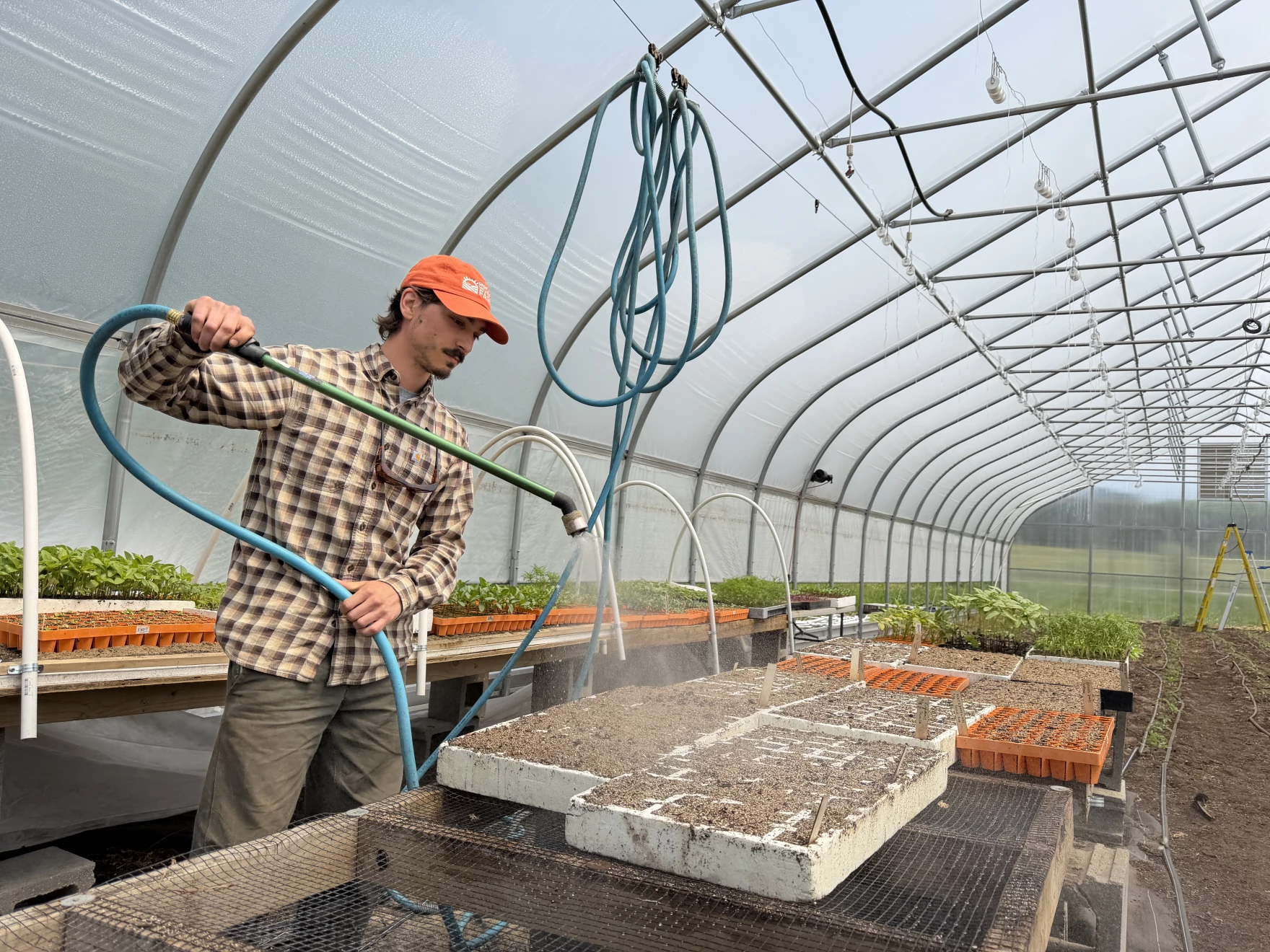
Student farmer Troy Saruna waters seedlings in the greenhouse at the Great Lakes Incubator Farm. (Photo credit: Vivian La/IPR News)

The training program focuses on teaching regenerative agriculture, which refers to practices that could reduce the pollution causing climate change by improving soil health.

“Our food systems are just so inextricably tied to the health of the planet,” Saruna said. “I’m just really interested in striking up a new balance where I can understand, interpret and just develop some new instincts in terms of feeding myself and having thriving communities that also support wildlife.”

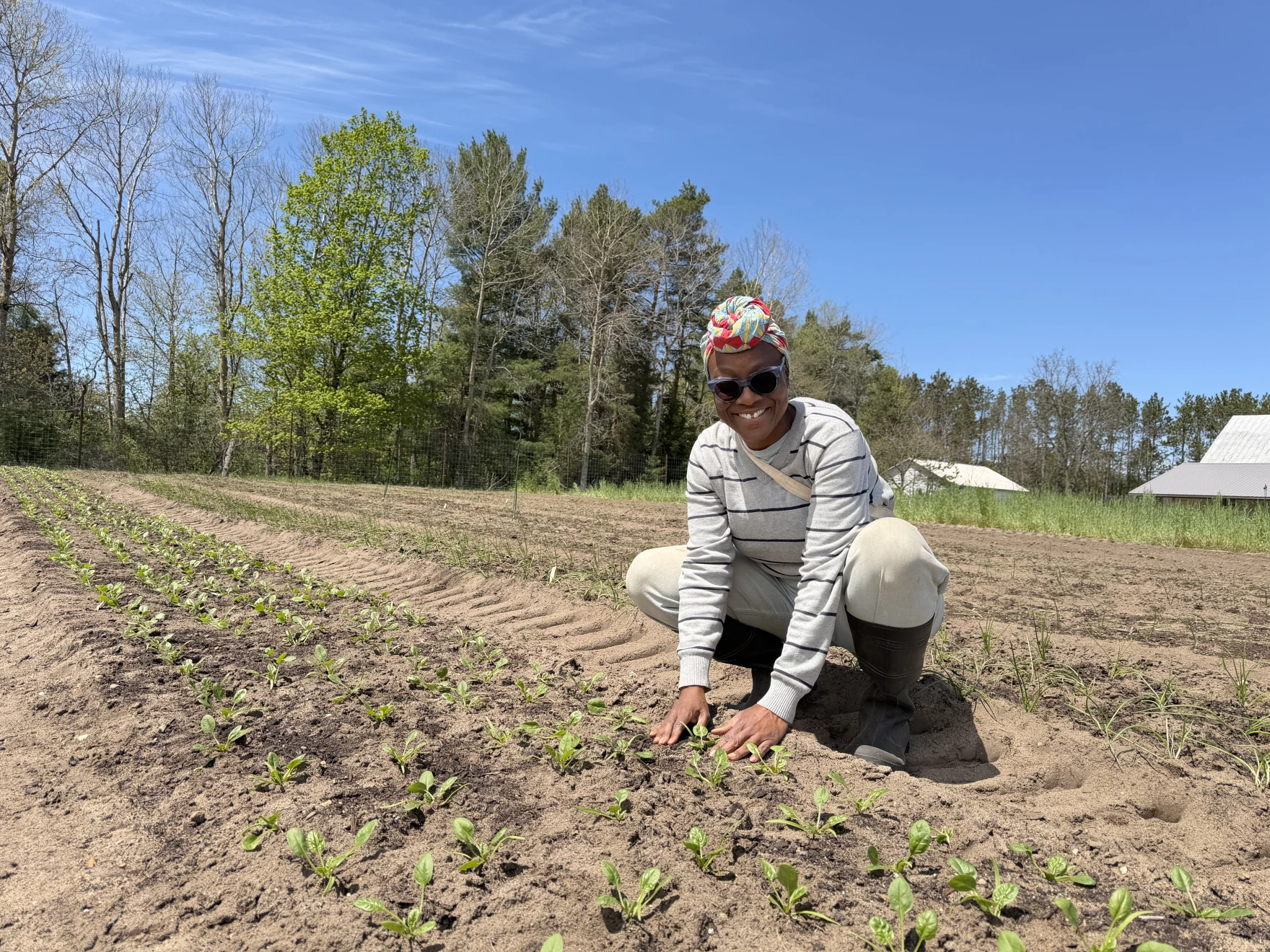
Farmers with some experience also find the program helpful to dive deeper into certain skills. Shanaya Holmes, 49, runs a small 4-acre farm in Alabama.

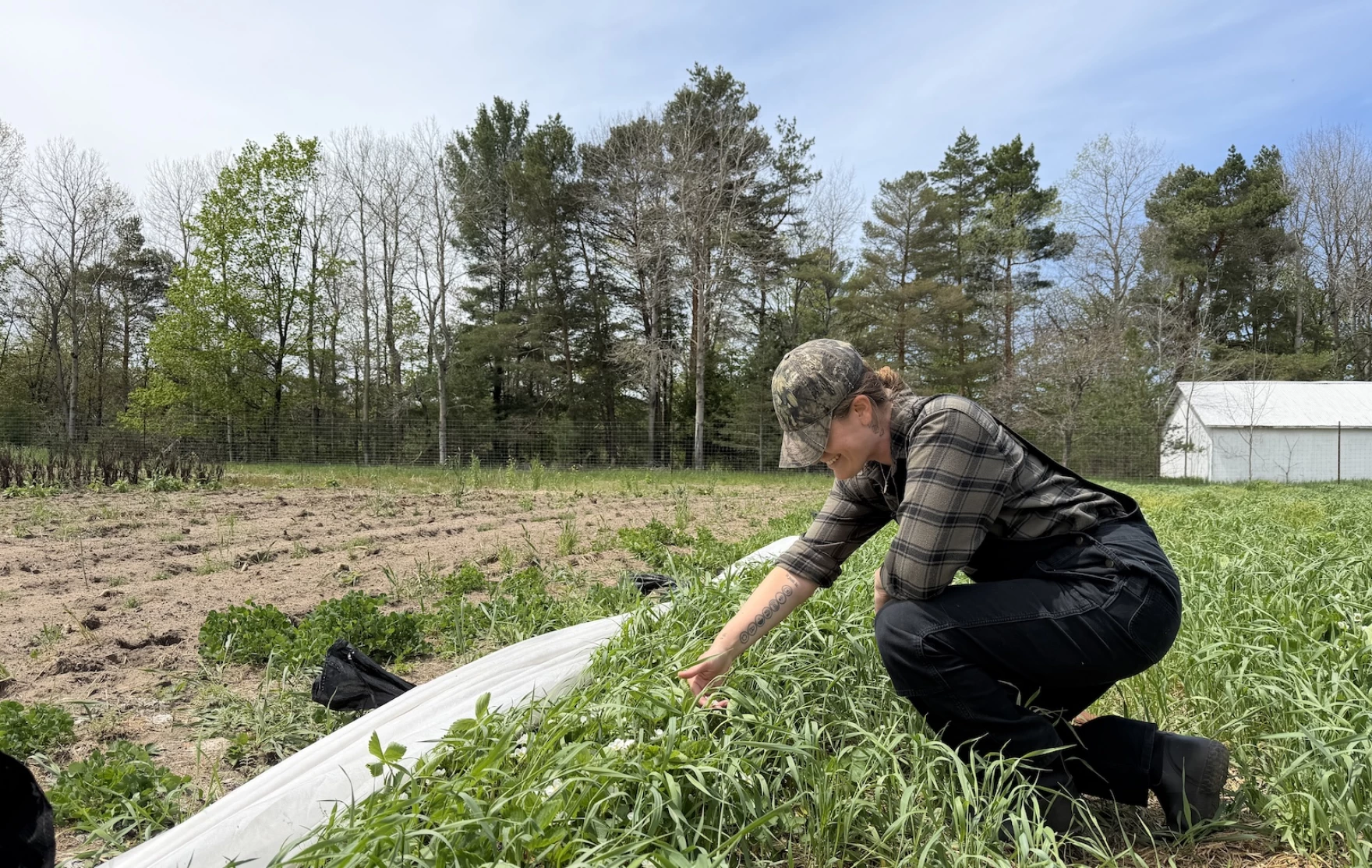
Student farmer Shanaya Holmes kneels by a row of spinach. (Photo credit: Vivian La/IPR News)

She’s looking to learn how to grow in a different climate and to improve her record keeping — tracking what’s been planted, what soil was used or how much money was spent on equipment.

“It’s a challenge to switch that button off to come inside and do bookwork, bookwork, bookwork when you’re so used to outside, outside, outside,” she said.

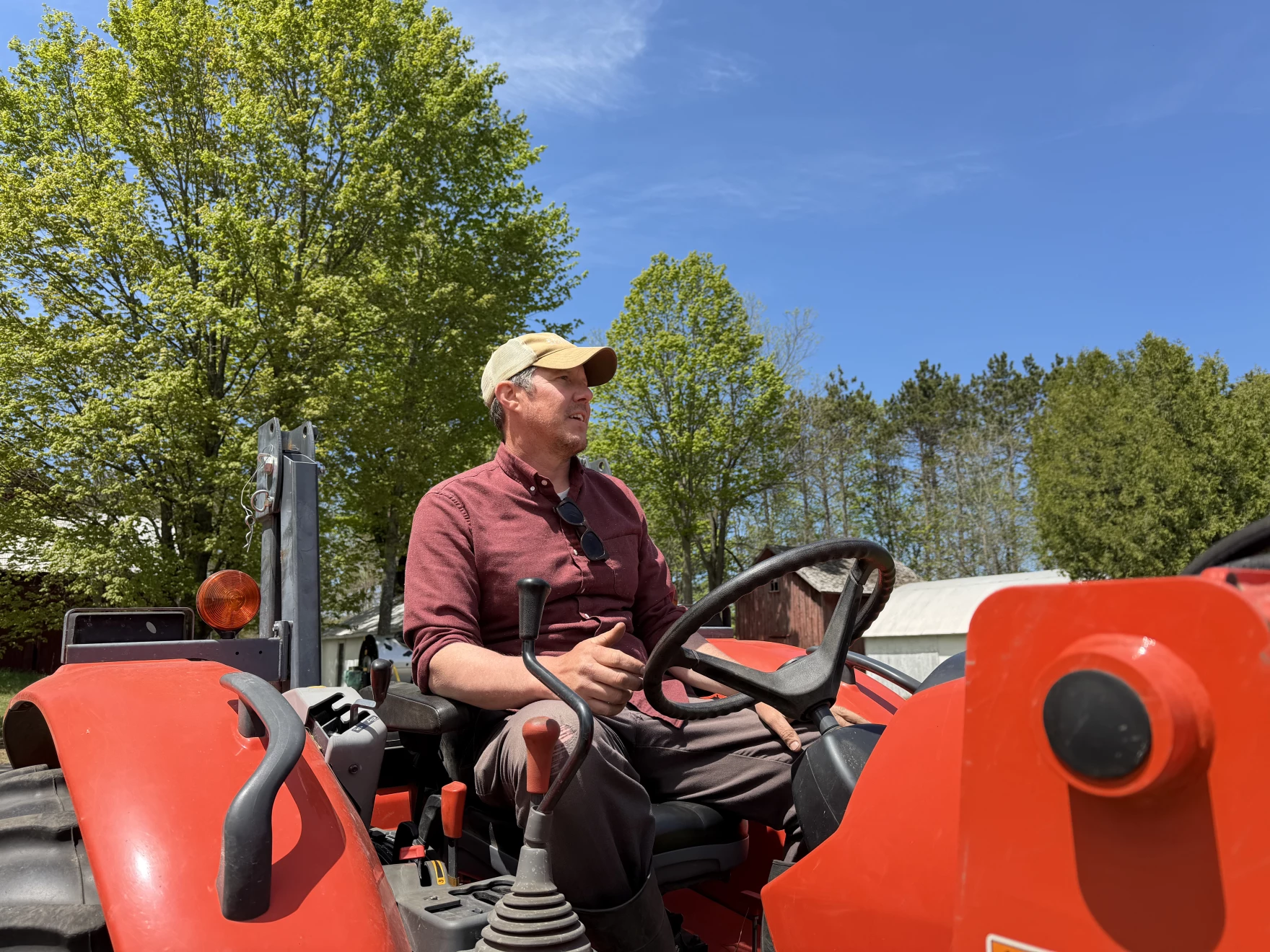
Adam Brown, the farm’s manager and instructor, said the farmer training program is meant to be a stepping stone.

“It’s really built for anybody who can then filter out and work anywhere in the food system, either manage a farm, start their own business, or any rung of that ladder where people can just help out in the food system,” Brown said.

Brown wouldn’t have pursued farming himself if it wasn’t for a similar training program he did 15 years ago on the West Coast. He has a background in ecology.

“I can pay it forward, my lessons, and all the wisdom that I learned throughout my years of farming, and be a mentor to these other people, and I feel like it’s super important,” he said.

Funding the future

The training program, now in its second year, is one of the only programs of its kind in northern Michigan, according to data from Michigan State University.

The Great Lakes Incubator Farm relies mostly on a nearly $700,000 federal grant from the U.S. Department of Agriculture aimed at supporting beginner farmers. That grant ends after this season and Brown plans to reapply for USDA funding this year.

Still, the agency is undergoing changes as it works to match the president’s priorities. Last year, the USDA canceled $148 million in grants — including some in the beginner farmer program — to comply with the president’s early executive orders targeting climate action, environmental justice, and diversity, equity, and inclusion.

Brown said there’s not many large pools of money like this USDA grant program that support efforts to train the next generation of farmers. The Great Lakes Incubator Farm is also supported by some state grants.

Adam Brown sits on a tractor at the Great Lakes Incubator Farm. He teaches students at the farm and says there needs to be more training programs like this to support an aging farmer population. (Photo credit: Vivian La/IPR News)

Lack of consistent funding is a big reason we don’t see more of these training programs, said Jon LaPorte, a farm business management educator for Michigan State University Extension.

“It’s almost like a double-edged sword that they’re trying to help people get started, but then they’ve got the same struggles of staying sustainable themselves,” he said.

That means as the share of young people in farming grows in Michigan, programs to support them might be harder to come by, LaPorte said. Farmers under the age of 45 increased by more than 3,000 people between 2017 and 2022, according to the USDA’s census. Sustaining that growth is a challenge.

“Because of those hurdles, they don’t all stay in, and what we want to see is more of those people being able to stay in, having more farms, more diversity of farms,” he said. “More people involved in agriculture at that level is really, really important.”

There are still resources available, said Katie Brandt, who leads MSU’s Organic Farmer Training Program in East Lansing. MSU Extension put together a beginner farmer’s guide in partnership with the USDA last year. And many farms across the state often accept volunteers for work, she said.

Brown, the farm manager, said students in the training program learn that the growing season doesn’t always go smoothly — and things like frost damage on plants is just part of the job.

“This is a great space for failure too, right? Because there’s not a whole lot of risk here,” he said. “It’s a perfect, experimental type of atmosphere.”


The post This northern Michigan program hopes to cultivate the next generation of farmers appeared first on Great Lakes Now.

Original Article

Great Lakes Now

Great Lakes Now

https://www.greatlakesnow.org/2026/05/29/this-northern-michigan-program-hopes-to-cultivate-the-next-generation-of-farmers/

Interlochen Public Radio and Grist

This wetland fight could go to the Supreme Court

A pending court case could impact farmers across the country. At issue is a USDA rule aimed at protecting wetlands called “Swampbuster.” In place since 1985, it’s being challenged in court by an absentee landowner in Iowa.

Under Swampbuster, farmers have to agree not to drain or fill their wetlands, in order to receive farm benefits such as crop insurance, disaster relief and USDA loans.

Read Now at Great Lakes Now.

Original Article

Great Lakes Now

Great Lakes Now

https://www.greatlakesnow.org/2025/07/this-wetland-fight-could-go-to-the-supreme-court/

Great Lakes Now

Conflict Over A Blockbuster Farm Chemical

Not since DDT was introduced to U.S. agriculture to kill insects after World War Two has a farm chemical been as important to American crop production, and come under more scientific, political, and legal scrutiny as the weedkiller Roundup, and its active ingredient, glyphosate.

With the election of President Donald Trump, the conflict over glyphosate’s risks and benefits entered a new realm of confrontation that has the potential to alter its stature as the favored chemical tool in agriculture, the largest user of fresh water in the blue economy of Michigan and the Great Lakes.

Read Now at Great Lakes Now.

Original Article

Great Lakes Now

Great Lakes Now

https://www.greatlakesnow.org/2025/05/conflict-over-a-blockbuster-farm-chemical/

Keith Schneider, Circle of Blue

In A Year of Water Quality Reckoning, National Imperative is Impeded

By Keith Schneider, Circle of Blue

The Great Lakes News Collaborative includes Bridge Michigan; Circle of Blue; Great Lakes Now at Detroit Public Television; and Michigan Radio, Michigan’s NPR News Leader; who work together to bring audiences news and information about the impact of climate change, pollution, and aging infrastructure on the Great Lakes and drinking water.

Read Now at Great Lakes Now.

Original Article

Great Lakes Now

Great Lakes Now

https://www.greatlakesnow.org/2022/09/year-of-water-quality-reckoning-national-imperative-impeded/

Circle of Blue

Soaring Fertilizer Prices Could Deliver ‘Silver Lining’ For Emissions, But Farmers Struggle to Limit Use

By Christopher Bonasia, The Energy Mix

This story originally appeared in The Energy Mix and is republished here as part of Covering Climate Now, a global journalism collaboration strengthening coverage of the climate story.

The sudden rise in fertilizer prices since Russia’s invasion of Ukraine could have implications for global emissions by reducing how much of it farmers use in their fields.

Read Now at Great Lakes Now.

Original Article

Great Lakes Now

Great Lakes Now

https://www.greatlakesnow.org/2022/07/soaring-fertilizer-prices-emissions-farmers/

The Energy Mix

DNR issues expansion permit for Kewaunee County factory farm

MADISON, Wis. (AP) — The Wisconsin Department of Natural Resources announced March 25 it will issue a permit that will make it harder for a Kewaunee County factory farm accused of contaminating drinking water to expand.

The Milwaukee Journal Sentinel reported that the permit caps the number of cows at the Kinnard Farms facility at about 8,000 head, the number of cows the farm currently houses.

Read Now at Great Lakes Now.

Original Article

Great Lakes Now

Great Lakes Now

https://www.greatlakesnow.org/2022/03/dnr-issues-expansion-permit-for-kewaunee-county-factory-farm/

The Associated Press

Michigan farms that offer agricultural tourism opportunities have seen record-breaking attendance over the past two years.

The post ‘Organic growth’ fuels record-breaking agritourism season, experts say first appeared on Great Lakes Echo.

Original Article

Great Lakes Echo

Great Lakes Echo

http://greatlakesecho.org/2021/12/16/organic-growth-fuels-record-breaking-agritourism-season-experts-say/

Guest Contributor

Farm Protection: Ontario invests in projects to help farms improve Great Lakes water quality

The Ontario government is funding projects aimed at helping farmers and landowners preserve water quality of the Great Lakes watershed.

More than $2.5 million was awarded to 19 projects that ranged from green infrastructure projects to helping spread good land management practices to reduce the amount of contaminants and excess nutrients, such as phosphorous, entering the Great Lakes.

Read Now at Great Lakes Now.

Original Article

Great Lakes Now

Great Lakes Now

https://www.greatlakesnow.org/2021/10/farm-ontario-projects-great-lakes/

Brian Owens

Farmers are set to take on a growing number of challenges in the face of climate change.

The post Uncertainty among Michigan fruit growers drives climate-related adaptations first appeared on Great Lakes Echo.

Original Article

Great Lakes Echo

Great Lakes Echo

http://greatlakesecho.org/2021/10/21/uncertainty-among-michigan-fruit-growers-drives-climate-related-adaptations/

Guest Contributor

New farmers markets in low-income, urban areas of Michigan face challenges in recruiting and retaining vendors, a new study finds. Farmers motivated by their love of gardening or the desire to build community are least likely to drop out of those urban markets, the study concludes.

Original Article

Great Lakes Echo

Great Lakes Echo

http://greatlakesecho.org/2020/10/05/what-drives-farmers-to-join-farmers-markets/

Eric Freedman

Results from a nearly 30-year ongoing study published by researchers at Michigan State University's Kellogg Biological Station show that over the long-term, no-till agriculture produces improved crop yields.

Original Article

Great Lakes Echo

Great Lakes Echo

http://greatlakesecho.org/2020/08/07/msu-study-finds-no-till-farming-yields-long-term-economic-benefits/

Guest Contributor