By Leah Borts-Kuperman, The Narwhal

The Great Lakes News Collaborative includes Bridge MichiganCircle of BlueGreat Lakes NowMichigan Public and The Narwhal who work together to bring audiences news and information about the impact of climate change, pollution, and aging infrastructure on the Great Lakes and drinking water. This independent journalism is supported by the Charles Stewart Mott Foundation.

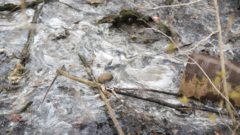
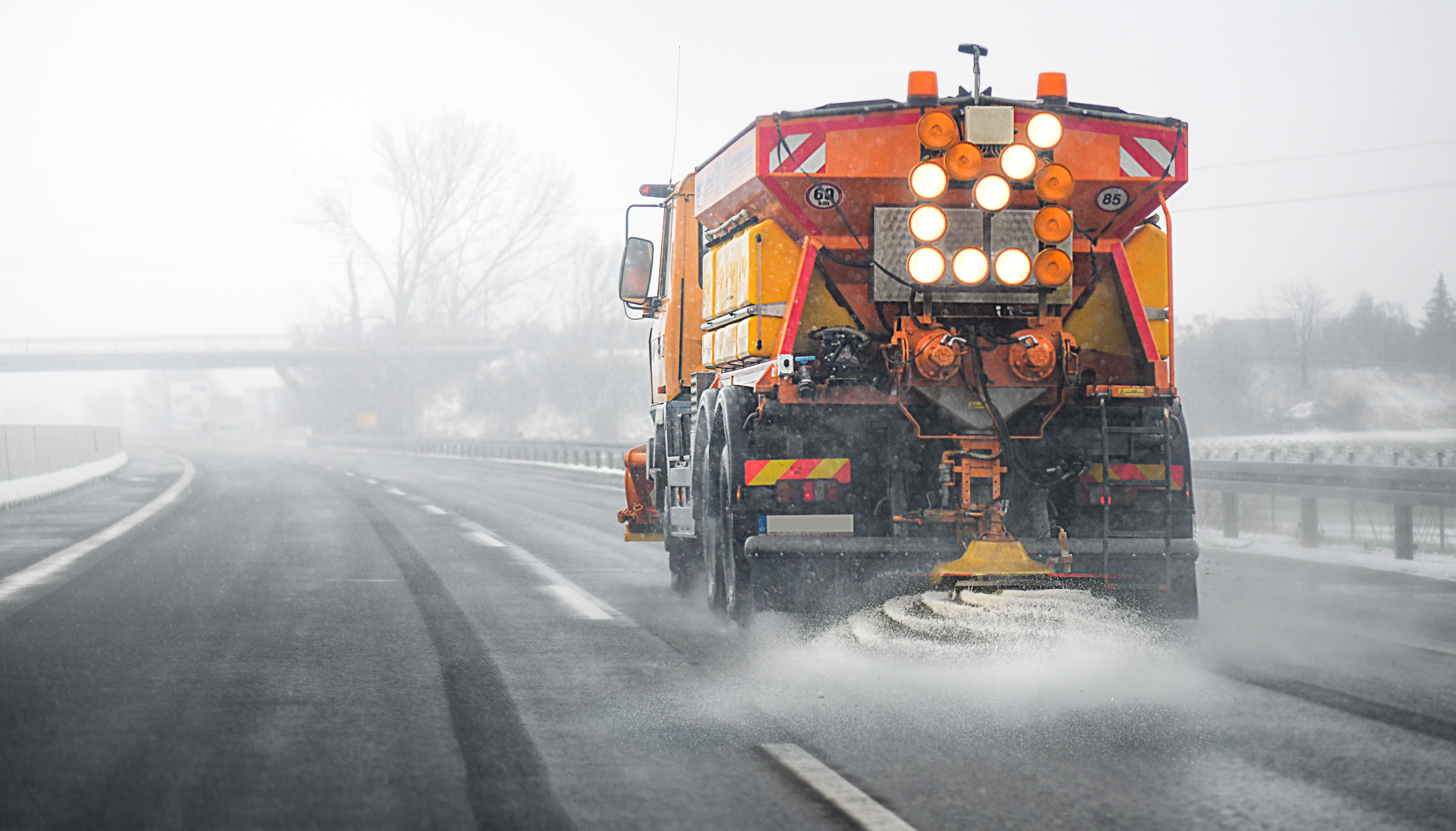
In February 2025, a small freshwater stream in Newmarket, Ont., was saltier than the ocean. The source? Winter road salt, washing off local parking lots and highways into the Lake Simcoe watershed.

As a result, concentrations of chloride — one of two minerals that make up table salt — in Western Creek exceeded 26,000 milligrams per litre of water. Meanwhile seawater typically sits at 19,400 milligrams of chloride per litre of water, according to the local conservation authority

For Christopher Wellen, an environmental scientist focused on hydrology and associate professor at Toronto Metropolitan University, this finding was not surprising: the Simcoe region, and many others across southern Ontario, have big salt problems. 

“It washes away from the roads, but it doesn’t just disappear,” Wellen said. “It goes where the water goes — that’s our groundwater, it’s our lakes, it’s our rivers — and has effects there.” 

For decades, the concentration of road salt in Lake Simcoe has been on the rise: 120,000 tonnes of it are used by communities in the watershed annually, Lake Simcoe Region Conservation Authority has reported. That amounts to roughly 227 kilograms of salt per person in the region every year.

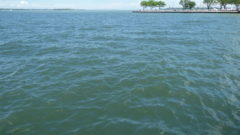
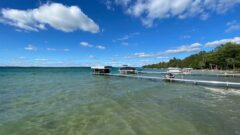
Heavy salting in winter is not unusual, but Lake Simcoe has been monitored for decades, so it can act as a case study of exactly what happens when this much road salt is being applied. And it illuminates the environmental impact across the province where high-traffic areas, surrounded by cities, towns and a dense network of roadways, are inundated with salt.

Road salt and fresh water

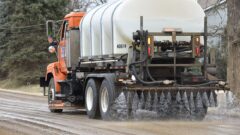
Road salt is primarily made up of sodium chloride and is used to remove ice from roadways in the winter. But oversalting has widespread impacts on ecosystems, harming aquatic life and depleting biodiversity year-round.

“Every organism that lives in streams and rivers and lakes … has tolerances for all sorts of things like temperature fluctuations and salt fluctuations,” Wellen said. “If the water becomes too salty, they can find it really difficult to reproduce and thrive and continue to exist, basically.”

All this chloride does not break down, or simply wash away. It accumulates over time. 

“It’s quite possible that, if things don’t change, the food web could be quite affected,” Wellen added. The problem starts at the bottom of the food chain, he said, and makes its way up.

Since fish are mobile, they can generally avoid areas with high salt concentrations. The pronounced impacts are on the more stationary species, like critters that live in riverbeds. They also make up the base of the food chain, so when they are unable to survive the salty water, organisms higher up lose their food supply.

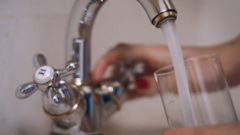
The Lake Simcoe Region Conservation Authority says on its website that winter salt has become a topic of “great concern” in the watershed, particularly because there isn’t an effective way to remove it. And Lake Simcoe, the largest lake wholly in southern Ontario, supplies drinking water for hundreds of thousands of residents — with hundreds of thousands more relying on groundwater aquifers in the watershed.

How salty is Lake Simcoe?

In Canada, the federal government provides long- and short-term guidelines for exposure to chloride before aquatic life is affected. At a concentration of 640 milligrams of chloride per litre of water for as little as 24 hours, aquatic life could be severely affected. For longer-term exposure, concentrations beyond 120 milligrams of chloride​ per litre of water would see harm to aquatic life such as a fish species declining over time.

David Lembcke, director of watershed science and monitoring at Lake Simcoe Region Conservation Authority, jokingly equates the latter threshold to a pack-a-day cigarette habit: “You’re going to have long-term impacts from that. There are some sensitive biota in the lake that will probably have reproductive, developmental, long-term impacts at those levels.” 

The authority produced a report more than a decade ago that already showed chloride concentrations were impacting these aquatic species in 64 per cent of the Lake Simcoe watershed.

In the lake itself, the concentration in February was around 61 milligrams of chloride​ per litre of water, Lembcke said, which is about half of the long-term exposure guideline set by the province. But that level has been steadily increasing by 0.7 milligrams of chloride per litre of water annually, according to the conservation authority. Elsewhere in the watershed, especially in tributaries in urban areas like Hotchkiss Creek and West Holland River, concentrations regularly exceed both guidelines, Lembcke said, and long after winter ends.

“We have this incredibly persistent, relentless increasing trend in lake [salt] concentrations,” Lembcke said. “Certainly the potential is there: if we don’t curb the amount of salt that we’re using, drinking water could be impacted.”

For drinking water, the Ontario objective is 250 milligrams of chloride​ per litre of water, but this is based on taste, not health considerations. For people who need to limit their sodium intake for things like high blood pressure, or kidney or liver diseases, Health Canada recommends that salt in water shouldn’t exceed 20 milligrams per litre.

In Waterloo, Ont., groundwater and consequently drinking water has already been impacted; given high concentrations in some areas, the city has to mix groundwater from different wells to average out chloride levels across the region. They’ve campaigned hard for curbing road salt use, since current water and wastewater treatment doesn’t remove salt, and the municipality explains on their website that removing it requires expensive, energy-intensive treatment. And that would mean higher water costs for the community.

How do you solve a problem like road salt?

While some communities look to solutions such as replacements for road salt, they also carry their own challenges: alternatives like beet juice or sodium acetate can be prohibitively expensive, and their long-term effects on ecosystems aren’t entirely known. 

Some experts and activists are looking to stop the problem at its source. Commercial parking lots are among the biggest culprits for oversalting, likely since they are liable for any injury that occurs on snow or ice on their properties.

“The problem that we keep seeing is that small businesses or big parking lots are oversalting, and it’s a perverse incentive structure where they feel like they have to do it to protect themselves against the slip and fall [lawsuits],” Jonathan Scott, executive director of the Rescue Lake Simcoe Coalition, said. Scott is chair of the Nottawasaga Valley Conservation Authority and a Bradford West Gwillimbury councillor.

“It’s not any safer. It’s worse for the environment. It’s worse for small businesses in terms of increased costs,” he said.

Proponents including Scott and Lembcke are arguing to modernize the law by offering limited liability, or a stronger defence against being sued, to those businesses who get an accepted certification such as Smart About Salt, and learn how to implement best salting practices for public safety and the environment alike. 

“If you’re following best practices and if you’re doing the right thing as a winter maintenance operator, that should be a defence for the operator and the property owner against slip and fall claims,” Scott said. “It seems like such a simple pro-business, pro-environment legal reform that wouldn’t cost us anything.” 

Scott points to New Hampshire, a state with comparable winter conditions to Ontario, as an example. The state reduced its salt pollution by 25 to 45 per cent by granting limited liability protection to certified commercial salt applicators. 

Wellen and his team have done modelling studies to see what would happen if a legal reform like this was adopted in the Lake Simcoe area; he said the results are promising, finding it could decrease the concentrations in the lake significantly by the end of the century.

But the province, who would have to make that regulatory change, has yet to sign on.

“It seems to be one of those problems that’s entirely of our own making, in which case it should be something that we can fix,” Lembcke said. “I’m optimistic that it’s something that we can address.”

— With files from Fatima Syed

The post Winter road salt is threatening Lake Simcoe and Ontario watersheds year-round appeared first on Great Lakes Now.
Original Article

Great Lakes Now

Great Lakes Now

https://www.greatlakesnow.org/2026/03/18/winter-road-salt-is-threatening-lake-simcoe-and-ontario-watersheds-year-round/
The Narwhal

Conflict Over A Blockbuster Farm Chemical

Not since DDT was introduced to U.S. agriculture to kill insects after World War Two has a farm chemical been as important to American crop production, and come under more scientific, political, and legal scrutiny as the weedkiller Roundup, and its active ingredient, glyphosate.

With the election of President Donald Trump, the conflict over glyphosate’s risks and benefits entered a new realm of confrontation that has the potential to alter its stature as the favored chemical tool in agriculture, the largest user of fresh water in the blue economy of Michigan and the Great Lakes.

Read Now at Great Lakes Now.

Original Article

Great Lakes Now

Great Lakes Now

https://www.greatlakesnow.org/2025/05/conflict-over-a-blockbuster-farm-chemical/

Keith Schneider, Circle of Blue

Chequamegon Bay Superfund site: History, environmental impact and its importance to Indigenous communities

Chequamegon Bay plays a significant role in our human lives, including past residents like the Huron and Ottawa; and current residents, the Ojibwe-Anishinaabeg, who have gathered and made history there for a millennia. An oblong, shallow bay (61 feet at the deepest point), on the south shore of Lake Superior, the water also holds dark history as a federal Superfund site.

Read Now at Great Lakes Now.

Original Article

Great Lakes Now

Great Lakes Now

https://www.greatlakesnow.org/2025/04/chequamegon-bay-superfund-site-history-impact-importance-to-indigenous-communities/

Staci Lola Drouillard, Great Lakes Now

Veteran Great Lakes advocate cautions on prioritizing economic development over protecting the environment

Rolling back clean water protection, gutting agencies and defunding science, research and monitoring is a non-starter for the Great Lakes region, says Ann Arbor environmental advocate Laura Rubin.

She was reacting to the new U.S. Environmental Protection Agency (EPA) administrator Lee Zeldin’s recently released economy-oriented plan for the agency under President Donald Trump.

Read Now at Great Lakes Now.

Original Article

Great Lakes Now

Great Lakes Now

https://www.greatlakesnow.org/2025/02/veteran-great-lakes-advocate-cautions-prioritizing-economic-development-over-protecting-environment/

Gary Wilson, Great Lakes Now

Amish Farmers’ Partnership With Beef Giant Produces Manure Mess

By Keith Schneider, Circle of Blue

The Great Lakes News Collaborative includes Bridge Michigan, Circle of Blue, Great Lakes Now at Detroit PBS, Michigan Public and The Narwhal who work together to bring audiences news and information about the impact of climate change, pollution, and aging infrastructure on the Great Lakes and drinking water.

Read Now at Great Lakes Now.

Original Article

Great Lakes Now

Great Lakes Now

https://www.greatlakesnow.org/2024/11/amish-farmers-partnership-with-beef-giant-produces-manure-mess/

Circle of Blue

Groundwater: Who’s in charge?

In the early 2000s a movement to address the plight of the heavily polluted and long neglected Great Lakes started to gain traction.

The goal was to bring the gravitas of the federal government to the issue and in 2004 President George W. Bush signed an executive order declaring the lakes a “national treasure.” An interagency task force was established to bring together the disparate efforts of various federal programs who had been working independently on Great Lakes issues.

Read Now at Great Lakes Now.

Original Article

Great Lakes Now

Great Lakes Now

https://www.greatlakesnow.org/2024/09/groundwater-whos-in-charge/

Gary Wilson, Great Lakes Now

Children of Flint water crisis make change as young environmental and health activists

By Tammy Webber, Associated Press

FLINT, Mich. (AP) — Their childhood memories are still vivid: warnings against drinking or cooking with tap water, enduring long lines for cases of water, washing from buckets filled with heated, bottled water. And for some, stomach aches, skin rashes and hair loss.

Read Now at Great Lakes Now.

Original Article

Great Lakes Now

Great Lakes Now

https://www.greatlakesnow.org/2024/04/children-of-flint-water-crisis-make-change-as-young-environmental-and-health-activists/

The Associated Press

Government watchdog: EPA slow to raise alarm in Benton Harbor water crisis

By Kelly House, Bridge Michigan

The Great Lakes News Collaborative includes Bridge Michigan; Circle of Blue; Great Lakes Now at Detroit Public Television; and Michigan Radio, Michigan’s NPR News Leader; who work together to bring audiences news and information about the impact of climate change, pollution, and aging infrastructure on the Great Lakes and drinking water.

Read Now at Great Lakes Now.

Original Article

Great Lakes Now

Great Lakes Now

https://www.greatlakesnow.org/2023/09/government-watchdog-epa-slow-alarm-benton-harbor-water-crisis/

Bridge Michigan

Minnesota Tribe Sets Enforceable Rules To Safeguard Wild Rice and Water Supply

By Keith Schneider, Circle of Blue

The Great Lakes News Collaborative includes Bridge Michigan; Circle of Blue; Great Lakes Now at Detroit Public Television; and Michigan Radio, Michigan’s NPR News Leader; who work together to bring audiences news and information about the impact of climate change, pollution, and aging infrastructure on the Great Lakes and drinking water.

Read Now at Great Lakes Now.

Original Article

Great Lakes Now

Great Lakes Now

https://www.greatlakesnow.org/2023/08/minnesota-tribe-enforceable-rules-safeguard-wild-rice-water-supply/

Circle of Blue

Pentagon to address PFAS at Wurtsmith base near Oscoda

By Mike Wilkinson, Bridge Michigan

The Great Lakes News Collaborative includes Bridge Michigan; Circle of Blue; Great Lakes Now at Detroit Public Television; and Michigan Radio, Michigan’s NPR News Leader; who work together to bring audiences news and information about the impact of climate change, pollution, and aging infrastructure on the Great Lakes and drinking water.

Read Now at Great Lakes Now.

Original Article

Great Lakes Now

Great Lakes Now

https://www.greatlakesnow.org/2023/08/pentagon-address-pfas-wurtsmith-base-oscoda/

Bridge Michigan

Amendment to Clean Water Act improves Great Lakes through critical observation, collaboration

From fishing to enjoying a summer day at the beach, the Great Lakes provide enjoyment, comfort and a sense of home to the region. But these bodies of water were not always secure, as the lakes and connecting rivers were considered dangerous due to high pollution spots. 

The Great Lakes region has seen some of the most historic river fires.

Read Now at Great Lakes Now.

Original Article

Great Lakes Now

Great Lakes Now

https://www.greatlakesnow.org/2023/08/amendment-to-clean-water-act-improves-great-lakes-through-critical-observation-collaboration/

Jada Vasser

PFAS News Roundup: U.S. Military proposes health benefits to veterans, How to identify contaminated foam

PFAS, short for per- and polyfluoroalkyl substances, are a group of widespread man-made chemicals that don’t break down in the environment or the human body and have been flagged as a major contaminant in sources of water across the country.

Keep up with PFAS-related developments in the Great Lakes area.

Read Now at Great Lakes Now.

Original Article

Great Lakes Now

Great Lakes Now

https://www.greatlakesnow.org/2023/07/pfas-news-roundup-u-s-military-proposes-health-benefits-to-veterans-how-to-identify-contaminated-foam/

Kathy Johnson

Flush with cash, Michigan lawmakers try again to pass state septic code

By Kelly House and Lauren Gibbons, Bridge Michigan

The Great Lakes News Collaborative includes Bridge Michigan; Circle of Blue; Great Lakes Now at Detroit Public Television; and Michigan Radio, Michigan’s NPR News Leader; who work together to bring audiences news and information about the impact of climate change, pollution, and aging infrastructure on the Great Lakes and drinking water.

Read Now at Great Lakes Now.

Original Article

Great Lakes Now

Great Lakes Now

https://www.greatlakesnow.org/2023/05/flush-with-cash-michigan-lawmakers-try-again-to-pass-state-septic-code/

Bridge Michigan

Michigan brine brouhaha: Proposed limits for unpaved roads prompt dustup

By Kelly House and Lauren Gibbons, Bridge Michigan

The Great Lakes News Collaborative includes Bridge Michigan; Circle of Blue; Great Lakes Now at Detroit Public Television; and Michigan Radio, Michigan’s NPR News Leader; who work together to bring audiences news and information about the impact of climate change, pollution, and aging infrastructure on the Great Lakes and drinking water.

Read Now at Great Lakes Now.

Original Article

Great Lakes Now

Great Lakes Now

https://www.greatlakesnow.org/2023/04/michigan-brine-brouhaha-proposed-limits-for-unpaved-roads-prompt-dustup/

Bridge Michigan

A deep dive into disposing waste from East Palestine’s derailment

Some residents in Vickery, including Ohio State Rep. Gary Click, were upset to learn that hazardous wastewater from a Feb. 3 Norfolk Southern derailment was being sent to their area for disposal. But the reality is that Vickery Environmental (VE), a Class 1 deep well injection site about five miles from Sandusky Bay, has been receiving and disposing liquid waste for nearly a half century.

Read Now at Great Lakes Now.

Original Article

Great Lakes Now

Great Lakes Now

https://www.greatlakesnow.org/2023/04/deep-dive-disposing-waste-east-palestine-derailment/

James Proffitt

Science Says What: How worried should we be about microplastic pollution?

Science Says What? is a monthly column written by Great Lakes now contributor Sharon Oosthoek exploring what science can tell us about what’s happening beneath and above the waves of our beloved Great Lakes and their watershed.

Microplastic pollution has been building up in the Great Lakes since at least the 1970s.

Read Now at Great Lakes Now.

Original Article

Great Lakes Now

Great Lakes Now

https://www.greatlakesnow.org/2023/02/science-says-what-how-worried-should-we-be-about-microplastic-pollution/

Sharon Oosthoek

New U.S. Climate Law Could Make Midwest Water Contamination Worse

By Keith Schneider, Circle of Blue

The Great Lakes News Collaborative includes Bridge Michigan; Circle of Blue; Great Lakes Now at Detroit Public Television; and Michigan Radio, Michigan’s NPR News Leader; who work together to bring audiences news and information about the impact of climate change, pollution, and aging infrastructure on the Great Lakes and drinking water.

Read Now at Great Lakes Now.

Original Article

Great Lakes Now

Great Lakes Now

https://www.greatlakesnow.org/2023/02/new-u-s-climate-law-could-make-midwest-water-contamination-worse/

Circle of Blue

Study: Toxic PFAS chemical plume detected in Green Bay

By John Flesher, AP Environmental Writer

A large plume of toxic chemicals produced by a plant that manufactures firefighting foam has seeped through groundwater to Lake Michigan’s Green Bay, scientists said Tuesday.

The chemicals belong to a family of compounds known as PFAS, or per- and polyfluoroalkyl substances, which are used widely in consumer products ranging from nonstick cookware and water-repellent sports gear to stain-resistent carpets.

Read Now at Great Lakes Now.

Original Article

Great Lakes Now

Great Lakes Now

https://www.greatlakesnow.org/2023/01/ap-pfas-chemical-plume-detected-green-bay/

The Associated Press

PFAS News Roundup: New regulations approved, new solutions explored

PFAS, short for per- and polyfluoroalkyl substances, are a group of widespread man-made chemicals that don’t break down in the environment or the human body and have been flagged as a major contaminant in sources of water across the country.

Keep up with PFAS-related developments in the Great Lakes area.

Read Now at Great Lakes Now.

Original Article

Great Lakes Now

Great Lakes Now

https://www.greatlakesnow.org/2022/12/pfas-news-roundup-new-regulations-approved-new-solutions-explored/
Kathy Johnson

US officials say 2 more places will test sewage for polio

By Mike Stobbe, AP Medical Writer

NEW YORK (AP) — Philadelphia and Oakland County, Michigan, are joining the small list of U.S. localities that are looking for signs of polio infections in sewage, U.S. health officials said Wednesday.

The Centers for Disease Control and Prevention said the communities will test for polio in sewage for at least four months.

Read Now at Great Lakes Now.

Original Article

Great Lakes Now

Great Lakes Now

https://www.greatlakesnow.org/2022/12/ap-officials-say-more-places-will-test-sewage-polio/

The Associated Press

Analysis finds ‘stunning’ lack of compliance with coal ash rules, putting groundwater at risk

By Kari LydersenEnergy News Network

This story was first published on the Energy News Network and was republished here with permission.

More than nine out of 10 coal ash impoundments nationwide are contaminating groundwater in violation of federal rules, according to environmental groups’ comprehensive analysis of the latest industry-reported data.

Read Now at Great Lakes Now.

Original Article

Great Lakes Now

Great Lakes Now

https://www.greatlakesnow.org/2022/11/analysis-finds-lack-of-compliance-with-coal-ash-rules-groundwater-at-risk/

Energy News Network

Evers administration relaunches efforts to limit PFAS

MADISON, Wis. (AP) — Democratic Gov. Tony Evers’ administration is trying again to limit the levels of a group of chemicals known as PFAS in Wisconsin’s groundwater.

The Wisconsin State Journal reported that Evers authorized the Department of Natural Resources last week to begin work on administrative rules establishing limits.

Read Now at Great Lakes Now.

Original Article

Great Lakes Now

Great Lakes Now

https://www.greatlakesnow.org/2022/09/ap-evers-administration-efforts-limit-pfas/

The Associated Press

America’s summer of floods: What cities can learn from today’s climate crises to prepare for tomorrow’s

By Richard B. (Ricky) Rood, University of Michigan, The Conversation

 is an independent and nonprofit source of news, analysis and commentary from academic experts.

Powerful storms across the South, following flash floods in Dallas, Death Valley, St. Louis, Yellowstone and Appalachia, have left cities across the U.S.

Read Now at Great Lakes Now.

Original Article

Great Lakes Now

Great Lakes Now

https://www.greatlakesnow.org/2022/09/americas-summer-of-floods/

The Conversation

Coal ash 101: Everything you need to know about this toxic waste

As coal plants close nationwide, they leave behind nearly a billion tons of toxic coal ash. The Medill School of Journalism spent months investigating the coal ash threat and how regulators, companies and environmental groups are handling it.

Here are the basics that will help you understand this looming threat:

What is Coal Ash?

Read Now at Great Lakes Now.

Original Article

Great Lakes Now

Great Lakes Now

https://www.greatlakesnow.org/2022/09/coal-ash-101/

Sruthi Gopalakrishnan

The Catch: Coal ash regulation

Broadcasting in our monthly PBS television program, The Catch is a Great Lakes Now series that brings you more news about the lakes you love. Go beyond the headlines with reporters from around the region who cover the lakes and drinking water issues. Find all the work HERE.

This month, The Catch features stories from “Poisonous Ponds: Tackling Toxic Coal Ash,” a collaborative project featuring the reporting work of students at Northwestern University’s Medill School of Journalism, Media, Integrated Marketing Communications on Great Lakes Now and Energy News Network programs and websites.

Read Now at Great Lakes Now.

Original Article

Great Lakes Now

Great Lakes Now

https://www.greatlakesnow.org/2022/09/the-catch-coal-ash-regulation/

GLN Editor

Reuse can divert coal ash from landfills, but challenges remain

The amount of coal ash in the United States is hard to fathom. There are over 700 impoundments holding more than 2 billion cubic yards of ash — enough to cover the entire state of Pennsylvania one-half inch deep. 

Coal ash includes heavy metals like chromium, arsenic and selenium — linked to higher rates of cancer and other diseases — that can leach into groundwater. 

Read Now at Great Lakes Now.

Original Article

Great Lakes Now

Great Lakes Now

https://www.greatlakesnow.org/2022/08/reuse-divert-coal-ash-from-landfills-challenges-remain/

Tom Quinn

To excavate or not to excavate: With toxic coal ash, that is the question

Eighty-eight-year-old Hilda Barg hunched her shoulders and rested her forearms on her hardwood dining table, talking fiercely about coal ash contamination in her neighborhood. Barg, a lifelong resident and former supervisor of Prince William County, Virginia, is leading a local fight against how Dominion Energy — the state’s largest electric utility — is dealing with toxic coal ash at its Possum Point plant 3 miles from Barg’s home. 

Read Now at Great Lakes Now.

Original Article

Great Lakes Now

Great Lakes Now

https://www.greatlakesnow.org/2022/08/excavate-toxic-coal-ash-question/

Hayley Starshak and Mrinali Dhembla

Coal ash contaminating groundwater near Joliet to stay, despite residents’ and activists’ concerns

Joliet, Illinois, a city of about 150,000 people southwest of Chicago, has long depended on a deep sandstone aquifer for drinking water – an increasingly strained resource that city officials hope to supplement with a billion-dollar pipeline from Lake Michigan.

But while this highly publicized search for a new source of municipal water unfolds, some residents who rely on private well water face a different threat.

Read Now at Great Lakes Now.

Original Article

Great Lakes Now

Great Lakes Now

https://www.greatlakesnow.org/2022/08/coal-ash-contaminating-groundwater-near-joliet-to-stay/

Sarah Aie

Rising waters, sinking feeling: From the Great Lakes to the Ohio River, climate change puts coal ash impoundments at risk

Just upstream of Alabama’s Mobile Bay sits a vast region of wetlands known as the Mobile-Tensaw Delta, home to one of the most diverse ecosystems in the United States. As well as 21 million cubic yards of wet coal ash. 

The J.M. Barry Power Plant has been a flashpoint between environmental advocates and the state utility, Alabama Power, for years.

Read Now at Great Lakes Now.

Original Article

Great Lakes Now

Great Lakes Now

https://www.greatlakesnow.org/2022/08/climate-change-puts-coal-ash-impoundments-at-risk/

Joshua Irvine

In the Finger Lakes, a bitcoin mining plant billed as ‘green’ has a dirty coal ash problem

The village of Dresden is nestled amid charming vineyards and the placid blue waters of Seneca Lake, the largest of Upstate New York’s Finger Lakes. 

Wineries, breweries, dairy farms, and state parks dot the lake’s shoreline, making it a picture-perfect vacation destination.

But for local residents, the three auburn-colored smokestacks of Greenidge Generation’s plant towering above the trees are an unnerving reminder that their natural resources are at risk.

Read Now at Great Lakes Now.

Original Article

Great Lakes Now

Great Lakes Now

https://www.greatlakesnow.org/2022/08/bitcoin-mining-plant-dirty-coal-ash-problem/

Sruthi Gopalakrishnan

Leaking landfills: Unregulated coal ash poses a buried, brewing threat to Lake Michigan and beyond, new lawsuit says

At almost 300 sites on the Great Lakes and coast to coast, unregulated buried and landfilled coal ash is putting water supplies at risk, alleges a federal lawsuit filed August 25. 

This threat is in addition to contamination from up to 700 coal ash repositories that are covered by 2015 federal coal ash rules.

Read Now at Great Lakes Now.

Original Article

Great Lakes Now

Great Lakes Now

https://www.greatlakesnow.org/2022/08/unregulated-coal-ash-poses-brewing-threat-to-lake-michigan/

Diana Leane and Sarah Aie

Climate-driven flooding poses well water contamination risks

By Michael Phillis and John Flesher, Associated Press

ST. LOUIS (AP) — After a record-setting Midwestern rainstorm that damaged thousands of homes and businesses, Stefanie Johnson’s farmhouse in Blandinsville, Illinois, didn’t have safe drinking water for nearly two months.

Flood water poured into her well, turning the water a muddy brown and forcing Johnson, her husband and their two young children to use store-bought supplies.

Read Now at Great Lakes Now.

Original Article

Great Lakes Now

Great Lakes Now

https://www.greatlakesnow.org/2022/06/ap-climate-driven-flooding-contamination-risks/

The Associated Press

Pressure growing to remove PFAS from fast food wrappers

By Michael Casey, Associated Press

BOSTON (AP) — Brenda Hampton first came across the toxic industrial compound PFAS after finding it was part of the cocktail of contaminants that tainted the drinking water in her North Alabama community.

Hampton, who believes the contaminated water contributed to kidney problems she and other residents suffer, soon learned the chemicals were found in another source that hit close to home — fast food wrappers, boxes and plates.

Read Now at Great Lakes Now.

Original Article

Great Lakes Now

Great Lakes Now

https://www.greatlakesnow.org/2022/06/ap-pressure-growing-remove-pfas-wrappers/

The Associated Press

Marshfield, Adams shut down wells due to PFAS pollution

MADISON, Wis. (AP) — Marshfield and Adams have joined the list of Wisconsin cities that have shut down municipal wells due to PFAS contamination.

Wisconsin Public Radio reported that the state Department of Natural Resources announced Thursday that sampling in the two cities has detected PFAS high enough to concern state health officials.

Read Now at Great Lakes Now.

Original Article

Great Lakes Now

Great Lakes Now

https://www.greatlakesnow.org/2022/06/ap-wisconsin-wells-pfas-pollution/

The Associated Press

EPA: Two toxic hot spots in Michigan will take longer to clean up than many others in Great Lakes states

By Lester Graham, Michigan Radio

The Great Lakes News Collaborative includes Bridge Michigan; Circle of Blue; Great Lakes Now at Detroit Public Television; and Michigan Radio, Michigan’s NPR News Leader; who work together to bring audiences news and information about the impact of climate change, pollution, and aging infrastructure on the Great Lakes and drinking water.

Read Now at Great Lakes Now.

Original Article

Great Lakes Now

Great Lakes Now

https://www.greatlakesnow.org/2022/06/toxic-hot-spots-michigan-great-lakes-states/

Michigan Radio

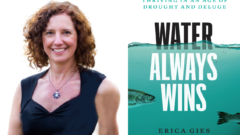
Water Always Wins: “Quietly radical” book makes case for Slow Water

While growing up in California, Erica Gies became aware of the state’s water scarcity, which she told Great Lakes Now has led to a “low-key obsession about water for just about everyone in the state.”

California’s droughts have been a regular occurrence that put a spotlight on the importance of water for Gies, fostering a writing career on the topic that has spanned 15 years.

Read Now at Great Lakes Now.

Original Article

Great Lakes Now

Great Lakes Now

https://www.greatlakesnow.org/2022/05/water-always-wins-book/

Gary Wilson

Drinking Water News Roundup: $3M invested in Illinois water system, coal ash rule means safer water in Indiana

From lead pipes to PFAS, drinking water contamination is a major issue plaguing cities and towns all around the Great Lakes. Cleaning up contaminants and providing safe water to everyone is an ongoing public health struggle.

Keep up with drinking water-related developments in the Great Lakes area.

Click on the headline to read the full story:


Illinois:

  • Illinois American Water Announces Investment of Over $3 Million in Sterling Water System During National Infrastructure Week – Business Wire

Illinois American Water is investing over $3 million to replace over 8,600 feet or 1.6 miles of water main throughout the Sterling Water System.

Read Now at Great Lakes Now.

Original Article

Great Lakes Now

Great Lakes Now

https://www.greatlakesnow.org/2022/05/drinking-water-news-roundup-illinois-water-system-coal-ash-indiana/

Tynnetta Harris

PFAS News Roundup: 20M acres of farmland polluted, PFAS found in ‘nontoxic’ children’s clothes and car seats

PFAS, short for per- and polyfluoroalkyl substances, are a group of widespread man-made chemicals that don’t break down in the environment or the human body and have been flagged as a major contaminant in sources of water across the country.

Keep up with PFAS-related developments in the Great Lakes area.

Read Now at Great Lakes Now.

Original Article

Great Lakes Now

Great Lakes Now

https://www.greatlakesnow.org/2022/05/pfas-news-roundup-farmland-polluted-pfas-childrens-clothes/

Natasha Blakely

Nonprofit report points to outdated Clean Water Act for the miles of polluted rivers across the U.S.

In 1972, the federal Clean Water Act proclaimed an ambitious goal – “fishable, swimmable” waters across the U.S. by 1983. Today, just over half of assessed river and stream miles across the U.S. remain too polluted for swimming and recreation, aquatic life, fish consumption, or as drinking water sources.

That assessment comes from a newly released report from the Environmental Integrity Project (EIP), a non-profit group founded in 2002 by former EPA enforcement attorneys.

Read Now at Great Lakes Now.

Original Article

Great Lakes Now

Great Lakes Now

https://www.greatlakesnow.org/2022/05/outdated-clean-water-act-polluted-rivers/

Sharon Oosthoek

Michigan’s lack of septic system regulations is causing problems for some of its most pristine lakes

By Lester Graham, Michigan Radio

This story is part of “Water’s True Cost,” a series by the Great Lakes News Collaborative focused on the rising cost of water in Michigan and the various causes leading to the state of water systems today. Find the rest of the stories in the series here.

Read Now at Great Lakes Now.

Original Article

Great Lakes Now

Great Lakes Now

https://www.greatlakesnow.org/2022/05/michigans-septic-system-problems-lakes/

Michigan Radio

Madison mayor wants to spend $425K on PFAS filtration system

MADISON, Wis. (AP) — Madison Mayor Satya Rhodes-Conway wants to spend $425,000 to design a system to filter PFAS chemicals out of a city well.

The Wisconsin State Journal reported Monday that the mayor said the system would be the first in Wisconsin designed to filter the so-called “forever chemicals” out of drinking water.

Read Now at Great Lakes Now.

Original Article

Great Lakes Now

Great Lakes Now

https://www.greatlakesnow.org/2022/05/madison-mayor-pfas-filtration-system/

The Associated Press

Northern Indiana residents doubt outcome of coal ash cleanup

By Beth Edwards, Indiana Environmental Reporter

Some northern Indiana residents remain skeptical that communities in the area will be free of contamination from toxic coal ash, despite a renewed commitment by government agencies and one of the state’s biggest energy companies to clean up polluted sites and transition to renewable energy sources.

Read Now at Great Lakes Now.

Original Article

Great Lakes Now

Great Lakes Now

https://www.greatlakesnow.org/2022/04/indiana-residents-coal-ash-cleanup/

Indiana Environmental Reporter

DNR restarts effort to set bacteria standards in groundwater

MADISON, Wis. (AP) — The state Department of Natural Resources has restarted efforts to set standards for bacteria in groundwater after conservatives on the agency’s policy board killed the attempt in February.

The Wisconsin State Journal reported that the board on Wednesday authorized a public hearing and comment period on a new rule-making process to set groundwater standards for E.

Read Now at Great Lakes Now.

Original Article

Great Lakes Now

Great Lakes Now

https://www.greatlakesnow.org/2022/04/ap-dnr-effort-bacteria-standards-groundwater/

The Associated Press

Research finds more PFAS coming out of wastewater treatment plants than going in

By Tracy Samilton, Michigan Radio

The Great Lakes News Collaborative includes Bridge Michigan; Circle of Blue; Great Lakes Now at Detroit Public Television; and Michigan Radio, Michigan’s NPR News Leader; who work together to bring audiences news and information about the impact of climate change, pollution, and aging infrastructure on the Great Lakes and drinking water.

Read Now at Great Lakes Now.

Original Article

Great Lakes Now

Great Lakes Now

https://www.greatlakesnow.org/2022/04/research-pfas-wastewater-treatment-plants/

Michigan Radio

Evers lashes out at conservatives over PFAS standards

By Todd Richmond, Associated Press

MADISON, Wis. (AP) — Democratic Gov. Tony Evers lashed out Thursday at conservative members of the Department of Natural Resources policy board for refusing to set limits on a group of chemicals known as PFAS in Wisconsin’s groundwater.

The board in February adopted limits for drinking water and surface water but rejected the Department of Natural Resources’ recommendations to impose a 20 parts per trillion limit for groundwater after conservative board members voiced concerns about the cost of replacing or remediating wells with contamination that exceeds that bench mark.

Read Now at Great Lakes Now.

Original Article

Great Lakes Now

Great Lakes Now

https://www.greatlakesnow.org/2022/03/evers-conservatives-pfas-standards/

The Associated Press

Drinking Water News Roundup: New DNA Computer can Reveal Water Contaminants, HydroOne Team Works Towards Cleaning up Oil Spill

From lead pipes to PFAs, drinking water contamination is a major issue plaguing cities and towns all around the Great Lakes. Cleaning up contaminants and providing safe water to everyone is an ongoing public health struggle.

Keep up with drinking water-related developments in the Great Lakes area.

Click on the headline to read the full story:

Illinois:

  • Illinois American Water Investing Over $16 Million in Jerseyville Water System – BusinessWire

Illinois American water plans to donate over $16 million to help maintain and transform the municipal water system for the city of Jerseyville.

Read Now at Great Lakes Now.

Original Article

Great Lakes Now

Great Lakes Now

https://www.greatlakesnow.org/2022/02/drinking-water-news-roundup-water-contaminants-oil-spill/

Maya Sundaresan

Searching for help. Where can homeowners get money to fix failing septic systems?

By Lester Graham, Michigan Radio

The Great Lakes News Collaborative includes Bridge Michigan; Circle of Blue; Great Lakes Now at Detroit Public Television; and Michigan Radio, Michigan’s NPR News Leader; who work together to bring audiences news and information about the impact of climate change, pollution, and aging infrastructure on the Great Lakes and drinking water.

Read Now at Great Lakes Now.

Original Article

Great Lakes Now

Great Lakes Now

https://www.greatlakesnow.org/2022/01/homeowners-money-fix-septic-systems/

Michigan Radio

PFAS News Roundup: PFAS in Lake Superior fish, two Michigan locations could land on Superfund list

PFAS, short for per- and polyfluoroalkyl substances, are a group of widespread man-made chemicals that don’t break down in the environment or the human body and have been flagged as a major contaminant in sources of water across the country.

Keep up with PFAS-related developments in the Great Lakes area.

Read Now at Great Lakes Now.

Original Article

Great Lakes Now

Great Lakes Now

https://www.greatlakesnow.org/2022/01/pfas-news-lake-superior-fish-michigan-superfund-list/

Natasha Blakely

EPA moves to crack down on dangerous coal ash storage ponds

By Matthew Daly, Associated Press

WASHINGTON (AP) — The Environmental Protection Agency is taking its first major action to address toxic wastewater from coal-burning power plants, ordering utilities to stop dumping waste into unlined storage ponds and speed up plans to close leaking or otherwise dangerous coal ash sites.

Read Now at Great Lakes Now.

Original Article

Great Lakes Now

Great Lakes Now

https://www.greatlakesnow.org/2022/01/ap-epa-dangerous-coal-ash/

The Associated Press

EPA releases $1B to clean up toxic waste sites in 24 states

By Michael Rubinkam, Associated Press

Nearly 50 toxic waste sites around the U.S. will be cleaned up, and ongoing work at dozens of others will get a funding boost, as federal environmental officials announced Friday a $1 billion infusion to the Superfund program.

The money comes from the $1 trillion infrastructure bill that President Joe Biden signed into law last month and will help officials tackle a backlog of highly polluted Superfund sites in 24 states that have languished for years because of a lack of funding, the Environmental Protection Agency said.

Read Now at Great Lakes Now.

Original Article

Great Lakes Now

Great Lakes Now

https://www.greatlakesnow.org/2021/12/ap-epa-toxic-waste-sites/

The Associated Press