By Leah Borts-Kuperman, The Narwhal

The Great Lakes News Collaborative includes Bridge Michigan, Circle of Blue, Great Lakes Now at Detroit PBS, Michigan Public and The Narwhal who work together to bring audiences news and information about the impact of climate change, pollution, and aging infrastructure on the Great Lakes and drinking water. This independent journalism is supported by the Charles Stewart Mott Foundation. Find all the work HERE.


Gathered in an arena in North Bay, Ont., in summer 2024, federal officials told hundreds of concerned citizens how they planned to remediate longstanding contamination of the city’s waterways left behind by the Department of National Defence. A few months later, officials gave a similar presentation to a packed hotel conference room.

For nearly a decade now, residents have known about the contamination. Some have been told not to drink the water from their own wells, and everyone in the city has been warned not to drink water or eat fish from a creek outside town.

The creek is part of a system of waterways where carcinogenic “forever chemicals” run downstream from a military base, emptying into Trout Lake, the source of the city’s drinking water. It sits at nearly double Health Canada’s guideline for PFAS in drinking water, measured in nanograms per litre. 

Health Canada published an “objective” level of 30 nanograms per litre in August 2024 for 25 chemicals in the PFAS family. That’s less than half of what Ontario currently recommends: 70 nanograms per litre, pertaining to just 11 PFAS chemicals. And that’s just a suggestion, not a binding regulation. 

The city did not reply to The Narwhal’s detailed questions regarding the current state of the drinking water supply, but CBC reported in February 2026 that Trout Lake contained around 58 nanograms of PFAS per litre of water.  

Thousands of substances classified as per- and polyfluoroalkyl substances, known as PFAS, are used to make everything from medical equipment to waterproof clothing. They can generate hazardous waste which, if not disposed of carefully, contaminates air, water and soil — where it can remain for 1,000 years, hence their other nickname, “forever chemicals.”

Statistics Canada reports almost all Canadians already have PFAS in their bodies, including in remote regions such as the Arctic and subarctic

In North Bay, the issue is top of mind, with a class-action lawsuit, a lengthy and expensive remediation plan and a new factory importing chemicals from the Teflon-like subgroup of PFAS, called PTFE. And the company behind that factory, Industrial Plastics Canada, is one of the 10 major importers of PTFE in Canada.

While PFAS have been making global headlines for years as an emerging threat to the environment and our bodies, North Bay knows the issue intimately; citizens fear for their water as politicians try to clean up the mess.

Here’s everything you need to know about PFAS in North Bay.

1. North Bay’s PFAS contamination comes from firefighting foam 

From the early 1970s to the mid-1990s, the Department of National Defence used a fire suppression foam containing PFAS to train firefighters across Canada, including near the North Bay Jack Garland Airport. In 2016, after the North Bay Parry Sound District Health Unit learned PFAS had been identified by the Department of National Defence in waterways around the city, it commissioned consulting firm Stantec to assess the impacts on soil and groundwater.

It’s the invisible nature of these chemicals that are part of what makes them so insidious; you can’t see them or smell them, so you don’t know they’re there without testing. 

“When you look at a mine, for example, you can see it and say, ‘That’s obviously disruptive to our ecosystem.’” North Bay-based environmental anthropologist Carly Dokis previously told The Narwhal. “But these things are invisible pollutants, which then tend to attract less public awareness.”

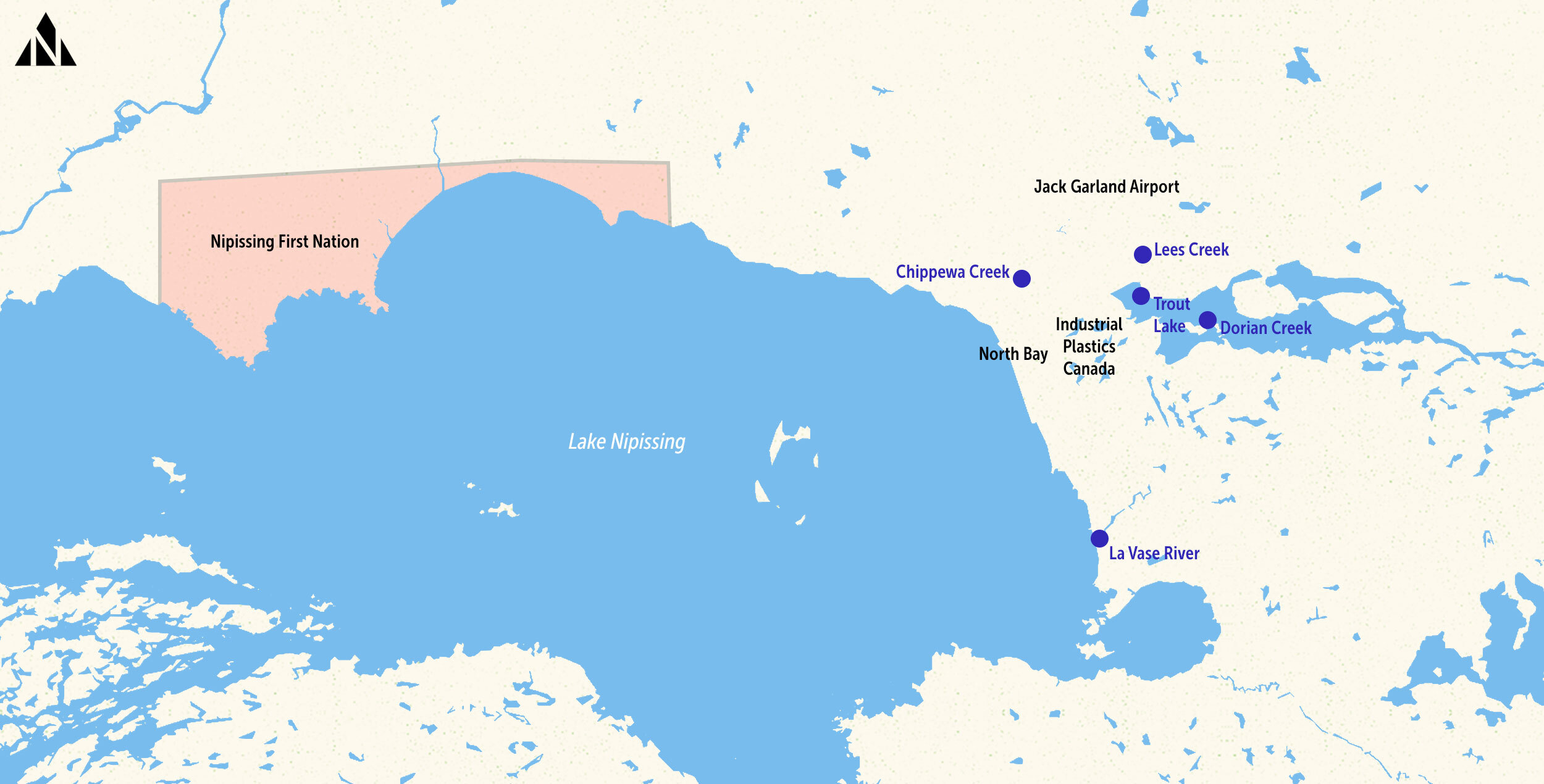
Stantec found PFAS from the foam had contaminated soil, bedrock, groundwater, private wells and several waterways in the region including Trout Lake, Lake Nipissing and Lees, Dorlan, Chippewa and La Vase creeks and surrounding areas.

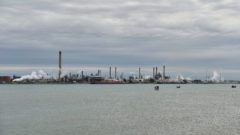
Long-lasting “forever chemicals” known as PFAS have contaminated surface water, soil, bedrock and groundwater near the Jack Garland Airport, including the municipal drinking water system, private wells and waterways around Nipissing District. (Image credit: Shawn Parkinson / The Narwhal)

In 2025, reporting by the Investigative Journalism Bureau surfaced a report by the Royal Military College showing the Department of National Defence found elevated PFAS levels around the base as far back as 2012. That means the department knew about the contamination for five years before revealing it to the City of North Bay in 2016, and the public in 2017.

2.  PFAS impacts health, environment and property values. Residents are seeking recompense

In late 2025, North Bay citizens filed a proposed class-action lawsuit asking for remediation, safe drinking water and $105 million in damages for residents living within a three-kilometre radius of the 22 Wing Canadian Forces Base and Jack Garland Airport. Some of the people who live closest to the contamination have been receiving bottled water from the government for years, but have had no other opportunity for recourse.

The proposed lawsuit, if certified by the court, would be against the City of North Bay and the Attorney General of Canada, on behalf of the Department of National Defence, focusing on the loss of property value and remediation costs. The case is also seeking punitive damages, contending that National Defence was aware of the contamination long before warning residents.

Not mentioned in the suit is the long list of health concerns associated with “forever chemicals.”

The United States Environmental Protection Agency lists potential health risks of exposure to PFAS, including reproductive problems like infertility, developmental effects in children, increased risk of certain cancers and weakening of the body’s immune system, including reduced vaccine response. The Canadian government says PFAS can be transferred through the placenta during pregnancy, and infants can be exposed through human milk. 

Ecosystems are affected, too. Studies have shown exposure to per- and polyfluoroalkyl substances can stunt plant growth and cause reduced seed germination and ability to photosynthesize. The chemicals can build up in the organs of living creatures throughout the food chain. In the district of Nipissing, that poses a risk to people who hunt, fish and harvest from the land.

“These industrial areas are often surrounded by lower-income buildings and peoples and communities,” Curtis Avery, environment department manager with Nipissing First Nation, told The Narwhal in summer 2023. “We’re the most vulnerable group of people that utilize our lands — the lands are our grocery stores. … If these are being impacted, we need to know.”

NORTH BAY, Ont. (06/21/23) – Looking down onto the new Industrial Plastics Canada factory site from the top of Wallace Road in North Bay, Ontario. Beautiful forested area, Circle Lake, and important ecosystems for pollinators surround the site. Despite the effect the factory’s PTFE byproducts will have on North Bay’s environment, no assessments were required and the public has little awareness of its construction, due to open July 2023. (Photo credit: Vanessa Tignanelli / The Narwhal)

3. Cost of North Bay clean-up grew five-fold, to more than $100 million

In 2021, the City of North Bay announced plans to begin remediation under a “shared responsibility” agreement between the Department of National Defence and the city. The federal department would cover 97 per cent of the costs, or $19.4 million, and the city would cover the remaining three per cent, at $600,000. But costs have ballooned since then; in December 2025, National Defence announced it would contribute another nearly $100 million to the remediation, with the city’s share rising to more than $3.6 million. The total for the cleanup project has risen to more than $122 million.

The remediation, which began on the ground in 2024, includes excavating and disposing of about 26,000 tonnes of PFAS-impacted soil; injecting activated carbon material into particularly dense patches of PFAS to stop the underground plume from spreading; and installing a filtration system to treat water leaving the site.

“We remain committed to addressing and managing the operational legacy of the Canadian Armed Forces responsibly,” Minister of National Defence David J. McGuinty said in a news release.

As part of the process, a notice went up on the federal Impact Assessment Agency registry on April 28, inviting the public to comment up until June 5 on a proposal to install a 250-metre permeable barrier in the ground to help filter impacted groundwater. A spokesperson for the agency said its role in the project is to offer advice on determining its environmental effects, as well as providing the opportunity to post the project on the registry.

Local organizations, including the environmental group Northwatch, said in a press release that they were concerned about “very limited public engagement over the last ten years since the public disclosure of the contamination,” counting only the two forums in 2024 and 2025, where there was “limited opportunities for the public to ask questions.” 

Northwatch’s project coordinator Brennain Lloyd told The Narwhal about the public notice period, which she said her organization only learned of in a daily bulletin from the Impact Assessment Agency listing multiple assessment notices from across the country.

“To the best of our knowledge there were no local announcements or invitations to comment issued to the many residents and organizations who have identified their interest in this program,” a release from Northwatch reads.

The Department of National Defence did not respond to questions from The Narwhal. 

4. North Bay’s not alone: contaminated military bases affect communities across Canada

Contamination on federal sites is an issue across Canada. There are thousands of contaminated sites listed on the federal contaminated sites inventory, and PFAS are found on more than 100 of them. These include at least 26 National Defence sites including bases in Trenton, Ont., Gagetown, N.B., and Moose Jaw, Sask.

And contaminants don’t stop at the fenceline. Health Canada says some contaminants can travel long distances through soil, water and air: “PFAS can be found in fresh water and drinking water in areas that are far away from where they entered the environment,” according to the department’s website.

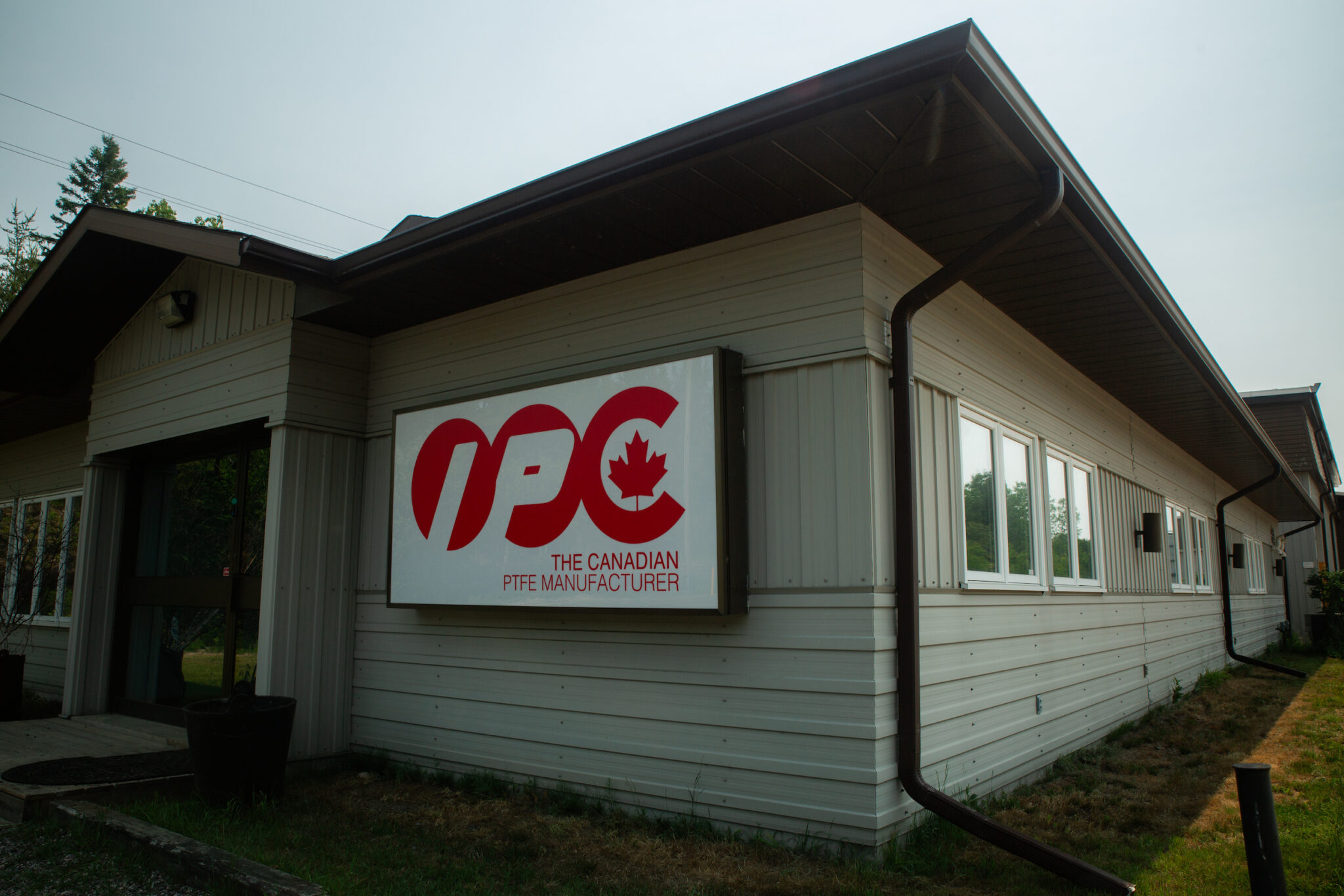
NORTH BAY, Ont. (06/21/23) – The main office building of Industrial Plastics Canada on Wallace Road in North Bay, Ontario, where construction is currently underway for the new factory opening July 2023. The factory plans to manufacture PTFE, Teflon-like chemicals harmful to humans, wildlife and ecosystems, no environmental assessment required. PTFE are commonly known as “forever chemicals,” because they can generate hazardous waste which, if not disposed of carefully, contaminates air, water and soil where it can remain for about 1,000 years. (Photo credit: Vanessa Tignanelli / The Narwhal)

5. Industry is still importing PFAS-class chemicals into North Bay

While the Canadian government no longer uses firefighting foam that contains PFAS, industry continues to bring these substances into the country. In 2023, The Narwhal reported on an international plastics conglomerate that opened its first Canadian location, Industrial Plastics Canada, in North Bay. The company has a presence across Europe as well as in India and China, billing itself as one of the “largest worldwide manufacturers of PTFE products.”

PTFE, or polytetrafluoroethylene, is a Teflon-like product in a subgroup of PFAS known as fluoropolymers, or fluoroplastics. A company spokesperson previously told The Narwhal the use of PTFE at the factory will not produce waste and poses “no risk.” The company also says fluoropolymers aren’t as dangerous as other PFAS and are “considered safe, non-bioaccumulative and non-toxic.” 

But fluoropolymers have been found to be dangerous to human health, according to research published in the peer-reviewed journal Environmental Science & Technology and others.

In 2023, Health Canada released a draft assessment of the state of PFAS in Canada to help decide how to regulate the class of chemicals. In it, the agency cited an industry-funded study that said fluoropolymers should be considered separately from other PFAS as “polymers of low concern.” A Health Canada spokesperson said the agency, along with Environment and Climate Change Canada, “examined information from a wide range of sources,” including scientific journals and reports while preparing the state of PFAS report.

The substances were ultimately excluded from the final report, released in March 2025, in which Health Canada proposed classifying the remaining PFAS chemicals as toxic substances under the Canadian Environmental Protection Act.

The Health Canada spokesperson said in an email that fluoropolymers “have specific properties that differentiates them from other PFAS,” which led to their exclusion from the final report. They added that the exclusion “should not be interpreted as meaning they are or are not of concern,” and that a separate fluoropolymer assessment is currently underway.

The exclusion of PTFE from that classification was a major priority for industry, Rémy Alexandre, toxics project lead at environmental law non-profit EcoJustice, told The Narwhal.

According to data collected by Alexandre, who studied Industrial Plastics Canada’s imports to North Bay, the company brought in almost 207,000 kilograms of PTFE from India and China from July 2025 to May 2026.

This puts the facility on the list of the 10 major importers of PTFE in Canada, alongside U.S.-based chemicals company Chemours, a spinoff of Dupont that has been arguing that the European Union should exempt fluoropolymers from their regulations, too. 

“The decision to site this plant in a community that is an existing hotspot for PFAS raises concerns,” Alexandre told The Narwhal. “And so does the selection of a jurisdiction that isn’t regulating fluoropolymers.”


The post North Bay’s PFAS problem: 5 things to know about a ‘forever chemicals’ hotspot in Ontario appeared first on Great Lakes Now.

Original Article

Great Lakes Now

Great Lakes Now

https://www.greatlakesnow.org/2026/06/30/north-bays-pfas-problem-5-things-to-know-about-a-forever-chemicals-hotspot-in-ontario/


The Narwhal

Baby bald eagles tested positive for PFAS and other legacy contaminants


Catch the latest updates on what’s happening with PFAS in the Great Lakes region. Check back for more PFAS news roundups every other week on our website.


According to reporting by MLive, two researchers are studying blood samples from bald eagles across Michigan and the Great Lakes basin for evidence of chemical exposure to things like PFAS, DDT or PCBs — which were both banned in 1972 and 1979.

Read Now at Great Lakes Now.

Original Article

Great Lakes Now

Great Lakes Now

https://www.greatlakesnow.org/2025/07/baby-bald-eagles-tested-positive-for-pfas-and-other-legacy-contaminants/

Lisa John Rogers, Great Lakes Now

Wisconsin DNR expands private well PFAS testing to five Oneida County townships

By Katie Thoresen, WXPR

This story was originally published by WXPR. WXPR is a community-licensed public radio station serving north central Wisconsin and adjacent areas of Michigan’s Upper Peninsula. Listen to their stories here.

People on private wells in five Oneida County Townships in Wisconsin may be offered free PFAS testing.

Read Now at Great Lakes Now.

Original Article

Great Lakes Now

Great Lakes Now

https://www.greatlakesnow.org/2025/07/wisconsin-dnr-expands-private-well-pfas-testing-five-oneida-county-townships/

WXPR

EPA Outlines New PFAS Strategy Amid Expert Concerns

Catch the latest updates on what’s happening with PFAS in the Great Lakes region. Check back for more PFAS news roundups every other week on our website.

On May 14, the U.S. Environmental Protection Agency (EPA) announced their plan to roll back significant portions of the Biden administration’s first nationwide drinking water standard for PFAS.

Read Now at Great Lakes Now.

Original Article

Great Lakes Now

Great Lakes Now

https://www.greatlakesnow.org/2025/05/epa-outlines-new-pfas-strategy-amid-expert-concerns/

Donte Smith

EPA nixes PFAS grants, teases new strategy

Catch the latest updates on what’s happening with PFAS in the Great Lakes region. Check back for more PFAS news roundups every other week on our website.

On April 15, U.S. Environmental Protection Agency (EPA) staff were told to cancel tens of millions of dollars worth of pending and active grants.

Read Now at Great Lakes Now.

Original Article

Great Lakes Now

Great Lakes Now

https://www.greatlakesnow.org/2025/04/epa-nixes-pfas-grants-teases-new-strategy/

Lisa John Rogers, Great Lakes Now

Susan Crawford’s Wisconsin Supreme Court win could be a win for PFAS

Catch the latest updates on what’s happening with PFAS in the Great Lakes region. Check back for more PFAS news roundups every other week on our website.

On Tuesday, April 1, Susan Crawford won Wisconsin’s contentious Supreme Court election.

Read Now at Great Lakes Now.

Original Article

Great Lakes Now

Great Lakes Now

https://www.greatlakesnow.org/2025/04/susan-crawfords-wisconsin-supreme-court-win-could-be-a-win-for-pfas/

Lisa John Rogers, Great Lakes Now

Study says drinking water from nearly half of US faucets contains potentially harmful chemicals

By John Flesher, AP News

TRAVERSE CITY, Mich. (AP) — Drinking water from nearly half of U.S. faucets likely contains “forever chemicals” that may cause cancer and other health problems, according to a government study released Wednesday.

The synthetic compounds known collectively as PFAS are contaminating drinking water to varying extents in large cities and small towns — and in private wells and public systems, the U.S.

Read Now at Great Lakes Now.

Original Article

Great Lakes Now

Great Lakes Now

https://www.greatlakesnow.org/2023/07/ap-study-drinking-water-nearly-half-us-faucets-contains-potentially-harmful-chemicals/

The Associated Press

PFAS News Roundup: All fish tested from Michigan rivers contain ‘forever chemicals’, study finds

PFAS, short for per- and polyfluoroalkyl substances, are a group of widespread man-made chemicals that don’t break down in the environment or the human body and have been flagged as a major contaminant in sources of water across the country.

Keep up with PFAS-related developments in the Great Lakes area.

Read Now at Great Lakes Now.

Original Article

Great Lakes Now

Great Lakes Now

https://www.greatlakesnow.org/2023/03/pfas-news-roundup-all-fish-tested-from-michigan-rivers-contain-forever-chemicals-study-finds/

Kathy Johnson

EPA to limit toxic ‘forever chemicals’ in drinking water

By Michael Phillis and Matthew Daly, Associated Press

WASHINGTON (AP) — The Environmental Protection Agency on Tuesday proposed the first federal limits on harmful “forever chemicals” in drinking water, a long-awaited protection the agency said will save thousands of lives and prevent serious illnesses, including cancer.

The plan would limit toxic PFAS chemicals to the lowest level that tests can detect. 

Read Now at Great Lakes Now.

Original Article

Great Lakes Now

Great Lakes Now

https://www.greatlakesnow.org/2023/03/ap-epa-limit-toxic-forever-chemicals-drinking-water/

The Associated Press

Michigan plastics company forced to probe PFAS contamination, cover costs

By Kelly House, Bridge Michigan

The Great Lakes News Collaborative includes Bridge Michigan; Circle of Blue; Great Lakes Now at Detroit Public Television; and Michigan Radio, Michigan’s NPR News Leader; who work together to bring audiences news and information about the impact of climate change, pollution, and aging infrastructure on the Great Lakes and drinking water.

Read Now at Great Lakes Now.

Original Article

Great Lakes Now

Great Lakes Now

https://www.greatlakesnow.org/2023/01/michigan-plastics-company-probe-pfas-contamination/

Bridge Michigan

PFAS News Roundup: New requirements taking effect in 2023 to protect consumers from ‘forever chemicals’

PFAS, short for per- and polyfluoroalkyl substances, are a group of widespread man-made chemicals that don’t break down in the environment or the human body and have been flagged as a major contaminant in sources of water across the country.

Keep up with PFAS-related developments in the Great Lakes area.

Read Now at Great Lakes Now.

Original Article

Great Lakes Now

Great Lakes Now

https://www.greatlakesnow.org/2023/01/pfas-news-roundup-requirements-2023-protect-consumers-forever-chemicals/

Kathy Johnson

A new study has found that a plume of per- and polyfluoroalkyl substances (PFAS) from an industrial source has made its way into Green Bay, Lake Michigan, through the movement of groundwater.

PFAS are often referred to as “forever chemicals” because they do not readily break down in the environment. They have been used to make a wide range of products resistant to water, grease, oil and stains and are also found in firefighting foams, which are a major source of environmental PFAS contamination. The chemical compounds have been shown to have adverse effects on human health.

Christy Remucal with the University of Wisconsin-Madison Department of Civil and Environmental Engineering, and postdoctoral co-investigator Sarah Balgooyen published their work in the Dec. 27, 2022, issue of the journal Environmental Science & Technology, https://pubs.acs.org/doi/10.1021/acs.est.2c06600 It was funded by a grant from the Wisconsin Sea Grant College Program.

“We used a forensics approach to investigate how the PFAS fingerprint from an industrial source changes after undergoing environmental and engineered processes,” Remucal said.

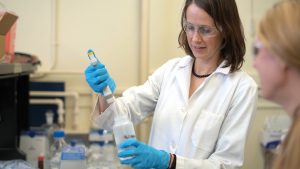
Woman wearing lab goggles, gloves and a lab coat in a lab.

Researcher Christy Remucal in her lab on the University of Wisconsin-Madison campus is analyzing water samples taken from a known contamination site.

Researchers tracked the movement of PFAS through groundwater and surface water flow, as well as the chemicals’ presence in biosolids on land. Analysis of samples showed that, unfortunately, a large PFAS plume has moved into Green Bay, Lake Michigan.

Green Bay is one of the largest bays on the Great Lakes, an interconnected freshwater system providing drinking water for 30 million U.S. and Canadian residents. That makes it even more important for researchers to understand what contaminants are present and where they may have come from.

The source of this Great Lakes contamination has been traced to Tyco Fire Products. The company’s fire-training facilities in Marinette and Peshtigo have previously been identified as a source of PFAS contamination in groundwater and private drinking water wells in the area.

The forensic technique in this study used PFAS fingerprinting, a process that uses ratios of individual PFAS compounds to identify PFAS contaminants and their sources. In this case, the PFAS fingerprint in Green Bay is nearly identical to PFAS associated with Tyco and includes PFAS known to be active ingredients in firefighting foams. This fingerprinting method could be used to hold polluting companies responsible for the contaminated water, the researchers said.

The study also found that PFAS associated with the industrial facility are present in streams near some agricultural fields. The researchers believe this PFAS contamination may have come from the treated biosolids many farmers use to fertilize their fields.

Biosolids are the product of wastewater treatment and are rich in nutrients like nitrogen and phosphorus. PFAS in wastewater undergo extensive processing and some PFAS tend to concentrate in biosolids during treatment.

Remucal and Balgooyen determined that PFAS from biosolids can still mobilize after being spread on land. So, when farmers spread biosolids on their fields, PFAS can eventually make their way to adjacent streams.

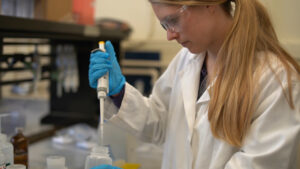
Blonde woman wearing safety goggles, gloves and a lab coat in a lab.

Sarah Balgooyen is a postdoctoral investigator of PFAS, which is a group of man-made chemicals known for stain- and water-resistance, but also causes cancer in humans.

“Treated biosolids are commonly spread on fields all across Wisconsin,” Balgooyen said. “This information may impact how municipalities across Wisconsin and other states approach the use of biosolids as an agricultural fertilizer.”

The post New study: Northeastern Wisconsin PFAS plume moves into Green Bay via groundwater first appeared on Wisconsin Sea Grant.

Original Article

News Releases | Wisconsin Sea Grant

News Releases | Wisconsin Sea Grant

https://www.seagrant.wisc.edu/news/new-study-northeastern-wisconsin-pfas-plume-moves-into-green-bay-via-groundwater/?utm_source=rss&utm_medium=rss&utm_campaign=new-study-northeastern-wisconsin-pfas-plume-moves-into-green-bay-via-groundwater

Moira Harrington

PFAS News Roundup: 3M says it will stop making ‘forever chemicals’ by 2025, but global problem remains

PFAS, short for per- and polyfluoroalkyl substances, are a group of widespread man-made chemicals that don’t break down in the environment or the human body and have been flagged as a major contaminant in sources of water across the country.

Keep up with PFAS-related developments in the Great Lakes area.

Read Now at Great Lakes Now.

Original Article

Great Lakes Now

Great Lakes Now

https://www.greatlakesnow.org/2023/01/pfas-news-roundup-3m-stop-forever-chemicals-2025-global-problem-remains/

Kathy Johnson

PFAS News Roundup: New regulations approved, new solutions explored

PFAS, short for per- and polyfluoroalkyl substances, are a group of widespread man-made chemicals that don’t break down in the environment or the human body and have been flagged as a major contaminant in sources of water across the country.

Keep up with PFAS-related developments in the Great Lakes area.

Read Now at Great Lakes Now.

Original Article

Great Lakes Now

Great Lakes Now

https://www.greatlakesnow.org/2022/12/pfas-news-roundup-new-regulations-approved-new-solutions-explored/

Kathy Johnson

PFAS News Roundup: “Forever chemicals” may pose bigger risk to health than scientists thought

PFAS, short for per- and polyfluoroalkyl substances, are a group of widespread man-made chemicals that don’t break down in the environment or the human body and have been flagged as a major contaminant in sources of water across the country.

Keep up with PFAS-related developments in the Great Lakes area.

Read Now at Great Lakes Now.

Original Article

Great Lakes Now

Great Lakes Now

https://www.greatlakesnow.org/2022/12/pfas-news-roundup-forever-chemicals-may-pose-bigger-risk-health-scientists/

Kathy Johnson

PFAS News Roundup: “Forever chemicals” may pose bigger risk to health than scientists thought

PFAS, short for per- and polyfluoroalkyl substances, are a group of widespread man-made chemicals that don’t break down in the environment or the human body and have been flagged as a major contaminant in sources of water across the country.

Keep up with PFAS-related developments in the Great Lakes area.

Read Now at Great Lakes Now.

Original Article

Great Lakes Now

Great Lakes Now

https://www.greatlakesnow.org/2022/12/pfas-news-roundup-forever-chemicals-may-pose-bigger-risk-health-scientists/

Kathy Johnson

PFAS News Roundup: States take on “forever chemicals” with bans and lawsuits

PFAS, short for per- and polyfluoroalkyl substances, are a group of widespread man-made chemicals that don’t break down in the environment or the human body and have been flagged as a major contaminant in sources of water across the country.

Keep up with PFAS-related developments in the Great Lakes area.

Read Now at Great Lakes Now.

Original Article

Great Lakes Now

Great Lakes Now

https://www.greatlakesnow.org/2022/11/pfas-news-roundup-states-take-on-forever-chemicals-with-bans-and-lawsuits/

Kathy Johnson

PFAS News Roundup: Ongoing Upper Peninsula industrial fire raises “forever chemical” concerns, PFAS medical monitoring programs to begin in New York

PFAS, short for per- and polyfluoroalkyl substances, are a group of widespread man-made chemicals that don’t break down in the environment or the human body and have been flagged as a major contaminant in sources of water across the country.

Keep up with PFAS-related developments in the Great Lakes area.

Read Now at Great Lakes Now.

Original Article

Great Lakes Now

Great Lakes Now

https://www.greatlakesnow.org/2022/11/pfas-news-roundup-upper-peninsula-industrial-fire-forever-chemical-concerns-medical-monitoring-programs-new-york/

Kathy Johnson

PFAS News Roundup: Petition says EPA loophole lets “forever chemicals” evade review

PFAS, short for per- and polyfluoroalkyl substances, are a group of widespread man-made chemicals that don’t break down in the environment or the human body and have been flagged as a major contaminant in sources of water across the country.

Keep up with PFAS-related developments in the Great Lakes area.

Read Now at Great Lakes Now.

Original Article

Great Lakes Now

Great Lakes Now

https://www.greatlakesnow.org/2022/10/pfas-news-roundup-petition-says-epa-loophole-lets-forever-chemicals-evade-review/

Kathy Johnson

PFAS News Roundup: High levels of “forever chemicals” found in pesticides, artificial turf

PFAS, short for per- and polyfluoroalkyl substances, are a group of widespread man-made chemicals that don’t break down in the environment or the human body and have been flagged as a major contaminant in sources of water across the country.

Keep up with PFAS-related developments in the Great Lakes area.

Read Now at Great Lakes Now.

Original Article

Great Lakes Now

Great Lakes Now

https://www.greatlakesnow.org/2022/10/pfas-news-roundup-high-levels-forever-chemicals-pesticides-artificial-turf/

Kathy Johnson

Dana Nessel sues former west Michigan company over PFAS, other pollution

By Kelly House, Bridge Michigan

The Great Lakes News Collaborative includes Bridge Michigan; Circle of Blue; Great Lakes Now at Detroit Public Television; and Michigan Radio, Michigan’s NPR News Leader; who work together to bring audiences news and information about the impact of climate change, pollution, and aging infrastructure on the Great Lakes and drinking water.

Read Now at Great Lakes Now.

Original Article

Great Lakes Now

Great Lakes Now

https://www.greatlakesnow.org/2022/09/dana-nessel-sues-company-over-pfas-pollution/

Bridge Michigan

Evers administration relaunches efforts to limit PFAS

MADISON, Wis. (AP) — Democratic Gov. Tony Evers’ administration is trying again to limit the levels of a group of chemicals known as PFAS in Wisconsin’s groundwater.

The Wisconsin State Journal reported that Evers authorized the Department of Natural Resources last week to begin work on administrative rules establishing limits.

Read Now at Great Lakes Now.

Original Article

Great Lakes Now

Great Lakes Now

https://www.greatlakesnow.org/2022/09/ap-evers-administration-efforts-limit-pfas/

The Associated Press

Michigan property owners settle PFAS case for $54 million

GRAND RAPIDS, Mich. (AP) — A judge has given tentative approval to a $54 million settlement involving 3M Co., a shoe manufacturer and property owners in western Michigan who said their land and wells were contaminated by toxic “forever chemicals.”

The deal involves approximately 1,700 properties north of Grand Rapids.

Read Now at Great Lakes Now.

Original Article

Great Lakes Now

Great Lakes Now

https://www.greatlakesnow.org/2022/09/michigan-property-owners-settle-pfas-case/

The Associated Press

PFAS News Roundup: “Forever chemicals” concern on the rise, how to reduce exposure

PFAS, short for per- and polyfluoroalkyl substances, are a group of widespread man-made chemicals that don’t break down in the environment or the human body and have been flagged as a major contaminant in sources of water across the country.

Keep up with PFAS-related developments in the Great Lakes area.

Read Now at Great Lakes Now.

Original Article

Great Lakes Now

Great Lakes Now

https://www.greatlakesnow.org/2022/09/pfas-news-roundup-forever-chemicals-concern-reduce-exposure/

Kathy Johnson

PFAS News Roundup: Indiana research universities study PFAS, EPA designates “forever chemicals” as hazardous

PFAS, short for per- and polyfluoroalkyl substances, are a group of widespread man-made chemicals that don’t break down in the environment or the human body and have been flagged as a major contaminant in sources of water across the country.

Keep up with PFAS-related developments in the Great Lakes area.

Read Now at Great Lakes Now.

Original Article

Great Lakes Now

Great Lakes Now

https://www.greatlakesnow.org/2022/09/pfas-news-roundup-indiana-research-universities-study-pfas-epa-designates-forever-chemicals-as-hazardous/

Kathy Johnson

PFAS News Roundup: Eliminating “forever chemicals,” reporting obligations broadening

PFAS, short for per- and polyfluoroalkyl substances, are a group of widespread man-made chemicals that don’t break down in the environment or the human body and have been flagged as a major contaminant in sources of water across the country.

Keep up with PFAS-related developments in the Great Lakes area.

Read Now at Great Lakes Now.

Original Article

Great Lakes Now

Great Lakes Now

https://www.greatlakesnow.org/2022/08/pfas-news-roundup-eliminating-forever-chemicals-reporting-obligations/

Kathy Johnson

Wisconsin judge leaves PFAS regulation ruling on hold

By Scott Bauer, Associated Press

MADISON, Wis. (AP) — A Wisconsin judge on Tuesday agreed to keep on hold his ruling from April that prevented state regulators from requiring businesses and others responsible for pollution by PFAS chemicals to investigate and clean up the contamination.

Waukesha County Circuit Judge Michael Bohren said because of the importance and impact of his ruling, it made sense to keep it on hold while the state Department of Natural Resources appeals.

Read Now at Great Lakes Now.

Original Article

Great Lakes Now

Great Lakes Now

https://www.greatlakesnow.org/2022/06/ap-wisconsin-judge-pfas-hold/

The Associated Press

Pressure growing to remove PFAS from fast food wrappers

By Michael Casey, Associated Press

BOSTON (AP) — Brenda Hampton first came across the toxic industrial compound PFAS after finding it was part of the cocktail of contaminants that tainted the drinking water in her North Alabama community.

Hampton, who believes the contaminated water contributed to kidney problems she and other residents suffer, soon learned the chemicals were found in another source that hit close to home — fast food wrappers, boxes and plates.

Read Now at Great Lakes Now.

Original Article

Great Lakes Now

Great Lakes Now

https://www.greatlakesnow.org/2022/06/ap-pressure-growing-remove-pfas-wrappers/

The Associated Press

IDEM Testing Confirms “Forever Chemicals” in Some Public Water Systems

By Enrique Saenz, Indiana Environmental Reporter

Final results of the first phase of statewide community water system testing confirmed the presence of PFAS chemicals in the treated drinking water of nearly a dozen Indiana communities.

The presence of PFAS chemicals in drinking water could be exposing thousands of Hoosiers to a series of adverse health conditions ranging from increased risk of kidney and testicular cancers to high cholesterol levels.

Read Now at Great Lakes Now.

Original Article

Great Lakes Now

Great Lakes Now

https://www.greatlakesnow.org/2022/05/testing-confirms-forever-chemicals-water-systems/

Indiana Environmental Reporter

PFAS News Roundup: 20M acres of farmland polluted, PFAS found in ‘nontoxic’ children’s clothes and car seats

PFAS, short for per- and polyfluoroalkyl substances, are a group of widespread man-made chemicals that don’t break down in the environment or the human body and have been flagged as a major contaminant in sources of water across the country.

Keep up with PFAS-related developments in the Great Lakes area.

Read Now at Great Lakes Now.

Original Article

Great Lakes Now

Great Lakes Now

https://www.greatlakesnow.org/2022/05/pfas-news-roundup-farmland-polluted-pfas-childrens-clothes/

Natasha Blakely

PFAS News Roundup: PFAS in face masks, McDonald’s and Burger King sued for PFAS in packaging

PFAS, short for per- and polyfluoroalkyl substances, are a group of widespread man-made chemicals that don’t break down in the environment or the human body and have been flagged as a major contaminant in sources of water across the country.

Keep up with PFAS-related developments in the Great Lakes area.

Read Now at Great Lakes Now.

Original Article

Great Lakes Now

Great Lakes Now

https://www.greatlakesnow.org/2022/04/pfas-news-roundup-face-masks-fast-food-chains-sued/

Natasha Blakely

FRESH: Wisconsin Judge Strikes Down Toxic ‘Forever Chemicals’ Cleanup Rule

Fresh is a biweekly newsletter from Circle of Blue that unpacks the biggest international, state, and local policy news stories facing the Great Lakes region today. Sign up for Fresh: A Great Lakes Policy Briefing, straight to your inbox, every other Tuesday.

— Laura Gersony, Fresh Editor

This Week’s Watersheds

  • A court ruling out of Wisconsin hamstrings the state’s cleanup of toxic “forever chemicals.”
  • Quebec becomes the first jurisdiction in North America to ban fossil fuel extraction.

Read Now at Great Lakes Now.

Original Article

Great Lakes Now

Great Lakes Now

https://www.greatlakesnow.org/2022/04/wisconsin-judge-forever-chemicals-cleanup/

Circle of Blue

Researchers find wetland plant can filter PFAS chemicals

By Enrique Saenz, Indiana Environmental Reporter

Researchers have found that a common wetland plant native to Australia can remove toxic “forever chemicals” from the surrounding environment.

In a 190-day greenhouse experiment, a team of Chinese and Australian researchers found that Juncus sarophorus, a wetland plant also known as the broom rush, could tolerate and accumulate PFOS, PFOA and PFHxS, three of the most commonly studied PFAS chemicals.

Read Now at Great Lakes Now.

Original Article

Great Lakes Now

Great Lakes Now

https://www.greatlakesnow.org/2022/04/researchers-wetland-plant-pfas-chemicals/

Indiana Environmental Reporter

PFAS News Roundup: Pennsylvania sets regulations, judge says Wisconsin DNR can’t regulate, Chemours uses climate change to defend PFAS

PFAS, short for per- and polyfluoroalkyl substances, are a group of widespread man-made chemicals that don’t break down in the environment or the human body and have been flagged as a major contaminant in sources of water across the country.

Keep up with PFAS-related developments in the Great Lakes area.

Read Now at Great Lakes Now.

Original Article

Great Lakes Now

Great Lakes Now

https://www.greatlakesnow.org/2022/04/pfas-news-roundup-pennsylvania-regulations-climate-change-defend/

Natasha Blakely

PFAS is a widespread problem. The solution needs to come from widespread sources

PFAS research is still in the early stages, which means issues with PFAS crop up all the time to surprise researchers like Michigan State University professor Cheryl Murphy.

PFAS, per- and polyfluoroalkyl substances, are known as Forever Chemicals because of their reluctance to break down in humans. They can be in the food chain, drinking water and are found in common items in everyday commercial use like water-repellent clothing, dental floss and non-stick cookware.

Read Now at Great Lakes Now.

Original Article

Great Lakes Now

Great Lakes Now

https://www.greatlakesnow.org/2022/04/pfas-solution-widespread-sources/

Gary Wilson

PFAS News Roundup: Wisconsin board passes weakened state standards, stream trout contaminated

PFAS, short for per- and polyfluoroalkyl substances, are a group of widespread man-made chemicals that don’t break down in the environment or the human body and have been flagged as a major contaminant in sources of water across the country.

Keep up with PFAS-related developments in the Great Lakes area.

Read Now at Great Lakes Now.

Original Article

Great Lakes Now

Great Lakes Now

https://www.greatlakesnow.org/2022/03/pfas-wisconsin-weakened-state-standards-trout-contaminated/

Natasha Blakely

PFAS News Roundup: Bill proposes blood testing for Indiana firefighters, potential PFA contamination in Pennsylvania deer

PFAS, short for per- and polyfluoroalkyl substances, are a group of widespread man-made chemicals that don’t break down in the environment or the human body and have been flagged as a major contaminant in sources of water across the country.

Keep up with PFAS-related developments in the Great Lakes area.

Read Now at Great Lakes Now.

Original Article

Great Lakes Now

Great Lakes Now

https://www.greatlakesnow.org/2022/02/pfas-news-roundup-annual-blood-tests-pennsylvania-deer/

Maya Sundaresan

Toxic ‘forever chemicals’ found in Michigan farm’s beef

By John Flesher, Associated Press

Beef produced at a small Michigan farm was found to contain toxic “forever chemicals” after the cattle were fed crops grown with fertilizer made from contaminated wastewater biosolids, state officials said Friday.

A consumption advisory issued by state agencies stopped short of a recall, noting there are no government standards for the substances in beef.

Read Now at Great Lakes Now.

Original Article

Great Lakes Now

Great Lakes Now

https://www.greatlakesnow.org/2022/02/ap-forever-chemicals-michigan-beef/

The Associated Press

PFAS News Roundup: PFAS in Lake Superior fish, two Michigan locations could land on Superfund list

PFAS, short for per- and polyfluoroalkyl substances, are a group of widespread man-made chemicals that don’t break down in the environment or the human body and have been flagged as a major contaminant in sources of water across the country.

Keep up with PFAS-related developments in the Great Lakes area.

Read Now at Great Lakes Now.

Original Article

Great Lakes Now

Great Lakes Now

https://www.greatlakesnow.org/2022/01/pfas-news-lake-superior-fish-michigan-superfund-list/

Natasha Blakely

PFAS News Roundup: PFAS can move from water to air, DoD efforts to clean up PFAS skewered

PFAS, short for per- and polyfluoroalkyl substances, are a group of widespread man-made chemicals that don’t break down in the environment or the human body and have been flagged as a major contaminant in sources of water across the country. 

Keep up with PFAS-related developments in the Great Lakes area. 

Read Now at Great Lakes Now.

Original Article

Great Lakes Now

Great Lakes Now

https://www.greatlakesnow.org/2021/12/pfas-news-roundup-water/

Natasha Blakely

PFAS News Roundup: Minnesota requiring businesses to monitor, PFAS impact on COVID vaccine, new New York standards

PFAS, short for per- and polyfluoroalkyl substances, are a group of widespread man-made chemicals that don’t break down in the environment or the human body and have been flagged as a major contaminant in sources of water across the country.

Keep up with PFAS-related developments in the Great Lakes area.

Read Now at Great Lakes Now.

Original Article

Great Lakes Now

Great Lakes Now

https://www.greatlakesnow.org/2021/11/pfas-news-covid-vaccine-minnesota-businesses-new-york-standards/

Natasha Blakely

Minnesota pollution officials update impaired waters list

MINNEAPOLIS (AP) — Minnesota pollution officials on Monday released a proposed impaired waters list for 2022, an update that included the addition of 15 northeastern and central Minnesota water bodies where fish have been contaminated with long-lasting chemicals.

The 15 were added due to contamination with a family of widely used chemicals known as PFAS, sometimes called “forever chemicals “due to their inability to break down.

Read Now at Great Lakes Now.

Original Article

Great Lakes Now

Great Lakes Now

https://www.greatlakesnow.org/2021/11/ap-minnesota-pollution-officials-impaired-waters/

The Associated Press

State of Michigan to avoid buying products containing PFAS

By Lester Graham, Michigan Radio

The Great Lakes News Collaborative includes Bridge Michigan; Circle of Blue; Great Lakes Now at Detroit Public Television; and Michigan Radio, Michigan’s NPR News Leader; who work together to bring audiences news and information about the impact of climate change, pollution, and aging infrastructure on the Great Lakes and drinking water.

Read Now at Great Lakes Now.

Original Article

Great Lakes Now

Great Lakes Now

https://www.greatlakesnow.org/2021/11/michigan-avoid-products-containing-pfas/

Michigan Radio

EPA unveils strategy to regulate toxic ‘forever chemicals’

By Matthew Daly, Associated Press

WASHINGTON (AP) — The Biden administration is launching a broad strategy to regulate toxic industrial compounds associated with serious health conditions that are used in products ranging from cookware to carpets and firefighting foams.

Michael Regan, the head of the Environmental Protection Agency, said it is taking a series of actions to limit pollution from a cluster of long-lasting chemicals known as PFAS that are increasingly turning up in public drinking water systems, private wells and even food.

Read Now at Great Lakes Now.

Original Article

Great Lakes Now

Great Lakes Now

https://www.greatlakesnow.org/2021/10/ap-epa-strategy-regulate-pfas/

The Associated Press

PFAS News Roundup: Michigan works on transparency, 3M could cost the Minnesota public billions, study recruitment in Michigan

PFAS, short for per- and polyfluoroalkyl substances, are a group of widespread man-made chemicals that don’t break down in the environment or the human body and have been flagged as a major contaminant in sources of water across the country.

Keep up with PFAS-related developments in the Great Lakes area.

Read Now at Great Lakes Now.

Original Article

Great Lakes Now

Great Lakes Now

https://www.greatlakesnow.org/2021/10/pfas-study-michigan-wisconsin-minnesota-billions-transparency/

Natasha Blakely

HBO Audience: John Oliver’s “Last Week Tonight” features the impact of PFAS on Michigan residents

Finding out their toddler had the highest-known level of PFAS in his blood of anyone in the United States was devastating to Seth and Tobyn McNaughton. The discovery that her well water was contaminated with those same industrial chemicals forced Sandy Wynn-Stelt to use water processed through a complicated pump in her basement that she’s nicknamed “Megatron.”

Both scenes were first part of Great Lakes Now’s Emmy-winning documentary “The Forever Chemicals” and are now featured in John Oliver’s “Last Week Tonight” program on HBO.

Read Now at Great Lakes Now.

Original Article

Great Lakes Now

Great Lakes Now

https://www.greatlakesnow.org/2021/10/pfas-great-lakes-now-last-week-tonight/

Natasha Blakely

‘Forever chemicals’ found in groundwater near military bases

TRAVERSE CITY, Mich. (AP) — High levels of toxic, widely used “forever chemicals” contaminate groundwater around at least six military sites in the Great Lakes region, according to U.S. Department of Defense records that an environmental group released Tuesday.

The Environmental Working Group said PFAS, an abbreviation for perfluoroalkyl and polyfluoroalkyl substances, have oozed into the Great Lakes and pose a risk to people who eat fish tainted with the chemicals.

Read Now at Great Lakes Now.

Original Article

Great Lakes Now

Great Lakes Now

https://www.greatlakesnow.org/2021/09/ap-forever-chemicals-groundwater-military-bases/

The Associated Press

PFAS News Roundup: Tech company develops PFAS-eliminating technology, PFAS Action Act heads to Senate, study finds PFAS in Arctic ice

PFAS, short for per- and polyfluoroalkyl substances, are a group of widespread man-made chemicals that don’t break down in the environment or the human body and have been flagged as a major contaminant in sources of water across the country.

Keep up with PFAS-related developments in the Great Lakes area.

Read Now at Great Lakes Now.

Original Article

Great Lakes Now

Great Lakes Now

https://www.greatlakesnow.org/2021/08/pfas-action-act-senate-study-arctic-ice/

Rachel Duckett

PFAS News Roundup: EPA approved PFAS use for fracking, $20M for Ontario airport cleanup, PFAS Action Act set for House vote

PFAS, short for per- and polyfluoroalkyl substances, are a group of widespread man-made chemicals that don’t break down in the environment or the human body and have been flagged as a major contaminant in sources of water across the country.

Keep up with PFAS-related developments in the Great Lakes area.

Read Now at Great Lakes Now.

Original Article

Great Lakes Now

Great Lakes Now

https://www.greatlakesnow.org/2021/07/pfas-epa-fracking-ontario-cleanup-action-act-house/

Noah Bock

Dealing with the soup of chemicals that can get into your drinking water

By Lester Graham, Michigan Radio

The Great Lakes News Collaborative includes Bridge Michigan; Circle of Blue; Great Lakes Now at Detroit Public Television; and Michigan Radio, Michigan’s NPR News Leader; who work together to bring audiences news and information about the impact of climate change, pollution, and aging infrastructure on the Great Lakes and drinking water.

Read Now at Great Lakes Now.

Original Article

Great Lakes Now

Great Lakes Now

https://www.greatlakesnow.org/2021/07/soup-chemicals-drinking-water/

Michigan Radio