By Paula Gardner, Kelly House and Ron French, Bridge Michigan

The Great Lakes News Collaborative includes Bridge Michigan; Circle of Blue; Great Lakes Now at Detroit PBS; Michigan Public, Michigan’s NPR News Leader; and The Narwhal who work together to bring audiences news and information about the impact of climate change, pollution, and aging infrastructure on the Great Lakes and drinking water. This independent journalism is supported by the Charles Stewart Mott Foundation. Find all the work HERE.


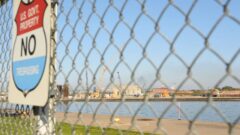
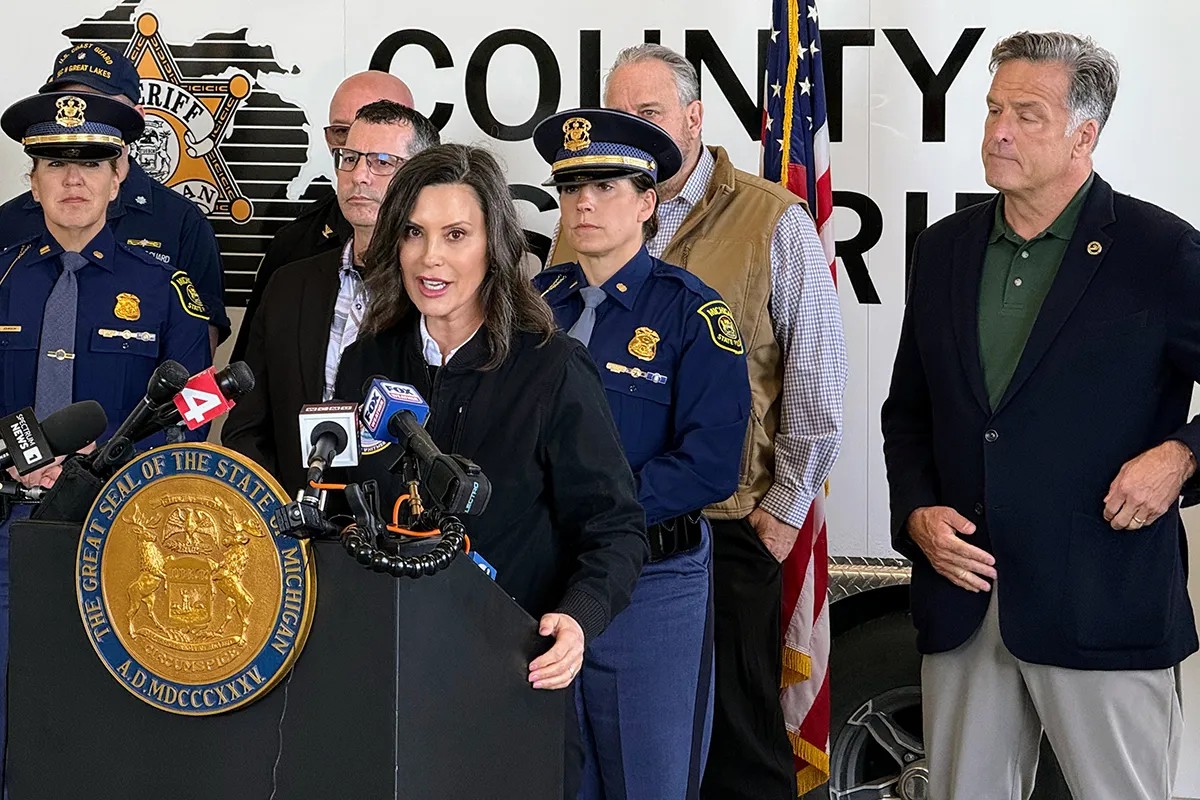
CHEBOYGAN — Local, state and federal officials were aware of the dangers posed by the Cheboygan Lock and Dam for years before floodwaters pushed it to the brink of collapse, records show.

Yet they failed to compel private owners to repair the nonfunctional hydro plant connected to the publicly-owned dam —  a critical piece of its ability to pass floodwaters downstream. 

The facility that houses the plant, once a Charmin toilet paper mill, changed hands repeatedly over decades as it fell into disrepair. 

Now taxpayers are helping bankroll a desperate effort to bring the plant back online before the dam fails and sends a wall of water toward downtown Cheboygan.

“I’m very concerned that this was not handled properly,” said Richard Sangster, a Cheboygan County commissioner and former Cheboygan mayor, about federal regulatory actions over several years.

The property is now owned by Hom Paper XI, LLC, a business controlled by former NFL linebacker Thomas Homco. He did not return voicemails left by Bridge Michigan. 

State and local officials did what they could, Cheboygan County Sheriff Todd Ross said Thursday.

“We didn’t wait ‘til the last minute,” Ross said. “It’s privately owned. There’s only so much we can do.”

A public tally of taxpayer costs associated with the round-the-clock repair wasn’t available Thursday, but estimates from a few years ago indicated the plant needed at least $1 million in repairs.

‘Safety concerns have been raised many times’

Records show the agency that primarily regulates hydropower dams, the Federal Energy Regulatory Commission, sent warning letters for years to a shifting cast of owners while granting multiple extensions.

Among the issues they cited: missing inspection records and malfunctioning equipment that was crucial to passing water in the event of a flood.  

As far back as 2019, regulars warned about cracked concrete and damaged retaining walls and gates that could help the dam manage flooding, records show.

In 2021, FERC told the plant’s then owners that “multiple items are overdue and completion dates are rapidly approaching.”

The plant was cited 16 times in 10 months for safety violations by Occupational Safety and Health Administration before a fire closed it altogether in September 2023, records indicate.

That prompted more orders for repairs and more extensions from FERC. Records indicate state officials said they were aware of the issues but had no role in enforcement.

“Safety concerns have been raised many times,” Sangster said, adding “you wouldn’t even be able to measure how detrimental” a dam failure would be. 

“In my eyes, it appears like total neglect on their behalf,” he added about FERC.

‘No simple answer’

FERC spokesperson Celeste Miller did not respond to detailed questions from Bridge about oversight of the hydro plant property and instead put out a statement noting the agency’s role in the ongoing emergency response in Cheboygan.

“Above all, our priority is to coordinate with all involved partners to safeguard both the community and the environment,” Miller wrote.

The crisis comes six years after the privately-owned Midland dams failed following a similar pattern of regulatory delay. Michigan legislators vowed to make dam safety a priority after Midland, but ultimately didn’t act on proposed reforms.

A solution “keeps getting kicked down the road …  now we’ve got a whole community in peril because it was mismanaged by (private owners),” state Sen. John Damoose, R-Harbor Springs, said after touring the dam with Gov. Gretchen Whitmer.

“This is a problem that could happen all over the state,” Damoose said. “‘It got our attention a few years ago in Midland, but now we’re seeing that it was not an isolated thing and we need to take some serious looks at how we allow this to go on.”

Whitmer said “there’s no simple answer” due to a “complicated web of privately owned and publicly owned (dams.)”

“We have made some long overdue investments in some of our infrastructure,” she said.

Complicated history

Like many dams in Michigan, the Cheboygan complex was once owned by utilities to generate power for the region. 

By 1967, when Consumers Energy sold it to the state of Michigan for $1, it was no longer generating power but the deeper Cheboygan River created by the dam had become a valued link between Lake Huron and the Inland Waterway, a 40-mile-long network of popular rivers and lakes.

In 1983, Procter & Gamble took over the hydroelectric side of the facility, securing a licensing exemption from FERC and striking a deal to give the state some continued say over water flows through the now-privatized portion of the complex. 

But soon after pouring millions into upgrading the hydro facility, the company shuttered its Cheboygan operation in 1990, eliminating 300 jobs and commencing the slow decline of the historic mill. 

Eventually, a company named Great Lakes Tissue bought the plant and was urged by FERC for years to make repairs.

It sold the business before a June 2022 deadline to ensure the gates that allowed water to flow through the hydro plant were functioning properly.

It’s not clear whether the work was ever completed. Nor is it clear whether federal regulators were aware of subsequent ownership changes.

Great Lakes Tissue Company was still the listed owner on FERC’s license exemption well into 2025.

Tug-of-war

While the hydro side of the dam complex sat idle following the fire, state Department of Natural Resources officials in charge of the rest of the dam publicly warned its closure would make it hard to manage water levels in the Cheboygan River.

The plant had accounted for about 30% of the river’s flow to Lake Huron, they said.

“Boaters and residents … may experience larger water level fluctuations,” stated a 2024 agency announcement.

Bridge Michigan was not able to discern what steps, if any, DNR officials took to try to compel action.

Agency spokesperson Ed Golder said he was not able to immediately answer related questions from Bridge Michigan while the agency deals with emergency response in Cheboygan.

Josef Greenberg, a spokesperson for the Michigan Department of Environment, Great Lakes and Energy, which regulates dams in the state that are not regulated by FERC, said state officials had communicated with federal counterparts about the issues at the dam, but did not play a regulatory role.

In the fire’s aftermath, federal officials continued issuing letters flagging unresolved safety issues at the hydro plant, some of them dating back years.

They pressed current and past owners for clarity about who was in charge, a process complicated by a flurry of legal disputes between parties with a stake in the floundering business.

Eventually, Hom Paper emerged as the rightful owner in FERC’s eyes, and the agency ordered the company to either restore the hydro plant to working condition or risk losing the license exemption that allows it to generate hydropower.

Company lawyer Tyler Tennent initially responded that doing so was no longer economically feasible: “Hom Paper XI, LLC no longer intends or desires to operate the hydroelectric machinery,” Tennent wrote in August 2025.

Then Hom Paper found a potential buyer, asking FERC for repeated extensions of time to repower the plant while it worked to finalize the deal.

The would-be buyer: HydroMine Cheboygan LLC, a Wyoming-based corporation spearheaded by Roy Davis, a self-proclaimed  “blue-collar mechanic that fixes things,” who has restarted power operations at other aging dams in Eaton Rapids and Hubbardston.

“Hom Paper and HydroMine are very near to having a signed agreement,” Hom’s lawyer, Tyler Tennent, wrote to FERC in January.

Tennent told regulators HydroMine was negotiating water management agreements with the DNR and working with Consumers Energy to repower the site.

“We appreciate FERC’s continued patience,” he wrote.

Three months later, the plant remained nonfunctional Thursday night, reducing the Cheboygan dam’s ability to pass floodwater that had climbed within five inches of its crest.

Residents in the floodzone have been urged to prepare for evacuation in case of dam failure.

Looking ahead

An estimated 75 Consumers Energy workers have been at the dam to get the privately owned hydroelectric power plant running, Michigan State Police said Thursday. 

By Thursday evening, signs pointed that restoration would be imminent, said Bruce Straub, Consumers’ incident commander.

Preserving dam integrity across northern Michigan will be important to the region once the crisis abates, said Sharen Lange, a Cheboygan business owner active in economic development, including on Cheboygan Commons.

Many in the area keep talking about who should own the hydro plant, Lange said. Others are saying that the city or county could take action. 

“We know that it being in private hands has produced a really bad result,” Lange said. 

The post Michigan feared Cheboygan Dam danger for years before rains pushed it to brink appeared first on Great Lakes Now.
Original Article

Great Lakes Now

Great Lakes Now

https://www.greatlakesnow.org/2026/04/17/michigan-feared-cheboygan-dam-danger-for-years-before-rains-pushed-it-to-brink/
Bridge Michigan

By Tracy Samilton, Michigan Public

The Great Lakes News Collaborative includes Bridge Michigan; Circle of Blue; Great Lakes Now at Detroit PBS; Michigan Public, Michigan’s NPR News Leader; and The Narwhal who work together to bring audiences news and information about the impact of climate change, pollution, and aging infrastructure on the Great Lakes and drinking water. This independent journalism is supported by the Charles Stewart Mott Foundation. Find all the work HERE.


U.S. Secretary of Health and Human Services Robert F. Kennedy Jr. and Environmental Protection Agency Administrator Lee Zeldin announced new initiatives to tackle microplastics in the human body and drinking water on Thursday.

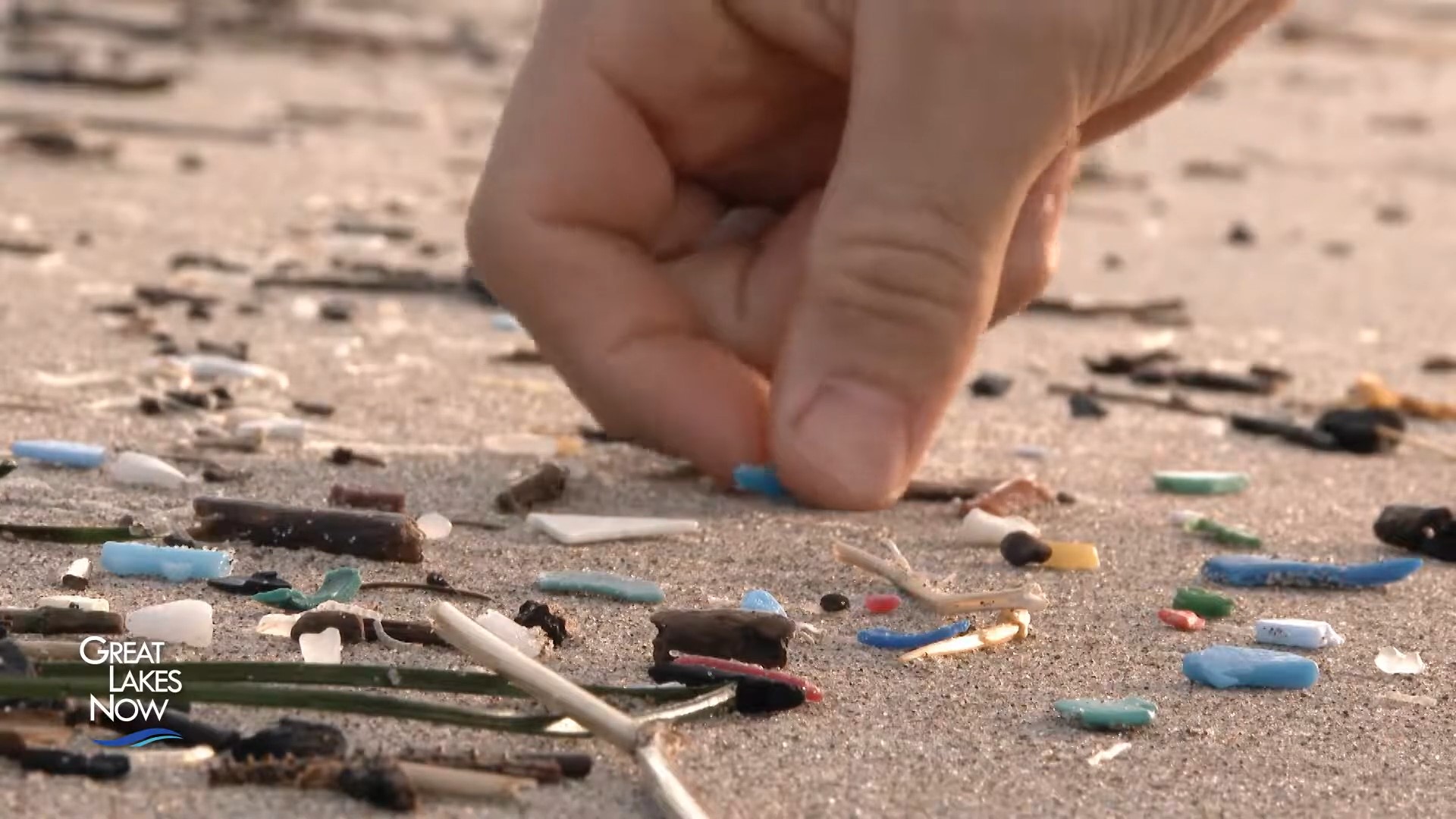
Microplastics are tiny pieces of plastic – as small as nano-sized pieces – that are increasingly ubiquitous in water supplies and in the human body.

Zeldin said the environmental agency will add microplastics and pharmaceuticals to its list of concerning chemicals in drinking water. “For the first time in the program’s history, EPA is designating both microplastics and pharmaceuticals as priority contaminant groups,” he said.

Kennedy said the government will create a $144-million program called STOMP (Systematic Targeting of Microplastics).

“We are focusing on three questions, what is in the body, what’s causing harm, and how do we remove it?” Kennedy said. “We still do not have clear answers about causation or solutions,” Kennedy said. “We do not yet understand how these particles interact with the immune system, the endocrine system or the neurological system, and we do not have validated methods to remove them safely.”

But a number of environmental groups said the actions taken by the government aren’t sufficient.

“Microplastics are a serious – and growing – threat to our health and our environment,” Erin Doran of Food & Water Watch said in a statement. “Without monitoring of our drinking water, we can’t know the full scale of this crisis. Today’s announcement …ultimately falls short on its own. It does not reflect the urgent need for a comprehensive nationwide monitoring program for microplastics in drinking water now.”

Samantha Pickering leads the public and environmental public health program at the Michigan Environmental Council. She said the EPA’s acknowledgment of the problem is a good thing, but there’s more that should be done now, like adding microplastics to the government’s official list of contaminants in drinking water that must be monitored.

She said she agrees with the EPA that much more research needs to be done to determine the health effects of microplastics. But she said there’s enough evidence already that microplastics are bad for the environment and for humans.

“I appreciate that the EPA is acknowledging that they’re going to start watching it. but it needs to be shifted into a precautionary approach. I don’t see why they wouldn’t be able to start taking action,” she said.

Pickering said some states, including California and Michigan, are ahead of the U.S. EPA in tackling the problem. “Having the Great Lakes ecosystem, and so much Great Lakes shoreline, we’re a bit more responsible for our stewardship.”

Michigan will be conducting a pilot to test five different drinking water systems for the contaminants, she noted, and it will also, for the next three years, test about 200 of its inland lakes and streams for microplastics.

And Pickering said California has passed a law requiring the adoption of a system for testing drinking water supplies, as well as projects to keep plastics out of the marine environment.

The post U.S. EPA announces action on microplastics, but Michigan critics say it’s not enough appeared first on Great Lakes Now.

Original Article

Great Lakes Now

Great Lakes Now

https://www.greatlakesnow.org/2026/04/07/u-s-epa-announces-action-on-microplastics-but-michigan-critics-say-its-not-enough/

Michigan Public

By Jennifer Wybieracki, Inside Climate News

This article originally appeared on Inside Climate News, a nonprofit, non-partisan news organization that covers climate, energy and the environment. Sign up for their newsletter here.


Julissa Hernandez was at work when she saw the news, in 2024, that a young mother, Chianti Means, had jumped to her death at Niagara Falls State Park, taking her two young children, a 9-year-old and 5-month old baby, with her. When Hernandez called her dad later that day, she realized that Means was a second cousin who used to babysit her.

Hernandez feels like she often hears stories from her friends and people in the community about another person trying to commit suicide or another person dying. Hernandez and Donte West, a high school classmate, recall at least five students who died by suicide during their time at Niagara Falls High School. 

“Even if the signs are there, people just excuse it, because that’s just how the people in the Falls are,” Hernandez said.

Once celebrated as the honeymoon capital of the world, Niagara Falls is now better known for its environmental and mental health challenges, with data showing higher suicide rates a growing body of research suggesting a link between these issues and local conditions.

Niagara County Health Assessment data indicate that the area has elevated air pollution levels and suicide rates higher than the state average, at 14.2 per 100,000 individuals. ZIP codes in Niagara Falls report the highest rates of youth asthma-related emergency room visits. New research correlates air pollution with mental health disorders, such as depression

Environmental and genetic factors influence the developing brain. Researchers are still exploring exactly how air pollution impacts young minds, but several studies have found that high levels of particulate matter 2.5 microns, or PM2.5, in the air can affect brain chemistry, leading to increased aggression and a loss of emotional control. Other forms of air pollution have been linked to the development of mental health disorders such as anxiety, psychosis and neurocognitive disorders such as dementia. 

Niagara County no longer has active Environmental Protection Agency Air Quality monitors for PM2.5 or NO2 and the New York Department of Environmental Conservation’s monitor list shows many Niagara sites closed before 2012. Factories such as Covanta and Goodyear still report emissions to the state and the EPA under their Title V permits, however, the reports do not reflect the air quality experienced by residents in surrounding neighborhoods. The area’s air quality is now estimated using regional models and data from neighboring counties, leaving uncertainty about what residents in Niagara Falls are actually breathing.

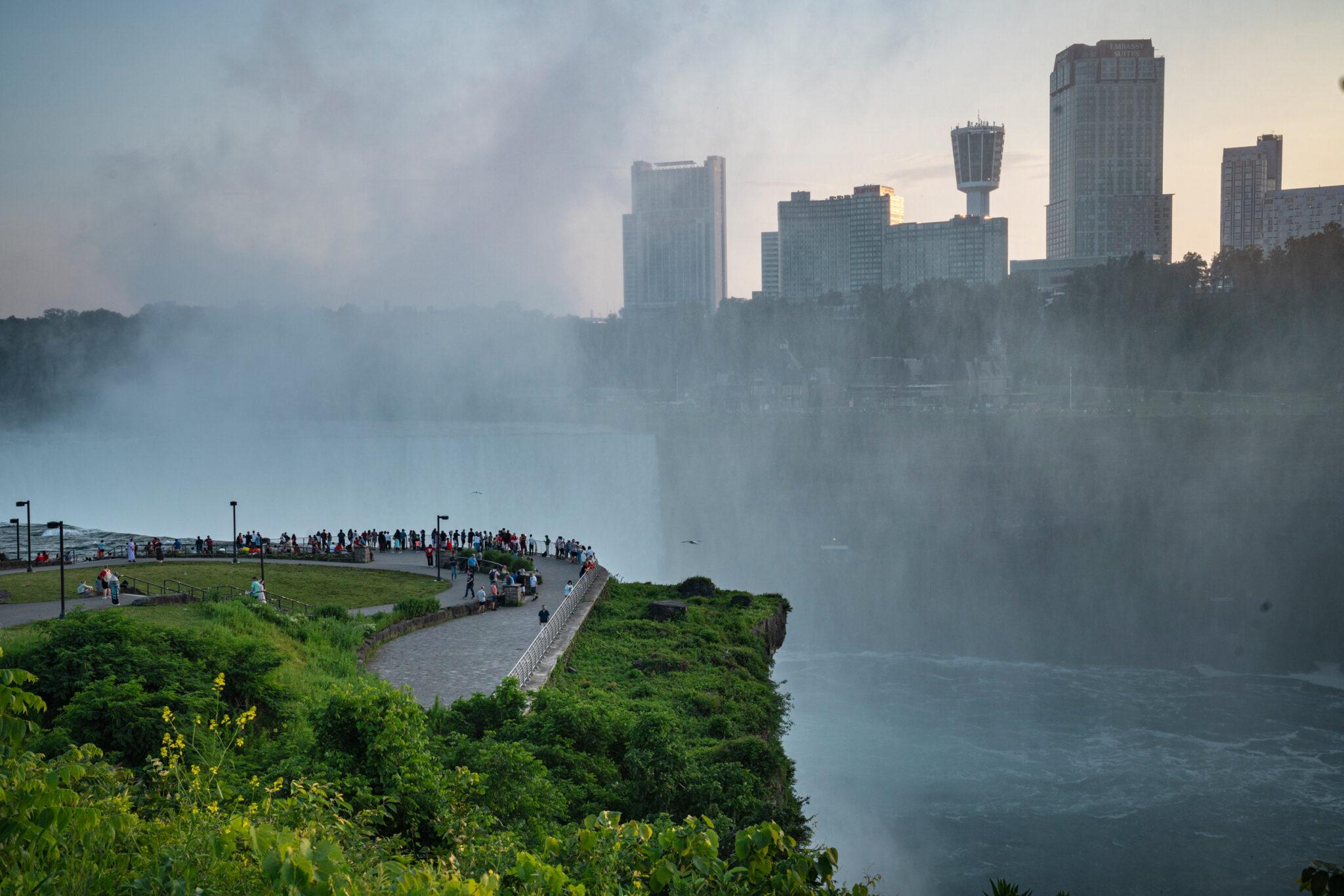
A view of Niagara Falls State Park. Credit: Matt Hofmann

study published in 2025 found 36 links between ambient air pollutants and adverse mental health disorders such as autism spectrum disorder and attention deficit hyperactivity disorder (ADHD).

Psychologist John Roberts and a team from the University at Buffalo took this research one step further and examined how air pollution exposure affecting mental health might be correlated with historical redlining in several cities in New York state, including Niagara Falls. 

Redlining was a structural racism practice conducted across the United States beginning in the 1930s that involved denying mortgages to residents of racial or ethnic minorities. Roberts’ study looked at the impact of ambient air pollutant levels on emergency room visits for mental disorders and how those visits varied across neighborhoods affected by redlining. Overall, they found that both PM2.5 and NO2 were elevated and significantly associated with mental health disorder-related emergency room visits in historically segregated New York state neighborhoods. 

“We looked at the overall concentration levels of air pollutants across regions [in the city] and found that there were elevated levels in the redlined neighborhoods,” Roberts said. “So the discriminated neighborhoods had greater pollutants, because there’s more industry or disposal wastes there.”

That means young adults in Niagara Falls are at risk, facing the adverse health effects of intensive, concentrated industry pollution. [StoryGISMap

In the early 1900s, engineers were drawn to the region’s potential for harnessing hydropower. This hydroelectricity enabled electrochemical processes that use electric currents to trigger chemical reactions to produce compounds such as chlorine and caustic soda, or to extract aluminum from aluminum oxide. This process made Niagara Falls home to factories that produced defensive chemicals and materials used for building atomic bombs during World War II. Radioactive slag still plagues the city years later. [Source]

It also brought companies such as Hooker Chemical, which became notorious for the Love Canal catastrophe, where leaking industrial waste from a toxic chemical dump, on which a Niagara Falls neighborhood was built, led to a landmark environmental disaster that helped spark the modern environmental movement and prompted the establishment of the Comprehensive Environmental Response, Compensation and Liability Act (CERCLA) in 1980. Today, it appears history is repeating itself, only now, the federal government is removing limits and regulations on toxic emissions. 

Since President Donald Trump’s second term began, his administration has moved quickly to slash EPA funding and weaken emissions standards for major industries. Congress overturned Biden administration rules regulating seven toxic air pollutants, marking the first efforts to curb the Clean Air Act since its inception.

The rollbacks threaten cities like Niagara Falls, where factories still operate near residential neighborhoods.

In 2025, the Niagara Falls City School District lost nearly $734,000 in funding to provide support services for students and families after the Trump administration cut funding for two school-based mental health grants.

That funding cut impacted the Niagara Falls Student Champion Team, a student group Hernandez and West were both a part of before they graduated. Members focus on mental health awareness and trauma-informed learning. The students meet with the office manager from the University at Buffalo’s Institute on Trauma and Trauma-Informed Care School of Social Work twice a month to learn about trauma, its causes and how to be sensitive when discussing traumatic experiences. Students also share ideas and develop strategies to support their school’s and community’s mental health efforts. 

The team is still active this school year, but has scaled back its activities due to budget cuts.

With the death of another student at the beginning of the last school year, the district administration arranged for the team to present what they’ve learned to Niagara Falls’ mayor and city council in early 2025. In May, during Mental Health Awareness Month, the team also presented before the Buffalo Bills Foundation, a philanthropic arm of the NFL team that supports organizations that are committed to improving the quality of life in the Western New York region, which donated $10,000 to support trauma-informed care training. 

The school district used to conduct Youth Risk Behavior Surveys, but hasn’t since 2019. The surveys found that high school students in the city of Niagara Falls reported feeling more sad or hopeless in the past year than students statewide. More than 43 percent of students reported serious difficulty concentrating, remembering or making decisions due to physical, mental or emotional problems. 

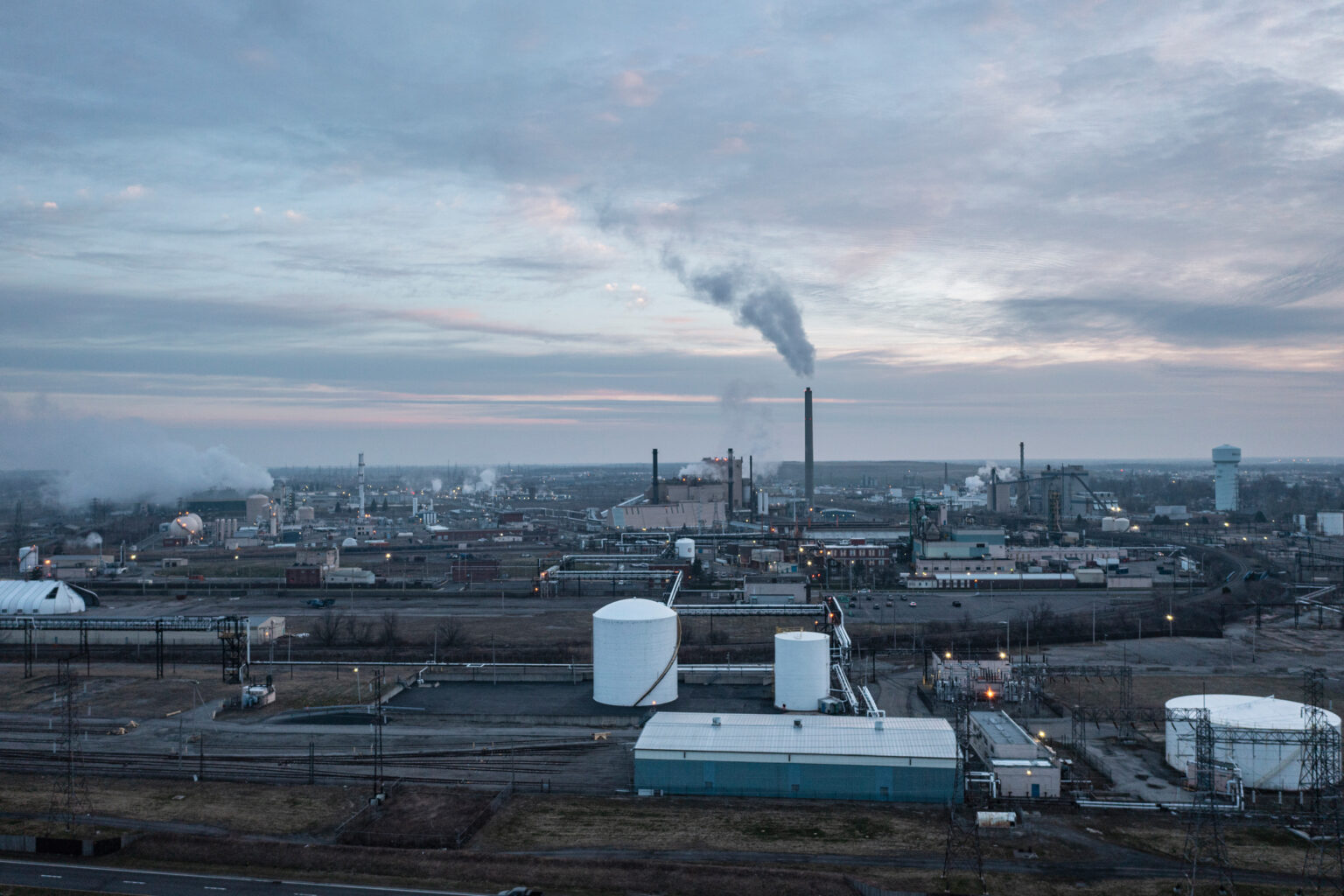
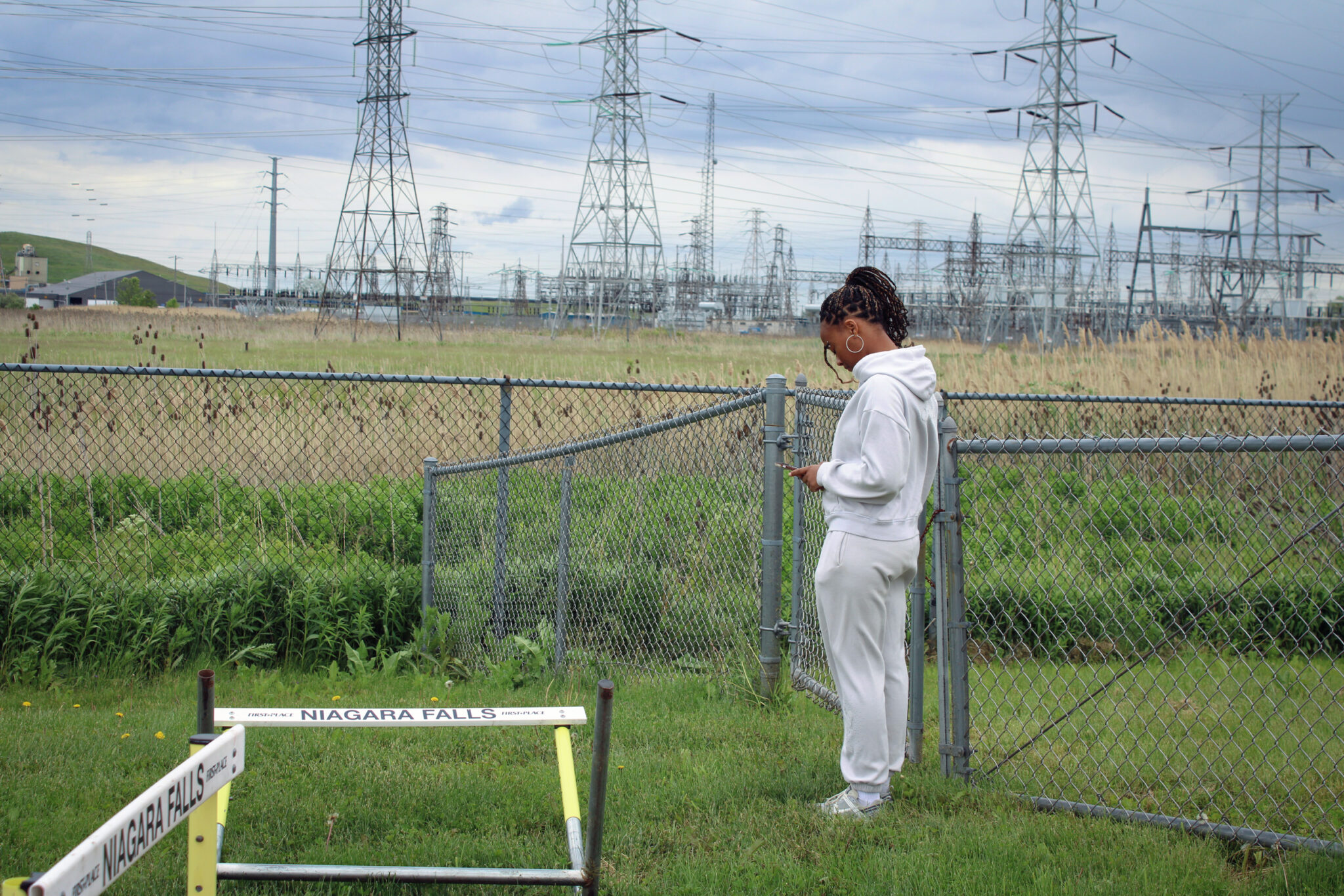
Niagara Falls High School is surrounded by powerplant and factories. Niagara resident Amanda West says she can feel the exhaust chemicals on her skin when she goes outside sometimes. Photo by Matt Hofmann.

In response, the Niagara Falls school district has hired 18 social workers for the district over the last seven years. Before that, there were zero. Each district school also has a family support center which offers students and their families food, clothing and services they need to set students up for success. The district also offers Say Yes Buffalo opportunities which provides students tuition and support to increase the rates of high school and post-secondary completion.

“[The surveys] showed that suicide and suicide ideation is high,” district Superintendent Mark Laurrie said. “I think that comes from a lot of people feeling hopeless. I think that poverty causes a lack of schema, and people can’t see what they can become, or what they can do, because we’re surrounded by poverty.”

Roberts added that aside from poverty, family conflict, abuse, discrimination and other social trauma as a child can create a negative cognitive schema, which changes one’s basic beliefs and values about themself and changes their capacity for feeling in control. He said environmental stressors, such as pollution and violence that are elevated in sacrifice zones, make matters more difficult. 

While the district is developing more resources for students, the high school still sits across the street from some of the city’s largest polluters.

Hernandez and West describe the school as run-down and likened it to a prison. They said they felt stressed at school because when they looked out their classroom windows, all they saw were factories.

“We don’t got much going for us in terms of positivity,” Hernandez said. 

Hernandez was born and raised in Niagara Falls, but she lived with family in North Carolina for eighth and ninth grade, during the COVID-19 pandemic. She noticed her skin cleared up and her asthma symptoms disappeared after she left Niagara Falls. She was able to start running again, which is something she had to give up years ago because she could never catch her breath.

Julissa Hernandez played several sports throughout childhood, her favorite being softball. Credit: Matt Hofmann

Hernandez grew up participating in a wide range of sports, including softball, soccer, lacrosse, track, dance, cheerleading and gymnastics. As she got older, her asthma got worse, forcing her to gradually drop every sport. She believes the poor air quality in Niagara Falls contributed to her asthma complications.

Hernandez is now an early childhood education major at Niagara University. After graduation, she hopes to become a teacher with newly acquired trauma-informed tools to help students and educate parents and guardians. West joined the team after seeing their presentation to the Niagara Falls City Council and was interested in learning and advocating for students who don’t have safe living environments. He had an aunt and a cousin who died by suicide.

“If you’re around nothing but drama and chaos, you’re not gonna be able to focus or feel right,” West said “There is no room for somebody to get their mental state right if they don’t even know how to do it.”

Christen E. Civiletto, born and raised in the city, is now a lawyer, an environmental law adjunct professor at The University at Buffalo and author of the forthcoming book “Thundering Waters: The Toxic Legacy of Niagara Falls,” set for release in June. She has spent more than 20 years researching contamination in Niagara Falls. 

“People are sick in numbers too high to ignore. Niagara Falls’ children are bearing the brunt of harm from past and ongoing pollutionthese are generational harms that must be addressed before any hope of restoration in the Falls is possible,” she said.

“If you’re around nothing but drama and chaos, you’re not gonna be able to focus or feel right,” West said “There is no room for somebody to get their mental state right if they don’t even know how to do it.”

Christen E. Civiletto, born and raised in the city, is now a lawyer, an environmental law adjunct professor at The University at Buffalo and author of the forthcoming book “Thundering Waters: The Toxic Legacy of Niagara Falls,” set for release in June. She has spent more than 20 years researching contamination in Niagara Falls. 

“People are sick in numbers too high to ignore. Niagara Falls’ children are bearing the brunt of harm from past and ongoing pollutionthese are generational harms that must be addressed before any hope of restoration in the Falls is possible,” she said.

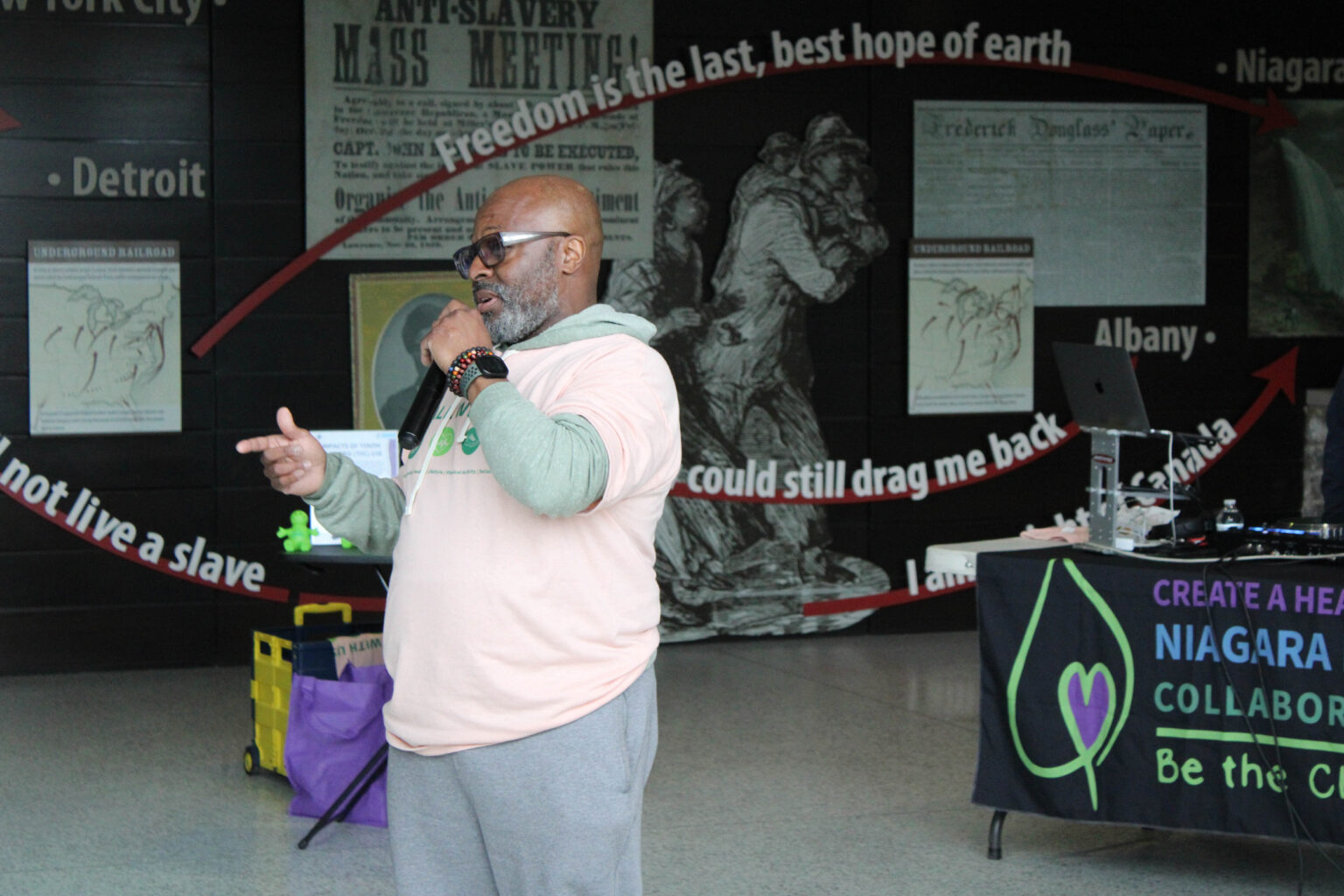
Brian Archie, a lifelong Niagara Falls resident, is tackling the city’s health epidemic from two angles. He is a current member of the Niagara Falls City Council and also serves as the executive director of the Creating a Healthier Niagara Falls Collaborative (CAHNF), which focuses on building community by improving the social determinants of health. The collaborative also educates residents about topics  such as air quality and mental health.

The Community Foundation of Greater Buffalo recently awarded the collaborative $10,000 to host a youth workshop on organizing and environmental justice.

The collaborative also partners with the Buffalo Clean Air Coalition, a nonprofit that develops grassroots leaders who organize their communities to lead environmental justice and public health campaigns in western New York.

The coalition hosted three environmental justice meetings in Niagara Falls in between June and October.

Brian Archie speaks at an event in the spring of 2025. Credit: Jennifer Wybieracki

Archie and the Niagara Falls City Council are teaming up with residents to develop programs and policies that aim to improve mental well-being and physical health. Last fall, Niagara Falls became a New York state Climate Smart Community, a state program that provides climate assistance to local governments. 

“If I’m not working to change our city, then I’m complacent,” said Archie.

Despite the legacy of pollution and intergenerational trauma there are still these places where hope is alive and community persists. Just like the Love Canal Homeowners Association back in the 1970s, the community is fighting back. 

“There’s this rule in organizing that if we can get just 3.5 percent of a population united behind a shared goal, we can make societal changes,” said Bridge Rauch, Clean Air Coalition environmental justice coordinator. “Three or four people out of 100 and you can make a lot of things happen.”

With citywide groups such as CAHNF and student-led groups such as the National Champion Team, Rauch feels like the sky’s the limit.

“Ultimately, I believe basic organizing is what will restore deep democracy and build community across movements and demographics, and allow us to tackle the issues of the 21st century,” said Rauch. 

Donte West at his graduation in June 2025. Credit: Matt Hofmann

In June 2025, West sat in a half-filled auditorium for the Coalition’s first ever environmental justice meeting for Niagara Falls residents. He listened to Rauch speak about his city’s history, including the Love Canal catastrophe and asked questions, including why he wasn’t taught about the environmental threats in school. 

“I don’t know why it isn’t brought up, it could literally happen again,” West said. “Trauma is passed down generation after generation, and people don’t know how to stop it.”

Reporting for this project was supported by the Pulitzer Center

The post How Two Teens in Niagara Falls Are Confronting Pollution and a Mental Health Crisis appeared first on Great Lakes Now.

Original Article

Great Lakes Now

Great Lakes Now

https://www.greatlakesnow.org/2026/04/01/how-two-teens-in-niagara-falls-are-confronting-pollution-and-a-mental-health-crisis/

Inside Climate News

New York’s Scajaquada Creek was the site of a more subdued, long-term environmental catastrophe compared to its infamous neighbor, the Love Canal. Instead of a chemical company burying thousands of tons of toxic waste over a couple decades, the suburban Buffalo stream was the site of industrial and municipal waste disposal. This went on for nearly a century before several miles of it were literally buried in a massive public works project in the 1920s. Only in recent decades has serious attention been given to transforming Scajaquada back into some version of a healthy stream.  

“We like to say Scajaquada Creek encapsulates everything you could do wrong to a creek,” said Jill Spisiak Jedlicka, executive director at Buffalo Niagara Waterkeeper.  “It’s only 13 miles long with a small watershed. It’s really an example of what not to do to a creek.” 

Since before the turn of the century the stream, which forms in Lancaster about 14 miles east of downtown Buffalo, had been mistreated. For decades its main function was to carry away raw sewage in addition to a steady flow of waste from the region’s industries. Scajaquada Creek has remained in such bad shape that in 2014 western New York artist and conservationist Alberto Rey included it in his Biological Regionalism series which includes waters in the greatest of distress.  

“It was buried because it was actually voted on in a public referendum in the 1920s. The creek was so polluted they said ‘The creek must go,’” Spisiak Jedlicka explained. “So they buried it underground, instead of addressing the problem.”  

Subsequently, portions of the creek which were buried became new land that was later developed.  Today there  are roads and parking lots sitting directly atop the creek as it makes its way to the Niagara River near its confluence with Lake Erie, then Lake Ontario. In addition to hiding a portion of the stream a century ago, wetlands that once helped mitigate pollution have been largely eliminated in the name of development. A shopping mall was built in 1989 which destroyed 65%of the watershed’s wetlands. In addition, raw sewage dumped into the creek from municipalities meant the waterway was loaded with human waste and bacteria. According to The Investigative Post, in May 2014 raw sewage combined with stormwater overflow was dumped into Scajaquada on 283 separate discharges.  

Reports from the same year indicate that decaying fecal matter covered the creek bed, as thick as five feet in some places. In addition, polychlorinated biphenyls (PCBs) and other dangerous chemicals were found in quantities high enough for the New York Department of Health to issue advisories against consumption of any fish from the stream.     

Scajaquada sewage 

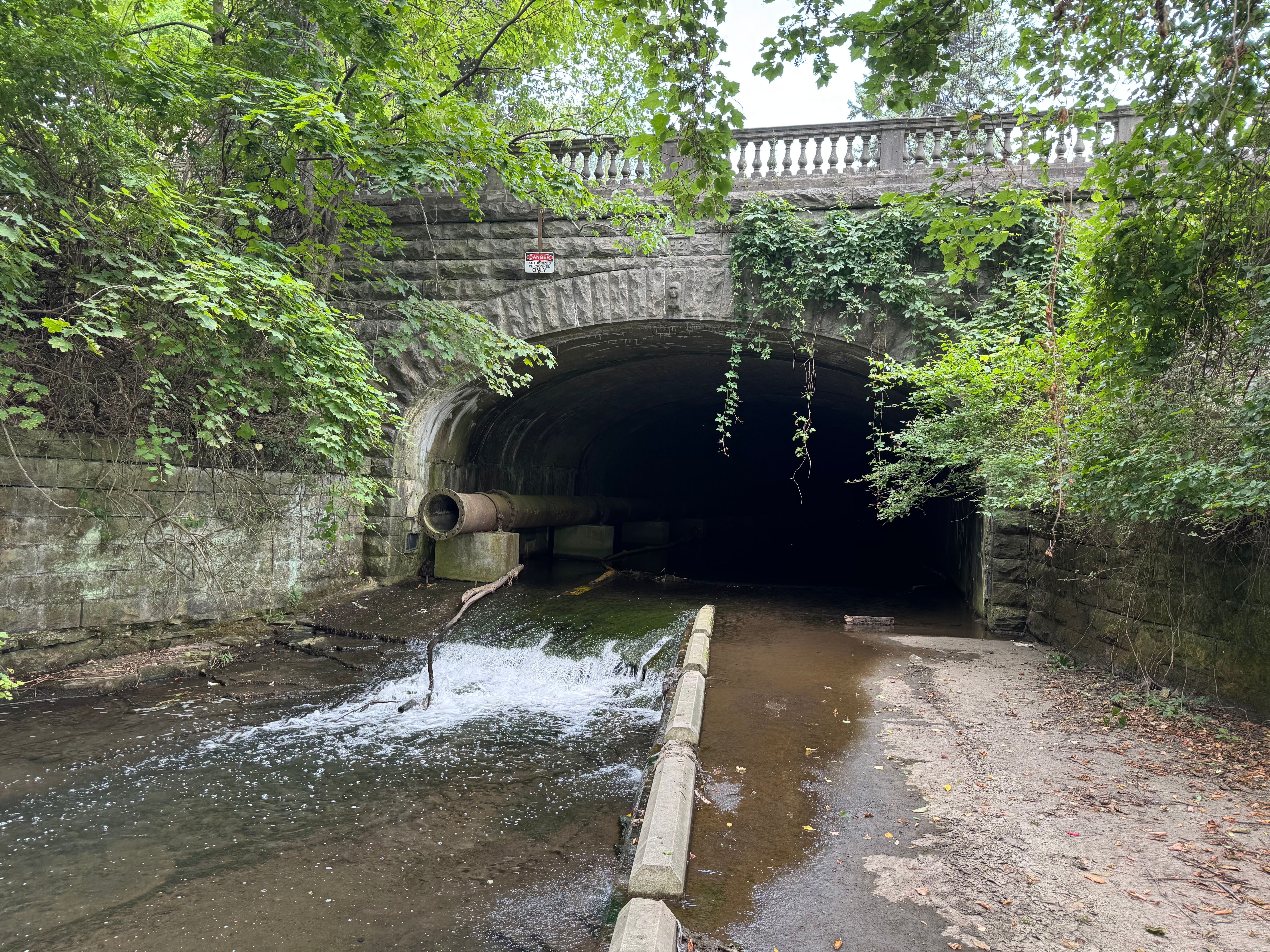
Here Scajaquada Creek emerges from several miles in one portion of the creek that was buried in the 1920s. (Photo Credit: James Proffitt)

While there have been murmurs of “daylighting” portions of the creek, the consensus is that’s not likely to happen. But in recent years, ideas and money have made their way into the hands of those working to fix the creek. While heavy industry is no longer the creek’s major polluter, the population at large is.  

During the last several days of 2025, reports estimate that at least 37 million gallons of untreated or partially treated sewage flowed into the Buffalo-area waterways during a rain and snow-melt event.  

Buffalo’s combined sewer overflow (CSO) system, where stormwater inundates city sewer systems during heavy rains, is currently the major polluter of the creek. During heavy precipitation events, stormwater flows into sewer lines beneath the city and when too much water inundates the system, the storm water combines with raw sewage and often flows into Scajaquada. 

According to Rosaleen Nogle, principal sanitary engineer for the Buffalo Sewer Authority, more than 95% of Buffalo’s infrastructure is the CSO system, and that isn’t likely to change anytime soon.  

“In an older city like Buffalo, it’s very difficult to separate because there’s so much infrastructure underground already,” she said, citing right-of-ways that include gas, electric and cable lines. “Not only is it much more difficult, it’s much more expensive.” 

Nogle said the installation of innovative systems like “Smart Sewer” stations are helping to alleviate CSO events. Those systems open and close underground gates during heavy rains channeling stormwater into available underground pipes. Utilizing some of the city’s older and larger pipes to store CSO for future treatment prevents stormwater runoff combined with sewage from entering streams and rivers.  

“Basically it’s storing in place using the excess space we have,” she said. “We have about 10 installations today and we’re continuing to advance the use of this technology to manage our system and store where we have the capacity, optimizing the amount of flow coming through our treatment plant.” 

Overflows during storm events have led to litigation. The New York Department of Environmental Conservation filed its most recent lawsuit against BSA for failing to meet terms of a prior long term control plan. That litigation, according to Jedlicka, was a formality needed to reach a new agreement between the state and the Buffalo Sewer Authority in an ongoing effort to improve Scajaquada and other streams in the region.  

Bright spots in a dark history 

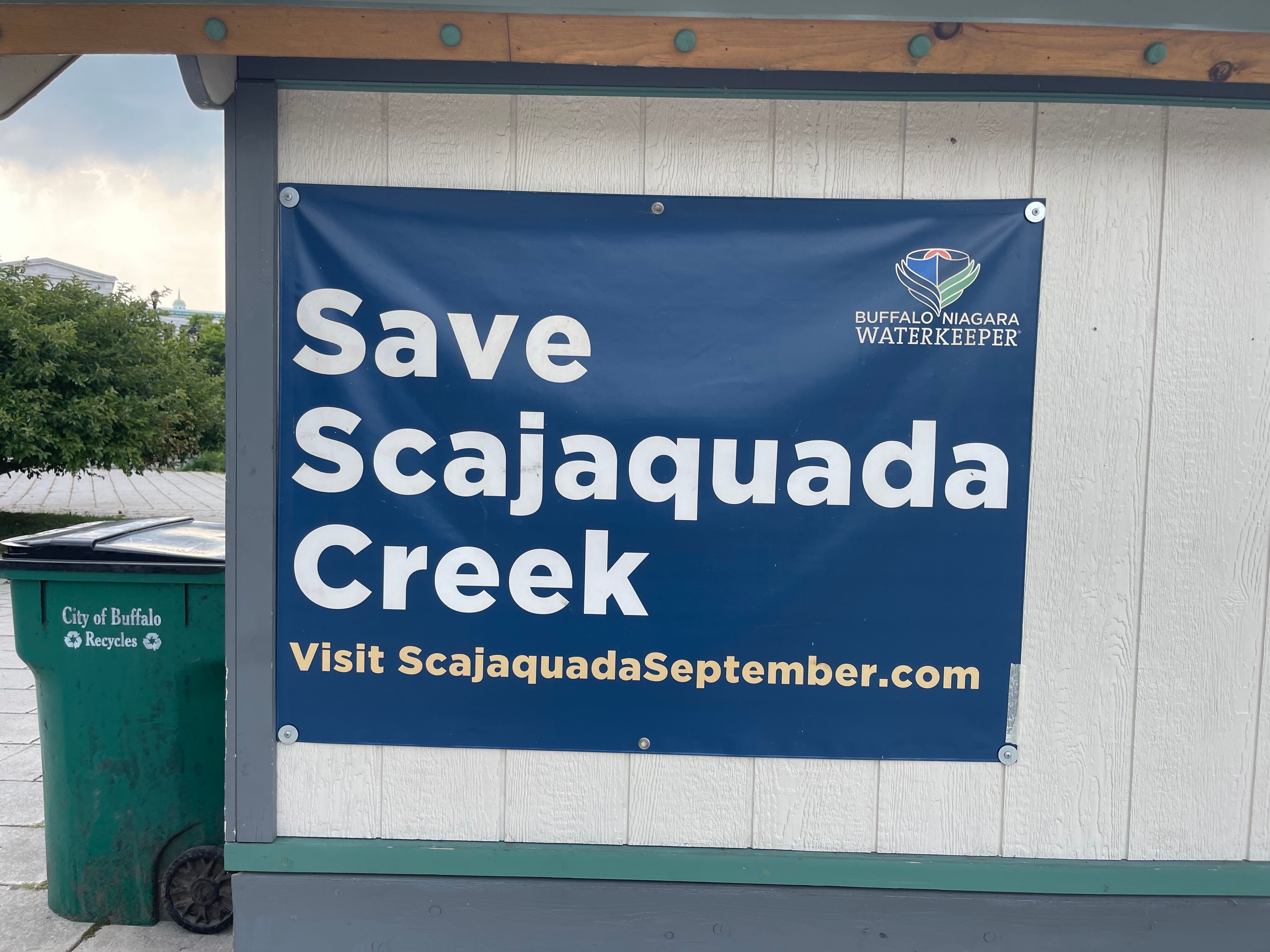
Buffalo Niagara Waterkeepers efforts to improve Scajaquada are persistent including public awareness campaigns like this banner at Hoyt Lake in Buffalo. (Photo Credit: James Proffitt)

While there are plenty of downsides to Scajaquada, there are upsides, too. Like the fact that despite pollution, a wide variety of wildlife still call it home. Surveys included in a 2024 Army Corps of Engineers study indicates the presence of turtles, beaver, fox and mink in the stream and its smaller tributaries. Flying residents include songbirds, owls, hawks, ducks, herons and swans, among others. A surprising amount of fish species are also found in the stream.  

Likely the most well-known residents are found at Forest Lawn, a 269-acre cemetery in the heart of the city. It’s the site where the longest hidden portion of the creek emerges from a tunnel. 

“We have a lot of Canada geese here, I’d say that’s our bread-and-butter,” explained, Jennifer Kovach, executive administrative assistant. “Sometimes people mention coyotes, I’m not sure if we have any right now, but every so often we’ll get them. And we’ve had an owl that’s been nesting here so we have baby owls every spring and little mink that run through, and wood chucks. But the best-known is the deer. We hear about them every day.” 

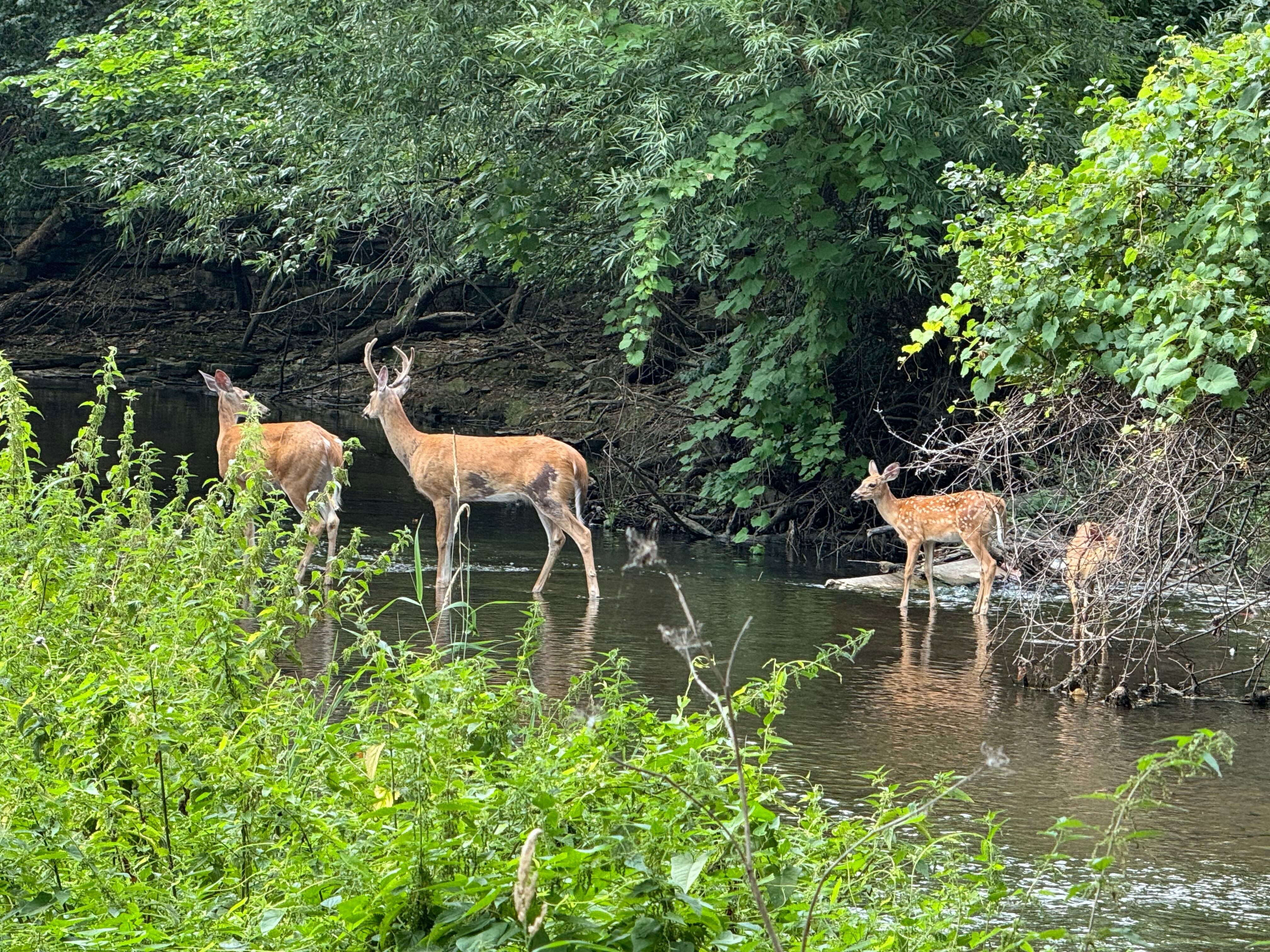
The deer she mentions are a small herd including several leucistic individuals (all white, yet not albino) that reside at Forest Lawn, on the banks of Scajaquada. 

“One time we had a deer out on Delaware Avenue and someone called to let us know our deer left,” she chuckled. “I told them, it’s not our deer and they have free will so they can leave and come back, whatever they want to do.” 

Kovach said because of the large number of trees at Forest Lawn, during spring the cemetery becomes a birding hotspot. 

“We’re on the flight path for migrating warblers so lots of birders will come and literally stake out all day in the spring with their long lens cameras and get some spectacular shots,” she said. 

According to Kovach, improvements to the creek are an ongoing endeavor.  

“We work with Buffalo Niagara Waterkeeper and did a really big restoration project on the creek about seven years ago,” she said. “We’re constantly doing work on the creek. Down near the S-curves we restored the wetlands where it used to be kind of a big pit. Now it’s all native grass species and native trees and it’s really a beautiful area to walk around in.” 

Waterkeeper is engaged in spring shoreline cleanups as well as smaller, focused cleanups in addition to public awareness campaigns.  

“We’ve witnessed local anglers fishing it, in particular certain immigrant communities who rely on it despite the consumption warnings,” Jedlicka said. “They actually catch fish, like bottom-feeding carp and so we try to do some outreach with that. There are some people that paddle the headwaters, but for the most part in the lower creek people don’t come into contact with the water.” 

New projects to help Scajaquada 

Despite pollution a wide variety of birds mammals and fish persist on the creek including the most-polluted stretches. (Photo Credit: James Proffitt)

Water quality improvement projects meant to help the stream were announced by the NYDEC on Jan. 17. The Buffalo Sewer Authority  will receive $10 million to install infrastructure to reduce CSO events on both Scajaquada and nearby Black Rock Canal. An additional $10 million in water quality improvements will take place in the Town of Cheektowaga to renovate a half mile of sewer infrastructure including 1,200 manhole covers to reduce CSO during storms. 

Jedlicka said ongoing partnerships have helped the efforts, including funding from the Margaret L. Wendt Foundation and the Ralph Wilson Jr. Foundation. And the continuing cleanup couldn’t be done without Mother Nature, as well.  

“You have to remember the creek water isn’t polluted 100 percent of the time,” she explained. “It’s fed by clean, cold spring water so there’s a lot of natural inputs that help keep the creek alive so that when there’s not an overflow happening, it can sustain fish and wildlife which is why we keep working at this — if we can just eliminate as much discharge as we can and mitigate it, the creek will begin to repair itself. It’s not all doom and gloom.”  

The post Scajaquada Creek, a Cautionary Tale appeared first on Great Lakes Now.

Original Article

Great Lakes Now

Great Lakes Now

https://www.greatlakesnow.org/2026/03/18/scajaquada-creek-a-cautionary-tale/

James Proffitt, Great Lakes Now

Local health group seeks Northeast Ohio climate resilience solutions from those most at risk

By Zaria Johnson, Ideastream Public Media

This story was originally published by Ideastream.

The Northeast Ohio Black Health Coalition is exploring the climate resilience of Northeast Ohio by identifying those most at risk and provide possible solutions.

The coalition, through a partnership with the National Oceanic and Atmospheric Administration and Ohio State University’s Center for Health Outcomes and Policy Evaluation Studies, has hosted Reimagining Communities Conversations in Ashtabula, Cuyahoga, Lake and Mahoning counties so far to see how prepared residents feel in the face of severe weather made worse by climate change.

Read Now at Great Lakes Now.

Original Article

Great Lakes Now

Great Lakes Now

https://www.greatlakesnow.org/2025/07/local-health-group-seeks-northeast-ohio-climate-resilience-solutions-from-those-most-at-risk/

Ideastream Public Media

Waves of Change: Meet Ojibwe leader, activist and water walker Sharon Day

Waves of Change is an online interview series highlighting the diverse faces and perspectives shaping the environmental justice movement throughout the Great Lakes region.

Sharon Day is enrolled in the Bois Forte Band of Ojibwe and makes her home in Minnesota, where she is a founder and the executive director of the Indigenous Peoples Task Force, a vital provider of culturally appropriate health services, programs and housing.

Read Now at Great Lakes Now.

Original Article

Great Lakes Now

Great Lakes Now

https://www.greatlakesnow.org/2025/06/waves-of-change-meet-ojibwe-leader-activist-and-water-walker-sharon-day/
Great Lakes Now

‘Everyone deserves clean air,’ says a Chicago EPA worker who fears her job will end

By Juanpablo Ramirez-Franco, WBEZ

This coverage is made possible through a partnership between WBEZ and Grist, a nonprofit, independent media organization dedicated to telling stories of climate solutions and a just future. Sign up for WBEZ newsletters to get local news you can trust.

Read Now at Great Lakes Now.

Original Article

Great Lakes Now

Great Lakes Now

https://www.greatlakesnow.org/2025/04/everyone-deserves-clean-air-says-a-chicago-epa-worker-who-fears-her-job-will-end/

WBEZ

Waves of Change: Meet JustAir Co-Founder and CEO Darren Riley

Waves of Change is an online interview series highlighting the diverse faces and perspectives shaping the environmental justice movement throughout the Great Lakes region.

This month, we spoke with Darren Riley, co-founder and CEO of JustAir, a Detroit-based organization whose mission is to use data, technology and analysis to protect the 20,000 breaths each person takes every day.

Read Now at Great Lakes Now.

Original Article

Great Lakes Now

Great Lakes Now

https://www.greatlakesnow.org/2025/01/waves-of-change-meet-justair-co-founder-and-ceo-darren-riley/

Great Lakes Now

Waves of Change: Meet Protect the Porkies founder Tom Grotewohl

Waves of Change is an online interview series highlighting the diverse faces and perspectives shaping the environmental justice movement throughout the Great Lakes region.

This month, we spoke with Tom Grotewohl, a resident of Wakefield Township in Michigan’s Upper Peninsula and founder of the Protect the Porkies campaign.

Read Now at Great Lakes Now.

Original Article

Great Lakes Now

Great Lakes Now

https://www.greatlakesnow.org/2024/11/waves-of-change-meet-protect-the-porkies-founder-tom-grotewohl/

Great Lakes Now

He’ll try, but Trump can’t stop the clean energy revolution

By Matt Simon

This story was originally published by Grist. Sign up for Grist’s weekly newsletter here.

During his first time around as president, Donald Trump rolled back a bevy of environmental rules, withdrew from the Paris Agreement, and boosted the fossil fuel industry.

Read Now at Great Lakes Now.

Original Article

Great Lakes Now

Great Lakes Now

https://www.greatlakesnow.org/2024/11/hell-try-but-trump-cant-stop-the-clean-energy-revolution/

Grist

Can environmental law move beyond bedrock 1970’s legislation, while adapting to current and future challenges?

A 2022 report titled Promises Half Kept at the Half Century Mark, by the Environmental Integrity Project, released on the Clean Water Act’s 50th anniversary said the law is “falling short of its original goals.”

Michigan, for example, has the 4th largest number of impaired lakes, reservoirs and streams assessed for water contact recreation in the U.S.

Read Now at Great Lakes Now.

Original Article

Great Lakes Now

Great Lakes Now

https://www.greatlakesnow.org/2024/11/can-environmental-law-move-beyond-bedrock-1970s-legislation-while-adapting-to-current-and-future-challenges/

Gary Wilson, Great Lakes Now

4 things to know about a youth-led court case against Ontario’s climate plans

By Fatima Syed, The Narwhal

The Great Lakes News Collaborative includes Bridge Michigan, Circle of Blue, Great Lakes Now at Detroit PBS, Michigan Public and The Narwhal who work together to bring audiences news and information about the impact of climate change, pollution, and aging infrastructure on the Great Lakes and drinking water.

Read Now at Great Lakes Now.

Original Article

Great Lakes Now

Great Lakes Now

https://www.greatlakesnow.org/2024/11/4-things-to-know-about-a-youth-led-court-case-against-ontarios-climate-plans/

The Narwhal

Trump Wins, Planet Loses

By Tik Root, Grist

This story was originally published by Grist. Sign up for Grist’s weekly newsletter here.

Donald J. Trump will once again be president of the United States.

The Associated Press called the race for Trump early Wednesday morning, ending one of the costliest and most turbulent campaign cycles in the nation’s history.

Read Now at Great Lakes Now.

Original Article

Great Lakes Now

Great Lakes Now

https://www.greatlakesnow.org/2024/11/trump-wins-planet-loses/

Grist

Public hearing draws on big questions about Upper Peninsula copper mining

By Izzy Ross, Interlochen Public Radio

This coverage is made possible through a partnership with IPR and Grist, a nonprofit independent media organization dedicated to telling stories of climate solutions and a just future.

In Gogebic County, on the western end of Michigan’s Upper Peninsula, towering old-growth evergreens carpet the landscape as it rolls down toward the deep blue of Lake Superior.

Read Now at Great Lakes Now.

Original Article

Great Lakes Now

Great Lakes Now

https://www.greatlakesnow.org/2024/11/public-hearing-draws-on-big-questions-about-upper-peninsula-copper-mining/

Interlochen Public Radio

Waves of Change: Meet Maji ya Chai Land Sanctuary founder Rebeka Ndosi

Waves of Change is an online interview series highlighting the diverse faces and perspectives shaping the environmental justice movement throughout the Great Lakes region.

This month, we spoke with Rebeka Ndosi, founder of the Maji ya Chai Land Sanctuary, a Black-led healing sanctuary just outside of Two Harbors, Minnesota. 

Read Now at Great Lakes Now.

Original Article

Great Lakes Now

Great Lakes Now

https://www.greatlakesnow.org/2024/10/waves-of-change-meet-maji-ya-chai-land-sanctuary-founder-rebeka-ndosi/

Great Lakes Now

Wisconsin Supreme Court to hear case with broad implications for PFAS cleanup

By Danielle Kaeding, Wisconsin Public Radio

This article was republished here with permission from Wisconsin Public Radio.

The Wisconsin Supreme Court will hear a case that could have sweeping effects on state environmental regulators’ authority to force businesses to clean up PFAS pollution under the state’s spills law.

Read Now at Great Lakes Now.

Original Article

Great Lakes Now

Great Lakes Now

https://www.greatlakesnow.org/2024/09/wisconsin-supreme-court-to-hear-case-with-broad-implications-for-pfas-cleanup/

Wisconsin Public Radio

25 years after a major toxic lead cleanup, westside neighbors still don’t feel safe

By Enrique Saenz, Mirror Indy

Mirror Indy is a part of Free Press Indiana, a nonprofit news organization dedicated to ensuring all Hoosiers have access to the news and information they need.

The first thing Patti Daviau sees when she opens the front door of her home on South Harris Avenue every morning is a thick bunch of weeds reaching through a 500-foot stretch of chain link fence across the street.

Read Now at Great Lakes Now.

Original Article

Great Lakes Now

Great Lakes Now

https://www.greatlakesnow.org/2024/09/25-years-after-major-toxic-lead-cleanup-westside-neighbors-still-dont-feel-safe/

Mirror Indy

Michigan advocates hail ‘groundbreaking’ settlement to civil rights complaint over hazardous waste facility

By Brian Allnutt, Planet Detroit

This article was republished with permission from Planet Detroit. Sign up for Planet Detroit’s weekly newsletter here.

Michigan environmental advocates are hailing a “groundbreaking” settlement to a civil rights complaint filed with state regulators over the expansion of a hazardous waste facility in Detroit.

Read Now at Great Lakes Now.

Original Article

Great Lakes Now

Great Lakes Now

https://www.greatlakesnow.org/2024/09/michigan-advocates-hail-groundbreaking-settlement-to-civil-rights-complaint-over-hazardous-waste-facility/

Planet Detroit

‘These are not your lands to give away’: 6 First Nations take Ontario to court over mining law

By Emma McIntosh, The Narwhal

The Great Lakes News Collaborative includes Bridge Michigan; Circle of Blue; Great Lakes Now at Detroit Public Television; Michigan Public, Michigan’s NPR News Leader; and The Narwhal who work together to bring audiences news and information about the impact of climate change, pollution, and aging infrastructure on the Great Lakes and drinking water.

Read Now at Great Lakes Now.

Original Article

Great Lakes Now

Great Lakes Now

https://www.greatlakesnow.org/2024/08/these-are-not-your-lands-to-give-away-6-first-nations-take-ontario-to-court-over-mining-law/

The Narwhal

Chicago teachers demand climate solutions in their next contract

By Juanpablo Ramirez-Franco, Grist

This story was originally published by Grist. Sign up for Grist’s weekly newsletter here.

This coverage is made possible through a partnership between WBEZ and Grist, a nonprofit environmental media organization.

Read Now at Great Lakes Now.

Original Article

Great Lakes Now

Great Lakes Now

https://www.greatlakesnow.org/2024/08/chicago-teachers-demand-climate-solutions-in-their-next-contract/

Grist

Seneca Nation Sues City for More than 450,000 Gallons of Wastewater Overflow

By Native News Online Staff, Native News Online

This article originally appeared on Native News Online. Founded in 2011, Native News Online reaches millions of Native and non-Native readers annually including American Indians, Alaska Natives, Native Hawaiians and others interested in Native American concerns.

Read Now at Great Lakes Now.

Original Article

Great Lakes Now

Great Lakes Now

https://www.greatlakesnow.org/2024/07/seneca-nation-sues-city-for-more-than-450000-gallons-of-wastewater-overflow/

Native News Online

Waves of Change: Meet Environmental Justice Public Advocate Regina Strong

Waves of Change is an online interview series highlighting the diverse faces and perspectives shaping the environmental justice movement throughout the Great Lakes region.

This month, we spoke with Regina Strong, Environmental Justice Public Advocate at the Michigan Department of Environment, Great Lakes, and Energy (EGLE).

For anyone in Michigan, there are two important timely things to note from the interview:

  • Applications for the MI EJ Impact grants, open through July 15, 2024.

Read Now at Great Lakes Now.

Original Article

Great Lakes Now

Great Lakes Now

https://www.greatlakesnow.org/2024/07/waves-of-change-meet-regina-strong/

Great Lakes Now

Children of Flint water crisis make change as young environmental and health activists

By Tammy Webber, Associated Press

FLINT, Mich. (AP) — Their childhood memories are still vivid: warnings against drinking or cooking with tap water, enduring long lines for cases of water, washing from buckets filled with heated, bottled water. And for some, stomach aches, skin rashes and hair loss.

Read Now at Great Lakes Now.

Original Article

Great Lakes Now

Great Lakes Now

https://www.greatlakesnow.org/2024/04/children-of-flint-water-crisis-make-change-as-young-environmental-and-health-activists/

The Associated Press

Line 5 activist group wants Gov. Whitmer to “be an advocate” for shutdown

Michigan Gov. Gretchen Whitmer’s record on the Line 5 oil pipeline that traverses the Straits of Mackinac is mixed, according to Lansing advocate Sean McBrearty.

When running for governor in 2018, “Whitmer pledged to do everything in her power to take Line 5 out of the Great Lakes,” McBrearty told Great Lakes Now in a recent interview.

Read Now at Great Lakes Now.

Original Article

Great Lakes Now

Great Lakes Now

https://www.greatlakesnow.org/2024/04/line-5-activist-group-wants-gov-whitmer-to-be-an-advocate-for-shutdown/

Gary Wilson, Great Lakes Now

In Chicago, one neighborhood is fighting gentrification and climate change at the same time

By Juanpablo Ramirez-Franco, Grist

This story was originally published by Grist. Sign up for Grist’s weekly newsletter here.

This coverage is made possible through a partnership between WBEZ and Grist, a nonprofit environmental media organization.

Read Now at Great Lakes Now.

Original Article

Great Lakes Now

Great Lakes Now

https://www.greatlakesnow.org/2024/04/in-chicago-one-neighborhood-is-fighting-gentrification-and-climate-change-at-the-same-time/

Grist

Indiana attorney general fights EPA rule that would reduce pollution on Indy’s west side

Enrique Saenz, Mirror Indy

Mirror Indy is a part of Free Press Indiana, a nonprofit news organization dedicated to ensuring all Hoosiers have access to the news and information they need.

Mary Gutierrez and her husband moved to West Indianapolis in 2019, drawn by the promise of an affordable home and large yard where their two daughters could play.

Read Now at Great Lakes Now.

Original Article

Great Lakes Now

Great Lakes Now

https://www.greatlakesnow.org/2024/04/indiana-attorney-general-fights-epa-rule-that-would-reduce-pollution-on-indys-west-side/

Mirror Indy

EPA head Regan defends $20B green bank: ‘I feel really good about this program’

By Matthew Daly, Associated Press

PHILADELPHIA (AP) — The head of the Environmental Protection Agency on Friday defended a new $20 billion federal “green bank” program, saying it will finance a variety of projects to create low-carbon solutions to combat climate change, including in disadvantaged communities that are most affected by pollution.

Read Now at Great Lakes Now.

Original Article

Great Lakes Now

Great Lakes Now

https://www.greatlakesnow.org/2024/04/epa-head-regan-defends-20b-green-bank-i-feel-really-good-about-this-program/

The Associated Press

Sault tribe challenges Michigan fishing deal, chides ‘preposterous’ rules

By Kelly House, Bridge Michigan

The Great Lakes News Collaborative includes Bridge Michigan; Circle of Blue; Great Lakes Now at Detroit Public Television; Michigan Public, Michigan’s NPR News Leader; and The Narwhal who work together to bring audiences news and information about the impact of climate change, pollution, and aging infrastructure on the Great Lakes and drinking water.

Read Now at Great Lakes Now.

Original Article

Great Lakes Now

Great Lakes Now

https://www.greatlakesnow.org/2024/04/sault-tribe-challenges-michigan-fishing-deal-chides-preposterous-rules/

Bridge Michigan

Nibi Chronicles: The nation-to-nation fight against extractivism

Ricky DeFoe can tell you all you need to know about fresh water on Earth in one minute or less. He rattles off that “70% of our planet — our Mother Earth is water. Ninety-seven percent of that water is saltwater. That leaves just 3% freshwater — 1% is in the atmosphere, 1% is subsurface, and 1% is on the surface.

Read Now at Great Lakes Now.

Original Article

Great Lakes Now

Great Lakes Now

https://www.greatlakesnow.org/2024/03/nibi-chronicles-the-nation-to-nation-fight-against-extractivism/

Staci Lola Drouillard

Judge holds Flint in contempt for continued lead pipe replacement delays

By Kelly House, Bridge Michigan

The Great Lakes News Collaborative includes Bridge Michigan; Circle of Blue; Great Lakes Now at Detroit Public Television; Michigan Public, Michigan’s NPR News Leader; and The Narwhal who work together to bring audiences news and information about the impact of climate change, pollution, and aging infrastructure on the Great Lakes and drinking water.

Read Now at Great Lakes Now.

Original Article

Great Lakes Now

Great Lakes Now

https://www.greatlakesnow.org/2024/03/judge-holds-flint-in-contempt-continued-lead-pipe-replacement-delays/

Bridge Michigan

Faced with COVID-era civil rights complaints, Chicago commits to environmental justice

This article was republished here with permission from Great Lakes Echo.

By Wajeeha Kamal, Great Lakes Echo

Chicago is joining a nationwide trend of large cities incorporating equity or justice goals into preparing for climate change’s impact on public health.

The idea is to better protect Black, Hispanic, Indigenous and other socially vulnerable and marginalized communities.

Read Now at Great Lakes Now.

Original Article

Great Lakes Now

Great Lakes Now

https://www.greatlakesnow.org/2024/02/faced-with-covid-era-civil-rights-complaints-chicago-commits-to-environmental-justice/

Great Lakes Echo

Parts of Detroit could be radically transformed by city solar plan, for better or worse

This article was republished here with permission from Planet Detroit.

By Brian Allnutt, Planet Detroit

Neighborhoods east of Palmer Park could soon be transformed by a city plan to power municipal buildings with six solar fields, and neighbors are divided over the prospect.

Read Now at Great Lakes Now.

Original Article

Great Lakes Now

Great Lakes Now

https://www.greatlakesnow.org/2024/01/parts-of-detroit-could-be-radically-transformed-by-city-solar-plan-for-better-or-worse/

Planet Detroit

Program to provide cash for pregnant women in Flint, Michigan, and families with newborns

FLINT, Mich. (AP) — A program aimed at helping remove families and infants in Flint, Michigan, from deep poverty will give $1,500 to women during mid-pregnancy and $500 each month throughout the first year after the birth.

Enrollment opened Wednesday for Rx Kids, lauded by officials as the first of its kind in the United States.

Read Now at Great Lakes Now.

Original Article

Great Lakes Now

Great Lakes Now

https://www.greatlakesnow.org/2024/01/ap-program-to-provide-cash-for-pregnant-women-in-flint-michigan-and-families-with-newborns/

The Associated Press

Upper Peninsula tribe closer to compensation for land seized by the U.S. government

By Lester Graham, Michigan Radio

The Great Lakes News Collaborative includes Bridge Michigan; Circle of Blue; Great Lakes Now at Detroit Public Television; and Michigan Radio, Michigan’s NPR News Leader; who work together to bring audiences news and information about the impact of climate change, pollution, and aging infrastructure on the Great Lakes and drinking water.

Read Now at Great Lakes Now.

Original Article

Great Lakes Now

Great Lakes Now

https://www.greatlakesnow.org/2023/12/upper-peninsula-tribe-closer-to-compensation-for-land-seized-by-the-u-s-government/

Michigan Radio

Great Lakes Now sits down with director of Flint water crisis film “Lead and Copper”

William Hart, director of a documentary about the Flint water crisis called “Lead and Copper,” joined Great Lakes Now’s Anna Sysling for a discussion about the film.

The small team began producing the film in 2016, and with the 10-year anniversary of the beginning of the crisis coming up in April 2024, Hart said they wanted to get it out and ready to screen around that time.

Read Now at Great Lakes Now.

Original Article

Great Lakes Now

Great Lakes Now

https://www.greatlakesnow.org/2023/12/great-lakes-now-sits-down-with-director-of-flint-water-crisis-film-lead-and-copper/

GLN Editor

TED Countdown: Musician Tunde Olaniran from Flint, Michigan on the role of art in the climate crisis

Tunde Olaniran is a musician and multidisciplinary artist from Flint. Last year, their first exhibition premiered at Cranbrook Art Museum, featuring a short horror film — Made a Universe  inspired by their life growing up in Flint.

They were asked to perform one of their latest works for the TED Countdown Summit at the Fillmore Detroit on Thursday, July 13.

Read Now at Great Lakes Now.

Original Article

Great Lakes Now

Great Lakes Now

https://www.greatlakesnow.org/2023/07/ted-countdown-musician-tunde-olaniran-from-flint-michigan-on-the-role-of-art-in-the-climate-crisis/

Lisa John Rogers

TED Countdown: Detroiters Working for Environmental Justice executive director Laprisha Berry Daniels on supporting communities, preparing for the future

Laprisha Berry Daniels is the Executive Director at Detroiters Working for Environmental Justice. Daniels is a public health social worker who is interested in focusing on harm-reduction when dealing with the climate crisis. She specializes in developing interventions to help to improve the health and wellbeing of communities.

In her talk on Wednesday, July 12, Daniels said she was inspired by her family’s move to Detroit during the Great Migration.

Read Now at Great Lakes Now.

Original Article

Great Lakes Now

Great Lakes Now

https://www.greatlakesnow.org/2023/07/ted-countdown-detroiters-working-for-environmental-justice-executive-director-laprisha-berry-daniels-on-supporting-communities-preparing-for-the-future/

Lisa John Rogers

TED Countdown: BlocPower CEO Donnel Baird on greening America’s buildings, improving communities

With nearly 125 million buildings across the United States, all these spaces account for about 30 percent of the country’s emissions. In 2014, Donnel Baird created BlocPower to get these spaces off fossil fuels by changing out old water systems, gas ovens, gas and oil furnaces and air conditioning units with electric equipment, like air source heat pumps, which are compatible with renewable energy options.

Read Now at Great Lakes Now.

Original Article

Great Lakes Now

Great Lakes Now

https://www.greatlakesnow.org/2023/07/ted-countdown-blocpower-ceo-donnel-baird-greening-americas-buildings-improving-communities/

Lisa John Rogers

Environmental justice, climate resilience are top priorities for new Great Lakes executive

In December 2015, the Flint drinking water crisis that had been brewing for two years finally hit the national spotlight. Then Michigan Gov. Rick Snyder apologized to the citizens of Flint and accepted the resignation of his top executive at the Department of Environmental Quality, the agency with direct oversight of Flint’s drinking water issues.

Read Now at Great Lakes Now.

Original Article

Great Lakes Now

Great Lakes Now

https://www.greatlakesnow.org/2023/07/environmental-justice-climate-resilience-priorities-great-lakes-executive/

Gary Wilson

Climate change could spell catastrophe for Detroit’s older homes

Climate change continues to have an impact on some residents in Southeast Michigan. For the average homeowner, when it rains, one may grab a good book, kick their feet up and relax under the gloomy skies. For Detroit resident Semone Alexander, every time it rains, it’s anything but relaxing.  

As heavy rains have become more frequent in the last half-decade, so has the flooding of Alexander and other residents’ homes— so much so that many of the homes have fallen into disrepair. 

Read Now at Great Lakes Now.

Original Article

Great Lakes Now

Great Lakes Now

https://www.greatlakesnow.org/2023/04/climate-change-could-spell-catastrophe-for-detroits-older-homes/

Jonathan Shead

Former U.N. adviser warns on water futures trading, elevates water crisis to level of climate

There were two differing visions on how to deal with the global water crisis at the recent United Nations World Water Conference, according to former U.N. water adviser Maude Barlow.

One, would “treat water as a commodity like oil and gas and put it on the open market for sale,” Barlow said.

Read Now at Great Lakes Now.

Original Article

Great Lakes Now

Great Lakes Now

https://www.greatlakesnow.org/2023/04/former-adviser-warns-water-futures-trading-water-crisis-level-climate/

Gary Wilson

Weathering the floods: Detroit neighborhood faces uncertain future due to climate change

Across Detroit the effects of climate change are evident. In the Jefferson-Chalmers neighborhood on the city’s lower east side, overflowing stormwater drains, contaminated waterways and flooded basements are just a few examples of how the city’s aging infrastructure struggles to keep up with our changing climate.  

The city’s combined sewer system is the crux of the problem.

Read Now at Great Lakes Now.

Original Article

Great Lakes Now

Great Lakes Now

https://www.greatlakesnow.org/2023/04/detroit-neighborhood-faces-uncertain-future-due-to-climate-change/

One Detroit

Environmental justice expert questions Michigan’s subsidies for electric vehicles

It’s a mistake, environmental law attorney Nick Leonard says, for Michigan to invest so heavily in private auto transportation in place of public transit options.

Leonard was referring to the billions of dollars in subsidies Michigan has recently budgeted primarily for electric vehicle (EV) production. Investment in public transit better serves lower income groups who don’t have resources to purchase EV’s and it’s the better option to deal with climate change, according to Leonard.

Read Now at Great Lakes Now.

Original Article

Great Lakes Now

Great Lakes Now

https://www.greatlakesnow.org/2023/03/environmental-justice-expert-questions-michigans-subsidies-electric-vehicles/

Gary Wilson

Detroiters can get another 1,125 gallons of water under discount program

This article was republished here with permission from Great Lakes Echo.

By Vladislava Sukhanovskaya, Great Lakes Echo

The city of Detroit and a nonprofit agency recently added 1,125 gallons of water per person per month to a program that prevents water shut-offs in low-income households.

Read Now at Great Lakes Now.

Original Article

Great Lakes Now

Great Lakes Now

https://www.greatlakesnow.org/2023/03/detroiters-can-get-another-1125-gallons-of-water-under-discount-program/

Great Lakes Echo

U.S. Judge: Flint has 5 months to finish long-overdue lead pipe replacement

By Kelly House, Bridge Michigan

The Great Lakes News Collaborative includes Bridge Michigan; Circle of Blue; Great Lakes Now at Detroit Public Television; and Michigan Radio, Michigan’s NPR News Leader; who work together to bring audiences news and information about the impact of climate change, pollution, and aging infrastructure on the Great Lakes and drinking water.

Read Now at Great Lakes Now.

Original Article

Great Lakes Now

Great Lakes Now

https://www.greatlakesnow.org/2023/03/flint-5-months-finish-lead-pipe-replacement/

Bridge Michigan

Hope springs eternal for Michigan legislator who champions drinking water equity

In 2014, Detroit and Michigan received international attention on a water issue, but it wasn’t the spotlight either would have wanted.

The United Nations dispatched an official human rights rapporteur to Detroit to document the harm caused by water shutoffs based on the inability to pay. “There was no water for food or toilets or for care of the elderly or kids, people had to go to public parks and put water in cans,” water rights advocate Maude Barlow told Great Lakes Now in a 2022 interview.

Read Now at Great Lakes Now.

Original Article

Great Lakes Now

Great Lakes Now

https://www.greatlakesnow.org/2023/02/hope-springs-eternal-for-michigan-legislator-who-champions-drinking-water-equity/

Gary Wilson

Right to water: Could 2023 be the year Michigan ends shutoffs?

The Great Lakes News Collaborative includes Bridge Michigan; Circle of Blue; Great Lakes Now at Detroit Public Television; and Michigan Radio, Michigan’s NPR News Leader; who work together to bring audiences news and information about the impact of climate change, pollution, and aging infrastructure on the Great Lakes and drinking water.

Read Now at Great Lakes Now.

Original Article

Great Lakes Now

Great Lakes Now

https://www.greatlakesnow.org/2023/02/right-to-water-2023-michigan-ends-shutoffs/

Bridge Michigan

Michigan plastics company forced to probe PFAS contamination, cover costs

By Kelly House, Bridge Michigan

The Great Lakes News Collaborative includes Bridge Michigan; Circle of Blue; Great Lakes Now at Detroit Public Television; and Michigan Radio, Michigan’s NPR News Leader; who work together to bring audiences news and information about the impact of climate change, pollution, and aging infrastructure on the Great Lakes and drinking water.

Read Now at Great Lakes Now.

Original Article

Great Lakes Now

Great Lakes Now

https://www.greatlakesnow.org/2023/01/michigan-plastics-company-probe-pfas-contamination/

Bridge Michigan

Michigan Democrats aiming to erase business friendly environmental laws

By Kelly House, Bridge Michigan

The Great Lakes News Collaborative includes Bridge Michigan; Circle of Blue; Great Lakes Now at Detroit Public Television; and Michigan Radio, Michigan’s NPR News Leader; who work together to bring audiences news and information about the impact of climate change, pollution, and aging infrastructure on the Great Lakes and drinking water.

Read Now at Great Lakes Now.

Original Article

Great Lakes Now

Great Lakes Now

https://www.greatlakesnow.org/2023/01/michigan-democrats-aiming-erase-business-friendly-environmental-laws/

Bridge Michigan

Buffalo legislator calls for bill of rights protection for the Great Lakes

Should natural resources like the Great Lakes have the same legal right to protection from harm as a person has? Including the right to be free from exploitation as a commodity for financial gain?

New York state Assemblyman Patrick Burke thinks so and has introduced formal legislation that would provide for those rights.

Read Now at Great Lakes Now.

Original Article

Great Lakes Now

Great Lakes Now

https://www.greatlakesnow.org/2022/12/buffalo-legislator-calls-for-protection-for-great-lakes/

Gary Wilson