By Jennifer Wybieracki, Inside Climate News

This article originally appeared on Inside Climate News, a nonprofit, non-partisan news organization that covers climate, energy and the environment. Sign up for their newsletter here.


Julissa Hernandez was at work when she saw the news, in 2024, that a young mother, Chianti Means, had jumped to her death at Niagara Falls State Park, taking her two young children, a 9-year-old and 5-month old baby, with her. When Hernandez called her dad later that day, she realized that Means was a second cousin who used to babysit her.

Hernandez feels like she often hears stories from her friends and people in the community about another person trying to commit suicide or another person dying. Hernandez and Donte West, a high school classmate, recall at least five students who died by suicide during their time at Niagara Falls High School. 

“Even if the signs are there, people just excuse it, because that’s just how the people in the Falls are,” Hernandez said.

Once celebrated as the honeymoon capital of the world, Niagara Falls is now better known for its environmental and mental health challenges, with data showing higher suicide rates a growing body of research suggesting a link between these issues and local conditions.

Niagara County Health Assessment data indicate that the area has elevated air pollution levels and suicide rates higher than the state average, at 14.2 per 100,000 individuals. ZIP codes in Niagara Falls report the highest rates of youth asthma-related emergency room visits. New research correlates air pollution with mental health disorders, such as depression

Environmental and genetic factors influence the developing brain. Researchers are still exploring exactly how air pollution impacts young minds, but several studies have found that high levels of particulate matter 2.5 microns, or PM2.5, in the air can affect brain chemistry, leading to increased aggression and a loss of emotional control. Other forms of air pollution have been linked to the development of mental health disorders such as anxiety, psychosis and neurocognitive disorders such as dementia. 

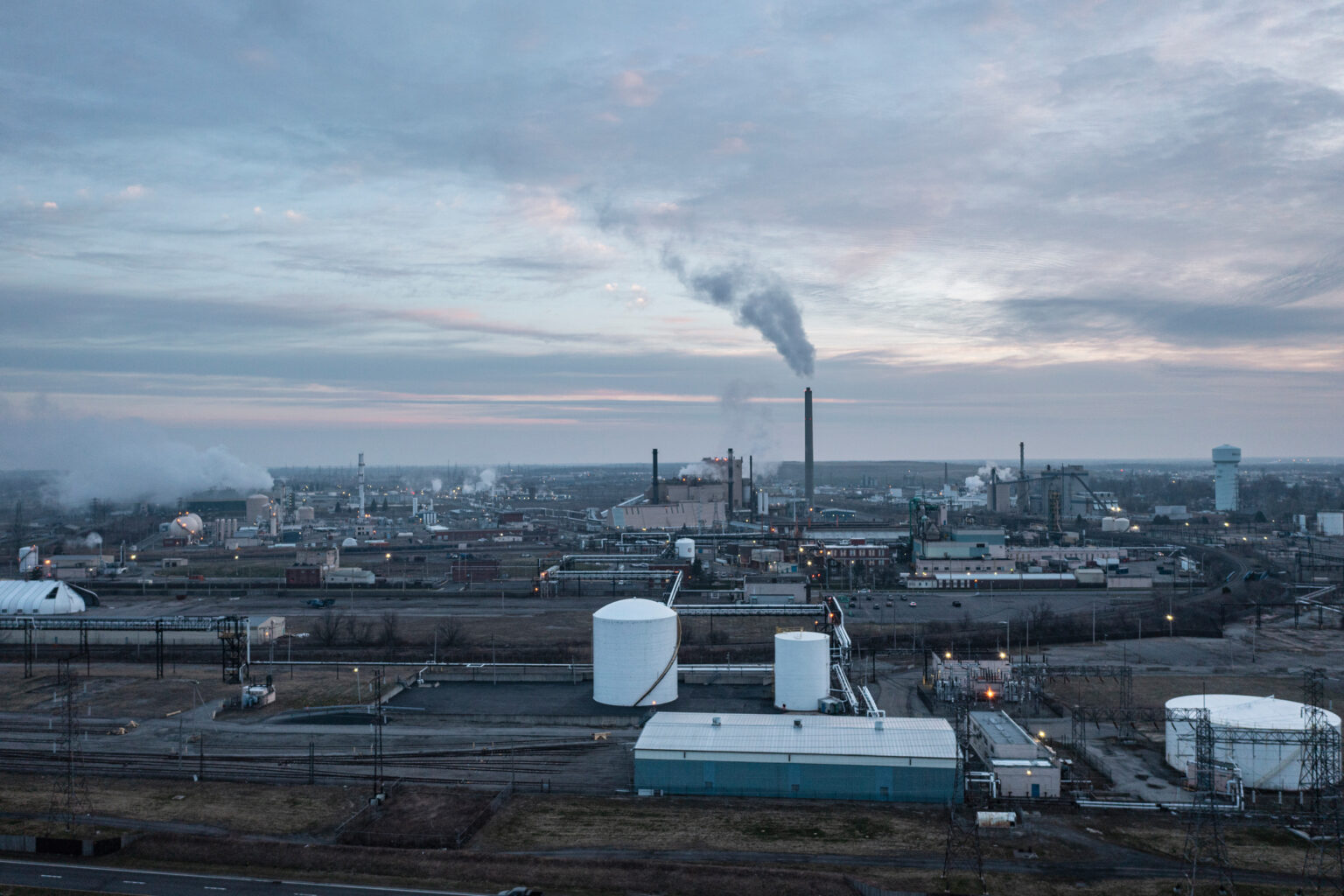
Niagara County no longer has active Environmental Protection Agency Air Quality monitors for PM2.5 or NO2 and the New York Department of Environmental Conservation’s monitor list shows many Niagara sites closed before 2012. Factories such as Covanta and Goodyear still report emissions to the state and the EPA under their Title V permits, however, the reports do not reflect the air quality experienced by residents in surrounding neighborhoods. The area’s air quality is now estimated using regional models and data from neighboring counties, leaving uncertainty about what residents in Niagara Falls are actually breathing.

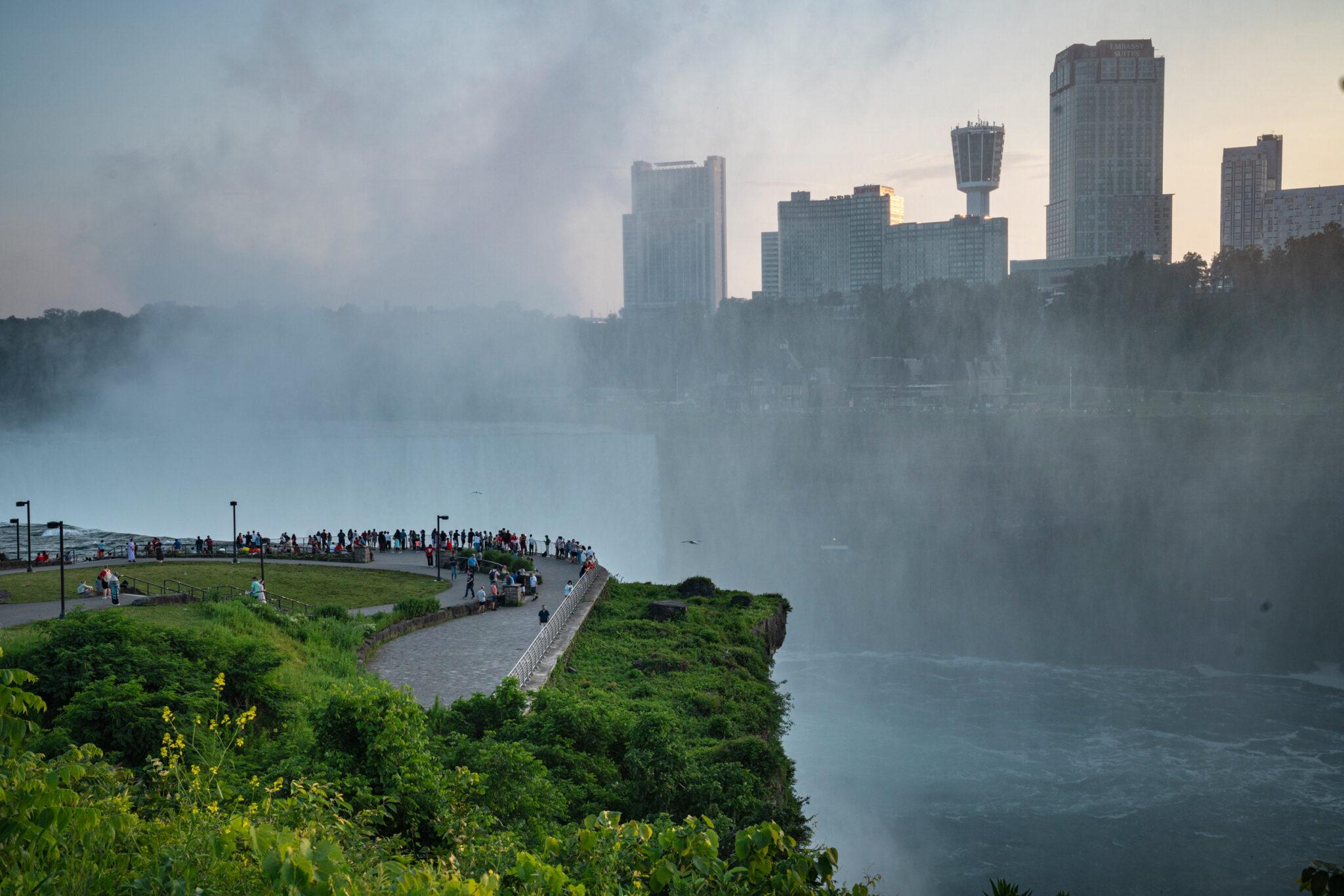
A view of Niagara Falls State Park. Credit: Matt Hofmann

study published in 2025 found 36 links between ambient air pollutants and adverse mental health disorders such as autism spectrum disorder and attention deficit hyperactivity disorder (ADHD).

Psychologist John Roberts and a team from the University at Buffalo took this research one step further and examined how air pollution exposure affecting mental health might be correlated with historical redlining in several cities in New York state, including Niagara Falls. 

Redlining was a structural racism practice conducted across the United States beginning in the 1930s that involved denying mortgages to residents of racial or ethnic minorities. Roberts’ study looked at the impact of ambient air pollutant levels on emergency room visits for mental disorders and how those visits varied across neighborhoods affected by redlining. Overall, they found that both PM2.5 and NO2 were elevated and significantly associated with mental health disorder-related emergency room visits in historically segregated New York state neighborhoods. 

“We looked at the overall concentration levels of air pollutants across regions [in the city] and found that there were elevated levels in the redlined neighborhoods,” Roberts said. “So the discriminated neighborhoods had greater pollutants, because there’s more industry or disposal wastes there.”

That means young adults in Niagara Falls are at risk, facing the adverse health effects of intensive, concentrated industry pollution. [StoryGISMap

In the early 1900s, engineers were drawn to the region’s potential for harnessing hydropower. This hydroelectricity enabled electrochemical processes that use electric currents to trigger chemical reactions to produce compounds such as chlorine and caustic soda, or to extract aluminum from aluminum oxide. This process made Niagara Falls home to factories that produced defensive chemicals and materials used for building atomic bombs during World War II. Radioactive slag still plagues the city years later. [Source]

It also brought companies such as Hooker Chemical, which became notorious for the Love Canal catastrophe, where leaking industrial waste from a toxic chemical dump, on which a Niagara Falls neighborhood was built, led to a landmark environmental disaster that helped spark the modern environmental movement and prompted the establishment of the Comprehensive Environmental Response, Compensation and Liability Act (CERCLA) in 1980. Today, it appears history is repeating itself, only now, the federal government is removing limits and regulations on toxic emissions. 

Since President Donald Trump’s second term began, his administration has moved quickly to slash EPA funding and weaken emissions standards for major industries. Congress overturned Biden administration rules regulating seven toxic air pollutants, marking the first efforts to curb the Clean Air Act since its inception.

The rollbacks threaten cities like Niagara Falls, where factories still operate near residential neighborhoods.

In 2025, the Niagara Falls City School District lost nearly $734,000 in funding to provide support services for students and families after the Trump administration cut funding for two school-based mental health grants.

That funding cut impacted the Niagara Falls Student Champion Team, a student group Hernandez and West were both a part of before they graduated. Members focus on mental health awareness and trauma-informed learning. The students meet with the office manager from the University at Buffalo’s Institute on Trauma and Trauma-Informed Care School of Social Work twice a month to learn about trauma, its causes and how to be sensitive when discussing traumatic experiences. Students also share ideas and develop strategies to support their school’s and community’s mental health efforts. 

The team is still active this school year, but has scaled back its activities due to budget cuts.

With the death of another student at the beginning of the last school year, the district administration arranged for the team to present what they’ve learned to Niagara Falls’ mayor and city council in early 2025. In May, during Mental Health Awareness Month, the team also presented before the Buffalo Bills Foundation, a philanthropic arm of the NFL team that supports organizations that are committed to improving the quality of life in the Western New York region, which donated $10,000 to support trauma-informed care training. 

The school district used to conduct Youth Risk Behavior Surveys, but hasn’t since 2019. The surveys found that high school students in the city of Niagara Falls reported feeling more sad or hopeless in the past year than students statewide. More than 43 percent of students reported serious difficulty concentrating, remembering or making decisions due to physical, mental or emotional problems. 

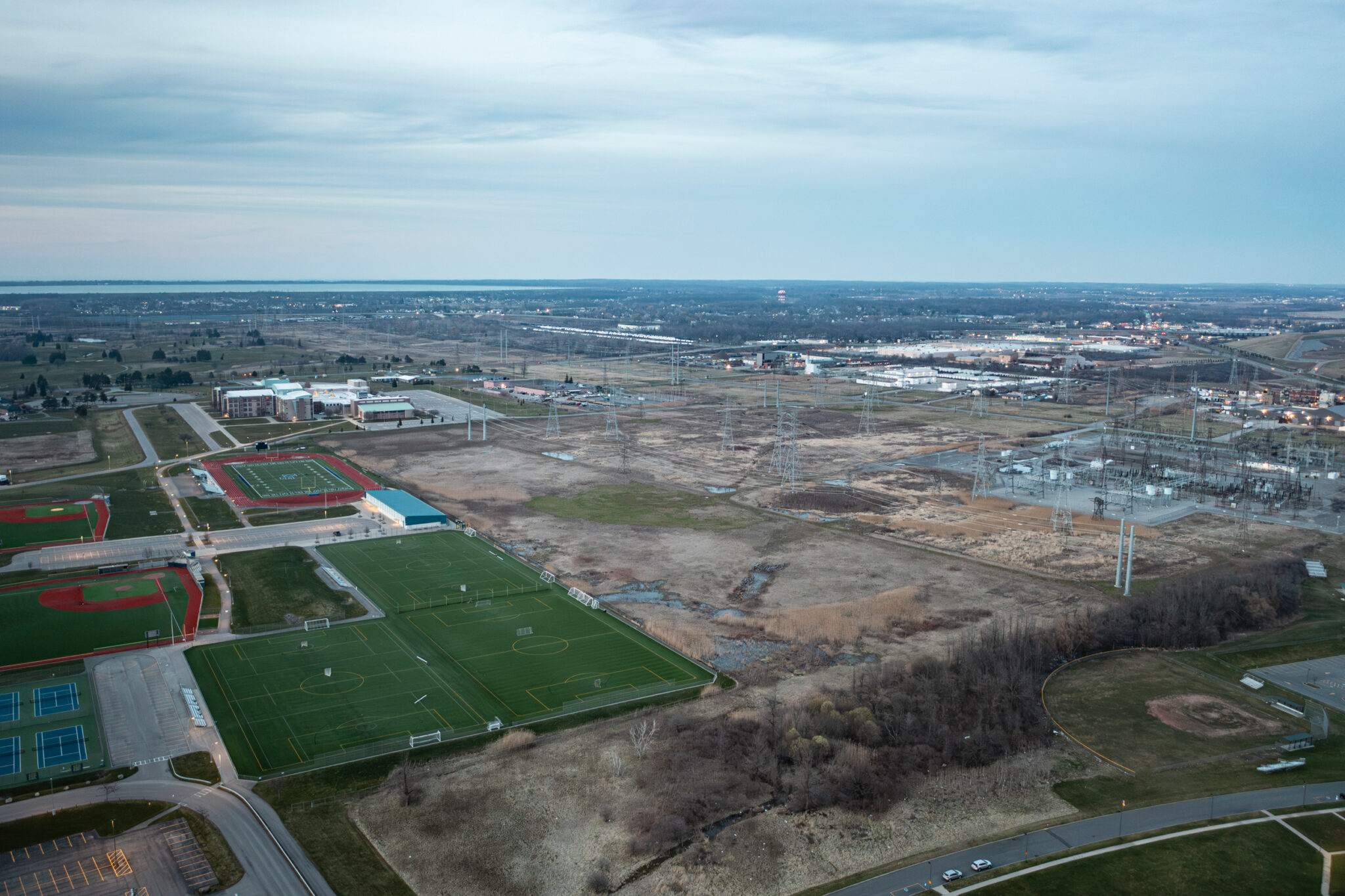
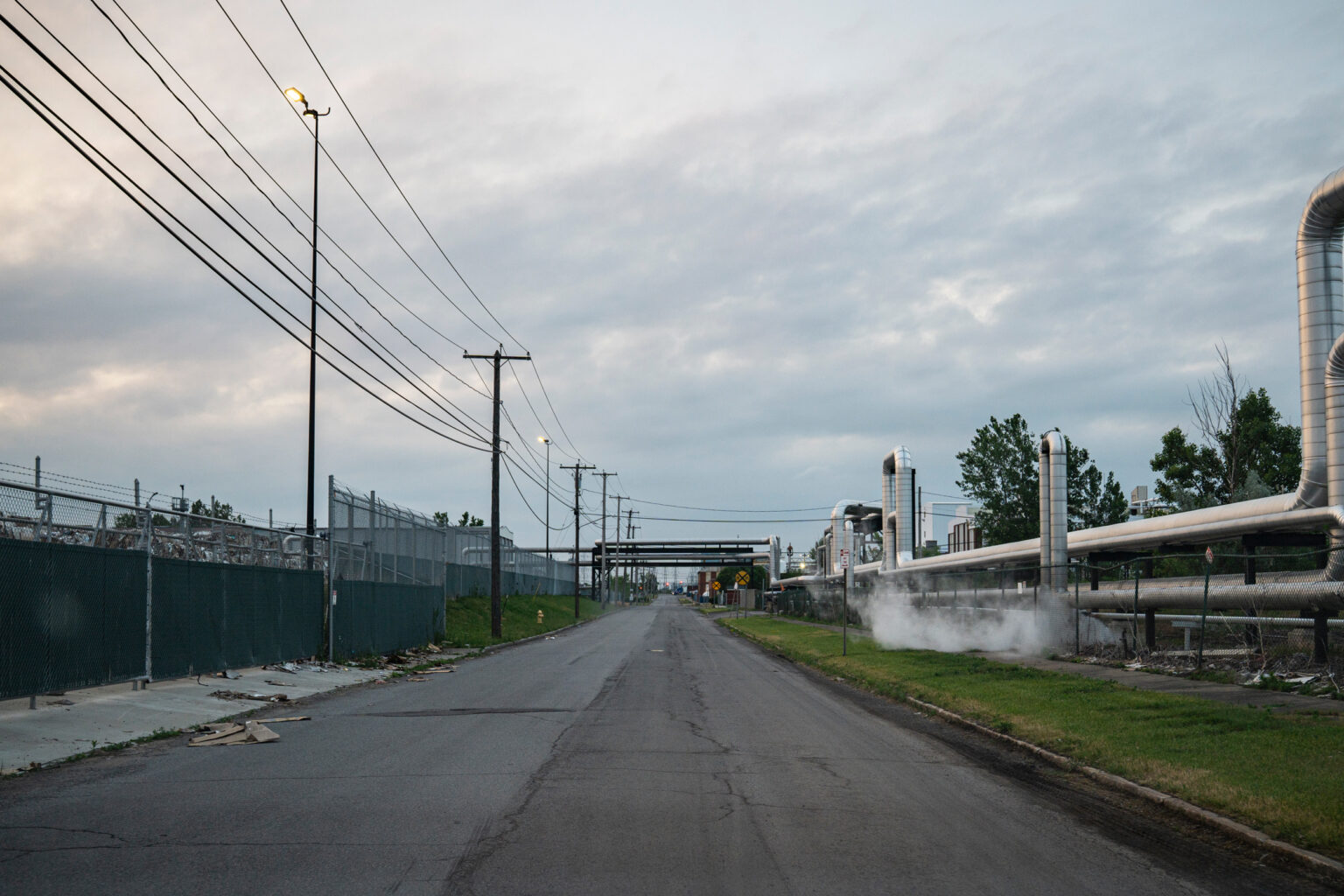
Niagara Falls High School is surrounded by powerplant and factories. Niagara resident Amanda West says she can feel the exhaust chemicals on her skin when she goes outside sometimes. Photo by Matt Hofmann.

In response, the Niagara Falls school district has hired 18 social workers for the district over the last seven years. Before that, there were zero. Each district school also has a family support center which offers students and their families food, clothing and services they need to set students up for success. The district also offers Say Yes Buffalo opportunities which provides students tuition and support to increase the rates of high school and post-secondary completion.

“[The surveys] showed that suicide and suicide ideation is high,” district Superintendent Mark Laurrie said. “I think that comes from a lot of people feeling hopeless. I think that poverty causes a lack of schema, and people can’t see what they can become, or what they can do, because we’re surrounded by poverty.”

Roberts added that aside from poverty, family conflict, abuse, discrimination and other social trauma as a child can create a negative cognitive schema, which changes one’s basic beliefs and values about themself and changes their capacity for feeling in control. He said environmental stressors, such as pollution and violence that are elevated in sacrifice zones, make matters more difficult. 

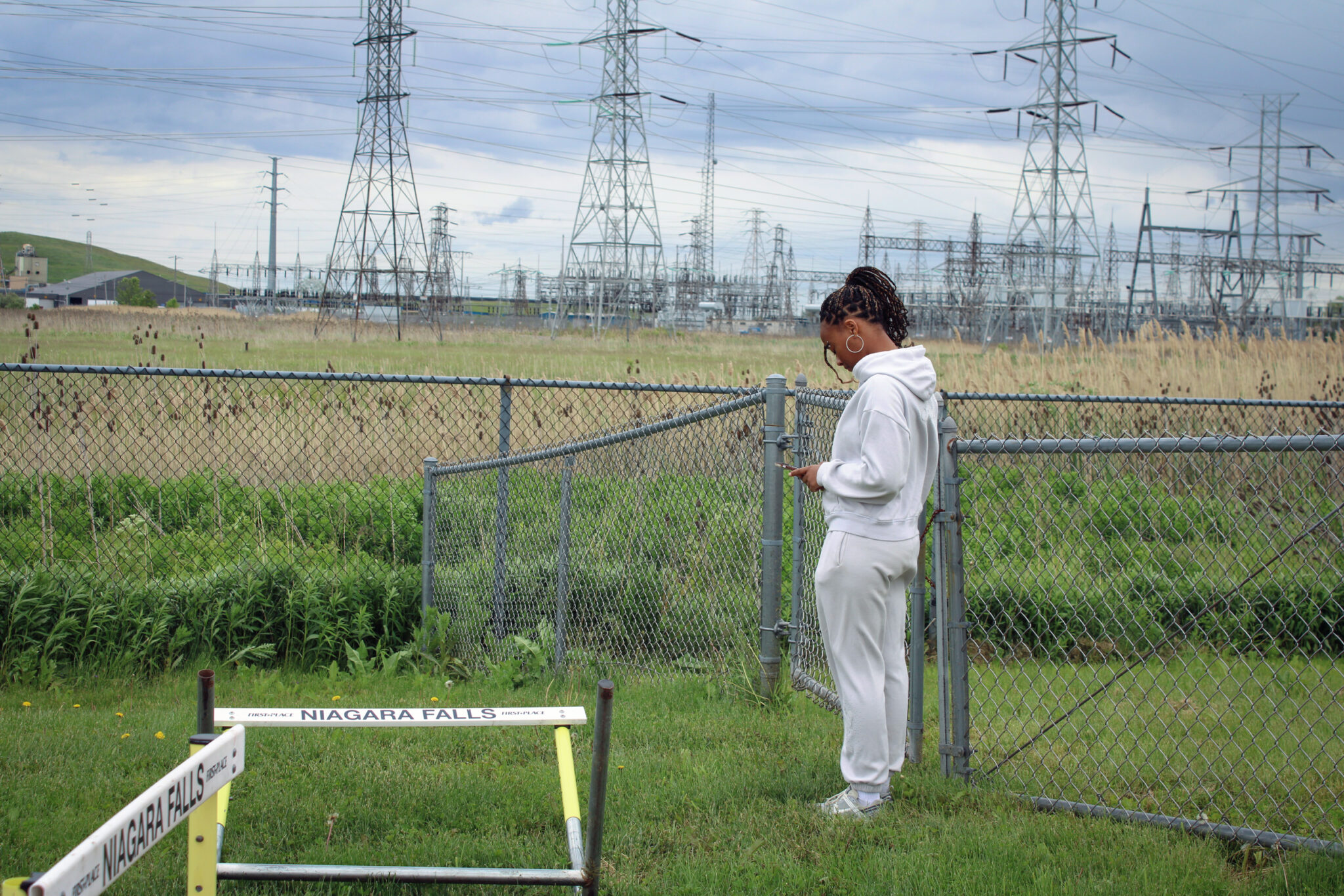
While the district is developing more resources for students, the high school still sits across the street from some of the city’s largest polluters.

Hernandez and West describe the school as run-down and likened it to a prison. They said they felt stressed at school because when they looked out their classroom windows, all they saw were factories.

“We don’t got much going for us in terms of positivity,” Hernandez said. 

Hernandez was born and raised in Niagara Falls, but she lived with family in North Carolina for eighth and ninth grade, during the COVID-19 pandemic. She noticed her skin cleared up and her asthma symptoms disappeared after she left Niagara Falls. She was able to start running again, which is something she had to give up years ago because she could never catch her breath.

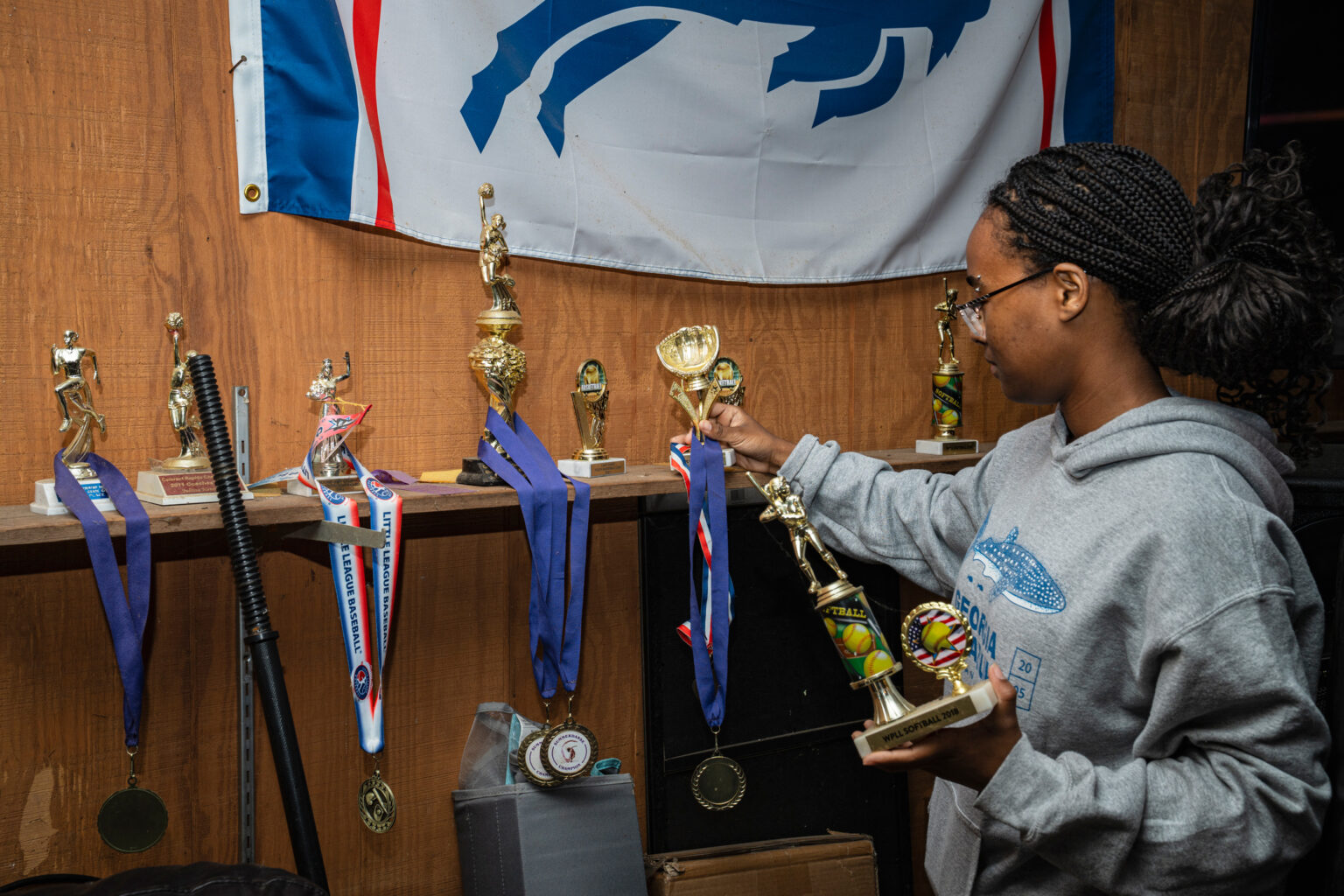
Julissa Hernandez played several sports throughout childhood, her favorite being softball. Credit: Matt Hofmann

Hernandez grew up participating in a wide range of sports, including softball, soccer, lacrosse, track, dance, cheerleading and gymnastics. As she got older, her asthma got worse, forcing her to gradually drop every sport. She believes the poor air quality in Niagara Falls contributed to her asthma complications.

Hernandez is now an early childhood education major at Niagara University. After graduation, she hopes to become a teacher with newly acquired trauma-informed tools to help students and educate parents and guardians. West joined the team after seeing their presentation to the Niagara Falls City Council and was interested in learning and advocating for students who don’t have safe living environments. He had an aunt and a cousin who died by suicide.

“If you’re around nothing but drama and chaos, you’re not gonna be able to focus or feel right,” West said “There is no room for somebody to get their mental state right if they don’t even know how to do it.”

Christen E. Civiletto, born and raised in the city, is now a lawyer, an environmental law adjunct professor at The University at Buffalo and author of the forthcoming book “Thundering Waters: The Toxic Legacy of Niagara Falls,” set for release in June. She has spent more than 20 years researching contamination in Niagara Falls. 

“People are sick in numbers too high to ignore. Niagara Falls’ children are bearing the brunt of harm from past and ongoing pollutionthese are generational harms that must be addressed before any hope of restoration in the Falls is possible,” she said.

“If you’re around nothing but drama and chaos, you’re not gonna be able to focus or feel right,” West said “There is no room for somebody to get their mental state right if they don’t even know how to do it.”

Christen E. Civiletto, born and raised in the city, is now a lawyer, an environmental law adjunct professor at The University at Buffalo and author of the forthcoming book “Thundering Waters: The Toxic Legacy of Niagara Falls,” set for release in June. She has spent more than 20 years researching contamination in Niagara Falls. 

“People are sick in numbers too high to ignore. Niagara Falls’ children are bearing the brunt of harm from past and ongoing pollutionthese are generational harms that must be addressed before any hope of restoration in the Falls is possible,” she said.

Brian Archie, a lifelong Niagara Falls resident, is tackling the city’s health epidemic from two angles. He is a current member of the Niagara Falls City Council and also serves as the executive director of the Creating a Healthier Niagara Falls Collaborative (CAHNF), which focuses on building community by improving the social determinants of health. The collaborative also educates residents about topics  such as air quality and mental health.

The Community Foundation of Greater Buffalo recently awarded the collaborative $10,000 to host a youth workshop on organizing and environmental justice.

The collaborative also partners with the Buffalo Clean Air Coalition, a nonprofit that develops grassroots leaders who organize their communities to lead environmental justice and public health campaigns in western New York.

The coalition hosted three environmental justice meetings in Niagara Falls in between June and October.

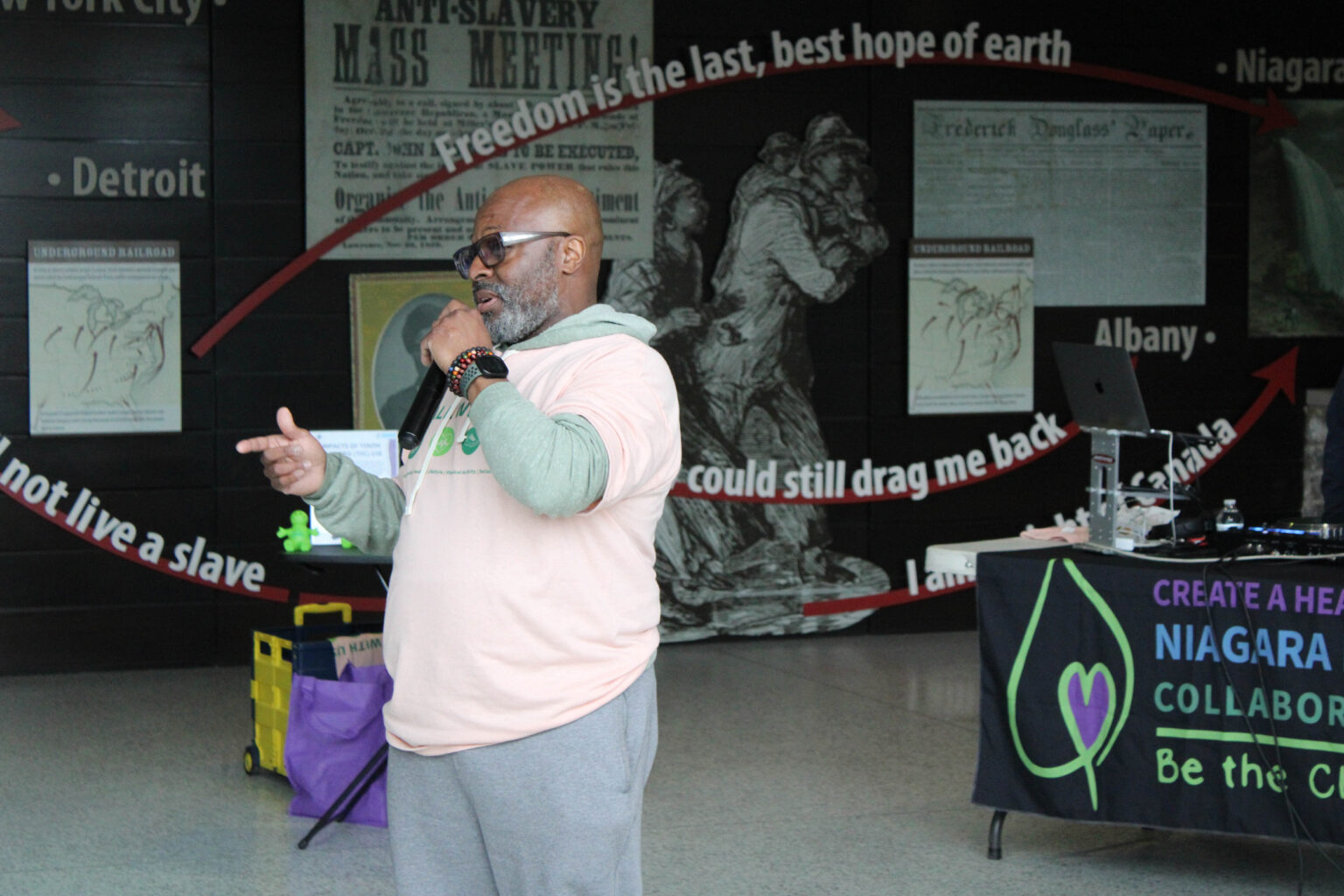
Brian Archie speaks at an event in the spring of 2025. Credit: Jennifer Wybieracki

Archie and the Niagara Falls City Council are teaming up with residents to develop programs and policies that aim to improve mental well-being and physical health. Last fall, Niagara Falls became a New York state Climate Smart Community, a state program that provides climate assistance to local governments. 

“If I’m not working to change our city, then I’m complacent,” said Archie.

Despite the legacy of pollution and intergenerational trauma there are still these places where hope is alive and community persists. Just like the Love Canal Homeowners Association back in the 1970s, the community is fighting back. 

“There’s this rule in organizing that if we can get just 3.5 percent of a population united behind a shared goal, we can make societal changes,” said Bridge Rauch, Clean Air Coalition environmental justice coordinator. “Three or four people out of 100 and you can make a lot of things happen.”

With citywide groups such as CAHNF and student-led groups such as the National Champion Team, Rauch feels like the sky’s the limit.

“Ultimately, I believe basic organizing is what will restore deep democracy and build community across movements and demographics, and allow us to tackle the issues of the 21st century,” said Rauch. 

Donte West at his graduation in June 2025. Credit: Matt Hofmann

In June 2025, West sat in a half-filled auditorium for the Coalition’s first ever environmental justice meeting for Niagara Falls residents. He listened to Rauch speak about his city’s history, including the Love Canal catastrophe and asked questions, including why he wasn’t taught about the environmental threats in school. 

“I don’t know why it isn’t brought up, it could literally happen again,” West said. “Trauma is passed down generation after generation, and people don’t know how to stop it.”

Reporting for this project was supported by the Pulitzer Center

The post How Two Teens in Niagara Falls Are Confronting Pollution and a Mental Health Crisis appeared first on Great Lakes Now.
Original Article

Great Lakes Now

Great Lakes Now

https://www.greatlakesnow.org/2026/04/01/how-two-teens-in-niagara-falls-are-confronting-pollution-and-a-mental-health-crisis/
Inside Climate News

New York’s Scajaquada Creek was the site of a more subdued, long-term environmental catastrophe compared to its infamous neighbor, the Love Canal. Instead of a chemical company burying thousands of tons of toxic waste over a couple decades, the suburban Buffalo stream was the site of industrial and municipal waste disposal. This went on for nearly a century before several miles of it were literally buried in a massive public works project in the 1920s. Only in recent decades has serious attention been given to transforming Scajaquada back into some version of a healthy stream.  

“We like to say Scajaquada Creek encapsulates everything you could do wrong to a creek,” said Jill Spisiak Jedlicka, executive director at Buffalo Niagara Waterkeeper.  “It’s only 13 miles long with a small watershed. It’s really an example of what not to do to a creek.” 

Since before the turn of the century the stream, which forms in Lancaster about 14 miles east of downtown Buffalo, had been mistreated. For decades its main function was to carry away raw sewage in addition to a steady flow of waste from the region’s industries. Scajaquada Creek has remained in such bad shape that in 2014 western New York artist and conservationist Alberto Rey included it in his Biological Regionalism series which includes waters in the greatest of distress.  

“It was buried because it was actually voted on in a public referendum in the 1920s. The creek was so polluted they said ‘The creek must go,’” Spisiak Jedlicka explained. “So they buried it underground, instead of addressing the problem.”  

Subsequently, portions of the creek which were buried became new land that was later developed.  Today there  are roads and parking lots sitting directly atop the creek as it makes its way to the Niagara River near its confluence with Lake Erie, then Lake Ontario. In addition to hiding a portion of the stream a century ago, wetlands that once helped mitigate pollution have been largely eliminated in the name of development. A shopping mall was built in 1989 which destroyed 65%of the watershed’s wetlands. In addition, raw sewage dumped into the creek from municipalities meant the waterway was loaded with human waste and bacteria. According to The Investigative Post, in May 2014 raw sewage combined with stormwater overflow was dumped into Scajaquada on 283 separate discharges.  

Reports from the same year indicate that decaying fecal matter covered the creek bed, as thick as five feet in some places. In addition, polychlorinated biphenyls (PCBs) and other dangerous chemicals were found in quantities high enough for the New York Department of Health to issue advisories against consumption of any fish from the stream.     

Scajaquada sewage 

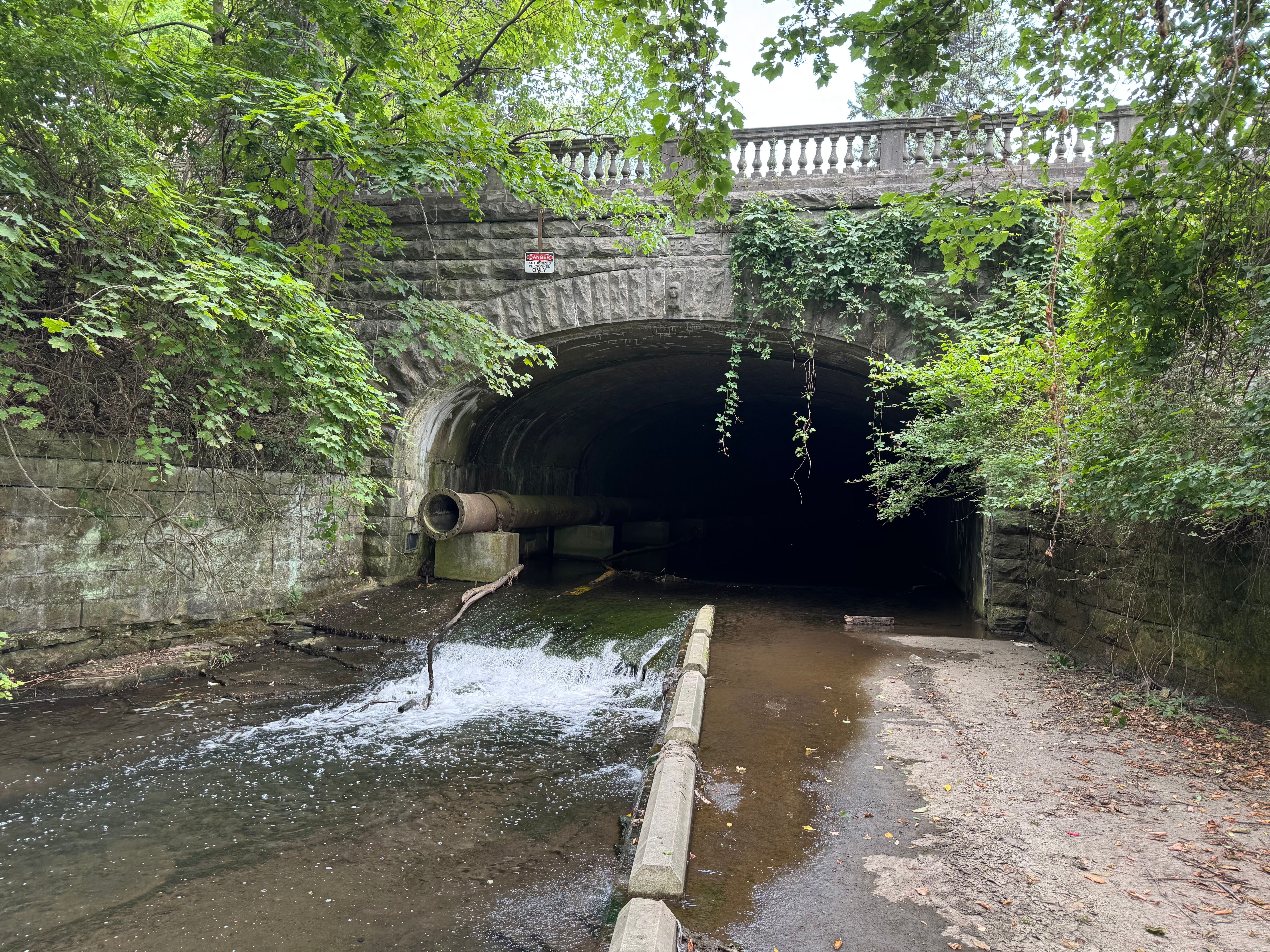
Here Scajaquada Creek emerges from several miles in one portion of the creek that was buried in the 1920s. (Photo Credit: James Proffitt)

While there have been murmurs of “daylighting” portions of the creek, the consensus is that’s not likely to happen. But in recent years, ideas and money have made their way into the hands of those working to fix the creek. While heavy industry is no longer the creek’s major polluter, the population at large is.  

During the last several days of 2025, reports estimate that at least 37 million gallons of untreated or partially treated sewage flowed into the Buffalo-area waterways during a rain and snow-melt event.  

Buffalo’s combined sewer overflow (CSO) system, where stormwater inundates city sewer systems during heavy rains, is currently the major polluter of the creek. During heavy precipitation events, stormwater flows into sewer lines beneath the city and when too much water inundates the system, the storm water combines with raw sewage and often flows into Scajaquada. 

According to Rosaleen Nogle, principal sanitary engineer for the Buffalo Sewer Authority, more than 95% of Buffalo’s infrastructure is the CSO system, and that isn’t likely to change anytime soon.  

“In an older city like Buffalo, it’s very difficult to separate because there’s so much infrastructure underground already,” she said, citing right-of-ways that include gas, electric and cable lines. “Not only is it much more difficult, it’s much more expensive.” 

Nogle said the installation of innovative systems like “Smart Sewer” stations are helping to alleviate CSO events. Those systems open and close underground gates during heavy rains channeling stormwater into available underground pipes. Utilizing some of the city’s older and larger pipes to store CSO for future treatment prevents stormwater runoff combined with sewage from entering streams and rivers.  

“Basically it’s storing in place using the excess space we have,” she said. “We have about 10 installations today and we’re continuing to advance the use of this technology to manage our system and store where we have the capacity, optimizing the amount of flow coming through our treatment plant.” 

Overflows during storm events have led to litigation. The New York Department of Environmental Conservation filed its most recent lawsuit against BSA for failing to meet terms of a prior long term control plan. That litigation, according to Jedlicka, was a formality needed to reach a new agreement between the state and the Buffalo Sewer Authority in an ongoing effort to improve Scajaquada and other streams in the region.  

Bright spots in a dark history 

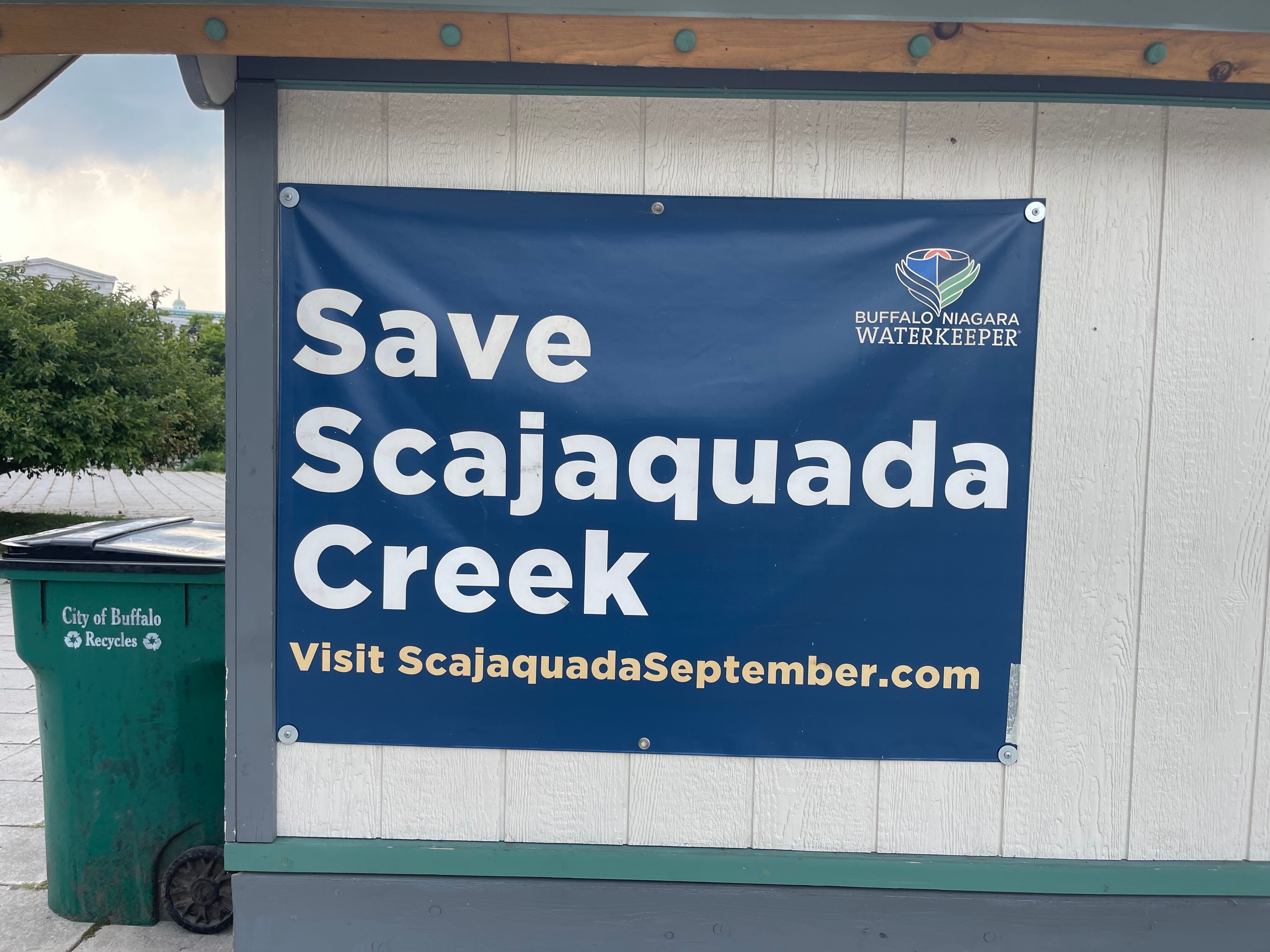
Buffalo Niagara Waterkeepers efforts to improve Scajaquada are persistent including public awareness campaigns like this banner at Hoyt Lake in Buffalo. (Photo Credit: James Proffitt)

While there are plenty of downsides to Scajaquada, there are upsides, too. Like the fact that despite pollution, a wide variety of wildlife still call it home. Surveys included in a 2024 Army Corps of Engineers study indicates the presence of turtles, beaver, fox and mink in the stream and its smaller tributaries. Flying residents include songbirds, owls, hawks, ducks, herons and swans, among others. A surprising amount of fish species are also found in the stream.  

Likely the most well-known residents are found at Forest Lawn, a 269-acre cemetery in the heart of the city. It’s the site where the longest hidden portion of the creek emerges from a tunnel. 

“We have a lot of Canada geese here, I’d say that’s our bread-and-butter,” explained, Jennifer Kovach, executive administrative assistant. “Sometimes people mention coyotes, I’m not sure if we have any right now, but every so often we’ll get them. And we’ve had an owl that’s been nesting here so we have baby owls every spring and little mink that run through, and wood chucks. But the best-known is the deer. We hear about them every day.” 

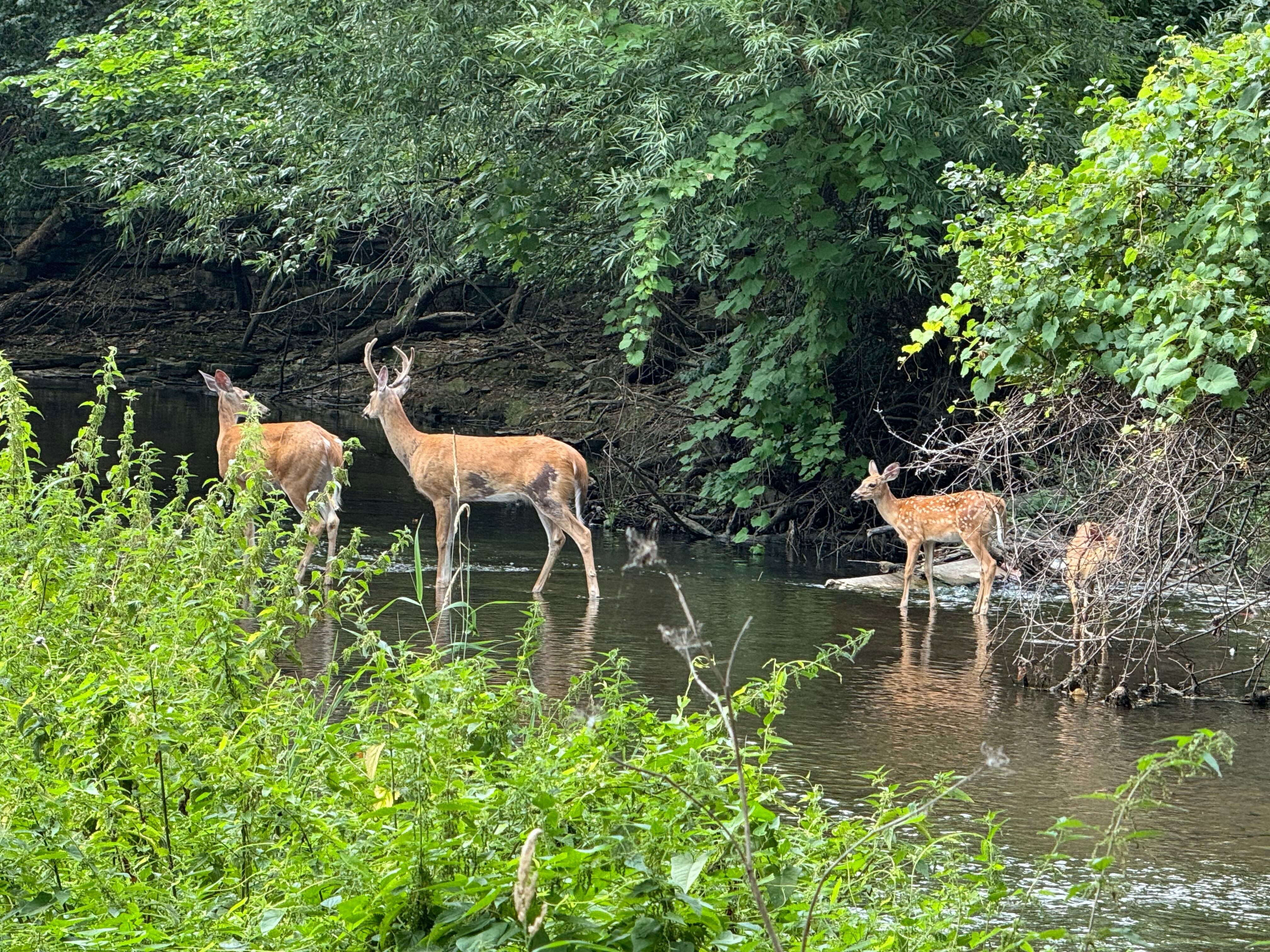
The deer she mentions are a small herd including several leucistic individuals (all white, yet not albino) that reside at Forest Lawn, on the banks of Scajaquada. 

“One time we had a deer out on Delaware Avenue and someone called to let us know our deer left,” she chuckled. “I told them, it’s not our deer and they have free will so they can leave and come back, whatever they want to do.” 

Kovach said because of the large number of trees at Forest Lawn, during spring the cemetery becomes a birding hotspot. 

“We’re on the flight path for migrating warblers so lots of birders will come and literally stake out all day in the spring with their long lens cameras and get some spectacular shots,” she said. 

According to Kovach, improvements to the creek are an ongoing endeavor.  

“We work with Buffalo Niagara Waterkeeper and did a really big restoration project on the creek about seven years ago,” she said. “We’re constantly doing work on the creek. Down near the S-curves we restored the wetlands where it used to be kind of a big pit. Now it’s all native grass species and native trees and it’s really a beautiful area to walk around in.” 

Waterkeeper is engaged in spring shoreline cleanups as well as smaller, focused cleanups in addition to public awareness campaigns.  

“We’ve witnessed local anglers fishing it, in particular certain immigrant communities who rely on it despite the consumption warnings,” Jedlicka said. “They actually catch fish, like bottom-feeding carp and so we try to do some outreach with that. There are some people that paddle the headwaters, but for the most part in the lower creek people don’t come into contact with the water.” 

New projects to help Scajaquada 

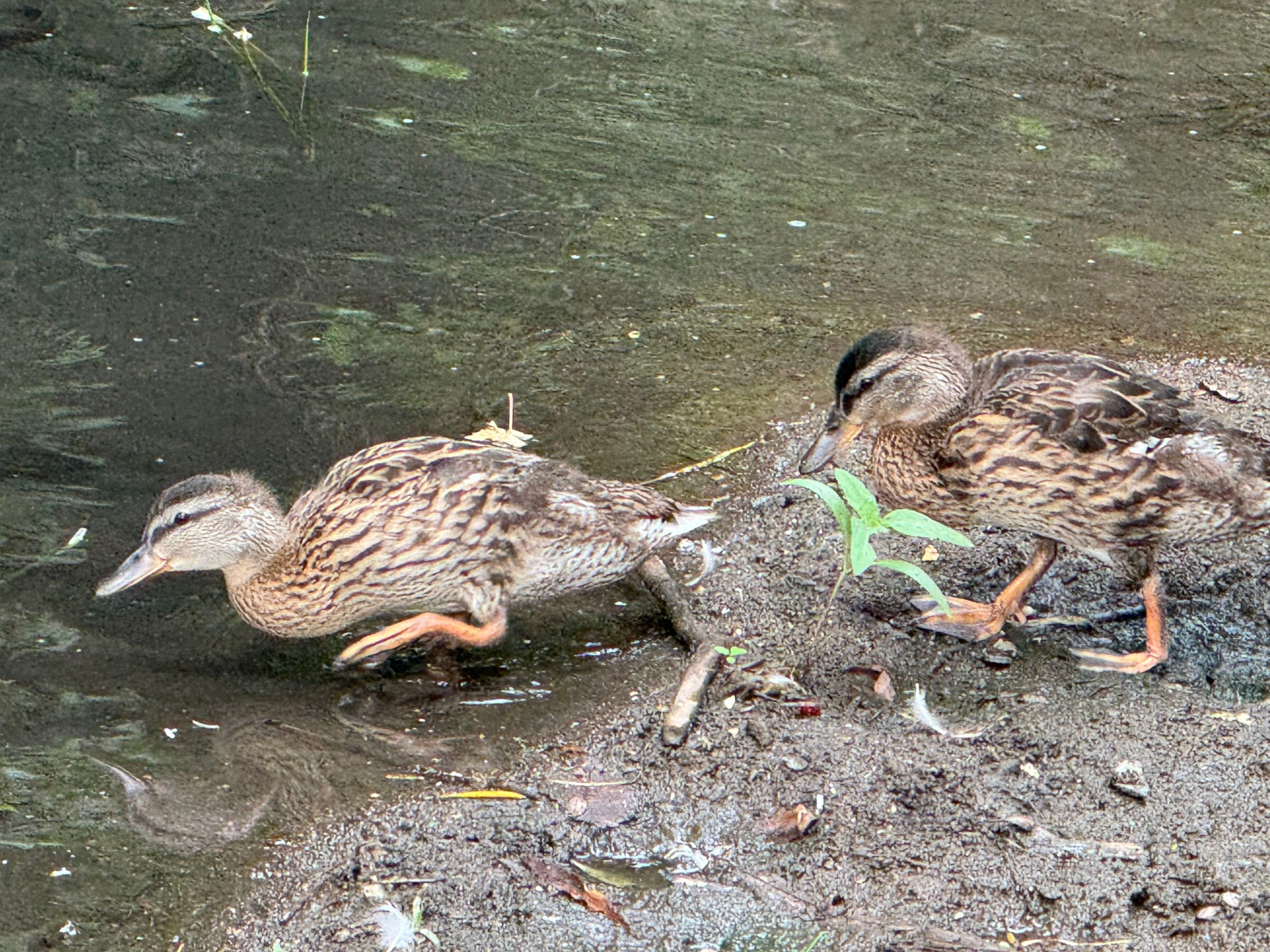
Despite pollution a wide variety of birds mammals and fish persist on the creek including the most-polluted stretches. (Photo Credit: James Proffitt)

Water quality improvement projects meant to help the stream were announced by the NYDEC on Jan. 17. The Buffalo Sewer Authority  will receive $10 million to install infrastructure to reduce CSO events on both Scajaquada and nearby Black Rock Canal. An additional $10 million in water quality improvements will take place in the Town of Cheektowaga to renovate a half mile of sewer infrastructure including 1,200 manhole covers to reduce CSO during storms. 

Jedlicka said ongoing partnerships have helped the efforts, including funding from the Margaret L. Wendt Foundation and the Ralph Wilson Jr. Foundation. And the continuing cleanup couldn’t be done without Mother Nature, as well.  

“You have to remember the creek water isn’t polluted 100 percent of the time,” she explained. “It’s fed by clean, cold spring water so there’s a lot of natural inputs that help keep the creek alive so that when there’s not an overflow happening, it can sustain fish and wildlife which is why we keep working at this — if we can just eliminate as much discharge as we can and mitigate it, the creek will begin to repair itself. It’s not all doom and gloom.”  

The post Scajaquada Creek, a Cautionary Tale appeared first on Great Lakes Now.

Original Article

Great Lakes Now

Great Lakes Now

https://www.greatlakesnow.org/2026/03/18/scajaquada-creek-a-cautionary-tale/

James Proffitt, Great Lakes Now

How Buffalo, New York has adapted to and embraced an influx of climate migrants

Buffalo is not a place that typically makes national headlines outside of football season. But in late July, the city did exactly that for one hugely significant reason: it became the last large city in the U.S. Lower 48 to have never reached 100 F.

At a time of rising temperatures and water levels, along with the threat of wildfires and smoke, many are reassessing where to live and Buffalo is embracing the “climate haven” tag.

Read Now at Great Lakes Now.

Original Article

Great Lakes Now

Great Lakes Now

https://www.greatlakesnow.org/2025/10/how-buffalo-new-york-has-adapted-to-and-embraced-an-influx-of-climate-migrants/

Stephen Starr, Great Lakes Now

How Buffalo, New York has adapted to and embraced an influx of climate migrants

Buffalo is not a place that typically makes national headlines outside of football season. But in late July, the city did exactly that for one hugely significant reason: it became the last large city in the U.S. Lower 48 to have never reached 100 F.

At a time of rising temperatures and water levels, along with the threat of wildfires and smoke, many are reassessing where to live and Buffalo is embracing the “climate haven” tag.

Read Now at Great Lakes Now.

Original Article

Great Lakes Now

Great Lakes Now

https://www.greatlakesnow.org/2025/10/how-buffalo-new-york-has-adapted-to-and-embraced-an-influx-of-climate-migrants/

Stephen Starr, Great Lakes Now

Alberto Rey: Art all about Earth

Alberto Rey’s artistic passions are wide-ranging. But water and wildlife may most succinctly describe them. The retired State University of New York — Fredonia professor of art has waded into drawing, painting, ceramics and filmmaking all while diving headfirst into the deepest affection for the natural world.  

The 64-year-old Cuban-born artist moonlights as an Orvis-endorsed fly fishing guide on Western New York’s Lake Erie tributaries.

Read Now at Great Lakes Now.

Original Article

Great Lakes Now

Great Lakes Now

https://www.greatlakesnow.org/2025/04/alberto-rey-art-all-about-earth/

James Proffitt, Great Lakes Now

What would the Great Lakes region be like with bullet trains?

A few months ago, I was riding on Amtrak’s new Borealis line from St. Paul, Minn., to Chicago. The train was packed that day, and the new line has proved popular.

My coach seat was much nicer than any airline. Plus, I didn’t have to go through security.

Read Now at Great Lakes Now.

Original Article

Great Lakes Now

Great Lakes Now

https://www.greatlakesnow.org/2025/03/what-would-the-great-lakes-region-be-like-with-bullet-trains/

Sean Ericson, Great Lakes Now

Are Great Lakes cities ready for climate migrants?

This article was republished here with permission from Great Lakes Echo.

By Kayla Nelsen, Great Lakes Echo

A California woman on “The Daily Show” recently swapped her sandals for snowshoes after moving to Duluth to escape her state’s wildfires.

The Comedy Central show featured Duluth as a climate haven, an ideal place to live to avoid wildfires, droughts, hurricanes and extreme flooding.

Read Now at Great Lakes Now.

Original Article

Great Lakes Now

Great Lakes Now

https://www.greatlakesnow.org/2024/03/are-great-lakes-cities-ready-for-climate-migrants/

Great Lakes Echo

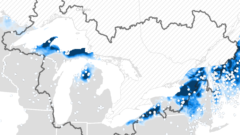
Mapping the Great Lakes: Snowfall in the snowbelt

Love staring at a map and discovering something interesting? Then “Mapping the Great Lakes” is for you. It’s a monthly Great Lakes Now feature created by Alex B. Hill, a self-described “data nerd and anthropologist” who combines cartography, data, and analytics with storytelling and human experience.

Read Now at Great Lakes Now.

Original Article

Great Lakes Now

Great Lakes Now

https://www.greatlakesnow.org/2023/01/mapping-great-lakes-snowfall-snowbelt/

Alex Hill

Buffalo legislator calls for bill of rights protection for the Great Lakes

Should natural resources like the Great Lakes have the same legal right to protection from harm as a person has? Including the right to be free from exploitation as a commodity for financial gain?

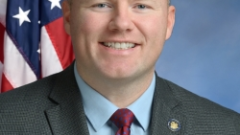
New York state Assemblyman Patrick Burke thinks so and has introduced formal legislation that would provide for those rights.

Read Now at Great Lakes Now.

Original Article

Great Lakes Now

Great Lakes Now

https://www.greatlakesnow.org/2022/12/buffalo-legislator-calls-for-protection-for-great-lakes/

Gary Wilson

The 2022 Great Lakes shipping season sets sail after COVID-19 hurdles

If you notice your packages arriving much faster than they did at the start of the pandemic, it isn’t just a minor coincidence – rather, it could be the Great Lakes shipping industry making a comeback after weathering the effects of COVID-19’s spread.

“(This) has been a bounce-back season from the COVID-induced lows of 2020,” said Jason Hron, director of communication and marketing for the Duluth Seaway Port Authority.

Read Now at Great Lakes Now.

Original Article

Great Lakes Now

Great Lakes Now

https://www.greatlakesnow.org/2022/03/2022-great-lakes-shipping-season-infrastructure-improvements-covid-19/

Maya Sundaresan

EPA to test, measure longtime Buffalo River cleanup efforts

BUFFALO, N.Y. (AP) — The lengthy effort to clean up the Buffalo River could pay off in the next few years.

The Buffalo News reported Sunday that the federal Environmental Protection Agency has told a local U.S. representative that the winding waterway could lose its status as an environmental danger zone, or “area of concern,” by 2025.

Read Now at Great Lakes Now.

Original Article

Great Lakes Now

Great Lakes Now

https://www.greatlakesnow.org/2021/12/ap-buffalo-river-cleanup-efforts/

The Associated Press

Erie Hack Finals: Is Lake Erie’s most pressing water problem toxins, agriculture or infrastructure design?

The objects wouldn’t look out of place as decorative lanterns or centerpieces. But the winner of the 2019 Erie Hack did more than look nice, it was designed to capture debris from stormwater – including plastic, waste and needles – that normally go rushing into Lake Erie whenever there’s bad weather. 

Read Now at Great Lakes Now.

Original Article

Great Lakes Now

Great Lakes Now

https://www.greatlakesnow.org/2021/11/erie-hack-finals-toxins-agriculture-infrastructure/

Natasha Blakely

Investing in the Lakes: New bill could redirect tech money to neglected Great Lakes cities

As President Joe Biden tries to advance his high-profile legislative agenda in a sharply divided Congress, a low-profile bill that could help the Great Lakes region is progressing with bipartisan support.

If passed, it could finally help the region shake its Rust Belt image.

The legislation is the U.S.

Read Now at Great Lakes Now.

Original Article

Great Lakes Now

Great Lakes Now

https://www.greatlakesnow.org/2021/07/legislation-investment-tech-research-great-lakes-cities/

Gary Wilson

Water Access: As moratoria on shutoffs end, old problems return to the forefront

As moratoria expire across the Great Lakes region, advocates say ongoing affordability and debt relief are key.

Read Now at Great Lakes Now.

Original Article

Great Lakes Now

Great Lakes Now

https://www.greatlakesnow.org/2021/04/water-shutoffs-debt-infrastructure/

Kari Lydersen

Great Lakes Gift Guide 2020: Remember that road trip, boat ride, microbrew or sweatshirt you should’ve bought with this list

Want to give your loved ones a holiday gift that connects to that summer trip up north or the fall color tour you took together? 

Or maybe you have a trip planned for after the COVID-19 vaccines have been distributed and want to give them something to remind them they have something to look forward to. 

Read Now at Great Lakes Now.

Original Article

Great Lakes Now

Great Lakes Now

https://www.greatlakesnow.org/2020/12/great-lakes-gift-guide-2020-list/

Natasha Blakely

Groups hope NY rules get pollutants out of drinking water

ALBANY, N.Y. (AP) — Clean water activists hope that water suppliers will remove an industrial pollutant under new water standards adopted Thursday in New York.

The state’s Public Health and Health Planning Council adopted standards that set a maximum level for how much of the hard-to-remove chemical 1,4-Dioxane can be in drinking water: 1 part per billion.

Read Now at Great Lakes Now.

Original Article

Great Lakes Now

Great Lakes Now

https://www.greatlakesnow.org/2020/07/ny-activists-rules-pollutants-drinking-water/

The Associated Press

Review Underway: Will IJC’s efforts be enough for flooded shoreline municipalities?

The International Joint Commission has started an early review of its Lake Ontario water management plan, overseen by a board that includes some of its most ardent critics, in response to extensive flooding and outcry from the lake’s shoreline communities.

The IJC— the international body that regulates waterways between the United States and Canada — has received $1.5 million in funding from the U.S., with an additional $1.5 million in matched funds from Canada, for the expedited review of Plan 2014.

Read Now at Great Lakes Now.

Original Article

Great Lakes Now

Great Lakes Now

https://www.greatlakesnow.org/2020/07/review-underway-ijc-lake-ontario-flooded-shoreline/

Samantha Cantie

Shuttered Canada-US border highlights different approaches to the pandemic – and differences between the 2 countries

By Daniel Baldwin Hess, University at Buffalo, The State University of New York and Alex Bitterman, Alfred State College of Technology, The State University of New York, The Conversation

 is an independent and nonprofit source of news, analysis and commentary from academic experts.

The United States and Canada have long enjoyed a stable relationship.

Read Now at Great Lakes Now.

Original Article

Great Lakes Now

Great Lakes Now

https://www.greatlakesnow.org/2020/06/shuttered-canada-us-border-highlights-different-approaches-to-the-pandemic-and-differences-between-the-2-countries/

The Conversation

Locked down along with NYC, upstate areas prepare to reopen

ALBANY, N.Y. (AP) — As New York City confirms more than 1,000 new COVID-19 cases a day, bucolic Essex County four hours north tallied its 32nd case since the outbreak. But the mountainous corner of upstate New York is under the same statewide lockdown rules as the pandemic-besieged city.

Read Now at Great Lakes Now.

Original Article

Great Lakes Now

Great Lakes Now

https://www.greatlakesnow.org/2020/05/ap-coronavirus-new-york-city-upstate-areas-reopen/

The Associated Press

Fishing and Freighters: Great Lakes industries take COVID-19 economic hit

Lake Erie fishing charters reel from stay at home orders, and lake freighters idle due to industry shutdowns.

Read Now at Great Lakes Now.

Original Article

Great Lakes Now

Great Lakes Now

https://www.greatlakesnow.org/2020/04/covid-19-coronavirus-fishing-freighters-great-lakes-industries/

Gary Wilson

Earth Day 2020: How to participate from the safety of your home

This year’s Earth Day is a special one, and not just because it’s the 50th anniversary of the event.

With stay home orders and heavy social distancing recommendations in light of the COVID-19 pandemic, the usual large gatherings of people to show support, clear trash and do more to help the planet just aren’t plausible.

Read Now at Great Lakes Now.

Original Article

Great Lakes Now

Great Lakes Now

https://www.greatlakesnow.org/2020/04/earth-day-2020-participate-from-home/

Natasha Blakely

From Rust to Resilience: Climate change brings new challenges and opportunities

Great Lakes Now is sharing work from our partners in a project on what climate change means for Great Lakes cities. Here is the initial piece in the series.

Read Now at Great Lakes Now.

Original Article

Great Lakes Now

Great Lakes Now

https://www.greatlakesnow.org/2020/04/rust-resilience-climate-change-great-lakes-cities/

Ensia

Water for All: Milwaukee, Chicago lead in ensuring water during COVID-19 crisis

Some Great Lakes cities and states are ahead of the game when it comes to ending water shutoffs during the COVID-19 crisis. Others aren’t.

Read Now at Great Lakes Now.

Original Article

Great Lakes Now

Great Lakes Now

https://www.greatlakesnow.org/2020/03/water-shutoffs-milwaukee-chicago-detroit-cleveland-buffalo-duluth/

Gary Wilson