By Bruce Carpenter, Bridge Michigan

The Great Lakes News Collaborative includes Bridge Michigan; Circle of Blue; Great Lakes Now at Detroit PBS; Michigan Public, Michigan’s NPR News Leader; and The Narwhal who work together to bring audiences news and information about the impact of climate change, pollution, and aging infrastructure on the Great Lakes and drinking water. This independent journalism is supported by the Charles Stewart Mott Foundation. Find all the work HERE.


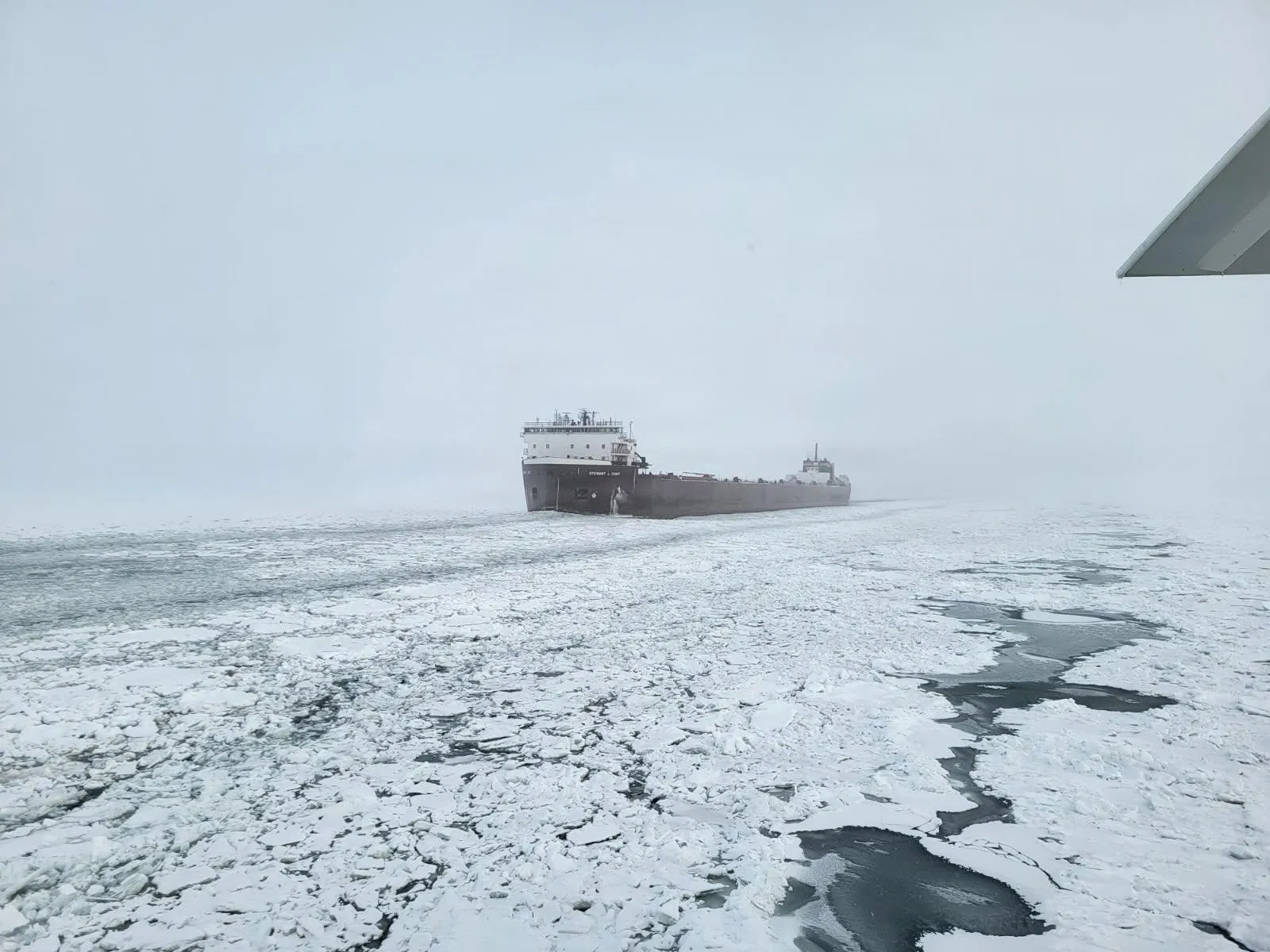
The Lake Carriers’ Association said in a report this week that US-flagged shipping on the Great Lakes lost 82 ship days — a third of its 2026 season — because of “inadequate icebreaking” operations from the US Coast Guard.  

“We only get nine months of shipping,” Eric Peace, the vice president of the association, said. “It’s a loss of a significant amount of time.” 

Data from the US Coast Guard shows it assisted more than 400 vessels during the shipping season and spent around 3,000 hours breaking ice in the Great Lakes region.

The Lake Carriers’ Association said in a report this week that US-flagged shipping on the Great Lakes lost 82 ship days — a third of its 2026 season — because of “inadequate icebreaking” operations from the US Coast Guard.  

“We only get nine months of shipping,” Eric Peace, the vice president of the association, said. “It’s a loss of a significant amount of time.” 

Data from the US Coast Guard shows it assisted more than 400 vessels during the shipping season and spent around 3,000 hours breaking ice in the Great Lakes region.

“During the 135-day operational period, Dec. 9 to April 23, the Coast Guard successfully facilitated the safe and efficient movement of vital commercial vessel traffic,” wrote US Coast Guard Chief Petty Officer Brandon Giles in a statement.

“Despite heavy winter conditions, our crews secured the regional maritime supply chain and ensured constant search and rescue readiness, achieving a record of zero casualties across all assisted transits.”  

Data from the Lake Carriers’ Association shows that around 160 million tons of cargo move on the Great Lakes in commercial ships every year, between 80 million and 90 million tons of that on US-flagged ships.

While it is unclear how much economic impact the delays had, Peace said it can have ripple effects on the nation’s supply chain. 

“Steel builds countries,” he said. “If we cannot actually have an efficient system here on the Great Lakes to ship that iron ore down from Lake Superior to the steel mills in the lower lakes, then we’re impacting the entire national economy and endangering our national economic security.”

The Lake Carriers’ Association said in a report this week that US-flagged shipping on the Great Lakes lost 82 ship days — a third of its 2026 season — because of “inadequate icebreaking” operations from the US Coast Guard.  

“We only get nine months of shipping,” Eric Peace, the vice president of the association, said. “It’s a loss of a significant amount of time.” 

Data from the US Coast Guard shows it assisted more than 400 vessels during the shipping season and spent around 3,000 hours breaking ice in the Great Lakes region.

“During the 135-day operational period, Dec. 9 to April 23, the Coast Guard successfully facilitated the safe and efficient movement of vital commercial vessel traffic,” wrote US Coast Guard Chief Petty Officer Brandon Giles in a statement.

“Despite heavy winter conditions, our crews secured the regional maritime supply chain and ensured constant search and rescue readiness, achieving a record of zero casualties across all assisted transits.”  

Data from the Lake Carriers’ Association shows that around 160 million tons of cargo move on the Great Lakes in commercial ships every year, between 80 million and 90 million tons of that on US-flagged ships.

While it is unclear how much economic impact the delays had, Peace said it can have ripple effects on the nation’s supply chain. 

“Steel builds countries,” he said. “If we cannot actually have an efficient system here on the Great Lakes to ship that iron ore down from Lake Superior to the steel mills in the lower lakes, then we’re impacting the entire national economy and endangering our national economic security.” 

Nearly 100% of America’s domestic iron ore passes through the Soo Locks with a value of $5 billion, according to the US Army Corps of Engineers. In a statement, Peace said it took 96 hours for the first vessel carrying iron ore to cross the parallel locks and that 19 ships were stuck in ice for days before icebreakers assisted. 

The association has long advocated for a new icebreaker to assist the over-40-year-old icebreaking tugs and the 21-year-old USCGC Mackinaw that the US Coast Guard utilizes. This winter, federal vessels “suffered significant engineering problems, which left them sidelined during the height of the need,” according to the association’s report. 

Funding for heavy icebreakers was included in early versions of the One Big Beautiful Bill Act Congress passed last year, but was cut from the final version. 

US Sen. Gary Peters, D-Bloomfield Township, said he fought to secure $25 million for the Coast Guard in the US Department of Homeland Security’s 2026 budget.

“Great Lakes shipping isn’t only important to the Midwest, it’s critical to the entire United States economy,” Peters said in a statement. “Unfortunately, the current lack of adequate icebreaking capabilities is contributing to these unnecessary delays to the Great Lakes shipping season. In turn, it’s disrupting key industries and the timely delivery of essential commodities that support Michigan businesses and jobs.” 

According to Peace, around $80 million has been appropriated to the Coast Guard’s budget for preliminary work toward a new Great Lakes heavy icebreaker, but more needs to be accomplished before such a vessel gets in the water. 

The Coast Guard estimates a new icebreaker could cost as much as $350 million.

“We’ve been able to get nickels and dimes, but we need $100 bills in order to get this thing procured,” he said. 

US representatives in the Great Lakes region introduced a bill to help fund a new icebreaker, but it has remained in the House’s Subcommittee on Coast Guard and Maritime Transportation since last July.

“They had an icebreaker under consideration last year, and Congress said, ‘We’ll use the money somewhere else,’” said Kevin McCormack, associate professor of operations and supply chain management at Northwood University.  “They didn’t spend a dime, and now it costs a dollar.”

Peace said he hopes lawmakers will recognize when there are transportation issues on the Great Lakes.

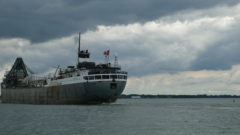
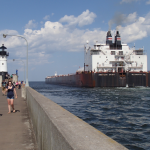
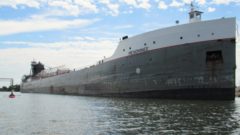
“This happens every year here on the Great Lakes, andThe motor vessel American Mariner transits the St. Mary’s River in Michigan on Jan. 3. (Courtesy of Lt. Sam Pollard/The US Coast Guard) for some reason, we just can’t seem to get the Coast Guard to ask for the money to build a new icebreaker that we need.”


The post Great Lakes shipping lost third of season to ‘inadequate icebreaking’ appeared first on Great Lakes Now.
Original Article

Great Lakes Now

Great Lakes Now

https://www.greatlakesnow.org/2026/05/27/great-lakes-shipping-lost-third-of-season-to-inadequate-icebreaking/

Bridge Michigan

Divided Congress: Smooth sailing or choppy waters for Great Lakes programs?

Since 2020 when Democrats swept into power by winning the presidency and taking control of both chambers of Congress, Great Lakes programs have had a tailwind of funding support from Washington.

The Infrastructure Investment and Jobs Act provided a $1 billion windfall for the region to accelerate clean up of the multiple toxic sites known as Areas of Concern that remain from the peak industrial period in the 1950’s and 1960’s.

Read Now at Great Lakes Now.

Original Article

Great Lakes Now

Great Lakes Now

https://www.greatlakesnow.org/2022/12/smooth-sailing-or-choppy-waters-for-great-lakes-programs/

Gary Wilson

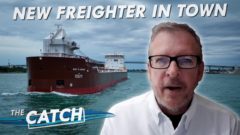
The Catch: New freighter in town

Broadcasting in our monthly PBS television program, The Catch is a Great Lakes Now series that brings you more news about the lakes you love. Go beyond the headlines with reporters from around the region who cover the lakes and drinking water issues. Find all the work HERE.

This month, The Catch features a new bulk freighter that is making waves in Great Lakes shipping.

Read Now at Great Lakes Now.

Original Article

Great Lakes Now

Great Lakes Now

https://www.greatlakesnow.org/2022/10/the-catch-new-freighter-in-town/

GLN Editor

First in decades, a new Great Lakes freighter joins fleet

For the first time in decades, a new bulk freighter has been built on and launched on the Great Lakes.

The Fincantieri Bay Shipbuilding Company in Sturgeon Bay, Wisconsin unveiled the Mark W. Barker earlier this year after spending nearly three years constructing it. The vessel was commissioned by Cleveland-based Interlake Steamship Company which currently operates about a dozen ships.

Read Now at Great Lakes Now.

Original Article

Great Lakes Now

Great Lakes Now

https://www.greatlakesnow.org/2022/09/new-great-lakes-freighter-joins-fleet/

James Proffitt

Can shipping on the Great Lakes take the next step toward transporting high-value container cargo?

A common question for casual observers of Great Lakes vessels is “Where are the big container ships?” The reference is to the massive ocean-traversing ships with containers stacked stories high.

The container ships have been absent from the Great Lakes where cherished lake freighters dominate the waterways hauling bulk cargo.

Read Now at Great Lakes Now.

Original Article

Great Lakes Now

Great Lakes Now

https://www.greatlakesnow.org/2022/07/shipping-update-great-lakes-container-cargo/

Gary Wilson

Coast Guard: Oil spill closes shipping on St. Mary’s River

SAULT STE. MARIE, Ontario. (AP) — An oil spill temporarily closed shipping traffic on the St. Marys River between Ontario and Michigan’s Upper Peninsula, the U.S. Coast Guard said Thursday.

The 5,300-gallon (20,063-liter) spill originated from Algoma Steel in Sault Ste. Marie, Ontario, around 10:30 a.m. Thursday.

The 75-mile (121-kilometer) river connects Lake Superior and Lake Huron and serves as part of the border between Michigan and Ontario.

Read Now at Great Lakes Now.

Original Article

Great Lakes Now

Great Lakes Now

https://www.greatlakesnow.org/2022/06/ap-coast-guard-oil-spill-shipping/

The Associated Press

The 2022 Great Lakes shipping season sets sail after COVID-19 hurdles

If you notice your packages arriving much faster than they did at the start of the pandemic, it isn’t just a minor coincidence – rather, it could be the Great Lakes shipping industry making a comeback after weathering the effects of COVID-19’s spread.

“(This) has been a bounce-back season from the COVID-induced lows of 2020,” said Jason Hron, director of communication and marketing for the Duluth Seaway Port Authority.

Read Now at Great Lakes Now.

Original Article

Great Lakes Now

Great Lakes Now

https://www.greatlakesnow.org/2022/03/2022-great-lakes-shipping-season-infrastructure-improvements-covid-19/

Maya Sundaresan

$3.7M grant to aid Lafarge port upgrades

By Julie Riddle, The Alpena News

This article is part of a collaboration between The Alpena News and Great Lakes Now at Detroit Public Television to bring audiences stories about the Great Lakes, especially Lake Huron and its watershed.

ALPENA – An Alpena company will snag a piece of more than $241 million in grants awarded to upgrade U.S.

Read Now at Great Lakes Now.

Original Article

Great Lakes Now

Great Lakes Now

https://www.greatlakesnow.org/2022/02/grant-aid-lafarge-port-upgrades/

The Alpena News

Cargo, With a Side of Hornets, Flies and Crabs

By Tim Lydon, The Revelator

This story originally appeared in The Revelator and is republished here as part of Covering Climate Now, a global journalism collaboration strengthening coverage of the climate story.

In July 2021 federal agents in New Orleans abruptly ordered the 600-foot cargo ship Pan Jasmine to leave U.S.

Read Now at Great Lakes Now.

Original Article

Great Lakes Now

Great Lakes Now

https://www.greatlakesnow.org/2022/01/cargo-invasive-species/

The Revelator

Sustainable Shipping: The Port of Montreal’s role as the Great Lakes’ green gateway

Shipping companies and ports around the world and on the Great Lakes are launching sustainability efforts to lessen their environmental impact, combat climate change, and improve their efficiency and images. With support from the Solutions Journalism Network, Great Lakes Now Contributor Kari Lydersen is reporting the four-part series “Sustainable Shipping.”

Read them here:

Are voluntary efforts enough to improve port sustainability?

Read Now at Great Lakes Now.

Original Article

Great Lakes Now

Great Lakes Now

https://www.greatlakesnow.org/2021/11/sustainability-shipping-port-montreal-green-gateway/

Kari Lydersen

Sustainable Shipping: At the Port of Milwaukee the wind blows toward a greener future

Shipping companies and ports around the world and on the Great Lakes are launching sustainability efforts to lessen their environmental impact, combat climate change, and improve their efficiency and images. With support from the Solutions Journalism Network, Great Lakes Now Contributor Kari Lydersen is reporting the four-part series “Sustainable Shipping.”

Read them here:

Are voluntary efforts enough to improve port sustainability?

Read Now at Great Lakes Now.

Original Article

Great Lakes Now

Great Lakes Now

https://www.greatlakesnow.org/2021/11/sustainable-shipping-port-milwaukee-the-wind-green-energy/

Kari Lydersen

Sustainable Shipping: Burns Harbor port tries to green Indiana’s industrial coast

This work was supported in part by the Solutions Journalism Network.

Under an ominous gray and blustery sky, forklifts dig into piles of jet-black furnace coke, dumping it into a ship tethered in the eastern channel of Burns Harbor in Northwest Indiana. Nearby are towering piles of red iron ore pellets, and just across the channel loom the smokestacks, conveyors and furnaces of a steel mill.

Read Now at Great Lakes Now.

Original Article

Great Lakes Now

Great Lakes Now

https://www.greatlakesnow.org/2021/11/sustainable-shipping-burns-harbor-port-industrial-coast/

Kari Lydersen

In Progress: New Soo Lock looks at 2030 completion

The finish line is finally in view for the new Soo Lock, which was first authorized in 1986 and will help prevent the disruption of the supply chains in event of error or repairs.

“Having a new Soo Lock that has the same dimensions of the Poe and able to accommodate those largest freighters on the lakes will give us a great deal of resiliency and the ability to increase the time periods in which we do necessary repairs or maintenance or rehabilitation throughout the year,” said Lt.

Read Now at Great Lakes Now.

Original Article

Great Lakes Now

Great Lakes Now

https://www.greatlakesnow.org/2021/11/in-progress-new-soo-lock-2030-completion/

Natasha Blakely

Green Marine: Are voluntary efforts enough to improve port sustainability?

When zebra mussels emerged as a dire ecological and economic threat across the Great Lakes in the 1990s, it was a wakeup call that the existing patchwork of international, state and federal regulations were not protecting the delicate ecosystem, the source of drinking water for millions of people.

In response, some industry leaders came together to form a voluntary sustainability certification organization called Green Marine.

Read Now at Great Lakes Now.

Original Article

Great Lakes Now

Great Lakes Now

https://www.greatlakesnow.org/2021/11/green-marine-voluntary-improve-port-sustainability/

Kari Lydersen

Canada expands ballast water restrictions to reduce invasive species spread

By Lester Graham, Michigan Radio

The Great Lakes News Collaborative includes Bridge Michigan; Circle of Blue; Great Lakes Now at Detroit Public Television; and Michigan Radio, Michigan’s NPR News Leader; who work together to bring audiences news and information about the impact of climate change, pollution, and aging infrastructure on the Great Lakes and drinking water.

Read Now at Great Lakes Now.

Original Article

Great Lakes Now

Great Lakes Now

https://www.greatlakesnow.org/2021/06/canada-ballast-water-restrictions-invasive-species/

Michigan Radio

Ship-top vaccinations help keep freighters hauling

By Julie Riddle, The Alpena News

This article is part of a collaboration between The Alpena News and Great Lakes Now at Detroit Public Television to bring audiences stories about the Great Lakes, especially Lake Huron and its watershed.

ALPENA — Sailors aboard Great Lakes freighters got a shot in the arm when nurses in Sault Ste.

Read Now at Great Lakes Now.

Original Article

Great Lakes Now

Great Lakes Now

https://www.greatlakesnow.org/2021/06/ship-vaccinations-freighters-covid-19/

The Alpena News

Freighter Mystery: Can you help Great Lakes Now with more clues to identify people and places in a historic film?

The Great Lakes Now supervising producer, Rob Green, wants your help figuring out more about an old movie shot aboard a freighter. He’s done what he can to identify the ship, ports, time period and people in a mysterious black-and-white video he found in an online archive.

Green knows someone out there can help with more clues to answer: who shot this footage?

Read Now at Great Lakes Now.

Original Article

Great Lakes Now

Great Lakes Now

https://www.greatlakesnow.org/2021/03/freighter-mystery-identify-people-places-historic-film/

GLN Editor

Stalled Ships: Shipping industry looks to infrastructure investments to boost demand

The Great Lakes’ iconic freighters remained common sights on the waters – that much didn’t change during pandemic. But, like many industries, shipping was hit hard by COVID-19. That feels especially salient when shipping is such an integral piece of the Great Lakes economy.

As of September 2020, iron ore cargoes were “down 27% from last year at this time,” James Weakley, president of the Lake Carriers’ Association and representative of Ohio on the Great Lakes Commission, said in an interview with Great Lakes Now.

Read Now at Great Lakes Now.

Original Article

Great Lakes Now

Great Lakes Now

https://www.greatlakesnow.org/2021/01/shipping-industry-infrastructure-investments/

Natasha Blakely

Great Lakes Freighters: The latest on navigation, locks and icebreakers

It’s been 140 years since a group of U.S. steamship companies formed an alliance called the Cleveland Vessel Owners Association, whose primary purpose was to promote safe navigation by the ships that plied the Great Lakes.

That original alliance has since become the Lake Carriers’ Association, which is still based in Cleveland and represents the interests of companies that have a combined 46 vessels on the lakes and move 90 million tons of cargo annually.

Read Now at Great Lakes Now.

Original Article

Great Lakes Now

Great Lakes Now

https://www.greatlakesnow.org/2020/10/great-lakes-freighters-lake-carriers-association/

Gary Wilson

University of Wisconsin-Superior researchers are trying to figure out how to better regulate teeny-tiny invasive organisms that stow away on large vessels traversing the Great Lakes Basin.

Original Article

Great Lakes Echo

Great Lakes Echo

http://greatlakesecho.org/2020/10/12/researchers-want-invasive-aquatic-critters-out-of-great-lakes-ballast-water/

Guest Contributor

COVID-19 Comeback: Great Lakes businesses and scientists bounce back

In March, COVID-19 brought the Great Lakes economy and society in general to a grinding halt.

Three months later, it’s not yet business as usual and challenges remain.

That’s the consensus of a group of Great Lakes industries and scientific researchers Great Lakes Now first spoke with in April.

Read Now at Great Lakes Now.

Original Article

Great Lakes Now

Great Lakes Now

https://www.greatlakesnow.org/2020/06/covid-19-great-lakes-shipping-charter-boats-research/

Gary Wilson

Fishing and Freighters: Great Lakes industries take COVID-19 economic hit

Lake Erie fishing charters reel from stay at home orders, and lake freighters idle due to industry shutdowns.

Read Now at Great Lakes Now.

Original Article

Great Lakes Now

Great Lakes Now

https://www.greatlakesnow.org/2020/04/covid-19-coronavirus-fishing-freighters-great-lakes-industries/

Gary Wilson

As energy use changes in the Great Lakes, so too does the world’s largest freshwater port

The Port of Duluth-Superior is one of the largest ports in the U.S., and its second largest commodity is coal.

Read Now at Great Lakes Now.

Original Article

Great Lakes Now

Great Lakes Now

https://www.greatlakesnow.org/2020/04/rust-resilience-coal-port-minnesota/

MinnPost

Funding Boost: EPA gives Great Lakes extra $20 million but state funding at risk

Even as the federal government is spending trillions of dollars to boost the economy shut down by the COVID-19 virus, Congress has moved to increase funding for the Great Lakes.

The U.S. EPA announced last week that an additional $20 million has been allocated to restore the lakes.

Read Now at Great Lakes Now.

Original Article

Great Lakes Now

Great Lakes Now

https://www.greatlakesnow.org/2020/04/epa-glri-extra-20-million-state-funding-at-risk/

Gary Wilson

Freighter Photos: Check out some stunning images of the vessels traversing the lakes

Travel may not be an option for people right now with the ongoing spread of the COVID-19 pandemic, but there are many ways to still take in the sights – including through photos of hard-to-find views of the massive freighters that cross the Great Lakes.

The Great Lakes Seaway Partnership is a nonprofit initiative that is a collaboration between U.S.

Read Now at Great Lakes Now.

Original Article

Great Lakes Now

Great Lakes Now

https://www.greatlakesnow.org/2020/04/freighter-photos-great-lakes-seaway/

Natasha Blakely