By Kyrmyzy Turebayeva, Great Lakes Echo

This article was republished here with permission from Great Lakes Echo.


While urbanization continues to displace natural ecosystems across the Great Lakes region, one declining wetland bird has managed to adapt to city life. 

The black-crowned night heron (Nycticorax nycticorax) has unexpectedly found refuge in the very heart of Chicago. 

Today, the largest colony of these birds in the region is located not in isolated, natural wetlands, but on the grounds of Chicago’s Lincoln Park Zoo.

A new study shows that this heavily urbanized environment has become a critical sanctuary for the species.

“This colony is one of the last major black-crowned night heron rookeries in the entire state of Illinois — and probably one of the last strongholds for this species in the entire Great Lakes,” said Sarah Slayton, the study’s lead author and an avian ecologist at the University of Illinois Urbana-Champaign.

According to Slayton, only three colonies remain in Illinois. Two are quite small — one in the Champaign area and another at Emiquon Nature Preserve in western Illinois. 

Black-crowned night herons are listed as endangered in the state. 

The primary colony, boasting between 500 and 700 individuals, resides on the grounds of Chicago’s Lincoln Park Zoo during the spring and summer.  

“Because this is the largest group of this species left in the Great Lakes and it is a species that is at risk, it is vital for us to know how they are doing health-wise, how they are surviving in the city and how the overall regional population is doing,” Slayton explained.

Researchers note that such a high concentration makes the colony particularly vulnerable.

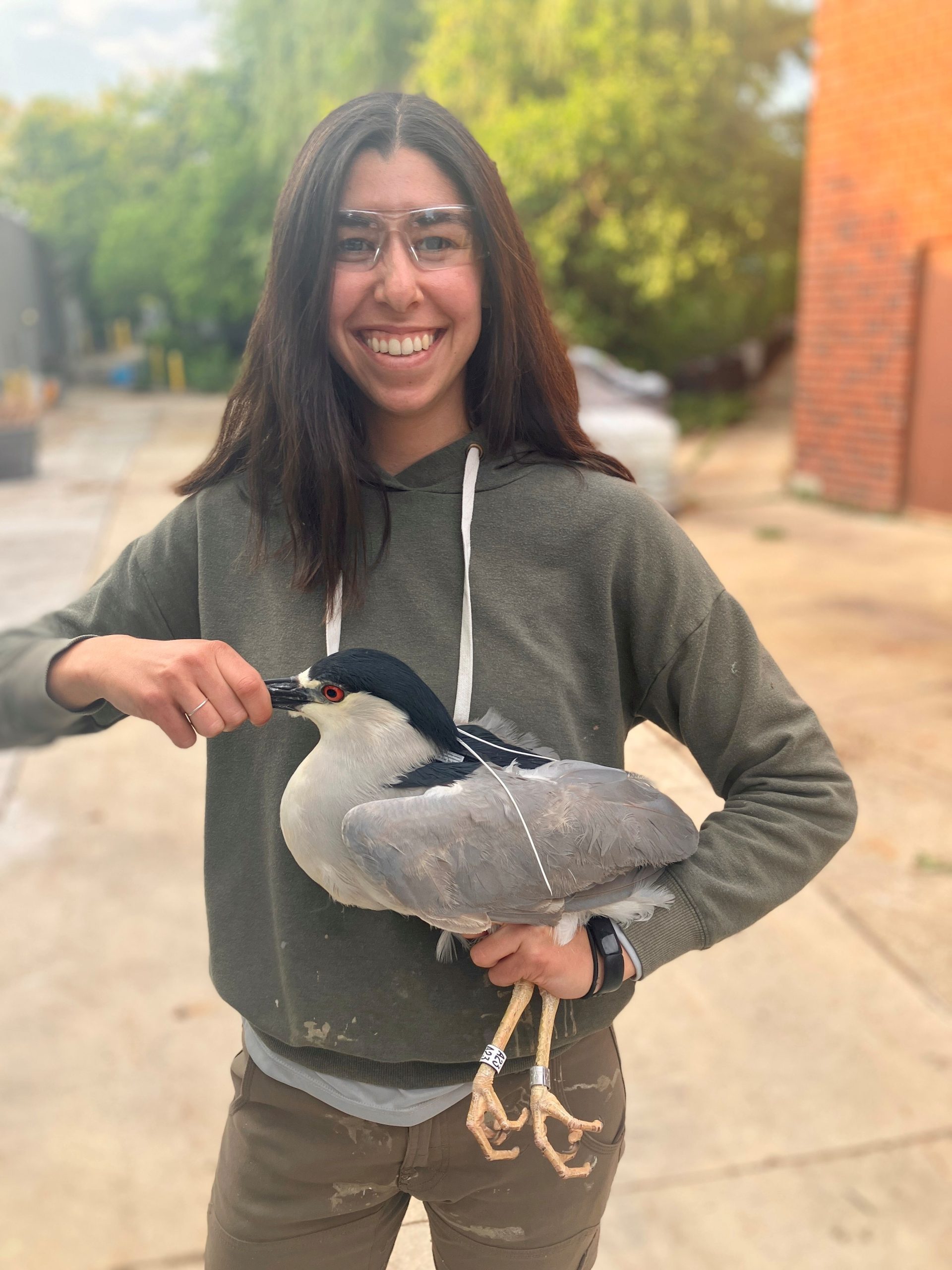
Sarah Slayton is an avian ecologist at the University of Illinois Urbana–Champaign. (Photo credit: Henry Adams via Great Lakes Echo)

Localized threats such as severe storms, disease outbreaks and human disturbance could cause the birds to abandon the site, meaning the region would lose a huge chunk of the population.

Black-crowned night herons are colonial wading birds whose numbers have been declining across the Great Lakes and the northeastern United States, driven largely by habitat loss.

“To most city dwellers, they are just big charismatic birds that you might see near the water,” Slayton said. “But to ecologists, they are an important indicator species for the health of these environments.”

The primary driver behind their shrinking numbers is the destruction of wetlands, Slayton said

“We have destroyed about 90% of the wetlands in Illinois,” she said. “As those environments disappear, the birds are forced to adapt and look for new places to successfully breed and survive.”

Interestingly, populations in Florida and along the Gulf Coast remain stable because the birds are year-round residents, while migratory populations face the greatest hardships. Birds from the Chicago colony spend the winter in Florida, Louisiana and Cuba before returning north to the Great Lakes in the spring to breed. 

To understand how night herons survive in a concrete jungle, Slayton and her colleague Henry Adams from Lincoln Park Zoo’s Urban Wildlife Institute launched an ambitious research project using modern technology.

The scientists equipped the birds with miniature GPS trackers – weighing just 16 grams (0.56 ounces) – which the birds wear like tiny backpacks. The solar-powered devices collect location data via satellites and transmit it to researchers whenever they connect to standard cellular towers.

The tracking results surprised the ornithologists. 

Instead of avoiding humans, the herons actively exploit urban infrastructure, using city parks, fishing lagoons, the Chicago River and even the coastal structures of Lake Michigan.

One of the most unexpected findings was that the night herons regularly forage in the deep open waters of Lake Michigan.

“We don’t normally associate these birds with that kind of water body because the water is so deep. Most wading birds forage in shallow water. They stand really, really still and wait for a prey item to swim by before ambushing it,” Slayton said. 

“However, these birds have taken advantage of the docks in the harbors and breakwaters, the large concrete structures out in Lake Michigan that help reduce wave action. They use them as perches to forage directly into Lake Michigan in a way that is very different from what we would expect in a natural wetland environment.”

The herons have also proven to be highly opportunistic feeders with a broad diet. 

While other heron species are specialized and picky about their food, black-crowned night herons eat almost anything from fish and frogs to small mammals. Scientists even suspect that in Chicago, they have taken up hunting small urban rats.

GPS data also revealed that individual birds possess distinct behavioral strategies. Some individuals are highly conservative, sticking to a single foraging ground and returning to the exact same park lagoon every day. Others constantly experiment, moving between different parks, the river and the harbors based on prey availability.

“The amount of individual variation in the birds was really, really cool,” Slayton noted. 

“For example, we would see them hunting in the harbors when there were fish spawning events, when fish would concentrate in these areas to breed. They might take advantage of those opportunities and feast for a couple of days, and then once those periods were over, they would go to another spot.”

Furthermore, the data showed a clear behavioral split between breeding and non-breeding birds. To conserve energy and feed their chicks, active breeders rarely forage more than 10 kilometers (about 6 miles) away from the zoo colony. Non-breeding birds, on the other hand, face less pressure to stay close and freely wander across the entire Chicago metropolitan area.

A major breakthrough of the study came from long-term GPS monitoring that spanned several years. This allowed scientists to map the herons’ movement patterns outside of Chicago in detail for the first time, while previous tracking data had been fragmented and limited to single seasons.

“We had one individual who we captured in Chicago – she was my favorite bird,” Slayton recalled. “Her band code was A24, and we were able to collect several years of tracking data on her.”

For two years in a row A24 followed a remarkably consistent annual cycle. After the breeding season in Chicago, she flew north to spend the post-breeding season in Green Bay, Wisconsin. 

From there, she migrated south to winter in Florida, spending months at a time in restored wetland complexes near Lake Okeechobee. Then she returned to Chicago for the breeding season.

“We caught her a second time and collected a bunch more samples, and then we found her nest and she was raising three adorable chicks,” Slayton said. “Getting to see her do this cycle over and over again was incredible because we had never seen data like this before.”

The GPS maps also showed that while A24’s precise migratory paths varied slightly from year to year, her final destinations remained exactly the same, showing very high site fidelity. 

According to Slayton, capturing this level of movement data would be impossible without trackers.

“This data is critical because these birds can only come back to breed if they make it through the rest of the year,” said Slayton. “Learning about what’s happening in other parts of their migratory paths and what threats they might be facing is also really important for the conservation of this whole colony.”

Researchers say uncovering how night herons navigate and survive in Chicago could ultimately inform conservation strategies for other migratory bird species sharing the same flyways and habitats.

Scientists emphasize that this data is more important than ever as wetlands loss continues and pressure mounts on the natural ecosystems of the Great Lakes region. 

The study does more than just document a threatened bird adapting to city life – it highlights the growing role of urban green spaces as unexpected, yet vital, refuges for wildlife conservation.

Ultimately, Slayton notes that her team’s vision extends far beyond Cook County, aiming to support black-crowned night heron conservation throughout their entire regional range.


The post Refuge in the Windy City: Declining wetland bird makes a home in downtown Chicago appeared first on Great Lakes Now.
Original Article

Great Lakes Now

Great Lakes Now

https://www.greatlakesnow.org/2026/07/15/refuge-in-the-windy-city-declining-wetland-bird-makes-a-home-in-downtown-chicago/
Great Lakes Echo

By Juanpablo Ramirez-Franco, Keerti Gopal, and Clayton Aldern

This story is a partnership between Grist, Inside Climate News and WBEZ.


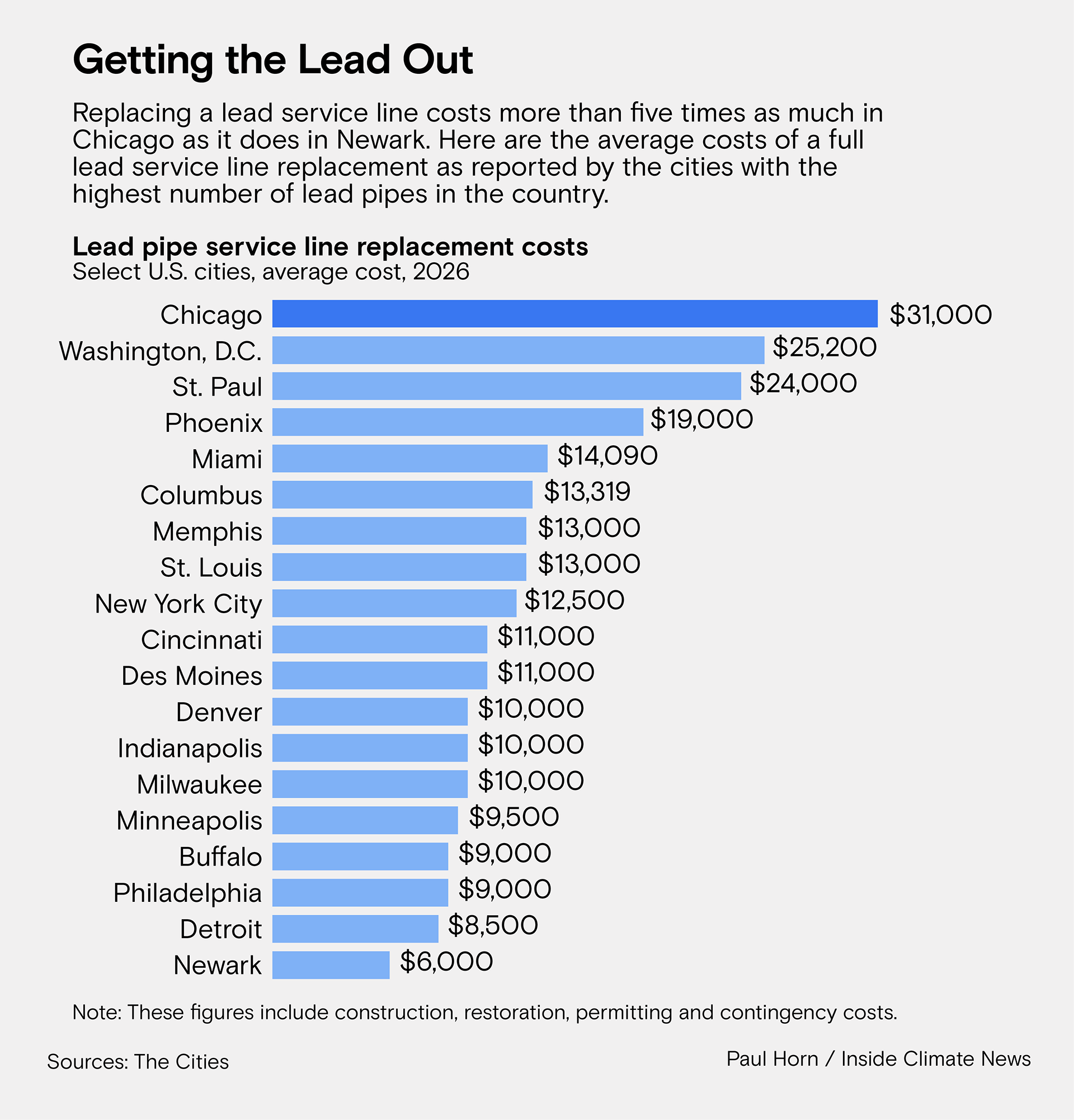
No city dealing with a lot of lead pipes spends as much as Chicago does to replace them.

With more than 400,000 lead water service lines, Chicago has the largest known inventory of lead pipes of any city in the country. Officials say replacing each one costs about $31,000 on average — more than six times the Environmental Protection Agency’s national estimate of $4,700 a line.

WBEZ, Grist and Inside Climate News surveyed other cities with the most lead service lines in the country, including Detroit, Milwaukee and New York, about the cost of fully replacing a lead service line. The 18 that responded provided averages between $6,000 and $25,000, with most spending less than half what Chicago does. Engineering firm CDM Smith, which works with cities across the country, pegs the national average at $12,500 per line.

Now, with a federal mandate to remove every lead pipe within roughly 20 years, Chicago is facing a daunting timeline and an astronomical price tag. Replacing the city’s inventory at the current rate will cost more than $12 billion.

“It is absurd,” said Cyndi Roper, a senior policy advocate with the Natural Resources Defense Council’s safe water initiative. “You can’t play victim to your own policies. … You actually can make changes to bring the cost down.”

A review over seven months of hundreds of pages of program documents and contracts, plus dozens of interviews with city officials, policy experts, contractors and homeowners, found several key contributors. The most significant include inefficient early contracts, cumbersome permitting requirements, and the city’s reliance on one-off replacements rather than undertaking whole blocks at once.

A glaring lack of clarity from the Department of Water Management, which oversees the city’s replacement program, has also made it difficult to pinpoint the exact reasons for the high cost. Its officials were unable to provide WBEZ, Grist and Inside Climate News with consistent figures for replacement costs and the number of lines replaced or to make clear whether the water department is tracking these costs systematically.

“It seems like the story here is how hard you have to work to get information that’s needed in order to figure out why the costs are so high,” Roper added.

A spokesperson for Mayor Brandon Johnson said in an emailed statement that he is committed to accelerating replacements and minimizing the burden to residents but did not respond to specific questions about the city’s unusually high costs.

“The Johnson administration is working across departments in coordination with local, state, and federal partners to accelerate replacements, streamline processes, and maximize every available dollar so more residents can access safe, reliable drinking water,” the statement said.

Officials with the water department said they see some room to bring expenses down as work ramps up. But they’ve also disagreed with outside experts who say Chicago’s high costs are unreasonable, and they don’t appear to be treating the drastic cost differential with other cities as a high priority to address.

“There’s a lot of people that claim they know lead service line replacement,” said a senior official with the water department who spoke with WBEZ, Grist and Inside Climate News on the condition of not being named. “They don’t know what they’re talking about.”

Illinois U.S. Sen. Tammy Duckworth, who has been working to secure federal funding for lead service line replacements across the state, said she wasn’t aware of the cost discrepancy but hoped the city would be transparent with the public about why costs are so high.

“Cities just need to get their act together and get this done, and we’ve been slow to do this in Chicago,” Duckworth said. “Other cities have moved much faster than us.”

Replacing pipes on an entire block

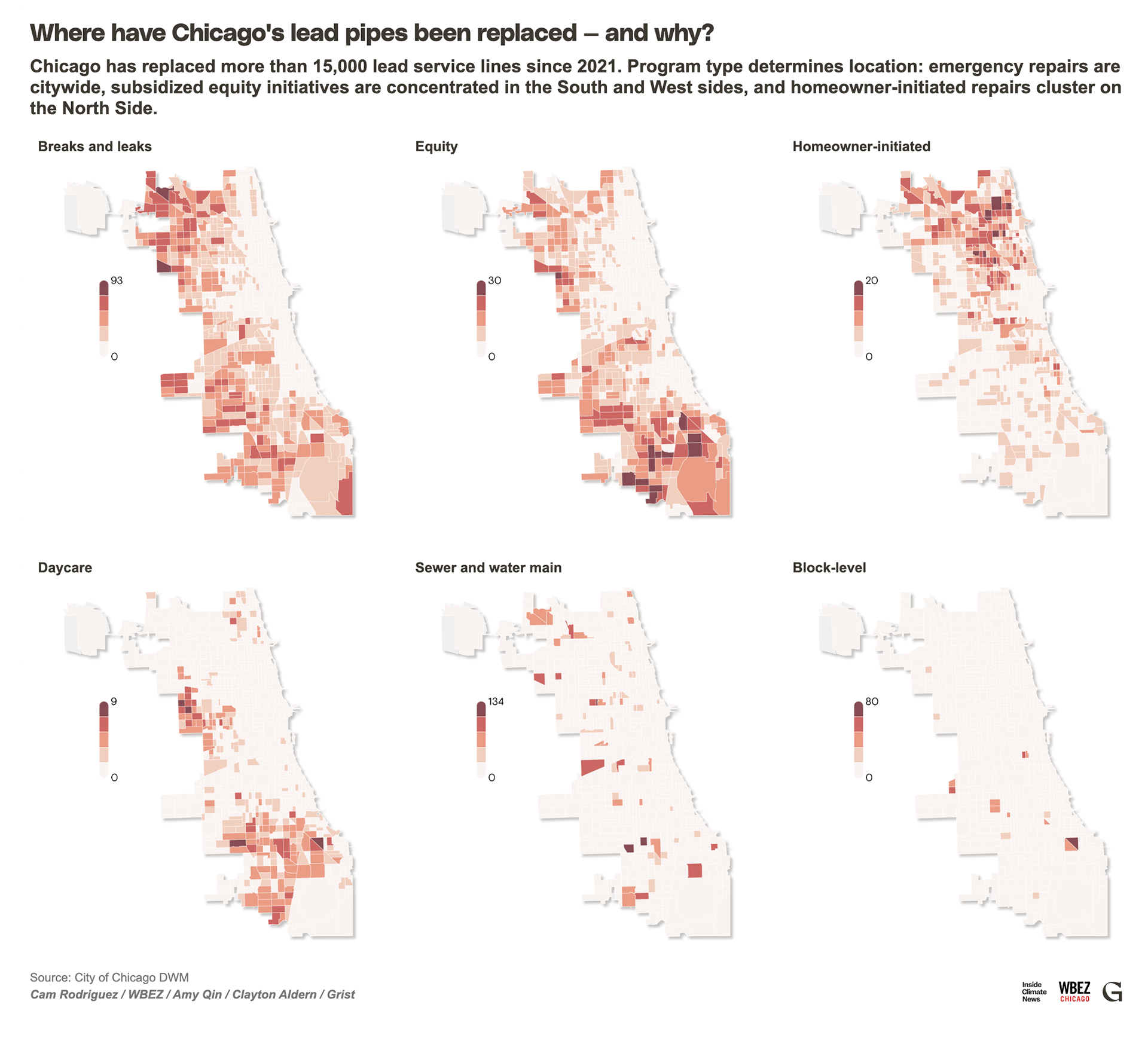
Chicago replaces lead service lines through several programs, including emergency repairs, capital improvement projects and equity initiatives targeting low-income neighborhoods and daycares.

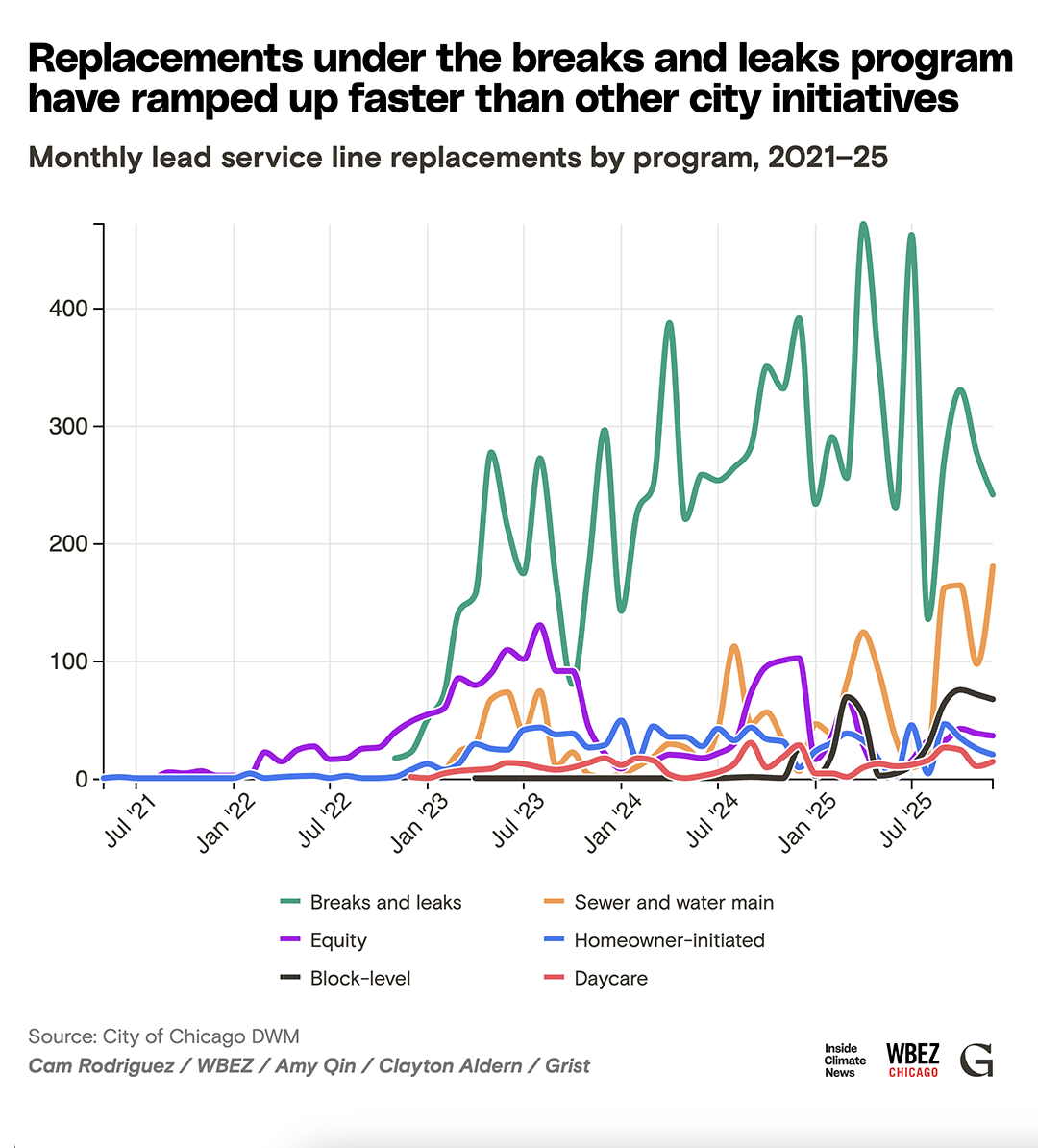
The city also replaces entire blocks of lead pipes at once. But that program accounted for just 3 percent of the approximately 15,000 lines swapped out between 2021 and the end of 2025, according to an analysis of city replacement data by WBEZ, Grist and Inside Climate News. Instead, nearly all of those lines were fixed piecemeal, mostly when crews were sent out to fix leaks and breaks.

Both city officials and experts agree that replacing lead pipes a full block at a time is cheaper. In Milwaukee, per-line costs dropped by nearly $2,000 since implementing a block level program. Chicago officials say they want to ramp up blockwide replacements, but there have been legal and logistical barriers to expanding that program.

In Illinois, property owners control half the service line, and the municipality is responsible for the other. State law forbids partial line replacement because the process can flush more lead into drinking water, and municipalities willing to replace private lines must first get the property owners’ permission. That’s harder and more time-consuming than it may seem, a key reason for the city’s low number of block replacements, according to officials.

Earlier this year, state lawmakers introduced a new bill at the water department’s request to fix that, granting city plumbers access to private lines without the owner’s permission. It passed in May and now awaits Gov. JB Pritzker’s signature.

“We need to accelerate, as much as humanly possible, this process,” said state Sen. Ram Villivalam of Chicago, a co-sponsor of the bill.

Still, it’s not clear how much block-level replacements will actually decrease Chicago’s costs. Water department officials pegged the average per-line cost for block-level work, which they have said is their cheapest program, at approximately $34,000, and the average for one-off replacements at $39,000. Both figures are well above the $31,000 overall average that department officials have cited.

Asked to explain how that could be, the water department did not respond. In her last email to the news organizations in May, water department spokesperson Megan Vidis said she would not answer any more questions on the topic.

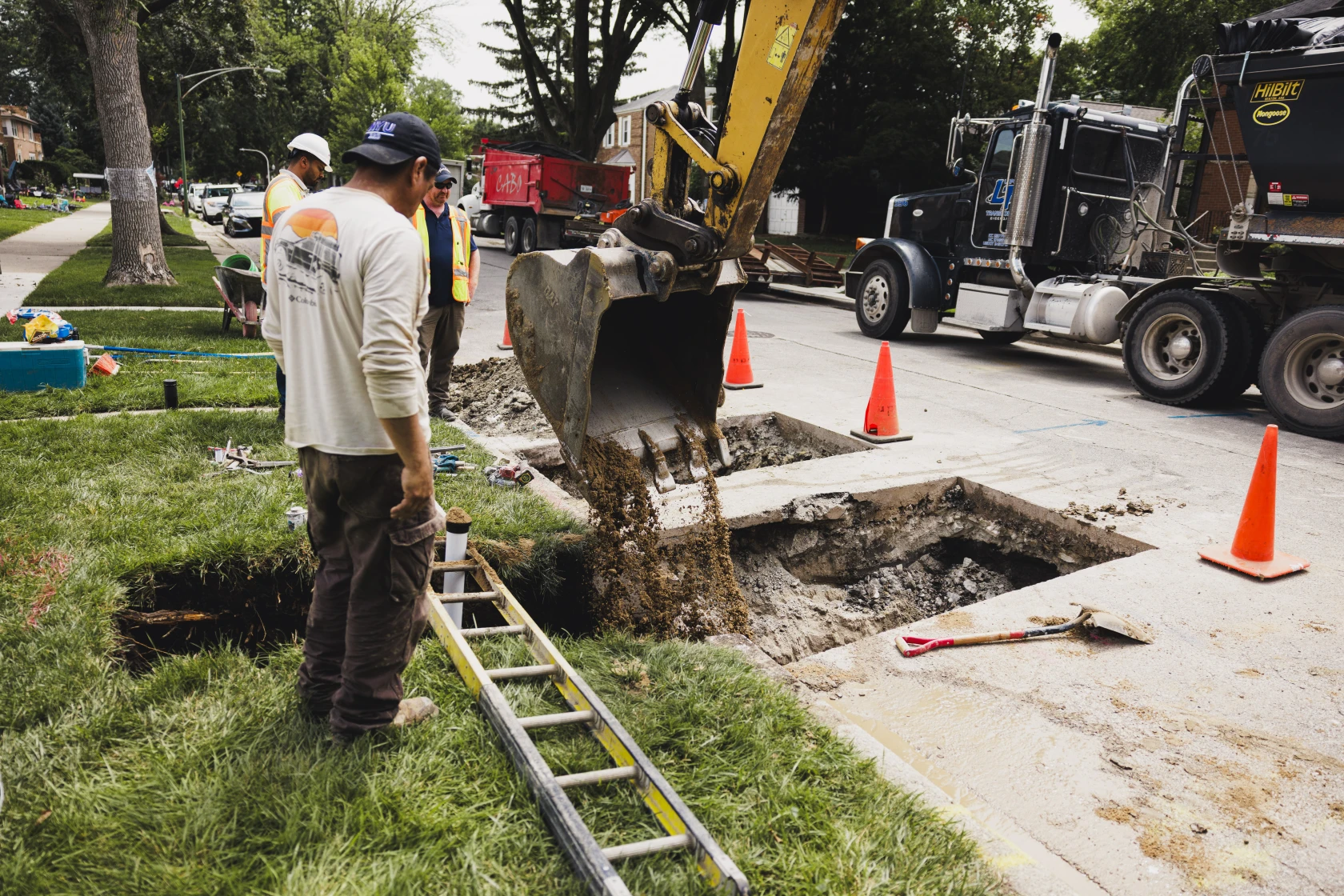
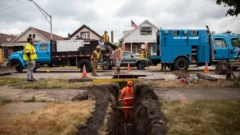
Workers replace lead service lines in Chicago’s West Ridge neighborhood. (Photo credit: Anthony Vazquez/Sun-Times)

The toll on homeowners

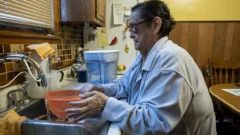
Any lead pipe a property owner replaces on their own is one the city doesn’t have to pay forBut some homeowners are finding that far harder than they imagined, in part because of the city’s prohibitively expensive and complex permitting process.

Craig Hines and his wife, homeowners in Chicago’s Avondale neighborhood, discovered they had a lead service line last summer when they received a letter from the city. They were immediately alarmed: They cook regularly for young nieces and nephews, and Hines knows there’s no safe level of lead exposure.

They called 14 plumbers looking for a quote. Some refused to take them on or seemed to be trying to dissuade them from doing the work altogether, saying the job would be too expensive. One preliminary quote totaled $25,000. The couple were told permits alone could cost between $5,000 and $7,000.

“These fees seem so exorbitant when it’s like, this was a city screw-up,” Hines said, referring to Chicago’s history of installing lead lines long after the health consequences came to light. “I just cannot believe that the permitting fees are so high to help fix a problem that the city created.”

Replacing a single line can require permits from the water and transportation departments, as well as inspection-related charges, according to the city’s Department of Buildings. The fees vary based on the type of street and size of pipe.

The water department said it waives all its permit fees when the city pays for replacements. But it’s not so simple when property owners want to shoulder the cost. Some qualify for a city program waiving up to $5,000 in fees; others don’t. Water department officials could not provide an average cost for permits, saying it varies by project site.

After more than six months of research — including contacting their alderman, district commissioner and multiple city departments to track down answers about costs — Hines and his wife finally settled on a plumber who knew how to navigate the city’s permit waivers. He quoted them $22,000 for the job, which he said will include permits. They hope their replacement will take place in July.

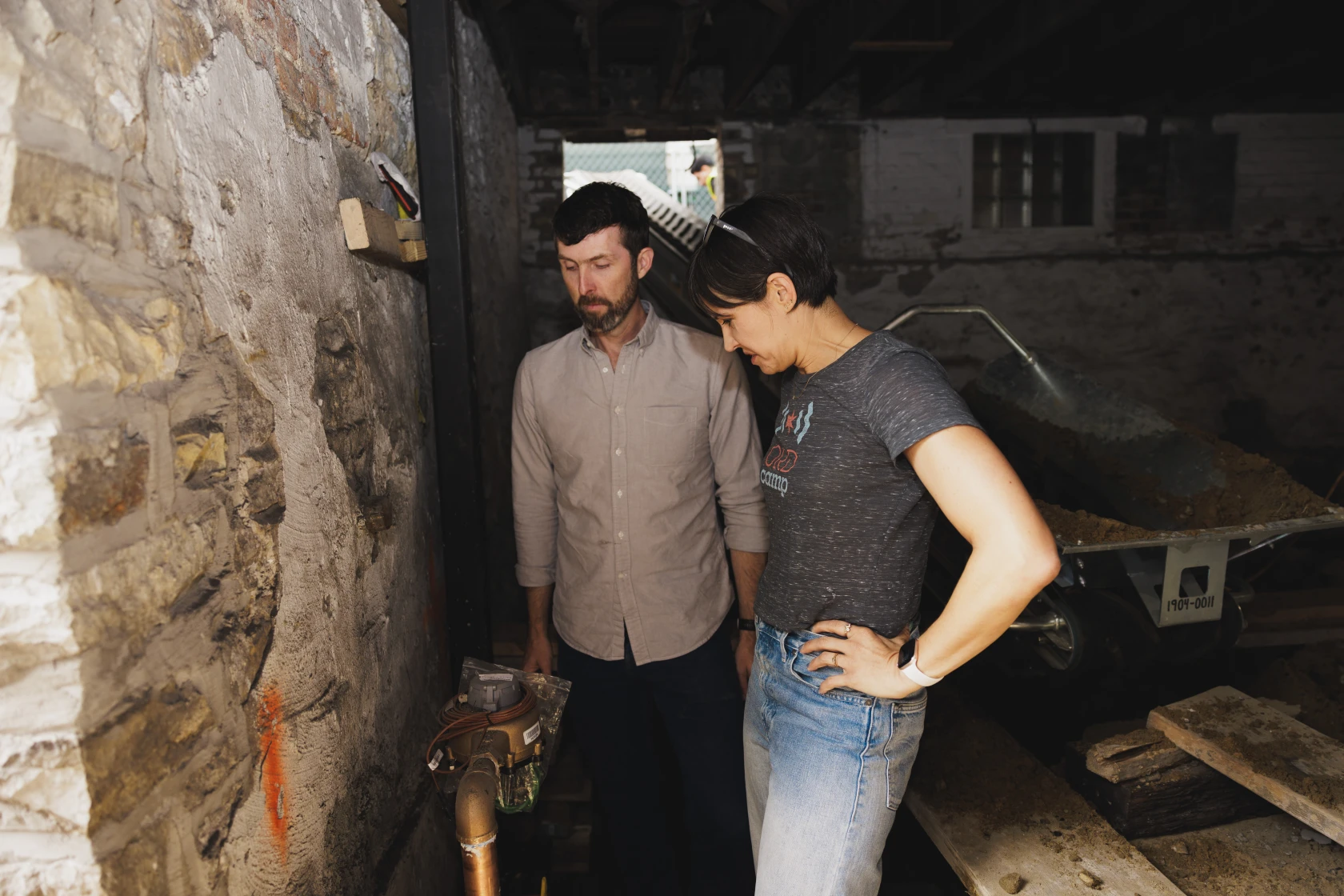
Ryan Wilson (left) and Alaina Harkness stand next to their new water meter that was installed when they replaced lead water pipes in their home. (Photo credit: Anthony Vazquez/Sun-Times)

Several miles south, Ryan Wilson and his wife, Alaina Harkness, said they didn’t qualify for the fee waiver. They paid nearly $25,000 to replace the lead line at their Hyde Park home last year, but because they also upsized their service line while replacing it, they weren’t eligible for the waiver.

Wilson has worked in urban planning for decades, and even so, he said he found navigating the city’s permitting requirements extremely confusing. They never were able to figure out how much of their final bill was allotted to permits. If Chicago wants to improve citywide replacement efforts, Wilson said, improving the permitting process should be high on the list.

“There’s not a single person to talk to about this,” he said.

Inefficient contracts and funding woes

Water department officials pointed to two key reasons for the high costs. First, they said that the city lacked a firm grasp of costs when launching its replacement program in 2021 and also that its first round of contracts was inefficient. The early contracts also bundled jobs poorly, tasking contractors with work outside their specialization, like having plumbers work on restoration or outreach.

“Early on, the issue was … a lot of unknowns in our contracts,” the water department’s deputy commissioner, Michael Grillo, said in a webinar last fall. “We are trying to be smarter with our contracts that go out, be more specific, eliminate those unknowns.”

Plumbing companies overbid to cover worst-case scenarios in those early contracts, Grillo said. The water department’s Vidis confirmed via email that the city has implemented four new contracts this year focused on improving equitable access for small businesses to replace lead service lines but said the goal of those contracts was not to reduce per-line prices.

Grillo also blamed labor costs for part of the city’s high price tag, but that explanation doesn’t appear to pan out.

The base prevailing wage for a union plumber in the Chicago area is $99.52 per hour. By contrast, it’s about $97 in Minneapolis and roughly $121 in New York City, both of which replace their lead pipes for less than half of Chicago’s costs.

“I have a hard time believing that the prevailing wage would be the cost factor,” said Betony Jones, a senior researcher at the University of California, Berkeley, and former director of energy jobs under the Biden administration.

The city says a lack of robust, flexible funding is compounding the problem. Chicago has to cobble together funding from a patchwork of local and federal sources in the form of grants and low-interest loans, which brings red tape and restrictions.

The Biden-era Infrastructure Investment and Jobs Act delivered a historic $15 billion for lead pipe removal, with Illinois getting about $1.2 billion, according to Duckworth’s office. This month, Duckworth’s office announced a separate $22 million federal grant earmarked for Chicago’s majority-Black Austin neighborhood — where 92 percent of service lines require replacement, according to last year’s lead service line inventory. At Chicago’s price point, the state estimates that $22 million will only replace about 650 lines out of the nearly 17,000 reported in city data for Austin last year.

“Chicago needs to explain where the money is going and justify the cost,” wrote Elin Betanzo, a national drinking water expert who helped uncover the water crisis caused by lead pipes in Flint, Michigan, in an email.

Betanzo, who has done extensive research on cost-saving tactics, said she has not seen a realistic cost breakdown that demonstrates why Chicago is paying as much as it is.

“They need to figure out how to complete the most cost-efficient lead service line replacements in the country, not the most expensive,” she added.

With funding from the Infrastructure Investment and Jobs Act set to run out this year, public health experts have been calling for more local, federal and state dollars to fund replacements, especially in overburdened cities like Chicago.

“It’s a critical part of the infrastructure,” Betanzo said. “It’s that final piece of public health protection.”

Amy Qin and Cam Rodriguez contributed data analysis for this story.


The post Why Is It So Expensive to Replace Lead Pipes in Chicago? appeared first on Great Lakes Now.

Original Article

Great Lakes Now

Great Lakes Now

https://www.greatlakesnow.org/2026/06/30/why-is-it-so-expensive-to-replace-lead-pipes-in-chicago/

WBEZ, Inside Climate News and Grist

This Earth Day, Detroit PBS programming is focusing on turning land back into something wild. Better known as “rewilding,” a large-scale conservation effort that usually involves reintroducing keystone plant or animal species to reestablish the health of a local ecosystem. 

In the Great Lakes region, Illinois recently made history by being the first state in the nation to make rewilding part of its official strategy. As of January 1, 2026, the “Illinois Rewilding Law” is now in effect. According to the Chicago Tribune, the law empowers the Illinois Department of Natural Resources to go after projects that restore land to its natural state.

“The law could encompass the reintroduction of keystone species that improve ecosystems, like beavers and bison. But officials and environmentalists say closing the federal gaps in wetland protection is their focus right now,” wrote Christiana Freitag at the Chicago Tribune

After the Supreme Court case Sackett v. EPA rolled back federal wetland protections, Illinois became especially vulnerable considering it already lost 90% of its swamps. Chicago was built on wetlands, which are important when considering water quality and flood prevention — this is especially significant, as Chicago has dealt with severe flooding

An international effort

British author and conservationist Isabella Tree joins our Detroit PBS colleagues to discuss her non-fiction book “Wilding: Returning Nature to Our Farm.” On April 29, be sure to check out their live event with PBS Books Readers Club, from 8 to 9 p.m. ET. 

Tree’s book details her process of rewilding her 3,500 acre estate in Sussex, England. After visiting an arborculturist to save their oak trees, Tree and her husband were inspired to change everything they were doing with their land. After it was depleted by centuries of farming, they transformed it into a healthy haven for the littlest bugs and grazing animals, all by planting native flora and fauna. 

“I think the only answer to eco anxiety is to get your hands dirty and do something,” said Tree. “And the joy that can come from even transforming a window box… so that you’re now attracting night flying moths and hoverflies and all the forgotten pollinators, you’re making a difference. And that feels just so fantastic.”

Be sure to also check out the upcoming documentary, Wilding (inspired by the book) that premieres on PBS, on April 22. 

What you can do

For those who would like to feel more involved in helping our ecosystem, Doug Tallamy wants private property owners to know they have a role in the conservation movement. Tallamy calls this the Homegrown National Park movement. 

“Most people have too much lawn,” said Tallamy. 

According to the author, entomologist, biologist and conservationist we have 44 million acres of lawn in this country. When there’s a storm event, most of those pesticides, fertilizers and herbicides run off into the watershed. He said, if we’re going to put plants in our yards, why not use ones that do everything we need to conserve and protect our environment? Native plant alternatives to grass help guard our watershed, help the food web, support pollinators and are often better at sequestering carbon.

(Credit: National Wildlife Federation)

 “The point is, what you’re doing is creating connectivity,” said Tallamy. “If you and a bunch of other people do it, then outside of the parks and preserves it’s not no man’s land, there is some habitat.”

For more information, watch Great Lakes Now’s latest interview: 

The post Rewilding, a new way to heal the land this Earth Day appeared first on Great Lakes Now.

Original Article

Great Lakes Now

Great Lakes Now

https://www.greatlakesnow.org/2026/04/22/rewilding-a-new-way-to-heal-the-land-this-earth-day/

Lisa John Rogers, Great Lakes Now

By Juanpablo Ramirez-Franco, WBEZ

This coverage is made possible through a partnership between WBEZ and Grist, a nonprofit environmental media organization.

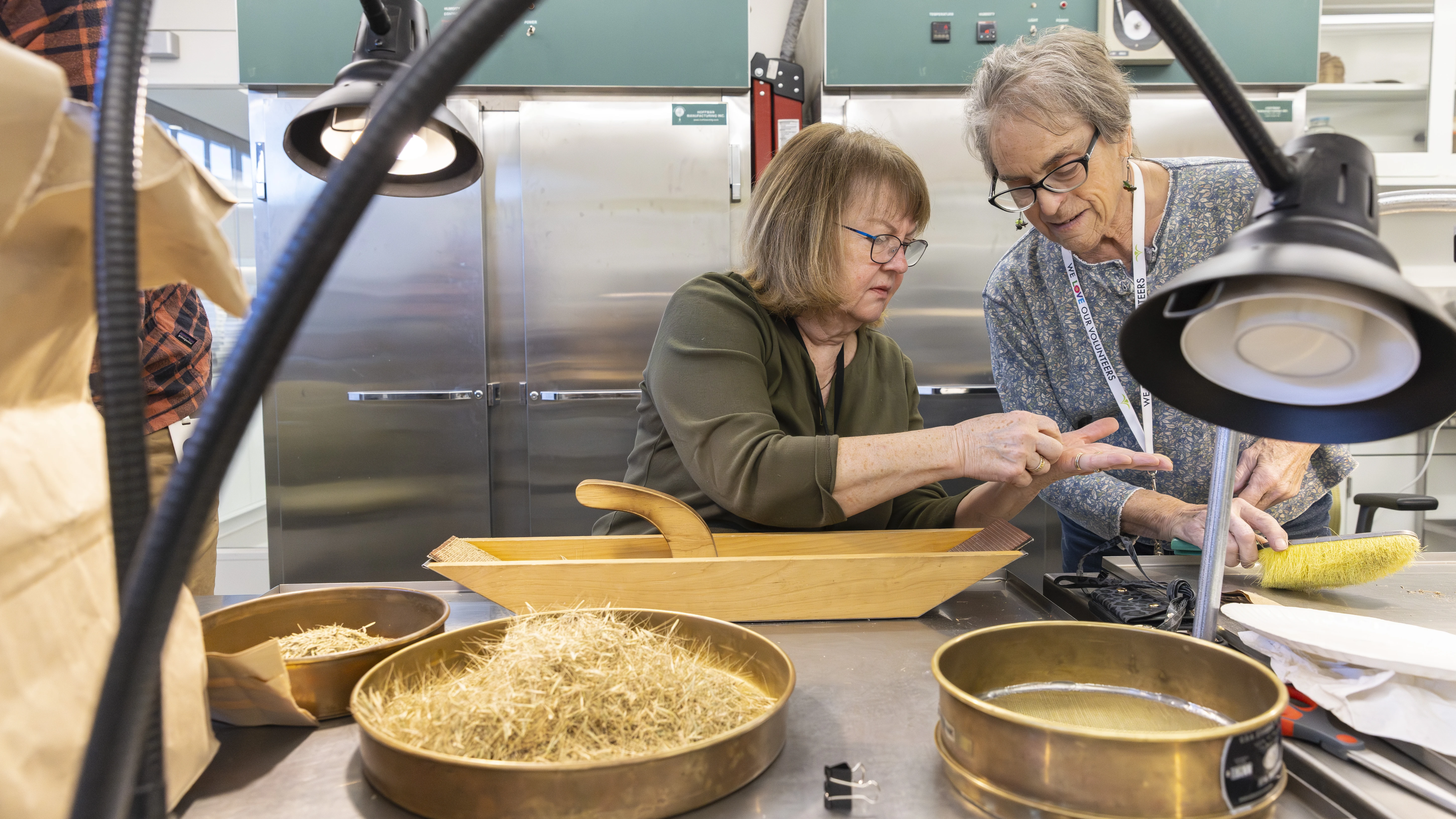
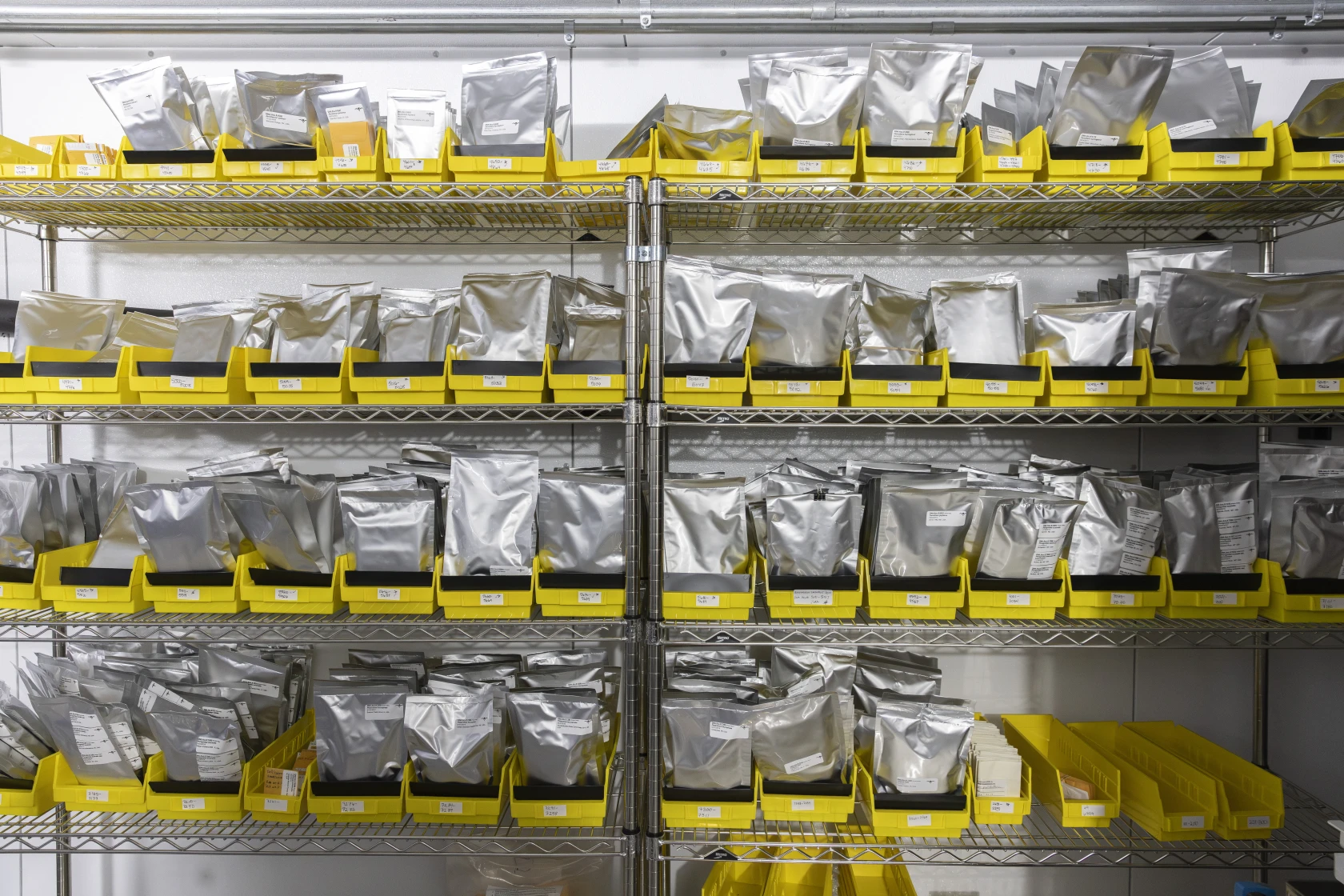
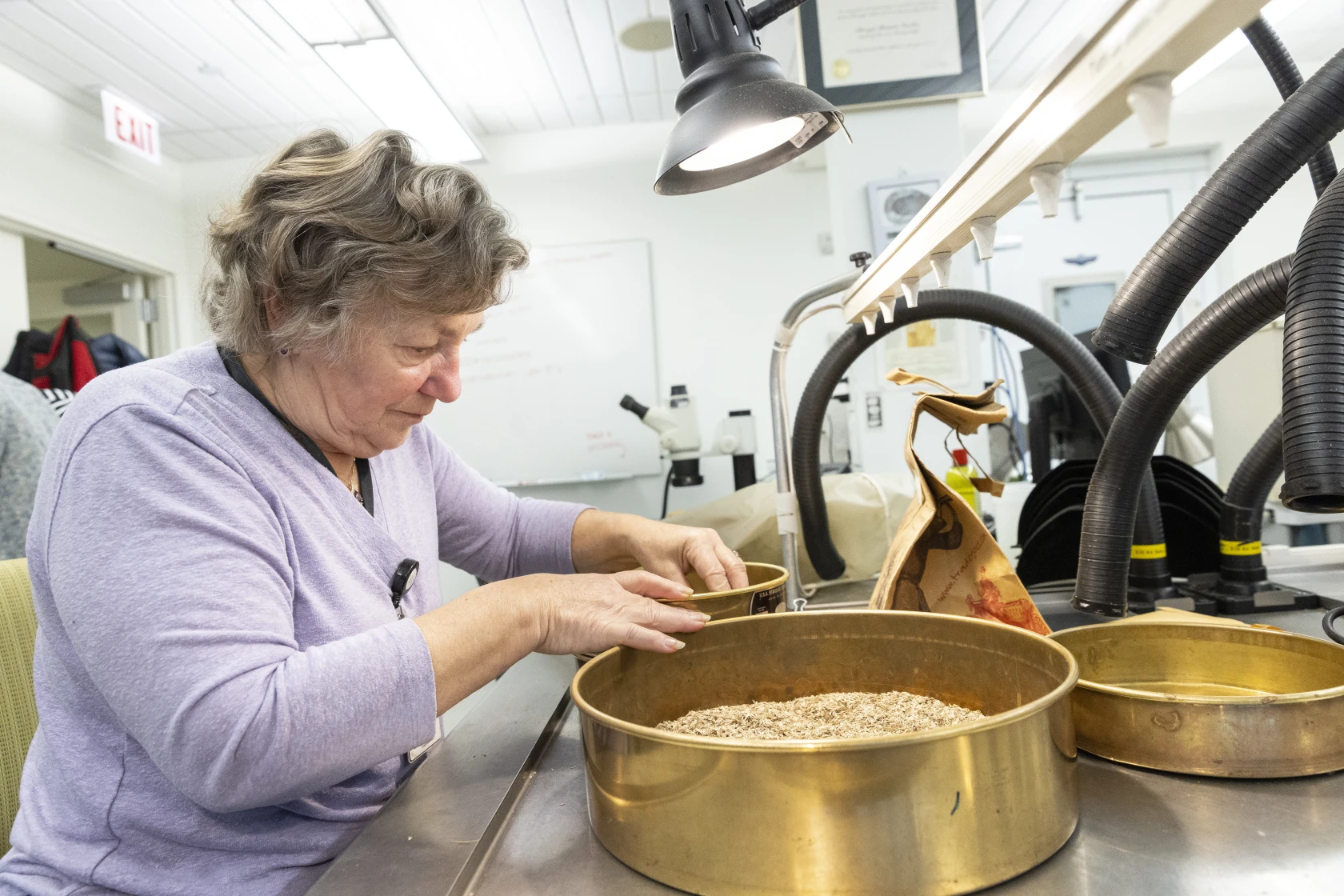
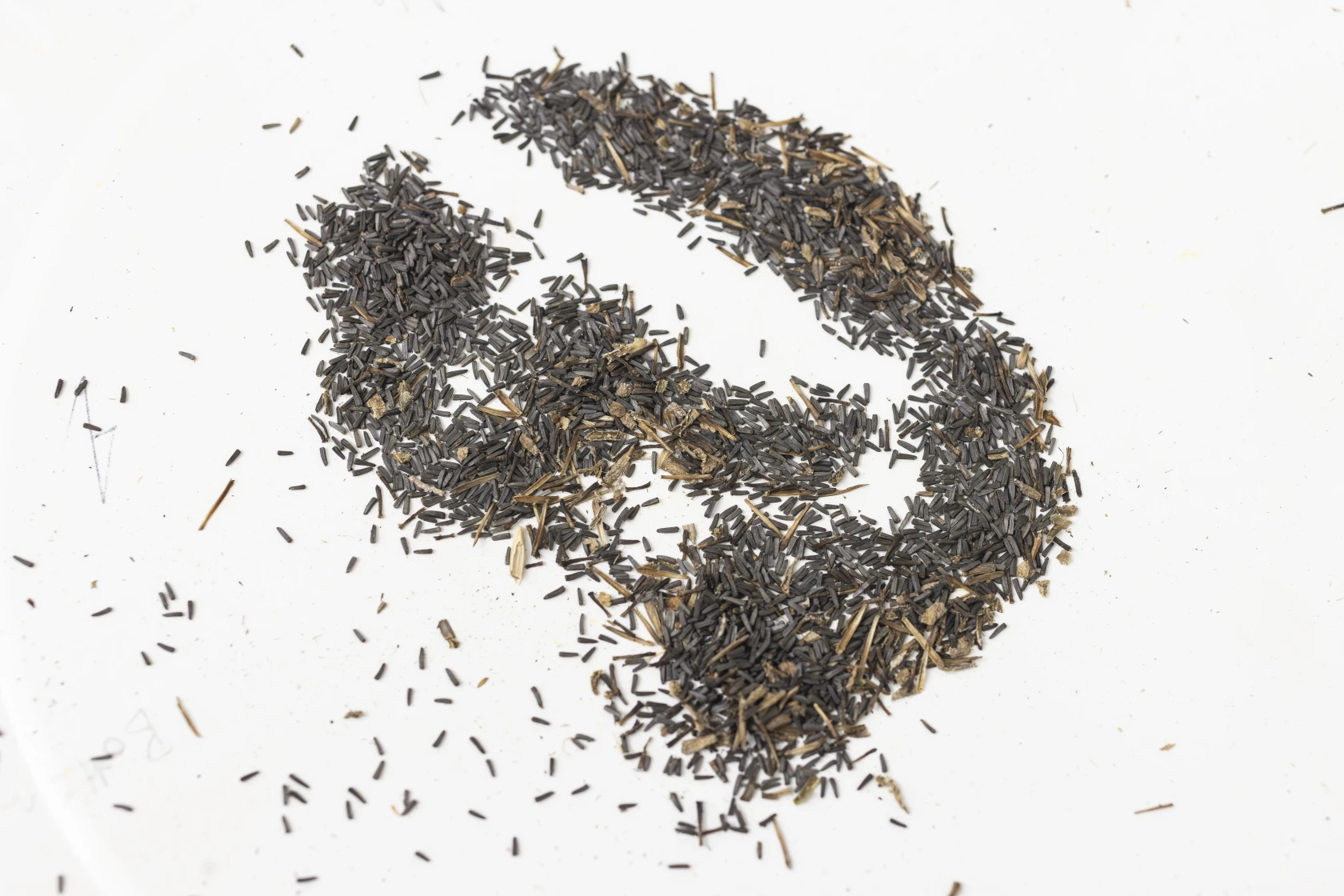
Under the warm light of a hanging lamp, Marty Landorf carefully crumbled the dried flower head of a black-eyed Susan between her fingers, teasing apart the chaff to uncover its puny black seeds. Each one was destined for long-term cold storage alongside roughly 46 million other seeds at the Chicago Botanic Garden.

Every seed in the garden’s vault is different. Some seeds have hooks. Others verge on microscopic. A few carry a sharp, deterring scent. And some, like the airborne seeds of the milkweed, the host plant for monarch caterpillars, are fastened to silky fluff that drifts everywhere, hitching rides on volunteers’ clothes and following them home.

“Fluff is fun,” Landorf said laughing, seated alongside five other volunteers cleaning, counting, and sorting seeds at a long metallic table in the garden’s seed bank preparation lab.

For all their variation, these seeds share a common trait: They’re native to the Midwest. These species genetically adapted over thousands of years and sustain the region’s ecosystems. That evolutionary inheritance makes them indispensable for restoring the nation’s remaining prairies, wetlands, and woodlands.

Seeds displayed at the seed bank in the Carr Administrative Center of the Chicago Botanic Gardens on February 10, 2026. | Manuel Martinez/WBEZ

The problem: Native seeds are in short supply. And climate change is intensifying demand.

“Climate change is affecting our weather and the frequency of natural disasters,” said Kayri Havens, chief scientist at the Chicago Botanic Garden. “Wildfires becoming more common, hurricanes becoming more common — that increases the need for seed.”

In 2024, the Chicago Botanic Garden, a 385-acre public garden and home to one of the nation’s leading plant conservation programs, helped launch the Midwest Native Seed Network, a first step in improving the region’s fragile seed supply. The coalition now includes roughly 300 restoration ecologists, land managers, and seed growers across 150 institutions in 11 states. Together, they are researching which species are most in demand, where they are likely to thrive, and what it will take to produce them at scale and get them in the ground.

The collaborative is compiling information on seed collection, processing, germination, and propagation while identifying regional research gaps and planning collaborative projects to close them. For example, the network is currently collecting research on submerged aquatic plants such as pondweeds, and other species that are challenging to germinate, like the bastard toadflax, a partially parasitic perennial herb.

“We’re addressing these local, regional, and national shortages of native seed that are really just hindering our ability to restore really diverse habitats, build green infrastructure, and support urban gardens,” said Andrea Kramer, director of restoration at the Chicago Botanic Garden.

Sarah Hollis-research assistant at the Chicago Botanic Gardens in Highland Park Illinois tours the seed bank in the Carr Administrative Center on February 10, 2026. | Manuel Martinez/WBEZ

Last year, the network undertook its first major project: a large-scale survey of more than 50 partners across the region. The results were stark. More than 500 are effectively unavailable for restoration. In some cases, it’s because no one grows them. In others, the seeds are available, but the cost — even at a couple of dollars per packet — becomes prohibitive when restoration projects require thousands of pounds. And for certain finicky species, the bottleneck is technical: Researchers and growers still don’t fully understand how to germinate them reliably or help them thrive in restoration settings.

Kramer said that ultimately the goal is to connect the people who need seeds with those who know how to grow them. While the network does not sell seeds, it works with organizations and partners that do. “We are using the network to help elevate what we all know and share what we know to make it easier,” she said.

The shortage itself is not new. In 2001, following sweeping wildfires in the West, Congress tasked federal agencies, including the Bureau of Land Management and the U.S. Forest Service — which combined manage approximately one-fifth of the nation’s public lands — to craft an inter-agency, public-private partnership to increase the availability of native seeds. But according to a 2023 report, which identified the lack of native seeds as a major obstacle for ecological restoration projects across the United States, those efforts remain unfinished.

Wildfires have scorched more than 170 million acres in the U.S. between 2000 and 2025, according to the National Interagency Fire Center. In 2020 alone, the Bureau of Land Management purchased roughly 1.5 million pounds of seed to rehabilitate burned landscapes. In a bad fire year, the agency can buy as much as 10 million pounds.

Marta Raiff, a volunteer, at the Chicago Botanic Gardens in Highland Park Illinois works on separating the seeds from the chaff at the seed bank in the Carr Administrative Center on February 10, 2026. | Manuel Martinez/WBEZ

The 2021 Bipartisan Infrastructure Law dedicated $1.4 billion for ecosystem restoration over five years, including $200 million for the National Seed Strategy, a coalition of 12 federal agencies and various private partners established in 2015 to provide genetically diverse native seeds for restoration. The following year, the Inflation Reduction Act invested nearly $18 million to develop an interagency seed bank for native seeds. And in 2024, the Interior Department announced an initial round of $1 million for a national seed bank for native plants.

“The U.S. does have a major seed bank run by the [Department of Agriculture], and it mostly banks crops,” said Havens, the scientist at the Chicago Botanic Garden.“But we don’t have that kind of infrastructure in place for native seed.”

Momentum for establishing a native seed bank stalled following funding cuts by the Trump administration. In early 2025, the Department of Government Efficiency cut 10 percent of the staff at the National Plant Germplasm System, which is home to one of the largest and most diverse plant collections in the world.

Marty Landorf, a volunteer, at the Chicago Botanic Gardens in Highland Park Illinois works on separating the seeds from the chaff at the seed bank in the Carr Administrative Center on February 10, 2026. | Manuel Martinez/WBEZ

“If something isn’t supported on a national level, then it becomes incumbent on states and regions to do that kind of work,” Havens said. “So that’s why we’re focusing right now in the Midwest.”

The network is the first of its kind in the Midwest, though similar initiatives have been active elsewhere in the country for years. Today, there are more than 25 similar networks operating across the U.S. In the western United States, these coalitions have come together in response to post-wildfire restoration projects.

“One of the reasons why we were among the first is because of this federal land ownership that we have in the West, whereas in the Midwest, it’s more private land,” said Elizabeth Leger, a professor at the University of Nevada in Reno and co-founder of the Nevada Native Seed Partnership. More than 90% of all federal land is located in 11 western states.

Kramer said she hopes to run the seed availability survey again in 20 years and get a different response.

“I want them to say, ‘We have access to all the seed we need,’” said Kramer. “And we can move on to the next challenging question, like, ‘Why isn’t the seed establishing in my restoration? Or, how do we manage the next challenge coming with climate change?’”

This story has been updated with the correct spelling of Elizabeth Leger’s name.

The post A network is racing to save the Midwest’s native seeds appeared first on Great Lakes Now.

Original Article

Great Lakes Now

Great Lakes Now

https://www.greatlakesnow.org/2026/03/03/a-network-is-racing-to-save-the-midwests-native-seeds/

WBEZ

Illinois one step closer to keeping invasive carp out of Great Lakes

By Juanpablo Ramirez-Franco, WBEZ

This coverage is made possible through a partnership between WBEZ and Grist, a nonprofit, independent media organization dedicated to telling stories of climate solutions and a just future. Sign up for WBEZ newsletters to get local news you can trust.

Read Now at Great Lakes Now.

Original Article

Great Lakes Now

Great Lakes Now

https://www.greatlakesnow.org/2025/10/illinois-one-step-closer-to-keeping-invasive-carp-out-of-great-lakes/

WBEZ

Michigan’s historic nuclear plant restart still a go, federal regulators say


Catch the latest energy news from around the region. Check back for these bimonthly Energy News Roundups.


A mothballed nuclear power plant in Michigan just took a huge step toward being the first in the country to start back up after retiring.

Read Now at Great Lakes Now.

Original Article

Great Lakes Now

Great Lakes Now

https://www.greatlakesnow.org/2025/08/michigans-historic-nuclear-plant-restart-still-a-go-federal-regulators-say/

Nicole Pollack, Great Lakes Now

Rethinking Strategy in the Era of the Trump EPA

The administration of President Donald Trump acted quickly and unilaterally when it launched its blitzkrieg to dramatically downsize and alter the mission of the United States Environmental Protection Agency (EPA).

There were no bureaucratic task forces, collaborations or obligatory outreach sessions to the public for comment before taking action.

Read Now at Great Lakes Now.

Original Article

Great Lakes Now

Great Lakes Now

https://www.greatlakesnow.org/2025/08/rethinking-strategy-in-the-era-of-the-trump-epa/

Gary Wilson, Great Lakes Now

Why we don’t bike like the Dutch — yet

How did you get to work today?

Maybe, like 14% of Americans, you didn’t have to go anywhere because you work from home. But most people do need some form of transportation to earn a living. By far the biggest group is the 69% of people who drive to work alone.

Read Now at Great Lakes Now.

Original Article

Great Lakes Now

Great Lakes Now

https://www.greatlakesnow.org/2025/07/why-we-dont-bike-like-the-dutch-yet/

Sean Ericson, Great Lakes Now

This wetland fight could go to the Supreme Court

A pending court case could impact farmers across the country. At issue is a USDA rule aimed at protecting wetlands called “Swampbuster.” In place since 1985, it’s being challenged in court by an absentee landowner in Iowa.

Under Swampbuster, farmers have to agree not to drain or fill their wetlands, in order to receive farm benefits such as crop insurance, disaster relief and USDA loans.

Read Now at Great Lakes Now.

Original Article

Great Lakes Now

Great Lakes Now

https://www.greatlakesnow.org/2025/07/this-wetland-fight-could-go-to-the-supreme-court/

Great Lakes Now

Chicago was supposed to warn residents about toxic lead pipes last year. Most still have no idea.

By Keerti Gopal & Juanpablo Ramirez-Franco

This story is a partnership between GristInside Climate News, and WBEZ, a public radio station serving the Chicago metropolitan region. This coverage is made possible through an ongoing partnership between Grist and WBEZ.

Read Now at Great Lakes Now.

Original Article

Great Lakes Now

Great Lakes Now

https://www.greatlakesnow.org/2025/07/chicago-was-supposed-to-warn-residents-about-toxic-lead-pipes-last-year-most-still-have-no-idea/

Inside Climate News and Grist

Chicago residents risk daily lead exposure from toxic pipes. Replacing them will take decades.

By Keerti Gopal & Juanpablo Ramirez-Franco

This story is a partnership between GristInside Climate News, and WBEZ, a public radio station serving the Chicago metropolitan region. This coverage is made possible through an ongoing partnership between Grist and WBEZ.

Read Now at Great Lakes Now.

Original Article

Great Lakes Now

Great Lakes Now

https://www.greatlakesnow.org/2025/07/chicago-residents-risk-daily-lead-exposure-from-toxic-pipes-replacing-them-will-take-decades/

Inside Climate News and Grist

Sinking cities: Great Lakes cities not immune from under-recognized threat

Significant areas of the Earth’s surface across continents are gradually sinking and that process brings environmental, social and economic consequences to urban centers in the United States. Great Lakes cities Detroit and Chicago are among those at risk.

That’s the conclusion of a recent study conducted by Columbia University researchers, published by the science journal Nature Cities.

Read Now at Great Lakes Now.

Original Article

Great Lakes Now

Great Lakes Now

https://www.greatlakesnow.org/2025/05/sinking-cities-great-lakes-cities-not-immune-from-under-recognized-threat/

Gary Wilson, Great Lakes Now

Buses vs. Trains: The Future of Public Transit in the Great Lakes Region

Cities around the Great Lakes region are trying to make transportation cheaper for riders and more environmentally friendly by expanding their public transit networks. Two modes that are often pitted against each other are light rail and bus rapid transit (BRT). While not every BRT line meets the same standards, in general, they have been upgraded for higher capacity and speed, although they have fewer stations.

Read Now at Great Lakes Now.

Original Article

Great Lakes Now

Great Lakes Now

https://www.greatlakesnow.org/2025/05/buses-vs-trains-the-future-of-public-transit-in-the-great-lakes-region/

Sean Ericson, Great Lakes Now

Experts explain criticality of regional EPA office

Change is happening since Donald Trump took office and began making good on campaign pledges to reduce the size and scope of the work of the federal agencies that serve the country.

And the 50-year-old focus of the U.S. EPA to protect the environment has not been immune.

Read Now at Great Lakes Now.

Original Article

Great Lakes Now

Great Lakes Now

https://www.greatlakesnow.org/2025/04/experts-explain-criticality-of-regional-epa-office/

Gary Wilson, Great Lakes Now

‘Everyone deserves clean air,’ says a Chicago EPA worker who fears her job will end

By Juanpablo Ramirez-Franco, WBEZ

This coverage is made possible through a partnership between WBEZ and Grist, a nonprofit, independent media organization dedicated to telling stories of climate solutions and a just future. Sign up for WBEZ newsletters to get local news you can trust.

Read Now at Great Lakes Now.

Original Article

Great Lakes Now

Great Lakes Now

https://www.greatlakesnow.org/2025/04/everyone-deserves-clean-air-says-a-chicago-epa-worker-who-fears-her-job-will-end/

WBEZ

What would the Great Lakes region be like with bullet trains?

A few months ago, I was riding on Amtrak’s new Borealis line from St. Paul, Minn., to Chicago. The train was packed that day, and the new line has proved popular.

My coach seat was much nicer than any airline. Plus, I didn’t have to go through security.

Read Now at Great Lakes Now.

Original Article

Great Lakes Now

Great Lakes Now

https://www.greatlakesnow.org/2025/03/what-would-the-great-lakes-region-be-like-with-bullet-trains/

Sean Ericson, Great Lakes Now

From Madigan’s Conviction to ComEd’s EV Rebate Program: How Illinois is Shaping Its Energy Future

Catch the latest energy news from around the Great Lakes region. Check back for these biweekly Energy News Roundups

Chicago Democrat Michael Madigan — known for being the longest-serving legislative leader in United States history — was convicted last week of conspiracy, bribery and wire fraud.

Read Now at Great Lakes Now.

Original Article

Great Lakes Now

Great Lakes Now

https://www.greatlakesnow.org/2025/02/from-madigans-conviction-to-comeds-ev-rebate-program-how-illinois-is-shaping-its-energy-future/

Nicole Pollack, Great Lakes Now

Illinois Gov. JB Pritzker set ambitious climate goals for the state. It’s far from meeting them.

By Juanpablo Ramirez-Franco, WBEZ

This coverage is made possible through a partnership between WBEZ and Grist, a nonprofit, independent media organization dedicated to telling stories of climate solutions and a just future. Sign up for WBEZ newsletters to get local news you can trust.

Read Now at Great Lakes Now.

Original Article

Great Lakes Now

Great Lakes Now

https://www.greatlakesnow.org/2025/02/illinois-gov-jb-pritzker-set-ambitious-climate-goals-for-the-state-its-far-from-meeting-them/

WBEZ

Energy transition sees small wins, major uncertainty in the Upper Midwest

Catch the latest energy news from around the Great Lakes region. Check back for these biweekly Energy News Roundups


Chicago’s commitment to using 100% renewable energy at city-owned buildings went into effect Jan.

Read Now at Great Lakes Now.

Original Article

Great Lakes Now

Great Lakes Now

https://www.greatlakesnow.org/2025/01/energy-transition-small-wins-uncertainty-upper-midwest/

Nicole Pollack, Great Lakes Now

Can environmental law move beyond bedrock 1970’s legislation, while adapting to current and future challenges?

A 2022 report titled Promises Half Kept at the Half Century Mark, by the Environmental Integrity Project, released on the Clean Water Act’s 50th anniversary said the law is “falling short of its original goals.”

Michigan, for example, has the 4th largest number of impaired lakes, reservoirs and streams assessed for water contact recreation in the U.S.

Read Now at Great Lakes Now.

Original Article

Great Lakes Now

Great Lakes Now

https://www.greatlakesnow.org/2024/11/can-environmental-law-move-beyond-bedrock-1970s-legislation-while-adapting-to-current-and-future-challenges/

Gary Wilson, Great Lakes Now

Presenting Atlas Obscura: The Mysterious Sinkholes of Mount Baldy

By Daniel Wanschura

Points North is a biweekly podcast about the land, water and inhabitants of the Great Lakes.

This episode was shared here with permission from Interlochen Public Radio. 

On July 12, 2013 the Woessner family was hiking in Indiana.

Read Now at Great Lakes Now.

Original Article

Great Lakes Now

Great Lakes Now

https://www.greatlakesnow.org/2024/11/presenting-atlas-obscura-the-mysterious-sinkholes-of-mount-baldy/

Interlochen Public Radio

Carp Catch-22: Could improvements in Chicago waterways invite unwelcome guests?

By Juanpablo Ramirez-Franco, WBEZ

This coverage is made possible through a partnership between WBEZ and Grist, a nonprofit, independent media organization dedicated to telling stories of climate solutions and a just future. Sign up for WBEZ newsletters to get local news you can trust.

Read Now at Great Lakes Now.

Original Article

Great Lakes Now

Great Lakes Now

https://www.greatlakesnow.org/2024/10/carp-catch-22-could-improvements-in-chicago-waterways-invite-unwelcome-guests/

WBEZ

Joliet, Illinois, Plans to Source Its Future Drinking Water From Lake Michigan. Will Other Cities Follow?

By Nina Elkadi, Inside Climate News

This article originally appeared on Inside Climate News, a nonprofit, non-partisan news organization that covers climate, energy and the environment. Sign up for their newsletter here.

The aquifer from which Joliet, Illinois, sources its drinking water is likely going to run too dry to support the city by 2030—a problem more and more communities are facing as the climate changes and groundwater declines.

Read Now at Great Lakes Now.

Original Article

Great Lakes Now

Great Lakes Now

https://www.greatlakesnow.org/2024/10/joliet-illinois-lake-michigan-drinking-water/

Inside Climate News

How do fish survive in large urban waterways, like the Chicago River?

How fish adapt to life in large urban rivers, like the Chicago River, is one of the questions Dr. Austin Happel is trying to answer at the Shedd Aquarium.

“Knowing where different fish species are hanging out, we can look around that area and kind of understand what that habitat looks like and what it’s providing for them,” Happel said.

Read Now at Great Lakes Now.

Original Article

Great Lakes Now

Great Lakes Now

https://www.greatlakesnow.org/2024/09/how-do-fish-survive-in-large-urban-waterways-like-the-chicago-river/

Kathy Johnson, Great Lakes Now

Chicago’s beach season is over … or is it? Lake Michigan temps are breaking records.

By Juanpablo Ramirez-Franco, WBEZ

This coverage is made possible through a partnership between WBEZ and Grist, a nonprofit, independent media organization dedicated to telling stories of climate solutions and a just future. Sign up for WBEZ newsletters to get local news you can trust.

Read Now at Great Lakes Now.

Original Article

Great Lakes Now

Great Lakes Now

https://www.greatlakesnow.org/2024/09/chicagos-beach-season-is-over-or-is-it-lake-michigan-temps-are-breaking-records/

WBEZ

Chicago reveals climate havens don’t exist — they must be created

Experts now say “climate havens” are not places immune from climate change, but areas where adequate preparation is implemented to account for a drastically different climate than anticipated.

Great Lakes cities, like Chicago, are generally considered to be at a lower risk for extreme climate impacts such as wildfires and tropical storms.

Read Now at Great Lakes Now.

Original Article

Great Lakes Now

Great Lakes Now

https://www.greatlakesnow.org/2024/09/chicago-reveals-climate-havens-dont-exist-they-must-be-created/

Mia Litzenberg

South Shore residents are fed up with garbage on their streets

By Juanpablo Ramirez-Franco, WBEZ

This coverage is made possible through a partnership between WBEZ and Grist, a nonprofit, independent media organization dedicated to telling stories of climate solutions and a just future. Sign up for WBEZ newsletters to get local news you can trust.

Read Now at Great Lakes Now.

Original Article

Great Lakes Now

Great Lakes Now

https://www.greatlakesnow.org/2024/08/south-shore-residents-are-fed-up-with-garbage-on-their-streets/

WBEZ

Chicago teachers demand climate solutions in their next contract

By Juanpablo Ramirez-Franco, Grist

This story was originally published by Grist. Sign up for Grist’s weekly newsletter here.

This coverage is made possible through a partnership between WBEZ and Grist, a nonprofit environmental media organization.

Read Now at Great Lakes Now.

Original Article

Great Lakes Now

Great Lakes Now

https://www.greatlakesnow.org/2024/08/chicago-teachers-demand-climate-solutions-in-their-next-contract/

Grist

Chicago groups spotlight the city’s water “abundance,” focus on innovation, collaboration as key to its future

For Chicago’s Alaina Harkness, the availability and well-being of Chicago and the Great Lakes region’s water is clear. It’s about innovation, and that requires collaboration. Bringing together the right mix of policy, science, tech, advocacy groups, and others to work on common priorities for the future of water.

This mix happened recently at Chicago Water Week, organized by the not-for-profit, Current, a Chicago-based water innovation hub.

Read Now at Great Lakes Now.

Original Article

Great Lakes Now

Great Lakes Now

https://www.greatlakesnow.org/2024/05/chicago-groups-spotlight-the-citys-water-abundance-focus-on-innovation-collaboration-as-key-to-its-future/

Gary Wilson, Great Lakes Now

In Chicago, one neighborhood is fighting gentrification and climate change at the same time

By Juanpablo Ramirez-Franco, Grist

This story was originally published by Grist. Sign up for Grist’s weekly newsletter here.

This coverage is made possible through a partnership between WBEZ and Grist, a nonprofit environmental media organization.

Read Now at Great Lakes Now.

Original Article

Great Lakes Now

Great Lakes Now

https://www.greatlakesnow.org/2024/04/in-chicago-one-neighborhood-is-fighting-gentrification-and-climate-change-at-the-same-time/

Grist

Faced with COVID-era civil rights complaints, Chicago commits to environmental justice

This article was republished here with permission from Great Lakes Echo.

By Wajeeha Kamal, Great Lakes Echo

Chicago is joining a nationwide trend of large cities incorporating equity or justice goals into preparing for climate change’s impact on public health.

The idea is to better protect Black, Hispanic, Indigenous and other socially vulnerable and marginalized communities.

Read Now at Great Lakes Now.

Original Article

Great Lakes Now

Great Lakes Now

https://www.greatlakesnow.org/2024/02/faced-with-covid-era-civil-rights-complaints-chicago-commits-to-environmental-justice/

Great Lakes Echo

Study calls for EPA to include human well-being in Great Lakes restoration program

A classic definition of “environmental restoration” talks about reclaiming habitat and restoring land and waters that plants and animals depend on. 

What’s missing from that long-standing approach? Humans. People who may live near toxic waters directly benefit when they’re cleaned up. People who fish  the Detroit River for subsistence, for example.  

Read Now at Great Lakes Now.

Original Article

Great Lakes Now

Great Lakes Now

https://www.greatlakesnow.org/2024/02/study-calls-for-epa-to-include-human-well-being-in-great-lakes-restoration-program/

Gary Wilson

Chicago could be first major Midwestern city to ban gas in new construction

By Juanpablo Ramirez-Franco, WBEZ

This coverage is made possible through a partnership between WBEZ and Grist, a nonprofit, independent media organization dedicated to telling stories of climate solutions and a just future. 

Read Now at Great Lakes Now.

Original Article

Great Lakes Now

Great Lakes Now

https://www.greatlakesnow.org/2024/01/chicago-could-be-first-major-midwestern-city-to-ban-gas-in-new-construction/

Grist

Army Corps plans $1 billion barricade to deter invasive carp at Illinois and Des Plaines Rivers

By Juanpablo Ramirez-Franco, WBEZ

This coverage is made possible through a partnership between WBEZ and Grist, a nonprofit, independent media organization dedicated to telling stories of climate solutions and a just future. Sign up for WBEZ newsletters to get local news you can trust.

Read Now at Great Lakes Now.

Original Article

Great Lakes Now

Great Lakes Now

https://www.greatlakesnow.org/2024/01/army-corps-plans-1-billion-barricade-to-deter-invasive-carp-at-illinois-and-des-plaines-rivers/

WBEZ

Flooding drives millions to move as climate migration patterns emerge

By Michael Phillis and Camille Fassett, Associated Press

ST. LOUIS (AP) — Flooding is driving millions of people to move out of their homes, limiting growth in some prospering communities and accelerating the decline of others, according to a new study that details how climate change and flooding are transforming where Americans live.

Read Now at Great Lakes Now.

Original Article

Great Lakes Now

Great Lakes Now

https://www.greatlakesnow.org/2023/12/ap-flooding-drives-millions-to-move-climate-migration-patterns-emerge/

The Associated Press

Chicago Suburbs, Running Out of Water, Will Tap Lake Michigan

By Brett Walton, Circle of Blue

The Great Lakes News Collaborative includes Bridge Michigan; Circle of Blue; Great Lakes Now at Detroit Public Television; and Michigan Radio, Michigan’s NPR News Leader; who work together to bring audiences news and information about the impact of climate change, pollution, and aging infrastructure on the Great Lakes and drinking water.

Read Now at Great Lakes Now.

Original Article

Great Lakes Now

Great Lakes Now

https://www.greatlakesnow.org/2023/09/chicago-suburbs-water-tap-lake-michigan/

Circle of Blue

A Community-Led Approach To Stopping Flooding Expands

By Maia McDonald and Katrina Pham, Borderless

This piece is part of a collaboration that includes the Institute for Nonprofit News, Borderless, Ensia, Planet Detroit, Sahan Journal, and Wisconsin Watch, as well as the Guardian and Inside Climate News. The project was supported by the Joyce Foundation. 

Read Now at Great Lakes Now.

Original Article

Great Lakes Now

Great Lakes Now

https://www.greatlakesnow.org/2023/08/community-led-approach-stopping-flooding-expands/

Borderless Magazine

On Chicago’s South Side, neighbors fight to keep Lake Michigan at bay

By Siri Chilukuri, Planet Detroit

This piece is part of a collaboration that includes the Institute for Nonprofit News, Borderless, Ensia, Planet Detroit, Sahan Journal, and Wisconsin Watch, as well as the Guardian and Inside Climate News. The project was supported by the Joyce Foundation. 

Jera Slaughter looks at her backyard with pride, pointing out every feature and explaining how it came to be.

Read Now at Great Lakes Now.

Original Article

Great Lakes Now

Great Lakes Now

https://www.greatlakesnow.org/2023/08/chicagos-south-side-neighbors-fight-keep-lake-michigan-bay/

Planet Detroit

Mapping the Great Lakes: Who is looking out for the Great Lakes?

Love staring at a map and discovering something interesting? Then “Mapping the Great Lakes” is for you. It’s a monthly Great Lakes Now feature created by Alex B. Hill, a self-described “data nerd and anthropologist” who combines cartography, data, and analytics with storytelling and human experience.

Read Now at Great Lakes Now.

Original Article

Great Lakes Now

Great Lakes Now

https://www.greatlakesnow.org/2023/08/mapping-the-great-lakes-who-is-looking-out-for-the-great-lakes/

Alex Hill

FRESH: As Chicago Broils, Citizens and Scientists Study ‘Heat Island’ Effect

August 8, 2023

Fresh is a biweekly newsletter from Circle of Blue that unpacks the biggest international, state, and local policy news stories facing the Great Lakes region today. Sign up for Fresh: A Great Lakes Policy Briefing, straight to your inbox, every other Tuesday.

Read Now at Great Lakes Now.

Original Article

Great Lakes Now

Great Lakes Now

https://www.greatlakesnow.org/2023/08/fresh-chicago-broils-citizens-scientists-study-heat-island-effect/

Circle of Blue

Illinois, feds grapple with agreement that would advance billion dollar plan to stop invasive carp

The first efforts to stop the advance of invasive carp to the Great Lakes began in the early 2000s when electrical barriers in the Chicago Area Waterway System leading to Lake Michigan were thought to be a deterrent.

The fear was that if the voracious carp entered the lake, they could expand their range, wipe out the food supply and eventually devastate the multi-billion dollar Great Lakes fishery.

Read Now at Great Lakes Now.

Original Article

Great Lakes Now

Great Lakes Now

https://www.greatlakesnow.org/2023/06/illinois-feds-grapple-agreement-advance-billion-dollar-plan-stop-invasive-carp/

Gary Wilson

Energy News Roundup: Line 5 negotiations in Michigan, funding for clean energy in Illinois

Keep up with energy-related developments in the Great Lakes area with Great Lakes Now’s biweekly headline roundup.

Click on the headline to read the full story:


Illinois

Chicago’s Blacks in Green gets a major boost from a $10 million EPA grant — Energy News Network

Chicago’s Blacks in Green receives a five-year, $10 million U.S.

Read Now at Great Lakes Now.

Original Article

Great Lakes Now

Great Lakes Now

https://www.greatlakesnow.org/2023/05/energy-news-roundup-line-5-negotiations-michigan-funding-clean-energy-illinois/

Kathy Johnson

Energy News Roundup: Power outages in Michigan, future of nuclear power in Illinois

Keep up with energy-related developments in the Great Lakes area with Great Lakes Now’s biweekly headline roundup.

Click on the headline to read the full story:


Illinois

  • When it comes to smog, Cook County is the worst neighbor in the country, EPA finds — Chicago Tribune

Cook County, Illinois, contributes more to smog pollution violations in other states than anywhere else in the country, according to federal data.

Read Now at Great Lakes Now.

Original Article

Great Lakes Now

Great Lakes Now

https://www.greatlakesnow.org/2023/03/energy-news-roundup-power-outages-in-michigan-future-of-nuclear-power-in-illinois/

Kathy Johnson

In Chicago, adapting electric buses to winter’s challenges

By Tom Krishner, AP Auto Writer

CHICAGO (AP) — The No. 66 bus is packed on a recent weekday afternoon as it starts and stops its way from Chicago’s near west side to Navy Pier along the Lake Michigan shore.

The seats and windows squeak and rattle just like a regular diesel bus, but no one seems to notice the high-pitched whine of the electric motor that makes it go.

Read Now at Great Lakes Now.

Original Article

Great Lakes Now

Great Lakes Now

https://www.greatlakesnow.org/2023/03/ap-adapting-electric-buses-winter-challenge/

The Associated Press

Energy News Roundup: Community programs to provide solar for low-income residents in Illinois, Ohio

Keep up with energy-related developments in the Great Lakes area with Great Lakes Now’s biweekly headline roundup.

Click on the headline to read the full story:


Illinois

  • Chicago company brings climate-friendly development to communities that need it most — Energy News Network

A project that combines energy efficiency, solar power and electrification is part of developer A.J.

Read Now at Great Lakes Now.

Original Article

Great Lakes Now

Great Lakes Now

https://www.greatlakesnow.org/2023/01/energy-news-roundup-programs-provide-solar-low-income-illinois-ohio/
Kathy Johnson

Divided Congress: Smooth sailing or choppy waters for Great Lakes programs?

Since 2020 when Democrats swept into power by winning the presidency and taking control of both chambers of Congress, Great Lakes programs have had a tailwind of funding support from Washington.

The Infrastructure Investment and Jobs Act provided a $1 billion windfall for the region to accelerate clean up of the multiple toxic sites known as Areas of Concern that remain from the peak industrial period in the 1950’s and 1960’s.

Read Now at Great Lakes Now.

Original Article

Great Lakes Now

Great Lakes Now

https://www.greatlakesnow.org/2022/12/smooth-sailing-or-choppy-waters-for-great-lakes-programs/

Gary Wilson

Buffalo legislator calls for bill of rights protection for the Great Lakes

Should natural resources like the Great Lakes have the same legal right to protection from harm as a person has? Including the right to be free from exploitation as a commodity for financial gain?

New York state Assemblyman Patrick Burke thinks so and has introduced formal legislation that would provide for those rights.

Read Now at Great Lakes Now.

Original Article

Great Lakes Now

Great Lakes Now

https://www.greatlakesnow.org/2022/12/buffalo-legislator-calls-for-protection-for-great-lakes/

Gary Wilson

Extinctions, shrinking habitat spur ‘rewilding’ in cities

By John Flesher, AP Environmental Writer

DETROIT (AP) — In a bustling metro area of 4.3 million people, Yale University wildlife biologist Nyeema Harris ventures into isolated thickets to study Detroit’s most elusive residents — coyotes, foxes, raccoons and skunks among them.

Harris and colleagues have placed trail cameras in woodsy sections of 25 city parks for the past five years.

Read Now at Great Lakes Now.

Original Article

Great Lakes Now

Great Lakes Now

https://www.greatlakesnow.org/2022/12/ap-extinctions-shrinking-habitat-spur-rewilding-in-cities/

The Associated Press

Energy News Roundup: Electric school buses, solar-powered recreational boats on the rise

Keep up with energy-related developments in the Great Lakes area with Great Lakes Now’s biweekly headline roundup.

Click on the headline to read the full story:


Illinois

  • Chicago entrepreneur uses clean energy to create opportunities in disinvested communities — Energy News Network

Chicago entrepreneur Arthur Burton is closing the gap in solar and electric vehicle charging stations in disinvested communities, while providing job training opportunities for at-risk youth.

Read Now at Great Lakes Now.

Original Article

Great Lakes Now

Great Lakes Now

https://www.greatlakesnow.org/2022/11/energy-news-roundup-electric-school-buses-solar-powered-recreational-boats-on-the-rise/

Kathy Johnson

Great Lakes Moving Bridges: How they work and why we love them

They stop dozens of vehicles creating traffic jams so that a single boat can dawdle through and sometimes they make us late. They’re usually very old and expensive to maintain and operate and holy smokes, they move slow as cold molasses.

But seriously, aren’t they great?

“It can definitely be an inconvenience, but in all reality it’s only a few minutes every hour,” Port Clinton Mayor Mike Snider said.

Read Now at Great Lakes Now.

Original Article

Great Lakes Now

Great Lakes Now

https://www.greatlakesnow.org/2022/11/great-lakes-moving-bridges/

James Proffitt