By Kyrmyzy Turebayeva, Great Lakes Echo

This article was republished here with permission from Great Lakes Echo.


While urbanization continues to displace natural ecosystems across the Great Lakes region, one declining wetland bird has managed to adapt to city life. 

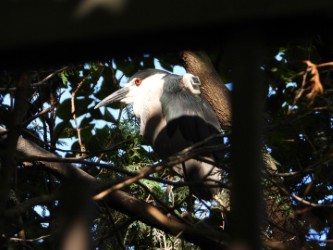
The black-crowned night heron (Nycticorax nycticorax) has unexpectedly found refuge in the very heart of Chicago. 

Today, the largest colony of these birds in the region is located not in isolated, natural wetlands, but on the grounds of Chicago’s Lincoln Park Zoo.

A new study shows that this heavily urbanized environment has become a critical sanctuary for the species.

“This colony is one of the last major black-crowned night heron rookeries in the entire state of Illinois — and probably one of the last strongholds for this species in the entire Great Lakes,” said Sarah Slayton, the study’s lead author and an avian ecologist at the University of Illinois Urbana-Champaign.

According to Slayton, only three colonies remain in Illinois. Two are quite small — one in the Champaign area and another at Emiquon Nature Preserve in western Illinois. 

Black-crowned night herons are listed as endangered in the state. 

The primary colony, boasting between 500 and 700 individuals, resides on the grounds of Chicago’s Lincoln Park Zoo during the spring and summer.  

“Because this is the largest group of this species left in the Great Lakes and it is a species that is at risk, it is vital for us to know how they are doing health-wise, how they are surviving in the city and how the overall regional population is doing,” Slayton explained.

Researchers note that such a high concentration makes the colony particularly vulnerable.

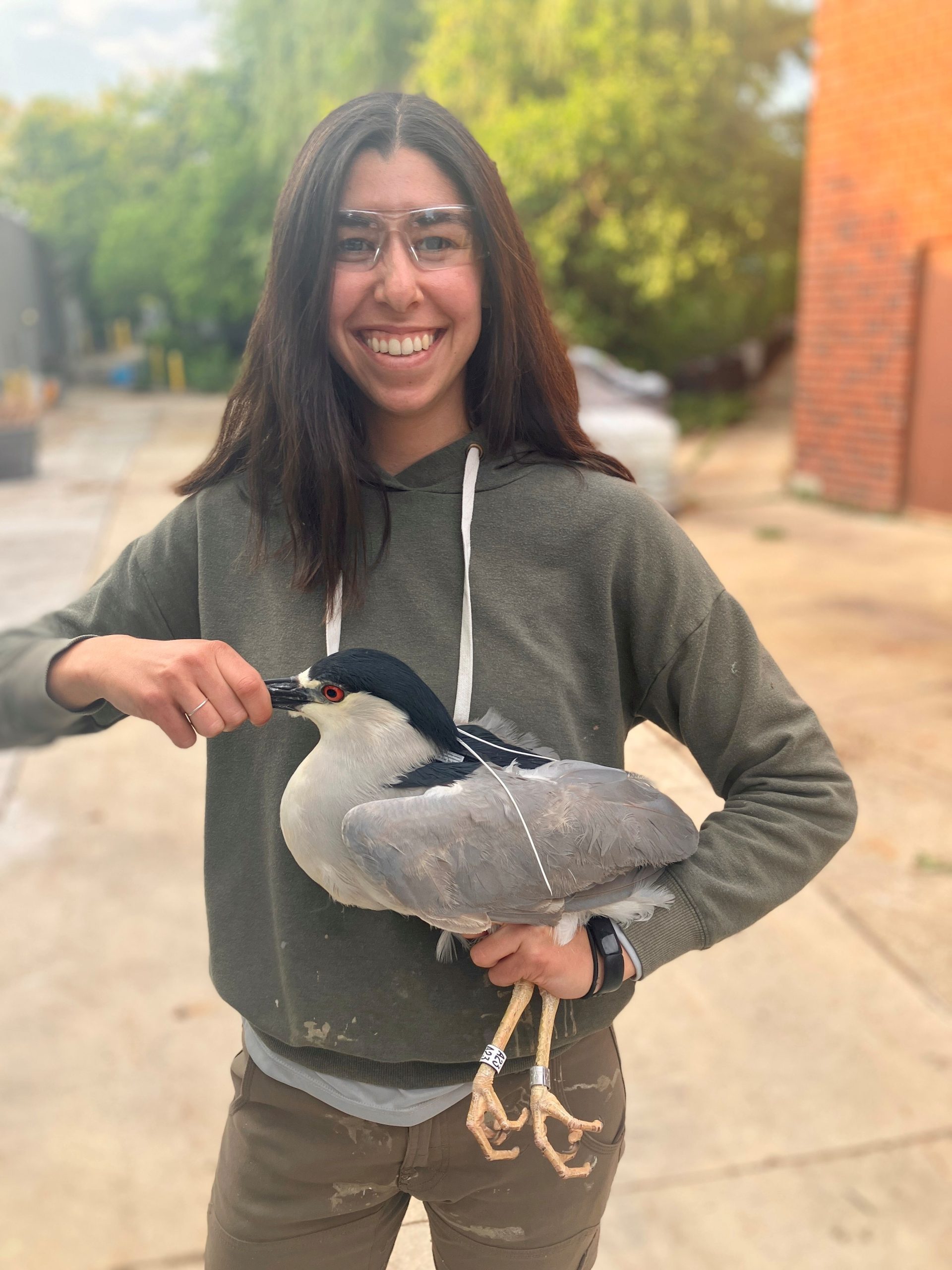
Sarah Slayton is an avian ecologist at the University of Illinois Urbana–Champaign. (Photo credit: Henry Adams via Great Lakes Echo)

Localized threats such as severe storms, disease outbreaks and human disturbance could cause the birds to abandon the site, meaning the region would lose a huge chunk of the population.

Black-crowned night herons are colonial wading birds whose numbers have been declining across the Great Lakes and the northeastern United States, driven largely by habitat loss.

“To most city dwellers, they are just big charismatic birds that you might see near the water,” Slayton said. “But to ecologists, they are an important indicator species for the health of these environments.”

The primary driver behind their shrinking numbers is the destruction of wetlands, Slayton said

“We have destroyed about 90% of the wetlands in Illinois,” she said. “As those environments disappear, the birds are forced to adapt and look for new places to successfully breed and survive.”

Interestingly, populations in Florida and along the Gulf Coast remain stable because the birds are year-round residents, while migratory populations face the greatest hardships. Birds from the Chicago colony spend the winter in Florida, Louisiana and Cuba before returning north to the Great Lakes in the spring to breed. 

To understand how night herons survive in a concrete jungle, Slayton and her colleague Henry Adams from Lincoln Park Zoo’s Urban Wildlife Institute launched an ambitious research project using modern technology.

The scientists equipped the birds with miniature GPS trackers – weighing just 16 grams (0.56 ounces) – which the birds wear like tiny backpacks. The solar-powered devices collect location data via satellites and transmit it to researchers whenever they connect to standard cellular towers.

The tracking results surprised the ornithologists. 

Instead of avoiding humans, the herons actively exploit urban infrastructure, using city parks, fishing lagoons, the Chicago River and even the coastal structures of Lake Michigan.

One of the most unexpected findings was that the night herons regularly forage in the deep open waters of Lake Michigan.

“We don’t normally associate these birds with that kind of water body because the water is so deep. Most wading birds forage in shallow water. They stand really, really still and wait for a prey item to swim by before ambushing it,” Slayton said. 

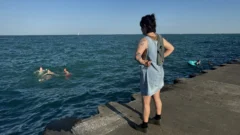
“However, these birds have taken advantage of the docks in the harbors and breakwaters, the large concrete structures out in Lake Michigan that help reduce wave action. They use them as perches to forage directly into Lake Michigan in a way that is very different from what we would expect in a natural wetland environment.”

The herons have also proven to be highly opportunistic feeders with a broad diet. 

While other heron species are specialized and picky about their food, black-crowned night herons eat almost anything from fish and frogs to small mammals. Scientists even suspect that in Chicago, they have taken up hunting small urban rats.

GPS data also revealed that individual birds possess distinct behavioral strategies. Some individuals are highly conservative, sticking to a single foraging ground and returning to the exact same park lagoon every day. Others constantly experiment, moving between different parks, the river and the harbors based on prey availability.

“The amount of individual variation in the birds was really, really cool,” Slayton noted. 

“For example, we would see them hunting in the harbors when there were fish spawning events, when fish would concentrate in these areas to breed. They might take advantage of those opportunities and feast for a couple of days, and then once those periods were over, they would go to another spot.”

Furthermore, the data showed a clear behavioral split between breeding and non-breeding birds. To conserve energy and feed their chicks, active breeders rarely forage more than 10 kilometers (about 6 miles) away from the zoo colony. Non-breeding birds, on the other hand, face less pressure to stay close and freely wander across the entire Chicago metropolitan area.

A major breakthrough of the study came from long-term GPS monitoring that spanned several years. This allowed scientists to map the herons’ movement patterns outside of Chicago in detail for the first time, while previous tracking data had been fragmented and limited to single seasons.

“We had one individual who we captured in Chicago – she was my favorite bird,” Slayton recalled. “Her band code was A24, and we were able to collect several years of tracking data on her.”

For two years in a row A24 followed a remarkably consistent annual cycle. After the breeding season in Chicago, she flew north to spend the post-breeding season in Green Bay, Wisconsin. 

From there, she migrated south to winter in Florida, spending months at a time in restored wetland complexes near Lake Okeechobee. Then she returned to Chicago for the breeding season.

“We caught her a second time and collected a bunch more samples, and then we found her nest and she was raising three adorable chicks,” Slayton said. “Getting to see her do this cycle over and over again was incredible because we had never seen data like this before.”

The GPS maps also showed that while A24’s precise migratory paths varied slightly from year to year, her final destinations remained exactly the same, showing very high site fidelity. 

According to Slayton, capturing this level of movement data would be impossible without trackers.

“This data is critical because these birds can only come back to breed if they make it through the rest of the year,” said Slayton. “Learning about what’s happening in other parts of their migratory paths and what threats they might be facing is also really important for the conservation of this whole colony.”

Researchers say uncovering how night herons navigate and survive in Chicago could ultimately inform conservation strategies for other migratory bird species sharing the same flyways and habitats.

Scientists emphasize that this data is more important than ever as wetlands loss continues and pressure mounts on the natural ecosystems of the Great Lakes region. 

The study does more than just document a threatened bird adapting to city life – it highlights the growing role of urban green spaces as unexpected, yet vital, refuges for wildlife conservation.

Ultimately, Slayton notes that her team’s vision extends far beyond Cook County, aiming to support black-crowned night heron conservation throughout their entire regional range.


The post Refuge in the Windy City: Declining wetland bird makes a home in downtown Chicago appeared first on Great Lakes Now.
Original Article

Great Lakes Now

Great Lakes Now

https://www.greatlakesnow.org/2026/07/15/refuge-in-the-windy-city-declining-wetland-bird-makes-a-home-in-downtown-chicago/
Great Lakes Echo

By Ronia Cabansag and Adam Yahya Rayes, Michigan Public

The Great Lakes News Collaborative includes Bridge Michigan; Circle of Blue; Great Lakes Now at Detroit PBS; Michigan Public, Michigan’s NPR News Leader; and The Narwhal who work together to bring audiences news and information about the impact of climate change, pollution, and aging infrastructure on the Great Lakes and drinking water. This independent journalism is supported by the Charles Stewart Mott Foundation. Find all the work HERE.


It feels natural to say that there are five Great Lakes. It’s the kind of fact that feels as old and real as the lakes themselves.

But what if it isn’t true?

There may actually be four Great Lakes: “Lake” Huron and “Lake” Michigan could actually be considered “lobes” of one big lake — big enough to unseat Lake Superior as the world’s largest freshwater lake by surface area.

“They share a lake level. When the wind’s not blowing, they tend to be at the same level,” said Eric Anderson, director of hydrologic science and engineering at the Colorado School of Mines. “So if one goes up, the other one goes up. If one goes down, the other one does as well.”

The idea that Michigan’s mitten is hugged by one big U-shaped lake is not some new concept that you’ll only find buried in niche scientific studies.

It’s not very well known, but you don’t have to scroll far on WikipediaMichigan.gov or other very-public facing sources to find references to Lake Michigan-Huron.

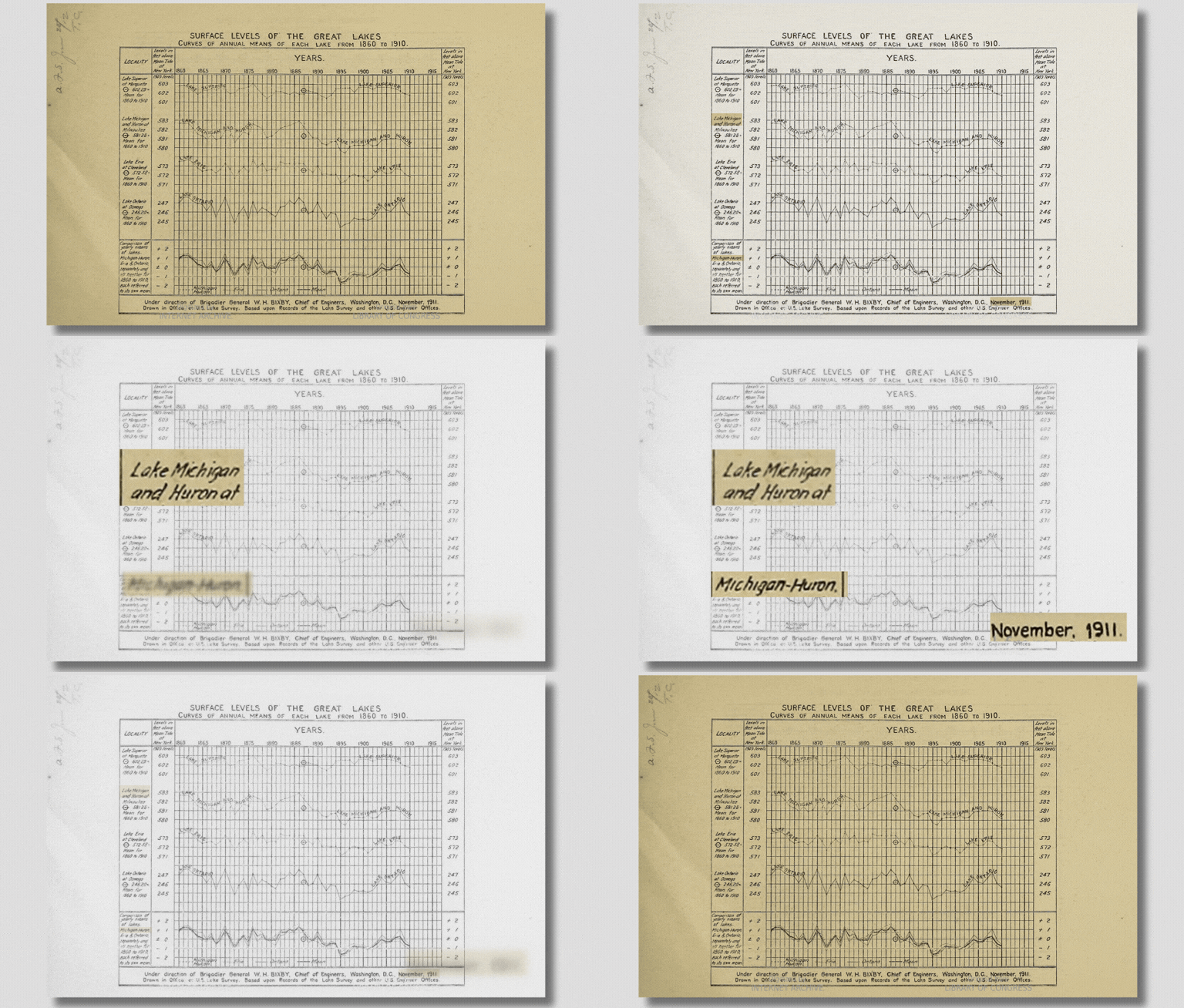
The oldest scientific record of it we found was from 1911.

This official U.S. Lake Survey document, dated 1911, references a combined “Lake Michigan and Huron” in measurements of the lake’s water levels. (Document: Library of Congress, accessed via HathiTrust. GIF: Adam Yahya Rayes | Michigan Public)

It’s not just the lake level that leads hydrologists to describe Huron and Michigan as one lake. The two bodies of water have another special connection: the straits of Mackinac.

At about five miles wide, the straits are a large body of water that flows in both directions between the Huron and Michigan lobes. This creates unique conditions for what Anderson called a “bi-lake seiche.” Seiches are standing waves that go back and forth across a body of water.

“Think about them as maybe like two water beds connected by some weird piece of material,” he said. “If you were to jump on the one water bed, right, you would create a giant wave that moves into the other one.”

That also means that any contaminants that spill into one body could easily end up in the other, Anderson said, especially if the spill happens near the straits.

But, Anderson said Michigan and Huron also have their own separate seiches. Plus, they each have their own circulation, water quality, and weather patterns. When he’s creating models to give people warnings about dangerous conditions, Anderson said it’s usually limited to one side or the other.

“In almost every other way, these lakes behave like two separate lakes,” he said. “Also just culturally and personally, because these lakes are so big, it’s really hard to think you’re experiencing the same thing in Chicago that you are in Georgian Bay.”

“Odawa Lake” and other names

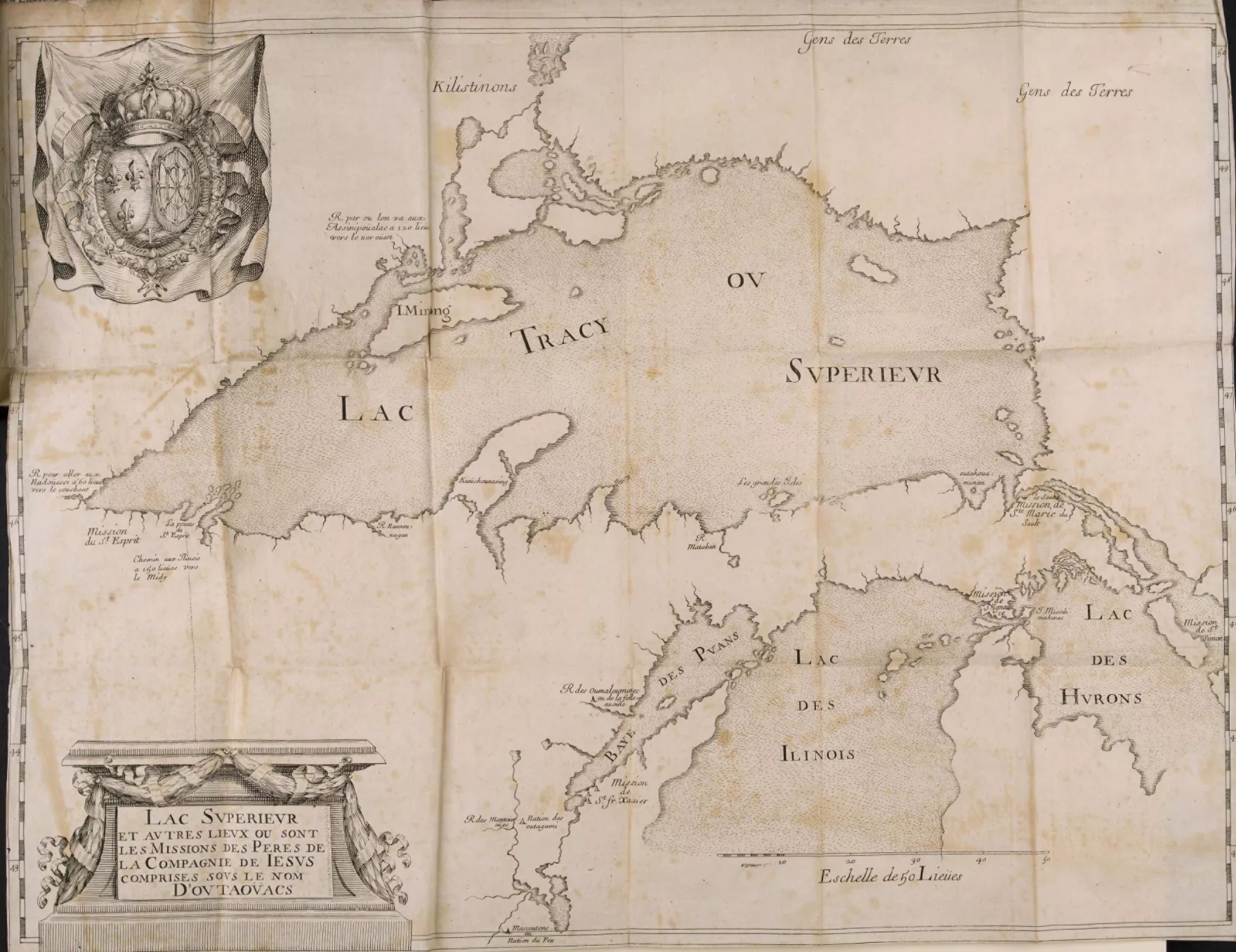
The earliest maps of the Great Lakes we know of are several hundred years old. Those maps, made by French explorers, refer to Michigan and Huron as separate lakes.

This map was created by French Jesuit missionaries in the 1600’s. It shows what are now known as Lake Huron and Lake Michigan (which they called “Lake of the Illinois” at the time) as separate lakes. The straits of Mackinac are not labeled. (Bibliothèque et Archives nationales du Québec)

“I think it’s important to note that there are different names for these lakes that predate European contact,” said Eric Hemenway, humanities program manager for the University of Michigan’s School for Environment and Sustainability. “And there’s a different view of the lakes that is still with us.”

Hemenway is Anishinaabe — the collective name for indigenous peoples who lived in the Great Lakes region — and Odawa (also called “Ottawa”). His Odawa name is Gaanaybik (Ge-na-bik).

“So in my mind, as the singular Odawa guy from living on Lake Michigan, to me [Huron and Michigan] are one body of water,” he said. “And all of our villages historically were right on both sides.”

Hemenway used to do archival work for the Little Traverse Bay Bands of Odawa Indians. Historically, he said, the tribe called Huron and Michigan “Odawa Lake.”

“There’s no wall, there’s no giant barrier,” he said. “The important part is who lived where … I can’t say it’s exclusively ours. You know, we named the lake after us, but there were other tribes that lived on the lake.”

Hemenway said Anishinaabe peoples had many different ways of naming and categorizing the lakes. Some did consider Huron and Michigan to be separate lakes or bodies.

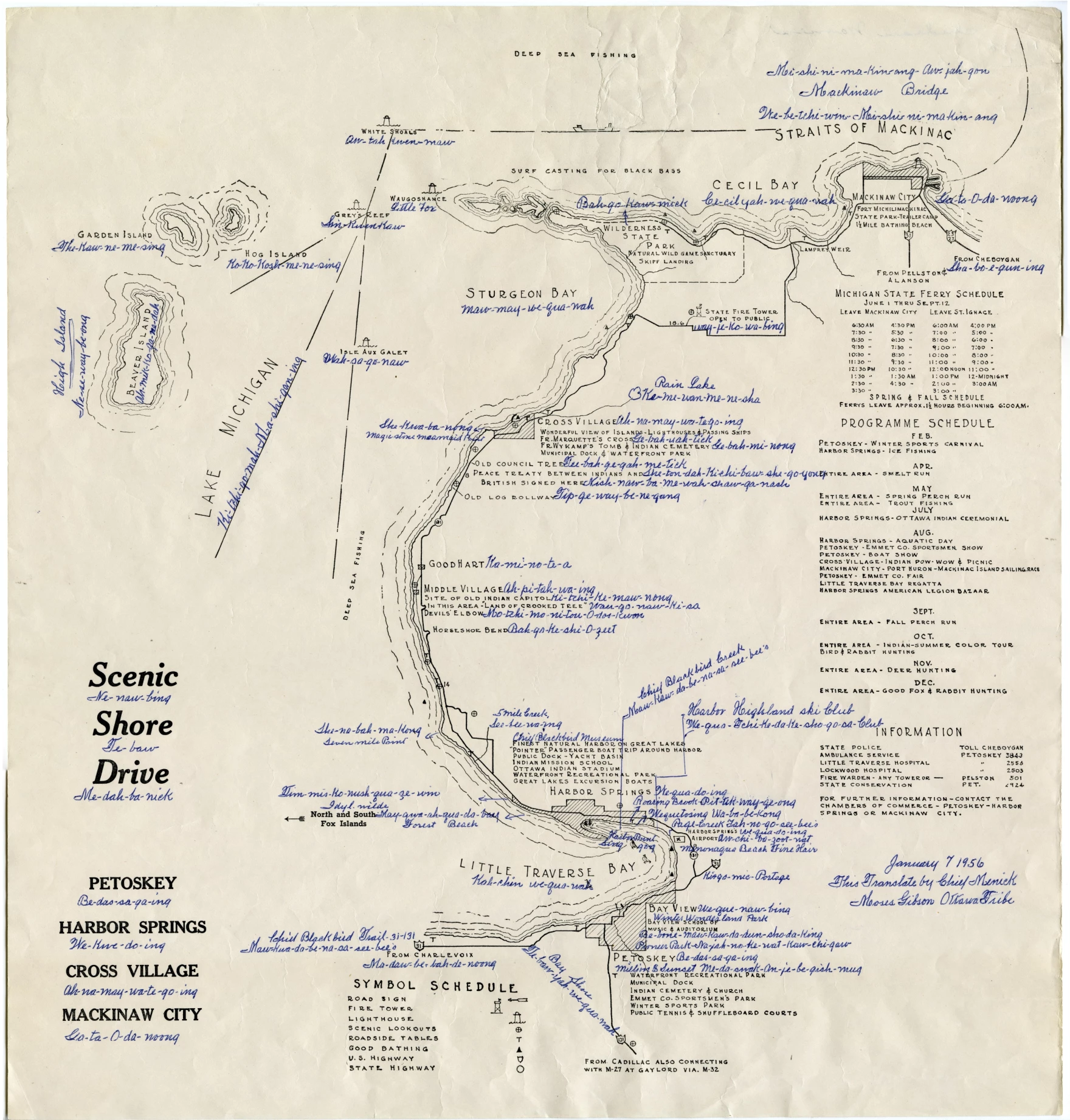
This map contains hand written notes from 1956 that are likely traditional Anishinaabe names and descriptions for areas around northern Lake Michigan, including a name for the lake itself. Hemenway said it’s not clear to him if that is a translation of the lake’s modern name or if it is “one of the old names for Lake Michigan.” (Bentley Historical Library)

“We live in these boundaries all the time. And so, trying to pull back and not look at the boundaries is really difficult,” he said. “But if you start seeing it as one, I think you start seeing the effort and responsibility shifts. We all have a part in this.”

Guests:

  • Eric Anderson, director of hydrologic science and engineering at the Colorado School of Mines.
  • Eric Hemenway, humanities program manager for the University of Michigan’s School for Environment and Sustainability.

The post Are Michigan and Huron actually one large Great Lake? appeared first on Great Lakes Now.

Original Article

Great Lakes Now

Great Lakes Now

https://www.greatlakesnow.org/2026/07/08/are-michigan-and-huron-actually-one-large-great-lake/

Michigan Public

By Samantha Ku, Great Lakes Echo

This article was republished here with permission from Great Lakes Echo.


A $5.75 million federal grant has been awarded to the Lake Forest Open Lands Association (LFOLA) to support a preservation project along the Lake Michigan shoreline in Illinois.

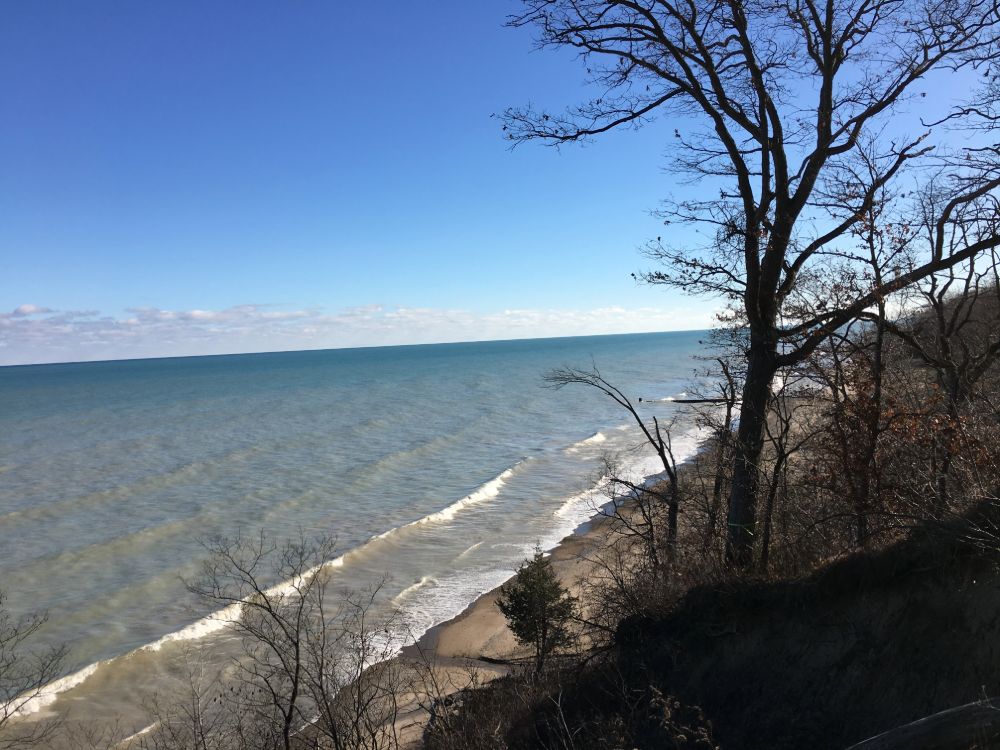
The 61-acre Jean and John Greene Nature Preserve at McCormick Ravine is part of Lake Michigan’s 57 unique ravine systems stretching 22 miles along the shoreline of Lake Michigan, according to Ryan London, the association’s president and CEO.

According to London, LFOLA has been working in the region on a voluntary basis since 1977, removing invasive species and monitoring rare plants. LFOLA then acquired the property rights from the city of Lake Forest, which had been developing the site until 2019 and turned the site into a nature preserve open to the public in 2023.

There is a common misconception that ravines are carved by glaciers, said London.

“When the glaciers most recently came through about 12,000 to 14,000 years ago, they left unique landforms along Lake Michigan called moraines,” London said.

Moirane soil consists of large particles of gravel, sand and sometimes layers of clay, a mixture known as “unconsolidated till,” according to London.

“These moraines are not really stable soils because they’re the large materials, the sand and the gravel. They erode very easily with water, and that’s what actually creates ravines, which can be up to 75 to 90 feet deep,” said London.

London said that the microclimate in the ravine bluff ecosystem features lower average temperatures and higher humidity than surrounding areas. That means natural fires occur far less frequently in the region than on prairies and savannas.

Since fire is less common in the region, species are able to persist without risking exposure to fire threats, said London.

The LFOLA said the wooded corridors formed in the ravine-bluff ecosystem create a unique microclimate, providing habitats for 48 rare plant species and over 100 animal species.

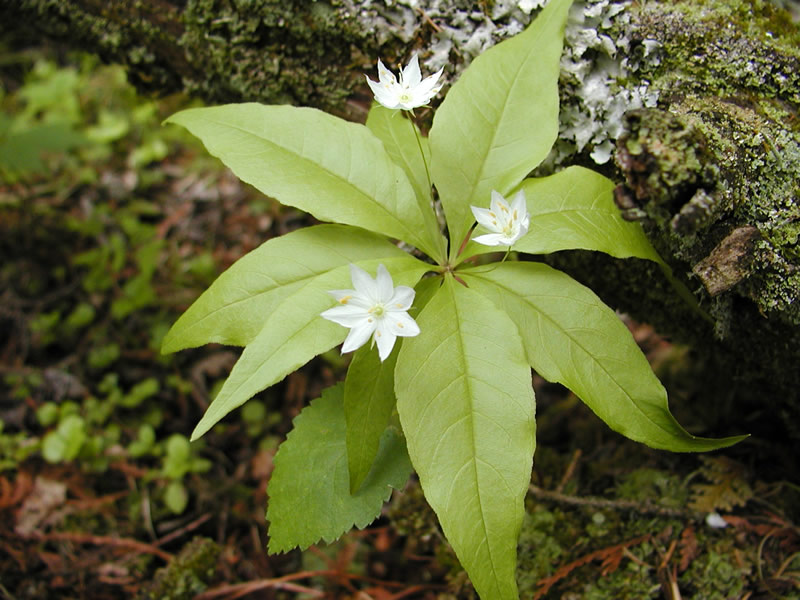
According to London, unique flower species in the area include starflower (Lysimachia borealis), shinleaf (Pyrola elliptica) and rare orchids. He said the McCormick Ravine is the only ravine where the starflower is known to grow.

“Starflowers are short in stature with whorled leaves that have white star-shaped flowers with seven petals,” said Heather Decker, the managing ecologist of the Chicago Botanic Garden.

Decker said that ravines are an ideal habitat for starflower because it grows through rhizomes, which are horizontal growths that establish new roots and shoots, to form large colonies in moist, shaded forests.

According to Decker, starflowers and other northern species in the ravine are gifts of glaciers. 

Approximately 10,000 to 12,000 years ago, as the glaciers advanced, these plants hitched a ride southward. When the glaciers retreated, the plants were left behind.

Starflowers prefer shady, moist habitats. (Photo credit: Steve Janke/U.S. Forest Service)

The ravine-bluff ecosystem represents one of Illinois’ rarest and most fragile landscapes, as its river channels are formed from highly erodible soils, according to London.

LFOLA said that decades of urbanization and shoreline modification accelerated erosion and destabilized the ravines, leading to widespread vegetation loss and habitat degradation.

“As the surrounding areas have become developed and urbanized, these ravines are accepting water at a much higher volume and a much higher rate than they were before pre-European settlement conditions,” said London.

Climate change has led to an increase in the frequency and intensity of storms, pushing landscapes beyond their natural limits, according to London.

Stormwater is “scouring through the ravine, and when you have all that erosion taking place, all that sediment gets pushed out into a big plume in Lake Michigan and many municipalities,” said London.

The ravine-bluff wooded corridors also serve as natural infrastructure, filtering stormwater and protecting water quality, according to LFOLA.

London said the plants prevent erosion, so less sediment washes into Lake Michigan. 

According to London, this project will stabilize the slope in the ravines using nature-based solutions. Natural materials such as tree trunks will be woven into the slope surface, and vegetation will be replanted in areas where it is absent.

The preservation is considered the third phase of the “Advancing Innovative Great Lakes Habitat Solutions” project, according to London. It’s expected to last 2.5 years, with restoration work scheduled to begin in March.

“Portions of the site will be hazardous during the construction phase,” said London. “We might close some trails here or there, but we’re trying to keep most of the site open.”

Southward view of Lake Michigan shoreline and Greene preserve bluff and erosion. (Photo credit: Lake Forest Open Lands Association)

London said that in addition to federal partners such as NOAA, LFOLA also works with partners in Northern Illinois.

The Chicago Botanic Garden’s Plants of Concern program has continuously monitored rare plant species within the Jean and John Greene Nature Preserve since 2008, said the program manager Gretel Kiefer.

Kiefer said that the botanic garden also partnered with LFOLA in 2024 to collect seeds from multiple species in the nature preserve for use in the restoration project.

“We’ll collect the seeds and we’ll grow the rare plants at the Chicago Botanic Garden,” said London.

According to Decker, the garden’s natural areas team will collaborate with LFOLA during seed collection because timing and communication are crucial.

“We use this as a learning opportunity for our Stewardship and Ecology of Natural Areas restoration technicians to bag developing seeds to assist in our collection efforts,” said Decker.

London said, “We’ve been working out there for nearly 50 years. It’s a long-term commitment to coastal resilience through adaptive management.”

“I do think that there will be unexpected surprises along the way, and we’ll continue to grow our knowledge with this work as we go through this project,” said London.


The post Preservation project launches effort to restore rare ravine ecosystem appeared first on Great Lakes Now.

Original Article

Great Lakes Now

Great Lakes Now

https://www.greatlakesnow.org/2026/07/02/preservation-project-launches-effort-to-restore-rare-ravine-ecosystem/

Great Lakes Echo

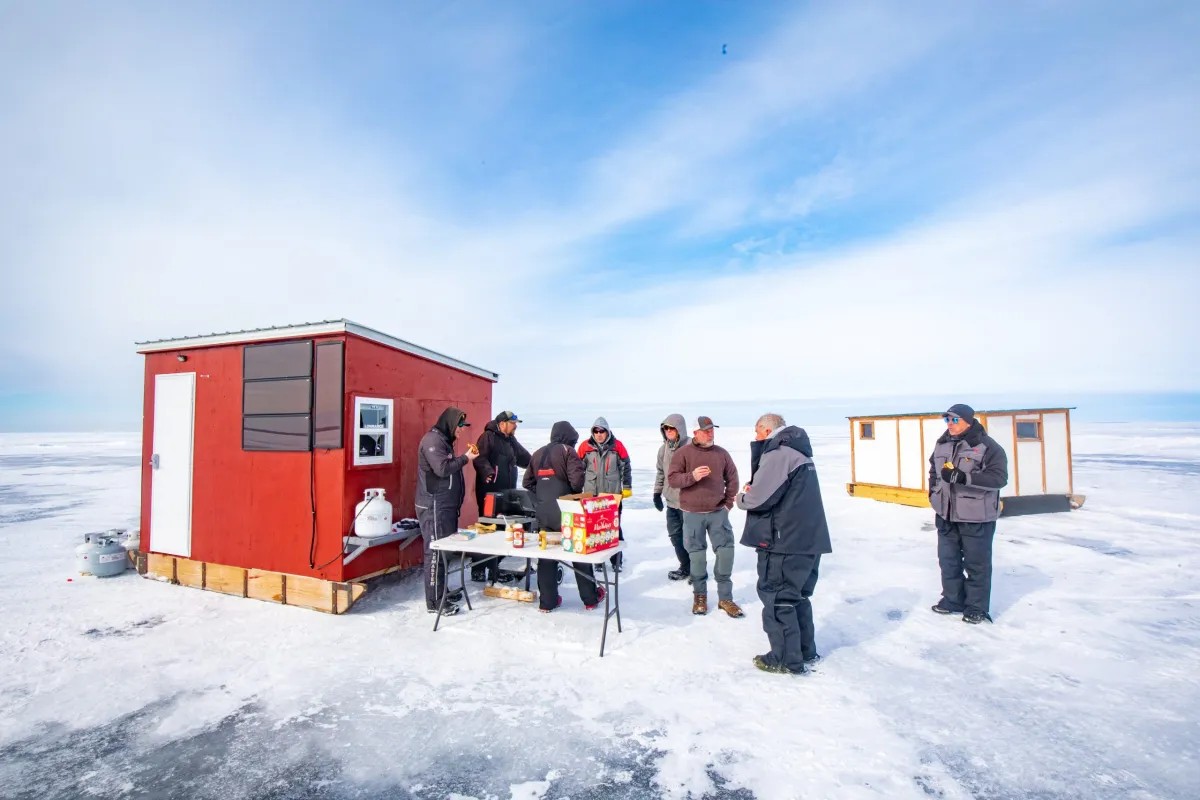
STURGEON BAY, WISCONSIN — It’s midmorning in late February, and Bruce Smith is regaling two ice fishing buddies when a tug on his line interrupts the story.

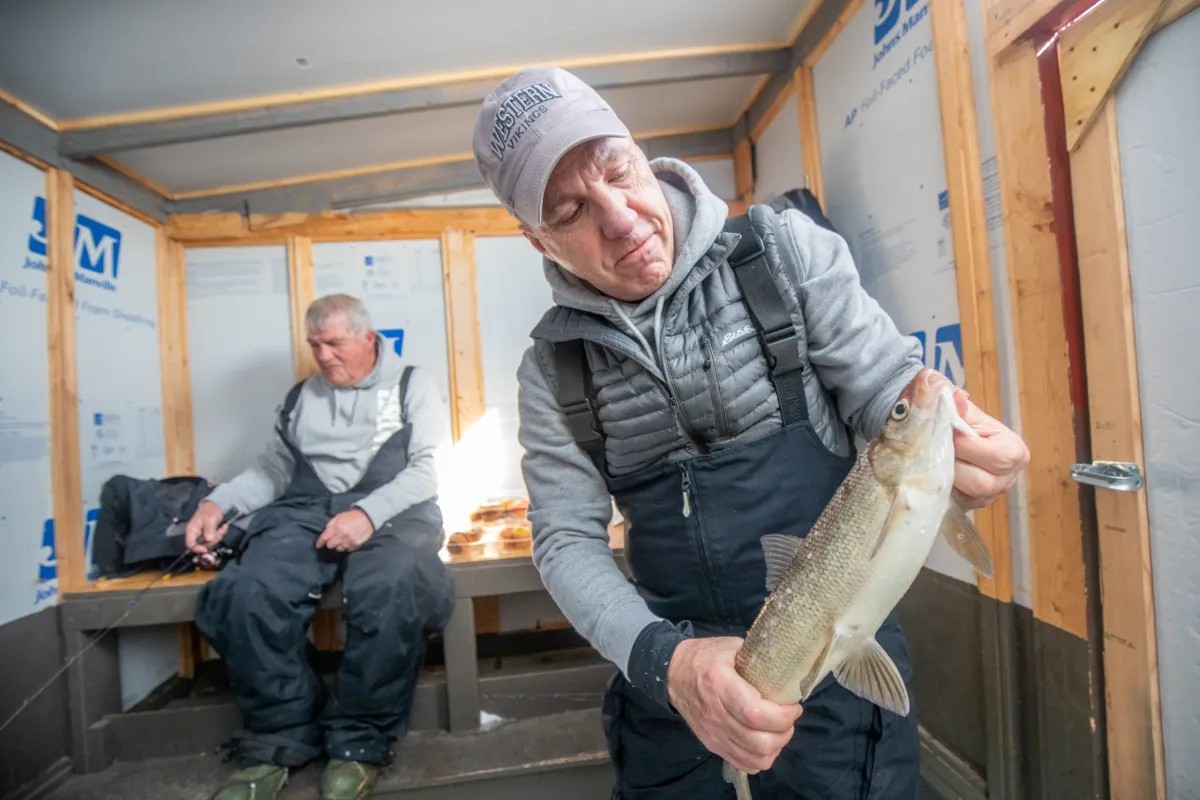
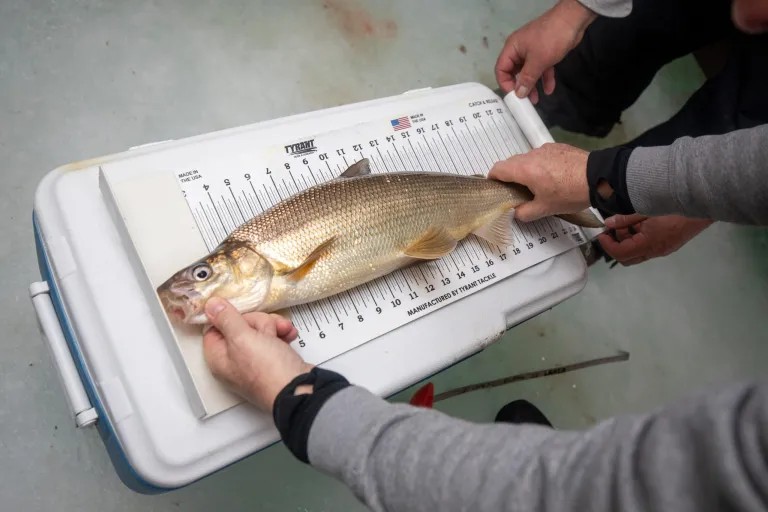
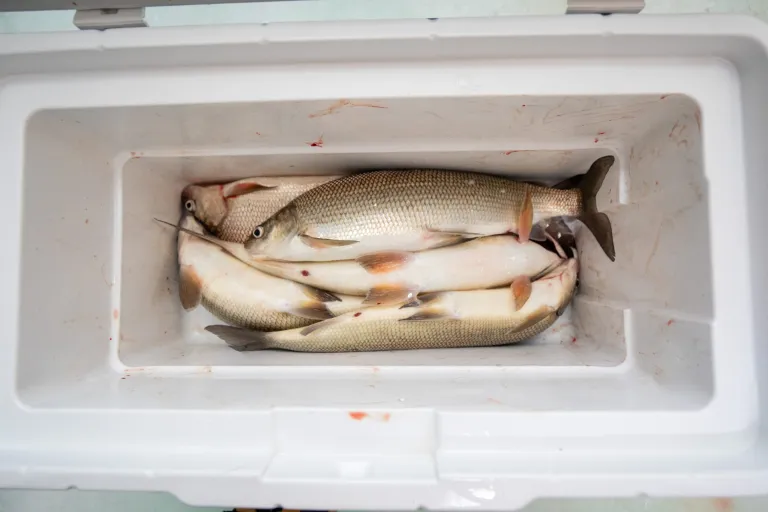
“There we go!” he shouts as a shimmering 23-inch whitefish appears through a hole in the ice. “That’ll make a nice filet.”

No sooner has Smith tossed it into a cooler than his buddy Terry Gross reels in another one. Five minutes later came another bite, then another, until by 10:30 a.m. the trio had hauled in 15 fish — halfway to their daily limit, even after putting several back. 

Welcome to southern Green Bay. Or as Smith likes to call it, “Whitefish Town, USA.”

Once written off as too polluted to support many whitefish, the shallow, narrow bay in northwest Lake Michigan has produced an unlikely population boom in recent years, even as the iconic species vanishes from most of the lower Great Lakes. The collapse has dealt a blow to Michigan’s environmentcultureeconomy and dinner plates.

Oddly enough, nutrient pollution from farms and factories may help bolster the bay’swhitefish population, spawning a world-class recreational fishing scene while helping a handful of commercial fisheries in Michigan and Wisconsin stay afloat despite the collapse in the wider lake.

“This is a paradise,” Smith said. “The best fishing I can ever remember, for the species I want to catch.”

Terry Gross, 63, hauls in a large whitefish in the ice fishing shanty he shares with Ed Smrecek, 73. Both men are from Appleton, Wisconsin. (Daniel Kramer for Bridge Michigan)

As scientists work to understand what makes Green Bay unique, their findings could aid whitefish recovery efforts throughout the Great Lakes. Michigan biologists, for example, have drawn inspiration from Green Bay’s sheltered, nutrient-rich waters as they attempt to transplant the state’s whitefish into areas with similar characteristics.

“Having places they (whitefish) are doing well … gives us context for the places that they aren’t doing well,” said Matt Herbert, a senior conservation scientist with the Nature Conservancy in Michigan. “It helps us to figure out, how can we intervene?”

But lately, sophisticated population models have shown fewer baby fish making their way into the Green Bay population, prompting worries that Lake Michigan’s last whitefish stronghold may be weakening.

A Great Lakes miracle

Not long ago, it seemed impossible that a fishery like this could ever exist in Green Bay.

Before the Clean Water Act of 1972 and subsequent cleanup efforts, paper mills along the lower Fox River — the bay’s largest tributary — dumped toxic polychlorinated biphenyls (PCBs) into the water without restraint while silty, fertilizer-soaked runoff poured off upstream farms.

Southern Green Bay was no place for “a self-respecting whitefish,” said Scott Hansen, senior fisheries biologist with the Wisconsin Department of Natural Resources.

Lake Michigan’s much larger main basin, meanwhile, was full of them. 

Commercial fisherman Todd Stuth’s business got 80% of its catch from the open waters of Lake Michigan before the turn of the millenium. Now, 90% comes from Green Bay.

How did things change so dramatically?

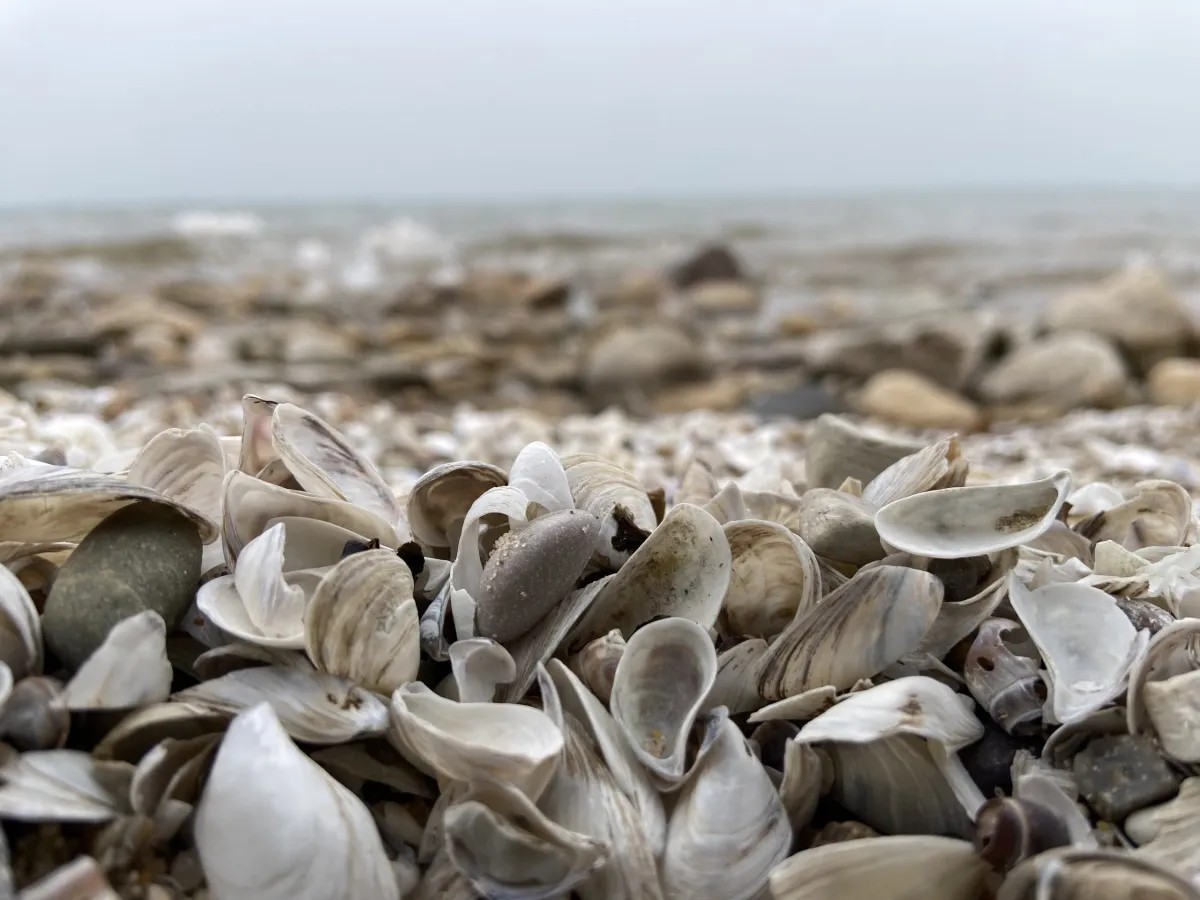
Invasive mussel shells are more common than pebbles on a Lake Michigan beach near Petoskey.  (Kelly House/Bridge Michigan)

First, invasive filter-feeding zebra and quagga mussels arrived in the Great Lakes from Eastern Europe and multiplied over decades, eventually monopolizing the nutrients and plankton that fish need to survive. Whitefish populations in lakes Michigan and Huron have tanked as a result.

Fortunately for Wisconsin and a sliver of Michigan’s Upper Peninsula, Hansen said, “Southern Green Bay kept building.”

In the late 1990s, scientists began spotting the fish in Green Bay area rivers where they hadn’t been seen in a century. Soon the species started showing up during surveys of lower Green Bay. By the early 2010s, models show the bay was teeming with tens of millions of them.

It’s not entirely clear what caused the whitefish revival, but most see cleaner water as part of the equation.

A decades-long restoration project has cleared away more than 6 million yards of sediment laced with PBCs and nutrient-laced farm runoff from the Fox River and lower Green Bay. Phosphorus concentrations near the rivermouth have declined by a third over 40 years — though they’re still considered too high.

“Pelicans are back, and the bird population seems to be thriving,” said Sarah Bartlett, a water resources specialist with the Green Bay Metropolitan Sewerage District, which monitors the bay’s water quality. “And now we have this world-class fishery.”

Hansen’s theory is that back when whitefish were still abundant in Lake Michigan, some wanderers strayed into the newly hospitable bay and decided to stay. Or maybe they were here all along, waiting for the right conditions to multiply.

Either way, the bay has become a lifeline for whitefish and the humans that eat them.

“I feel very fortunate that the bay is doing as well as it is,” said Stuth, who chairs the state commercial fishing board. 

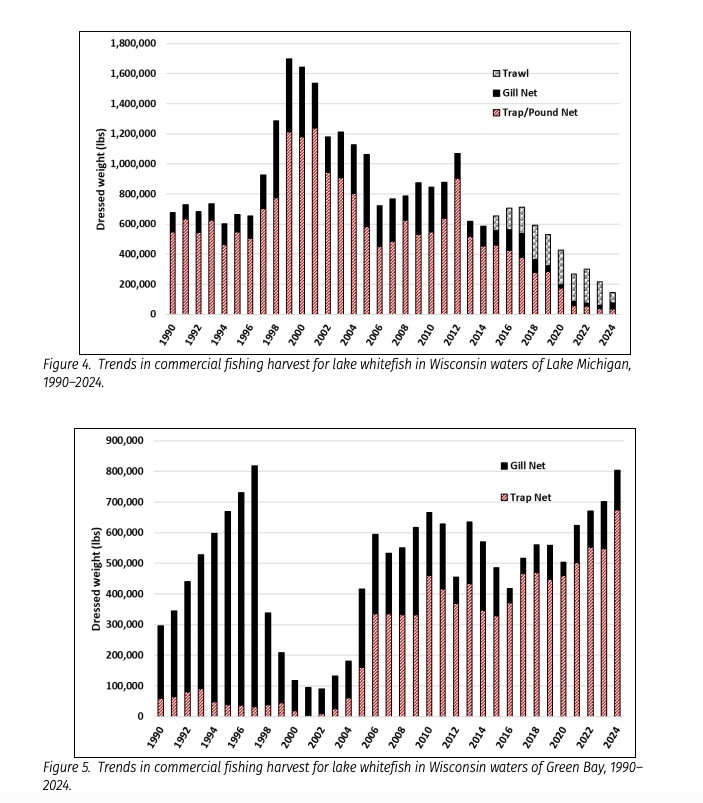
As commercial harvests in the Wisconsin waters of Lake Michigan plummeted from more than 1.6 million pounds in 2000 to less than 200,000 pounds in 2024, harvests in Green Bay skyrocketed from less than 100,000 pounds to more than 800,000.

The bay has also become more important to fishers in Michigan, which has jurisdiction over a portion of its waters.

While the state’s total commercial harvests from Lake Michigan have plummeted 70% since 2009 to just 1.2 million pounds annually, the decline would be steeper were it not for stable stocks in the bay. Once accounting for just a sliver of the catch, the bay now makes up more than half.

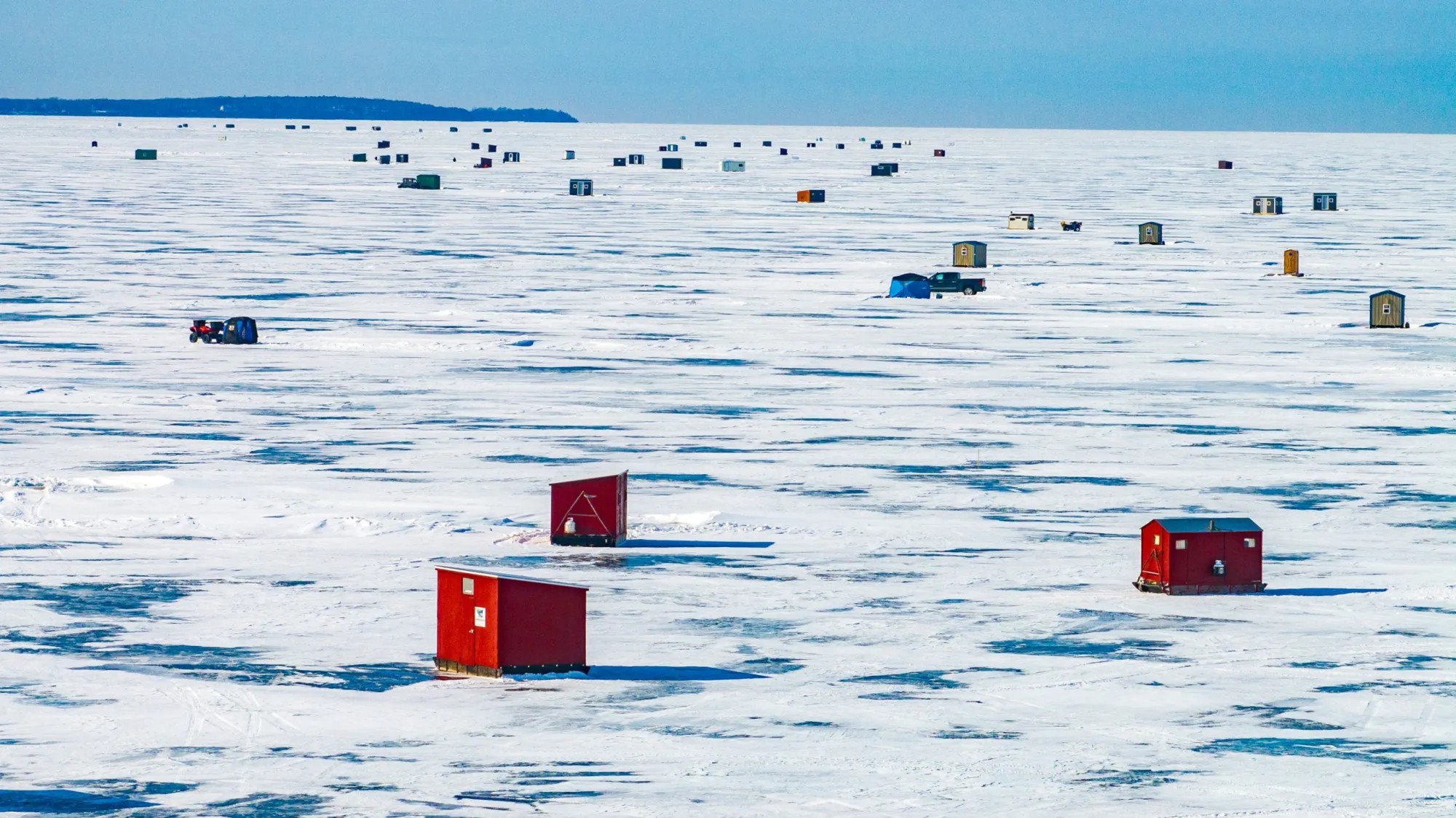
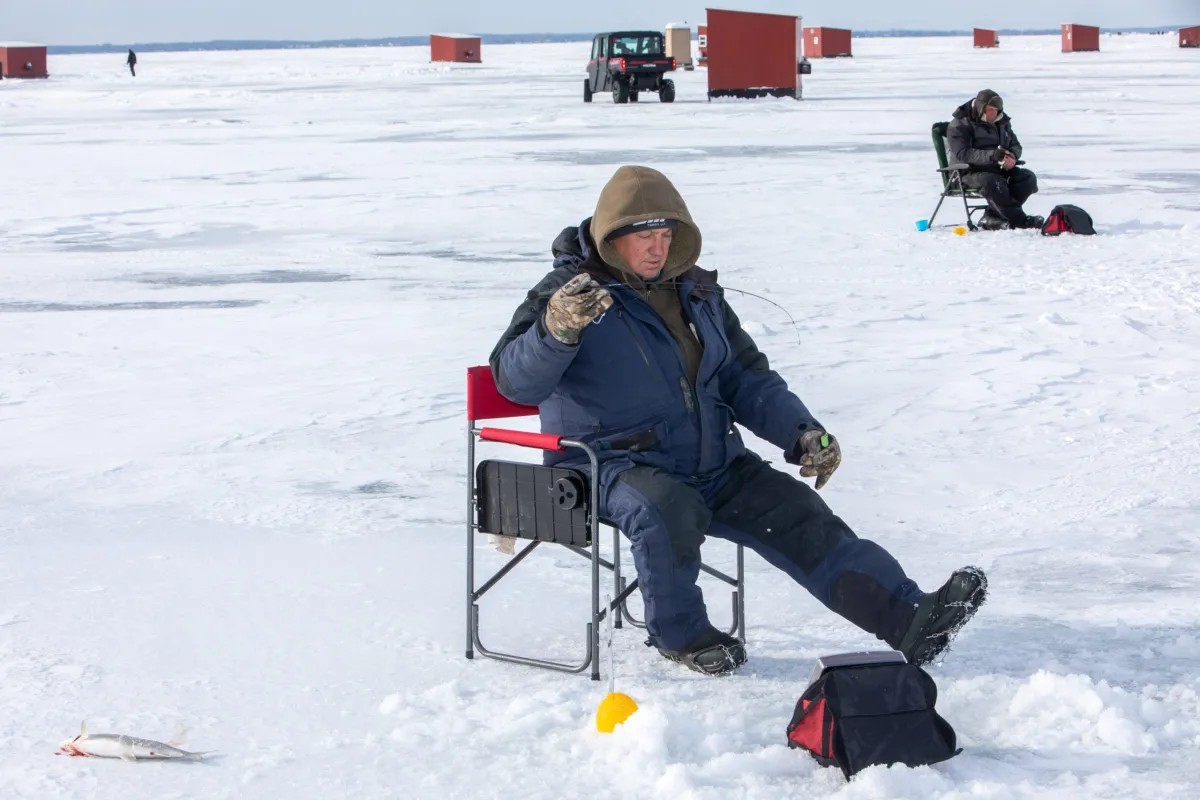
Vytautas Majus, who lives in Chicago, left the city at 2 a.m. to be on the ice fishing for whitefish by 7 a.m. Behind him, the horizon is dotted with ice shanties and anglers also hoping to land a whitefish. (Daniel Kramer for Bridge Michigan)

A recreational ice fishing scene has sprung up too, with thousands of anglers taking to the ice each winter, contributing tens of millions to the local economy.

Ironically, the bay’s lingering nutrient pollution may be helping to some extent – a dynamic also seen in Michigan’s Saginaw Bay. 

Nutrients like phosphorus and nitrogen are the building blocks of life, fueling the growth of aquatic plants and algae at the base of the food web. Plankton eat the algae, small fish eat the plankton, and big fish eat the small fish.

Unlike the main basins, where mussels have hogged nutrients and starved out whitefish, polluted runoff leaves the shallow bays with more than enough for the mussels and everything else. 

Some have even suggested Michigan and its neighbors should start fertilizing the big lakes in hopes of giving whitefish a boost, Herbert said, but “there’s the question of feasibility.” 

First, because the lakes are far deeper and wider than the bays, it would take vast quantities to make an impact. And while excess nutrients may help feed fish, they could also cause oxygen-deprived dead zonesharmful algae blooms and other serious problems.

Green Bay is already offering other lessons for Michigan, though. 

Inspired by whitefish’s return to the bay’s rivers, biologists including Herbert are trying to coax Michigan whitefish to spawn in rivers that connect to nutrient-rich rivermouths like Lake Charlevoix. 

The hope is that if hatchlings can spend a few months fattening up before migrating into the mussel-infested big lake, they’ll stand a better chance of surviving.

Scientists in Green Bay are also tracking whitefish movements, hoping to figure out where they spawn and what makes those habitats special. That kind of information could prove useful to recovery efforts throughout the Great Lakes, said Dan Isermann, a fish biologist with the US Geological Survey.

Living in ‘the good old days’

“We’re really lucky to have what we have here,” said JJ Malvitz, a commercial fishing guide who owes his career to Green Bay’s whitefish resurgence. 

But he lives with fear that “the good old days are now.”

(Courtesy of Wisconsin Department of Natural Resources)

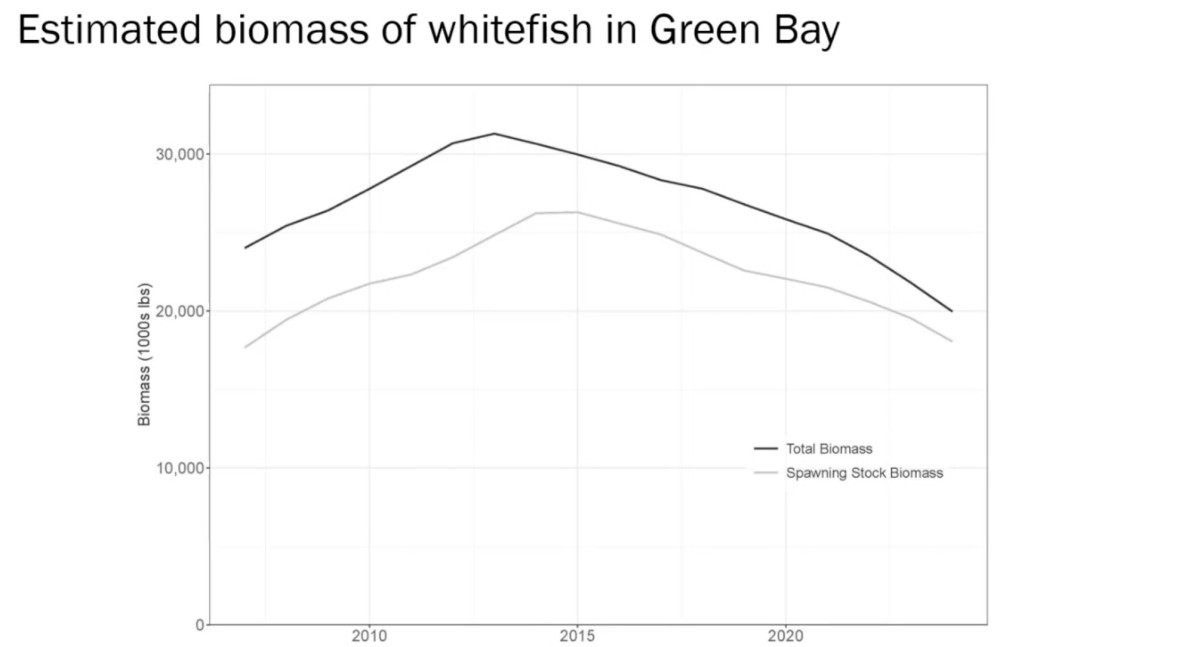
Stocks have shrunk by half since the mid-2010s, according to population models fed with data from DNR surveys and commercial and recreational harvests. The adult whitefish seem to be fat and healthy. But for reasons unknown, fewer of their offspring have been making it to adulthood.  

It’s possible the bay’s population is just leveling off after a period of strong recruitment, Hansen said, “but we want to be vigilant.”

A recent string of lackluster winters adds to the concern. Whitefish lay their eggs on ice-covered reefs. When that protective layer fails to form or melts off early, the eggs can be battered by waves or enticed to hatch early, out of sync with the spring plankton bloom that serves as their main food source.

As whitefish disappeared from the main basin of Lake Michigan, they experienced a resurgence in Green Bay that still isn’t fully understood. (Courtesy of Wisconsin Department of Natural Resources)

While this winter was icier than most, climate change is making low-ice winters more frequent.

“Whitefish are a cold-water species, and we know that’s not where the trends are going,” Hansen said.

Time to cut back?

So far, Wisconsin officials haven’t lowered Green Bay’s annual whitefish quota of 2.28 million pounds, evenly split between the commercial and sport fisheries. Commercial boats are limited to fish bigger than 17 inches, while recreational anglers are limited to 10 fish a day of any size.

But during a recent presentation to the state’s Natural Resources Board, Hansen said it’s time to start keeping closer tabs on the population. 

“If these trends continue,” he said, “We need to have some more serious discussions amongst ourselves about lowering the exploitation rates.”

Malvitz, the guide, believes it’s time for commercial and recreational anglers to collectively agree to harvest fewer fish. He would be satisfied with a five-fish limit for recreational anglers along with smaller quotas for the commercial fishery, which harvests far more fish. 

The bay’s whitefish reappeared quickly and unexpectedly, he said. Who’s to say they couldn’t disappear just as fast?

“I don’t want to be standing on the shore in five years saying ‘remember when,’” he said. 

Stuth, the commercial fishing board chair, isn’t ready to accept tighter quotas in the bay, but said population models should be closely watched. If the declines continue, he said, cuts may be on the table.

“A very conservative approach is going to be necessary,” he said. “Because it’s our last stronghold. If that goes away, what do we have?”

The post A Wisconsin whitefish refuge offers lessons for Michigan. But will it last? appeared first on Great Lakes Now.

Original Article

Great Lakes Now

Great Lakes Now

https://www.greatlakesnow.org/2026/03/12/a-wisconsin-whitefish-refuge-offers-lessons-for-michigan-but-will-it-last/

Kelly House, Bridge Michigan

By Brian Allnutt, Planet Detroit

This article was republished with permission from Planet Detroit. Sign up for Planet Detroit’s weekly newsletter here.


Water levels on the Great Lakes and Lake St. Clair continued to decline below long-term averages over the winter, just a few years after lakes hit record highs in 2019 and 2020.

Lake levels are expected to begin their seasonal rise and stay close to long-term averages, according to the U.S. Army Corps of Engineers’ six-month forecast issued March 4.  

The recent decline in Great Lakes water levels hasn’t been especially steep, but the overall trajectory of lake levels is one of increasing variability, according to Yi Hong, a research scientist at the Cooperative Institute for Great Lakes Research.

Lake Michigan and Lake Huron, which are technically two lobes of a single lake, saw record highs in 2020 less than a decade after being hit by record lows in 2012 and 2013, Corps records show.

Climate change-driven extreme storms and heatwaves are influencing lake level variability, but there isn’t enough data to show if levels will trend lower or higher over the long-term, Hong said.

Over the next six months, the Corps predicts water levels will stay below long-term averages on all the lakes, except possibly Lake Ontario.

Lake Michigan and Lake Huron will be the farthest below average. From March to August, levels will be 4 to 7 inches below last year’s levels and 11 to 12 inches below the long-term average. Closer to Detroit, Lake St. Clair will see water levels 6 to 10 inches below last year and 5 to 7 inches below the long-term average.

Megan Royal, a Corps hydraulic engineer, said the agency doesn’t anticipate any water level issues in the shipping channels and harbors used by Great Lakes freighters. Sediment can occasionally move into navigation channels and harbors, requiring emergency dredging, she said.

In an interview with Maritime Reporter TV, Eric Peace, vice president of the Lake Carriers Association, said Great Lakes shipping is negatively impacted by several factors, including severe weather over the fall and early ice cover. Dredging will continue to be a challenge for the industry, he said. 

Dry falls, hot summers contribute to lake level declines

A pattern of dry fall seasons from 2023-2025 contributed to the Great Lakes’ falling water levels, Royal told Planet Detroit.

Last summer’s heat also led to near record-high lake temperatures, producing significant evaporation when the winter’s extremely cold air passed over relatively warm water, she said.

“Evaporation is very difficult to measure because of just how large the lakes are,” Royal said, adding that modeling showed evaporation from all the lakes except Lake Erie was above average from October to January.

The rate of decline in lake levels is beginning to stabilize as a drought eases in parts of the Great Lakes Basin and snowmelt drives runoff into the lakes, she said.  

The National Weather Service’s Climate Prediction Center forecasts above normal precipitation across nearly all the U.S. portion of the Great Lakes Basin over the next three months. Temperatures in these areas mostly have equal chances of being above or below normal over the same time period.

The post Great Lakes water levels decline from record highs: What the forecast says appeared first on Great Lakes Now.

Original Article

Great Lakes Now

Great Lakes Now

https://www.greatlakesnow.org/2026/03/10/great-lakes-water-levels-decline-from-record-highs-what-the-forecast-says/

Planet Detroit

Should I Stay, or Should I Go: Tracking Partial Migration Frequency of Yellow Perch (Perca flavescens)

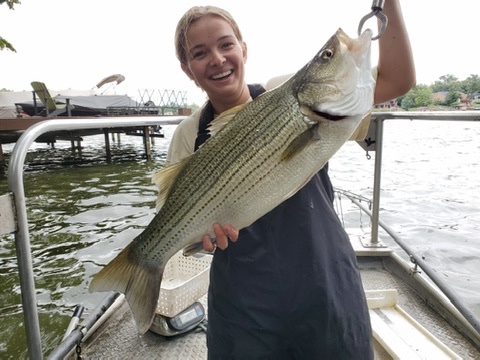
A person holding a fish.

Anna Hill, submitted photo.


Studying fish comes with many challenges, and one of the biggest is that they are constantly on the move. Because of this, tracking fish has become a major focus in aquatic science in recent years. With tools like acoustic telemetry, scientists can now monitor fish movement at both fine and large spatial scales.
 
Much like how cell towers use signals to track phones, a network of receivers can record the movements of individual fish over time. Scientists use this technology to study yellow perch in Lake Michigan, a species that is important to both the ecosystem and local fisheries.
 
Join Anna Hill for an overview of her work tracking fish. Originally from Chicago, Hill is a master’s degree student at Purdue University co-advised by Tomas Höök and Paris Collingsworth. She completed her undergraduate degree in marine science from the University of Delaware. She has worked as an aquatic technician in both freshwater and marine systems.
Learn more about this event.
 
Questions? Contact Anne Moser or Ginny Carlton.
The post Join us for “Students Ask Scientists” on November 6 first appeared on Wisconsin Sea Grant.

Original Article

News Releases | Wisconsin Sea Grant

News Releases | Wisconsin Sea Grant

https://www.seagrant.wisc.edu/news/join-us-for-students-ask-scientists-on-november-6/

Ginny Carlton

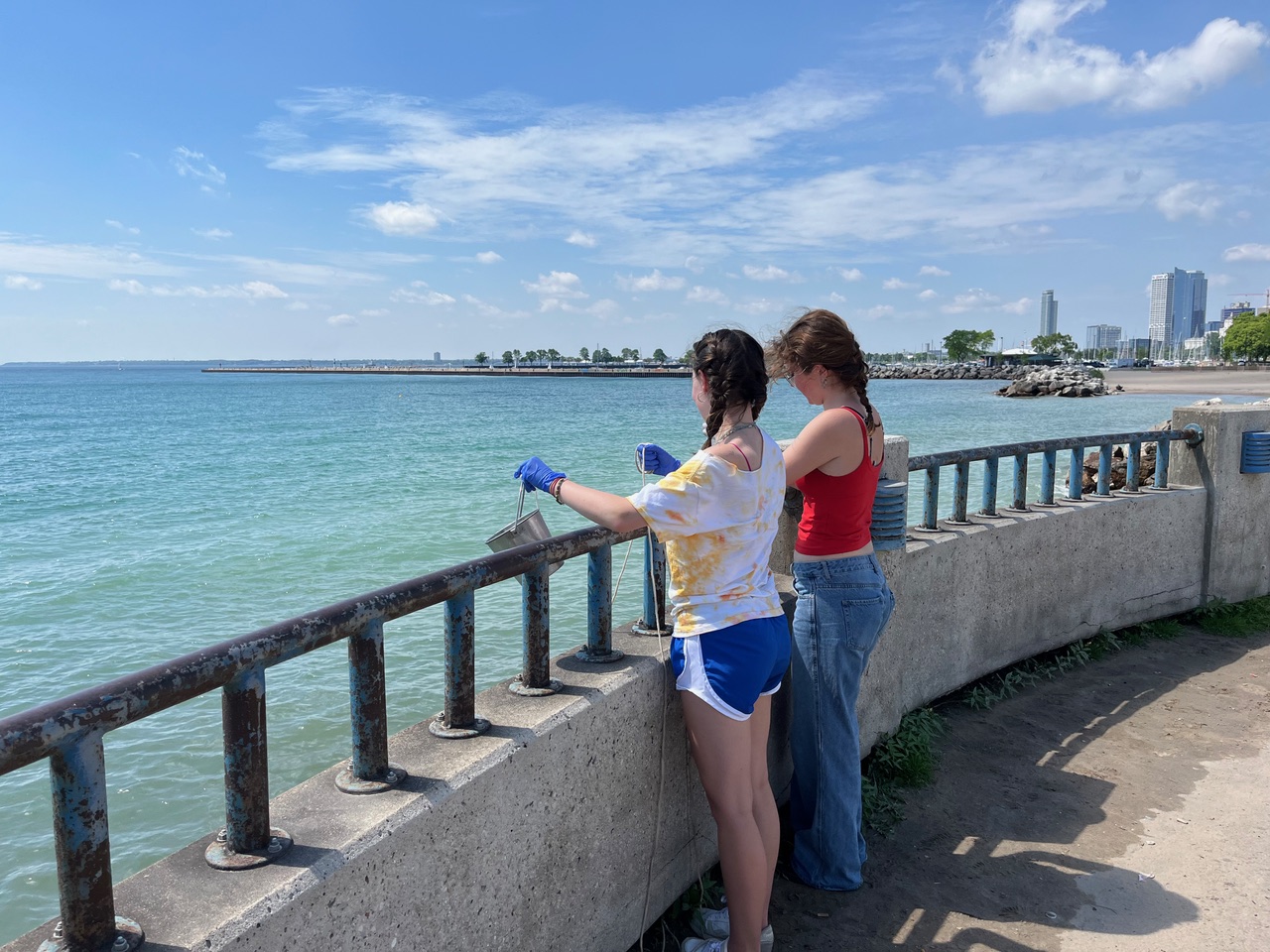
Two undergraduate students collect use buckets to collect water samples from   Lake Michigan.

Two undergraduate students collect water samples from Lake Michigan for E. coli and other microbial DNA testing. Photo: Ryan Newton

Nothing ruins a day at the lake like E. coli. At elevated levels, the bacteria — which is prevalent in the guts and feces of both humans and animals — can make people sick, forcing beach managers to post advisories or close beaches entirely. And while current testing methods provide an accurate snapshot of E. coli levels in beach water, the results aren’t always timely.

“There’s a 24-hour lag before you get those results,” said Ryan Newton, a professor at the University of Wisconsin–Milwaukee School of Freshwater Sciences who studies microbes in aquatic environments. “It’s not ideal because you have to wait 24 hours to close a beach or take some sort of action. And at that point, the conditions may not be the same as what they were when you took the sample.”

That delay in getting results can mean people are swimming in unsafe waters or, alternatively, a beach is needlessly closed, which can have negative economic consequences.

That’s where Newton’s research comes in. With funding from Wisconsin Sea Grant, he and his team are developing a faster way to test for E. coli and identify its source so beach managers can make quick, informed decisions about the safety of their beaches and identify ways to prevent future pollution. 

Rapid results using RNA

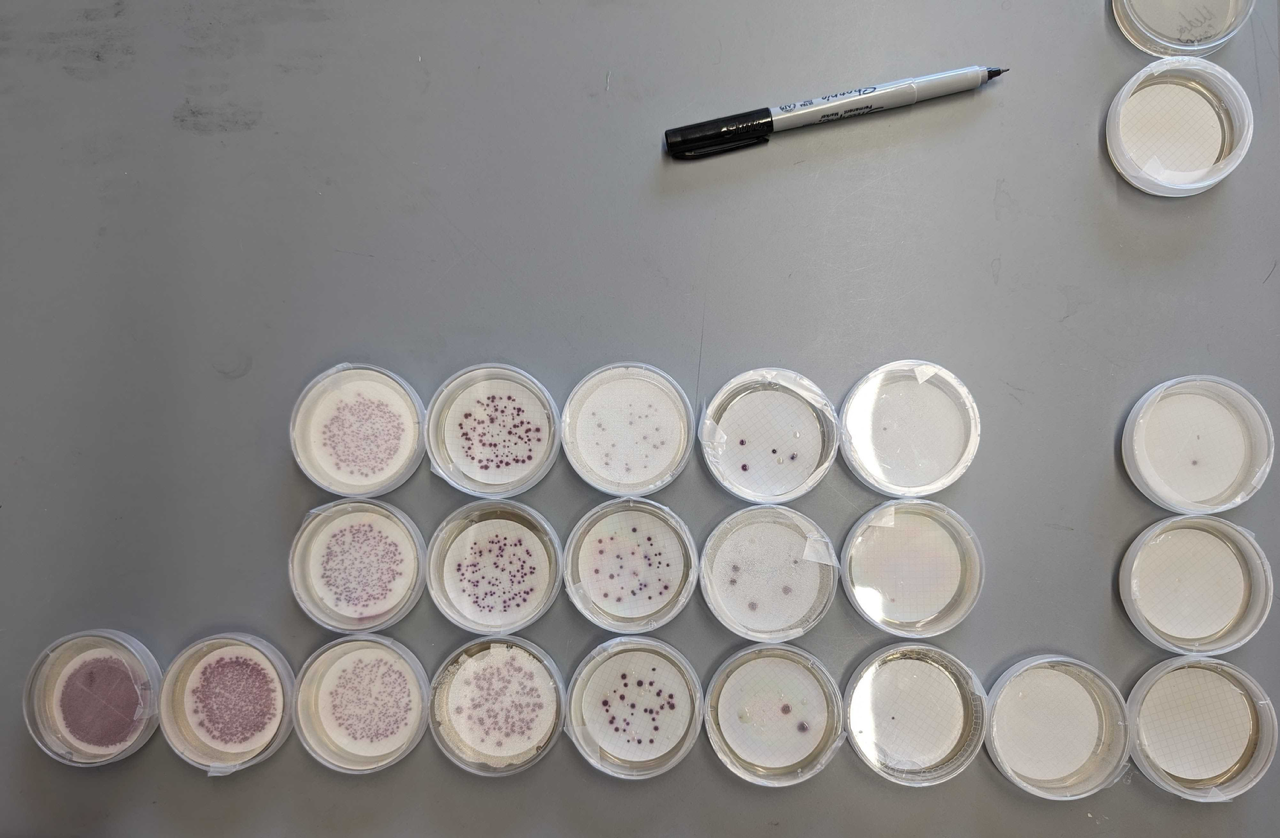
Purple colonies of E. coli grow in Petri dishes

Results from E. coli testing. Each purple colony on the plate represents E. coli from the sample. Photo: Ryan Newton

Professor Ryan Newton wears a gray sweater and glasses

Ryan Newton. Submitted photo.

Newton explained E. coli is traditionally tested by culturing the bacteria: filtering a water sample, swabbing it onto a Petri dish, warming it up, and waiting to see what grows. It’s an accurate method, but the incubation period takes at least 24 hours. The method he’s developing, on the other hand, won’t require incubation. Instead, it will make use of RNA to detect E. coli in water samples.

A quick flashback to high school biology: RNA, or ribonucleic acid, is an essential molecule that helps make proteins in living organisms, including E. coli. Like DNA, RNA features unique molecular sequences, called “signatures,” that can be used to identify organisms.

The new process Newton is developing will be able to quickly identify if E. coli signatures are present, skipping the incubation period that slows down the current process. Currently Newton’s team is fine-tuning the method in the lab before trying it out on lake water, which will present its own set of challenges. 

“Things in nature don’t always play as nicely as clean water in the lab,” he said.

But whose poop is it?

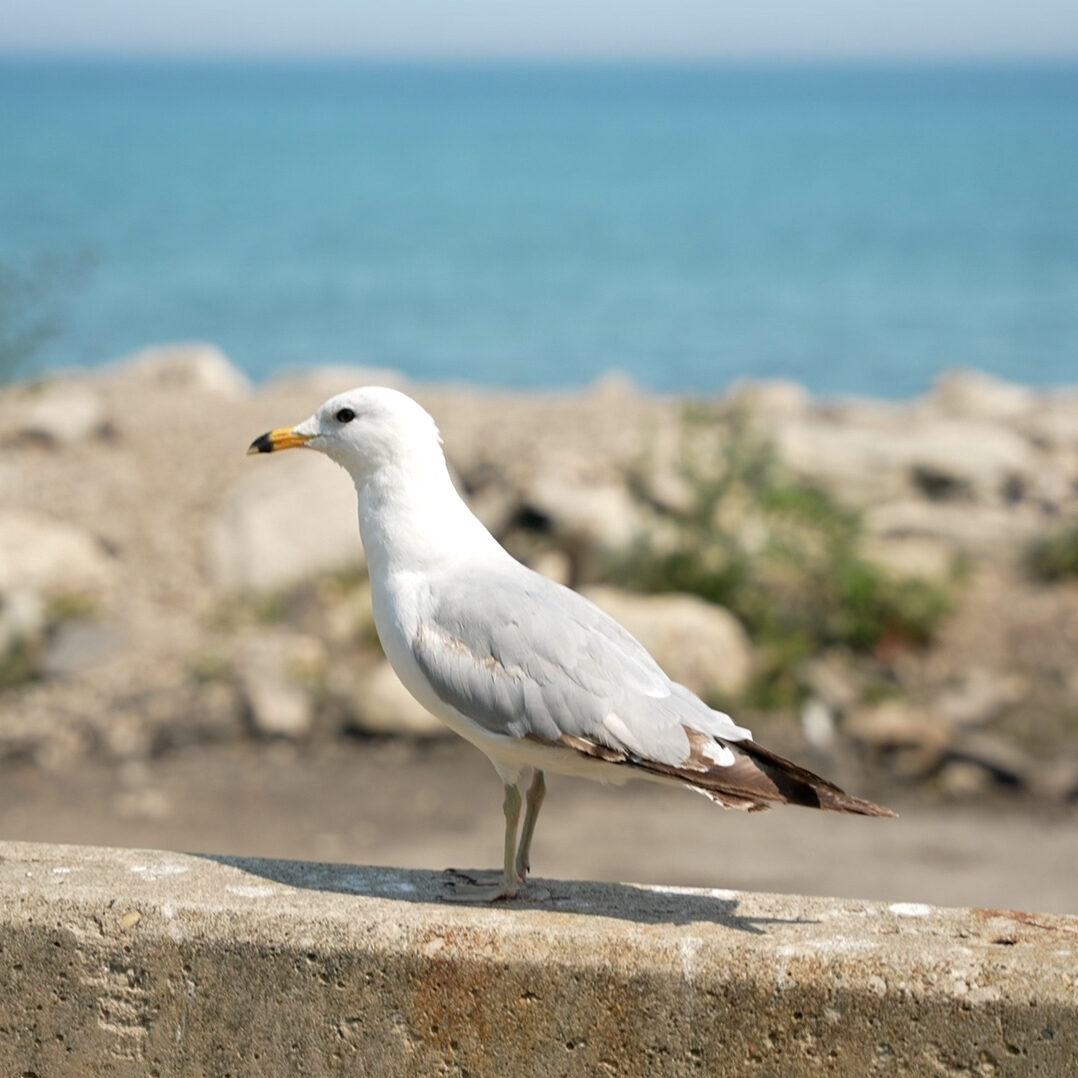
A seagull stands on a concrete ledge near Bradford Beach in Milwaukee

A seagull at Bradford Beach. Photo: Wisconsin Sea Grant

In addition to developing a faster way to detect E. coli in lake water, Newton’s team is also working on a method to identify its source. Such information will help public health officials assess the threat — human feces are generally considered riskier to human health than those of cows or dogs — but also help beach managers prevent future pollution. 

“Right now, we’re envisioning [the test] as a way to do a quick survey of your beach and understand which pollution sources are most likely,” said Newton. “If you know it’s coming from sewage, then you just have to identify where that sewage might be coming from, whether it’s a leaky pipe or infrastructure or misconnection.”

While tests to identify individual sources exist, Newton is developing a method to identify multiple sources in one water sample. He’ll use a handheld, portable DNA sequencer to identify the types of microorganisms present, which can then reveal whether the fecal contamination is coming from humans, cows, dogs, or gulls. 

It’s useful information for municipalities looking to address longstanding E. coli issues at beaches. Newton pointed to the work of colleague and Sea Grant-funded researcher Sandra McLellan, who identified seagulls and stormwater runoff as the primary sources of E. coli at Milwaukee’s popular Bradford Beach a little over 15 years ago. As a result of the study, the city implemented strategies to prevent stormwater from running across the beach during heavy rains and used dogs to scare birds off the beach. 

The changes made a difference.

“Bradford became much, much cleaner after those processes were implemented,” said Newton.

He hopes the methodologies he’s developing will give beach managers timely, accurate information about water quality on their beaches that they can use. His team already works closely with the Milwaukee Health Department. 

“We have a ton of partners that we work with, and our building [School of Freshwater Sciences] contains four nonprofits and three federal agencies. And so I walk down the hall and talk to them,” said Newton. “The work is fulfilling in that you can see actual change.”

***

The University of Wisconsin Aquatic Sciences Center administers Wisconsin Sea Grant, the Wisconsin Water Resources Institute, and Water@UW.  The center supports multidisciplinary research, education, and outreach for the protection and sustainable use of Wisconsin’s water resources. Wisconsin Sea Grant is one of 34 Sea Grant programs supported by the National Oceanic and Atmospheric Administration in coastal and Great Lakes states that encourage the wise stewardship of marine resources through research, education, outreach, and technology transfer.


The post Developing a faster way to detect E. coli and identify its source at public beaches first appeared on Wisconsin Sea Grant.

Original Article

News Releases | Wisconsin Sea Grant

News Releases | Wisconsin Sea Grant

https://www.seagrant.wisc.edu/news/developing-a-faster-way-to-detect-ecoli/

Jenna Mertz

Great Lakes slightly colder than usual ahead of summer

By Emilio Perez Ibarguen, Bridge Michigan

The Great Lakes News Collaborative includes Bridge Michigan; Circle of Blue; Great Lakes Now at Detroit PBS; Michigan Public, Michigan’s NPR News Leader; and The Narwhal who work together to bring audiences news and information about the impact of climate change, pollution, and aging infrastructure on the Great Lakes and drinking water.

Read Now at Great Lakes Now.

Original Article

Great Lakes Now

Great Lakes Now

https://www.greatlakesnow.org/2025/05/great-lakes-slightly-colder-than-usual-ahead-of-summer/

Bridge Michigan

Model of Little Harbor launch

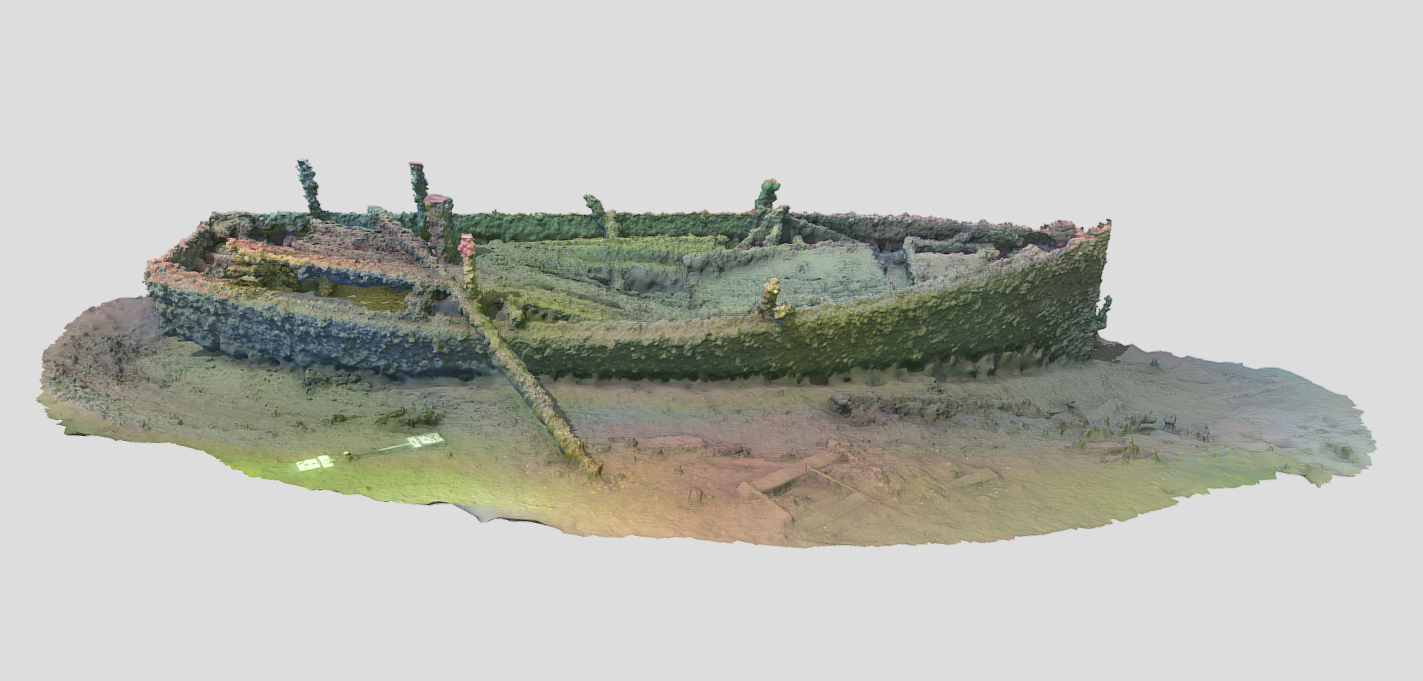
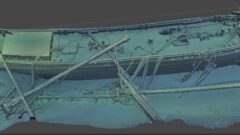
Photogrammetry model of the Little Harbor launch. Image: Zach Whitrock

The Little Harbor launch wasn’t a muscular ship. Measuring nearly 30 feet in length, the boat paled in comparison to the hundred-foot steam-powered vessels ferrying lumber and coal across Lake Michigan in the late 19th and early 20th centuries. But this little boat, wrecked off the coast of Door County and newly listed on the National Register of Historic Places, can tell us a lot about the history of one of Wisconsin’s favorite vacation spots.

Marine archaeologist Tamara Thomsen led the effort to survey and register the vessel as part of her Sea Grant-funded research on shipwrecks in the bay of Green Bay. Her team was the first to visit and document the launch, which was uncovered during a NOAA coastal survey in 2021.

“Being able to be the first there helps give the full story, or as much of the story, as we can gather from the shipwreck,” Thomsen said. “It’s our first chance to look at it and do the archeological examination before others come and may end up inadvertently damaging the site.”

It’s also the first time this type of story is being told. Not much is written about small, powered watercraft in Great Lakes maritime history.

“We’ve spent a lot of time in this office looking at large commercial vessels – you know, schooners and steamers. They were this major part of the transportation network on the Great Lakes,” said Thomsen. “But we haven’t had the opportunity to study these small, what are called ‘vernacular’ craft.”

Unlike schooners and steamers, launches were everyday boats for everyday people. They were used for pleasure boating and fishing, and they also transported both vacationers and fruit pickers around the oft-visited Door County peninsula.

“Every one of the little resorts along Door County had a launch,” Thomsen said. “When folks would come into Sturgeon Bay, the small resort would go and pick them up with the launch. Cherry pickers were moved around the peninsula by launch. You have to remember that the trains really didn’t get to the northern part of Door County until the 1920s.”

Diver Tim Pranke holds up the bell from the shipwreck of the Little Harbor launch

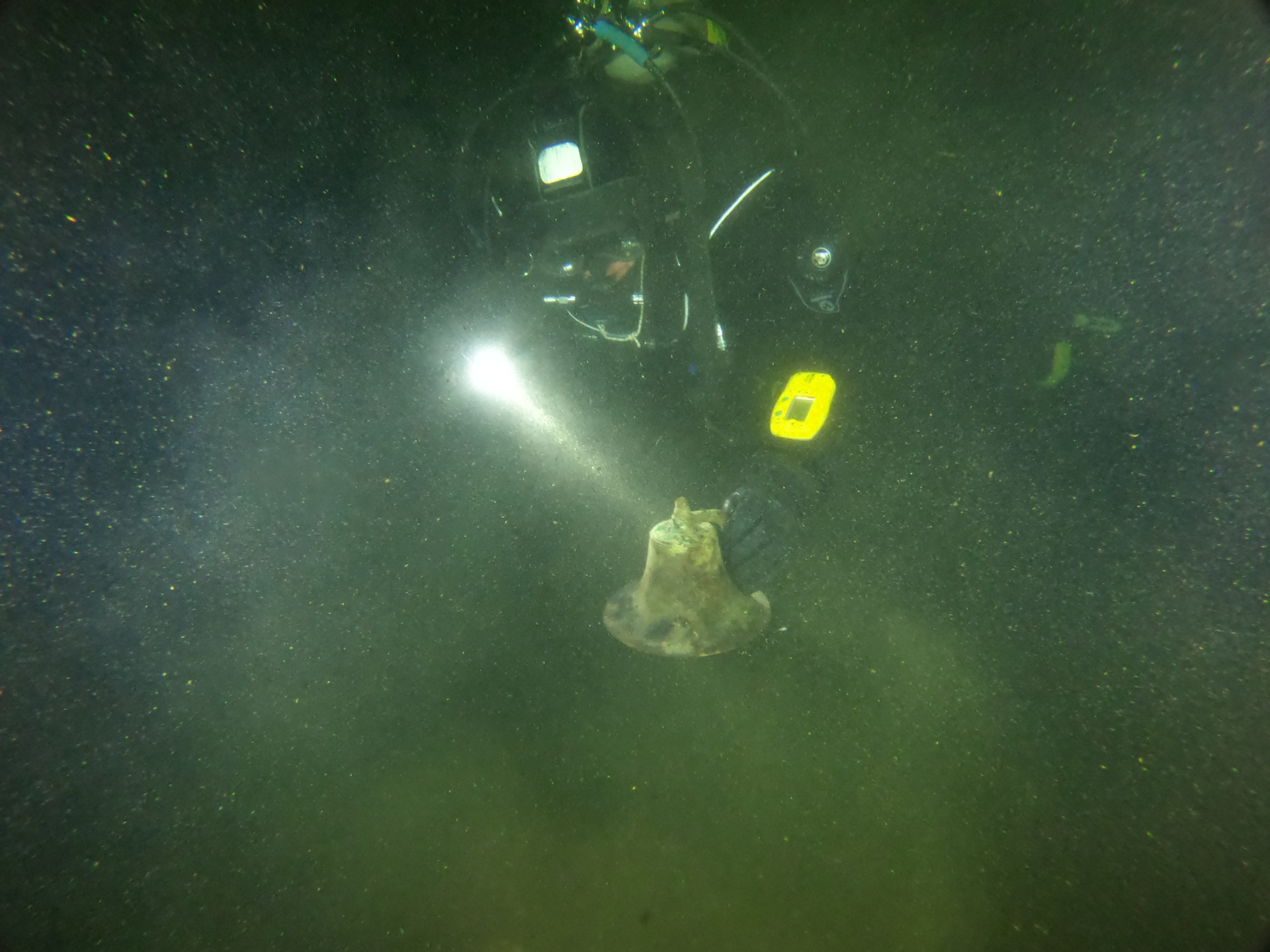
Diver Tim Pranke holds up the bell from the shipwreck of the Little Harbor Launch. Photo: Wisconsin Historical Society

Often these launches were built locally. Tim Pranke, a seasoned diver and engine enthusiast who volunteers on Thomsen’s dives, helped identify the Little Harbor’s gasoline engine as one built by Straubel Machine Company in Green Bay. That’s not a surprise given the vibrant boat-building industry in the state. In the early 1900s, Wisconsin was the third largest manufacturer of non-steam powered launches in the country.

Some things still remain a mystery, though, like the identity of the launch and why it sank. Thomsen and team pored through local papers looking for news of a boat matching the description of the launch, but to no avail. It’s unusual for a place like turn-of-the-century Door County where, Thomsen said, if someone in the boat business so much as “sneezed, it showed up in the newspaper.”

The boat may remain anonymous, but that doesn’t mean it’s unimportant. Big ships can tell us about trade and tycoons, but boats like the Little Harbor launch can tell us about everyday folks — the ones picking cherries or casting a line.

Said Thomsen, “It fills out the story of people’s use of the waterway.”

The post Door County shipwreck listed on National Register of Historic Places first appeared on Wisconsin Sea Grant.

Original Article

News Releases | Wisconsin Sea Grant

News Releases | Wisconsin Sea Grant

https://www.seagrant.wisc.edu/news/door-county-shipwreck-listed-on-national-register-of-historic-places/

Jenna Mertz

Artificial Reefs Can Mitigate Coastal Erosion in the Great Lakes. Will Cities Agree to Adopt Them?

By Lily Carey, Inside Climate News

This article originally appeared on Inside Climate News, a nonprofit, non-partisan news organization that covers climate, energy and the environment. Sign up for their newsletter here.

Illinois boasts 63 miles of coastline along Lake Michigan’s southwestern shore, nearly all of which is fortified by metal breakwaters, concrete seawalls and even swaths of land built out into the lake.

Read Now at Great Lakes Now.

Original Article

Great Lakes Now

Great Lakes Now

https://www.greatlakesnow.org/2025/04/artificial-reefs-can-mitigate-coastal-erosion-in-the-great-lakes-will-cities-agree-to-adopt-them/

Inside Climate News

Experts explain criticality of regional EPA office

Change is happening since Donald Trump took office and began making good on campaign pledges to reduce the size and scope of the work of the federal agencies that serve the country.

And the 50-year-old focus of the U.S. EPA to protect the environment has not been immune.

Read Now at Great Lakes Now.

Original Article

Great Lakes Now

Great Lakes Now

https://www.greatlakesnow.org/2025/04/experts-explain-criticality-of-regional-epa-office/

Gary Wilson, Great Lakes Now

Michigan Residents Push for an Environmental Impact Statement Before Restarting the Palisades Nuclear Plant

By Carrie Klein, Inside Climate News

This article originally appeared on Inside Climate News, a nonprofit, non-partisan news organization that covers climate, energy and the environment. Sign up for their newsletter here.

Michigan’s Palisades Nuclear Generating Station is one step closer to becoming the first nuclear power plant in the United States to reopen.

Read Now at Great Lakes Now.

Original Article

Great Lakes Now

Great Lakes Now

https://www.greatlakesnow.org/2025/02/michigan-environmental-impact-statement-palisades-nuclear-plant-restart/

Inside Climate News

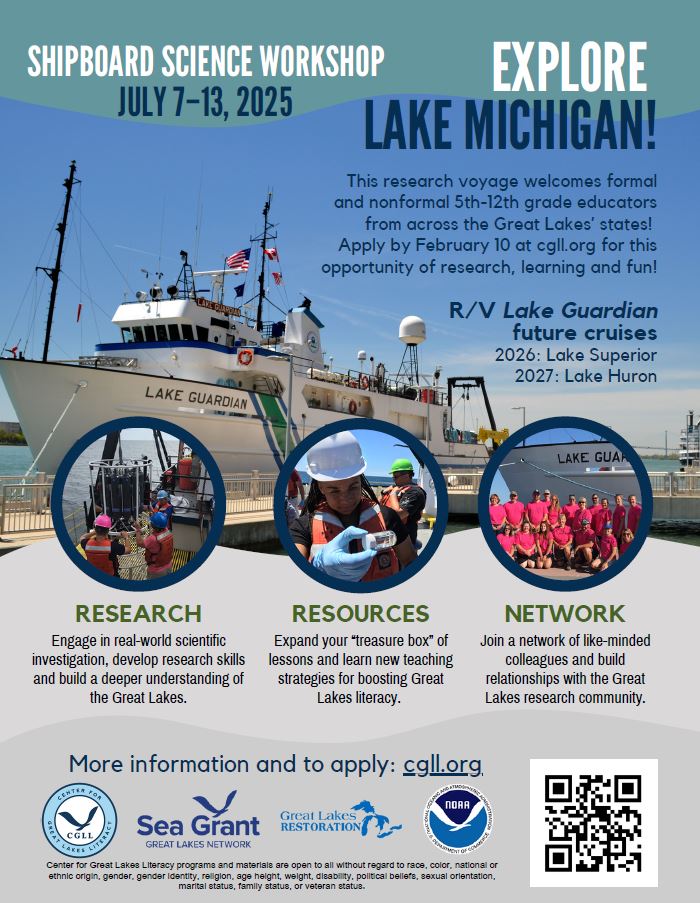
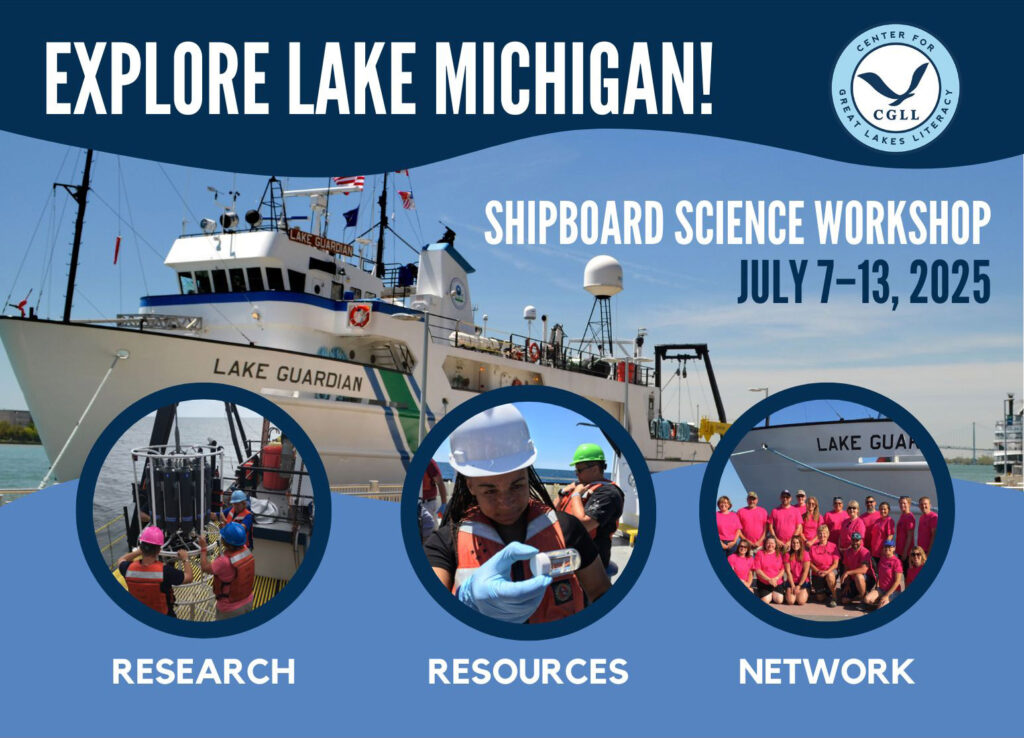
Apply today for the 2025 Shipboard Science Workshop aboard the U.S. EPA R/V Lake Guardian on Lake Michigan

Formal and nonformal 5-12th grade educators from Great Lakes’ states are invited to apply for a once-in-a-lifetime opportunity to spend a week aboard a U.S. Environmental Protection Agency research vessel alongside scientists and to bring the Great Lakes back to their classrooms. The workshop, organized by the Center for Great Lakes Literacy (CGLL), is July 7-13, 2025. Deadline for applications is Feb. 10, 2025.

Through a partnership with the EPA Great Lakes National Program Office and NOAA, and funding from the Great Lakes Restoration Initiative, educators will engage in scientific research aboard the ship. Hosts for the Lake Michigan workshop are CGLL partners Illinois-Indiana Sea Grant and Wisconsin Sea Grant.

The annual Shipboard Science Workshops promote Great Lakes sciences while forging lasting relationships between Great Lakes researchers and educators. CGLL is a collaborative effort led by Sea Grant educators throughout the Great Lakes watershed in the U.S. CGLL fosters informed and responsible decisions that advance basin-wide stewardship by providing hands-on experiences, educational resources and networking opportunities promoting Great Lakes literacy among an engaged community of educators, scientists and youth.

For more information on the 2025 Shipboard Science Workshop and application materials visit the Center for Great Lakes Literacy website.

The post 2025 Shipboard Science Workshop on Lake Michigan first appeared on Wisconsin Sea Grant.

Original Article

News Releases | Wisconsin Sea Grant

News Releases | Wisconsin Sea Grant

https://www.seagrant.wisc.edu/news/2025-shipboard-science-workshop-on-lake-michigan/

Wisconsin Sea Grant

Points North: Saving David

By Michael Livingston

Points North is a biweekly podcast about the land, water and inhabitants of the Great Lakes.

This episode was shared here with permission from Interlochen Public Radio. 

On a blustery September day in 2024, 68-year-old David Holtfreter decides to go kayaking in Grand Traverse Bay, Michigan.

Read Now at Great Lakes Now.

Original Article

Great Lakes Now

Great Lakes Now

https://www.greatlakesnow.org/2024/11/points-north-saving-david/

Interlochen Public Radio

Presenting Atlas Obscura: The Mysterious Sinkholes of Mount Baldy

By Daniel Wanschura

Points North is a biweekly podcast about the land, water and inhabitants of the Great Lakes.

This episode was shared here with permission from Interlochen Public Radio. 

On July 12, 2013 the Woessner family was hiking in Indiana.

Read Now at Great Lakes Now.

Original Article

Great Lakes Now

Great Lakes Now

https://www.greatlakesnow.org/2024/11/presenting-atlas-obscura-the-mysterious-sinkholes-of-mount-baldy/

Interlochen Public Radio

This Historic Ship Runs on Coal. Can It Find a New Way Forward?

By Phil McKenna, Inside Climate News

This article originally appeared on Inside Climate News, a nonprofit, non-partisan news organization that covers climate, energy and the environment. Sign up for their newsletter here.

LUDINGTON, Mich.— Boarding the S.S.

Read Now at Great Lakes Now.

Original Article

Great Lakes Now

Great Lakes Now

https://www.greatlakesnow.org/2024/10/lake-michigan-coal-ferry-transition-to-clean-energy/

Inside Climate News

Joliet, Illinois, Plans to Source Its Future Drinking Water From Lake Michigan. Will Other Cities Follow?

By Nina Elkadi, Inside Climate News

This article originally appeared on Inside Climate News, a nonprofit, non-partisan news organization that covers climate, energy and the environment. Sign up for their newsletter here.

The aquifer from which Joliet, Illinois, sources its drinking water is likely going to run too dry to support the city by 2030—a problem more and more communities are facing as the climate changes and groundwater declines.

Read Now at Great Lakes Now.

Original Article

Great Lakes Now

Great Lakes Now

https://www.greatlakesnow.org/2024/10/joliet-illinois-lake-michigan-drinking-water/

Inside Climate News

Chicago’s beach season is over … or is it? Lake Michigan temps are breaking records.

By Juanpablo Ramirez-Franco, WBEZ

This coverage is made possible through a partnership between WBEZ and Grist, a nonprofit, independent media organization dedicated to telling stories of climate solutions and a just future. Sign up for WBEZ newsletters to get local news you can trust.

Read Now at Great Lakes Now.

Original Article

Great Lakes Now

Great Lakes Now

https://www.greatlakesnow.org/2024/09/chicagos-beach-season-is-over-or-is-it-lake-michigan-temps-are-breaking-records/

WBEZ

Chicago reveals climate havens don’t exist — they must be created

Experts now say “climate havens” are not places immune from climate change, but areas where adequate preparation is implemented to account for a drastically different climate than anticipated.

Great Lakes cities, like Chicago, are generally considered to be at a lower risk for extreme climate impacts such as wildfires and tropical storms.

Read Now at Great Lakes Now.

Original Article

Great Lakes Now

Great Lakes Now

https://www.greatlakesnow.org/2024/09/chicago-reveals-climate-havens-dont-exist-they-must-be-created/

Mia Litzenberg

Points North: Frankenfish

By Patrick Shea, Dan Wanschura and Morgan Springer

Points North is a biweekly podcast about the land, water and inhabitants of the Great Lakes.

This episode was shared here with permission from Interlochen Public Radio. 

Lake trout are on life support in Lake Michigan.

Read Now at Great Lakes Now.

Original Article

Great Lakes Now

Great Lakes Now

https://www.greatlakesnow.org/2024/08/points-north-frankenfish/

Interlochen Public Radio

On Lake Michigan, a coal-fired steamship and ferry eyes a clean-energy future

By Kelly House, Bridge Michigan

The Great Lakes News Collaborative includes Bridge Michigan; Circle of Blue; Great Lakes Now at Detroit Public Television; and Michigan Public, Michigan’s NPR News Leader; who work together to bring audiences news and information about the impact of climate change, pollution, and aging infrastructure on the Great Lakes and drinking water.

Read Now at Great Lakes Now.

Original Article

Great Lakes Now

Great Lakes Now

https://www.greatlakesnow.org/2024/08/on-lake-michigan-a-coal-fired-steamship-and-ferry-eyes-a-clean-energy-future/

Bridge Michigan

Ship doomed on Lake Michigan now moored on National Register of Historic Places

This article was republished here with permission from Great Lakes Echo.

By Eric Freedman, Great Lakes Echo

A Detroit-built sailing ship that sank in Lake Michigan during an 1864 storm has been added to the National Register of Historic Places.

The three-masted Mojave, only 1 year old at the time, went down in heavy weather while northbound on the route from Chicago to Buffalo with a load of grain.

Read Now at Great Lakes Now.

Original Article

Great Lakes Now

Great Lakes Now

https://www.greatlakesnow.org/2024/07/ship-doomed-on-lake-michigan-now-moored-on-national-register-of-historic-places/

Great Lakes Echo

Many people have questions about the historically low Great Lakes ice cover this winter, and we’ve got answers! NOAA GLERL’s Bryan Mroczka (Physical Scientist) and Andrea Vander Woude (Integrated Physical and Ecological Modeling and Forecasting Branch Chief) answer the following … Continue reading

Original Article

NOAA Great Lakes Environmental Research Laboratory

NOAA Great Lakes Environmental Research Laboratory

https://noaaglerl.blog/2024/02/22/qa-with-noaa-scientists-causes-and-impacts-of-2024s-historically-low-great-lakes-ice-cover/

Gabrielle Farina

Wisconsin’s state fish tops the food chain

The long, fast, toothy muskellunge (also known as muskie or musky) is nicknamed the “Fish of 10,000 Casts” due to its notoriously elusive nature. It is the apex predator in all waters where it’s found, known to hide in underwater cover, aggressively ambushing prey. They eat fish almost exclusively, though they have been known to consume just about anything they can swallow including birds, small mammals, and their own kind.   

Read Now at Great Lakes Now.

Original Article

Great Lakes Now

Great Lakes Now

https://www.greatlakesnow.org/2024/02/wisconsins-state-fish-tops-the-food-chain/

James Proffitt

You can’t stop the lake

In Douglas, Michigan, houses dot the coast of Lake Michigan, with wooden stairs — some newly built, others with broken steps — descending the steep hillside to give shoreline residents access to the narrow sandy beach. When winds grow fierce, waves crash against the boulders and large sandbags stacked along the base of these homes.  

Read Now at Great Lakes Now.

Original Article

Great Lakes Now

Great Lakes Now

https://www.greatlakesnow.org/2024/01/you-cant-stop-the-lake/

Astrid Code

Last week, Sea Grant’s Sharon Moen was the recipient of an Appreciation Award from the Wisconsin Commercial Fishing Association to honor her work to secure the overseas market for whitefish and cisco roe in Sweden.

In 2021, Moen responded to Wisconsin commercial fisher and fish processor requests for help in addressing challenges to the export of Great Lakes lake whitefish and Lake Superior cisco roe to Sweden. Negative sustainability ratings developed by the World Wildlife Fund-European Union prompted ICA Sweden–the largest grocery market chain in the country–and other markets, to remove the roe from shelves.

Moen, food-fish outreach coordinator, intervened and due to that educational outreach spanning roughly two years, the rating was changed last fall so sales valued at $15 million annually can resume.

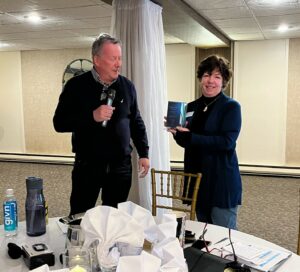
Two people standing next to each other in a room. One person is holding a microphone. The other person is holding an award.

Sharon Moen accepts an award from the president of Wisconsin’s commercial fishing industry in honor of her work to restore a $15-million overseas market for Great Lakes fish products. Photo: Cindy Hudson, Michigan Sea Grant.

“I’m so pleased Wisconsin Sea Grant could facilitate the flow of evidence-based information in a way that helped the commercial fishing industry,” Moen said. “Sustainable fisheries management is an important topic and one our commercial fishers, fisheries managers and Sea Grant takes seriously.”

About Moen’s contribution, the association’s president Daniel Schwarz, said, “Moen’s commitment to this global project was extraordinary. No matter the size of the obstacle thrown her way, she managed to effectively tackle it and successfully conquer it. It is rare these days to see someone who truly cares to the point of no option for failure. Moen took the time to understand the issues at hand directly meeting with fishermen, processors/exporters around the upper Great Lakes in addition to reaching out to regulating government offices to collect updated correct information regarding the current status of the upper Great Lakes fishing industry.”

He continued, “Moen then effectively communicated all this information to Scandinavian regulatory agencies as well as consumers to build back the confidence in and credibility of the Great Lakes products. This enormous undertaking by one person took great leadership and communication skills, determination and passion.”

Schwarz is the owner of Dan’s Fish Inc., which is based in Sturgeon Bay. Wisconsin’s tribal and state-licensed commercial fishers primary catch lake whitefish, cisco and lake trout from Lake Superior. In Lake Michigan, state-licensed commercial fishers target lake whitefish and yellow perch. Burbot, rainbow smelt and chubs also make up part of Wisconsin’s Great Lakes commercial catch.


The post Moen honored by Wisconsin’s commercial fishers first appeared on Wisconsin Sea Grant.

Original Article

News Releases | Wisconsin Sea Grant

News Releases | Wisconsin Sea Grant

https://www.seagrant.wisc.edu/news/moen-honored-by-wisconsins-commercial-fishers/

Moira Harrington

Warmer winters mean less ice on Lake Michigan – hurting lake trout and whitefish

By Juanpablo Ramirez-Franco, WBEZ

This coverage is made possible through a partnership between WBEZ and Grist, a nonprofit, independent media organization dedicated to telling stories of climate solutions and a just future. Sign up for WBEZ newsletters to get local news you can trust.

Read Now at Great Lakes Now.

Original Article

Great Lakes Now

Great Lakes Now

https://www.greatlakesnow.org/2024/01/warmer-winters-mean-less-ice-on-lake-michigan-hurting-lake-trout-and-whitefish/

WBEZ

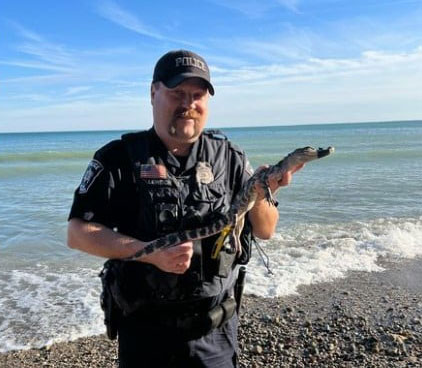
South Milwaukee Police find Gator in Grant Park

Original Story: We Are Green Bay

Alligators are native to the southern portion of the United States, which has officials questioning how one ended up on a beach in Wisconsin. According to the South Milwaukee Police Department, officers took a report of an alligator on Lake Michigan Beach in Grant Park.

The Milwaukee Area Domestic Animal Control Commission (MADACC) was also called to the scene to assist in taking the alligator into custody safely. Officer Lewison with the South Milwaukee Police Department was able to locate and take the alligator into custody safely. The gator is now in the hands of MADACC.

It’s been quite the last few months for Wisconsin’s lakeshore, as just two months ago in September, five flamingos showed up at a Port Washington beach. Additionally in August, an ultra-rare Roseate Spoonbill was spotted in Green Bay for the first time in 178 years.

Judging from the size of the alligator, it looks like it was an illegal pet release. While folks may not know what to do with pets that they are no longer able to care for, pets should never be released into the wild. Places like the J&R Aquatic Area Animal Rescue can help rehome your pet at no cost. Make sure your pet isn’t the next one on the evening news!

Photo Credit: South Milwaukee Police

Questions? Comments? Contact Chris Acy, the AIS Coordinator covering Brown, Outagamie, Fond du Lac, Calumet, and Winnebago Counties at (920) 460-3674 or chris@fwwa.org!

Follow the Fox Wolf Watershed Alliance’s Winnebago Waterways Program on our Winnebago Waterways Facebook page or @WinnWaterways on X! You can also sign-up for email updates at WinnebagoWaterways.org.

Check out the Keepers of the Fox Program at https://fwwa.org/watershed-recovery/lower-fox-recovery/

Winnebago Waterways and Keepers of the Fox are Fox-Wolf Watershed Alliance programs. The Fox-Wolf Watershed Alliance is an independent nonprofit organization working to protect and restore water resources in the Fox-Wolf River Basin.

Reporting invasive species is a first step in containing their spread. Maintaining and restoring our waters and landscapes can reduce the impacts even when we don’t have other management options to an invasive species.

The post Alligator Found on Lake Michigan Beach appeared first on Fox-Wolf Watershed Alliance.

Original Article

Fox-Wolf Watershed Alliance

Fox-Wolf Watershed Alliance

https://fwwa.org/2023/11/17/alligator-found-on-lake-michigan-beach/?utm_source=rss&utm_medium=rss&utm_campaign=alligator-found-on-lake-michigan-beach

Chris Acy

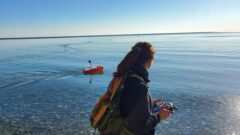
Coastal erosion researcher appeals for help in finding her remote-control boat

Chelsea Volpano’s coastal erosion study began drawing attention on social media last week, but not for the reasons you would expect.

The University of Wisconsin-Madison student was gathering the final data set for her Ph.D. on October 30 when her small boat stopped responding to the remote control.

Read Now at Great Lakes Now.

Original Article

Great Lakes Now

Great Lakes Now

https://www.greatlakesnow.org/2023/11/coastal-erosion-researcher-appeals-for-help-in-finding-her-remote-control-boat/

Sharon Oosthoek

Federal, local officials agree on $450 million deal to clean up Milwaukee waterways

MILWAUKEE (AP) — Federal, state and local officials have agreed to spend about $450 million to dredge contaminated sediment from Milwaukee’s Lake Michigan harbor and area rivers.

The U.S. Environmental Protection Agency announced Thursday that it will devote $275 million from the Great Lakes Restoration Initiative to the project.

Read Now at Great Lakes Now.

Original Article

Great Lakes Now

Great Lakes Now

https://www.greatlakesnow.org/2023/10/ap-federal-local-officials-agree-on-450-million-deal-to-clean-up-milwaukee-waterways/

The Associated Press

Milwaukee suburb begins pulling millions of gallons per day from Lake Michigan

WAUKESHA, Wis. (AP) — A Milwaukee suburb has finally started to pull millions of gallons of water per day from Lake Michigan after spending years seeking approval from regulators.

The city of Waukesha began the diversion Monday. City officials say 90% of the city will be using Lake Michigan’s water within five days.

Read Now at Great Lakes Now.

Original Article

Great Lakes Now

Great Lakes Now

https://www.greatlakesnow.org/2023/10/ap-milwaukee-suburb-pulling-millions-gallons-lake-michigan/

The Associated Press

Behind the shipwreck discovered in Lake Michigan

A 150-year-old schooner that sank in 1881, was finally discovered in Lake Michigan. On July 15, maritime historians, Brendon Baillod and Bob Jaeck located the old shipwreck off the coast of Algoma, Wisconsin. The Trinidad was on their radar for more than twenty years, as the ship was a strong candidate for research; the captain and his eight crew members all survived (except their trusted Newfoundland), providing a good description of where the vessel sank.

Read Now at Great Lakes Now.

Original Article

Great Lakes Now

Great Lakes Now

https://www.greatlakesnow.org/2023/09/behind-shipwreck-discovered-lake-michigan/

Lisa John Rogers

Chicago Suburbs, Running Out of Water, Will Tap Lake Michigan

By Brett Walton, Circle of Blue

The Great Lakes News Collaborative includes Bridge Michigan; Circle of Blue; Great Lakes Now at Detroit Public Television; and Michigan Radio, Michigan’s NPR News Leader; who work together to bring audiences news and information about the impact of climate change, pollution, and aging infrastructure on the Great Lakes and drinking water.

Read Now at Great Lakes Now.

Original Article

Great Lakes Now

Great Lakes Now

https://www.greatlakesnow.org/2023/09/chicago-suburbs-water-tap-lake-michigan/

Circle of Blue

What’s being done about plastic trash getting into the Great Lakes?

By Lester Graham, Michigan Radio

The Great Lakes News Collaborative includes Bridge Michigan; Circle of Blue; Great Lakes Now at Detroit Public Television; and Michigan Radio, Michigan’s NPR News Leader; who work together to bring audiences news and information about the impact of climate change, pollution, and aging infrastructure on the Great Lakes and drinking water.

Read Now at Great Lakes Now.

Original Article

Great Lakes Now

Great Lakes Now

https://www.greatlakesnow.org/2023/08/whats-being-done-plastic-trash-getting-great-lakes/

Michigan Radio

On Chicago’s South Side, neighbors fight to keep Lake Michigan at bay

By Siri Chilukuri, Planet Detroit

This piece is part of a collaboration that includes the Institute for Nonprofit News, Borderless, Ensia, Planet Detroit, Sahan Journal, and Wisconsin Watch, as well as the Guardian and Inside Climate News. The project was supported by the Joyce Foundation. 

Jera Slaughter looks at her backyard with pride, pointing out every feature and explaining how it came to be.

Read Now at Great Lakes Now.

Original Article

Great Lakes Now

Great Lakes Now

https://www.greatlakesnow.org/2023/08/chicagos-south-side-neighbors-fight-keep-lake-michigan-bay/

Planet Detroit

Diesel spill on Lake Michigan triggers multi-agency response

By Katheryne Friske, Michigan Radio

The Great Lakes News Collaborative includes Bridge Michigan; Circle of Blue; Great Lakes Now at Detroit Public Television; and Michigan Radio, Michigan’s NPR News Leader; who work together to bring audiences news and information about the impact of climate change, pollution, and aging infrastructure on the Great Lakes and drinking water.

Read Now at Great Lakes Now.

Original Article

Great Lakes Now

Great Lakes Now

https://www.greatlakesnow.org/2023/08/diesel-spill-on-lake-michigan-triggers-multi-agency-response/

Michigan Radio

New NASA satellite helps scientists understand Great Lakes

This article was republished here with permission from Great Lakes Echo.

By Jack Armstrong,  Great Lakes Echo

NASA’s new satellite is a huge upgrade for measuring Earth’s surface water that could help scientists. It’s like swapping out your old iPhone for a new model with a better camera, and it could help us better understand the Great Lakes.

Read Now at Great Lakes Now.

Original Article

Great Lakes Now

Great Lakes Now

https://www.greatlakesnow.org/2023/06/new-nasa-satellite-helps-scientists-understand-great-lakes/

Great Lakes Echo

Illinois, feds grapple with agreement that would advance billion dollar plan to stop invasive carp

The first efforts to stop the advance of invasive carp to the Great Lakes began in the early 2000s when electrical barriers in the Chicago Area Waterway System leading to Lake Michigan were thought to be a deterrent.

The fear was that if the voracious carp entered the lake, they could expand their range, wipe out the food supply and eventually devastate the multi-billion dollar Great Lakes fishery.

Read Now at Great Lakes Now.

Original Article

Great Lakes Now

Great Lakes Now

https://www.greatlakesnow.org/2023/06/illinois-feds-grapple-agreement-advance-billion-dollar-plan-stop-invasive-carp/

Gary Wilson

Anishinaabe tribes work to save a fish significant to their culture and an important source of protein

By Lester Graham, Michigan Radio

The Great Lakes News Collaborative includes Bridge Michigan; Circle of Blue; Great Lakes Now at Detroit Public Television; and Michigan Radio, Michigan’s NPR News Leader; who work together to bring audiences news and information about the impact of climate change, pollution, and aging infrastructure on the Great Lakes and drinking water.

Read Now at Great Lakes Now.

Original Article

Great Lakes Now

Great Lakes Now

https://www.greatlakesnow.org/2023/05/anishinaabe-tribes-work-save-fish-significant-culture-important-source-protein/

Michigan Radio

New Great Lakes book challenges readers with mystery, facts and whimsy

What is President Abraham Lincoln’s connection to a current vexing Great Lakes threat? Traveling south to Canada, right? And why would France go to court over a Great Lakes issue?

Those are some of the questions Traverse City author Dave Dempsey asks in his latest book, The Great Lakes: Fact or Fake.

Read Now at Great Lakes Now.

Original Article

Great Lakes Now

Great Lakes Now

https://www.greatlakesnow.org/2023/05/great-lakes-book-challenges-readers-mystery-facts-whimsy/

Gary Wilson

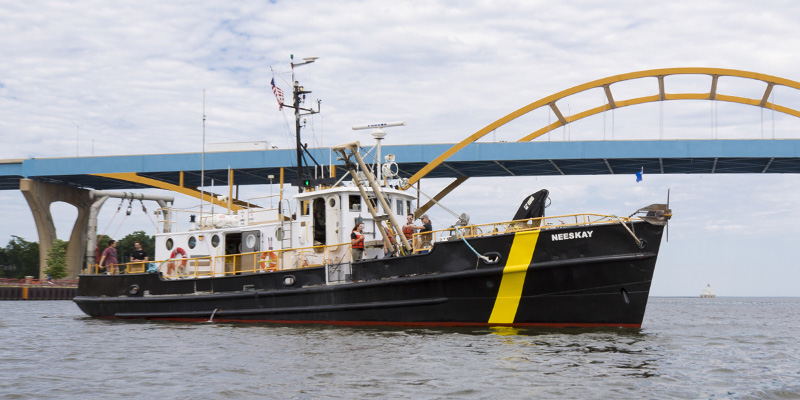
The R/V Neeskay will be the site of a workshop for teaching professionals this August. Submitted image.

Wisconsin Sea Grant is excited to announce its 2023 in-person Great Lakes literacy professional learning workshop for formal and nonformal educators in Milwaukee, Wisconsin. Over the course of two days, August 16-17, educators will work alongside each other, engineers, scientists and Sea Grant educators to take a deep dive into coastal engineering. 

The workshop will explore how coastal engineering can shape and strengthen our coasts and shorelines, using Milwaukee and its Lake Michigan shoreline as a case study. It will include time aboard R/V Neeskay giving a unique perspective to the engineering transformations of the community. Educators will be introduced to activities and lessons to bring back engineering to their learners. The content is best suited to educators working at the middle and high school levels.

A full agenda will be provided shortly. Both experienced and educators new to Great Lakes literacy are encouraged to apply. Stipends will be provided to cover attendance and travel.

Fill out an application today! Deadline is June 15.


The post Waterfronts Past and Present: Learn How Engineers Design with Nature first appeared on Wisconsin Sea Grant.

Original Article

Blog | Wisconsin Sea Grant

Blog | Wisconsin Sea Grant

https://www.seagrant.wisc.edu/blog/waterfronts-past-and-present-learn-how-engineers-design-with-nature/?utm_source=rss&utm_medium=rss&utm_campaign=waterfronts-past-and-present-learn-how-engineers-design-with-nature

Anne Moser

For open water swimmers, even chilly, choppy water beckons

By Katherine Roth, Associated Press

Many beaches won’t open for weeks, but already one dedicated group is quietly pacing the shore.

You might not have noticed them, but these quiet few are the ones who seem most keen on noting the shifting tides, the current, the wind.

Read Now at Great Lakes Now.

Original Article

Great Lakes Now

Great Lakes Now

https://www.greatlakesnow.org/2023/05/open-water-swimmers-chilly-choppy-water-beckons/

The Associated Press

Folk singer-songwriter Gordon Lightfoot dies at 84

TORONTO (AP) — Gordon Lightfoot, the folk singer-songwriter known for “If You Could Read My Mind” and “Sundown” and for songs that told tales of Canadian identity, died Monday. He was 84.

Representative Victoria Lord said the musician died at a Toronto hospital. His cause of death was not immediately available.

Read Now at Great Lakes Now.

Original Article

Great Lakes Now

Great Lakes Now

https://www.greatlakesnow.org/2023/05/ap-folk-singer-songwriter-gordon-lightfoot-dies/

The Associated Press

Company seeks first-time restart of shuttered nuclear plant

By John Flesher, Associated Press

TRAVERSE CITY, Mich. (AP) — A company that tears down closed nuclear power plants wants to do in Michigan what has never been done in the U.S.: restore a dead one to life.

Holtec Decommissioning International bought the Palisades Nuclear Generating Station last June for the stated purpose of dismantling it, weeks after previous owner Entergy shut it down.

Read Now at Great Lakes Now.

Original Article

Great Lakes Now

Great Lakes Now

https://www.greatlakesnow.org/2023/04/ap-company-seeks-first-time-restart-shuttered-nuclear-plant/

The Associated Press

Menominee County, Michigan
CCO Meeting – CCO Meeting Presentation [.pdf]
Tuesday, October 4, 2022, from 1-2:30pm CT

Open House:
Wednesday, March 8, 2023, from 6-8pm CT

Original Article

Great Lakes Coastal Flood Study

Great Lakes Coastal Flood Study

https://www.greatlakescoast.org/2023/03/16/lake-michigan-community-consultation-officers-meeting-and-open-house-for-menominee-county-michigan/

Great Lakes Coast

In Chicago, adapting electric buses to winter’s challenges

By Tom Krishner, AP Auto Writer

CHICAGO (AP) — The No. 66 bus is packed on a recent weekday afternoon as it starts and stops its way from Chicago’s near west side to Navy Pier along the Lake Michigan shore.

The seats and windows squeak and rattle just like a regular diesel bus, but no one seems to notice the high-pitched whine of the electric motor that makes it go.

Read Now at Great Lakes Now.

Original Article

Great Lakes Now

Great Lakes Now

https://www.greatlakesnow.org/2023/03/ap-adapting-electric-buses-winter-challenge/

The Associated Press

Long-lost ship found in Lake Huron, confirming tragic story

By John Flesher, Associated Press

TRAVERSE CITY, Mich. (AP) — Even for the Thunder Bay area, a perilous swath of northern Lake Huron off the Michigan coast that has devoured many a ship, the Ironton’s fate seems particularly cruel.

The 191-foot (58-meter) cargo vessel collided with a grain hauler on a blustery night in September 1894, sinking both.

Read Now at Great Lakes Now.

Original Article

Great Lakes Now

Great Lakes Now

https://www.greatlakesnow.org/2023/03/ap-long-lost-ship-found-in-lake-huron/

The Associated Press

Energy News Roundup: Minnesota’s 2040 carbon-free energy bill, coal ash crackdown continues

Keep up with energy-related developments in the Great Lakes area with Great Lakes Now’s biweekly headline roundup.

Click on the headline to read the full story:


Illinois

  • Three Chicago area oil refineries that dumped toxic chemicals into Lake Michigan and other waterways are among worst polluters in US, study shows — Chicago Tribune

Three Chicago-area oil refineries are among U.S.

Read Now at Great Lakes Now.

Original Article

Great Lakes Now

Great Lakes Now

https://www.greatlakesnow.org/2023/02/energy-news-roundup-minnesota-2040-carbon-free-energy-bill-coal-ash-crackdown/

Kathy Johnson

Lakes Michigan and Huron join list of lakes with PFAS-tainted smelt

By Kelly House, Bridge Michigan

The Great Lakes News Collaborative includes Bridge Michigan; Circle of Blue; Great Lakes Now at Detroit Public Television; and Michigan Radio, Michigan’s NPR News Leader; who work together to bring audiences news and information about the impact of climate change, pollution, and aging infrastructure on the Great Lakes and drinking water.

Read Now at Great Lakes Now.

Original Article

Great Lakes Now

Great Lakes Now

https://www.greatlakesnow.org/2023/02/lakes-michigan-huron-pfas-tainted-smelt/

Bridge Michigan