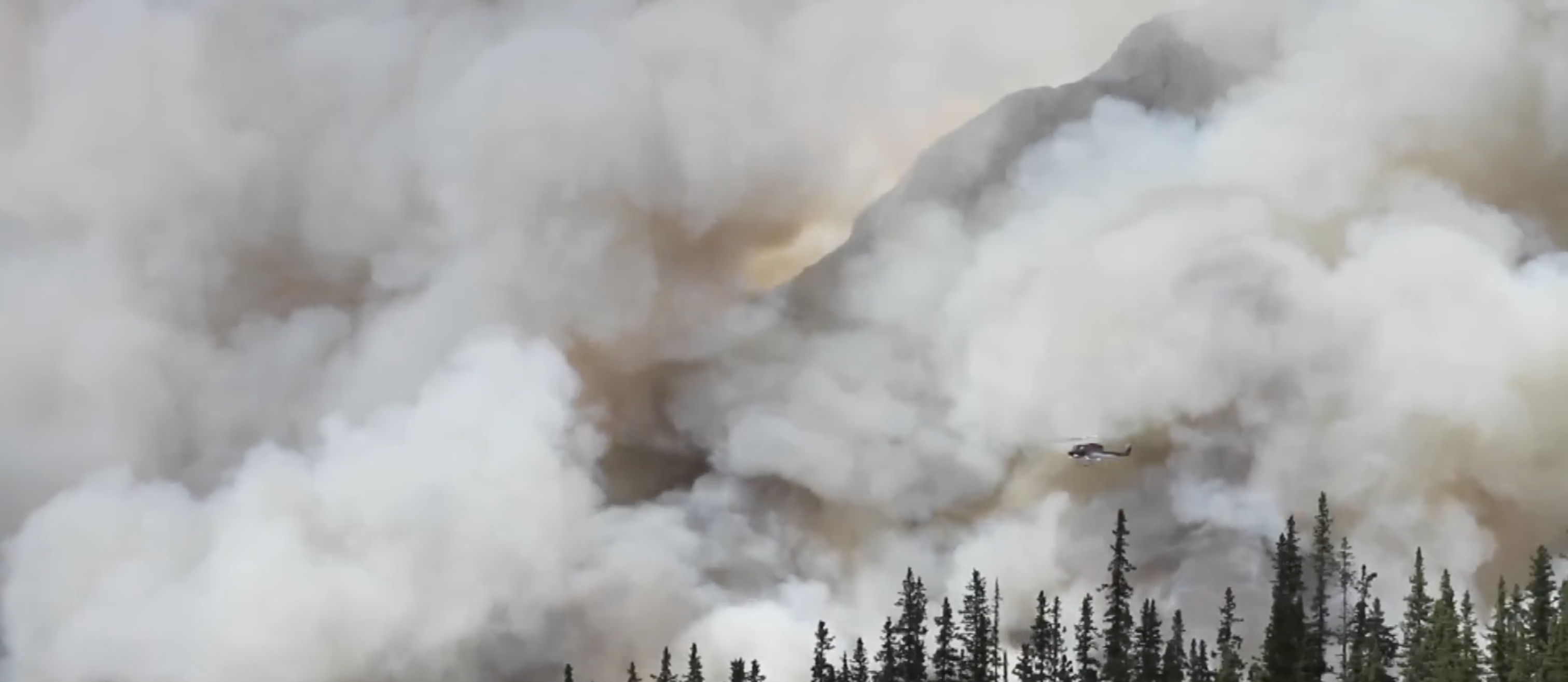
While health officials urge people to stay indoors due to the smoke draping the Midwest, experts say we should remember that the same polluted air affecting humans is also threatening animals. 

On July 16, Detroit ranked as the worst air quality in the world with a 724 index– climbing past the 300-point threshold on the Air Quality Index, where air quality is considered hazardous. In second sat Toronto, Canada, then Minneapolis Minnesota and in fourth was Chicago, Illinois.  

According to Dr. Jack Harkema, a Veterinary Pathologist at Michigan State University, said the effects of wildfire smoke on animals isn’t just a single symptom. 

“It doesn’t affect just the lungs, but also the cardiovascular system and the metabolic system,” Harkema said. “We’ve actually even looked at the effects on the brain, and there’s increased inflammation in the brain as well.”

Wildfire smoke may be even more harmful to animals than the everyday air pollution found in cities, Harkema said. 

“Wildfire smoke is probably even more toxic than our regular urban particulate matter,” Harkema said. “These particles create a lot of oxidants, they damage tissue, and they cause inflammation locally in the lung, but then that inflammation can spread to other organs.”

Wildfire smoke contains a mixture of pollutants, including fine particles known as PM2.5. Those microparticles are small enough to go deep into the lungs and, sometimes, enter the bloodstream.

“PM2.5 particles are inhalable,” Mayra Oyola, an Assistant Professor in the Department of Atmospheric and Oceanic Sciences at the University of Wisconsin Madison. “They can get into the lungs and, just like in humans, they stay there. They can damage respiratory and cardiovascular tissue in anything that breathes. So it’s not just us.”

The fires that are impacting the midwest are mainly contained towards the lower part of Ontario, Canada.  The smoke from these fires have migrated from wind paths to reach the midwest. 

“Animals close to the fires, that’s the biggest concern, because they will be displaced,” Oyola said. “More often than not, they move into human-populated areas. That creates risk for both humans and the animals.”

Birds are especially vulnerable to wildfire smoke because their respiratory system is more efficient than other mammals, according to research scientist at Cornell University’s Lab of Ornithology Olivia Sanderfoot. While that helps them get more oxygen, it also means they breathe in more harmful particles from polluted air.

“Birds are able to take up twice as much oxygen with each breath compared to mammals, which also means they’re getting an extra-heavy dose of anything toxic in the air,” Sanderfoot said.

“We’ve known for a long time that birds are more vulnerable,” Sanderfoot said. “So I’m especially worried about them in this smoke.”

Other outdoor animals can also suffer, like horses. Because of respiratory diseases, like heaves, livestock that spend their time outdoors are exposed for days or weeks to smoky conditions which heighten risks, Harkema said.

“If this continues, you’re going to see more illness in humans and animals,” Harkema said.

For pet-owners, Dr. Jennifer Henderson, a veterinarian at Vetco Total Care in Chicago said taking the same precautions you would take for yourself is ideal. 

“The same concerns apply to our pets that apply to humans,” Henderson said. “You just want to keep them inside or limit their activity outside so it doesn’t cause any flare-up.”

Owners should also watch closely for signs that smoke may be affecting their animals.

“I think respiratory symptoms,  with the coughing and the lethargy, are the main things to watch for,” Henderson said. 

She also recommends monitoring for bloodshot eyes, squinting or other signs of eye irritation.The guidance is ultimately simple, Henderson said, if the air isn’t healthy for people, it probably isn’t healthy for pets either.

“Similar to how they’re dealing with it for themselves, apply the same concerns and strategies to their pets,” she said. “You can’t put a mask on a dog, so it’s really just keeping them out of the environment or limiting their time.”

Harkema recommends limiting walks to brief bathroom breaks and avoiding strenuous exercise.

“You don’t want to exercise them because more of these particulate matter and other air toxicants can get into the lung and cause inflammation,” Harkema said.

Sanderfoot said keeping pets in cool, air-conditioned spaces with clean, filtered air whenever possible is best. 

As wildfire seasons grow longer and more intense, Sanderfoot says she expects poor air quality events to become a more frequent occurrence across North America.

“The issue is that climate change is supercharging these fires and lengthening our fire season,” Sanderfoot said. “The bigger the fire, the more smoke.”

According to Oyola, research shows wildfire smoke will become a persistent problem.

“It’s very clear that climate change is real and that it’s not slowing down,” she said. “With drier conditions and warmer conditions, we should expect more events like this.”


The post How wildfire smoke impacts pets and wildlife appeared first on Great Lakes Now.
Original Article

Great Lakes Now

Great Lakes Now

https://www.greatlakesnow.org/2026/07/21/how-wildfire-smoke-impacts-pets-and-wildlife/

Julia Roeder

By Christian Thorsberg, Circle of Blue

The Great Lakes News Collaborative includes Bridge Michigan, Circle of Blue, Great Lakes Now at Detroit PBS, Michigan Public and The Narwhal who work together to bring audiences news and information about the impact of climate change, pollution, and aging infrastructure on the Great Lakes and drinking water. This independent journalism is supported by the Charles Stewart Mott Foundation. Find all the work HERE.


Growing up in the shadow of a coal plant in rural Indiana gives a child a unique relationship with the passage of time. 

As a little girl in the small town of Wheatfield, population 900, Barb Deardorff recognized the months by the height of the cornstalks and beansprouts which grew on her family’s farmland. The years were marked by what loomed beyond these fields — the R.M. Schahfer Generating Station and its ever-rising piles of toxic coal ash, their ascending silhouettes a scourge framed for years by her school bus window. 

“My whole childhood, thirteen years, twice a day to and from school, I was watching the coal ash landfill build up layer by layer,” says Deardorff, now 50 years-old, in her Wheatfield home in June. 

Deardorff’s kitchen today looks out onto a long, flat treeline, above which, just a couple miles away, the flues of that same half-century-old coal plant continue to billow smoke. They stand as readily visible emblems of an old energy era giving way to a new energy revolution that is putting fresh water, clean air, and human health at risk in small Great Lakes communities.

Wheatfield is a microcosm of industrial eras old and new. Having endured for decades the transformational effects of living in the midst of America’s 20th-century coal boom, residents are now left to wonder and worry how the age of artificial intelligence — bolstered by hyperscale data centers and the power plants they depend on — will affect their community.

These concerns are justified. In the past two years, aided by state and federal policy, the tech giant Amazon has invested roughly $29 billion to turn Northwest Indiana into what it calls a new “Silicon heartland,” flush with three energy-intensive data center campuses, one already completed, spanning 2,200 acres. Next door to the Schahfer generating station, Indiana approved two natural gas-fired turbines for construction. Those plants are poised to power the newest Amazon installation — a $7 billion data center — and are estimated to consume roughly 6 billion gallons of water annually from the nearby Kankakee River.

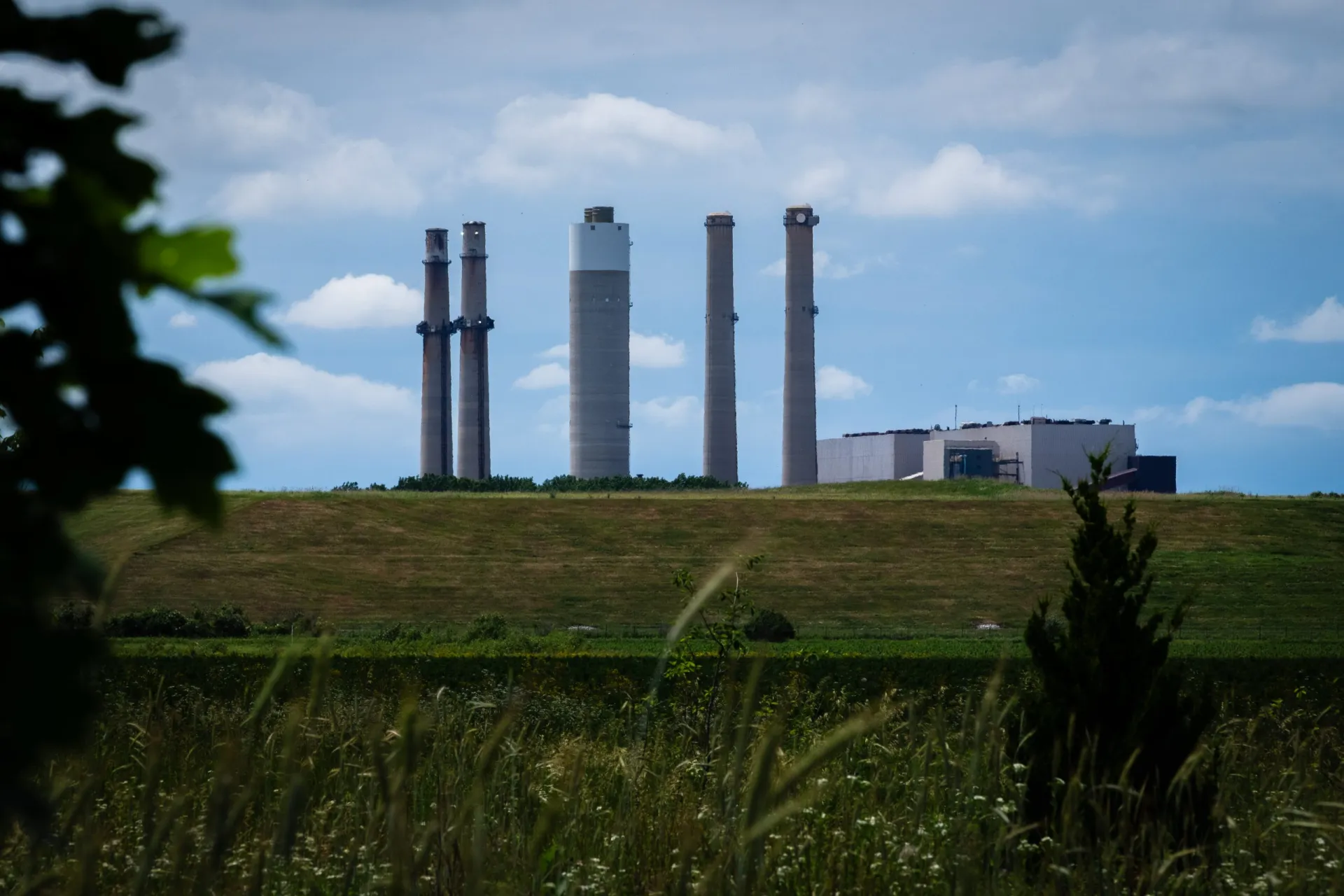
The R.M. Schahfer Generating Station in Wheatfield, Indiana. (Photo credit: Christian Thorsberg / Circle of Blue)

Amazon found a ready ally in the Hoosier state, which has embraced data centers and their thirst for power. Last year, state regulators granted the region’s primary utility first-of-its-kind authority to generate energy just for data centers. And in response to Trump administration directives, officials have re-written state energy policies to keep old coal plants — including Schahfer — operating to supply data centers indefinitely. 

Experts anticipate that by 2040, more than one-fifth of Indiana’s energy needs will come from data centers alone. 

The surge in construction investment and new power supply coincides with a comprehensive weakening of environmental protections on both the local and federal level — a risky proposition in a state that already is home to some of the most polluted waters, largest losses of wetlands, and worst air quality in the country. 

Deardorff has a front row seat to a show of power and technology unlike anything seen before in this region, or across the country. Like other residents of rural communities bullied by data center construction, she says she feels almost helpless. As someone whose conception of time is inseparable from Schahfer, she says she feels suddenly entangled in multiple discouraging realities.

“Everything, everywhere,” she says, “is happening all at once.”

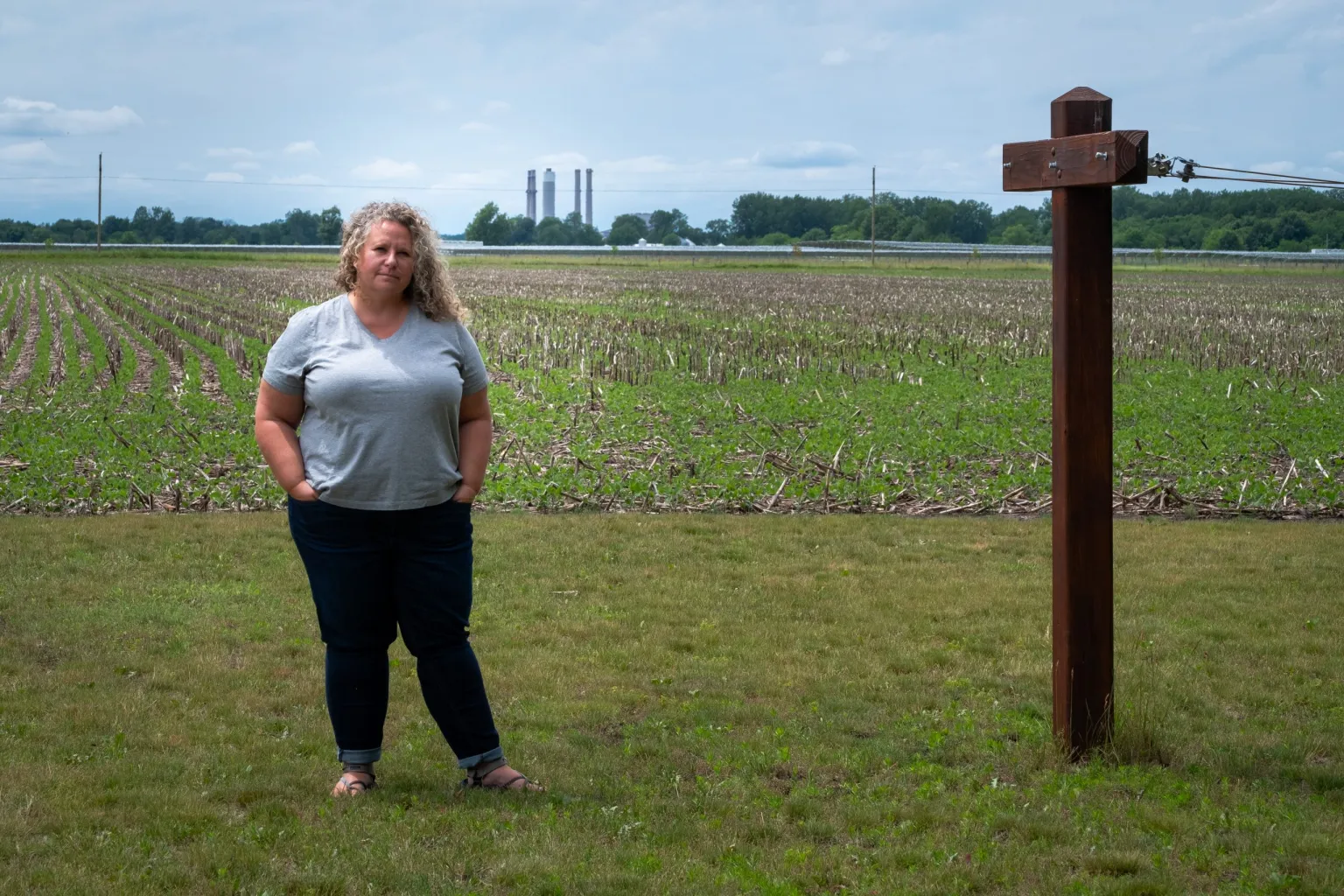
Barb Deardorff, pictured outside her home, with the Schahfer plant behind her in the distance. (Photo credit: Christian Thorsberg / Circle of Blue)

What Was and Is No More

Deardorff has reason to be suspicious of the mammoth display of technology and energy generation under construction around her home. 

She has not known life without the R.M. Schahfer Generating Station as a neighbor. She was an infant when the coal-fired power plant opened its doors in 1976, and has lived next to its operations ever since, watching it become one of the country’s largest single emitters of greenhouse gasses. By one estimate, the plant causes 20 premature deaths each year from drifting soot and smog. And its groundwater, recent testing has shown, is contaminated with carcinogenic heavy metals — an existential threat for the dozens of residents who live within several miles of the facility and rely on shallow private wells as their sole source of drinking water. 

So when Schahfer announced in 2018 that it would close its doors at the end of 2025, celebrations rang out for many. The prospect of life without the plant represented, literally, a brand-new horizon.

“I got emotional, because I thought we outlasted them,” says Deardorff, whose family has lived in Wheatfield for six generations and previously farmed the land where the coal plant sits. “We were here before them, we dealt with them, and I thought we were going to be here after them.”

Residuals of Ash

This dream was short-lived. Not only has a series of 90-day extension orders from the federal government kept Schahfer operational as usual into the present, but the plant’s legacy of waste and health concerns are crescendoing. Deardorff and others worry that the new landscape of data center and natural gas construction and operation could eventually produce more degradation. 

At the Wheatfield home of Chris Hunter, a retired local farmer, coal ash’s stubborn tendency to permeate water and air lays bare. Just hours after severe thunderstorms and tornadoes tore through the town, Hunter’s wife, Cindy, ran a paper towel along the white exterior window sills of their home, located roughly two miles downwind from Schahfer.

Immediately, a dark, sooty film appeared on the pristine white background, the now-darkened paper towel a canvas that distills Wheatfield’s modern story.

“You just get it jammed down your throat,” Hunter says, looking out at the coal plant from his front lawn and thumbing through the wipe. “And we watch it all through our windows.”

In a state known for its high cancer rates — Hoosiers are nearly 12 percent more likely to die from the disease than the average American — Northwest Indiana where Hunter and Deardorff live stands out as a statewide hotspot for incidences of lung, colon, and breast cancers. 

The statistics are made material in Wheatfield, where many residents living in the vicinity of Schahfer share stories of family members and friends who have suffered from poor health. 

Deardorff recalls several neighbors and friends who have been diagnosed with cancer in recent years. Matt Mish, 35, who lives within a half-mile from the coal plant on his grandparents’ old farm, says that his grandmother died of cancer in 2015. 

Hunter says he lost his younger brother at 52 years-old to a rare type of cancer, and his father to liver cancer at 62 years-old. His mother, 90, has lived with Parkinson’s disease for more than two decades. 

“But how are you gonna really prove it,” Hunter asks, “and say it was [the coal plant]?”

All of these residents breathe Wheatfield air, and are among the dozens of people who rely on private wells to draw groundwater from the shallow local water table. Existential concerns for the quality of this supply were raised in 2018, when testing showed that Schahfer’s coal ash landfill had contaminated the plant’s own groundwater with cobalt, arsenic, lithium, radium, boron, and molybdenum in levels above federal thresholds. 

Meanwhile, water samples collected at 107 wells in and around the plant between 2010 and 2019 found that 86 percent had at least one pollutant in excess of federal advisory levels, according to Earth Justice’s Ash Tracker dashboard

“And we only found out about that because a law passed requiring [the plant] to publicly make that data available,” Deardorff says. “Who knows how long they had contaminated the groundwater before then?”

Indra Frank, a doctor and coal ash advisor with the Hoosier Environmental Council, says there is significant concern that the plant’s polluted groundwater will spread through the area’s shallow, flood-prone topography and contaminate wells and ditches that supply water used for drinking, recreation, and irrigation, especially as construction on the natural gas plant and data center begins.

The plant’s own ash-contaminated groundwater, held largely in unlined ponds spanning more than 80 acres, sits at least 15 feet higher than the groundwater that area residents depend on. 

A one-foot-thick wall of slurry, which extends underground to a layer of shale bedrock, is all that separates the plant’s active waste disposal area (WDA) from the rest of the region’s aquifer. This setup, Frank warns, is precarious. Currently, the WDA receives an average of 2.88 million gallons of “bottom ash sluice water, boiler room sump discharge, and stormwater” per day, according to documents published in 2020.

“You’ve got 15 feet of water pressure trying to push that water out from under the slurry wall,” Frank says. 

For a brief period, it was believed that federal intervention would spur remediation at the site. The EPA in 2015 announced a mandate requiring utilities to clean unlined coal ash ponds that were found to be leaking. But the requirement had several loopholes, Frank says, that the coal plant’s owner, energy utility NIPSCO, has exposed to delay any cleanup.  

“They’re claiming that the ash pond is not subject to the rule, because water isn’t visible at the surface of the ponds,” she says. “Some of these ponds, which are 20 feet deep, hold 19 feet of sitting water beneath their solid top layer.”

The slow-walk to addressing its coal ash storage may have paid off for the utility, which last year produced 200,000 tons of ash. In April, the EPA proposed aggressive rollbacks to the 2015 rule, putting Wheatfield’s coal ash piles in a doubly prolonged state of limbo. 

“It would wipe out requirements for half the coal ash in the country, and that includes some of the coal ash at Schahfer,” Frank says. “It can continue to sit there and contaminate groundwater. They could stop monitoring the groundwater for certain sites. It’s pretty, pretty devastating.”

That the Kankakee River runs directly adjacent to the Schahfer plant is another point of vulnerability. No systematic testing of soils or farmland in the area has ever been done, despite Jasper County being home to some 600 farms. Many of these crop fields rely on the Kankakee River for water, and are connected to both each other and the watershed through a series of drainage ditches. This network was created in the 20th century through the mass-draining of a massive wetland ecosystem once known as “the Everglades of the North.” 

As a result of this degradation, most of the area, including some of the coal ash ponds, sit today within 100-year flood zones. Heavy, erratic precipitation made more likely by climate change could exacerbate the movement of contaminated groundwater through farmers’ ditches and crops. 

According to a February report from the Hoosier Environmental Council, based on state data, 270 miles of rivers and streams in Jasper County are impaired. A one-off sample at a local irrigation ditch that runs adjacent to Schahfer, the Stalbaum ditch, was found to contain elevated levels of molybdenum. “That’s consistent with contamination from coal ash getting into that ditch, which runs into the Kankakee River,” Frank says. 

Deardorff grew up swimming in the river, but those days are long over. “I’m concerned about the effluent they emit into it,” she says. “I can see the pipe, I know where it comes out, and I’m never in the water downstream of it.”

An $11 billion, 1,200-acre Amazon Web Service data center in New Carlisle, Indiana. (Photo credit: J. Carl Ganter / Circle of Blue)

Data Centers’ Indirect Water Use

Concerns about the environmental risks of data centers in Wheatfield center for the time being on water availability. 

On the surface, the new Amazon data center’s estimated yearly water use — between 8 million and 10 million gallons, according to Jasper County Plan Commission documents — is hardly eye-opening, especially for a facility of its size. 

But the much-greater water needs of the two fossil fuel-fired plants operating in its service expose the resource stress the industry indirectly creates. 

In Wheatfield, the Kankakee River is poised to feel the consequences the most.

According to Indiana Department of Environmental Management data, the Schahfer coal plant’s intake well — located in an area of medium-high water stress, according to the World Resources Institute — has the capacity to draw 131 million gallons of water per day from the river. Actual withdrawals from 2022 through 2024 were much less, though not insignificant, according to self-reported data collected by the state: an average of roughly 11.5 million gallons of river water per day, with peak days reaching 25 million gallons of water. 

Much, but not all, of this water is returned to the Kankakee at a higher temperature after being treated on site. And this treatment is crucial and subject to scrutiny: in 2024, which is the most recent data available from the EPA, wastewater stored on-site included 567,763 pounds of chemicals including arsenic, barium, lead, and mercury.

That same year, the coal plant consumed roughly 940 million gallons of river water, according to data collected by the U.S. Energy Information Administration and analyzed by Circle of Blue.

The natural gas turbines are expected to have an even bigger footprint. According to GenCo testimony from this April, the facility plans to draw up to 23 million gallons of water per day from the Kankakee, consuming roughly 16 million gallons of this — amounting to an estimated 5.8 billion gallons of water consumed annually.

The total indirect cost of water, then, sums to nearly 7 billion gallons of water per year — enough water to supply approximately 64,000 American homes for a year — consumed from the Kankakee River in service of electricity production for Indiana’s ‘Silicon Heartland.’


The post The AI Boom Is Prolonging Indiana’s Fossil Fuel Era, With Hidden Costs for Water appeared first on Great Lakes Now.

Original Article

Great Lakes Now

Great Lakes Now

https://www.greatlakesnow.org/2026/07/15/the-ai-boom-is-prolonging-indianas-fossil-fuel-era-with-hidden-costs-for-water/

Circle of Blue

By Leah Borts-Kuperman, The Narwhal

The Great Lakes News Collaborative includes Bridge Michigan, Circle of Blue, Great Lakes Now at Detroit PBS, Michigan Public and The Narwhal who work together to bring audiences news and information about the impact of climate change, pollution, and aging infrastructure on the Great Lakes and drinking water. This independent journalism is supported by the Charles Stewart Mott Foundation. Find all the work HERE.


Gathered in an arena in North Bay, Ont., in summer 2024, federal officials told hundreds of concerned citizens how they planned to remediate longstanding contamination of the city’s waterways left behind by the Department of National Defence. A few months later, officials gave a similar presentation to a packed hotel conference room.

For nearly a decade now, residents have known about the contamination. Some have been told not to drink the water from their own wells, and everyone in the city has been warned not to drink water or eat fish from a creek outside town.

The creek is part of a system of waterways where carcinogenic “forever chemicals” run downstream from a military base, emptying into Trout Lake, the source of the city’s drinking water. It sits at nearly double Health Canada’s guideline for PFAS in drinking water, measured in nanograms per litre. 

Health Canada published an “objective” level of 30 nanograms per litre in August 2024 for 25 chemicals in the PFAS family. That’s less than half of what Ontario currently recommends: 70 nanograms per litre, pertaining to just 11 PFAS chemicals. And that’s just a suggestion, not a binding regulation. 

The city did not reply to The Narwhal’s detailed questions regarding the current state of the drinking water supply, but CBC reported in February 2026 that Trout Lake contained around 58 nanograms of PFAS per litre of water.  

Thousands of substances classified as per- and polyfluoroalkyl substances, known as PFAS, are used to make everything from medical equipment to waterproof clothing. They can generate hazardous waste which, if not disposed of carefully, contaminates air, water and soil — where it can remain for 1,000 years, hence their other nickname, “forever chemicals.”

Statistics Canada reports almost all Canadians already have PFAS in their bodies, including in remote regions such as the Arctic and subarctic

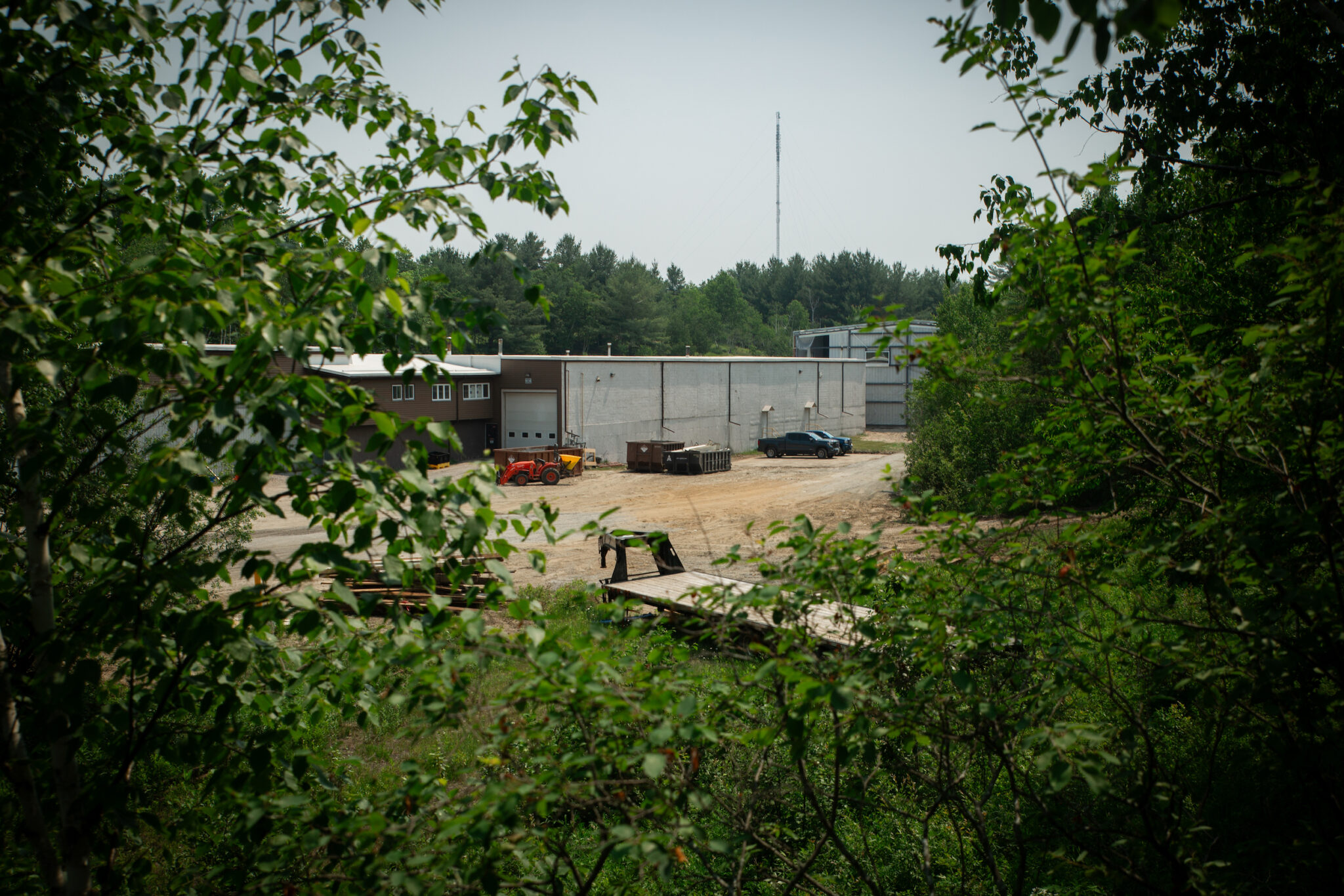
In North Bay, the issue is top of mind, with a class-action lawsuit, a lengthy and expensive remediation plan and a new factory importing chemicals from the Teflon-like subgroup of PFAS, called PTFE. And the company behind that factory, Industrial Plastics Canada, is one of the 10 major importers of PTFE in Canada.

While PFAS have been making global headlines for years as an emerging threat to the environment and our bodies, North Bay knows the issue intimately; citizens fear for their water as politicians try to clean up the mess.

Here’s everything you need to know about PFAS in North Bay.

1. North Bay’s PFAS contamination comes from firefighting foam 

From the early 1970s to the mid-1990s, the Department of National Defence used a fire suppression foam containing PFAS to train firefighters across Canada, including near the North Bay Jack Garland Airport. In 2016, after the North Bay Parry Sound District Health Unit learned PFAS had been identified by the Department of National Defence in waterways around the city, it commissioned consulting firm Stantec to assess the impacts on soil and groundwater.

It’s the invisible nature of these chemicals that are part of what makes them so insidious; you can’t see them or smell them, so you don’t know they’re there without testing. 

“When you look at a mine, for example, you can see it and say, ‘That’s obviously disruptive to our ecosystem.’” North Bay-based environmental anthropologist Carly Dokis previously told The Narwhal. “But these things are invisible pollutants, which then tend to attract less public awareness.”

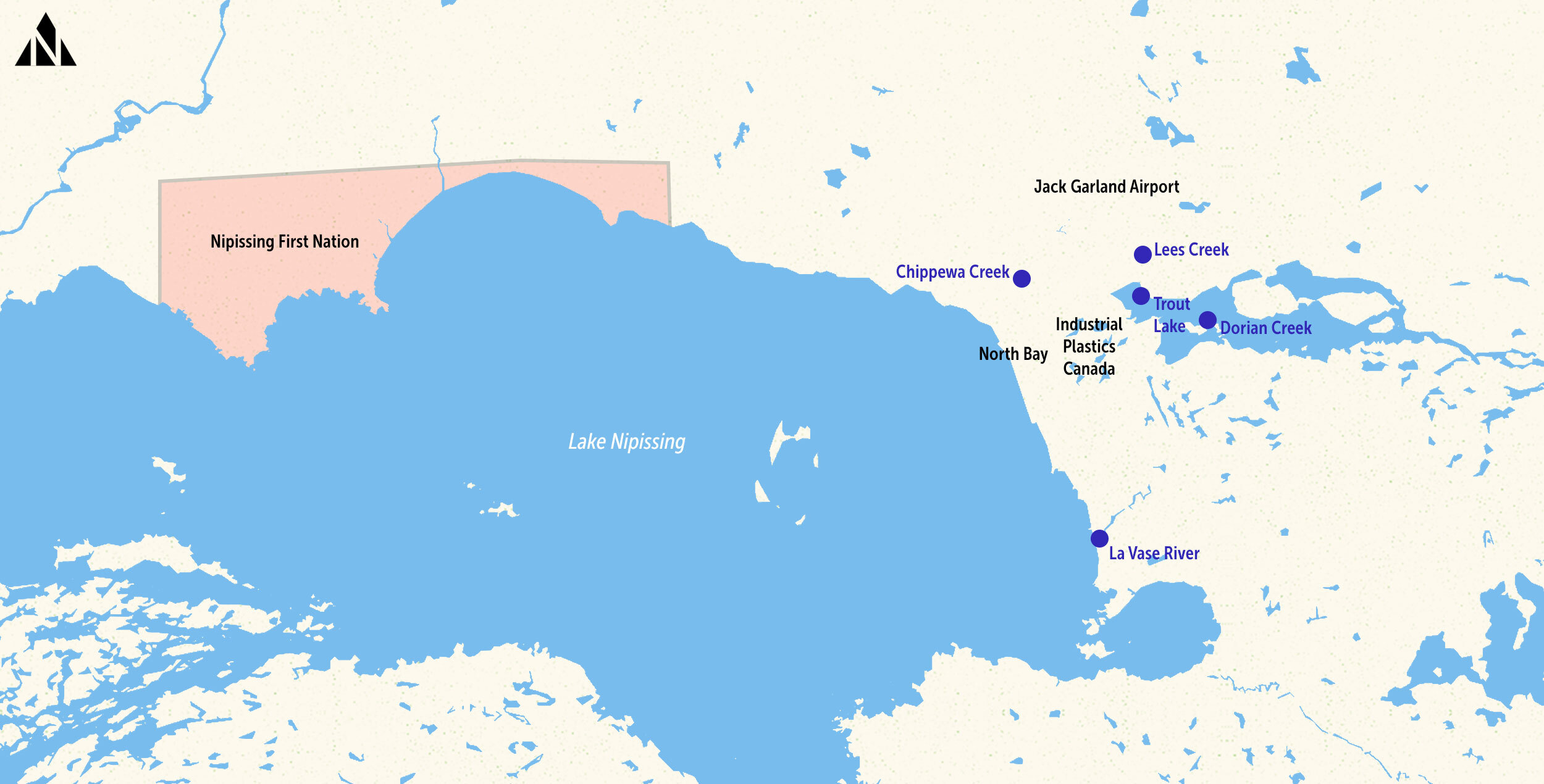
Stantec found PFAS from the foam had contaminated soil, bedrock, groundwater, private wells and several waterways in the region including Trout Lake, Lake Nipissing and Lees, Dorlan, Chippewa and La Vase creeks and surrounding areas.

Long-lasting “forever chemicals” known as PFAS have contaminated surface water, soil, bedrock and groundwater near the Jack Garland Airport, including the municipal drinking water system, private wells and waterways around Nipissing District. (Image credit: Shawn Parkinson / The Narwhal)

In 2025, reporting by the Investigative Journalism Bureau surfaced a report by the Royal Military College showing the Department of National Defence found elevated PFAS levels around the base as far back as 2012. That means the department knew about the contamination for five years before revealing it to the City of North Bay in 2016, and the public in 2017.

2.  PFAS impacts health, environment and property values. Residents are seeking recompense

In late 2025, North Bay citizens filed a proposed class-action lawsuit asking for remediation, safe drinking water and $105 million in damages for residents living within a three-kilometre radius of the 22 Wing Canadian Forces Base and Jack Garland Airport. Some of the people who live closest to the contamination have been receiving bottled water from the government for years, but have had no other opportunity for recourse.

The proposed lawsuit, if certified by the court, would be against the City of North Bay and the Attorney General of Canada, on behalf of the Department of National Defence, focusing on the loss of property value and remediation costs. The case is also seeking punitive damages, contending that National Defence was aware of the contamination long before warning residents.

Not mentioned in the suit is the long list of health concerns associated with “forever chemicals.”

The United States Environmental Protection Agency lists potential health risks of exposure to PFAS, including reproductive problems like infertility, developmental effects in children, increased risk of certain cancers and weakening of the body’s immune system, including reduced vaccine response. The Canadian government says PFAS can be transferred through the placenta during pregnancy, and infants can be exposed through human milk. 

Ecosystems are affected, too. Studies have shown exposure to per- and polyfluoroalkyl substances can stunt plant growth and cause reduced seed germination and ability to photosynthesize. The chemicals can build up in the organs of living creatures throughout the food chain. In the district of Nipissing, that poses a risk to people who hunt, fish and harvest from the land.

“These industrial areas are often surrounded by lower-income buildings and peoples and communities,” Curtis Avery, environment department manager with Nipissing First Nation, told The Narwhal in summer 2023. “We’re the most vulnerable group of people that utilize our lands — the lands are our grocery stores. … If these are being impacted, we need to know.”

NORTH BAY, Ont. (06/21/23) – Looking down onto the new Industrial Plastics Canada factory site from the top of Wallace Road in North Bay, Ontario. Beautiful forested area, Circle Lake, and important ecosystems for pollinators surround the site. Despite the effect the factory’s PTFE byproducts will have on North Bay’s environment, no assessments were required and the public has little awareness of its construction, due to open July 2023. (Photo credit: Vanessa Tignanelli / The Narwhal)

3. Cost of North Bay clean-up grew five-fold, to more than $100 million

In 2021, the City of North Bay announced plans to begin remediation under a “shared responsibility” agreement between the Department of National Defence and the city. The federal department would cover 97 per cent of the costs, or $19.4 million, and the city would cover the remaining three per cent, at $600,000. But costs have ballooned since then; in December 2025, National Defence announced it would contribute another nearly $100 million to the remediation, with the city’s share rising to more than $3.6 million. The total for the cleanup project has risen to more than $122 million.

The remediation, which began on the ground in 2024, includes excavating and disposing of about 26,000 tonnes of PFAS-impacted soil; injecting activated carbon material into particularly dense patches of PFAS to stop the underground plume from spreading; and installing a filtration system to treat water leaving the site.

“We remain committed to addressing and managing the operational legacy of the Canadian Armed Forces responsibly,” Minister of National Defence David J. McGuinty said in a news release.

As part of the process, a notice went up on the federal Impact Assessment Agency registry on April 28, inviting the public to comment up until June 5 on a proposal to install a 250-metre permeable barrier in the ground to help filter impacted groundwater. A spokesperson for the agency said its role in the project is to offer advice on determining its environmental effects, as well as providing the opportunity to post the project on the registry.

Local organizations, including the environmental group Northwatch, said in a press release that they were concerned about “very limited public engagement over the last ten years since the public disclosure of the contamination,” counting only the two forums in 2024 and 2025, where there was “limited opportunities for the public to ask questions.” 

Northwatch’s project coordinator Brennain Lloyd told The Narwhal about the public notice period, which she said her organization only learned of in a daily bulletin from the Impact Assessment Agency listing multiple assessment notices from across the country.

“To the best of our knowledge there were no local announcements or invitations to comment issued to the many residents and organizations who have identified their interest in this program,” a release from Northwatch reads.

The Department of National Defence did not respond to questions from The Narwhal. 

4. North Bay’s not alone: contaminated military bases affect communities across Canada

Contamination on federal sites is an issue across Canada. There are thousands of contaminated sites listed on the federal contaminated sites inventory, and PFAS are found on more than 100 of them. These include at least 26 National Defence sites including bases in Trenton, Ont., Gagetown, N.B., and Moose Jaw, Sask.

And contaminants don’t stop at the fenceline. Health Canada says some contaminants can travel long distances through soil, water and air: “PFAS can be found in fresh water and drinking water in areas that are far away from where they entered the environment,” according to the department’s website.

NORTH BAY, Ont. (06/21/23) – The main office building of Industrial Plastics Canada on Wallace Road in North Bay, Ontario, where construction is currently underway for the new factory opening July 2023. The factory plans to manufacture PTFE, Teflon-like chemicals harmful to humans, wildlife and ecosystems, no environmental assessment required. PTFE are commonly known as “forever chemicals,” because they can generate hazardous waste which, if not disposed of carefully, contaminates air, water and soil where it can remain for about 1,000 years. (Photo credit: Vanessa Tignanelli / The Narwhal)

5. Industry is still importing PFAS-class chemicals into North Bay

While the Canadian government no longer uses firefighting foam that contains PFAS, industry continues to bring these substances into the country. In 2023, The Narwhal reported on an international plastics conglomerate that opened its first Canadian location, Industrial Plastics Canada, in North Bay. The company has a presence across Europe as well as in India and China, billing itself as one of the “largest worldwide manufacturers of PTFE products.”

PTFE, or polytetrafluoroethylene, is a Teflon-like product in a subgroup of PFAS known as fluoropolymers, or fluoroplastics. A company spokesperson previously told The Narwhal the use of PTFE at the factory will not produce waste and poses “no risk.” The company also says fluoropolymers aren’t as dangerous as other PFAS and are “considered safe, non-bioaccumulative and non-toxic.” 

But fluoropolymers have been found to be dangerous to human health, according to research published in the peer-reviewed journal Environmental Science & Technology and others.

In 2023, Health Canada released a draft assessment of the state of PFAS in Canada to help decide how to regulate the class of chemicals. In it, the agency cited an industry-funded study that said fluoropolymers should be considered separately from other PFAS as “polymers of low concern.” A Health Canada spokesperson said the agency, along with Environment and Climate Change Canada, “examined information from a wide range of sources,” including scientific journals and reports while preparing the state of PFAS report.

The substances were ultimately excluded from the final report, released in March 2025, in which Health Canada proposed classifying the remaining PFAS chemicals as toxic substances under the Canadian Environmental Protection Act.

The Health Canada spokesperson said in an email that fluoropolymers “have specific properties that differentiates them from other PFAS,” which led to their exclusion from the final report. They added that the exclusion “should not be interpreted as meaning they are or are not of concern,” and that a separate fluoropolymer assessment is currently underway.

The exclusion of PTFE from that classification was a major priority for industry, Rémy Alexandre, toxics project lead at environmental law non-profit EcoJustice, told The Narwhal.

According to data collected by Alexandre, who studied Industrial Plastics Canada’s imports to North Bay, the company brought in almost 207,000 kilograms of PTFE from India and China from July 2025 to May 2026.

This puts the facility on the list of the 10 major importers of PTFE in Canada, alongside U.S.-based chemicals company Chemours, a spinoff of Dupont that has been arguing that the European Union should exempt fluoropolymers from their regulations, too. 

“The decision to site this plant in a community that is an existing hotspot for PFAS raises concerns,” Alexandre told The Narwhal. “And so does the selection of a jurisdiction that isn’t regulating fluoropolymers.”


The post North Bay’s PFAS problem: 5 things to know about a ‘forever chemicals’ hotspot in Ontario appeared first on Great Lakes Now.

Original Article

Great Lakes Now

Great Lakes Now

https://www.greatlakesnow.org/2026/06/30/north-bays-pfas-problem-5-things-to-know-about-a-forever-chemicals-hotspot-in-ontario/

The Narwhal

By Kelly House, Bridge Michigan

The Great Lakes News Collaborative includes Bridge Michigan; Circle of Blue; Great Lakes Now at Detroit Public Television; and Michigan Radio, Michigan’s NPR News Leader; who work together to bring audiences news and information about the impact of climate change, pollution, and aging infrastructure on the Great Lakes and drinking water. This independent journalism is supported by the Charles Stewart Mott Foundation. Find all the work HERE.


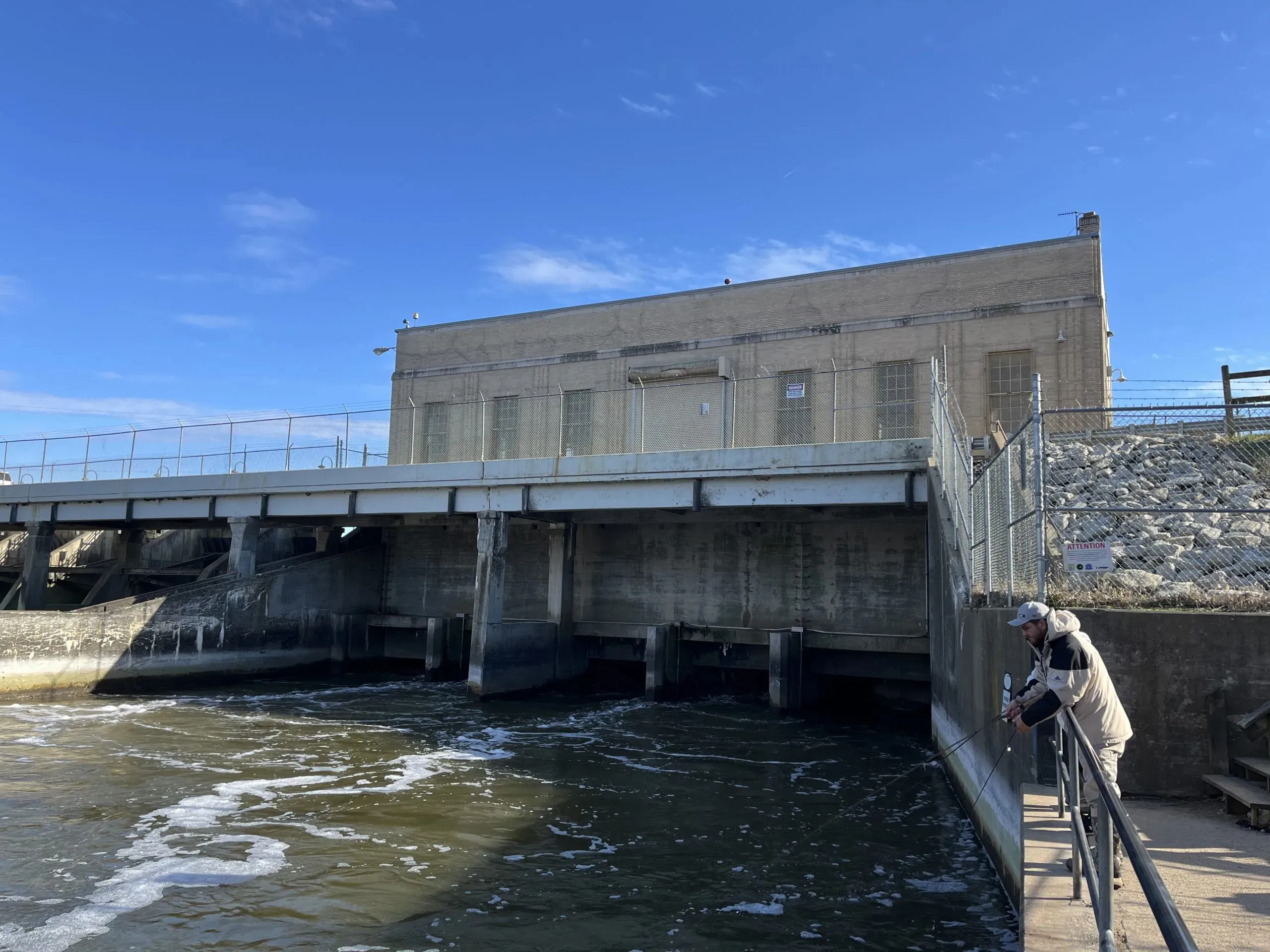
Michigan should reject Consumers Energy’s plan to sell its 13 Michigan dams to an out-of-state private equity firm, an administrative law judge overseeing the proposed sale concluded Wednesday.

In a 312-page recommendation to state regulators who will ultimately decide whether to approve the sale, Judge James Varchetti wrote that the deal “is inconsistent with the public interest,” “highly problematic” and “unreasonable and imprudent.”

Varchetti, who has spent months gathering evidence and testimony from Consumers and interest groups that support and oppose the sale, concluded that the transaction threatens public safety and may not be the cheapest option for ratepayers.

“For a transaction involving infrastructure like major hydroelectric dams to be in the public interest, it would be a transaction that ensured the new owner is financially committed and able to meet the dam’s full lifecycle needs, thereby protecting taxpayers from assuming future liabilities such as decommissioning costs,” Varchetti wrote. “This transaction fails that test.”

The advice comes nine months after Consumers first proposed selling its aging dams in the AuSable, Grand, Kalamazoo, Manistee and Muskegon rivers to a Maryland-based private equity firm for $1 apiece, then inking a 30-year contract that would obligate the company’s 1.9 million ratepayers to buy back the power at twice the market rate, plus pay a $270 million profit to Consumers.

Spokespeople for Consumers Energy and its proposed buyer, Confluence Hydro, expressed disappointment in the recommendation but noted that it is not legally binding.

The Michigan Public Service Commission, a trio of utility regulators appointed by Gov. Gretchen Whitmer, is expected to decide by September whether to approve the sale. 

“We believe the judge did not appropriately recognize the major benefits of the sale, Consumers spokesperson Katie Carey said. 

Arguing the deal would bring “significant cost savings” for ratepayers while “protecting the 13 communities and tens of thousands of people who depend on the dams,” Carey said Consumers officials will continue to advocate for sale approval.

Michigan should reject Consumers Energy’s plan to sell its 13 Michigan dams to an out-of-state private equity firm, an administrative law judge overseeing the proposed sale concluded Wednesday.

In a 312-page recommendation to state regulators who will ultimately decide whether to approve the sale, Judge James Varchetti wrote that the deal “is inconsistent with the public interest,” “highly problematic” and “unreasonable and imprudent.”

Varchetti, who has spent months gathering evidence and testimony from Consumers and interest groups that support and oppose the sale, concluded that the transaction threatens public safety and may not be the cheapest option for ratepayers.

“For a transaction involving infrastructure like major hydroelectric dams to be in the public interest, it would be a transaction that ensured the new owner is financially committed and able to meet the dam’s full lifecycle needs, thereby protecting taxpayers from assuming future liabilities such as decommissioning costs,” Varchetti wrote. “This transaction fails that test.”

The advice comes nine months after Consumers first proposed selling its aging dams in the AuSable, Grand, Kalamazoo, Manistee and Muskegon rivers to a Maryland-based private equity firm for $1 apiece, then inking a 30-year contract that would obligate the company’s 1.9 million ratepayers to buy back the power at twice the market rate, plus pay a $270 million profit to Consumers.

Spokespeople for Consumers Energy and its proposed buyer, Confluence Hydro, expressed disappointment in the recommendation but noted that it is not legally binding.

The Michigan Public Service Commission, a trio of utility regulators appointed by Gov. Gretchen Whitmer, is expected to decide by September whether to approve the sale. 

“We believe the judge did not appropriately recognize the major benefits of the sale, Consumers spokesperson Katie Carey said. 

Arguing the deal would bring “significant cost savings” for ratepayers while “protecting the 13 communities and tens of thousands of people who depend on the dams,” Carey said Consumers officials will continue to advocate for sale approval. 

All told, the deal would cost Consumers ratepayers $3.4 billion, or an average of $1,800 per person.

Consumers officials contend that’s a good deal because they would otherwise seek the MPSC’s permission to charge ratepayers billions to repair or demolish the unprofitable dams. 

But critics have accused them of downplaying the risks. They fear the deal would repeat a longstanding pattern of utilities transferring unwanted dams to private owners who fail to invest in maintenance, raising the risk of dam failures while pushing repair or removal costs onto taxpayers.

The structures generate meager power while operating at a $152 million annual loss. The largest among them, the Hardy Dam on the Muskegon River, needs a multi-hundred-million-dollar spillway upgrade to comply with modern flood safety standards. All but one of the 13 dams are high-hazard, meaning a failure would likely kill people and inflict widespread property damage.

Confluence Hydro, the company set to buy the dams along with tens of thousands of surrounding acres, has vowed to modernize and relicense them to generate energy for decades to come.

In a statement Wednesday, Confluence spokesperson Natalie Joubert said the company “looks forward to continuing to demonstrate to the Michigan Public Service Commission our proven track record of success, owning and operating dozens of hydroelectric power facilities, improving their safety, increasing their sustainability, and generating clean, reliable energy for the communities we proudly serve.”

But critics are wary of the deal, arguing weak contract language and a maze-like corporate structure make it doubtful the company will uphold those vows.

Confluence, which itself is a subsidiary of Maryland-based private equity firm Hull Street Energy, proposes to further divide ownership of the dams by creating 13 of its own limited-liability subsidiaries. Company officials have described that as standard industry practice, but critics see it as a way for Hull to profit off the dams while avoiding liability for their upkeep.

Sale opponents hailed Wednesday’s ruling as a victory for Consumers ratepayers and Michigan taxpayers. 

“The evidentiary record seems to support the position that the coalition has taken all along: That this sale would not be in the public interest,” said Bob Stuber, executive director of the Michigan Hydro Relicensing Coalition. 

Hull Street has bought and sold dozens of dams and power plants across the US since its formation in 2014. More recently, the company has entered the data center business.

The Consumers sale proposal culminated years of deliberations by the utility over whether to keep, sell or remove the dams, which average 106 years old.

The company had no easy options. 

Beyond being expensive to maintain, the dams are destructive to rivers, blocking fish habitat while warming the water, depleting oxygen levels and trapping sediment upstream. Many environmentalists would like to see them removed.

But in their century-plus of existence, the lake-like impoundments created by the dams have become beloved fixtures of nearby communities. Homes, marinas and campgrounds have all cropped up along their shores. 

The sale plan has support from some local governments and waterfront homeowners’ associations, whose leaders see it as a way to secure the reservoirs’ future.

Sale critics include Michigan Attorney General Dana Nessel, state environmental and utility regulators, ratepayer advocates and outside environmental groups, all of whom contend the deal puts the public at risk.

Some argue it’s too costly for ratepayers. Others say the contract terms make it too easy for Confluence to sell or demolish the dams, parcel off the surrounding land or avoid spending money to keep the structures safe. Yet others balk at Consumers’ attempt to profit off the sale, accusing Consumers of “double dipping” on unwanted assets that ratepayers have already paid-off.

In his recommendation to the Public Service Commission, Varchetti appeared to share many of those concerns. 

He wrote that Consumers has failed to prove that the sale is cheaper than keeping or decommissioning the dams and panned the company’s proposal to reap $270 million in ratepayer-funded profits off the deal.

Taken together, Varchetti wrote, the inflated power price and the proposed profit scheme would set “troubling precedent” that rewards Consumers “for shedding its own future obligations while placing substantial financial risk onto ratepayers and taxpayers.”

Consumers officials have rejected calls to add more safeguards to the sale plan, saying if regulators don’t approve the sale as-is, the utility will seek to demolish all 13 dams.

Stuber called that ultimatum “absurd,” saying he would like to see a community-based approach to decide the best course of action, dam-by-dam.

“All of these projects are unique in their own right,” Stuber said. “You have to sit down with the local community and the larger statewide community, and say what’s the best future?”

Both fans and foes of the sale plan have criticized the utility’s refusal to negotiate. 

Coco Soodek, who represents the Lake Allegan Association, a pro-sale group representing landowners on the reservoir behind the Calkins Bridge Dam, called it “tin-eared” and called upon Consumers to start making concessions.

“I would like them to do this sale,” Soodek said. “But it sounds like if they want to do it, they have to be reasonable.”

If not, she said, “I don’t agree with the ALJ’s decision, but I understand it.”


The post Judge: Michigan should reject Consumers’ ‘highly problematic’ dam sale appeared first on Great Lakes Now.

Original Article

Great Lakes Now

Great Lakes Now

https://www.greatlakesnow.org/2026/06/19/judge-michigan-should-reject-consumers-highly-problematic-dam-sale/

Bridge Michigan

By Victoria Witke, Circle of Blue

The Great Lakes News Collaborative includes Bridge Michigan, Circle of Blue, Great Lakes Now at Detroit PBS, Michigan Public and The Narwhal who work together to bring audiences news and information about the impact of climate change, pollution, and aging infrastructure on the Great Lakes and drinking water. This independent journalism is supported by the Charles Stewart Mott Foundation. Find all the work HERE.


Wildfire risk is predicted to stay elevated through June in the Upper Midwest from drought and high winds. That’s risky for the region’s pristine inland lakes, but land managers are working to reduce wildfire risk in the Northwoods with controlled burns.

Some experts are advocating for increasing the use of this centuries-old method of prescribed fire to create more resilient ecosystems.

Chris Filstrup knows how severe fire changes freshwater in Minnesota’s wilderness. He’s a lake scientist at the University of Minnesota Natural Resources Research Institute and investigates the consequences of the 2021 Greenwood Fire for remote lakes. Along with a team of researchers, Filstrup continually samples lakes in the burnscar each summer for water quality issues like high levels of phosphorus, carbon and nitrogen.

According to a study Filstrup published in the journal Geological Research Letters, charred lakes have higher nutrient levels than their unburned counterparts. Those degraded waterways are still brown and murky – the color of tea, Filstrup said.

Yet, each watershed of the 15 fire-affected lakes Filstrup studies responded differently to the Greenwood Fire. For some, the flames incinerated entire shorelines. For others, the fire was further back, scorching only a small slice of the watershed. Filstrup found that the more severe fires caused worse damage because hotter flames burn more vegetation and disturbs the soil. That allows more nutrients to flow into lakes.

“Anything we can do to reduce the potential severity of those fires would be a good thing,” Filstrup said.

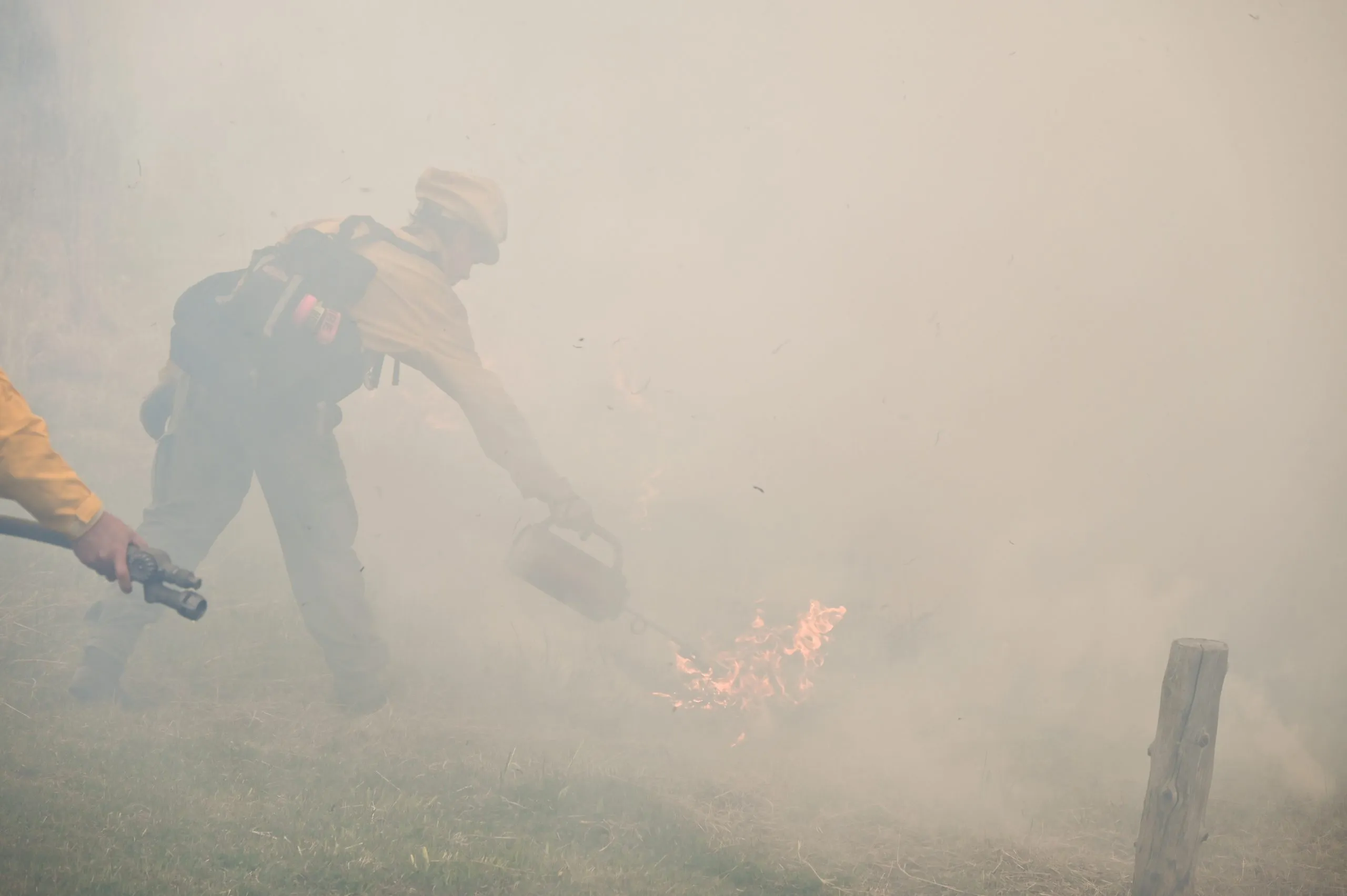
Prescribed burns – low intensity fires planned by land managers – prevent the likelihood of catastrophic wildfires by reducing fuel loads. When fire catches in areas with dead trees, dense shrubbery and overgrown vegetation, flames have more to feed on and spread quickly.  

These less severe fires can harm water quality, but those impacts are temporary, especially compared to intense wildfires.

“If you have higher severity fire, you kill all the [tree] canopies,” Ge Sun, a U.S. Forest Service research hydrologist, said. “They get too hot. The soil is burned bare, too, and it’s difficult for the vegetation to grow back. But that’s not the case for prescribed fire.”

When trees burn, the whole water cycle of the forest changes. Trees put water back into the atmosphere through a process called evapotranspiration. Roots also store water in the soil and filter it, taking out some of the impurities before it flows into lakes. With fewer trees, more water ends up flowing into waterways instead of the atmosphere or groundwater, and it holds more contaminants.

Despite the potential for prescribed fire to protect water quality by reducing the chances of catastrophic fire, little research has actually investigated how this tool affects lakes.

Peter Caldwell is trying to understand those consequences for forested watersheds. At an experimental forest in North Carolina called the Coweeta Hydrologic Laboratory, Caldwell – who, like Sun, is a Forest Service hydrologist – is collaborating on a study launched in 2019 to find out if prescribed fires can be used without causing water issues.

“We’ve got some early results that suggest that because these are low severity fires, those impacts are very small and short-lived,” Caldwell said. 

Low severity fires kill only the forest understory, which can recover quickly, Sun said. Besides, many species depend on fire to thrive, such as blueberries and jack pines in northern Minnesota. These species adapted to fire because it’s a regular, natural phenomenon. 

Fire will happen in forests across the continent with or without people, Sun said.

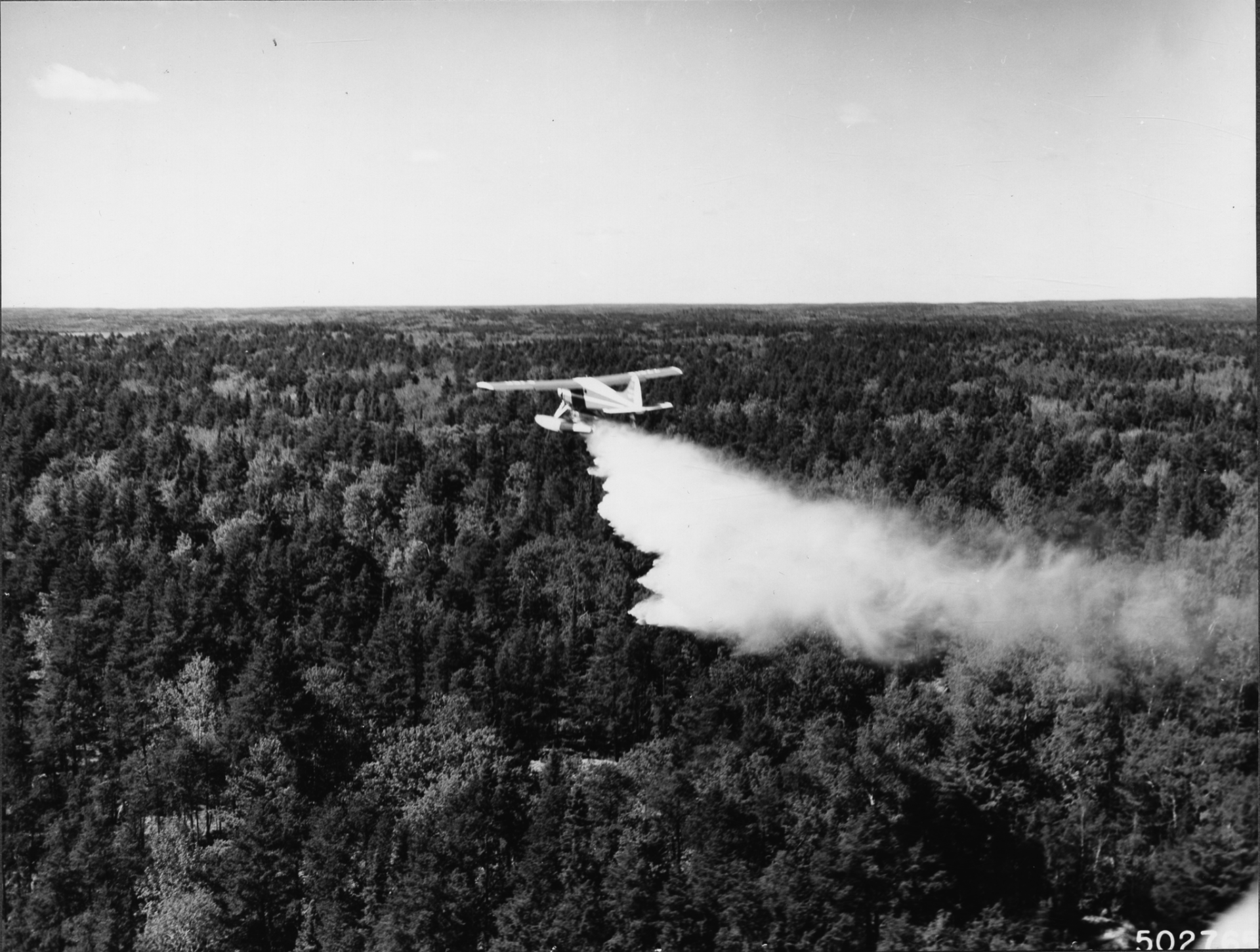
Beaver float plane dropping water on spot fire. Kawishiwi Ranger District. Superior National Forest, Minnesota, 1962. Photo courtesy of Freeman Heim for the U.S. Forest Service. (Photo credit: Photo courtesy of Freeman Heim for the U.S. Forest Service via Circle of Blue)

Fire suppression 

In much of the country, including Minnesota’s Superior National Forest and the Boundary Waters Canoe Area Wilderness, people have been managing the land with controlled fire for centuries. 

Nisogaabokwe Melonee Montano dedicates much of her time understanding the relationship between fire and land. She’s a doctoral student at the University of Minnesota and an enrolled member of the Red Cliff Band of Lake Superior Ojibwe.

“The Indigenous people, when you look at pre-colonization, across the entire landscape had been using fire to survive, to caretake our lands,” Montano said in a Friends of the Boundary Waters webinar

“When people had come into the Boundary Waters as a new area for them, they saw it for its beauty and all of those other things,” Montano said. “It was in that state because it was being taken care of by the Anishinaabeg people by things like fire. Fire has always been a part of that ecosystem.”

1939 Forest Fire Prevention poster painted James Montgomery Flagg for the American Forestry Association. (Photo credit: photo courtesy of the U.S. Forest Service via Circle of Blue)

For instance, the open old growth red and white pine stands surrounding the shorelines of lakes in the wilderness area exist because of fire stewardship.

“That was the world that existed before colonial settlers arrived in North America,” historian Char Miller said. He studies the history of the Forest Service and wrote a book about fire suppression called “Burn Scars.”

Many fire-dependent ecosystems in the Great Lakes haven’t seen flames in decades. Cultural and controlled burns abruptly stopped because of colonization, leaving only wildland fires for a century.

Part of that halt was fear-based. After waves of catastrophic blazes in the late 1800s, like the Great Chicago Fire and the Peshtigo Fire in Wisconsin, the federal government began enforcing strict fire suppression policies. That included the fires Indigenous communities practiced for centuries before.

But Miller said fire suppression policies were also racially motivated, meant to disrupt the lives of native people. Taking away fire disrupted their social, economic and religious lives, and Miller said documents from Spanish missionaries, Franciscans and other settlers explicitly supported that.

“Settler colonialism has many guises,” Miller said, “but around fire, it’s very clear it’s got one voice and that is: Suppress the fire, and you suppress the Indigenous people.”

Climate change is mostly to blame for increasing wildfires, Montano said, but the forced removal of the Anishinaabeg people plays a role. They could no longer steward the land as they had for generations.

Evan Larson, a professor at the University of Wisconsin-Platteville, studies tree rings to understand the history of fire on the landscape. He said during the webinar that the relationship between people, fire and the rest of the ecosystem was disturbed by colonization.

Larson said bringing more fire to the landscape is essential in places like the Boundary Waters, where the bar to conduct prescribed burns is much higher than places like Superior National Forest due to its Wilderness Act status.

“If we think about reciprocity and we recognize that these are fire dependent systems,” Larson said, “we have an increasing responsibility to tend to these places with fire because of the way the landscape has changed, because of the changes that we are seeing everywhere.” 

The disruption in regular fire is hurting ecosystem resilience. For example, those open pine stands along lakes in the Boundary Waters become more susceptible to drought and climate change the denser they become. Fire keeps them open and thin.

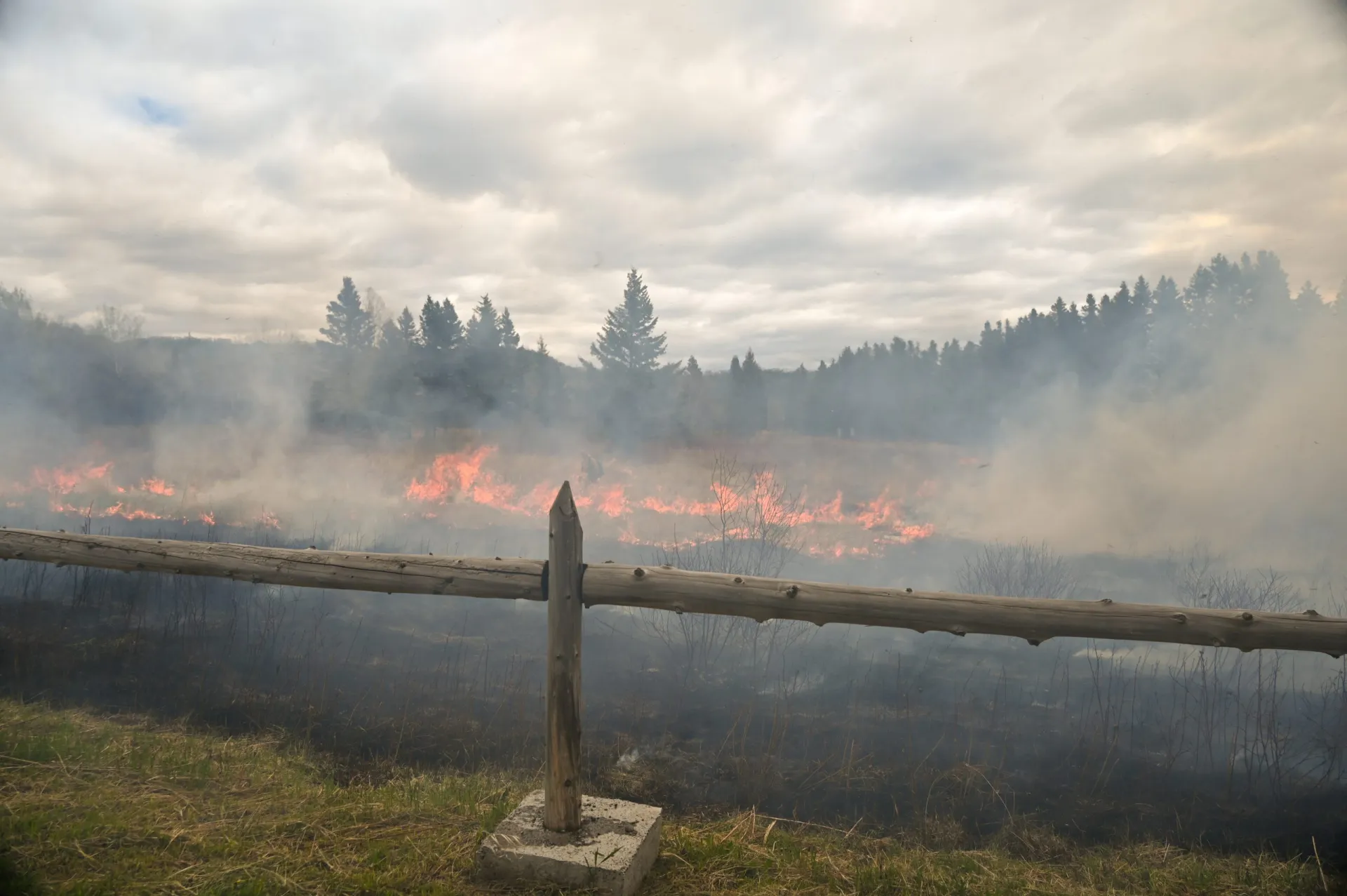
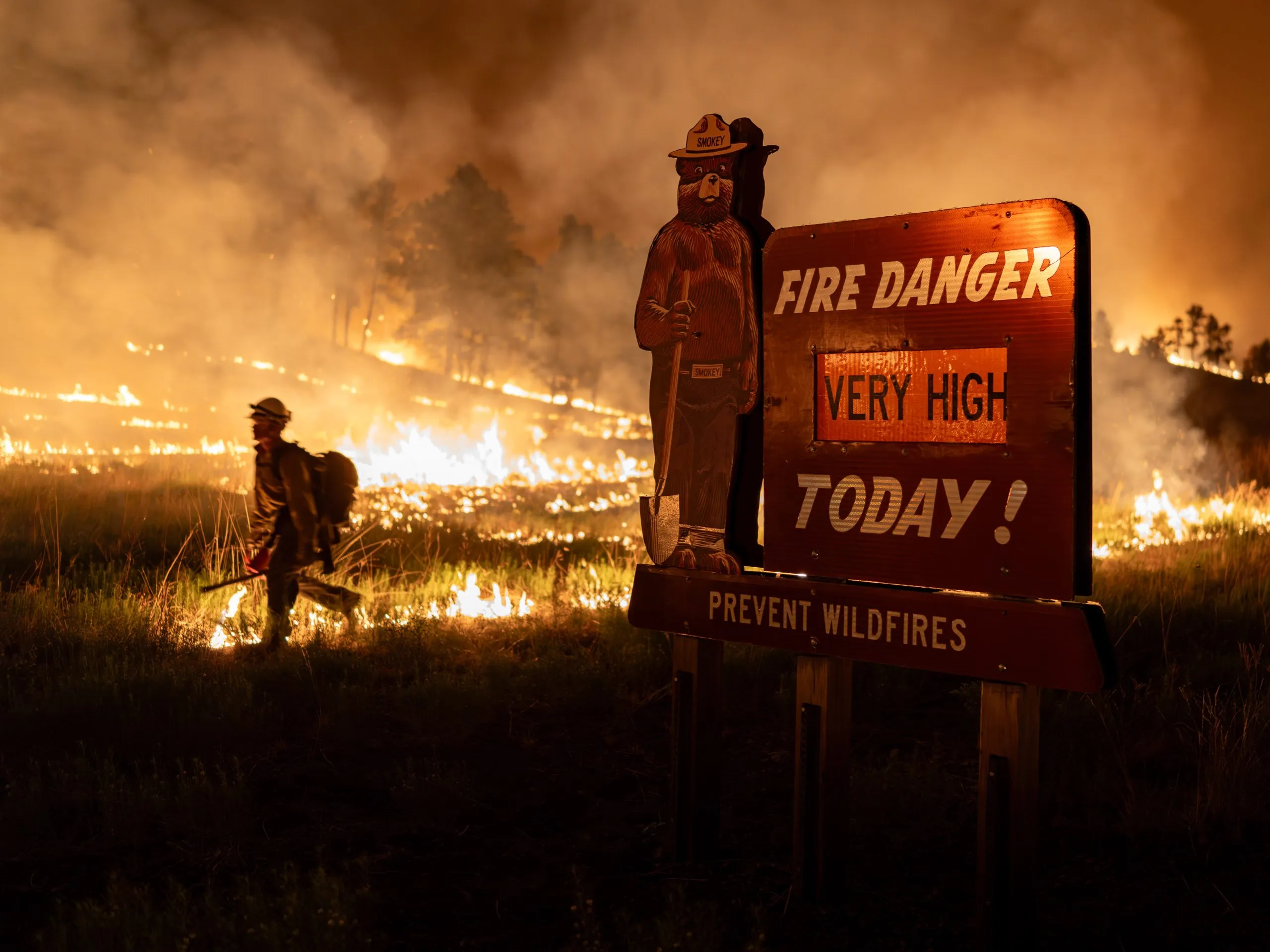
A prescribed fire at Grand Portage National Monument in Minnesota in 2025. (Photo credit: Photo courtesy of A Hernandez for the National Park Service via Circle of Blue)

Prescribed Fire

Teresa Floberg said using prescribed fire as a tool is a necessary part of living in a fire-dependent landscape. She works with Superior National Forest and other stakeholders in northeast Minnesota as the Ely Fireshed Coordinator for nonprofit Dovetail Partners.

Controlled fires are happening. Over the last three decades, the Forest Service has been slowly upping its prescribed burns – including in Superior National Forest. This year, the agency has eighteen prescribed fires across 5,483 acres planned for the northern Minnesota forest to reduce fuel loads, manage vegetation and maintain wildlife habitats.

Tribes in northern Minnesota collaborate with the Forest Service on some prescribed fires in Superior National Forest, including the Boise Forte Band of Chippewa. Cody Swanson, the band’s Forest Programs Manager, said that’s only a fraction of the burns they do. Outside the forest, the unit conducts low-acreage prescribed fires to protect homes and buildings on the reservation. They’re also bringing back cultural burns for blueberries and medicinal plants and plan to expand that practice.

Recently, the Boise Band acquired 28,000 acres near the reservation boundaries that once belonged to a timber company. The band’s Natural Resources Management has to clear out dead and downed trees, along with some other preparation, so they can reintroduce fire practices on a larger scale.

“Reintroducing fire will reintroduce a lot of the different bearberry, red osier dogwood, juneberry, raspberry, all these different medicines that people historically have used here,” Swanson said. “It’s huge that we’ll be able to reintroduce fire on the landscape in areas that might not have had it for hundreds of years.” 

Reintroducing more fire is a goal for a lot of stakeholders in the region, including Dovetail Partners. But Floberg said getting fire on the ground in northern Minnesota is challenging.

For one thing, prescribed fires require a lot of preparation, especially in the fuel-riddled region. 

“Fuel has to be removed prior to doing a prescribed burn,” Floberg said. “It relies on removing that thick understory, those really flammable trees that could bring even a low intensity fire up into the canopy.”

Sometimes accidents happen. In early June, the Birch Bay Fire that burned more than 30 acres near Ely was likely started by chainsaw operations while Forest Service crews were prepping for a prescribed fire. Hot engines, exhaust and flying sparks could have caught dry grass or pine needles aflame.

Resources are also lacking. There’s a shortage of qualified burners in the state, Floberg said, and conducting burns is expensive.

“There often isn’t a budget at the federal level to do that necessary fuels reduction work to then even be able to consider reintroducing a prescribed fire,” Floberg said. 

The financial burden deters private landowners. Floberg said many homeowners in the area want to set prescribed fire on their forested property, but many can’t afford the thousands of dollars price tag to treat even an acre.

Still, the cost to run a prescribed burn versus suppress a wildfire is significantly smaller. It’s a preventative measure, and the dollars can be difficult to justify. 

“The upfront cost will save huge expenses down the road,” Floberg said. “It’s just, we’re reactionary. We respond to crises and recovery.”

This article is the second of two parts. See part one here.


The post Setting Fires On Purpose to Cut Risk of Catastrophic Wildfires appeared first on Great Lakes Now.

Original Article

Great Lakes Now

Great Lakes Now

https://www.greatlakesnow.org/2026/06/19/setting-fires-on-purpose-to-cut-risk-of-catastrophic-wildfires/

Circle of Blue

By Victoria Witke, Circle of Blue

The Great Lakes News Collaborative includes Bridge Michigan, Circle of Blue, Great Lakes Now at Detroit PBS, Michigan Public and The Narwhal who work together to bring audiences news and information about the impact of climate change, pollution, and aging infrastructure on the Great Lakes and drinking water. This independent journalism is supported by the Charles Stewart Mott Foundation. Find all the work HERE.


Wildfire risk is high in the upper Great Lakes, and research shows that large, scorching wildfires spell trouble for lakes in the region’s remote watersheds. 

The reason: Vegetation burns in the fire. Scorching, high temperatures make the soil hydrophobic, which causes erosion and more runoff into lakes. Plants are no longer there to filter the sediment seeping into waterways. One region of concern is northern Minnesota where fires are blazing in dry and windy conditions.

In early June, lightning caused three wildfires in the Boundary Waters Canoe Area Wilderness, prompting a campfire ban. Two more fires recently sparked in Ely, leading to emergency evacuations. In mid-May, the Flanders Fire east of Breezy Point charred more than 1,700 acres in about a week.

The multiple blazes are evidence that elevated fire risk is becoming the new norm for the region, according to Teresa Floberg. She’s the Ely Fireshed Coordinator for environmental think tank Dovetail Partners and works with Superior National Forest.

“When you look at wildfire risk maps for northern Minnesota, northern Wisconsin, northern Michigan, that wildfire risk resembles the West,” Floberg said. “Same level of risk factors, and potential for intensity.”

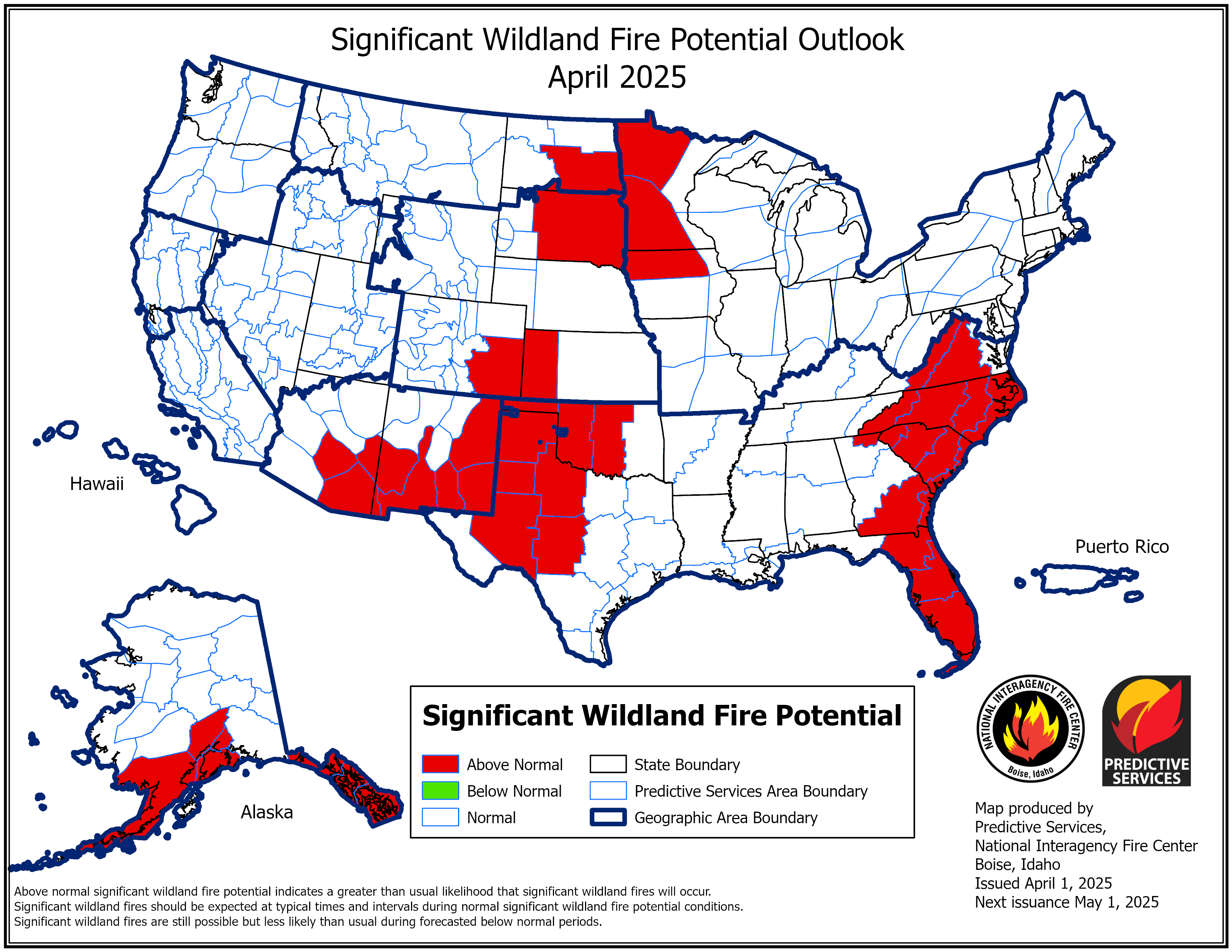
That risk, of course, isn’t unique to the North Woods. This year, wildfire experts predict a severe fire season nationwide as drought grips most of the country. As of mid-June, the National Interagency Coordination Center reported that more than 2.5 million acres have burned in wildfires across the U.S. – nearly double the 10-year average.

The causes have been gradually accumulating for more than a century. Climate change – balmier summers, shorter winters, unexpectedly dry and windy days – is largely to blame. That, and more than a century of federal fire suppression policies. Decades of fuel buildup in forests, like downed trees and dense undergrowth, feed the flames, growing wildfires to catastrophic dimensions.

Extinguishing wildfires comes with a hefty price tag. Northern Minnesota wildfires last year alone required an $8.7 million emergency response from the state’s National Guard and firefighting staff.

Chris Filstrup is an expert on how wildfires are affecting northern Minnesota’s remote lakes.

Five years ago, while the Greenwood Fire burned across more than 26,800 acres of northeast Minnesota, the lake scientist became enthralled with what that summer’s largest and most destructive wildfire was doing to the thousands of pristine lakes residing in its warpath across Superior National Forest.

Filstrup poured over previous research investigating how fire affects watersheds. There were few studies, and those he found overwhelmingly featured the Western half of the United States.

“We need to be studying this in the Midwest due to all the differences in vegetation, landscape, hydrology and weather patterns that likely affect how lakes respond to fires,” Filstrup said. “We have very different systems here.”

Sam Reed agrees. Reed is the climate conservation manager at advocacy organization Friends of the Boundary Waters, where he is reviewing all of the climate impact research in the greater Quetico-Superior Ecosystem. Fire has been largely excluded from that work.

“The relationship between fire and freshwater is something that needs way more attention, both from a research perspective and a policy perspective,” Reed said. “We need to be thinking about how it affects our amazing freshwater resources.”

Filstrup is one of the leaders closing that knowledge gap.

Along with a team of researchers, Filstrup received rapid funding from the National Science Foundation to find out the consequences of wildfires for the Upper Midwest’s inland lakes. When they began studying Superior National Forest watersheds the following May after the fire, much of the landscape was still charred. Filstrup said it was like stepping onto a different planet. The lakes within the burn scar were – and still are – the color of sweet tea with few plants along the shores. Pre-fire, they were clear, home to an assortment of flora and largely unaffected by contamination.

In the years since the Greenwood Fire, Filstrup and the lab he directs at the University of Minnesota continue to monitor the lakes every summer.

“You can see the landscape rejuvenating. You can start seeing those soils stabilize again. You can start seeing the regrowth of vegetation, which is really cool,” Filstrup said. “But lots of these lakes, when it comes to water quality, really haven’t recovered yet.”

During their initial study, Filstrup and the other scientists sampled lakes scorched by the fire and some outside of the burn scar. The researchers found that lakes in the burned stretches of the forest had higher levels of phosphorus, nitrogen and carbon than their untouched counterparts. The water was more murky and acidic. This all means degraded water quality.

Though researchers didn’t see an increase in algae growth in the studied lakes, increased nutrients can boost algae growth, which can trigger algae blooms – the rapid overgrowth of the organism seen in places like Green Bay or the western Lake Erie basin.

That green sludge can deplete loads of oxygen from the water when it dies and block sunlight to the plant communities at the bottom of the lake that would normally bind to nutrients. Without that vegetation, the nitrogen and phosphorus stay in the water and can fuel algae blooms, and Filstrup said they could see fish kills due to low oxygen levels.

Plus, extinguishing wildfires can come at a risk to water quality. Increasing fire intensity and frequency means firefighting agencies are using more retardants to put flames out. Those red plumes dumped from planes can contaminate waterways with chemicals like heavy metals, fertilizers and phosphorus. 

“My concern was that all these really prized, cherished ecosystems like the Boundary Waters Canoe Area Wilderness and Superior National Forest are going to start changing towards lakes that you tend to see in highly urbanized or highly agricultural areas, or areas where you just have a lot of human pressures within that watershed,” Filstrup said.

When Filstrup first began analyzing these lakes, he said there were arguments over how much fire actually affects water quality. Some said it was a minor disturbance, that the lakes would recover by the next year on their own.

“Five years after the fire, these lakes are still showing those similar characteristics of having more nutrients, being browner, having water that’s turbid and you can’t see through as clearly,” Filstrup said. “These are sustained impacts, and this is the result that’s shocking a lot of people because they thought this wasn’t something that we necessarily had to manage for.” 

It’s not just the lakes that are affected. 

Degraded ecosystems could have drastic consequences for the Minnesotan economy. Outdoor recreation in the northeast region alone generated more than $1.3 billion in economic output in 2024.

“If you start changing the quality of water in these ecosystems, people aren’t going to travel as far to visit them,” Filstrup said. “If people aren’t traveling to get there, they’re not spending along the way.”

Part two reports on how Minnesotans look to controlled fires to protect watersheds.


The post When Forests Burn, Lakes Suffer appeared first on Great Lakes Now.

Original Article

Great Lakes Now

Great Lakes Now

https://www.greatlakesnow.org/2026/06/18/when-forests-burn-lakes-suffer/

Circle of Blue

By Isabella Figueroa Nogueira, Bridge Michigan

The Great Lakes News Collaborative includes Bridge Michigan; Circle of Blue; Great Lakes Now at Detroit PBS; Michigan Public, Michigan’s NPR News Leader; and The Narwhal who work together to bring audiences news and information about the impact of climate change, pollution, and aging infrastructure on the Great Lakes and drinking water. This independent journalism is supported by the Charles Stewart Mott Foundation. Find all the work HERE.


The number of bald eagles in Michigan is declining, and funding delays aren’t helping the cause. 

Researchers who have spent decades climbing trees, banding eaglets and monitoring nests across Michigan say something unusual is happening this year.

Field crews working with long-term bald eagle monitoring programs say they’ve found empty nests where aerial surveys previously documented young birds. They’ve also seen malnourished eaglets, damaged nests and signs that some adult bald eagles may be attempting to nest a second time after earlier failures.

For scientists who have tracked Michigan’s bald eagle recovery for decades, the observations are raising concern.

“Our initial impressions are that this is not a typical year,” said Bill Bowerman, a professor of wildlife ecology and environmental toxicology at the University of Maryland and deputy director and chairman of the board at the Ann Arbor-based Wings Over Water Research Institute. “We are seeing widespread reproductive difficulties that appear linked to a combination of severe weather and limited food availability.”

Michigan’s bald eagle population is considered one of the country’s major conservation success stories. After decades of decline caused by habitat loss, hunting and the pesticide DDT, federal protections and environmental regulations helped the species recover.

Annual aerial surveys by Michigan Department of Natural Resources’ Wildlife Disease Laboratory showed breeding pairs increased from about 52 pairs in 1961 to roughly 835 pairs by 2017.

But researchers and state wildlife officials said recovery does not eliminate ongoing threats.

State wildlife pathologist Julie Melotti said that, from 1987 to 2024, trauma accounted for the majority of documented eagle deaths examined by the lab, including 34% from vehicle strikes and about 26% from other trauma, while lead toxicosis accounted for nearly 13%.

Melotti said those patterns reflect long-standing risks tied to human activity and scavenging behavior, particularly when eagles feed on roadkill or remains containing lead ammunition.

Highly pathogenic avian influenza, or bird flu, also caused major disruptions beginning in 2022.

Melotti’s lab documented 64 eagle deaths during the initial bird flu outbreak from April 2022 to January 2023, with about 70% of those cases involving adult birds. Additional confirmed cases have continued into recent years, including dozens examined since late 2024, with adults again making up a substantial share of infections.

According to Bowerman and other Michigan eagle researchers affiliated with Wings Over Water, monitoring after the 2022 outbreak documented the loss of more than 400 breeding pairs, and researchers estimate roughly 2,500 individual eagles may have been lost statewide.

Unlike species that reproduce quickly, bald eagles mature slowly and typically produce only one clutch of one to three chicks per year, making population recovery more sensitive to large disruptions.

Funding delays

For decades, state-supported aerial surveys and field crews allowed researchers to monitor nests across Michigan. 

This year, however, more than $700,000 in federal funding expected through the Great Lakes Restoration Initiative for bald eagle and colonial waterbird monitoring has yet to be released, said Wings Over Water officials.

“We were all under the same belief in November that this funding would be available,” Bowerman said. “And we didn’t find out until April that it wasn’t coming.”

Bowerman said the delay has changed what monitoring looks like in practice.

“In normal years, both the aerial surveys that DNR guys (do) would have been funded, and we would have up to three banding crews in the field at one time,” he said.

Instead, Wings Over Water researchers say many nests are being visited by volunteers, limiting how many sites can be visited during the short window when eaglets can safely be handled.

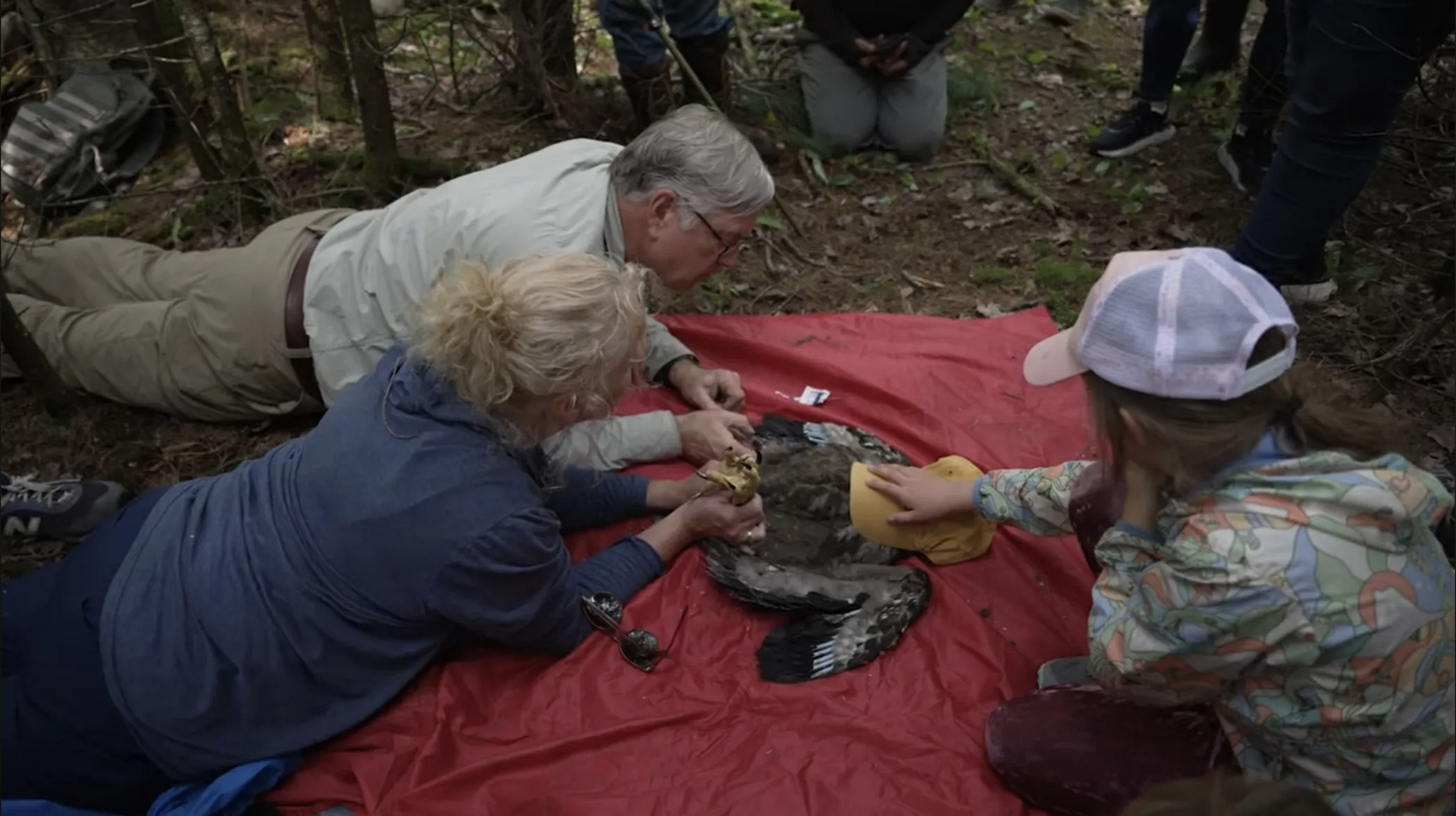
That window typically lasts only five to nine weeks, when researchers climb trees, lower eaglets from nests in specialized bags, collect blood samples, measure feathers and body size, determine sex, band birds and test for contaminants including per- and polyfluoroalkyl substances (PFAS), mercury, pesticides and polychlorinated biphenyls (PCBs).

The data help scientists understand not only eagle health but also broader ecosystem conditions, since young eagles reflect contaminants and environmental conditions present in local food systems.

“Every nest visit provides critical information about the health of Michigan’s waters and wildlife,” said Jennifer Day, executive director of Wings Over Water.

US Environmental Protection Agency officials said the agency provided about $800,000 in Great Lakes Restoration Initiative funding to the US Fish and Wildlife Service for bald eagle and colonial waterbird monitoring in Michigan during the 2026 field season. An additional $500,000 was provided for bald eagle and herring gull contaminant monitoring across Michigan and Wisconsin.

EPA directed questions about the distribution of those funds to the US Fish and Wildlife Service. Wings Over Water officials said funding expected for their monitoring work had not been released as of this spring.

US Fish and Wildlife did not respond to messages seeking comment.

Nesting under pressure

Recent flooding and high water levels may have reduced fishing opportunities for adult eagles, making it harder for parents to feed young.

“We have fewer eagles that are young,” Bowerman said. “We have some birds that are starving to death.”

Wings Over Water field crews say they have documented dead nestlings, severely malnourished chicks and nests damaged or destroyed during wind events.

The combination of field observations and long-term mortality data helps provide context for what researchers are seeing on the ground. 

Melotti’s statewide records show that, even after population recovery, eagles continue to face persistent threats from trauma, poisoning and disease.

Researchers said this year’s observations suggest multiple stressors may be overlapping.

“The long winter, spring flooding, and repeated severe wind events likely created very challenging conditions for nesting eagles,” Bowerman said. “While each of these events can occur naturally, it is unusual to see them happening together and affecting nests across such a broad area.”

Exactly how widespread those conditions are remains unclear.

Bowerman said aerial surveys are still being completed in parts of the state, making it too early to fully assess overall productivity, one of the most important measures of population health.

But field observations have already surprised even longtime researchers. 

Bowerman said conditions this year have looked different from anything he has seen in decades of monitoring. During one recent trip, he went three days without finding an active nest.

While researchers said they are not suggesting bald eagles are again nearing endangered status, they say continued monitoring is essential to understand how environmental stressors are affecting the population over time.

“Long-term monitoring is the only way we can understand how these major events are affecting the population over time,” Day said.


The post Michigan bald eagle success story faces new threats appeared first on Great Lakes Now.

Original Article

Great Lakes Now

Great Lakes Now

https://www.greatlakesnow.org/2026/06/09/michigan-bald-eagle-success-story-faces-new-threats/

Bridge Michigan

This story is part of a Great Lakes News Collaborative series called Shockwave: Rising energy demand and the future of the Great Lakes. The Great Lakes region is in the midst of a seismic energy shakeup, from skyrocketing data center demand and a nuclear energy boom, to expanding renewables and electrification. In 2026, the Great Lakes News Collaborative will explore how shifting supply and demand affect the region and its waters.

The collaborative’s five newsrooms — Bridge Michigan, Circle of Blue, Great Lakes Now, Michigan Public and The Narwhal — are funded by the Charles Stewart Mott Foundation.


A six-decade history in the Great Lakes region of ecosystem and water protection is being put to the test as a dynamic era of energy investment, rising electricity demand, aging assets, and political intervention dawns across the basin.

The energy story emerging today is one of tumultuous change in energy supply and demand coupled with conflicting state and federal objectives that are colliding with a buzzy economic narrative centered around AI and data centers. Electricity consumption in the basin’s eight states and two provinces is climbing for the first time in at least a decade. 

Forecasts show electricity demand in the region growing 2 to 3 percent annually over the next 10 years. The Trump administration, meanwhile, is injecting carbon-promoting policies into energy markets, requiring coal power plants in Michigan and Indiana to continue operating beyond their announced closure dates while also slowing the solar and wind projects, two energy sources that emit no climate-altering carbon and use little to no water. 

Along with coal, another water-intensive energy source is being revived or reimagined to satisfy projected electricity demands. With nearly $3 billion in federal and state financing, the 55-year-old Palisades Nuclear Generating Station is preparing to restart after a four-year shutdown. When it does, the old reactor will draw 98,000 gallons a minute, 141 million gallons a day from Lake Michigan.  

In addition to these legacy energy sources, new gas-fired power plants, battery storage, transmission lines, and a planned new nuclear plant north of Benton Harbor, Michigan, are being added to keep pace with demand. Agriculture, the region’s biggest water consumer and water polluter, is playing a larger role in energy production – by converting corn into biofuel and producing methane from manure in industrial-scale biodigesters

Liquid fuels also remain in the spotlight due to the lingering question of Line 5, an oil pipeline that crosses the Straits of Mackinac. The future of the 73-year-old pipeline is the subject of several lawsuits, with key legal and permitting decisions expected in 2026.

This is the first article in our “Shockwave” project, a series of reports that will investigate the rapid evolution of the energy landscape in the Great Lakes region and the consequences the new era will have for one of the world’s largest reserves of fresh water. Produced by the five partners of the Great Lakes News Collaborative — Bridge Michigan, Circle of Blue, Great Lakes Now, Michigan Public, and The Narwhal — Shockwave will document the depth and breadth of the region’s energy transformation and its influence on water use and pollution.

“As electricity demand is soaring, in part due to data centers, we’re seeing changes in water use, we’re seeing changes in electricity consumption,” said Mike Shriberg, director of the University of Michigan Water Center. “And how our region responds to that over the long term will have a massive impact for the Great Lakes and for our energy future.”

Altogether, these changes amount to an inflection point in the region’s energy policy, one with as many questions as answers. Will data center demand and the White House’s lifeline to fossil fuel units jeopardize state clean energy targets? Will the numerous binational, regional, and state-level consultative bodies enable collaboration that reduces harm to waterways? Can local officials, researchers, and lawmakers assemble the data to inform their responses? Will a decade-long decline in the energy sector’s water use continue or stall? Will the projected data center demand for electricity materialize or will the energy buildout result in stranded assets?

What is certain is that the energy playing field today is set up for a different game than just a few years ago. These are still early days, but the region, its $9.3 trillion economy, its border-crossing energy infrastructure, and its world-class environmental riches stand at the threshold of a profound shift in some of its basic economic inputs and assumptions.

A Detroit Edison worker guides the unloading boom of the freighter Walter J. McCarthy, Jr. to a coal chute at the Monroe power plant in Monroe, Michigan, in this image from 1997. Photo © J. Carl Ganter/Circle of Blue

Top-Down Orders

The changes begin at the top. 

For political, ideological, and grid reliability reasons the Trump administration is adamant on propping up fossil fuels and shepherding a nuclear power revival. It is doing so through executive orders and agency action. 

The Department of Energy issued a series of emergency orders to prevent the coal-fired J.H. Campbell Power Plant, in West Olive, Michigan, on the shore of Lake Michigan, from shutting down last year. It issued a separate order in December to prevent the closures of the R.M. Schahfer Generating Station and F.B. Culley Generating Station in Indiana. 

In addition, the administration extended the deadline for closing coal waste dumps in Illinois, Indiana, and Ohio, though none is directly within the basin. Though the administration asserts it is “clean,” coal is the dirtiest and among the thirstiest sources of electricity. 

The Department of Energy excluded small modular reactors, or SMRs, and other “advanced” nuclear generation technologies from National Environmental Policy Act review. SMR developers promote the new reactors as more mobile and less risky than the older generation of big reactors. SMRs are under development or have been proposed in Ontario, Illinois, Ohio, Michigan, and Wisconsin. 

Canada, too, has announced national energy strategies that appear certain to affect Great Lakes waters. Rebuffed and taunted by tariffs imposed by President Trump, Prime Minister Mark Carney told an audience at the World Economic Forum in Davos last month, “We are an energy superpower.” Carney outlined his plan for $1 trillion in fast-tracked Canadian investments in energy, AI, and critical minerals. He also promoted a national infrastructure campaign for oil pipelines, electricity transmission lines, and mines.

Big political announcements are reinforced by facts on the ground. The numbers tell a story of rapid growth in electricity demand that has analysts reaching back decades for a historical equivalent. Some compare it to the push for rural electrification in the United States after the Second World War. Already rising, electricity demand in the Great Lakes region could soar ever higher if high-tech corporate interest in data centers manifests as real-world construction. This comes as NERC, a North American regulatory agency, warns that the Great Lakes region faces high risk of electricity shortfalls in the next five years due to rising demand and power plant retirements.

This represents a head-spinning, era-defining reversal in electrical demand. In Wisconsin, electricity sales had been on a downward slope since the Great Recession began in 2007. By one estimate, data center electricity demand in the state will increase seven-fold by 2030, amounting to more than 4 percent of its electricity consumption. Data center load in northern Illinois has climbed 27 percent annually between 2022 and 2025, according to ComEd, the region’s electric utility. 

DTE Energy, the largest Michigan electric utility, announced a deal last fall to provide power to the 1,383-megawatt Green Chile Ventures data center in Washtenaw County. The Michigan Public Service Commission conditionally approved the state’s first “hyperscale” development in December. 

Consumers, the second largest electric provider in Michigan, has 9,000 megawatts of projects in its development pipeline, mostly for data centers and manufacturing.

Meta, the parent company of Facebook, announced a 20-year deal with Vistra last month to buy 2,100 megawatts from three nuclear plants while also expanding the generating capacity at those facilities. The agreement covers Perry and Davis-Besse, both located along Lake Erie in Ohio, as well as Beaver Valley, in Pennsylvania along the Ohio River. Meta also signed an agreement with California-based Oklo Inc. to build a 1,200-megawatt SMR plant in Ohio.

The rise in electricity demand could pose a challenge to state renewable energy goals. Illinois has a target of 100 percent clean energy by 2050. For Michigan’s electric utilities, the deadline is sooner: 100 percent clean energy by 2040.

That shift to renewables and the closure of water-intensive coal plants has been a net benefit for Great Lakes water so far. Water is drawn from lakes and rivers to cool the equipment at thermoelectric power stations, a category that includes fossil fuels and nuclear. Water withdrawals in the basin for thermoelectric power are down 24 percent compared to a decade ago, according to a University of Michigan report prepared for the Conference of Great Lakes St. Lawrence Governors and Premiers. That decline is true for power plants that use once-through cooling as well as for those that have recirculating systems that reduce withdrawals but increase consumption.

There are “substantial water savings as the region transitions away from traditional fossil fuels,” the report found. Besides water demand, the shift away from thermoelectric plants means fewer fish sucked into cooling-water pipes or trapped against their screens. It means less thermal pollution of nearshore waters and rivers. It means less mercury deposited into waterways from coal plant air emissions. 

The downward trend could shift upwards this year when the Palisades nuclear plant is scheduled to open, and may tilt higher as another shuttered nuclear plant in Wisconsin could reopen and new SMR plants come online. For data centers, the largest piece of their water use is not in direct operations. It is through the electricity they consume.

Years ago, the Great Lakes Commission, which represents the eight basin states and two Canadian provinces, was thinking about the same questions of water supply. In 2011, the commission published the findings from a multi-year project to identify water quality and quantity vulnerabilities in the U.S. portion of the Great Lakes basin due to thermoelectric power generation. 

The analysis, led by Sandia National Laboratories, considered multiple power generation projections and assessed three energy-related risk factors for the region’s water resources: water quality, thermal pollution of waterways, and low stream flows. It was the first model to consider water resources in future electricity scenarios for the region. A fifth of the basin’s 102 sub-watersheds scored a high risk in at least two categories.

The commission published the analysis, but largely moved on. No follow-up review was completed to determine the project’s effectiveness in shaping policy, said Erika Jensen, the commission’s executive director.

Today with data centers commanding so much attention, the water-energy connection resurfaced. That focus is partly due to growing public pushback against data center growth. Lawmakers in Indiana, Michigan, and Minnesota have introduced legislation to mandate more transparency from data center operators on their water and energy use.

At its meeting last October, the Great Lakes Commission signaled its reengagement when the commissioners – largely high-ranking state officials and lawmakers – signed two new resolutions related to energy and water. One resolution encourages water reuse for industry, where appropriate. The other, on the water-energy nexus, asserts the “importance of coordinating and integrating water, energy, and sustainable resource management” in the face of data center development and related industries that are poised to increase energy demand and water use.

The resolutions reaffirmed that energy and water are back on the table at the highest levels, Jensen said. “We’re just getting restarted right now.”

Digital Crossroad, a data center facility in Hammond, Indiana, sits on the shore of Lake Michigan. Photo © J. Carl Ganter/Circle of Blue

Looking Back, Looking Forward

Electricity is only part of the region’s evolving energy story. Aging legacy assets are also a part of the mix. 

The most noteworthy of these older assets is Line 5, the 645-mile oil pipeline that runs from Superior, Wisconsin, to Sarnia, Ontario. Enbridge, the Canadian company that owns the pipeline, wants to drill a tunnel to house the structure so that it does not sit exposed on the lakebed. Michigan officials are seeking to shut down the line. Lawsuits are proceeding in both state and federal courts, with a U.S. Supreme Court hearing later this month to determine the appropriate venue. 

The outcome will be a bellwether for energy policy, Shriberg said. “It’s really symbolic and may be determinant of which direction this region and this country is headed on energy and water issues.”

Reliable water and cheap energy are foundational economic pieces. Historically, these resource inputs were the great engines of the Great Lakes economy. Water-intensive industries – tanneries, breweries, pulp mills, manufacturers and the like – were drawn to a region where they could extract water and pump out profits. Nuclear and coal-fired power plants were installed on the shores of Michigan, Ontario, Huron, Superior, and Erie, the source of water to cool their electricity-generating equipment.

Today a different set of businesses has entered the market. The entire sweep of large water users catalyzed by the new energy economy – semiconductors, battery manufacturers – need to be part of the water-use equation, said Alaina Harkness, CEO of Current, a Chicago-based organization focused on water innovation.

“If we had better policy and planning frameworks, this could be a great place to do that relative to some of the water-scarce regions in the rest of the country,” Harkness said. “But again, we’ve got to shift our frameworks, got to look much more at water reuse and these water-energy connections.”

There is indeed opportunity in the new energy landscape, said Liesl Clark, director of climate action engagement at the University of Michigan and the former head of the state environment agency. Not just for a foothold in the 21st century economy, but also for continuing on a low-carbon path and strengthening the policies that ensure the region’s water is not abused in the process.

“How do we make sure we’re doing it in the most protective way possible in the state?” Clark asked.

As the new energy era takes shape, that is a prevailing question not just for Michigan but for the region as a whole.

The post The energy boom is coming for Great Lakes water appeared first on Great Lakes Now.

Original Article

Great Lakes Now

Great Lakes Now

https://www.greatlakesnow.org/2026/02/12/the-energy-boom-is-coming-for-great-lakes-water/

Brett Walton, Circle of Blue

Ontario is subsidizing an energy project in Georgian Bay despite expert advice

By Fatima Syed, The Narwhal

The Great Lakes News Collaborative includes Bridge Michigan, Circle of Blue, Great Lakes Now at Detroit PBS, Michigan Public and The Narwhal who work together to bring audiences news and information about the impact of climate change, pollution, and aging infrastructure on the Great Lakes and drinking water.

Read Now at Great Lakes Now.

Original Article

Great Lakes Now

Great Lakes Now

https://www.greatlakesnow.org/2025/11/ontario-is-subsidizing-an-energy-project-in-georgian-bay-despite-expert-advice/

The Narwhal

Great Lakes slightly colder than usual ahead of summer

By Emilio Perez Ibarguen, Bridge Michigan

The Great Lakes News Collaborative includes Bridge Michigan; Circle of Blue; Great Lakes Now at Detroit PBS; Michigan Public, Michigan’s NPR News Leader; and The Narwhal who work together to bring audiences news and information about the impact of climate change, pollution, and aging infrastructure on the Great Lakes and drinking water.

Read Now at Great Lakes Now.

Original Article

Great Lakes Now

Great Lakes Now

https://www.greatlakesnow.org/2025/05/great-lakes-slightly-colder-than-usual-ahead-of-summer/

Bridge Michigan

Michigan’s fight against Lake Erie pollution didn’t work. What happens next?

By Emilio Perez Ibarguen, Bridge Michigan

The Great Lakes News Collaborative includes Bridge Michigan; Circle of Blue; Great Lakes Now at Detroit PBS; Michigan Public, Michigan’s NPR News Leader; and The Narwhal who work together to bring audiences news and information about the impact of climate change, pollution, and aging infrastructure on the Great Lakes and drinking water.

Read Now at Great Lakes Now.

Original Article

Great Lakes Now

Great Lakes Now

https://www.greatlakesnow.org/2025/05/michigans-fight-against-lake-erie-pollution-didnt-work-what-happens-next/

Bridge Michigan

Great Lakes temperature extremes intensifying due to climate change

By Lester Graham, Michigan Public

The Great Lakes News Collaborative includes Bridge Michigan; Circle of Blue; Great Lakes Now at Detroit PBS; Michigan Public, Michigan’s NPR News Leader; and The Narwhal who work together to bring audiences news and information about the impact of climate change, pollution, and aging infrastructure on the Great Lakes and drinking water.

Read Now at Great Lakes Now.

Original Article

Great Lakes Now

Great Lakes Now

https://www.greatlakesnow.org/2025/05/great-lakes-temperature-extremes-intensifying-due-to-climate-change/

Michigan Public

Spring bird migration in the Great Lakes

Great Lakes Now hosted a multimedia celebration of bird conservation and spring migration across the Great Lakes region last week.

The virtual event showcased the short film “Birds of Paradise” from Points North and the Boardman Review, which follows a waterbird migration counter at Whitefish Point Bird Observatory near Paradise, Michigan.

Read Now at Great Lakes Now.

Original Article

Great Lakes Now

Great Lakes Now

https://www.greatlakesnow.org/2025/04/spring-bird-migration-in-the-great-lakes/

Great Lakes Now

Trump’s aggressive water statement riles, unites Canadians

Candidates for president of the United States address many issues on the campaign trail as they criss-cross the country pitching their policy agendas.

The economy, healthcare and immigration were among the leading topics in the runup to the 2024 election. However, it’s uncommon for a candidate to talk about the availability of water.

Read Now at Great Lakes Now.

Original Article

Great Lakes Now

Great Lakes Now

https://www.greatlakesnow.org/2025/01/trumps-aggressive-water-statement-riles-unites-canadians/

Gary Wilson, Great Lakes Now

Spotlight on complexity of bottled water issues, as BlueTriton exits Ontario

Activist group, Water Watchers, had reason to celebrate last month when water bottler BlueTriton announced it will cease operations in Puslinch, Ontario in January, 2025. The group’s website beamed “We Won” and said the exit was a “historic win for water justice.”

To get a better understanding of the issues surrounding bottled water in Ontario, Canada, Great Lakes Now contacted Arlene Slocombe, executive director of Water Watchers and McMaster University Professor, Dawn Martin-Hill and founder of the Indigenous Studies Program at McMaster University. 

Read Now at Great Lakes Now.

Original Article

Great Lakes Now

Great Lakes Now

https://www.greatlakesnow.org/2024/12/spotlight-on-complexity-of-bottled-water-issues-as-bluetriton-exits-ontario/

Gary Wilson, Great Lakes Now

Groundwater: Who’s in charge?

In the early 2000s a movement to address the plight of the heavily polluted and long neglected Great Lakes started to gain traction.

The goal was to bring the gravitas of the federal government to the issue and in 2004 President George W. Bush signed an executive order declaring the lakes a “national treasure.” An interagency task force was established to bring together the disparate efforts of various federal programs who had been working independently on Great Lakes issues.

Read Now at Great Lakes Now.

Original Article

Great Lakes Now

Great Lakes Now

https://www.greatlakesnow.org/2024/09/groundwater-whos-in-charge/

Gary Wilson, Great Lakes Now

After 10 million pieces of beach trash, Chicago advocates push for sustainable packaging

Plastic is the dominant source of beach trash in the Great Lakes region.

That’s the finding by the Chicago-based non-profit Alliance for the Great Lakes in a recently released report that analyzed beach litter picked up by its volunteers over the past 20 years.

“Twenty years of data collected by volunteers shows that 86% of the trash was either fully or partially made from plastic,” the Alliance said in a press release.

Read Now at Great Lakes Now.

Original Article

Great Lakes Now

Great Lakes Now

https://www.greatlakesnow.org/2024/09/after-10-million-pieces-of-beach-trash-chicago-advocates-push-for-sustainable-packaging/

Gary Wilson, Great Lakes Now

Cheryl Porter’s vision for the future of water

Great Lakes Now’s Anna Sysling spoke with Cheryl Porter, Chief Operating Officer of Water and Field Services at the Great Lakes Water Authority and the first African American president of the American Water Works Association (AWWA).

With 28 years of experience in the water sector, Porter shares her inspiring journey from junior chemist in Detroit to leading the AWWA.

Read Now at Great Lakes Now.

Original Article

Great Lakes Now

Great Lakes Now

https://www.greatlakesnow.org/2024/09/cheryl-porters-vision-for-the-future-of-water/

Great Lakes Now

PFAS New Roundup: PFAS are shown to be unique bipartisan voting concern in Wisconsin

Nearly 70% of Wisconsin voters polled by Marquette University Law School showed concern about PFAS in drinking water. A uniquely uniting force from across the political aisle, which is not reflected at the state level. Last week, elected officials were once again deadlocked over how to spend the $125 million that was set aside — in May 2023 — to solve the crisis.

Read Now at Great Lakes Now.

Original Article

Great Lakes Now

Great Lakes Now

https://www.greatlakesnow.org/2024/04/pfas-new-roundup-pfas-are-shown-to-be-unique-bipartisan-voting-concern-in-wisconsin/

Lisa John Rogers, Great Lakes Now

WATCH: Why Chicago will take decades to replace lead pipes

In November of 2023, the EPA proposed new rules that would remove lead pipes from America’s drinking water infrastructure over the next decade. But with more lead pipes than any other city, Chicago is a notable exception. Siri Chilukuri covered the story for Grist.

“There are 400,000 pipelines, and that would mean that the city would have to replace 40,000 led pipelines a year to meet that goal,” said Chilukuri.

Read Now at Great Lakes Now.

Original Article

Great Lakes Now

Great Lakes Now

https://www.greatlakesnow.org/2024/02/watch-why-chicago-will-take-decades-to-replace-lead-pipes/

Great Lakes Now

“It’s a good thing”: Fishflies in Great Lakes region signify healthy water

Summertime calls for good vibes, much-needed time in the sun and a creature many aren’t fans of — fishflies. 

These insects are no stranger to the Great Lakes region. Fishflies, also known as mayflies, spend most of their lives in the water and are only seen on land once they enter their adult stage.

Read Now at Great Lakes Now.

Original Article

Great Lakes Now

Great Lakes Now

https://www.greatlakesnow.org/2023/07/fishflies-great-lakes-signify-healthy-water/

Jada Vasser

What are wetlands for, anyway?

On May 25, the Supreme Court ruled 9 to 0, changing wetland protection in The Clean Water Act. The Sackett family, who took on the Environmental Protection Agency (EPA), were being fined $40,000 a day for building their Idaho property too close to an unnamed tributary. That tributary feeds into a creek, and that creek feeds into Priest Lake.

Read Now at Great Lakes Now.

Original Article

Great Lakes Now

Great Lakes Now

https://www.greatlakesnow.org/2023/07/what-are-wetlands-for-anyway/

Lisa John Rogers

Weathering the floods: Detroit neighborhood faces uncertain future due to climate change

Across Detroit the effects of climate change are evident. In the Jefferson-Chalmers neighborhood on the city’s lower east side, overflowing stormwater drains, contaminated waterways and flooded basements are just a few examples of how the city’s aging infrastructure struggles to keep up with our changing climate.  

The city’s combined sewer system is the crux of the problem.

Read Now at Great Lakes Now.

Original Article

Great Lakes Now

Great Lakes Now

https://www.greatlakesnow.org/2023/04/detroit-neighborhood-faces-uncertain-future-due-to-climate-change/

One Detroit

Great Lakes News Collaborative examines Water’s True Cost

As the nation prepares to pour billions of federal dollars into rescuing water systems, the Great Lakes News Collaborative investigates the true cost of water in Michigan with a special series of reports and events during May.  Reporters from Bridge Michigan, Circle of Blue, Great Lakes Now, and Michigan Radio have combined their resources for the most extensive coverage on the cost of water in Michigan to date.

Read Now at Great Lakes Now.

Original Article

Great Lakes Now

Great Lakes Now

https://www.greatlakesnow.org/2022/04/great-lakes-news-collaborative-waters-true-cost/

GLN Editor