While health officials urge people to stay indoors due to the smoke draping the Midwest, experts say we should remember that the same polluted air affecting humans is also threatening animals. 

On July 16, Detroit ranked as the worst air quality in the world with a 724 index– climbing past the 300-point threshold on the Air Quality Index, where air quality is considered hazardous. In second sat Toronto, Canada, then Minneapolis Minnesota and in fourth was Chicago, Illinois.  

According to Dr. Jack Harkema, a Veterinary Pathologist at Michigan State University, said the effects of wildfire smoke on animals isn’t just a single symptom. 

“It doesn’t affect just the lungs, but also the cardiovascular system and the metabolic system,” Harkema said. “We’ve actually even looked at the effects on the brain, and there’s increased inflammation in the brain as well.”

Wildfire smoke may be even more harmful to animals than the everyday air pollution found in cities, Harkema said. 

“Wildfire smoke is probably even more toxic than our regular urban particulate matter,” Harkema said. “These particles create a lot of oxidants, they damage tissue, and they cause inflammation locally in the lung, but then that inflammation can spread to other organs.”

Wildfire smoke contains a mixture of pollutants, including fine particles known as PM2.5. Those microparticles are small enough to go deep into the lungs and, sometimes, enter the bloodstream.

“PM2.5 particles are inhalable,” Mayra Oyola, an Assistant Professor in the Department of Atmospheric and Oceanic Sciences at the University of Wisconsin Madison. “They can get into the lungs and, just like in humans, they stay there. They can damage respiratory and cardiovascular tissue in anything that breathes. So it’s not just us.”

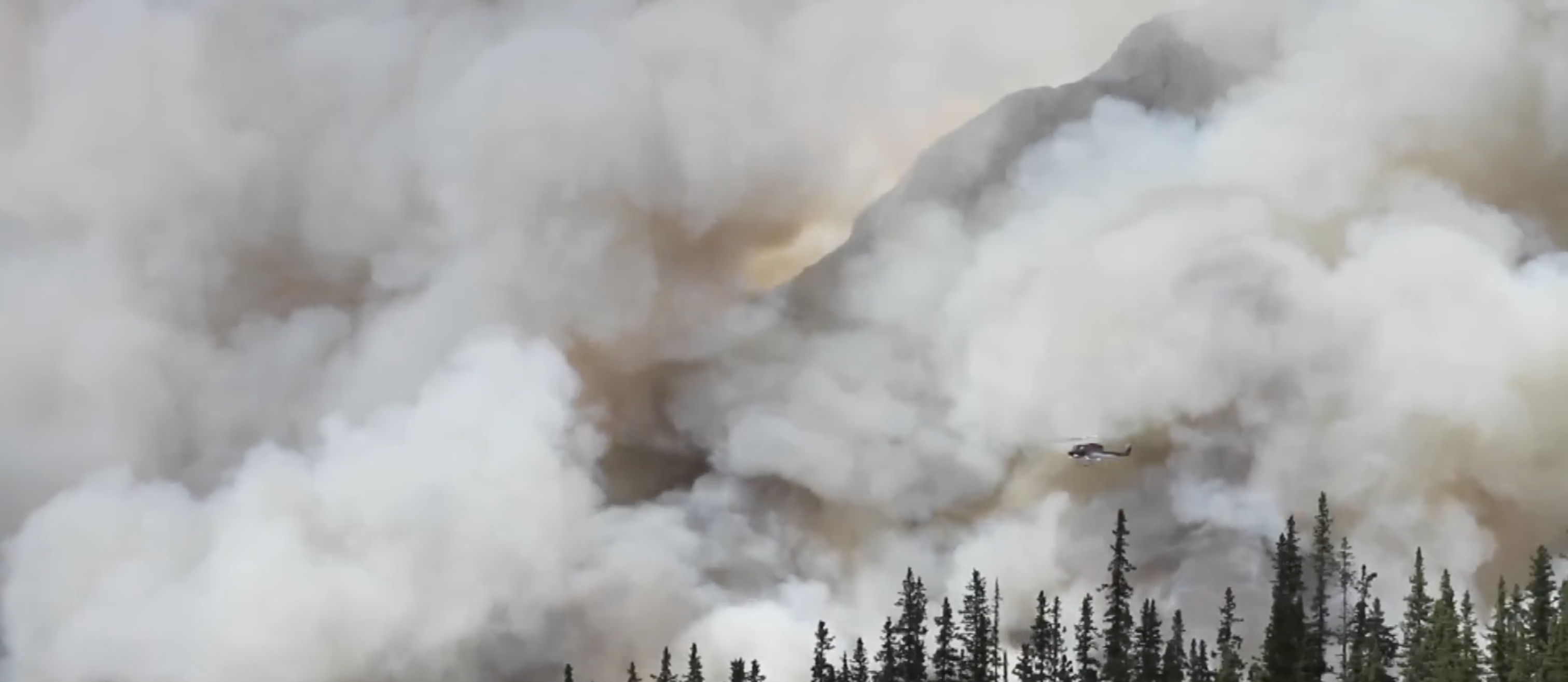
The fires that are impacting the midwest are mainly contained towards the lower part of Ontario, Canada.  The smoke from these fires have migrated from wind paths to reach the midwest. 

“Animals close to the fires, that’s the biggest concern, because they will be displaced,” Oyola said. “More often than not, they move into human-populated areas. That creates risk for both humans and the animals.”

Birds are especially vulnerable to wildfire smoke because their respiratory system is more efficient than other mammals, according to research scientist at Cornell University’s Lab of Ornithology Olivia Sanderfoot. While that helps them get more oxygen, it also means they breathe in more harmful particles from polluted air.

“Birds are able to take up twice as much oxygen with each breath compared to mammals, which also means they’re getting an extra-heavy dose of anything toxic in the air,” Sanderfoot said.

“We’ve known for a long time that birds are more vulnerable,” Sanderfoot said. “So I’m especially worried about them in this smoke.”

Other outdoor animals can also suffer, like horses. Because of respiratory diseases, like heaves, livestock that spend their time outdoors are exposed for days or weeks to smoky conditions which heighten risks, Harkema said.

“If this continues, you’re going to see more illness in humans and animals,” Harkema said.

For pet-owners, Dr. Jennifer Henderson, a veterinarian at Vetco Total Care in Chicago said taking the same precautions you would take for yourself is ideal. 

“The same concerns apply to our pets that apply to humans,” Henderson said. “You just want to keep them inside or limit their activity outside so it doesn’t cause any flare-up.”

Owners should also watch closely for signs that smoke may be affecting their animals.

“I think respiratory symptoms,  with the coughing and the lethargy, are the main things to watch for,” Henderson said. 

She also recommends monitoring for bloodshot eyes, squinting or other signs of eye irritation.The guidance is ultimately simple, Henderson said, if the air isn’t healthy for people, it probably isn’t healthy for pets either.

“Similar to how they’re dealing with it for themselves, apply the same concerns and strategies to their pets,” she said. “You can’t put a mask on a dog, so it’s really just keeping them out of the environment or limiting their time.”

Harkema recommends limiting walks to brief bathroom breaks and avoiding strenuous exercise.

“You don’t want to exercise them because more of these particulate matter and other air toxicants can get into the lung and cause inflammation,” Harkema said.

Sanderfoot said keeping pets in cool, air-conditioned spaces with clean, filtered air whenever possible is best. 

As wildfire seasons grow longer and more intense, Sanderfoot says she expects poor air quality events to become a more frequent occurrence across North America.

“The issue is that climate change is supercharging these fires and lengthening our fire season,” Sanderfoot said. “The bigger the fire, the more smoke.”

According to Oyola, research shows wildfire smoke will become a persistent problem.

“It’s very clear that climate change is real and that it’s not slowing down,” she said. “With drier conditions and warmer conditions, we should expect more events like this.”


The post How wildfire smoke impacts pets and wildlife appeared first on Great Lakes Now.
Original Article

Great Lakes Now

Great Lakes Now

https://www.greatlakesnow.org/2026/07/21/how-wildfire-smoke-impacts-pets-and-wildlife/
Julia Roeder

By Keerti Gopal, Inside Climate News

This article originally appeared on Inside Climate News, a nonprofit, non-partisan news organization that covers climate, energy and the environment. Sign up for their newsletter here.


After years of fighting to curb toxic pollution in communities of color, Illinois activists are celebrating a step forward. 

A bill expanding the state’s regulatory obligations over industrial air polluters in environmental justice communities passed the state legislature last week and is expected to go into effect at the start of next year.

The bill amends the Illinois Environmental Protection Act and will require the state’s Environmental Protection Agency to consider cumulative pollution and other burdens when evaluating certain air emission permits for construction. It also allows the agency to consider an applicant’s past environmental violations when approving permits, and to enact stricter requirements for air monitoring and pollution prevention.

For Jen Walling, chief executive officer of the Illinois Environmental Council, this legislation has been a long time coming.

“It’s more relief than joy to have it passed,” Walling said. “We’re taking a step in the right direction.”

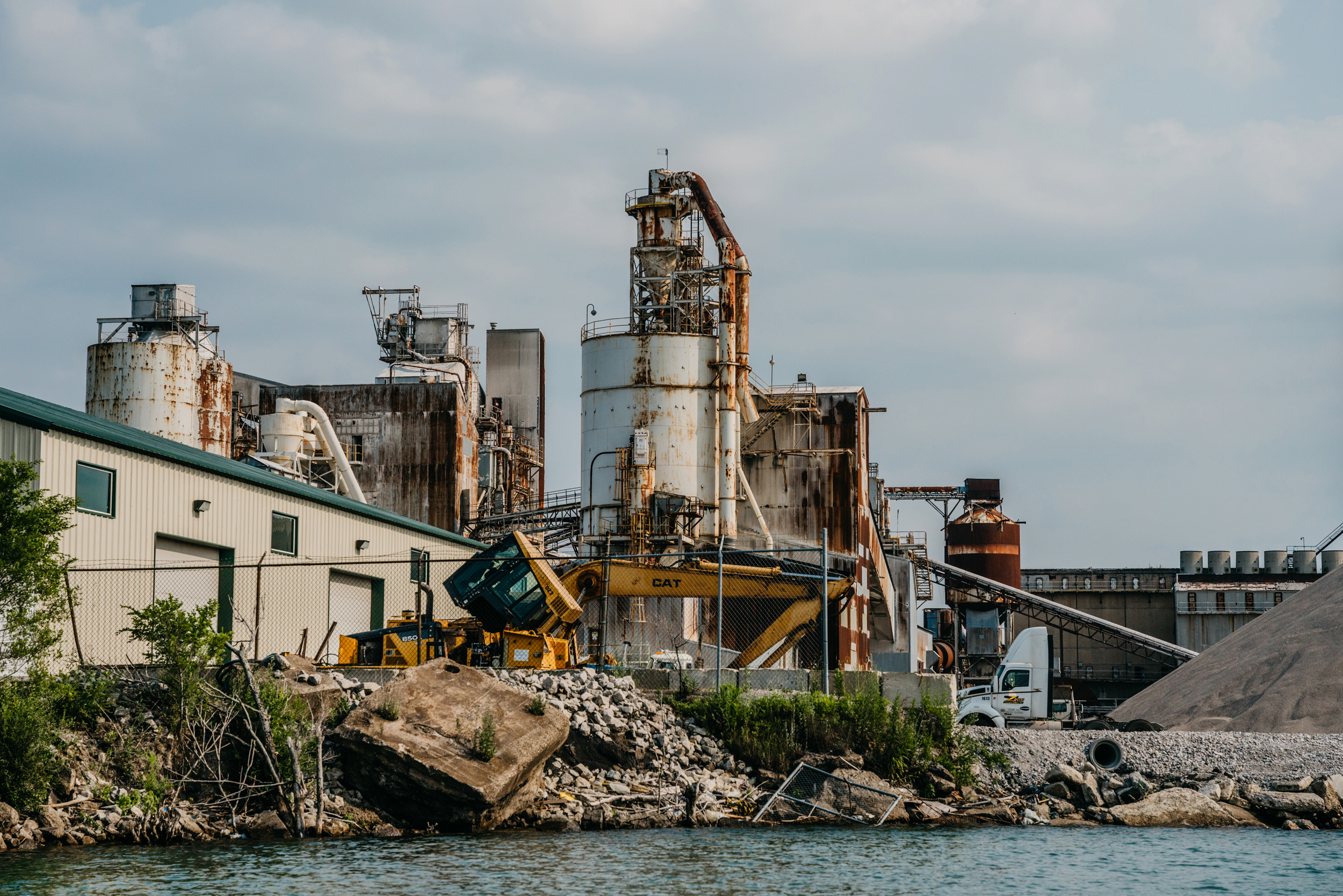
The bill was born out of years of high-profile community activism in Chicago against a proposal to move General Iron, a metal scrapping facility, from the predominantly white and affluent neighborhood of Lincoln Park to the Southeast Side, a majority Black and Latino area nationally recognized as overburdened by industrial pollution. 

In 2020, the Illinois EPA approved a permit for the move, but residents fought back by staging protests, investigating local pollution, filing a federal civil rights complaint and completing a month-long hunger strike. The movement successfully stopped General Iron’s relocation and led to settlements with the U.S. Department of Housing and Urban Development and the U.S. Environmental Protection Agency and a resolution agreement requiring the Illinois EPA to reform its permit review process.

“I didn’t really know how broken the state permitting process was until the General Iron fight,” said Gina Ramirez, director of Midwest environmental health at the Natural Resources Defense Council. A resident of the Southeast Side, she’s hopeful about the newly passed bill. 

“I’m excited about this because it’s going to put more mechanisms in place so other families who live in environmental justice communities in Illinois don’t have to go through what we went through,” she said.

State Sen. Celina Villanueva, a co-sponsor of the bill, represents a district that includes Little Village, a majority Latino neighborhood that has long been disproportionately harmed by environmental hazards. 

“This bill will save lives in my district,” Villanueva, a Democrat, said in a statement. “While there is so much more work to do to protect public health in our neighborhoods, we’ll all breathe a little easier knowing that we finally took this important first step.”

The bill identifies “areas of environmental justice concern,” by combining environmental metrics like average air pollution, vehicle traffic, drinking water violations and hazardous facilities with social vulnerabilities like poverty, race, employment and English proficiency. The bill also creates an office of environmental justice within the state EPA.

The final bill doesn’t include everything communities were pushing for, Walling said. For example, she wanted to see a more inclusive definition of environmental justice areas and said some communities downstate could end up overlooked. But overall, she sees it as a positive first step. 

In Chicago, some environmental groups hope the measure will help push forward the Hazel M. Johnson Cumulative Impacts Ordinance, a city-level initiative to curb industrial pollution in environmental justice neighborhoods that has been continuously delayed

“Hopefully this lights a fire under City Council to do the right thing,” Ramirez said.

Illinois activists also say the landscape of rollbacks by the Trump administration, from environmental justice staffing cuts to weaker enforcement, makes state progress even more important. 

Ramirez said the bill is an affirmation that the disproportionate burdens faced by communities like hers are real. 

“The federal government is shying away from these words and these communities,” she said. “Illinois is doubling down.”


The post In a Years-Long Fight, the Illinois Environmental Justice Movement Gets a Win appeared first on Great Lakes Now.

Original Article

Great Lakes Now

Great Lakes Now

https://www.greatlakesnow.org/2026/06/25/in-a-years-long-fight-the-illinois-environmental-justice-movement-gets-a-win/

Inside Climate News

As bird flu wreaks havoc in the Midwest, researchers say vaccines offer a way out

This article is the first in a series called The Great Lakes Promise: Cost, Resilience and Refuge. This series was made possible in partnership between Great Lakes Now and Planet Detroit. 

Bird flu has hit the Great Lakes region hard this winter, killing nearly 5 million birds — including laying hens, ducks and other fowl — in Ohio and Indiana in the past two months.

Read Now at Great Lakes Now.

Original Article

Great Lakes Now

Great Lakes Now

https://www.greatlakesnow.org/2025/04/as-bird-flu-wreaks-havoc-in-the-midwest-researchers-say-vaccines-offer-a-way-out/

Brian Allnutt

As bird flu wreaks havoc in the Midwest, researchers say vaccines offer a way out

This article is the first in a series called The Great Lakes Promise: Cost, Resilience and Refuge. This series was made possible in partnership between Great Lakes Now and Planet Detroit. 

Bird flu has hit the Great Lakes region hard this winter, killing nearly 5 million birds — including laying hens, ducks and other fowl — in Ohio and Indiana in the past two months.

Read Now at Great Lakes Now.

Original Article

Great Lakes Now

Great Lakes Now

https://www.greatlakesnow.org/2025/04/as-bird-flu-wreaks-havoc-in-the-midwest-researchers-say-vaccines-offer-a-way-out/

Brian Allnutt

As bird flu wreaks havoc in the Midwest, researchers say vaccines offer a way out

This article is the first in a series called The Great Lakes Promise: Cost, Resilience and Refuge. This series was made possible in partnership between Great Lakes Now and Planet Detroit. 

Bird flu has hit the Great Lakes region hard this winter, killing nearly 5 million birds — including laying hens, ducks and other fowl — in Ohio and Indiana in the past two months.

Read Now at Great Lakes Now.

Original Article

Great Lakes Now

Great Lakes Now

https://www.greatlakesnow.org/2025/04/as-bird-flu-wreaks-havoc-in-the-midwest-researchers-say-vaccines-offer-a-way-out/

Brian Allnutt

When your home is filled with hazards, what can you do?

Poor housing conditions can have an effect on people’s health both mentally and physically by posing a threat to the family or individual living there, especially for young children and babies.

The health and wellbeing of residents are impacted especially in areas where there’s both industry and older housing.

Read Now at Great Lakes Now.

Original Article

Great Lakes Now

Great Lakes Now

https://www.greatlakesnow.org/2022/07/home-hazards-what-can-you-do/

Tynnetta Harris

Mapping the Great Lakes: How old are our cities?

Love staring at a map and discovering something interesting? Then “Mapping the Great Lakes” is for you. It’s a monthly Great Lakes Now feature created by Alex B. Hill, a self-described “data nerd and anthropologist” who combines cartography, data, and analytics with storytelling and human experience.

Read Now at Great Lakes Now.

Original Article

Great Lakes Now

Great Lakes Now

https://www.greatlakesnow.org/2022/06/mapping-great-lakes-cities/

Alex Hill

PFAS in the House: Are toxic “forever chemicals” a steady drip in this reporter’s home?

After spending several months reporting on the PFAS crisis, an alarming realization hit — taco night might be poisoning me.

I learned that the type of nonstick pans that I used to fry the fish usually contain the toxic chemicals, also called per- and polyfluoroalkyl substances. Research alerted me to their use in some types of parchment paper used to roll tortillas, while the aluminum foil in which I wrapped leftovers raised a red flag with its “nonstick” label.

Read Now at Great Lakes Now.

Original Article

Great Lakes Now

Great Lakes Now

https://www.greatlakesnow.org/2021/02/pfas-home-testing-pets-blood-household/

Tom Perkins