Internal government emails show staff at the Canada Water Agency trying to make sense of Prime Minister Mark Carney’s budget cuts in response to questions from the media.

The Canada Water Agency launched in October 2024 to help protect Canada’s fresh water, including leading restoration work to clean up the Great Lakes, Lake Winnipeg and other important sources of drinking water. Canada is home to 20 per cent of the world’s fresh water, which is being threatened by climate-driven floods, droughts and algal blooms, as well as industrial contamination and other groundwater stressors.

Carney’s first federal budget proposed $3.8 million in lower spending by 2029-30 at the agency, and a further $1.2 million categorized as a separate “ongoing,” or permanent spending reduction, for a total of $5 million in cuts. They were part of Carney’s $60 billion in proposed cuts — split into $48 billion in spending reductions through 2029-30, and a further $12 billion in “ongoing” cuts with no given end date.

The Narwhal reported on the budget in November, summarizing the government’s proposal as cutting $5 million in total spending at the agency over a number of years. After that story was published, the agency emailed The Narwhal with a request for a “small correction,” asking that figure be changed to $3.8 million.

When The Narwhal asked the agency why it shouldn’t include the $1.2 million in ongoing spending cuts in the figure — which would make it $5 million — internal emails released under Access to Information law show staff reached out to Finance Canada, sharing a screenshot of the budget’s spending review page for the agency with the proposed “ongoing” cut circled in red. 

“Hello Finance Department colleagues, we are fact-checking an article in The Narwhal that mentions the [agency]’s budget cuts, and just want to make sure we are understanding the budget chart correctly,” the agency wrote. 

The water agency asked the Finance Department whether the $5-million figure, which it had already asked The Narwhal for a correction on, was in fact, correct.

After the Finance Department said it would look into the matter, the water agency asked for guidance on how to explain the permanent portion of the spending reductions to journalists.

“Do you have messaging you can share around communicating the ‘ongoing’ to the media?” the staff member asked.

The next day, an official at Finance Canada said the story did not need a correction after all.

Canada Water Agency to cut 13 jobs, but continue restoration and protection of fresh water

Last month, a Canada Water Agency planning document showed how it expected to absorb the first three fiscal years’ worth of cuts, amounting to $2.6 million by 2028-29. One result was the loss of roughly 13 jobs, or what’s known as full-time equivalent positions, from a workforce of 223.

It said it was also planning on “modernizing government operations” and “leveraging new technology” as well as making administrative and support functions more efficient.

At the same time, the agency plans to keep conducting water quality and ecosystem restoration, including in the Great Lakes, it said.

The federal budget says cuts are necessary to “rein in government spending” from pandemic highs. Carney has gone on to trumpet other multibillion-dollar investments in areas like the military, technology and infrastructure that could in turn pose new environmental challenges for water.

Last week, the Canada Water Agency took on a new task when the Carney government promised $3.8 billion to “protect nature” as part of a new environmental strategy. The agency will be working on the country’s first National Water Security Strategy meant to reflect Indigenous knowledge systems including water stewardship.

The Narwhal emailed the Canada Water Agency asking how its spending cuts will affect freshwater stewardship and restoration work.

A spokesperson said the government’s budget cuts would not impact the agency’s “planned activities, staffing and funding commitments for restoration and protection” of its eight freshwater ecosystem initiatives through Canada’s Freshwater Action Plan, a “signature” federal program.

The program includes the Great Lakes, lakes like Simcoe and Winnipeg and rivers like the St. Lawrence in Ontario and Quebec, and the Mackenzie in the Northwest Territories. Former prime minister Justin Trudeau’s 2023 federal budget allocated $650 million over 10 years to these freshwater initiatives.

Federal funding for freshwater protection has been important in Ontario in recent years, because the province has not invested as much in ecosystem restoration, according to an environmental scientist at the University of Windsor. Photo: Christopher Katsarov Luna / The Narwhal

“Like all federal organizations, the Canada Water Agency is contributing to the government’s plan to reduce spending, eliminate duplicative programs and focus resources on core priorities,” the spokesperson wrote.

“The agency remains fully committed to delivering on its mandate to improve freshwater management in Canada by providing leadership, effective collaboration federally and improved coordination and collaboration with provinces, territories and Indigenous Peoples to proactively address national and regional transboundary freshwater challenges and opportunities.”

The agency also told The Narwhal the reduction in jobs would be staggered, with four next fiscal year, followed by another four the year after and five more after that.

Asked how the agency was planning for the budget’s proposed $1.2 million in permanent cuts, the spokesperson reiterated the budget review was meant to ensure government spending was sustainable and funding cost-effective programs and activities.

Federal funds support water conservation in Ontario and the Great Lakes

The spending reductions come at a time when the Ontario government is amalgamating its watershed protection agencies, called conservation authorities, from 36 to nine, as well as moving to give itself the power to dictate more rules around drinking water

Federal funding has been important for conservation authorities because Ontario has not been investing as much in community science and ecosystem restoration, Catherine Febria, the Canada Research Chair in freshwater restoration ecology, said. 

An associate professor at the University of Windsor’s Great Lakes Institute for Environmental Research, Febria said that the federal “scale of investment is something that the province was never able to do.”

“That was really exciting, it was like a leapfrog in progress with this single initiative, and a number of large-scale projects were invested in [over] the first two years,” she said, naming the freshwater ecosystem initiatives in places like the Great Lakes as one example.

The federal government and Ontario have been working together “for over 50 years” through a series of agreements on protecting and conserving the Great Lakes, the spokesperson for the Canada Water Agency said. 

As one example, the Canada-Ontario Agreement on Great Lakes Water Quality and Ecosystem Health lays out how the two will coordinate protection efforts.

“This partnership has led to remarkable improvements, including dramatic reductions in harmful pollutants, and the return of pollution-sensitive species such as bald eagles,” the spokesperson wrote.

Ontario’s Ministry of the Environment, Conservation and Parks did not respond to questions from The Narwhal about how much provincial funding was going towards efforts to restore freshwater ecosystems, and to what extent the ministry was working with the federal water agency.

Febria said given the federal water agency is still relatively new, it’s still not clear what its full mandate will be, not to mention if or how the proposed cuts will impact its work or what exactly may be lost.

She said another Carney initiative, directing $1.7 billion toward a series of scientific initiatives, including research awards attracting high-level talent from abroad, holds promise. Some of the research awards will focus on water security, environment and climate resilience. 

Still, it’s a “tricky balance,” she added, between investing in research and also carrying out on-the-ground work to improve local areas.

“I think we need both,” she said. “When the pendulum swings towards a whole bunch of researchers, that’s great, but at the end of the day, we still need people and organizations and communities on the ground.”

The post Canada Water Agency wasn’t quite sure how to explain Carney’s budget cuts to the public, documents show appeared first on Great Lakes Now.

Original Article

Great Lakes Now

Great Lakes Now

https://www.greatlakesnow.org/2026/04/15/canada-water-agency-wasnt-quite-sure-how-to-explain-carneys-budget-cuts-to-the-public-documents-show/

The Narwhal

Internal government emails show staff at the Canada Water Agency trying to make sense of Prime Minister Mark Carney’s budget cuts in response to questions from the media.

The Canada Water Agency launched in October 2024 to help protect Canada’s fresh water, including leading restoration work to clean up the Great Lakes, Lake Winnipeg and other important sources of drinking water. Canada is home to 20 per cent of the world’s fresh water, which is being threatened by climate-driven floods, droughts and algal blooms, as well as industrial contamination and other groundwater stressors.

Carney’s first federal budget proposed $3.8 million in lower spending by 2029-30 at the agency, and a further $1.2 million categorized as a separate “ongoing,” or permanent spending reduction, for a total of $5 million in cuts. They were part of Carney’s $60 billion in proposed cuts — split into $48 billion in spending reductions through 2029-30, and a further $12 billion in “ongoing” cuts with no given end date.

The Narwhal reported on the budget in November, summarizing the government’s proposal as cutting $5 million in total spending at the agency over a number of years. After that story was published, the agency emailed The Narwhal with a request for a “small correction,” asking that figure be changed to $3.8 million.

When The Narwhal asked the agency why it shouldn’t include the $1.2 million in ongoing spending cuts in the figure — which would make it $5 million — internal emails released under Access to Information law show staff reached out to Finance Canada, sharing a screenshot of the budget’s spending review page for the agency with the proposed “ongoing” cut circled in red. 

“Hello Finance Department colleagues, we are fact-checking an article in The Narwhal that mentions the [agency]’s budget cuts, and just want to make sure we are understanding the budget chart correctly,” the agency wrote. 

The water agency asked the Finance Department whether the $5-million figure, which it had already asked The Narwhal for a correction on, was in fact, correct.

After the Finance Department said it would look into the matter, the water agency asked for guidance on how to explain the permanent portion of the spending reductions to journalists.

“Do you have messaging you can share around communicating the ‘ongoing’ to the media?” the staff member asked.

The next day, an official at Finance Canada said the story did not need a correction after all.

Canada Water Agency to cut 13 jobs, but continue restoration and protection of fresh water

Last month, a Canada Water Agency planning document showed how it expected to absorb the first three fiscal years’ worth of cuts, amounting to $2.6 million by 2028-29. One result was the loss of roughly 13 jobs, or what’s known as full-time equivalent positions, from a workforce of 223.

It said it was also planning on “modernizing government operations” and “leveraging new technology” as well as making administrative and support functions more efficient.

At the same time, the agency plans to keep conducting water quality and ecosystem restoration, including in the Great Lakes, it said.

The federal budget says cuts are necessary to “rein in government spending” from pandemic highs. Carney has gone on to trumpet other multibillion-dollar investments in areas like the military, technology and infrastructure that could in turn pose new environmental challenges for water.

Last week, the Canada Water Agency took on a new task when the Carney government promised $3.8 billion to “protect nature” as part of a new environmental strategy. The agency will be working on the country’s first National Water Security Strategy meant to reflect Indigenous knowledge systems including water stewardship.

The Narwhal emailed the Canada Water Agency asking how its spending cuts will affect freshwater stewardship and restoration work.

A spokesperson said the government’s budget cuts would not impact the agency’s “planned activities, staffing and funding commitments for restoration and protection” of its eight freshwater ecosystem initiatives through Canada’s Freshwater Action Plan, a “signature” federal program.

The program includes the Great Lakes, lakes like Simcoe and Winnipeg and rivers like the St. Lawrence in Ontario and Quebec, and the Mackenzie in the Northwest Territories. Former prime minister Justin Trudeau’s 2023 federal budget allocated $650 million over 10 years to these freshwater initiatives.

Federal funding for freshwater protection has been important in Ontario in recent years, because the province has not invested as much in ecosystem restoration, according to an environmental scientist at the University of Windsor. Photo: Christopher Katsarov Luna / The Narwhal

“Like all federal organizations, the Canada Water Agency is contributing to the government’s plan to reduce spending, eliminate duplicative programs and focus resources on core priorities,” the spokesperson wrote.

“The agency remains fully committed to delivering on its mandate to improve freshwater management in Canada by providing leadership, effective collaboration federally and improved coordination and collaboration with provinces, territories and Indigenous Peoples to proactively address national and regional transboundary freshwater challenges and opportunities.”

The agency also told The Narwhal the reduction in jobs would be staggered, with four next fiscal year, followed by another four the year after and five more after that.

Asked how the agency was planning for the budget’s proposed $1.2 million in permanent cuts, the spokesperson reiterated the budget review was meant to ensure government spending was sustainable and funding cost-effective programs and activities.

Federal funds support water conservation in Ontario and the Great Lakes

The spending reductions come at a time when the Ontario government is amalgamating its watershed protection agencies, called conservation authorities, from 36 to nine, as well as moving to give itself the power to dictate more rules around drinking water

Federal funding has been important for conservation authorities because Ontario has not been investing as much in community science and ecosystem restoration, Catherine Febria, the Canada Research Chair in freshwater restoration ecology, said. 

An associate professor at the University of Windsor’s Great Lakes Institute for Environmental Research, Febria said that the federal “scale of investment is something that the province was never able to do.”

“That was really exciting, it was like a leapfrog in progress with this single initiative, and a number of large-scale projects were invested in [over] the first two years,” she said, naming the freshwater ecosystem initiatives in places like the Great Lakes as one example.

The federal government and Ontario have been working together “for over 50 years” through a series of agreements on protecting and conserving the Great Lakes, the spokesperson for the Canada Water Agency said. 

As one example, the Canada-Ontario Agreement on Great Lakes Water Quality and Ecosystem Health lays out how the two will coordinate protection efforts.

“This partnership has led to remarkable improvements, including dramatic reductions in harmful pollutants, and the return of pollution-sensitive species such as bald eagles,” the spokesperson wrote.

Ontario’s Ministry of the Environment, Conservation and Parks did not respond to questions from The Narwhal about how much provincial funding was going towards efforts to restore freshwater ecosystems, and to what extent the ministry was working with the federal water agency.

Febria said given the federal water agency is still relatively new, it’s still not clear what its full mandate will be, not to mention if or how the proposed cuts will impact its work or what exactly may be lost.

She said another Carney initiative, directing $1.7 billion toward a series of scientific initiatives, including research awards attracting high-level talent from abroad, holds promise. Some of the research awards will focus on water security, environment and climate resilience. 

Still, it’s a “tricky balance,” she added, between investing in research and also carrying out on-the-ground work to improve local areas.

“I think we need both,” she said. “When the pendulum swings towards a whole bunch of researchers, that’s great, but at the end of the day, we still need people and organizations and communities on the ground.”

The post Canada Water Agency wasn’t quite sure how to explain Carney’s budget cuts to the public, documents show appeared first on Great Lakes Now.

Original Article

Great Lakes Now

Great Lakes Now

https://www.greatlakesnow.org/2026/04/15/canada-water-agency-wasnt-quite-sure-how-to-explain-carneys-budget-cuts-to-the-public-documents-show/

The Narwhal

By Leah Borts-Kuperman, The Narwhal

The Great Lakes News Collaborative includes Bridge MichiganCircle of BlueGreat Lakes NowMichigan Public and The Narwhal who work together to bring audiences news and information about the impact of climate change, pollution, and aging infrastructure on the Great Lakes and drinking water. This independent journalism is supported by the Charles Stewart Mott Foundation.


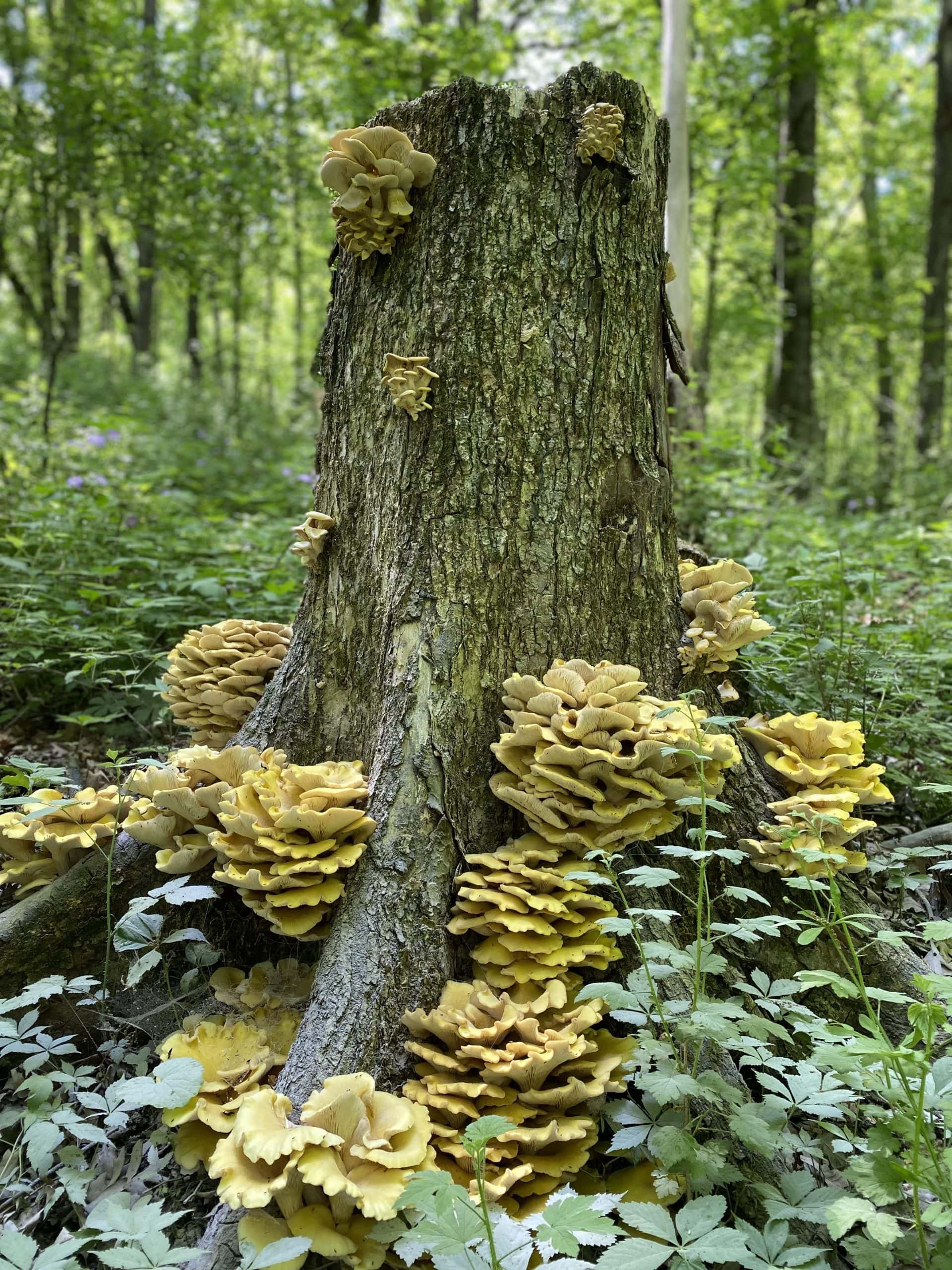
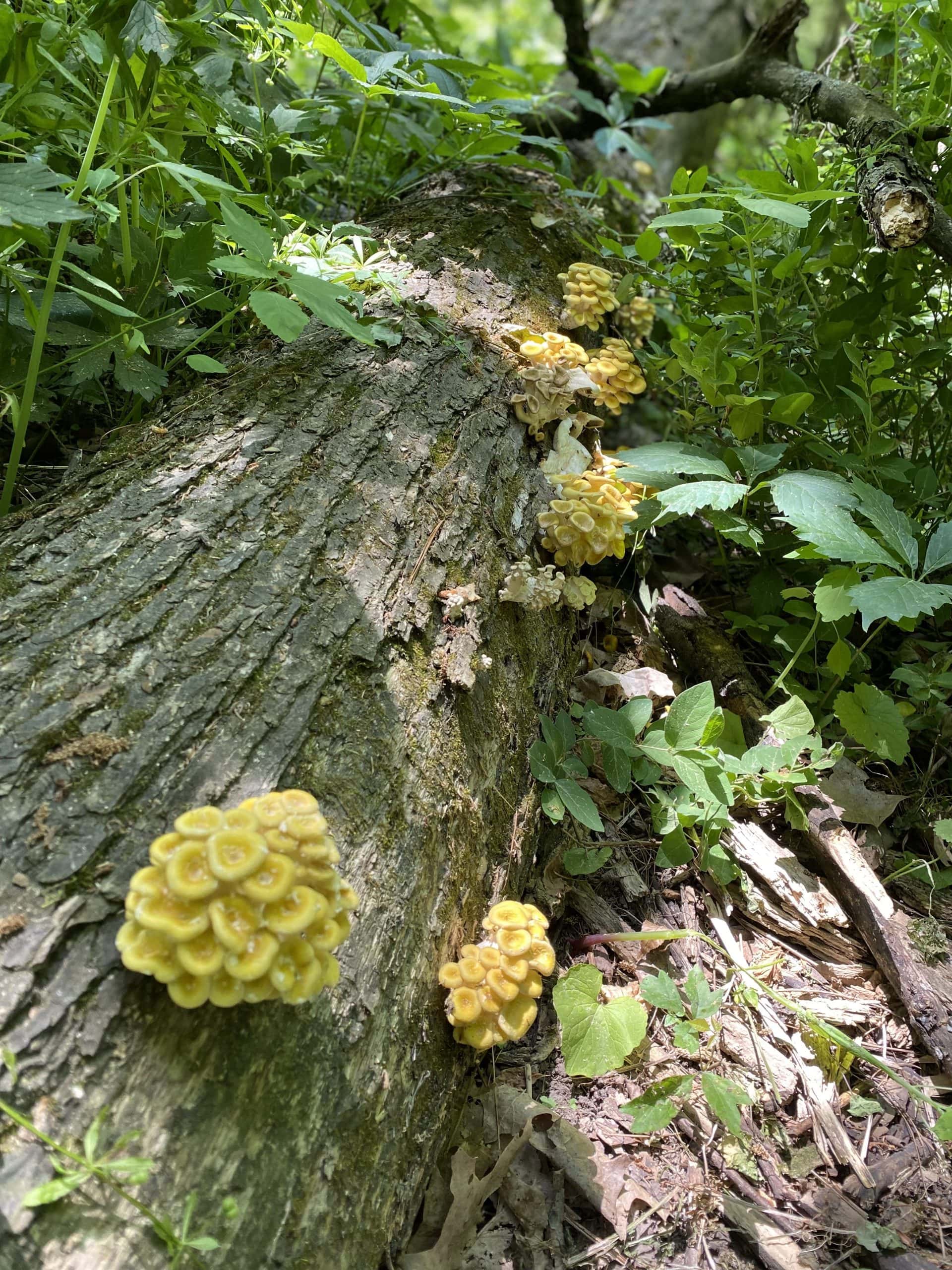
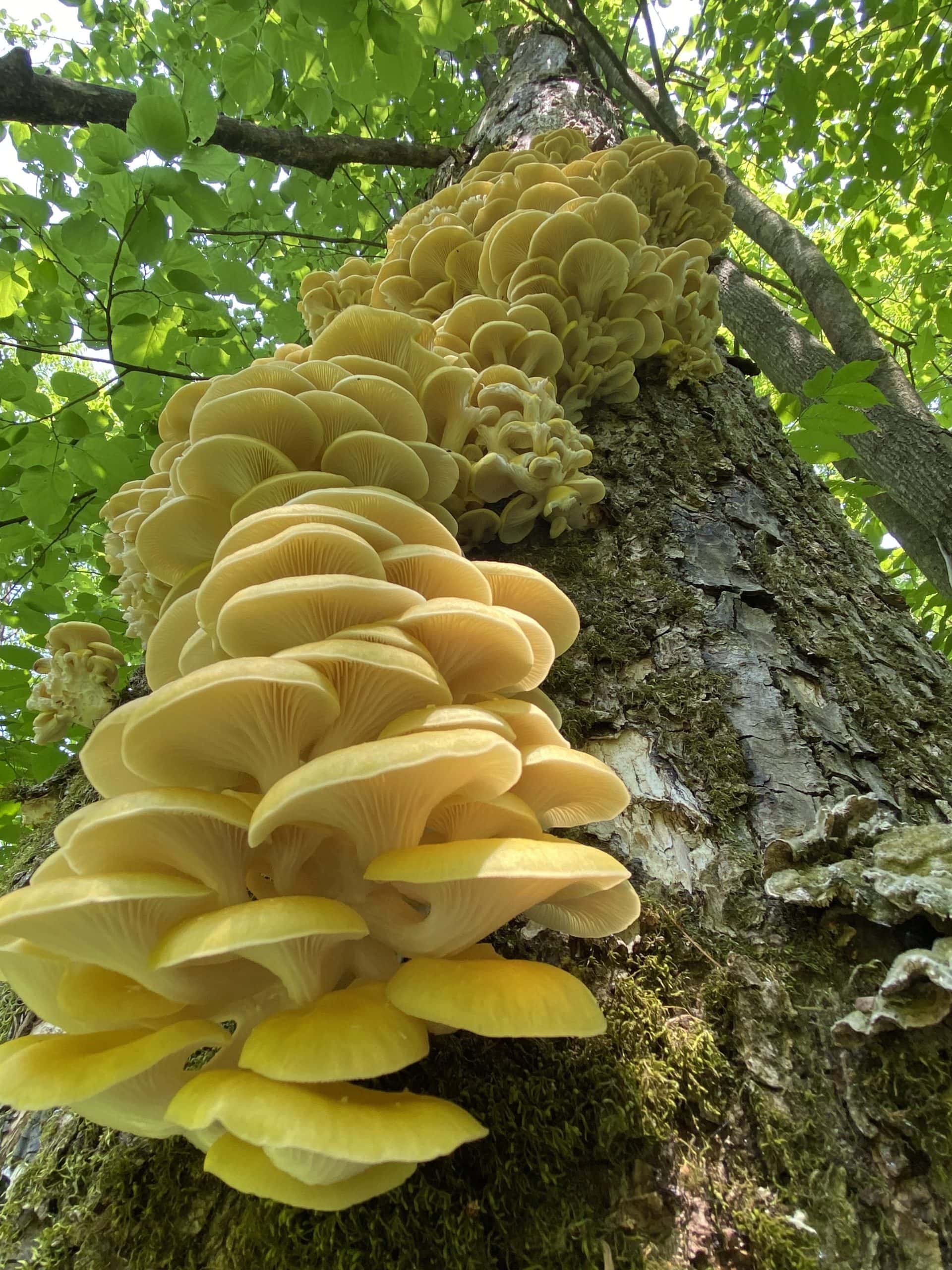
Mycologist Aishwarya Veerabahu regularly walks the forests near her home in Wisconsin, marvelling at the myriad shapes and colours of mushrooms, sometimes foraging for something to bring home and sauté in garlic and butter. It’s a landscape she knows well, but in the last few years, she’s been noticing a worrying and unfamiliar presence: vibrant yellow, tightly clustered invasive making itself at home. 

Known as golden oyster, it’s a ’shroom completely altering native fungi communities in North America.

“Golden oysters will grow in an order of magnitude more than any other mushroom that you’d see. If you come up on a log with golden oysters on it, there’s always a ton of them, multiple clusters,” Veerabahu said.

The popular mushrooms, often found on menus and supermarket shelves, are native to forests in Russia and Asia. They were first brought to North America in the early 2000s for cultivation, and took to the forests by 2010, expanding their numbers and range rapidly.

“There are some times where I’ve gone through a forest and teared up because I know that there are other mushrooms that were in that wood that aren’t there anymore,” Veerabahu said. “It can be a very sad thing when now it’s just dominated by this one species.”

A researcher at the University of Madison-Wisconsin, Veerabahu published a study last August that used data from citizen scientists to confirm the trend she’s been seeing locally. Golden oyster mushrooms — scientific name Pleurotus citrinopileatus— are quickly invading North America, including Ontario. 

And, scientists say, a booming home-growing trend may be accelerating their spread into forests and impacting biodiversity.

Golden oysters have been found in 25 states, “after escaping cultivation” of commercial growers and hobbyists. They’ve made their way to Ontario, where there have been more than 80 sightings logged on the iNaturalist app of the clusters growing out of dead hardwood in forests, provincial parks and even residential neighbourhoods. 

While most golden oysters in Canada are still concentrated closer to the border with the United States, the species has already travelled as far north as Magnetawan, Ont., near Parry Sound, and is increasingly established around Georgian Bay, on Lake Huron. The speed and distance of its spread has been surprising, Veerabahu said.

“It has thoroughly been unleashed and rapidly spread over the course of a short decade,” she said, adding that the mushrooms have more recently appeared in Quebec. “The best thing that we can do now is to try and prevent it from getting to new regions.” 

Provincial invasive species regulations don’t capture golden oyster mushrooms

Cassidy Mailloux is a guide at the Ojibway Prairie Complex in Windsor, Ont., who takes guests through the nature reserves year-round. She’s also working on a biodiversity study of the region’s native mushrooms as part of her master’s degree at the University of Windsor and has posted golden oyster sightings on iNaturalist, observations that helped inform Veerabahu’s study.

“We’ve only seen it in one of our parks out of the entire complex … and that’s one of our heavily foot-trafficked and most travelled parks,” she said, adding that this is a good sign that the invasion “hasn’t fully taken off yet.”

Still, she worries about the effect of invasive golden oysters on rarer species of fungi, such as the coral pink marulius, which is uncommonly reported but in large abundance in the Ojibway Prairie Complex. 

“I’m worried the golden oyster mushroom might take precedence,” Mailloux said, given golden oysters are an aggressive species that can grow quickly and prolifically in many kinds of wood and even sawdust — unlike some native species that require specific conditions to thrive. Both the city and her organization are still trying to figure out the best way to manage the invasive — and say visitors documenting sightings can inform this work. 

“Encouraging citizens to upload these observations can really help management and our ecosystem,” Mailloux said, “and just keeping a track on how bad it might be getting in the area.”

Despite the threat, the Government of Ontario has not added live oyster mushrooms to its prohibited or restricted invasive species lists, which would make it illegal to import, buy, sell — or sometimes even possess — an ecologically harmful strain.

Without this regulation, Veerabahu said, live cultures continue to be transported across borders. And, she said once golden oysters colonize an area, fewer other unique fungal species will be found there. The communities that do exist are also entirely changed. 

“Let’s say in an uncolonized dead tree, you had a nice, rich community of fungi A, B, C, D, E. Once golden oyster colonizes, now it’s golden oyster and fungi X, Y, Z,” Veerabahu said. 

This makes her concerned about a domino effect because fungal communities are primary wood decomposers of forests, playing an important role in cycling nutrients and storing carbon. “The identity of which species are able to coexist in that space is changing.” 

Monica Liedtke, terrestrial invasive plant coordinator for the Invasive Species Centre, in Sault St. Marie, Ont., agreed. She told The Narwhal via email that non-native invasive fungi can significantly disrupt Ontario’s ecosystems and environmental processes that have developed over thousands of years.

“When non-native invasive fungi establish, they can interfere with important symbiotic relationships between native fungi, trees and plants,” Liedtke told The Narwhal. Golden oysters can quicken the rate of wood decay, which then impacts the birds and bugs that use dead and dying trees for homes and food. “Over time, these disruptions can affect biodiversity across the entire ecosystem.”

Meanwhile, climate change is creating warmer conditions that will make Ontario even more hospitable to these mushrooms, allowing them to expand their range. Veerabahu and her team used a climate prediction model developed by NASA to predict what might happen in the next 15 years. The model predicted that the North American region climatically suitable for golden oyster mushrooms to grow would almost double. 

Grow-your-own mushroom kits threaten Ontario forests

Kyle McLoughlin, an arborist and supervisor of forest planning and health for the City of Burlington, said the reason he fears golden mushrooms is exactly why they’re popular among amateur growers.

“From an ecological perspective, they don’t have a niche. They can go anywhere. They’re very wide-ranging. They’re very comfortable in a lot of different types of wood and a lot of different environments,” McLoughlin said of golden oysters. “This is also why you can grow them so well.”

Kits with detailed growing instructions are readily available on the internet, with prices between $20 and $40. These are a “major source of their invasion,” McLoughlin said. 

“It’s literally being introduced into people’s homes and their properties through grow kits,” McLoughlin said. “We shouldn’t be selling people potential invasive species to bring into their homes.”

Still, grow kits remain widely sold with little public awareness of the risks. Consumers are often not warned when they buy a grow kit that tossing spent soil onto the compost pile, or leaving a kit outdoors, could unintentionally help an invasive spread.

There are some ways people can help slow the spread if they spot oyster mushrooms. If someone sees a log on their own property pop with golden oysters for the first time, it could be helpful to burn it, Veerabahu explained. People can also forage the mushrooms from forested areas, collecting them in closed containers to prevent spores from spreading.

The challenge is to muster enough public awareness and political will before things get out of control.

“It’s kind of like cockroaches. Once you start to see them, you know there’s a heck of a lot more in your walls,” McLoughlin said. “They are putting billions of spores into the air when they’re fruiting. And this is happening constantly.”

Some companies that have sold these kits around the world, like Far West Fungi, North Spore and MycoPunks have since discontinued some products due to concern. In a blog post titled “Yellow Oyster Disaster Zone,” MycoPunks wrote: “No shade intended on any other vendors who choose to keep selling golden oyster kits … we’ve all got our own different moral codes, but it’s not something we feel able to do in good conscience any more.”

But, given a lack of regulation in the province, it’s still easy to import kits from within Canada or around the world to grow in Ontario.

“Gardeners [and] hobby farmers should carefully consider the species they are cultivating. Choosing native species helps to reduce ecological risk,” Liedtke, from the Invasive Species Centre, said. Some kits sell species such as lion’s mane or chestnut mushrooms, which are both edible and native to Ontario. 

For those who are growing golden oysters, the Invasive Species Centre advises that used grow kits should be sealed in a garbage bag and left in the sun for several days to a week; this process, called solarization, helps kill remaining spores and fungal material. Then, the bag should be disposed of in municipal waste — not compost. 

“Neither the producer nor the consumer wants to be part of that spread,” Veerabahu said. “The mushroom grow kits are a huge point of concern. They’re essentially a live culture that can be transported anywhere, but they’re not being regulated and I’ll never blame hobby mushroom growers for that.”

The post Spore loser: the DIY mushroom-growing trend invading Ontario forests appeared first on Great Lakes Now.

Original Article

Great Lakes Now

Great Lakes Now

https://www.greatlakesnow.org/2026/03/31/the-diy-mushroom-growing-trend-invading-ontario-forests/

The Narwhal

By Leah Borts-Kuperman, The Narwhal

The Great Lakes News Collaborative includes Bridge MichiganCircle of BlueGreat Lakes NowMichigan Public and The Narwhal who work together to bring audiences news and information about the impact of climate change, pollution, and aging infrastructure on the Great Lakes and drinking water. This independent journalism is supported by the Charles Stewart Mott Foundation.

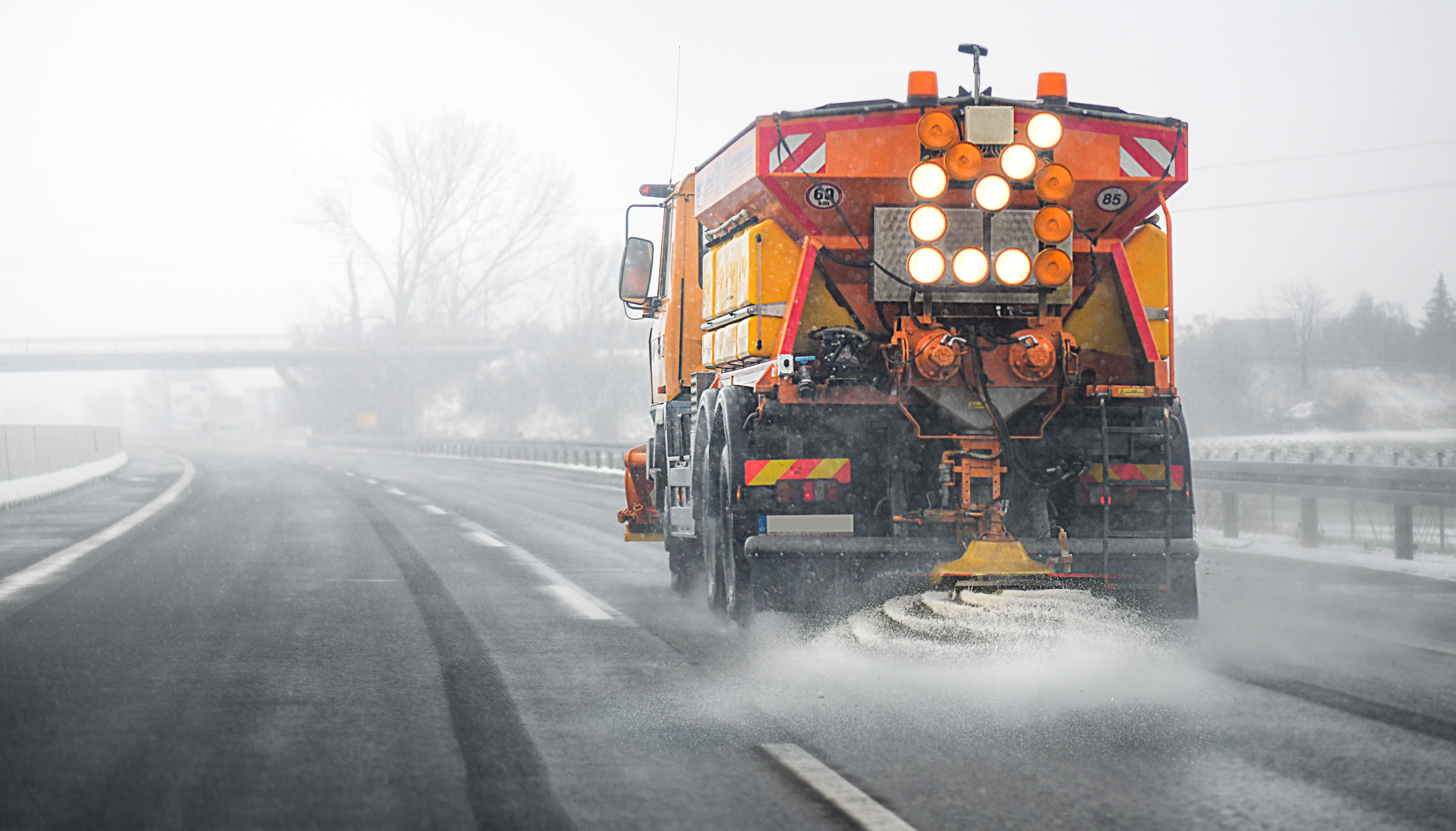
In February 2025, a small freshwater stream in Newmarket, Ont., was saltier than the ocean. The source? Winter road salt, washing off local parking lots and highways into the Lake Simcoe watershed.

As a result, concentrations of chloride — one of two minerals that make up table salt — in Western Creek exceeded 26,000 milligrams per litre of water. Meanwhile seawater typically sits at 19,400 milligrams of chloride per litre of water, according to the local conservation authority

For Christopher Wellen, an environmental scientist focused on hydrology and associate professor at Toronto Metropolitan University, this finding was not surprising: the Simcoe region, and many others across southern Ontario, have big salt problems. 

“It washes away from the roads, but it doesn’t just disappear,” Wellen said. “It goes where the water goes — that’s our groundwater, it’s our lakes, it’s our rivers — and has effects there.” 

For decades, the concentration of road salt in Lake Simcoe has been on the rise: 120,000 tonnes of it are used by communities in the watershed annually, Lake Simcoe Region Conservation Authority has reported. That amounts to roughly 227 kilograms of salt per person in the region every year.

Heavy salting in winter is not unusual, but Lake Simcoe has been monitored for decades, so it can act as a case study of exactly what happens when this much road salt is being applied. And it illuminates the environmental impact across the province where high-traffic areas, surrounded by cities, towns and a dense network of roadways, are inundated with salt.

Road salt and fresh water

Road salt is primarily made up of sodium chloride and is used to remove ice from roadways in the winter. But oversalting has widespread impacts on ecosystems, harming aquatic life and depleting biodiversity year-round.

“Every organism that lives in streams and rivers and lakes … has tolerances for all sorts of things like temperature fluctuations and salt fluctuations,” Wellen said. “If the water becomes too salty, they can find it really difficult to reproduce and thrive and continue to exist, basically.”

All this chloride does not break down, or simply wash away. It accumulates over time. 

“It’s quite possible that, if things don’t change, the food web could be quite affected,” Wellen added. The problem starts at the bottom of the food chain, he said, and makes its way up.

Since fish are mobile, they can generally avoid areas with high salt concentrations. The pronounced impacts are on the more stationary species, like critters that live in riverbeds. They also make up the base of the food chain, so when they are unable to survive the salty water, organisms higher up lose their food supply.

The Lake Simcoe Region Conservation Authority says on its website that winter salt has become a topic of “great concern” in the watershed, particularly because there isn’t an effective way to remove it. And Lake Simcoe, the largest lake wholly in southern Ontario, supplies drinking water for hundreds of thousands of residents — with hundreds of thousands more relying on groundwater aquifers in the watershed.

How salty is Lake Simcoe?

In Canada, the federal government provides long- and short-term guidelines for exposure to chloride before aquatic life is affected. At a concentration of 640 milligrams of chloride per litre of water for as little as 24 hours, aquatic life could be severely affected. For longer-term exposure, concentrations beyond 120 milligrams of chloride​ per litre of water would see harm to aquatic life such as a fish species declining over time.

David Lembcke, director of watershed science and monitoring at Lake Simcoe Region Conservation Authority, jokingly equates the latter threshold to a pack-a-day cigarette habit: “You’re going to have long-term impacts from that. There are some sensitive biota in the lake that will probably have reproductive, developmental, long-term impacts at those levels.” 

The authority produced a report more than a decade ago that already showed chloride concentrations were impacting these aquatic species in 64 per cent of the Lake Simcoe watershed.

In the lake itself, the concentration in February was around 61 milligrams of chloride​ per litre of water, Lembcke said, which is about half of the long-term exposure guideline set by the province. But that level has been steadily increasing by 0.7 milligrams of chloride per litre of water annually, according to the conservation authority. Elsewhere in the watershed, especially in tributaries in urban areas like Hotchkiss Creek and West Holland River, concentrations regularly exceed both guidelines, Lembcke said, and long after winter ends.

“We have this incredibly persistent, relentless increasing trend in lake [salt] concentrations,” Lembcke said. “Certainly the potential is there: if we don’t curb the amount of salt that we’re using, drinking water could be impacted.”

For drinking water, the Ontario objective is 250 milligrams of chloride​ per litre of water, but this is based on taste, not health considerations. For people who need to limit their sodium intake for things like high blood pressure, or kidney or liver diseases, Health Canada recommends that salt in water shouldn’t exceed 20 milligrams per litre.

In Waterloo, Ont., groundwater and consequently drinking water has already been impacted; given high concentrations in some areas, the city has to mix groundwater from different wells to average out chloride levels across the region. They’ve campaigned hard for curbing road salt use, since current water and wastewater treatment doesn’t remove salt, and the municipality explains on their website that removing it requires expensive, energy-intensive treatment. And that would mean higher water costs for the community.

How do you solve a problem like road salt?

While some communities look to solutions such as replacements for road salt, they also carry their own challenges: alternatives like beet juice or sodium acetate can be prohibitively expensive, and their long-term effects on ecosystems aren’t entirely known. 

Some experts and activists are looking to stop the problem at its source. Commercial parking lots are among the biggest culprits for oversalting, likely since they are liable for any injury that occurs on snow or ice on their properties.

“The problem that we keep seeing is that small businesses or big parking lots are oversalting, and it’s a perverse incentive structure where they feel like they have to do it to protect themselves against the slip and fall [lawsuits],” Jonathan Scott, executive director of the Rescue Lake Simcoe Coalition, said. Scott is chair of the Nottawasaga Valley Conservation Authority and a Bradford West Gwillimbury councillor.

“It’s not any safer. It’s worse for the environment. It’s worse for small businesses in terms of increased costs,” he said.

Proponents including Scott and Lembcke are arguing to modernize the law by offering limited liability, or a stronger defence against being sued, to those businesses who get an accepted certification such as Smart About Salt, and learn how to implement best salting practices for public safety and the environment alike. 

“If you’re following best practices and if you’re doing the right thing as a winter maintenance operator, that should be a defence for the operator and the property owner against slip and fall claims,” Scott said. “It seems like such a simple pro-business, pro-environment legal reform that wouldn’t cost us anything.” 

Scott points to New Hampshire, a state with comparable winter conditions to Ontario, as an example. The state reduced its salt pollution by 25 to 45 per cent by granting limited liability protection to certified commercial salt applicators. 

Wellen and his team have done modelling studies to see what would happen if a legal reform like this was adopted in the Lake Simcoe area; he said the results are promising, finding it could decrease the concentrations in the lake significantly by the end of the century.

But the province, who would have to make that regulatory change, has yet to sign on.

“It seems to be one of those problems that’s entirely of our own making, in which case it should be something that we can fix,” Lembcke said. “I’m optimistic that it’s something that we can address.”

— With files from Fatima Syed

The post Winter road salt is threatening Lake Simcoe and Ontario watersheds year-round appeared first on Great Lakes Now.

Original Article

Great Lakes Now

Great Lakes Now

https://www.greatlakesnow.org/2026/03/18/winter-road-salt-is-threatening-lake-simcoe-and-ontario-watersheds-year-round/

The Narwhal

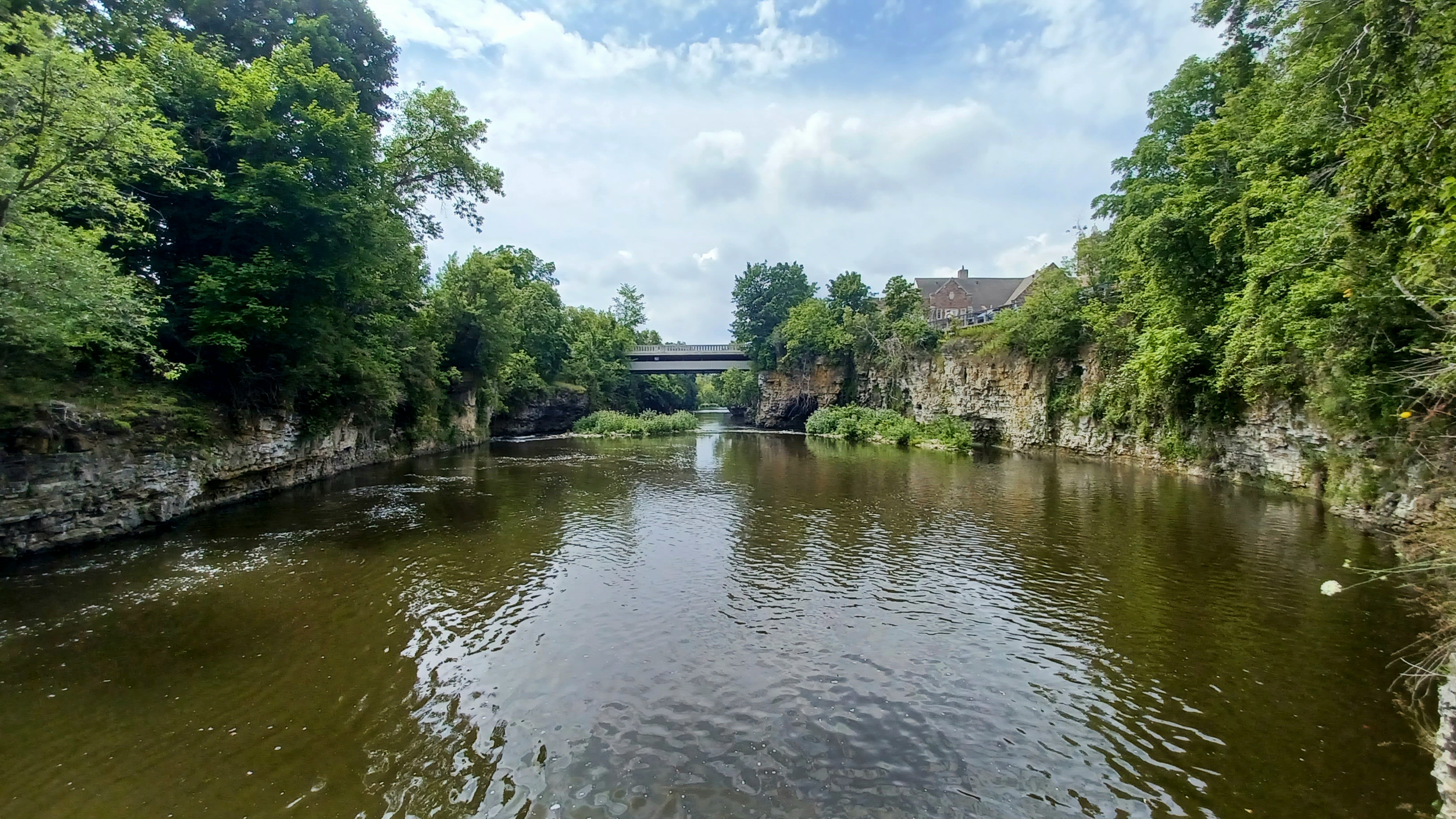
Six Nations of the Grand River is one of the most highly populated Indigenous communities in Canada with around 29,000 residents. A primary source of water is from the McKenzie Creek, which is mostly used for agricultural purposes for the Six Nations and non-Indigenous communities throughout the watershed. 

According to a recent study, Ontario’s McKenzie Creek watershed is likely to face increasing levels of water scarcity throughout the rest of the century. This research examines how water scarcity, due to factors like climate change, land use and water consumption, will have impacts for agricultural production for the Six Nations.

“I live on reserve and it’s just something that you don’t really think about on a daily basis until you’re actually living it, where you see your appliances die early because of the hardness of the water,” said Six Nations Senior Manager of the Environment Sara Curley-Smith.

Of the water available for Six Nations, the people here also face ongoing challenges with water quality. This compounds the effects of water insecurity.

“You have the majority of families at Six Nations that are water insecure already, so if they’re water insecure in good times, you can’t imagine what’s coming our way in the next 50 years,” said emeritus professor of Indigenous Studies at McMaster University Dawn Martin-Hill, who was also involved with the study.

Martin-Hill leads the Ohneganos Indigenous Water Research Program, which the study was a part of. She is also part of an initiative to create a Haudenosaunee Environmental Research Institute that centers Indigenous knowledge to better understand these issues. Part of her interview is also featured in the article, “Water is Life, Six Nations lead international approach to long-standing water insecurity.”

“In the design of the project we consulted with the environmental folks at Six Nations, the fish and wildlife folks, leaders, traditional knowledge holders, we just got a sense of what their concerns and priorities were,” Martin-Hill said. “Climate change came up quite a bit because cities and towns have access to that information and modeling, whereas reserves and reservations do not.”

Throughout the project process, Indigenous traditional knowledge holders helped guide the scientists on where and when to conduct the research, Martin-Hill said.

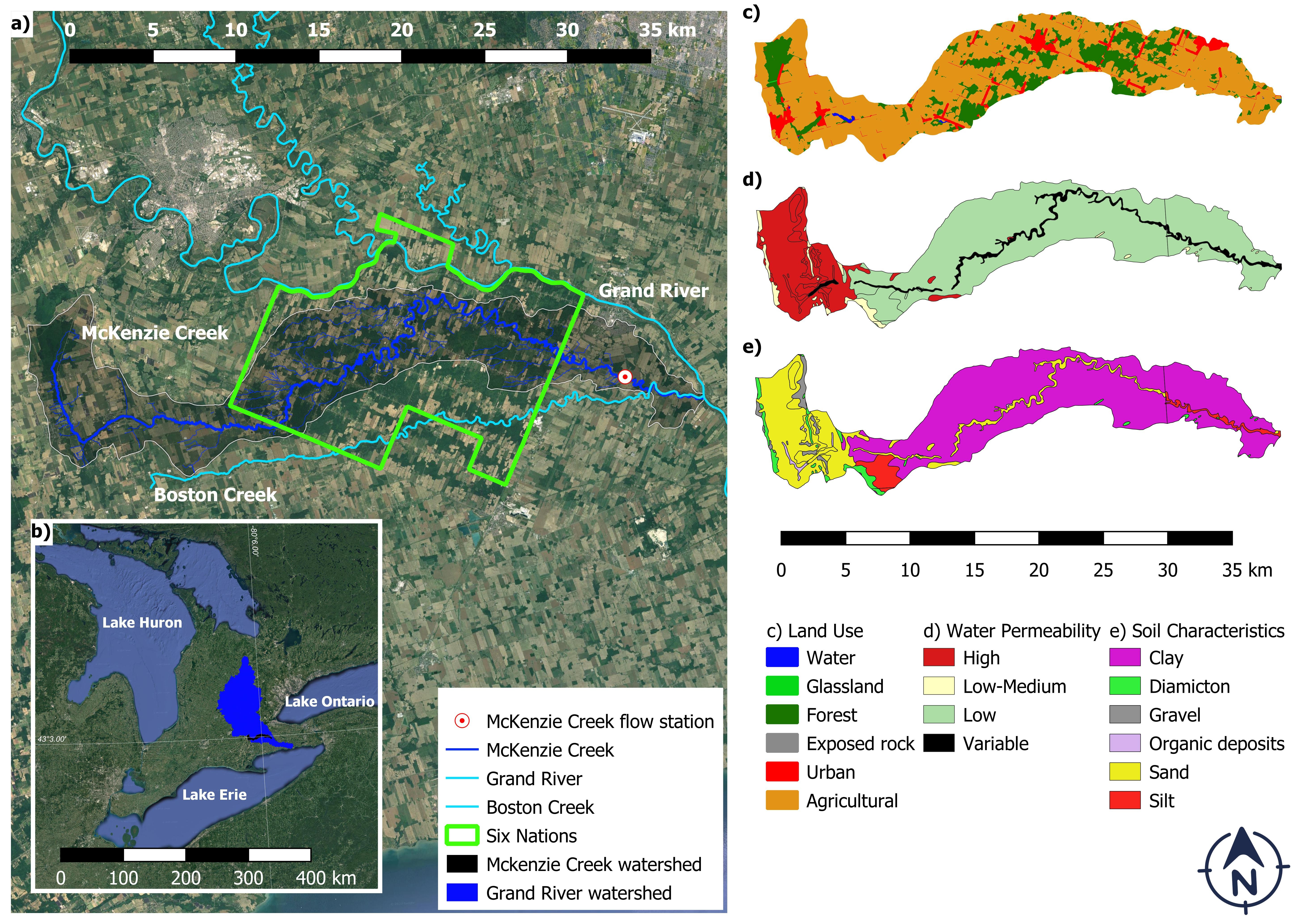
This led to a focus on the McKenzie Creek subwatershed, which was understudied compared to the Grand River watershed, according to Tariq Deen, lead author of the study at McMaster University.

Map of the study area for “Blue and Green Water Scarcity in the McKenzie Creek Watershed of the Great Lakes Basin.” Credit: Dr. Tariq Deen

“That’s why that project was so beneficial in terms of process, because traditional ecological knowledge was the foundation of it,” said Smith.

Traditional ecological knowledge incorporates Western and Indigenous knowledge together in dialogue, Martin-Hill said, to better understand the environment.

The McMaster University study based its projections of water scarcity off of the Intergovernmental Panel on Climate Change (IPCC) Representative Concentration Pathway scenarios 4.5 and 8.5, which signify medium and high greenhouse gas emission and climate warming levels. 

The study by hydrologists and geographers looks at the projected levels for two types of water; blue and green water. While the study anticipates increased levels of water scarcity for both types of water in the future, Six Nations has already experienced these challenges. 

Blue water is fresh water that can be extracted for human activities.

To account for blue water scarcity, the study used two scenarios. The first was a low estimate scenario using monthly agricultural water consumption patterns. The second scenario estimated higher water consumption using the maximum amount of water that could be extracted, assuming this would occur with warming climate trends and an increase in agriculture.

“Under that scenario, we saw that blue water scarcity would increase to a level where it would negatively affect the ecosystem,” said Deen.

Another study on the Grand River watershed from the University of Guelph found similar trends in blue water scarcity considering increasing water demands due to climate change.

“This is a common trend where if you have more withdrawals and more agriculture use, there would be some scarcity that would be coming in,” said author and University of Guelph associate professor in water resources engineering Prasad Daggupati.  

However, water use data for the Six Nations was not included in the water scarcity estimates of the McMaster University study. This is because the Grand River Conservation Authority, who manages the McKenzie Creek watershed, does not collect water use data for the Six Nations. This means the water scarcity levels projected in both blue water scenarios are a low estimate.

“Under climate change scenarios, we saw that green water scarcity would increase throughout the next century,” Deen said.

Similar future patterns for green water scarcity were also found in the University of Guelph study, which used the same Representative Concentration Pathways to account for future impacts of climate change. 

Green water is the type of water that remains in the soil for plant growth.

“Moving into the future, obviously with increased precipitation, there would be more evapotransportation happening up, which would result in having less soil water available, which is green water,” said Daggupati.

Evapotranspiration is the process where water on land and in plants evaporates into the air.  

On top of agriculture and climate factors, corporations like Nestlé and BlueTriton have a history of extracting water without consulting and securing consent from Six Nations.

“We believe there are good veins of water that are much deeper than what wells were dug to, and that’s the water that Nestlé had been taking which we didn’t know about – 3.6 million liters every day for the last decade,” Martin-Hill said. 

The Six Nations pursued legal action and were able to get Nestlé and BlueTriton to stop their water extraction operations under previous laws requiring Indigenous consultation.

“The problem however has been made much worse because of the Bill 5 that the new federal government and Doug Ford passed so that they can bypass any kind of consultation for development, such as water extraction,” Martin-Hill said. 

According to Smith, this is a big issue because 70% of the community relies on groundwater. This issue is further exacerbated by the potential for wells running dry and the inability to support the agriculture that a lot of people at Six Nations rely on.

“I think our people have a problem with the way Western science compartmentalizes and silos things such as water,” Martin-Hill said. “We see ourselves as a part of the natural world.”

The post Climate change is worsening water crisis for Canada’s largest First Nations population appeared first on Great Lakes Now.

Original Article

Great Lakes Now

Great Lakes Now

https://www.greatlakesnow.org/2026/03/04/climate-change-is-worsening-water-crisis-for-canadas-largest-first-nations-population/

Mia Litzenberg, Great Lakes Now

$18M approved in bill credits for Pennsylvania customers in ‘forever chemicals’ settlement

Catch the latest updates on what’s happening with PFAS in the Great Lakes region. Check back for more PFAS news roundups every other week on our website.


The Pennsylvania Public Utility Commission recently approved a proposal from the Pennsylvania-American Water Company (PAWC) to issue over $18 million in bill credits to customers.

Read Now at Great Lakes Now.

Original Article

Great Lakes Now

Great Lakes Now

https://www.greatlakesnow.org/2025/11/more-than-18m-approved-in-bill-credits-for-pennsylvania-customers-in-forever-chemicals-settlement/

Lisa John Rogers, Great Lakes Now

Ontario is subsidizing an energy project in Georgian Bay despite expert advice

By Fatima Syed, The Narwhal

The Great Lakes News Collaborative includes Bridge Michigan, Circle of Blue, Great Lakes Now at Detroit PBS, Michigan Public and The Narwhal who work together to bring audiences news and information about the impact of climate change, pollution, and aging infrastructure on the Great Lakes and drinking water.

Read Now at Great Lakes Now.

Original Article

Great Lakes Now

Great Lakes Now

https://www.greatlakesnow.org/2025/11/ontario-is-subsidizing-an-energy-project-in-georgian-bay-despite-expert-advice/

The Narwhal

What’s going on in Wasaga Beach? Profit, piping plovers and an Ontario town’s complicated future

By Fatima Syed, The Narwhal

The Great Lakes News Collaborative includes Bridge Michigan, Circle of Blue, Great Lakes Now at Detroit PBS, Michigan Public and The Narwhal who work together to bring audiences news and information about the impact of climate change, pollution, and aging infrastructure on the Great Lakes and drinking water.

Read Now at Great Lakes Now.

Original Article

Great Lakes Now

Great Lakes Now

https://www.greatlakesnow.org/2025/09/wasaga-beach-ontario-park-plan/

Fatima Syed, The Narwhal

Why we don’t bike like the Dutch — yet

How did you get to work today?

Maybe, like 14% of Americans, you didn’t have to go anywhere because you work from home. But most people do need some form of transportation to earn a living. By far the biggest group is the 69% of people who drive to work alone.

Read Now at Great Lakes Now.

Original Article

Great Lakes Now

Great Lakes Now

https://www.greatlakesnow.org/2025/07/why-we-dont-bike-like-the-dutch-yet/

Sean Ericson, Great Lakes Now

How Ontario could have cracked down on Chemical Valley pollution — but chose not to

By Emma McIntosh, The Narwhal

The Great Lakes News Collaborative includes Bridge Michigan, Circle of Blue, Great Lakes Now at Detroit PBS, Michigan Public and The Narwhal who work together to bring audiences news and information about the impact of climate change, pollution, and aging infrastructure on the Great Lakes and drinking water.

Read Now at Great Lakes Now.

Original Article

Great Lakes Now

Great Lakes Now

https://www.greatlakesnow.org/2025/07/how-ontario-could-have-cracked-down-on-chemical-valley-pollution-but-chose-not-to/

The Narwhal

Thunder Bay is bringing its Great Lake shoreline back

My first glimpse of Lake Superior, in all its lore-and-song-inspiring glory, is a blurry one from the backseat of a taxi driving through Thunder Bay. 

Superior, or Gitchigumi, which means Great Lake in Anishinaabemowin, is the largest of those lakes, and the second largest lake in the world, containing 10 per cent of the planet’s fresh surface water.

Read Now at Great Lakes Now.

Original Article

Great Lakes Now

Great Lakes Now

https://www.greatlakesnow.org/2025/05/thunder-bay-is-bringing-its-great-lake-shoreline-back/

Fatima Syed, The Narwhal

Buses vs. Trains: The Future of Public Transit in the Great Lakes Region

Cities around the Great Lakes region are trying to make transportation cheaper for riders and more environmentally friendly by expanding their public transit networks. Two modes that are often pitted against each other are light rail and bus rapid transit (BRT). While not every BRT line meets the same standards, in general, they have been upgraded for higher capacity and speed, although they have fewer stations.

Read Now at Great Lakes Now.

Original Article

Great Lakes Now

Great Lakes Now

https://www.greatlakesnow.org/2025/05/buses-vs-trains-the-future-of-public-transit-in-the-great-lakes-region/

Sean Ericson, Great Lakes Now

Meet the people trying to keep a prehistoric fish alive

By Leah Borts-Kuperman, The Narwhal

The Great Lakes News Collaborative includes Bridge Michigan, Circle of Blue, Great Lakes Now at Detroit PBS, Michigan Public and The Narwhal who work together to bring audiences news and information about the impact of climate change, pollution, and aging infrastructure on the Great Lakes and drinking water.

Read Now at Great Lakes Now.

Original Article

Great Lakes Now

Great Lakes Now

https://www.greatlakesnow.org/2025/04/meet-the-people-trying-to-keep-a-prehistoric-fish-alive/

The Narwhal

Can these invasive reeds be stopped?

Invasive phragmites are overwhelming Ontario’s wetlands, choking out native plants and wildlife. Towering up to 15 feet (5 meters) tall and spreading in dense clusters, this plant outcompetes native species, disrupts ecosystems, and threatens wildlife. But a team of dedicated experts and community members are fighting back.

Wetland ecologist Janice Gilbert is leading efforts at Kettle and Stony Point First Nation to combat phragmites.

Read Now at Great Lakes Now.

Original Article

Great Lakes Now

Great Lakes Now

https://www.greatlakesnow.org/2025/04/can-these-invasive-reeds-be-stopped/

Great Lakes Now

Fish, mines and Indigenous Rights ensnared in court case in northern Ontario

By Emma McIntosh, The Narwhal

Emma and photographer Christopher Katsarov Luna spent four days in northwestern Ontario, including visits to White Lake and Netmizaaggamig Nishnaabeg.

The Great Lakes News Collaborative includes Bridge Michigan, Circle of Blue, Great Lakes Now at Detroit PBS, Michigan Public and The Narwhal who work together to bring audiences news and information about the impact of climate change, pollution, and aging infrastructure on the Great Lakes and drinking water.

Read Now at Great Lakes Now.

Original Article

Great Lakes Now

Great Lakes Now

https://www.greatlakesnow.org/2025/04/fish-mines-and-indigenous-rights-ensnared-in-court-case-in-northern-ontario/

The Narwhal

What would the Great Lakes region be like with bullet trains?

A few months ago, I was riding on Amtrak’s new Borealis line from St. Paul, Minn., to Chicago. The train was packed that day, and the new line has proved popular.

My coach seat was much nicer than any airline. Plus, I didn’t have to go through security.

Read Now at Great Lakes Now.

Original Article

Great Lakes Now

Great Lakes Now

https://www.greatlakesnow.org/2025/03/what-would-the-great-lakes-region-be-like-with-bullet-trains/

Sean Ericson, Great Lakes Now

How Trump’s trade war could impact US electricity prices — and state climate plans

By Zoya Teirstein

This story was originally published by Grist. Sign up for Grist’s weekly newsletter here.

On Tuesday, President Donald Trump initiated a trade war with Canada and Mexico, America’s two largest trading partners. Following through on weeks of threats, he imposed 25 percent tariffs on imported goods from Mexico and Canada and a lower 10 percent tariff on imports of Canadian energy resources.

Read Now at Great Lakes Now.

Original Article

Great Lakes Now

Great Lakes Now

https://www.greatlakesnow.org/2025/03/how-trumps-trade-war-could-impact-us-electricity-prices-and-state-climate-plans/

Grist

Nibi Chronicles: Invisible Borders

“Nibi Chronicles,” a monthly Great Lakes Now feature, is written by Staci Lola Drouillard. A Grand Portage Ojibwe direct descendant, she lives in Grand Marais on Minnesota’s North Shore of Lake Superior. Her nonfiction books “Walking the Old Road: A People’s History of Chippewa City and the Grand Marais Anishinaabe” and “Seven Aunts” were published 2019 and 2022, and the children’s story “A Family Tree” in 2024.

Read Now at Great Lakes Now.

Original Article

Great Lakes Now

Great Lakes Now

https://www.greatlakesnow.org/2025/02/nibi-chronicles-invisible-borders/

Staci Lola Drouillard, Great Lakes Now

Tackling environmental racism in Chemical Valley

By Emma McIntosh, The Narwhal

The Great Lakes News Collaborative includes Bridge Michigan, Circle of Blue, Great Lakes Now at Detroit PBS, Michigan Public and The Narwhal who work together to bring audiences news and information about the impact of climate change, pollution, and aging infrastructure on the Great Lakes and drinking water.

Read Now at Great Lakes Now.

Original Article

Great Lakes Now

Great Lakes Now

https://www.greatlakesnow.org/2025/02/tackling-environmental-racism-in-chemical-valley/

The Narwhal

Life on the frontlines of Ontario’s critical mineral boom

By Emma McIntosh, The Narwhal

Photography by Christopher Katsarov Luna

The Great Lakes News Collaborative includes Bridge Michigan, Circle of Blue, Great Lakes Now at Detroit PBS, Michigan Public and The Narwhal who work together to bring audiences news and information about the impact of climate change, pollution, and aging infrastructure on the Great Lakes and drinking water.

Read Now at Great Lakes Now.

Original Article

Great Lakes Now

Great Lakes Now

https://www.greatlakesnow.org/2025/01/life-on-the-frontlines-of-ontarios-critical-mineral-boom/

The Narwhal

The past, present and future of a changing Lake Ontario

By Daniel Macfarlane

This story is an excerpt from Daniel Macfarlane’s book The Lives of Lake Ontario: An Environmental History.

The Great Lakes News Collaborative includes Bridge Michigan, Circle of Blue, Great Lakes Now at Detroit PBS, Michigan Public and The Narwhal who work together to bring audiences news and information about the impact of climate change, pollution, and aging infrastructure on the Great Lakes and drinking water.

Read Now at Great Lakes Now.

Original Article

Great Lakes Now

Great Lakes Now

https://www.greatlakesnow.org/2024/12/the-past-present-and-future-of-a-changing-lake-ontario/

The Narwhal

Spotlight on complexity of bottled water issues, as BlueTriton exits Ontario

Activist group, Water Watchers, had reason to celebrate last month when water bottler BlueTriton announced it will cease operations in Puslinch, Ontario in January, 2025. The group’s website beamed “We Won” and said the exit was a “historic win for water justice.”

To get a better understanding of the issues surrounding bottled water in Ontario, Canada, Great Lakes Now contacted Arlene Slocombe, executive director of Water Watchers and McMaster University Professor, Dawn Martin-Hill and founder of the Indigenous Studies Program at McMaster University. 

Read Now at Great Lakes Now.

Original Article

Great Lakes Now

Great Lakes Now

https://www.greatlakesnow.org/2024/12/spotlight-on-complexity-of-bottled-water-issues-as-bluetriton-exits-ontario/

Gary Wilson, Great Lakes Now

Canada is one step closer to burying nuclear waste in northwestern Ontario

By Fatima Syed, The Narwhal

The Great Lakes News Collaborative includes Bridge Michigan, Circle of Blue, Great Lakes Now at Detroit PBS, Michigan Public and The Narwhal who work together to bring audiences news and information about the impact of climate change, pollution, and aging infrastructure on the Great Lakes and drinking water.

Read Now at Great Lakes Now.

Original Article

Great Lakes Now

Great Lakes Now

https://www.greatlakesnow.org/2024/12/canada-is-one-step-closer-to-burying-nuclear-waste-in-northwestern-ontario/
The Narwhal

The fight to keep grass carp out of the Great Lakes

By Matt McIntosh, The Narwhal

The Great Lakes News Collaborative includes Bridge Michigan, Circle of Blue, Great Lakes Now at Detroit PBS, Michigan Public and The Narwhal who work together to bring audiences news and information about the impact of climate change, pollution, and aging infrastructure on the Great Lakes and drinking water.

Read Now at Great Lakes Now.

Original Article

Great Lakes Now

Great Lakes Now

https://www.greatlakesnow.org/2024/11/the-fight-to-keep-grass-carp-out-of-the-great-lakes/

The Narwhal

4 things to know about a youth-led court case against Ontario’s climate plans

By Fatima Syed, The Narwhal

The Great Lakes News Collaborative includes Bridge Michigan, Circle of Blue, Great Lakes Now at Detroit PBS, Michigan Public and The Narwhal who work together to bring audiences news and information about the impact of climate change, pollution, and aging infrastructure on the Great Lakes and drinking water.

Read Now at Great Lakes Now.

Original Article

Great Lakes Now

Great Lakes Now

https://www.greatlakesnow.org/2024/11/4-things-to-know-about-a-youth-led-court-case-against-ontarios-climate-plans/

The Narwhal

Public hearing draws on big questions about Upper Peninsula copper mining

By Izzy Ross, Interlochen Public Radio

This coverage is made possible through a partnership with IPR and Grist, a nonprofit independent media organization dedicated to telling stories of climate solutions and a just future.

In Gogebic County, on the western end of Michigan’s Upper Peninsula, towering old-growth evergreens carpet the landscape as it rolls down toward the deep blue of Lake Superior.

Read Now at Great Lakes Now.

Original Article

Great Lakes Now

Great Lakes Now

https://www.greatlakesnow.org/2024/11/public-hearing-draws-on-big-questions-about-upper-peninsula-copper-mining/

Interlochen Public Radio

Two high school students want to keep trash out of the Great Lakes. They think rivers are the key

By Fatima Syed, The Narwhal

The Great Lakes News Collaborative includes Bridge Michigan, Circle of Blue, Great Lakes Now at Detroit PBS, Michigan Public and The Narwhal who work together to bring audiences news and information about the impact of climate change, pollution, and aging infrastructure on the Great Lakes and drinking water.

Read Now at Great Lakes Now.

Original Article

Great Lakes Now

Great Lakes Now

https://www.greatlakesnow.org/2024/10/two-high-school-students-want-to-keep-trash-out-of-the-great-lakes-they-think-rivers-are-the-key/

The Narwhal

The lonely Lake Superior caribou and a lesson in limits

By Emma McIntosh, The Narwhal

Emma and photographer Christopher Katsarov Luna spent four days in northwestern Ontario, reporting from the shore of Lake Superior.

The Great Lakes News Collaborative includes Bridge Michigan, Circle of Blue, Great Lakes Now at Detroit PBS, Michigan Public and The Narwhal who work together to bring audiences news and information about the impact of climate change, pollution, and aging infrastructure on the Great Lakes and drinking water.

Read Now at Great Lakes Now.

Original Article

Great Lakes Now

Great Lakes Now

https://www.greatlakesnow.org/2024/10/the-lonely-lake-superior-caribou-and-a-lesson-in-limits/

Mila Murray

A tiny, endangered fish lies on the path of Highway 413. Canada has a plan, but no new power to protect it

By Kathryn Peiman, The Narwhal

The Great Lakes News Collaborative includes Bridge Michigan; Circle of Blue; Great Lakes Now at Detroit Public Television; Michigan Public, Michigan’s NPR News Leader; and The Narwhal who work together to bring audiences news and information about the impact of climate change, pollution, and aging infrastructure on the Great Lakes and drinking water.

Read Now at Great Lakes Now.

Original Article

Great Lakes Now

Great Lakes Now

https://www.greatlakesnow.org/2024/09/a-tiny-endangered-fish-lies-on-the-path-of-highway-413-canada-has-a-plan-but-no-new-power-to-protect-it/

The Narwhal

‘These are not your lands to give away’: 6 First Nations take Ontario to court over mining law

By Emma McIntosh, The Narwhal

The Great Lakes News Collaborative includes Bridge Michigan; Circle of Blue; Great Lakes Now at Detroit Public Television; Michigan Public, Michigan’s NPR News Leader; and The Narwhal who work together to bring audiences news and information about the impact of climate change, pollution, and aging infrastructure on the Great Lakes and drinking water.

Read Now at Great Lakes Now.

Original Article

Great Lakes Now

Great Lakes Now

https://www.greatlakesnow.org/2024/08/these-are-not-your-lands-to-give-away-6-first-nations-take-ontario-to-court-over-mining-law/

The Narwhal

Missed calls, forgotten instructions: Inside an oil spill cleanup on Toronto waterways

By Emma McIntosh, The Narwhal

The Great Lakes News Collaborative includes Bridge Michigan; Circle of Blue; Great Lakes Now at Detroit Public Television; Michigan Public, Michigan’s NPR News Leader; and The Narwhal who work together to bring audiences news and information about the impact of climate change, pollution, and aging infrastructure on the Great Lakes and drinking water.

Read Now at Great Lakes Now.

Original Article

Great Lakes Now

Great Lakes Now

https://www.greatlakesnow.org/2024/08/missed-calls-forgotten-instructions-inside-an-oil-spill-cleanup-on-toronto-waterways/

The Narwhal

‘Containment breached’: How an oil spill in northwest Toronto made its way to Lake Ontario

By Emma McIntosh, The Narwhal

The Great Lakes News Collaborative includes Bridge Michigan; Circle of Blue; Great Lakes Now at Detroit Public Television; Michigan Public, Michigan’s NPR News Leader; and The Narwhal who work together to bring audiences news and information about the impact of climate change, pollution, and aging infrastructure on the Great Lakes and drinking water.

Read Now at Great Lakes Now.

Original Article

Great Lakes Now

Great Lakes Now

https://www.greatlakesnow.org/2024/07/containment-breached-how-an-oil-spill-in-northwest-toronto-made-its-way-to-lake-ontario/

The Narwhal

Ghostly Grey Specters

An eerie sight is blossoming throughout coastal wetlands in Georgian Bay: ghostly grey specters lining the shores behind otherwise healthy-looking wetlands.

“Do you see these dead trees?” asked Patricia Chow-Fraser. The McMaster University biologist was addressing attendees of a lecture at The Water Institute at the University of Waterloo in early March.

Read Now at Great Lakes Now.

Original Article

Great Lakes Now

Great Lakes Now

https://www.greatlakesnow.org/2024/04/ghostly-grey-specters/

Andrew Reeves

Wild fish spring to life in Lake Ontario, despite dams, pollution and hatchery competitors

By Kathryn Peiman, The Narwhal

Photography by Kathryn Peiman

The Great Lakes News Collaborative includes Bridge Michigan; Circle of Blue; Great Lakes Now at Detroit Public Television; Michigan Public, Michigan’s NPR News Leader; and The Narwhal who work together to bring audiences news and information about the impact of climate change, pollution, and aging infrastructure on the Great Lakes and drinking water.

Read Now at Great Lakes Now.

Original Article

Great Lakes Now

Great Lakes Now

https://www.greatlakesnow.org/2024/04/wild-fish-spring-to-life-in-lake-ontario-despite-dams-pollution-and-hatchery-competitors/

The Narwhal

‘You start with us’: Conservation authority head has parting message for Ontario government

By Fatima Syed, The Narwhal

The Great Lakes News Collaborative includes Bridge Michigan; Circle of Blue; Great Lakes Now at Detroit Public Television; Michigan Public, Michigan’s NPR News Leader; and The Narwhal who work together to bring audiences news and information about the impact of climate change, pollution, and aging infrastructure on the Great Lakes and drinking water.

Read Now at Great Lakes Now.

Original Article

Great Lakes Now

Great Lakes Now

https://www.greatlakesnow.org/2024/04/you-start-with-us-conservation-authority-head-has-parting-message-for-ontario-government/

The Narwhal

Ontario weakens watershed protections (again) as natural resources minister gets new powers

By Fatima Syed, The Narwhal

The Great Lakes News Collaborative includes Bridge Michigan; Circle of Blue; Great Lakes Now at Detroit Public Television; Michigan Public, Michigan’s NPR News Leader; and The Narwhal who work together to bring audiences news and information about the impact of climate change, pollution, and aging infrastructure on the Great Lakes and drinking water.

Read Now at Great Lakes Now.

Original Article

Great Lakes Now

Great Lakes Now

https://www.greatlakesnow.org/2024/03/ontario-weakens-watershed-protections-again-as-natural-resources-minister-gets-new-powers/

The Narwhal

Great Lakes Moment: Gordie Howe International Bridge becomes part of binational trail system

Imagine if the world’s longest trail (located in Canada) connected people even further, into another country, via Michigan’s longest trail. That happened last month when the Windsor Detroit Bridge Authority announced that the Gordie Howe International Bridge would become part of a binational trail system. 

When the initial discussions for a potential new bridge connecting Windsor and Detroit started about a decade ago, residents of Windsor and Detroit, and a coalition of organizations, came together to envision cross-border linkages.

Read Now at Great Lakes Now.

Original Article

Great Lakes Now

Great Lakes Now

https://www.greatlakesnow.org/2024/03/great-lakes-moment-gordie-howe-international-bridge-becomes-part-of-binational-trail-system/

John Hartig

Ontario sides with Enbridge Gas in fight to connect new homes to natural gas

By Fatima Syed, The Narwhal

The Great Lakes News Collaborative includes Bridge Michigan; Circle of Blue; Great Lakes Now at Detroit Public Television; Michigan Public, Michigan’s NPR News Leader; and The Narwhal who work together to bring audiences news and information about the impact of climate change, pollution, and aging infrastructure on the Great Lakes and drinking water.

Read Now at Great Lakes Now.

Original Article

Great Lakes Now

Great Lakes Now

https://www.greatlakesnow.org/2024/02/ontario-sides-with-enbridge-gas-fight-to-connect-new-homes-to-natural-gas/

The Narwhal

Points North: Can AI Caribou Lead Us To Our Prehistoric Past?

Points North is a biweekly podcast hosted by Daniel Wanschura and Morgan Springer about the land, water and inhabitants of the Great Lakes.

This episode was shared here with permission from Interlochen Public Radio. 

At the bottom of Lake Huron there’s a ridge that was once above water.

Read Now at Great Lakes Now.

Original Article

Great Lakes Now

Great Lakes Now

https://www.greatlakesnow.org/2024/01/points-north-can-ai-caribou-lead-us-to-our-prehistoric-past/

Interlochen Public Radio

Restoring Ontario’s lost grasslands is as important as planting trees

By Emma McIntosh, The Narwhal

The Great Lakes News Collaborative includes Bridge Michigan; Circle of Blue; Great Lakes Now at Detroit Public Television; Michigan Public, Michigan’s NPR News Leader; and The Narwhal who work together to bring audiences news and information about the impact of climate change, pollution, and aging infrastructure on the Great Lakes and drinking water.

Read Now at Great Lakes Now.

Original Article

Great Lakes Now

Great Lakes Now

https://www.greatlakesnow.org/2024/01/restoring-ontarios-lost-grasslands-important-as-planting-trees/

The Narwhal

Twenty companies pledge to use all parts of Great Lakes fish by 2025

This article was republished here with permission from Great Lakes Echo.

By Shealyn Paulis, Great Lakes Echo

Fish-leather purses and wallets may make their way into Great Lakes fashion with an initiative to use 100% of commercially caught fish by 2025.

One of the latest projects of a binational Great Lakes organization is to fully use the region’s whitefish, lake trout, yellow perch, walleye and white sucker.

Read Now at Great Lakes Now.

Original Article

Great Lakes Now

Great Lakes Now

https://www.greatlakesnow.org/2024/01/twenty-companies-pledge-to-use-all-parts-of-great-lakes-fish-by-2025/

Great Lakes Echo

Science Says What? Pitcher plants feast on salamanders, unveiling a brutal side of botanical carnivory

Science Says What? is a monthly column written by Great Lakes now contributor Sharon Oosthoek exploring what science can tell us about what’s happening beneath and above the waves of our beloved Great Lakes and their watershed.

In the summer of 2017, Teskey Baldwin, a student at Ontario’s University of Guelph, was studying whether pitcher plants near water capture more insects than those farther away.

Read Now at Great Lakes Now.

Original Article

Great Lakes Now

Great Lakes Now

https://www.greatlakesnow.org/2023/12/science-says-what-pitcher-plants-feast-on-salamanders-unveiling-a-brutal-side-of-botanical-carnivory/

Sharon Oosthoek

Lake Erie is full of algae again. Southwestern Ontario’s exploding greenhouse sector won’t help

By Matt McIntosh, The Narwhal

Photography by Kati Panasiuk

This story first ran on The Narwhal, a non-profit news organization that publishes in-depth stories about Canada’s natural world.

For a couple of decades at the end of the last century, it seemed like the blue-green algae problem in Lake Erie had been solved, or at least managed, thanks to a concerted cross-border effort.

Read Now at Great Lakes Now.

Original Article

Great Lakes Now

Great Lakes Now

https://www.greatlakesnow.org/2023/12/lake-erie-is-full-of-algae-again-southwestern-ontarios-exploding-greenhouse-sector-wont-help/

The Narwhal

We’re going to need a bigger fishbowl

A tiny goldfish might look cute in a fishbowl on your shelf, but if released into the wild it can grow to a terrifying size and become a menace to the ecosystem. They eat pretty much anything and everything, root up plants causing the water to become cloudy and dark, and reproduce and grow so quickly that almost no predators can stop them.

Read Now at Great Lakes Now.

Original Article

Great Lakes Now

Great Lakes Now

https://www.greatlakesnow.org/2023/11/were-going-to-need-a-bigger-fishbowl/

Brian Owens

Canada says it can fight climate change and be major oil nation. Massive fires may force a reckoning

By Suman Naishadham and Victor Caivano, Associated Press

FORT MCMURRAY, Canada (AP) — During a May wildfire that scorched a vast swath of spruce and pine forest in northwestern Canada, Julia Cardinal lost a riverside cabin that was many things to her: retirement project, gift from from her husband, and somewhere to live by nature, as her family had done for generations.

Read Now at Great Lakes Now.

Original Article

Great Lakes Now

Great Lakes Now

https://www.greatlakesnow.org/2023/11/ap-canada-says-it-can-fight-climate-change-and-be-major-oil-nation/

The Associated Press

Great Lakes imports and exports halted by strike

A strike by about 350 members of UNIFOR, Canada’s largest private sector union, could cripple thousands of businesses and cause the loss of billions in economic activity if it continues, according to shipping officials.

“Every day is a critical time,” said Jayson Hron, communications director for Port of Duluth-Superior, the U.S.’ furthest inland seaport.

Read Now at Great Lakes Now.

Original Article

Great Lakes Now

Great Lakes Now

https://www.greatlakesnow.org/2023/10/great-lakes-imports-and-exports-halted-by-strike/

James Proffitt

Great Lakes Moment: University of Windsor to build capacity for Canada’s national urban parks

Eighty percent of Canadians live in urban areas, and most are disconnected from nature. To help address this, Canada is creating a network of national urban parks not only to conserve nature, but to connect people with it, and advance reconciliation with Indigenous peoples.

Now, the University of Windsor has become a partner by creating the first university-based National Urban Park Hub.

Read Now at Great Lakes Now.

Original Article

Great Lakes Now

Great Lakes Now

https://www.greatlakesnow.org/2023/09/great-lakes-moment-university-windsor-build-capacity-canada-national-urban-parks/

John Hartig

Energy News Roundup: Climate action plan in Illinois, Offshore wind project in Lake Erie

Keep up with energy-related developments in the Great Lakes area with Great Lakes Now’s biweekly headline roundup.

Click on the headline to read the full story:


Illinois

Wind, solar training facility opens in Bloomington — Pantagraph

Officials unveil a new technical training center in Bloomington, Illinois, that will train at least 100 people annually for wind and solar jobs.

Read Now at Great Lakes Now.

Original Article

Great Lakes Now

Great Lakes Now

https://www.greatlakesnow.org/2023/08/energy-news-roundup-climate-action-plan-illinois-offshore-wind-lake-erie/

Kathy Johnson

Science Says What? The weight of the world rests on a small Canadian lake

Science Says What? is a monthly column written by Great Lakes now contributor Sharon Oosthoek exploring what science can tell us about what’s happening beneath and above the waves of our beloved Great Lakes and their watershed.

A tiny lake just an hour’s drive from Toronto made headlines earlier this summer as the best place in the world to illustrate the dawn of a new geological epoch – the Anthropocene.

Read Now at Great Lakes Now.

Original Article

Great Lakes Now

Great Lakes Now

https://www.greatlakesnow.org/2023/08/science-says-what-weight-world-rests-small-canadian-lake/

Sharon Oosthoek

I Speak for the Fish – Giddy up sucker

I Speak for the Fish is a monthly column written by Great Lakes Now Contributor Kathy Johnson, coming out the third Monday of each month. Publishing the author’s views and assertions does not represent endorsement by Great Lakes Now or Detroit Public Television. 

Read Now at Great Lakes Now.

Original Article

Great Lakes Now

Great Lakes Now

https://www.greatlakesnow.org/2023/08/i-speak-for-the-fish-giddy-up-sucker/

Kathy Johnson