This article was republished here with permission from Great Lakes Echo.

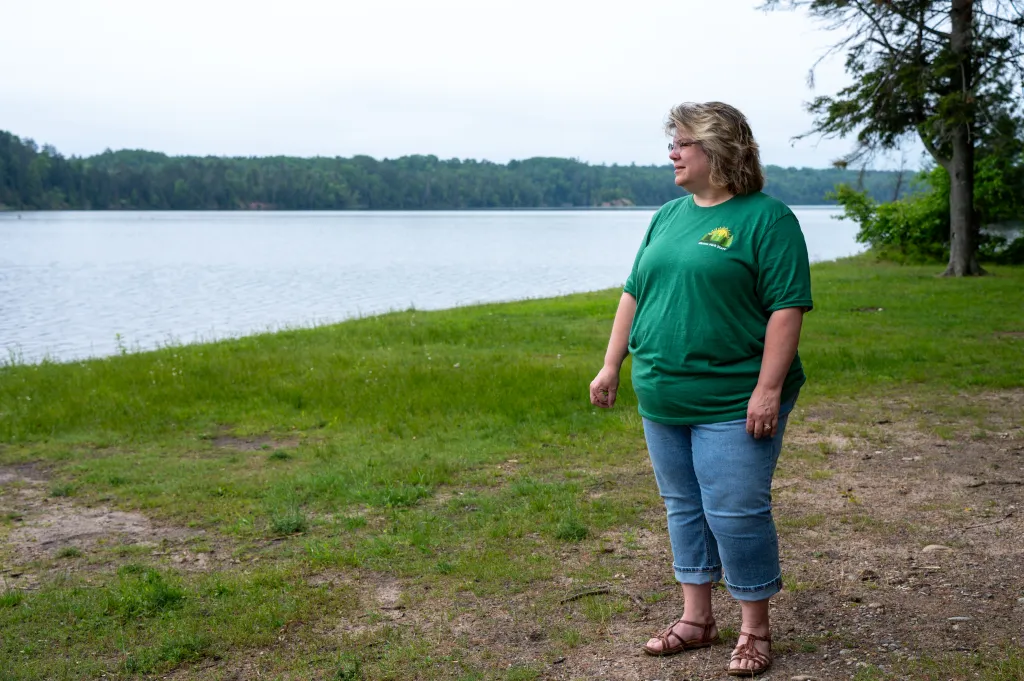
By Sonja Krohn, Great Lakes EchoGray wolf. Credit: Department of Natural Resources


Even though the grey wolf is classified as an endangered species, a new study found that the majority of Michigan’s recorded wolf deaths are caused by humans.

Researchers from Michigan State University and their collaborators used GPS collar and mortality data from 608 wolves in Minnesota, Wisconsin and Michigan between 2010 and 2023 to assess their specific cause of death.

The study found that humans caused 65% of them.

In addition to categories like vehicle collisions (10%) and legal kills (14%), illegal kills represented 38% of cases, making it the leading cause of wolf deaths.

Apart from legal kills, which included depredation control and legal hunting, illegal kills included confirmed and suspected poaching through poisoning, shootings and accidental trapping.

“Despite changes in legislation and public attitudes towards large predators, human-caused mortality continues to impact survival and conservation of carnivore species,” the study said.

According to the Michigan Department of Natural Resources, wolves are native to the state, and research suggests that they were once present in all of its counties.

“Wolves were first added to the federal endangered species list in 1974 after being [wiped out] from the Lower Peninsula by the 1930s and nearly disappearing from the Upper Peninsula by 1960,” the department says on its website.

But since then, there has been a back-and-forth approach. Federal protections for wolves were lifted and reinstated on several occasions through political action and court rulings.

Most recently, a 2022 federal court ruling reinstated gray wolves onto the federal list of threatened and endangered species in the contiguous 48 states.

Based on that classification, “they can only be killed if they are a direct and immediate threat to human life,” the department says.

According to the recent study in the journal Global Ecology and Conservation, illegal kills as a leading cause of death have “the potential to influence population dynamics, affecting population growth and recolonization potential.”

Rolf Peterson, a research professor at Michigan Technological University, said the results are consistent with smaller-scale studies. 

Deer are the primary food source of wolves, and illegal kills – especially during deer-hunting season – dominate the population dynamics of wolves in the upper Midwest, he said.

“Yet wolf populations have persisted in what I would characterize as an uneasy peace,” Peterson said, adding that the coexistence of wolves and people in the U.P. – where wolves live – has required adjustments for both species.

At this point, Brian Roell, a DNR wildlife biologist, said illegal takes don’t appear to be harming Michigan’s population, as wolves can survive fairly high death rates.

“The important thing to point back to is that our population has been stable – it’s not decreasing,” he said.

According to Roell, Michigan’s wolf population has been stable since 2011. The department’s last population estimate in 2024 counted 768 wolves. In Michigan, they “have saturated their suitable habitat,” he said.

While the DNR is currently wrapping up a 2026 population estimate, he said, “I fully expect we’re going to be statistically stable again” based on preliminary data.


The post Michigan’s main cause of wolf mortality? People appeared first on Great Lakes Now.

Original Article

Great Lakes Now

Great Lakes Now

https://www.greatlakesnow.org/2026/04/24/michigans-main-cause-of-wolf-mortality-people/

Great Lakes Echo

By Kelly House, Bridge Michigan

The Great Lakes News Collaborative includes Bridge Michigan; Circle of Blue; Great Lakes Now at Detroit PBS; Michigan Public, Michigan’s NPR News Leader; and The Narwhal who work together to bring audiences news and information about the impact of climate change, pollution, and aging infrastructure on the Great Lakes and drinking water. This independent journalism is supported by the Charles Stewart Mott Foundation. Find all the work HERE.


The US Supreme Court has unanimously sided with Michigan Attorney General Dana Nessel in a dispute over which court — state or federal — should oversee Nessel’s lawsuit to shut down the Line 5 pipeline.

The court’s nine justices ruled that Enbridge cannot move the state court case Nessel filed seven years ago to federal court, because the company missed a 30-day deadline to do so.

Jurisdiction matters because federal courts are considered more likely to sympathize with Enbridge’s argument that the pipeline should stay open, while state courts are more likely to sympathize with Nessel’s argument that it should close.

The ruling is the latest development in a yearslong dispute over the fate of the 72-year-old oil pipeline owned by Canadian oil giant Enbridge Energy, which crosses through the open water of the Straits of Mackinac as it transports petroleum products from Wisconsin to Ontario.

The aging pipeline has sustained damage multiple times in recent years, sparking fears that it could rupture and cause an oil spill in the Great Lakes.

Citing those fears, Nessel in 2019 filed a lawsuit in the 30th Circuit Court in Ingham County seeking to shut down the pipeline’s lakebottom segment. But two years into deliberations, Enbridge attempted to move the case into federal court — missing a 30-day statutory deadline to do so.

In a dispute that made its way to the nation’s highest court, the company argued it qualified for an exception to the deadline, while state lawyers accused the company of seeking “an atextual escape hatch.” 

In an opinion authored by Justice Sonia Sotomayor, the justices concluded that Congress authorized limited exceptions to the 30-day deadline, none of which apply to the circumstances of this case.

“Enbridge’s counterarguments are not persuasive,” Sotomayor wrote.

The procedural ruling doesn’t settle the question of the pipeline’s fate. But it remands the case back to Ingham County, where deliberations are paused pending the outcome of a separate case.

In a statement, Nessel said the ruling “makes emphatically clear” that the case belongs in state court.

“For far too long, following years of Enbridge’s delay tactics, the fear of a catastrophic spill from Line 5 has haunted our state, threatening to turn our most vital natural resource into a man-made disaster,” Nessel said.

Enbridge spokesperson Ryan Duffy expressed confidence that the company will prevail in arguing that the line should remain open. 

“The fact remains that the safety of Line 5 is regulated exclusively by the Pipeline and Hazardous Materials Safety Administration,” Duffy wrote. That agency is part of the US Department of Transportation.

In a ruling tied to a separate shutdown dispute between Gov. Gretchen Whitmer and Enbridge, US District Court Judge Robert Jonker ruled in December that federal pipeline safety laws preempt state laws, leaving Michigan with no “power to interfere” in Line 5 operations. The state is appealing the decision and Nessel’s state court case is paused pending the outcome of that appeal.

Prolonged battle

For years, fans and foes of the pipeline have been battling in Michigan and Wisconsin over fears that the pipeline could cause a catastrophic oil spill. Enbridge also owns the line 6B pipeline, which spilled into the Kalamazoo River causing among the worst inland oil spills in US history. Line 5 has been repeatedly struck by ships’ anchors, further heightening pipeline safety concerns.

In 2018, Enbridge pitched a plan to move the Straits section of the pipeline into a concrete-lined tunnel deep beneath the lakebed to alleviate spill concerns. But that plan, too, has been controversial, with some contending the best solution is to remove the pipeline entirely.

It’s a debate that revolves not only around spill risks, but concerns about land disturbances from tunnel construction, infringement on Native American treaty rights in the Straits and the climate implications of building infrastructure that would lock in decades of additional fossil fuel use.

The US Army Corps of Engineers and the Michigan Department of Environment, Great Lakes and Energy are both preparing to issue key permitting decisions tied to the tunnel plan. 

Meanwhile, the Michigan Supreme Court is deliberating over a lawsuit challenging a separate tunnel permit the state already granted.


The post Supreme Court sides with Nessel in Line 5 jurisdiction dispute appeared first on Great Lakes Now.

Original Article

Great Lakes Now

Great Lakes Now

https://www.greatlakesnow.org/2026/04/24/supreme-court-sides-with-nessel-in-line-5-jurisdiction-dispute/

Bridge Michigan

By Kelly House, Bridge Michigan

The Great Lakes News Collaborative includes Bridge Michigan; Circle of Blue; Great Lakes Now at Detroit PBS; Michigan Public, Michigan’s NPR News Leader; and The Narwhal who work together to bring audiences news and information about the impact of climate change, pollution, and aging infrastructure on the Great Lakes and drinking water. This independent journalism is supported by the Charles Stewart Mott Foundation. Find all the work HERE.


The US Supreme Court has unanimously sided with Michigan Attorney General Dana Nessel in a dispute over which court — state or federal — should oversee Nessel’s lawsuit to shut down the Line 5 pipeline.

The court’s nine justices ruled that Enbridge cannot move the state court case Nessel filed seven years ago to federal court, because the company missed a 30-day deadline to do so.

Jurisdiction matters because federal courts are considered more likely to sympathize with Enbridge’s argument that the pipeline should stay open, while state courts are more likely to sympathize with Nessel’s argument that it should close.

The ruling is the latest development in a yearslong dispute over the fate of the 72-year-old oil pipeline owned by Canadian oil giant Enbridge Energy, which crosses through the open water of the Straits of Mackinac as it transports petroleum products from Wisconsin to Ontario.

The aging pipeline has sustained damage multiple times in recent years, sparking fears that it could rupture and cause an oil spill in the Great Lakes.

Citing those fears, Nessel in 2019 filed a lawsuit in the 30th Circuit Court in Ingham County seeking to shut down the pipeline’s lakebottom segment. But two years into deliberations, Enbridge attempted to move the case into federal court — missing a 30-day statutory deadline to do so.

In a dispute that made its way to the nation’s highest court, the company argued it qualified for an exception to the deadline, while state lawyers accused the company of seeking “an atextual escape hatch.” 

In an opinion authored by Justice Sonia Sotomayor, the justices concluded that Congress authorized limited exceptions to the 30-day deadline, none of which apply to the circumstances of this case.

“Enbridge’s counterarguments are not persuasive,” Sotomayor wrote.

The procedural ruling doesn’t settle the question of the pipeline’s fate. But it remands the case back to Ingham County, where deliberations are paused pending the outcome of a separate case.

In a statement, Nessel said the ruling “makes emphatically clear” that the case belongs in state court.

“For far too long, following years of Enbridge’s delay tactics, the fear of a catastrophic spill from Line 5 has haunted our state, threatening to turn our most vital natural resource into a man-made disaster,” Nessel said.

Enbridge spokesperson Ryan Duffy expressed confidence that the company will prevail in arguing that the line should remain open. 

“The fact remains that the safety of Line 5 is regulated exclusively by the Pipeline and Hazardous Materials Safety Administration,” Duffy wrote. That agency is part of the US Department of Transportation.

In a ruling tied to a separate shutdown dispute between Gov. Gretchen Whitmer and Enbridge, US District Court Judge Robert Jonker ruled in December that federal pipeline safety laws preempt state laws, leaving Michigan with no “power to interfere” in Line 5 operations. The state is appealing the decision and Nessel’s state court case is paused pending the outcome of that appeal.

Prolonged battle

For years, fans and foes of the pipeline have been battling in Michigan and Wisconsin over fears that the pipeline could cause a catastrophic oil spill. Enbridge also owns the line 6B pipeline, which spilled into the Kalamazoo River causing among the worst inland oil spills in US history. Line 5 has been repeatedly struck by ships’ anchors, further heightening pipeline safety concerns.

In 2018, Enbridge pitched a plan to move the Straits section of the pipeline into a concrete-lined tunnel deep beneath the lakebed to alleviate spill concerns. But that plan, too, has been controversial, with some contending the best solution is to remove the pipeline entirely.

It’s a debate that revolves not only around spill risks, but concerns about land disturbances from tunnel construction, infringement on Native American treaty rights in the Straits and the climate implications of building infrastructure that would lock in decades of additional fossil fuel use.

The US Army Corps of Engineers and the Michigan Department of Environment, Great Lakes and Energy are both preparing to issue key permitting decisions tied to the tunnel plan. 

Meanwhile, the Michigan Supreme Court is deliberating over a lawsuit challenging a separate tunnel permit the state already granted.


The post Supreme Court sides with Nessel in Line 5 jurisdiction dispute appeared first on Great Lakes Now.

Original Article

Great Lakes Now

Great Lakes Now

https://www.greatlakesnow.org/2026/04/24/supreme-court-sides-with-nessel-in-line-5-jurisdiction-dispute/

Bridge Michigan

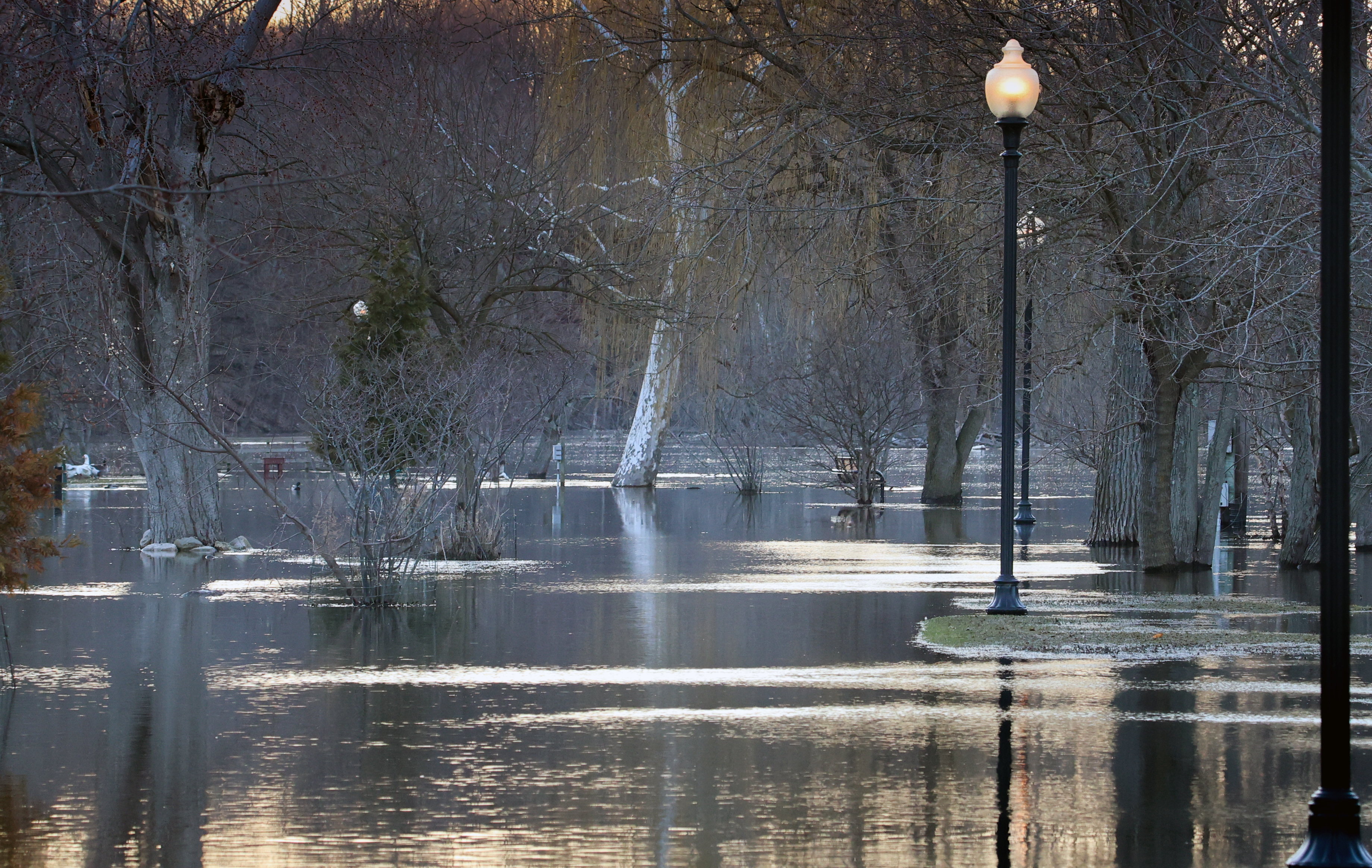
The river flooded the sidewalk and trees on Island Park - Grand Ledge, Michigan, march 2026

Richard B. (Ricky) Rood, University of Michigan

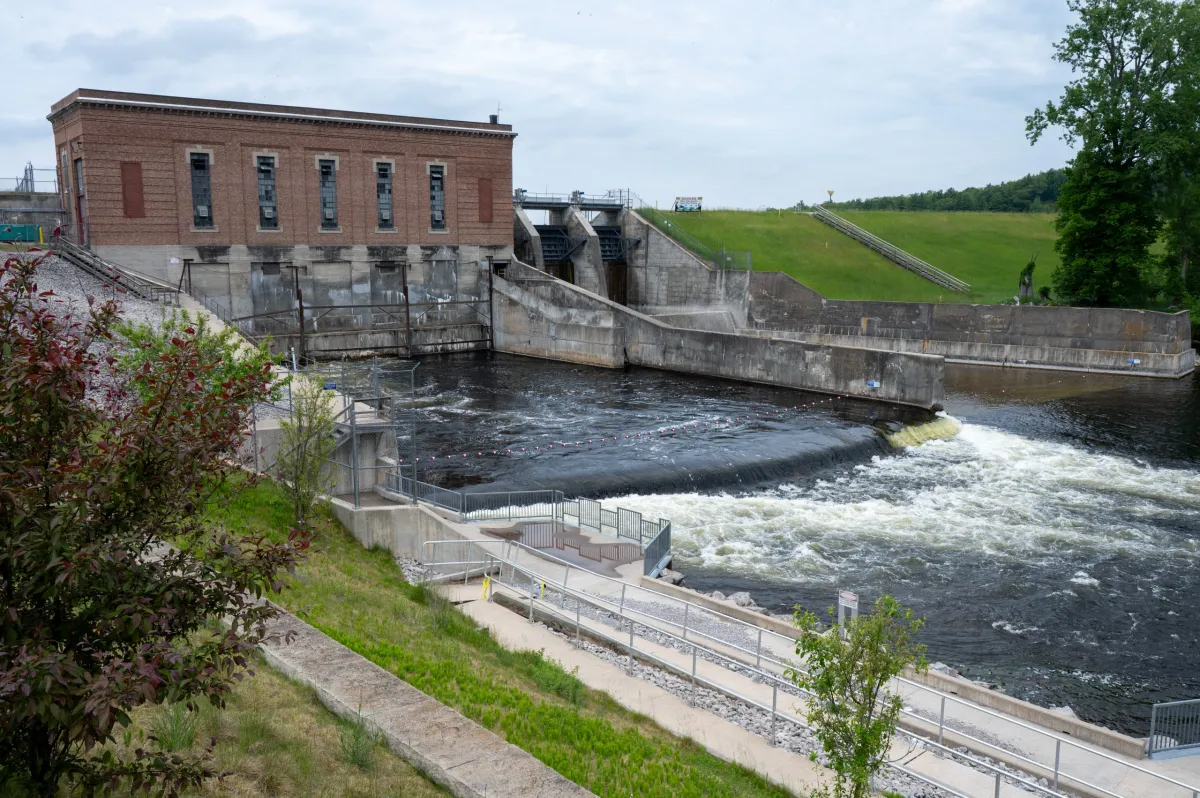
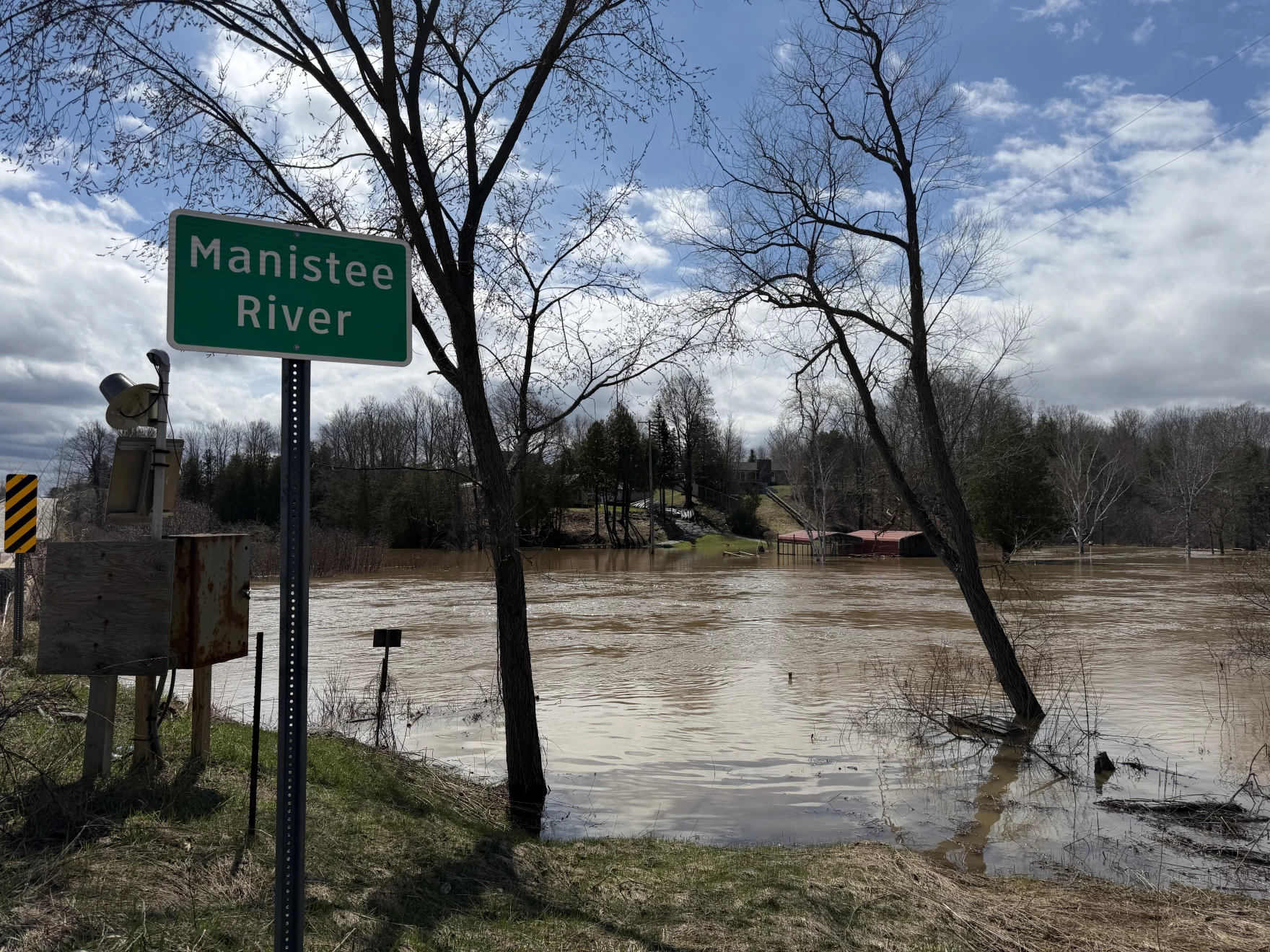
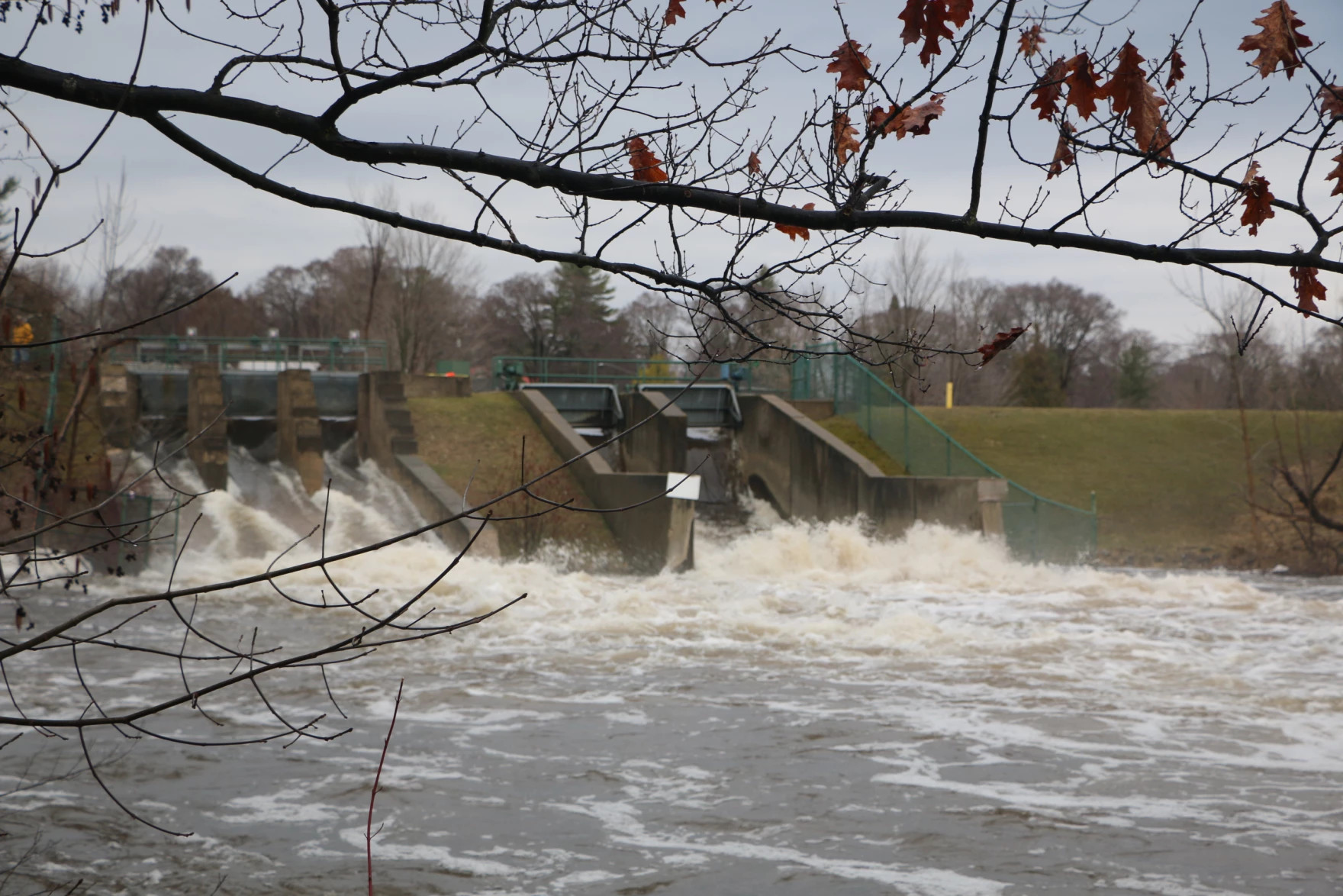
Michigan and parts of Wisconsin are in the midst of a historic flooding event in spring 2026. Days of heavy rainfall on top of snow have sent lakes and rivers over their banks and threatened several dams in both states, forcing people to evacuate homes downstream. By April 20, 2026, nearly half of Michigan’s counties were under a state of emergency. In Cheboygan, Michigan, large pumps were brought in to lower pressure on a century-old dam in the city.

The region’s aging water infrastructure was never designed for the volume of water it is facing. That’s a troubling sign for the future, with flooding becoming more common as global temperatures rise.

In many areas, the damage has been exacerbated by a culture of building homes and cabins on the shores of inland lakes and along riverine lakes behind small, often privately owned dams. Many of these dams were built over 100 years ago, with some long forgotten.

I am a professor emeritus of meteorology at the University of Michigan whose work focuses on helping communities adapt to climate change. The warming climate is worsening the flood risk, and disasters like the one Michigan is experiencing are setting higher benchmarks for safety as communities plan future infrastructure.

Where is all the water coming from?

For much of Michigan and Wisconsin, as well as northern Illinois, 2026 has been the wettest March and April on record.

In March, much of that precipitation fell as snow, including in an enormous blizzard that brought 3 feet of snow to parts of Michigan. In mid-April, persistent rains began. The rain, on top of all that snow, sent floodwaters running into rivers, streets and homes. The water carries large amounts of ice that damages shores, infrastructure and homes.

The moisture for much of these storms has been funneled northward from the warm Gulf of Mexico, thanks in part to a high pressure system sitting over the southeastern U.S.

The problem of warming winters

The kind of flooding Michigan and Wisconsin are experiencing in 2026 is what forecasters expect to see more of as global temperatures rise.

Winters have been warming faster than other seasons across the U.S. In Michigan and Wisconsin, winter months used to be reliably below freezing, but that’s changing. In the Cheboygan area, near the tip of Lower Michigan, March temperatures used to be below freezing on all but a few days. By the 1991-2020 period, the region averaged 10 days above or close to the freezing point – about twice as many as the 1951-1980 period.

The air coming in from the south is also warmer than in the past. Nationally, 2026 was the warmest March on record in 132 years of record-keeping in the contiguous U.S., with an average temperature more than 9 degrees Fahrenheit (5 degrees Celsius) higher than the 30-year average. So, in addition to snowmelt starting earlier, melting is happening faster.

Michigan’s average wintertime temperature rose by more than 4 F (2.3 C) from 1951 to 2023. Though winter 2026 in Michigan was colder than the 1991-2020 average, the Gulf of Mexico, where the moisture originated, was warmer than average, accelerating the snowmelt.

How warming leads to downpours and flooding

A few aspects of a warming climate can lead to flooding.

First, temperatures are increasing. In higher temperatures, moisture evaporates faster from the ground, plants and surface water. That moisture, once in the atmosphere, eventually falls again as precipitation. However, for each degree Celsius that temperatures increase, the atmosphere can hold about 7% more moisture, resulting in more heavy downpours.

A warmer winter also means more melting snow and more rain-on-snow events that can quickly increase the amount of runoff into rivers.

The Great Lakes region and much of the Northeast already experience more precipitation than in the past. Winters with more persistent wetness – not just snow but also rain – prime the region for floods. With continued warming in the coming decades, 2026 might be among the least disruptive in the future.

Data shows that a scenario of persistent wetness, changes in winter and seasonal runoff is part of the future for Michigan and the other states and Canadian provinces along the Great Lakes Basin, as well as New England.

Fixing dams for the future

All of this means communities across the region will have to pay closer attention to the growing risks facing their vital infrastructure – particularly dams.

Even prior to the 2026 floods, Michigan had a well-documented problem with its aging inventory of 2,600 dams. In May 2020, an intense storm system that stalled over the region brought so much rain that the Edenville and Sanford dams both failed near Midland, Michigan, forcing 10,000 people to evacuate and causing an estimated US$200 million in damage.

After that disaster, a state task force issued recommendations for fixing the state’s water control infrastructure to meet the growing risks. But a member of the task force told The Detroit News in April 2026 that little had been done to address those recommendations.

Michigan and parts of Wisconsin are in the midst of a historic flooding event in spring 2026. Days of heavy rainfall on top of snow have sent lakes and rivers over their banks and threatened several dams in both states, forcing people to evacuate homes downstream. By April 20, 2026, nearly half of Michigan’s counties were under a state of emergency. In Cheboygan, Michigan, large pumps were brought in to lower pressure on a century-old dam in the city.

The region’s aging water infrastructure was never designed for the volume of water it is facing. That’s a troubling sign for the future, with flooding becoming more common as global temperatures rise.

In many areas, the damage has been exacerbated by a culture of building homes and cabins on the shores of inland lakes and along riverine lakes behind small, often privately owned dams. Many of these dams were built over 100 years ago, with some long forgotten.

https://www.youtube.com/embed/ik4S2Kgn9ak?wmode=transparent&start=0 Michigan State Police captured scenes of stressed dams and flooding across Cheboygan County, near the tip of the Lower Peninsula, including the century-old dam in the city of Cheboygan that was nearly overwhelmed by flood water.

I am a professor emeritus of meteorology at the University of Michigan whose work focuses on helping communities adapt to climate change. The warming climate is worsening the flood risk, and disasters like the one Michigan is experiencing are setting higher benchmarks for safety as communities plan future infrastructure.

Where is all the water coming from?

For much of Michigan and Wisconsin, as well as northern Illinois, 2026 has been the wettest March and April on record.

In March, much of that precipitation fell as snow, including in an enormous blizzard that brought 3 feet of snow to parts of Michigan. In mid-April, persistent rains began. The rain, on top of all that snow, sent floodwaters running into rivers, streets and homes. The water carries large amounts of ice that damages shores, infrastructure and homes.

The moisture for much of these storms has been funneled northward from the warm Gulf of Mexico, thanks in part to a high pressure system sitting over the southeastern U.S.

The problem of warming winters

The kind of flooding Michigan and Wisconsin are experiencing in 2026 is what forecasters expect to see more of as global temperatures rise.

Winters have been warming faster than other seasons across the U.S. In Michigan and Wisconsin, winter months used to be reliably below freezing, but that’s changing. In the Cheboygan area, near the tip of Lower Michigan, March temperatures used to be below freezing on all but a few days. By the 1991-2020 period, the region averaged 10 days above or close to the freezing point – about twice as many as the 1951-1980 period.

The air coming in from the south is also warmer than in the past. Nationally, 2026 was the warmest March on record in 132 years of record-keeping in the contiguous U.S., with an average temperature more than 9 degrees Fahrenheit (5 degrees Celsius) higher than the 30-year average. So, in addition to snowmelt starting earlier, melting is happening faster.

Michigan’s average wintertime temperature rose by more than 4 F (2.3 C) from 1951 to 2023. Though winter 2026 in Michigan was colder than the 1991-2020 average, the Gulf of Mexico, where the moisture originated, was warmer than average, accelerating the snowmelt.

How warming leads to downpours and flooding

A few aspects of a warming climate can lead to flooding.

First, temperatures are increasing. In higher temperatures, moisture evaporates faster from the ground, plants and surface water. That moisture, once in the atmosphere, eventually falls again as precipitation. However, for each degree Celsius that temperatures increase, the atmosphere can hold about 7% more moisture, resulting in more heavy downpours.

A warmer winter also means more melting snow and more rain-on-snow events that can quickly increase the amount of runoff into rivers.

The Great Lakes region and much of the Northeast already experience more precipitation than in the past. Winters with more persistent wetness – not just snow but also rain – prime the region for floods. With continued warming in the coming decades, 2026 might be among the least disruptive in the future.

Data shows that a scenario of persistent wetness, changes in winter and seasonal runoff is part of the future for Michigan and the other states and Canadian provinces along the Great Lakes Basin, as well as New England.

Fixing dams for the future

All of this means communities across the region will have to pay closer attention to the growing risks facing their vital infrastructure – particularly dams.

Even prior to the 2026 floods, Michigan had a well-documented problem with its aging inventory of 2,600 dams. In May 2020, an intense storm system that stalled over the region brought so much rain that the Edenville and Sanford dams both failed near Midland, Michigan, forcing 10,000 people to evacuate and causing an estimated US$200 million in damage.

After that disaster, a state task force issued recommendations for fixing the state’s water control infrastructure to meet the growing risks. But a member of the task force told The Detroit News in April 2026 that little had been done to address those recommendations.

Because warming will continue for the coming decades, the 2026 flooding should be considered at the lower end of capacity for stormwater infrastructure and dams. Rather than relying on the statistics that described floods in the past, planners will have to anticipate the floods of the future.

Michigan is often touted as a climate haven because it is relatively cool and has plenty of water. The state is not, however, immune to the amped-up weather of a warming climate. Environmental security in the future requires improved and more adaptive infrastructure.


The post Extreme rain on snow is testing aging dams across Michigan and Wisconsin — this is the future in a warming world appeared first on Great Lakes Now.

Original Article

Great Lakes Now

Great Lakes Now

https://www.greatlakesnow.org/2026/04/22/extreme-rain-on-snow-is-testing-aging-dams-across-michigan-and-wisconsin-this-is-the-future-in-a-warming-world/

The Conversation

Yolanda Kondonassis is a musician working in the Great Lakes region, formerly at the Cleveland Institute of Music, she will begin teaching at the University of Michigan School of Music, Theatre and Dance in the fall. Now, the Grammy-nominated harp soloist performs on the harp and drums, on a new album commissioned by the Interlochen Arts Academy, called “Terra Infirma.” 

“Terra Infirma” had its digital premiere on April 17, ahead of Earth Day, and was composed by Reena Esmail for a collaboration with Kondonassis. Esmail started writing the concerto in January 2025, while living in Altadena, CA as the catastrophic wildfires began to enclose her neighborhood. The concerto also references Esmail’s extensive studies of Hindustani music — specifically the raags (or ragas) of Deepak, which are fabled to evoke uncontrollable fire. The piece also required another song or raag of Megh, which brings the rain as it is typically sung during monsoon seasons. 

For Earth Day, Christa Grix from Detroit’s Jazz and Classical station WRCJ 90.9 FM (also owned and operated by Detroit PBS), discusses this groundbreaking new work in conversation with Kondonassis. They also touch on Kondonassis’s nonprofit, Earth at Heart, which encourages conservation awareness and action through music and the arts. 

For the full interview, you can listen here:

The interview below was recorded, transcribed and edited for length and clarity.

Christa Grix: It gives me great pleasure to welcome my guest, Yolanda Kondonassis, a globally renowned harpist, composer, harp pedagogue, author, recording artist and environmental activist.

Yolanda Kondonassis: Thank you so much for having me. 

CG: I have admired you for most of my professional career, and I’m also aware of Reena Esmail. I do the programming at WRCJ, and I heard her music about a year ago, and I said, that is a composer to pay attention to. So, I can’t imagine anything better than the two of you collaborating on this project, “Terra Infirma.” And I’d like you to tell us all about it. 

YK: You know, the best things in life, I think, happen kind of organically, and because of that, they tend to evolve for all the right reasons. Reena and I probably first met virtually about five years ago. And we met through our husbands, who are both very active musicians. 

My first experience with Reena was through my “Five Minutes for Earth” project, which was my most recent album, where I commissioned a whole bunch of folks to write a roughly five minute piece that was inspired by Earth.

She’s just such an intelligent, curious person, and we have very much the same sensibility when it comes to creating art. Our environmental concerns and everything we do to make sure the planet will be around for many, many years to come — art should be approached the same way, that term “sustainability” should apply to both.

And I think her music has sustainability. So much art right now is created extremely quickly; premiered, quickly; consumed, quickly and then almost discarded. We don’t really hear much about it again, and this is not musical fast food.

Portrait of the composer, Reena Esmail. Photo: Rachel Gracia.

CG: No, it is absolutely not.

YK: It had about a four year gestation period. We talked about all sorts of different iterations this might take. And finally, we had one kind of seminal conversation where it was like, what sound, what sonic element would really bring the harp to life in a way it hadn’t been before?

I’ve kind of always been sort of a closet percussionist. And I thought, well, you know, the harp is a percussion instrument. What if you actually wrote a concerto for harp and percussion, and I do both, and how would that look?

It just was such an amazing experience to learn about all these different percussion equipments. I play 18 different percussion pieces, and I’m shoving my harp across the stage, in a sort of a metaphorical journey.

CG: Could you tell me a little bit more about those logistical challenges? Principally, being a harpist, I know it’s no small feat to move a harp. And for our listeners, let me mention that the harp is about six feet tall and weighs about 80 pounds, so when you’re talking about moving — and as I understand— the harp is a main character in a musical drama. Is that correct? 

YK: You said it. I just get excited every time I think about the genesis of this piece. Because initially we thought, okay, we’ll put you on stage. We’ll surround you with a ton of percussion, you may have to get up at some point. And then as we really started talking about the subject matter…

What if the harp actually, and to some degree, me as a performer were like a protagonist in this story of what we face environmentally? And what if the harp almost symbolized Earth as a “not” inanimate protagonist. And as anybody who plays the harp knows, that is not an inanimate object. You’ve got to be a harp whisperer, to play that thing. 

It evolved from the idea of me sitting in one place on stage in my usual concerto position, surrounded by percussion to “what if you walked on stage just without a harp and started doing something percussive?” And from that, it evolved into this idea that my harp starts on one side of the stage. And throughout the journey of this piece, it is a journey, I literally shove it from one percussion battery to another.

CG: So, not on a dolly or anything like that. You shove it?

YK: Yes, and so that shoving was literally built into the choreography. Then, of course, we said, well, this is getting very theatrical. What if one of the movements was incorporated at a theatrical element where you’re literally walking around the stage? Maybe you’re rimming a singing bowl. Maybe you’re exploring while the orchestra does something else. So, it really kind of stretched me to my limit. 

Portrait of harpist and percussionist Yolanda Kondonassis. Photo: Laura Watilo Blake.

CG: We all know that you’re a passionate advocate for the environment. What inspired you to do so much for the environment and for Mother Earth?

TK: I think that when something evolves over time you begin to invest in it, emotionally and otherwise. And really, when I started truly thinking about the environment is when I had my daughter in 2002. As we know, when you have a child, you start thinking farther ahead than we do when we don’t. 

I did an album called “Music of Hovhaness,” a piece on there was called, “Spirit Of Trees.” This was 20 years ago, and I thought, this music is so inspiring to me. This sounds like I’m walking through the woods and this is incredible, just being struck with the way music can conjure both a visual image and inspiration. I thought, wouldn’t it be great if we set it up so that my royalties from this album went to the Rainforest Alliance? And that was kind of the first little foray into all of this. 

That eventually led to establishing my nonprofit called Earth at Heart, and writing a kids book called My Earth, My Home. You know, one thing kind of leads to another. I wanted to kind of wrap my artistic life around this unifying mission. At a certain point, I think during covid, is when I started thinking, okay, great, I’ve been doing this for decades. I played in every part of the world I could have ever dreamed of. I’ve played the traditional repertoire. I’ve commissioned some great pieces. What’s my mission, what’s my unifying idea. 

And so it was a great kind of incubator during the pandemic to develop some ideas and to really have the time to follow through on them, because for busy musicians, that’s the tough part. It’s like we’re always full of ideas, but it’s the time to develop them and let them sit a minute and germinate and marinate before you take the next step. 

It’s been a wonderful way to combine passions. I don’t pretend to be a climate scientist, but what I can do is work on inspiring action, inspiring awareness of things. And what better way to do that than music? I think if anybody hears this piece, “Terra infirma,” they might even be inspired to learn more about it, and in learning more about it, who knows, they might become really inspired to think about environmental concerns in a way they hadn’t before. When they’d been thrown stats and statistics and, quite honestly, very scary stuff. What a better way to reach people than through music?

Both Reena and I talked about how we didn’t want “Terra Infirma” to be some sort of musical Armageddon, even though the reality is very scary. But, I think the only way we address any problem is with hope, hope that we can do something, hope that our actions will have an effect. 

“Terra Infirma” premiered live on October 30, 2025 at Interlochen Arts Academy. As of April 17, listeners will find the album digitally on all streaming platforms.  


The post When Music Meets Climate Crisis: A New Concerto Echoes the Planet’s Fragility appeared first on Great Lakes Now.

Original Article

Great Lakes Now

Great Lakes Now

https://www.greatlakesnow.org/2026/04/21/when-music-meets-climate-crisis-a-new-concerto-echoes-the-planets-fragility/

Lisa John Rogers, Great Lakes Now

By Vivian La and Lyndsey Gilpin

This was originally published on Grist and has been adapted to include up-to-date information for northern Michigan. Find the full toolkit here.


With waters rising around Northern Michigan, the risk of flooding and dam failure is affecting people across the region. That’s why it’s critical to know where to find accurate information and have a plan. Here’s a resource guide with updated information. We will continue to update this and add more response and recovery resources.

How to pack an emergency kit

As you prepare for a disaster, it’s important to have an emergency kit ready in case you lose power or need to leave your home. Review this checklist from the Federal Emergency Management Agency, for what to pack so you can stay safe, hydrated, and healthy. (FEMA has these resources available in multiple languages here.)

Here are some of the most important things to have in your kit:

  • A list of phone numbers for your city or county emergency services, police departments, local hospitals, and health departments
  • Water (one gallon per person per day for several days)
  • Food (at least a several-day supply of non-perishable food) and a can opener
  • Medicines and documentation of your medical needs
  • Identification and proof of residency documents (see a more detailed list below)
  • A flashlight 
  • A battery-powered or hand crank radio
  • Backup batteries
  • Blanket(s) and sleeping bags
  • Change of clothes and closed-toed shoes
  • First aid kit (The Red Cross has a list of what to include)
  • N-95 masks, hand sanitizer, and trash bags 
  • Wrench or pliers 
  • Cell phone with chargers and a backup battery
  • If you have babies or children: diapers, wipes, and food or formula
  • If you have pets: food, collar, leash, and any medicines needed

FEMA has activities for kids to make this process more fun; the ASPCA also has useful guidelines for people with pets.

Don’t forget: Documents

One of the most important things to have in your emergency kit is documents you may need to prove your residence, demonstrate extent of damage, and to vote. FEMA often requires you to provide these documents in order to receive financial assistance after a disaster. Keep these items in a water- and fire-proof folder or container. You can find more details about why you may need these documents here.

  • Government-issued ID, such as a drivers’ license, for each member of your household
  • Proof of citizenship or legal residency for each member of your household (passport, green card, etc.)
  • Social Security card for each member of your household
  • Documentation of your medical needs, including medications or special equipment (oxygen tanks, wheelchairs, etc.)
  • Health insurance card
  • Car title and registration documents
  • Pre-disaster photos of the inside and outside of your house and belongings
  • For homeowners: copies of your deed, mortgage information, and home insurance policy, if applicable
  • For renters: a copy of your lease and renters insurance policy
  • Financial documents such as a checkbook or voided check

Planning for people with disabilities

Disabled people have a right to all disaster alerts in a format that is accessible. The Partnership for Inclusive Disaster Strategies, a disability-led nonprofit focused on disasters, has a list of these rights. The organization also runs a hotline for any questions: (800) 626-4959 or hotline@disasterstrategies.org.

FEMA has a list of specific planning steps for people with disabilities. Some of these recommendations include:

  • Contact your local emergency management office to ask about voluntary registries for people with disabilities to self-identify so they can access targeted assistance during emergencies and disasters. 
  • If you use medical equipment that requires electricity, ask your health care provider about what you may be able to do to keep it running during a power outage.
  • Wear medical alert tags or bracelets. Also add pertinent medical information to your electronic devices.
  • In your emergency kit, have your prescription information and medicines, as well as contact information for people who can help care for you or answer questions.

Finding shelter and staying safe

Shelter

If flooding risk forces you from your home, there are several ways to find a shelter.

Floodwater safety

  • Never wade in floodwaters. They often contain contaminated runoff from sewer systems, animal waste, physical objects, and downed power lines. 
  • If a road is flooded, turn around. According to NWS, it takes just 12 inches of water to carry away most cars. 
  • When you come in contact with flood water, be sure to wash exposed skin immediately. Wear rubber boots, gloves, and goggles. Here are more tips on floodwater safety from the CDC, including emergency wound care.

Power outages

You may experience a power outage before or during a disaster. Here are some ways to prepare and stay safe:

  • Your utility company may alert you of changes, so sign up for texts or calls from them. You can also usually report outages to your utility company by calling or filling out forms online.  
  • Stay away from downed power lines, stray wires, and debris in contact with them, as they can deliver fatal shocks.
  • If your power does go out, keep your refrigerator closed as much as possible and eat perishable food first. Get some coolers with ice if possible, and if you’re in doubt about any food, throw it out. 
  • Unplug appliances and electronics, and use flashlights instead of candles to reduce the risk of fire.
  • If you use a generator, make sure you know the best practices. Find more information about types of generators here, and learn how to use them safely
  • Carbon monoxide poisoning is one of the leading causes of death after a storm that knocks out power. Do not use a gas stove to heat your home and do not use barbecues, grills, or other outdoor cooking equipment inside, because they can generate carbon monoxide. If you have a generator, keep it outside in a well ventilated area away from windows. The Red Cross has more generator safety tips

You can find more power outage safety tips here, from the Energy Education Council.

Water rushing through the spillway at the Bellaire Dam on Monday, April 13, 2026. (Photo: Austin Rowlader/IPR News)

Signs and symptoms of illness

Carbon monoxide poisoning: It can take just minutes to get carbon monoxide poisoning. Be on the lookout for nausea, a mild headache, and shortness of breath. More severe cases can cause confusion, chest pain, dizziness, severe headaches, and loss of coordination. The Mayo Clinic has more information on what to look out for, and FEMA has information on how to prevent carbon monoxide leaks.

Tetanus: This is an infection caused by bacteria. It’s rare, but can be more common after disasters because it’s more likely people come into contact with rusty nails, needles, or contaminated dirt. The most common symptom, which can occur anywhere from three to 21 days after exposure, is lockjaw. Tetanus is easily prevented with a vaccine. Read more here from the CDC.

Mutual aid
Mutual aid is a voluntary, collaborative exchange of resources, money, and services among community members. These groups are often local or regional, and they are more nimble and quick to respond in emergency situations because of their decentralized nature. Depending on how much funding comes in after a disaster, mutual aid groups can directly send money to those in need, purchase supplies, set up distribution sites, and more.

Planning an evacuation route

It is important to have a plan in case there’s an evacuation order in your area, or if you decide you want to evacuate on your own.

FEMA also has a list of key things to know when making an evacuation plan.

  • Choose several places you could go in an emergency — maybe a friend or family member’s house in another city, or a hotel. Choose destinations in different directions so you have options. If you have pets, make sure the place you choose allows them, as shelters usually only allow service animals.  
  • Make sure you know several routes and other means of transportation out of your area, in case roads are closed.
  • Keep a full tank of gas in your car if you know a disaster may be coming, and keep your emergency kit in your car or in an easily accessible place.
  • Come up with a plan to stay in touch with members of your household in case you are separated. Check with your neighbors as well. 
  • Unplug electrical equipment, except for freezers and refrigerators, before you evacuate. If there’s already damage to your home in any way, shut off water, gas, and electricity. 

Always heed the advice of local officials when it comes to evacuations. Your state or county may have specific routes and plans in case there are mandatory evacuations.

Protecting and preparing your home

It’s impossible to know what might happen to your home during a disaster, but there are many best practices to keep your belongings and property as safe as possible.

Below is a list of ways to protect your home from water and wind damage, gathered from the National Flood Insurance Program and local government sources.

  • Take photos of your home and property so you have evidence of what it looked like before any damage occurs, in case you need to file an insurance claim or apply for federal aid.
  • Move your most valued belongings to a high, safe place, such as an attic. 
  • Clear your gutters and downspouts when you know a big rain is coming, and make sure they’re pointed downhill, away from your home.
  • Clear storm drains and drainage ditches of debris.
  • Elevate your utilities, including electrical panels, propane tanks, sockets, wiring, appliances, and heating systems, if possible, and anchor them in place.
  • Get a sump pump if you are a homeowner. A working sump pump and a water alarm can minimize flood damage in your basement. Install a battery-operated backup pump in case the power goes out. 
  • Seal any cracks in your foundation with mortar, caulk, or hydraulic cement. 
  • Secure outdoor items so they don’t blow or wash away.
  • If you’re in a hurricane-prone area, install storm shutters. There are many products for every budget; some are temporary and some are permanent. 
  • Secure loose roof shingles, which can create a domino effect if wind starts to take them off. 

How to document flood damage

Fred Chacon, Bellaire resident of 12 years, places sandbags between his house and the Intermediate River, just downstream of the Bellaire Dam. (Photo: Claire Keenan-Kurgan/IPR News)

If you’ve already seen damage from flooding and it’s safe to return home, it’s critical that you photograph everything that was damaged and gather any documents you can salvage for insurance claims and government aid applications.

Before you begin:

  • Turn off your electricity and gas (here’s how).
  • Have a first aid kit handy.
  • Make sure your tetanus shot is up to date (your state or county health department may offer free tetanus vaccines if you need one; it’s best to call them to find out).
  • Look at the structural integrity of the building before entering, and do not go inside if it looks like there is any potential for something to collapse. Do not touch anything electrical if in doubt about the state it’s in. 
  • Wear protective clothing: long sleeves and pants, goggles, leather, rubber or plastic gloves, closed-toed and/or sturdy boots or shoes, a respirator or N95 mask, and a Tyvek suit if you can find one. Check with your aid distribution sites for tools, personal protective equipment, and cleaning materials. 
  • Do not attempt to drive or wade through floodwaters, which can sweep you away even if it doesn’t seem deep, and can be contaminated or contain dangerous debris. Do not touch any debris or materials that may be contaminated by toxic chemicals (you may need special equipment or PPE to handle burned or flooded debris). 

Take photos and videos

Whether you have insurance and are filing a claim, or you do not have flood insurance and you’re applying for federal assistance from FEMA, you’ll need a lot of evidence to prove the damage was caused by a disaster. 

  • Gather any photos of your house or apartment from before the crisis so you can more easily document your losses. 
  • Take photos of the outside and inside of your home or apartment, including damaged personal property, and label them by room before you remove anything. 

If you have insurance, take photos of the make, model, and serial number for appliances and anything else of value. Provide receipts to your adjuster to document damage for your claim.

This was originally published on Grist and has been adapted to include up-to-date information for northern Michigan. Find the full toolkit here.

The post Here’s how to prepare, as more rain falls on northern Michigan appeared first on Great Lakes Now.

Original Article

Great Lakes Now

Great Lakes Now

https://www.greatlakesnow.org/2026/04/20/heres-how-to-prepare-as-more-rain-falls-on-northern-michigan/

Grist and Interlochen Public Radio

By Paula Gardner, Kelly House and Ron French, Bridge Michigan

The Great Lakes News Collaborative includes Bridge Michigan; Circle of Blue; Great Lakes Now at Detroit PBS; Michigan Public, Michigan’s NPR News Leader; and The Narwhal who work together to bring audiences news and information about the impact of climate change, pollution, and aging infrastructure on the Great Lakes and drinking water. This independent journalism is supported by the Charles Stewart Mott Foundation. Find all the work HERE.


CHEBOYGAN — Local, state and federal officials were aware of the dangers posed by the Cheboygan Lock and Dam for years before floodwaters pushed it to the brink of collapse, records show.

Yet they failed to compel private owners to repair the nonfunctional hydro plant connected to the publicly-owned dam —  a critical piece of its ability to pass floodwaters downstream. 

The facility that houses the plant, once a Charmin toilet paper mill, changed hands repeatedly over decades as it fell into disrepair. 

Now taxpayers are helping bankroll a desperate effort to bring the plant back online before the dam fails and sends a wall of water toward downtown Cheboygan.

“I’m very concerned that this was not handled properly,” said Richard Sangster, a Cheboygan County commissioner and former Cheboygan mayor, about federal regulatory actions over several years.

The property is now owned by Hom Paper XI, LLC, a business controlled by former NFL linebacker Thomas Homco. He did not return voicemails left by Bridge Michigan. 

State and local officials did what they could, Cheboygan County Sheriff Todd Ross said Thursday.

“We didn’t wait ‘til the last minute,” Ross said. “It’s privately owned. There’s only so much we can do.”

A public tally of taxpayer costs associated with the round-the-clock repair wasn’t available Thursday, but estimates from a few years ago indicated the plant needed at least $1 million in repairs.

‘Safety concerns have been raised many times’

Records show the agency that primarily regulates hydropower dams, the Federal Energy Regulatory Commission, sent warning letters for years to a shifting cast of owners while granting multiple extensions.

Among the issues they cited: missing inspection records and malfunctioning equipment that was crucial to passing water in the event of a flood.  

As far back as 2019, regulars warned about cracked concrete and damaged retaining walls and gates that could help the dam manage flooding, records show.

In 2021, FERC told the plant’s then owners that “multiple items are overdue and completion dates are rapidly approaching.”

The plant was cited 16 times in 10 months for safety violations by Occupational Safety and Health Administration before a fire closed it altogether in September 2023, records indicate.

That prompted more orders for repairs and more extensions from FERC. Records indicate state officials said they were aware of the issues but had no role in enforcement.

“Safety concerns have been raised many times,” Sangster said, adding “you wouldn’t even be able to measure how detrimental” a dam failure would be. 

“In my eyes, it appears like total neglect on their behalf,” he added about FERC.

‘No simple answer’

FERC spokesperson Celeste Miller did not respond to detailed questions from Bridge about oversight of the hydro plant property and instead put out a statement noting the agency’s role in the ongoing emergency response in Cheboygan.

“Above all, our priority is to coordinate with all involved partners to safeguard both the community and the environment,” Miller wrote.

The crisis comes six years after the privately-owned Midland dams failed following a similar pattern of regulatory delay. Michigan legislators vowed to make dam safety a priority after Midland, but ultimately didn’t act on proposed reforms.

A solution “keeps getting kicked down the road …  now we’ve got a whole community in peril because it was mismanaged by (private owners),” state Sen. John Damoose, R-Harbor Springs, said after touring the dam with Gov. Gretchen Whitmer.

“This is a problem that could happen all over the state,” Damoose said. “‘It got our attention a few years ago in Midland, but now we’re seeing that it was not an isolated thing and we need to take some serious looks at how we allow this to go on.”

Whitmer said “there’s no simple answer” due to a “complicated web of privately owned and publicly owned (dams.)”

“We have made some long overdue investments in some of our infrastructure,” she said.

Complicated history

Like many dams in Michigan, the Cheboygan complex was once owned by utilities to generate power for the region. 

By 1967, when Consumers Energy sold it to the state of Michigan for $1, it was no longer generating power but the deeper Cheboygan River created by the dam had become a valued link between Lake Huron and the Inland Waterway, a 40-mile-long network of popular rivers and lakes.

In 1983, Procter & Gamble took over the hydroelectric side of the facility, securing a licensing exemption from FERC and striking a deal to give the state some continued say over water flows through the now-privatized portion of the complex. 

But soon after pouring millions into upgrading the hydro facility, the company shuttered its Cheboygan operation in 1990, eliminating 300 jobs and commencing the slow decline of the historic mill. 

Eventually, a company named Great Lakes Tissue bought the plant and was urged by FERC for years to make repairs.

It sold the business before a June 2022 deadline to ensure the gates that allowed water to flow through the hydro plant were functioning properly.

It’s not clear whether the work was ever completed. Nor is it clear whether federal regulators were aware of subsequent ownership changes.

Great Lakes Tissue Company was still the listed owner on FERC’s license exemption well into 2025.

Tug-of-war

While the hydro side of the dam complex sat idle following the fire, state Department of Natural Resources officials in charge of the rest of the dam publicly warned its closure would make it hard to manage water levels in the Cheboygan River.

The plant had accounted for about 30% of the river’s flow to Lake Huron, they said.

“Boaters and residents … may experience larger water level fluctuations,” stated a 2024 agency announcement.

Bridge Michigan was not able to discern what steps, if any, DNR officials took to try to compel action.

Agency spokesperson Ed Golder said he was not able to immediately answer related questions from Bridge Michigan while the agency deals with emergency response in Cheboygan.

Josef Greenberg, a spokesperson for the Michigan Department of Environment, Great Lakes and Energy, which regulates dams in the state that are not regulated by FERC, said state officials had communicated with federal counterparts about the issues at the dam, but did not play a regulatory role.

In the fire’s aftermath, federal officials continued issuing letters flagging unresolved safety issues at the hydro plant, some of them dating back years.

They pressed current and past owners for clarity about who was in charge, a process complicated by a flurry of legal disputes between parties with a stake in the floundering business.

Eventually, Hom Paper emerged as the rightful owner in FERC’s eyes, and the agency ordered the company to either restore the hydro plant to working condition or risk losing the license exemption that allows it to generate hydropower.

Company lawyer Tyler Tennent initially responded that doing so was no longer economically feasible: “Hom Paper XI, LLC no longer intends or desires to operate the hydroelectric machinery,” Tennent wrote in August 2025.

Then Hom Paper found a potential buyer, asking FERC for repeated extensions of time to repower the plant while it worked to finalize the deal.

The would-be buyer: HydroMine Cheboygan LLC, a Wyoming-based corporation spearheaded by Roy Davis, a self-proclaimed  “blue-collar mechanic that fixes things,” who has restarted power operations at other aging dams in Eaton Rapids and Hubbardston.

“Hom Paper and HydroMine are very near to having a signed agreement,” Hom’s lawyer, Tyler Tennent, wrote to FERC in January.

Tennent told regulators HydroMine was negotiating water management agreements with the DNR and working with Consumers Energy to repower the site.

“We appreciate FERC’s continued patience,” he wrote.

Three months later, the plant remained nonfunctional Thursday night, reducing the Cheboygan dam’s ability to pass floodwater that had climbed within five inches of its crest.

Residents in the floodzone have been urged to prepare for evacuation in case of dam failure.

Looking ahead

An estimated 75 Consumers Energy workers have been at the dam to get the privately owned hydroelectric power plant running, Michigan State Police said Thursday. 

By Thursday evening, signs pointed that restoration would be imminent, said Bruce Straub, Consumers’ incident commander.

Preserving dam integrity across northern Michigan will be important to the region once the crisis abates, said Sharen Lange, a Cheboygan business owner active in economic development, including on Cheboygan Commons.

Many in the area keep talking about who should own the hydro plant, Lange said. Others are saying that the city or county could take action. 

“We know that it being in private hands has produced a really bad result,” Lange said. 

The post Michigan feared Cheboygan Dam danger for years before rains pushed it to brink appeared first on Great Lakes Now.

Original Article

Great Lakes Now

Great Lakes Now

https://www.greatlakesnow.org/2026/04/17/michigan-feared-cheboygan-dam-danger-for-years-before-rains-pushed-it-to-brink/

Bridge Michigan

By Sarah Cwiek, Michigan Public

The Great Lakes News Collaborative includes Bridge Michigan; Circle of Blue; Great Lakes Now at Detroit PBS; Michigan Public, Michigan’s NPR News Leader; and The Narwhal who work together to bring audiences news and information about the impact of climate change, pollution, and aging infrastructure on the Great Lakes and drinking water. This independent journalism is supported by the Charles Stewart Mott Foundation. Find all the work HERE.


Compounds from the family of chemicals known as PFAS can suppress the body’s ability to mount a defense against new pathogens — and the effects can last well into adulthood.

That’s one conclusion from a new Michigan State University study that looked at how people in two West Michigan communities that had PFAS-contaminated water responded to the virus that causes COVID-19.

Courtney Carignan, an environmental epidemiologist and the lead researcher for the MSU team, had already been conducting PFAS impact studies in Parchment and Cooper Township near Kalamazoo. Both communities were home to paper mills, and in 2018, state testing found that public water supplies had been historically contaminated.

Carignan said it’s well-established that PFAS chemicals are immunotoxic in children, but it’s been harder to study that impact on adults. That’s because adult immune systems have already been exposed to a number of pathogens that trained their immune systems to respond by producing antibodies, the frontline “soldiers” of immune response.

So when the COVID pandemic struck, Carignan and her team took the opportunity to look at the immune responses in adults participating in the existing research. And what they found was striking: a strong link between blood levels of a certain PFAS compound — perfluorohexanesulfonic acid, or PFHxS — and fewer defensive antibodies being produced in response to COVID exposure through vaccination.

“And so we infer then that people who have higher exposures, if they’re producing less antibodies, then their bodies are less able to fight an infection,” Carignan said.

“It reinforces what we know about these contaminants — that they have been phased out of use because they’re known to be harmful, that they are immunotoxic, and that these effects persist into adulthood.”

Carignan added that while some classes of PFAS have been phased out, including PFHxS, thousands more remain in use.

They’re known as “forever chemicals” because of how long they take to break down in the environment and in human bodies. In addition to immunotoxic properties, they’re also known endocrine disruptors and linked to multiple types of cancer.

PFAS are so prevalent in the environment that nearly everyone has some level of them present in their body. However, Carignan said there doesn’t appear to be a link to suppressed immune response correlated with those lower levels.

“Most of us, unfortunately, do have these chemicals in our body,” she said. “[But] at those levels, we don’t really see not producing enough antibodies to be protected.”

The study comes at a time when the U.S. is still debating PFAS standards for drinking water. The U.S. Environmental Protection Agency finalized its first enforceable drinking water standards for certain PFAS chemicals in 2024, but implementation timelines and enforcement for some compounds have since been pushed back, according to Carignan. Michigan, however, has its own standards.

“I think Michiganders can know that our state is doing more than other states, and we have more protections,” Carignan said. “That’s a good thing.”

The post MSU study: PFAS can affect immune response appeared first on Great Lakes Now.

Original Article

Great Lakes Now

Great Lakes Now

https://www.greatlakesnow.org/2026/04/13/msu-study-pfas-can-affect-immune-response/

Michigan Public

This article was republished here with permission from Great Lakes Echo.

By Addie Tussing, Great Lakes Echo


Every year, thousands of hopeful hunters apply for one of only 260 licenses to hunt elk in Michigan. 

The state Department of Natural Resources (DNR) received a record-breaking 47,493 applicants in 2025. 

“It’s a chance for folks in Michigan who are used to some similar hunting experiences, but with the added uniqueness and challenges of pursuing a different animal,” said Brent Rudolph, the deer, moose and elk specialist with the DNR. 

Michigan’s original native elk disappeared in 1875 due to overhunting and habitat loss. They were reintroduced in 1918, and populations have since stabilized, according to Rudolph. 

“We are working on viewing the uniqueness that they bring to the communities where they’re around, and then balance the efforts to manage their population to minimize potential conflicts,” he said.

In 2025, Michigan hunters shot 153 elk. The DNR estimates Michigan’s elk population to be around 1,100 animals.

Every year, the National Resources Commission works alongside the DNR to create quotas to control the number of elk that can be taken. 

“Our five-year average has been around a 72% success rate in fulfilling those quotas,” said Rudolph, while “the 2025 success rate was 64%.”

Brent Henige of New Lothrop shot this-559 pound bull on Dec.13, 2025.

Licenses are awarded to applicants through a random drawing. Once selected, they receive specific information on the hunting period and type of license they have received. 

“Some receive licenses that are ‘any elk,’ which mean they can pursue bulls, which is often the preferred target because they are antlered animals,” said Rudolph. 

Some, however, receive licenses for antlerless-only elk to control the number of females in the population.

There are two hunting periods: The first consists of three independent sessions throughout August and September, and the second from Dec. 13-21. The second period poses challenges to some hunters because of unpredictable weather conditions and proximity to the holiday season. 

When selected, “you will have an opportunity to hunt in one of two core elk range units” said Rudolph. 

Hunters are restricted to the land of the Pigeon River Country State Forest and what is referred to as the “Elk management Unit X” land, both in the Northern Lower Peninsula near Gaylord. 

As the 2025 hunt came to a close, the DNR drafted an alternative to its current Elk Conservation and Management Plan

The proposal aims to lengthen both the first and second hunt periods, and most notably, consolidate the first hunt into one continuous period. 

“We are aiming to make it more convenient for hunters having a more contiguous period so they could choose when they’re able to participate,” says Rudolph, who said that the change will give hunters who aren’t local more leeway, increasing the success rate of the first hunt. 

According to the DNR, the proposed first period would be 30 days from September to the beginning of October, and the second period would run from Dec. 1st to the 15th. 

They intend to shift the first hunt to begin at later dates to avoid hot weather which is both uncomfortable to hunt in and leads to more elk meat spoiling. 

The new dates for the second hunt would be more accessible to hunters who celebrate holidays towards the end of December. 

Michigan residents were given the opportunity for public comment on the proposed regulations. 

Seventy-three residents emailed their thoughts to the DNR before the Jan. 23 cutoff. Rudolph said 63% supported the change and about 27, or 37%, were opposed to some aspect.

While a majority supported the proposed regulations, many were concerned that the new timeline would overlap with the days to hunt bears. 

“Some hunters can pursue bear[s] with dogs, and hounds moving through could make hunters anxious or could just lead to some conflicts,” said Rudolph. 

Chad Sides, who chairs the Michigan Elk Country Association, a conservation organization based in Gaylord, is weighing the benefits of the proposition. 

“It could be beneficial if implemented properly,” Sides said. “It may provide a better experience for the hunters and have a better hunt.” 

On the other hand, Sides said he is apprehensive about the elk population going forward. “I hope that the state realizes that our herd is significantly down from years past.”

A more successful hunt could decrease the population at a more rapid rate, Sides said. 

The regulations will be finalized during the Natural Resources Commission’s April meeting. 

Before then, Rudolph and the DNR will try to reduce conflict with the bear hunting season. “We will be making some adjustments to the proposed dates and lengths to still reach the original objectives.”

Rudolph said the elk hunt is a vital and unique resource in Michigan.

“We’re happy to be able to take input on how we can try and best accommodate some of the diverse opinions people have,” he said.

The post Michigan mulls changes in elk hunt regulations appeared first on Great Lakes Now.

Original Article

Great Lakes Now

Great Lakes Now

https://www.greatlakesnow.org/2026/04/10/michigan-mulls-changes-in-elk-hunt-regulations/

Great Lakes Echo

By Ethan Bakuli, Planet Detroit

This article was republished with permission from Planet Detroit. Sign up for Planet Detroit’s weekly newsletter here.


In the middle of a five-day power outage brought on by an early spring storm, Woody Gontina’s house appeared to be the only one on his street that still had its lights on.

At the time, Gontina had just installed a 5.4-kilowatt solar-and-battery-storage system at his home.

“Because of the solar and the battery, we had our whole house powered day and night throughout that outage,” recalls Gontina.

While Gontina could not have foreseen the storm’s impact, it was an early proof of concept for the Royal Oak city commissioner, who was in the early stages of encouraging his neighbors to install solar panels on their properties through an initiative called Solarize Royal Oak.

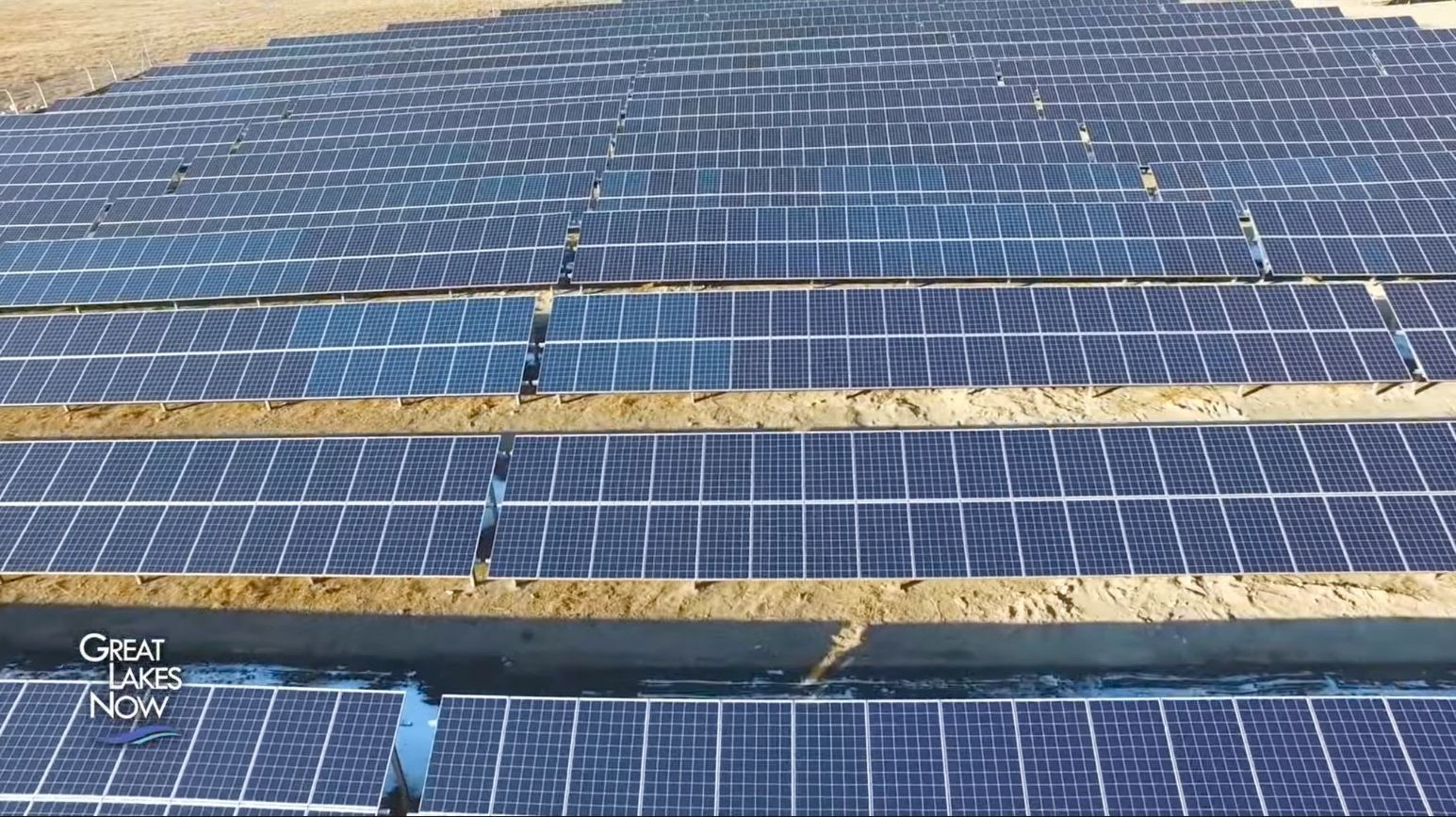
In the past few years, a largely grassroots solar installation trend has taken shape across a handful of Michigan towns and counties, as residents like Gontina have sought to capitalize on group-buy discounts and federal incentives to upgrade their homes.

“There wasn’t really a champion to push (Solarize) forward,” said Gontina. “I had the time and the interest to do it, and I also understood that the city was very challenged in terms of resources and didn’t have the time to meet an initiative like that.”

Now overseen by the Great Lakes Renewable Energy Association, the Solarize program has expanded to Grand Rapids, Lansing, Kalamazoo, as well as Oakland, Washtenaw, and Wayne counties, where city and county officials have taken over administering it to homeowners and businesses.

While federal incentives for solar have shrunk and solar installations have declined under the Trump administration, advocates of Solarize are still encouraging residents and businesses to take advantage of remaining opportunities and to embrace renewable energy sources amid utility rate hikes.

“As we see our energy costs continuing to rise, that’s really the biggest argument for renewables,” said Gontina. “Our electric provider, DTE, has demonstrated that they will not stop continuing to ask for increases at a regular pace until there’s something legislatively done to stop that.”

National grassroots solar installation program appeals to Michigan homeowners

While Solarize has found its footing in Michigan in the past decade, its origins trace back to 2009, when residents in Portland, Or. began hosting neighborhood seminars with local contractors to learn about residential solar panel installation. The program rapidly expanded the city’s solar footprint, according to a report from the Energy Trust of Oregon.

For Ann Arbor energy manager and resident Julie Roth — who now works for the city’s Office of Sustainability & Innovation — hearing about the early success of Solarize was enough of a rationale to try it in her neighborhood in 2019. At the time, she was interested in installing solar panels on her roof but was concerned about the high upfront costs and the wide range of contractor quotes.

“I pitched it to my solar installer (contractor),” said Roth. “I said, ‘Well, what do you think if I get a bunch of people here and we all do it together. Would you give us a discount?’ He said, ‘Sure,’ and came up with a sort of discount structure.”

After she sent out an invite on Nextdoor and Facebook, Roth says, she was surprised at the turnout.

“I thought that I would have three people sitting around my dining room table awkwardly trying not to make eye contact with the installer or me, and then we would all go home, and it would be over,” said Roth.

Instead, 40 people showed up to that first meeting at her house. Within a year, about a dozen people from that night installed solar panel systems on their homes.

“It basically started because we were trying to overcome barriers to adoption,” she said. “We didn’t have any staff. It started as a volunteer thing. We didn’t have any money, and so with no resources and very little bandwidth, what can you do?”

As residents like Gontina and Roth have become ambassadors for Solarize, encouraging neighbors to host their own events and create more group-buy discounts on solar, it’s brought greater interest from county governments and statewide organizations seeking to broaden its appeal.

“We really want to position ourselves as a resource, as an advocate, and relationship builder,” said Julie Lyons Bricker, chief sustainability officer for Oakland County, one of the latest counties to adopt the Solarize program.

Since launching in 2021, the county’s Sustainability Office has focused on both improving energy efficiency across Oakland’s 62 cities, townships, and villages and guiding homeowners and businesses toward available incentives, says Lyons Bricker.

With Solarize Oakland County, the county hopes to raise awareness on how solar works, what’s needed to get it installed, and what people should expect from their contractors. Groups of residents can be matched with GLREA-approved vendors and receive a bulk discount of 5 to 15% on their solar panel purchases.

A diminishing landscape for solar installation

As momentum for solar installations has picked up in some communities across Michigan, the national solar industry has had to contend with tariff pressures and a freeze on approvals for major infrastructure projects, amid a pivot away from the clean energy policies and investments that emerged during the Biden administration.

Solar installations have declined, leading to an industry-wide disruption, with utility-scale solar installations down 16% and community solar down 25% in 2025, according to a recent report from the Solar Energy Industries Association (SEIA).

Last year, the Residential Clean Energy Credit — a 30% federal tax credit on solar, wind, and geothermal home installations — was cut six years short when Trump signed the “One Big Beautiful Bill” in July 2025, ending a credit that had been set to run through 2032.

“It’s an economic investment when you’re thinking about installing a system,” said Gontina. “Anything that is available to help with that investment only makes it easier.”

While the residential tax credit ended in December, multiple financial incentives for businesses and houses of worship remain active through the end of 2027. Bricker says the county is still trying to encourage commercial property owners to take advantage of that opportunity while it lasts.

For renters, lower-income residents, and those with roofs unsuitable for panels, rooftop solar programs like Solarize remain largely out of reach. The Trump administration’s termination of the federal Solar for All program in 2025 eliminated $156 million in Michigan projects designed to expand solar access for low-income households — projects already underway in Detroit, Highland Park, Benton Harbor, and beyond.

Community solar legislation, which would allow residents to subscribe to off-site solar arrays and receive bill credits without owning a system, has bipartisan support in Michigan but has yet to advance.

Solar panel parties spawn citywide energy push

Gontina says that the Solarize Oakland County program could help the rest of the county catch up to what individual towns like Royal Oak are attempting to do.

“You’re bringing a bigger tent to the picture so that more people feel like they have an opportunity to be included,” he said.

Although Solarize is transitioning toward a “top-down” approach, Roth credits the “grassroots” solar parties she and others hosted with helping grow the city’s residential solar installations over the last several years.

“It grows the movement more when you’re talking to your neighbors than when you’re just talking to a city representative,” said Roth. “The community engagement and buy-in and ownership are much higher, especially when you’re not just looking at getting solar up, you’re looking at engaging a community around energy.”

She added: “We’re there as technical experts to some degree, to add legitimacy, and to continue to bring people along, and to make sure that the installers are being responsive.”

Although Ann Arbor Solarize’s numbers have slowed down in recent years, city data shows that the number of residents installing solar panels has increased in tandem with the program’s launch in 2019 and the growth of the solar installation market.

Ann Arbor has averaged about 180 residential solar installations annually since 2020, compared to 17 per year between 2008 and 2019.

Nearly seven years later, the success of Ann Arbor’s Solarize program has contributed, in part, to the city’s push to create a municipal-owned utility designed to help residents and businesses access solar energy and battery storage without upfront costs. The program will be optional, and will supplement, not replace, the use of DTE’s electric grid, according to city documents.

Ann Arbor’s Sustainable Energy Utility, authorized by roughly 80% of voters, is designed in part to address those barriers. Unlike rooftop solar programs, it would allow residents and businesses to access solar and battery storage without upfront costs — with the city owning the equipment and customers paying a monthly rate. Pilot projects targeting lower-income neighborhoods are expected to launch in 2026, with citywide expansion planned for 2027.

Roth hopes the city’s trend in renewable energy adoption and utility ownership can be a model for other communities. These days, she relishes the sight of solar panels around Ann Arbor.

“You walk around, you walk your dog in the neighborhoods, and it’s like, ‘solar there, solar there, solar there,’” she said. “It’s so visible. And that’s really exciting to see the actual physical changes in your community.”


The post Residents across Michigan unite for solar discounts appeared first on Great Lakes Now.

Original Article

Great Lakes Now

Great Lakes Now

https://www.greatlakesnow.org/2026/04/09/residents-across-michigan-unite-for-solar-discounts/

Planet Detroit

By Tracy Samilton, Michigan Public

The Great Lakes News Collaborative includes Bridge Michigan; Circle of Blue; Great Lakes Now at Detroit PBS; Michigan Public, Michigan’s NPR News Leader; and The Narwhal who work together to bring audiences news and information about the impact of climate change, pollution, and aging infrastructure on the Great Lakes and drinking water. This independent journalism is supported by the Charles Stewart Mott Foundation. Find all the work HERE.


U.S. Secretary of Health and Human Services Robert F. Kennedy Jr. and Environmental Protection Agency Administrator Lee Zeldin announced new initiatives to tackle microplastics in the human body and drinking water on Thursday.

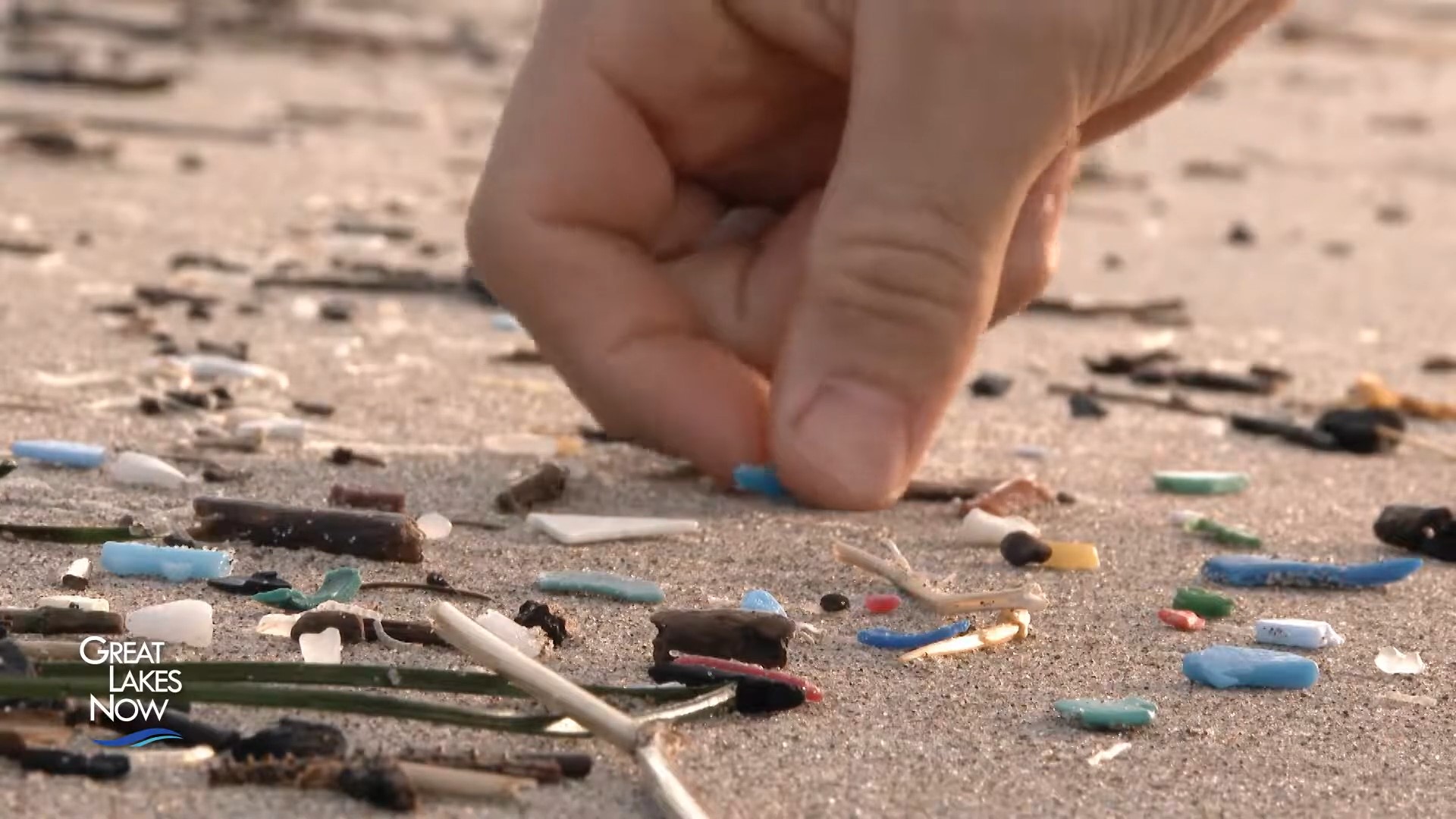
Microplastics are tiny pieces of plastic – as small as nano-sized pieces – that are increasingly ubiquitous in water supplies and in the human body.

Zeldin said the environmental agency will add microplastics and pharmaceuticals to its list of concerning chemicals in drinking water. “For the first time in the program’s history, EPA is designating both microplastics and pharmaceuticals as priority contaminant groups,” he said.

Kennedy said the government will create a $144-million program called STOMP (Systematic Targeting of Microplastics).

“We are focusing on three questions, what is in the body, what’s causing harm, and how do we remove it?” Kennedy said. “We still do not have clear answers about causation or solutions,” Kennedy said. “We do not yet understand how these particles interact with the immune system, the endocrine system or the neurological system, and we do not have validated methods to remove them safely.”

But a number of environmental groups said the actions taken by the government aren’t sufficient.

“Microplastics are a serious – and growing – threat to our health and our environment,” Erin Doran of Food & Water Watch said in a statement. “Without monitoring of our drinking water, we can’t know the full scale of this crisis. Today’s announcement …ultimately falls short on its own. It does not reflect the urgent need for a comprehensive nationwide monitoring program for microplastics in drinking water now.”

Samantha Pickering leads the public and environmental public health program at the Michigan Environmental Council. She said the EPA’s acknowledgment of the problem is a good thing, but there’s more that should be done now, like adding microplastics to the government’s official list of contaminants in drinking water that must be monitored.

She said she agrees with the EPA that much more research needs to be done to determine the health effects of microplastics. But she said there’s enough evidence already that microplastics are bad for the environment and for humans.

“I appreciate that the EPA is acknowledging that they’re going to start watching it. but it needs to be shifted into a precautionary approach. I don’t see why they wouldn’t be able to start taking action,” she said.

Pickering said some states, including California and Michigan, are ahead of the U.S. EPA in tackling the problem. “Having the Great Lakes ecosystem, and so much Great Lakes shoreline, we’re a bit more responsible for our stewardship.”

Michigan will be conducting a pilot to test five different drinking water systems for the contaminants, she noted, and it will also, for the next three years, test about 200 of its inland lakes and streams for microplastics.

And Pickering said California has passed a law requiring the adoption of a system for testing drinking water supplies, as well as projects to keep plastics out of the marine environment.

The post U.S. EPA announces action on microplastics, but Michigan critics say it’s not enough appeared first on Great Lakes Now.

Original Article

Great Lakes Now

Great Lakes Now

https://www.greatlakesnow.org/2026/04/07/u-s-epa-announces-action-on-microplastics-but-michigan-critics-say-its-not-enough/

Michigan Public

The Trump administration plans to close four US Forest Service research facilities in Michigan, shifting scientists out of the state as it reorganizes and consolidates the agency.

Officials have not announced a closure date for the facilities, located in the Lower Peninsula communities of East Lansing and Wellston, between Manistee and Cadillac, and the Upper Peninsula communities of Houghton and L’Anse, saying changes will be implemented over the next year.

The Forest Service headquarters will also move from Washington, DC, to Salt Lake City in what Agriculture Secretary Brooke Rollins described as a measure to save money, boost logging and put workers “closer to the landscapes we manage.”

“Establishing a western headquarters in Salt Lake City and streamlining how the Forest Service is organized will position the Chief and operation leaders closer to the landscapes we manage and the people who depend on them,” Rollins said in a news release.

The announcement prompted dismay in Houghton, where workers with the US Forest Service Northern Research Station collaborate closely with researchers at Michigan Technological University and the Michigan Department of Natural Resources. A smaller group in L’Anse conducts forest inventories and analysis.

“It’s very disappointing,” said David Flaspohler, dean of the university’s College of Forest Resources and Environmental Science. “I understand priorities change from one administration to the next, and this administration is interested in increasing the volume of timber that is coming off of the national forests. To do that in a sustainable, safe way, you have to have people that are trained in the latest science and silviculture.”

Flaspohler estimated between 20 and 25 people work at the Houghton station, including scientists and other staff. The station has a “multidecadal history of partnerships” with researchers and foresters in the UP, he said. 

The heavily forested Upper Peninsula contains more than 8 million acres of forestland, split roughly evenly between private or locally owned timberland and state and federal forests.

Beyond conducting research that aims to keep northern forests healthy and productive, Flaspohler said, the lab is an important economic contributor to a region with scarce jobs.

“This lab with its many employees — who all had salaries and invested in the region just like any employed person does — that’s going to be lost.”

Two-thirds of facilities cut 

The Michigan facilities are part of a network of 57 nationwide. Nineteen will remain following the closures, with the Forest Service instead establishing regional hubs that serve multiple states. 

A Madison, Wisconsin, hub will serve Michigan, Illinois, Indiana, Iowa, Wisconsin, Minnesota and Missouri.

Michigan DNR spokesperson John Pepin said leaders in the state Forestry Resources Division are not yet sure how the changes will affect the state agency, which works closely with federal partners. 

“It’s pretty apparent that the details and individual impacts to a lot of programs are not worked out yet,” Pepin said. 

The biggest change appeared to be in Houghton, Pepin said. The facility houses the Northern Institute for Applied Climate Science, which Pepin said is relocating to Fort Collins, Colorado.

He said DNR and university officials in Michigan and other Great Lakes states “have worked closely” with the institute for many years assessing the climate vulnerability of forests, developing adaptation strategies and applying it to forest management.

It wasn’t clear whether layoffs would occur as part of the reorganization, but the administration’s announcement emphasized the reduction of “administrative duplication.”

“The Forest Service will provide employees and partners with detailed transition guidance as different milestones approach,” stated an agency release.

Agency spokespeople did not immediately respond to emailed questions from Bridge Michigan. 

Phone calls to Forest Service facilities in Houghton and Lansing were not answered. A person who picked up the phone in the Huron-Manistee National Forest, which includes the Wellston office, declined to comment. Bridge Michigan was unable to locate a phone number for the L’Anse facility.

While an agency press release described the move as a “structural reset and a common-sense approach to improve mission delivery,” some critics have described it as an effort to shrink the Forest Service and shift its mission away from protecting forests and toward logging and privatization.

Utah has been a frequent battleground for debates about public lands, from the fight over Bears Ears National Monument to a lawsuit by the state of Utah that aimed to take control of millions of acres of federal land and Utah Senator Mike Lee’s repeated efforts to sell off public land

“This reorganization will wreak havoc on the Forest Service management and organization, adding fuel to the unpopular narrative by officials like Senator Mike Lee that public lands should be sold off to private industry” said Josh Hicks, Conservation Campaigns Director at The Wilderness Society. “At a time when wildfires are getting worse, and access to public lands is already under strain, the last thing we need is an unnecessary reorganization.”

The post Trump administration plans closure of 4 Michigan forestry research centers appeared first on Great Lakes Now.

Original Article

Great Lakes Now

Great Lakes Now

https://www.greatlakesnow.org/2026/04/06/trump-administration-plans-closure-of-4-michigan-forestry-research-centers/

Bridge Michigan

By Vivian La, IPR

This story is made possible through a partnership between Interlochen Public Radio and Grist, a nonprofit environmental media organization.


The company behind the controversial Line 5 tunnel project in the Straits of Mackinac released a report this month that lays out the potential geologic risks a contractor might see during construction — risks that pipeline opponents say underscore the dangers of the proposed tunnel.

Canadian pipeline company Enbridge Energy submitted its geotechnical baseline report on the project to state permitting agencies in early March. The report itself is from 2022. Enbridge says the report is based on data that was already available publicly.

The company wants to replace the existing dual-pipeline infrastructure in the Straits of Mackinac with a tunnel housing a new segment buried under the lakebed.

Opponents said they’re worried about potentially unsafe conditions indicated by the report, including weak bedrock, high water pressure and dangerous gases beneath the Straits.

“The report raises serious concerns about whether it is possible to safely build a tunnel in the Straits of Mackinac,” said Debbie Chizewer, managing attorney with the legal nonprofit Earthjustice, which is involved in litigation against Line 5.

Brian J. O’Mara, a geological engineer with the consultant group Agate Harbor Advisors LLC, said the report confirms his concerns around poor rock quality, suggesting that much of the bedrock won’t be stable for tunneling and could lead to the construction equipment failing.

The report also contains some redacted sentences in sections related to gas conditions and the possible “squeezing” of weak rock under high pressure.

“The report is silent on the risks related to fire, explosions, floods, sinkholes, tunnel collapse and a full-bore rupture release of oil and gas liquids from the pipeline,” O’Mara wrote in an email. He had written in legal filings to permitting agencies about his concerns on the report’s baseline data as early as 2023.

O’Mara notes that he believes the report incorrectly concludes that contractors won’t encounter any gas during tunneling.

Enbridge spokesperson Ryan Duffy said in an email that the geology beneath the Straits is not known to have gas, and that “the question has been thoroughly investigated by Enbridge and independent experts responding to Michigan regulators.”

“The reality is that the new pipeline replacement at the Straits crossing is designed specifically to prevent potential risks to the Great Lakes and its communities,” Duffy said.

Duffy said the “sole purpose” of the report was to inform and negotiate business deals with construction contractors. “Any geotechnical information pertinent to permitting decisions has already been made available to the relevant permitting agencies,” he said.

The report was not included in the case filings for Enbridge’s permit for the project issued by the Michigan Public Service Commission in 2023. The agency declined further comment because an appeal of the permit sits before the Michigan Supreme Court.

Enbridge is still waiting for permits from federal and other state agencies for the proposed project.

The U.S. Army Corps of Engineers reviewed the geotechnical report when it developed the tunnel project’s Environmental Impact Statement, said agency spokesperson Brandon Hubbard.

A spokesperson for the Michigan Department of Environment, Great Lakes and Energy (EGLE) said the agency requested the geotechnical report from Enbridge in late 2025 as part of their permitting process.

“We are continuing to evaluate the application that was submitted. We will include this document, along with many others posted to the EGLE database, as part of our review,” said EGLE spokesperson Scott Dean in an email.

A decision from EGLE on the permit is expected no later than mid-July.

Editor’s note: Enbridge is among IPR’s financial supporters. We cover them as we do any other company.

The post Line 5 opponents raise concerns over report on geologic conditions for proposed tunnel appeared first on Great Lakes Now.

Original Article

Great Lakes Now

Great Lakes Now

https://www.greatlakesnow.org/2026/04/06/line-5-opponents-raise-concerns-over-report-on-geologic-conditions-for-proposed-tunnel/

Interlochen Public Radio

By Janelle D. James, Bridge Michigan

The Great Lakes News Collaborative includes Bridge Michigan; Circle of Blue; Great Lakes Now at Detroit PBS; Michigan Public, Michigan’s NPR News Leader; and The Narwhal who work together to bring audiences news and information about the impact of climate change, pollution, and aging infrastructure on the Great Lakes and drinking water. This independent journalism is supported by the Charles Stewart Mott Foundation. Find all the work HERE.


More than a decade after the idea first surfaced, a revamped proposal to buy Belle Isle and turn the public park into a privately funded housing, entertainment and retail district is drawing sharp criticism from Michigan officials and the Belle Isle Conservancy, who call the idea unrealistic. 

Southfield-based real estate developer Rodney Lockwood has proposed buying Detroit’s Belle Isle for $1 billion and transforming it into a high-density “special economic zone” with high-income housing, mixed-use developments and more than 100 restaurants.

Lockwood’s firm stirred debate last week with the release of a poll it had commissioned. But the Michigan Department of Natural Resources, which manages the island as a state park under a 30-year lease agreement with the city, told Bridge Michigan it has no plans to take Lockwood up on the offer. 

“This proposal is not something the Michigan DNR has been involved in and it’s not something the state is considering,” Tom Bissett, assistant chief of the DNR’s Parks and Recreation Division, said in a statement. 

“Since assuming management of Belle Isle in 2014 through a lease with the city, the state has focused on investing in the historic park, recognizing the central role Belle Isle plays in the life of Detroit and its residents,” he said.

The Belle Isle Conservancy, a nonprofit that partners with the state and city to protect the island, was even more forceful in dismissing Lockwood’s redevelopment plans. 

“Belle Isle is a public park. Period,” said Meagan Elliott, president and CEO of the Belle Isle Conservancy. “The Belle Isle Conservancy has not been consulted at all on this dystopian plan. Our face-to-face community engagement this summer touched 12,000 people, showing that residents endorsed the idea of the Belle Isle Commons and more recreation offerings.” 

Lockwood could not be reached for comment. 

The idea, which he first wrote about in a 2013 novel set 30 years in the future, would rely on private investment, with the aim of turning the island into a global hub like Singapore or Dubai. It’s estimated that the project would create 20,000 construction jobs over 10 years and generate nearly $200 million in annual tax revenue, he told a local news outlet last week.

Lockwood first floated the idea more than a decade ago, before the island became a state park, when it was under city control and facing years of deferred maintenance, budget shortfalls, deteriorating infrastructure, reduced services and concerns about safety and upkeep.

It’s the latest proposal from Lockwood for Detroit land in recent years. In 2019, along with businessman Larry Mongo, Lockwood sought to redevelop a golf course that makes up about half of Palmer Park.

A Mitchell Research & Communications poll conducted for Lockwood’s company — Belle Isle Freedom City — and released last week purported to show state and local support for the concept.

But a press release noted the many steps it would require — passage of legislation by Congress, the state and the city to create the “special economic zone” — and critics noted a small number of Detroit residents were surveyed. 

“The (poll) Mitchell Research released this week had a sample of less than 200 people,” said Elliott, the Belle Isle Conservancy CEO. “This ridiculous plan is a great reminder of just how lucky we are to have this world-class park as a public asset for everyone.”

The Belle Isle Conservancy has its own plans for the island. The Belle Isle Commons proposal includes a public square near the aquarium and conservatory designed to improve connectivity and create gathering spaces without relying on cars.

The state, meanwhile, has invested more than $178 million in improvements at Belle Isle, which is the most visited state park with 5.5 million annual visitors, according to the DNR. 

The post Michigan shuts down Belle Isle redevelopment plan critics call ‘dystopian’ appeared first on Great Lakes Now.

Original Article

Great Lakes Now

Great Lakes Now

https://www.greatlakesnow.org/2026/04/03/michigan-shuts-down-belle-isle-redevelopment-plan-critics-call-dystopian/

Bridge Michigan

By Carey L. Biron

This story was originally published by Grist. Sign up for Grist’s weekly newsletter here.


When Krystal Steward started knocking on her neighbors’ doors in Ann Arbor, Michigan, in 2021, to discuss energy efficiency and sustainability upgrades, she was met with a lot of blank stares.

She was new to the issues herself, she said. But the longtime social worker kept at her new job doing outreach for Community Action Network, a local nonprofit dedicated to serving under-resourced communities. She slowly started getting people in her neighborhood to take part first in home energy assessments, then a city program to swap out appliances, make structural fixes, and more.

“In the beginning it was kind of hard — a lot of people were reluctant. If someone is knocking on your door and telling you they can fix up your home for free, most people don’t believe that,” Steward said. But, she added, “Once one person tried it out, they’d tell their neighbors, and others would jump on board.”

Now the neighborhood, Bryant, is set to pilot a first-in-the-country program that officials hope will speed the city’s transition to renewables — and offer a new model for how local governments can control their energy future.

The idea is technical, but has sparked enthusiasm across Bryant and Ann Arbor: a new city-created Sustainable Energy Utility, known colloquially as the SEU. Rather than replacing the privately-owned utility that serves Ann Arbor, the plan is for this city agency to run in tandem, offering a supplemental service that residents can opt into. 

If they do, they’ll stay connected to the regular grid, but will be outfitted with solar panels, battery backup systems, or other infrastructure, drawing on that power for their home use and opening up the prospect of selling any excess. The city, meanwhile, would pay for the installation and maintenance of these systems, which Ann Arbor would continue to own — a vision of energy generation and storage distributed across the city.

The plan begins in the coming months in Bryant, a 1970s-era community with about 260 homes, many of which are officially considered “energy burdened.” A quarter of residents pay more than a third of their incomes on utilities, in a neighborhood that is one of Ann Arbor’s only areas of unsubsidized affordable housing, according to Derrick Miller, Community Action Network’s executive director.

The SEU is a major step in a yearslong process to address Bryant’s energy affordability and sustainability concerns — and then expand the approach across the city.

“When we started having a conversation about how to decarbonize the neighborhood about four years ago, it felt outlandish. Now, it doesn’t feel like anyone can stop us,” Miller said.

Two parallel utilities

The appeal of the SEU became clear in November 2024, when a ballot measure on the proposal was approved by nearly 80 percent of Ann Arbor voters. A little over a year later, city officials are ready to implement the vision, said SEU Executive Director Shoshannah Lenski.

In late February, the city announced that it was accepting expressions of interest from residents and businesses to take part, accompanied by a flurry of community meetings, animated videos, and ads in local theater playbills.

Customers who opt in will get two utility bills — one for the power supplied by these new city-owned clean energy systems, and one for any power they’re still drawing from the regular grid — which Lenski and her colleagues say will add up to less than they currently pay.

“Just like customers don’t own a power plant, the city owns and finances the system upfront, and they pay for that electricity through a monthly bill,” Lenski said. She noted that the model could prove particularly helpful for renters, who often get left out of green energy incentives.  Signing up large multifamily buildings will be important to quickly expand the SEU’s size, she said.

In addition to installing clean energy systems at participants’ homes, the SEU could build its own microgrids, something that would set it apart from other municipal clean energy programs. For instance, the agency could install solar panels on a school to supply power when students and teachers are in the building, and that power could go to other SEU customers when classes are out.

Backers say the strategy allows Ann Arbor to build out its green energy system with lower financial risk — and lower potential for political or industry pushback.

“When coupled with DTE’s planned investments in clean energy, these voluntary, fee-based programs help accelerate economy-wide decarbonization while maintaining reliability and affordability,” Ryan Lowry, a spokesperson for DTE Energy, which currently supplies energy to the city, said in an email.

It might seem surprising that DTE, Michigan’s largest electric utility, is supportive of the SEU. But industry experts noted that many investor-owned utilities are struggling under the unprecedented new demands for power. Having a local government try to help manage power needs could be seen as an asset, they suggested — though DTE will have no formal role in the SEU.

So far, more than 1,500 people across Ann Arbor have indicated that they want to sign up. The SEU plans to serve around 100 to 150 customers in Bryant this year, expand out to reach 1,000 next year, and then grow by several thousand annually after that.

A missing 40%

The approach answers a question prompted when Ann Arbor adopted an ambitious climate plan in 2020.

That framework included an electrical grid powered completely by renewable energy within a decade, but a city analysis in 2023 warned it was likely to miss that goal by more than 40 percent. In order to reach it, the city would need to push DTE to accelerate its renewable energy buildout, or lean on state officials to do so — or detach from DTE entirely and create a separate city-owned utility, an idea that does have some support in Ann Arbor. 

But from the city’s perspective, these options seemed too risky or uncertain, Lenski said — until officials realized that the Michigan constitution allows municipalities to create and run their own utility, even if there’s another present.

“That’s where the idea of the SEU was born,” she said.

When University of Michigan researchers compared the four options, they found the SEU model had the greatest potential to lower energy prices and emissions, boost reliability, and help low-income communities.

“Overall, it came down to having some benefits of local control without some of the costs,” said Mike Shriberg, a professor who led the research, noting a similar model should be possible in every state.

Still, some worry the strategy does not go far enough.  Advocates who want the city to break with DTE and replace its services with a utility fully owned by Ann Arbor are seeking a November ballot measure to set that process in motion. (Organizers are currently collecting signatures.)

Brian Geiringer, executive director of the advocacy group Ann Arbor for Public Power, said the SEU plan still leaves too much responsibility for the city’s energy transition with DTE.

But if voters do approve creating a fully public utility, he said, it would not mean an end to the SEU: The two approaches could work together, with the SEU focused on generation within Ann Arbor, and a publicly owned utility able to make its own decisions on purchasing power.

“If you draw a circle around Ann Arbor, the SEU is doing stuff inside the circle. And we’re interested in having the city control what comes in from outside of the circle,” Geiringer said.

Local control

Like Ann Arbor, hundreds of cities are working to implement climate goals — and running into similar gaps between ambition and practicality, especially when it comes to control over energy sources.

“Cities have set these goals, and the utilities aren’t obligated to follow those,” said Matthew Popkin, manager for U.S. cities and communities at RMI, an energy think tank.

“So Ann Arbor’s SEU is an example of cities taking more control of their future without dismantling or acquiring existing utility systems,” said Popkin. “That’s a really interesting model.” 

Other models also exist. In Washington, D.C., for instance, a program called the D.C. Sustainable Energy Utility has been operating for 15 years, overseeing the city’s efforts to help residents use less energy.

The initiative is far narrower than the Ann Arbor vision, functioning not as a utility but rather as an organization contracted by the city to boost energy efficiency and increase access to clean energy through subsidies and rebates. 

The program is a central part of the city’s goals to reduce its greenhouse gas emissions, said managing director Benjamin Burdick, and has helped cut some 10 million metric tons of emissions while saving residents more than $2 billion from reduced energy use.

Nationally, “the conversation that we’re hearing is around how do you continue to talk about climate with affordability,” he said. “Programs like the D.C. SEU are going to continue to be the way that we double down.”

The work in Ann Arbor is now receiving its own attention across the country. 

“What caught my eye about Ann Arbor’s efforts were the references to citizen involvement and co-investment in their own grid,” said Jim Gilbert, a retired medical product designer in Boulder, Colorado, who is now helping the city assess the Ann Arbor model. 

Boulder has dealt with recent power outages due to worsening climate impacts and aging infrastructure, and Gilbert said an SEU could offer a way forward.

Back in Ann Arbor, as the city prepares to launch the initial pilot of its SEU, the plan is to reach half of the Bryant neighborhood by the end of the year — and local residents are “all in,” said Krystal Steward. 

Older members of the community are particularly excited, she said, noting that many are on fixed incomes and will particularly benefit from lower energy bills.

“It’s hard for me to keep up,” Steward said. “Now it’s not me reaching out to residents to sign up — they’re blowing up my phone.”


The post How Ann Arbor, Michigan, is creating its own clean energy utility appeared first on Great Lakes Now.

Original Article

Great Lakes Now

Great Lakes Now

https://www.greatlakesnow.org/2026/04/03/how-ann-arbor-michigan-is-creating-its-own-clean-energy-utility/

Grist

By Vivian La, IPR

This story is made possible through a partnership between Interlochen Public Radio and Grist, a nonprofit environmental media organization.


No one wants to drive in an ice storm.

But one year ago — during the devastating northern Michigan ice storm that knocked down trees, snapped utility poles, and took out power for thousands — Wanda Whiting had to get her husband to a hospital. He was having a heart episode and calling an ambulance to their rural home in Lewiston would take too long. She had no choice but to brave the roads.

While driving the route almost exactly a year later, Whiting recalled the mess of dropped power lines and broken poles “like matchsticks” that littered the highway shoulder along the 20-mile stretch to Gaylord

“These were all down. Everything was down. These poles are all broken, snapped,” she said. Whiting remembered getting lost on dark roads with dead streetlights. She was trying to meet an ambulance at a halfway point. Arriving at the rendezvous parking lot, she had to drive across thick wires that had fallen on the roadway.

Her husband made it to the hospital. And eventually, in the weeks that followed, the power lines and poles went back up.

But Whiting can’t help but wonder how those wires will fare whenever she sees a forecast for snow and ice. And if there’s an alternative solution.

“And if it meant going underground, then by God, go underground,” she said.

After the storm

Burying power lines often comes up as a potential solution for preventing outages and minimizing the costs of storm recovery. And for good reason — underground wires are proven to increase reliability, according to researcherselectric utilities and regulators.

Now, as recovery from the ice storm continues a year later, some residents are calling for a more reliable grid that can withstand worsening extreme weather.

But burying lines is expensive, and utilities say those costs often outweigh potential benefits.

Last year, the storm knocked out power for some 200,000 people. Recovery cost utilities hundreds of millions of dollars, leading to increased electric bills for ratepayers across the region, as emergency federal aid hit delays.

The state’s largest electric co-op, Great Lakes Energy Cooperative, saw more than 66,000 power outages last year from the storm, and recovery costs totaled more than $150 million. In response to the storm, the co-op implemented a policy in December that requires any new lines to be installed underground, in an effort to increase resiliency.

“I think there’s reliability benefits for our membership, because it’s going to help prevent outages over the long term,” said Shari Culver, chief operating officer for Great Lakes Energy.

IPR reached out to the other hard-hit electric cooperative — Presque Isle Electric & Gas Co-Op — for comment about burying lines, but they declined due to ongoing discussions with federal agencies about pending storm relief funds.

Consumers Energy, another large electric provider in the region, says they hear from customers “consistently” about burying more lines. Last week, the Michigan Public Service Commission approved a $276.6 million rate hike for Consumers Energy — the largest increase in decades — to improve reliability for customers, which includes undergrounding some lines. Regulators said a typical residential customer using 500 kilowatt-hours a month will see an increase of $6.46, or 6.1%, in their monthly bill.

“There’s no better way to improve the resilience of the grid than just to get the lines out of the way of all the trees and ice and wind. Now, it comes at a cost,” said Greg Salisbury, Consumers Energy’s senior vice president of electric distribution. The company estimates it’s about $400,000 per mile to bury a line.

This year, Consumers Energy plans to bury more than 10 miles of lines around the state. That’s a small number, compared to the nearly 100,000 miles in the utility’s system, of which about 15% is already underground.

“Our viewpoint is that each circuit needs to be treated with the right interventions to get the best outcomes for the best cost for those customers,” Salisbury said.

To bury or not to bury

Burying power lines is relatively easier and cheaper with new construction, as crews install other utilities like water or gas. It’s in relocating the existing overhead lines where expenses for construction, labor and materials can add up quickly.

Burying electric lines isn’t a one-size-fits-all approach, either. Smaller utilities like Traverse City Light & Power (TCLP) are dealing with a different environment than rural co-ops, for example. In the city, there are more sidewalks, buildings, streets and other wires.

“There’s just not a lot of room to place that equipment in town without getting easements and such,” said Tony Chartrand, director of electric engineering and operations for TCLP, which has more than 170 miles of electric lines over 16 square miles in the city.

But, Chartrand said, for the municipal electric utility, there are still situations where burying makes more sense than stringing wires from poles. About half of TCLP’s lines are already buried, most running through conduit pipes, which protect wires from the elements or from accidental damage from other utility work.

TCLP tries to be proactive with burying power lines in hard-to-reach areas, like in people’s backyards, Chartrand said. In some cases, burying a residential line is cheaper than the costs of repairing aboveground wires after a tree falls on it.

Still, buried lines present their own challenges if there’s an outage. Unlike the clear visual cue of a branch hanging from overhead wires, problems underground require more equipment to find and fix.

“There’s times where, even if it is in conduit, we can’t just pull the wire out. We actually have to dig it up. And of course, that’s a whole ordeal and takes a lot of time,” Chartrand said.

There’s a lot of attention on grid reliability right now, he said.

“Part of that solution is undergrounding lines. But it’s not necessarily undergrounding everything. It’s trying to balance that cost with the benefit that we’re trying to do,” Chartrand said.

Ice storms and climate change

That balance could get harder to find as extreme weather worsens with climate change. Research suggests that northern Michigan could see more ice storms in the future, as a warming world shifts the range for freezing rain further north.

“Places where it used to be cold, below freezing all the time, it’s not always below freezing anymore,” said Richard B. Rood, a professor emeritus at the University of Michigan who studies how ice and freezing rain are changing.

It often takes big storms, like last year’s, for governments, utilities and people to spend money on planning for a warming world. And Rood sees that as a problem.

“You can’t think of what we’re experiencing as, ‘this is how it used to be, and this is where it will be.’ You are right in the middle of the change here,” Rood said.

Some policy experts say we won’t see more buried lines without significantly bringing down the costs to utilities. Eric Paul Dennis, research associate of infrastructure policy at the Citizens Research Council, said that could involve improving how we coordinate infrastructure projects so you only “dig once.”

“No one thinks that the best option is to operate outdated unreliable infrastructure and just fix it when it goes down,” he said. “But there are trade-offs. Investments must be recovered in rates. No option will be one hundred percent reliable.”

Still, only considering costs to utilities leaves out how much society benefits from having reliable electric service — roads are safer, food doesn’t spoil, people contribute to the economy.

“This is not because the utilities or people who run them don’t care, this is just the system we have,” Dennis said.

The post The northern Michigan ice storm battered the electric grid. Is burying power lines the solution? appeared first on Great Lakes Now.

Original Article

Great Lakes Now

Great Lakes Now

https://www.greatlakesnow.org/2026/03/30/the-northern-michigan-ice-storm-battered-the-electric-grid-is-burying-power-lines-the-solution/
Interlochen Public Radio

By Kelly House, Bridge Michigan

The Great Lakes News Collaborative includes Bridge Michigan; Circle of Blue; Great Lakes Now at Detroit PBS; Michigan Public, Michigan’s NPR News Leader; and The Narwhal who work together to bring audiences news and information about the impact of climate change, pollution, and aging infrastructure on the Great Lakes and drinking water. This independent journalism is supported by the Charles Stewart Mott Foundation. Find all the work HERE.

Changes to Michigan’s energy sector are expected to dominate the headlines in 2026, with big implications for the state’s environment.

From data centers, coal plants and solar arrays to petroleum pipelines and aging dams, energy-related decisions next year that could shape Michigan’s environment for decades to come, affecting everything from which fish can survive in rivers to how quickly the state’s utilities ditch planet-warming fossil fuels. 

Here are the topics to watch:  

Data centers

Swift and secretive dealmaking involving some of the world’s most powerful corporations. 

Vast quantities of money, land and electricity. 

Promises of prosperity from a booming industry, coupled with fears that Michiganders could be left holding the bag in a bust.

Given those dynamics, it’s no wonder data centers became one of Michigan’s biggest environmental and political issues in 2025. And the debate shows no signs of letting up in 2026.

“It’s not going away,” said Sarah Mills, a land use planning expert at the University of Michigan who advises local officials as they consider how to respond to the data center boom.

“I’m telling you, like, two weeks ago, the priest talked about it at church.”

Tech giants OpenAI, Oracle and Related Digital expect to break ground soon on Michigan’s first hyperscale data center in Saline Township, a milestone hailed by some as a win for Michigan, and maligned by others as an example of corporations railroading communities.

Developers have approached multiple other communities with data center proposals, prompting pushback from neighbors and fears that rapid expansion of the energy and water-hungry industry could imperil Michigan’s environment and drive up utility rates.

Support and opposition blurs party lines. Data center supporters include President Donald Trump, a Republican, and Gov. Gretchen Whitmer, a Democrat. Both contend the facilities are important to state and national economic development and national security interests.

Meanwhile, bipartisan criticism has emerged in response to Michigan’s tax breaks for the industry and regulators’ approval of data center deals with limited public scrutiny. They note that the facilities employ few permanent workers and have overtaxed water and energy supplies in some other data center-heavy states.

Michigan’s two largest utilities, Consumers Energy and DTE Energy, both say they’re in late-stage negotiations to bring on several gigawatts’ worth of new data centers in the near future.

“We’re talking about doubling our entire electricity demand,” said Bryan Smigielski, a Michigan organizer with the Sierra Club. “There’s no way to do that in a sustainable manner.”

The next year will be crucial for both sides, as developers continue to pursue deals and local governments decide whether to grant them access to the land they need to operate.

Michigan’s energy transition

More than two years after state lawmakers passed a law requiring utilities to get all of their power from designated “clean” sources by 2040, Michiganders will get their first glimpse next year at how the largest utilities plan to meet that goal.

Both DTE Energy and Consumers Energy, the monopoly utilities that provide electricity to the vast majority of Michigan households, are scheduled to file so-called integrated resources plans next year with the Michigan Public Service Commission. 

The long-range planning documents spell out how utilities plan to meet demand over the next 20 years. Because of the new climate law, they also must include details about how they’ll invest in clean energy to get off fossil fuels.

Both utilities contend they’re on track to meet the 2040 deadline, along with an interim deadline to reach 50% renewables by 2030. 

But they have a long way to go. Right now, about 12% of Michigan’s in-state electricity generation is from renewable sources.

Concern has emerged recently that growing demand from data centers could make it harder for utilities to make the transition. A single hyperscale facility typically consumes as much power as a large American city.

And at least in the near-term, DTE Energy is planning to power the Saline Township facility largely with fossil fuel energy generated by ramping up production at existing power plants.

“We cannot build renewables fast enough to avoid at least a temporary increase in greenhouse gas emissions” from data centers, said Douglas Jester, managing partner at the energy consulting firm 5 Lakes Energy.

Over the longer term, utilities will need to build even more solar arrays, wind farms or other approved clean energy to meet rising data center demand while still complying with the state’s clean energy law. Adding a single 1 gigawatt data center to the grid would require an extra 10,000 acres of solar arrays if utilities looked to power it exclusively with solar.

That raises big questions about where that energy infrastructure might be built and how utilities will add it to a power grid that’s already facing lengthy interconnection backlogs.

Palisades power plant

Against that backdrop, the Palisades nuclear plant has emerged as a controversial answer to Michigan’s energy supply conundrum.

It seems all but certain that the shuttered facility on Michigan’s southwestern shoreline will reopen in 2026, as the federal and state governments pour money into an effort to boost Michigan’s supply of carbon-free energy during a time of rising demand.

Subsidies for the project now top $3.5 billion. 

A nuclear plant control room
A training facility at the Palisades nuclear plant includes technology dating back to the 1970s, when the plant came online. Nuclear energy proponents want Michigan to be ground zero for an industrywide renaissance. (Kelly House/Bridge Michigan)

The federal government has authorized a $1.5 billion loan plus $1.3 billion in grants to help two rural electric cooperatives buy power from the plant and another $400 million to build additional reactors at the site. Michigan taxpayers have chipped in another $300 million. 

“I’ll keep working with anyone to grow Michigan’s economy and build a more affordable, clean energy future right here in Michigan,” said Whitmer, a supporter of the restart plan. 

Officials with Holtec Energy, the plant’s owner, began refueling the facility in October and say they’re on track to start generating power as soon as year’s end. But as of early December, federal officials were still inspecting the plant and opponents were fighting on multiple fronts to prevent the restart. 

Arguing the promise of emissions-free energy is not worth the risk of reopening a 54-year-old plant that has a history of problems, three anti-nuclear groups filed a November lawsuit contending the restart scheme should never have received regulatory approval.

“They’re making a mockery of safety regulations and even laws,” said Kevin Kamps, a Kalamazoo-based radioactive waste specialist with Beyond Nuclear. His group will likely file additional suits if the Nuclear Regulatory Commission allows the plant to reopen.

And then there’s the issue of what to do with the spent nuclear fuel. The United States still has no permanent storage location for the stuff, so, for now, it’d be held indefinitely in storage casks situated on concrete pads near the Great Lakes shoreline. 

Line 5

After years of delays, cost overruns, lawsuits and political controversy, 2026 could be the year Michigan learns for sure whether Enbridge Energy will build the Line 5 tunnel.

Federal regulators say they’ll decide by spring whether to grant key permits for the proposed concrete-lined tunnel beneath the Straits of Mackinac, where Enbridge has said since 2018 it plans to reroute the petroleum pipeline that currently poses an oil spill risk in the open water of the Straits. 

But this fall, they announced they’re also studying a separate option that would involve drilling a narrow borehole hundreds of feet underground and snaking the pipeline through it.

While pipeline fans and foes await decisions on the federal permit and a separate state permit that Enbridge needs to begin tunnel construction, the US Supreme Court is preparing to issue a key ruling pertaining to Attorney General Dana Nessel’s yearslong effort to shut down the pipeline.

The court will decide which court  — federal or state — should decide whether the pipeline shuts down. 

It may sound insignificant, but onlookers widely agree that a state court is more likely to side with Nessel, while a federal court is more likely to side with Enbridge.

Climate change

So far, Michigan is seeing its most normal winter in years, by historic standards.

Snowpack across much of the state is at or above average, temperatures have been seasonally chilly, and a brave few are already augering fishing holes into the ice as Great Lakes bays freeze over.

Downtown Gaylord
Michigan has endured a string of lackluster winters, including in 2024, when the ice spire outside Gaylord City Hall was rapidly melting on an early February day. (Kelly House/Bridge Michigan)

But the respite from a string of lackluster winters and smoky, hot summers can’t mask the fact that Earth’s atmosphere is steadily warming, with consequences reverberating into the Great Lakes region’s ecosystem.

Bridge has written extensively about how climate change affects Michigan, from lost winter pastimes to disappearing fish and worsening storm damage. It’s impossible to say what sort of climate disruption is in store for Michigan in 2026, but you can bet on more coverage about how the global changes are hitting home locally. 

The post 5 Michigan environment stories to watch in 2026 appeared first on Great Lakes Now.

Original Article

Great Lakes Now

Great Lakes Now

https://www.greatlakesnow.org/2025/12/30/5-michigan-environment-stories-to-watch-in-2026/

Kelly House, Bridge Michigan

$18M approved in bill credits for Pennsylvania customers in ‘forever chemicals’ settlement

Catch the latest updates on what’s happening with PFAS in the Great Lakes region. Check back for more PFAS news roundups every other week on our website.


The Pennsylvania Public Utility Commission recently approved a proposal from the Pennsylvania-American Water Company (PAWC) to issue over $18 million in bill credits to customers.

Read Now at Great Lakes Now.

Original Article

Great Lakes Now

Great Lakes Now

https://www.greatlakesnow.org/2025/11/more-than-18m-approved-in-bill-credits-for-pennsylvania-customers-in-forever-chemicals-settlement/

Lisa John Rogers, Great Lakes Now

Roads in the Great Lakes region get riskier after daylight saving ends

Drivers around the Great Lakes region beware. In the weeks following “fall back,” once daylight saving time ends, collisions between wildlife and vehicles rises by 16%. According to data from insurance company State Farm, October, November and December are the most dangerous for animal-related collisions, making up 41% of all animal collision claims.

Read Now at Great Lakes Now.

Original Article

Great Lakes Now

Great Lakes Now

https://www.greatlakesnow.org/2025/11/roads-in-the-great-lakes-region-get-riskier-after-daylight-saving-ends/

Lisa John Rogers, Great Lakes Now

Going Country at Farrand Hall

Situated in a town of a little over a thousand people in Colon, Michigan, is an idyllic and pastoral outdoor dining experience just 250 feet from a main road. Guests are recommended to order a glass of wine, wander the property grounds, and soak in their surroundings before taking a seat at a banquet-style table.

Read Now at Great Lakes Now.

Original Article

Great Lakes Now

Great Lakes Now

https://www.greatlakesnow.org/2025/11/going-country-at-farrand-hall/

S. Nicole Lane

New study links seasonal pollen to higher suicide risk, experts warn

A new study between researchers at the University of Michigan and Wayne State University, looked at suicide rates in metropolitan areas around the United States. When looking at data from 2000 to 2018, they found a direct correlation to rises in seasonal pollen. While it is still unknown how exactly allergies work as a tipping point for some people, the research adds to a burgeoning body of work that shows this parallel exists.  

Read Now at Great Lakes Now.

Original Article

Great Lakes Now

Great Lakes Now

https://www.greatlakesnow.org/2025/10/new-study-links-seasonal-pollen-to-higher-suicide-risk-experts-warn/

Lisa John Rogers, Great Lakes Now

A Michigan town hopes to stop a data center with a 2026 ballot initiative

By Tom Perkins, Inside Climate News

This article originally appeared on Inside Climate News, a nonprofit, non-partisan news organization that covers climate, energy and the environment. This is the second of three articles about Michigan communities organizing to stop the construction of energy-intensive computing facilities.

Read Now at Great Lakes Now.

Original Article

Great Lakes Now

Great Lakes Now

https://www.greatlakesnow.org/2025/10/michigan-town-effots-to-stop-data-center/

Inside Climate News

The ready access to nature and winter sports is what prompted Elizabeth Scott and her family to up sticks from Portland, Oregon, to Houghton on Michigan’s Keweenaw Peninsula in summer 2021.

With 29% of Michigan’s territory and only 3% of its population, to many, the Upper Peninsula (U.P.) might appear a dream place to start over.

Read Now at Great Lakes Now.

Original Article

Great Lakes Now

Great Lakes Now

https://www.greatlakesnow.org/2025/09/climate-migrations-impact-on-michigans-upper-peninsula/

Stephen Starr, Great Lakes Now

How many cigarette butts are littering your local beach?

By Lester Graham, Michigan Public

The Great Lakes News Collaborative includes Bridge Michigan; Circle of Blue; Great Lakes Now at Detroit PBS; Michigan Public, Michigan’s NPR News Leader; and The Narwhal who work together to bring audiences news and information about the impact of climate change, pollution, and aging infrastructure on the Great Lakes and drinking water.

Read Now at Great Lakes Now.

Original Article

Great Lakes Now

Great Lakes Now

https://www.greatlakesnow.org/2025/08/how-many-cigarette-butts-are-littering-your-local-beach/

Lester Graham, Michigan Public

How Michigan’s Inland Fish Farmers Cultivate a Sustainable Future for the Great Lakes

Despite being surrounded by the largest group of freshwater lakes on Earth, Michigan imports the vast majority of its seafood, between 65% and 90%, according to Michigan Sea Grant.

As global aquaculture has grown to meet increasing demand for protein, a small but determined group of inland fish farmers in the Great Lakes region are working to build a more sustainable, local supply.

Read Now at Great Lakes Now.

Original Article

Great Lakes Now

Great Lakes Now

https://www.greatlakesnow.org/2025/08/how-michigans-inland-fish-farmers-cultivate-a-sustainable-future-for-the-great-lakes/

Donte Smith

Great Lakes Moment: Detroit’s waterfront porch reaps substantial benefits

Great Lakes Moment is a monthly column written by Great Lakes Now Contributor John Hartig. Publishing the author’s views and assertions does not represent endorsement by Great Lakes Now or Detroit PBS.

As the Detroit Riverfront Conservancy moves forward following an embezzlement crisis, its 2024 visitor survey found that 99.4% of respondents would visit the Detroit Riverwalk again, and 99.3% would recommend it to others.

Read Now at Great Lakes Now.

Original Article

Great Lakes Now

Great Lakes Now

https://www.greatlakesnow.org/2025/08/great-lakes-moment-detroits-waterfront-porch-reaps-substantial-benefits/

John Hartig, Great Lakes Now

Why we don’t bike like the Dutch — yet

How did you get to work today?

Maybe, like 14% of Americans, you didn’t have to go anywhere because you work from home. But most people do need some form of transportation to earn a living. By far the biggest group is the 69% of people who drive to work alone.

Read Now at Great Lakes Now.

Original Article

Great Lakes Now

Great Lakes Now

https://www.greatlakesnow.org/2025/07/why-we-dont-bike-like-the-dutch-yet/

Sean Ericson, Great Lakes Now

‘We can’t regulate ourselves’ out of whitefish crisis, experts say

By Emilio Perez Ibarguen, Bridge Michigan

The Great Lakes News Collaborative includes Bridge Michigan; Circle of Blue; Great Lakes Now at Detroit PBS; Michigan Public, Michigan’s NPR News Leader; and The Narwhal who work together to bring audiences news and information about the impact of climate change, pollution, and aging infrastructure on the Great Lakes and drinking water.

Read Now at Great Lakes Now.

Original Article

Great Lakes Now

Great Lakes Now

https://www.greatlakesnow.org/2025/07/we-cant-regulate-ourselves-out-of-whitefish-crisis-experts-say/

Bridge Michigan

John Ball Zoo Fights for Great Lakes’ Rarest Butterflies

Butterfly populations are in decline across the continental U.S., dropping by 22% between 2000 and 2020 according to a study published in the journal Science. Almost a third of the 342 species studied have seen their numbers fall by more than half. To help combat this, the John Ball Zoo in Grand Rapids, Michigan launched its Great Lakes Rare Butterfly Program in 2021 to protect the region’s most threatened species.

Read Now at Great Lakes Now.

Original Article

Great Lakes Now

Great Lakes Now

https://www.greatlakesnow.org/2025/07/john-ball-zoo-fights-for-great-lakes-rarest-butterflies/

Donte Smith

Great Lakes energy bills are rising: Federal cuts could add to the pain

This article is the first in a series called The Great Lakes Promise: Cost, Resilience and Refuge. This series was made possible in partnership between Great Lakes Now and Planet Detroit. 

Sherita Hamlin has watched her utility bills more than double in recent years. On Chicago’s West Side, summer air conditioning is a luxury she now rations.

Read Now at Great Lakes Now.

Original Article

Great Lakes Now

Great Lakes Now

https://www.greatlakesnow.org/2025/07/great-lakes-energy-bills-are-rising-federal-cuts-could-add-to-the-pain/

Brian Allnutt

Empowering Environmental Stewardship: How Barn Sanctuary Champions Compassion and Conservation in the Great Lakes

The Great Lakes, a vital freshwater expanse for millions, face an ongoing environmental crisis. Beneath the vast waters lies a significant threat: pollution stemming largely from agricultural runoff. This flow of excess nutrients like phosphorus and nitrogen contributes to harmful algal blooms and expanding “dead zones,” jeopardizing ecosystems, water quality and public health across the region.

Read Now at Great Lakes Now.

Original Article

Great Lakes Now

Great Lakes Now

https://www.greatlakesnow.org/2025/07/empowering-environmental-stewardship-how-barn-sanctuary-champions-compassion-and-conservation-in-the-great-lakes/

Donte Smith

After Trump cuts, Michigan helps pay for remainder of climate work program

By Izzy Ross, Interlochen Public Radio

This coverage is made possible through a partnership between Interlochen Public Radio and Grist, a nonprofit environmental media organization.

Lucas Roff met his then-girlfriend when he was going to college at Lake Superior State University in Sault Ste.

Read Now at Great Lakes Now.

Original Article

Great Lakes Now

Great Lakes Now

https://www.greatlakesnow.org/2025/06/after-trump-cuts-michigan-helps-pay-for-remainder-of-climate-work-program/

Interlochen Public Radio

Years after high water crisis, lax policies leave Michigan coast vulnerable

By Emilio Perez Ibarguen, Bridge Michigan

The Great Lakes News Collaborative includes Bridge Michigan; Circle of Blue; Great Lakes Now at Detroit PBS; Michigan Public, Michigan’s NPR News Leader; and The Narwhal who work together to bring audiences news and information about the impact of climate change, pollution, and aging infrastructure on the Great Lakes and drinking water.

Read Now at Great Lakes Now.

Original Article

Great Lakes Now

Great Lakes Now

https://www.greatlakesnow.org/2025/06/years-after-high-water-crisis-lax-policies-leave-michigan-coast-vulnerable/

Bridge Michigan

Federal agency finds Great Lakes tunnel project poses ‘detrimental’ effects to water, wetlands

By Danielle Kaeding, Wisconsin Public Radio

This article was republished here with permission from Wisconsin Public Radio.

Enbridge’s proposed $1 billion Line 5 tunnel project would harm water and wetlands, according to a draft environmental review released Friday by the U.S. Army Corps of Engineers.

Read Now at Great Lakes Now.

Original Article

Great Lakes Now

Great Lakes Now

https://www.greatlakesnow.org/2025/06/federal-agency-finds-great-lakes-tunnel-project-poses-detrimental-effects-to-water-wetlands/

Wisconsin Public Radio

How are science and tradition saving sturgeon?

When the Little River Band of Ottawa Indians in Manistee, MI, decided to start a lake sturgeon restoration program, they started by hiring two recently graduated fisheries research biologists to help them set it up.

“I remember getting there and realizing that the scientific knowledge that I had was only a piece,” fisheries biologist Marty Holtgren said.

Read Now at Great Lakes Now.

Original Article

Great Lakes Now

Great Lakes Now

https://www.greatlakesnow.org/2025/06/how-are-science-and-tradition-saving-sturgeon/

Great Lakes Now

Wildfire smoke from Canadian blazes threatens Detroit air quality

By Dustin Blitchok, Planet Detroit

This article was republished with permission from Planet Detroit. Sign up for Planet Detroit’s weekly newsletter here.

Michigan faces an air quality advisory Friday and into Saturday morning due to smoke from Canadian wildfires.

The state could experience elevated levels of fine particulate matter, and conditions may be unhealthy for sensitive groups, the Michigan Department of Environment, Great Lakes, and Energy said in a statement.

Read Now at Great Lakes Now.

Original Article

Great Lakes Now

Great Lakes Now

https://www.greatlakesnow.org/2025/05/wildfire-smoke-from-canadian-blazes-threatens-detroit-air-quality/

Planet Detroit

‘Forever chemicals’ found nationwide in Canada, CBC map shows

Catch the latest updates on what’s happening with PFAS in the Great Lakes region. Check back for more PFAS news roundups every other week on our website.


CBC News released an interactive map illustrating PFAS hotspots across Canada, revealing widespread “forever chemical” contamination in every province and territory.

Read Now at Great Lakes Now.

Original Article

Great Lakes Now

Great Lakes Now

https://www.greatlakesnow.org/2025/05/forever-chemicals-found-nationwide-in-canada-cbc-map-shows/

Donte Smith

Illinois wants to protect the Great Lakes from invasive carp. A toxic mess stands in the way.

By Juanpablo Ramirez-Franco, WBEZ

This coverage is made possible through a partnership between WBEZ and Grist, a nonprofit, independent media organization dedicated to telling stories of climate solutions and a just future. Sign up for WBEZ newsletters to get local news you can trust.

Read Now at Great Lakes Now.

Original Article

Great Lakes Now

Great Lakes Now

https://www.greatlakesnow.org/2025/05/illinois-wants-to-protect-the-great-lakes-from-invasive-carp-a-toxic-mess-stands-in-the-way/

WBEZ

Sinking cities: Great Lakes cities not immune from under-recognized threat

Significant areas of the Earth’s surface across continents are gradually sinking and that process brings environmental, social and economic consequences to urban centers in the United States. Great Lakes cities Detroit and Chicago are among those at risk.

That’s the conclusion of a recent study conducted by Columbia University researchers, published by the science journal Nature Cities.

Read Now at Great Lakes Now.

Original Article

Great Lakes Now

Great Lakes Now

https://www.greatlakesnow.org/2025/05/sinking-cities-great-lakes-cities-not-immune-from-under-recognized-threat/

Gary Wilson, Great Lakes Now

Conflict Over A Blockbuster Farm Chemical

Not since DDT was introduced to U.S. agriculture to kill insects after World War Two has a farm chemical been as important to American crop production, and come under more scientific, political, and legal scrutiny as the weedkiller Roundup, and its active ingredient, glyphosate.

With the election of President Donald Trump, the conflict over glyphosate’s risks and benefits entered a new realm of confrontation that has the potential to alter its stature as the favored chemical tool in agriculture, the largest user of fresh water in the blue economy of Michigan and the Great Lakes.

Read Now at Great Lakes Now.

Original Article

Great Lakes Now

Great Lakes Now

https://www.greatlakesnow.org/2025/05/conflict-over-a-blockbuster-farm-chemical/

Keith Schneider, Circle of Blue

Points North: The Longest Paddle

By Ellie Katz, Interlochen Public Radio

Points North is a biweekly podcast about the land, water and inhabitants of the Great Lakes.

This episode was shared here with permission from Interlochen Public Radio. 

In the summer of 2015, Traci Lynn Martin’s mom was in the final weeks of a battle with cancer.

Read Now at Great Lakes Now.

Original Article

Great Lakes Now

Great Lakes Now

https://www.greatlakesnow.org/2025/05/points-north-the-longest-paddle/

Interlochen Public Radio

An $80M cleanup made Muskegon Lake trendy. Will ‘eco-gentrification’ follow?

New luxury homes, yacht slips, and trendy hotels and restaurants are cropping up along the glittering waterfront of this west Michigan city.

Nothing unusual for the Lake Michigan coast, long known for beach towns that cater to summer vacationers and wealthy second-homers. But to those familiar with Muskegon’s blue collar history, it’s a stunning transformation.

Read Now at Great Lakes Now.

Original Article

Great Lakes Now

Great Lakes Now

https://www.greatlakesnow.org/2025/05/an-80m-cleanup-made-muskegon-lake-trendy-will-eco-gentrification-follow/

Kelly House, Bridge Michigan

Buses vs. Trains: The Future of Public Transit in the Great Lakes Region

Cities around the Great Lakes region are trying to make transportation cheaper for riders and more environmentally friendly by expanding their public transit networks. Two modes that are often pitted against each other are light rail and bus rapid transit (BRT). While not every BRT line meets the same standards, in general, they have been upgraded for higher capacity and speed, although they have fewer stations.

Read Now at Great Lakes Now.

Original Article

Great Lakes Now

Great Lakes Now

https://www.greatlakesnow.org/2025/05/buses-vs-trains-the-future-of-public-transit-in-the-great-lakes-region/
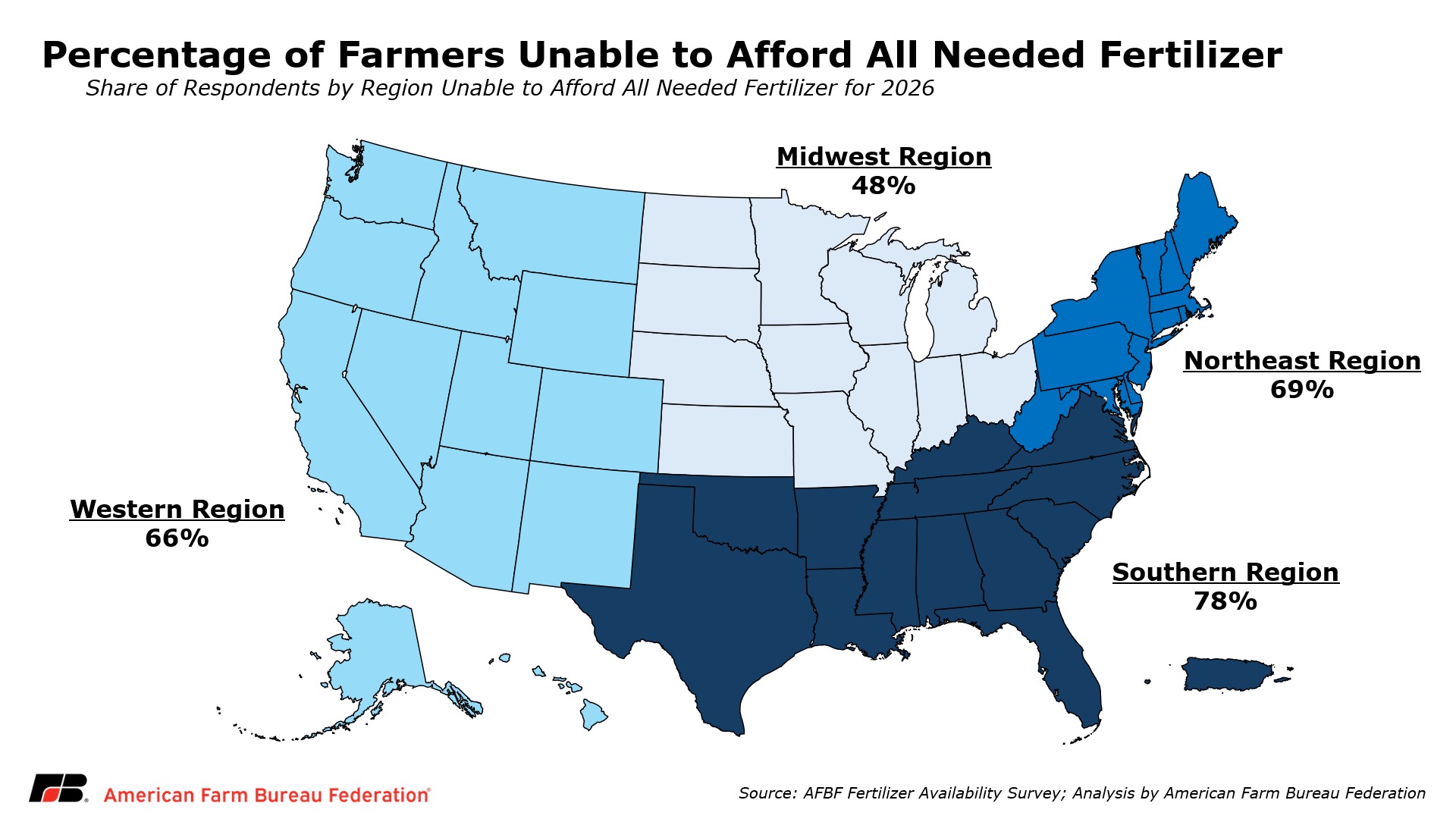
Sean Ericson, Great Lakes Now

Great Lakes Moment: Government downsizing, defunding and deregulating at what environmental cost?

Great Lakes Moment is a monthly column written by Great Lakes Now Contributor John Hartig. Publishing the author’s views and assertions does not represent endorsement by Great Lakes Now or Detroit PBS.

There is always room to improve program effectiveness and efficiency in government, as well as business, nongovernmental organizations and other institutions.

Read Now at Great Lakes Now.

Original Article

Great Lakes Now

Great Lakes Now

https://www.greatlakesnow.org/2025/05/great-lakes-moment-government-downsizing-defunding-and-deregulating-at-what-environmental-cost/
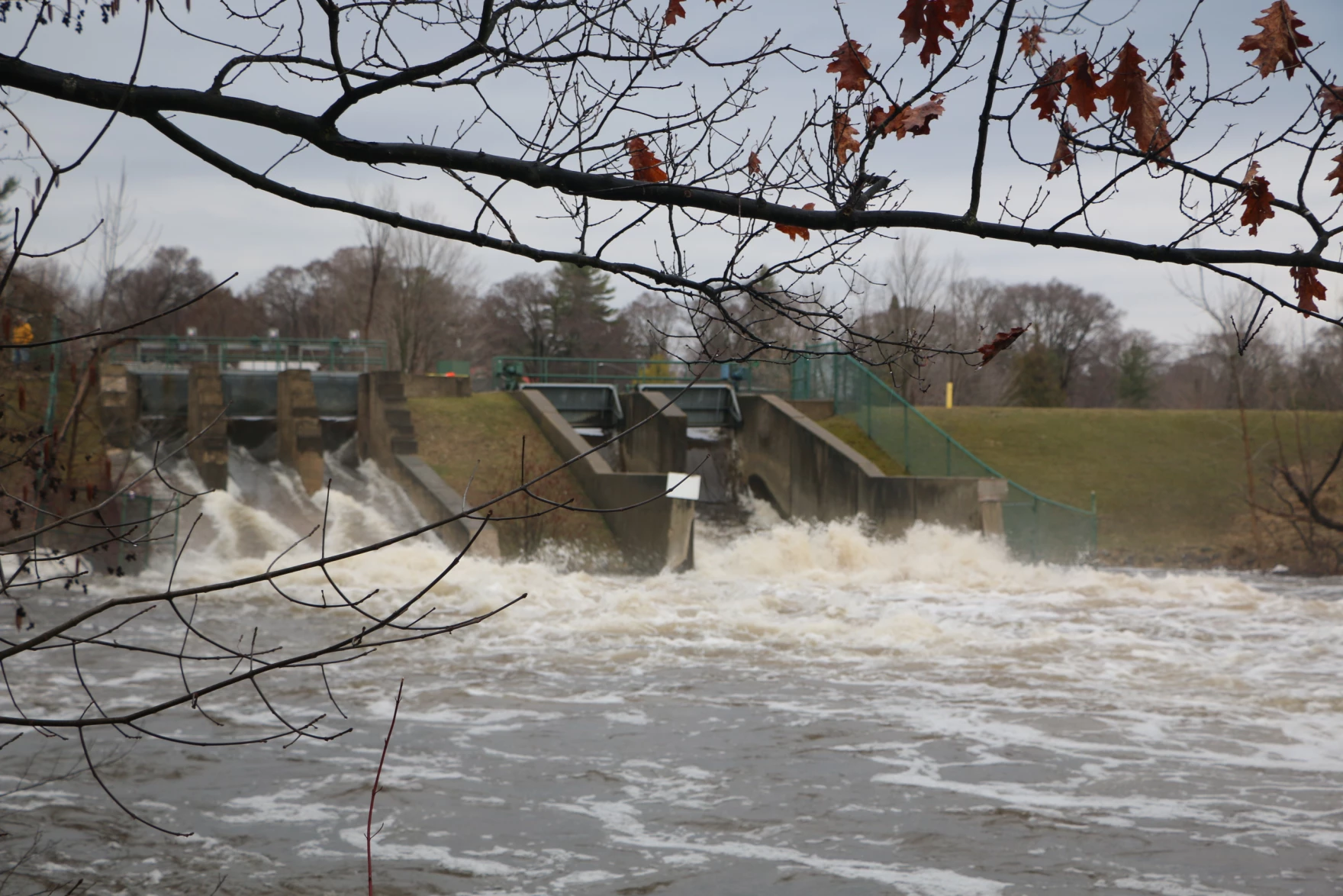
John Hartig, Great Lakes Now

Northern Michigan moves to clean up ice storm debris — by making energy

By Izzy Ross, Interlochen Public Radio

This coverage is made possible through a partnership between Interlochen Public Radio and Grist, a nonprofit environmental media organization.

At a giant dirt lot off a side road in Emmet County, the air smells sharply of pine.

Read Now at Great Lakes Now.

Original Article

Great Lakes Now

Great Lakes Now

https://www.greatlakesnow.org/2025/05/northern-michigan-moves-to-clean-up-ice-storm-debris-by-making-energy/

Interlochen Public Radio

How community gardens serve as ‘third places’ for Detroiters

Toward the end of 2023, I was newly unemployed and living by myself for the first time. 

In between jobs, searching for employment and a means of fulfillment and community, I began to reflect on how my mom got into gardening. In the dead of winter, memories of childhood summers spent pulling weeds, tilling soil and fleeing the occasional garter snake alongside her began to color my mind. 

Read Now at Great Lakes Now.

Original Article

Great Lakes Now

Great Lakes Now

https://www.greatlakesnow.org/2025/04/community-gardens-third-places-for-detroiters/

Ethan Bakuli

The lights are coming back on. How can utilities prepare for next time?

By Izzy Ross, Interlochen Public Radio

This coverage is made possible through a partnership between Interlochen Public Radio and Grist, a nonprofit environmental media organization.

David Thom has one of those jobs where sometimes, unexpectedly, the phone rings late at night.

Read Now at Great Lakes Now.

Original Article

Great Lakes Now

Great Lakes Now

https://www.greatlakesnow.org/2025/04/the-lights-are-coming-back-on-how-can-utilities-prepare-for-next-time/

Interlochen Public Radio

Groups fight to preserve future of Michigan’s indigenous wild rice

By Jena Brooker, BridgeDetroit

This article was republished here with permission from BridgeDetroit.

An origin story, a teacher of life, a relative, and a source of crucial nutrition, manoomin now has a new protector.

Once covering much of Michigan’s inland lakes and streams, the wild rice (also known as mnoomin or mnomen) is indigenous to the Great Lakes region but has largely disappeared due to colonization, environmental degradation, and climate change.

Read Now at Great Lakes Now.

Original Article

Great Lakes Now

Great Lakes Now

https://www.greatlakesnow.org/2025/04/groups-fight-to-preserve-future-of-michigans-indigenous-wild-rice/

BridgeDetroit

What would the Great Lakes region be like with bullet trains?

A few months ago, I was riding on Amtrak’s new Borealis line from St. Paul, Minn., to Chicago. The train was packed that day, and the new line has proved popular.

My coach seat was much nicer than any airline. Plus, I didn’t have to go through security.

Read Now at Great Lakes Now.

Original Article

Great Lakes Now

Great Lakes Now

https://www.greatlakesnow.org/2025/03/what-would-the-great-lakes-region-be-like-with-bullet-trains/

Sean Ericson, Great Lakes Now

Wetlands rules face rollback under Trump: Great Lakes pollution next?

By Brian Allnutt, Planet Detroit

This article was republished with permission from Planet Detroit. Sign up for Planet Detroit’s weekly newsletter here.

Environmental Protection Agency Director Lee Zeldin issued guidance to limit federal protections for wetlands last week that environmental advocates say will lead to more pollution in the Great Lakes.

Read Now at Great Lakes Now.

Original Article

Great Lakes Now

Great Lakes Now

https://www.greatlakesnow.org/2025/03/wetlands-rules-face-rollback-under-trump-great-lakes-pollution-next/

Planet Detroit