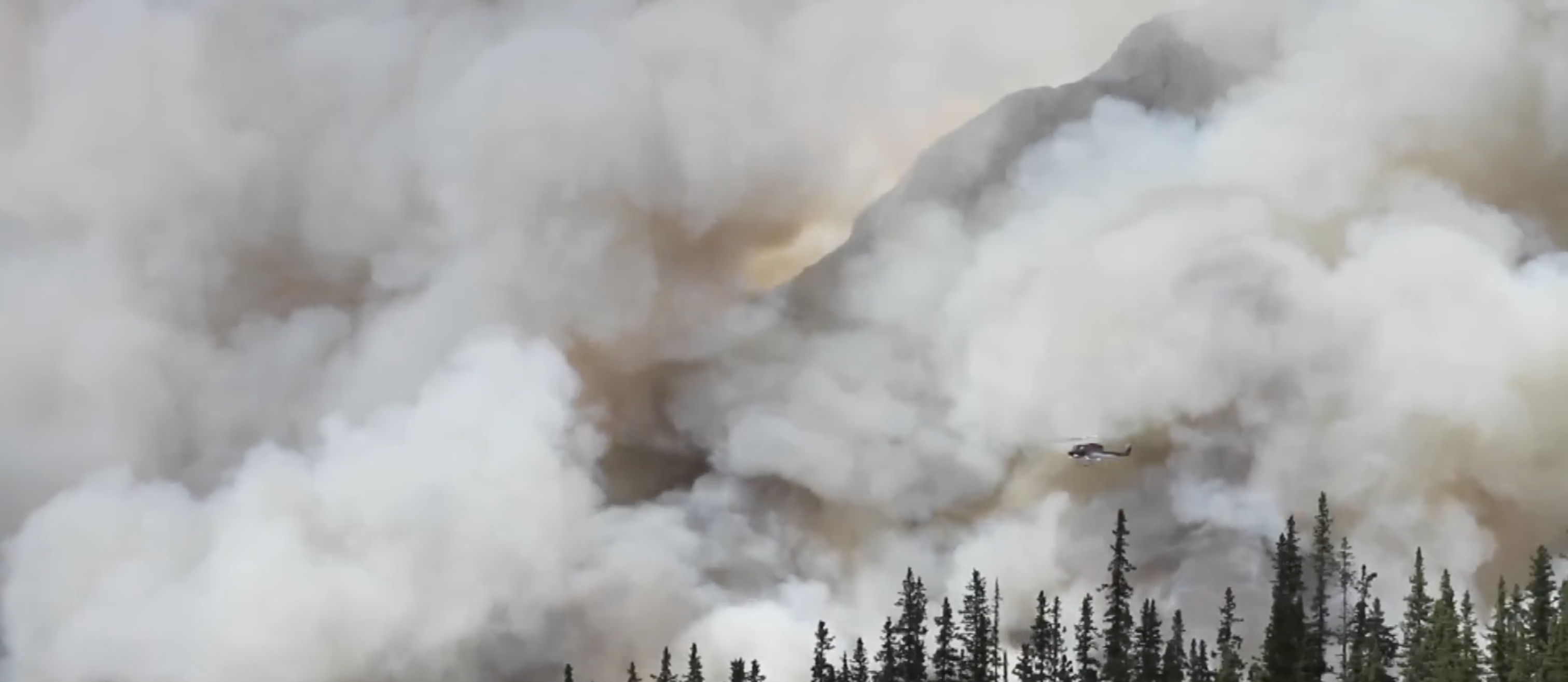
While health officials urge people to stay indoors due to the smoke draping the Midwest, experts say we should remember that the same polluted air affecting humans is also threatening animals. 

On July 16, Detroit ranked as the worst air quality in the world with a 724 index– climbing past the 300-point threshold on the Air Quality Index, where air quality is considered hazardous. In second sat Toronto, Canada, then Minneapolis Minnesota and in fourth was Chicago, Illinois.  

According to Dr. Jack Harkema, a Veterinary Pathologist at Michigan State University, said the effects of wildfire smoke on animals isn’t just a single symptom. 

“It doesn’t affect just the lungs, but also the cardiovascular system and the metabolic system,” Harkema said. “We’ve actually even looked at the effects on the brain, and there’s increased inflammation in the brain as well.”

Wildfire smoke may be even more harmful to animals than the everyday air pollution found in cities, Harkema said. 

“Wildfire smoke is probably even more toxic than our regular urban particulate matter,” Harkema said. “These particles create a lot of oxidants, they damage tissue, and they cause inflammation locally in the lung, but then that inflammation can spread to other organs.”

Wildfire smoke contains a mixture of pollutants, including fine particles known as PM2.5. Those microparticles are small enough to go deep into the lungs and, sometimes, enter the bloodstream.

“PM2.5 particles are inhalable,” Mayra Oyola, an Assistant Professor in the Department of Atmospheric and Oceanic Sciences at the University of Wisconsin Madison. “They can get into the lungs and, just like in humans, they stay there. They can damage respiratory and cardiovascular tissue in anything that breathes. So it’s not just us.”

The fires that are impacting the midwest are mainly contained towards the lower part of Ontario, Canada.  The smoke from these fires have migrated from wind paths to reach the midwest. 

“Animals close to the fires, that’s the biggest concern, because they will be displaced,” Oyola said. “More often than not, they move into human-populated areas. That creates risk for both humans and the animals.”

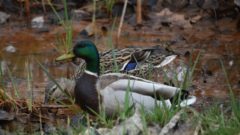
Birds are especially vulnerable to wildfire smoke because their respiratory system is more efficient than other mammals, according to research scientist at Cornell University’s Lab of Ornithology Olivia Sanderfoot. While that helps them get more oxygen, it also means they breathe in more harmful particles from polluted air.

“Birds are able to take up twice as much oxygen with each breath compared to mammals, which also means they’re getting an extra-heavy dose of anything toxic in the air,” Sanderfoot said.

“We’ve known for a long time that birds are more vulnerable,” Sanderfoot said. “So I’m especially worried about them in this smoke.”

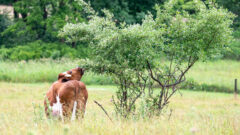
Other outdoor animals can also suffer, like horses. Because of respiratory diseases, like heaves, livestock that spend their time outdoors are exposed for days or weeks to smoky conditions which heighten risks, Harkema said.

“If this continues, you’re going to see more illness in humans and animals,” Harkema said.

For pet-owners, Dr. Jennifer Henderson, a veterinarian at Vetco Total Care in Chicago said taking the same precautions you would take for yourself is ideal. 

“The same concerns apply to our pets that apply to humans,” Henderson said. “You just want to keep them inside or limit their activity outside so it doesn’t cause any flare-up.”

Owners should also watch closely for signs that smoke may be affecting their animals.

“I think respiratory symptoms,  with the coughing and the lethargy, are the main things to watch for,” Henderson said. 

She also recommends monitoring for bloodshot eyes, squinting or other signs of eye irritation.The guidance is ultimately simple, Henderson said, if the air isn’t healthy for people, it probably isn’t healthy for pets either.

“Similar to how they’re dealing with it for themselves, apply the same concerns and strategies to their pets,” she said. “You can’t put a mask on a dog, so it’s really just keeping them out of the environment or limiting their time.”

Harkema recommends limiting walks to brief bathroom breaks and avoiding strenuous exercise.

“You don’t want to exercise them because more of these particulate matter and other air toxicants can get into the lung and cause inflammation,” Harkema said.

Sanderfoot said keeping pets in cool, air-conditioned spaces with clean, filtered air whenever possible is best. 

As wildfire seasons grow longer and more intense, Sanderfoot says she expects poor air quality events to become a more frequent occurrence across North America.

“The issue is that climate change is supercharging these fires and lengthening our fire season,” Sanderfoot said. “The bigger the fire, the more smoke.”

According to Oyola, research shows wildfire smoke will become a persistent problem.

“It’s very clear that climate change is real and that it’s not slowing down,” she said. “With drier conditions and warmer conditions, we should expect more events like this.”


The post How wildfire smoke impacts pets and wildlife appeared first on Great Lakes Now.
Original Article

Great Lakes Now

Great Lakes Now

https://www.greatlakesnow.org/2026/07/21/how-wildfire-smoke-impacts-pets-and-wildlife/
Julia Roeder

Roads in the Great Lakes region get riskier after daylight saving ends

Drivers around the Great Lakes region beware. In the weeks following “fall back,” once daylight saving time ends, collisions between wildlife and vehicles rises by 16%. According to data from insurance company State Farm, October, November and December are the most dangerous for animal-related collisions, making up 41% of all animal collision claims.

Read Now at Great Lakes Now.

Original Article

Great Lakes Now

Great Lakes Now

https://www.greatlakesnow.org/2025/11/roads-in-the-great-lakes-region-get-riskier-after-daylight-saving-ends/

Lisa John Rogers, Great Lakes Now

Empowering Environmental Stewardship: How Barn Sanctuary Champions Compassion and Conservation in the Great Lakes

The Great Lakes, a vital freshwater expanse for millions, face an ongoing environmental crisis. Beneath the vast waters lies a significant threat: pollution stemming largely from agricultural runoff. This flow of excess nutrients like phosphorus and nitrogen contributes to harmful algal blooms and expanding “dead zones,” jeopardizing ecosystems, water quality and public health across the region.

Read Now at Great Lakes Now.

Original Article

Great Lakes Now

Great Lakes Now

https://www.greatlakesnow.org/2025/07/empowering-environmental-stewardship-how-barn-sanctuary-champions-compassion-and-conservation-in-the-great-lakes/

Donte Smith

I Speak for the Fish: Shell middens reveal interesting clues about the humble muskrat

Before the era of plastic, freshwater mussels were the material of choice for the global button industry.

The inside wall of a freshwater mussel’s shell can range in color from pure white to shimmering lavenders and iridescent purples.

European settlers were thrilled to find an abundance of button-worthy mussels in the Great Lakes.

Read Now at Great Lakes Now.

Original Article

Great Lakes Now

Great Lakes Now

https://www.greatlakesnow.org/2021/08/shell-middens-mussels-muskrats/

Kathy Johnson

Depleted wetlands impact freshwater turtles in Toronto

This article was republished here with permission from Great Lakes Echo.

By Chioma Lewis, Great Lakes Echo

Freshwater turtles have become less abundant in coastal areas of Greater Toronto that have significantly decreased wetlands.

That’s according to researchers in Toronto who conducted a study to assess the turtle communities in coastal wetlands of Lake Ontario.

Read Now at Great Lakes Now.

Original Article

Great Lakes Now

Great Lakes Now

https://www.greatlakesnow.org/2021/08/depleted-wetlands-freshwater-turtles-toronto/

Great Lakes Echo

I Speak for the Fish: April showers bring vernal pools and baby salamanders

I Speak for the Fish is a new monthly column written by Great Lakes Now Contributor Kathy Johnson, coming out the third Monday of each month. Publishing the author’s views and assertions does not represent endorsement by Great Lakes Now or Detroit Public Television.

Read Now at Great Lakes Now.

Original Article

Great Lakes Now

Great Lakes Now

https://www.greatlakesnow.org/2021/06/fish-vernal-pools-baby-salamanders/

Kathy Johnson

Duck Stamp: Little stamp has big impacts in the Great Lakes and nationwide

Waterfowl hunters began buying them nearly a century ago. Just after that, collectors joined the fun.

Since its inception in 1934 when Franklin D. Roosevelt signed the Migratory Bird Hunting and Conservation Stamp Act into law, the duck stamp (as it’s commonly known) has garnered more than $1 billion for habitat conservation in the national wildlife refuge system.

Read Now at Great Lakes Now.

Original Article

Great Lakes Now

Great Lakes Now

https://www.greatlakesnow.org/2021/04/duck-stamp-impacts-great-lakes-nationwide-refuge/

James Proffitt

Wetlands can help prevent property damage and save lives during floods

Last year when the Midland dams gave way, more than 21 billion gallons of water rushed into the Tittabawassee River. More than three and a quarter billion gallons of that ended up in the Shiawassee National Wildlife Refuge.

Read Now at Great Lakes Now.

Original Article

Great Lakes Now

Great Lakes Now

https://www.greatlakesnow.org/2021/03/wetlands-property-damage-save-lives-floods/

Michigan Radio

US states look to step up wolf kills, pushed by Republicans

BILLINGS, Mont. (AP) — Payments for dead wolves. Unlimited hunting of the animals. Shooting wolves from the air.

Wolf hunting policies in some states are taking an aggressive turn, as Republican lawmakers and conservative hunting groups push to curb their numbers and propose tactics shunned by many wildlife managers.

Read Now at Great Lakes Now.

Original Article

Great Lakes Now

Great Lakes Now

https://www.greatlakesnow.org/2021/03/ap-us-states-wolf-kills-pushed-by-republicans/

The Associated Press

Intense storms from climate change harming Michigan streams and rivers

Intense storm events and flooding are changing the ecology of rivers in the Great Lakes region.

Read Now at Great Lakes Now.

Original Article

Great Lakes Now

Great Lakes Now

https://www.greatlakesnow.org/2021/02/intense-storms-climate-change-harming-michigan-streams-rivers/

Michigan Radio

Wisconsin DNR board refuses to set early wolf hunt

MADISON, Wis. (AP) — The state Department of Natural Resources policy board narrowly refused Republican legislators’ request Friday to implement a wolf hunt immediately, citing concerns that the department can’t move that fast and Wisconsin’s Native American tribes haven’t been consulted as per treaty rights.

Read Now at Great Lakes Now.

Original Article

Great Lakes Now

Great Lakes Now

https://www.greatlakesnow.org/2021/01/ap-wisconsin-dnr-board-refuses-early-wolf-hunt/

The Associated Press

Pandemic interrupts longtime Isle Royale wolf, moose study

TRAVERSE CITY, Mich. (AP) — One of the world’s longest-running wildlife field studies has fallen prey to the coronavirus pandemic.

Since 1959, a research team has spent most of the winter observing the interplay between wolves and moose at Isle Royale National Park in Lake Superior.

Read Now at Great Lakes Now.

Original Article

Great Lakes Now

Great Lakes Now

https://www.greatlakesnow.org/2021/01/ap-pandemic-interrupts-longtime-isle-royale-wolf-moose-study/

The Associated Press

Wisconsin says wolf season will be held next November

MADISON, Wis. (AP) — Wisconsin will resume its wolf season next November after the animal is dropped from the federal endangered species list, the state announced Friday.

The Department of Natural Resources said wolf season will begin Nov. 6. The U.S. Fish and Wildlife Service announced last month that it would delist gray wolves, citing thriving populations in the western Great Lakes region, Rocky Mountains and Pacific Northwest.

Read Now at Great Lakes Now.

Original Article

Great Lakes Now

Great Lakes Now

https://www.greatlakesnow.org/2020/12/ap-wisconsin-wolf-season-next-november/

The Associated Press

Groups fight to keep gray wolf protections for most of US

BILLINGS, Mont. (AP) — Wildlife advocates and environmental groups have announced that they are challenging the removal of federal protections for gray wolves across most of the U.S.

Two coalitions of groups filed formal notices over the past several days that they plan to sue the U.S. Interior Department in federal court unless protections are restored.

Read Now at Great Lakes Now.

Original Article

Great Lakes Now

Great Lakes Now

https://www.greatlakesnow.org/2020/11/ap-groups-gray-wolf-protections/

The Associated Press

Trump officials end gray wolf protections across most of US

BLOOMINGTON, Minn. (AP) — Trump administration officials on Thursday stripped Endangered Species Act protections for gray wolves in most of the U.S., ending longstanding federal safeguards and putting states and tribes in charge of overseeing the predators.

Read Now at Great Lakes Now.

Original Article

Great Lakes Now

Great Lakes Now

https://www.greatlakesnow.org/2020/10/ap-trump-officials-end-gray-wolf-protections-across-us/

The Associated Press

Hunters need to avoid contaminated game

This article was republished here with permission from Great Lakes Echo.

By Eric Freedman, Capital News Service

To keep healthy this fall, deer hunters have more to worry about than just COVID-19 and the flu.

On the beware list: a group of chemicals known as PFAS and lead from ammunition.

Read Now at Great Lakes Now.

Original Article

Great Lakes Now

Great Lakes Now

https://www.greatlakesnow.org/2020/10/hunters-contaminated-game-pfas-lead/

Great Lakes Echo

Relocated Isle Royale wolves form groups, reduce moose herd

TRAVERSE CITY, Mich. (AP) — Gray wolves that were taken to Michigan’s Isle Royale National Park to rebuild its nearly extinct population are forming social groups, staking out territory and apparently mating — promising signs despite heavy losses from natural causes and deadly fights, scientists said Monday.

Read Now at Great Lakes Now.

Original Article

Great Lakes Now

Great Lakes Now

https://www.greatlakesnow.org/2020/09/isle-royale-wolves-moose-herd/

The Associated Press

DNR: Avoid eating deer livers in Marinette area

MADISON, Wis. (AP) — State environmental and health officials warned people Tuesday to avoid eating the livers of deer harvested around the Marinette area to avoid exposure to PFAS chemicals.

PFAS are man-made chemicals that research suggests can cause a range of health problems in humans. The chemicals have been used for decades in a range of products, including nonstick cookware, fast-food wrappers and firefighting foam.

Read Now at Great Lakes Now.

Original Article

Great Lakes Now

Great Lakes Now

https://www.greatlakesnow.org/2020/09/ap-dnr-pfas-deer-livers-wisconsin-marinette/

The Associated Press

Turtle Recovery: Studying turtles on the Kalamazoo River 10 years after Enbridge oil spill

Josh Otten reached down and pulled two turtles from the bow compartment of his kayak. One was the size of a dinner plate; the other was barely the size of a silver dollar pancake. Both were northern map turtles, the most common species of turtle in the Kalamazoo River watershed, according to Otten who played a key role in the rescue and rehabilitation of more than 2,000 turtles in 2010 following the Kalamazoo River oil spill.

Read Now at Great Lakes Now.

Original Article

Great Lakes Now

Great Lakes Now

https://www.greatlakesnow.org/2020/09/turtle-recovery-kalamazoo-river-enbridge-oil-spill/

Kathy Johnson

Turtles vs. Oil: Great Lakes Now producer talks ecosystems, life on the water and covering the lakes

After a stint as an intern for Great Lakes Now, Kathy Johnson is shining a light on the Kalamazoo River oil spill 10 years ago and the subsequent turtle recovery efforts with her first fully produced segment for Great Lakes Now.

Like many journalists working in the Great Lakes region covering stories about the Great Lakes, Kathy Johnson’s roots begin in the region.

Read Now at Great Lakes Now.

Original Article

Great Lakes Now

Great Lakes Now

https://www.greatlakesnow.org/2020/08/great-lakes-producer-ecosystems-life-water-covering-lakes/

Natasha Blakely

Animal Quiz: What Great Lakes aquarium animal are you in quarantine?

The animals at various aquariums are dealing with their own COVID-19 lockdown struggles as they adjust to new routines, new procedures and a distinct lack of the public, and each animal handles it a little differently.

Thanks to Great Lakes aquariums like Shedd Aquarium in Chicago, the Aquatarium at Tall Ships Landing in Brockville, Ontario, and Belle Isle Conservancy in Detroit, the public can get a peek at the various things staff are doing to keep the animals happy and entertained.

Read Now at Great Lakes Now.

Original Article

Great Lakes Now

Great Lakes Now

https://www.greatlakesnow.org/2020/05/animal-quiz-great-lakes-aquarium-animal-covid-19-quarantine/

Natasha Blakely

Day in the Life: How are Shedd Aquarium’s animals coping in the absence of visitors?

Chicago’s Shedd Aquarium is one of the more popular, well-known aquariums around the country with 2 million visitors every year.

But the COVID-19 pandemic has closed it to the public, which is a big change for the penguins, whales, fish and other creatures that live in the Shedd’s various habitats.

Read Now at Great Lakes Now.

Original Article

Great Lakes Now

Great Lakes Now

https://www.greatlakesnow.org/2020/05/covid-19-shedd-aquarium-visitors/

Natasha Blakely

Huge Interest: Aquatarium finds its feet during COVID-19 with virtual engagement

Masks or no, the otters at the Aquatarium at Tall Ships Landing in Brockville, Ontario, know exactly who’s in their den space.

“They really recognize us more by our smell and our boots,” said Jennipher Carter, senior aquarist at the Aquatarium. For the otters at least, adjusting to their caretakers all wearing masks didn’t take long.

Read Now at Great Lakes Now.

Original Article

Great Lakes Now

Great Lakes Now

https://www.greatlakesnow.org/2020/05/ontario-aquatarium-covid-19-virtual-engagement/

Natasha Blakely