By Isabella Figueroa Nogueira, Bridge Michigan

The Great Lakes News Collaborative includes Bridge Michigan; Circle of Blue; Great Lakes Now at Detroit PBS; Michigan Public, Michigan’s NPR News Leader; and The Narwhal who work together to bring audiences news and information about the impact of climate change, pollution, and aging infrastructure on the Great Lakes and drinking water. This independent journalism is supported by the Charles Stewart Mott Foundation. Find all the work HERE.


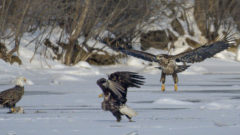
The number of bald eagles in Michigan is declining, and funding delays aren’t helping the cause. 

Researchers who have spent decades climbing trees, banding eaglets and monitoring nests across Michigan say something unusual is happening this year.

Field crews working with long-term bald eagle monitoring programs say they’ve found empty nests where aerial surveys previously documented young birds. They’ve also seen malnourished eaglets, damaged nests and signs that some adult bald eagles may be attempting to nest a second time after earlier failures.

For scientists who have tracked Michigan’s bald eagle recovery for decades, the observations are raising concern.

“Our initial impressions are that this is not a typical year,” said Bill Bowerman, a professor of wildlife ecology and environmental toxicology at the University of Maryland and deputy director and chairman of the board at the Ann Arbor-based Wings Over Water Research Institute. “We are seeing widespread reproductive difficulties that appear linked to a combination of severe weather and limited food availability.”

Michigan’s bald eagle population is considered one of the country’s major conservation success stories. After decades of decline caused by habitat loss, hunting and the pesticide DDT, federal protections and environmental regulations helped the species recover.

Annual aerial surveys by Michigan Department of Natural Resources’ Wildlife Disease Laboratory showed breeding pairs increased from about 52 pairs in 1961 to roughly 835 pairs by 2017.

But researchers and state wildlife officials said recovery does not eliminate ongoing threats.

State wildlife pathologist Julie Melotti said that, from 1987 to 2024, trauma accounted for the majority of documented eagle deaths examined by the lab, including 34% from vehicle strikes and about 26% from other trauma, while lead toxicosis accounted for nearly 13%.

Melotti said those patterns reflect long-standing risks tied to human activity and scavenging behavior, particularly when eagles feed on roadkill or remains containing lead ammunition.

Highly pathogenic avian influenza, or bird flu, also caused major disruptions beginning in 2022.

Melotti’s lab documented 64 eagle deaths during the initial bird flu outbreak from April 2022 to January 2023, with about 70% of those cases involving adult birds. Additional confirmed cases have continued into recent years, including dozens examined since late 2024, with adults again making up a substantial share of infections.

According to Bowerman and other Michigan eagle researchers affiliated with Wings Over Water, monitoring after the 2022 outbreak documented the loss of more than 400 breeding pairs, and researchers estimate roughly 2,500 individual eagles may have been lost statewide.

Unlike species that reproduce quickly, bald eagles mature slowly and typically produce only one clutch of one to three chicks per year, making population recovery more sensitive to large disruptions.

Funding delays

For decades, state-supported aerial surveys and field crews allowed researchers to monitor nests across Michigan. 

This year, however, more than $700,000 in federal funding expected through the Great Lakes Restoration Initiative for bald eagle and colonial waterbird monitoring has yet to be released, said Wings Over Water officials.

“We were all under the same belief in November that this funding would be available,” Bowerman said. “And we didn’t find out until April that it wasn’t coming.”

Bowerman said the delay has changed what monitoring looks like in practice.

“In normal years, both the aerial surveys that DNR guys (do) would have been funded, and we would have up to three banding crews in the field at one time,” he said.

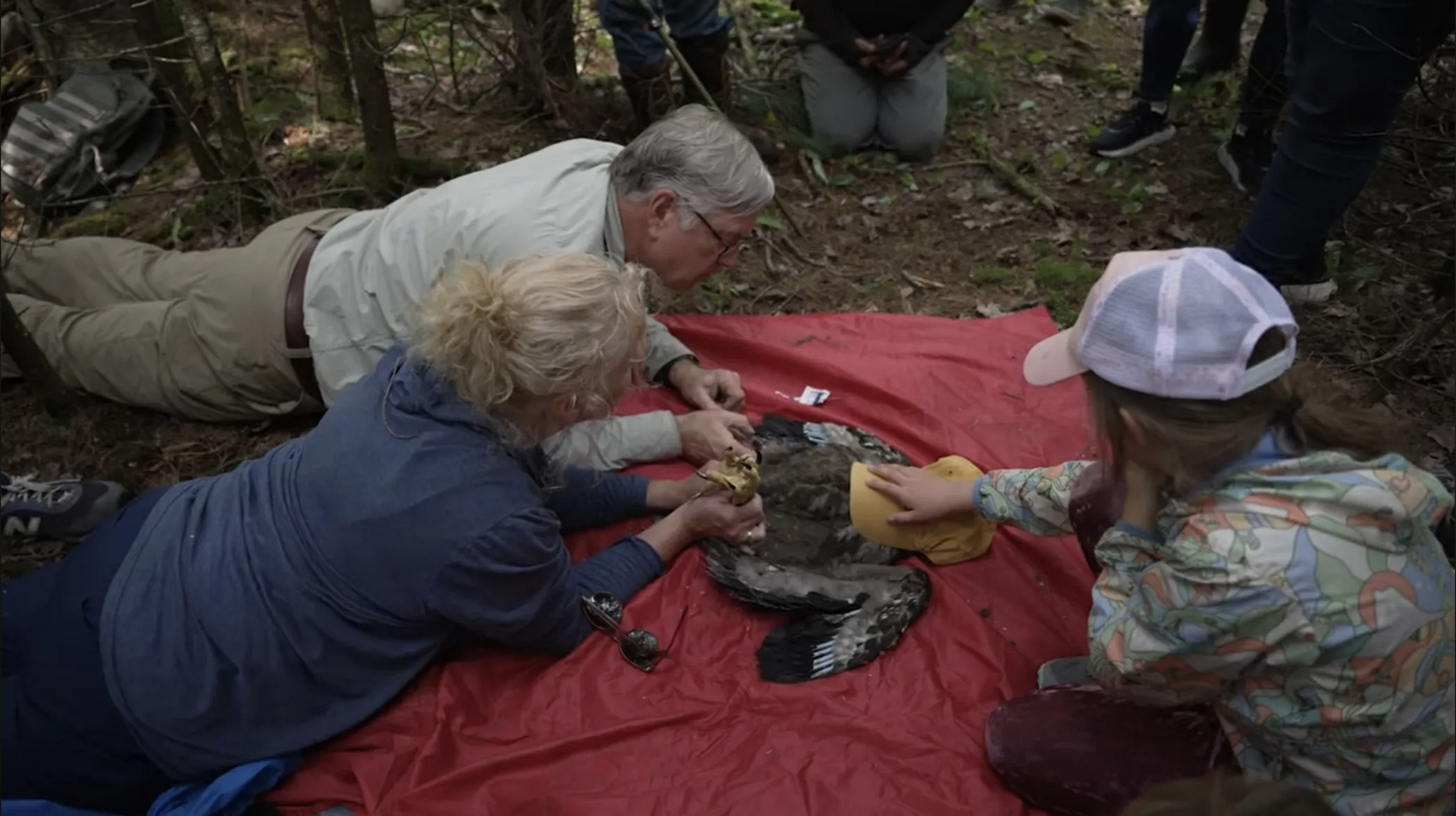
Instead, Wings Over Water researchers say many nests are being visited by volunteers, limiting how many sites can be visited during the short window when eaglets can safely be handled.

That window typically lasts only five to nine weeks, when researchers climb trees, lower eaglets from nests in specialized bags, collect blood samples, measure feathers and body size, determine sex, band birds and test for contaminants including per- and polyfluoroalkyl substances (PFAS), mercury, pesticides and polychlorinated biphenyls (PCBs).

The data help scientists understand not only eagle health but also broader ecosystem conditions, since young eagles reflect contaminants and environmental conditions present in local food systems.

“Every nest visit provides critical information about the health of Michigan’s waters and wildlife,” said Jennifer Day, executive director of Wings Over Water.

US Environmental Protection Agency officials said the agency provided about $800,000 in Great Lakes Restoration Initiative funding to the US Fish and Wildlife Service for bald eagle and colonial waterbird monitoring in Michigan during the 2026 field season. An additional $500,000 was provided for bald eagle and herring gull contaminant monitoring across Michigan and Wisconsin.

EPA directed questions about the distribution of those funds to the US Fish and Wildlife Service. Wings Over Water officials said funding expected for their monitoring work had not been released as of this spring.

US Fish and Wildlife did not respond to messages seeking comment.

Nesting under pressure

Recent flooding and high water levels may have reduced fishing opportunities for adult eagles, making it harder for parents to feed young.

“We have fewer eagles that are young,” Bowerman said. “We have some birds that are starving to death.”

Wings Over Water field crews say they have documented dead nestlings, severely malnourished chicks and nests damaged or destroyed during wind events.

The combination of field observations and long-term mortality data helps provide context for what researchers are seeing on the ground. 

Melotti’s statewide records show that, even after population recovery, eagles continue to face persistent threats from trauma, poisoning and disease.

Researchers said this year’s observations suggest multiple stressors may be overlapping.

“The long winter, spring flooding, and repeated severe wind events likely created very challenging conditions for nesting eagles,” Bowerman said. “While each of these events can occur naturally, it is unusual to see them happening together and affecting nests across such a broad area.”

Exactly how widespread those conditions are remains unclear.

Bowerman said aerial surveys are still being completed in parts of the state, making it too early to fully assess overall productivity, one of the most important measures of population health.

But field observations have already surprised even longtime researchers. 

Bowerman said conditions this year have looked different from anything he has seen in decades of monitoring. During one recent trip, he went three days without finding an active nest.

While researchers said they are not suggesting bald eagles are again nearing endangered status, they say continued monitoring is essential to understand how environmental stressors are affecting the population over time.

“Long-term monitoring is the only way we can understand how these major events are affecting the population over time,” Day said.


The post Michigan bald eagle success story faces new threats appeared first on Great Lakes Now.
Original Article

Great Lakes Now

Great Lakes Now

https://www.greatlakesnow.org/2026/06/09/michigan-bald-eagle-success-story-faces-new-threats/
Bridge Michigan

A record year for Great Lakes piping plovers

By Lester Graham, Michigan Public

The Great Lakes News Collaborative includes Bridge Michigan; Circle of Blue; Great Lakes Now at Detroit PBS; Michigan Public, Michigan’s NPR News Leader; and The Narwhal who work together to bring audiences news and information about the impact of climate change, pollution, and aging infrastructure on the Great Lakes and drinking water.

Read Now at Great Lakes Now.

Original Article

Great Lakes Now

Great Lakes Now

https://www.greatlakesnow.org/2025/07/record-year-for-great-lakes-piping-plovers/

Michigan Public

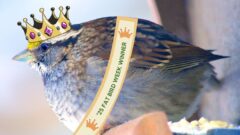
White throated sparrow takes first place in fattest bird competition

This article was republished here with permission from Great Lakes Echo.

By Clara Lincolnhol, Great Lakes Echo

A very round white throated sparrow is the heavyweight champion of the 2025 Wisconsin Fat Bird Week contest.

The bird, coined the “spherical white-throated sparrow,” won by a landslide, receiving 72% of the vote in the final round against its nearest competitor, a “rotund ruby-throated hummingbird.”

The winner made it through eight rounds in the single-elimination, March Madness-style bracket competition against seven other birds.

Read Now at Great Lakes Now.

Original Article

Great Lakes Now

Great Lakes Now

https://www.greatlakesnow.org/2025/06/white-throated-sparrow-takes-first-place-in-fattest-bird-competition/

Great Lakes Echo

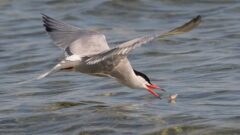
Great Lakes Moment: Detroit River common terns under threat

Great Lakes Moment is a monthly column written by Great Lakes Now Contributor John Hartig. Publishing the author’s views and assertions does not represent endorsement by Great Lakes Now or Detroit PBS.

Common terns are known for their aerial acrobatics, performing rapid turns and swoops to the delight of those watching.

Read Now at Great Lakes Now.

Original Article

Great Lakes Now

Great Lakes Now

https://www.greatlakesnow.org/2025/03/great-lakes-moment-detroit-river-common-terns-under-threat/

John Hartig, Great Lakes Now

Points North: Birds of Paradise

Points North is a biweekly podcast hosted by Daniel Wanschura and Morgan Springer about the land, water and inhabitants of the Upper Great Lakes.

This episode was shared here with permission from Interlochen Public Radio. 

Alison Vilag pays attention for a living.

Read Now at Great Lakes Now.

Original Article

Great Lakes Now

Great Lakes Now

https://www.greatlakesnow.org/2023/07/points-north-birds-of-paradise/

Interlochen Public Radio

Great Lakes Moment: A community science survey

Great Lakes Moment is a monthly column written by Great Lakes Now Contributor John Hartig. Publishing the author’s views and assertions does not represent endorsement by Great Lakes Now or Detroit Public Television.

A good example of community science in metropolitan Detroit is the Rockwood Christmas Bird Count, which is part of the longest-running community science survey in the world.

Read Now at Great Lakes Now.

Original Article

Great Lakes Now

Great Lakes Now

https://www.greatlakesnow.org/2023/02/great-lakes-moment-community-science-survey/

John Hartig

Great Lakes Moment: The Great Blue Herons of Stony Island

Great Lakes Moment is a monthly column written by Great Lakes Now Contributor John Hartig. Publishing the author’s views and assertions does not represent endorsement by Great Lakes Now or Detroit Public Television.

Have you ever gone for a peaceful walk along a creek or lake and been spooked by the sound of what you think is a pterodactyl?

Read Now at Great Lakes Now.

Original Article

Great Lakes Now

Great Lakes Now

https://www.greatlakesnow.org/2023/01/great-lakes-moment-great-blue-herons-stony-island/

John Hartig

The Catch: Record Number of Piping Plovers

Broadcasting in our monthly PBS television program, The Catch is a Great Lakes Now series that brings you more news about the lakes you love. Go beyond the headlines with reporters from around the region who cover the lakes and drinking water issues. Find all the work HERE.

This month, The Catch features a story about Great Lakes piping plovers.

Read Now at Great Lakes Now.

Original Article

Great Lakes Now

Great Lakes Now

https://www.greatlakesnow.org/2022/11/the-catch-record-number-of-piping-plovers/

GLN Editor

During the fall migration season, over 4 billion birds in North America pass over our heads while we are sound asleep. Scientists use a number of technologies to understand more about birds' migratory patterns.

The post In today’s forecast: 4 billion birds migrate across North America first appeared on Great Lakes Echo.

Original Article

Great Lakes Echo

Great Lakes Echo

http://greatlakesecho.org/2022/11/07/in-todays-forecast-4-billion-birds-migrate-across-north-america/

Guest Contributor

Great Lakes Moment: Chemical contaminant in St. Lawrence River herring gull eggs traced to Detroit River

Great Lakes Moment is a monthly column written by Great Lakes Now Contributor John Hartig. Publishing the author’s views and assertions does not represent endorsement by Great Lakes Now or Detroit Public Television.

A class of chemical compounds that are no longer produced in significant quantities nor being used in the manufacture of new products, called polychlorinated naphthalenes, or PCNs, has been found in herring gull eggs in the St.

Read Now at Great Lakes Now.

Original Article

Great Lakes Now

Great Lakes Now

https://www.greatlakesnow.org/2022/09/great-lakes-moment-herring-gull-eggs-detroit-river/

John Hartig

Bird flu has killed nearly 1,500 threatened Caspian terns on Lake Michigan islands

By Lester Graham, Michigan Radio

The Great Lakes News Collaborative includes Bridge Michigan; Circle of Blue; Great Lakes Now at Detroit Public Television; and Michigan Radio, Michigan’s NPR News Leader; who work together to bring audiences news and information about the impact of climate change, pollution, and aging infrastructure on the Great Lakes and drinking water.

Read Now at Great Lakes Now.

Original Article

Great Lakes Now

Great Lakes Now

https://www.greatlakesnow.org/2022/06/bird-flu-killed-threatened-caspian-terns/

Michigan Radio

Around the Lakes: Trails to follow for the best view of birds

A lakeside view and twittering morning avian chorus make for a great combination, and all along the Great Lakes there are plenty of great locations to experience both those things.

Installing a bird feeder is an easy way to enjoy birds right outside your door, but county parks and birding walks are a great way to learn about birds too, Kimberly Kaufman said in an interview with Great Lakes Now.

Read Now at Great Lakes Now.

Original Article

Great Lakes Now

Great Lakes Now

https://www.greatlakesnow.org/2022/06/trails-for-best-view-of-birds/

Natasha Blakely

Endangered piping plovers are recovering but still need human help

By Lester Graham, Michigan Radio

The Great Lakes News Collaborative includes Bridge Michigan; Circle of Blue; Great Lakes Now at Detroit Public Television; and Michigan Radio, Michigan’s NPR News Leader; who work together to bring audiences news and information about the impact of climate change, pollution, and aging infrastructure on the Great Lakes and drinking water.

Read Now at Great Lakes Now.

Original Article

Great Lakes Now

Great Lakes Now

https://www.greatlakesnow.org/2022/06/endangered-piping-plovers-need-human-help/

Michigan Radio

In our newest TikTok, Echo reporter Genevieve Fox talks about this year's bird flu outbreak and gives a tutorial on how to clean your birdfeeder. 

The post Clean your birdfeeder right now: TikTok edition first appeared on Great Lakes Echo.

Original Article

Great Lakes Echo

Great Lakes Echo

http://greatlakesecho.org/2022/06/17/clean-your-birdfeeder-right-now-tiktok-edition/

Guest Contributor

Monty passes, Rose’s location still in question

When Monty and Rose – Chicago’s beloved piping plover pair – first successfully nested at Montrose Beach, a popular place on the city’s north side, people celebrated the potential return of a dying bird species and were charmed by the adorable tiny birds.

The Great Lakes piping plover population has been a U.S.

Read Now at Great Lakes Now.

Original Article

Great Lakes Now

Great Lakes Now

https://www.greatlakesnow.org/2022/05/monty-passes-rose-location-question/

Natasha Blakely

Group: Feds hid plans to weaken whooping crane protection

The Biden administration made secret plans to weaken protection for whooping cranes, and documents obtained through an open records request show officials “seem to have been deliberately misleading the public,” an environmental group says.

The documents show that U.S. Fish and Wildlife Service plans to propose changing the only natural flock’s status from endangered to threatened, the Center for Biological Diversity said in a news release linking to some of the papers.

Read Now at Great Lakes Now.

Original Article

Great Lakes Now

Great Lakes Now

https://www.greatlakesnow.org/2022/04/ap-weaken-whooping-crane-protection/

The Associated Press

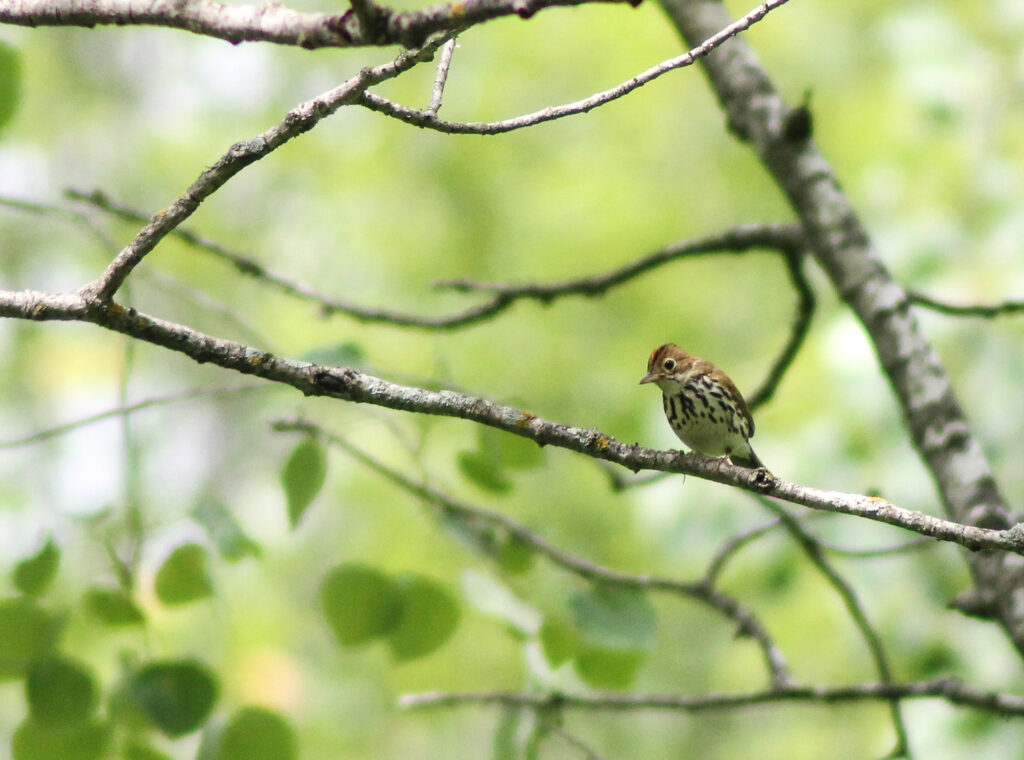
An ovenbird rests on a branch in the St. Louis River Estuary. Image credit: National Lake Superior Estuarine Research Reserve

The next River Talk will take place at 7 p.m., Wednesday, April 13, via Zoom. Alexis Grinde with the Natural Resources Research Institute and Cole Wilson with the University of Wisconsin-Madison, will present, “Black ash and birds: conserving critical habitat in the St. Louis River Estuary.”

Black ash tree wetlands in the St. Louis River Estuary are unique forests that support diverse bird species. Grinde and Wilson will discuss current research revealing how birds use these habitats and the possible impacts of ash tree death caused by the invasive emerald ash borer. 

Here is the Zoom link and info:
https://uwmadison.zoom.us/j/94381805869?pwd=QXJ6SzZaelpEVVFKdFdUSEhDaUVCUT09 
Meeting ID: 943 8180 5869
Passcode: 582749
One tap mobile
+19292056099,94381805869# US (New York)
+13017158592,94381805869# US (Washington DC)  

The event will last an hour and will include time for comments and questions. The talk will be recorded and posted afterward on the Reserve’s Facebook page and YouTube. A summary will also be posted on Wisconsin Sea Grant’s blog.

The remaining River Talk for this season will be held on May 11. For more information, visit the River Talks page: go.wisc.edu/4uz720.

The River Talks are sponsored by The Lake Superior National Estuarine Research Reserve and the Wisconsin Sea Grant Program.

The post Black ash and birds featured at River Talks first appeared on Wisconsin Sea Grant.

Original Article

News Releases | Wisconsin Sea Grant

News Releases | Wisconsin Sea Grant

https://www.seagrant.wisc.edu/news/black-ash-and-birds-featured-at-river-talks/?utm_source=rss&utm_medium=rss&utm_campaign=black-ash-and-birds-featured-at-river-talks

Marie Zhuikov

I Speak for the Fish: Playing peek-a-boo with the ducks

I’ve been outsmarted by more than one species.

A red fox in a Florida nature preserve comes to mind. I observed the fox entering a den and spent two hours patiently waiting for it to emerge so I could take its picture – only to discover the clever fellow had exited out the back shortly after I parked myself out front.

Read Now at Great Lakes Now.

Original Article

Great Lakes Now

Great Lakes Now

https://www.greatlakesnow.org/2022/03/playing-peek-a-boo-with-ducks/

Kathy Johnson

Great Lakes Moment: Dozens of bald eagles overwinter in Detroit

Great Lakes Moment is a monthly column written by Great Lakes Now Contributor John Hartig. Publishing the author’s views and assertions does not represent endorsement by Great Lakes Now or Detroit Public Television.

It was a mid-winter day, and I was driving to my Downriver home from a meeting in Detroit.

Read Now at Great Lakes Now.

Original Article

Great Lakes Now

Great Lakes Now

https://www.greatlakesnow.org/2022/03/great-lakes-moment-bald-eagles-detroit/

John Hartig

Great Lakes Moment: Kirtland’s warblers are thriving in Michigan

Once living on the brink of extinction, the Kirtland’s warbler is now thriving thanks to collaborative conservation efforts. 

The Kirtland’s warbler is one of the largest and rarest songbirds in North America. This handsome yellow-and-gray warbler is named for Dr. Jared Kirtland, on whose farm near Cleveland, Ohio, the first specimen was collected in 1851.

Read Now at Great Lakes Now.

Original Article

Great Lakes Now

Great Lakes Now

https://www.greatlakesnow.org/2022/01/great-lakes-moment-warblers/

John Hartig

Year in Review 2021: All creatures great (lakes) and small

A year ago, I wrote a year-end summary of our 2020 TV coverage that highlighted the obvious theme for that terrible year: poop. 

I ended that story with these words: “There will probably be more poop in the news in 2021, and if there is, we’ll bring it to you.

Read Now at Great Lakes Now.

Original Article

Great Lakes Now

Great Lakes Now

https://www.greatlakesnow.org/2021/12/year-in-review-2021-creaturesl/

Rob Green

Monty and Rose: Those Chicago piping plovers, where are they now, what are they doing?

Everyone loves Monty and Rose – and Great Lakes Now featured the charming piping plover pair earlier this year. 

Now Monty and Rose have chicks and even grand-chicks, many of whom are thriving as they fly south for the winter.  

Chicago-based filmmaker Bob Dolgan has documented the progress of Monty and Rose and their offspring over the years.

Read Now at Great Lakes Now.

Original Article

Great Lakes Now

Great Lakes Now

https://www.greatlakesnow.org/2021/12/monty-rose-chicago-plovers/

GLN Editor

Proposed eastern sandhill cranes hunt in breeding states stirs controversy

This article was republished here with permission from Great Lakes Echo.

By Nicholas Simon, Great Lakes Echo

Efforts by politicians to create a hunting season for eastern sandhill cranes in both Wisconsin and Michigan are stirring debates among hunters, farmers and birders.

Read Now at Great Lakes Now.

Original Article

Great Lakes Now

Great Lakes Now

https://www.greatlakesnow.org/2021/12/eastern-sandhill-cranes-hunt/

Great Lakes Echo

Banned decades ago, PCBs still posing threat to wildlife

By Michael Casey, Associated Press

HOLDERNESS, N.H. (AP) — Navigating her boat toward a wooden platform floating in an idyllic New Hampshire lake where “On Golden Pond” was filmed, biologist Tiffany Grade spotted what she had feared.

An olive brown loon’s egg with black speckles was sitting on an nest, abandoned by its parents and with no chance to hatch.

Read Now at Great Lakes Now.

Original Article

Great Lakes Now

Great Lakes Now

https://www.greatlakesnow.org/2021/12/ap-pcbs-threat-wildlife/

The Associated Press

Ring-billed gulls travel between populated beaches and human waste sites like landfills and water treatment plants, carrying human pathogens with them.

The post Beach-dwelling gulls are vehicles for bacteria first appeared on Great Lakes Echo.

Original Article

Great Lakes Echo

Great Lakes Echo

http://greatlakesecho.org/2021/11/12/beach-dwelling-gulls-are-vehicles-for-bacteria/

Guest Contributor

Side by Side: The biggest challenge for birds is cohabiting with humans

North America has 3 billion fewer birds today than five decades ago, according to a recent scientific study.

That loss equates to more than a quarter of the continent’s entire bird population, and the research documenting the decline has shown that it may be worse than first realized.

Read Now at Great Lakes Now.

Original Article

Great Lakes Now

Great Lakes Now

https://www.greatlakesnow.org/2021/08/north-america-bird-population-habitat/

Natasha Blakely

Duckling Docks: Toronto installs floating docks to save drowning birds

Ducklings struggling to stay afloat in Lake Ontario’s Toronto harbor now have a safe place to rest with the installation of low, floating plywood docks.

PortsToronto installed duckling docks at water level in four shipping areas in June after reports of drowned waterfowl unable to climb out of the water to rest.

Read Now at Great Lakes Now.

Original Article

Great Lakes Now

Great Lakes Now

https://www.greatlakesnow.org/2021/08/duckling-toronto-floating-docks/

Sharon Oosthoek

Birds on Film: Filmmaker Bob Dolgan talks about Chicago’s piping plovers with Great Lakes Now

A pair of piping plovers appeared on a busy Chicago beach two years ago, and filmmaker Bob Dolgan recorded the human effort to protect the birds’ nest.

The result: a documentary film. Dolgan shared some of his footage with Great Lakes Now, which can be seen in this segment:

GLN’s Nick Austin spoke with Dolgan about his work chronicling “Monty and Rose,” the plover pair that’s inspired so much conservation of habitat in Chicago.

Read Now at Great Lakes Now.

Original Article

Great Lakes Now

Great Lakes Now

https://www.greatlakesnow.org/2021/07/birds-film-bob-dolgan-chicago-piping-plovers/

Sandra Svoboda

Birds and Brews: Pour one out for the piping plover

Piping plovers, a small white-and-gray shorebird with striking orange legs, are making a comeback this summer – on the beach and at the bar.

The plover has been on the federal endangered species list since 1985, when the Great Lakes plover population dropped to about a dozen pairs.

Read Now at Great Lakes Now.

Original Article

Great Lakes Now

Great Lakes Now

https://www.greatlakesnow.org/2021/07/birds-brews-piping-plover-conservation-beer/

Rachel Duckett

Piping Plovers: Despite new challenges, the birds make their comeback

When biologist Jillian Farkas stepped into the position of piping plover coordinator for the U.S. Fish and Wildlife Service in January 2020, there was no way she could have predicted just how unprecedented the coming season would be.

Her role involves coordinating dozens of scientists and volunteers across six states, two tribes and multiple government agencies—all to help preserve the endangered Great Lakes population of piping plovers.

Read Now at Great Lakes Now.

Original Article

Great Lakes Now

Great Lakes Now

https://www.greatlakesnow.org/2021/06/piping-plovers-recovery-population/

Lorraine Boissoneault

Habitat Focus: To help the birds, nonprofit organization looks to Great Lakes habitats

There’s a bird emergency in the Great Lakes region, according to the National Audubon Society, but the nonprofit bird conservation organization is hoping to change that.

“This really is a bird emergency,” said Nat Miller, Audubon Great Lakes’ director of conservation. “We don’t think that’s hyperbole. As often is the case, birds currently serve as an indicator for larger environmental problems and today they’re telling us it’s a critical time now to act to save the wildlife, water and way of life in the Great Lakes region.”

In an effort to reduce this alarming trend, scientists and conservationists with The National Audubon Society recently released a wide-ranging and comprehensive blueprint to address climate change, pollution and other detrimental man-made effects on Great Lakes wetlands and coastal areas – and their bird populations.

Read Now at Great Lakes Now.

Original Article

Great Lakes Now

Great Lakes Now

https://www.greatlakesnow.org/2021/06/birds-wetlands-coastal-great-lakes-habitat-restoration/

James Proffitt

Duck Stamp: Little stamp has big impacts in the Great Lakes and nationwide

Waterfowl hunters began buying them nearly a century ago. Just after that, collectors joined the fun.

Since its inception in 1934 when Franklin D. Roosevelt signed the Migratory Bird Hunting and Conservation Stamp Act into law, the duck stamp (as it’s commonly known) has garnered more than $1 billion for habitat conservation in the national wildlife refuge system.

Read Now at Great Lakes Now.

Original Article

Great Lakes Now

Great Lakes Now

https://www.greatlakesnow.org/2021/04/duck-stamp-impacts-great-lakes-nationwide-refuge/

James Proffitt

Migratory bird patterns are shifting as temperatures increase in North America, leaving birds to find new sources of food and adjust to the warmer climate, according to a new study 

The post Changes in migratory bird patterns likely caused by climate change, study finds first appeared on Great Lakes Echo.

Original Article

Great Lakes Echo

Great Lakes Echo

http://greatlakesecho.org/2021/04/16/changes-in-migratory-bird-patterns-likely-caused-by-climate-change-study-finds/

Guest Contributor

Two new projects will use over $500,000 to help the declining pheasant population in Illinois by improving habitat, experts say. 

The post Over $500,000 dedicated to pheasant habitat conservation in Illinois first appeared on Great Lakes Echo.

Original Article

Great Lakes Echo

Great Lakes Echo

http://greatlakesecho.org/2021/04/13/over-500000-dedicated-to-pheasant-habitat-conservation-in-illinois/

Guest Contributor

Scientists are looking at the diet of bank swallows to understand what is causing their population decline.

The post Diet may solve mysterious decline of Great Lakes shorebirds first appeared on Great Lakes Echo.

Original Article

Great Lakes Echo

Great Lakes Echo

http://greatlakesecho.org/2021/04/01/diet-may-solve-mysterious-decline-of-great-lakes-shorebirds/

Guest Contributor

Wetlands can help prevent property damage and save lives during floods

Last year when the Midland dams gave way, more than 21 billion gallons of water rushed into the Tittabawassee River. More than three and a quarter billion gallons of that ended up in the Shiawassee National Wildlife Refuge.

Read Now at Great Lakes Now.

Original Article

Great Lakes Now

Great Lakes Now

https://www.greatlakesnow.org/2021/03/wetlands-property-damage-save-lives-floods/

Michigan Radio

Winous Point: Conservation and research plays key role in history of one of the oldest hunting clubs

Two simple, white signs marked “WPSC” on small posts are all that mark its existence to most of the public. The posts sit on either side of a narrow road that turns to gravel then  disappears shortly after into the woods and is the gateway to the oldest continuously operating – and most storied – waterfowl hunting club in North America.

Read Now at Great Lakes Now.

Original Article

Great Lakes Now

Great Lakes Now

https://www.greatlakesnow.org/2021/02/winous-point-conservation-research-history-oldest-hunting-clubs/

James Proffitt

Intense storms from climate change harming Michigan streams and rivers

Intense storm events and flooding are changing the ecology of rivers in the Great Lakes region.

Read Now at Great Lakes Now.

Original Article

Great Lakes Now

Great Lakes Now

https://www.greatlakesnow.org/2021/02/intense-storms-climate-change-harming-michigan-streams-rivers/

Michigan Radio

U.S., Canadian researchers conduct binational birds conservation research

This article was republished here with permission from Great Lakes Echo.

By Yue Jiang, Great Lakes Echo

They glide over the lake, waiting for the best time to catch fish.

In the blink of an eye, they dive into the water without hesitation.

Read Now at Great Lakes Now.

Original Article

Great Lakes Now

Great Lakes Now

https://www.greatlakesnow.org/2021/02/u-s-canadian-researchers-birds-conservation-research/

Great Lakes Echo

Herring gull eggs help monitor Great Lakes ecosystems

This article was republished here with permission from Great Lakes Echo.

By Kalah Harris, Great Lakes Echo

Herring gulls are aquatic birds that feed at the water’s surface and so are restricted to feeding on prey fish at the surface and shallow nearshore waters.

Read Now at Great Lakes Now.

Original Article

Great Lakes Now

Great Lakes Now

https://www.greatlakesnow.org/2021/02/herring-gull-eggs-monitor-great-lakes-ecosystems/

Great Lakes Echo

The first (second, third etc.) part of a 5-part series on trans-border U.S. and Canadian environmental research projects.

The post U.S., Canadian researchers conduct binational birds conservation research first appeared on Great Lakes Echo.

Original Article

Great Lakes Echo

Great Lakes Echo

http://greatlakesecho.org/2021/01/20/u-s-canadian-researchers-conduct-binational-birds-conservation-research/

Guest Contributor

Lingering Chemicals: Legacy pollutants continue to haunt the Great Lakes

Long-lived chemicals that were banned years or even decades ago in the U.S. and Canada are still turning up in the bodies of fish and migrating terns in the Great Lakes, and they continue to affect the health of those threatened birds.

Scientists found all three chemicals they checked for in the brains and livers of more than two dozen common terns, at all life stages – chicks, juveniles and adults.

Read Now at Great Lakes Now.

Original Article

Great Lakes Now

Great Lakes Now

https://www.greatlakesnow.org/2020/11/legacy-pollutants-great-lakes-terns-emerald-shiners/

Brian Owens

Bald eagle shows air superiority, sends drone into lake

ESCANABA, Mich. (AP) — A bald eagle launched an aerial assault on a drone operated by the Michigan Department of Environment, Great Lakes, and Energy — known as EGLE — ripping off a propeller and sending the aircraft into Lake Michigan.

The attack happened July 21, when the drone was mapping shoreline erosion near Escanaba in Michigan’s Upper Peninsula to document and help communities cope with high water levels, the department said in a statement.

Read Now at Great Lakes Now.

Original Article

Great Lakes Now

Great Lakes Now

https://www.greatlakesnow.org/2020/08/ap-bald-eagle-drone-lake-michigan/

The Associated Press

Ohio lawmakers want ‘puzzling’ offshore wind ruling revisited

By John Funk, Energy News Network, through the Institute for Nonprofit News network

A bipartisan coalition of 32 state lawmakers from Northeast Ohio has interceded on behalf of the Lake Erie Energy Development Company’s 20.7-megawatt demonstration offshore wind project, now before state regulators.

In a strongly worded letter to Sam Randazzo, chair of the Ohio Power Siting Board, the lawmakers objected to the board’s ruling in May granting a permit —  if LEEDCo agreed to shut down the wind farm’s six turbines from dusk to dawn eight months out of the year, Mar.

Read Now at Great Lakes Now.

Original Article

Great Lakes Now

Great Lakes Now

https://www.greatlakesnow.org/2020/07/ohio-lawmakers-offshore-wind-ruling-revisited/

Energy News Network

Lake Erie Wind Farm: Siting board conditions might kill project

A $126 million, 20.7-megawatt wind turbine project on Lake Erie has the go-ahead from state regulators after years of halting progress.

If construction is completed, the six-turbine Icebreaker Wind farm in Lake Erie, 8 miles northwest of Cleveland, would be the first offshore freshwater site in the U.S.

Read Now at Great Lakes Now.

Original Article

Great Lakes Now

Great Lakes Now

https://www.greatlakesnow.org/2020/06/lake-erie-wind-farm-icebreaker-board-conditions/

James Proffitt

Animal Quiz: What Great Lakes aquarium animal are you in quarantine?

The animals at various aquariums are dealing with their own COVID-19 lockdown struggles as they adjust to new routines, new procedures and a distinct lack of the public, and each animal handles it a little differently.

Thanks to Great Lakes aquariums like Shedd Aquarium in Chicago, the Aquatarium at Tall Ships Landing in Brockville, Ontario, and Belle Isle Conservancy in Detroit, the public can get a peek at the various things staff are doing to keep the animals happy and entertained.

Read Now at Great Lakes Now.

Original Article

Great Lakes Now

Great Lakes Now

https://www.greatlakesnow.org/2020/05/animal-quiz-great-lakes-aquarium-animal-covid-19-quarantine/

Natasha Blakely

The U.S. Fish & Wildlife Service has logged more than 1,000 public comments on a proposed rule that would give state agencies more choices in controlling cormorants that some anglers complain eat too many fish in the Great Lakes and inland waters. New options would include lethal means.

Original Article

Great Lakes Echo

Great Lakes Echo

http://greatlakesecho.org/2020/03/20/federal-plan-might-let-states-kill-unwanted-cormorants/

Guest Contributor

Scientists collect a snapshot of a bird’s life when they capture, band, and release it. Each coded band and any data collected at the same time like date, location, sex, age etc. are recorded in a database that can be shared by scientists around the world. When the same bird is seen somewhere else, that observation location provides another snapshot that is added to the database, helping scientists to reconstruct the movements of individual birds. This continuously growing database makes it possible to study dispersal and migration, behavior and social structure, life-span and survival rate, reproductive success and population growth.

Environmental Science & Policy Master’s candidate Tom Prestby is observing shorebirds migrating along the lower Bay of Green Bay (Brown County, Wisconsin, USA) in order to provide much needed information about the importance of near shore habitat for numerous species of conservation concern including three species in high peril and 12 in high continental concern.

Semipamated Sandpiper photo by Tom Prestby
Semipalmated Sandpipers on the shore of the Bay of Green Bay.

He photographed the Semipalmated Sandpiper shown here in late May 2015 at his research site in Green Bay. The code on the blue band on the bird’s leg allowed him to discover that it was banded on January 14, 2014 in Maranhao, Brazil, and so had traveled nearly 2000 miles to get to Green Bay. Semipalmated Sandpipers, so-named because their toes are webbed for only part of their length, breed on open tundra, so it’s journey is only a little more than half finished. It still must travel another 1200 miles or more to northern Canada and Alaska to breed this summer, resting at along mudflats, sandy beaches, shores of lakes and ponds, and wet meadows. These birds make that incredible 3000 mile journey in only about two months time and rely mostly on stored fat reserves to power them through migration.  Summer is short in the arctic, so after they breed they begin their fall passage in July at a more leisurely pace and typically arrive back in their South American wintering grounds by mid-October.[1]

Unfortunately, this species is on the 2014 State of the Birds Watch List, which lists species most in danger of extinction without significant conservation action. Even though populations appear to be stable at some arctic breeding grounds in Alaska, surveys by researchers in Canada and the United States indicate that the numbers of birds reaching South America wintering grounds have declined by 80% over the last 20 years. Canadian scientist Stephen Brown who has been tracking the birds as they arrive on Coats Island in the far north of Hudson’s Bay explains, “We need to understand the migratory pathways of the species in order to know where the decline is occurring, and what can be done to reverse it.”[2]

Prestby’s observation is helping other scientists to do just that. He is continuing to monitor shorebirds at his research sites including the recently restored Cat Island Chain in person and through the use of remote cameras. He is enthusiastic about his graduate experience. “It is fascinating to be able to look into the life of one of these birds and very satisfying to contribute to a great database!” His master’s research will provide important information about shorebird migration and use of wetlands encircling the bay of Green Bay that will help scientists to better understand and conserve these trans-American travelers.

References

1. All About Birds: http://www.allaboutbirds.org/guide/Semipalmated_Sandpiper/id

2. Manumet Center for Conservation Studies:  https://www.manomet.org/newsletter/first-ever-geolocator-results-semipalmated-sandpiper-show-remarkable-year-long-odyssey


Considering a career in Environmental Science? Learn more educational opportunities for undergraduate and graduate students at the University of Wisconsin–Green Bay, the Original #EcoU!


Original Article

Biodiversity

Biodiversity

https://blog.uwgb.edu/biodiversity/2015/06/snapshots-can-help-conserve-shorebirds-in-decline/

Vicki Medland