By Isabelle Tavares, Planet Detroit

This article was republished with permission from Planet Detroit. Sign up for Planet Detroit’s weekly newsletter here.


A person standing on the Detroit River shoreline 50 years ago would hesitate to touch the water, according to the Friends of the Detroit River’s McKenzi Waliczek.

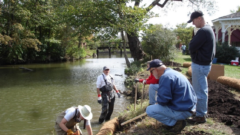
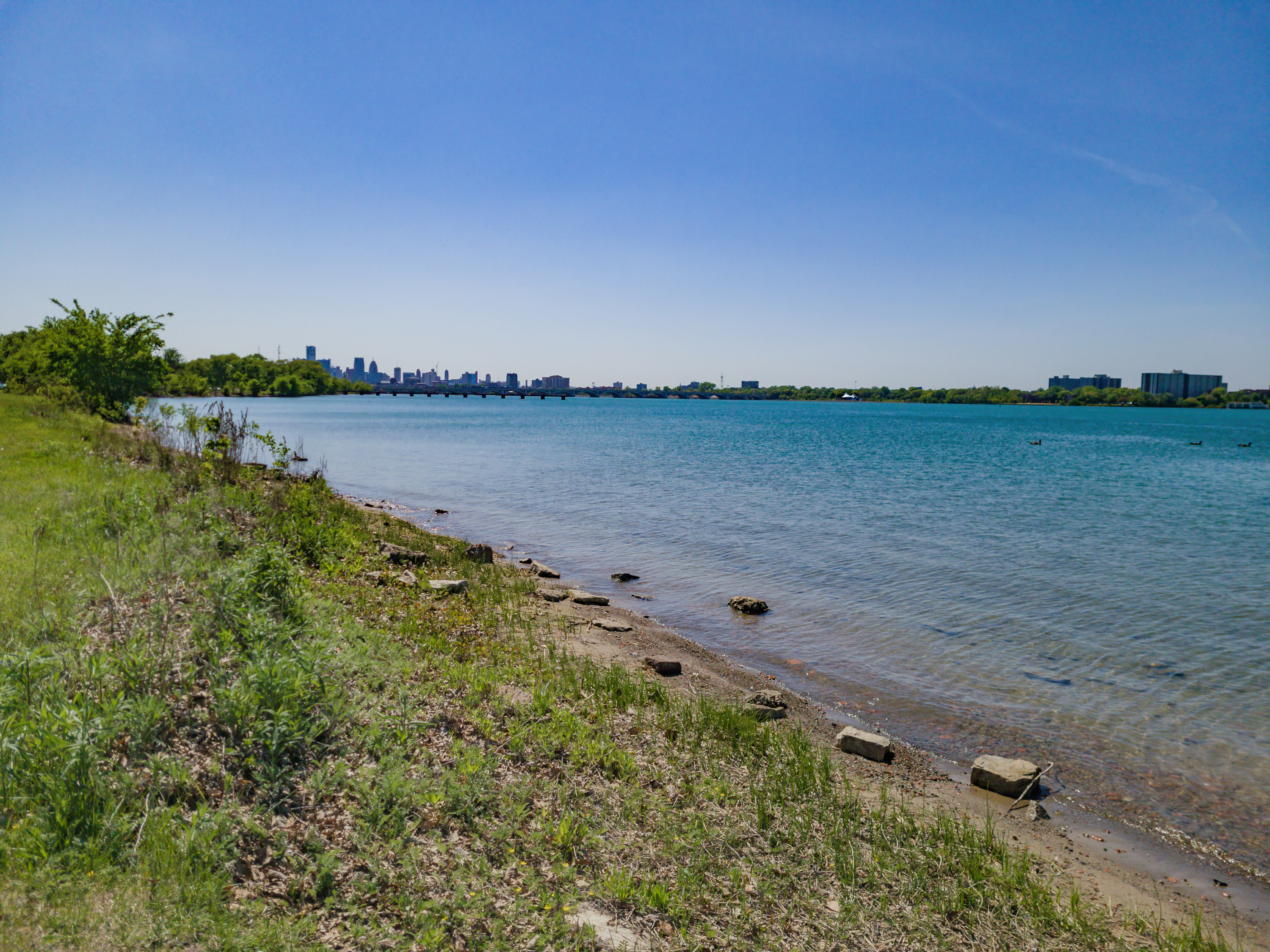
The progress made since that era — from industrial dumping ground to a beloved recreational and tourist attraction — framed a boat tour led by the nonprofit that departed from the Detroit Wayne County Port Authority, circled Belle Isle, and highlighted river restoration projects.

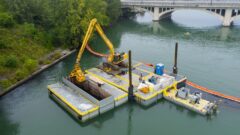
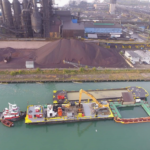
An estimated 3.6 million cubic yards of contaminated sediment remains on the U.S. side of the Detroit River, or enough sediment to fill thousands of dump trucks lined up for miles, said Waliczek, director of programs for Friends of the Detroit River.

The price tag for the cleanup is about $1 billion, she said. 

The Great Lakes Legacy Act provides a 65% federal match for nonfederal restoration funding, but the incentive depends on reauthorization of the Great Lakes Restoration Initiative. 

Friends of the Detroit River needs about $350 million in nonfederal matching funds to reach the $1-billion funding goal for the Detroit River cleanup.

The effort secured $10 million last month from an EPA and EGLE partnership.

Detroit River: Critical Great Lakes waterway

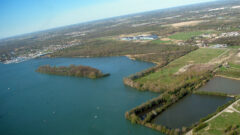
As the Samuel D. Buchanan, a boat operated by a second-generation captain, cruised down the Detroit River, passengers took in the views of Milliken State Park, Belle Isle’s Lake Okonoka, the island’s south fishing pier, and Blue Heron Lagoon.

The tour also visited Lakewood East Park and the Harbortown and Harbortown Upstream sediment remediation sites.

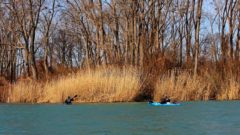
“The Detroit River isn’t just water, it’s where people fish to feed their families, where folks learn to kayak and boat, where entire ecosystems depend on what’s happening beneath the surface,” Waliczek said. 

“For over a century, industry powered this region, but it also left behind contaminated sediments, damaged habitats, and shorelines that no longer function naturally.” 

The U.S. shoreline of the Detroit River has lost approximately 97% of its coastal wetlands to human development, according to a 2017 study by the U.S. Fish and Wildlife Service and U.S. Geological Survey. 

“The Detroit River is one of the most biologically important waterways in the Great Lakes,” Waliczek said. 

“Every spring millions of fish move up through this river to spawn, countless birds, reptiles, amphibians, mammals depend on the small amount of habitat that remains and the habitat that we are restoring.” 

The challenge of Detroit River contamination

Contaminants including PCBs, PAHs, and mercury were identified from more than 1,000 sediment samples from the Detroit River, said Sam Noffke, aquatic biology specialist with the Michigan Department of Environment, Great Lakes, and Energy. 

The contaminants persist in the environment and accumulate in the food chain, he said.

As the self-described “contaminated sediment guy,” Noffke has worked on Detroit River remediation “nonstop” for more than a decade, he said. 

Noffke started by examining 40 years of sediment data to get an idea of areas to prioritize for cleanup, he said. 

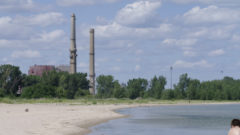
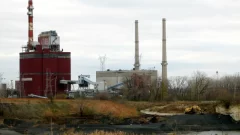
Members of the boat tour recalled a long list of shoreline industries, such as the Superfund site McLouth Steel in Trenton, and the Uniroyal Tire plant once located west of the MacArthur Bridge to Belle Isle. 

Noffke said disposing of contaminated sediment remains a challenge, as the Pointe Mouillee confined disposal facility is nearing capacity. The facility, located on a small island at the mouth of the Huron River, is expected to run out of space in four years, according to a September 2025 Detroit News report. 

EGLE, the U.S. Army Corps of Engineers, and Environmental Protection Agency are discussing alternatives, such as raising dikes at Pointe Mouillee to increase capacity, creating new confined disposal facility cells, or possibly reusing clean material, Noffke said. 

“That’s a major hurdle we are trying to deal with.”

The 700-acre Detroit River Area of Concern extends the length of the river, from Lake St. Clair to Lake Erie.

Detroit River group kicks off final priority habitat restoration project

The habitat restoration effort spearheaded by Friends of the Detroit River includes 13 completed projects.

The EPA and National Oceanic and Atmospheric Association are some of the Detroit organization’s partners on the restoration projects. 

The habitat projects will be removed from the Area of Concern list within three to four years by addressing two beneficial use impairments related to fish and wildlife habitat, Waliczek said.

Detroit’s Lakewood East Park is the 14th and final priority habitat restoration project in the Detroit River Area of Concern.

The project includes nearly 1 mile of Detroit River shoreline and adjacent canals where the river meets Lake St. Clair. The plans call for removing much of the seawall and restoring the natural shoreline, Waliczek said.

Although surrounded by neighborhoods and hardened shorelines, the Detroit park’s canals, wetlands, and open shoreline provide significant restoration potential, Waliczek said, benefiting fish that migrate between Lake Erie, Lake St. Clair, and the broader Great Lakes system.

Friends of the Detroit River Executive Director Tricia Blicharski said the Lakewood East Park project is scheduled to begin this month, with a three-year timeline. Community engagement and plan review will begin immediately, and construction is expected to start in spring 2027, she said.

‘We all have a role to play’

At Belle Isle, restoration projects at Blue Heron Lagoon and Lake Okonoka are improving fish and wildlife habitat by deepening the lake, creating fish nursery areas and opening previously enclosed water to the Detroit River, said Terry Heatlie, a habitat restoration specialist under contract with NOAA.

One of the tour attendees, Terry Campbell, recalled fishing on Belle Isle with her father. The pier near Blue Heron Lagoon was “always” filled with anglers, she said.

“You ate the fish, and arguably it was more contaminated back then than it is now, but it was a part of how you fed the family in the summertime,” she said.

Detroiter Erma Leaphart, a retired Sierra Club organizer in the Great Lakes program, said she would spend time by the river before the riverwalk was built, chatting with fishermen along the river. 

“I loved just sitting on the river, watching the freighters, waves, the breeze, these guys who were like family, even though I didn’t know them, but I knew them as fishermen,” she said.

Everyone has a stewardship responsibility, Leaphart said.

“We all have a role to play, whether it’s teaching young people about it, whether it’s the stewardship part,” she said. “You have an ongoing responsibility to protect the asset, protect what you’ve done, and protect it for future generations.”

The post Detroit River tour highlights restoration successes, $1-billion cleanup hurdle: ‘We all have a role to play’ appeared first on Great Lakes Now.
Original Article

Great Lakes Now

Great Lakes Now

https://www.greatlakesnow.org/2026/07/10/detroit-river-tour-highlights-restoration-successes-1-billion-cleanup-hurdle-we-all-have-a-role-to-play/

Planet Detroit

How Buffalo, New York has adapted to and embraced an influx of climate migrants

Buffalo is not a place that typically makes national headlines outside of football season. But in late July, the city did exactly that for one hugely significant reason: it became the last large city in the U.S. Lower 48 to have never reached 100 F.

At a time of rising temperatures and water levels, along with the threat of wildfires and smoke, many are reassessing where to live and Buffalo is embracing the “climate haven” tag.

Read Now at Great Lakes Now.

Original Article

Great Lakes Now

Great Lakes Now

https://www.greatlakesnow.org/2025/10/how-buffalo-new-york-has-adapted-to-and-embraced-an-influx-of-climate-migrants/

Stephen Starr, Great Lakes Now

How Buffalo, New York has adapted to and embraced an influx of climate migrants

Buffalo is not a place that typically makes national headlines outside of football season. But in late July, the city did exactly that for one hugely significant reason: it became the last large city in the U.S. Lower 48 to have never reached 100 F.

At a time of rising temperatures and water levels, along with the threat of wildfires and smoke, many are reassessing where to live and Buffalo is embracing the “climate haven” tag.

Read Now at Great Lakes Now.

Original Article

Great Lakes Now

Great Lakes Now

https://www.greatlakesnow.org/2025/10/how-buffalo-new-york-has-adapted-to-and-embraced-an-influx-of-climate-migrants/

Stephen Starr, Great Lakes Now

Wildfire smoke from Canadian blazes threatens Detroit air quality

By Dustin Blitchok, Planet Detroit

This article was republished with permission from Planet Detroit. Sign up for Planet Detroit’s weekly newsletter here.

Michigan faces an air quality advisory Friday and into Saturday morning due to smoke from Canadian wildfires.

The state could experience elevated levels of fine particulate matter, and conditions may be unhealthy for sensitive groups, the Michigan Department of Environment, Great Lakes, and Energy said in a statement.

Read Now at Great Lakes Now.

Original Article

Great Lakes Now

Great Lakes Now

https://www.greatlakesnow.org/2025/05/wildfire-smoke-from-canadian-blazes-threatens-detroit-air-quality/

Planet Detroit

Great Lakes Moment: Detroit River common terns under threat

Great Lakes Moment is a monthly column written by Great Lakes Now Contributor John Hartig. Publishing the author’s views and assertions does not represent endorsement by Great Lakes Now or Detroit PBS.

Common terns are known for their aerial acrobatics, performing rapid turns and swoops to the delight of those watching.

Read Now at Great Lakes Now.

Original Article

Great Lakes Now

Great Lakes Now

https://www.greatlakesnow.org/2025/03/great-lakes-moment-detroit-river-common-terns-under-threat/

John Hartig, Great Lakes Now

Great Lakes Moment: Mink thriving along the Detroit River

Great Lakes Moment is a monthly column written by Great Lakes Now Contributor John Hartig. Publishing the author’s views and assertions does not represent endorsement by Great Lakes Now or Detroit PBS.

From a distance, I caught a glimpse of a relatively small elongated furry animal moving along the shoreline of the Detroit River.

Read Now at Great Lakes Now.

Original Article

Great Lakes Now

Great Lakes Now

https://www.greatlakesnow.org/2024/10/great-lakes-moment-mink-thriving-along-the-detroit-river/

John Hartig

Operation Manoomin: Restoring Wild Rice along the Detroit River

Great Lakes Moment is a monthly column written by Great Lakes Now Contributor John Hartig. Publishing the author’s views and assertions does not represent endorsement by Great Lakes Now or Detroit PBS.

Manoomin (mah-NOO-mehn) or wild rice was once very common in coastal marshes along the Detroit River and has always been sacred to First Nations.

Read Now at Great Lakes Now.

Original Article

Great Lakes Now

Great Lakes Now

https://www.greatlakesnow.org/2024/08/operation-manoomin-restoring-wild-rice-along-the-detroit-river/

John Hartig

Great Lakes Moment: Detroit River’s important role in lake whitefish

Great Lakes Moment is a monthly column written by Great Lakes Now Contributor John Hartig. Publishing the author’s views and assertions does not represent endorsement by Great Lakes Now or Detroit Public Television.

Lake whitefish is an important commercial fishery in Lake Erie and is culturally and economically important to local First Nations.

Read Now at Great Lakes Now.

Original Article

Great Lakes Now

Great Lakes Now

https://www.greatlakesnow.org/2024/05/great-lakes-moment-detroit-rivers-important-role-in-lake-whitefish/

John Hartig

Great Lakes Moment: Detroit’s new Ralph Wilson Park will provide habitats for a healthy ecosystem

Great Lakes Moment is a monthly column written by Great Lakes Now Contributor John Hartig. Publishing the author’s views and assertions does not represent endorsement by Great Lakes Now or Detroit Public Television.

For over 100 years the Detroit River was perceived as a working waterway that supported industry and commerce.

Read Now at Great Lakes Now.

Original Article

Great Lakes Now

Great Lakes Now

https://www.greatlakesnow.org/2023/10/great-lakes-moment-detroits-new-ralph-wilson-park-will-provide-habitats-for-a-healthy-ecosystem/

John Hartig

Great Lakes EPA office reaffirms 2030 cleanup goal for Detroit River, other contaminated sites

The EPA’s Chris Korleski gets excited when speaking about cleaning up the Great Lakes region’s decades-old, contaminated sediment sites like the Detroit River.

He talks about the “tremendous effort” that’s been rekindled in the past two years under the Biden administration. And how “motivated” the people who work to advance the cleanup are and the value of the partnerships that facilitate restoration.

Read Now at Great Lakes Now.

Original Article

Great Lakes Now

Great Lakes Now

https://www.greatlakesnow.org/2023/09/great-lakes-epa-office-reaffirms-2030-cleanup-goal-for-detroit-river-other-contaminated-sites/

Gary Wilson

Great Lakes Moment: A business case for The Great Lakes Way

Great Lakes Moment is a monthly column written by Great Lakes Now Contributor John Hartig. Publishing the author’s views and assertions does not represent endorsement by Great Lakes Now or Detroit Public Television.

A business case is a document that outlines whether a project is worth undertaking.

Read Now at Great Lakes Now.

Original Article

Great Lakes Now

Great Lakes Now

https://www.greatlakesnow.org/2023/07/great-lakes-moment-a-business-case-for-the-great-lakes-way/

John Hartig

Great Lakes Moment: Solving the contaminated sediment remediation funding puzzle

Great Lakes Moment is a monthly column written by Great Lakes Now Contributor John Hartig. Publishing the author’s views and assertions does not represent endorsement by Great Lakes Now or Detroit Public Television.

For over a century, vast amounts of toxic contaminants were discharged by industries into the Detroit and Rouge Rivers.

Read Now at Great Lakes Now.

Original Article

Great Lakes Now

Great Lakes Now

https://www.greatlakesnow.org/2023/05/great-lakes-moment-solving-the-contaminated-sediment-remediation-funding-puzzle/

John Hartig

Great Lakes Moment: The event that saved Humbug Marsh

Great Lakes Moment is a monthly column written by Great Lakes Now Contributor John Hartig. Publishing the author’s views and assertions does not represent endorsement by Great Lakes Now or Detroit Public Television.

On that September day in 1998, more than 1,000 rain-soaked and determined people stood up for what they felt was right.

Read Now at Great Lakes Now.

Original Article

Great Lakes Now

Great Lakes Now

https://www.greatlakesnow.org/2023/03/great-lakes-moment-the-event-that-saved-humbug-marsh/

John Hartig

Great Lakes Moment: A community science survey

Great Lakes Moment is a monthly column written by Great Lakes Now Contributor John Hartig. Publishing the author’s views and assertions does not represent endorsement by Great Lakes Now or Detroit Public Television.

A good example of community science in metropolitan Detroit is the Rockwood Christmas Bird Count, which is part of the longest-running community science survey in the world.

Read Now at Great Lakes Now.

Original Article

Great Lakes Now

Great Lakes Now

https://www.greatlakesnow.org/2023/02/great-lakes-moment-community-science-survey/

John Hartig

Great Lakes Moment: The Great Blue Herons of Stony Island

Great Lakes Moment is a monthly column written by Great Lakes Now Contributor John Hartig. Publishing the author’s views and assertions does not represent endorsement by Great Lakes Now or Detroit Public Television.

Have you ever gone for a peaceful walk along a creek or lake and been spooked by the sound of what you think is a pterodactyl?

Read Now at Great Lakes Now.

Original Article

Great Lakes Now

Great Lakes Now

https://www.greatlakesnow.org/2023/01/great-lakes-moment-great-blue-herons-stony-island/

John Hartig

More from “Poisonous Ponds: Tackling Toxic Coal Ash”

In August, the “Poisonous Ponds: Tackling Toxic Coal Ash” student reporting initiative investigated the complicated policy and impacts of coal ash in the Great Lakes. The special collaboration included Great Lakes Now, The Energy News Network, and Northwestern University’s Medill School of Journalism, Media, Integrated Marketing Communications.

Keep up with more coal ash news published by The Energy News Network as part of this project:

How Puerto Rico’s banned coal ash winds up in rural Georgia

After Puerto Rico banned coal ash storage, the toxic waste from its coal plant is being quietly shipped through Florida to Georgia.

Read Now at Great Lakes Now.

Original Article

Great Lakes Now

Great Lakes Now

https://www.greatlakesnow.org/2022/10/more-from-poisonous-ponds-tackling-toxic-coal-ash/

Energy News Network

Great Lakes Moment: Rouge River Revived

Editor’s Note: Great Lakes Moment is a monthly column written by Great Lakes Now Contributor John Hartig. Publishing the author’s views and assertions does not represent endorsement by Great Lakes Now or Detroit Public Television. This month’s article is a combination of excerpts and a preview of his new book, “Rouge River Revived: How People are Bringing Their River Back to Life,” which chronicles how citizens are leading an effort to restore their river in metropolitan Detroit.

Read Now at Great Lakes Now.

Original Article

Great Lakes Now

Great Lakes Now

https://www.greatlakesnow.org/2022/10/great-lakes-moment-rouge-river-revived/

John Hartig

Solar, storage projects set to bring jobs, tax revenue to Illinois coal communities

By Kari Lydersen, Energy News Network

This story was first published on the Energy News Network and was republished here with permission.

A recent state procurement formalizes plans to put solar and storage on the site of several retired coal plants. The owners will receive grants and higher-value renewable energy credits to finance the projects.

Read Now at Great Lakes Now.

Original Article

Great Lakes Now

Great Lakes Now

https://www.greatlakesnow.org/2022/07/solar-storage-projects-set-to-bring-jobs-tax-revenue-to-illinois-coal-communities/

Energy News Network

Mapping the Great Lakes: What’s in a Great Lakes name?

Love staring at a map and discovering something interesting? Then “Mapping the Great Lakes” is for you. It’s a monthly Great Lakes Now feature created by Alex B. Hill, a self-described “data nerd and anthropologist” who combines cartography, data, and analytics with storytelling and human experience.

Read Now at Great Lakes Now.

Original Article

Great Lakes Now

Great Lakes Now

https://www.greatlakesnow.org/2022/02/mapping-great-lakes-name/

Alex Hill

Lakes Learning: Great Lakes Now adds more free educational activities, teaching plans, PBS programs

From the segment “Love for a Lighthouse” comes an activity where students can imagine what it was like to live in a Great Lakes lighthouse and a STEM lesson plan teaching students how to measure the light’s intensity.

Another Great Lakes Now lesson plan guides students in building their own aluminum foil boats and testing their buoyancy by loading them with pennies, after taking them on a virtual visit to the Great Lakes Boat Building School.

Read Now at Great Lakes Now.

Original Article

Great Lakes Now

Great Lakes Now

https://www.greatlakesnow.org/2022/02/news-free-lesson-plans-pbs/

GLN Editor

Great Lakes Moment: Investing in pollution prevention and restoration pays off

Great Lakes Moment is a monthly column written by Great Lakes Now Contributor John Hartig. Publishing the author’s views and assertions does not represent endorsement by Great Lakes Now or Detroit Public Television.

A new study on cleaning up Great Lakes pollution hotspots published in the Journal of Great Lakes Research finds that investing in pollution prevention and restoration pays off in the long run.

Read Now at Great Lakes Now.

Original Article

Great Lakes Now

Great Lakes Now

https://www.greatlakesnow.org/2020/06/pollution-prevention-restoration-study/

John Hartig

From Rust to Resilience: Climate change brings new challenges and opportunities

Great Lakes Now is sharing work from our partners in a project on what climate change means for Great Lakes cities. Here is the initial piece in the series.

Read Now at Great Lakes Now.

Original Article

Great Lakes Now

Great Lakes Now

https://www.greatlakesnow.org/2020/04/rust-resilience-climate-change-great-lakes-cities/

Ensia