
It takes a lot of energy to power 1,800 slot machines. The Fond du Lac Band of Ojibwe’s Black Bear Casino is located near Cloquet, Minnesota about 20 miles from Duluth. In 2016 the Band took steps to offset the energy and environmental costs of running their casino and hotel complex by installing a 1 megawatt, 5 acre solar array. According to the Band’s Strategic Energy Plan, adding solar as a power source has saved the community about $772,403[SD1]  per year in energy costs. It is just one part of their long-term plan to “develop energy resources in ways that will sustain current and future generations.”

Fond du Lac is not an anomaly in Ojibwe country when it comes to energy reform. In 2017, the Leech Lake Band launched the first community solar garden in the U.S., selling power to the grid and using the savings to subsidize low-income winter heating bills and create workforce training for tribal college students.  

In 2022, the Mille Lacs Band commissioned a 3-megawatt solar array in Hinckley, Minnesota. The system offsets the electric demand needed to run their two casinos — Grand Casino Mille Lacs and Grand Casino Hinckley.

Further north, the Red Lake Nation added a 70-kW rooftop system at the Government Center and a 240-kW system at the Oshkiimaajitahdah workforce center. Red Lake Nation has plans to build 20 more commercial-building systems, plus a 13-MW solar farm.

And, the White Earth Ojibwe Nation is installing a 500-kW solar array with a storage microgrid at the Pine Point Resilience Hub, a new energy outlet expected to come online in 2026.
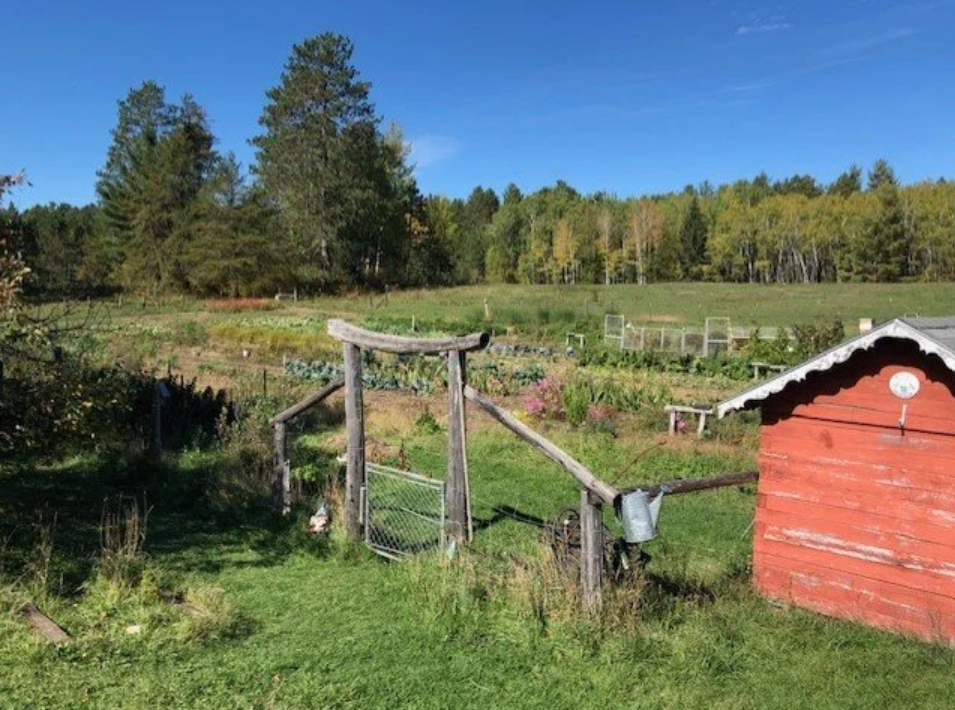
100-acre organic farm at Bois Forte. (Photo by Marlise Riffel and courtesy of Iron Range Partnership for Sustainability)

Solar Sovereignty

There are seven Ojibwe Nations in Minnesota and five of these communities have embraced alternative energy sources over the last ten years. And now, there are six. The Bois Forte Ojibwe Nation is far away from the sunbelt and winter days are six-to-eight hours long. As Rebecca Gawboy of the Bois Forte community confirmed, “we have shorter days [in winter], but they’re clear. We have really sunny winters for the most part.”

Gawboy is the co-director of Waawaate, a non-profit group that works on food sovereignty projects.

“We established Waawaate because we wanted to do training, information presentations and assistance with people in the community interested in the food sovereignty movement,” she said. “We were always involved in the food sovereignty thing, because growing food and caring for the land are, you know, inherent values for us.”

Bois Forte has made the leap between food sovereignty to energy sovereignty through a program called The Solar Commons. An initiative of the University of Minnesota Duluth, the project was founded by Kathryn Milun, associate professor of Anthropology and the Department of Studies in Justice, Culture and Social Change. Bois Forte is the second “living lab” in the United States. The first lab is located in Tucson, Arizona.

With the help of community partners and a mix of funding, the Solar Commons at Bois Forte has completed one of the short-term goals of the project — building a 500kW solar array in rural, northern Minnesota. The array of solar panels is situated on the roof of the Vermilion Country School in Tower, Minnesota.

According to the project website, the longer-term goal of the Solar Commons project is “to reduce Co2 emissions by 6,500 metric tons and create around $70,000 a year” [RL2] [SD3] in energy savings. Prof. Mulin and Gawboy met through the work of Dani Pieratos, a food sovereignty activist from Bois Forte who “changed worlds” in 2025. In a jointly-written article Milun and Gawboy honored Pieratos’s legacy, stating that, “we have worked together to realize Dani’s plan to demonstrate the healing power and gift economy that are at the heart of both solar energy and traditional Anishinaabe foodways.”

Gawboy explained more about how utilizing the gift of sunshine will benefit the people of Bois Forte:

“The foundational value of the solar commons is that the sun’s energy belongs to all of us, and no utility company should profit. And so, the way to get around that is by establishing a solar project and then using the solar saving — minus maintenance and expenses — in a Solar Commons trust fund. Our focus was using that trust fund money to benefit the food sovereignty movement at Bois Forte.”

Gawboy has a lot of experience with the land and feeding people.

“I have 100-acre farm right outside of Tower — an organic farm, and we do workshops on the farm, we teach butchering, slaughtering, we teach gardening, we teach canning, food preservation, all those kinds of things, right there,” she said.

I asked her about the connection between food sovereignty and renewable energy and she explained that food sovereignty and energy sovereignty are “part of our guardianship responsibility of the earth. When we’re looking at energy and sovereignty, we’re not looking at drilling more oil wells, we’re not looking at digging coal, we’re not looking at digging uranium.”

“What we’re saying is that the sun and wind have offered us their energy, they have this as a gift to us, a sacred gift, and not utilizing it is ignoring the gift. So, we should utilize those gifts, because what they create is, first of all, a relationship to the land, and that intimate relationship with the land and the water is what feeds our community,“ she said.

Repairing the World

The funds collected in the Solar Commons trust fund will be stewarded by students at the Vermilion Country School, an arrangement built into the Solar Commons formula that is designed to teach regenerative economy principles using a digital dashboard of tools. This process is called “participatory budgeting,” and is intended to be a transparent way for community members to decide what to invest in, in their community with their annual distribution from the Solar Commons trust.

“When the kids [at Bois Forte] decide how to spend the accumulation of common wealth trust funds after one year of solar commoning, they will use participatory budgeting and two guiding principles about commons: mutual aid and repairing the world,” said Milun.

The element of reparative justice is stirred into the soup of solar commoning — the idea that the gift of sunlight can power food systems’ vitality, local economic regeneration and help repair the effects of rural isolation, cultural assimilation, economic inequity and other forms of harm.

Building the first solar commons project in Minnesota required buy-in from a network of partners, including a strong commitment from Heliene, Inc., a solar manufacturing plant on Minnesota’s Iron Range. The company agreed to supply the solar panels for the Vermilion Country School at cost, and pass on the solar savings (minus expenses) of a proposed 500kW array on top of the factory in Mountain Iron, Minnesota. This “social wealth trust” between Heliene and the Bois Forte community will extend through the 20-year warranty of the solar panels.

Indigenizing Community Change

Waawaate and the other Solar Commons partners hope to kick-start work on a more extensive Solar Commons project that “indigenizes community change” by installing solar projects at multiple locations. The project seeks to build a 2MW solar microgrid, and two 500kW solar plus storage microgrids at the Bois Forte and Fond du Lac Ojibwe reservations, adding to what both tribal communities have already built.

Peak sun on a cold winter day (Photo by Staci Drouillard)

“They didn’t need solar panels in Fond du Lac, what they needed was storage,” said Gawboy. “And there again, the Solar Commons idea was presented and accepted by both reservations, as a very good way to do things.”

Gawboy believes that building micro-grids to serve rural communities, solar or otherwise, is the way forward, because the mainstream approach to energy sourcing and distribution hasn’t served the people well.

“The replacement of traditional cultures has been such a disaster,” said Gawboy. “If we believe that man has dominion over the earth, we end up with where we’re at now. If instead we believe what the seven teachings say, which is — man is here and man is beholden to the earth and we are dependent in all of creation being in balance — to keep ourselves in balance — that’s the overarching lesson of the food sovereignty movement, the energy sovereignty movement, the cultural sovereignty movement, all of those things.”

One of the benefits of being the first living lab in Minnesota is being able to help other communities take steps toward energy sovereignty and food sovereignty.

“The whole food sovereignty movement is due to the activism of Indian people on reservations, because almost all of them live in food deserts,” said Gawboy. “This is a really great combination. You can’t have sovereignty unless you control your energy and your food, and if you don’t have control of those two things, sovereignty is illusory.”

The Bois Forte community will come together at the end of July, 2026 to celebrate the Solar Commons installation at the Vermilion Country School. Waawaate and their community partners also have plans to produce a documentary film about the project, work with Anishinaabe artists to create a mural at the school, and create a step-by-step guide to solar commoning for other tribal communities. And if it’s a clear day, the whole community will benefit from the many gifts of the sun.


The post No One Owns the Sun appeared first on Great Lakes Now.

Original Article

Great Lakes Now

Great Lakes Now

https://www.greatlakesnow.org/2026/07/23/no-one-owns-the-sun/
Staci Lola Drouillard, Great Lakes Now

By Vivian La and Ed Ronco, IPR

This story is made possible through a partnership between Interlochen Public Radio and Grist, a nonprofit environmental media organization.


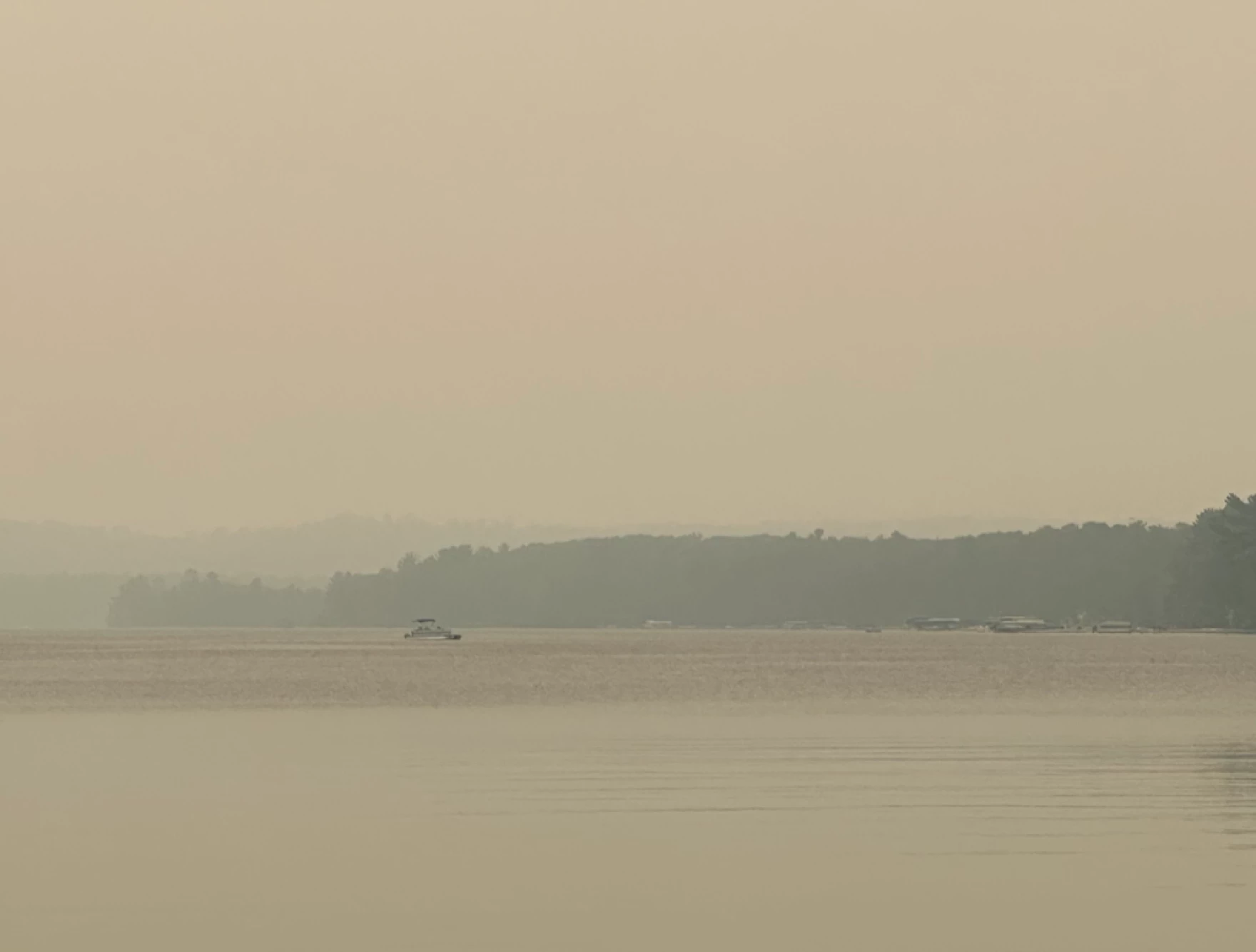
Northern Michigan is enveloped in a thick blanket of brown smoke from wildfires in Minnesota and Canada.

“We currently can’t see across (Lake Charelvoix),” said Jenny Clasman, executive director of the Boyne Area Chamber of Commerce, which canceled an outdoor concert set for Wednesday night. “I can see across the street, but it’s definitely foggy, cloudy. There is ash on our cars right now and it smells like burning tires.”

Clasman, who has asthma, said she was having a hard time breathing and was wearing an N-95 mask outdoors.

And she might not get much relief this week.

“It’s going to be with us certainly for Thursday, and there’s a pretty good chance it’s going to hang around into the day on Friday before we can really start to displace it,” said Jeff Zoltowski, a meteorologist at the National Weather Service office in Gaylord.

The fires are hundreds of miles away from Michigan, but until they settle down or go out altogether, off-and-on smoke will be possible as long as the winds are coming out of the northwest.

“It’s a really, really thick plume of smoke. It’s being added to continually,” said Jim Haywood, senior meteorologist with EGLE. “We’re seeing new fires breaking out all the time.”

Haywood said smoke forecasts currently look ahead 48 hours, and are issued with help from meteorologists across the Midwest.

Because of how aggressive the fires are, EGLE said their air quality alert will extend into Thursday and possibly Friday.

Health impacts

Most of northern Michigan was under an air quality alert. At a monitoring station in Houghton Lake, the air quality was listed as “unhealthy for sensitive groups” on Wednesday afternoon. In Seney, in the Upper Peninsula, the air quality was “unhealthy,” meaning all populations were at risk of adverse effects.

It’s recommended that people avoid any strenuous outdoor activity because of high levels of fine particulate matter, which can cause health problems when inhaled. Children, older adults, or people with respiratory and cardiovascular disease are particularly vulnerable.

Northern Michigan is also under a heat advisory, with high humidity and temperatures expected to stay in the upper 80s well into the weekend.

Wildfire smoke can exacerbate health issues from extreme heat, said Lisa Del Buono, a retired doctor in Traverse City and founder of the nonprofit Michigan Clinicians for Climate Action.

“When there are two hazards being described, we have a tendency in our communication and in our brains to silo the issues, but they tend to work together and sometimes have compounding effects,” she said.

Under both a heat advisory and air quality alert, Del Buono recommends running the air conditioner and making sure the filter inside is clean.

She also suggested checking in on neighbors because heat and smoke can sometimes trigger heart attacks, stroke, or preterm deliveries.

Days like this with multiple hazards are a reminder that northern Michigan is vulnerable to the impacts of climate change, Del Buono said. Average summer temperatures in Michigan have increased by 2.3 degrees Fahrenheit, according to data from the research nonprofit Climate Central.

Hotter temperatures around the U.S. and Canada are making the conditions that can cause fires to ignite and burn more common.

From her vantage point about halfway out Old Mission Peninsula, Del Buono said she had lost sight of an island that’s usually in view, just about a mile away.

“Right now, I can’t even see the water at all, let alone the island or across the bay,” she told IPR.

“We are not avoiding the impacts of climate change, as we can see looking out the window right now,” Del Buono said. “All of this is tough on our health.”

Canceled plans

Clasman, who leads the Boyne Area Chamber of Commerce, said it was disappointing to have to cancel tonight’s event, but it was also an easy decision.

“I do worry about people getting sick,” she said. “I do worry about the ERs filling up this evening, and I definitely don’t want to be contributing to that.”

Boyne City’s weekly Evenings at the Gazebo Summer Music Series hardly ever cancels an event. Even when it rains they move to a pavilion at Veterans’ Park.

Wednesday night’s act, the Traverse City-based duo “Dags Und Timmah!” will return on Aug. 19, air quality permitting.

Clasman said it’s the third year they’ve dealt with smoke drifting into the area but this is the worst it’s been.

“I’ve never had ash on the car. That’s new,” she said. “I’ve never smelled burning tire. That’s new.”


The post Air quality alerts issued for northern Michigan as wildfire smoke blankets region appeared first on Great Lakes Now.

Original Article

Great Lakes Now

Great Lakes Now

https://www.greatlakesnow.org/2026/07/15/air-quality-alerts-issued-for-northern-michigan-as-wildfire-smoke-blankets-region/

Interlochen Public Radio

By Danielle Kaeding, Wisconsin Public Radio

This article was republished here with permission from Wisconsin Public Radio.


After the sun goes down, Donn Branstrator and his team get to work.

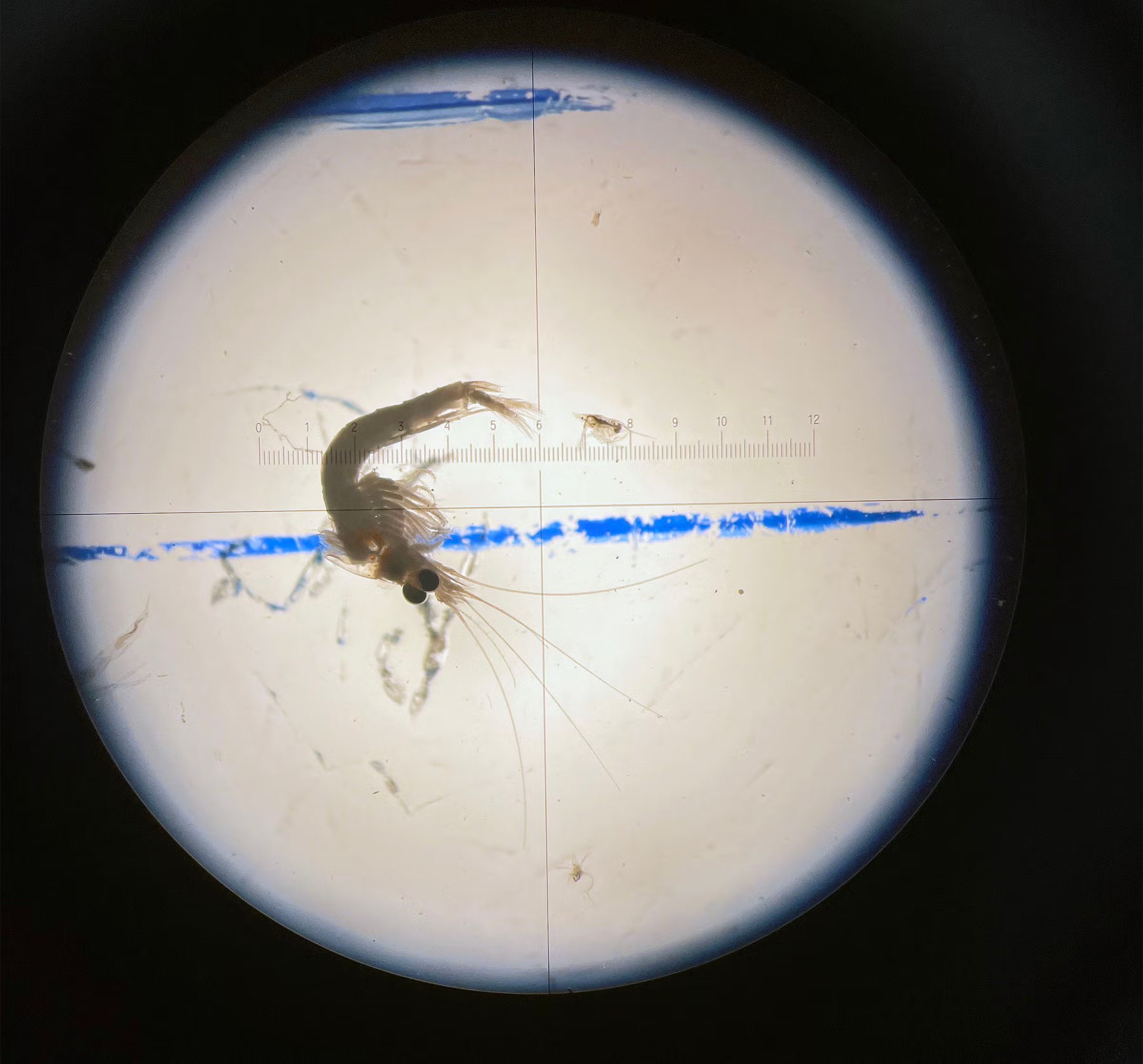
For the past couple years, they’ve been using nets and setting light traps at several locations in a Lake Superior harbor on a quest to find an invader: the bloody red shrimp. The freshwater shrimp is known for its red pigment and translucent or ivory-yellow appearance.

Branstrator, a biology professor at the University of Minnesota-Duluth, said the organism that grows up to a half-inch in length tends to come out at night because they’re vulnerable to fish.

“They hide on the bottom within the cracks and crevices of the break wall and bouldered environments during the day,” Branstrator said. “You can go out there during the day and sample all you want, and you’re going to be hard-pressed to find them.”

Bloody red shrimp are a type of zooplankton native to the Black Sea and Caspian Sea between Europe and Asia. The invader likely hitched a ride aboard the ballast water of oceangoing vessels. They were first detected 20 years ago in the Great Lakes. But evidence was lacking that they had become established in Lake Superior.

Until now.

Last year, Branstrator and others collected 81 bloody red shrimp in light traps and nets at Wisconsin Point and Montreal Pier in Superior. He said they found enough individuals at various life stages, including pregnant adult females, for them to be confident that a self-sustaining population is living in the lake. Findings from their study were recently published in the Journal of Great Lakes Research.

“It is there, in perpetuity one would think, if they can continue to grow and reproduce,” Branstrator said.

A researcher is processing a sample from a net used to collect bloody red shrimp in the Duluth-Superior Harbor. (Photo credit: Donn Branstrator/University of Minnesota-Duluth)

The findings make Lake Superior the final of the five Great Lakes to see an established population of the invasive species. The U.S. Fish and Wildlife Service first detected a single specimen from the Duluth-Superior harbor in 2017.

Researchers found more the following year at Wisconsin Point, and they published a study showing that Great Lakes ships were moving bloody red shrimp and other invaders from the lower lakes to Lake Superior.

Matt TenEyck is director of the Lake Superior Research Institute and co-authored the study with Branstrator. Now that bloody red shrimp are here to stay, he said their effects remain unclear.

“It’s just too soon to tell if and when they will cause problems with our local communities, if they’ll disrupt the food web,” TenEcyk said. “We just won’t know yet.”

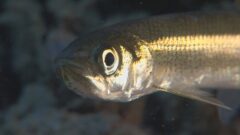
As juveniles, Branstrator said bloody red shrimp feed more on algae. As they grow, they eat more zooplankton and could become a potential competitor to small fish. But they could also become a potential new food source for fish.

Research has found that the introduction of bloody red shrimp can cause the collapse of zooplankton abundances in European reservoirs. Even so, Branstrator said there have been no reports of adverse or positive effects since their introduction to the Great Lakes. But swarms of thousands of bloody red shrimp have been found in waters connected to Lake Michigan in Muskegon, Michigan.

“We haven’t seen a single swarm yet in our work,” Branstrator said.

However, both he and TenEyck are concerned about what their establishment could mean for inland lakes.

“What happens if someone picks that up in their bait bucket or their live well and goes to an inland lake?” TenEyck said. “This is the classic example of likely how (other invasive species like) zebra mussels and spiny water fleas have made this slow migration inland. This could be the next concern.”

So far, they haven’t been found in any inland lakes in Wisconsin or Minnesota.

While progress has been made, TenEyck stressed that the spread of invasive species has not stopped and work must continue. He and others have been working on the Great Waters Research Collaborative at the University of Wisconsin-Superior. The project aims to prevent the spread of invasive species through ballast water by testing ballast water treatment systems for ships. 

Meanwhile, Branstrator said his team has expanded sampling for bloody red shrimp to other areas of the Duluth-Superior harbor and Two Harbors to find out more about how they’re spreading in Lake Superior.


The post In Lake Superior, researchers find invasive bloody red shrimp are here to stay appeared first on Great Lakes Now.

Original Article

Great Lakes Now

Great Lakes Now

https://www.greatlakesnow.org/2026/07/01/in-lake-superior-researchers-find-invasive-bloody-red-shrimp-are-here-to-stay/
Wisconsin Public Radio

For more than a decade, conservation groups have fought to protect Minnesota’s Boundary Waters Canoe Area Wilderness from proposed copper-nickel mining projects. Now, following actions by the Trump administration to remove federal protections from the area, advocates’ fight for the region has entered a new phase.

Local environmental groups, as well as national legal organizations, have spent years working together to protect the 1.1 million acre outdoor space. Broadly, they argue mining near the Boundary Waters threatens clean water, wildlife and a regional economy built around outdoor recreation. 

In April, the Trump administration rolled back on a 20-year federal mining ban for the region, opening the Boundary Waters up to a mining from Twin Metals, the subsidiary of a Chilean mining company. 

“We’re facing an all-out assault on northern Minnesota’s Boundary Waters from the mining industry’s allies in Congress,” said Blaine Miller-McFeeley, a senior legislative representative for Earthjustice.

The Boundary Waters region, located in northeastern Minnesota along the Canadian border, contains over 1,000 lakes and traditionally is one of the most visited wilderness areas in the country, with over 149,000 visitors in 2024 alone, according to the Quetico Superior Wilderness News. 

“The Boundary Waters is really a unique place in our landscape,” said Pete Marshall, communications director for Friends of the Boundary Waters Wilderness. “It’s over a thousand lakes and rocky shorelines. It’s really unlike any other place in the United States.”

The Boundary Waters region offers camping grounds, cross country skiing and hiking for its visitors. 

“People who go there quite easily fall in love with it,” Marshall said. “Today we live our lives through screens. It’s probably more valuable than ever as a way to escape, to get away from the busyness and the noise and the distraction of modern living.”

This attachment to wilderness has propelled groups, like Friends of the Boundary Waters Wilderness, to work together to oppose the mining proposals in the area. 

Building a movement

Although the area has been under fire in recent years, this is far from a new fight.  

Friends of the Boundary Waters Wilderness is celebrating its 50th anniversary this year. The group was founded to help create the protections that eventually shaped the area as it exists today, according to Marshall. 

“We were founded 50 years ago to help pass the legislation that made the Boundary Waters what it is today,” Marshall said.

In 2012, nearby residents of the city Ely started mobilizing to protect the area after proposed mining developments— forming Save the Boundary Waters, Executive Director Ingrid Lyons said. 

“A small group of people based in Ely, Minnesota, were made aware that there were two federal mineral leases in the headwaters of the Boundary Waters Canoe Area Wilderness,” Lyons said. “This group of people kind of paused and said, ‘Why does the federal government even allow mineral leasing in this area?'”

That small effort quickly evolved into a larger campaign when organizers realized they would need to engage federal agencies and lawmakers in Washington to stop proposed mining development.

“We started going to Washington, D.C. every single month beginning in 2013,” she said.

In recent months, Miller-McFeeley said that when defending federal protections, he said environmental organizations were joined by not just advocacy groups but people who frequent the Boundary Waters. 

“It was environmentalists, fishers, hunters, outdoor recreationists,” Miller-McFeeley said. “It was an extraordinarily diverse set of voices and groups and communities that came together because of this threat.”

A changing political landscape

The fight over mining near the Boundary Waters has intensified through multiple presidential administrations, but most intensely in the last 18 months. 

Groups pushed for studies on the impact of mining in the Boundary Waters under the Obama administration. Later, under the Biden administration, a 20-year mining withdrawal was put in place which affected 225,504 acres near the wilderness.

But, these efforts were halted when the political environment shifted following President Donald Trump’s return to office.

“We knew we were going to come under a lot of different forms of attack,” Lyons said.

Marshall said this did not come as a surprise. 

“The Trump administration has been unabashedly a very pro-extractive industry,” Marshall said. “There’s a big hunger out there for some kind of permanent legislative solution.”

Steve Shultz, government relations director for Save the Boundary Waters, said the administration’s priorities have made advocacy work more difficult.

“Our job is a lot more difficult with the Trump administration in place and the priorities that they’ve got at the forefront of their agenda,” he said.

Shultz said that the state’s efforts going forward could still play a significant role in determining whether mining projects move forward.

“There are many opportunities,” he said. “People keep asking me, ‘Is it over? Have we lost?’ But there are a lot of other opportunities.”

Earlier this year, Congress passed House Joint Resolution 140, using the Congressional Review Act to overturn a federal mineral withdrawal that had protected the Boundary Waters from new mineral leasing. This marked one of the most significant victories for mining advocates and one of the largest setbacks for conservation groups in recent years.

“This was a novel and likely illegal move,” Miller-McFeeley said.

According to Miller-McFeeley, Congress had never previously used the Congressional Review Act to overturn a public lands mineral withdrawal.

“It’s a powerful tool that they’re abusing to bypass normal democratic processes,” he said.

The resolution passed the Senate by a single vote. 

“They were stripping protections for the Boundary Waters because they were blatantly ignoring the voices of the American people and prioritizing the profits of a foreign mining company over the interests of the nation’s people,” Miller-McFeeley said.

“Protecting the Boundary Waters is not a partisan issue,” Lyons said. “Seventy percent of Minnesotans across partisan divides want the Boundary Waters protected.”

What’s next

Despite the loss of federal protections, advocates say the fight is far from over.

Earthjustice and its partners continue to work with conservation groups to pressure Minnesota officials to use state authority to block future mining projects.

The current focus is on Twin Metals’ state mineral leases.

“We’re trying to pressure the Minnesota DNR to exercise its authority and cancel this lease,” Marshall said. “To do something to protect Minnesota’s water.”

Miller-McFeeley said efforts remain energized despite recent setbacks.

“The CRA [congressional review act] vote was not the end of the line. It was not the end of the story,” he said. “We will continue to fight because there are lots of different places to fight from.”

For many advocates, the fight ultimately comes down to preserving a place they believe is irreplaceable. But Marshall argues the choice is clear.

“It’s a very short-term economic gain for potentially hundreds of years of pollution,” Marshall said. 

The post After federal protections fall, Boundary Waters advocates prepare for next phase of mining fight appeared first on Great Lakes Now.

Original Article

Great Lakes Now

Great Lakes Now

https://www.greatlakesnow.org/2026/06/24/after-federal-protections-fall-boundary-waters-advocates-prepare-for-next-phase-of-mining-fight/

Julia Roeder

By Beatrice Lawrence, Wisconsin Public Radio

This article was republished here with permission from Wisconsin Public Radio.


Johnson Bridgwater celebrated his 50th birthday by spending a full month in the wilderness, paddling and camping in the hundreds of thousands of acres that make up the Boundary Waters Canoe Area Wilderness in northeastern Minnesota.

It’s a place that reminds him of his father, whom Bridgwater lost when he was in his 20s.

“My father, who was a zoologist, considered it one of the last places in North America that you could truly get to some place pristine that had not been impacted by settlers or industry,” Bridgwater said.

He’s not alone. Among the more than 150,000 visitors the region sees each year, a significant portion of them come from Wisconsin. 

On Tuesday, President Donald Trump signed a bill overturning a 20-year mining ban in the area surrounding the Boundary Waters. The decision paves the way for the Chilean company Twin Metals to build a copper and nickel mine in the area, which is the world’s largest known undeveloped copper, nickel, cobalt and platinum group metals deposit. Supporters of the idea hope for a boom in jobs, but critics worry about pollution and contamination, and an economic impact on tourism and recreation.

Wisconsin lawmakers in both chambers of Congress voted on the bill along party lines — Republicans voted to overturn the ban, Democrats to sustain it.

Bridgwater, who is the water advocates organizer for River Alliance of Wisconsin, said that the decision doesn’t only affect Minnesota.

“All water is connected, and I’m not sure that the general population truly understands how big that connection is,” Bridgwater told WPR’s “Wisconsin Today.” “Up north — northern Minnesota, northern Wisconsin, the Upper Peninsula of Michigan — they carry (one) water identity. It also has very busy state lines. People are traveling across all three of those states daily.”

Economic boom or environmental disaster?

After Congress designated the Boundary Waters as a wilderness area in 1964, a robust outdoor industry sprung up in northeastern Minnesota as people flocked there every year to paddle, camp, fish and enjoy nature in the uniquely pristine and remote setting.

Critics of the Twin Metals mining project say that the recreation economy of the area will be put at risk if companies are allowed to mine nearby.

“This area is beloved,” said Minnesota Public Radio reporter Dan Kraker, who has been covering mining projects near the Boundary Waters for 15 years. “People are extraordinarily concerned about the potential pollution impacts on this amazing landscape. … They argue, even without the pollution concerns, that these mines surrounding the wilderness area could be a detractor to investment and recreational development.”

But advocates for the projects say that these mines will instead boost the area’s economy by creating thousands of jobs in both mining and construction, and will provide the U.S. with vital resources. 

“This progress ensures our state remains competitive when it comes to workforce and jobs, not to mention the global impact of reducing foreign dependence for these critical minerals,” Dave Lislegard, Jobs for Minnesotans executive, said in a statement

A 2020 Harvard study compared the projected economic impact of a 20-year mining ban in the area with a scenario in which the Twin Metals mine is developed. That study found that introducing copper-nickel mining would likely have a negative overall effect on the regional economy.

Northern Minnesota has a rich mining history. But copper and nickel mining carry different environmental risks than the traditional iron ore mining in the area.

“When sulfide-bearing ore is brought up from under the ground, and it reacts with air and water, it can create sulfuric acid and result in what’s known as acid mine drainage, and this can leach heavy metals out of the ground and potentially into the water,” Kraker said.

In 2023, the Biden administration enacted a 20-year ban on mining in the 225,000 acres surrounding the Boundary Waters. Twin Metals claimed this “locked up” necessary resources and negatively impacted communities in the area. The new law repeals that ban.

Twin Metals said that the protections already in place are sufficient enough to prevent significant environmental impact.

“Projects must prove they can meet the stringent environmental standards that have long been in place in Minnesota before moving forward,” said Kathy Graul, director of public affairs and communications for Twin Metals. 

But Bridgwater pointed to a report assembled by mining researcher Steven Emerman for the Friends of the Boundary Waters Wilderness, which found that even “model” sulfide ore mines have extensive records of environmental contamination.

Bridgwater is concerned not only about recreation in the Boundary Waters, but also the wild rice economy that exists in the region and how it intersects with the hunting and gathering rights of tribes in the Midwest.

“What you’re looking at is this overlay of uses that have been functioning and doing what they were intended to do for hundreds of years,” Bridgwater said. “We would like to see anything that can be done to stop metallic sulfide mining that could potentially impact these water environments.”

Even with the mining ban being repealed, it’s not clear if or when the mine will be approved, Kraker said.

“The state will have ultimate say on whether this goes forward, in addition to federal regulators also having to sign off on any potential mines in this area,” Kraker said. “So there is a long story yet to be written.”


The post Why mining in Minnesota’s Boundary Waters matters to Wisconsin appeared first on Great Lakes Now.

Original Article

Great Lakes Now

Great Lakes Now

https://www.greatlakesnow.org/2026/05/08/why-mining-in-minnesotas-boundary-waters-matters-to-wisconsin/

Wisconsin Public Radio

This article was republished here with permission from Great Lakes Echo.

By Sonja Krohn, Great Lakes EchoGray wolf. Credit: Department of Natural Resources


Even though the grey wolf is classified as an endangered species, a new study found that the majority of Michigan’s recorded wolf deaths are caused by humans.

Researchers from Michigan State University and their collaborators used GPS collar and mortality data from 608 wolves in Minnesota, Wisconsin and Michigan between 2010 and 2023 to assess their specific cause of death.

The study found that humans caused 65% of them.

In addition to categories like vehicle collisions (10%) and legal kills (14%), illegal kills represented 38% of cases, making it the leading cause of wolf deaths.

Apart from legal kills, which included depredation control and legal hunting, illegal kills included confirmed and suspected poaching through poisoning, shootings and accidental trapping.

“Despite changes in legislation and public attitudes towards large predators, human-caused mortality continues to impact survival and conservation of carnivore species,” the study said.

According to the Michigan Department of Natural Resources, wolves are native to the state, and research suggests that they were once present in all of its counties.

“Wolves were first added to the federal endangered species list in 1974 after being [wiped out] from the Lower Peninsula by the 1930s and nearly disappearing from the Upper Peninsula by 1960,” the department says on its website.

But since then, there has been a back-and-forth approach. Federal protections for wolves were lifted and reinstated on several occasions through political action and court rulings.

Most recently, a 2022 federal court ruling reinstated gray wolves onto the federal list of threatened and endangered species in the contiguous 48 states.

Based on that classification, “they can only be killed if they are a direct and immediate threat to human life,” the department says.

According to the recent study in the journal Global Ecology and Conservation, illegal kills as a leading cause of death have “the potential to influence population dynamics, affecting population growth and recolonization potential.”

Rolf Peterson, a research professor at Michigan Technological University, said the results are consistent with smaller-scale studies. 

Deer are the primary food source of wolves, and illegal kills – especially during deer-hunting season – dominate the population dynamics of wolves in the upper Midwest, he said.

“Yet wolf populations have persisted in what I would characterize as an uneasy peace,” Peterson said, adding that the coexistence of wolves and people in the U.P. – where wolves live – has required adjustments for both species.

At this point, Brian Roell, a DNR wildlife biologist, said illegal takes don’t appear to be harming Michigan’s population, as wolves can survive fairly high death rates.

“The important thing to point back to is that our population has been stable – it’s not decreasing,” he said.

According to Roell, Michigan’s wolf population has been stable since 2011. The department’s last population estimate in 2024 counted 768 wolves. In Michigan, they “have saturated their suitable habitat,” he said.

While the DNR is currently wrapping up a 2026 population estimate, he said, “I fully expect we’re going to be statistically stable again” based on preliminary data.


The post Michigan’s main cause of wolf mortality? People appeared first on Great Lakes Now.

Original Article

Great Lakes Now

Great Lakes Now

https://www.greatlakesnow.org/2026/04/24/michigans-main-cause-of-wolf-mortality-people/

Great Lakes Echo

$18M approved in bill credits for Pennsylvania customers in ‘forever chemicals’ settlement

Catch the latest updates on what’s happening with PFAS in the Great Lakes region. Check back for more PFAS news roundups every other week on our website.


The Pennsylvania Public Utility Commission recently approved a proposal from the Pennsylvania-American Water Company (PAWC) to issue over $18 million in bill credits to customers.

Read Now at Great Lakes Now.

Original Article

Great Lakes Now

Great Lakes Now

https://www.greatlakesnow.org/2025/11/more-than-18m-approved-in-bill-credits-for-pennsylvania-customers-in-forever-chemicals-settlement/

Lisa John Rogers, Great Lakes Now

I Speak for the Fish: Think you’re not to blame for overfishing? Think again.

I Speak for the Fish is a monthly column written by Great Lakes Now Contributor Kathy Johnson, coming out the third Monday of each month. Publishing the author’s views and assertions does not represent endorsement by Great Lakes Now or Detroit Public Television. 

Read Now at Great Lakes Now.

Original Article

Great Lakes Now

Great Lakes Now

https://www.greatlakesnow.org/2025/07/i-speak-for-the-fish-think-youre-not-to-blame-for-overfishing-think-again/

Kathy Johnson, Great Lakes Now

Waves of Change: Meet Ojibwe leader, activist and water walker Sharon Day

Waves of Change is an online interview series highlighting the diverse faces and perspectives shaping the environmental justice movement throughout the Great Lakes region.

Sharon Day is enrolled in the Bois Forte Band of Ojibwe and makes her home in Minnesota, where she is a founder and the executive director of the Indigenous Peoples Task Force, a vital provider of culturally appropriate health services, programs and housing.

Read Now at Great Lakes Now.

Original Article

Great Lakes Now

Great Lakes Now

https://www.greatlakesnow.org/2025/06/waves-of-change-meet-ojibwe-leader-activist-and-water-walker-sharon-day/

Great Lakes Now

The Legacy of Chief Blackstone: Ojibwe resistance in Great Lakes history

“Nibi Chronicles,” a monthly Great Lakes Now feature, is written by Staci Lola Drouillard. A Grand Portage Ojibwe direct descendant, she lives in Grand Marais on Minnesota’s North Shore of Lake Superior. Her nonfiction books “Walking the Old Road: A People’s History of Chippewa City and the Grand Marais Anishinaabe” and “Seven Aunts” were published 2019 and 2022, and the children’s story “A Family Tree” in 2024.

Read Now at Great Lakes Now.

Original Article

Great Lakes Now

Great Lakes Now

https://www.greatlakesnow.org/2025/05/the-legacy-of-chief-blackstone-ojibwe-resistance-in-great-lakes-history/

Staci Lola Drouillard, Great Lakes Now

Buses vs. Trains: The Future of Public Transit in the Great Lakes Region

Cities around the Great Lakes region are trying to make transportation cheaper for riders and more environmentally friendly by expanding their public transit networks. Two modes that are often pitted against each other are light rail and bus rapid transit (BRT). While not every BRT line meets the same standards, in general, they have been upgraded for higher capacity and speed, although they have fewer stations.

Read Now at Great Lakes Now.

Original Article

Great Lakes Now

Great Lakes Now

https://www.greatlakesnow.org/2025/05/buses-vs-trains-the-future-of-public-transit-in-the-great-lakes-region/

Sean Ericson, Great Lakes Now

Azhigwa Zhiiwaagamiziganike or She Makes Maple Sugar Right Now

“Nibi Chronicles,” a monthly Great Lakes Now feature, is written by Staci Lola Drouillard. A Grand Portage Ojibwe direct descendant, she lives in Grand Marais on Minnesota’s North Shore of Lake Superior. Her nonfiction books “Walking the Old Road: A People’s History of Chippewa City and the Grand Marais Anishinaabe” and “Seven Aunts” were published 2019 and 2022, and the children’s story “A Family Tree” in 2024.

Read Now at Great Lakes Now.

Original Article

Great Lakes Now

Great Lakes Now

https://www.greatlakesnow.org/2025/03/she-makes-maple-sugar-right-now/

Staci Lola Drouillard, Great Lakes Now

Putting passion to pages: Minnesota authors release second guide to state wildflowers

This article was republished here with permission from Great Lakes Echo.

By Shealyn Paulis, Great Lakes Echo

Within Minnesota’s wetlands, forests and prairies, thousands of different species of wildflowers bloom annually – some only once and in the evening. In their second book, two Minnesotan women put their passions to paper and set out to uncover all the state flora has to offer.

Read Now at Great Lakes Now.

Original Article

Great Lakes Now

Great Lakes Now

https://www.greatlakesnow.org/2025/03/putting-passion-to-pages-minnesota-authors-release-second-guide-to-state-wildflowers/

Great Lakes Echo

How Trump’s trade war could impact US electricity prices — and state climate plans

By Zoya Teirstein

This story was originally published by Grist. Sign up for Grist’s weekly newsletter here.

On Tuesday, President Donald Trump initiated a trade war with Canada and Mexico, America’s two largest trading partners. Following through on weeks of threats, he imposed 25 percent tariffs on imported goods from Mexico and Canada and a lower 10 percent tariff on imports of Canadian energy resources.

Read Now at Great Lakes Now.

Original Article

Great Lakes Now

Great Lakes Now

https://www.greatlakesnow.org/2025/03/how-trumps-trade-war-could-impact-us-electricity-prices-and-state-climate-plans/

Grist

Oil and gas projects fast-tracked, while Minnesota Power plans to quit fossil fuels

Catch the latest energy news from around the Great Lakes region. Check back for these biweekly Energy News Roundups

Hundreds of energy projects may have their permits fast-tracked by the Trump administration, including Enbridge’s tunnel for Line 5 in the Straits of Mackinac and a roughly $1 billion gas plant in Superior.

Read Now at Great Lakes Now.

Original Article

Great Lakes Now

Great Lakes Now

https://www.greatlakesnow.org/2025/03/oil-and-gas-projects-fast-tracked-while-minnesota-power-plans-to-quit-fossil-fuels/

Nicole Pollack, Great Lakes Now

Nibi Chronicles: Invisible Borders

“Nibi Chronicles,” a monthly Great Lakes Now feature, is written by Staci Lola Drouillard. A Grand Portage Ojibwe direct descendant, she lives in Grand Marais on Minnesota’s North Shore of Lake Superior. Her nonfiction books “Walking the Old Road: A People’s History of Chippewa City and the Grand Marais Anishinaabe” and “Seven Aunts” were published 2019 and 2022, and the children’s story “A Family Tree” in 2024.

Read Now at Great Lakes Now.

Original Article

Great Lakes Now

Great Lakes Now

https://www.greatlakesnow.org/2025/02/nibi-chronicles-invisible-borders/

Staci Lola Drouillard, Great Lakes Now

How do you heal a sacred lake?

For over 70 years, a massive U.S. Steel plant on the shores of Spirit Lake near Duluth, Minnesota dumped toxic waste into the water, causing lasting environmental damage to this sacred site.

Spirit Lake, once a vital ecosystem rich in fish, wild rice, and wildlife, was central to the homeland of the Fond du Lac Band of Lake Superior Chippewa.

Read Now at Great Lakes Now.

Original Article

Great Lakes Now

Great Lakes Now

https://www.greatlakesnow.org/2025/02/how-do-you-heal-a-sacred-lake/

Great Lakes Now

A different perspective on the fur trade

Carl Gawboy, a celebrated Minnesota artist and Ojibwe scholar of Finnish and Bois Forte Anishinaabe descent, has dedicated his life to preserving and sharing the stories of his people. In his book, Fur Trade Nation: An Ojibwe’s Graphic History, Gawboy combines his prolific artistic talent, family stories, and cultural research to shed light on a largely overlooked chapter of history.

Read Now at Great Lakes Now.

Original Article

Great Lakes Now

Great Lakes Now

https://www.greatlakesnow.org/2025/02/a-different-perspective-on-the-fur-trade/

Great Lakes Now

Back to the Boundary Waters

Erik Grams was 12 years old when he first went camping in the Boundary Waters Canoe Area Wilderness in northern Minnesota. Ever since that trip, he’s been coming back again and again. It’s his favorite place in the world.

“I really feel – when I’m in the Boundary Waters – that I’m in my element,” said Erik.

Read Now at Great Lakes Now.

Original Article

Great Lakes Now

Great Lakes Now

https://www.greatlakesnow.org/2025/02/back-to-the-boundary-waters/

Interlochen Public Radio

CDC awards biomonitoring grants to Great Lakes states, future funding unclear

This article was republished here with permission from Great Lakes Echo.

By Isabella Figueroa, Great Lakes Echo

New grants to Great Lakes states to measure harmful chemicals in marginalized communities are facing uncertainty under increased White House scrutiny on federal spending.

In September 2024, the Centers for Disease Control and Prevention awarded a first round of $5 million across six state biomonitoring programs that measure chemicals in people.

Read Now at Great Lakes Now.

Original Article

Great Lakes Now

Great Lakes Now

https://www.greatlakesnow.org/2025/02/cdc-awards-biomonitoring-grants-to-great-lakes-states-future-funding-unclear/

Great Lakes Echo

Breaking Point: Minnesota’s mining legacy includes massive lake of wastewater

“Nibi Chronicles,” a monthly Great Lakes Now feature, is written by Staci Lola Drouillard. A Grand Portage Ojibwe direct descendant, she lives in Grand Marais on Minnesota’s North Shore of Lake Superior. Her nonfiction books “Walking the Old Road: A People’s History of Chippewa City and the Grand Marais Anishinaabe” and “Seven Aunts” were published 2019 and 2022, and the children’s story “A Family Tree” in 2024.

Read Now at Great Lakes Now.

Original Article

Great Lakes Now

Great Lakes Now

https://www.greatlakesnow.org/2024/11/breaking-point-minnesotas-mining-legacy-includes-massive-lake-of-wastewater/

Staci Lola Drouillard

Waves of Change: Meet Maji ya Chai Land Sanctuary founder Rebeka Ndosi

Waves of Change is an online interview series highlighting the diverse faces and perspectives shaping the environmental justice movement throughout the Great Lakes region.

This month, we spoke with Rebeka Ndosi, founder of the Maji ya Chai Land Sanctuary, a Black-led healing sanctuary just outside of Two Harbors, Minnesota. 

Read Now at Great Lakes Now.

Original Article

Great Lakes Now

Great Lakes Now

https://www.greatlakesnow.org/2024/10/waves-of-change-meet-maji-ya-chai-land-sanctuary-founder-rebeka-ndosi/

Great Lakes Now

2024 Election: State and Local Voters Consider Tax Increases for Water Protection

By Brett Walton, Circle of Blue

The Great Lakes News Collaborative includes Bridge Michigan; Circle of Blue; Great Lakes Now at Detroit Public Television; Michigan Public, Michigan’s NPR News Leader; and The Narwhal who work together to bring audiences news and information about the impact of climate change, pollution, and aging infrastructure on the Great Lakes and drinking water.

Read Now at Great Lakes Now.

Original Article

Great Lakes Now

Great Lakes Now

https://www.greatlakesnow.org/2024/10/election-state-and-local-voters-consider-tax-increases-for-water-protection/

Circle of Blue

Nibi Chronicles: Manoomin as medicine

“Nibi Chronicles,” a monthly Great Lakes Now feature, is written by Staci Lola Drouillard. A Grand Portage Ojibwe direct descendant, she lives in Grand Marais on Minnesota’s North Shore of Lake Superior. Her nonfiction books “Walking the Old Road: A People’s History of Chippewa City and the Grand Marais Anishinaabe” and “Seven Aunts” were published 2019 and 2022, and the children’s story “A Family Tree” in 2024.

Read Now at Great Lakes Now.

Original Article

Great Lakes Now

Great Lakes Now

https://www.greatlakesnow.org/2024/10/nibi-chronicles-manoomin-as-medicine/

Staci Lola Drouillard

Midwest States Struggle to Fund Dam Safety Projects, Even as Federal Aid Hits Historic Highs

By Kristoffer Tigue, Inside Climate News

This article originally appeared on Inside Climate News, a nonprofit, non-partisan news organization that covers climate, energy and the environment. Sign up for their newsletter here.

MINNEAPOLIS—A record amount of federal aid will soon flow to states to help fix, replace or demolish their aging dams, many of which are under increasing pressure as climate change fuels more frequent and severe extreme weather events.

Read Now at Great Lakes Now.

Original Article

Great Lakes Now

Great Lakes Now

https://www.greatlakesnow.org/2024/10/midwest-dam-safety-projects-funding/

Inside Climate News

PFAS Roundup: Minnesota PFAS regulation said to be the strictest

In a few months, many products with “forever chemicals” will be officially banned in Minnesota. Known as Amara’s Law, starting January 1, 2025 resident’s won’t be able to sell or distribute products with intentionally added PFAS from cookware, cosmetics, dental floss, juvenile products, menstruation products, textile furnishing, ski wax, upholstered furniture, cleaning products, or carpets and rugs — accirding to Vice Magazine.

Read Now at Great Lakes Now.

Original Article

Great Lakes Now

Great Lakes Now

https://www.greatlakesnow.org/2024/09/pfas-roundup-minnesota-pfas-regulation-said-to-be-the-strictest/

Lisa John Rogers, Great Lakes Now

Nibi Chronicles: The Gift of Manoomin

“Nibi Chronicles,” a monthly Great Lakes Now feature, is written by Staci Lola Drouillard. A Grand Portage Ojibwe direct descendant, she lives in Grand Marais on Minnesota’s North Shore of Lake Superior. Her nonfiction books “Walking the Old Road: A People’s History of Chippewa City and the Grand Marais Anishinaabe” and “Seven Aunts” were published 2019 and 2022, and the children’s story “A Family Tree” in 2024.

Read Now at Great Lakes Now.

Original Article

Great Lakes Now

Great Lakes Now

https://www.greatlakesnow.org/2024/09/nibi-chronicles-the-gift-of-manoomin/

Staci Lola Drouillard

Nibi Chronicles: A conversation about Ojibwe history in Fur Trade Nation

Editor’s Note: “Nibi Chronicles,” a monthly Great Lakes Now feature, is written by Staci Lola Drouillard. A direct descendant of the Grand Portage Band of Ojibwe, she lives and works in Grand Marais on Minnesota’s North Shore of Lake Superior. Her two books “Walking the Old Road: A People’s History of Chippewa City and the Grand Marais Anishinaabe” and “Seven Aunts” were published 2019 and 2022, and she is at work on a children’s story.

Read Now at Great Lakes Now.

Original Article

Great Lakes Now

Great Lakes Now

https://www.greatlakesnow.org/2024/08/nibi-chronicles-conversation-about-ojibwe-history-in-fur-trade-nation/

Staci Lola Drouillard

Energy News Roundup: Key figure in Ohio bribery scandal dead by suicide

In yet another shakeup in the Ohio energy bribery saga that first came to light in 2020, a former state utility regulator was found dead by suicide last week. Sam Randazzo, 74, a longtime lobbyist who was appointed by Gov. Mike DeWine to chair the Ohio Public Utilities Commission, had been charged with taking a $4.3 million bribe from FirstEnergy Corp.

Read Now at Great Lakes Now.

Original Article

Great Lakes Now

Great Lakes Now

https://www.greatlakesnow.org/2024/04/energy-news-roundup-key-figure-in-ohio-bribery-scandal-dead-by-suicide/

Nicole Pollack, Great Lakes Now

Through a Glass Darkly

Increasingly, scientists and regulators are concerned about the presence of pharmaceutical pollution in our waterways, including in the Great Lakes region. This contamination has the potential to harm wildlife and make antibiotics less effective. However, more research needs to be done to understand this issue, according to scientists who have studied pharmaceuticals and other contaminants.

Read Now at Great Lakes Now.

Original Article

Great Lakes Now

Great Lakes Now

https://www.greatlakesnow.org/2024/03/through-a-glass-darkly/

Sean Ericson, Great Lakes Now

Nibi Chronicles: The nation-to-nation fight against extractivism

Ricky DeFoe can tell you all you need to know about fresh water on Earth in one minute or less. He rattles off that “70% of our planet — our Mother Earth is water. Ninety-seven percent of that water is saltwater. That leaves just 3% freshwater — 1% is in the atmosphere, 1% is subsurface, and 1% is on the surface.

Read Now at Great Lakes Now.

Original Article

Great Lakes Now

Great Lakes Now

https://www.greatlakesnow.org/2024/03/nibi-chronicles-the-nation-to-nation-fight-against-extractivism/

Staci Lola Drouillard

Are Great Lakes cities ready for climate migrants?

This article was republished here with permission from Great Lakes Echo.

By Kayla Nelsen, Great Lakes Echo

A California woman on “The Daily Show” recently swapped her sandals for snowshoes after moving to Duluth to escape her state’s wildfires.

The Comedy Central show featured Duluth as a climate haven, an ideal place to live to avoid wildfires, droughts, hurricanes and extreme flooding.

Read Now at Great Lakes Now.

Original Article

Great Lakes Now

Great Lakes Now

https://www.greatlakesnow.org/2024/03/are-great-lakes-cities-ready-for-climate-migrants/

Great Lakes Echo

Preserving Minnesota’s bogs could fight climate change

This article was republished here with permission from Great Lakes Echo.

By Kayla Nelsen, Great Lakes Echo

Researchers in Minnesota are creating a national map to identify peatlands – soggy areas of slowly decaying organic matter – and guides for how to restore them.

Read Now at Great Lakes Now.

Original Article

Great Lakes Now

Great Lakes Now

https://www.greatlakesnow.org/2024/02/preserving-minnesotas-bogs-could-fight-climate-change/

Great Lakes Echo

Globe breaks heat record for 8th straight month. Golfers get to play in Minnesota’s ‘lost winter’

By Seth Borenstein and Steve Karnowski, Associated Press

ST. PAUL, Minn. (AP) — For the eighth straight month in January, Earth was record hot, according to the European climate agency. That was obvious in the northern United States, where about 1,000 people were golfing last month in a snow-starved Minneapolis during what the state is calling “the Lost Winter of 2023-24.”

For the first time, the global temperature pushed past the internationally agreed upon warming threshold for an entire 12-month period, with February 2023 to January 2024 running 2.74 degrees Fahrenheit (1.52 degrees Celsius) hotter than pre-industrial levels, according to the Copernicus Climate Change Service of the European Space Agency.

Read Now at Great Lakes Now.

Original Article

Great Lakes Now

Great Lakes Now

https://www.greatlakesnow.org/2024/02/ap-globe-breaks-heat-record-for-8th-straight-month-golfers-get-to-play-in-minnesotas-lost-winter/

The Associated Press

Twenty companies pledge to use all parts of Great Lakes fish by 2025

This article was republished here with permission from Great Lakes Echo.

By Shealyn Paulis, Great Lakes Echo

Fish-leather purses and wallets may make their way into Great Lakes fashion with an initiative to use 100% of commercially caught fish by 2025.

One of the latest projects of a binational Great Lakes organization is to fully use the region’s whitefish, lake trout, yellow perch, walleye and white sucker.

Read Now at Great Lakes Now.

Original Article

Great Lakes Now

Great Lakes Now

https://www.greatlakesnow.org/2024/01/twenty-companies-pledge-to-use-all-parts-of-great-lakes-fish-by-2025/

Great Lakes Echo

Energy News Roundup: Opposition over solar development in Illinois, Excessive heat in Detroit

Keep up with energy-related developments in the Great Lakes area with Great Lakes Now’s biweekly headline roundup.

Click on the headline to read the full story:


Illinois

Will County solar boom not entirely welcomed — Herald-News

Some Illinois local officials say a recent state law limits their ability to block commercial solar developments amid landowner opposition.

Read Now at Great Lakes Now.

Original Article

Great Lakes Now

Great Lakes Now

https://www.greatlakesnow.org/2023/09/energy-news-roundup-opposition-solar-development-illinois-excessive-heat-detroit/

Kathy Johnson

Minnesota Tribe Sets Enforceable Rules To Safeguard Wild Rice and Water Supply

By Keith Schneider, Circle of Blue

The Great Lakes News Collaborative includes Bridge Michigan; Circle of Blue; Great Lakes Now at Detroit Public Television; and Michigan Radio, Michigan’s NPR News Leader; who work together to bring audiences news and information about the impact of climate change, pollution, and aging infrastructure on the Great Lakes and drinking water.

Read Now at Great Lakes Now.

Original Article

Great Lakes Now

Great Lakes Now

https://www.greatlakesnow.org/2023/08/minnesota-tribe-enforceable-rules-safeguard-wild-rice-water-supply/

Circle of Blue

PFAS News Roundup: PFAS likely present in all major water supplies, Court rules against restrictions on PFAS in Michigan

PFAS, short for per- and polyfluoroalkyl substances, are a group of widespread man-made chemicals that don’t break down in the environment or the human body and have been flagged as a major contaminant in sources of water across the country.

Keep up with PFAS-related developments in the Great Lakes area.

Read Now at Great Lakes Now.

Original Article

Great Lakes Now

Great Lakes Now

https://www.greatlakesnow.org/2023/08/pfas-news-roundup-pfas-likely-present-water-supplies-court-rules-against-restrictions-michigan/

Kathy Johnson

Energy News Roundup: Climate action plan in Illinois, Offshore wind project in Lake Erie

Keep up with energy-related developments in the Great Lakes area with Great Lakes Now’s biweekly headline roundup.

Click on the headline to read the full story:


Illinois

Wind, solar training facility opens in Bloomington — Pantagraph

Officials unveil a new technical training center in Bloomington, Illinois, that will train at least 100 people annually for wind and solar jobs.

Read Now at Great Lakes Now.

Original Article

Great Lakes Now

Great Lakes Now

https://www.greatlakesnow.org/2023/08/energy-news-roundup-climate-action-plan-illinois-offshore-wind-lake-erie/

Kathy Johnson

Survival of wild rice threatened by climate change, increased rainfall in northern Minnesota

By  Andrew Hazzard, Sahan Journal 

This piece is part of a collaboration that includes the Institute for Nonprofit News, Borderless, Ensia, Planet Detroit, Sahan Journal, and Wisconsin Watch, as well as the Guardian and Inside Climate News. The project was supported by the Joyce Foundation. 

ONAMIA, MINN.—Todd Moilanen paddles gently through wild rice beds on Ogechie Lake, trying not to disturb a loon sleeping on its back on a nest of reeds a few feet away.

Read Now at Great Lakes Now.

Original Article

Great Lakes Now

Great Lakes Now

https://www.greatlakesnow.org/2023/08/survival-wild-rice-threatened-climate-change-increased-rainfall-northern-minnesota/

Sahan Journal

PFAS News Roundup: Clermont County village files lawsuit over forever chemicals, Home testing kits debut in Chicago

Keep up with energy-related developments in the Great Lakes area with Great Lakes Now’s biweekly headline roundup.

Click on the headline to read the full story:


Illinois

Home Water Quality Testing Kits For Lead, Copper And PFAS To Debut In Chicago — Forbes

The National Science Foundation is backing a pilot study by Northwestern University to develop and distribute water quality testing kits to Chicago-area residents.

Read Now at Great Lakes Now.

Original Article

Great Lakes Now

Great Lakes Now

https://www.greatlakesnow.org/2023/08/pfas-news-roundup-clermont-county-village-lawsuit-forever-chemicals-testing-kits-debut-chicago/

Kathy Johnson

Energy News Roundup: Improvements coming to Michigan’s power grid, Congress can’t agree on climate spending

Keep up with energy-related developments in the Great Lakes area with Great Lakes Now’s biweekly headline roundup.

Click on the headline to read the full story:


Illinois

Chicago Mayor Receives Blueprint for ’Green New Deal’ to Address Environmental Justice — Inside Climate News

Advocates deliver Chicago Mayor Brandon Johnson a local “Green New Deal” proposal that aims to tackle energy affordability, clean energy job opportunities, and environmental justice curricula in schools.

Read Now at Great Lakes Now.

Original Article

Great Lakes Now

Great Lakes Now

https://www.greatlakesnow.org/2023/08/energy-news-roundup-improvements-coming-to-michigans-power-grid-congress-climate-spending/

Kathy Johnson

PFAS News Roundup: Legislation introduced in Michigan, Ways to reduce your exposure

PFAS, short for per- and polyfluoroalkyl substances, are a group of widespread man-made chemicals that don’t break down in the environment or the human body and have been flagged as a major contaminant in sources of water across the country.

Keep up with PFAS-related developments in the Great Lakes area.

Read Now at Great Lakes Now.

Original Article

Great Lakes Now

Great Lakes Now

https://www.greatlakesnow.org/2023/08/pfas-news-roundup-legislation-introduced-in-michigan-reduce-exposure/

Kathy Johnson

PFAS News Roundup: First-to-market PFAS annihilator in Michigan, $42.4 million in claims against Wisconsin city

PFAS, short for per- and polyfluoroalkyl substances, are a group of widespread man-made chemicals that don’t break down in the environment or the human body and have been flagged as a major contaminant in sources of water across the country.

Keep up with PFAS-related developments in the Great Lakes area.

Read Now at Great Lakes Now.

Original Article

Great Lakes Now

Great Lakes Now

https://www.greatlakesnow.org/2023/07/pfas-news-roundup-firs-market-pfas-annihilator-michigan-42-4-million-claims-wisconsin-city/

Kathy Johnson

Energy News Roundup: Sulfur smell in Indiana, Minnesota Power launches solar project

Keep up with energy-related developments in the Great Lakes area with Great Lakes Now’s biweekly headline roundup.

Click on the headline to read the full story:


Illinois

Byron nuclear station, 12 taxing bodies reach settlement on EAV — Ogle County News

The owner of an Illinois nuclear plant reaches an agreement with surrounding taxing entities on how much it owes in property taxes, settling years of ongoing appeals.

Read Now at Great Lakes Now.

Original Article

Great Lakes Now

Great Lakes Now

https://www.greatlakesnow.org/2023/07/energy-news-roundup-sulfur-smell-indiana-minnesota-power-solar-project/

Kathy Johnson

What are wetlands for, anyway?

On May 25, the Supreme Court ruled 9 to 0, changing wetland protection in The Clean Water Act. The Sackett family, who took on the Environmental Protection Agency (EPA), were being fined $40,000 a day for building their Idaho property too close to an unnamed tributary. That tributary feeds into a creek, and that creek feeds into Priest Lake.

Read Now at Great Lakes Now.

Original Article

Great Lakes Now

Great Lakes Now

https://www.greatlakesnow.org/2023/07/what-are-wetlands-for-anyway/

Lisa John Rogers

Energy News Roundup: Ohio law blocks solar energy development, Line 5 fight in Michigan continues

Keep up with energy-related developments in the Great Lakes area with Great Lakes Now’s biweekly headline roundup.

Click on the headline to read the full story:


Illinois

Largest solar farm in Illinois will help Chicago’s city operations meet climate goal — Energy News Network

About half of the output from Illinois’ largest solar project will be devoted to offsetting the city of Chicago’s municipal electric use when it’s completed in late 2024.

Read Now at Great Lakes Now.

Original Article

Great Lakes Now

Great Lakes Now

https://www.greatlakesnow.org/2023/06/energy-news-roundup-ohio-law-solar-energy-development-line-5-michigan-continues/

Kathy Johnson

FRESH: Federal Judge Orders Line 5 Shutdown on Tribal Land in Wisconsin

June 27, 2023

Fresh is a biweekly newsletter from Circle of Blue that unpacks the biggest international, state, and local policy news stories facing the Great Lakes region today. Sign up for Fresh: A Great Lakes Policy Briefing, straight to your inbox, every other Tuesday.

Read Now at Great Lakes Now.

Original Article

Great Lakes Now

Great Lakes Now

https://www.greatlakesnow.org/2023/06/fresh-federal-judge-orders-line-5-shutdown-on-tribal-land-in-wisconsin/

Circle of Blue

Points North: Leave It To Beavers?

Points North is a biweekly podcast hosted by Daniel Wanschura and Morgan Springer about the land, water and inhabitants of the Upper Great Lakes.

This episode was shared here with permission from Interlochen Public Radio. 

In 2007, helicopters were circling over a few rivers and streams in Minnesota near Lake Superior.

Read Now at Great Lakes Now.

Original Article

Great Lakes Now

Great Lakes Now

https://www.greatlakesnow.org/2023/06/points-north-leave-it-to-beavers/

Interlochen Public Radio

PFAS News Roundup: Everyday items found contaminated, PFAS removal in Minnesota estimated to cost billions

PFAS, short for per- and polyfluoroalkyl substances, are a group of widespread man-made chemicals that don’t break down in the environment or the human body and have been flagged as a major contaminant in sources of water across the country.

Keep up with PFAS-related developments in the Great Lakes area.

Read Now at Great Lakes Now.

Original Article

Great Lakes Now

Great Lakes Now

https://www.greatlakesnow.org/2023/06/pfas-news-roundup-everyday-items-found-contaminated-pfas-removal-minnesota-estimated-billions/

Kathy Johnson