This article was republished here with permission from Great Lakes Echo.

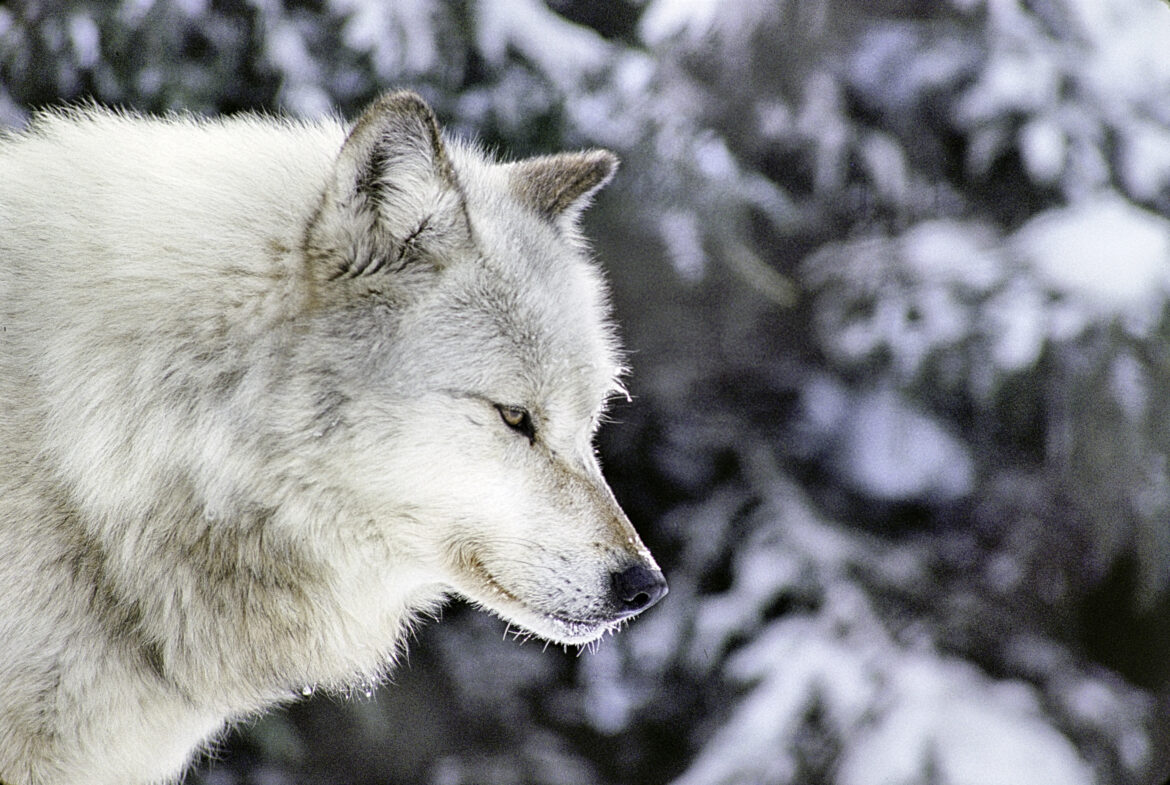
By Sonja Krohn, Great Lakes EchoGray wolf. Credit: Department of Natural Resources


Even though the grey wolf is classified as an endangered species, a new study found that the majority of Michigan’s recorded wolf deaths are caused by humans.

Researchers from Michigan State University and their collaborators used GPS collar and mortality data from 608 wolves in Minnesota, Wisconsin and Michigan between 2010 and 2023 to assess their specific cause of death.

The study found that humans caused 65% of them.

In addition to categories like vehicle collisions (10%) and legal kills (14%), illegal kills represented 38% of cases, making it the leading cause of wolf deaths.

Apart from legal kills, which included depredation control and legal hunting, illegal kills included confirmed and suspected poaching through poisoning, shootings and accidental trapping.

“Despite changes in legislation and public attitudes towards large predators, human-caused mortality continues to impact survival and conservation of carnivore species,” the study said.

According to the Michigan Department of Natural Resources, wolves are native to the state, and research suggests that they were once present in all of its counties.

“Wolves were first added to the federal endangered species list in 1974 after being [wiped out] from the Lower Peninsula by the 1930s and nearly disappearing from the Upper Peninsula by 1960,” the department says on its website.

But since then, there has been a back-and-forth approach. Federal protections for wolves were lifted and reinstated on several occasions through political action and court rulings.

Most recently, a 2022 federal court ruling reinstated gray wolves onto the federal list of threatened and endangered species in the contiguous 48 states.

Based on that classification, “they can only be killed if they are a direct and immediate threat to human life,” the department says.

According to the recent study in the journal Global Ecology and Conservation, illegal kills as a leading cause of death have “the potential to influence population dynamics, affecting population growth and recolonization potential.”

Rolf Peterson, a research professor at Michigan Technological University, said the results are consistent with smaller-scale studies. 

Deer are the primary food source of wolves, and illegal kills – especially during deer-hunting season – dominate the population dynamics of wolves in the upper Midwest, he said.

“Yet wolf populations have persisted in what I would characterize as an uneasy peace,” Peterson said, adding that the coexistence of wolves and people in the U.P. – where wolves live – has required adjustments for both species.

At this point, Brian Roell, a DNR wildlife biologist, said illegal takes don’t appear to be harming Michigan’s population, as wolves can survive fairly high death rates.

“The important thing to point back to is that our population has been stable – it’s not decreasing,” he said.

According to Roell, Michigan’s wolf population has been stable since 2011. The department’s last population estimate in 2024 counted 768 wolves. In Michigan, they “have saturated their suitable habitat,” he said.

While the DNR is currently wrapping up a 2026 population estimate, he said, “I fully expect we’re going to be statistically stable again” based on preliminary data.


The post Michigan’s main cause of wolf mortality? People appeared first on Great Lakes Now.

Original Article

Great Lakes Now

Great Lakes Now

https://www.greatlakesnow.org/2026/04/24/michigans-main-cause-of-wolf-mortality-people/

Great Lakes Echo

Michigan reduced funding for invasive species projects by $1.2 million. Conservation organizations like the regional Cooperative Invasive Species Management Areas (CISMAs) are rethinking their funding priorities for 2026 and beyond.

Original Article

Great Lakes Echo

Great Lakes Echo

https://greatlakesecho.org/2026/04/16/funding-cuts-hamper-conservation-groups-invasive-species-efforts/

Anna Ironside

By Justin Fox Clausen Two insects are under consideration as Michigan's official state insect: the stonefly and, more recently, the Huron River leafhopper. The state is one of two in the country without an official insect.

Original Article

Great Lakes Echo

Great Lakes Echo

https://greatlakesecho.org/2026/03/27/stoneflies-or-leafhoppers-which-could-become-the-official-state-insect/

Capital News Service

The 2026 sturgeon season on Black Lake in Michigan lasted all of 48 minutes before the annual quota – six – was reached. There were 653 anglers competing for them.

The post Conservation, research and community collaboration aid in successful 2026 Black Lake sturgeon season first appeared on Great Lakes Echo.

Original Article

Great Lakes Echo

Great Lakes Echo

https://greatlakesecho.org/2026/03/03/conservation-research-and-community-collaboration-aid-in-successful-2026-black-lake-sturgeon-season/

Anna Ironside

By Kyrmyzy Turebayeva

In the late 1970s, when most wildlife conservation programs in the United States focused almost exclusively on game species, a quiet but historic shift began in Minnesota. It was here that one of the nation’s first state programs dedicated to protecting so-called nongame wildlife emerged from butterflies and bats to bald eagles and river otters. That story is now told in detail by Carrol Henderson in his new book, “A National Legacy: Fifty Years of Nongame Wildlife Conservation in Minnesota."

The post From otters to butterflies: How Minnesota became a pioneer in nongame wildlife conservation first appeared on Great Lakes Echo.

Original Article

Great Lakes Echo

Great Lakes Echo

https://greatlakesecho.org/2025/12/28/from-otters-to-butterflies-how-minnesota-became-a-pioneer-in-nongame-wildlife-conservation/

Kyrmyzy Turebayeva

By Ada Tussing

To combat the population loss of spectaclecase mussels, researchers with both the Minnesota and the Wisconsin Department of Natural Resources released over 177 mussels into the Chippewa River in Northwest Wisconsin.

The post Endangered spectaclecase mussels reintroduced into the Chippewa River first appeared on Great Lakes Echo.

Original Article

Great Lakes Echo

Great Lakes Echo

https://greatlakesecho.org/2025/12/09/endangered-spectaclecase-mussels-reintroduced-into-the-chippewa-river/

Ada Tussing

By Akia Thrower

A new study reveals how gray wolves in Isle Royale National Park seasonally alter their habitat preferences to align with beavers’ habitat preferences, a shift that might have implications for the island’s ecosystem.

The post Wolves hunt beavers in Isle Royale National Park, changing the ecosystem first appeared on Great Lakes Echo.

Original Article

Great Lakes Echo

Great Lakes Echo

https://greatlakesecho.org/2025/11/17/wolves-hunt-beavers-in-isle-royale-national-park-changing-the-ecosystem/

Great Lakes Echo

By Georgia Hill

Scientists studying the body size and growth patterns of non-native earthworms in the UP’s Huron Mountains say they are disrupting forest ecosystems. Contrary to popular belief, most North American earthworms are invaders unintentionally introduced during European colonization. They have a significant impact on ecosystems, especially in the Great Lakes region where they affect soil structure, nutrient cycling and biodiversity.

The post New research in Michigan’s Upper Peninsula shows how invasive earthworms are changing forest soils   first appeared on Great Lakes Echo.

Original Article

Great Lakes Echo

Great Lakes Echo

https://greatlakesecho.org/2025/11/12/new-research-in-michigans-upper-peninsula-shows-how-invasive-earthworms-are-changing-forest-soils/

Georgia Hill

Roads in the Great Lakes region get riskier after daylight saving ends

Drivers around the Great Lakes region beware. In the weeks following “fall back,” once daylight saving time ends, collisions between wildlife and vehicles rises by 16%. According to data from insurance company State Farm, October, November and December are the most dangerous for animal-related collisions, making up 41% of all animal collision claims.

Read Now at Great Lakes Now.

Original Article

Great Lakes Now

Great Lakes Now

https://www.greatlakesnow.org/2025/11/roads-in-the-great-lakes-region-get-riskier-after-daylight-saving-ends/

Lisa John Rogers, Great Lakes Now

By Eric Freedman

Empty lots in deindustrialized cities like Detroit may contribute to bird species diversity, says a new study by researchers at MSU and Carleton University in Canada. The study is based on sound recordings collected at 110 sites in 11 Detroit neighborhoods. The study recommends that vacant land management in the city takes a balanced approach that considers the needs of both residents and birds. There are other concerns about vacant land, too, including as sites for solar arrays.

The post Vacant lots boost diversity among Detroit’s birds, study finds first appeared on Great Lakes Echo.

Original Article

Great Lakes Echo

Great Lakes Echo

https://greatlakesecho.org/2025/11/03/vacant-lots-boost-diversity-among-detroits-birds-study-finds/

Eric Freedman

By Isabella Figueroa

In his new book “Dead Moose on Isle Royale: Off Trail with the Citizen Scientists of the Wolf-Moose Project," Jeffery Holden turns decades of volunteer field notes and short essays into an off-trail narrative about the people who sustain one of ecology’s longest-running studies. The Wolf-Moose Project at Isle Royale National Park started with scientists from Purdue University, Durward Allen and L. David Mech, in 1958. Since then, volunteers have collected data through on-the-ground fieldwork and built a six-decade record that reveals how climate, disease and food availability shape population cycles.

The post ‘Dig in and get my hands dirty’: New book explores citizen scientists and their contributions to the Wolf-Moose Project first appeared on Great Lakes Echo.

Original Article

Great Lakes Echo

Great Lakes Echo

https://greatlakesecho.org/2025/10/13/dig-in-and-get-my-hands-dirty-new-book-explores-citizen-scientists-and-their-contributions-to-the-wolf-moose-project/

Great Lakes Echo

By Isabella Figueroa Nogueira
A recent collaborative study, conducted through the Great Lakes Indian Fish and Wildlife Commission, the College of Menominee Nation in Kenosha, Wisconsin, nine tribal entities and academic researchers to understand how climate change threatens the lake sturgeon and to develop adaptation strategies rooted in tribal knowledge.

The post Western and Indigenous knowledge will help lake sturgeon, study shows  first appeared on Great Lakes Echo.

Original Article

Great Lakes Echo

Great Lakes Echo

https://greatlakesecho.org/2025/10/08/western-and-indigenous-knowledge-will-help-lake-sturgeon-study-shows/

Great Lakes Echo

By Clara Lincolnhol 

Meet former K-9 Maple. She made a big career switch earlier this year—from a human remains detection dog to a beekeeper at Michigan State University’s Pollinator Performance Center. The friendly brown-and-white dog, with a long tongue that hangs out of her mouth, dons her own beekeeping suit and uses her powerful nose to detect American foulbrood -- a bacteria that left undisturbed, means certain death for an entire honeybee colony.

The post Meet Maple: Former K-9 now beekeeper   first appeared on Great Lakes Echo.

Original Article

Great Lakes Echo

Great Lakes Echo

https://greatlakesecho.org/2025/09/19/meet-maple-former-k-9-now-beekeeper/

Clara Lincolnhol

By Rachel Lewis  

The Michigan Invasive Species Program is asking the public to be on the lookout for the invasive Asian longhorned beetle. The inch-and-a-half long black beetle with white spots and long antennae is known to attack at least 12 species of hardwood trees, including maples, elms, horse chestnuts, birches and willows. Although the beetle has not yet been found in Michigan, the state Department of Natural Resources said the earlier they are found, the easier they are to eradicate.

The post Michigan DNR wants you to look out for invasive Asian longhorned beetle  first appeared on Great Lakes Echo.

Original Article

Great Lakes Echo

Great Lakes Echo

https://greatlakesecho.org/2025/09/17/michigan-dnr-wants-you-to-look-out-for-invasive-asian-longhorned-beetle/

Great Lakes Echo

By Clara Lincolnhol

One of Michigan’s most rare, iconic and celebrated bird species is the Kirtland’s warbler. Once nearly extinct in the 1970s, decades-long, targeted conservation efforts helped their population rebound. But this year’s census revealed something concerning: a significant drop in warblers– nearly 700 fewer pairs.

The post Iconic Michigan songbird undergoes concerning population decline  first appeared on Great Lakes Echo.

Original Article

Great Lakes Echo

Great Lakes Echo

https://greatlakesecho.org/2025/09/12/iconic-michigan-songbird-undergoes-concerning-population-decline/

Clara Lincolnhol

By Emilio Perez Ibarguen

For students hoping to become conservation officers for the state Department of Natural Resources -- tasked with enforcing fish, game and natural resource protection laws -- one Northern Michigan University class gives a glimpse into their day-to-day work.

The post Dead deer and small fish: Michigan students learn to investigate poaching  first appeared on Great Lakes Echo.

Original Article

Great Lakes Echo

Great Lakes Echo

https://greatlakesecho.org/2025/09/06/dead-deer-and-small-fish-michigan-students-learn-to-investigate-poaching/

Great Lakes Echo

By Rachel Lewis  

The Little Traverse Bay Band of Odawa Indians' Natural Resources Department has been working to conserve the threatened wood turtle. Their top team member is Mooz, a 9-year-old labradoodle who has been helping his owner, Bill Parsons, find wood turtles for the past five years.

The post Mooz the dog helps scientists study threatened turtles   first appeared on Great Lakes Echo.

Original Article

Great Lakes Echo

Great Lakes Echo

https://greatlakesecho.org/2025/09/04/mooz-the-dog-helps-scientists-study-threatened-turtles/

Great Lakes Echo

By Donté Smith 
Butterfly populations are in decline across the continental U.S., dropping by 22% between 2000 and 2020 according to a study in the journal Science. Almost a third of the 342 species studied have seen their numbers fall by more than half.  To help combat that trend, the John Ball Zoo in Grand Rapids, Michigan, launched its Great Lakes Rare Butterfly Program in 2021 to protect the region’s most threatened species.

The post John Ball Zoo Fights for Great Lakes’ Rarest Butterflies first appeared on Great Lakes Echo.

Original Article

Great Lakes Echo

Great Lakes Echo

https://greatlakesecho.org/2025/08/23/john-ball-zoo-fights-for-great-lakes-rarest-butterflies/

Donte Smith

What will the rise of floating solar panels mean for wildlife?

By Matt Simon, Grist

This story was originally published by Grist. Sign up for Grist’s weekly newsletter here.

The newest, hottest power couple doesn’t live in Hollywood. It’s actually the marriage of solar panels and water reservoirs: Known as floating photovoltaics, or floatovoltaics, the devices bob on simple floats, generating power while providing shade that reduces evaporation.

Read Now at Great Lakes Now.

Original Article

Great Lakes Now

Great Lakes Now

https://www.greatlakesnow.org/2025/06/what-will-the-rise-of-floating-solar-panels-mean-for-wildlife/

Grist

Alberto Rey: Art all about Earth

Alberto Rey’s artistic passions are wide-ranging. But water and wildlife may most succinctly describe them. The retired State University of New York — Fredonia professor of art has waded into drawing, painting, ceramics and filmmaking all while diving headfirst into the deepest affection for the natural world.  

The 64-year-old Cuban-born artist moonlights as an Orvis-endorsed fly fishing guide on Western New York’s Lake Erie tributaries.

Read Now at Great Lakes Now.

Original Article

Great Lakes Now

Great Lakes Now

https://www.greatlakesnow.org/2025/04/alberto-rey-art-all-about-earth/

James Proffitt, Great Lakes Now

By Victor Wooddell Capital News Service Animal shelters in Michigan are at capacity, even while facing staff and resource shortages. According to experts, more animals are being abandoned and too few pet owners are having their animals spayed or neutered. In 2020, adoption rates soared due to pandemic-related stay-at-home orders across the country, according to […]

The post Animal shelters struggle with challenges first appeared on Great Lakes Echo.

Original Article

Great Lakes Echo

Great Lakes Echo

http://greatlakesecho.org/2024/10/29/animal-shelters-struggle-with-challenges/

Great Lakes Echo

By Anna Rossow Capital News Service Some residents across Michigan are becoming more familiar with unexpected visitors roaming the streets. Coyote sightings in residential neighborhoods have become more common due to the canines’ drive for food and quick adaptability skills, experts say. Coyotes prey on rabbits, chipmunks and squirrels, small animals that enter in and […]

The post Coyotes roaming Michigan  first appeared on Great Lakes Echo.

Original Article

Great Lakes Echo

Great Lakes Echo

http://greatlakesecho.org/2024/10/22/coyotes-roaming-michigan/

Anna Rossow

By Ruth Thornton Standing next to a converted hoop house in one of the back areas of John Ball Zoo in Grand Rapids, David Pavlik points to a line of small cloth-covered cages filled with yellow black-eyed Susans and small orange butterflies. “These cages out here are females that have already bred in the facility,” […]

The post The Poweshiek skipperling has disappeared from most of Michigan’s prairies. Now scientists are raising them in zoos for release back into the wild. first appeared on Great Lakes Echo.

Original Article

Great Lakes Echo

Great Lakes Echo

http://greatlakesecho.org/2024/10/21/the-poweshiek-skipperling-has-disappeared-from-most-of-michigans-prairies-now-scientists-are-raising-them-in-zoos-for-release-back-into-the-wild/

Ruth Thornton

By Eric Freedman Capital News Service The mighty oak may be in trouble in the Great Lakes region – and climate change is largely to blame. A mix of factors is in play, including rising temperatures, more severe and intense rainstorms, increasing susceptibility to plant-eating animals and vulnerability to disease-causing microorganisms, a new study from […]

The post Oaks under threat from invading insects, warming temperatures, disease  first appeared on Great Lakes Echo.

Original Article

Great Lakes Echo

Great Lakes Echo

http://greatlakesecho.org/2024/10/08/oaks-under-threat-from-invading-insects-warming-temperatures-disease/

Eric Freedman

By Daniel Schoenherr Zebra and quagga mussels have threatened Great Lakes ecosystems since they arrived in the 1980s. Now the invasive species are acting as unlikely allies in identifying pollution hotspots. The National Oceanic and Atmospheric Administration’s Mussel Watch program is collecting the mollusks at sites across the Great Lakes to measure the concentration of […]

The post NOAA taps invasive mussels to track Great Lakes pollution first appeared on Great Lakes Echo.

Original Article

Great Lakes Echo

Great Lakes Echo

http://greatlakesecho.org/2024/10/03/noaa-taps-invasive-mussels-to-track-great-lakes-pollution/

Daniel Schoenherr

By David Strayer If you’ve driven Michigan’s highways lately, you’ve probably seen the billboards: a big picture of a lanternfly, with the message, “See it. Squish it. Report it.” This is good advice, as far as it goes, but it should go further. The spotted lanternfly is a serious pest that is poised to cause […]

The post GUEST COMMENTARY: Speak up to stop the spotted lanternfly and other invaders first appeared on Great Lakes Echo.

Original Article

Great Lakes Echo

Great Lakes Echo

http://greatlakesecho.org/2024/09/26/commentary/

Guest Columnist

By Elinor Epperson Researchers at Cornell University are studying whether machine learning can help states and tribes predict the spread of a dangerous disease plaguing North American deer. A recent study done in partnership with Michigan State University showed that machine learning could calculate where chronic wasting disease will spread at the county level. That […]

The post Michigan is part of multi-state effort to track chronic wasting disease first appeared on Great Lakes Echo.

Original Article

Great Lakes Echo

Great Lakes Echo

http://greatlakesecho.org/2024/08/23/michigan-is-part-of-multi-state-effort-to-track-chronic-wasting-disease/

Elinor Epperson

By Eric Freedman   A federal judge has sentenced an Ohio business owner to one year on probation and a $5,000 fine for illegally dumping a hazardous ammonia-containing substance into the Scioto River near Kenton. The crime killed more than 40,000 fish. U.S. Magistrate Judge Darrell Clay also ordered Mark Shepherd, 72, to perform 150 […]

The post Illegal dumping nets probation sentence in Ohio fish kill first appeared on Great Lakes Echo.

Original Article

Great Lakes Echo

Great Lakes Echo

http://greatlakesecho.org/2024/08/22/illegal-dumping-nets-probation-sentence-in-ohio-fish-kill/

Eric Freedman

By Elinor Epperson Of all the things I could step in while wandering the Shiawassee National Wildlife Refuge in Northeast Michigan, vulture vomit was not on my list. My hosts, a team of scientists looking for native plant seeds, warned me to avoid it. Elizabeth Haber is a lead botanist with Seeds of Success, a […]

The post Commentary: Michigan joins federal program that collects native flora and champions restoration first appeared on Great Lakes Echo.

Original Article

Great Lakes Echo

Great Lakes Echo

http://greatlakesecho.org/2024/08/17/commentary-michigan-joins-federal-program-that-collects-native-flora-and-champions-restoration/

Elinor Epperson

By Jada Vasser Detroit resident Timothy Paule Jackson’s fascination with bees began in 2016 when he discovered the benefits of using honey to combat the common cold. He began researching the components in honey that provide medicinal benefits for the immune system. Soon, he and his partner, Nicole Lindsay, enrolled in beekeeping classes. They launched […]

The post Detroit is the place to bee! How Detroit Hives is helping Detroit fight climate change through pollination  first appeared on Great Lakes Echo.

Original Article

Great Lakes Echo

Great Lakes Echo

http://greatlakesecho.org/2024/08/15/detroit-is-the-place-to-bee-how-detroit-hives-is-helping-detroit-fight-climate-change-through-pollination/

Jada Vasser

By Gabrielle Nelson Robert Karner and the Glen Lake Association are on a mission to preserve the crystal-clear waters of Glen Lake next to Sleeping Bear Dunes and protect its ecosystem from invasive species. That includes Eurasian watermilfoil and one that’s gaining attention, Japanese koi. In May, bowfishers partnered with the association, a preservation and […]

The post From pet to ‘monster.’ The battle to rid Michigan’s Glen Lake of giant koi first appeared on Great Lakes Echo.

Original Article

Great Lakes Echo

Great Lakes Echo

http://greatlakesecho.org/2024/08/06/from-pet-to-monster-the-battle-to-rid-michigans-glen-lake-of-giant-koi/

Gabrielle Nelson

By Ruth Thornton State wildlife agencies in Michigan and Ohio have received nearly $500,000 in federal funding to study rare turtles. The grant is part of more than $7 million distributed by the U.S. Fish and Wildlife Service to benefit rare and declining fish and wildlife and their habitats across the country. Other states receiving […]

The post Michigan and Ohio receive $500,000 to study rare turtles first appeared on Great Lakes Echo.

Original Article

Great Lakes Echo

Great Lakes Echo

http://greatlakesecho.org/2024/08/03/michigan-and-ohio-receive-500000-to-study-rare-turtles/

Great Lakes Echo

By Gabrielle Nelson A warning for campers on Lake Superior’s Isle Royale National Park: Wolves are venturing into campground trash cans for easy meals. The park reminds visitors to secure and monitor food and trash to keep people and wolves separate and safe. “Wolves are very opportunistic and will utilize just about anything as a […]

The post Wolves hit Isle Royale campgrounds in search of food first appeared on Great Lakes Echo.

Original Article

Great Lakes Echo

Great Lakes Echo

http://greatlakesecho.org/2024/08/02/wolves-hit-isle-royale-campgrounds-in-search-of-food/

Gabrielle Nelson

By Ruth Thorton Standing together at Pierce Cedar Creek Institute near Hastings, Michigan, two students stared intently at the screen, looking for the subtle signs of the small rattlesnake they were trying to find. The eastern massasauga, Michigan’s only rattlesnake, typically hides in dense vegetation in wetlands, and conservation biologists are concerned about trampling their […]

The post Researchers use drones to find elusive Michigan rattlesnake first appeared on Great Lakes Echo.

Original Article

Great Lakes Echo

Great Lakes Echo

http://greatlakesecho.org/2024/07/31/researchers-use-drones-to-find-elusive-michigan-rattlesnake/

Elinor Epperson

By Eric Freedman Getting old can be rough, right? Osteoporosis. Osteoarthritis. Periodontitis – a trio of chronic diseases that make bones fragile, make joints degenerate and make teeth become loose. All three diseases harm the quality of life of millions of people worldwide. But that triple-whammy also besets moose, say Michigan Technological University and Duke […]

The post Moose lessons: What they can teach us about human aging first appeared on Great Lakes Echo.

Original Article

Great Lakes Echo

Great Lakes Echo

http://greatlakesecho.org/2024/07/23/moose-lessons-what-they-can-teach-us-about-human-aging/

Eric Freedman

By Elinor Epperson Don’t flush that unwanted goldfish – find it a new home instead. Home aquariums and water gardening are two of the many routes invasive species take to enter Michigan habitats. A Michigan State University Extension program provides educational materials and resources for rehoming unwanted aquatic pets. Reduce Invasive Pet and Plant Escapes […]

The post Michigan program helps hobbyists safely rehome aquatic flora and fauna first appeared on Great Lakes Echo.

Original Article

Great Lakes Echo

Great Lakes Echo

http://greatlakesecho.org/2024/07/18/michigan-program-helps-hobbyists-safely-rehome-aquatic-flora-and-fauna/

Elinor Epperson

By Elinor Epperson Researchers are exploring new techniques to remove an invasive crayfish from Michigan waters. The Michigan Department of Natural Resources has been fighting an invasion of red swamp crayfish since they first appeared in the state in 2017. Aggressive attempts to trap and remove the crustacean haven’t worked. Kathleen Quebedeaux, a fisheries biologist […]

The post Michigan trying new approaches against invasive crayfish first appeared on Great Lakes Echo.

Original Article

Great Lakes Echo

Great Lakes Echo

http://greatlakesecho.org/2024/07/17/michigan-trying-new-approaches-against-invasive-crayfish/

Elinor Epperson

Jeff Stratton’s beloved Larks Lake left his feet and legs covered in hundreds of itchy red welts.

“It was horrible,” said Stratton, 68, “Crazy itchy. Crazy painful.”

The post Researchers pioneer method to combat swimmer’s itch by relocating ducks first appeared on Great Lakes Echo.

Original Article

Great Lakes Echo

Great Lakes Echo

http://greatlakesecho.org/2024/05/24/researchers-pioneer-method-to-combat-swimmers-itch-by-relocating-ducks/

Guest Contributor

Three butterflies are racing to become Michigan’s official state insect – and one of them is ahead, at least politically. 

The black swallowtail butterfly, a native of Michigan, spends its whole life cycle in the state hibernating as pupa under leaves during winter and hatching in the spring.

The post Butterflies race for state insect status first appeared on Great Lakes Echo.

Original Article

Great Lakes Echo

Great Lakes Echo

http://greatlakesecho.org/2024/05/16/butterflies-race-for-state-insect-status/

Vladislava Sukhanovskaya

One of the many challenges of environmental journalism is making the general public care about animals that are not cute or ecosystems that are obscure. 

A recent session of this year’s Society of Environmental Journalists annual conference taught journalists how to do just that. 

The post Making obscure animals and ecosystems compelling characters first appeared on Great Lakes Echo.

Original Article

Great Lakes Echo

Great Lakes Echo

http://greatlakesecho.org/2024/04/23/making-obscure-animals-and-ecosystems-compelling-characters/

Guest Contributor

Tucked away in the foothills of Appalachia lies Pennsylvania’s Hawk Mountain Sanctuary — a center for environmental education and a flyway for thousands of raptors each year.

Society of Environmental Journalists members attending their recent conference in Philadelphia caught the beginning of the raptor migration season at Hawk Mountain.

The post Revolutionary Raptors: Hawk Mountain Sanctuary takes journalists birding along the Appalachian Trail first appeared on Great Lakes Echo.

Original Article

Great Lakes Echo

Great Lakes Echo

http://greatlakesecho.org/2024/04/18/revolutionary-raptors-hawk-mountain-sanctuary-takes-journalists-birding-along-the-appalachian-trail/

Daniel Schoenherr

Billions of cicadas will emerge in the Midwest this spring during a once-in-a lifetime event, but you may want to keep them off the menu.

Research shows the insects contain surprisingly high levels of mercury.

The post This year’s cicadas could contain contaminants—best to keep them off the dinner plate first appeared on Great Lakes Echo.

Original Article

Great Lakes Echo

Great Lakes Echo

http://greatlakesecho.org/2024/04/11/this-years-cicadas-could-contain-contaminants-best-to-keep-them-off-the-dinner-plate/

Clara Lincolnhol

The Kirtland’s warbler has an expansive conservation program, draws tourists from across the globe and even has an annual festival in Roscommon, Michigan.

Yet what is perhaps Michigan’s most well-known endangered bird is slated to lose its name.

The post New names slated for birds, including Michigan’s Kirtland’s warbler first appeared on Great Lakes Echo.

Original Article

Great Lakes Echo

Great Lakes Echo

http://greatlakesecho.org/2024/04/05/new-names-slated-for-birds-including-michigans-kirtlands-warbler/

Clara Lincolnhol

Two Pennsylvania farmers have been found guilty of poisoning over two dozen migratory birds with a restricted substance.

Many species of birds are declining in North America and many are at risk of extinction, Macdonald said.

The post Pennsylvania farmers convicted of poisoning over two dozen migratory birds first appeared on Great Lakes Echo.

Original Article

Great Lakes Echo

Great Lakes Echo

http://greatlakesecho.org/2024/03/06/pennsylvania-farmers-convicted-of-poisoning-over-two-dozen-migratory-birds/

Guest Contributor

An endangered Great Lakes shorebird that has survived earlier threats to its habitat now faces new challenges.

Report a banded plover and learn more at the Great Lakes Piping Plover website.

The post Endangered piping plovers face climate change challenges first appeared on Great Lakes Echo.

Original Article

Great Lakes Echo

Great Lakes Echo

http://greatlakesecho.org/2024/02/21/endangered-piping-plovers-face-climate-change-challenges/

Guest Contributor

With holiday travel approaching, the Department of Agriculture and Rural Development is urging dog owners to be aware of a “mystery illness” that is sweeping the nation.

The illness affects dogs’ respiratory systems, causing an unusual increase in coughing, sneezing, loss of appetite, eye and nasal discharge, fever and lethargy.

The post Caution urged for holiday travel with dogs due to virus first appeared on Great Lakes Echo.

Original Article

Great Lakes Echo

Great Lakes Echo

http://greatlakesecho.org/2023/12/18/caution-urged-for-holiday-travel-with-dogs-due-to-virus/

Guest Contributor

The turtles had a long journey ahead.

They fought for 45 miles against the strong Kalamazoo River current. They left the river and walked up and over a dam blocking their path.

The post Slow and steady wins the race, even one that takes 10 years to move 45 miles first appeared on Great Lakes Echo.

Original Article

Great Lakes Echo

Great Lakes Echo

http://greatlakesecho.org/2023/12/15/slow-and-steady-wins-the-race-even-one-that-takes-10-years-to-move-45-miles/

Reese Carlson