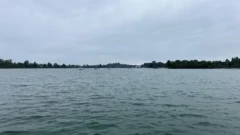
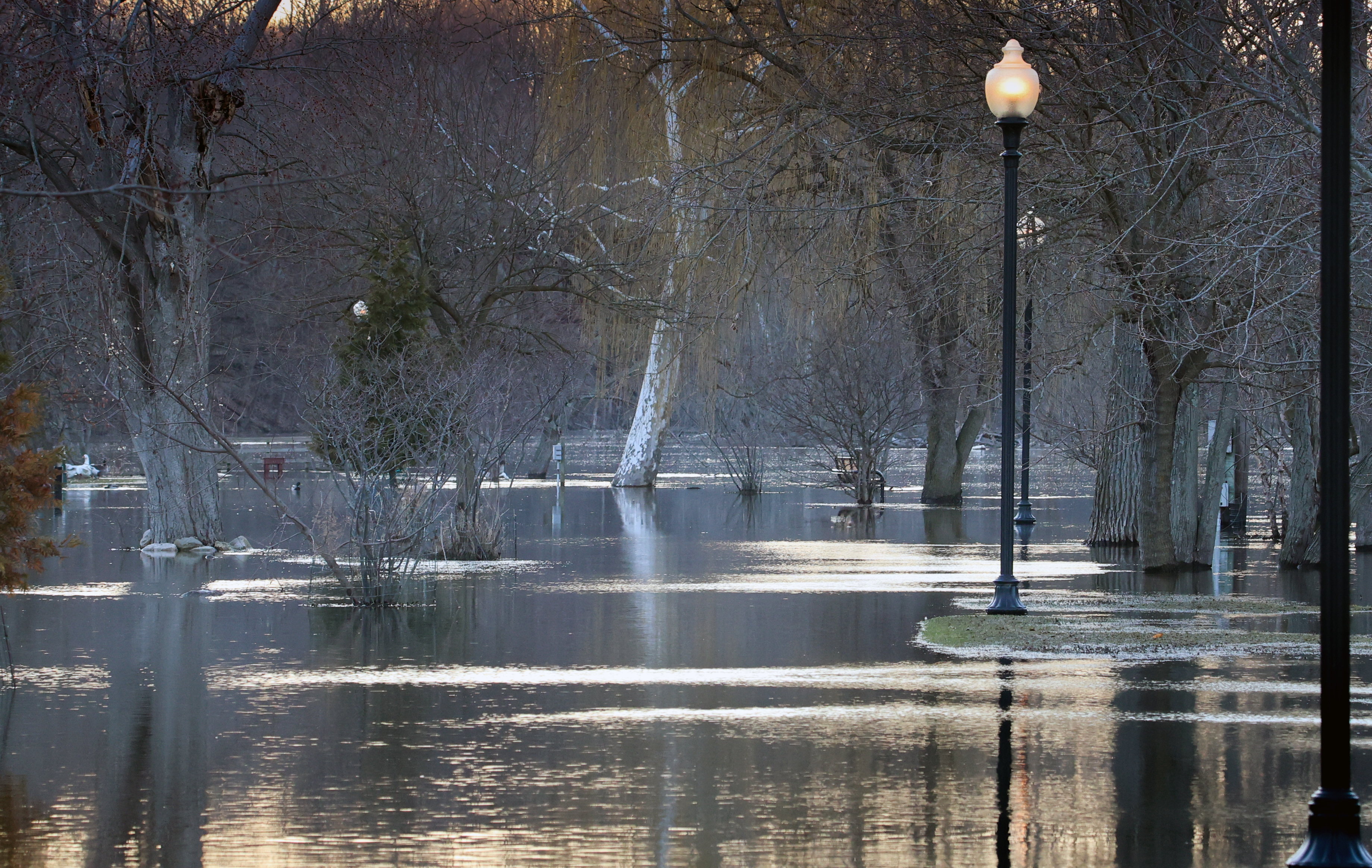
The river flooded the sidewalk and trees on Island Park - Grand Ledge, Michigan, march 2026

Richard B. (Ricky) Rood, University of Michigan

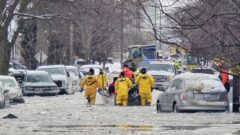
Michigan and parts of Wisconsin are in the midst of a historic flooding event in spring 2026. Days of heavy rainfall on top of snow have sent lakes and rivers over their banks and threatened several dams in both states, forcing people to evacuate homes downstream. By April 20, 2026, nearly half of Michigan’s counties were under a state of emergency. In Cheboygan, Michigan, large pumps were brought in to lower pressure on a century-old dam in the city.

The region’s aging water infrastructure was never designed for the volume of water it is facing. That’s a troubling sign for the future, with flooding becoming more common as global temperatures rise.

In many areas, the damage has been exacerbated by a culture of building homes and cabins on the shores of inland lakes and along riverine lakes behind small, often privately owned dams. Many of these dams were built over 100 years ago, with some long forgotten.

I am a professor emeritus of meteorology at the University of Michigan whose work focuses on helping communities adapt to climate change. The warming climate is worsening the flood risk, and disasters like the one Michigan is experiencing are setting higher benchmarks for safety as communities plan future infrastructure.

Where is all the water coming from?

For much of Michigan and Wisconsin, as well as northern Illinois, 2026 has been the wettest March and April on record.

In March, much of that precipitation fell as snow, including in an enormous blizzard that brought 3 feet of snow to parts of Michigan. In mid-April, persistent rains began. The rain, on top of all that snow, sent floodwaters running into rivers, streets and homes. The water carries large amounts of ice that damages shores, infrastructure and homes.

The moisture for much of these storms has been funneled northward from the warm Gulf of Mexico, thanks in part to a high pressure system sitting over the southeastern U.S.

The problem of warming winters

The kind of flooding Michigan and Wisconsin are experiencing in 2026 is what forecasters expect to see more of as global temperatures rise.

Winters have been warming faster than other seasons across the U.S. In Michigan and Wisconsin, winter months used to be reliably below freezing, but that’s changing. In the Cheboygan area, near the tip of Lower Michigan, March temperatures used to be below freezing on all but a few days. By the 1991-2020 period, the region averaged 10 days above or close to the freezing point – about twice as many as the 1951-1980 period.

The air coming in from the south is also warmer than in the past. Nationally, 2026 was the warmest March on record in 132 years of record-keeping in the contiguous U.S., with an average temperature more than 9 degrees Fahrenheit (5 degrees Celsius) higher than the 30-year average. So, in addition to snowmelt starting earlier, melting is happening faster.

Michigan’s average wintertime temperature rose by more than 4 F (2.3 C) from 1951 to 2023. Though winter 2026 in Michigan was colder than the 1991-2020 average, the Gulf of Mexico, where the moisture originated, was warmer than average, accelerating the snowmelt.

How warming leads to downpours and flooding

A few aspects of a warming climate can lead to flooding.

First, temperatures are increasing. In higher temperatures, moisture evaporates faster from the ground, plants and surface water. That moisture, once in the atmosphere, eventually falls again as precipitation. However, for each degree Celsius that temperatures increase, the atmosphere can hold about 7% more moisture, resulting in more heavy downpours.

A warmer winter also means more melting snow and more rain-on-snow events that can quickly increase the amount of runoff into rivers.

The Great Lakes region and much of the Northeast already experience more precipitation than in the past. Winters with more persistent wetness – not just snow but also rain – prime the region for floods. With continued warming in the coming decades, 2026 might be among the least disruptive in the future.

Data shows that a scenario of persistent wetness, changes in winter and seasonal runoff is part of the future for Michigan and the other states and Canadian provinces along the Great Lakes Basin, as well as New England.

Fixing dams for the future

All of this means communities across the region will have to pay closer attention to the growing risks facing their vital infrastructure – particularly dams.

Even prior to the 2026 floods, Michigan had a well-documented problem with its aging inventory of 2,600 dams. In May 2020, an intense storm system that stalled over the region brought so much rain that the Edenville and Sanford dams both failed near Midland, Michigan, forcing 10,000 people to evacuate and causing an estimated US$200 million in damage.

After that disaster, a state task force issued recommendations for fixing the state’s water control infrastructure to meet the growing risks. But a member of the task force told The Detroit News in April 2026 that little had been done to address those recommendations.

Michigan and parts of Wisconsin are in the midst of a historic flooding event in spring 2026. Days of heavy rainfall on top of snow have sent lakes and rivers over their banks and threatened several dams in both states, forcing people to evacuate homes downstream. By April 20, 2026, nearly half of Michigan’s counties were under a state of emergency. In Cheboygan, Michigan, large pumps were brought in to lower pressure on a century-old dam in the city.

The region’s aging water infrastructure was never designed for the volume of water it is facing. That’s a troubling sign for the future, with flooding becoming more common as global temperatures rise.

In many areas, the damage has been exacerbated by a culture of building homes and cabins on the shores of inland lakes and along riverine lakes behind small, often privately owned dams. Many of these dams were built over 100 years ago, with some long forgotten.

https://www.youtube.com/embed/ik4S2Kgn9ak?wmode=transparent&start=0 Michigan State Police captured scenes of stressed dams and flooding across Cheboygan County, near the tip of the Lower Peninsula, including the century-old dam in the city of Cheboygan that was nearly overwhelmed by flood water.

I am a professor emeritus of meteorology at the University of Michigan whose work focuses on helping communities adapt to climate change. The warming climate is worsening the flood risk, and disasters like the one Michigan is experiencing are setting higher benchmarks for safety as communities plan future infrastructure.

Where is all the water coming from?

For much of Michigan and Wisconsin, as well as northern Illinois, 2026 has been the wettest March and April on record.

In March, much of that precipitation fell as snow, including in an enormous blizzard that brought 3 feet of snow to parts of Michigan. In mid-April, persistent rains began. The rain, on top of all that snow, sent floodwaters running into rivers, streets and homes. The water carries large amounts of ice that damages shores, infrastructure and homes.

The moisture for much of these storms has been funneled northward from the warm Gulf of Mexico, thanks in part to a high pressure system sitting over the southeastern U.S.

The problem of warming winters

The kind of flooding Michigan and Wisconsin are experiencing in 2026 is what forecasters expect to see more of as global temperatures rise.

Winters have been warming faster than other seasons across the U.S. In Michigan and Wisconsin, winter months used to be reliably below freezing, but that’s changing. In the Cheboygan area, near the tip of Lower Michigan, March temperatures used to be below freezing on all but a few days. By the 1991-2020 period, the region averaged 10 days above or close to the freezing point – about twice as many as the 1951-1980 period.

The air coming in from the south is also warmer than in the past. Nationally, 2026 was the warmest March on record in 132 years of record-keeping in the contiguous U.S., with an average temperature more than 9 degrees Fahrenheit (5 degrees Celsius) higher than the 30-year average. So, in addition to snowmelt starting earlier, melting is happening faster.

Michigan’s average wintertime temperature rose by more than 4 F (2.3 C) from 1951 to 2023. Though winter 2026 in Michigan was colder than the 1991-2020 average, the Gulf of Mexico, where the moisture originated, was warmer than average, accelerating the snowmelt.

How warming leads to downpours and flooding

A few aspects of a warming climate can lead to flooding.

First, temperatures are increasing. In higher temperatures, moisture evaporates faster from the ground, plants and surface water. That moisture, once in the atmosphere, eventually falls again as precipitation. However, for each degree Celsius that temperatures increase, the atmosphere can hold about 7% more moisture, resulting in more heavy downpours.

A warmer winter also means more melting snow and more rain-on-snow events that can quickly increase the amount of runoff into rivers.

The Great Lakes region and much of the Northeast already experience more precipitation than in the past. Winters with more persistent wetness – not just snow but also rain – prime the region for floods. With continued warming in the coming decades, 2026 might be among the least disruptive in the future.

Data shows that a scenario of persistent wetness, changes in winter and seasonal runoff is part of the future for Michigan and the other states and Canadian provinces along the Great Lakes Basin, as well as New England.

Fixing dams for the future

All of this means communities across the region will have to pay closer attention to the growing risks facing their vital infrastructure – particularly dams.

Even prior to the 2026 floods, Michigan had a well-documented problem with its aging inventory of 2,600 dams. In May 2020, an intense storm system that stalled over the region brought so much rain that the Edenville and Sanford dams both failed near Midland, Michigan, forcing 10,000 people to evacuate and causing an estimated US$200 million in damage.

After that disaster, a state task force issued recommendations for fixing the state’s water control infrastructure to meet the growing risks. But a member of the task force told The Detroit News in April 2026 that little had been done to address those recommendations.

Because warming will continue for the coming decades, the 2026 flooding should be considered at the lower end of capacity for stormwater infrastructure and dams. Rather than relying on the statistics that described floods in the past, planners will have to anticipate the floods of the future.

Michigan is often touted as a climate haven because it is relatively cool and has plenty of water. The state is not, however, immune to the amped-up weather of a warming climate. Environmental security in the future requires improved and more adaptive infrastructure.


The post Extreme rain on snow is testing aging dams across Michigan and Wisconsin — this is the future in a warming world appeared first on Great Lakes Now.
Original Article

Great Lakes Now

Great Lakes Now

https://www.greatlakesnow.org/2026/04/22/extreme-rain-on-snow-is-testing-aging-dams-across-michigan-and-wisconsin-this-is-the-future-in-a-warming-world/

The Conversation

By Naveena Sadasivam

This story was originally published by Grist. Sign up for Grist’s weekly newsletter here.


Last month, President Trump sat alongside executives of the largest tech companies in the country as they pledged to pay a fair share of the energy costs of their data center buildout. “Data centers … they need some PR help,” Trump said at the gathering. “People think that if the data center goes in, their electricity is going to go up.”

It’s not an entirely unfounded assumption.

As the tech industry has funneled billions of dollars into the AI boom over the last several years, it has simultaneously been expanding its fleet of computing powerhouses, which require vast amounts of energy to run. These facilities have been cropping up all over the country, from rural communities in eastern Pennsylvania to the cities of northern Utah. 

This boom coincides with a dramatic rise in U.S. electricity prices, driven by inflation and the rising cost of adapting to wildfires, hurricanes, and other extreme weather. But these massive facilities have also strained the grid — and in some cases — contributed to rising prices. For instance, last year, an independent monitor for PJM, the grid operator that serves 13 northeastern states and Washington, D.C., projected that powering data centers would result in higher electricity generation costs, which would ultimately be passed on to consumers. And in cases where the buildout hasn’t yet led to price hikes, utilities and grid operators expect that it’s just a matter of time if tech companies follow through on their plans. Indeed, the Federal Reserve Bank of Dallas estimates that with data center electricity demand expected to double in the next five years, wholesale power prices could rise by as much as 50 percent.

At a time when the cost of living has become untenable for many Americans, and consumers are setting aside ever greater shares of their income to pay energy bills, the possibility of further rate hikes to line the pockets of tech companies has prompted a massive backlash across the country. The White House gathering of tech executives appeared to be a response to the backlash. On March 4 at the event, they signed onto the “Ratepayer Protection Pledge.”

The pledge itself has few specifics or teeth. It’s a voluntary agreement by several prominent tech companies — including Microsoft, Meta, OpenAI, and Amazon — to secure their own power for data centers, pay for any powerlines or other infrastructure that utilities may need to build to move that power, and hire locally from the communities they build in. While in theory the agreement could help prevent Americans from having to bear the cost of the data center expansion, the White House hasn’t set up oversight mechanisms to ensure that they do. Several consumer and environmental advocates called the agreement “meaningless,” “unenforceable,” and ultimately, “nonsense.”

The United States has become ground zero for the global data center boom. The rapid buildout has left developers, tech companies, and the utility industry scrambling to secure more power. As a result, the wait for a data center to connect to the grid can be years in many parts of the country. Hyperscalers — companies that operate large data centers and provide vast computing power — have been trying to get around these wait times by signing long-term power purchase agreements with solar developers, building their own natural gas plants, and even retrofitting jet engines to generate electricity

“Every single data center in the future will be power limited,” said NVIDIA CEO Jensen Huang last year. “We are now a power‑limited industry.”

Outside of the White House, utilities, local regulators, and lawmakers have also been proposing various solutions to address the community backlash and allow for the continued building of more data centers. Some have implemented measures requiring data centers to pay the costs of generating and moving the electricity they use. Others have suggested that data center developers install solar and battery systems on-site, or that rates should be frozen for residents while utilities figure out how to handle the additional costs. And at least 11 states are considering legislation to temporarily ban new data centers while their impact on electricity prices and other concerns are addressed.

“You’re seeing states try to move quickly,” said Meghan Pazik, a senior policy associate in Public Citizen’s climate program. But “every state’s going to have a different approach to how far they want to go on data centers.”  

Many states are utilizing additional tariffs for data centers and other customers that pull large amounts of power from the grid. These facilities — referred to as “large load customers” — are required to pay more to make up for the added infrastructure costs that come with supplying them, as well as the risk if they end up walking away from the project, which would leave consumers on the hook for the investments. More than 30 states have proposed or implemented measures of this sort. 

Some hyperscalers are changing their approaches, too. In Minnesota, Google inked a deal with Xcel Energy, the state’s largest investor-owned utility, to bring 1,900 megawatts of clean energy onto the grid. The company is fully funding wind turbines, solar panels, and battery storage, as well as the costs of grid infrastructure upgrades to serve its data centers. And in Louisiana, Meta signed a deal with Entergy to help fund the construction of seven natural gas plants, more than 200 miles of transmission lines, and battery systems, among other infrastructure upgrades.

A recent report from the Searchlight Institute, a policy think tank, argues that this piecemeal approach to regulating the tech industry misses an opportunity to fund a large-scale upgrade of the grid. Although the surge in demand has largely been framed as a looming crisis, the report contends that the boom also creates a rare policy window: a chance to modernize the country’s electrical system and make long-delayed investments needed for the clean energy transition.

Utilities make roughly $35 billion in investments in transmission infrastructure every year — far short of what’s actually needed. Electricity demand is projected to double or triple in the next 25 years. The Searchlight Institute report proposes creating a dedicated grid infrastructure fund to accelerate the expansion. Under the plan, hyperscalers would pay into the fund in exchange for speedy connections. Money from the fund would be directed to utilities and other companies to build out the system, prioritizing clean energy along the way. And consumer and environmental advocates, along with other policymakers, would oversee the process to ensure funds are being distributed equitably and serve the needs of the public. 

Such a mechanism would ensure increased investments in clean energy, rather than the natural gas projects many tech companies are currently backing, while protecting consumers from increases in electricity prices.

“The hyperscalers need power,” said Jane Flegal, a senior fellow at the Searchlight Institute and author of the report. “They have a ton of capital. And rather than letting them continue to cut these one-off deals with utilities, we’ve got to find a better way to take advantage of the potential upside here and avoid the downside of them basically building a secondary grid behind the existing grid that benefits only them.”


The post Data centers are straining the grid. Can they be forced to pay for it? appeared first on Great Lakes Now.

Original Article

Great Lakes Now

Great Lakes Now

https://www.greatlakesnow.org/2026/04/14/data-centers-are-straining-the-grid-can-they-be-forced-to-pay-for-it/

Grist

The ready access to nature and winter sports is what prompted Elizabeth Scott and her family to up sticks from Portland, Oregon, to Houghton on Michigan’s Keweenaw Peninsula in summer 2021.

With 29% of Michigan’s territory and only 3% of its population, to many, the Upper Peninsula (U.P.) might appear a dream place to start over.

Read Now at Great Lakes Now.

Original Article

Great Lakes Now

Great Lakes Now

https://www.greatlakesnow.org/2025/09/climate-migrations-impact-on-michigans-upper-peninsula/

Stephen Starr, Great Lakes Now

Chicago was supposed to warn residents about toxic lead pipes last year. Most still have no idea.

By Keerti Gopal & Juanpablo Ramirez-Franco

This story is a partnership between GristInside Climate News, and WBEZ, a public radio station serving the Chicago metropolitan region. This coverage is made possible through an ongoing partnership between Grist and WBEZ.

Read Now at Great Lakes Now.

Original Article

Great Lakes Now

Great Lakes Now

https://www.greatlakesnow.org/2025/07/chicago-was-supposed-to-warn-residents-about-toxic-lead-pipes-last-year-most-still-have-no-idea/

Inside Climate News and Grist

Wisconsin DNR expands private well PFAS testing to five Oneida County townships

By Katie Thoresen, WXPR

This story was originally published by WXPR. WXPR is a community-licensed public radio station serving north central Wisconsin and adjacent areas of Michigan’s Upper Peninsula. Listen to their stories here.

People on private wells in five Oneida County Townships in Wisconsin may be offered free PFAS testing.

Read Now at Great Lakes Now.

Original Article

Great Lakes Now

Great Lakes Now

https://www.greatlakesnow.org/2025/07/wisconsin-dnr-expands-private-well-pfas-testing-five-oneida-county-townships/

WXPR

Chicago residents risk daily lead exposure from toxic pipes. Replacing them will take decades.

By Keerti Gopal & Juanpablo Ramirez-Franco

This story is a partnership between GristInside Climate News, and WBEZ, a public radio station serving the Chicago metropolitan region. This coverage is made possible through an ongoing partnership between Grist and WBEZ.

Read Now at Great Lakes Now.

Original Article

Great Lakes Now

Great Lakes Now

https://www.greatlakesnow.org/2025/07/chicago-residents-risk-daily-lead-exposure-from-toxic-pipes-replacing-them-will-take-decades/

Inside Climate News and Grist

Despite U.S. research resistance, Great Lakes aims to be Silicon Valley for water

MILWAUKEE – The confluence of the Milwaukee and Menominee rivers, in the downtown core of Wisconsin’s largest city, is a prime vantage to assess the collection of assets that define the past and future of Great Lakes water use, and the array of technology development encompassing the region’s water.

Together and in complement, universities, research labs, tech incubators, water-focused businesses, and forward-thinking utilities here and in other cities are pushing for something greater than the sum of their parts.

Read Now at Great Lakes Now.

Original Article

Great Lakes Now

Great Lakes Now

https://www.greatlakesnow.org/2025/05/despite-u-s-research-resistance-great-lakes-aims-to-be-silicon-valley-for-water/

Brett Walton, Circle of Blue

Sinking cities: Great Lakes cities not immune from under-recognized threat

Significant areas of the Earth’s surface across continents are gradually sinking and that process brings environmental, social and economic consequences to urban centers in the United States. Great Lakes cities Detroit and Chicago are among those at risk.

That’s the conclusion of a recent study conducted by Columbia University researchers, published by the science journal Nature Cities.

Read Now at Great Lakes Now.

Original Article

Great Lakes Now

Great Lakes Now

https://www.greatlakesnow.org/2025/05/sinking-cities-great-lakes-cities-not-immune-from-under-recognized-threat/

Gary Wilson, Great Lakes Now

Southwest Detroit homes flooded, families displaced by water main rupture

By Isabelle Tavares, Planet Detroit

This article was republished with permission from Planet Detroit. Sign up for Planet Detroit’s weekly newsletter here.

Manuel Nolasco stood in frigid air outside his flooded Southwest Detroit home early Tuesday, chipping away at thick ice chunks that had frozen his car wheels in place.

Read Now at Great Lakes Now.

Original Article

Great Lakes Now

Great Lakes Now

https://www.greatlakesnow.org/2025/02/southwest-detroit-homes-flooded-families-displaced-by-water-main-rupture/

Planet Detroit

After water main break, officials say homes in Detroit’s Southwest will get repairs covered

By Adam Yahya Rayes and Sarah Cwiek, Michigan Public

The Great Lakes News Collaborative includes Bridge Michigan, Circle of Blue, Great Lakes Now at Detroit PBS, Michigan Public and The Narwhal who work together to bring audiences news and information about the impact of climate change, pollution, and aging infrastructure on the Great Lakes and drinking water.

Read Now at Great Lakes Now.

Original Article

Great Lakes Now

Great Lakes Now

https://www.greatlakesnow.org/2025/02/after-water-main-break-officials-say-homes-in-detroits-southwest-will-get-repairs-covered/
Michigan Public

Blue Tech challenge aims at gathering business solutions to Great Lakes problems

By Izzy Ross, Interlochen Public Radio

This coverage is made possible through a partnership with IPR and Grist, a nonprofit independent media organization dedicated to telling stories of climate solutions and a just future.

A business competition to tackle environmental and infrastructure issues in the Great Lakes kicked off last week.

Read Now at Great Lakes Now.

Original Article

Great Lakes Now

Great Lakes Now

https://www.greatlakesnow.org/2025/02/blue-tech-challenge-aims-at-gathering-business-solutions-to-great-lakes-problems/
Interlochen Public Radio

Great Lakes Moment: Connecting people to nature through The Great Lakes Way

A recent Community Foundation for Southeast Michigan report documents substantial progress in creating The Great Lakes Way — an interconnected set of greenways and water trails stretching from Port Huron, Michigan on southern Lake Huron to Toledo, Ohio on western Lake Erie.

In 2000, the Community Foundation polled metropolitan Detroit communities about obstacles to building greenways.

Read Now at Great Lakes Now.

Original Article

Great Lakes Now

Great Lakes Now

https://www.greatlakesnow.org/2025/01/great-lakes-moment-connecting-people-to-nature-through-the-great-lakes-way/

John Hartig

Students at Michigan State and Wisconsin win EPA funding for environmental health innovations

This article was republished here with permission from Great Lakes Echo.

By Isabella Figueroa, Great Lakes Echo

Student researchers from Michigan State University and the University of Wisconsin are among the winners of an Environmental Protection Agency contest for innovations in sustainability.

Read Now at Great Lakes Now.

Original Article

Great Lakes Now

Great Lakes Now

https://www.greatlakesnow.org/2024/11/students-at-michigan-state-and-wisconsin-win-epa-funding-for-environmental-health-innovations/

Great Lakes Echo

How northern Michiganders can help people affected by hurricanes

By Izzy Ross, Interlochen Public Radio

This coverage is made possible through a partnership with IPR and Grist, a nonprofit independent media organization dedicated to telling stories of climate solutions and a just future.

Hurricane Milton made landfall last week in Florida, even as communities across the southeast are still reeling from Hurricane Helene.

Read Now at Great Lakes Now.

Original Article

Great Lakes Now

Great Lakes Now

https://www.greatlakesnow.org/2024/10/how-northern-michiganders-can-help-people-affected-by-hurricanes/

Interlochen Public Radio

A decade after Flint, feds require nationwide lead pipe removal

By Kelly House, Bridge Michigan

The Great Lakes News Collaborative includes Bridge Michigan; Circle of Blue; Great Lakes Now at Detroit Public Television; Michigan Public, Michigan’s NPR News Leader; and The Narwhal who work together to bring audiences news and information about the impact of climate change, pollution, and aging infrastructure on the Great Lakes and drinking water.

Read Now at Great Lakes Now.

Original Article

Great Lakes Now

Great Lakes Now

https://www.greatlakesnow.org/2024/10/a-decade-after-flint-feds-require-nationwide-lead-pipe-removal/

Bridge Michigan

Midwest States Struggle to Fund Dam Safety Projects, Even as Federal Aid Hits Historic Highs

By Kristoffer Tigue, Inside Climate News

This article originally appeared on Inside Climate News, a nonprofit, non-partisan news organization that covers climate, energy and the environment. Sign up for their newsletter here.

MINNEAPOLIS—A record amount of federal aid will soon flow to states to help fix, replace or demolish their aging dams, many of which are under increasing pressure as climate change fuels more frequent and severe extreme weather events.

Read Now at Great Lakes Now.

Original Article

Great Lakes Now

Great Lakes Now

https://www.greatlakesnow.org/2024/10/midwest-dam-safety-projects-funding/

Inside Climate News

You can’t stop the lake

In Douglas, Michigan, houses dot the coast of Lake Michigan, with wooden stairs — some newly built, others with broken steps — descending the steep hillside to give shoreline residents access to the narrow sandy beach. When winds grow fierce, waves crash against the boulders and large sandbags stacked along the base of these homes.  

Read Now at Great Lakes Now.

Original Article

Great Lakes Now

Great Lakes Now

https://www.greatlakesnow.org/2024/01/you-cant-stop-the-lake/

Astrid Code

Elk Rapids wants to help its shoreline through new state Climate Corps program

By Izzy Ross, Interlochen Public Radio

This coverage is made possible through a partnership with IPR and Grist, a nonprofit independent media organization dedicated to telling stories of climate solutions and a just future.

Elk Rapids is surrounded by water.

Read Now at Great Lakes Now.

Original Article

Great Lakes Now

Great Lakes Now

https://www.greatlakesnow.org/2024/01/elk-rapids-wants-to-help-its-shoreline-through-new-state-climate-corps-program/

Interlochen Public Radio

Great Lakes Now sits down with director of Flint water crisis film “Lead and Copper”

William Hart, director of a documentary about the Flint water crisis called “Lead and Copper,” joined Great Lakes Now’s Anna Sysling for a discussion about the film.

The small team began producing the film in 2016, and with the 10-year anniversary of the beginning of the crisis coming up in April 2024, Hart said they wanted to get it out and ready to screen around that time.

Read Now at Great Lakes Now.

Original Article

Great Lakes Now

Great Lakes Now

https://www.greatlakesnow.org/2023/12/great-lakes-now-sits-down-with-director-of-flint-water-crisis-film-lead-and-copper/

GLN Editor

Chicago Suburbs, Running Out of Water, Will Tap Lake Michigan

By Brett Walton, Circle of Blue

The Great Lakes News Collaborative includes Bridge Michigan; Circle of Blue; Great Lakes Now at Detroit Public Television; and Michigan Radio, Michigan’s NPR News Leader; who work together to bring audiences news and information about the impact of climate change, pollution, and aging infrastructure on the Great Lakes and drinking water.

Read Now at Great Lakes Now.

Original Article

Great Lakes Now

Great Lakes Now

https://www.greatlakesnow.org/2023/09/chicago-suburbs-water-tap-lake-michigan/

Circle of Blue

‘Solar grazing’ is a way for farmers and solar companies to use land. But there are challenges

This coverage is made possible through a partnership with IPR and Grist, a nonprofit, independent media organization dedicated to telling stories of climate solutions and a just future.

Along busy M-72 in Traverse City, rows of huge solar panels gleam in the sun.

Read Now at Great Lakes Now.

Original Article

Great Lakes Now

Great Lakes Now

https://www.greatlakesnow.org/2023/08/solar-grazingr-farmers-solar-companies-land-challenges/

Interlochen Public Radio

A Community-Led Approach To Stopping Flooding Expands

By Maia McDonald and Katrina Pham, Borderless

This piece is part of a collaboration that includes the Institute for Nonprofit News, Borderless, Ensia, Planet Detroit, Sahan Journal, and Wisconsin Watch, as well as the Guardian and Inside Climate News. The project was supported by the Joyce Foundation. 

Read Now at Great Lakes Now.

Original Article

Great Lakes Now

Great Lakes Now

https://www.greatlakesnow.org/2023/08/community-led-approach-stopping-flooding-expands/

Borderless Magazine

Milwaukee residents fear more flooding due to planned I-94 expansion

by Jonah Chester, Wisconsin Watch

This piece is part of a collaboration that includes the Institute for Nonprofit News, Borderless, Ensia, Planet Detroit, Sahan Journal, and Wisconsin Watch, as well as the Guardian and Inside Climate News. The project was supported by the Joyce Foundation. 

Janet Haas two decades ago saw potential in a field of thistle, grass and bushes that Milwaukee County had neglected: Valley Park, nestled between the Menomonee River to the west and homes in one of Milwaukee’s most racially diverse neighborhoods to the east.

Read Now at Great Lakes Now.

Original Article

Great Lakes Now

Great Lakes Now

https://www.greatlakesnow.org/2023/08/milwaukee-residents-fear-flooding-due-planned-i-94-expansion/

Wisconsin Watch

Workers needed to fulfill America’s infrastructure goals

By Brett Walton, Circle of Blue

The Great Lakes News Collaborative includes Bridge Michigan; Circle of Blue; Great Lakes Now at Detroit Public Television; and Michigan Radio, Michigan’s NPR News Leader; who work together to bring audiences news and information about the impact of climate change, pollution, and aging infrastructure on the Great Lakes and drinking water.

Read Now at Great Lakes Now.

Original Article

Great Lakes Now

Great Lakes Now

https://www.greatlakesnow.org/2023/07/workers-needed-to-fulfill-americas-infrastructure-goals/

Circle of Blue

Energy News Roundup: $400 Million hydrogen fuel plant coming to Michigan, U.N. panel recommends shutting down Line 5

Keep up with energy-related developments in the Great Lakes area with Great Lakes Now’s biweekly headline roundup.

Click on the headline to read the full story:


Illinois

Jury convicts all four defendants in ComEd bribery trial — and fires a warning shot at Michael Madigan — Chicago-Sun Times

A jury finds all four defendants guilty of bribery conspiracy in a case involving former ComEd executives accused of arranging jobs, contracts and money for allies of former democratic Illinois House Speaker Michael Madigan in exchange for favorable legislation.

Read Now at Great Lakes Now.

Original Article

Great Lakes Now

Great Lakes Now

https://www.greatlakesnow.org/2023/05/energy-news-roundup-hydrogen-fuel-plant-michigan-un-recommends-shutting-down-line-5/

Kathy Johnson

Flush with cash, Michigan lawmakers try again to pass state septic code

By Kelly House and Lauren Gibbons, Bridge Michigan

The Great Lakes News Collaborative includes Bridge Michigan; Circle of Blue; Great Lakes Now at Detroit Public Television; and Michigan Radio, Michigan’s NPR News Leader; who work together to bring audiences news and information about the impact of climate change, pollution, and aging infrastructure on the Great Lakes and drinking water.

Read Now at Great Lakes Now.

Original Article

Great Lakes Now

Great Lakes Now

https://www.greatlakesnow.org/2023/05/flush-with-cash-michigan-lawmakers-try-again-to-pass-state-septic-code/

Bridge Michigan

Mapping the Great Lakes: Flood risk

Love staring at a map and discovering something interesting? Then “Mapping the Great Lakes” is for you. It’s a monthly Great Lakes Now feature created by Alex B. Hill, a self-described “data nerd and anthropologist” who combines cartography, data, and analytics with storytelling and human experience.

Read Now at Great Lakes Now.

Original Article

Great Lakes Now

Great Lakes Now

https://www.greatlakesnow.org/2023/04/mapping-the-great-lakes-flood-risk/

Alex Hill

Climate change could spell catastrophe for Detroit’s older homes

Climate change continues to have an impact on some residents in Southeast Michigan. For the average homeowner, when it rains, one may grab a good book, kick their feet up and relax under the gloomy skies. For Detroit resident Semone Alexander, every time it rains, it’s anything but relaxing.  

As heavy rains have become more frequent in the last half-decade, so has the flooding of Alexander and other residents’ homes— so much so that many of the homes have fallen into disrepair. 

Read Now at Great Lakes Now.

Original Article

Great Lakes Now

Great Lakes Now

https://www.greatlakesnow.org/2023/04/climate-change-could-spell-catastrophe-for-detroits-older-homes/

Jonathan Shead

Great Lakes Take Global Stage

By Brett Walton, Circle of Blue

The Great Lakes News Collaborative includes Bridge Michigan; Circle of Blue; Great Lakes Now at Detroit Public Television; and Michigan Radio, Michigan’s NPR News Leader; who work together to bring audiences news and information about the impact of climate change, pollution, and aging infrastructure on the Great Lakes and drinking water.

Read Now at Great Lakes Now.

Original Article

Great Lakes Now

Great Lakes Now

https://www.greatlakesnow.org/2023/04/great-lakes-take-global-stage/

Circle of Blue

Detroiters can get another 1,125 gallons of water under discount program

This article was republished here with permission from Great Lakes Echo.

By Vladislava Sukhanovskaya, Great Lakes Echo

The city of Detroit and a nonprofit agency recently added 1,125 gallons of water per person per month to a program that prevents water shut-offs in low-income households.

Read Now at Great Lakes Now.

Original Article

Great Lakes Now

Great Lakes Now

https://www.greatlakesnow.org/2023/03/detroiters-can-get-another-1125-gallons-of-water-under-discount-program/

Great Lakes Echo

U.S. Judge: Flint has 5 months to finish long-overdue lead pipe replacement

By Kelly House, Bridge Michigan

The Great Lakes News Collaborative includes Bridge Michigan; Circle of Blue; Great Lakes Now at Detroit Public Television; and Michigan Radio, Michigan’s NPR News Leader; who work together to bring audiences news and information about the impact of climate change, pollution, and aging infrastructure on the Great Lakes and drinking water.

Read Now at Great Lakes Now.

Original Article

Great Lakes Now

Great Lakes Now

https://www.greatlakesnow.org/2023/03/flint-5-months-finish-lead-pipe-replacement/

Bridge Michigan

Right to water: Could 2023 be the year Michigan ends shutoffs?

The Great Lakes News Collaborative includes Bridge Michigan; Circle of Blue; Great Lakes Now at Detroit Public Television; and Michigan Radio, Michigan’s NPR News Leader; who work together to bring audiences news and information about the impact of climate change, pollution, and aging infrastructure on the Great Lakes and drinking water.

Read Now at Great Lakes Now.

Original Article

Great Lakes Now

Great Lakes Now

https://www.greatlakesnow.org/2023/02/right-to-water-2023-michigan-ends-shutoffs/

Bridge Michigan

Smart sewers relieve stress on systems and wastewater officials, saving energy and funds

This is the second story in a series of reports from the Great Lakes News Collaborative that will investigate contemporary water pollution challenges in the Great Lakes region. Called Refresh, the series will explore the shortcomings in the Clean Water Act and how Michigan and other Great Lakes states can more completely address water pollution in the next 50 years.

Read Now at Great Lakes Now.

Original Article

Great Lakes Now

Great Lakes Now

https://www.greatlakesnow.org/2023/02/smart-sewers-systems-wastewater-officials-energy-funds/

Kari Lydersen

Road Salt, A Stealthy Pollutant, Is Damaging Michigan Waters

By Brett Walton, Circle of Blue

This is the first story in a series of reports from the Great Lakes News Collaborative that will investigate contemporary water pollution challenges in the Great Lakes region. Called Refresh, the series will explore the shortcomings in the Clean Water Act and how Michigan and other Great Lakes states can more completely address water pollution in the next 50 years.

Read Now at Great Lakes Now.

Original Article

Great Lakes Now

Great Lakes Now

https://www.greatlakesnow.org/2023/01/road-salt-damaging-michigan-waters/

Circle of Blue

Book chronicles human, water connection from nomadic to modern times

If you want to peg the date when humans began the trek to modernity facilitated by a relationship to water, start 10,000 years ago, says Giulio Boccaletti, author of Water: A Biography. That’s when nomads became settlers, began farming and their existence started to depend on rivers and streams.

The book continues through the millennia to modern times when America constructed the Hoover Dam and created the Tennessee Valley Authority which Boccaletti says “became a model for the world.”

Boccaletti is a scientist and an honorary research associate at the Smith School of Enterprise and the Environment at University of Oxford.

Read Now at Great Lakes Now.

Original Article

Great Lakes Now

Great Lakes Now

https://www.greatlakesnow.org/2023/01/book-chronicles-human-water-connection-from-nomadic-to-modern-times/

Gary Wilson

Multi-state group prepares Great Lakes basin for effects of climate change

Climate change is already affecting the Great Lakes. One group is urging the Great Lakes states and Canadian provinces to coordinate their efforts to make the Great Lakes basin more resilient to those changes.

Climate change contributed to the rapid rise in Great Lakes water levels a few years ago.

Read Now at Great Lakes Now.

Original Article

Great Lakes Now

Great Lakes Now

https://www.greatlakesnow.org/2023/01/group-great-lakes-basin-effects-climate-change/

Michigan Radio

Michigan Democrats aiming to erase business friendly environmental laws

By Kelly House, Bridge Michigan

The Great Lakes News Collaborative includes Bridge Michigan; Circle of Blue; Great Lakes Now at Detroit Public Television; and Michigan Radio, Michigan’s NPR News Leader; who work together to bring audiences news and information about the impact of climate change, pollution, and aging infrastructure on the Great Lakes and drinking water.

Read Now at Great Lakes Now.

Original Article

Great Lakes Now

Great Lakes Now

https://www.greatlakesnow.org/2023/01/michigan-democrats-aiming-erase-business-friendly-environmental-laws/

Bridge Michigan

Biden’s signature advances major projects in water bill

By Michael Phillis, Associated Press

President Joe Biden signed a large defense bill on Friday that includes a water bill that directs the Army Corps of Engineers on major infrastructure projects to improve navigation and protect against storms worsened by climate change.

The biggest project by far this year is a $34 billion Texas coastal barrier featuring massive floodgates and other structures to protect the Houston region with its concentration of oil refineries and chemical plants, at risk during major hurricanes.

Read Now at Great Lakes Now.

Original Article

Great Lakes Now

Great Lakes Now

https://www.greatlakesnow.org/2022/12/ap-bidens-signature-advances-major-projects-water-bill/

The Associated Press

Divided Congress: Smooth sailing or choppy waters for Great Lakes programs?

Since 2020 when Democrats swept into power by winning the presidency and taking control of both chambers of Congress, Great Lakes programs have had a tailwind of funding support from Washington.

The Infrastructure Investment and Jobs Act provided a $1 billion windfall for the region to accelerate clean up of the multiple toxic sites known as Areas of Concern that remain from the peak industrial period in the 1950’s and 1960’s.

Read Now at Great Lakes Now.

Original Article

Great Lakes Now

Great Lakes Now

https://www.greatlakesnow.org/2022/12/smooth-sailing-or-choppy-waters-for-great-lakes-programs/

Gary Wilson

Ballville Dam Removal: History, trends and impacts

For more than a century, a dam divided the upstream Sandusky River from Lake Erie. People got power, but fish were prevented from reaching native spawning grounds.

Then, four years ago, the dam came down, like hundreds around the Great Lakes region. It had been replaced as a power source years earlier, and environmentalists argued to restore the river’s natural course.

Read Now at Great Lakes Now.

Original Article

Great Lakes Now

Great Lakes Now

https://www.greatlakesnow.org/2022/12/ballville-dam-removal-history-trends-impacts/

James Proffitt

Drinking Water News Roundup: Report urges Michigan water-affordability strategy, $191 million to target Minnesota water and infrastructure projects

From lead pipes to PFAS, drinking water contamination is a major issue plaguing cities and towns all around the Great Lakes. Cleaning up contaminants and providing safe water to everyone is an ongoing public health struggle.

Keep up with drinking water-related developments in the Great Lakes area.

Click on the headline to read the full story:


Illinois:

  • Midwest river towns looking for answers after forever chemicals found in water – Illinois Newsroom

This fall, the towns and rural farmsteads along the Mississippi River received alarming news about their drinking water.

Read Now at Great Lakes Now.

Original Article

Great Lakes Now

Great Lakes Now

https://www.greatlakesnow.org/2022/12/drinking-water-news-roundup-report-michigan-water-affordability-strategy-191-million-target-minnesota-water-projects/

GLN Editor

Uncertainty for Michigan rivers, residents as Consumers reconsiders its 13 dams

By Kelly House, Bridge Michigan

The Great Lakes News Collaborative includes Bridge Michigan; Circle of Blue; Great Lakes Now at Detroit Public Television; and Michigan Radio, Michigan’s NPR News Leader; who work together to bring audiences news and information about the impact of climate change, pollution, and aging infrastructure on the Great Lakes and drinking water.

Read Now at Great Lakes Now.

Original Article

Great Lakes Now

Great Lakes Now

https://www.greatlakesnow.org/2022/11/uncertainty-michigan-rivers-residents-consumers-reconsiders-13-dams/

Bridge Michigan

Drinking Water News Roundup: Illinois EPA invests over $70M in drinking water projects, students receive funding for Ohio water quality research

From lead pipes to PFAS, drinking water contamination is a major issue plaguing cities and towns all around the Great Lakes. Cleaning up contaminants and providing safe water to everyone is an ongoing public health struggle.

Keep up with drinking water-related developments in the Great Lakes area.

Click on the headline to read the full story:


Illinois:

  • Illinois EPA invests over $70M in wastewater, drinking water projects – Daily Journal

The Illinois Environmental Protection Agency will make more than $70.6 million in water infrastructure loans to local governments and sanitary districts for the first quarter of Fiscal Year 2023.

Read Now at Great Lakes Now.

Original Article

Great Lakes Now

Great Lakes Now

https://www.greatlakesnow.org/2022/11/drinking-water-news-roundup-illinois-drinking-water-projects-students-ohio-water-quality-research/

GLN Editor

Mapping the Great Lakes: Where do you live?

Love staring at a map and discovering something interesting? Then “Mapping the Great Lakes” is for you. It’s a monthly Great Lakes Now feature created by Alex B. Hill, a self-described “data nerd and anthropologist” who combines cartography, data, and analytics with storytelling and human experience.

Read Now at Great Lakes Now.

Original Article

Great Lakes Now

Great Lakes Now

https://www.greatlakesnow.org/2022/10/mapping-the-great-lakes-where-do-you-live/

Alex Hill

How to steer money for drinking water and sewer upgrades to the communities that need it most

By Andrian Lee, University of Wisconsin-Milwaukee and Melissa Scanlan, University of Wisconsin-Milwaukee, The Conversation

 is an independent and nonprofit source of news, analysis and commentary from academic experts.

When storms like Hurricane Ian strike, many people have to cope afterward with losing water service.

Read Now at Great Lakes Now.

Original Article

Great Lakes Now

Great Lakes Now

https://www.greatlakesnow.org/2022/10/money-drinking-water-sewer-upgrades-communities-need-most/

The Conversation

Drinking Water News Roundup: New water infrastructure funding, projects, programs

From lead pipes to PFAS, drinking water contamination is a major issue plaguing cities and towns all around the Great Lakes. Cleaning up contaminants and providing safe water to everyone is an ongoing public health struggle.

Keep up with drinking water-related developments in the Great Lakes area.

Click on the headline to read the full story:


Indiana:

  • Water renovation project extends municipal water access to hundreds – The Indiana Gazette

Prior to the approximately $12 million project that connected Plumville and Crooked Creek water treatment plants, most residents in the area as well as the school district relied on well water.

Read Now at Great Lakes Now.

Original Article

Great Lakes Now

Great Lakes Now

https://www.greatlakesnow.org/2022/10/drinking-water-news-roundup-new-water-infrastructure-funding-projects-programs/

GLN Editor

As septic pollution roils Higgins Lake, Michigan lawmakers consider reform

By Kelly House, Bridge Michigan

The Great Lakes News Collaborative includes Bridge Michigan; Circle of Blue; Great Lakes Now at Detroit Public Television; and Michigan Radio, Michigan’s NPR News Leader; who work together to bring audiences news and information about the impact of climate change, pollution, and aging infrastructure on the Great Lakes and drinking water.

Read Now at Great Lakes Now.

Original Article

Great Lakes Now

Great Lakes Now

https://www.greatlakesnow.org/2022/10/septic-pollution-michigan-lawmakers-reform/

Bridge Michigan

America’s summer of floods: What cities can learn from today’s climate crises to prepare for tomorrow’s

By Richard B. (Ricky) Rood, University of Michigan, The Conversation

 is an independent and nonprofit source of news, analysis and commentary from academic experts.

Powerful storms across the South, following flash floods in Dallas, Death Valley, St. Louis, Yellowstone and Appalachia, have left cities across the U.S.

Read Now at Great Lakes Now.

Original Article

Great Lakes Now

Great Lakes Now

https://www.greatlakesnow.org/2022/09/americas-summer-of-floods/

The Conversation

Energy News Roundup: Green jobs, solar farms and the value of trees

Keep up with energy-related developments in the Great Lakes area with Great Lakes Now’s biweekly headline roundup.

Click on the headline to read the full story:

Illinois

Solar, storage projects set to bring jobs, tax revenue to Illinois coal communities — Energy News Network

Six retired coal plants in downstate Illinois will soon receive solar panels and become renewable energy storage sites.

Read Now at Great Lakes Now.

Original Article

Great Lakes Now

Great Lakes Now

https://www.greatlakesnow.org/2022/07/energy-news-roundup/

Kathy Johnson

The Catch: Pollution problems … and solutions

Broadcasting in our monthly PBS television program, The Catch is a Great Lakes Now series that brings you more news about the lakes you love. Go beyond the headlines with reporters from around the region who cover the lakes and drinking water issues. Find all the work HERE.

In Milwaukee, officials are working to eliminate combined sewage overflows that can pour pollution into local waterways including Lake Michigan.

Read Now at Great Lakes Now.

Original Article

Great Lakes Now

Great Lakes Now

https://www.greatlakesnow.org/2022/07/the-catch-pollution-problems/

GLN Editor