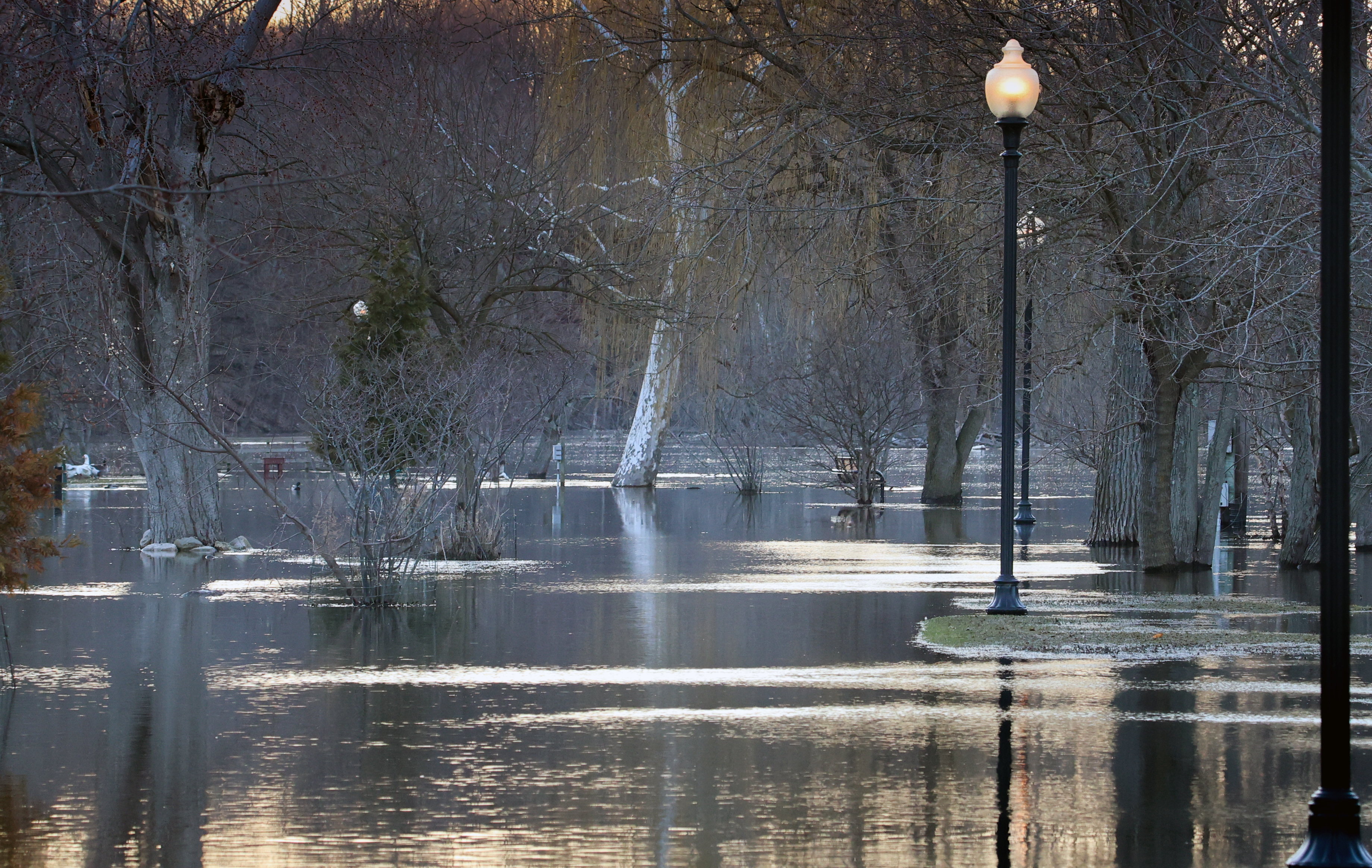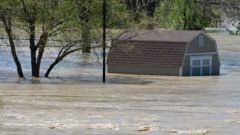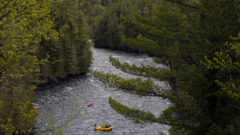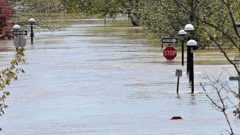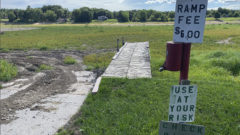
The river flooded the sidewalk and trees on Island Park - Grand Ledge, Michigan, march 2026

Richard B. (Ricky) Rood, University of Michigan

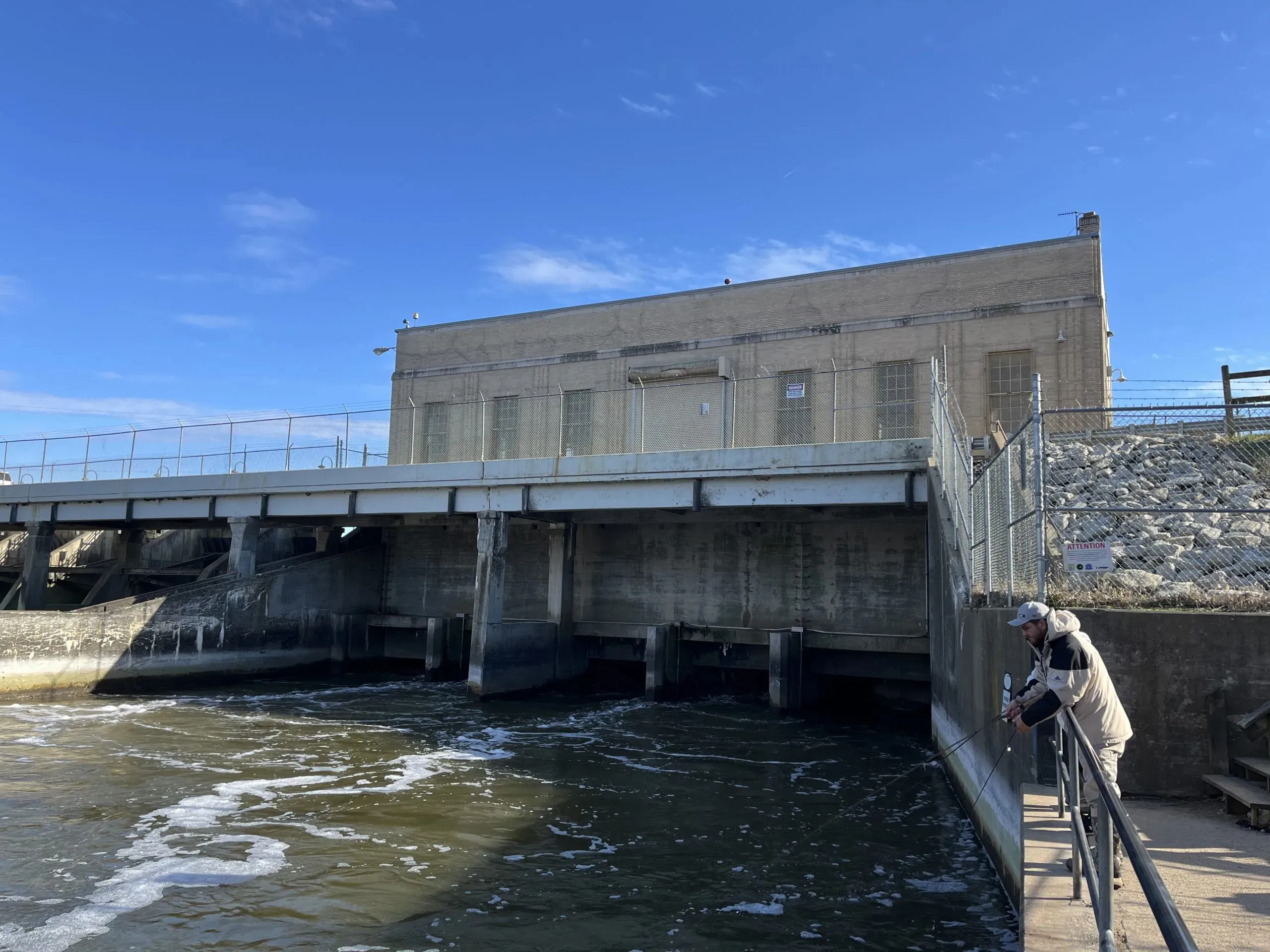
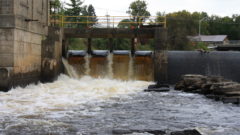
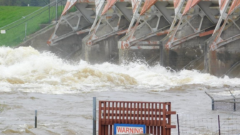
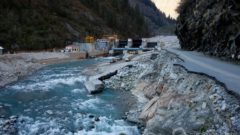
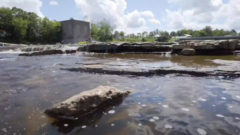
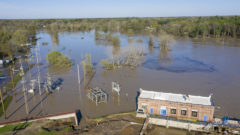
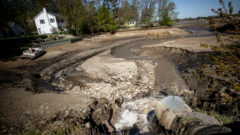
Michigan and parts of Wisconsin are in the midst of a historic flooding event in spring 2026. Days of heavy rainfall on top of snow have sent lakes and rivers over their banks and threatened several dams in both states, forcing people to evacuate homes downstream. By April 20, 2026, nearly half of Michigan’s counties were under a state of emergency. In Cheboygan, Michigan, large pumps were brought in to lower pressure on a century-old dam in the city.

The region’s aging water infrastructure was never designed for the volume of water it is facing. That’s a troubling sign for the future, with flooding becoming more common as global temperatures rise.

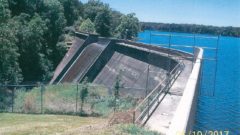
In many areas, the damage has been exacerbated by a culture of building homes and cabins on the shores of inland lakes and along riverine lakes behind small, often privately owned dams. Many of these dams were built over 100 years ago, with some long forgotten.

I am a professor emeritus of meteorology at the University of Michigan whose work focuses on helping communities adapt to climate change. The warming climate is worsening the flood risk, and disasters like the one Michigan is experiencing are setting higher benchmarks for safety as communities plan future infrastructure.

Where is all the water coming from?

For much of Michigan and Wisconsin, as well as northern Illinois, 2026 has been the wettest March and April on record.

In March, much of that precipitation fell as snow, including in an enormous blizzard that brought 3 feet of snow to parts of Michigan. In mid-April, persistent rains began. The rain, on top of all that snow, sent floodwaters running into rivers, streets and homes. The water carries large amounts of ice that damages shores, infrastructure and homes.

The moisture for much of these storms has been funneled northward from the warm Gulf of Mexico, thanks in part to a high pressure system sitting over the southeastern U.S.

The problem of warming winters

The kind of flooding Michigan and Wisconsin are experiencing in 2026 is what forecasters expect to see more of as global temperatures rise.

Winters have been warming faster than other seasons across the U.S. In Michigan and Wisconsin, winter months used to be reliably below freezing, but that’s changing. In the Cheboygan area, near the tip of Lower Michigan, March temperatures used to be below freezing on all but a few days. By the 1991-2020 period, the region averaged 10 days above or close to the freezing point – about twice as many as the 1951-1980 period.

The air coming in from the south is also warmer than in the past. Nationally, 2026 was the warmest March on record in 132 years of record-keeping in the contiguous U.S., with an average temperature more than 9 degrees Fahrenheit (5 degrees Celsius) higher than the 30-year average. So, in addition to snowmelt starting earlier, melting is happening faster.

Michigan’s average wintertime temperature rose by more than 4 F (2.3 C) from 1951 to 2023. Though winter 2026 in Michigan was colder than the 1991-2020 average, the Gulf of Mexico, where the moisture originated, was warmer than average, accelerating the snowmelt.

How warming leads to downpours and flooding

A few aspects of a warming climate can lead to flooding.

First, temperatures are increasing. In higher temperatures, moisture evaporates faster from the ground, plants and surface water. That moisture, once in the atmosphere, eventually falls again as precipitation. However, for each degree Celsius that temperatures increase, the atmosphere can hold about 7% more moisture, resulting in more heavy downpours.

A warmer winter also means more melting snow and more rain-on-snow events that can quickly increase the amount of runoff into rivers.

The Great Lakes region and much of the Northeast already experience more precipitation than in the past. Winters with more persistent wetness – not just snow but also rain – prime the region for floods. With continued warming in the coming decades, 2026 might be among the least disruptive in the future.

Data shows that a scenario of persistent wetness, changes in winter and seasonal runoff is part of the future for Michigan and the other states and Canadian provinces along the Great Lakes Basin, as well as New England.

Fixing dams for the future

All of this means communities across the region will have to pay closer attention to the growing risks facing their vital infrastructure – particularly dams.

Even prior to the 2026 floods, Michigan had a well-documented problem with its aging inventory of 2,600 dams. In May 2020, an intense storm system that stalled over the region brought so much rain that the Edenville and Sanford dams both failed near Midland, Michigan, forcing 10,000 people to evacuate and causing an estimated US$200 million in damage.

After that disaster, a state task force issued recommendations for fixing the state’s water control infrastructure to meet the growing risks. But a member of the task force told The Detroit News in April 2026 that little had been done to address those recommendations.

Michigan and parts of Wisconsin are in the midst of a historic flooding event in spring 2026. Days of heavy rainfall on top of snow have sent lakes and rivers over their banks and threatened several dams in both states, forcing people to evacuate homes downstream. By April 20, 2026, nearly half of Michigan’s counties were under a state of emergency. In Cheboygan, Michigan, large pumps were brought in to lower pressure on a century-old dam in the city.

The region’s aging water infrastructure was never designed for the volume of water it is facing. That’s a troubling sign for the future, with flooding becoming more common as global temperatures rise.

In many areas, the damage has been exacerbated by a culture of building homes and cabins on the shores of inland lakes and along riverine lakes behind small, often privately owned dams. Many of these dams were built over 100 years ago, with some long forgotten.

https://www.youtube.com/embed/ik4S2Kgn9ak?wmode=transparent&start=0 Michigan State Police captured scenes of stressed dams and flooding across Cheboygan County, near the tip of the Lower Peninsula, including the century-old dam in the city of Cheboygan that was nearly overwhelmed by flood water.

I am a professor emeritus of meteorology at the University of Michigan whose work focuses on helping communities adapt to climate change. The warming climate is worsening the flood risk, and disasters like the one Michigan is experiencing are setting higher benchmarks for safety as communities plan future infrastructure.

Where is all the water coming from?

For much of Michigan and Wisconsin, as well as northern Illinois, 2026 has been the wettest March and April on record.

In March, much of that precipitation fell as snow, including in an enormous blizzard that brought 3 feet of snow to parts of Michigan. In mid-April, persistent rains began. The rain, on top of all that snow, sent floodwaters running into rivers, streets and homes. The water carries large amounts of ice that damages shores, infrastructure and homes.

The moisture for much of these storms has been funneled northward from the warm Gulf of Mexico, thanks in part to a high pressure system sitting over the southeastern U.S.

The problem of warming winters

The kind of flooding Michigan and Wisconsin are experiencing in 2026 is what forecasters expect to see more of as global temperatures rise.

Winters have been warming faster than other seasons across the U.S. In Michigan and Wisconsin, winter months used to be reliably below freezing, but that’s changing. In the Cheboygan area, near the tip of Lower Michigan, March temperatures used to be below freezing on all but a few days. By the 1991-2020 period, the region averaged 10 days above or close to the freezing point – about twice as many as the 1951-1980 period.

The air coming in from the south is also warmer than in the past. Nationally, 2026 was the warmest March on record in 132 years of record-keeping in the contiguous U.S., with an average temperature more than 9 degrees Fahrenheit (5 degrees Celsius) higher than the 30-year average. So, in addition to snowmelt starting earlier, melting is happening faster.

Michigan’s average wintertime temperature rose by more than 4 F (2.3 C) from 1951 to 2023. Though winter 2026 in Michigan was colder than the 1991-2020 average, the Gulf of Mexico, where the moisture originated, was warmer than average, accelerating the snowmelt.

How warming leads to downpours and flooding

A few aspects of a warming climate can lead to flooding.

First, temperatures are increasing. In higher temperatures, moisture evaporates faster from the ground, plants and surface water. That moisture, once in the atmosphere, eventually falls again as precipitation. However, for each degree Celsius that temperatures increase, the atmosphere can hold about 7% more moisture, resulting in more heavy downpours.

A warmer winter also means more melting snow and more rain-on-snow events that can quickly increase the amount of runoff into rivers.

The Great Lakes region and much of the Northeast already experience more precipitation than in the past. Winters with more persistent wetness – not just snow but also rain – prime the region for floods. With continued warming in the coming decades, 2026 might be among the least disruptive in the future.

Data shows that a scenario of persistent wetness, changes in winter and seasonal runoff is part of the future for Michigan and the other states and Canadian provinces along the Great Lakes Basin, as well as New England.

Fixing dams for the future

All of this means communities across the region will have to pay closer attention to the growing risks facing their vital infrastructure – particularly dams.

Even prior to the 2026 floods, Michigan had a well-documented problem with its aging inventory of 2,600 dams. In May 2020, an intense storm system that stalled over the region brought so much rain that the Edenville and Sanford dams both failed near Midland, Michigan, forcing 10,000 people to evacuate and causing an estimated US$200 million in damage.

After that disaster, a state task force issued recommendations for fixing the state’s water control infrastructure to meet the growing risks. But a member of the task force told The Detroit News in April 2026 that little had been done to address those recommendations.

Because warming will continue for the coming decades, the 2026 flooding should be considered at the lower end of capacity for stormwater infrastructure and dams. Rather than relying on the statistics that described floods in the past, planners will have to anticipate the floods of the future.

Michigan is often touted as a climate haven because it is relatively cool and has plenty of water. The state is not, however, immune to the amped-up weather of a warming climate. Environmental security in the future requires improved and more adaptive infrastructure.


The post Extreme rain on snow is testing aging dams across Michigan and Wisconsin — this is the future in a warming world appeared first on Great Lakes Now.

Original Article

Great Lakes Now

Great Lakes Now

https://www.greatlakesnow.org/2026/04/22/extreme-rain-on-snow-is-testing-aging-dams-across-michigan-and-wisconsin-this-is-the-future-in-a-warming-world/

The Conversation

Uncertainty for Michigan rivers, residents as Consumers reconsiders its 13 dams

By Kelly House, Bridge Michigan

The Great Lakes News Collaborative includes Bridge Michigan; Circle of Blue; Great Lakes Now at Detroit Public Television; and Michigan Radio, Michigan’s NPR News Leader; who work together to bring audiences news and information about the impact of climate change, pollution, and aging infrastructure on the Great Lakes and drinking water.

Read Now at Great Lakes Now.

Original Article

Great Lakes Now

Great Lakes Now

https://www.greatlakesnow.org/2022/11/uncertainty-michigan-rivers-residents-consumers-reconsiders-13-dams/

Bridge Michigan

Rising waters, sinking feeling: From the Great Lakes to the Ohio River, climate change puts coal ash impoundments at risk

Just upstream of Alabama’s Mobile Bay sits a vast region of wetlands known as the Mobile-Tensaw Delta, home to one of the most diverse ecosystems in the United States. As well as 21 million cubic yards of wet coal ash. 

The J.M. Barry Power Plant has been a flashpoint between environmental advocates and the state utility, Alabama Power, for years.

Read Now at Great Lakes Now.

Original Article

Great Lakes Now

Great Lakes Now

https://www.greatlakesnow.org/2022/08/climate-change-puts-coal-ash-impoundments-at-risk/

Joshua Irvine

Dam Accounting: Taking Stock of Methane Emissions From Reservoirs

By Tara Lohan, The Revelator

This story originally appeared in The Revelator and is republished here as part of Covering Climate Now, a global journalism collaboration strengthening coverage of the climate story.

This month regulators greenlighted a transmission line that would bring power generated from Canadian hydroelectric dams to New York City.

Read Now at Great Lakes Now.

Original Article

Great Lakes Now

Great Lakes Now

https://www.greatlakesnow.org/2022/05/stock-methane-emissions-reservoirs/

The Revelator

Report: Going off script, decisive action saved lives during 2020 dam disaster

By Mike Wilkinson and Kelly House, Bridge Michigan

The Great Lakes News Collaborative includes Bridge Michigan; Circle of Blue; Great Lakes Now at Detroit Public Television; and Michigan Radio, Michigan’s NPR News Leader; who work together to bring audiences news and information about the impact of climate change, pollution, and aging infrastructure on the Great Lakes and drinking water.

Read Now at Great Lakes Now.

Original Article

Great Lakes Now

Great Lakes Now

https://www.greatlakesnow.org/2022/05/decisive-action-2020-dam-disaster/

Bridge Michigan

AP analysis finds growing number of poor, high-hazard dams

By David A. Lieb, Michael Casey and Michelle Minkoff, Associated Press

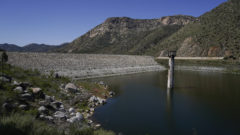
Constructed four generations ago, the massive rock and clay dam at El Capitan Reservoir is capable of storing over 36 billion gallons of water, enough to supply every resident in San Diego for most of a year.

Read Now at Great Lakes Now.

Original Article

Great Lakes Now

Great Lakes Now

https://www.greatlakesnow.org/2022/05/ap-analysis-growing-number-of-dams/

The Associated Press

Who’s at fault for Midland dam failures? Pretty much everyone, report says

By Kelly House, Bridge Michigan

The Great Lakes News Collaborative includes Bridge Michigan; Circle of Blue; Great Lakes Now at Detroit Public Television; and Michigan Radio, Michigan’s NPR News Leader; who work together to bring audiences news and information about the impact of climate change, pollution, and aging infrastructure on the Great Lakes and drinking water.

Read Now at Great Lakes Now.

Original Article

Great Lakes Now

Great Lakes Now

https://www.greatlakesnow.org/2022/05/midland-dam-failures-report/

Bridge Michigan

Hydropower eyes bigger energy role, less environmental harm

By Suman Naishadham, Associated Press

WASHINGTON (AP) — In southwestern Pennsylvania, eight locks and dams that for decades helped barges move goods along the Allegheny, Monongahela and Ohio rivers will in a few years also generate enough power for 75,000 homes.

Rye Development, a Boston-based hydropower company, is retrofitting the dams with turbines to generate electricity and says the upgraded structures will limit damage to the rivers’ water quality and fish.

Read Now at Great Lakes Now.

Original Article

Great Lakes Now

Great Lakes Now

https://www.greatlakesnow.org/2022/03/ap-hydropower-bigger-energy-role-less-environmental-harm/

The Associated Press

Bringing the fight against dams to COP26

By Sarah Sax, High Country News

This story originally appeared in High Country News and is republished here as part of Covering Climate Now, a global journalism collaboration strengthening coverage of the climate story.


For two weeks, leaders and representatives from around the world have gathered in person and virtually in Glasgow, Scotland, for the United Nations’ 26th annual climate change summit, called the Conference of the Parties, or COP26.

Read Now at Great Lakes Now.

Original Article

Great Lakes Now

Great Lakes Now

https://www.greatlakesnow.org/2021/11/bringing-fight-dams-cop26/

High Country News

Last dam standing: Traverse City fish restoration project on the ropes

By Kelly House, Bridge Michigan, through the Institute for Nonprofit News network

The Great Lakes News Collaborative includes Bridge Michigan; Circle of Blue; Great Lakes Now at Detroit Public Television; and Michigan Radio, Michigan’s NPR News Leader; who work together to bring audiences news and information about the impact of climate change, pollution, and aging infrastructure on the Great Lakes and drinking water.

Read Now at Great Lakes Now.

Original Article

Great Lakes Now

Great Lakes Now

https://www.greatlakesnow.org/2021/03/dam-traverse-city-fish-restoration-project/

Bridge Michigan

Michigan dams need ‘immediate attention’ to prevent next failure

By Kelly House, Bridge Michigan

The Great Lakes News Collaborative includes Bridge Michigan; Circle of Blue; Great Lakes Now at Detroit Public Television; and Michigan Radio, Michigan’s NPR News Leader; who work together to bring audiences news and information about the impact of climate change, pollution, and aging infrastructure on the Great Lakes and drinking water.

Read Now at Great Lakes Now.

Original Article

Great Lakes Now

Great Lakes Now

https://www.greatlakesnow.org/2021/02/michigan-dams-immediate-attention-prevent-next-failure/

Bridge Michigan

Task force delays report recommending changes to Michigan dam safety regulations

By Steve Carmody, Michigan Radio

The Great Lakes News Collaborative includes Bridge Michigan; Circle of Blue; Great Lakes Now at Detroit Public Television; and Michigan Radio, Michigan’s NPR News Leader; who work together to bring audiences news and information about the impact of climate change, pollution, and aging infrastructure on the Great Lakes and drinking water.

Read Now at Great Lakes Now.

Original Article

Great Lakes Now

Great Lakes Now

https://www.greatlakesnow.org/2021/02/task-force-delays-report-recommending-changes-to-michigan-dam-safety-regulations/

Michigan Radio

‘Mass Aging’ of Dams a Global Safety and Financial Risk, UN Report Says

By Brett Walton, Circle of Blue

The Great Lakes News Collaborative includes Bridge Michigan; Circle of Blue; Great Lakes Now at Detroit Public Television; and Michigan Radio, Michigan’s NPR News Leader; who work together to bring audiences news and information about the impact of climate change, pollution, and aging infrastructure on the Great Lakes and drinking water.

Read Now at Great Lakes Now.

Original Article

Great Lakes Now

Great Lakes Now

https://www.greatlakesnow.org/2021/02/mass-aging-dams-global-safety-financial-risk-un-report/

Circle of Blue

Damming Decisions: Watch party for Great Lakes Now and The Age of Nature

Across the country dams are being removed, and that means big changes for those rivers and some of the communities along them. Learn more about what happens when these dams are built and what happens when they come down in this Great Lakes Now watch party.

The event was held in conjunction with the PBS documentary series “The Age of Nature,” which broadcasts on PBS stations across the country in October 2020.

Read Now at Great Lakes Now.

Original Article

Great Lakes Now

Great Lakes Now

https://www.greatlakesnow.org/2020/10/watch-party-great-lakes-now-age-of-nature/

Sandra Svoboda

When a Dam Comes Down: Removal of dams allows fish passage and habitat restoration

This article is published in conjunction with PBS’s “The Age of Nature” series which begins airing on Oct. 14.

Join Great Lakes Now‘s “Watch Party: Damming Decisions – A discussion about dam removals and what they mean for the environment” on Facebook on Monday, Oct.

Read Now at Great Lakes Now.

Original Article

Great Lakes Now

Great Lakes Now

https://www.greatlakesnow.org/2020/10/when-a-dam-comes-down-removal-of-dams-allows-fish-passage-and-habitat-restoration/

GLN Editor

Bill sent to Whitmer would lengthen bonds for dam repairs

LANSING, Mich. (AP) — The Michigan Legislature on Tuesday finalized a bill that would lengthen the financing period of lake projects in the wake of flooding that damaged dams and drained lakes in the Midland area.

The legislation would extend, from 10 years to 40 years, the maximum maturity date of bonds issued to pay for inland lake-level control projects across the state.

Read Now at Great Lakes Now.

Original Article

Great Lakes Now

Great Lakes Now

https://www.greatlakesnow.org/2020/09/ap-bill-lengthen-bonds-dam-repairs/

The Associated Press

Michigan Dam Safety Task Force holds first virtual meeting

Following the Midland dam failures in May, a special task force was set up to evaluate Michigan’s dam safety rules and regulations. The task force had its first meeting virtually on Tuesday.

Learn more about the task force in Michigan Radio’s report here.

Read more about Midland and dams on Great Lakes Now:

Dam Investment: How does Michigan stack up against Great Lakes peers?

Read Now at Great Lakes Now.

Original Article

Great Lakes Now

Great Lakes Now

https://www.greatlakesnow.org/2020/09/michigan-dam-safety-task-force/

GLN Editor

Michigan House OKs spending on jobless benefits, flood costs

LANSING, Mich. (AP) — Michigan lawmakers on Tuesday began approving a budget bill that would authorize the federal government’s supplemental $300-a-week unemployment benefit during the coronavirus pandemic and provide $6 million in state funding for costs related to devastating flooding in the Midland area.

Read Now at Great Lakes Now.

Original Article

Great Lakes Now

Great Lakes Now

https://www.greatlakesnow.org/2020/09/ap-michigan-house-jobless-benefits-flood-costs/

The Associated Press

Plants cropping up in lost Michigan lakes where dams failed

LANSING, Mich. (AP) — Nature is returning to craters left from lakes drained by two dams that failed in May during torrential rain in mid-Michigan.

But not always in a good way.

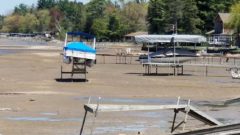
“Shortly after the water receded, you could look out over the exposed bottom lands of the lake and it was like looking at the Sahara Desert,” said Dave Rothman, a board member with the Four Lakes Task Force, which is looking to obtain the four dams as well as the two lakes that were not drained.

Read Now at Great Lakes Now.

Original Article

Great Lakes Now

Great Lakes Now

https://www.greatlakesnow.org/2020/08/ap-plants-midland-michigan-lakes-dams-failure/

The Associated Press

Dam Investment: How does Michigan stack up against Great Lakes peers?

Michigan’s dam safety program has been under intense scrutiny since the epic failure in Midland in May displaced 10,000 people.

Multiple lawsuits have ensued between Michigan, dam owner Boyce Hydro and citizens impacted by the failure, with each claiming the failure was someone else’s fault.

But a spotlight was put on Michigan dam regulators after it was revealed that the state’s 1,100 dams are monitored by a staff of two plus a supervisor, all with a meager budget of just $348,000, most of which is dedicated to salaries.

Read Now at Great Lakes Now.

Original Article

Great Lakes Now

Great Lakes Now

https://www.greatlakesnow.org/2020/06/dam-investment-michigan-other-states/

Gary Wilson