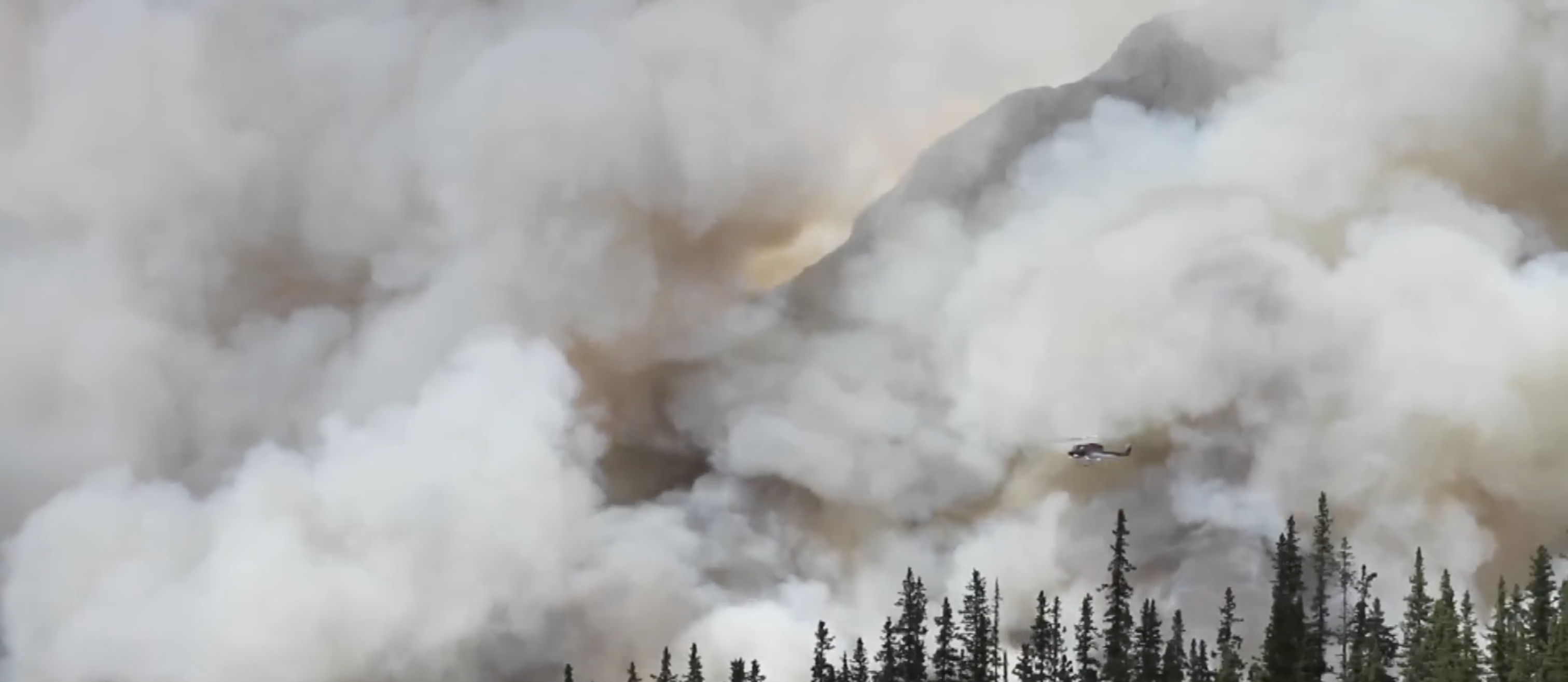
While health officials urge people to stay indoors due to the smoke draping the Midwest, experts say we should remember that the same polluted air affecting humans is also threatening animals. 

On July 16, Detroit ranked as the worst air quality in the world with a 724 index– climbing past the 300-point threshold on the Air Quality Index, where air quality is considered hazardous. In second sat Toronto, Canada, then Minneapolis Minnesota and in fourth was Chicago, Illinois.  

According to Dr. Jack Harkema, a Veterinary Pathologist at Michigan State University, said the effects of wildfire smoke on animals isn’t just a single symptom. 

“It doesn’t affect just the lungs, but also the cardiovascular system and the metabolic system,” Harkema said. “We’ve actually even looked at the effects on the brain, and there’s increased inflammation in the brain as well.”

Wildfire smoke may be even more harmful to animals than the everyday air pollution found in cities, Harkema said. 

“Wildfire smoke is probably even more toxic than our regular urban particulate matter,” Harkema said. “These particles create a lot of oxidants, they damage tissue, and they cause inflammation locally in the lung, but then that inflammation can spread to other organs.”

Wildfire smoke contains a mixture of pollutants, including fine particles known as PM2.5. Those microparticles are small enough to go deep into the lungs and, sometimes, enter the bloodstream.

“PM2.5 particles are inhalable,” Mayra Oyola, an Assistant Professor in the Department of Atmospheric and Oceanic Sciences at the University of Wisconsin Madison. “They can get into the lungs and, just like in humans, they stay there. They can damage respiratory and cardiovascular tissue in anything that breathes. So it’s not just us.”

The fires that are impacting the midwest are mainly contained towards the lower part of Ontario, Canada.  The smoke from these fires have migrated from wind paths to reach the midwest. 

“Animals close to the fires, that’s the biggest concern, because they will be displaced,” Oyola said. “More often than not, they move into human-populated areas. That creates risk for both humans and the animals.”

Birds are especially vulnerable to wildfire smoke because their respiratory system is more efficient than other mammals, according to research scientist at Cornell University’s Lab of Ornithology Olivia Sanderfoot. While that helps them get more oxygen, it also means they breathe in more harmful particles from polluted air.

“Birds are able to take up twice as much oxygen with each breath compared to mammals, which also means they’re getting an extra-heavy dose of anything toxic in the air,” Sanderfoot said.

“We’ve known for a long time that birds are more vulnerable,” Sanderfoot said. “So I’m especially worried about them in this smoke.”

Other outdoor animals can also suffer, like horses. Because of respiratory diseases, like heaves, livestock that spend their time outdoors are exposed for days or weeks to smoky conditions which heighten risks, Harkema said.

“If this continues, you’re going to see more illness in humans and animals,” Harkema said.

For pet-owners, Dr. Jennifer Henderson, a veterinarian at Vetco Total Care in Chicago said taking the same precautions you would take for yourself is ideal. 

“The same concerns apply to our pets that apply to humans,” Henderson said. “You just want to keep them inside or limit their activity outside so it doesn’t cause any flare-up.”

Owners should also watch closely for signs that smoke may be affecting their animals.

“I think respiratory symptoms,  with the coughing and the lethargy, are the main things to watch for,” Henderson said. 

She also recommends monitoring for bloodshot eyes, squinting or other signs of eye irritation.The guidance is ultimately simple, Henderson said, if the air isn’t healthy for people, it probably isn’t healthy for pets either.

“Similar to how they’re dealing with it for themselves, apply the same concerns and strategies to their pets,” she said. “You can’t put a mask on a dog, so it’s really just keeping them out of the environment or limiting their time.”

Harkema recommends limiting walks to brief bathroom breaks and avoiding strenuous exercise.

“You don’t want to exercise them because more of these particulate matter and other air toxicants can get into the lung and cause inflammation,” Harkema said.

Sanderfoot said keeping pets in cool, air-conditioned spaces with clean, filtered air whenever possible is best. 

As wildfire seasons grow longer and more intense, Sanderfoot says she expects poor air quality events to become a more frequent occurrence across North America.

“The issue is that climate change is supercharging these fires and lengthening our fire season,” Sanderfoot said. “The bigger the fire, the more smoke.”

According to Oyola, research shows wildfire smoke will become a persistent problem.

“It’s very clear that climate change is real and that it’s not slowing down,” she said. “With drier conditions and warmer conditions, we should expect more events like this.”


The post How wildfire smoke impacts pets and wildlife appeared first on Great Lakes Now.

Original Article

Great Lakes Now

Great Lakes Now

https://www.greatlakesnow.org/2026/07/21/how-wildfire-smoke-impacts-pets-and-wildlife/

Julia Roeder

By Anna Barnes  In Michigan, sugar maple populations are rising and eastern redbud trees are making their way north, while coniferous trees, like the black spruce, continue to decline. One suspected cause: climate warming.

Original Article

Great Lakes Echo

Great Lakes Echo

https://greatlakesecho.org/2026/07/07/study-finds-climate-warming-directly-affects-the-makeup-of-plant-communities/

Anna Barnes

By Demonte Thomas Michigan has already exceeded its average annual tornado count. The active season comes as communities across the state continue recovering from severe weather that has left behind widespread damage.

Original Article

Great Lakes Echo

Great Lakes Echo

https://greatlakesecho.org/2026/06/26/tornado-activity-surpasses-yearly-average-as-peak-season-begins/

Great Lakes Echo

By Amelia Fraser When many people think of winter sports and hobbies, snow often comes to mind. But what happens when the snow is no longer around? Climate change studies have shown that as the planet warms, snowfall will decline, leaving skiing, snowboarding and other winter sports at risk of fading into memory.

Original Article

Great Lakes Echo

Great Lakes Echo

https://greatlakesecho.org/2026/04/12/varying-snowfalls-effect-on-winter-sport-conditions-in-canada/

Great Lakes Echo

By Sonja Krohn

The dry conditions and drought that Michigan is experiencing this winter may adversely affect the upcoming crop growing season.

The post ‘None of this is normal’ – Michigan watches winter drought ahead of growing season first appeared on Great Lakes Echo.

Original Article

Great Lakes Echo

Great Lakes Echo

https://greatlakesecho.org/2026/03/05/none-of-this-is-normal-michigan-watches-winter-drought-ahead-of-growing-season/

Capital News Service

A recent study featuring Grand Rapids, Michigan suggests that climate migration may not significantly change how some cities grow.

The post Climate migration may not dramatically reshape city growth, study finds first appeared on Great Lakes Echo.

Original Article

Great Lakes Echo

Great Lakes Echo

https://greatlakesecho.org/2026/02/26/climate-migration-may-not-dramatically-reshape-city-growth-study-finds/

Isabella Figueroa Nogueira

By Clara Lincolnhol 

Online rumors are swirling that a comet from another solar system might be a UFO — but Michigan State University researchers say that’s pure speculation. It’s definitely a comet, they insist, with no credible reason to believe otherwise. 

The post Scientists debunk UFO claims about rare interstellar comet  first appeared on Great Lakes Echo.

Original Article

Great Lakes Echo

Great Lakes Echo

https://greatlakesecho.org/2025/09/21/scientists-debunk-ufo-claims-about-rare-interstellar-comet/

Clara Lincolnhol

Great Lakes energy bills are rising: Federal cuts could add to the pain

This article is the first in a series called The Great Lakes Promise: Cost, Resilience and Refuge. This series was made possible in partnership between Great Lakes Now and Planet Detroit. 

Sherita Hamlin has watched her utility bills more than double in recent years. On Chicago’s West Side, summer air conditioning is a luxury she now rations.

Read Now at Great Lakes Now.

Original Article

Great Lakes Now

Great Lakes Now

https://www.greatlakesnow.org/2025/07/great-lakes-energy-bills-are-rising-federal-cuts-could-add-to-the-pain/

Brian Allnutt

After Trump cuts, Michigan helps pay for remainder of climate work program

By Izzy Ross, Interlochen Public Radio

This coverage is made possible through a partnership between Interlochen Public Radio and Grist, a nonprofit environmental media organization.

Lucas Roff met his then-girlfriend when he was going to college at Lake Superior State University in Sault Ste.

Read Now at Great Lakes Now.

Original Article

Great Lakes Now

Great Lakes Now

https://www.greatlakesnow.org/2025/06/after-trump-cuts-michigan-helps-pay-for-remainder-of-climate-work-program/

Interlochen Public Radio

By Victor Wooddell Capital News Service The 2023-24 winter was the warmest on record in the U.S. with average temperatures throughout the state above freezing, with close to average precipitation, according to the National Weather Service. Data from the Southeast Regional Climate Center shows that average daily maximum temperatures in the Midwest were several degrees […]

The post Michigan tourism preps for a colder winter first appeared on Great Lakes Echo.

Original Article

Great Lakes Echo

Great Lakes Echo

http://greatlakesecho.org/2024/11/16/michigan-tourism-preps-for-a-colder-winter/

Great Lakes Echo

By Ruth Thornton Early fall temperatures in Michigan will likely be higher than average, according to the National Weather Service, but are predicted to return to normal for the winter if long-term predictions hold up. Cort Scholten, a meteorologist with the National Weather Service in Grand Rapids, Michigan, said precipitation amounts are expected to be […]

The post Warmer-than-normal fall likely in Michigan first appeared on Great Lakes Echo.

Original Article

Great Lakes Echo

Great Lakes Echo

http://greatlakesecho.org/2024/10/18/warmer-than-normal-fall-likely-in-michigan/

Ruth Thornton

By Elinor Epperson Michigan’s Department of Environment, Great Lakes and Energy has updated an online tool that maps which communities may be most susceptible to adverse effects from pollution. The department first released MiEJScreen as a draft in 2022, but released an updated version in early August after seeking public comment. It says it hopes […]

The post Michigan updates data sharing tool on environmental justice first appeared on Great Lakes Echo.

Original Article

Great Lakes Echo

Great Lakes Echo

http://greatlakesecho.org/2024/08/20/michigan-updates-data-sharing-tool-on-environmental-justice/

Elinor Epperson

By Jada Vasser Reusing materials in creative ways is a lifelong obsession for Ang Adamiak – one that led her to launch a nonprofit. Even though these days she says she’s mostly “in an office writing grants” while her staff is out doing “interesting work,” building partnerships around the sustainable reuse of materials still fuels […]

The post Arts & Scraps: Reusing materials to combat climate change first appeared on Great Lakes Echo.

Original Article

Great Lakes Echo

Great Lakes Echo

http://greatlakesecho.org/2024/08/18/arts-scraps-reusing-materials-to-combat-climate-change/

Jada Vasser

By Jada Vasser Six years ago, the Association for the Advancement of Deaf/Hard-of-Hearing was founded by four mothers who wanted to create change and educational programming for their deaf children and community. “We are dedicated to improving the educational and occupational outcomes of deaf/hard of hearing youth and young adults by creating more accessible educational […]

The post Deaf and hard of hearing kids have a role in climate resilience first appeared on Great Lakes Echo.

Original Article

Great Lakes Echo

Great Lakes Echo

http://greatlakesecho.org/2024/08/16/deaf-and-hard-of-hearing-kids-have-a-role-in-climate-resilience/

Jada Vasser

By Elinor Epperson As more green infrastructure projects are installed across the state, more workers are needed to maintain them. Friends of the Rouge, a Detroit-area nonprofit that manages the River Rouge watershed, is offering a short course about maintaining green infrastructure like rain gardens. The course is an opportunity for workers to expand their […]

The post Green infrastructure job trainings aim to support growing field first appeared on Great Lakes Echo.

Original Article

Great Lakes Echo

Great Lakes Echo

http://greatlakesecho.org/2024/07/24/green-infrastructure-job-trainings-aim-to-support-growing-field/

Elinor Epperson

By Gabrielle Nelson Lake Erie’s annual algae bloom has begun to form weeks ahead of schedule off the coast of southeast Michigan, but scientists say they expect only a moderate bloom this year. “There was scum off Monroe,” said Richard Stumpf, a National Oceanic and Atmospheric Administration oceanographer who leads the federal government’s bloom forecasting […]

The post Experts predict moderate Lake Erie toxic algae bloom first appeared on Great Lakes Echo.

Original Article

Great Lakes Echo

Great Lakes Echo

http://greatlakesecho.org/2024/07/21/experts-predict-moderate-lake-erie-toxic-algae-bloom/

Gabrielle Nelson

By Elinor Epperson There’s no easy way to say it: The heat is only getting worse. Extreme heat events in the Great Lakes region will only become more frequent as climate change warms the oceans, lakes and air, a University of Michigan climate expert said. And the earlier that heat waves start each season, the […]

The post Heat waves are a sign of ‘creeping changes’ in climate, expert says first appeared on Great Lakes Echo.

Original Article

Great Lakes Echo

Great Lakes Echo

http://greatlakesecho.org/2024/07/20/heat-waves-are-a-sign-of-creeping-changes-in-climate-expert-says/

Elinor Epperson

By Wajeeha Kamal Editor’s note: This is one in a series of stories coming out of a recent meeting of the Society of Environmental Journalists in Philadelphia. Communities are suffering in silence. There’s no question that mainstream media doesn’t cover the systemic inequalities exposed and exacerbated by environmental habits, said Evlondo Cooper, senior writer for […]

The post Reporting on climate change impacts on marginalized communities first appeared on Great Lakes Echo.

Original Article

Great Lakes Echo

Great Lakes Echo

http://greatlakesecho.org/2024/05/02/reporting-on-climate-change-impacts-on-marginalized-communities/

Wajeeha Kamal

New Jersey’s Delaware Bayshore isn’t called the road less traveled without reason.

Persistent rainfall, exacerbated by global warming, has increased the wetlands in this area of Cumberland County.

The post Unearthing climate change challenges along Delaware Bayshore first appeared on Great Lakes Echo.

Original Article

Great Lakes Echo

Great Lakes Echo

http://greatlakesecho.org/2024/04/19/unearthing-climate-change-challenges-along-delaware-bayshore/

Guest Contributor

Mercury levels in the Great Lakes are increasing as temperatures warm and extreme weather becomes more frequent, according to research in Minnesota’s Marcell Experimental Forest.

Mercury is a global pollutant released into the atmosphere through fossil fuel burning. It is then deposited onto land and water.

The post Climate change, other pollutants boost mercury’s Great Lakes health threat first appeared on Great Lakes Echo.

Original Article

Great Lakes Echo

Great Lakes Echo

http://greatlakesecho.org/2024/04/09/climate-change-other-pollutants-boost-mercurys-great-lakes-health-threat/

Kayla Nelsen

The lack of ice on the Great Lakes could cause thunderstorms and tornadoes to occur earlier than usual in the region. 

Michigan is expected to see more severe weather in April and May, said Paul Pastelok, a meteorologist for AccuWeather.

The post Record low Great Lakes ice jump-starts Michigan’s severe weather season first appeared on Great Lakes Echo.

Original Article

Great Lakes Echo

Great Lakes Echo

http://greatlakesecho.org/2024/03/21/record-low-great-lakes-ice-jump-starts-michigans-severe-weather-season/

Clara Lincolnhol

A California woman on “The Daily Show” recently swapped her sandals for snowshoes after moving to Duluth to escape her state’s wildfires.

The Comedy Central show featured Duluth as a climate haven, an ideal place to live to avoid wildfires, droughts, hurricanes and extreme flooding. 

The post Are Great Lakes cities ready for climate migrants? first appeared on Great Lakes Echo.

Original Article

Great Lakes Echo

Great Lakes Echo

http://greatlakesecho.org/2024/03/18/are-great-lakes-cities-ready-for-climate-migrants/

Kayla Nelsen

At Lake Simcoe in southern Ontario, February has traditionally been the peak of ice fishing season.

But this year, the lake’s freezing cycle is in purgatory, continuing to fuel what many locals are calling Ontario’s worst ice fishing season in decades. 

The post Ontario anglers watch their ice fishing community melt. Is there hope? first appeared on Great Lakes Echo.

Original Article

Great Lakes Echo

Great Lakes Echo

http://greatlakesecho.org/2024/03/05/ontario-anglers-watch-their-ice-fishing-community-melt-is-there-hope/

Daniel Schoenherr

Michigan residents and activists are pushing the auto and steel industries to buy cleaner, more sustainable steel to clean up pollution in the Detroit-Dearborn area. 

Recently Industrious Labs, a climate advocacy group, gave guided tours of Detroit and Dearborn auto and steelmaking factories to try to convince automakers to switch from steel produced traditionally into sustainable, cleaner steel.

The post Dirty steelmaking unfairly threatens low-income communities first appeared on Great Lakes Echo.

Original Article

Great Lakes Echo

Great Lakes Echo

http://greatlakesecho.org/2023/12/22/dirty-steelmaking-unfairly-threatens-low-income-communities/

Jada Vasser

While cornfields are abundant throughout the state, Michigan produces many more crops than just corn.

Specialty crops, which are fruits, vegetables, tree nuts, flowers and other horticulture crops, are abundant in the Great Lake state.

The post Great Lakes microclimate good for specialty crops first appeared on Great Lakes Echo.

Original Article

Great Lakes Echo

Great Lakes Echo

http://greatlakesecho.org/2023/11/09/great-lakes-microclimate-good-for-specialty-crops/

Guest Contributor

Climate change means that the Great Lakes region’s trademark red, orange and yellow fall leaves will be more intense for a shorter period in the next decade. 

The warming climate will also cause the leaves to change later in the season, scientists say. 

The post Changing climate changes colors first appeared on Great Lakes Echo.

Original Article

Great Lakes Echo

Great Lakes Echo

http://greatlakesecho.org/2023/10/04/changing-climate-changes-colors/

DeShawn Johnson

Is there such a thing as a sustainable cruise vacation?

“You know what? I’m not afraid to say it. Hopefully in a few years from now this boat will be electric.”

The post Former Echo reporter checks out sustainable cruises – in Iceland first appeared on Great Lakes Echo.

Original Article

Great Lakes Echo

Great Lakes Echo

http://greatlakesecho.org/2023/09/06/former-echo-reporter-checks-out-sustainable-cruises-in-iceland/

David Poulson

TED Countdown: BlocPower CEO Donnel Baird on greening America’s buildings, improving communities

With nearly 125 million buildings across the United States, all these spaces account for about 30 percent of the country’s emissions. In 2014, Donnel Baird created BlocPower to get these spaces off fossil fuels by changing out old water systems, gas ovens, gas and oil furnaces and air conditioning units with electric equipment, like air source heat pumps, which are compatible with renewable energy options.

Read Now at Great Lakes Now.

Original Article

Great Lakes Now

Great Lakes Now

https://www.greatlakesnow.org/2023/07/ted-countdown-blocpower-ceo-donnel-baird-greening-americas-buildings-improving-communities/

Lisa John Rogers

The TED Countdown Summit is coming to Detroit

TED wants to bring Detroit to the world and the world to Detroit. As the city at the heart of the automotive industry grappling with building a sustainable future, Detroit was a deliberate choice for this year’s Countdown Summit.

This invite-only gathering will take place from July 11-14 in Michigan Central, the Fillmore Detroit and other locations around the city.

Read Now at Great Lakes Now.

Original Article

Great Lakes Now

Great Lakes Now

https://www.greatlakesnow.org/2023/06/ted-countdown-summit-is-coming-to-detroit/

GLN Editor

U.S. Pushes Farmers to Develop A New Crop: Energy

By Keith Schneider, Circle of Blue

The Great Lakes News Collaborative includes Bridge Michigan; Circle of Blue; Great Lakes Now at Detroit Public Television; and Michigan Radio, Michigan’s NPR News Leader; who work together to bring audiences news and information about the impact of climate change, pollution, and aging infrastructure on the Great Lakes and drinking water.

Read Now at Great Lakes Now.

Original Article

Great Lakes Now

Great Lakes Now

https://www.greatlakesnow.org/2023/05/us-pushes-farmers-develop-new-crop-energy/

Circle of Blue

U.S. Counts on “Climate-Smart” Farms to Slow Global Warming

By Keith Schneider, Circle of Blue

The Great Lakes News Collaborative includes Bridge Michigan; Circle of Blue; Great Lakes Now at Detroit Public Television; and Michigan Radio, Michigan’s NPR News Leader; who work together to bring audiences news and information about the impact of climate change, pollution, and aging infrastructure on the Great Lakes and drinking water.

Read Now at Great Lakes Now.

Original Article

Great Lakes Now

Great Lakes Now

https://www.greatlakesnow.org/2023/04/climate-smart-farms-slow-global-warming/

Circle of Blue

Former U.N. adviser warns on water futures trading, elevates water crisis to level of climate

There were two differing visions on how to deal with the global water crisis at the recent United Nations World Water Conference, according to former U.N. water adviser Maude Barlow.

One, would “treat water as a commodity like oil and gas and put it on the open market for sale,” Barlow said.

Read Now at Great Lakes Now.

Original Article

Great Lakes Now

Great Lakes Now

https://www.greatlakesnow.org/2023/04/former-adviser-warns-water-futures-trading-water-crisis-level-climate/

Gary Wilson

Situated at the end of town by the Flat River, Ball’s Softee Creme is the perfect place to grab an ice cream cone with friends during the summer months. However, climate change has summer shops like Ball's Softee Creme opening two months earlier than years prior.

The post Commentary: Global warming, climate change and my ice cream first appeared on Great Lakes Echo.

Original Article

Great Lakes Echo

Great Lakes Echo

http://greatlakesecho.org/2022/12/13/commentary-global-warming-climate-change-and-my-ice-cream/

Guest Contributor

Democrats in control: Advocates want action on justice, climate and “stronger leadership” from Gov. Whitmer

Elections have consequences, the saying goes, and for the Michigan Democratic party, the election last week resulted in a sweep of the race for governor and the legislature.

Now comes their opportunity to deliver on long-stalled environmental initiatives.

Gov. Gretchen Whitmer was re-elected and for the first time in almost 40 years, Democrats will be the majority in the legislature.

Read Now at Great Lakes Now.

Original Article

Great Lakes Now

Great Lakes Now

https://www.greatlakesnow.org/2022/11/advocates-want-action-on-justice-climate-stronger-leadership-gov-whitmer/

Gary Wilson

The Michigan State University Museum’s newest exhibition uses an interdisciplinary approach to engage visitors with the topic of climate change. The exhibition, called 1.5° Celsius, includes installations from 15 artists, researchers and scientists around the world. 

The post Climate change exhibition pushes boundaries of museums fighting to stay relevant first appeared on Great Lakes Echo.

Original Article

Great Lakes Echo

Great Lakes Echo

http://greatlakesecho.org/2022/10/27/climate-change-exhibition-pushes-boundaries-of-museums-fighting-to-stay-relevant/

Guest Contributor

To help reach net zero carbon emissions by 2050, Michigan officials have created a 100,000 acre project in the Pigeon River Country State Forest that will sell carbon credits to businesses interested in offsetting emissions.

The post Michigan carbon offsets: Success or scam? first appeared on Great Lakes Echo.

Original Article

Great Lakes Echo

Great Lakes Echo

http://greatlakesecho.org/2022/10/18/michigan-carbon-offsets-success-or-scam/

Guest Contributor

Findings by researchers at the University of Michigan predict that warming temperatures may result in increased seasonal allergies. They also found that pollen emissions could begin 40 days earlier than normal, with allergy season lasting an additional 19 days. That's in contrast with a normal allergy season that typically lasts 10 to 30 days. 

The post Study finds climate change may worsen allergies first appeared on Great Lakes Echo.

Original Article

Great Lakes Echo

Great Lakes Echo

http://greatlakesecho.org/2022/08/08/study-finds-climate-change-may-worsen-allergies/

Guest Contributor

In our newest TikTok, Echo reporter Shelby Frink discusses the results of a recent study published in Agricultural and Resources Economic Review that explores how climate change impacts milk and feed production.

The post Climate change increases milk production: TikTok edition first appeared on Great Lakes Echo.

Original Article

Great Lakes Echo

Great Lakes Echo

http://greatlakesecho.org/2022/06/02/climate-change-increases-milk-production-tiktok-edition/

Guest Contributor

Fifteen businesses, including Ford Motor Co., General Mills, General Motors and two West Michigan microbreweries, have written to Michigan Gov. Gretchen Whitmer in support of her administration’s carbon neutrality goals.

The post Businesses signal support of Michigan’s climate goals first appeared on Great Lakes Echo.

Original Article

Great Lakes Echo

Great Lakes Echo

http://greatlakesecho.org/2022/05/30/businesses-signal-support-of-michigans-climate-goals/

Guest Contributor

In the Marcell Experimental Forest in Grand Rapids, Minnesota, there are no trails for hiking, grounds for camping nor lakes for boating. Instead, there are temperature-manipulating chambers and field laboratories. Marcell was chosen to study because of its peatlands, a unique landscape that occupies just 3%  of the earth’s surface, yet stores 30% of soil carbon.

The post From sinks to sources: peatland carbon is poised to be part of the climate crisis first appeared on Great Lakes Echo.

Original Article

Great Lakes Echo

Great Lakes Echo

http://greatlakesecho.org/2022/05/25/from-sinks-to-sources-peatland-carbon-is-poised-to-be-part-of-the-climate-crisis/

Guest Contributor

Researchers found that increasing temperatures from climate change may slightly increase milk production, despite the heat stress on cows. The loss of milk production through heat stress is offset by the increase in feed production.

The post Climate change increases milk production first appeared on Great Lakes Echo.

Original Article

Great Lakes Echo

Great Lakes Echo

http://greatlakesecho.org/2022/05/24/climate-change-increases-milk-production/

Guest Contributor

Michigan’s Lower Peninsula has seen a dramatic increase in ticks in the past 10-15 years due to climate change. Blacklegged ticks, also called deer ticks, can spread Lyme disease to people.

The post Commentary: Climate change is buggin’ me. And you first appeared on Great Lakes Echo.

Original Article

Great Lakes Echo

Great Lakes Echo

http://greatlakesecho.org/2022/05/04/commentary-climate-change-is-buggin-me-and-you/

Guest Contributor

Fighting climate change can often feel like an overwhelming endeavor. Success must be reached using a combination of tactics in a sustained and relentless manner, according to experts.

The post Commentary: Fighting climate change requires individual action and systemic change first appeared on Great Lakes Echo.

Original Article

Great Lakes Echo

Great Lakes Echo

http://greatlakesecho.org/2022/05/03/commentary-fighting-climate-change-requires-individual-action-and-systemic-change/

Guest Contributor

Skiing is a sport enjoyed by millions of people each year. Climate change threatens the sport and the potential for friendships made along the way.

The post Commentary: Climate change threatens downhill runs and uphill chats first appeared on Great Lakes Echo.

Original Article

Great Lakes Echo

Great Lakes Echo

http://greatlakesecho.org/2022/05/02/commentary-climate-change-threatens-downhill-runs-and-uphill-chats/

Guest Contributor

Skiing is a sport enjoyed by millions of people each year. Climate change threatens the sport and the potential for friendships made along the way.

The post Commentary: Climate change threatens downhill runs and uphill chats first appeared on Great Lakes Echo.

Original Article

Great Lakes Echo

Great Lakes Echo

http://greatlakesecho.org/2022/05/02/commentary-climate-change-threatens-downhill-runs-and-uphill-chats/

Guest Contributor

In the last few decades, fluctuating temperatures in the late winter or early spring have harmed blueberry production across the state. More of that kind of trouble – and more often – may be in store for the state’s fruit-growers.

The post Commentary: Blueberries, climate and loss of community first appeared on Great Lakes Echo.

Original Article

Great Lakes Echo

Great Lakes Echo

http://greatlakesecho.org/2022/04/27/commentary-blueberries-climate-and-loss-of-community/

Guest Contributor

A practice called regenerative farming could be the next step for sustainable farming in Pennsylvania. It reduces carbon, a greenhouse gas driving global warming, and improves water quality.

The post Sustainable farming practice mitigates climate change impacts first appeared on Great Lakes Echo.

Original Article

Great Lakes Echo

Great Lakes Echo

http://greatlakesecho.org/2022/03/17/sustainable-farming-practice-mitigates-climate-change-impacts/

Guest Contributor

With art ranging in size from giant mobiles to miniature paintings, artists from across the country are collaborating to face the climate crisis with a new exhibit in metro Detroit.

The post New Detroit art exhibit addresses climate crisis with hope first appeared on Great Lakes Echo.

Original Article

Great Lakes Echo

Great Lakes Echo

http://greatlakesecho.org/2022/01/14/new-detroit-art-exhibit-addresses-climate-crisis-with-hope/

Guest Contributor

Climate Ghosts author: To save more species, treat them like kin

For Professor Nancy Langston, our intransigence in protecting struggling species like caribou and others is a puzzle. These species exist in our memories and culture, and we’ve invested in protecting them, so why do their populations continue to crash? 

That’s the question at the core of Langston’s latest book, “Climate Ghosts: Migratory Species in the Anthropocene”.

Read Now at Great Lakes Now.

Original Article

Great Lakes Now

Great Lakes Now

https://www.greatlakesnow.org/2022/01/climate-ghosts-author/

Gary Wilson

DTE Energy and the Michigan Department of Natural Resources have teamed up to use nature’s most powerful vacuums to suck up the excess carbon produced and released into the atmosphere that is causing climate change. Those vacuums are trees.

The post Pigeon River Country to help offset Michigan emissions first appeared on Great Lakes Echo.

Original Article

Great Lakes Echo

Great Lakes Echo

http://greatlakesecho.org/2022/01/12/pigeon-river-country-to-help-offset-michigan-emissions/

Guest Contributor