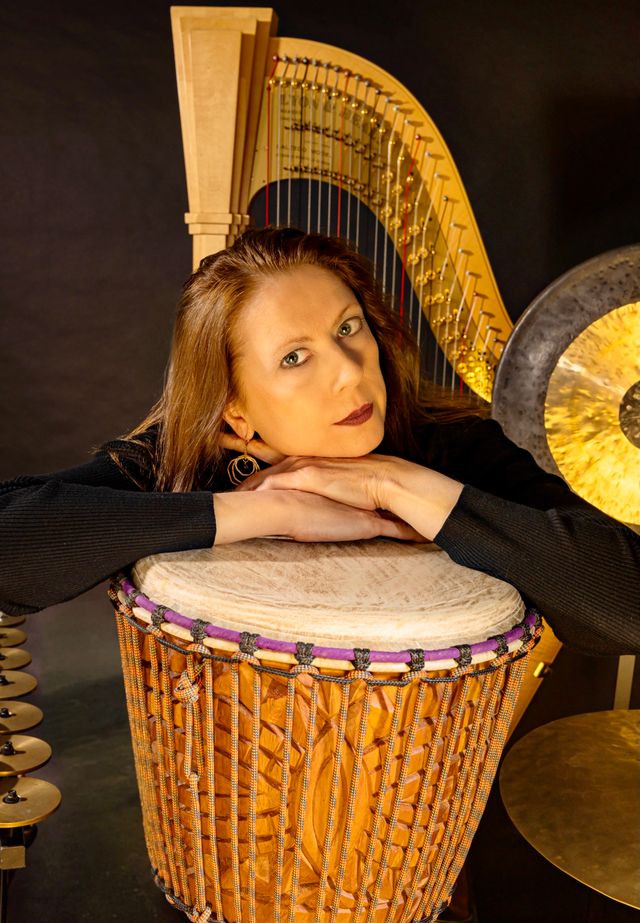
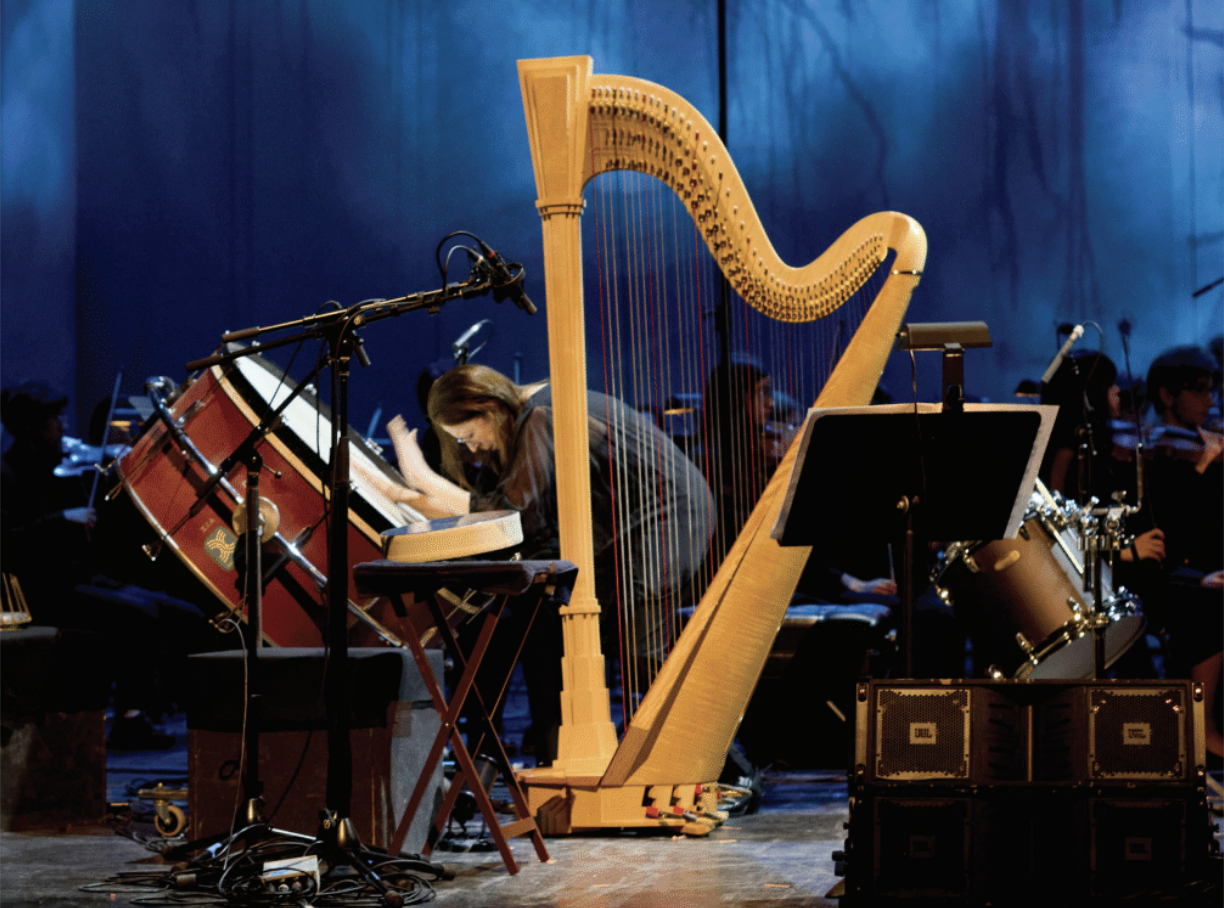
Yolanda Kondonassis is a musician working in the Great Lakes region, formerly at the Cleveland Institute of Music, she will begin teaching at the University of Michigan School of Music, Theatre and Dance in the fall. Now, the Grammy-nominated harp soloist performs on the harp and drums, on a new album commissioned by the Interlochen Arts Academy, called “Terra Infirma.” 

“Terra Infirma” had its digital premiere on April 17, ahead of Earth Day, and was composed by Reena Esmail for a collaboration with Kondonassis. Esmail started writing the concerto in January 2025, while living in Altadena, CA as the catastrophic wildfires began to enclose her neighborhood. The concerto also references Esmail’s extensive studies of Hindustani music — specifically the raags (or ragas) of Deepak, which are fabled to evoke uncontrollable fire. The piece also required another song or raag of Megh, which brings the rain as it is typically sung during monsoon seasons. 

For Earth Day, Christa Grix from Detroit’s Jazz and Classical station WRCJ 90.9 FM (also owned and operated by Detroit PBS), discusses this groundbreaking new work in conversation with Kondonassis. They also touch on Kondonassis’s nonprofit, Earth at Heart, which encourages conservation awareness and action through music and the arts. 

For the full interview, you can listen here:

The interview below was recorded, transcribed and edited for length and clarity.

Christa Grix: It gives me great pleasure to welcome my guest, Yolanda Kondonassis, a globally renowned harpist, composer, harp pedagogue, author, recording artist and environmental activist.

Yolanda Kondonassis: Thank you so much for having me. 

CG: I have admired you for most of my professional career, and I’m also aware of Reena Esmail. I do the programming at WRCJ, and I heard her music about a year ago, and I said, that is a composer to pay attention to. So, I can’t imagine anything better than the two of you collaborating on this project, “Terra Infirma.” And I’d like you to tell us all about it. 

YK: You know, the best things in life, I think, happen kind of organically, and because of that, they tend to evolve for all the right reasons. Reena and I probably first met virtually about five years ago. And we met through our husbands, who are both very active musicians. 

My first experience with Reena was through my “Five Minutes for Earth” project, which was my most recent album, where I commissioned a whole bunch of folks to write a roughly five minute piece that was inspired by Earth.

She’s just such an intelligent, curious person, and we have very much the same sensibility when it comes to creating art. Our environmental concerns and everything we do to make sure the planet will be around for many, many years to come — art should be approached the same way, that term “sustainability” should apply to both.

And I think her music has sustainability. So much art right now is created extremely quickly; premiered, quickly; consumed, quickly and then almost discarded. We don’t really hear much about it again, and this is not musical fast food.

Portrait of the composer, Reena Esmail. Photo: Rachel Gracia.

CG: No, it is absolutely not.

YK: It had about a four year gestation period. We talked about all sorts of different iterations this might take. And finally, we had one kind of seminal conversation where it was like, what sound, what sonic element would really bring the harp to life in a way it hadn’t been before?

I’ve kind of always been sort of a closet percussionist. And I thought, well, you know, the harp is a percussion instrument. What if you actually wrote a concerto for harp and percussion, and I do both, and how would that look?

It just was such an amazing experience to learn about all these different percussion equipments. I play 18 different percussion pieces, and I’m shoving my harp across the stage, in a sort of a metaphorical journey.

CG: Could you tell me a little bit more about those logistical challenges? Principally, being a harpist, I know it’s no small feat to move a harp. And for our listeners, let me mention that the harp is about six feet tall and weighs about 80 pounds, so when you’re talking about moving — and as I understand— the harp is a main character in a musical drama. Is that correct? 

YK: You said it. I just get excited every time I think about the genesis of this piece. Because initially we thought, okay, we’ll put you on stage. We’ll surround you with a ton of percussion, you may have to get up at some point. And then as we really started talking about the subject matter…

What if the harp actually, and to some degree, me as a performer were like a protagonist in this story of what we face environmentally? And what if the harp almost symbolized Earth as a “not” inanimate protagonist. And as anybody who plays the harp knows, that is not an inanimate object. You’ve got to be a harp whisperer, to play that thing. 

It evolved from the idea of me sitting in one place on stage in my usual concerto position, surrounded by percussion to “what if you walked on stage just without a harp and started doing something percussive?” And from that, it evolved into this idea that my harp starts on one side of the stage. And throughout the journey of this piece, it is a journey, I literally shove it from one percussion battery to another.

CG: So, not on a dolly or anything like that. You shove it?

YK: Yes, and so that shoving was literally built into the choreography. Then, of course, we said, well, this is getting very theatrical. What if one of the movements was incorporated at a theatrical element where you’re literally walking around the stage? Maybe you’re rimming a singing bowl. Maybe you’re exploring while the orchestra does something else. So, it really kind of stretched me to my limit. 

Portrait of harpist and percussionist Yolanda Kondonassis. Photo: Laura Watilo Blake.

CG: We all know that you’re a passionate advocate for the environment. What inspired you to do so much for the environment and for Mother Earth?

TK: I think that when something evolves over time you begin to invest in it, emotionally and otherwise. And really, when I started truly thinking about the environment is when I had my daughter in 2002. As we know, when you have a child, you start thinking farther ahead than we do when we don’t. 

I did an album called “Music of Hovhaness,” a piece on there was called, “Spirit Of Trees.” This was 20 years ago, and I thought, this music is so inspiring to me. This sounds like I’m walking through the woods and this is incredible, just being struck with the way music can conjure both a visual image and inspiration. I thought, wouldn’t it be great if we set it up so that my royalties from this album went to the Rainforest Alliance? And that was kind of the first little foray into all of this. 

That eventually led to establishing my nonprofit called Earth at Heart, and writing a kids book called My Earth, My Home. You know, one thing kind of leads to another. I wanted to kind of wrap my artistic life around this unifying mission. At a certain point, I think during covid, is when I started thinking, okay, great, I’ve been doing this for decades. I played in every part of the world I could have ever dreamed of. I’ve played the traditional repertoire. I’ve commissioned some great pieces. What’s my mission, what’s my unifying idea. 

And so it was a great kind of incubator during the pandemic to develop some ideas and to really have the time to follow through on them, because for busy musicians, that’s the tough part. It’s like we’re always full of ideas, but it’s the time to develop them and let them sit a minute and germinate and marinate before you take the next step. 

It’s been a wonderful way to combine passions. I don’t pretend to be a climate scientist, but what I can do is work on inspiring action, inspiring awareness of things. And what better way to do that than music? I think if anybody hears this piece, “Terra infirma,” they might even be inspired to learn more about it, and in learning more about it, who knows, they might become really inspired to think about environmental concerns in a way they hadn’t before. When they’d been thrown stats and statistics and, quite honestly, very scary stuff. What a better way to reach people than through music?

Both Reena and I talked about how we didn’t want “Terra Infirma” to be some sort of musical Armageddon, even though the reality is very scary. But, I think the only way we address any problem is with hope, hope that we can do something, hope that our actions will have an effect. 

“Terra Infirma” premiered live on October 30, 2025 at Interlochen Arts Academy. As of April 17, listeners will find the album digitally on all streaming platforms.  


The post When Music Meets Climate Crisis: A New Concerto Echoes the Planet’s Fragility appeared first on Great Lakes Now.
Original Article

Great Lakes Now

Great Lakes Now

https://www.greatlakesnow.org/2026/04/21/when-music-meets-climate-crisis-a-new-concerto-echoes-the-planets-fragility/

Lisa John Rogers, Great Lakes Now

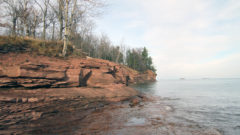
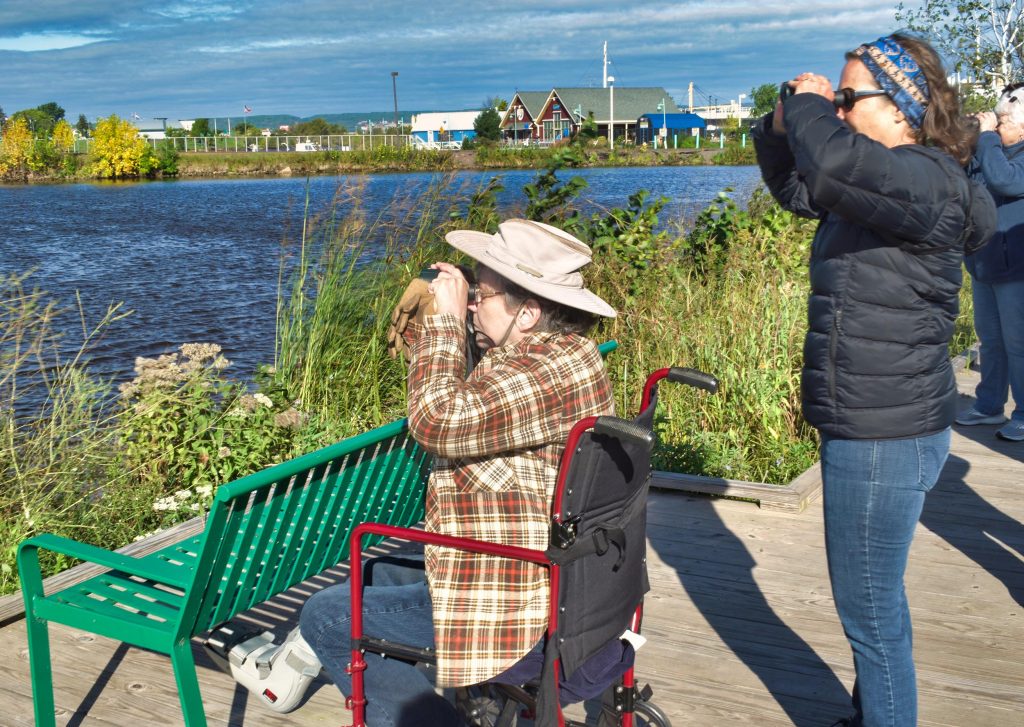
Birders look at cormorants off Barker’s Island. Image credit: Marie Zhuikov, Wisconsin Sea Grant

Students, educators, families and friends are invited to celebrate Earth Day with the kickoff of the Center for Great Lakes Literacy’s 4th Annual Great Lakes BioBlitz. This event is a great opportunity to engage youth and the public in community science, collect data to support biodiversity research and conservation, and learn more about the living things in the Great Lakes Basin.

What is the Great Lakes BioBlitz?

A free event that focuses on finding and identifying as many wild, living things as possible in the Canadian provinces and U.S. states that border the Great Lakes during a specified period of time.

When is the Great Lakes BioBlitz?

The BioBlitz begins on Earth Day (Saturday, April 22) and it runs for four weeks, ending on Saturday, May 20.

How do I participate in the Great Lakes BioBlitz?

The beauty of this project is that you decide your level of participation. Take an afternoon to explore and document some plants or wildlife in an area, or pick a location to return to weekly, or set a goal to find something new every day–there are many ways to participate. You may participate as an individual, a family, a class, or other group.

Joining is as easy as saying “One-two-three-CHEESE!”

  1. Visit iNaturalist or download the app onto your phone and create an account.  
  2. Visit and become a member of the Great Lakes BioBlitz project.
  3. Get outside, get out your cameras, and start making and posting observations!
  4. To be a Bioblitz wizard, verify other participants’ Great Lakes BioBlitz Project postings.

Want to learn more about the Great Lake BioBlitz?

Visit the Great Lakes BioBlitz Resources webpage for more information about the project and educator resources for engaging youth in this wonderful learning experience.

WEBINAR! Want to learn more about a community science project that uses iNaturalist data?

Register for and attend the 2023 Great Lakes BioBlitz webinar featuring guest scientist Professor David Drake of the UW Madison, Urban Canid Project. Join us 4-5:30 p.m. CDT, April 12 on Zoom to learn about how Drake and his team are using iNaturalist to better manage urban coyotes and red foxes. It uses iNaturalist to collect the public’s sightings of coyotes and red foxes in the Madison area. His presentation will describe the type of iNaturalist data collected and how the information is used for improved urban canid management.

After registering, you will receive a confirmation email containing information on how to join the webinar. Please contact Anne Moser at akmoser@aqua.wisc.edu or (608) 262 3069 if you have any questions regarding registration, the webinar, or have accommodations and accessibility requests.

Why would we want to encourage our community to do this? 

There are so many benefits of becoming a BioBlitz wizard:

  1. Engage in an outdoor activity, discover the wild living things in the world around you, form and strengthen a connection to your place
  2. Join a global community of observers, learners, and scientists passionate about biodiversity and the Great Lakes
  3. Contribute to a global database of organisms. Observations made on iNaturalists contribute to research, conservation, and educational outreach programs.

Time to get outside!


The post The Great Lakes BioBlitz first appeared on Wisconsin Sea Grant.

Original Article

Blog | Wisconsin Sea Grant

Blog | Wisconsin Sea Grant

https://www.seagrant.wisc.edu/blog/the-great-lakes-bioblitz/?utm_source=rss&utm_medium=rss&utm_campaign=the-great-lakes-bioblitz

Anne Moser

Evers creates new office of environmental justice

MADISON, Wis. (AP) — Gov. Tony Evers on Friday signed an executive order creating a new office of environmental justice, announcing the move on Earth Day.

Republicans last year removed the office from Evers’ proposed budget. But the Democrat up for reelection this November got around them by creating it through an executive order.

Read Now at Great Lakes Now.

Original Article

Great Lakes Now

Great Lakes Now

https://www.greatlakesnow.org/2022/04/ap-evers-office-environmental-justice/

The Associated Press

Cleaner Earth: Healing ozone hole, less smog, more eagles

By Seth Borenstein, AP Science Writer

With climate change, plastic pollution and a potential sixth mass extinction, humanity has made some incredible messes in the world.

But when people, political factions and nations have pulled together, they have also cleaned up some of those human-caused environmental problems, including healing the ozone hole, clearing perpetually smoggy air and saving many species from the brink of extinction.

Read Now at Great Lakes Now.

Original Article

Great Lakes Now

Great Lakes Now

https://www.greatlakesnow.org/2022/04/ap-healing-ozone-hole-smog-eagles/

The Associated Press

Earth Day 2022: What can you do and where?

In-person events are back as people slowly reintroduce themselves to dining in, large gatherings and a return to the office.

But even as indoors becomes less taboo, let’s not forget the great outdoors, which served us well over the past two years. And what better time to show your gratitude to the parks than Earth Day.

Read Now at Great Lakes Now.

Original Article

Great Lakes Now

Great Lakes Now

https://www.greatlakesnow.org/2022/04/earth-day-2022/

Natasha Blakely

Earth Day 2021: What can you do and where?

The COVID-19 vaccine is still rolling out and making its way to people all around the world. How comfortable people feel about participating in events and group activities is extremely varied.

But that doesn’t have to stop anyone interested in taking part in Earth Day this year, whether they do it indoors, outdoors, around other people or alone.

Read Now at Great Lakes Now.

Original Article

Great Lakes Now

Great Lakes Now

https://www.greatlakesnow.org/2021/04/earth-day-2021-events-around-the-region/

Natasha Blakely

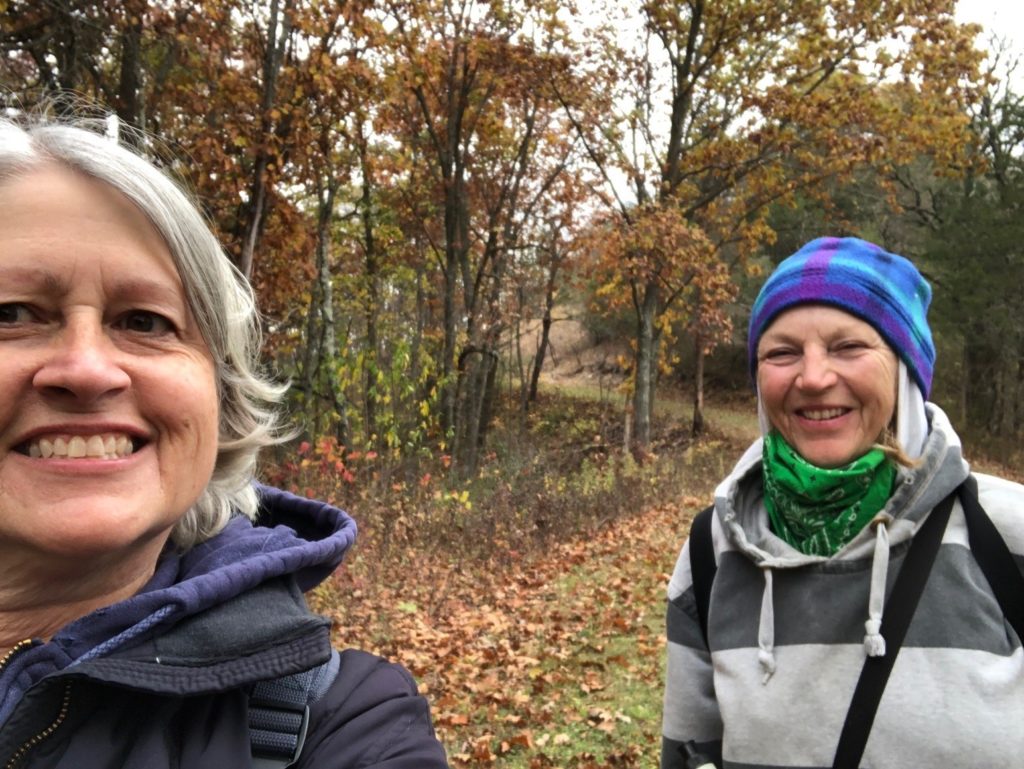
Moira Harrington, Wisconsin Sea Grant’s assistant director for communications, spent time outdoors during the pandemic with a friend (6 feet apart) as did many other Wisconsinites. Image credit: Moira Harrington

The coronavirus will provide plenty to study for decades to come as biological, social and physical scientists collect data and analyze its fallout. As we approach the 51st Earth Day, happening this Thursday, I would like to offer preliminary results in one area—what it has meant to embrace the outdoors in this time when indoor spaces have been vector zones for the deadly virus. My own take is a narrow review, very narrow, of the past year’s empirical, humorous and anecdotal looks at nature in the time of COVID. 

Empirical: One study I bumped into showed 23% of Wisconsinites reported increasing their time spent in parks from January 2020 to March 2021. In the same time frame and as part of the same study, Harvard and Brown universities (tracktherecovery.org) drilled deeper into three Lake Michigan counties and found 45.5% of Sheboygan County residents, 21.1% of Ozaukee County residents and 18.7% of Milwaukee residents increased their out-of-doors pandemic respite time.

Humorous: In 2020, comedian Samantha Bee went into the open air for recordings of her show. It was a literal presentation of: we have nice natural things and let’s get out there and appreciate them. Although, her take was not always a paean to Mother Nature and could be sprinkled with obscenities. 

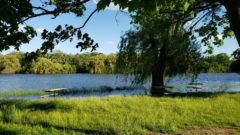
A view from the Indian Lake Trail. Image credit: Moira Harrington

Anecdotal: Like many of you, I ranged far afield over the last year. I visited spots I had always intended to frequent and now seemed the time! One was the Kettle Morraine Forest Southern Unit. Having a close friend join me made it more special. As we trekked, we traded stories and deepened our bond.

I also trekked closer to home. One memorable day, I hit a favorite county park when a significant event was marked in the woods. That Saturday morning, a companion got a cell-phone ping bearing news of who won the presidential race in Pennsylvania, sealing the deal for our current White House occupant. Plus, plans are afoot to keep up the visits. For trips along the coast, I plan to turn to my colleague David Hart’s Wisconsin Coastal Guide for ideas, and I hope you will, too.

If you end up in the outdoors this Earth Day, know that you’ll be in good company.

The post Earth Day and embracing the outdoors during a pandemic first appeared on Wisconsin Sea Grant.

Original Article

Blog – Wisconsin Sea Grant

Blog – Wisconsin Sea Grant

https://www.seagrant.wisc.edu/blog/earth-day-and-embracing-the-outdoors-during-a-pandemic/

Moira Harrington

Earth Day 2020: How to participate from the safety of your home

This year’s Earth Day is a special one, and not just because it’s the 50th anniversary of the event.

With stay home orders and heavy social distancing recommendations in light of the COVID-19 pandemic, the usual large gatherings of people to show support, clear trash and do more to help the planet just aren’t plausible.

Read Now at Great Lakes Now.

Original Article

Great Lakes Now

Great Lakes Now

https://www.greatlakesnow.org/2020/04/earth-day-2020-participate-from-home/

Natasha Blakely