Why Is It So Expensive to Replace Lead Pipes in Chicago?
By Juanpablo Ramirez-Franco, Keerti Gopal, and Clayton Aldern
This story is a partnership between Grist, Inside Climate News and WBEZ.
No city dealing with a lot of lead pipes spends as much as Chicago does to replace them.
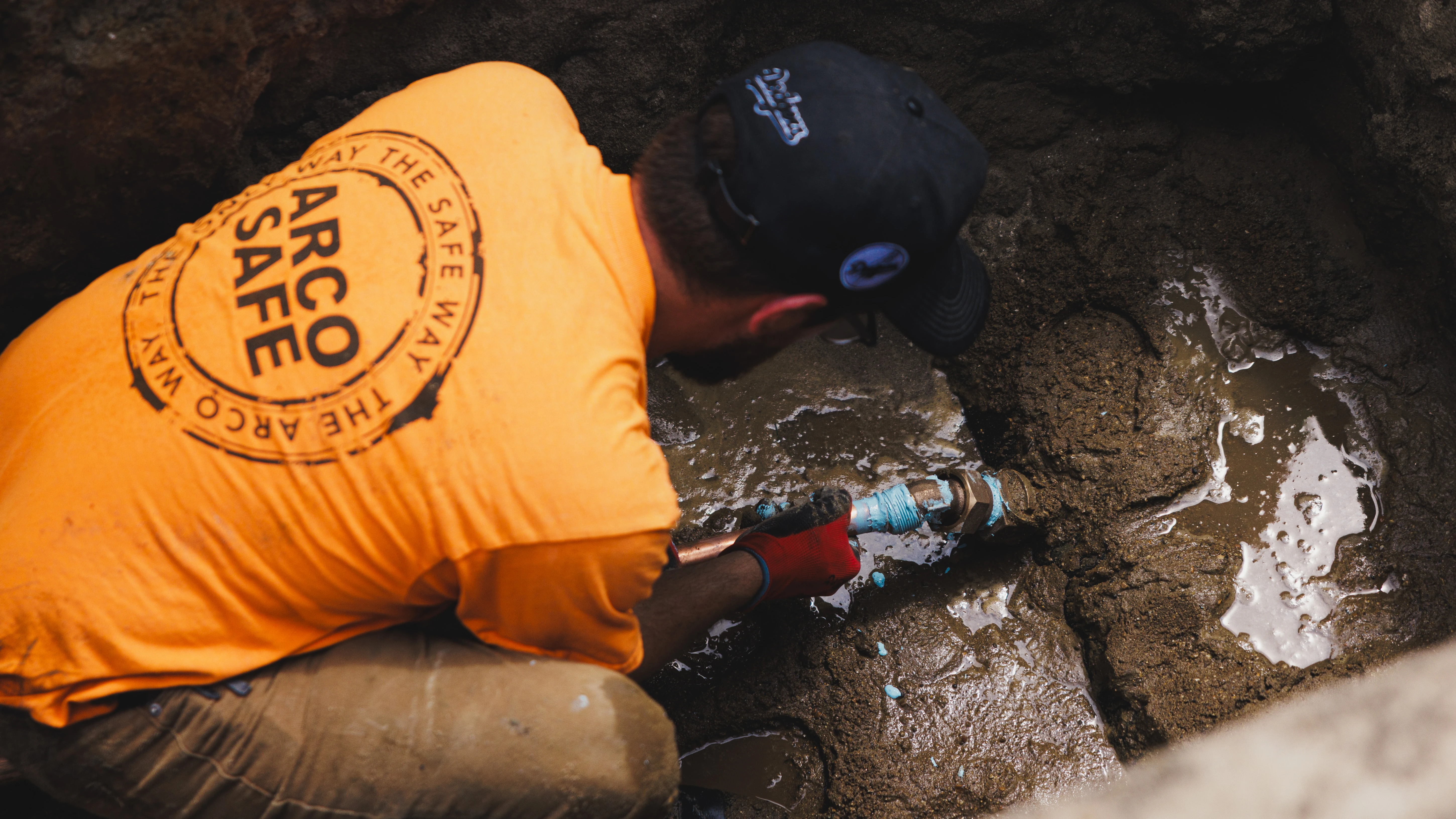
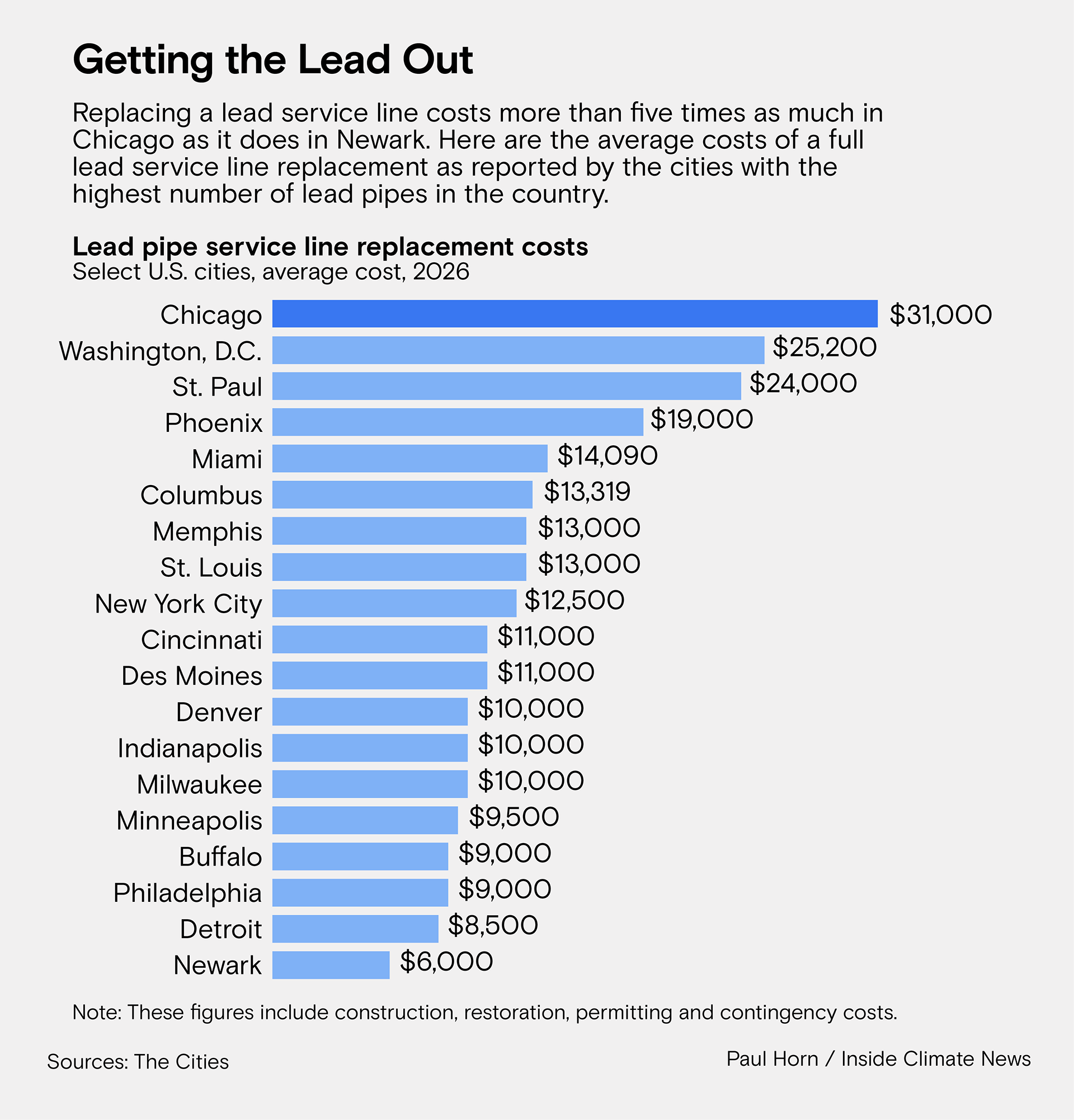
With more than 400,000 lead water service lines, Chicago has the largest known inventory of lead pipes of any city in the country. Officials say replacing each one costs about $31,000 on average — more than six times the Environmental Protection Agency’s national estimate of $4,700 a line.
WBEZ, Grist and Inside Climate News surveyed other cities with the most lead service lines in the country, including Detroit, Milwaukee and New York, about the cost of fully replacing a lead service line. The 18 that responded provided averages between $6,000 and $25,000, with most spending less than half what Chicago does. Engineering firm CDM Smith, which works with cities across the country, pegs the national average at $12,500 per line.
Now, with a federal mandate to remove every lead pipe within roughly 20 years, Chicago is facing a daunting timeline and an astronomical price tag. Replacing the city’s inventory at the current rate will cost more than $12 billion.
“It is absurd,” said Cyndi Roper, a senior policy advocate with the Natural Resources Defense Council’s safe water initiative. “You can’t play victim to your own policies. … You actually can make changes to bring the cost down.”
A review over seven months of hundreds of pages of program documents and contracts, plus dozens of interviews with city officials, policy experts, contractors and homeowners, found several key contributors. The most significant include inefficient early contracts, cumbersome permitting requirements, and the city’s reliance on one-off replacements rather than undertaking whole blocks at once.
A glaring lack of clarity from the Department of Water Management, which oversees the city’s replacement program, has also made it difficult to pinpoint the exact reasons for the high cost. Its officials were unable to provide WBEZ, Grist and Inside Climate News with consistent figures for replacement costs and the number of lines replaced or to make clear whether the water department is tracking these costs systematically.
“It seems like the story here is how hard you have to work to get information that’s needed in order to figure out why the costs are so high,” Roper added.
A spokesperson for Mayor Brandon Johnson said in an emailed statement that he is committed to accelerating replacements and minimizing the burden to residents but did not respond to specific questions about the city’s unusually high costs.
“The Johnson administration is working across departments in coordination with local, state, and federal partners to accelerate replacements, streamline processes, and maximize every available dollar so more residents can access safe, reliable drinking water,” the statement said.
Officials with the water department said they see some room to bring expenses down as work ramps up. But they’ve also disagreed with outside experts who say Chicago’s high costs are unreasonable, and they don’t appear to be treating the drastic cost differential with other cities as a high priority to address.
“There’s a lot of people that claim they know lead service line replacement,” said a senior official with the water department who spoke with WBEZ, Grist and Inside Climate News on the condition of not being named. “They don’t know what they’re talking about.”
Illinois U.S. Sen. Tammy Duckworth, who has been working to secure federal funding for lead service line replacements across the state, said she wasn’t aware of the cost discrepancy but hoped the city would be transparent with the public about why costs are so high.
“Cities just need to get their act together and get this done, and we’ve been slow to do this in Chicago,” Duckworth said. “Other cities have moved much faster than us.”
Replacing pipes on an entire block
Chicago replaces lead service lines through several programs, including emergency repairs, capital improvement projects and equity initiatives targeting low-income neighborhoods and daycares.
The city also replaces entire blocks of lead pipes at once. But that program accounted for just 3 percent of the approximately 15,000 lines swapped out between 2021 and the end of 2025, according to an analysis of city replacement data by WBEZ, Grist and Inside Climate News. Instead, nearly all of those lines were fixed piecemeal, mostly when crews were sent out to fix leaks and breaks.
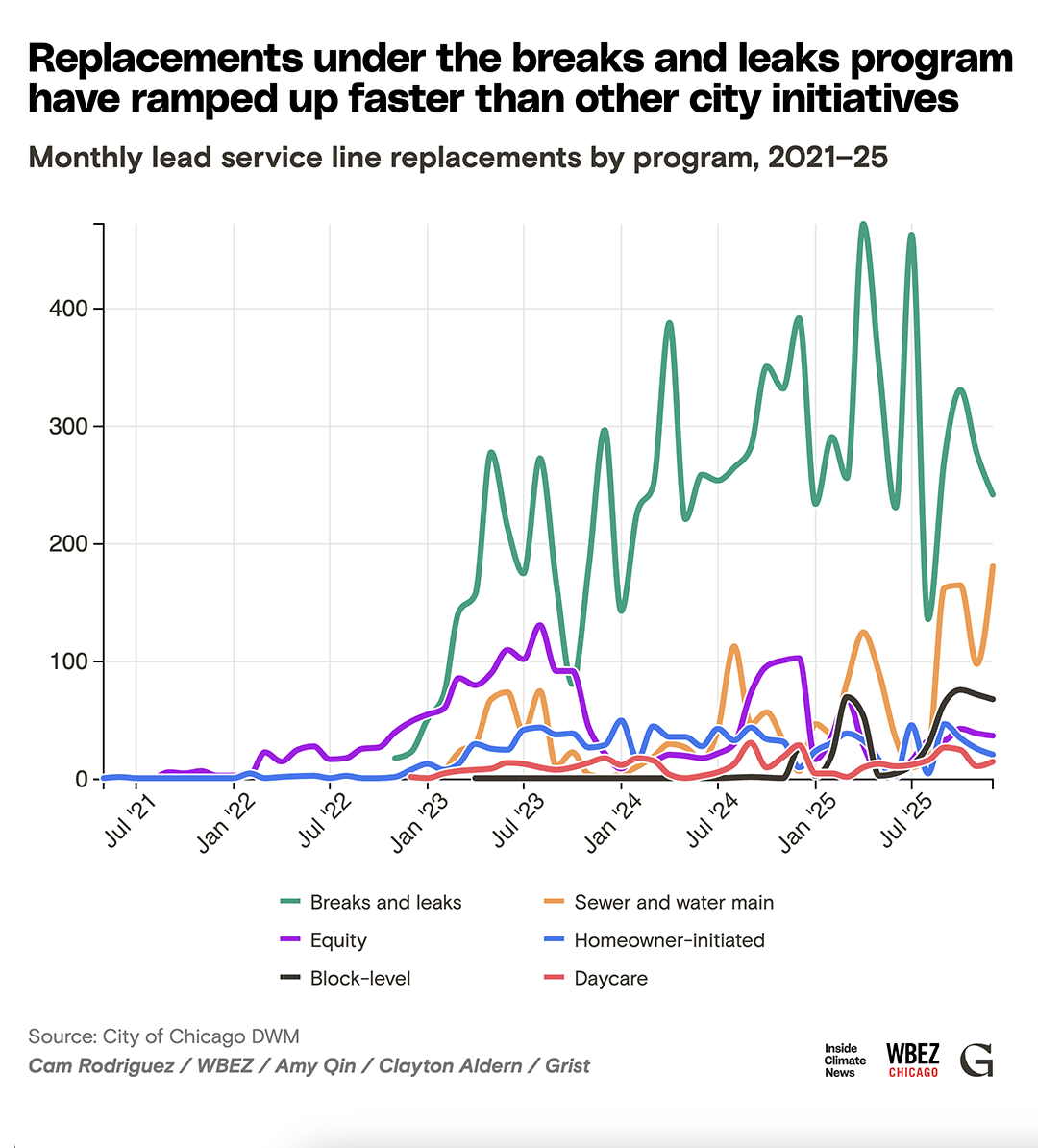
Both city officials and experts agree that replacing lead pipes a full block at a time is cheaper. In Milwaukee, per-line costs dropped by nearly $2,000 since implementing a block level program. Chicago officials say they want to ramp up blockwide replacements, but there have been legal and logistical barriers to expanding that program.
In Illinois, property owners control half the service line, and the municipality is responsible for the other. State law forbids partial line replacement because the process can flush more lead into drinking water, and municipalities willing to replace private lines must first get the property owners’ permission. That’s harder and more time-consuming than it may seem, a key reason for the city’s low number of block replacements, according to officials.
Earlier this year, state lawmakers introduced a new bill at the water department’s request to fix that, granting city plumbers access to private lines without the owner’s permission. It passed in May and now awaits Gov. JB Pritzker’s signature.
“We need to accelerate, as much as humanly possible, this process,” said state Sen. Ram Villivalam of Chicago, a co-sponsor of the bill.
Still, it’s not clear how much block-level replacements will actually decrease Chicago’s costs. Water department officials pegged the average per-line cost for block-level work, which they have said is their cheapest program, at approximately $34,000, and the average for one-off replacements at $39,000. Both figures are well above the $31,000 overall average that department officials have cited.
Asked to explain how that could be, the water department did not respond. In her last email to the news organizations in May, water department spokesperson Megan Vidis said she would not answer any more questions on the topic.
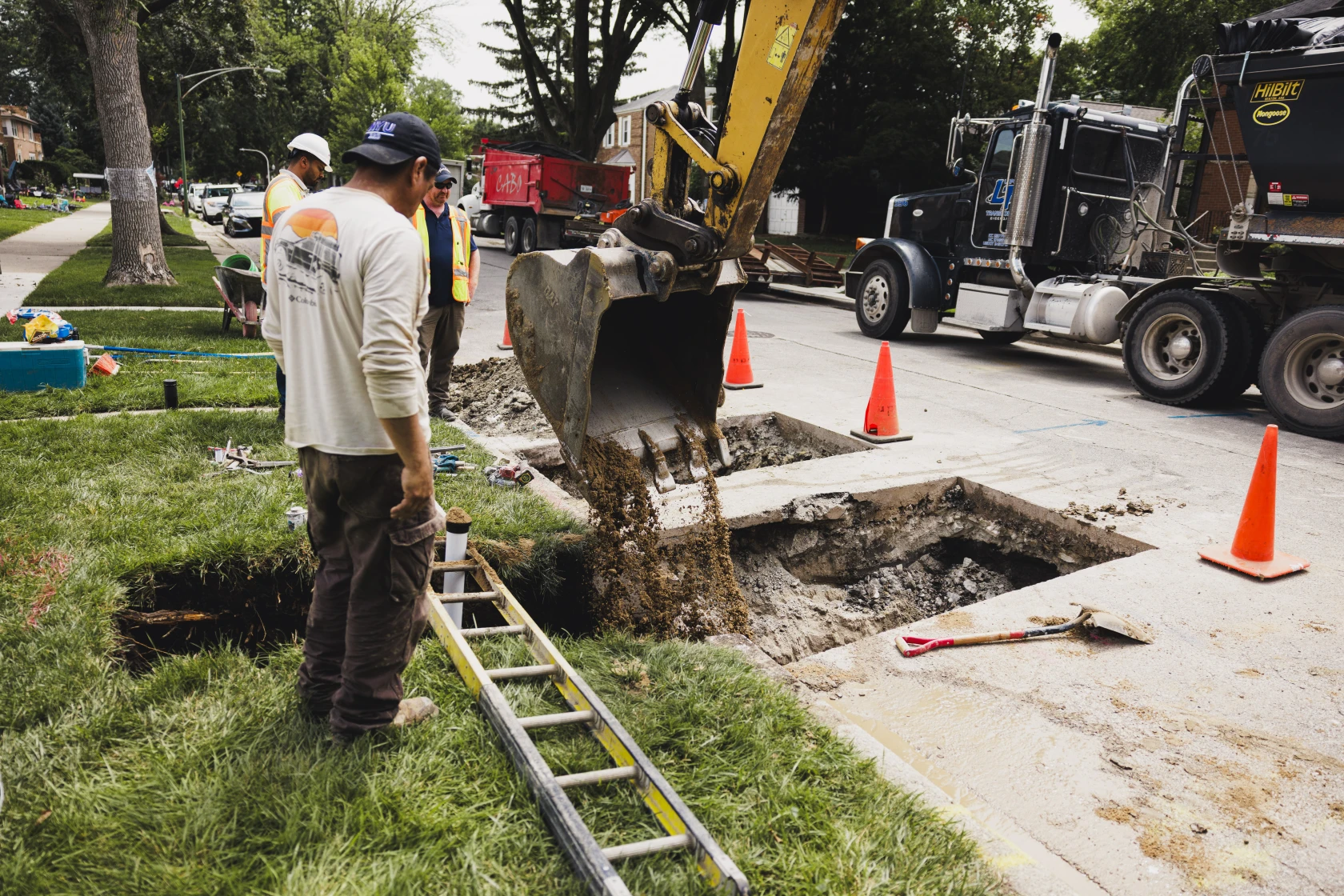
Any lead pipe a property owner replaces on their own is one the city doesn’t have to pay for. But some homeowners are finding that far harder than they imagined, in part because of the city’s prohibitively expensive and complex permitting process.
Craig Hines and his wife, homeowners in Chicago’s Avondale neighborhood, discovered they had a lead service line last summer when they received a letter from the city. They were immediately alarmed: They cook regularly for young nieces and nephews, and Hines knows there’s no safe level of lead exposure.
They called 14 plumbers looking for a quote. Some refused to take them on or seemed to be trying to dissuade them from doing the work altogether, saying the job would be too expensive. One preliminary quote totaled $25,000. The couple were told permits alone could cost between $5,000 and $7,000.
“These fees seem so exorbitant when it’s like, this was a city screw-up,” Hines said, referring to Chicago’s history of installing lead lines long after the health consequences came to light. “I just cannot believe that the permitting fees are so high to help fix a problem that the city created.”
Replacing a single line can require permits from the water and transportation departments, as well as inspection-related charges, according to the city’s Department of Buildings. The fees vary based on the type of street and size of pipe.
The water department said it waives all its permit fees when the city pays for replacements. But it’s not so simple when property owners want to shoulder the cost. Some qualify for a city program waiving up to $5,000 in fees; others don’t. Water department officials could not provide an average cost for permits, saying it varies by project site.
After more than six months of research — including contacting their alderman, district commissioner and multiple city departments to track down answers about costs — Hines and his wife finally settled on a plumber who knew how to navigate the city’s permit waivers. He quoted them $22,000 for the job, which he said will include permits. They hope their replacement will take place in July.

Several miles south, Ryan Wilson and his wife, Alaina Harkness, said they didn’t qualify for the fee waiver. They paid nearly $25,000 to replace the lead line at their Hyde Park home last year, but because they also upsized their service line while replacing it, they weren’t eligible for the waiver.
Wilson has worked in urban planning for decades, and even so, he said he found navigating the city’s permitting requirements extremely confusing. They never were able to figure out how much of their final bill was allotted to permits. If Chicago wants to improve citywide replacement efforts, Wilson said, improving the permitting process should be high on the list.
“There’s not a single person to talk to about this,” he said.
Inefficient contracts and funding woes
Water department officials pointed to two key reasons for the high costs. First, they said that the city lacked a firm grasp of costs when launching its replacement program in 2021 and also that its first round of contracts was inefficient. The early contracts also bundled jobs poorly, tasking contractors with work outside their specialization, like having plumbers work on restoration or outreach.
“Early on, the issue was … a lot of unknowns in our contracts,” the water department’s deputy commissioner, Michael Grillo, said in a webinar last fall. “We are trying to be smarter with our contracts that go out, be more specific, eliminate those unknowns.”
Plumbing companies overbid to cover worst-case scenarios in those early contracts, Grillo said. The water department’s Vidis confirmed via email that the city has implemented four new contracts this year focused on improving equitable access for small businesses to replace lead service lines but said the goal of those contracts was not to reduce per-line prices.

Grillo also blamed labor costs for part of the city’s high price tag, but that explanation doesn’t appear to pan out.
The base prevailing wage for a union plumber in the Chicago area is $99.52 per hour. By contrast, it’s about $97 in Minneapolis and roughly $121 in New York City, both of which replace their lead pipes for less than half of Chicago’s costs.
“I have a hard time believing that the prevailing wage would be the cost factor,” said Betony Jones, a senior researcher at the University of California, Berkeley, and former director of energy jobs under the Biden administration.
The city says a lack of robust, flexible funding is compounding the problem. Chicago has to cobble together funding from a patchwork of local and federal sources in the form of grants and low-interest loans, which brings red tape and restrictions.
The Biden-era Infrastructure Investment and Jobs Act delivered a historic $15 billion for lead pipe removal, with Illinois getting about $1.2 billion, according to Duckworth’s office. This month, Duckworth’s office announced a separate $22 million federal grant earmarked for Chicago’s majority-Black Austin neighborhood — where 92 percent of service lines require replacement, according to last year’s lead service line inventory. At Chicago’s price point, the state estimates that $22 million will only replace about 650 lines out of the nearly 17,000 reported in city data for Austin last year.
“Chicago needs to explain where the money is going and justify the cost,” wrote Elin Betanzo, a national drinking water expert who helped uncover the water crisis caused by lead pipes in Flint, Michigan, in an email.
Betanzo, who has done extensive research on cost-saving tactics, said she has not seen a realistic cost breakdown that demonstrates why Chicago is paying as much as it is.
“They need to figure out how to complete the most cost-efficient lead service line replacements in the country, not the most expensive,” she added.
With funding from the Infrastructure Investment and Jobs Act set to run out this year, public health experts have been calling for more local, federal and state dollars to fund replacements, especially in overburdened cities like Chicago.
“It’s a critical part of the infrastructure,” Betanzo said. “It’s that final piece of public health protection.”
Amy Qin and Cam Rodriguez contributed data analysis for this story.
The post Why Is It So Expensive to Replace Lead Pipes in Chicago? appeared first on Great Lakes Now.
Great Lakes Now
https://www.greatlakesnow.org/2026/06/30/why-is-it-so-expensive-to-replace-lead-pipes-in-chicago/