Takeout trash piling up at universities
Great Lakes Echo
https://greatlakesecho.org/2026/06/22/takeout-trash-piling-up-at-universities/
Great Lakes Echo
https://greatlakesecho.org/2026/06/22/takeout-trash-piling-up-at-universities/
Great Lakes Echo
https://greatlakesecho.org/2026/06/13/in-school-cafeterias-kids-fight-michigans-food-waste-problems/
Great Lakes Echo
https://greatlakesecho.org/2026/06/11/steel-pollution-still-plagues-northwest-indiana/
About 20 UW–Madison students got a unique – and very squishy – hands-on lesson in sustainability this spring when they learned to make leather from fish skin in a class called “Building a Sustainable Creative Practice.” Follow them throughout the process in “Bringing Fish Leather to UW-Madison,” a new video produced by Wisconsin Sea Grant’s Bonnie Willison.
After fish are caught or harvested, the skins are often discarded. But in class, students explored how the material can be repurposed into fashion and design pieces while reducing waste and avoiding plastic-based materials. Using skins donated by northern Wisconsin commercial fishers, students learned the surprisingly simple process of making fish leather. Along the way, Wisconsin Sea Grant outreach specialists Sharon Moen and Titus Seilheimer also introduced students to Wisconsin’s commercial fishing industry and topics related to Great Lakes sustainability.
Moen and Seilheimer first learned fish leather tanning at a 2025 workshop and have since been teaching others across Wisconsin. Ginny Carlton, Sea Grant’s education outreach specialist, helped forge a partnership with UW-Madison’s Design Studies department to bring fish leather tanning to UW-Madison. Students were encouraged by instructors Mary Hark and Anika Kozlowski to experiment creatively with the material, with project ideas ranging from fitted tops, to book covers, to bracelets. “I’m excited about the future, seeing the enthusiasm these students had,” said Moen.
This project was made possible by the Brittingham Wisconsin Trust.
The post New video: From fish waste to fashion first appeared on Wisconsin Sea Grant.News Releases | Wisconsin Sea Grant
News Releases | Wisconsin Sea Grant
https://www.seagrant.wisc.edu/news/fishleather/
Great Lakes Echo
https://greatlakesecho.org/2026/05/17/great-lakes-show-signs-of-declining-pfas-pollution/
No matter the season, organizations across the Great Lakes region are fighting to keep waterways garbage-free.
The post Trash on ice sparks movement to keep waterways clean first appeared on Great Lakes Echo.Great Lakes Echo
https://greatlakesecho.org/2026/03/18/trash-on-ice-sparks-movement-to-keep-waterways-clean/
By Christian Vazquesz
A Michigan state senator is pushing for a statewide vote to expand the 10-cent bottle and can deposit law, while the Midwest Independent Retailers Association is calling for repeal of the law. Meanwhile, the state House approved a bill sponsored by a Clinton Township representative to give an income tax write-off to beverage distributors that move recycled cans and bottles from stores to recycling plants.
The post Bill would expand Michigan’s bottle deposit law while some want to abolish it first appeared on Great Lakes Echo.Great Lakes Echo
https://greatlakesecho.org/2026/03/13/bill-would-expand-michigans-bottle-deposit-law-while-some-want-to-abolish-it/
By Justin Fox Clausen
Lawmakers are making another effort to adopt Michigan’s first statewide septic code with mandatory inspections, intended to protect drinking water from contamination. It’s the only state without one.
The post Michigan is last state without a septic system code. Will that change? first appeared on Great Lakes Echo.Great Lakes Echo
https://greatlakesecho.org/2026/02/10/michigan-is-last-state-without-a-septic-system-code-will-that-change/
By Clara Lincolnhol
Michigan is pouring $77 million into clean-up of contaminated abandoned real estate such as former factories. The director of the Department of Environment, Great Lakes and Energy says the goal is to make the cleaned-up sites safe for housing, commercial developments and other uses.
The post Michigan allocates $77 million to clean thousands of contaminated sites first appeared on Great Lakes Echo.Great Lakes Echo
https://greatlakesecho.org/2025/12/07/michigan-allocates-77-million-to-clean-thousands-of-contaminated-sites/
By Victoria Witke
Christina Petalas, a doctoral student McGill University, studies herring gulls to learn about plastic pollution near the St. Lawrence River. Across two studies, she found plastic additives in every bird sampled, which could have human health consequences.
The post What herring gulls tell us about plastic pollution first appeared on Great Lakes Echo.Great Lakes Echo
https://greatlakesecho.org/2025/11/28/what-herring-gulls-tell-us-about-plastic-pollution/
By Julia Belden
The Michigan Department of Environment, Great Lakes and Energy and governor are marking Michigan’s first Microplastics Awareness Week. Scientists are now finding microplastics in the human body but don’t know their long-term effects.
Great Lakes Echo
https://greatlakesecho.org/2025/10/18/michigan-launches-first-annual-microplastics-awareness-week/
By Eric Freedman
The Michigan Court of Appeals has cleared the city of South Haven of liability in the 2020 drowning of an 18-year-old swimmer at a public beach on the Lake Michigan coast.
The post Michigan court clears South Haven in beach drowning suit first appeared on Great Lakes Echo.Great Lakes Echo
https://greatlakesecho.org/2025/10/05/michigan-court-clears-south-haven-in-beach-drowning-suit/
By Rachel Lewis
Michigan environmental officials found 1,4-dioxane, a toxic chemical, in six residential water wells in Scio Township during annual state testing. The dioxane, coming from the Gelman Plume, ranged between 0.33 to 0.86 parts per billion (ppb), well under the state Department of Environment, Great Lakes and Energy’s (EGLE) drinking water limit of 7.2 ppb. Although the state says the water is safe, some advocates for a more aggressive plume cleanup say the new detection suggests the plume is moving north. They say it could be dangerous if it reaches Barton Pond, Ann Arbor’s main water source.
Great Lakes Echo
https://greatlakesecho.org/2025/08/16/toxic-chemical-from-gelman-plume-found-in-water-wells-in-scio-township-michigan/
By Elinor Epperson Capital News Service It’s been one year since Michigan Democrats introduced legislation that would significantly change the state’s environmental regulations. But those bills are stuck in committee. Election distractions, negotiation, and a slim Democratic majority in the state House have kept a suite of polluter-pay bills in limbo, according to environmental advocates […]
The post Industry opposition, partisan politics slow polluter-pay bills first appeared on Great Lakes Echo.Great Lakes Echo
http://greatlakesecho.org/2024/11/01/industry-opposition-partisan-politics-slow-polluter-pay-bills/
By Elinor Epperson Residents of Michigan’s Upper Peninsula have more options for recycling their old electronics. That’s because of Michigan’s Electronic Waste Take-Back Program. The state program has opened nine more permanent drop-off locations for electronic waste since 2021, more than doubling the number of facilities in the U.P. The program makes sure Michigan residents […]
The post State expanding e-waste recycling in the Upper Peninsula first appeared on Great Lakes Echo.Great Lakes Echo
http://greatlakesecho.org/2024/08/21/state-expanding-e-waste-recycling-in-the-upper-peninsula/
Microplastics threaten human health. Exposure to them, especially when consumed, involve an array of toxic effects, including reproductive problems, delays in immune responses and oxidative stress, according to a 2023 study published in Environment and Health Journal.
The post Great Lakes beachcombers find mostly plastic first appeared on Great Lakes Echo.Great Lakes Echo
http://greatlakesecho.org/2024/04/12/great-lakes-beachcombers-find-mostly-plastic/
Strolling Michigan State University’s campus after a weekend of football would leave your mouth agape a decade ago.
David Smith took that stroll when he started 11 years ago as the university’s new recycling coordinator. He was shocked by the aftermath of a Labor Day weekend game.
The post Deposit laws and voluntary initiatives prompt tailgaters to clean up their act first appeared on Great Lakes Echo.Great Lakes Echo
http://greatlakesecho.org/2023/11/06/deposit-laws-and-voluntary-initiatives-prompt-tailgaters-to-clean-up-their-act/
A recent U.S. Supreme Court ruling that struck down race-conscious college admissions has some environmental justice activists on edge.
They say the decision could make it harder to protect marginalized communities that are victims of disproportionate environmental harm.
The post Affirmative action ruling worries some environmental justice advocates. first appeared on Great Lakes Echo.Great Lakes Echo
http://greatlakesecho.org/2023/11/02/affirmative-action-ruling-worries-some-environmental-justice-advocates/
Some state legislatures nationally are searching for ways to impose accountability for waste onto their manufacturing operations. Some environmental groups and lawmakers say Michigan should follow their lead.
The post States look at ways to deter waste from manufactured products first appeared on Great Lakes Echo.Great Lakes Echo
http://greatlakesecho.org/2023/10/08/states-look-at-ways-to-deter-waste-from-manufactured-products/

Some residents in Vickery, including Ohio State Rep. Gary Click, were upset to learn that hazardous wastewater from a Feb. 3 Norfolk Southern derailment was being sent to their area for disposal. But the reality is that Vickery Environmental (VE), a Class 1 deep well injection site about five miles from Sandusky Bay, has been receiving and disposing liquid waste for nearly a half century.
Great Lakes Now
https://www.greatlakesnow.org/2023/04/deep-dive-disposing-waste-east-palestine-derailment/
The California based company refines biogases produced by landfills, food waste or manure from Wisconsin farms into fuel.
The post University of Wisconsin partnership converts manure to jet fuel while easing climate change first appeared on Great Lakes Echo.Great Lakes Echo
http://greatlakesecho.org/2023/01/06/university-of-wisconsin-partnership-converts-manure-to-jet-fuel-while-easing-climate-change/
A new report by RentCafe documents the nationwide trend. So-called adaptive reuse apartments are more popular than new apartment developments from 2020-2021, the study says.
The post Cities of tomorrow are surprisingly old first appeared on Great Lakes Echo.Great Lakes Echo
http://greatlakesecho.org/2023/01/04/cities-of-tomorrow-are-surprisingly-old/
Measurements from a 2021 study show that Lake Michigan’s salt content has risen up to fifteen times its natural level since the 1800s, but the effects of these high levels are only now being understood.
The post Volunteers find high road salt levels in Michigan waterways first appeared on Great Lakes Echo.Great Lakes Echo
http://greatlakesecho.org/2022/12/28/volunteers-find-high-road-salt-levels-in-michigan-waterways/
The BeBots and Pixedrones will be deployed to Olander Park near Toledo, and then Hinckley Reservation, North Coast Harbor, Fairport Harbor Beach of the Cleveland area.
The post Beach cleaning robots are coming to Lake Erie first appeared on Great Lakes Echo.Great Lakes Echo
http://greatlakesecho.org/2022/12/26/beach-cleaning-robots-are-coming-to-lake-erie/
Over half of the Michiganders surveyed in the study were extremely concerned about an oil spill at the straits. Most preferred that the almost 70-year-old pipeline be shut down.
The post If a Great Lakes oil spill happened in the wintry months, ice can contain it. But Michiganders still worry. first appeared on Great Lakes Echo.Great Lakes Echo
http://greatlakesecho.org/2022/12/22/if-a-great-lakes-oil-spill-happened-in-the-wintry-months-ice-can-contain-it-but-michiganders-still-worry/
Universities across the globe are monitoring wastewater on their campuses for viruses like COVID-19. It is a practice that has raised some medical privacy concerns, although researchers say there is no way to link the detection of the virus in wastewater with an individual who is sick.
The post Don’t hide your poo — and here’s why first appeared on Great Lakes Echo.Great Lakes Echo
http://greatlakesecho.org/2022/11/30/dont-hide-your-poo-and-heres-why/
The average London, Ontario, household wastes 2.81 kg (6 pounds) of food each week, and approximately half the food waste is avoidable. Local communities and nonprofits are looking for solutions to the problem.
The post London groups fight to reduce food waste first appeared on Great Lakes Echo.Great Lakes Echo
http://greatlakesecho.org/2022/11/14/london-groups-fight-to-reduce-food-waste/
Fashion and the environment are linked in more ways than consumers may expect. Fashion designers are taking steps to reduce the clothing industry's impact on the environment.
The post A road to sustainable fashion: up-cycling t-shirts first appeared on Great Lakes Echo.Great Lakes Echo
http://greatlakesecho.org/2022/10/11/a-road-to-sustainable-fashion-up-cycling-t-shirts/
A federal judge has placed the ex-president of a Fort Wayne environmental services company – described in her lawyer’s sentencing memorandum as “kind, generous, hard-working and honest” and a “huge source of inspiration” for her children and grandchildren” – on probation for two years for illegally storing hazardous wastes and falsifying a document.
The post Indiana environmental services exec sentenced for mishandling hazardous wastes first appeared on Great Lakes Echo.Great Lakes Echo
http://greatlakesecho.org/2022/08/04/indiana-environmental-services-exec-sentenced-for-mishandling-hazardous-wastes/

Climate change-fueled weather such as extreme storms will provide a direct threat to contaminated waste storage sites, nuclear power plants and industrial facilities at multiple sites on the shores of Lake Michigan, according to a new report.
The 63-mile corridor from Gary, Indiana, through Illinois to the Wisconsin border is particularly at risk.
Great Lakes Now
https://www.greatlakesnow.org/2022/06/extreme-weather-hazardous-waste-sites/
In our newest TikTok, Echo reporter Danielle James discusses how the pandemic's impact on supply chains could help the recycling industry bring in new business.
The post Supply chain slowdown could boost demand for recycled materials: TikTok edition first appeared on Great Lakes Echo.Great Lakes Echo
http://greatlakesecho.org/2022/06/15/supply-chain-slowdown-could-boost-demand-for-recycled-materials-tiktok-edition/
The same supply chain disruptions that slow Michigan manufacturing could help the recycling industry bring in new business.
The post Supply chain slowdown could boost demand for recycled materials first appeared on Great Lakes Echo.Great Lakes Echo
http://greatlakesecho.org/2022/05/18/supply-chain-slowdown-could-boost-demand-for-recycle-materials/
Michigan’s estimated overall recycling rate is 18%, which lags considerably behind the national average of 32%. Efforts to update recycling procedures, policies and practices are being made across the state.
The post Michigan’s recycling rate lags U.S. average first appeared on Great Lakes Echo.Great Lakes Echo
http://greatlakesecho.org/2022/04/05/michigans-recycling-rate-lags-u-s-average/
In the Great Lakes region there are community fridges in such major cities as Milwaukee, Madison, Chicago, Cleveland and Toronto. Community fridges are working fridges, usually connected to an organization, that provide free food to passersby. The concept is to take what you need and bring what you can.
The post Community fridges: Radical solutions to food insecurity, waste and cultural stigmas first appeared on Great Lakes Echo.Great Lakes Echo
http://greatlakesecho.org/2022/02/01/community-fridges-radical-solutions-to-food-insecurity-waste-and-cultural-stigmas/
State officials are publishing data from 19 Michigan sewage treatment plants and more than 400 wastewater collection systems to create an early warning system for COVID-19 outbreaks.
The post COVID-19 in sewage is new gauge on state dashboard first appeared on Great Lakes Echo.Great Lakes Echo
http://greatlakesecho.org/2022/01/17/covid-19-in-sewage-is-new-gauge-on-state-dashboard/
Recently, eco-friendly living has led to a surge of low-waste stores rapidly popping up across the region.
The post Packaging-free stores spread sustainable shopping first appeared on Great Lakes Echo.Great Lakes Echo
http://greatlakesecho.org/2021/12/23/packaging-free-stores-spread-sustainable-shopping/

By Michael Rubinkam, Associated Press
Nearly 50 toxic waste sites around the U.S. will be cleaned up, and ongoing work at dozens of others will get a funding boost, as federal environmental officials announced Friday a $1 billion infusion to the Superfund program.
The money comes from the $1 trillion infrastructure bill that President Joe Biden signed into law last month and will help officials tackle a backlog of highly polluted Superfund sites in 24 states that have languished for years because of a lack of funding, the Environmental Protection Agency said.
Great Lakes Now
https://www.greatlakesnow.org/2021/12/ap-epa-toxic-waste-sites/
Michigan has disposed of more than 50,000 gallons of potentially harmful firefighting foam since 2019. Firefighters and environmental advocates say that isn’t enough.
The post Firefighters, environmental advocates push for safer foam first appeared on Great Lakes Echo.Great Lakes Echo
http://greatlakesecho.org/2021/12/10/firefighters-environmental-advocates-push-for-safer-foam/
Some Michigan lawmakers and environmental advocates want to create a hotline to stop retailers from fraudulently cashing in on the state’s beverage container deposit law.
The post Proposed hotline aimed at bottle bill fraud first appeared on Great Lakes Echo.Great Lakes Echo
http://greatlakesecho.org/2021/12/06/proposed-hotline-aimed-at-bottle-bill-fraud/
Michigan is encouraging counties to consider giving their trash a new life, offering up to $12,000 in grants to those interested in treating it as a resource.
The post Michigan encourages counties to convert trash into treasure first appeared on Great Lakes Echo.Great Lakes Echo
http://greatlakesecho.org/2021/12/06/michigan-encourages-counties-to-convert-trash-into-treasure/
Trash and other types of marine debris are a significant concern in the Great Lakes region and internationally, and balloons are one piece of that puzzle.
The post High schooler inspires bill to ban balloon litter first appeared on Great Lakes Echo.Great Lakes Echo
http://greatlakesecho.org/2021/11/19/high-schooler-inspires-bill-to-ban-balloon-litter/
The Michigan Department of Environment, Great Lakes and Energy is expanding its testing capacity for monitoring a family of so-called “forever chemicals” called PFAS.
The post Michigan expanding PFAS testing capacity first appeared on Great Lakes Echo.Great Lakes Echo
http://greatlakesecho.org/2021/09/03/michigan-expanding-pfas-testing-capacity/
By Eric Freedman A federal judge has sentenced a Flint, Michigan, polluter to one year behind bars for illegally discharging more than 47 million gallons of untreated waste into the city’s sewer system. Robert Massey, the 70-year-old president and owner of family-owned Oil Chem Inc., pleaded guilty to violating the Clean Water Act over an […]
The post Michigan polluter ordered to jail for illegally discharging untreated waste first appeared on Great Lakes Echo.Great Lakes Echo
http://greatlakesecho.org/2021/05/28/michigan-polluter-ordered-to-jail-for-illegally-discharging-untreated-waste/
A type of algae that a recent study found collects microfibers brings up questions about microplastic pollution impacts and how it could affect human health.
The post Algae may vacuum microplastics, but also indicates greater health threat first appeared on Great Lakes Echo.Great Lakes Echo
http://greatlakesecho.org/2021/05/05/algae-may-vacuum-microplastics-but-also-indicates-greater-health-threat/
There is an emerging new worker that could make a career out of sorting recyclables: robots.
The post Pandemic, China trash-ban push recyclers to robots first appeared on Great Lakes Echo.Great Lakes Echo
http://greatlakesecho.org/2021/03/22/pandemic-china-trash-ban-push-recyclers-to-robots/
Michigan’s cherry industry may have a way to make money from, of all things, the pits.
The post New uses for cherry pits makes landfilling a “waste of a waste” first appeared on Great Lakes Echo.Great Lakes Echo
http://greatlakesecho.org/2021/01/27/new-uses-for-cherry-pits-makes-landfilling-a-waste-of-a-waste/
Microplastic particles, typically studied as aquatic pollutants, are also common in coastal dunes on Great Lakes’ shorelines, according to a new study.
The post From lakes to shores, microplastics are spreading everywhere first appeared on Great Lakes Echo.
Great Lakes Echo
http://greatlakesecho.org/2020/12/17/from-lakes-to-shores-microplastics-are-spreading-everywhere/
Great Lakes Echo
http://greatlakesecho.org/2020/11/10/project-begins-testing-sewage-for-covid-19-across-michigan/
While I’ve seen numerous articles stating that the COVID-related stay-at-home orders in many states prompted a flurry of spring decluttering—followed by trips to thrift stores to unload the excess goods—my own streamlining process began before the pandemic hit.

“Secondhand: Travels in the New Global Garage Sale” by Adam Minter (Bloomsbury Publishing, 2019)
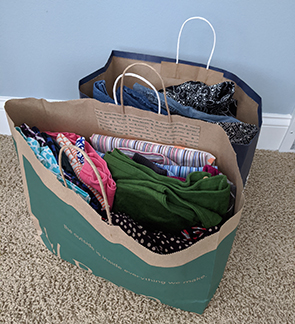
A couple of years had passed since I last did a serious purge. So, over the winter, I began neatly folding and bagging ill-fitting and unwanted clothes, pondering where to donate them once my reorganization was complete.
Then, in mid-March, life shifted rapidly. By March 16, we Sea Grant staffers were working from home. Work attire and comfy at-home attire became one and the same. Nationwide consumer spending on clothing took a hit (down by a whopping 78% for the month of April). Not only were people not going places, but their consumer confidence had tumbled.
It was in this environment—my own personal tidying project and this larger global picture—that I read Adam Minter’s book “Secondhand: Travels in the New Global Garage Sale” (Bloomsbury Publishing, 2019) in April.
Minter is a Great Lakes native, a Minnesota-raised journalist who specializes in recycling and the global trade in used goods. He grew up around his family’s scrap business in the Twin Cities. His book takes the reader to places as varied as Japan, Ghana and the more prosaic settings of the Minneapolis suburbs. One chapter focuses on an antique mall in Stillwater, Minnesota, just across the St. Croix River from Wisconsin.
Minter looks at where the things we no longer need—clothes, furniture, electronics and more—wind up, especially if they don’t sell at places like Goodwill. What are the next stops on their journey? Where do they eventually land? And how can durable, repairable, high-quality used goods play a vital role in the global economy? The author offers a detailed look at a world that goes unseen by many.
Personally, I have always been interested in the life of things. I wondered how to integrate the issues we address here at Wisconsin Sea Grant and the Water Resources Institute, what I learned from Minter’s book, and my evolving thoughts on consumption brought about by the pandemic.
One possible thread is this: water is an integral part of our consumption decisions, whether we realize it or not.
I thought back to a lecture Sandra Postel gave in Madison in 2013. Postel, director of the Global Water Policy Project, is an internationally known speaker on water issues. I helped organize her talk on behalf of the Wisconsin Academy of Sciences, Arts and Letters, where I worked at the time.
One of most vivid examples in Postel’s talk has stuck with me over the years: it takes 700 gallons of water to make a single cotton T-shirt, mostly due to the large amount of water it takes to grow the cotton. How many of us have closets full of T-shirts, some of which are seldomly worn?

Just two of the bags of clothes awaiting their trip to a local thrift store. (Photo: Jennifer Smith)
While I’m far from being an exemplary eco-conscious consumer, it’s stories like these that sometimes give me pause and avoid buying something I don’t need—as well as knowing that, someday, I will just have to get rid of it.
As Postel said in her talk, “Our choices as consumers can make a difference, especially if we multiply those choices many times.” If the top billion of the world’s consumers bought just two fewer cotton T-shirts each year, she noted, it would save enough water to feed five million people. (Food production also makes up a major part of our water footprint.)
And, as Minter points out, while we’d like to think our no-longer-needed items will hold value for someone else and find a second use, perhaps even right in our own community, this is often not the case. While secondhand markets do seek high-quality goods, including repairable items like electronics, a flood of low-quality goods is not needed.
The world of “stuff” is a complex place, both economically and environmentally (and, as the pandemic has reinforced, in terms of worker safety as well). I’m thinking more carefully about my role in that life cycle of stuff.
While having the range of consumer choices that I do is a mark of privilege, it is also a chance for me to evaluate what I do and don’t need and how my choices affect other people and our planet. “Secondhand: Travels in the New Global Garage Sale” is a worthwhile and informative read for challenging times.
Blog – Wisconsin Sea Grant
https://www.seagrant.wisc.edu/blog/the-global-garage-sale/

By Oliver Morrison, PublicSource, through the Institute for Nonprofit News network
COVID-19 cost jobs, closed businesses and limited travel. But the economic ruin has also led to record low levels of pollution and huge reductions in climate change emissions globally.
Some of the changes, such as remote work, could have lasting benefits for the environment, even after the economy restarts.
Great Lakes Now
https://www.greatlakesnow.org/2020/05/coronavirus-covid-19-pennsylvania-climate-change-pollution-oil-waste/