Mapping the Great Lakes: Where to find your sugar maples

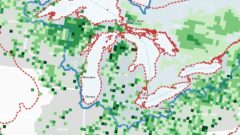
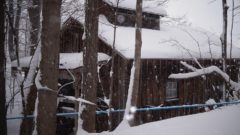
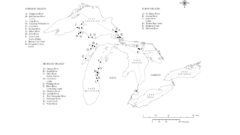
The Great Lakes region may be best known for its freshwater resources, but another resource it has in abundance is its maple syrup. Canada is the world’s leading producer of maple syrup, generating 75% of the global supply. Within Canada, the province of Quebec is the top producer (96.4%) of maple syrup products followed by Ontario.

Read Now at Great Lakes Now.

Original Article

Great Lakes Now

Great Lakes Now

https://www.greatlakesnow.org/2022/04/mapping-the-great-lakes-sugar-maples/

Alex Hill

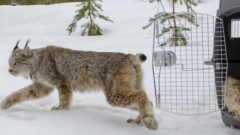
Canada lynx protections deal sealed by US, environmentalists

By Matthew Brown, Associated Press

BILLINGS, Mont. (AP) — U.S. wildlife officials have agreed to craft a new habitat plan for the snow-loving Canada lynx that could include more land in Colorado and other western states where the rare animals would be protected, according to a legal agreement made public Tuesday.

Read Now at Great Lakes Now.

Original Article

Great Lakes Now

Great Lakes Now

https://www.greatlakesnow.org/2022/04/ap-canada-lynx-protections-deal/

The Associated Press

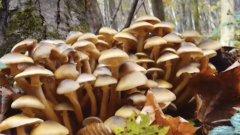
Lessons to learn from a very big mushroom

“Listen to your elders” is something we often hear, and what could be more of an elder than a 2,500-year-old fungus that’s alive and well in the Great Lakes region.

In 1992, scientist and forest pathologist Johann Bruhn discovered a very large mycelium – the root-like structure forming a fungal colony – in Crystal Falls, Michigan.

Read Now at Great Lakes Now.

Original Article

Great Lakes Now

Great Lakes Now

https://www.greatlakesnow.org/2022/04/life-lessons-big-mushroom/

Natasha Blakely

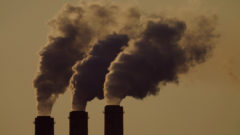
EXPLAINER: Can climate change be solved by pricing carbon?

BILLINGS, Mont. (AP) — As climate change bakes the planet, dozens of nations and many local governments are putting a price tag on greenhouse gas emissions that are increasing flooding, droughts and other costly catastrophes.

Pennsylvania on Saturday becomes the first major fossil fuel-producing state in the U.S.

Read Now at Great Lakes Now.

Original Article

Great Lakes Now

Great Lakes Now

https://www.greatlakesnow.org/2022/04/climate-change-pricing-carbon/

The Associated Press

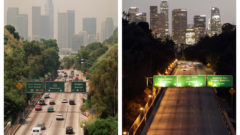
Cleaner Earth: Healing ozone hole, less smog, more eagles

By Seth Borenstein, AP Science Writer

With climate change, plastic pollution and a potential sixth mass extinction, humanity has made some incredible messes in the world.

But when people, political factions and nations have pulled together, they have also cleaned up some of those human-caused environmental problems, including healing the ozone hole, clearing perpetually smoggy air and saving many species from the brink of extinction.

Read Now at Great Lakes Now.

Original Article

Great Lakes Now

Great Lakes Now

https://www.greatlakesnow.org/2022/04/ap-healing-ozone-hole-smog-eagles/

The Associated Press

Energy shift creates opening for ‘world’s largest batteries’

By John Flesher, Associated Press

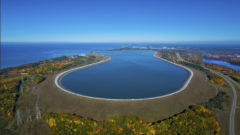
LUDINGTON, Mich. (AP) — Sprawled like a gigantic swimming pool atop a bluff overlooking Lake Michigan is an asphalt-and-clay pond holding enough water to produce electricity for 1.6 million households.

It’s part of the Ludington Pumped Storage Plant, which uses simple technology: Water is piped from a lower reservoir — the lake, in this case — to an upper one, then released downhill through supersized turbines.

Read Now at Great Lakes Now.

Original Article

Great Lakes Now

Great Lakes Now

https://www.greatlakesnow.org/2022/04/ap-worlds-largest-batteries/

The Associated Press

The Great Lakes sugaring season is changing

An area like the Great Lakes that has rain and higher temperatures in the summer, followed by a cold, snowy winter, is best suited for maple production.

But the Great Lakes maple season is evolving as climate change increasingly impacts maple syrup production with shorter harvest seasons, less sugar production and unreliable sap flow.

Read Now at Great Lakes Now.

Original Article

Great Lakes Now

Great Lakes Now

https://www.greatlakesnow.org/2022/04/great-lakes-sugaring-season/

Capri S. Cafaro

Report: Michigan increases recycling by 35.4% in 3 years

Michigan has reached a 19.3% recycling rate, an increase of 35.4% from prior to 2019, according to an analysis the state of Michigan released Monday ahead of Earth Day on Friday.

Before 2019, the state estimated Michigan’s recycling rate, the rate at which recyclable materials are recycled from waste, was 14.25%.

Read Now at Great Lakes Now.

Original Article

Great Lakes Now

Great Lakes Now

https://www.greatlakesnow.org/2022/04/ap-michigan-increases-recycling/

The Associated Press

To build a new pipeline or not: Illinois city seeks Lake Michigan water

In less than a decade, Joliet, Illinois, could run out of water.

The city of 150,000 people, roughly 45 minutes southwest of Chicago, is facing a looming water crisis as the patchwork of underground wells and aquifers it currently uses for municipal water is drying up.

Joliet currently relies on the Cambrian-Ordovician sandstone aquifer system for its water.

Read Now at Great Lakes Now.

Original Article

Great Lakes Now

Great Lakes Now

https://www.greatlakesnow.org/2022/04/build-new-pipeline-illinois-lake-michigan-water/

John McCracken

I Speak for the Fish: How the round goby changed the Great Lakes, twice

Some dives are so pivotal that they permanently fuse themselves into my memory bank.

I’ll never forget my first open water dive in the St. Clair River under my family’s dock, or the first time I looked for a drowning victim as a member of the St. Clair County Sherriff Department Dive Rescue and Recovery team.

Read Now at Great Lakes Now.

Original Article

Great Lakes Now

Great Lakes Now

https://www.greatlakesnow.org/2022/04/round-goby-great-lakes/

Kathy Johnson

Researchers find wetland plant can filter PFAS chemicals

By Enrique Saenz, Indiana Environmental Reporter

Researchers have found that a common wetland plant native to Australia can remove toxic “forever chemicals” from the surrounding environment.

In a 190-day greenhouse experiment, a team of Chinese and Australian researchers found that Juncus sarophorus, a wetland plant also known as the broom rush, could tolerate and accumulate PFOS, PFOA and PFHxS, three of the most commonly studied PFAS chemicals.

Read Now at Great Lakes Now.

Original Article

Great Lakes Now

Great Lakes Now

https://www.greatlakesnow.org/2022/04/researchers-wetland-plant-pfas-chemicals/

Indiana Environmental Reporter

The Catch: Interlochen Public Radio podcast finds ‘[Un]Natural Selection’ in nature

Broadcasting in our monthly PBS television program, The Catch is a Great Lakes Now series that brings you more news about the lakes you love. Go beyond the headlines with reporters from around the region who cover the lakes and drinking water issues. Find all the work HERE.

Turns out what used to be natural selection is becoming a bit unnatural.

Read Now at Great Lakes Now.

Original Article

Great Lakes Now

Great Lakes Now

https://www.greatlakesnow.org/2022/04/the-catch-unnatural-selection/

GLN Editor

Research finds more PFAS coming out of wastewater treatment plants than going in

By Tracy Samilton, Michigan Radio

The Great Lakes News Collaborative includes Bridge Michigan; Circle of Blue; Great Lakes Now at Detroit Public Television; and Michigan Radio, Michigan’s NPR News Leader; who work together to bring audiences news and information about the impact of climate change, pollution, and aging infrastructure on the Great Lakes and drinking water.

Read Now at Great Lakes Now.

Original Article

Great Lakes Now

Great Lakes Now

https://www.greatlakesnow.org/2022/04/research-pfas-wastewater-treatment-plants/

Michigan Radio

The Catch: A dune moves inland

Broadcasting in our monthly PBS television program, The Catch is a Great Lakes Now series that brings you more news about the lakes you love. Go beyond the headlines with reporters from around the region who cover the lakes and drinking water issues. Find all the work HERE.

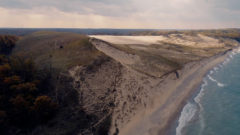
Mount Baldy is moving inland.

Read Now at Great Lakes Now.

Original Article

Great Lakes Now

Great Lakes Now

https://www.greatlakesnow.org/2022/04/the-catch-dune-moves-inland/

GLN Editor

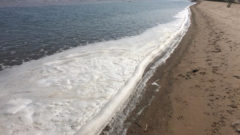
Global warming may impact Great Lakes beaches

This article was republished here with permission from Great Lakes Echo.

By Yue Jiang, Great Lakes Echo

Global warming will produce more frequent high rainfall events in the Upper Great Lakes, according to a University of Guelph expert.

Rather than average water levels falling as previously assumed, it’s possible that the average will increase because of more precipitation, which will constrict the beach area, said emeritus professor Robin Davidson-Arnott of the Department of Geography, Environment & Geomatics.

Read Now at Great Lakes Now.

Original Article

Great Lakes Now

Great Lakes Now

https://www.greatlakesnow.org/2022/04/global-warming-impact-great-lakes-beaches/

Great Lakes Echo

PFAS is a widespread problem. The solution needs to come from widespread sources

PFAS research is still in the early stages, which means issues with PFAS crop up all the time to surprise researchers like Michigan State University professor Cheryl Murphy.

PFAS, per- and polyfluoroalkyl substances, are known as Forever Chemicals because of their reluctance to break down in humans. They can be in the food chain, drinking water and are found in common items in everyday commercial use like water-repellent clothing, dental floss and non-stick cookware.

Read Now at Great Lakes Now.

Original Article

Great Lakes Now

Great Lakes Now

https://www.greatlakesnow.org/2022/04/pfas-solution-widespread-sources/

Gary Wilson

Great Lakes Moment: Historic Great Lakes agreement reaches golden anniversary

Great Lakes Moment is a monthly column written by Great Lakes Now Contributor John Hartig. Publishing the author’s views and assertions does not represent endorsement by Great Lakes Now or Detroit Public Television.

The Great Lakes represent one-fifth the standing freshwater on the Earth’s surface, provide ecosystem services or benefits to approximately 34 million people living in the basin, and serve as the foundation for the $5 trillion regional economy that would be one of the largest in the world if it stood alone as a country.

Read Now at Great Lakes Now.

Original Article

Great Lakes Now

Great Lakes Now

https://www.greatlakesnow.org/2022/04/great-lakes-moment-historic-great-lakes-agreement-anniversary/

John Hartig

Meet the person making Great Lakes ice popular on TikTok

Geo Rutherford is an artist and an educator based in Milwaukee, Wisconsin. But what a lot of people might recognize her from the most is the social media application TikTok, where Rutherford runs an account making pretty popular videos all about the Great Lakes.

Though originally from Colorado, Rutherford went to school at the University of Wisconsin-Milwaukee and stuck around in Milwaukee after graduation.

Read Now at Great Lakes Now.

Original Article

Great Lakes Now

Great Lakes Now

https://www.greatlakesnow.org/2022/04/great-lakes-ice-popular-tiktok/

Natasha Blakely

Meet the person making Great Lakes ice popular on TikTok

Geo Rutherford is an artist and an educator based in Milwaukee, Wisconsin. But what a lot of people might recognize her from the most is the social media application TikTok, where Rutherford runs an account making pretty popular videos all about the Great Lakes.

Though originally from Colorado, Rutherford went to school at the University of Wisconsin-Milwaukee and stuck around in Milwaukee after graduation.

Read Now at Great Lakes Now.

Original Article

Great Lakes Now

Great Lakes Now

https://www.greatlakesnow.org/2022/04/great-lakes-ice-popular-tiktok/

Natasha Blakely

The pandemic that closed the U.S./Canadian border to people may have opened it to the invasive sea lamprey

This article was republished here with permission from Great Lakes Echo.

By Danielle James, Great Lakes Echo

Great Lakes invasive species cling to shipments and navigate canals to migrate, but one aquatic invader – sea lamprey – benefitted from border closures instead.

Read Now at Great Lakes Now.

Original Article

Great Lakes Now

Great Lakes Now

https://www.greatlakesnow.org/2022/03/border-opened-invasive-sea-lamprey/

Great Lakes Echo

Chicago educator empowers students to make climate connections in their own communities

By Audrey Henderson, Energy News Network

This story was first published on the Energy News Network and was republished here with permission.

For many city kids, flowers have cut stems and vegetables are packed in styrofoam and plastic on shelves in the grocery store.

Read Now at Great Lakes Now.

Original Article

Great Lakes Now

Great Lakes Now

https://www.greatlakesnow.org/2022/03/chicago-educator-empowers-students-climate-connections-communities/

Energy News Network

5 Reasons to Love (and Protect) Freshwater Mussels

By Tara Lohan, The Revelator

This story originally appeared in The Revelator and is republished here as part of Covering Climate Now, a global journalism collaboration strengthening coverage of the climate story.

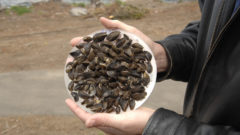
In September the U.S. Fish and Wildlife Service proposed removing 23 species from the federal list of endangered species — not because they’d rebounded, sadly, but because they are believed to be extinct.

Read Now at Great Lakes Now.

Original Article

Great Lakes Now

Great Lakes Now

https://www.greatlakesnow.org/2022/03/reasons-to-love-freshwater-mussels/

The Revelator

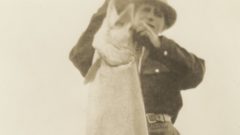
Who caught the world’s largest muskie? Even the experts don’t agree

The largest known muskie is 67 pounds 8 ounces. Or it’s 69 pounds 11 ounces. Or it’s 70 pounds 10 ounces. Depending on the type of record, whom you ask or what organization you trust, it ­­could be any of those answers.

After Great Lakes Now published a column on muskies that referenced record sizes, it kicked off a dispute among readers on what record was the most accurate, so Great Lakes Now decided to do a deeper dive.

Read Now at Great Lakes Now.

Original Article

Great Lakes Now

Great Lakes Now

https://www.greatlakesnow.org/2022/03/who-caught-worlds-largest-muskie/

Kathy Johnson

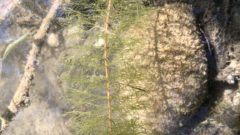
Lost and found: native aquatic plant in Ohio

This article was republished here with permission from Great Lakes Echo.

By Shelby Frink, Great Lakes Echo

A scientist may have found a native aquatic plant in Ohio that was once thought to be wiped out in the state.

The watermilfoil species has not been seen in Ohio in at least 20 years, said Mark Warman, the scientist who found the plant on private property last September after his friend posted photos on the social network iNaturalist.

Read Now at Great Lakes Now.

Original Article

Great Lakes Now

Great Lakes Now

https://www.greatlakesnow.org/2022/03/native-aquatic-plant-ohio/

Great Lakes Echo

Lost and found: native aquatic plant in Ohio

This article was republished here with permission from Great Lakes Echo.

By Shelby Frink, Great Lakes Echo

A scientist may have found a native aquatic plant in Ohio that was once thought to be wiped out in the state.

The watermilfoil species has not been seen in Ohio in at least 20 years, said Mark Warman, the scientist who found the plant on private property last September after his friend posted photos on the social network iNaturalist.

Read Now at Great Lakes Now.

Original Article

Great Lakes Now

Great Lakes Now

https://www.greatlakesnow.org/2022/03/native-aquatic-plant-ohio/

Great Lakes Echo

I Speak for the Fish: Playing peek-a-boo with the ducks

I’ve been outsmarted by more than one species.

A red fox in a Florida nature preserve comes to mind. I observed the fox entering a den and spent two hours patiently waiting for it to emerge so I could take its picture – only to discover the clever fellow had exited out the back shortly after I parked myself out front.

Read Now at Great Lakes Now.

Original Article

Great Lakes Now

Great Lakes Now

https://www.greatlakesnow.org/2022/03/playing-peek-a-boo-with-ducks/

Kathy Johnson

New Ontario watercraft regulations fight invasive species

This article was republished here with permission from Great Lakes Echo.

By Arya Dara, Great Lakes Echo

New legislation in Ontario can result in a fine if boats are not cleaned properly when they are moved from one body of water and into another.

Read Now at Great Lakes Now.

Original Article

Great Lakes Now

Great Lakes Now

https://www.greatlakesnow.org/2022/03/ontario-watercraft-regulations-invasive-species/

Great Lakes Echo

DNR extends comment period on Enbridge line reroute

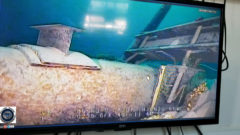
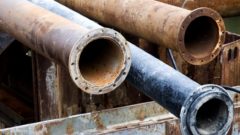
MADISON, Wis. (AP) — The comment period on a draft analysis of the environmental impact of rerouting an oil and gas pipeline around an American Indian reservation in northern Wisconsin will run for an additional month, state regulators announced Wednesday.

The Enbridge Line 5 pipeline carries oil and natural gas liquids from Superior to Sarnia.

Read Now at Great Lakes Now.

Original Article

Great Lakes Now

Great Lakes Now

https://www.greatlakesnow.org/2022/03/ap-dnr-extends-comment-period-enbridge-reroute/

The Associated Press

Indiana University study links lead exposure to juvenile delinquency

By Timberly Ferree, Indiana Environmental Reporter

In the first direct analysis of its kind, a study by Indiana University researchers has found a link between lead in drinking water, specifically from private wells, and juvenile delinquency.

“There’s not been a direct analysis on lead exposure and children’s outcomes later in life before.

Read Now at Great Lakes Now.

Original Article

Great Lakes Now

Great Lakes Now

https://www.greatlakesnow.org/2022/03/study-lead-exposure-juvenile-delinquency/

Indiana Environmental Reporter

With new invasive carp money, the Great Lakes learns from past invasions

By Kelly House, Bridge Michigan

The Great Lakes News Collaborative includes Bridge Michigan; Circle of Blue; Great Lakes Now at Detroit Public Television; and Michigan Radio, Michigan’s NPR News Leader; who work together to bring audiences news and information about the impact of climate change, pollution, and aging infrastructure on the Great Lakes and drinking water.

Read Now at Great Lakes Now.

Original Article

Great Lakes Now

Great Lakes Now

https://www.greatlakesnow.org/2022/03/invasive-carp-money-great-lakes/

Bridge Michigan

Scientists take rare look under Great Lakes’ frozen surfaces

By Mike Householder and John Flesher, Associated Press

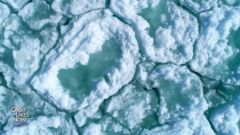
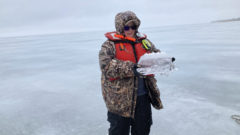
STANDISH, Mich. (AP) — Bridget Wheelock knelt onto the frozen surface of Lake Huron’s Saginaw Bay, reached a gloved hand into the frigid water below and pulled out a large chunk of ice.

“There’s a little bit of prism effect.

Read Now at Great Lakes Now.

Original Article

Great Lakes Now

Great Lakes Now

https://www.greatlakesnow.org/2022/03/ap-scientists-rare-great-lakes-frozen-surfaces/

The Associated Press

Shipwreck discovered in Lake Superior, 131 years later

DEER PARK, Mich. (AP) — A ship carrying a load of coal when it sank in a storm in 1891 has been discovered in Lake Superior off Michigan’s Upper Peninsula.

The Atlanta is well-preserved in the extremely cold lake, the Great Lakes Shipwreck Historical Society said Thursday.

The shipwreck group posted photos and video with the name of the ship clearly visible at a depth of more than 600 feet (183 meters), roughly 35 miles (56 kilometers) off Deer Park, Michigan.

Read Now at Great Lakes Now.

Original Article

Great Lakes Now

Great Lakes Now

https://www.greatlakesnow.org/2022/03/ap-shipwreck-discovered-lake-superior/

The Associated Press

Great Lakes Moment: Dozens of bald eagles overwinter in Detroit

Great Lakes Moment is a monthly column written by Great Lakes Now Contributor John Hartig. Publishing the author’s views and assertions does not represent endorsement by Great Lakes Now or Detroit Public Television.

It was a mid-winter day, and I was driving to my Downriver home from a meeting in Detroit.

Read Now at Great Lakes Now.

Original Article

Great Lakes Now

Great Lakes Now

https://www.greatlakesnow.org/2022/03/great-lakes-moment-bald-eagles-detroit/

John Hartig

Chicago’s Adler Planetarium announces reopening

CHICAGO (AP) —

The Adler Planetarium in Chicago will open this week for the first time since it closed its doors nearly two years ago because of the COVID-19 pandemic.

The famed planetarium on the shores of Lake Michigan will on March 4 reopen, joining the ranks of museums and other institutions that have opened their doors once again in recent days months after the pandemic forced them to close.

Read Now at Great Lakes Now.

Original Article

Great Lakes Now

Great Lakes Now

https://www.greatlakesnow.org/2022/03/ap-chicago-adler-planetarium-reopening/

The Associated Press

Lake heatwaves driven by human-caused climate change

Just like the atmosphere and the ocean, lakes can be subject to extreme spikes in temperature, and new research shows that the vast majority of these heatwaves over the past 25 years are the result of human-caused climate change.

Iestyn Woolway – a climate scientist at Bangor University in Wales – and his colleagues analysed satellite data of surface temperatures in lakes around the world, including the Great Lakes, to identify when and where heatwaves occurred since the satellites came online in 1995.

Read Now at Great Lakes Now.

Original Article

Great Lakes Now

Great Lakes Now

https://www.greatlakesnow.org/2022/03/lake-heatwaves-human-climate-change/

Brian Owens

Breaking up: Ice loss is changing one Anishinaabe fisherman’s relationship with Lake Superior

By Jolene Banning, The Narwhal

This story first ran on The Narwhal, a non-profit news organization that publishes in-depth stories about Canada’s natural world.

Sometime in the early 1990s, the ice was so unusually thick and smooth on Gitchigumi that Anishinaabe fisherman Phillip Solomon drove his car, a 1984 Monte Carlo, across the lake from Fort William First Nation to Pie Island with a friend.

Read Now at Great Lakes Now.

Original Article

Great Lakes Now

Great Lakes Now

https://www.greatlakesnow.org/2022/02/ice-loss-anishinaabe-fishermen-lake-superior/

The Narwhal

I Speak for the Fish: Logperch rocking, rolling and rebounding

Some fish don’t seem to mind a diver’s bubbles or humans fumbling around underwater. Others bolt at my first exhalation. Some fish are super approachable while others remain wary and aloof regardless of how I try to entice them.   

And some species, like the tiny logperch, don’t seem to give a fig what I do. 

Read Now at Great Lakes Now.

Original Article

Great Lakes Now

Great Lakes Now

https://www.greatlakesnow.org/2022/02/speak-for-fish-logperch-rebounding/

Kathy Johnson

Scratching the surface: Regional research groups explore winter conditions of Green Bay, Great Lakes

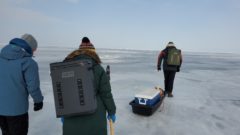
María Hernández, a University of Chicago graduate student studying microbial ecology, was both nervous and eager to traverse a frozen Green Bay. Being sure to walk slowly and carefully, she assisted fellow researchers in extracting samples of ice-cold freshwater.

“We’re out here because we usually sample in the spring and summer,” said Hernández, “So this is the first time we’re going to be sampling in the winter, and it just gives us another view into what the microbes are doing at different times of the year.”

Hernandez and her University of Chicago colleagues were joined by University of Minnesota Duluth researchers on Monday for the recently launched “Winter Grab,” a first of its kind, week-long collection event for regional researchers studying Great Lakes’ winter conditions.

Read Now at Great Lakes Now.

Original Article

Great Lakes Now

Great Lakes Now

https://www.greatlakesnow.org/2022/02/scratching-surface-regional-research-winter-conditions/

John McCracken

Cold Cover: Great Lakes ice forms after initial low percentage

A recent burst of cold weather has boosted Great Lakes ice coverage from initial projections that were well below historical average back to the typical range.

But the current levels still expose a long-term trend of overall declining coverage, scientists say.

“In terms of Great Lakes ice cover, we do see decline and reduced ice cover in recent decades,” Ayumi Fujisaki-Manome, assistant research scientist with the Cooperative Institute for Great Lakes Research, said in an interview with Great Lakes Now.

Read Now at Great Lakes Now.

Original Article

Great Lakes Now

Great Lakes Now

https://www.greatlakesnow.org/2022/02/great-lakes-ice-forms/

Natasha Blakely

Holding in the deep: What Canada wants to do with its decades-old pileup of nuclear waste

By Emma McIntosh, The Narwhal

This story first ran on The Narwhal, a non-profit news organization that publishes in-depth stories about Canada’s natural world.

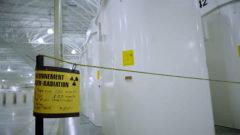
The final resting place of Canada’s most radioactive nuclear waste could be a cave about as deep below the surface as the CN Tower is tall.

Read Now at Great Lakes Now.

Original Article

Great Lakes Now

Great Lakes Now

https://www.greatlakesnow.org/2022/02/canada-old-pileup-nuclear-waste/

The Narwhal

Hydroponic greenhouses continue to offer solution to urban food deserts

Urban areas around the Midwest struggle with food deserts and dense populations, a problem exacerbated by climate change impacts and the conversion of farmlands to residential developments. However, a potential solution can be found in hydroponics facilities being established in cities around the Great Lakes region like Detroit, Cleveland, Toronto and Chicago.   

Read Now at Great Lakes Now.

Original Article

Great Lakes Now

Great Lakes Now

https://www.greatlakesnow.org/2022/02/hydroponic-greenhouses-urban-food-deserts/

Audrey Henderson

Great Lakes Moment: Overwintering ducks on the Detroit River create a sense of wonder

The lower Detroit River is a unique urban refugium where the tapestry of life has been woven with elegance, where the music of life has been rehearsed to perfection for thousands of years, where nature’s colors are most vibrant and engaging, where time is measured in seasons, and where the canvasback race across the water takes center stage.  

Read Now at Great Lakes Now.

Original Article

Great Lakes Now

Great Lakes Now

https://www.greatlakesnow.org/2022/02/great-lakes-moment-ducks-detroit-river/

John Hartig

Scientists race to gather winter data on warming Great Lakes

By John Flesher, Associated Press

TRAVERSE CITY, Mich. (AP) — What’s happening in the Great Lakes during those long, frigid months when they’re often covered partially or completely with ice? A casual observer — and even experts — might be inclined to say, “Not much.”

Lake scientists have long considered winter a season when aquatic activity slows.

Read Now at Great Lakes Now.

Original Article

Great Lakes Now

Great Lakes Now

https://www.greatlakesnow.org/2022/02/ap-scientists-data-warming-great-lakes/

The Associated Press

Toxic ‘forever chemicals’ found in Michigan farm’s beef

By John Flesher, Associated Press

Beef produced at a small Michigan farm was found to contain toxic “forever chemicals” after the cattle were fed crops grown with fertilizer made from contaminated wastewater biosolids, state officials said Friday.

A consumption advisory issued by state agencies stopped short of a recall, noting there are no government standards for the substances in beef.

Read Now at Great Lakes Now.

Original Article

Great Lakes Now

Great Lakes Now

https://www.greatlakesnow.org/2022/02/ap-forever-chemicals-michigan-beef/

The Associated Press

Cargo, With a Side of Hornets, Flies and Crabs

By Tim Lydon, The Revelator

This story originally appeared in The Revelator and is republished here as part of Covering Climate Now, a global journalism collaboration strengthening coverage of the climate story.

In July 2021 federal agents in New Orleans abruptly ordered the 600-foot cargo ship Pan Jasmine to leave U.S.

Read Now at Great Lakes Now.

Original Article

Great Lakes Now

Great Lakes Now

https://www.greatlakesnow.org/2022/01/cargo-invasive-species/

The Revelator

Great Lakes Water Authority monitoring Detroit River for algal bloom threat

As the Great Lakes experience more harmful algal blooms due to climate change, real time monitoring of drinking water for toxins is becoming increasingly urgent.  

Warm water temperatures, increased rainfall and fertilizer run-off from farm fields are providing fuel for blooms that can taint water. 

This spring, a floating sensor for monitoring drinking water drawn from the Detroit River will begin giving real-time data on potentially toxic blue-green algae, along with other water quality data such as temperature, pH and dissolved oxygen.  

Read Now at Great Lakes Now.

Original Article

Great Lakes Now

Great Lakes Now

https://www.greatlakesnow.org/2022/01/detroit-river-algal-bloom-threat/

Sharon Oosthoek

New study says elevated levels of PFAS found in anti-fogging sprays and cloths

By Timberly Ferree, Indiana Environmental Reporter

A new Duke University-led study has found that the anti-fogging sprays and cloths used to prevent condensation on eyeglasses contain toxic PFAS chemicals.

Researchers tested five top-rated anti-fogging cloths and four top-rated anti-fogging sprays sold on Amazon and found all the products to contain fluorotelomer alcohols (FTOHs) and fluorotelomer ethoxylates (FTEOs).

Read Now at Great Lakes Now.

Original Article

Great Lakes Now

Great Lakes Now

https://www.greatlakesnow.org/2022/01/elevated-levels-pfas-sprays-cloths/

Indiana Environmental Reporter

2022 Perch Outlook: Ohio hatch results not so great

Recently released Ohio Department of Natural Resources yellow perch hatch results indicate more of the same: overall mediocrity, leaning toward the not-so-good side.  

 That’s the result of an average hatch in the Western Basin and a very poor hatch in the Central Basin from Huron, Ohio, to Conneaut, Ohio. 

Read Now at Great Lakes Now.

Original Article

Great Lakes Now

Great Lakes Now

https://www.greatlakesnow.org/2022/01/2022-perch-outlook/

James Proffitt

Great Lakes researchers predict record-low ice coverage

By Michigan Radio

The Great Lakes News Collaborative includes Bridge Michigan; Circle of Blue; Great Lakes Now at Detroit Public Television; and Michigan Radio, Michigan’s NPR News Leader; who work together to bring audiences news and information about the impact of climate change, pollution, and aging infrastructure on the Great Lakes and drinking water.

Read Now at Great Lakes Now.

Original Article

Great Lakes Now

Great Lakes Now

https://www.greatlakesnow.org/2022/01/low-ice-coverage/

Michigan Radio

Drinking Water News Roundup: Toxic algae blooms in Indiana, First Nations $8B settlement, Wisconsin lead pipe replacement funding

From lead pipes to PFAS, drinking water contamination is a major issue plaguing cities and towns all around the Great Lakes. Cleaning up contaminants and providing safe water to everyone is an ongoing public health struggle. 

Keep up with drinking water-related developments in the Great Lakes area. 

Click on the headline to read the full-story:

Indiana: 

  • More blue-green algae could drive up drinking water bills in Indiana’s larger cities —WFYI Indianapolis 

The increasingly warm air and heavy rain showers have caused a rise in toxic algae blooms, which has led to fish sickness, beach closures, and drinking water pollution.

Read Now at Great Lakes Now.

Original Article

Great Lakes Now

Great Lakes Now

https://www.greatlakesnow.org/2022/01/drinking-water-news-roundup-toxic-algae-blooms/

Maya Sundaresan