Energy News Roundup: Q&A with energy secretary Granholm, Indiana enviromental bills struggle, Ontario rate payers prepare for hike
Keep up with energy-related developments in the Great Lakes area with Great Lakes Now’s biweekly headline roundup.

In this edition: Environmentalists in Wisconsin sue EPA over regulation rollback favoring coal plants, bankruptcy plan for Ohio nuclear power company upheld by appeals court, Prairie Island tribe prepares for massive investment in renewable energy, and Ford Motors to invest millions for electric vehicle construction in southeast Michigan

Click on the headline to read the full story:

Indiana:

  • 75 environmental bills were filed this session; more than two-thirds of them are now dead – Indianapolis Star

When the 2021 legislative session began, more than 75 bills related to the environment had been filed in Indiana’s General Assembly.

Read Now at Great Lakes Now.

Original Article

Great Lakes Now

Great Lakes Now

https://www.greatlakesnow.org/2021/03/energy-news-indiana-bills-ontario-hike-line-5-oversight-panel/

Natasha Blakely

Building Resilience in Rural America

By  Alessandra Jerolleman, Eos

This story originally appeared in Eos and is republished here as part of Covering Climate Now, a global journalism collaboration strengthening coverage of the climate story.


In the United States, 2020 will be remembered not just for a global pandemic but also for a series of back-to-back and record-breaking disasters that affected much of the country, including many rural communities.

Read Now at Great Lakes Now.

Original Article

Great Lakes Now

Great Lakes Now

https://www.greatlakesnow.org/2021/03/building-resilience-rural-america/

Eos

Rights vs. Regulations: When it comes to septic system codes, property rights remain a big barrier

With warming temperatures, fluctuating water levels and a series of extreme storms, Lake Superior is undergoing dramatic alterations amid climate change.

Read Now at Great Lakes Now.

Original Article

Great Lakes Now

Great Lakes Now

https://www.greatlakesnow.org/2021/03/michigan-regulations-septic-system-codes-property-rights/

Natasha Blakely

The future of Lake Superior with climate disruption

With warming temperatures, fluctuating water levels and a series of extreme storms, Lake Superior is undergoing dramatic alterations amid climate change.

Read Now at Great Lakes Now.

Original Article

Great Lakes Now

Great Lakes Now

https://www.greatlakesnow.org/2021/02/future-lake-superior-climate-disruption-climate-change/

Michigan Radio

On Michigan’s inland lakes, ice fishing with less ice, and fewer fish

Warming waters are hard on some fish, such as walleye, and more favorable to others, such as smallmouth bass. With so many environmental stresses, it’s difficult to gauge the future of individual lakes.

Read Now at Great Lakes Now.

Original Article

Great Lakes Now

Great Lakes Now

https://www.greatlakesnow.org/2021/02/michigan-inland-lakes-ice-fishing-fish-less-ice/

Michigan Radio

Intense storms from climate change harming Michigan streams and rivers

Intense storm events and flooding are changing the ecology of rivers in the Great Lakes region.

Read Now at Great Lakes Now.

Original Article

Great Lakes Now

Great Lakes Now

https://www.greatlakesnow.org/2021/02/intense-storms-climate-change-harming-michigan-streams-rivers/

Michigan Radio

Youth climate activists want an official seat at the table in Biden’s White House

By Ilana Cohen, Climate Tracker

This story originally appeared in Climate Tracker and is republished here as part of Covering Climate Now, a global journalism collaboration strengthening coverage of the climate story.


Last November, youth climate activists helped elect U.S. 

Read Now at Great Lakes Now.

Original Article

Great Lakes Now

Great Lakes Now

https://www.greatlakesnow.org/2021/02/youth-climate-activists-biden-white-house/

Climate Tracker

Water could make the Great Lakes a climate refuge. Are we prepared?

Michigan and the Great Lakes region — with an abundance of fresh water, warming winters and less fire-prone forests — stand to attract millions of new residents in the coming years looking to escape flooded coastal areas and the parched land of the West.

Read Now at Great Lakes Now.

Original Article

Great Lakes Now

Great Lakes Now

https://www.greatlakesnow.org/2021/02/water-great-lakes-climate-refuge-prepared/

Circle of Blue

Excited about Biden: Detroit advocate hopeful on environmental justice progress after decades of inertia

Detroit’s Michelle Martinez is acutely aware of the patience needed when your profession is advocating for environmental justice, the fair and meaningful involvement of all people related to environmental laws and policies.

Martinez is acting executive director and statewide coordinator for the grassroots Michigan Environmental Justice Coalition.

It was 1994, almost three decades ago, that President Bill Clinton signed Executive Order 12898 putting the federal spotlight on environmental justice.

Read Now at Great Lakes Now.

Original Article

Great Lakes Now

Great Lakes Now

https://www.greatlakesnow.org/2021/02/detroit-advocate-hopeful-environmental-justice-progress-decades-inertia/

Gary Wilson

Should future plans for Line 5 consider climate change?

The Great Lakes News Collaborative includes Bridge Michigan; Circle of Blue; Great Lakes Now at Detroit Public Television; and Michigan Radio, Michigan’s NPR News Leader; who work together to bring audiences news and information about the impact of climate change, pollution, and aging infrastructure on the Great Lakes and drinking water.

Read Now at Great Lakes Now.

Original Article

Great Lakes Now

Great Lakes Now

https://www.greatlakesnow.org/2021/02/future-plans-line-5-climate-change/

Michigan Radio

Michigan is on thin ice. Get used to it, climate experts say.

By Kelly House, Bridge Michigan, through the Institute for Nonprofit News network

The Great Lakes News Collaborative includes Bridge Michigan; Circle of Blue; Great Lakes Now at Detroit Public Television; and Michigan Radio, Michigan’s NPR News Leader; who work together to bring audiences news and information about the impact of climate change, pollution, and aging infrastructure on the Great Lakes and drinking water.

Read Now at Great Lakes Now.

Original Article

Great Lakes Now

Great Lakes Now

https://www.greatlakesnow.org/2021/02/michigan-thin-ice-climate-experts/

Bridge Michigan

Biden environmental challenge: Filling vacant scientist jobs

Polluting factories go uninspected by the U.S. Environmental Protection Agency. Leadership positions sit vacant at the U.S. Geological Survey’s climate science centers. And U.S. Department of Agriculture research into environmental issues important to farmers is unfinished.

The ranks of scientists who carry out environmental research, enforcement and other jobs fell in several agencies — sharply in some — under former President Donald Trump, federal data shows.

Read Now at Great Lakes Now.

Original Article

Great Lakes Now

Great Lakes Now

https://www.greatlakesnow.org/2021/02/ap-biden-environmental-challenge-vacant-scientist-jobs/

The Associated Press

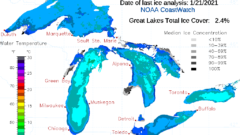
Great Lakes seeing low ice cover compared to this time last year

By Caroline Llanes, Michigan Radio

The Great Lakes News Collaborative includes Bridge Michigan; Circle of Blue; Great Lakes Now at Detroit Public Television; and Michigan Radio, Michigan’s NPR News Leader; who work together to bring audiences news and information about the impact of climate change, pollution, and aging infrastructure on the Great Lakes and drinking water.

Read Now at Great Lakes Now.

Original Article

Great Lakes Now

Great Lakes Now

https://www.greatlakesnow.org/2021/01/great-lakes-low-ice-cover/

Michigan Radio

Crisis Response: President Biden has already kickstarted the country’s new approach to climate change

Water levels are swinging from one extreme to another. The Great Lakes are looking at an iceless, warm winter. Severe storms are hitting more frequently.

Climate change has been a contentious issue for the Great Lakes region – and the rest of the nation – as people debate the severity, impacts and need for action.

Read Now at Great Lakes Now.

Original Article

Great Lakes Now

Great Lakes Now

https://www.greatlakesnow.org/2021/01/crisis-response-president-biden-approach-climate-change/

Natasha Blakely

Lifeblood: Photographer shares the Lake Erie connection uniting shoreline residents

Along the shores of Lake Erie live a wide range of people whose lives might seem very familiar to or wildly distinctive from your own.

In the documentary photo series North of Long Tail, photographer Colin Boyd Shafer tells the stories of more than 20 residents of Lake Erie’s north shore.

Read Now at Great Lakes Now.

Original Article

Great Lakes Now

Great Lakes Now

https://www.greatlakesnow.org/2021/01/lifeblood-photographer-lake-erie-shoreline-residents/

Grace Dempsey

2020 in Review: Climate change, COVID-19 and Michigan’s governor

This is part of a series in which the Great Lakes Now staff looks back on 2020.

When I look back at my 2020 Great Lakes Now reporting, three themes jump off the page – Michigan Gov. Gretchen Whitmer, COVID-19 and climate change.

In her 2018 election campaign Whitmer articulated an extensive water and environment agenda and 2020 was the year she started to make progress on it.

Read Now at Great Lakes Now.

Original Article

Great Lakes Now

Great Lakes Now

https://www.greatlakesnow.org/2021/01/2020-review-climate-change-covid-19-michigan-governor/

Gary Wilson

On the Pulse: I’ve Got One Word For You, 2020

This is part of a series in which the Great Lakes Now staff looks back on 2020.

In any effort to sum up the year that was 2020, one word is unavoidable: poop.

Don’t you agree?

At Great Lakes Now, we’ve kept our finger on the pulse of poop news all year, because we care about our readers and viewers.

Read Now at Great Lakes Now.

Original Article

Great Lakes Now

Great Lakes Now

https://www.greatlakesnow.org/2020/12/on-the-pulse-ive-got-one-word-for-you-2020/

Rob Green

2020 Vision: Great Lakes Now year in review predicts 2021

This is part of a series in which the Great Lakes Now staff looks back on 2020.

It’s probably futile to try to find ONE moment that captures 2020 for Great Lakes Now, at least from my view today at my dining room table/desk on a grey winter day.

Read Now at Great Lakes Now.

Original Article

Great Lakes Now

Great Lakes Now

https://www.greatlakesnow.org/2020/12/great-lakes-now-year-in-review-predicts-2021/

Sandra Svoboda

Wisconsin climate task force releases its recommendations

MADISON, Wis. (AP) — A bipartisan task force that brought together environmentalists, the energy industry and others released its recommendations Wednesday for how Wisconsin might bolster its economy while addressing climate change.

The report from the task force, which was led by Lt.

Read Now at Great Lakes Now.

Original Article

Great Lakes Now

Great Lakes Now

https://www.greatlakesnow.org/2020/12/ap-wisconsin-climate-task-force-recommendations/

The Associated Press

Public Concern: Climate change, runoff and chemicals at the forefront of people’s worries about the Great Lakes

NOTE: The report will formally be presented in English at 2 p.m. ET on Thursday, Dec. 10. A French session will follow at 3:30 p.m. For more details about how you can watch or ask questions, click here.

Public concern about climate change is escalating in the Great Lakes region, according to a new report issued by a binational group that manages and protects the Great Lakes.

Read Now at Great Lakes Now.

Original Article

Great Lakes Now

Great Lakes Now

https://www.greatlakesnow.org/2020/12/public-concern-climate-change-runoff-chemicals-ijc/

Natasha Blakely

Index: International Joint Commission’s 2020 Triennial Assessment of Progress Report

If you read the International Joint Commission’s 2020 Triennial Assessment of Progress Report or

watched the webinar where the IJC announced and discussed the findings, you might be curious about some of the other reports and documents referenced.

For the 2020 triennial report, go to the IJC’s website.

Read Now at Great Lakes Now.

Original Article

Great Lakes Now

Great Lakes Now

https://www.greatlakesnow.org/2020/12/index-international-joint-commission-2020-triennial-assessment-of-progress-report/

GLN Editor

Dec. 8, 2020

By Jennifer A. Smith

While it’s not news to avid anglers, many Wisconsinites may be unaware that the Badger State has over 13,000 miles of coldwater streams that support many world-class fisheries for brook trout and brown trout.

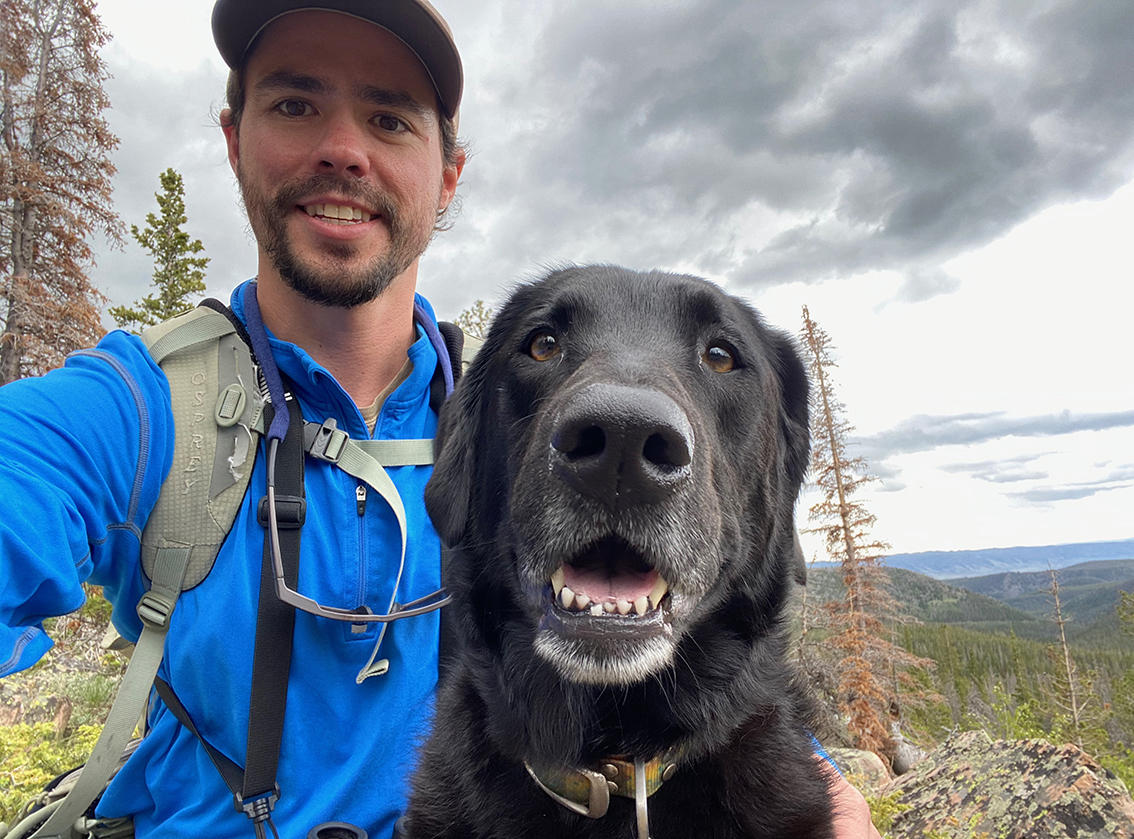
Bryan Maitland snaps a photo with his black lab, Brook, on a hike in the Snowy Mountains near Laramie, Wyoming. (Submitted photo)

Coldwater streams are flowing waters with maximum summer temperatures under 72 degrees Fahrenheit. Trout living in these streams not only play an important role in ecosystems, but also represent significant economic value to the state. For example, according to research done by retired University of Wisconsin-La Crosse Professor Donna Anderson, trout fishing in Wisconsin’s Driftless region had an economic impact of $1.6 billion in 2015.

But these brook and brown trout face challenges. Two leading ones are climate change (and the resulting shifts in precipitation patterns and flood frequency) and high-capacity wells in the state, as those wells draw groundwater that might otherwise replenish streams.

Here to better understand these challenges—and ultimately help natural resource managers make decisions related to trout populations—is Bryan Maitland, a new Wisconsin Water Science-Policy Fellow whose position is jointly supported by the University of Wisconsin Water Resources Institute (WRI) and the Bureau of Fisheries Management at the Wisconsin Department of Natural Resources.

Maitland, who recently completed his doctorate in ecology at the University of Wyoming in Laramie, began his fellowship Sept. 1. He also holds a master’s degree in conservation biology from the University of Alberta in Canada. The fellowship is a one-year commitment with a possibility for a second year.

During this time, he’ll focus on building computer models that illuminate how long-term changes in hydrology across the state are affecting trout populations. “The flip side of this,” he said, “is the conservation and management side, translating it into some type of decision support tool that decision-makers can use to inform policy in the state.”

As Maitland elaborated, climate change has brought shifting precipitation patterns that have altered Wisconsin’s hydrology. Increased precipitation–and particularly the frequency of intense precipitation events–has triggered floods in rivers and streams statewide. Depending on their timing and severity, these floods can threaten the emergence of trout fry or the survival of juvenile trout.

For example, a big winter flood can “scour out these little trout eggs that are growing under the stream in the substrate” that time of year, said Maitland. As a result, that year class of fish could be wiped out since eggs will not hatch in the spring. “That age-zero year class is really important for long-term trout population dynamics, because if you don’t have a good age-zero cohort, you can have very depressed populations in the stream for multiple years after that,” he noted.

At the same time, some high-capacity wells have the potential to deplete groundwater levels, thereby reducing input into nearby streams.

“The reason we have 13,000 miles of streams is because we have really good groundwater here in Wisconsin and good input into streams, which helps keep these streams colder in the summer and a little warmer in winter,” said Maitland, creating a favorable environment for brook and brown trout.

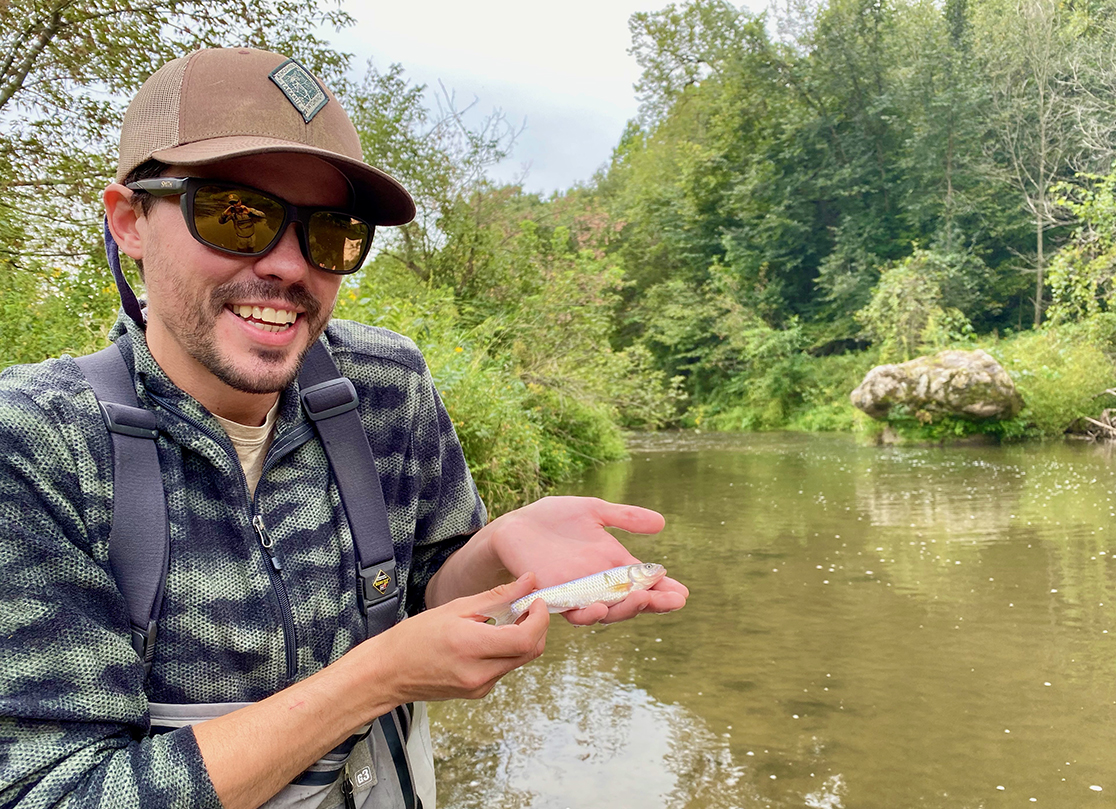
Maitland shows off his first fish caught in Wisconsin—a common shiner from the Blue River near Dodgeville, where he was fishing for trout. (Photo: Alex Latzka)

Maitland’s modeling work will pull together these two large-scale factors, and their interplay, to see how trout populations have been influenced over the past 26 years. Fish data collected from 1994 to 2020 are being used to inform the computer models to investigate how stream flow, precipitation and water temperature drive trout population numbers. Looking to the future, Maitland and collaborators will examine how increases or decreases in stream flow are likely to affect trout populations, with an eye to guiding a management framework for things like high-capacity well permits.

While economic considerations like the value of Wisconsin’s recreational trout fishery are outside the scope of his work, this effort could set the stage for other researchers to pursue this topic.

Maitland is an angler himself, which explains part of the appeal of this topic for him. Yet another draw is the chance to work with an array of other fellows and with permanent staff at the Wisconsin DNR. His collaborators at the DNR include former WRI fellow Alex Latzka, now a fisheries systems biologist there, and Lori Tate, section chief at the Fisheries Management Bureau and a member of Wisconsin Sea Grant’s Advisory Board. His efforts will intersect with that of other current fellows like Carolyn Voter and Dana Lapides.

“I think science and policy are team sports,” said Maitland. “To join such a big group of researchers and managers working on these big-picture issues in Wisconsin is very exciting.”

The post WRI Fellow looks at what’s ahead for brook and brown trout amid Wisconsin’s changing hydrology first appeared on WRI.

Original Article

News Release – WRI

News Release – WRI

https://www.wri.wisc.edu/news/wri-fellow-looks-at-whats-ahead-for-brook-and-brown-trout/

Jennifer Smith

Drinking Water News Roundup: Indiana utilities plan for climate change, Waukesha pipeline construction begins

From lead pipes to PFAS, drinking water contamination is a major issue plaguing cities and towns all around the Great Lakes. Cleaning up contaminants and providing safe water to everyone is an ongoing public health struggle.

Keep up with drinking water-related developments in the Great Lakes area.

Click on the headline to read the full story:

Indiana:

  • ‘Will We Have Water When We Need It?’: How Indiana Utilities Are Preparing for Climate Change – Indiana Star

Just 150 miles from Lake Michigan, utility planners are worried about finding enough water to supply a growing Indianapolis because of climate change.

Read Now at Great Lakes Now.

Original Article

Great Lakes Now

Great Lakes Now

https://www.greatlakesnow.org/2020/12/drinking-water-climate-change-lead-first-nations-waukesha-pipeline/

Grace Dempsey

“Saving the Great Lakes”: National Geographic December issue explores the lakes and their struggles

A familiar view for many who live and play around the Great Lakes graces the current cover of National Geographic – a stormy sunset over Lake Michigan, seen from the sandy beaches of the Sleeping Bear Dunes National Lakeshore.

The feature story of the magazine’s December 2020 issue puts a spotlight on the Great Lakes.

Read Now at Great Lakes Now.

Original Article

Great Lakes Now

Great Lakes Now

https://www.greatlakesnow.org/2020/11/saving-great-lakes-national-geographic-december-issue-struggles/

Natasha Blakely

As Great Lakes pummel Michigan, beach towns rush to set development rules

By Kelly House, Bridge Michigan

The Great Lakes News Collaborative includes Bridge Michigan; Circle of Blue; Great Lakes Now at Detroit Public Television; and Michigan Radio, Michigan’s NPR News Leader; who work together to bring audiences news and information about the impact of climate change, pollution, and aging infrastructure on the Great Lakes and drinking water.

Read Now at Great Lakes Now.

Original Article

Great Lakes Now

Great Lakes Now

https://www.greatlakesnow.org/2020/11/great-lakes-pummel-michigan-beach-towns-development-rules/

Bridge Michigan

Rollbacks, Climate, Justice: Environmental attorney on Biden’s commitments, opportunities and challenges

For President-elect Joe Biden, the environment and climate change as campaign issues weren’t tucked away in an obscure position paper. Neither was his intent to focus on environmental justice if elected.

Biden also put a spotlight on President Trump’s rollback via executive order of nearly 100 environmental protections in his four years.

Read Now at Great Lakes Now.

Original Article

Great Lakes Now

Great Lakes Now

https://www.greatlakesnow.org/2020/11/rollbacks-climate-justice-environmental-attorney-president-elect-biden/

Gary Wilson

Q & A: The Great Lakes are stressed. Climate change is making it worse.

By Kelly House, Bridge Michigan, through the Institute for Nonprofit News network

The Great Lakes News Collaborative includes Bridge Michigan; Circle of Blue; Great Lakes Now at Detroit Public Television; and Michigan Radio, Michigan’s NPR News Leader; who work together to bring audiences news and information about the impact of climate change, pollution, and aging infrastructure on the Great Lakes and drinking water.

Read Now at Great Lakes Now.

Original Article

Great Lakes Now

Great Lakes Now

https://www.greatlakesnow.org/2020/11/great-lakes-stressed-climate-change-worse/

Bridge Michigan

Great Lakes produce new record for waterspouts in one week

This article was republished here with permission from Great Lakes Echo.

By Audrey Porter, Great Lakes Echo

The Great Lakes produced a new high record in its number of 232 waterspouts from Sept. 28 through Oct. 4.

It tops the previous highest waterspout outbreak of 88 waterspouts in the month of  August.

Read Now at Great Lakes Now.

Original Article

Great Lakes Now

Great Lakes Now

https://www.greatlakesnow.org/2020/11/great-lakes-record-waterspouts/

Great Lakes Echo

Summertime Spike: Great Lakes parks a source of balm and vexation for many during COVID-19

Great Lakes parks have always been popular among outdoor enthusiasts. This summer, however, pandemic-weary residents on both sides of the border flocked to them – many for the first time – just as services such as campsites, visitors’ centers, washrooms and interpretive programs were closed to help contain COVID-19.

The spike in summertime numbers was doubly challenging this year as the lakes’ record-high water levels have washed away some beaches and trails.

Read Now at Great Lakes Now.

Original Article

Great Lakes Now

Great Lakes Now

https://www.greatlakesnow.org/2020/10/summertime-spike-great-lakes-parks-covid-19/

Sharon Oosthoek

As policing and pandemic dominate election, climate pushed to back burner

By Frank Jossi, Energy News Network, through the Institute for Nonprofit News network

State Sen. Jason Rarick co-sponsored a rare bipartisan energy bill this spring that sought to expand and improve Minnesota’s state energy conservation program.

The proposal earned support from unions, utilities, industry and environmental groups for its potential to save money and cut carbon emissions, but you won’t hear the Republican incumbent talking it up as part of his reelection campaign.

Read Now at Great Lakes Now.

Original Article

Great Lakes Now

Great Lakes Now

https://www.greatlakesnow.org/2020/10/policing-pandemic-election-climate-minnesota/

Energy News Network

Great Lakes Energy News Roundup: Michigan clean energy transition, pilot hydrogen production plant, Ohio nuclear bankruptcy ruling

Keep up with energy-related developments in the Great Lakes area with Great Lakes Now’s biweekly headline roundup.

In this edition: Michigan environmental justice advocates claim state can’t wait to 2050 for clean energy, Minnesota nuclear power plant to construct pilot facility to produce hydrogen energy, and Ohio nuclear energy company faces dangerous court motion from environmental groups.

Read Now at Great Lakes Now.

Original Article

Great Lakes Now

Great Lakes Now

https://www.greatlakesnow.org/2020/10/great-lakes-energy-clean-energy-michigan-ohio-nuclear/

Ian Wendrow

Great Aspirations: Great Lakes states grapple with climate change and carbon

In June 2017, when President Donald Trump announced that the U.S. would withdraw from the Paris Climate Accords, three states had an immediate reaction and plan.

New York, California and Washington announced formation of the United States Climate Alliance calling it a “coalition that will convene U.S. states committed to upholding the Paris Climate Agreement and taking aggressive action on climate change.”

With that action, New York led Great Lakes states in the effort to reduce greenhouse gas emissions, establish clean energy plans and fund initiatives to meet carbon reduction goals.

Read Now at Great Lakes Now.

Original Article

Great Lakes Now

Great Lakes Now

https://www.greatlakesnow.org/2020/10/great-lakes-states-climate-change-carbon/

Gary Wilson

Great Lakes Moment: Detroit River and western Lake Erie get a checkup

Great Lakes Moment is a monthly column written by Great Lakes Now Contributor John Hartig. Publishing the author’s views and assertions does not represent endorsement by Great Lakes Now or Detroit Public Television.

If the Detroit River and western Lake Erie were patients undergoing their annual exam, a doctor would probably say, “I have good news and bad news about their health.”

The good news is that there are signs of improving ecosystem health including the return of creatures like bald eagles, peregrine falcons, osprey, lake sturgeon, lake whitefish and beaver.

Read Now at Great Lakes Now.

Original Article

Great Lakes Now

Great Lakes Now

https://www.greatlakesnow.org/2020/10/state-of-the-strait-2020-detroit-river-western-lake-erie/

John Hartig

Policy Expert Q&A: Keep advocating with elected officials for safe drinking water

The Flint water crisis that made national and international headlines was a failure on many levels, according to University of Chicago Professor Sabina Shaikh.

Particularly, it was a public policy failure, Shaikh told Great Lakes Now in an interview, and the failure in Flint put a spotlight on environmental injustices.

Read Now at Great Lakes Now.

Original Article

Great Lakes Now

Great Lakes Now

https://www.greatlakesnow.org/2020/09/policy-expert-advocating-elected-officials-safe-drinking-water/

Gary Wilson

Can the Climate Youth Tip the 2020 Election Against Trump?

By Mark Hertsgaard, The Nation

This story originally appeared in The Nation and is republished here as part of Covering Climate Now, a global journalism collaboration strengthening coverage of the climate story.

On Monday, The Nation and other Covering Climate Now partners held a “First-Time Voter Youth Day” to highlight the voices of the generation most affected by climate change as we launch a week of joint coverage of Climate Politics 2020.

Read Now at Great Lakes Now.

Original Article

Great Lakes Now

Great Lakes Now

https://www.greatlakesnow.org/2020/09/climate-youth-2020-election-trump/

The Nation

Want the Youth Vote? Prioritize Climate Change

By Jacob Wallace, The Nation

This story originally appeared in The Nation and is republished here as part of Covering Climate Now, a global journalism collaboration strengthening coverage of the climate story.

In the speech she gave at the People’s Climate March in Washington in 2017, Jansikwe Medina-Tayac, then 15, told a crowd of thousands, “This [climate change] is not just an environmental issue.

Read Now at Great Lakes Now.

Original Article

Great Lakes Now

Great Lakes Now

https://www.greatlakesnow.org/2020/09/election-2020-youth-vote-prioritize-climate-change/

The Nation

Intersecting Crises: Fighting for climate justice in a pandemic

Alongside the illnesses, deaths and closures caused by COVID-19, the threat of climate change still hangs over communities across the Great Lakes region and around the world. And the people and organizations fighting against climate change and for environmental justice have found themselves caught between these two threats to public health.

Read Now at Great Lakes Now.

Original Article

Great Lakes Now

Great Lakes Now

https://www.greatlakesnow.org/2020/08/intersecting-crises-climate-change-justice-covid-19/

Emily Simroth

Above Average: Great Lakes water temperatures keep high after record-breaking July

Lake Ontario broke a record this July for hottest surface water temperature ever recorded on the lake since 1995. 

Lake Ontario isn’t alone. All five of the Great Lakes’ surface water temperatures are still above their 1995-2020 averages as of Aug. 21,  according to NOAA Great Lakes CoastWatch. 

Read Now at Great Lakes Now.

Original Article

Great Lakes Now

Great Lakes Now

https://www.greatlakesnow.org/2020/08/great-lakes-water-temperatures-high/

Samantha Cantie

One key solution to the world’s climate woes? Canada’s natural landscapes

By Jimmy Thomson, The Narwhal

This story originally appeared in The Narwhal and is republished here as part of Covering Climate Now, a global journalism collaboration strengthening coverage of the climate story.

This is the first part of Carbon Cache, an ongoing series about nature-based climate solutions.

Read Now at Great Lakes Now.

Original Article

Great Lakes Now

Great Lakes Now

https://www.greatlakesnow.org/2020/08/climate-change-carbon-canada-natural-landscapes/

The Narwhal

A vacant lot in Gary, Indiana, will soon be home to a climate-friendly community

By Audrey Henderson, Energy News Network, through the Institute for Nonprofit News network

An area in downtown Gary, Indiana, that still bears scars from a 1997 arson fire will soon boast an affordable housing complex with an eye toward energy efficiency and neighborhood revitalization.

The $11 million Broadway Lofts project, scheduled to break ground September 1 for completion in 2021, is part of Indiana’s Moving Forward incentive that targets net-zero, transit-oriented affordable housing.

Read Now at Great Lakes Now.

Original Article

Great Lakes Now

Great Lakes Now

https://www.greatlakesnow.org/2020/08/gary-indiana-climate-friendly-community/

Energy News Network

Survey analysis finds race plays role in perception, vulnerabilities to climate change in Indiana

By Enrique Saenz, Indiana Environmental Reporter

People across the U.S. are taking to the streets to protest racial inequity, saying that people of color experience a wholly different experience in the country than white Americans. New findings from a statewide survey indicate that the disparity extends to how Hoosiers of different races perceive climate change and its risks.

Read Now at Great Lakes Now.

Original Article

Great Lakes Now

Great Lakes Now

https://www.greatlakesnow.org/2020/08/race-perception-vulnerabilities-climate-change-indiana/

Indiana Environmental Reporter

Across America, Five Communities in Search of Environmental Justice

By Kristoffer Tigue, Nicholas Kusnetz, Judy Fahys, Ilana Cohen and David Hasemyer, InsideClimate News

This story originally appeared in InsideClimate News and is republished here as part of Covering Climate Now, a global journalism collaboration strengthening coverage of the climate story.

In many ways, Maleta Kimmons defines her neighborhood by what it lacks.

Read Now at Great Lakes Now.

Original Article

Great Lakes Now

Great Lakes Now

https://www.greatlakesnow.org/2020/08/communities-minnesota-new-york-environmental-justice/

InsideClimate News

Review Underway: Will IJC’s efforts be enough for flooded shoreline municipalities?

The International Joint Commission has started an early review of its Lake Ontario water management plan, overseen by a board that includes some of its most ardent critics, in response to extensive flooding and outcry from the lake’s shoreline communities.

The IJC— the international body that regulates waterways between the United States and Canada — has received $1.5 million in funding from the U.S., with an additional $1.5 million in matched funds from Canada, for the expedited review of Plan 2014.

Read Now at Great Lakes Now.

Original Article

Great Lakes Now

Great Lakes Now

https://www.greatlakesnow.org/2020/07/review-underway-ijc-lake-ontario-flooded-shoreline/

Samantha Cantie

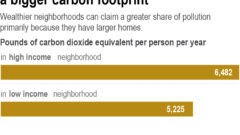
Rich Americans spew more carbon pollution at home than poor

Rich Americans produce nearly 25% more heat-trapping gases than poorer people at home, according to a comprehensive study of U.S. residential carbon footprints.

Scientists studied 93 million housing units in the nation to analyze how much greenhouse gases are being spewed in different locations and by income, according to a study published Monday in the Proceedings of the National Academy of Sciences. 

Read Now at Great Lakes Now.

Original Article

Great Lakes Now

Great Lakes Now

https://www.greatlakesnow.org/2020/07/ap-rich-american-more-carbon-pollution-poor/

The Associated Press

Hot summer warming up Lake Michigan, experts say

TRAVERSE CITY, Mich. (AP) — Lake Michigan is having a warm summer.

The average surface water temperature was 75.3 degrees on July 9, setting a record for the month based on 26 years of record keeping, government scientists said.

The summer high is 75.6 degrees recorded in August 2016, according to the National Oceanic and Atmospheric Administration or NOAA.

Read Now at Great Lakes Now.

Original Article

Great Lakes Now

Great Lakes Now

https://www.greatlakesnow.org/2020/07/ap-hot-summer-lake-michigan/

The Associated Press

Great Lakes Moment: Warmer, wetter, wilder

Great Lakes Moment is a monthly column written by Great Lakes Now Contributor John Hartig. Publishing the author’s views and assertions does not represent endorsement by Great Lakes Now or Detroit Public Television.

Scientists have predicted that warmer, wetter and wilder weather is coming and that this will be one of the greatest environmental challenges of the 21st Century.

Read Now at Great Lakes Now.

Original Article

Great Lakes Now

Great Lakes Now

https://www.greatlakesnow.org/2020/07/water-levels-climate-change-warmer-wetter-wilder/

John Hartig

Great Lakes Energy News Roundup: Lake Huron nuclear waste storage plan dropped, renewable energy in Midland

Keep up with energy-related developments in the Great Lakes area with Great Lakes Now’s biweekly headline roundup.

In this edition: Ontario Power Generation formally withdraws its application to construct a repository for nuclear waste near Lake Huron; Illinois looks to construct offshore energy wind turbines but faces resistance; University of Minnesota may expand viability of geothermal energy in Midwest; and flood-ravaged Midland, Michigan, coming around on renewable energy.

Read Now at Great Lakes Now.

Original Article

Great Lakes Now

Great Lakes Now

https://www.greatlakesnow.org/2020/06/energy-nuclear-huron-renewables-midland-wind-geothermal/
Ian Wendrow

June 12, 2020

This week: Speaking Common Threads in Our Communities Through Poetry +No Water Service Restoration Chicago+ Anishinaabe Lead on Adapting to Climate Change + Michigan Senators Introduce a Bill to Protect Waterways and Public Health


Speaking of Common Threads in Our Communities Through Poetry

Freshwater Future staff member Brandon Tyus expressed his reactions to George Floyd’s murder through poetry.  His poem titled Dear White People reflects on the personal belief system that “the game doesn’t change, but the faces do” as there is always a common thread in anything that shares fundamental commonalities such as skin color. The poem’s voice from the viewpoint of black and brown people asks white people to gain perspective, because they cannot understand what life is like with darker skin.

No Water Service Restoration in Chicago During Pandemic

The City of Chicago has yet to restore water service to a single home, leaving an untold number of families without running water during the pandemic. Many cities across the Great Lakes region have been scrambling to reconnect users so they can wash their hands to prevent the spread of Covid-19, at least temporarily.  Rising water costs in many cities in the region have led to disconnections when residents fall behind on water bills.  Even after Freshwater Future negotiated a small pilot to turn on the water for a single home, the City has not been able to find the will for reconnection.


Anishinaabe Tribes Lead on Adapting to Climate Change

Anishinaabe tribes in northern Minnesota, Wisconsin, and Michigan are taking a holistic approach toward dealing with climate change that requires more “listening” to nature than battling it. Tribal adaptation is an approach that notices the changes in climate and experiments with what needs to be adjusted to accommodate the change. Tribes have formed a coalition, putting them in a leadership role for building resilience to climate change impacts.


Michigan Senators Introduce A Bill To Protect Waterways And Public Health

After an industrial property contaminated with uranium and other hazardous chemicals collapsed into the Detroit River as we reported in December 2019. This environmental disaster revealed inadequate enforcement by the Michigan Department of Environment, Great Lakes and Energy (EGLE). In response to this and similar instances of dangerous pollutants entering waterways, State legislators introduced a bill to protect major waterways and public health. The legislation would require statewide risk assessments and an accessible database for the public to more easily identify contaminated areas throughout the state.

Original Article

Blog – Freshwater Future

Blog – Freshwater Future

https://freshwaterfuture.org/uncategorized/freshwater-weekly-june-15th-2020/
Alexis Smith