Green Reset: COVID-19 offers opportunity for lighter environmental impact

Out of the tragedy that is COVID-19 can come opportunities to improve our lives, our workspace and our environment.

That includes softening the impact we have on natural habitat.

That’s the view of veteran Great Lakes executive Cameron Davis who says, like businesses in big cities that are assessing their space needs, we should pause and assess our impact on the environment.

Read Now at Great Lakes Now.

Original Article

Great Lakes Now

Great Lakes Now

https://www.greatlakesnow.org/2020/06/green-reset-covid-19-offers-opportunity-for-lighter-environmental-impact/

Gary Wilson

As participants in the University of Wisconsin-Madison’s Undergraduate Research Scholars (URS) program know, it’s never too soon to gain exposure to the kind of research that goes on at a large university.

The URS program is designed as a two-semester course aimed at first- and second-year students. Participants take a weekly seminar and are paired with a research mentor who guides them as they conduct an original research project. Near the conclusion of the academic year, students present their research at a symposium.

While the COVID-19 pandemic meant that students finished out this spring semester at their permanent homes rather than on campus—and that the typical in-person symposium was replaced by virtual presentations—it still proved to be a valuable experience for two students mentored by Wisconsin Sea Grant Assistant Director for Extension David Hart.

Rykia Amos of Washington, D.C., and Celeste Gunderson of Milwaukee each zeroed in on challenging topics. We checked in with both to hear about their experiences.

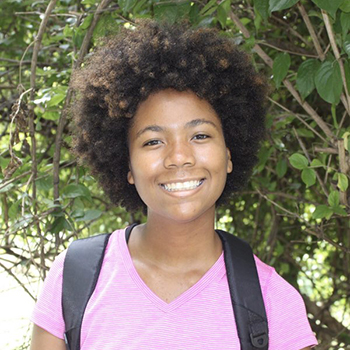
Rykia Amos

Topic: A process to prioritize where to plant trees to decrease future stream temperatures to protect brook trout in the Black Earth Creek watershed

Rykia Amos (Submitted photo)

A wildlife ecology major, Amos went into her trout project as someone more focused on mammals. Yet, she said, “I realized I was a lot more interested in looking at fish than I expected.”

Trout fishing is a popular activity that also carries significant economic value in Wisconsin. Yet climate change projections and warming streams are worrisome. Said Amos, “They’re (brook trout) a very vulnerable species because most of them currently live in cold-water conditions.”

If the climate continues to warm as current scientific projections say, what will that mean for fish like the brook trout and brown trout?

Amos focused on the role played by tree cover and whether that can help mitigate warming temperatures in certain stream segments, to the benefit of the fish. “Data shows that tree planting is a cost-efficient and effective way to help temperatures decrease,” said Amos.

She used data from a U.S. Geological Survey program called FishVis to populate a spreadsheet of stream segments in the Black Earth Creek watershed, located west of Madison. She looked at both present conditions and projected conditions for the period 2046-2065.

Important variables that she considered were where the stream was projected to change from a colder to warmer temperature regime and where brook trout populations were being replaced by brown trout, which can tolerate warmer temperatures. She concluded by assessing the existing tree canopy and developing a formula to prioritize the variables.

At semester’s end, Amos presented her research first to Hart and Sea Grant Fisheries Specialist Titus Seilheimer. She then gave a separate presentation to Matt Mitro, a research scientist with the Wisconsin Department of Natural Resources. Mitro had given input earlier in the semester, suggesting to Amos that she compare brook and brown trout.

Even though she’d prefer to focus on hands-on fieldwork in the future, Amos said, the computer modeling she undertook for her research gave her a window into a real-life challenge posed by climate change in our region. This work has relevance for the protection of ecosystems as well as the recreational fishing that many Wisconsinites love.

Said Hart, “I think there’s a lot of promise for this prioritization of the areas where you could plant tree cover and it would make a difference to decrease stream temperatures. As far as methods went, it was a great proof of concept.”

Going forward, this work could be expanded upon by adding more variables to the modeling, such as land ownership (which could impact the feasibility of tree planting). Hart has begun to look into a tool for constructing 3D tree canopy models from LiDAR (Light Detection and Ranging) data and thinking about how that could come into play. “I wouldn’t have thought of this if I hadn’t worked with Rykia on this project,” he said.

Celeste Gunderson

Topic: Geodesign to guide green infrastructure practices for stormwater management in a changing climate

Celeste Gunderson (Submitted photo)

Gunderson, a resident of Milwaukee’s east side, examined an issue that is literally close to home for her: the impacts of climate change on residents of Great Lakes communities, and how increased precipitation events and severe weather affect lives and property.

It’s an issue her family faced in 2008, when Milwaukee endured widespread flooding caused by heavy precipitation. “It had a lot of effects on the foundation of our house,” said Gunderson, “and we had to get construction done… We’ve already felt the effects of increased precipitation and severe weather events.”

Gunderson is double majoring in environmental studies and people-environment geography. She explored mitigation strategies using a tool called GeoPlanner for ArcGIS, a geographic information systems product that allows users to create and analyze various planning scenarios.

With guidance from Hart and graduate project assistant Kayla Wandsnider, said Gunderson, “We looked at how geodesign—which is a process using GIS technology to look at different planning scenarios—could be used to then guide green infrastructure practices for stormwater management” in the part of the UW-Madison campus that drains to Willow Creek, specifically with an increase in precipitation.

She gave her stakeholder presentation to UW-Madison’s Rhonda James, a senior landscape architect, and Aaron Williams, an assistant planner and zoning coordinator. Both are with the campus Division of Facilities Planning and Management.

Gunderson will continue working on this topic over the summer as a Wisconsin Sea Grant intern.

Said Hart, “Celeste will be a real help. She made a great connection with Kayla, and together they will be able to bounce ideas off of each other and it will also magnify Kayla’s work” as a graduate student with a double focus on urban and regional planning and water resources management. “I think that the methods developed out of this [project] will be really useful for coastal communities.”

Continuing to focus on this area will also be gratifying for the Milwaukeean. Concluded Gunderson, “Sometimes you learn the science behind climate change, and this project explores the direct impacts and ways we’re going to have to adapt in the future… It felt very relevant and important, and that made it a very fulfilling experience.”

Original Article

News Releases – Wisconsin Sea Grant

News Releases – Wisconsin Sea Grant

https://www.seagrant.wisc.edu/news/undergraduate-research-scholars-tackle-issues-relevant-to-great-lakes-communities/

Jennifer Smith

Indiana Dunes starts beach parking information line

PORTER, Ind. (AP) — Indiana Dunes National Park has started an information line to help visitors find an open beach with available parking amid severe shoreline erosion along Lake Michigan and the need for social distancing.

Beginning Saturday morning, visitors can call 219-395-1003 to hear recorded information on available parking at Indiana Dunes National Park beaches and nearby Indiana Dunes State Park.

Read Now at Great Lakes Now.

Original Article

Great Lakes Now

Great Lakes Now

https://www.greatlakesnow.org/2020/05/ap-indiana-dunes-covid-19-beach-parking/

The Associated Press

More Than Dow: Chemicals, contaminants and untreated sewage all washed out by Midland dam breaks

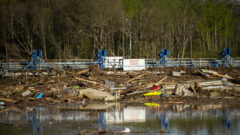
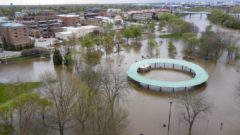
A lot of focus has been placed on Dow Chemical Company—which is headquartered in Midland, Michigan—after two dams breached and flooded many areas around Midland County including near a Superfund site.

Dow stated in a press release Thursday that there were “no reported product releases” and though the floodwaters entered an on-site brine pond used for groundwater remediation, “material from the brine pond does not create any risk to residents or the environment.”

But while there might not be new contamination issues to deal with, much of the progress on the cleanup of Dow’s last chemical contamination might be lost.

Read Now at Great Lakes Now.

Original Article

Great Lakes Now

Great Lakes Now

https://www.greatlakesnow.org/2020/05/chemicals-contaminants-untreated-sewage-midland-dam-breaks/

Natasha Blakely

Is America prepared to handle natural disasters during the COVID-19 pandemic?

By Ari Kelo, theRising

This story originally appeared in theRising and is republished here as part of Covering Climate Now, a global journalism collaboration strengthening coverage of the climate story.

From lengthened hurricane seasons to deadly bushfires, the natural disasters symptomatic of climate change are becoming more and more pronounced each year.

Read Now at Great Lakes Now.

Original Article

Great Lakes Now

Great Lakes Now

https://www.greatlakesnow.org/2020/05/america-prepared-natural-disasters-covid-19-coronavirus/

theRising

Midland Flooding: Climate change and rains exacerbate dam infrastructure issues

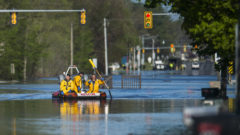
After two dams collapsed under a deluge of stormwater on Tuesday, many residents of Midland, Michigan, have evacuated or are being evacuated.

Michigan Gov. Gretchen Whitmer declared a state of emergency for Midland County on Tuesday after the Edenville and Sanford dams breached.

“If you have not evacuated the area, do so now and get somewhere safe,” Whitmer said. 

Read Now at Great Lakes Now.

Original Article

Great Lakes Now

Great Lakes Now

https://www.greatlakesnow.org/2020/05/midland-flooding-climate-change-infrastructure/

Natasha Blakely

Record Rainfall Prompts Reversal of Chicago River into Lake to Ease Flooding

By Patty Wetli, WTTW News

Chicago is drying out Monday after a record rainfall that flooded streets and yards over the weekend.

According to the National Weather Service, Sunday’s precipitation total at O’Hare Airport was 3.11 inches, the most ever recorded on May 17.

Read Now at Great Lakes Now.

Original Article

Great Lakes Now

Great Lakes Now

https://www.greatlakesnow.org/2020/05/record-rainfall-chicago-river-lake-michigan-flooding/

GLN Editor

Four environmental issues in the Pittsburgh region to keep your eyes on in the age of COVID-19

By Oliver Morrison, PublicSource, through the Institute for Nonprofit News network

COVID-19 cost jobs, closed businesses and limited travel. But the economic ruin has also led to record low levels of pollution and huge reductions in climate change emissions globally.

Some of the changes, such as remote work, could have lasting benefits for the environment, even after the economy restarts.

Read Now at Great Lakes Now.

Original Article

Great Lakes Now

Great Lakes Now

https://www.greatlakesnow.org/2020/05/coronavirus-covid-19-pennsylvania-climate-change-pollution-oil-waste/

PublicSource

May 1, 2020

This week: The Hell of Not Having Running Water During a Pandemic + Lawsuit to Stop Clean Water Rollbacks + Drinking Water Quality Threatened by Climate Change + Increased Water Withdrawal Approved by Judge +  Chicagoans Waiting for Plovers Monty and Rose to Return

The Hell of Not Having Running Water During a Pandemic

Amidst the pandemic, We The People Of Detroit CEO and founder Monica Lewis-Patrick continues her free water delivery service. After Governor Whitmer made an executive order on water restoration, food pantries and nonprofits delivering water are calculating hundreds if not thousands of residents still without running water. For years, We The People Of Detroit has argued that shutoffs threaten the health of impoverished families. African Americans bear the brunt of this pandemic with higher COVID-19 death tolls occurring in the same areas without running water.

Lawsuit to Stop Clean Water Rollbacks

Six environmental groups filed a lawsuit against the Trump administration to stop clean water rollbacks.  The Trump Administration duplicitously named the rollbacks “Navigable Waters Protection Rule” although it would eliminate those protections. The lawsuit contends the rules are a violation of the Clean Water Act.

Drinking Water Quality Threatened by Climate Change

With Great Lakes water temperatures increasing due to climate change, precipitation has also increased, including extreme rain events. Increased rain means increased runoff that dumps nutrient pollution into our waterways. When coupled with high temperatures, this runoff creates the perfect conditions for harmful algal blooms. The combined events create severe threats to our drinking water, demonstrating our vast water supply can still be vulnerable and undrinkable if not properly protected.

Increased Water Withdrawal Approved by Judge

Unfortunately, a judge ruled this week that Néstle Waters Inc. can increase its pumping rate to withdraw 576,000 gallons of groundwater per day.  Michigan Citizens for Water Conservation, an environmental organization that has worked for years to protect groundwater and surface water from water withdrawals, is considering options in response to the decision.

Chicagoans Waiting for Plovers Monty and Rose to Return

A nesting pair of piping plovers at Montrose Beach in Chicago persevered through a music festival and more last summer.  This summer, the plovers, affectionately named Monty and Rose, may not have to share the beach with humans due to the pandemic.

Original Article

Blog – Freshwater Future

Blog – Freshwater Future

https://freshwaterfuture.org/uncategorized/freshwater-weekly-may-5-2020/

Alexis Smith

Milwaukee Neighborhood Pushes Toward Climate Resilience

Over the last two decades, Milwaukee's Walnut Way neighborhood has gradually transformed from lifeless parcels to green space and become a model for others.

Read Now at Great Lakes Now.

Original Article

Great Lakes Now

Great Lakes Now

https://www.greatlakesnow.org/2020/05/rust-resilience-milwaukee-climate-resilience-green/

WUWM-FM, Milwaukee Public Broadcasting

Lake Erie Wind Farm Divides Environmental Activists

The contested case of the Icebreaker Wind Farm has implications for renewable energy in the region.

Read Now at Great Lakes Now.

Original Article

Great Lakes Now

Great Lakes Now

https://www.greatlakesnow.org/2020/04/rust-resilience-lake-erie-wind-farm/

Belt Magazine

Climate change threatens drinking water quality across the Great Lakes

Warmer waters, heavier storms and nutrient pollution are a triple threat to Great Lakes cities' drinking water.

Read Now at Great Lakes Now.

Original Article

Great Lakes Now

Great Lakes Now

https://www.greatlakesnow.org/2020/04/rust-resilience-climate-change-drinking-water-quality/

The Conversation

Lessons in Resilience: As climate and the economy changes, Duluth steps up

Perched on the western shore of the world’s greatest lake, an inland port city offers lessons for resilience in uncertain times.

Read Now at Great Lakes Now.

Original Article

Great Lakes Now

Great Lakes Now

https://www.greatlakesnow.org/2020/04/rust-resilience-climate-change-duluth/

Ensia

Single Systems: Great Lakes cities’ sewer designs mean waste in the waters

A big storm can overwhelm a treatment plant’s capacity, leading to storm and wastewater bypassing the plant and ending up untreated in the lake. 

Read Now at Great Lakes Now.

Original Article

Great Lakes Now

Great Lakes Now

https://www.greatlakesnow.org/2020/04/rust-resilience-sewer-wastewater-infrastructure/

Dave Rosenthal

In the ‘climate refuge’ city of Duluth, a fight brews over the hometown utility

There has been a growing climate movement in Duluth, a city that advertises itself as an outdoor haven with access to fresh air, clean water and Lake Superior.

Read Now at Great Lakes Now.

Original Article

Great Lakes Now

Great Lakes Now

https://www.greatlakesnow.org/2020/04/rust-resilience-minnesota-climate-refuge-utility/

MinnPost

As energy use changes in the Great Lakes, so too does the world’s largest freshwater port

The Port of Duluth-Superior is one of the largest ports in the U.S., and its second largest commodity is coal.

Read Now at Great Lakes Now.

Original Article

Great Lakes Now

Great Lakes Now

https://www.greatlakesnow.org/2020/04/rust-resilience-coal-port-minnesota/

MinnPost

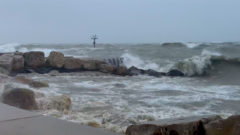
Shrinking Shorelines: Climate change-related erosion threatens Great Lakes coasts

Increasing erosion on the Great Lakes shoreline is threatening beaches, parks and other recreation areas used by people across the region.

Read Now at Great Lakes Now.

Original Article

Great Lakes Now

Great Lakes Now

https://www.greatlakesnow.org/2020/04/rust-resilience-climate-change-shoreline-erosion/

Indiana Public Broadcasting

To protect people in the Great Lakes region from climate extremes, weatherize their homes

As climate change makes heat waves more frequent across the region and the nation, cities will need more tools to protect their residents.

Read Now at Great Lakes Now.

Original Article

Great Lakes Now

Great Lakes Now

https://www.greatlakesnow.org/2020/04/rust-resilience-climate-extremes-weatherization/

The Conversation

Earth Day 2020: How to participate from the safety of your home

This year’s Earth Day is a special one, and not just because it’s the 50th anniversary of the event.

With stay home orders and heavy social distancing recommendations in light of the COVID-19 pandemic, the usual large gatherings of people to show support, clear trash and do more to help the planet just aren’t plausible.

Read Now at Great Lakes Now.

Original Article

Great Lakes Now

Great Lakes Now

https://www.greatlakesnow.org/2020/04/earth-day-2020-participate-from-home/

Natasha Blakely

After the Flood: How Chicago is Coping with the Effects of Climate Change

The city has begun short-term erosion mitigation measures along Chicago’s shoreline.

Read Now at Great Lakes Now.

Original Article

Great Lakes Now

Great Lakes Now

https://www.greatlakesnow.org/2020/04/rust-resilience-flood-chicago-climate-change/

Belt Magazine

From Rust to Resilience: Climate change brings new challenges and opportunities

Great Lakes Now is sharing work from our partners in a project on what climate change means for Great Lakes cities. Here is the initial piece in the series.

Read Now at Great Lakes Now.

Original Article

Great Lakes Now

Great Lakes Now

https://www.greatlakesnow.org/2020/04/rust-resilience-climate-change-great-lakes-cities/

Ensia

Part of trail collapses due to erosion near Lake Michigan

PETOSKEY, Mich. (AP) — A portion of a popular paved trail along a Lake Michigan bay has collapsed due to erosion from high water.

The trail, called the Little Traverse Wheelway, is “falling into the lake as the wind continues and is very dangerous,” Petoskey Parks and Recreation Department said Monday on Facebook.

Read Now at Great Lakes Now.

Original Article

Great Lakes Now

Great Lakes Now

https://www.greatlakesnow.org/2020/04/ap-trail-collapse-erosion-lake-michigan/

The Associated Press

Warm weather has ice fishing industry on thin ice

This article was republished here with permission from Great Lakes Echo.

By Hunter Hicks, Great Lakes Now

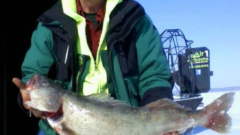
The lack of ice across the Great Lakes region has business booming for those in the ice fishing industry fortunate enough to have safe conditions, but has left others high and dry.

Read Now at Great Lakes Now.

Original Article

Great Lakes Now

Great Lakes Now

https://www.greatlakesnow.org/2020/03/warm-weather-ice-fishing-industry/

Great Lakes Echo

Great Lakes Moment: Decline of bird species should serve as a warning

In this month’s column from Great Lakes Now writer John Hartig, he looks at how climate change is impacting birds around the Great Lakes.

Read Now at Great Lakes Now.

Original Article

Great Lakes Now

Great Lakes Now

https://www.greatlakesnow.org/2020/03/black-terns-michigan-bird-climate-change/

John Hartig

Drops in baseflow can harm stream’s health and the health of the organisms that rely on them. But irrigation can mask climate-driven drops in those flows, said Sue Borchardt, a doctoral student in the department of geography at University of Wisconsin-Milwaukee.

Original Article

Great Lakes Echo

Great Lakes Echo

http://feedproxy.google.com/~r/GreatLakesEcho/~3/jVxP9XVgoqM/

Andrew Blok