...ICY PATCHES ON ROADS MAY RESULT IN LOCALLY HAZARDOUS TRAVEL THIS MORNING... Patchy freezing fog and frost deposition may lead to icy spots on untreated roads this morning. Motorists should be alert for slippery spots and locally hazardous travel conditions.

Original Article

Current Watches, Warnings and Advisories for Brown (WIC009) Wisconsin Issued by the National Weather Service

Current Watches, Warnings and Advisories for Brown (WIC009) Wisconsin Issued by the National Weather Service

https://alerts.weather.gov/cap/wwacapget.php?x=WI126630587E94.SpecialWeatherStatement.12663059BC8CWI.GRBSPSGRB.3b77a733acfe35fc01f412b80021d336
w-nws.webmaster@noaa.gov

For the past few years, the Great Lakes Aquarium in Duluth, Minnesota has had a goal of boosting its attendance to break the 200,000-visitor mark. The organization just announced that it surpassed that goal in 2022, welcoming over 206,000 visitors through its doors. Read the full story by Fox 21 News.

Original Article

Great Lakes Commission

Great Lakes Commission

https://www.glc.org/dailynews/20230106-greatlakesaquarium-newrecord

Hannah Reynolds

There are tens of thousands of abandoned wells throughout the Great Lakes region. Michigan, Ohio and Pennsylvania have each received a $25 million grant from the federal government through the Infrastructure Investment and Jobs Act to plug orphan wells. Orphan wells can contaminate groundwater through the leakage of chemicals like hydrogen sulfide and arsenic, both of which are harmful to humans. Read the full story by Great Lakes Echo.

Original Article

Great Lakes Commission

Great Lakes Commission

https://www.glc.org/dailynews/20230106-federalfunds-orphanwells

Hannah Reynolds

Invasive black carp are spreading through the U.S. Midwest and are threatening Illinois waterways. The Illinois Department of Natural Resources believes black carp have moved up the Illinois River as far as central Illinois. Read the full story by the Manitoulin Expositor.

Original Article

Great Lakes Commission

Great Lakes Commission

https://www.glc.org/dailynews/20230106-invasive-blackcarp

Hannah Reynolds

The City of Detroit has been awarded $5.8 million in funding from the Michigan Department of Environment, Great Lakes, and Energy (EGLE) to redevelop four contaminated properties in the city. EGLE has awarded $2.8 million in funding from brownfield grants and loans and has approved $3 million in brownfield tax increment financing. Read the full story by CBS Detroit.

Original Article

Great Lakes Commission

Great Lakes Commission

https://www.glc.org/dailynews/20230106-egle-redevelop-contaminatedsites

Hannah Reynolds

A new letter clarifies why Michigan’s Department of Environment, Great Lakes and Energy is urging the state’s Department of Natural Resources to reject a National Guard proposal to expand Camp Grayling. Read the full story by the Petoskey News Review.

Original Article

Great Lakes Commission

Great Lakes Commission

https://www.glc.org/dailynews/20230106-pfascleanup-egle-dnr-campgrayling

Hannah Reynolds

To better guide the interventions of emergency services, scientists from the Maurice-Lamontagne Institute in Mont-Joli, Quebec have mapped underwater vegetation in the St. Lawrence River to prioritize places to protect during maritime incidents. Read the full story by The Saxon.

Original Article

Great Lakes Commission

Great Lakes Commission

https://www.glc.org/dailynews/20230106-underwatervegetation-oilspill

Hannah Reynolds

High chloride levels in freshwater can be toxic to aquatic life, increase the potential for harmful algal blooms, disrupt the ecosystem of a river or lake and seep into groundwater, which can corrode pipes and other infrastructure. In other words, that handful of extra salt you’re throwing onto the sidewalk could eventually, in a different form, damage a fish in a nearby river.  Read the full story by the Milwaukee Journal Sentinel.

Original Article

Great Lakes Commission

Great Lakes Commission

https://www.glc.org/dailynews/20230106-roadsalt-impactsonfreshwater

Hannah Reynolds

The U.S. Coast Guard said the tow boat Michigan started to sink in the Port of Milwaukee on Monday this week. Coast Guard Sector Lake Michigan was notified by the National Response Center that the tow boat sank in 26 feet of water. As of Wednesday, the Coast Guard said there is no pollution from the boat and they have deployed safety measures for containment. Read the full story by Spectrum News.

Original Article

Great Lakes Commission

Great Lakes Commission

https://www.glc.org/dailynews/20230106-milwaukee-tugboat

Hannah Reynolds

Scientists: Atmospheric carbon might turn lakes more acidic

By John Flesher, Associated Press

TRAVERSE CITY, Mich. (AP) — The Great Lakes have endured a lot the past century, from supersized algae blobs to invasive mussels and bloodsucking sea lamprey that nearly wiped out fish populations.

Now, another danger: They — and other big lakes around the world — might be getting more acidic, which could make them less hospitable for some fish and plants.

Read Now at Great Lakes Now.

Original Article

Great Lakes Now

Great Lakes Now

https://www.greatlakesnow.org/2023/01/ap-atmospheric-carbon-lakes-more-acidic/

The Associated Press

The California based company refines biogases produced by landfills, food waste or manure from Wisconsin farms into fuel.

The post University of Wisconsin partnership converts manure to jet fuel while easing climate change first appeared on Great Lakes Echo.

Original Article

Great Lakes Echo

Great Lakes Echo

http://greatlakesecho.org/2023/01/06/university-of-wisconsin-partnership-converts-manure-to-jet-fuel-while-easing-climate-change/

Guest Contributor

...PATCHY FREEZING DRIZZLE MAY RESULT IN LOCALLY HAZARDOUS TRAVEL IN THE FOX VALLEY EARLY THIS MORNING... Patchy freezing drizzle is expected across parts of the Fox Valley through about 8 am. Although the main roads and highways have likely been treated, it is possible that there may be minor icing on secondary roads, bridges and overpasses. Locally

Original Article

Current Watches, Warnings and Advisories for Brown (WIC009) Wisconsin Issued by the National Weather Service

Current Watches, Warnings and Advisories for Brown (WIC009) Wisconsin Issued by the National Weather Service

https://alerts.weather.gov/cap/wwacapget.php?x=WI12663049FFA4.SpecialWeatherStatement.1266304A4D60WI.GRBSPSGRB.e905ba1fbd1c8c6a64f3dce0e16f350e

w-nws.webmaster@noaa.gov

...PATCHY FREEZING DRIZZLE MAY RESULT IN LOCALLY HAZARDOUS TRAVEL OVERNIGHT... Patchy freezing drizzle is expected across parts of far northeast, central and east central Wisconsin, including the Fox Valley, through 4 am. Although the main roads and highways have been treated, it is possible that there may be minor icing on secondary

Original Article

Current Watches, Warnings and Advisories for Brown (WIC009) Wisconsin Issued by the National Weather Service

Current Watches, Warnings and Advisories for Brown (WIC009) Wisconsin Issued by the National Weather Service

https://alerts.weather.gov/cap/wwacapget.php?x=WI126630490090.SpecialWeatherStatement.12663049B120WI.GRBSPSGRB.0c0f2b15bfcfca7baaaa2e9688cc90ad

w-nws.webmaster@noaa.gov

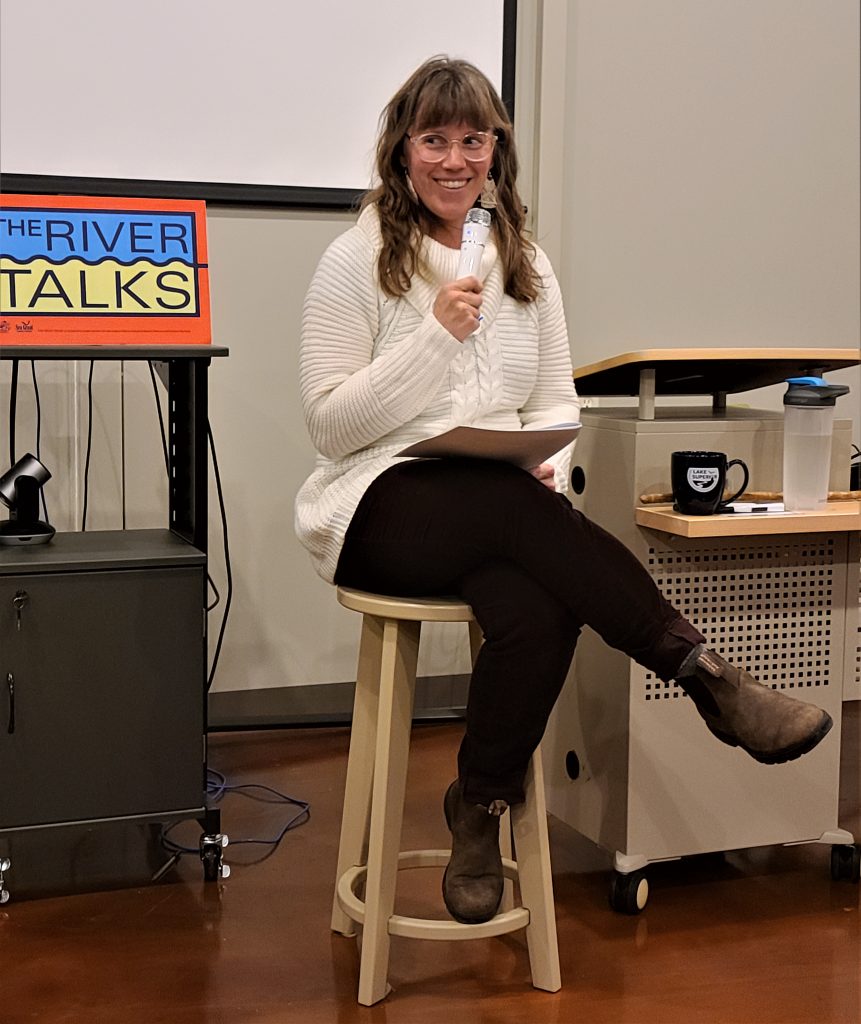
The November River Talk featured a researcher and a youth panel who spoke to the theme: “Tell us what you Love About the River.” Molly Wick, a Lake Superior National Estuarine Research Reserve Margaret A. Davidson Fellow, described a study she designed to help environmental managers understand how the community benefits from local lakes, rivers and streams and how this work could help make those benefits more accessible to everyone. Afterward, a panel of three young people rounded out the discussion with their personal stories about why the St. Louis River is important to them.

Molly Wick. Image credit: Marie Zhuikov, Wisconsin Sea Grant

The Waterway Benefits study Wick is doing for her doctorate at the University of Minnesota Duluth is in the form of an online survey. Simply, she’s studying why people love the river. “That’s the simple version of it,” Wick said. “Of course, there’s a jargon term for it, too: Cultural Ecosystem Services.”

Wick said that Cultural Ecosystem Services is based on the same framework as Ecosystem Services, which is a method of quantifying dollar values on the benefits that people receive from nature. Examples would be how much money is saved by cities that have a healthy flood plain or how much money is saved by having trees that provide shade to homes instead of the homes needing air conditioning.

She emphasized that Cultural Ecosystem Services differs from Ecosystem Services in that it incorporates all the things that are impossible to put a dollar value on, for example, the feelings that nature gives people.

Wick grew up in Two Rivers, Wisconsin, a town on Green Bay on Lake Michigan that she categorizes as having a lot of water around it. Her family had a tradition of going camping most weekends. They traveled to many Wisconsin state parks and “Basically spent our days hanging out by the lakes.”

They swam, canoed, built sandcastles and foraged for wild foods. Wick said she even had her first romantic kiss on a beach, which is an example of an emotional benefit.

Audience members shared their favorite water experiences or benefits. Reserve Director Deanna Erickson said she lived near the Fox River near Oshkosh as a child. Her neighbor would catch gar fish and bring them over in a bucket for Erickson to see. “As a four- or five-year-old, I thought they were so cool!” she said.

Tom Nicodemus shared his memories of a heron rookery that used to be on Pokegama Bay in Superior.

The goal of Wick’s Waterways Benefits Survey is to help measure the benefits of habitat project investments made in the river to help inform future decision making.

“One of the things I hope to do with the data that I collect is be able to look at how different groups of people have different or similar experiences so that managers can use that information to make better decisions and make access to the water more equitable, as well. I don’t want to put different values on these experiences but raise awareness about what values people hold. Protecting these resources depends on having a better understanding and really getting some information about why we love the river into managers’ hands,” Wick said.

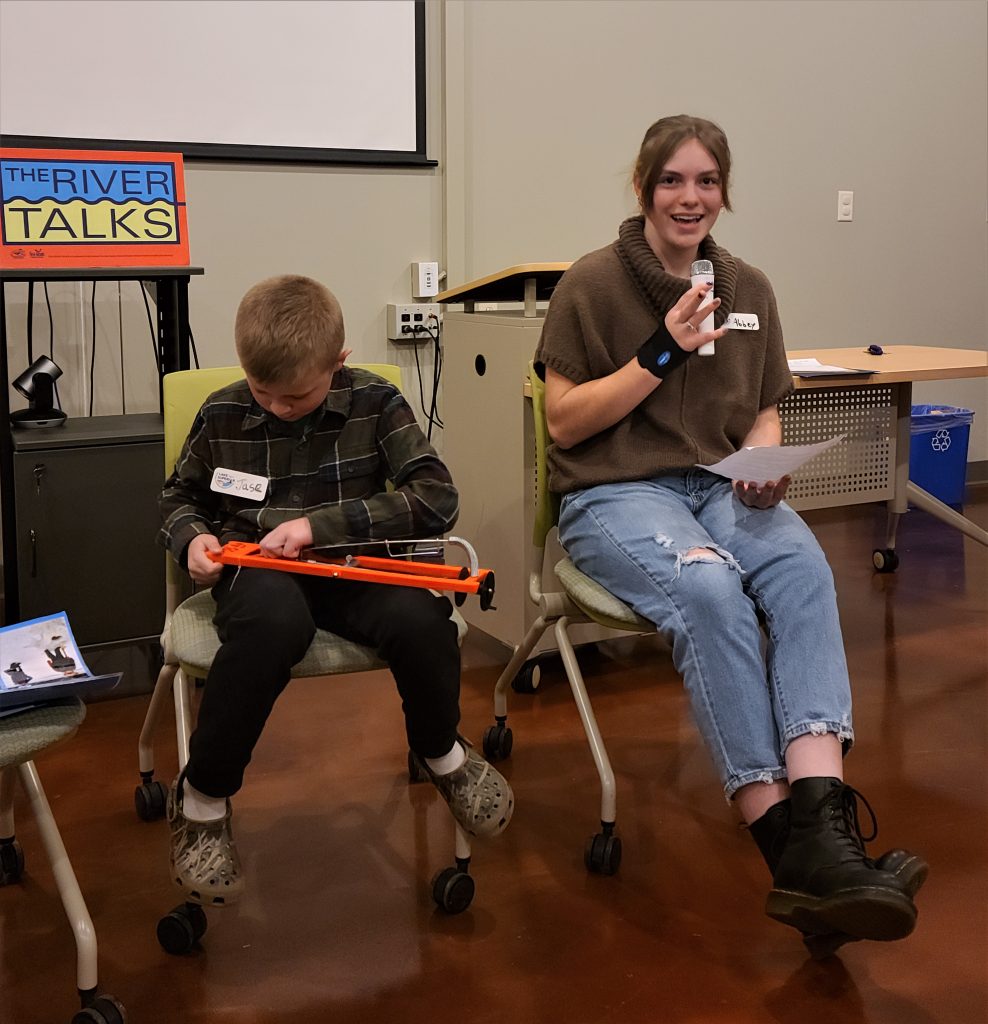
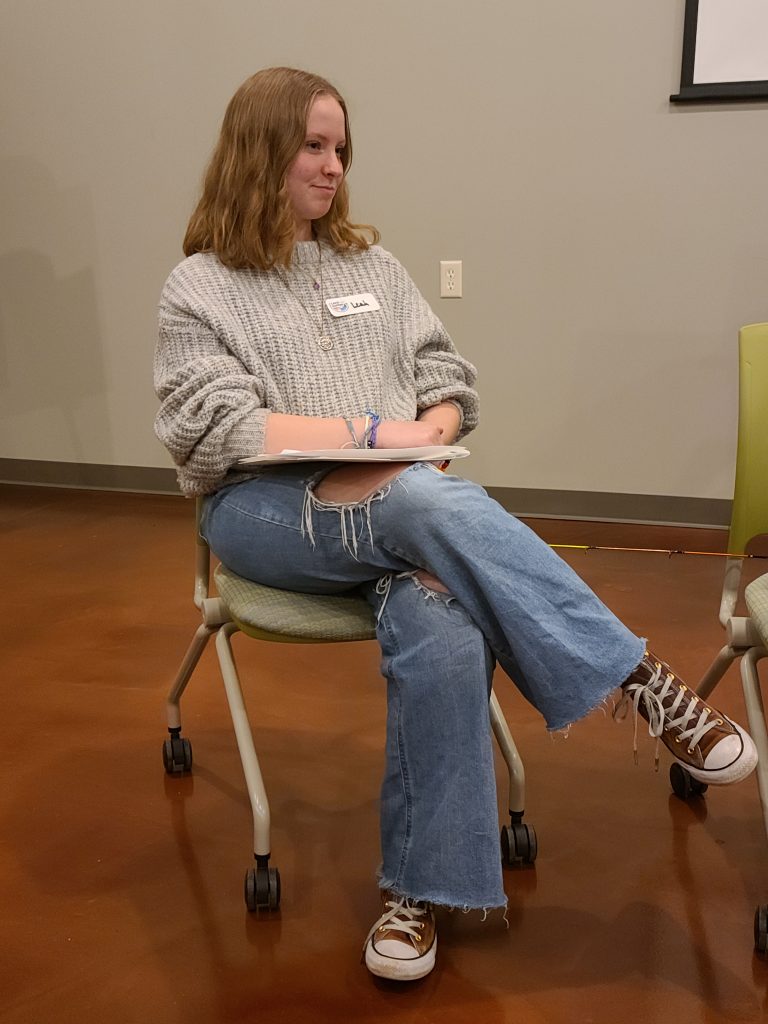
The youth panel was composed of Abbey Watt (ninth grader, Superior High School); Leah Gavin (ninth grader, Superior High School); and Jace Ludwig (fifth grader, Cooper Elementary). They added spirited emotion and energy to the room, which included support of their families and some teachers and friends. Their stories of river connection included humor, home, views of the estuary from bridges and “extra” benefits from activities like ice fishing—family time, eagle sightings and mishaps. All added emphasis with their voice, laugh or things they said that they didn’t initially write down. To get a flavor of the energy in the room as these young people contributed to the River Talk, the essays they read are below:

The St. Louis River
By Abbey Watt

Abbey Watt (right), gives her talk as part of the youth panel while Jace Ludwig preps for his. Image credit: Marie Zhuikov, Wisconsin Sea Grant

There are so many ways that the St. Louis River has impacted my life, whether from seeing its wild waters on my way to and from school or boating through them during the summertime. It connects me and my mom, it connects me and my dad, it connected me and my grandpa, just as it connects to Lake Superior, and I hope it will connect me and my children, though my mom says not for at least 10 years. 

This past couple summers my mom and I have spent countless hours exploring and enjoying all the wonders the river has to offer. We would always make a day of it and pack snacks and lots of extra sunscreen. It is easy for us to lose track of time when relaxed by the rocking of the boat and the sound of the waves splashing against the sides. 

When you’re on the boat, it transports you to a world where nothing really matters – whether you have an exam coming up, whether you have papers due, or just the stress of everyday life – none of that matters when you’re out on the lake or even near it.

My grandfather had been a big fan of fishing on the river, as well as boating, he would troll around just waiting for a fish to bite. Whether the sun was shining or it was super cloudy, it was always a great day to be on the water. Just spending time on the water was a gift in itself.

Every time we drive over the bridge, I take a minute to check up on the river and see how it’s doing that day. Some days the waves topped with white, other days I see only the gentle ripple of the current as the river flows to the lake. It is always a conversation-starter between me and my dad. My favorite view is early in the morning when the fog is still rolling over the bridge and the heat of the river is rising and swirling around. When we drive over the bridge and it is engulfed in fog, it makes me feel like I am in a movie. No matter what the weather is like, the river always glows with elegance and perfection.

Though the river is forever changing, it still feels the same to me. Whenever I come back from a trip, I always look out the window and try to catch a glimpse of the water. That’s how I know I am home.

Many of us, myself included, take our proximity to the river and the lake for granted. We have such an amazing abundance of fresh water running right through our back yard and it is our normal, but for some it is a dream waiting just out of reach. It is a wonder to be able to enjoy time at the beaches, smell the fresh scent of the water, and hear the crashing of waves. 

Some ships pass through the river on the way to deliver cargo. It’s amazing to watch the go by, although it can take a while. Many species of animals rely on its clean water, and the fish depend on the bays and smaller streams to feed and seek shelter. 

I feel like the river is something that connects us all. And Lake Superior is something that connects not only us but people around the world because my father, when he lived all the way across the ocean in Scotland, wrote a paper about the Edmund Fitzgerald. Little did he know he would end up here on our very own Lake Superior. I feel like the water around is just something that connects everything.

Leah Gavin

Leah Gavin. Image credit: Marie Zhuikov, Wisconsin Sea Grant

As someone who has lived in Superior their entire life, I have been around the St. Louis River a lot. But it wasn’t until recently when I was asked to think about it that I realized just how much the river actually means to me.

When I think of the St. Louis River, I think of the hot summer days spent out on my aunt and uncle’s boat. Cruising through the water, relaxing in the sunshine, parking to eat lunch as we listen to the water splash gently against the side of the boat, swimming when we get too warm from the sun, and wrapping up in our towels when we get too cold from the water. I look forward to days like those all year long.

I think of looking out over the river as we drive across the Bong Bridge, and the feeling of pure serenity the view gives me. I think of biking to Billings Park with my friends, taking pictures of each other as though we are professional photographers before sitting at the water’s edge to talk about everything and nothing, spilling our deepest thoughts to the river. I think of taking my younger cousins to the path alongside the water, attempting (and failing) to teach them how to skip stones, watching their curiosity, and trying to answer all of their questions about the world around them. I think of sitting by the river after my grandparents passed away, talking to them as though they could still hear me. And perhaps they could. I think of the early spring and keeping a close eye on the ice, making bets with my mother as to when it will finish melting. I think of leaving for road trips in the early morning, and watching the sun rise over the river, seeing its oranges, pinks, and yellows reflect on the water. Looking out and not being able to tell where the water ends and the sky begins.

What I love about the St. Louis is the peace it brings. The reassurance that no matter what happens it will be there tomorrow. I love the memories it holds, both big and small. I love the beauty of it. But most of all I love the fact that it is and always will be a part of my home.

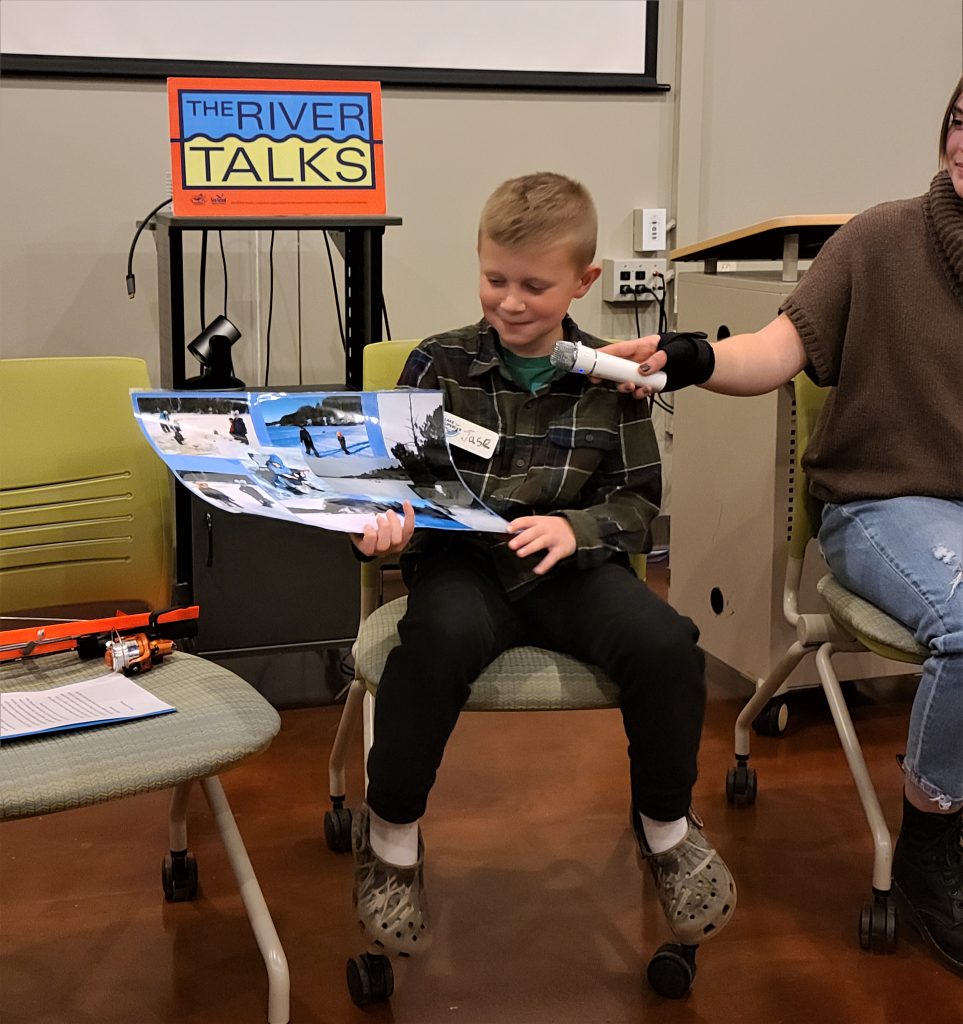
Jace Ludwig

Jace Ludwig illustrated his talk about the river with photos. Image credit: Marie Zhuikov, Wisconsin Sea Grant

My family and I enjoy ice fishing on the river. We have made many trips out there over the years. We usually go to Kimball’s Bay. Sometimes we use our snowmobile to get onto the ice, and sometimes we make the long walk. We try to pick up any litter that we see on the trail and also on the ice. We don’t want that stuff to get into the river or lake. We also pick it up because once we saw an eagle eating bait that someone dumped out and we thought about how we didn’t want the eagle to eat garbage. We see eagles down there a lot. Once, one flew over our heads and landed on a tree right next to us.

We usually don’t set up our ice house when we fish there. We like to put up tip-ups so we can run around and play. My dad likes to jig for fish while we have snowball fights and go on adventures. Once, during a snowball fight, I stepped right into a hole all the way up to my knee. My boot filled with water and I was pretty soaked. Good thing it was a warm sunny day, or our day would’ve ended right away.

We like to explore different paths and trails around the water’s edge. And we really like to find big hills to use our sleds on. It isn’t fun to walk up the big hills, but it is fun to have a contest on who can make it out onto the ice the furthest. And we do all this while my dad catches perch and crappies. We love that we have this area to make great family memories.

Jace showed images after his talk, including the place where he stepped into the watery ice hole, a sledding hill, and the eagle he mentioned in his story.

The next River Talk will be, “Nimaawanji’idimin Giiwitaashkodeng: Working with Fire to Heal the Land on Wisconsin and Minnesota Points.” It will be an in-person and Zoom presentation by Evan Larson, University of Wisconsin-Platteville, and Melonee Montano, Red Cliff tribal member and University of Minnesota graduate student. They will describe a collaborative project that is bringing information from tree rings and oral history together to understand how the Anishinaabeg people used fire to tend the landscape and how the return of fire can contribute to both cultural and ecological restoration. Refreshments will be provided.

Here is the Zoom information:
https://uwmadison.zoom.us/j/92832940429?pwd=TUpJQWhucHB5cUxVQWxXQVF5b1ZIUT09 

Meeting ID: 928 3294 0429
Passcode: 916352
One tap mobile
+19292056099,,92832940429# US (New York)
+13017158592,,92832940429# US (Washington DC)  

Other River Talks will be held Feb. 8, March 8, April 12 and May 10, 2023.

The post Why people love the St. Louis River first appeared on Wisconsin Sea Grant.

Original Article

Blog | Wisconsin Sea Grant

Blog | Wisconsin Sea Grant

https://www.seagrant.wisc.edu/blog/why-people-love-the-st-louis-river/?utm_source=rss&utm_medium=rss&utm_campaign=why-people-love-the-st-louis-river

Marie Zhuikov

Michigan, Ohio and Pennsylvania have each received a $25 million grant from the federal government through the Infrastructure Investment and Jobs Act to plug orphan wells.

The post Federal funds aid efforts to plug orphan wells first appeared on Great Lakes Echo.

Original Article

Great Lakes Echo

Great Lakes Echo

http://greatlakesecho.org/2023/01/05/federal-funds-aid-efforts-to-plug-orphan-wells/

Guest Contributor

...HAZARDOUS TRAVEL CONDITIONS EXPECTED THIS MORNING... A combination of light snow, freezing drizzle and falling temperatures will lead to hazardous travel conditions on untreated roads this morning. Even though snow accumulations will be an inch or less and ice accumulations will be scattered and light, freezing temperatures will result in snow or ice covered roads and

Original Article

Current Watches, Warnings and Advisories for Brown (WIC009) Wisconsin Issued by the National Weather Service

Current Watches, Warnings and Advisories for Brown (WIC009) Wisconsin Issued by the National Weather Service

https://alerts.weather.gov/cap/wwacapget.php?x=WI1266303ACD68.SpecialWeatherStatement.1266303B8050WI.GRBSPSGRB.3b77a733acfe35fc01f412b80021d336
w-nws.webmaster@noaa.gov

...SLIPPERY TRAVEL EXPECTED FOR THE MORNING COMMUTE... A combination of light snow, lingering freezing drizzle and falling temperatures will lead to locally hazardous travel conditions this morning. Even though snow accumulations will be an inch or less and ice accumulations will be scattered and light, freezing temperatures will result in snow or ice covered

Original Article

Current Watches, Warnings and Advisories for Brown (WIC009) Wisconsin Issued by the National Weather Service

Current Watches, Warnings and Advisories for Brown (WIC009) Wisconsin Issued by the National Weather Service

https://alerts.weather.gov/cap/wwacapget.php?x=WI1266303A4C80.SpecialWeatherStatement.1266303B3230WI.GRBSPSGRB.3b77a733acfe35fc01f412b80021d336
w-nws.webmaster@noaa.gov

Study: Toxic PFAS chemical plume detected in Green Bay

By John Flesher, AP Environmental Writer

A large plume of toxic chemicals produced by a plant that manufactures firefighting foam has seeped through groundwater to Lake Michigan’s Green Bay, scientists said Tuesday.

The chemicals belong to a family of compounds known as PFAS, or per- and polyfluoroalkyl substances, which are used widely in consumer products ranging from nonstick cookware and water-repellent sports gear to stain-resistent carpets.

Read Now at Great Lakes Now.

Original Article

Great Lakes Now

Great Lakes Now

https://www.greatlakesnow.org/2023/01/ap-pfas-chemical-plume-detected-green-bay/

The Associated Press

Sea Grant Fisheries Specialist Titus Seilheimer promised a “great adventure” during the premiere of a  new episode of “Feral,” 8 p.m. Monday, Jan. 9, on the Outdoor Channel.

 “In the summer of 2022, I joined Twin Cities chef Yia Vang and 2022 James Beard Award Finalist for ‘Best Chef Midwest’ on the waters of my home lake in northwestern Wisconsin,” Seilheimer said. “We were on a dangerous hunt for an invasive species lurking in the depths of Rusk County’s Clear Lake, the Chinese mysterysnail! Okay, so not a dangerous hunt, but a great adventure.”

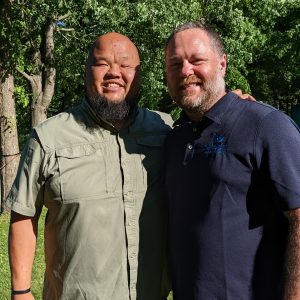
Two men standing side-by-side outdoors.

Titus Seilheimer (right) joins adventure-loving culinary explorer and top chef Yia Vang on a nationally broadcast show, “Feral,” to premiere at 8 p.m. Monday, Jan. 9, on the Outdoor Channel.

Chinese mysterysnails were first reported in the U.S. more than 100 years ago when they showed up in the San Francisco area. They were likely brought to North America for sale in  live markets because they are a popular food in Asia.

They expanded their range over time and were first reported in Wisconsin’s Clear Lake in 2011. Seilheimer said, “I first spotted them shortly after and thought that big snails were a sign of good water quality. Soon after, at an invasive species conference, I was hit with the realization that those big snails in my lake were invasive mysterysnails.”

The snails are larger than the native species in Wisconsin lakes, so they can potentially outcompete the local snails. They also are more protected by their operculum (like a trap door), so they can avoid predation better than native species.

In addition to his culinary skills and ownership of Minneapolis’s Union Hmong Kitchen, Vang is the host of the nationally broadcast program “Feral.” A teaser for the Jan. 9 show recently dropped.  In it, we see Seilheimer in the background, encouraging Vang’s preparation of Chinese mysterysnails in a steaming saute pan. Vang refers to the nonnative snails as the Wagyu of the lake.

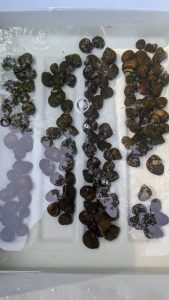
Dozens of snails in a plastic tub.

Nonnative Chinese mysterysnails collected from a Wisconsin lake just before Chef Vang prepared a tasty meal out of them.

The post Eating snails, for science first appeared on Wisconsin Sea Grant.

Original Article

News Releases | Wisconsin Sea Grant

News Releases | Wisconsin Sea Grant

https://www.seagrant.wisc.edu/news/eating-snails-for-science/?utm_source=rss&utm_medium=rss&utm_campaign=eating-snails-for-science

Moira Harrington

Researchers at the Great Lakes Fishery Commission believe they have found a tool to help provide spawning habitat access to native fish, without allowing access to invasive species: combining new technology with an ancient tool, the Archimedes screw. Read the full story by WOOD-TV – Grand Rapids, MI.

Original Article

Great Lakes Commission

Great Lakes Commission

https://www.glc.org/dailynews/20230104-lamprey

Jill Estrada

The $1.7 trillion dollar spending plan recently passed by Congress includes money for a number of environmental issues in Michigan and the Great Lakes region, including the Great Lakes Restoration Initiative. Read the full story by Michigan Public Radio.

Original Article

Great Lakes Commission

Great Lakes Commission

https://www.glc.org/dailynews/20230104-glri-funding

Jill Estrada

Michigan Democrats aiming to erase business friendly environmental laws

By Kelly House, Bridge Michigan

The Great Lakes News Collaborative includes Bridge Michigan; Circle of Blue; Great Lakes Now at Detroit Public Television; and Michigan Radio, Michigan’s NPR News Leader; who work together to bring audiences news and information about the impact of climate change, pollution, and aging infrastructure on the Great Lakes and drinking water.

Read Now at Great Lakes Now.

Original Article

Great Lakes Now

Great Lakes Now

https://www.greatlakesnow.org/2023/01/michigan-democrats-aiming-erase-business-friendly-environmental-laws/

Bridge Michigan

A new report by RentCafe documents the nationwide trend. So-called adaptive reuse apartments are more popular than new apartment developments from 2020-2021, the study says. 

The post Cities of tomorrow are surprisingly old first appeared on Great Lakes Echo.

Original Article

Great Lakes Echo

Great Lakes Echo

http://greatlakesecho.org/2023/01/04/cities-of-tomorrow-are-surprisingly-old/

Guest Contributor

...PATCHY DENSE FOG EXPECTED ACROSS PARTS OF CENTRAL AND EAST CENTRAL WISCONSIN... Areas of fog, with patchy dense fog and visibilities as low as one-quarter mile, will continue across parts of central and east central Wisconsin through the morning commute. Poor visibilities will result in locally hazardous travel conditions.

Original Article

Current Watches, Warnings and Advisories for Brown (WIC009) Wisconsin Issued by the National Weather Service

Current Watches, Warnings and Advisories for Brown (WIC009) Wisconsin Issued by the National Weather Service

https://alerts.weather.gov/cap/wwacapget.php?x=WI1266302B1468.SpecialWeatherStatement.1266302C1700WI.GRBSPSGRB.e8795dd729b8540e859d14c1b3c1adcd

w-nws.webmaster@noaa.gov

...WINTRY PRECIPITATION WILL RESULT IN HAZARDOUS TRAVEL CONDITIONS ACROSS NORTH-CENTRAL, FAR NORTHEAST, AND PORTIONS OF CENTRAL WISCONSIN THIS AFTERNOON AND TONIGHT... The primary precipitation band generated by a slow moving storm system will push across the area during the mid to late afternoon hours. The precipitation will fall primarily as snow and sleet

Original Article

Current Watches, Warnings and Advisories for Brown (WIC009) Wisconsin Issued by the National Weather Service

Current Watches, Warnings and Advisories for Brown (WIC009) Wisconsin Issued by the National Weather Service

https://alerts.weather.gov/cap/wwacapget.php?x=WI1266301D803C.SpecialWeatherStatement.1266301DCAD8WI.GRBSPSGRB.3b77a733acfe35fc01f412b80021d336
w-nws.webmaster@noaa.gov

Great Lakes Moment: The Great Blue Herons of Stony Island

Great Lakes Moment is a monthly column written by Great Lakes Now Contributor John Hartig. Publishing the author’s views and assertions does not represent endorsement by Great Lakes Now or Detroit Public Television.

Have you ever gone for a peaceful walk along a creek or lake and been spooked by the sound of what you think is a pterodactyl?

Read Now at Great Lakes Now.

Original Article

Great Lakes Now

Great Lakes Now

https://www.greatlakesnow.org/2023/01/great-lakes-moment-great-blue-herons-stony-island/

John Hartig

...WINTRY PRECIPITATION WILL SPREAD NORTH ACROSS THE AREA TODAY... A slow moving storm system will continue to approach the area from the Central Plains today. The leading band of precipitation from the storm moved across central and east-central Wisconsin overnight, producing a wintry mix of snow, sleet, and freezing rain.

Original Article

Current Watches, Warnings and Advisories for Brown (WIC009) Wisconsin Issued by the National Weather Service

Current Watches, Warnings and Advisories for Brown (WIC009) Wisconsin Issued by the National Weather Service

https://alerts.weather.gov/cap/wwacapget.php?x=WI1266301CE26C.SpecialWeatherStatement.1266301D5B84WI.GRBSPSGRB.3b77a733acfe35fc01f412b80021d336
w-nws.webmaster@noaa.gov

A new study has found that a plume of per- and polyfluoroalkyl substances (PFAS) from an industrial source has made its way into Green Bay, Lake Michigan, through the movement of groundwater.

PFAS are often referred to as “forever chemicals” because they do not readily break down in the environment. They have been used to make a wide range of products resistant to water, grease, oil and stains and are also found in firefighting foams, which are a major source of environmental PFAS contamination. The chemical compounds have been shown to have adverse effects on human health.

Christy Remucal with the University of Wisconsin-Madison Department of Civil and Environmental Engineering, and postdoctoral co-investigator Sarah Balgooyen published their work in the Dec. 27, 2022, issue of the journal Environmental Science & Technology, https://pubs.acs.org/doi/10.1021/acs.est.2c06600 It was funded by a grant from the Wisconsin Sea Grant College Program.

“We used a forensics approach to investigate how the PFAS fingerprint from an industrial source changes after undergoing environmental and engineered processes,” Remucal said.

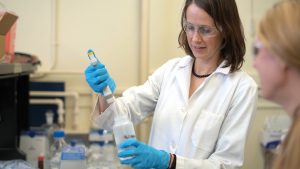
Woman wearing lab goggles, gloves and a lab coat in a lab.

Researcher Christy Remucal in her lab on the University of Wisconsin-Madison campus is analyzing water samples taken from a known contamination site.

Researchers tracked the movement of PFAS through groundwater and surface water flow, as well as the chemicals’ presence in biosolids on land. Analysis of samples showed that, unfortunately, a large PFAS plume has moved into Green Bay, Lake Michigan.

Green Bay is one of the largest bays on the Great Lakes, an interconnected freshwater system providing drinking water for 30 million U.S. and Canadian residents. That makes it even more important for researchers to understand what contaminants are present and where they may have come from.

The source of this Great Lakes contamination has been traced to Tyco Fire Products. The company’s fire-training facilities in Marinette and Peshtigo have previously been identified as a source of PFAS contamination in groundwater and private drinking water wells in the area.

The forensic technique in this study used PFAS fingerprinting, a process that uses ratios of individual PFAS compounds to identify PFAS contaminants and their sources. In this case, the PFAS fingerprint in Green Bay is nearly identical to PFAS associated with Tyco and includes PFAS known to be active ingredients in firefighting foams. This fingerprinting method could be used to hold polluting companies responsible for the contaminated water, the researchers said.

The study also found that PFAS associated with the industrial facility are present in streams near some agricultural fields. The researchers believe this PFAS contamination may have come from the treated biosolids many farmers use to fertilize their fields.

Biosolids are the product of wastewater treatment and are rich in nutrients like nitrogen and phosphorus. PFAS in wastewater undergo extensive processing and some PFAS tend to concentrate in biosolids during treatment.

Remucal and Balgooyen determined that PFAS from biosolids can still mobilize after being spread on land. So, when farmers spread biosolids on their fields, PFAS can eventually make their way to adjacent streams.

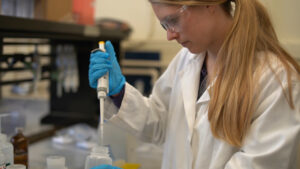
Blonde woman wearing safety goggles, gloves and a lab coat in a lab.

Sarah Balgooyen is a postdoctoral investigator of PFAS, which is a group of man-made chemicals known for stain- and water-resistance, but also causes cancer in humans.

“Treated biosolids are commonly spread on fields all across Wisconsin,” Balgooyen said. “This information may impact how municipalities across Wisconsin and other states approach the use of biosolids as an agricultural fertilizer.”

The post New study: Northeastern Wisconsin PFAS plume moves into Green Bay via groundwater first appeared on Wisconsin Sea Grant.

Original Article

News Releases | Wisconsin Sea Grant

News Releases | Wisconsin Sea Grant

https://www.seagrant.wisc.edu/news/new-study-northeastern-wisconsin-pfas-plume-moves-into-green-bay-via-groundwater/?utm_source=rss&utm_medium=rss&utm_campaign=new-study-northeastern-wisconsin-pfas-plume-moves-into-green-bay-via-groundwater

Moira Harrington

...WINTRY PRECIPITATION WILL SPREAD NORTH ACROSS THE AREA TODAY... A slow moving storm system will approach the area from the Central Plains today. The leading band of precipitation from the storm moved across central and east-central Wisconsin overnight, producing a wintry mix of snow, sleet, and freezing rain. That band of precipitation has dissipated, but additional precipitation

Original Article

Current Watches, Warnings and Advisories for Brown (WIC009) Wisconsin Issued by the National Weather Service

Current Watches, Warnings and Advisories for Brown (WIC009) Wisconsin Issued by the National Weather Service

https://alerts.weather.gov/cap/wwacapget.php?x=WI1266301C8ED4.SpecialWeatherStatement.1266301CE078WI.GRBSPSGRB.3b77a733acfe35fc01f412b80021d336
w-nws.webmaster@noaa.gov

Utilities and government agencies are cooperating in Michigan, Ohio, Indiana and other Great Lakes states to ease the burden and risks of energy uncertainty for low-income households.

The post Study details impact of COVID-19 pandemic on energy bills first appeared on Great Lakes Echo.

Original Article

Great Lakes Echo

Great Lakes Echo

http://greatlakesecho.org/2023/01/03/study-details-impact-of-covid-19-pandemic-on-energy-bills/

Guest Contributor

...A WINTRY MIX TO CREATE HAZARDOUS TRAVEL CONDITIONS OVER THE REGION TODAY INTO TONIGHT... .A wintry mix of snow, sleet and freezing rain will lift north across the region today. The wintry mix will likely result in ice accumulations on flat and elevated surfaces, including roadways, sidewalks, and parking lots. Snow accumulations will be likely over

Original Article

Current Watches, Warnings and Advisories for Brown (WIC009) Wisconsin Issued by the National Weather Service

Current Watches, Warnings and Advisories for Brown (WIC009) Wisconsin Issued by the National Weather Service

https://alerts.weather.gov/cap/wwacapget.php?x=WI1266301BD228.WinterWeatherAdvisory.1266301CADB0WI.GRBWSWGRB.1a56ec5212698992121b01112bcd78e1

w-nws.webmaster@noaa.gov

PFAS News Roundup: 3M says it will stop making ‘forever chemicals’ by 2025, but global problem remains

PFAS, short for per- and polyfluoroalkyl substances, are a group of widespread man-made chemicals that don’t break down in the environment or the human body and have been flagged as a major contaminant in sources of water across the country.

Keep up with PFAS-related developments in the Great Lakes area.

Read Now at Great Lakes Now.

Original Article

Great Lakes Now

Great Lakes Now

https://www.greatlakesnow.org/2023/01/pfas-news-roundup-3m-stop-forever-chemicals-2025-global-problem-remains/

Kathy Johnson

Into October, there were higher air temperatures in the entire northwest region than ever before.

The post Lake Erie algae in 2022 worse than predicted; it plateaued rather than peaked first appeared on Great Lakes Echo.

Original Article

Great Lakes Echo

Great Lakes Echo

http://greatlakesecho.org/2023/01/02/lake-erie-algae-in-2022-worse-than-predicted-it-plateaued-rather-than-peaked/

Guest Contributor

...A SLOW MOVING STORM SYSTEM COULD CREATE HAZARDOUS TRAVEL CONDITIONS ACROSS THE AREA MONDAY NIGHT THROUGH WEDNESDAY... A slow moving storm system tracking northeast from the central Plains will bring a wintry mix to the area during the first couple work days of the upcoming work week. Precipitation from the storm will overspread the area Monday night and continue into Tuesday.

Original Article

Current Watches, Warnings and Advisories for Brown (WIC009) Wisconsin Issued by the National Weather Service

Current Watches, Warnings and Advisories for Brown (WIC009) Wisconsin Issued by the National Weather Service

https://alerts.weather.gov/cap/wwacapget.php?x=WI12662FFEFC84.SpecialWeatherStatement.1266300B96B0WI.GRBSPSGRB.3b77a733acfe35fc01f412b80021d336
w-nws.webmaster@noaa.gov

Welcome to the Fall/Winter 2022 edition of the Upper Midwest Water Science Center (UMid WSC) newsletter.

This edition contains office news, a 2022 quarter 4 data highlight, thre project features, two employee features, a social media holiday feature, and all UMid WSC products published October 2022 through December 2022.

Click the link below to access the newsletter.

Original Article

Wisconsin

Wisconsin

http://www.usgs.gov/centers/upper-midwest-water-science-center/news/upper-midwest-water-science-center-fallwinter-2022?utm_source=comms&utm_medium=rss&utm_campaign=news

jvelkoverh@usgs.gov

Below are all products released by the Upper Midwest Water Science Center in the first quarter of fiscal year 2023 (October 1, 2022 - December 31, 2022)

Original Article

Wisconsin

Wisconsin

https://www.usgs.gov/centers/upper-midwest-water-science-center/news/upper-midwest-water-science-center-products?utm_source=comms&utm_medium=rss&utm_campaign=news

jvelkoverh@usgs.gov