Earth Day 2020: How to participate from the safety of your home
2020-04-21
This year’s Earth Day is a special one, and not just because it’s the 50th anniversary of the event.
With stay home orders and heavy social distancing recommendations in light of the COVID-19 pandemic, the usual large gatherings of people to show support, clear trash and do more to help the planet just aren’t plausible.
Great Lakes Now
https://www.greatlakesnow.org/2020/04/earth-day-2020-participate-from-home/
Environmental Justice During COVID-19: Communities bear extra burden
2020-04-21

When you ask well-intentioned government officials about environmental justice issues and why they are so difficult to remedy, the response usually goes like this:
“Some of the challenges we see as environmental problems are really rooted in decades of disinvestment in parts of our urban communities,” Liesl Clark, director of Michigan’s Department of Environment, Great Lakes and Energy told Great Lakes Now in a 2019 interview.
Great Lakes Now
https://www.greatlakesnow.org/2020/04/environmental-justice-during-covid-19-coronavirus/
Freshwater Future Weekly: April 21, 2020
2020-04-21
|
|||||||||||||
|
|||||||||||||
|
Blog – Freshwater Future
https://freshwaterfuture.org/uncategorized/freshwater-future-weekly-april-21-2020/
Piping plover monitoring, protection work at Sauble suspended until further notice
2020-04-21
Normally at this time of year, the Plover Lovers would be seeking volunteers to help monitor and educate the public about the birds this spring and summer, but the volunteer program has been has been cancelled until further notice. Read the full story by Owen Sound Sun Times.
Great Lakes Commission
https://www.glc.org/dailynews/20200421-piping-plover
Public troubled by WAFB funding going to more studies – not cleanup
2020-04-21
The Air Force (AF) is allocating $13.5 million toward per- and polyfluoroalkyl substances (PFAS) remediation at the former Wurtsmith Air Force Base (WAFB) in Oscoda, MI many assumed this would be used for PFAS clean up – it was learned that the AF plans to use the funds for more research and not on direct cleanup. Read the full story by Iosco County News Herald.
Great Lakes Commission
https://www.glc.org/dailynews/20200421-pfas
St. Ignace shipyard receives U.S. Transportation grant for improvements
2020-04-21
The U.S. Department of Transportation’s Maritime Administration (MARAD) awarded $752,933 in funding to Mackinac Island Ferry Company in St. Ignace; the shipyard is one of 24 U.S. small shipyards receiving part of a $19.6 million in grants through the Small Shipyard Grant Program. Read the full story by UpNorthLive.
Great Lakes Commission
https://www.glc.org/dailynews/20200421-shipyard
Cheboygan being considered as stop for Great Lakes cruise ships
2020-04-21
The City of Cheboygan is being considered as a stop for cruise ships touring the Great Lakes along with several other Michigan cities along the coast including Traverse City and Alpena. Read the full story by Cheboygan Daily Tribune.
Great Lakes Commission
https://www.glc.org/dailynews/20200421-cruise
Ludington Lake jump breaks tradition; hosts ‘Jump Where You Are’ campaign
2020-04-21
Social distancing has caused the annual Michigan Ludington Lake Jump, which has raised nearly $600,000 for various causes over the past 20 years, to record themselves jumping into chilly water at home instead of the frigid Lake Michigan waters. Read the full story by 9 & 10 News.
Great Lakes Commission
https://www.glc.org/dailynews/20200421-lake-jump
DNR updates changes proposed for Silver Lake Basin boating access site in Marquette County
2020-04-21
Having gathered public input from boaters and anglers, the Michigan Department of Natural Resources will not develop the Silver Lake Basin boating access site in Marquette County as a walk-in-only facility. Read the full story by WLUC- TV – Nagaunee, MI.
Great Lakes Commission
https://www.glc.org/dailynews/20200421-dnr-boating
Van Buren Conservation District gets $413,000 grant to reduce runoff
2020-04-21
The Van Buren Conservation District has been awarded a $413,000 grant to help prevent runoff into Michigan’s Pine and Mill Creeks. Read the full story by 94.9 WSJM – St. Joseph, MI.
Great Lakes Commission
https://www.glc.org/dailynews/20200421-runoff
Manktelow to lead GOP on lake-flooding issues
2020-04-21
New York Assemblyman Brian Manktelow has been tapped by Assembly Minority Leader Will Barclay to advocate for homeowners and businesses along the Lake Ontario shoreline whose properties have suffered thousands of dollars in flooding damage two of the past three years from record lake levels. Read the full story by Finger Lake Times.
Great Lakes Commission
https://www.glc.org/dailynews/20200421-ontario-flooding
Midwest water pollution up as EPA enforcement goes down
2020-04-21
A new report shows the number of industrial facilities reporting water pollution violations in the Midwest has spiked since 2017, which could be due to a decline in enforcement at the Environmental Protection Agency. Read the full story by WFIU Public Radio.
Great Lakes Commission
https://www.glc.org/dailynews/20200421-epa-pollution
Clean Water Rollbacks an Assault on Public Health
2020-04-21
The Trump Administration announced today its final policy to replace the Obama-era “Clean Water Rule” that governed how the EPA regulates streams, wetlands and other bodies of water.
The Trump Administration’s policy greatly reduces clean water protections, and is the latest in a recent series of administration rollbacks of clean water and clean air protections which have tended to disproportionately impact low-income communities and communities of color. The Healing Our Waters-Great Lakes Coalition strongly opposes the move.
“We strongly oppose this move from the Trump administration to finalize its attempt to weaken clean water protections,” said Laura Rubin, director of the Healing Our Waters – Great Lakes Coalition. “All of our waters are connected, and this new rule threatens the public health of the more than 30 million Americans who rely on the Great Lakes for drinking water.
“Clean Water is a basic need and a top health priority. With many of our towns and cities still living with unsafe drinking water, now is not the time to cut back on clean water enforcement. We need more – not less – protection for clean water.
“With this assault on clean water protections, the administration is undermining efforts to restore the Great Lakes, threatening drinking water supplies, jeopardizing public health, and damaging the outdoor economy and quality of life of the Great Lakes region.”
The post Clean Water Rollbacks an Assault on Public Health appeared first on Healing Our Waters Coalition.
Healing Our Waters Coalition
https://healthylakes.org/clean-water-rollbacks-an-assault-on-public-health/
From Rust to Resilience: Climate change brings new challenges and opportunities
2020-04-21
From the headwaters of the St. Lawrence River in the east to the shores of Lake Superior in the west, the communities that grew up along the Great Lakes and weathered so many transitions along the way are bracing for what could be the biggest transition of all. Read the full story by Great Lakes Now.
Great Lakes Commission
https://www.glc.org/dailynews/20200421-climate-change
After the Flood: How Chicago is Coping with the Effects of Climate Change
2020-04-21
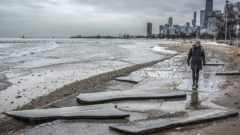
The city has begun short-term erosion mitigation measures along Chicago’s shoreline.
Great Lakes Now
https://www.greatlakesnow.org/2020/04/rust-resilience-flood-chicago-climate-change/
COVID-19 pro tip: keep your glasses from fogging
2020-04-21
Steamed by the precautions needed to limit the spread of the coronavirus? Check these tips for keeping your glasses from fogging up when you wear a mask.
Great Lakes Echo
http://greatlakesecho.org/2020/04/21/covid-19-pro-tip-keep-your-glasses-from-fogging/
Special Weather Statement issued April 20 at 6:36PM CDT by NWS
2020-04-20
...SIGNIFICANT WEATHER ADVISORY FOR SOUTHEASTERN WOOD...NORTHWESTERN BROWN...PORTAGE...SOUTHEASTERN MARATHON...SOUTHWESTERN MENOMINEE... NORTHWESTERN WINNEBAGO...WAUSHARA...WAUPACA...OUTAGAMIE AND SHAWANO COUNTIES UNTIL 730 PM CDT... At 633 PM CDT, Doppler radar was tracking a line of strong showers and isolated thunderstorms along a line extending from 9 miles north
Current Watches, Warnings and Advisories for Brown (WIC009) Wisconsin Issued by the National Weather Service
https://alerts.weather.gov/cap/wwacapget.php?x=WI125F46DF5180.SpecialWeatherStatement.125F46EB0EF8WI.GRBSPSGRB.28fa56c34ee2749d29219db6cefd3779
From Rust to Resilience – Episode 1013
2020-04-20
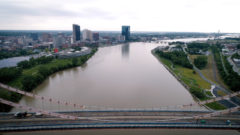
Rebuilding Chicago’s iconic lakefront, managing Buffalo’s rainwater and sewage, and tracking the annual algal blooms in Lake Erie are all part of the Great Lakes region’s effort to manage the impacts of climate change. This month, Great Lakes Now takes you to meet the citizens, city leaders and scientists who are working on these issues.
Great Lakes Now
https://www.greatlakesnow.org/2020/04/from-rust-to-resilience-episode-1013/
Special Weather Statement issued April 20 at 3:08PM CDT by NWS
2020-04-20
...SHOWERS COULD CAUSE LOCALLY GUSTY WINDS OVER 50 MPH THIS AFTERNOON... Showers will continue to track through the region this afternoon as a cold front sinks south. West to southwest winds are currently gusting to 35 to 40 mph, however isolated gusts over 50 mph have been reported near the showers. Some isolated thunderstorms are
Current Watches, Warnings and Advisories for Brown (WIC009) Wisconsin Issued by the National Weather Service
https://alerts.weather.gov/cap/wwacapget.php?x=WI125F46DED160.SpecialWeatherStatement.125F46DF494CWI.GRBSPSGRB.169e525967fffcb56364c00ce5e3eb1d
From Rust to Resilience: Climate change brings new challenges and opportunities
2020-04-20

Great Lakes Now is sharing work from our partners in a project on what climate change means for Great Lakes cities. Here is the initial piece in the series.
Great Lakes Now
https://www.greatlakesnow.org/2020/04/rust-resilience-climate-change-great-lakes-cities/
Project will cap contaminated sediment along Detroit River
2020-04-20

DETROIT (AP) — The U.S. Environmental Protection Agency has signed a $2.9 million agreement to remediate contaminated sediment along Detroit’s east riverfront.
The cleanup will allow for further expansion of the popular Detroit Riverwalk.
Work will be funded through a Great Lakes Legacy Act cost-sharing partnership with the Detroit Riverfront Conservancy.
Great Lakes Now
https://www.greatlakesnow.org/2020/04/ap-project-cap-contaminated-sediment-detroit-river/
Report: As EPA pulls back under Trump, serious pollution rises on Great Lakes
2020-04-20
President Donald Trump’s administration has scaled back enforcement of environmental regulations in the Great Lakes region — and it’s having a noticeable, negative impact, according to the U.S. Environmental Protection Agency’s own data. Read the full story by The Detroit Free Press.
Great Lakes Commission
https://www.glc.org/dailynews/20200420-great-lakes-pollution
Project will cap contaminated sediment along Detroit River
2020-04-20
The U.S. Environmental Protection Agency has signed a $2.9 million agreement to remediate contaminated sediment along Detroit, Michigan’s east riverfront. Read the full story by The Associated Press.
Great Lakes Commission
https://www.glc.org/dailynews/20200420-detroit-river
$400K federal grant goes to Elk Rapids for green infrastructure
2020-04-20
A $400,000 federal grant for green infrastructure projects was awarded to Elk Rapids, Michigan, a small village along the Lake Michigan shoreline near Traverse City. Read the full story by the Traverse City Record Eagle.
Great Lakes Commission
https://www.glc.org/dailynews/20200420-green-infrastructure
Freighters set sail amid coronavirus pandemic, unpredictable economy
2020-04-20
Now that winter is over, freighters are fanning out around the Great Lakes. But much has changed since the Soo Locks closed. Read the full story by The Times Herald.
Great Lakes Commission
https://www.glc.org/dailynews/20200420-freighters
As birds battle for habitat on sinking island, biologists step in
2020-04-20
Birds flocked around Minnesota’s Interstate Island while construction workers distributed dirt around the island on Wednesday, April 15, in an effort to double the size of the island and expand the dwindling nesting sites of the common tern. Read the full story by the Star Tribune.
Great Lakes Commission
https://www.glc.org/dailynews/20200420-tern-nesting
Smith Boys Shipyard in North Tonawanda to receive federal grant
2020-04-20
Rep. Brian Higgins (N.Y.-26) announced on Monday that the Smith Boys Shipyard in North Tonawanda, New York will receive a federal grant worth over $300,000. Read the full story by WKBW – TV – Buffalo, NY.
Great Lakes Commission
https://www.glc.org/dailynews/20200420-shipyard
Lake Michigan continues to rise, up another inch
2020-04-20
The U.S. Army Corps of Engineers’ weekly report released Friday shows Lake Michigan is four inches above the April record set in 1986. Read the full story by WOOD – TV – Grand Rapids, MI.
Great Lakes Commission
https://www.glc.org/dailynews/20200420-lake-michigan
Smith: Steelhead fishing in Wauwatosa? Restoration projects on the Menomonee are showing their value.
2020-04-20
A series of projects on Wisconsin’s Menominee River, funded by the Great Lakes Restoration Initiative, have enhanced fish passage, added fish and wildlife habitat and helped reconnect its upstream tributaries with Lake Michigan. Read the full story by The Milwaukee Journal Sentinel.
Great Lakes Commission
https://www.glc.org/dailynews/20200420-menomonee
Watchdog groups file safety concerns on Fermi 2 nuclear reactor
2020-04-20
A coalition of watchdog groups have filed a formal petition to stop Fermi 2 nuclear reactor in Michigan from further operations, claiming long-required repair work needs to be fully completed in order to avoid a potential “major nuclear accident.” Read the full story by the Windsor Star.
Great Lakes Commission
https://www.glc.org/dailynews/20200420-nuclear
Earth Week: Watching Great Lakes Now and want learning activities to match?
2020-04-20
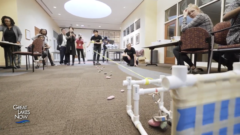
In honor of Earth Week, Great Lakes Now programs are re-airing on Detroit Public TV. All of these shows have some learning activities coordinated with them, so we thought we’d bring them to you in one place. And you’re in that place. Whether you’re interested in recreation on the lakes, “fatbergs,” water pollution or fish populations, here are the links to episodes and their coordinated lesson plans and activities you can do at home with your children:
Episode 1006: Waters Restored
Floating islands on the Chicago River are creating habitats for fish, turtles and birds inside the city waterway, while up north in Lake Superior, scientists are working to protect a rocky reef from legacy mining pollution.
Great Lakes Now
https://www.greatlakesnow.org/2020/04/earth-week-great-lakes-now-learning-activities/
H.O.M.E.School Week 3: Earth Week
2020-04-20
It’s the 50th Anniversary of Earth Day and we’re celebrating our big blue planet. This week, we’ll have three special activities for H.O.M.E.School students and their families.
This week, we will learn how much of the Earth’s water is freshwater, how we as humans use it, and some ways we can conserve and protect the Great Lakes. We’ll also think about the challenges many families face when they’re unable to get access to clean, safe drinking water.
Time/Materials
These activities will take up to 30 minutes per day.
You’ll need:
- Computer
- Optional: printer and writing utensil
Ready? Head to the Classroom!
Watch the video below to learn about freshwater and the Great Lakes.
Share the Learning
Discuss with you kid(s): Do you think there is a lot of water on planet Earth? What is the difference between saltwater and freshwater? How do you use freshwater? Why are the Great Lakes important to you? What do you think you could do to help preserve the Great Lakes?
Activity
Complete the Know Your H20 Challenge, where you and your household will log water consumption throughout one day. Then discuss how we use water, and what it means to not have water.
Check back Wednesday for the second activity.
Deep Dive
Want to learn more? Check out these resources!
- Learn more about World Water Day and how to protect our precious water resources from SCARCE – a local organization that supports teachers and individuals in protecting our planet.
- Learn about water conservation practices:
- Visit the Environmental Protection Agency’s Water Sense for Kids page to learn some easy, everyday ways to save water.
- Then take our Know Your H2O Quiz to see if you know how to conserve and protect Great Lakes water.
- Graph your water use logs before and after water conservation practices with our “Water, Water Everywhere” lesson from our Great Lakes in My World K-8 curriculum (Grades 4 & up).
- Visit the Environmental Protection Agency’s Water Sense for Kids page to learn some easy, everyday ways to save water.
- Review this “Watery World” activity from Atlantic Cup’s Kids Portal to learn more about the freshwater and saltwater on Earth.
Find more Great Lakes lessons at H.O.M.E.School.
The post H.O.M.E.School Week 3: Earth Week appeared first on Alliance for the Great Lakes.
News – Alliance for the Great Lakes
News – Alliance for the Great Lakes
https://greatlakes.org/2020/04/homeschool-earth-week/
Know Your H20: Earth Week Challenge
2020-04-20
Many of us take the water flowing from our taps at home for granted. The average American uses 80-100 gallons of water per day. Living in the Great Lakes region, it’s hard to imagine life without water.
But many people in Great Lakes communities don’t have access to, or can’t afford, safe, clean water at home. How is this possible?
Costs for residential water and sewer service are going up, forcing people to make economic trade-offs to pay water and sewer bills. And water is contaminated in many areas — from lead-contaminated drinking water to PFAS contaminated ground water. No one should have to choose between food and clean water.
Access to clean water is more important than ever. Covid-19 has reinforced the deep connection between water and public health. Hand-washing is vital public health advice in this crisis, but you can’t wash your hands, or prevent the spread of this virus, without access to water.
Earth Week Challenge: Know Your H20
How much water do you or your family use? Can you imagine what it would be like to be without clean water?
Take our Know Your H20 challenge. Track your water consumption for one day with our water log. And let us know what you learn.
For the challenge, keep a log of how much water your household uses — download our easy-to-use spreadsheet.
Mark each time you turn on the tap or use water in your home. Record it all…tooth brushing, washing dishes or running the dishwasher, laundry, showers, toilet flushes, handwashing, using water for drinking or cooking, etc.
The spreadsheet will automatically tally up how many gallons you use.
Email us your total and share your thoughts by answering these discussion questions or having a family conversation about the challenge:
- What does your daily water use add up to?
- Were you surprised by the final number?
- What would your day be like without clean water from the tap?
- What are easy steps you can take to conserve water?
- How can you help ensure others have access to safe, clean water?

The post Know Your H20: Earth Week Challenge appeared first on Alliance for the Great Lakes.
News – Alliance for the Great Lakes
News – Alliance for the Great Lakes
https://greatlakes.org/2020/04/earth-week-water-challenge/
Michigan musicians reeling from closed venues take acts online
2020-04-20
Michigan musicians are struggling to stay afloat while in-person shows are canceled for the foreseeable future.
Great Lakes Echo
http://greatlakesecho.org/2020/04/20/michigan-musicians-reeling-from-closed-venues-take-their-acts-online/
Earth Week Is Dramatically Different Than We Imagined
2020-04-19
By Joel Brammeier, Alliance for the Great Lakes President & CEO
The Covid-19 crisis has turned our world upside down, causing devastating loss of life and economic hardship for many around the Great Lakes and around the world. And the pandemic is tragically highlighting the inequalities in our communities. It’s leading me to reflect on what’s most important to me, my family, and the Alliance for the Great Lakes.
All of this collides with two big anniversaries. This year, the Alliance celebrates 50 years of protecting the lakes. And this Wednesday, April 22, marks the 50th anniversary of Earth Day. Anniversaries and crises both lead to reflection, so there has been a lot of introspection around our virtual office lately. What’s most important to our communities and the Great Lakes? How can the Great Lakes support safe, healthy communities for everyone? Where do we go from here?
We know one thing for sure. Clean water is more important than ever. Our guiding vision of ensuring clean, safe water for all stands strong. Covid-19 has reinforced the deep connection between water and public health. Hand-washing is vital public health advice in this crisis but you can’t wash your hands, or prevent the spread of this virus, without access to water.
The Great Lakes are our world’s largest surface fresh water supply. Yet many people in our Great Lakes communities do not have access to safe, clean drinking water. It was unacceptable before this crisis that anyone would be without clean, safe water in their home. But in the midst of a pandemic, it is unconscionable that people are without water. We commend the states and cities that have taken action to halt water shut-offs and restore residential water service during this crisis, and this work should continue after the crisis has passed.
We also see that the death toll from Covid-19 is highest among African Americans, the elderly, and those who suffer from chronic health conditions like asthma that are often the result of local pollution sources. Front line workers provide services that are critically needed to support our communities. These health care personnel, grocery store clerks, bus drivers, warehouse workers, and many others are bearing most of the risk. We must support those in need and those who are on the front lines during this crisis.
Right now, the Great Lakes region can lead by protecting public health, and ensuring everyone has access to safe, clean water. And we – all of us around the Great Lakes – can decide to place safe and clean water at the center of our communities and make them healthier and more equitable than before. We’re urging Congress to invest in fixing our failing drinking water and wastewater infrastructure. These investments support getting people back to work and protect public health, a win for everyone.
Looking forward, together we can create a Great Lakes region and a planet with thriving, healthy ecosystems and communities. Fifty years ago, the founders of the Lake Michigan Federation, which eventually became the Alliance for the Great Lakes, had a big vision for protecting our lakes. And fifty years ago, the founders of Earth Day had big hopes for harnessing the power of the people to protect our planet. I urge you to remember that passion, and think big about the next 50 years.
This Earth Week, we planned to be outside, enjoying the lakes with thousands of supporters at hundreds of Spring Kickoff Adopt-a-Beach cleanups. Like you, many of our supporters also expected to join other Earth Day activities around the lakes, from small community tree plantings to massive youth Climate Strike rallies.
We’re sad not to join you in person, but we can see you online. Join us to think big this week. What can you do to help the Great Lakes, our communities, and our planet?
The Alliance is organizing a week of activities to get the conversation started. You’ll see via email and social media Alliance activities you can do on your own, or with friends and family. We’ll ask you to chronicle your water and plastic use. And we’ll be asking you to think about the actions you can take to start on the next 50 years of Great Lakes protection.
Join me, along with a few members of our staff, this Friday at 1 p.m. Central/2 p.m. Eastern for a Facebook Live event to chat about the Great Lakes and share your vision for the next 50 years. Keep an eye out on our social media channels for more details.
These are tough times but I have faith in the resilience of our communities and our waters, and in the creativity of people like you. I hope you find a way to join me this week to look forward to the next 50 years.
The post Earth Week Is Dramatically Different Than We Imagined appeared first on Alliance for the Great Lakes.
News – Alliance for the Great Lakes
News – Alliance for the Great Lakes
https://greatlakes.org/2020/04/ceo-earth-week/
Lake Talks series postponed
2020-04-17
 Due to public health concerns related to COVID-19, the two remaining events in the Lake Talks series for spring 2020 will be postponed and rescheduled for fall. Once new dates are selected, Wisconsin Sea Grant will announce the information on its website and social media accounts.
The rescheduled events were to take place on May 28 in Green Bay and May 30 in Kenosha.
A similar series, the River Talks, which is co-hosted by the Wisconsin and Minnesota Sea Grant programs along with the Lake Superior National Estuarine Research Reserve, has also suspended its spring events out of ongoing concern for public health. Our first priority is keeping speakers and potential audiences safe.
To read about the spring Lake Talk that was able to take place–a March 4 event in Green Bay called “Setting Sail for Great Lakes Learning”–read our blog entry summarizing that panel discussion.
News Releases – Wisconsin Sea Grant
News Releases – Wisconsin Sea Grant
https://www.seagrant.wisc.edu/news/lake-talks-series-postponed/
Great Lakes Energy News Roundup: Toxic coal ash, utility company water withdrawal, Line 5
2020-04-17
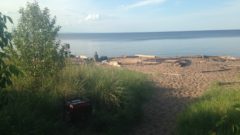
Keep up with energy-related developments in the Great Lakes area with Great Lakes Now’s biweekly headline roundup.
In this edition: Chicagoans furious after smokestack demolition releases dust in Little Village, toxic coal ash to remain on Michigan shorelines indefinitely as coal plants close, Minnesota and Wisconsin natural gas plant opting away from water withdrawal for cooling purposes, Ohio consumer advocate pushing to divert energy efficiency funds to COVID-19 relief payments, and Enbridge’s project to replace part of its Line 5 pipeline under the St.
Great Lakes Now
https://www.greatlakesnow.org/2020/04/great-lakes-energy-line-5-coal-ash-demolition-water-withdrawals/
COVID-19 disrupts Great Lakes research, outreach
2020-04-17
The cancellation of outreach programs and academic conferences is a blow to education and research collaboration in the Great Lakes. COVID-19 has also left scientists uncertain about conducting summer research on the Great Lakes this year. Read the full story by the Great Lakes Echo.
Great Lakes Commission
https://www.glc.org/dailynews/20200417-research
Port Dalhousie piers construction temporarily halted
2020-04-17
High water levels last summer couldn’t knock the west side Port Dalhousie, Ontario piers off their completion schedule, but the coronavirus can. Rehabilitation of the piers on Lake Ontario is temporarily shut down due to the province’s COVID-19 state of emergency restrictions on construction projects. Read the full story by the St. Catharines Standard.
Great Lakes Commission
https://www.glc.org/dailynews/20200417-port-dalhousie
Common Council approves $3.1 million bond to start overhaul of Sheboygan’s century-old water intake system
2020-04-17
The Common Council of Sheboygan, Wisconsin, approved funding to construct a new drinking water intake in Lake Michigan. Read the full story by the Sheboygan Press.
Great Lakes Commission
https://www.glc.org/dailynews/20200417-infx-bond
Barge freed after 3 days stuck in Lake St. Clair
2020-04-17
A barge was freed three days after running aground in Lake St. Clair with minimal damage and no evidence of hazardous waste release. Read the full story by The Detroit News.
Great Lakes Commission
https://www.glc.org/dailynews/20200417-st-clair
Lake Erie walleye, perch limits remain unchanged
2020-04-17
The Pennsylvania Fish and Boat Commission said Lake Erie walleye and yellow perch populations remain steady this year after doubling from the levels in the previous year. Read the full story by the Pittsburgh Post-Gazette.
Great Lakes Commission
https://www.glc.org/dailynews/20200417-walleye
Lake Michigan shoreline residents erect coastal defenses amid record-high lake levels
2020-04-17
Shoreline residents in West Michigan are erecting sea barriers and moving their homes further inland as Lake Michigan inches towards record heights and swallows even more property this year. Read the full story by MLive.
Great Lakes Commission
https://www.glc.org/dailynews/20200417-lake-mi-defense
Wisconsin DNR on track to deliver 3 million trout, salmon
2020-04-17
The Wisconsin DNR is shifting its stocking plans for trout and salmon this year due to coronavirus concerns, cancelling offshore stocking efforts and instead releasing more salmon in nearshore locations. Read the full story by the Door County Pulse.
Great Lakes Commission
https://www.glc.org/dailynews/20200417-salmon
Could sewage hold the secrets to coronavirus numbers in Windsor? Research group hopes so
2020-04-17
Researchers from the Great Lakes Institute for Environmental Research are monitoring sewage at wastewater treatment plants to evaluate the rate of coronavirus infections in Windsor, Ontario. Read the full story by the CBC News.
Great Lakes Commission
https://www.glc.org/dailynews/20200417-sewage
High winds damage Ashtabula County lakeshore
2020-04-17
Record-setting lake levels and sustained winds worsened erosion along Lake Erie this week, destroying previous efforts to mitigate erosion damage and protect roads near the lake. Read the full story by the Star Beacon.
Great Lakes Commission
https://www.glc.org/dailynews/20200417-ashtabula
Tested and Rejected: Blasting zebra mussels off walls wasn’t the first method attempted
2020-04-17
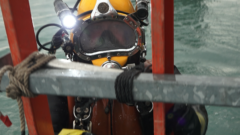
Wayne Brusate started a commercial diving company in the two-car garage of his home in Marysville, Michigan.
Ten years later, his business was contracted to maintain all the water intake systems at Detroit Edison’s power generating facilities in southeastern Michigan. Power generating plants require a massive volume of water to operate, Brusate said.
Great Lakes Now
https://www.greatlakesnow.org/2020/04/blasting-zebra-mussels-invasive-species/
Extreme Wetness of 2019 Sets Records
2020-04-17
In 2019, precipitation and flooding reached historic levels in the Missouri River Basin. A new report looks at major events and impacts.
NCEI News Feed
http://www.ncei.noaa.gov/news/extreme-wetness-2019-sets-records
COVID-19 disrupts Great Lakes research, outreach
2020-04-17
Fieldwork, research conferences and outreach programs face an uncertain summer.
Great Lakes Echo
http://greatlakesecho.org/2020/04/17/covid-19-disrupts-great-lakes-research-outreach/