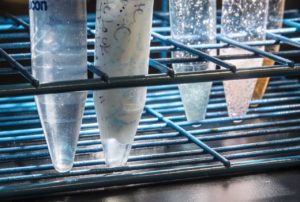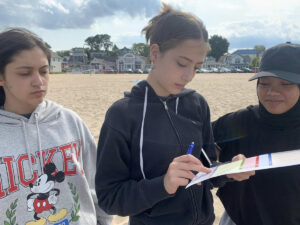
It’s been over a decade since researchers began looking into microplastics in the Great Lakes. Now, the issue is getting renewed attention amid broader concerns about the potential effects of microplastics on the human body and a possible future link to the hydro-fracking boom currently happening in the region. Read the full story by ABC News.

Original Article

Great Lakes Commission

Great Lakes Commission

https://www.glc.org/dailynews/202304-microplastics-lakeerie-growingconcern

Hannah Reynolds

MLive and the nonprofit Council of the Great Lakes Region will co-host an upcoming free webinar about how in coming decades it’s expected millions of people will flee the worst effects of climate change and come to settle in the binational area around the Great Lakes. Read the full story by MLive.

Original Article

Great Lakes Commission

Great Lakes Commission

https://www.glc.org/dailynews/202304-greatlakes-climatehaven-webinarpanel

Hannah Reynolds

Spring’s rollercoaster of temperatures from the cold, to record warmth and back to cold affects the fish in our Great Lakes. While spring is a time Michiganders flock outdoors, it’s also a time when you might see more dead fish washing ashore. Read the full story by WPBN-TV – Traverse City, MI.

Original Article

Great Lakes Commission

Great Lakes Commission

https://www.glc.org/dailynews/2023042623-deadfish-springthaw-dnr

Hannah Reynolds

It’s springtime at the Erie Maritime Museum, which means it’s rigging time on the U.S. Brig Niagara. After being put away for the winter and maintenance, it’s time for the U.S. Brig Niagara to be put back together for the sailing season. This past week, the Niagara had its winter cover removed along with other projects like putting the bowsprit and mast into place. Read the full story by WJET-TV – Erie, PA.

Original Article

Great Lakes Commission

Great Lakes Commission

https://www.glc.org/dailynews/2023042623-usbrigniagara-2023sailingseason

Hannah Reynolds

Lifetime Business Member of Fox-Wolf Watershed Alliance.

A huge thank you to Rob and his team at Motto Inc. (pictured above), a locally owned and operated business, for their continued support of Fox-Wolf Watershed Alliance’s water quality initiatives in the Winnebago Waterways Recovery Area. Last year, Motto Inc. donated $18,262 to Fox-Wolf Watershed Alliance. This year they beat their own record by donating $25,000! Their donation will have an even bigger impact because a percentage was matched by the Greater Green Bay Community Foundation’s Give Big Green Bay program.

In addition to their generous donation, Motto Inc. has volunteered with Fox-Wolf Watershed Alliance. Last winter, the Motto Inc. team volunteered to sow native plants and take care of them over the winter. These plants will be used in our shoreline restoration projects!

Motto Inc. is also a business member of 1% for the Planet, which connects businesses and individuals who pledge to give 1% of their sales back to the planet each year with approved environmental nonprofits around the world. This partnership will help Fox-Wolf Watershed Alliance connect with more businesses who share the same values of promoting water quality and environmental stewardship.

Motto Inc. lives up to their commitment through quality branded products and their ongoing support of various causes that improve the community and environment. We invite you to learn more about this local business by visiting their website: www.mottoinc.com

Thank you to Rob and his Motto Inc. team for their continued support!

The Winnebago Waterways Program facilitates regional coordination and implementation of recovery efforts for the Winnebago Lakes and surrounding watersheds. Priority implementation projects are outlined in the Winnebago Waterways Lake Management Plan. Winnebago Waterways is a program of the Fox-Wolf Watershed Alliance. The Fox-Wolf Watershed Alliance is an independent non-profit organization that works to protect and restore the water resources of the Fox-Wolf River Basin. We are focused on finding cost effective, science-based solutions. To meet our goals, we work with partners to maximize efficiencies, bringing resources to those who are already doing great work while utilizing our strengths to fill gaps when needed.

About 1% for the Planet

1% for the Planet is a global organization that connects dollars and doers to accelerate smart environmental giving. Through business and individual memberships, 1% for the Planet inspires people to support environmental organizations through annual membership and everyday actions. The organization advises on giving strategies, certifies donations and amplifies the impact of the network.

Started in 2002 by Yvon Chouinard, founder of Patagonia, and Craig Mathews, founder of Blue Ribbon Flies, their members have given more than $250 million to environmental nonprofits to date. Today, 1% for the Planet is a network of more than 3,000 business members, an expanding core of individual members and thousands of nonprofit partners in more than 90 countries.

If you are interested in learning more about 1% for the Plant and how to become a business partner, please contact Korin at korin@fwwa.org.

Questions? Comments? Send us an email at wwinfo@fwwa.org.

Follow the Fox Wolf Watershed Alliance on social media: Winnebago Waterways on Facebook and @WinnWaterways on Twitter!

Winnebago Waterways is a Fox-Wolf Watershed Alliance program. The Fox-Wolf Watershed Alliance is an independent nonprofit organization that identifies and advocates effective policies and actions that protect, restore, and sustain water resources in the Fox-Wolf River Basin.

The post Local Business Continues Support of Water Quality Initiatives appeared first on Fox-Wolf Watershed Alliance.

Original Article

Fox-Wolf Watershed Alliance

Fox-Wolf Watershed Alliance

https://fwwa.org/2023/04/26/local-business-continues-support-of-water-quality-initiatives/?utm_source=rss&utm_medium=rss&utm_campaign=local-business-continues-support-of-water-quality-initiatives

Katie Reed

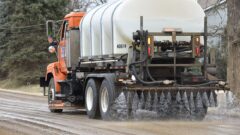
Michigan brine brouhaha: Proposed limits for unpaved roads prompt dustup

By Kelly House and Lauren Gibbons, Bridge Michigan

The Great Lakes News Collaborative includes Bridge Michigan; Circle of Blue; Great Lakes Now at Detroit Public Television; and Michigan Radio, Michigan’s NPR News Leader; who work together to bring audiences news and information about the impact of climate change, pollution, and aging infrastructure on the Great Lakes and drinking water.

Read Now at Great Lakes Now.

Original Article

Great Lakes Now

Great Lakes Now

https://www.greatlakesnow.org/2023/04/michigan-brine-brouhaha-proposed-limits-for-unpaved-roads-prompt-dustup/

Bridge Michigan

Information from the Butte des Morts Conservation Club – original post here: Butte des Morts Conservation Club Facebook

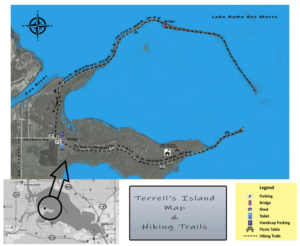
Terrells Island Trails will be open to the public starting Monday, May 8th, 2023. Trails are open from sunrise until one hour before sunset, unless otherwise posted.
Please Note: Trail is no longer a loop. There is a turn around.
*Frank & Alice Kachur Trail is 2.1 miles one way
*Schoolhouse Trail is 1.5 miles one way
  • Please throw away all trash in receptacle at trail entrances
  • Pets should be leashed and remove/clean up all animal waste
  • Anglers – no fishing from bridge-leave no trash behind
Enjoy!

Winnebago Waterways is a Fox-Wolf Watershed Alliance recovery initiative. Contact us at wwinfo@fwwa.org

The post Terrells Island Trails to Open on May 8, 2023 appeared first on Fox-Wolf Watershed Alliance.

Original Article

Fox-Wolf Watershed Alliance

Fox-Wolf Watershed Alliance

https://fwwa.org/2023/04/25/terrells-island-trails-2023/?utm_source=rss&utm_medium=rss&utm_campaign=terrells-island-trails-2023

Katie Reed

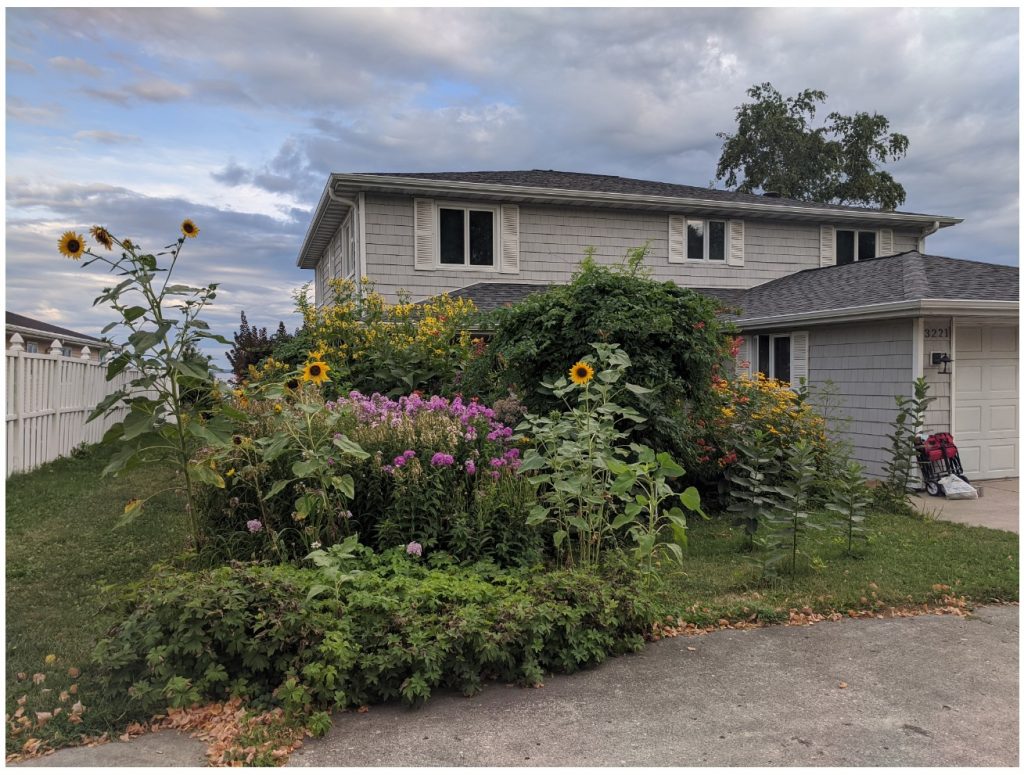
Julia Noordyk’s rain garden in Green Bay, which is planted with cup plant, Canada anenome and black-eyed Susans. Image credit: Julia Noordyk, Wisconsin Sea Grant

When my family first moved to Green Bay, we were alarmed to find water streaming down the driveway to our front door during an intense rainstorm. Rather than engineering a pipe system to divert the water around the house, we transformed a traditional flower bed into a rain garden to intercept the runoff. By digging a trench and planting native flowers like astilbe, bee balm and butterfly weed, which thrive in wet and dry soil conditions, we were able to soak up 30% more water than a regular lawn.

Although Earth Day was last week, its goal of caring for the Earth still applies and many of us are turning our attention to summer gardening. Gardening has been shown to be good for our physical and mental wellbeing. This year, why not plant a garden that will also improve your community’s health? Rain gardens, bioswales and native plants are types of green infrastructure that help soak up spring snowmelt and rain before it enters our storm drains. But green infrastructure is not just for stormwater. These practices can also alleviate flooding, provide food for birds and butterflies, improve public safety and add beauty to our urban neighborhoods.

Julia Noordyk, Wisconsin Sea Grant’s water quality and coastal communities outreach specialist. Image credit: Wisconsin Sea Grant

Currently, 70% of Wisconsinites live in urban areas, with the majority in coastal counties along lakes Michigan or Superior. Over 1.6 million Wisconsin residents depend on the Great Lakes for drinking water, industry, commercial uses and recreation. For the majority of coastal municipalities, like Green Bay, the stormwater and sanitary sewer systems are not connected. This means the stormwater from our roofs, roads, lawns, etc., is channeled directly into our rivers and lakes untreated.

Stormwater contains a slew of pollutants including heavy metals, chemical fertilizers and pesticides, oils and other toxic materials. It is the primary source of trash to the world’s rivers, lakes and oceans. Once in our waterways, these substances are taken up by fish and birds, causing reproductive problems and death. These pollutants are ending up inside us, too, through the air, our food, water and recreational activities. Children living near parking lots coated with coal tar-based sealants have a 38% increase in lifetime risk of cancer.  By choosing green infrastructure, we can protect our water resources and reduce our exposure to these harmful pollutants.

Green infrastructure is not as uncommon as you might think. HSHS St. Mary’s Hospital Medical Center in Green Bay has implemented a number of environmental initiatives that provide economic and health benefits as part of their commitment to have “reverence for the earth.” The hospital has a 22,000 square foot living roof planted with sedums (also known as stonecrops) that thrive in our region. In addition to absorbing rainwater, the vegetation insulates the building, significantly reducing heating and cooling costs. The green roof will also last two and half times longer (50-plus years) than a traditional one. The roof is treasured as a green space for patients and staff. In addition to the colorful sedums that blanket the rooftop, benches, tables and flowerpots provide an inviting space to relax and heal. The hospital is demonstrating that investments in the environment are an important healthcare strategy.

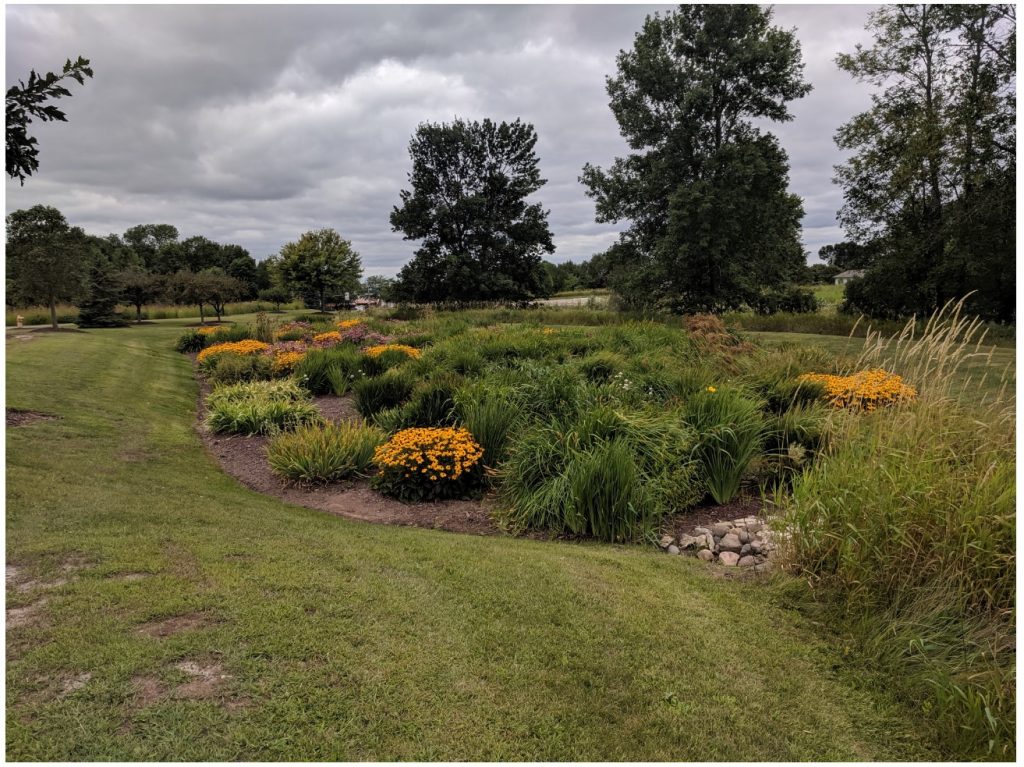
A large bioretention basin filters stormwater pollution from facilities and a parking lot at the Sisters of St. Francis Holy Cross, Green Bay. Image credit: Julia Noordyk, Wisconsin Sea Grant

Some might argue that traditional gray infrastructure–gutters, sewer pipes and storm drains–are cheaper than green infrastructure. However, most cost analyses do not account for the full life cycle costs or the co-benefits of green infrastructure. Cheaper does not always equal better, and by only using simple cost comparisons we miss out on the additional physical and mental health benefits that green infrastructure offers. Numerous studies have shown that greener communities promote more walking, playing and socializing. Others have demonstrated that neighborhood investments in green space and aesthetics lead to higher property values and lower crime rates. The addition of urban trees reduce the scorching summer heat given off from our buildings, pavement and roads, helping prevent heat-related illnesses and premature deaths. These are lost opportunity costs and we must start incorporating all benefits in our stormwater infrastructure cost-benefit analyses.

Green infrastructure is much more than stormwater management, it is an approach to improve our quality of life. My family’s rain garden not only stopped the flooding, it is a mecca for wildlife including butterflies and hummingbirds. To our amazement, the rain garden even provides food in the depths of winter for juncos and other seed-eating birds.

So, as you look ahead to summer, please consider how you can add green infrastructure to your garden to improve the health and beauty of our community.

A similar version to this story appeared in the Green Bay Press Gazette.


The post Green Infrastructure for Community Health first appeared on Wisconsin Sea Grant.

Original Article

Blog | Wisconsin Sea Grant

Blog | Wisconsin Sea Grant

https://www.seagrant.wisc.edu/blog/green-infrastructure-for-community-health/?utm_source=rss&utm_medium=rss&utm_campaign=green-infrastructure-for-community-health

Julia Noordyk

The U.S. Geological Survey is pleased to announce the selection of Jennifer Lacey as regional director (RD) for the Midcontinent Region, effective April 23rd.

Original Article

Midcontinent Region

Midcontinent Region

https://www.usgs.gov/news/employee-in-the-news/jennifer-lacey-selected-regional-director-usgs-midcontinent-region?utm_source=comms&utm_medium=rss&utm_campaign=news

lcastrolindarte@usgs.gov

Mapping the Great Lakes: Flood risk

Love staring at a map and discovering something interesting? Then “Mapping the Great Lakes” is for you. It’s a monthly Great Lakes Now feature created by Alex B. Hill, a self-described “data nerd and anthropologist” who combines cartography, data, and analytics with storytelling and human experience.

Read Now at Great Lakes Now.

Original Article

Great Lakes Now

Great Lakes Now

https://www.greatlakesnow.org/2023/04/mapping-the-great-lakes-flood-risk/

Alex Hill

Later this summer, Waukesha, Wisconsin, will make the switch from groundwater to Lake Michigan water. Waukesha Water Utility General Manager Dan Duchniak reports that the pipeline connecting Waukesha to the lake is 95 percent complete. Read the full story by The Freeman.

Original Article

Great Lakes Commission

Great Lakes Commission

https://www.glc.org/dailynews/20230424-waukesha-water

James Polidori

Nine years after the water contamination in Flint, Michigan, devastated communities, some residents say they are still grappling with long-term health issues. ABC News has spoken with multiple mothers who claim that their children are still suffering from the effects of the water crisis nine years ago. Read the full story by ABC News.

Original Article

Great Lakes Commission

Great Lakes Commission

https://www.glc.org/dailynews/20230424-flint-aftermath

James Polidori

Efforts to combat erosion and storm damage in Chicago continue through the Shoreline Protection Project (SPP). A collaboration between the City of Chicago, the U.S. Army Corps of Engineers and the Parks Department, the $500 million dollar plan targets 24 segments along nine miles of shoreline to replace existing infrastructure built in the early 1900s. Read the full story by WMAQ-TV – Chicago, IL.

Original Article

Great Lakes Commission

Great Lakes Commission

https://www.glc.org/dailynews/20230424-shoreline-protection

James Polidori

Last week’s major snowmelt in the Duluth area led to sewage overflow for the Western Lake Superior Sanitary District (WLSSD). Typically, the plant deals with about 38 million gallons of sewage per day, but last week, water flowing in for treatment ranged from 90 million to 125 million gallons daily for several days. Read the full story by the Star Tribune.

Original Article

Great Lakes Commission

Great Lakes Commission

https://www.glc.org/dailynews/20230424-duluth-sewage-overflow

James Polidori

Mike Smalligan, the Forest Stewardship Coordinator for the Forest Resources Division of the Michigan Department of Natural Resources, is putting together the Forest to MI Faucet program to use trees to help keep sources of drinking water cleaner. It builds on a federal program that educates landowners and others about the connections between forests and water. Read the full story by Michigan Radio.

Original Article

Great Lakes Commission

Great Lakes Commission

https://www.glc.org/dailynews/20230424-forest-water-connection

James Polidori

Organized by Bridgman’s Shoreline Resiliency Committee, folks got a preview of Michigan State University’s Citizen-Science Coastal Change Monitoring Program before picking up trash. Using drones, researchers gather data and map about five miles of Lake Michigan shoreline over an extended period to gain a better understanding of these rapidly changing lake levels. Read the full story by WNDU-TV – South Bend, IN.

Original Article

Great Lakes Commission

Great Lakes Commission

https://www.glc.org/dailynews/20230424-shoreline-research

James Polidori

Pamela Palmater, a Mi’kmaw citizen and member of the Eel River Bar First Nation in northern New Brunswick, produced the short documentary film Samqwan, which translates to water in the Mi’kmaq language, to raise awareness about the Indigenous connection to water. Indigenous people have been standing up to protect water for decades — because to them, is more than just hydration; water is alive and holds a spirit. Read the full story by CBC Radio.

Original Article

Great Lakes Commission

Great Lakes Commission

https://www.glc.org/dailynews/20230424-indigenous-water-protection

James Polidori

With 120 lighthouses dotting its shoreline, Michigan has the most lighthouses of any state in the nation. To ensure the lighthouses receive the care they need, the State Historic Preservation Office directed $106,000 in Michigan Lighthouse Assistance Program grant funding to the Rock of Ages Lighthouse and the Eagle Harbor Lighthouse, both located in the Michigan’s upper peninsula. Read the full story by The Sault News.

Original Article

Great Lakes Commission

Great Lakes Commission

https://www.glc.org/dailynews/20230424-lighthouse-restoration

James Polidori

The Province of Ontario has earmarked about $66,000 so that five Indigenous communities can assess fish consumption levels in parts of Lake Superior that remain classified as “areas of concerns” due to historical pollution. Read the full story by the Chronical Journal.

Original Article

Great Lakes Commission

Great Lakes Commission

https://www.glc.org/dailynews/20230424-fish-consumption

James Polidori

The Great Lakes Environmental Festival kicked off Friday in downtown Manistee, Michigan, at West Shore Community College. The festival was started by husband and wife, Dr. Ziggy Kozicki and Dr. Stephanie Baiyasi-Kozicki in a college classroom in 2007; since then, the festival has grown to teach communities about environmental issues and ways people can keep the Earth clean. Read the full story by WWTV-TV – Cadillac, MI.

Original Article

Great Lakes Commission

Great Lakes Commission

https://www.glc.org/dailynews/20230424-environmental-festival

James Polidori

Lesson Plan: How Is Our Climate Changing?

This lesson will explore the phenomenon of disappearing ice in the Great Lakes and the impact this has on ice fishing as a result of climate change. Students will explore the global average temperatures over time, model the greenhouse effect, conduct an experiment to model ocean acidification, and create an infographic to communicate the issue of climate change and how the impacts of human activites on the natural system can be reduced.

Read Now at Great Lakes Now.

Original Article

Great Lakes Now

Great Lakes Now

https://www.greatlakesnow.org/2023/04/climate-change-lesson-plan/

Gary Abud Jr.

Adopt-a-Beach volunteers are on the front lines of keeping litter off our beaches and out of the Great Lakes. But did you know that these volunteers are also citizen scientists?

This year marks twenty years of data collection by Adopt-a- Beach volunteers. The Alliance for the Great Lakes created its online Great Lakes litter database in 2003 and added data collection to the Adopt-a-Beach program.

Filling a Data Gap, Identifying Troubling Trends

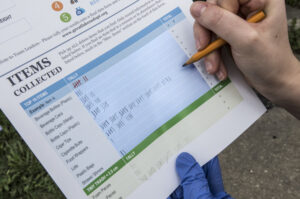
A hand recording litter counts on a form.

While scientists have been studying plastic pollution in the ocean for decades, there is much less research about plastic pollution in the Great Lakes. Adopt-a-Beach data collection is one way our Great Lakes community is beginning to fill that gap. The litter data collected by Adopt-a-Beach volunteers spans beaches and shorelines across all five Great Lakes. No lab or individual researcher could collect this extensive data set on their own. Volunteers have steadily created this dataset with each cleanup over the past twenty years.

Volunteers use a datasheet at every beach cleanup to tally each item they pick up. The event’s team leader tallies up all the data collected at the event and enters it into our online system. Counting each cigarette butt, bottle cap, or piece of tiny trash can sometimes feel a bit silly on the beach. But the power of all that information in one place is impressive, and it is showing us some troubling trends.

So, what do the data tell us? It’s not a pretty picture. Roughly 85% of the litter picked up at cleanups is made entirely or partially of plastic. Most of the litter picked up by volunteers falls into the category of “tiny trash,” which are pieces 5 millimeters or less. These are pieces of larger items that have broken down over time. Food-related trash, such as plastic bottles, plastic cutlery, and takeout containers, is about 25% of the litter picked up by volunteers.

A Clear and Present Danger

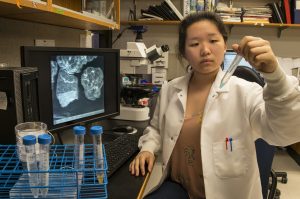
A researcher examines a test tube containing microplastics.

While beach litter is a serious concern, it is just the most visible part of a bigger problem. Sun, waves, and other environmental factors break down plastic left on the beach or other places into smaller and smaller pieces. And microfibers from our clothes or plastic packaging from detergent packs wash down the drain into our waterways. These microplastics are often invisible but are dangerous to wildlife, which mistake them for food.

Plastic has been found in Great Lakes fish dating back to the 1950s. That means, for nearly seven decades, there have been microplastics in the lakes, which are a drinking water source for about 40 million people. Today, researchers from the Rochester Institute of Technology estimate that over 22 million pounds of plastic enter the Great Lakes annually. And University of Toronto researchers calculated that the amount of microplastics in the surface water of the Great Lakes is estimated at 1.2 million particles/km2. This is higher than plastic concentrations in the widely publicized Great Pacific Garbage Patch.

Microplastics have been found in drinking water, bottled water, and beer. And it’s estimated that we each ingest about a credit card-sized amount of plastic each week. Much remains to be learned about the impacts of plastic on human health, but the early picture is concerning.

Plastic Producers Must Take Responsibility

Microplastics in test tubes.

Adopt-a-Beach volunteers do a great job keeping plastic out of our lakes and educating their communities about the plastic pollution problem. But beach cleanups alone can’t solve the magnitude of the Great Lakes’ plastic problem. A more systemic solution is required.

Currently, most efforts to stop plastic pollution put the responsibility on the last person who uses the plastic, such as recycling. But expecting end users to bear the burden of managing plastic pollution isn’t effective. For instance, only a fraction of plastic produced each year can be recycled, leaving the remainder to end up in landfills or as litter that lands in our waterways. This leaves the disposal burden – and significant costs – on individuals, small business owners, and local governments.

The alternative is to require plastic producers to be responsible for their products through their lifecycle, called extended producer responsibility. The concept is not new. Many European countries have such laws. And California recently passed legislation bringing the concept to the United States. These laws reduce or eliminate the most problematic plastics like styrofoam, require plastic manufacturers to pay for disposal, or eventually change their practices to produce less plastic in the first place.

For the first time, we have included plastic pollution as a top issue in our federal Great Lakes policy agenda. We are urging Congress to be a leader in curbing plastic pollution and pass legislation that:

  • Makes plastic producers responsible for reduction of waste
  • Reduces the federal government’s use of single-use plastics
  • Funds additional research on the public health impact of plastics

How You Can Help

Adopt-a-Beach volunteers record litter data on the beach.

Solving our Great Lakes plastic pollution problem will take all of us. Here are several ways you can help:

Refuse single-use plastics.

The best way to prevent plastic pollution from getting into the lakes is to stop using it in the first place.

Your voice makes a difference.

Visit our action center to send a letter to your members of Congress, urging them to adopt extended producer responsibility legislation.

Join a beach cleanup.

Adopt-a-Beach volunteers are on the frontlines of keeping plastic pollution out of the Great Lakes. It’s fun, easy, and an excellent way for your family, community group, or business to give back to the lakes. Learn how you can join a cleanup or host one of your own.

The post 20 Years of Adopt-a-Beach Data Collection: What Have We Learned? appeared first on Alliance for the Great Lakes.

Original Article

News - Alliance for the Great Lakes

News - Alliance for the Great Lakes

https://greatlakes.org/2023/04/20-years-of-adopt-a-beach-data-collection-what-have-we-learned/

Judy Freed

Over half the land in Michigan is occupied by forests. The majority of that wilderness — 20 million acres — is in the hands of private citizens. This land is vital to keeping the state’s natural resources bountiful, including one of the largest freshwater supplies in the world, the Great Lakes. Read the full story by WWTV – TV – Cadillac, MI.

Original Article

Great Lakes Commission

Great Lakes Commission

https://www.glc.org/dailynews/20230421-forests

Jill Estrada

After conducting two public meetings and a public survey, Indiana DNR is implementing a new stocking strategy for Chinook salmon in Lake Michigan this month, stocking 75,000 Chinook salmon in East Chicago, 100,000 in the Little Calumet River, and 100,000 in Trail Creek. Read the full story by KPC News.

Original Article

Great Lakes Commission

Great Lakes Commission

https://www.glc.org/dailynews/20230421-salmon

Jill Estrada

According to the Minnesota Pollution Control Agency, PFAS contamination has been found in groundwater at 59 closed landfills in 41 counties at levels that exceed the Minnesota Department of Health’s health-based guidance values for PFAS. Read the full story by WDIO – TV – Duluth, MN.

Original Article

Great Lakes Commission

Great Lakes Commission

https://www.glc.org/dailynews/20230421-pfas

Jill Estrada

Nibi Chronicles: Greeting Old Man Maple during the Sap Boiling Moon

Editor’s Note: “Nibi Chronicles,” a monthly Great Lakes Now feature, is written by Staci Lola Drouillard. A direct descendant of the Grand Portage Band of Ojibwe, she lives and works in Grand Marais on Minnesota’s North Shore of Lake Superior. Her two books “Walking the Old Road: A People’s History of Chippewa City and the Grand Marais Anishinaabe” and “Seven Aunts” were published 2019 and 2022, and she is at work on a children’s story.

Read Now at Great Lakes Now.

Original Article

Great Lakes Now

Great Lakes Now

https://www.greatlakesnow.org/2023/04/nibi-chronicles-sap-boiling-moon/

Staci Lola Drouillard

As part of Gov. Mike DeWine’s H2Ohio initiative, the Ohio Department of Natural Resources (ODNR) Division of Wildlife is collaborating with The Nature Conservancy (TNC) on two coastal wetland restoration projects at Pickerel Creek Wildlife Area in Sandusky County. Read the full story by USA Today.

Original Article

Great Lakes Commission

Great Lakes Commission

https://www.glc.org/dailynews/20230421-wetlands-restoration

Jill Estrada

The Ministry of the Environment, Conservation and Parks has cut a $75,000 annual grant that helped the Hamilton Conservation Authority offset the cost of monitoring the water quality of five creeks flowing into Cootes Paradise. Read the full story by The Spec.

Original Article

Great Lakes Commission

Great Lakes Commission

https://www.glc.org/dailynews/20230421-monitoring-cut

Jill Estrada

Wisconsin Sea Grant (WISG) today announced it is expanding a successful marine-debris-prevention project in Milwaukee and will build on that success to spark similar awareness and action in a fellow Great Lakes city, Cleveland.

Marine debris is an increasing global problem that causes negative impacts in oceans, the Great Lakes and other waterways. Nearly 22 million pounds of plastics enter the Great Lakes each year, according to a Rochester Institute of Technology study.

Plastic trash spread on a blue background

A collection of plastic trash recently removed from a Wisconsin waterway. Image: Bonnie Willison, Wisconsin Sea Grant

In Milwaukee, this pollution affects Lake Michigan and local watersheds, which serve as a source of drinking water, offer recreation for residents and support ecosystems for wildlife and fish. With plastic pollution on the rise, the Lake Michigan freshwater ecosystem and the people surrounding it are at risk of negative health impacts that can be mitigated by increasing awareness of plastic pollution through youth education, actionable science and civic action. Similarly, plastic pollution is a problem in Lake Erie’s ecosystem and for those who live, work and recreate in Cleveland.

In 2021, WISG joined forces with Milwaukee Riverkeeper, a key player in an initiative called Plastic-Free MKE, to coordinate Milwaukee youth to lead civic engagement projects on how to reduce single-use plastics in their schools. As part of an initial grant received from the National Sea Grant Office’s Marine Debris program, the groups created a plastics audit, shared a plastics education toolkit about how plastics impact water quality and human health and provided resources to students and teachers on how they can reduce plastic pollution in their homes and schools.

“We’re excited to see Plastic-Free MKE be a model for other cities that have great intentions towards reducing single-use plastics but needed some support to be more organized to build a local coalition in their city,” said Deidre Peroff, WISG social scientist. “I look forward to continuing collaborating on this initiative in Milwaukee as well. We plan to continue our partnership with Milwaukee Public Schools to get more plastics education into classrooms and provide space for students to lead the effort.”

Close-up a smiling person wearing a plaid scarf and blue shirt.

Social Scientist Deidre Peroff is looking forward to continuing marine debris education in Milwaukee Public Schools.

Peroff said she and Milwaukee Riverkeeper will share their success from Plastic-Free MKE with businesses and individuals in Cleveland to encourage the reduction of single-use plastics, which ultimately protects the waters, wildlife and people’s health

 This project was competitively selected. It was part of a competition through two opportunities supported by the federal Bipartisan Infrastructure Law and leveraging funds from the Inflation Reduction Act: The Marine Debris Challenge Competition and The Marine Debris Communication Action Coalitions. The laws are infusing a total of $27 million nationwide, administered through the National Oceanic and Atmospheric Administration, to marine debris education, prevention, cleanup and research initiatives. In addition to the project in Wisconsin, another 18 community-based projects are being funded, along with 10 research projects. The Wisconsin project is funded at $300,000 for two years.

The post Milwaukee marine debris prevention program to expand first appeared on Wisconsin Sea Grant.

Original Article

News Releases | Wisconsin Sea Grant

News Releases | Wisconsin Sea Grant

https://www.seagrant.wisc.edu/news/milwaukee-marine-debris-prevention-program-to-expand/?utm_source=rss&utm_medium=rss&utm_campaign=milwaukee-marine-debris-prevention-program-to-expand

Moira Harrington

...MINOR RIVER FLOODING, FAST FLOWS, AND AREAS OF LOW-LAND FLOODING WILL CONTINUE THROUGH THIS WEEKEND... Minor flooding is expected to continue on some streams, rivers, and low-lying areas this weekend. Flows will continue to be fast, especially on the Menominee and Wisconsin rivers. With runoff from recent rain and snow melt continuing, river levels

Original Article

Current Watches, Warnings and Advisories for Brown (WIC009) Wisconsin Issued by the National Weather Service

Current Watches, Warnings and Advisories for Brown (WIC009) Wisconsin Issued by the National Weather Service

https://alerts.weather.gov/cap/wwacapget.php?x=WI126643102384.HydrologicOutlook.126643116E60WI.GRBESFGRB.9a74e37923d995b15714a656c5ebca0a

w-nws.webmaster@noaa.gov

Note: This blog is part of a periodic series of updates from Don Jodrey, the Alliance’s Director of Federal Government Relations, with his view on Great Lakes policy from Washington, DC.

Donald Jodrey headshot.
Don Jodrey, Director of Federal Government Relations

Early this year, we published our list of federal priorities for 2023, and chief among them was the need to increase funding for water infrastructure. We believe that clean water is a basic need.  No one should be without clean, safe, affordable drinking water or worried about sewage back-ups in their homes or community flooding that damages property. With communities across the Great Lakes grappling with antiquated drinking water and sewer systems, we have called on Congress to more than double current annual levels of funding for both the Clean Water and Drinking Water State Revolving Funds from $2.5 billion to $8.7 billion, which is the authorized level of funding for those programs that Congress established in the Infrastructure Investment and Jobs Act of 2021. 

New data from the U.S. Environmental Protection Agency (US EPA) shows the urgent need for water infrastructure funding. The agency just released its 7th Drinking Water Information Needs Survey and Assessment (DWINSA), which estimates that there is a $625 billion backlog in drinking water systems nationwide. Based upon more than 3,500 individual survey responses from public drinking water systems around the country, the 7th DWINSA represents drinking water infrastructure projects that are necessary over the next 20 years for public water systems to be able to provide safe drinking water to the public. For the first time, information on lead service line needs is included, and it is worth noting that the backlog represents a 32% increase since the last survey was completed about five years ago.

Given that water infrastructure needs are growing, it is gratifying to see that some Members of Congress are taking up the charge. One of our newest Great Lakes members, first-term Representative Emilia Sykes from Ohio’s 13th congressional district, is leading the way.  Representative Sykes, along with Representative Grace Napolitano from California’s 31st congressional district, both recently submitted a letter to the House Appropriations Committee signed by 31 other members of Congress calling for increased funding for water infrastructure.  Representatives Sykes and Napolitano, both members of the House Transportation and Infrastructure Committee, noted the importance that access to clean water has for both public health and economic benefits and requested increased funding for both the Clean Water and Drinking Water State Revolving Funds, the Sewer Overflow and Stormwater Municipal Grant Program, the Low-Income Household Water Assistance Program, and numerous other smaller programs that support water infrastructure workforce development and environmental justice.  We appreciate their leadership and know that increasing federal appropriations for water infrastructure will be a tough sell this year in Congress, but given the unrelenting need, it is an issue that deserves our continued attention.  


Protect the Great Lakes & Our Communities

Too many Great Lakers experience polluted water – whether it is lead-tainted water coming from taps in homes or algal blooms fouling beaches. Visit our Action Center and learn how you can take action.

Take Action

The post DC Update: House water champions emerge amidst rising national backlog of water infrastructure projects appeared first on Alliance for the Great Lakes.

Original Article

News - Alliance for the Great Lakes

News - Alliance for the Great Lakes

https://greatlakes.org/2023/04/dc-update-house-water-champions-emerge-amidst-rising-national-backlog-of-water-infrastructure-projects/

Michelle Farley

U.S. Counts on “Climate-Smart” Farms to Slow Global Warming

By Keith Schneider, Circle of Blue

The Great Lakes News Collaborative includes Bridge Michigan; Circle of Blue; Great Lakes Now at Detroit Public Television; and Michigan Radio, Michigan’s NPR News Leader; who work together to bring audiences news and information about the impact of climate change, pollution, and aging infrastructure on the Great Lakes and drinking water.

Read Now at Great Lakes Now.

Original Article

Great Lakes Now

Great Lakes Now

https://www.greatlakesnow.org/2023/04/climate-smart-farms-slow-global-warming/

Circle of Blue

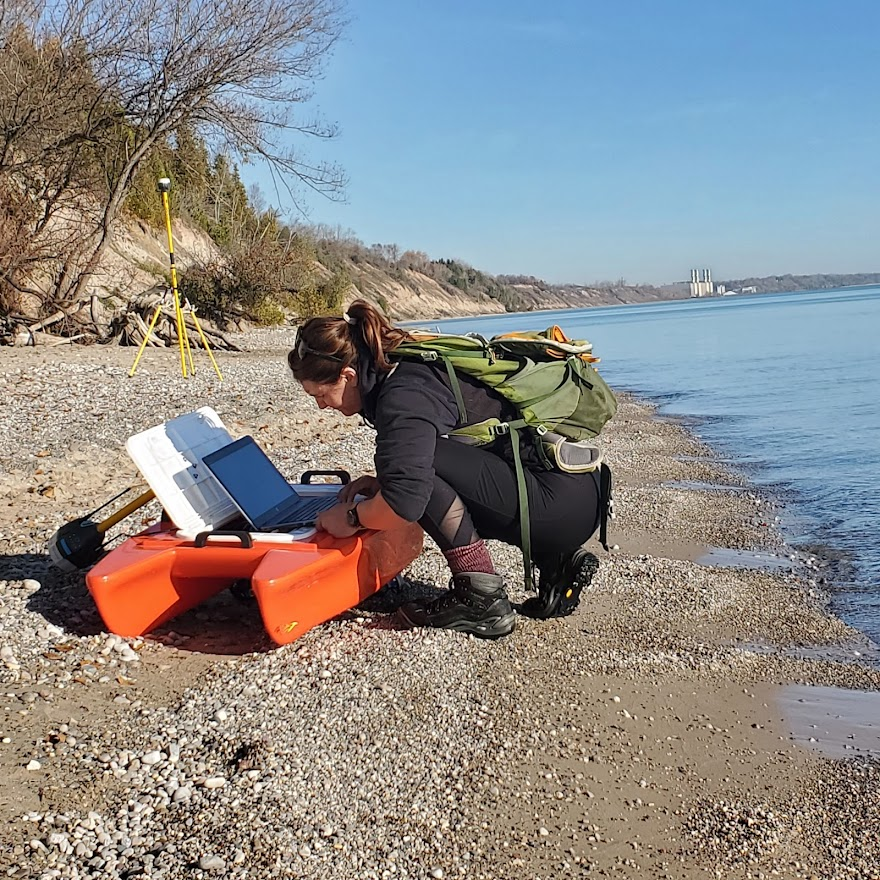
Chelsea Volpano works with a remote-controlled boat used to research erosion along Lake Michigan. Image credit: Chelsea Volpano, University of Wisconsin-Madison

High water levels in Lake Michigan since 2013 have caused erosion rates that are faster than usual, especially in 2020, when lake levels set records. This has created an urgent need to know more about erosion processes along and in the lake.

Lucas Zoet with the University of Wisconsin-Madison Department of Geoscience and his research team are looking at bluff erosion and sediment movement at two Wisconsin sites along Lake Michigan in a holistic way to better understand erosion rates and where the eroding sediment goes. This information will help guide shore protection and bluff stabilization processes and preserve beaches for recreation.

The two study sites are located just south of Port Washington and at Point Beach State Forest, which is farther north, near Two Rivers. The researchers chose those sites because they offer good representations of different erosion processes. The Port Washington site sits on a bluff, the Point Beach State Forest site is composed of sand dunes.

Lucas Zoet, University of Wisconsin-Madison. Submitted image

“The processes on these sites can be applied all over the place in Wisconsin,” Zoet said. “Lots of the bluffs we have are generally similar to those at the Port Washington site, composed of a mix of glacial tills and various lake deposits that are interbedded. So just understanding these processes at a base level, they should be generally applicable to more or less everywhere.”

The project’s holistic approach is unique. “The real strength of this project is that it doesn’t break the whole system up into little chunks, like we study this part and then we don’t know how it works because it’s in isolation from this other part. Instead, we’re trying to look at the whole continuous system, from what’s happening onshore, to what’s happening on the beach, to what’s happening in the nearshore over multiple years. We can study this on a representative timescale. Not just in a week or a month, but over seasons, which we know is such a big player in the Great Lakes region,” Zoet said.

Compared to the well-studied processes that happen on marine coastlines, winter is the season that makes erosion issues in the Great Lakes distinctive. Zoet said that cold weather impacts erosion differently.

“We have this season where the bluffs freeze solid, the shore ice forms – all these different components that drastically alter sediment transport. You don’t see that if you’re looking at beaches in North Carolina or Oregon,” Zoet said.

To study the onshore section, Zoet, J. Elmo Rawling with the Wisconsin Geological and Natural History Survey and Ph.D. student Chelsea Volpano, use drones and trail cams to gather data. To study the beach, Volpano conducts wading surveys. For these, Zoet said Volpano carries a staff with a GPS unit on it to measure lakebed elevation.

“She walks out into the water up to about her waist, about a meter deep and just does that over and over. So, with that, she can connect the onshore component to the offshore component for this continuous map that’s called topo-bathy,” Zoet said. This type of field work is uncommon. “She might be one of the only people to do these wading surveys in near-freezing waters, repeatedly throughout the years,” Zoet added.

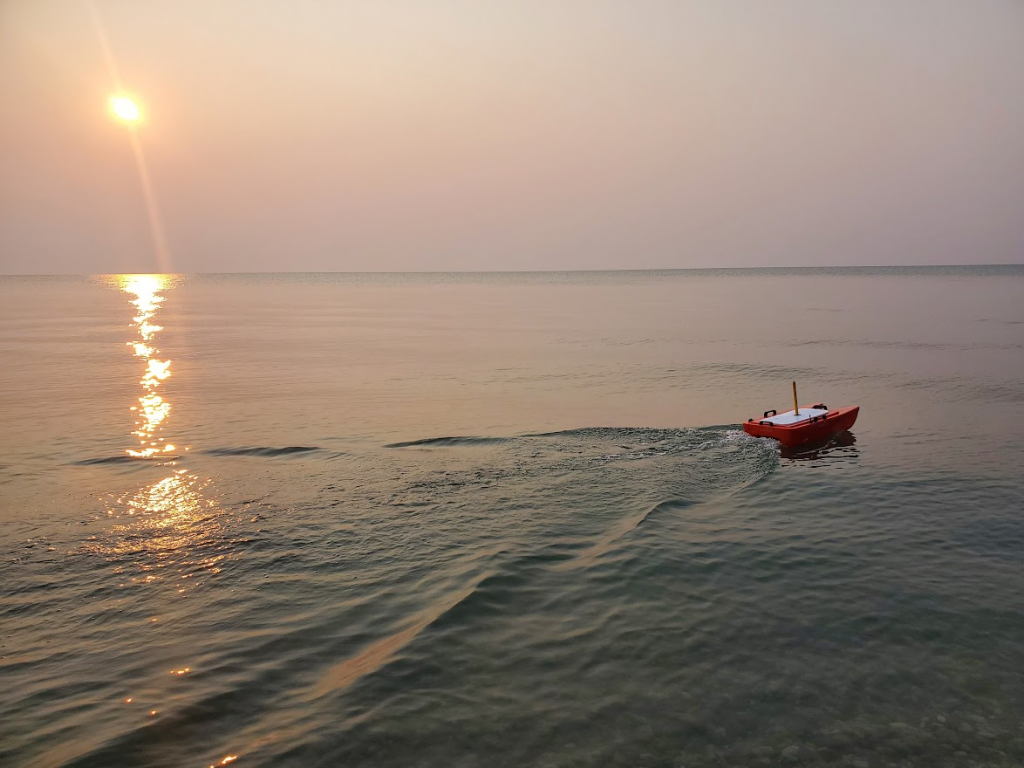
To study the nearshore area, the team uses a medium-sized remote-controlled boat that contains an instrument that measures the elevation of the lakebed for a full 3D map of the system. By repeating these measurements over time, the team can assess how the lakebed is changing and where the sediment is going.

(Drone footage by the research team of a landslide area along Lake Michigan.)

One aspect of communicating the project involves Great Lakes Quests. These are story maps compiled by Justin Hougham, University of Wisconsin-Madison, and Sea Grant. The Port Washington site is already part of the Quest database, but the Point Beach State Forest isn’t, and will be added.

The project will also be communicated through public workshops for educators and property owners along Lake Michigan who are concerned about coastal erosion. “We’ll do a walk of the terrain with them and we’ll probably bring a couple of the instruments we use, like the drone and the remote-controlled boat,” Zoet said. The first workshop is planned for September 2024.

Zoet has a long-standing working relationship with the College of Menominee Nation in Wisconsin. He’s currently helping design the college’s new geoscience program. Faculty members at the college plan to recommend students who could help work on the story maps for the project and computer mapping.

Summing up this multifaceted project, Zoet said, “In the end, I think we’ll learn a lot about the processes, but we’ll also learn a lot about how to better advise coastal managers, county managers and parks managers.”

The research team uses a remote-controlled boat to measure the elevation of the lakebed along Lake Michigan. Image credit: Chelsea Volpano, University of Wisconsin-Madison

The post Gaining a big picture of bluff erosion and sand movement along Lake Michigan first appeared on Wisconsin Sea Grant.

Original Article

News Releases | Wisconsin Sea Grant

News Releases | Wisconsin Sea Grant

https://www.seagrant.wisc.edu/news/gaining-a-big-picture-of-bluff-erosion-and-sand-movement-along-lake-michigan/?utm_source=rss&utm_medium=rss&utm_campaign=gaining-a-big-picture-of-bluff-erosion-and-sand-movement-along-lake-michigan

Marie Zhuikov

...Strong thunderstorms will impact much of central, east central and northeast Wisconsin through 645 AM CDT... At 515 AM CDT, Doppler radar was tracking clusters of strong thunderstorms throughout central, east central and parts of northeast Wisconsin. These storms were producing hail up to a half inch in diameter and brief heavy downpours. Movement was northeast

Original Article

Current Watches, Warnings and Advisories for Brown (WIC009) Wisconsin Issued by the National Weather Service

Current Watches, Warnings and Advisories for Brown (WIC009) Wisconsin Issued by the National Weather Service

https://alerts.weather.gov/cap/wwacapget.php?x=WI12664300FAA8.SpecialWeatherStatement.126643012C44WI.GRBSPSGRB.263766ff6094ac547714fd7671d80406

w-nws.webmaster@noaa.gov

...MINOR RIVER FLOODING, FAST FLOWS, AND AREAS OF LOW LAND FLOODING WILL CONTINUE THIS WEEK... Minor flooding is expected to continue on some streams, rivers, and low lying areas this week. A few locations on the Menominee River could see levels at moderate flood stage. Flows will continue to be fast, especially on the Menominee and Wisconsin rivers.

Original Article

Current Watches, Warnings and Advisories for Brown (WIC009) Wisconsin Issued by the National Weather Service

Current Watches, Warnings and Advisories for Brown (WIC009) Wisconsin Issued by the National Weather Service

https://alerts.weather.gov/cap/wwacapget.php?x=WI126642F320F4.HydrologicOutlook.1266431131D4WI.GRBESFGRB.9a74e37923d995b15714a656c5ebca0a

w-nws.webmaster@noaa.gov

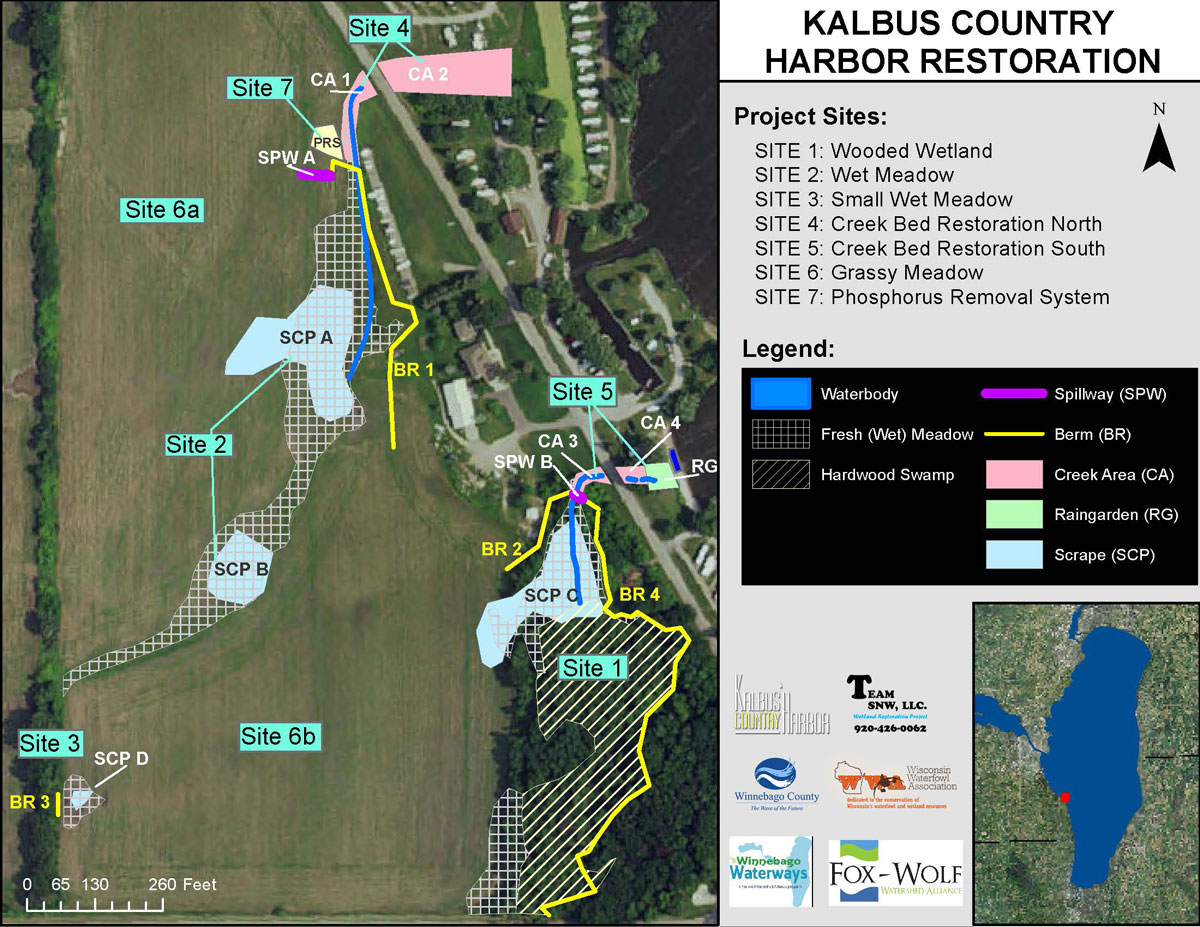
We are looking for 10-15 volunteers to help plant 2,720 plant plugs for a wetland restoration on the west side of Lake Winnebago.

Volunteers are needed May 5th, 6th, and possibly 7th at Kalbus Country Harbor in Oshkosh. Each day will start at 9:00 am. Volunteers are welcome to volunteer as much or as little as available.

To sign up, please contact John by May 1st at: 920-426-0062 (via text or call) or email kalbuscamping@gmail.com

We will have some tools available, but recommend bringing what you prefer to use with you, dress for the weather, and be prepared to get dirty. For those who sign-up, John will follow  up with additional details.

Read more about the Kalbus restoration project: CLICK HERE

Project site map

Project funding and partners:

Winnebago Waterways is a Fox-Wolf Watershed Alliance recovery initiative. Contact us at wwinfo@fwwa.org

The post Volunteers needed – Wetland Restoration Planting appeared first on Fox-Wolf Watershed Alliance.

Original Article

Fox-Wolf Watershed Alliance

Fox-Wolf Watershed Alliance

https://fwwa.org/2023/04/19/kalbus-wetland-project-volunteers/?utm_source=rss&utm_medium=rss&utm_campaign=kalbus-wetland-project-volunteers

Korin Doering

Many along Lake Ontario are waiting for the next report from the International Joint Commission and the International Lake Ontario-St. Lawrence River Board, which will include insights on the potential for flooding this season. Read the full story by WROC-TV – Rochester, NY.

Original Article

Great Lakes Commission

Great Lakes Commission

https://www.glc.org/dailynews/20230419-ijc-report

Theresa Gruninger