Michigan Democrats have introduced legislation that would establish a statewide septic code to reduce the amount of bacterial and nutrient contamination from the estimated 330,000 failing septic systems statewide. If passed, Michigan would become the final state to create uniform standards governing the design, construction, installation and maintenance of septic systems. Read the full story by MLive.

Original Article

Great Lakes Commission

Great Lakes Commission

https://www.glc.org/dailynews/20230503-septic-legislation
James Polidori

Tourism experts are talking about the possibility of Buffalo, New York, becoming a cruise port city in the future. Erie Canal Harbor Development Corporation is currently conducting a feasibility study to determine the best location for a future cruise ship port. Read the full story by WKBW-TV – Buffalo, NY.

Original Article

Great Lakes Commission

Great Lakes Commission

https://www.glc.org/dailynews/20230503-port-addition

James Polidori

Oswego, Montgomery, and Yorkville, Illinois, are facing a potential water crisis as their populations continue to rise and the aquifer supplying their wells continue to fall. The three cities decided more than a year ago to band together and join the DuPage Water Commission, though engineers must first plot a precise course for a pipeline to connect with Lake Michigan. Read the full story by Shaw Local News Network.

Original Article

Great Lakes Commission

Great Lakes Commission

https://www.glc.org/dailynews/20230503-water-pipeline-design

James Polidori

The International Lake Ontario-St. Lawrence River Board reports that St. Lawrence River water levels as of April 30 were a foot higher than normal. Last fall, some shoreline residents ended the boating season early due to low levels; now, some of them say with a mild winter and rain, the river may be too high. Read the full story by WWNY-TV – Carthage, NY.

Original Article

Great Lakes Commission

Great Lakes Commission

https://www.glc.org/dailynews/20230503-river-levels

James Polidori

The Port of La Crosse, Wisconsin, and F.J. Robers Co., a local marine transport company, have received over $3 million from the state’s Harbor Assistance Program for new construction and repairs. Most of the new facilities will support exports from the agricultural community. Read the full story by the La Crosse Tribune.

Original Article

Great Lakes Commission

Great Lakes Commission

https://www.glc.org/dailynews/20230503-port-funding

James Polidori

Michigan’s cruise ship season kicks off today with the Viking Octantis docking in Detroit before continuing north along the state’s eastern shoreline. The luxurious, 665-foot ship made its Great Lakes debut in 2022 and is the largest cruise ship to sail the Great Lakes in the modern era. Read the full story by MLive.

Original Article

Great Lakes Commission

Great Lakes Commission

https://www.glc.org/dailynews/20230503-cruise-season-start

James Polidori

For over a century, vast amounts of toxic contaminants were discharged by industries into the Detroit and Rouge Rivers. Many of these contaminants now reside in river-bottom sediments and are often referred to as “legacy pollution.” Michigan has a once-in-a-generation opportunity to remediate these contaminated sediments, but this will not occur unless non-federal partners can meet match funding requirements. Read the full story by Great Lakes Now.

Original Article

Great Lakes Commission

Great Lakes Commission

https://www.glc.org/dailynews/20230503-remediation-funding

James Polidori

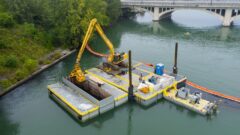
A barge and crane owned by Balcom Marine Contractors notorious for repeatedly sinking in Michigan’s Grand Traverse Bay is floating again due to springtime water level increases on Lake Michigan. State officials said they expect the barge to be towed away from its nearly two-year anchor site north of Northport in Leelanau County, as previously agreed by the owner. Read the full story by MLive.

Original Article

Great Lakes Commission

Great Lakes Commission

https://www.glc.org/dailynews/20230503-barge-floating

James Polidori

U.S. Pushes Farmers to Develop A New Crop: Energy

By Keith Schneider, Circle of Blue

The Great Lakes News Collaborative includes Bridge Michigan; Circle of Blue; Great Lakes Now at Detroit Public Television; and Michigan Radio, Michigan’s NPR News Leader; who work together to bring audiences news and information about the impact of climate change, pollution, and aging infrastructure on the Great Lakes and drinking water.

Read Now at Great Lakes Now.

Original Article

Great Lakes Now

Great Lakes Now

https://www.greatlakesnow.org/2023/05/us-pushes-farmers-develop-new-crop-energy/

Circle of Blue

Great Lakes Moment: Solving the contaminated sediment remediation funding puzzle

Great Lakes Moment is a monthly column written by Great Lakes Now Contributor John Hartig. Publishing the author’s views and assertions does not represent endorsement by Great Lakes Now or Detroit Public Television.

For over a century, vast amounts of toxic contaminants were discharged by industries into the Detroit and Rouge Rivers.

Read Now at Great Lakes Now.

Original Article

Great Lakes Now

Great Lakes Now

https://www.greatlakesnow.org/2023/05/great-lakes-moment-solving-the-contaminated-sediment-remediation-funding-puzzle/

John Hartig

Energy News Roundup: Line 5 negotiations in Michigan, funding for clean energy in Illinois

Keep up with energy-related developments in the Great Lakes area with Great Lakes Now’s biweekly headline roundup.

Click on the headline to read the full story:


Illinois

Chicago’s Blacks in Green gets a major boost from a $10 million EPA grant — Energy News Network

Chicago’s Blacks in Green receives a five-year, $10 million U.S.

Read Now at Great Lakes Now.

Original Article

Great Lakes Now

Great Lakes Now

https://www.greatlakesnow.org/2023/05/energy-news-roundup-line-5-negotiations-michigan-funding-clean-energy-illinois/

Kathy Johnson

Folk singer-songwriter Gordon Lightfoot dies at 84

TORONTO (AP) — Gordon Lightfoot, the folk singer-songwriter known for “If You Could Read My Mind” and “Sundown” and for songs that told tales of Canadian identity, died Monday. He was 84.

Representative Victoria Lord said the musician died at a Toronto hospital. His cause of death was not immediately available.

Read Now at Great Lakes Now.

Original Article

Great Lakes Now

Great Lakes Now

https://www.greatlakesnow.org/2023/05/ap-folk-singer-songwriter-gordon-lightfoot-dies/

The Associated Press

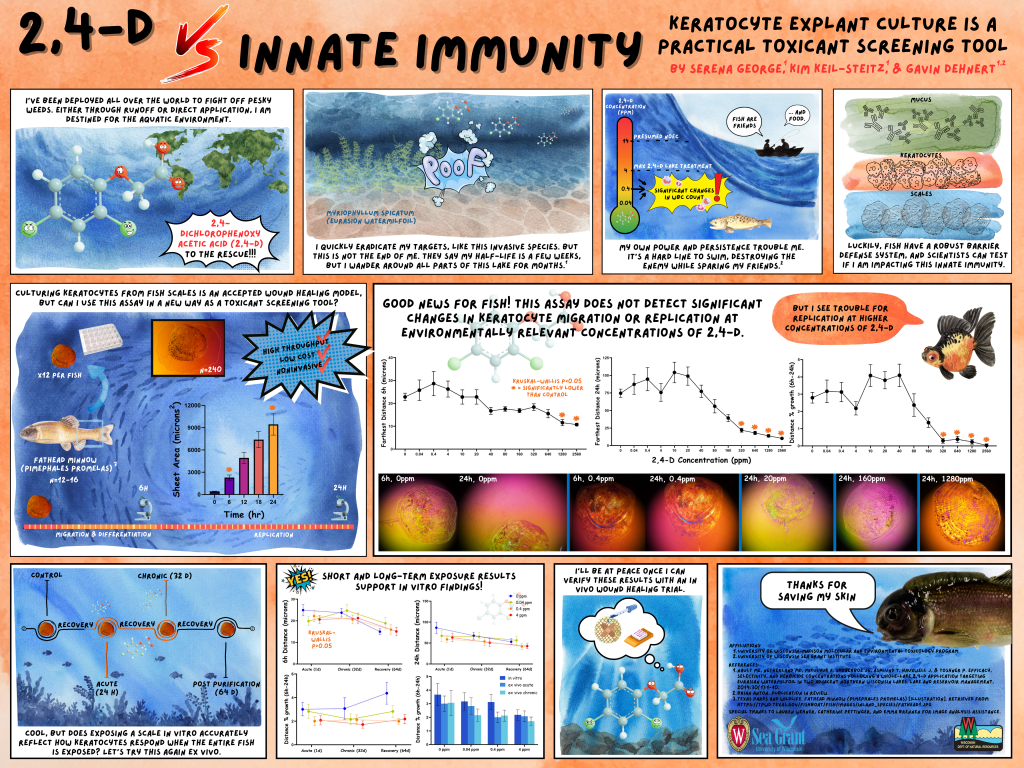
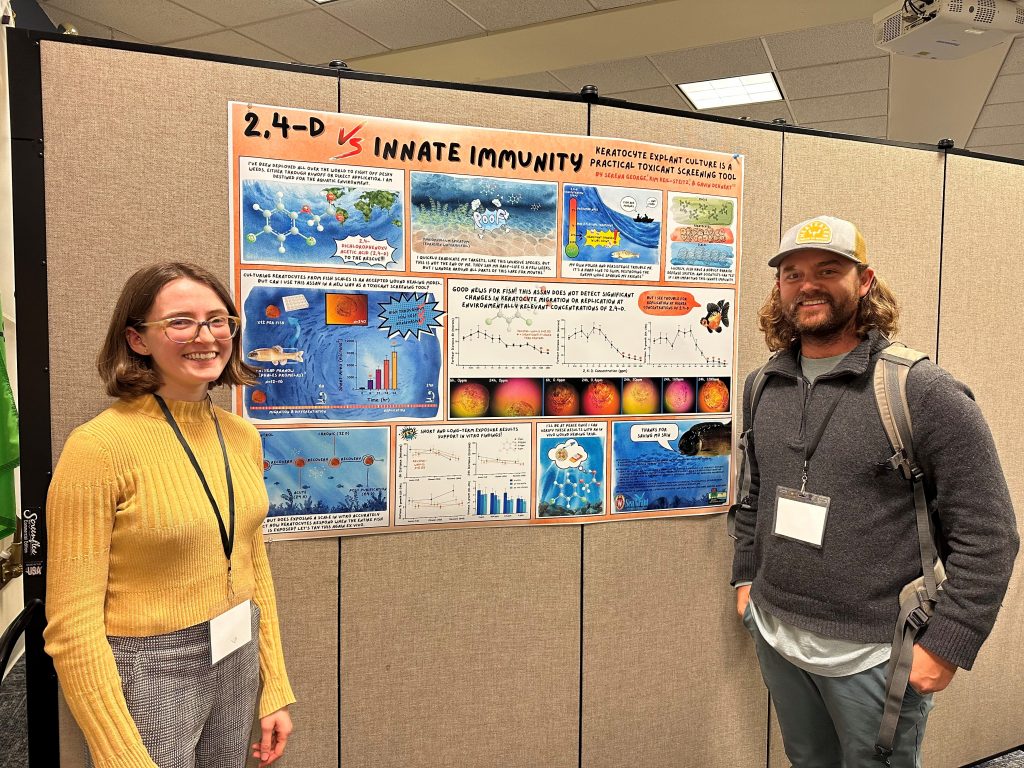
Serena George’s poster was runner-up for best poster for the Midwest SETAC Meeting poster session. She is working with Gavin Dehnert, Wisconsin Sea Grant’s emerging contaminants scientist. Image credit: Serena George, University of Wisconsin-Madison

By Serena George, University of Wisconsin-Madison

Research usually entails following strict protocols and replicating experiments. For the Midwest SETAC (Society of Environmental Toxicology and Chemistry) Meeting poster session, which was held in Milwaukee in mid-April, I thought I would take the opposite approach. I wanted to share the story behind my research and communicate science in a fun and accessible way – showing that research has an exciting plot of overcoming challenges, discovering new things and prompting more questions.

The meeting’s theme was “Applied Environmental Science in Addressing Emerging Contaminants.” My poster followed the story of one such contaminant, the herbicide 2,4-D (2,4-Dichlorophyenoxyacetic acid). Chemicals are often viewed as the “supervillains” in toxicology research, but I tried to frame my 2,4-D character in a different light as he struggled to come to terms with his power and worked diligently to ensure the safety of his fish friends. Emotion can often fuel a scientist’s passion for research, and I think characters can help portray this often-unspoken side of research in a unique way.

This comic-style poster has all the elements of a traditional poster, but I distilled the scientific details to only highlight the essential components (because I am standing at my poster during the session to fill in the details). I also incorporated tips from the #betterposter Generation 2 on YouTube (How to create a better research poster in less time). I used an attention-grabbing title with the main finding as the subheading. The key results and main figures are in the center, already translated for the reader into plain language.

I had so much fun designing this poster and seeing others engage with it. I think it was ultimately successful in attracting viewers and prompting in-depth conversations. Who knows, maybe one day there will be a sequel!

Serena George (left) and Gavin Dehnert with Serena’s poster at the Midwest SETAC Meeting. Submitted photo.


The post Using soft skills to communicate hard science first appeared on Wisconsin Sea Grant.

Original Article

Blog | Wisconsin Sea Grant

Blog | Wisconsin Sea Grant

https://www.seagrant.wisc.edu/blog/using-soft-skills-to-communicate-hard-science/?utm_source=rss&utm_medium=rss&utm_campaign=using-soft-skills-to-communicate-hard-science

Wisconsin Sea Grant

Michigan is the Great Lakes State. The shores of Michigan touch four out of five of the Great Lakes, the world’s largest freshwater system. To recognize that importance, Herrick District Library, located in Holland, MI will host a Nature Conservancy program focused on the natural treasure of the Great Lakes, and on the conservancy’s part in preserving this treasure. Read the full story by the Holland Sentinel.

Original Article

Great Lakes Commission

Great Lakes Commission

https://www.glc.org/dailynews/20230501-herrickdistrictlibrary-holland-celebratesgreatlakes

Hannah Reynolds

Nearly 11 million residents depend on Lake Erie for drinking water. To help keep that water safe, a tool called sondes is used to measure what is in the water. Sondes aren’t new, they’ve been around for about a decade. However, as technology improves, they’re becoming cheaper, giving smaller utility operators in smaller watersheds access. Read the full story by WEWS-TV – Cleveland, OH.

Original Article

Great Lakes Commission

Great Lakes Commission

https://www.glc.org/dailynews/20230501-watermonitoring-smallercommunities

Hannah Reynolds

Emergency personnel from a slew of Northern Michigan agencies traveled to Beaver Island over the weekend. It was all part of an emergency response training exercise called Operation Maritime Resolve. The focus of the exercise was to confirm the agencies’ ability to respond to multiple hypothetical emergencies in a remote location like Beaver Island. Read the full story by MLive.

Original Article

Great Lakes Commission

Great Lakes Commission

https://www.glc.org/dailynews/20230501-mi-beaverisland-operationmaritimeresolve

Hannah Reynolds

Martin Imbleau claims it can wait only “a few weeks” for the additional funding he’s requested from Ottawa to finance a new shipping container terminal. The new C$1.4 billion terminal — about 50 kilometres downstream of downtown Montreal in Contrecoeur, Que. — would boost the port’s container capacity by 60 per cent to 2.1 million TEUs. Read the full story by the Montreal Gazette.

Original Article

Great Lakes Commission

Great Lakes Commission

https://www.glc.org/dailynews/20230501-montreal-ceo

Hannah Reynolds

PortsToronto welcomed its first cruise ship of the 2023 season on Friday, April 28. The Viking Octantis officially launched another record-breaking cruise ship season, which will see 54 ships visit Canada’s largest city between May and October, bringing more than 22,000 passengers to enjoy all Toronto has to offer. Read the full story by CNW Group.

Original Article

Great Lakes Commission

Great Lakes Commission

https://www.glc.org/dailynews/20230501-portoftoronto-cruiseshipseason

Hannah Reynolds

The Youngstown Yacht Club in Youngstown, NY is set to hold its 10th annual CanAm Challenge and Great Lakes PHRF Fest on July 28-30, for two days of hosting competitors from all over the U.S. and Canada. It is the largest sailing event on Lake Ontario. Read the full story by Niagara Frontier Publications.

Original Article

Great Lakes Commission

Great Lakes Commission

https://www.glc.org/dailynews/20230501-annualcanam-youngstown

Hannah Reynolds

The Mariners’ Service came back April 28 after a three-year hiatus due to COVID-19. The service is created in collaboration between the Port Huron Yacht Club and Port Huron, Michigan’s Grace Episcopal Church. The service is a time to bless the nautical community prior to the boating season. Read the full story by the Port Huron Times Herald.

Original Article

Great Lakes Commission

Great Lakes Commission

https://www.glc.org/dailynews/20230501-mariners-churchservice-porthuron

Hannah Reynolds

...SNOW AND SLUSHY ROADS THIS MORNING... Snow is expected to gradually diminish or mix with rain over northeast and east central Wisconsin through midday. Until then, motorists should anticipate slushy conditions on secondary roads, overpasses and bridges, and should use caution.

Original Article

Current Watches, Warnings and Advisories for Brown (WIC009) Wisconsin Issued by the National Weather Service

Current Watches, Warnings and Advisories for Brown (WIC009) Wisconsin Issued by the National Weather Service

https://alerts.weather.gov/cap/wwacapget.php?x=WI126647D58D8C.SpecialWeatherStatement.126647D5FB50WI.GRBSPSGRB.6bf84a4531ca431ab1ef1d2b8385bb43

w-nws.webmaster@noaa.gov

Birding is the topic of the final River Talk of this season. The series will resume in fall. Image credit: Marie Zhuikov, Wisconsin Sea Grant

The River Talks will be held from 6-8 p.m. Wednesday, May 10 with “How and Where to Find Birds in the St. Louis River Estuary,” an in-person presentation at the Lake Superior Estuarium Confluence Room (3 Marina Drive, Barker’s Island in Superior) given by Steve Kolbe with the University of Minnesota Duluth’s Natural Resources Research Institute (NRRI).

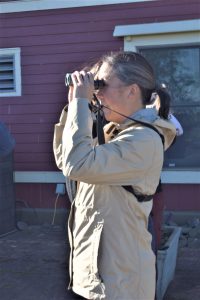
Come learn about where good locations are to see birds in the estuary. Participants will have the chance to view birds on Barker’s Island. Binoculars will be available for those who don’t have some to bring. 

This will be the final River Talks of the season until the series begins again in fall. For more information, visit the River Talks page: go.wisc.edu/4uz720.

The River Talks are sponsored by the Lake Superior National Estuarine Research Reserve and the Wisconsin Sea Grant Program.


The post How and where to find birds in the Estuary first appeared on Wisconsin Sea Grant.

Original Article

News Releases | Wisconsin Sea Grant

News Releases | Wisconsin Sea Grant

https://www.seagrant.wisc.edu/news/how-and-where-to-find-birds-in-the-estuary/?utm_source=rss&utm_medium=rss&utm_campaign=how-and-where-to-find-birds-in-the-estuary

Marie Zhuikov

...SLIPPERY ROADS AND SIDEWALKS POSSIBLE THIS MORNING... A relatively narrow band of light to moderate snow was making for slippery roads and sidewalks early this morning. Roads were reported slippery across most of Marinette, Oconto, and Brown counties, and across portions of Calumet, Door, Outagamie, Manitowoc, and Kewaunee counties. Rain over eastern Shawano and

Original Article

Current Watches, Warnings and Advisories for Brown (WIC009) Wisconsin Issued by the National Weather Service

Current Watches, Warnings and Advisories for Brown (WIC009) Wisconsin Issued by the National Weather Service

https://alerts.weather.gov/cap/wwacapget.php?x=WI126647D4F7F0.SpecialWeatherStatement.126647D570A4WI.GRBSPSGRB.6bf84a4531ca431ab1ef1d2b8385bb43

w-nws.webmaster@noaa.gov

...WINTER WEATHER ADVISORY IN EFFECT UNTIL 10 AM CDT THIS MORNING... * WHAT...Wet snow. Snow accumulations of 1 to 3 inches on grassy surfaces and some slush on roads and sidewalks. Winds gusting as high as 35 mph. * WHERE...Calumet, Manitowoc, Winnebago, Brown, Menominee, Northern Marinette County, Northern Oconto County, Outagamie, Shawano,

Original Article

Current Watches, Warnings and Advisories for Brown (WIC009) Wisconsin Issued by the National Weather Service

Current Watches, Warnings and Advisories for Brown (WIC009) Wisconsin Issued by the National Weather Service

https://alerts.weather.gov/cap/wwacapget.php?x=WI126647D464AC.WinterWeatherAdvisory.126647D5AD30WI.GRBWSWGRB.40c2ac144eb4b46491628935ae273837

w-nws.webmaster@noaa.gov

...LATE SEASON SNOW POSSIBLE MONDAY MORNING... A strong low pressure system over the Great Lakes could bring several hours of wet snow to parts of Northeast and East Central Wisconsin Monday morning. Temperatures near the ground will likely be a degree or two above freezing, so it is difficult to determine right now whether the snow will accumulate on paved surfaces.

Original Article

Current Watches, Warnings and Advisories for Brown (WIC009) Wisconsin Issued by the National Weather Service

Current Watches, Warnings and Advisories for Brown (WIC009) Wisconsin Issued by the National Weather Service

https://alerts.weather.gov/cap/wwacapget.php?x=WI126643994948.SpecialWeatherStatement.1266439A8614WI.GRBSPSGRB.6bf84a4531ca431ab1ef1d2b8385bb43

w-nws.webmaster@noaa.gov

Episode 2304 Lesson Plans: Sweet sweet energy

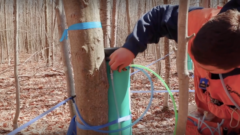
This lesson will explore the phenomenon of maple sap production in the Great Lakes, as it pertains to chemical energy storage and transfer, in contrast with mechanical energy storage and transfer in wind turbines. Students will model the production of maple syrup from sap by making simple syrup and perform a distillation experiment with cola.

Read Now at Great Lakes Now.

Original Article

Great Lakes Now

Great Lakes Now

https://www.greatlakesnow.org/2023/04/episode-2304-energy-lesson-plan/

Gary Abud Jr.

Experts are concerned after a wet winter, with little relief in sight this rainy season, as the five Great Lakes continue to see an uptick in water levels. All the lakes remain above their April long-term average levels, according to the U.S. Army Corps of Engineers’ weekly forecast. Read the full story by USA Today.

Original Article

Great Lakes Commission

Great Lakes Commission

https://www.glc.org/dailynews/20230428-flood-risk

James Polidori

As the trout season approaches on Saturday, April 29th, the Michigan Department of Natural Resources (DNR) and Environment, Great Lakes, and Energy, are asking anglers to prepare to decontaminate their supplies. According to the DNR, Michigan’s trout streams are under increasing threat from harmful species that affect habitat and food sources for trout and other fish and can be moved to new locations on waders, nets, and gear. Read the full story by WHMI – Howell, MI.

Original Article

Great Lakes Commission

Great Lakes Commission

https://www.glc.org/dailynews/20230428-decontamination-preparation

James Polidori

Michigan’s spring temperatures are highly influenced by water temperatures on the Great Lakes. It’s a vicious cycle in which the colder than normal air has cooled the Great Lakes waters, which will continue to keep the air cooler as well. Read the full story by MLive.

Original Article

Great Lakes Commission

Great Lakes Commission

https://www.glc.org/dailynews/20230428-water-temperatures

James Polidori

According to the International Lake Ontario – St. Lawrence River Board (ILOSLRB), Lake Ontario’s water level was at about 75.15 meters as of April 19, which is 0.25 meters above average for this time of year. Residents and visitors to Lake Ontario and the Upper St. Lawrence River are being warned of the high water levels that are expected to continue to increase in the coming weeks. Read the full story by the Kingston Herald.

Original Article

Great Lakes Commission

Great Lakes Commission

https://www.glc.org/dailynews/20230428-high-water-levels

James Polidori

Midland, Michigan, could receive $50 million for flood reduction infrastructure after Sen. Kristen McDonald Rivet (D-Bay City) secured those funds in the proposed Department of Environment, Great Lakes, and Energy budget. That budget was passed by the Senate Appropriations Committee on Wednesday, moving on to the full Senate and House for negotiations. Read the full story by the Midland Daily News.

Original Article

Great Lakes Commission

Great Lakes Commission

https://www.glc.org/dailynews/20230428-flood-reduction-funding

James Polidori

The Pelee Islander II is staying out of service longer than expected this spring due to ‘an unforeseen technical issue’ found during a scheduled out-of-water inspection. Local officials are concerned the delay will hinder the region’s ability to prepare for the upcoming busy season on the Lake Erie Island. Read the full story by CTV – Windsor.

Original Article

Great Lakes Commission

Great Lakes Commission

https://www.glc.org/dailynews/20230428-ferry-delay

James Polidori

Six Michigan Senate Democrats introduced SB 294, which would ban the intentional release of balloons that end up in the Great Lakes, posing a threat to thousands of species. In 2019, the nonprofit Alliance for the Great Lakes found more than 18,000 balloons or balloon pieces along the shores over the previous two years. Read the full story by WOOD-TV – Grand Rapids, MI.

Original Article

Great Lakes Commission

Great Lakes Commission

https://www.glc.org/dailynews/20230428-balloon-bill

James Polidori

The ferry that transports people and vehicles between Charlevoix and Beaver Island – Lake Michigan’s largest island – has begun its 2023 season. Beaver Island Boat Company is running three trips a week right now and will begin increasing that number in May. Read the full story by MLive.

Original Article

Great Lakes Commission

Great Lakes Commission

https://www.glc.org/dailynews/20230428-beaver-island-ferry

James Polidori

The Pennsylvania Fish and Boat Commission (PFBC) announced a new Erie Access Improvement Program grant opportunity heading to Erie County. The program is funded through proceeds from the sale of Lake Erie permits for programs that benefit public fishing, including enhanced access and habitat projects on or at Lake Erie and the watersheds of Lake Erie. Read the full story by WJET-TV – Erie, PA.

Original Article

Great Lakes Commission

Great Lakes Commission

https://www.glc.org/dailynews/20230428-fishing-grant

James Polidori

According to the Michigan State Historic Preservation Office, the S.S. Keewatin, a passenger steamship older than the Titanic, began its journey down the St. Clair River on Wednesday. The Edwardian-era Keewatin was built in 1907 by the Fairfield Shipbuilding and Engineering Company of Glasgow, Scotland, and is the last of its kind. Read the full story by MLive.

Original Article

Great Lakes Commission

Great Lakes Commission

https://www.glc.org/dailynews/20230428-steamship-transport

James Polidori

Natural resource management issues often boil down to people management issues. When it comes to lake management, people can be hard to predict. They may say one thing but do another. They may think they’re good environmental stewards even though some of their behaviors suggest otherwise. But to make meaningful progress in aquatic invasive species management issues, human behavior must be taken into account.
Intersections between natural and social science is the theme of a recent article written by Wisconsin Sea Grant’s Aquatic Invasive Species Outreach Specialist Tim Campbell and University of Wisconsin-Madison Associate Professor and Division of Extension Environmental Communication Specialist Bret Shaw. “Natural and Social Science Work Better Together for Managing AIS” appeared in the spring 2023 issue of “Lakeline,” published by the North American Lake Management Society.

The article outlines effective social science methods, including understanding target audiences, crafting better messages and addressing barriers to behavior change.

The post Aquatic invasive species management through people management first appeared on Wisconsin Sea Grant.

Original Article

Blog | Wisconsin Sea Grant

Blog | Wisconsin Sea Grant

https://www.seagrant.wisc.edu/blog/aquatic-invasive-species-management-through-people-management/?utm_source=rss&utm_medium=rss&utm_campaign=aquatic-invasive-species-management-through-people-management

Marie Zhuikov

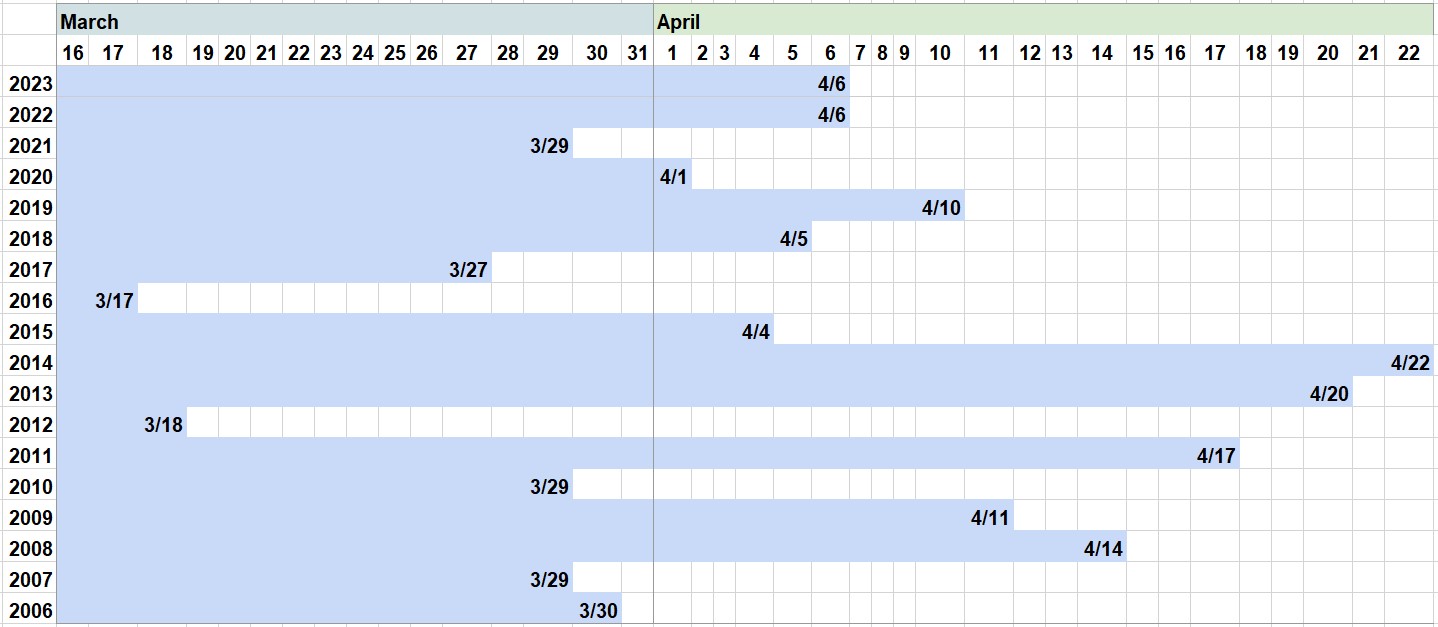
Ice out on Lake Winnebago was officially called by the Army Corps of Engineers on April 6, 2023 as determined by MODIS satellite imagery. Ice out (aka ice off) is when ALL ice is gone from the lake surface as observed by satellite.  This is important because ice out marks the date that the Army Corps transitions their management of Lake Winnebago from maintaining winter pool to focus on spring refill.

Ice out dates for Lake Winnebago 2006 to 2023 (Source: ACOE)

The Army Corps of Engineers – Chicago District manages water levels for Lake Winnebago by regulating outflow at the dams in Menasha and Neenah under the Federal Marshall Order of 1886. The Marshall Order is intended for flood risk management.

The Marshall Order defines the limits of regulation for Lake Winnebago:

  • May 1st to October 1st (navigation season):
    • High end of limit: 3.45 ft.
    • Low end of limit: 0.18 ft.
  • October 2nd to April 30th:
    • High end of limit: 3.45 ft.
    • Low end of limit: 1.68 ft

While meeting their mission of flood risk management is the priority, the Army Corps also tries to meet the needs of various stakeholders within their operating limits. This requires finding a reasonable balance among multiple competing interests. Each year, with stakeholder input, the Army Corps sets their annual regulation strategy which guides their daily management decisions.

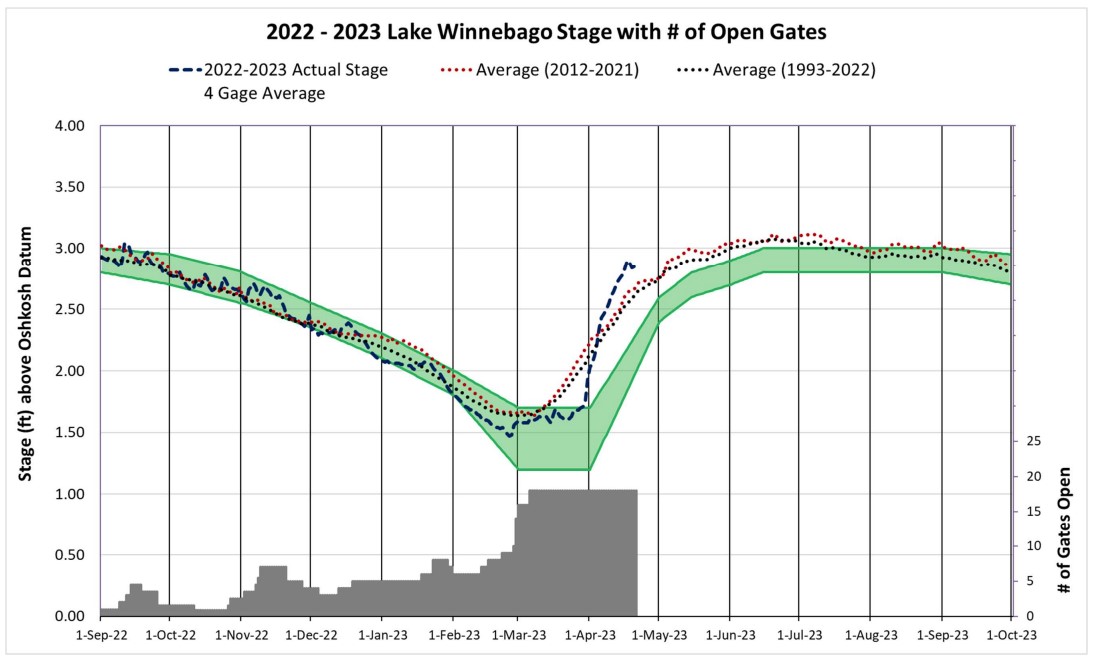
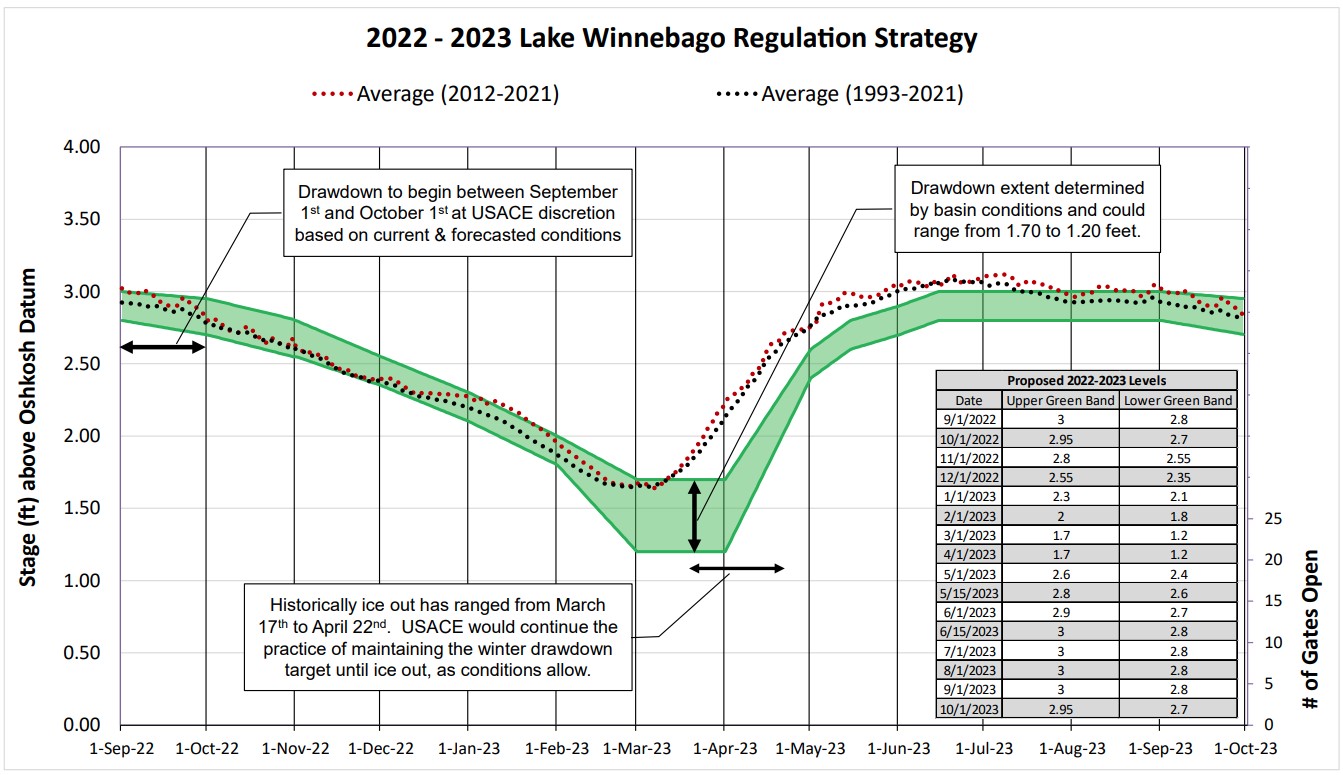
Their annual regulation strategy represents that balance and can be broken down by certain times of the year: fall drawdown, winter pool, spring refill, and summer pool. Water level targets are set along this strategy in a schedule. These targets are listed in the Army Corps 2022 – 2023 Lake Winnebago Regulation Strategy (shown in the image below). The green band in the annual strategy represents the “target band”. The Army Corps tries to hold water levels within this band. The dotted lines represents the average lake level across all years as noted in the key.

Average Water Level for Lake Winnebago

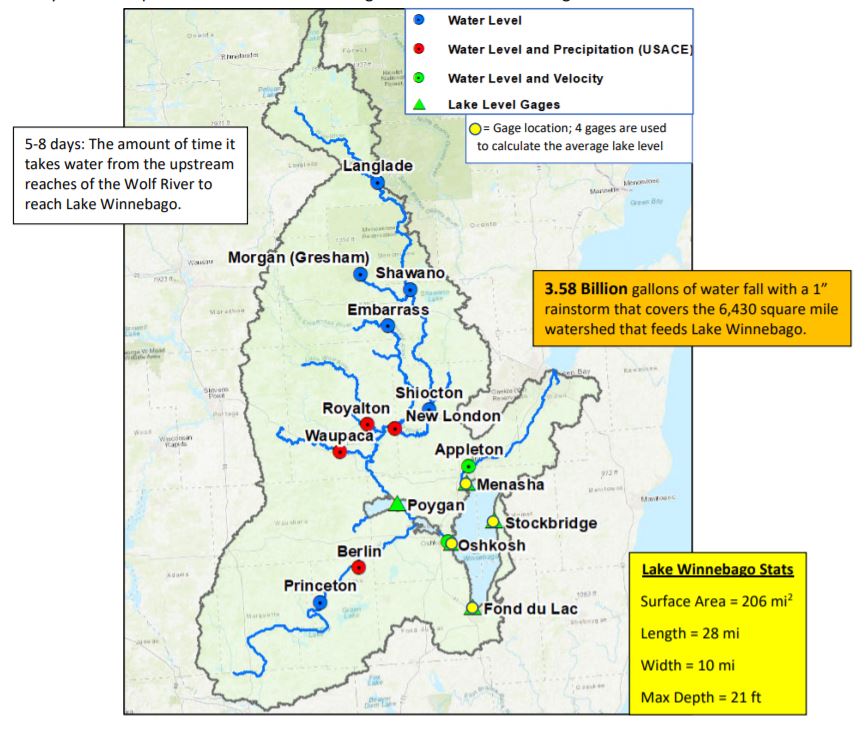
Lake level for Lake Winnebago is an average of readings from four gages located around the lake and is in reference to the Oshkosh Datum.

Fall Drawdown: As of the 2021/2022 regulation strategy, fall drawdown has been scheduled to begin between Sept 1 and Oct 1 each year at the discretion of the Army Corps through an adaptive decision making process.

Winter Pool: Each February, the Army Corps evaluates basin conditions and the forecast to determine their winter drawdown target.

The Army Corps draws down Lake Winnebago every winter to reduce the risk of damage caused by ice shoves, protect shoreline properties, and provide enough space within the lake to hold excess water that flows into Lake Winnebago each spring (snow melt and rain storm runoff from a 5,900 square mile watershed). The 2023 winter drawdown target operating band for Lake Winnebago this year was 1.25 ft to 1.3 ft.

Spring refill: When the Army Corps determines ice out has occurred on Lake Winnebago based on satellite imagery, spring refill is triggered. For many boaters, people interested in habitat protection, and stakeholders working to restore the lakes, refill is of particular interest. According to the most recent annual strategy, refill targets are as follows:

  • May 1st – 2.5 ft (Operating band: 2.4 to 3.6 ft)
  • June 1st – 2.8 ft (Operating band: 2.7 to 3.9 ft)
  • June 15th – 2.9 ft (Operating band: 2.8 to 3.0 ft)

Summer Pool: The Army Corps tries to maintain the lake within a target band for summer recreation navigation.

The total seasonal water elevation change is typically about 1.8 ft in a given year.

Recent conditions:

Despite having all available gates open at the dams since March 6, 2023, the average level of Lake Winnebago has been well above the target band since the beginning of April. This is likely due to the lake not being drawn down far enough or early enough to accommodate spring runoff from snow melt and precipitation. When inflows to Lake Winnebago exceed outflow capacity of the gates, the lake begins to rise uncontrolled. Overshooting the target band increases risk of flooding, significantly damages habitat and limits water quality restoration gains (among other impacts).

A graph from April 21, 2023 shows the recent average lake level (dashed line). Hopefully, precipitation will ease up and the Army Corps will be able to regain control before too much damage is done to the wetlands and aquatic habitat.

Additional Water Level Related Information:

1.) Water Level Management for the Winnebago Waterways: This report describes water level management including the process of developing an annual strategy, the considerations for the strategy, and the reason the strategy (schedule) is in its current form. CLICK HERE for the report.

This report is part of a larger planning effort for the Winnebago Lakes. The rest of the lake plan can be found here: https://fwwa.org/lake-management-planning-2/

2.) Winnebago Water Level Assessment Team (WWLAT): This is a stakeholder group that holds discussions about water levels independent of the Army Corps public input process. The website for the Team provides information about the background, past recommendations, and more. Interested stakeholders are welcome to participate. Link: https://fwwa.org/winnebago-waterways/wwlat/

3.) The Army Corps provides access to a lot of data and information through their Lake Winnebago webpage: CLICK HERE

Winnebago Waterways is a Fox-Wolf Watershed Alliance recovery initiative. Contact us at wwinfo@fwwa.org

The post Ice-Out officially called for Lake Winnebago – April 6, 2023 appeared first on Fox-Wolf Watershed Alliance.

Original Article

Fox-Wolf Watershed Alliance

Fox-Wolf Watershed Alliance

https://fwwa.org/2023/04/27/ice-out-officially-called-for-lake-winnebago-april-6-2023/?utm_source=rss&utm_medium=rss&utm_campaign=ice-out-officially-called-for-lake-winnebago-april-6-2023

Korin Doering

Company seeks first-time restart of shuttered nuclear plant

By John Flesher, Associated Press

TRAVERSE CITY, Mich. (AP) — A company that tears down closed nuclear power plants wants to do in Michigan what has never been done in the U.S.: restore a dead one to life.

Holtec Decommissioning International bought the Palisades Nuclear Generating Station last June for the stated purpose of dismantling it, weeks after previous owner Entergy shut it down.

Read Now at Great Lakes Now.

Original Article

Great Lakes Now

Great Lakes Now

https://www.greatlakesnow.org/2023/04/ap-company-seeks-first-time-restart-shuttered-nuclear-plant/

The Associated Press

Thank you to the Wisconsin Herd, Oshkosh Arena, and Winnebago County and the Winnebago Solid Waste Department for having the Winnebago Waterways Program as the non-profit of the night at the Wisconsin Herd Game on March 17, 2023. It was an exciting game and thanks to all who bid on the Go Green jerseys following the game, we raised $1650.57! These funds will be used to further our water quality restoration and protection efforts. Thank you for all your support!

The post Total raised as a result of Go Green night at the Wisconsin Herd Game March 17, 2023 appeared first on Fox-Wolf Watershed Alliance.

Original Article

Fox-Wolf Watershed Alliance

Fox-Wolf Watershed Alliance

https://fwwa.org/2023/04/27/wisconsin-herd-march-17-result/?utm_source=rss&utm_medium=rss&utm_campaign=wisconsin-herd-march-17-result

Katie Reed

Walleye and pike surveys start in early spring, followed by muskie surveys. In May, the DNR starts surveying general fish communities like panfish and bass, and from July to September it surveys streams.

The post Shocking news for Michigan fish first appeared on Great Lakes Echo.

Original Article

Great Lakes Echo

Great Lakes Echo

http://greatlakesecho.org/2023/04/27/shocking-news-for-michigan-fish/

Guest Contributor

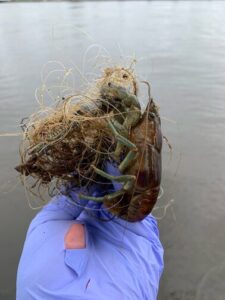
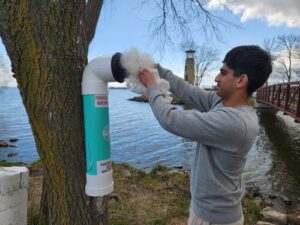
Fox-Wolf Watershed Alliance has partnered with Oshkosh North Communities students for several years. Our previous projects included a kayak cleanup of Miller’s Bay, shoreline restoration plant maintenance, and a cleanup of Asylum Point Park. When we were contacted earlier this year to continue this partnership, we jumped at the chance to work with students on a litter prevention effort. The plan was to have Communities students build and install fishing line receptacles at public fishing locations in the greater Oshkosh area.
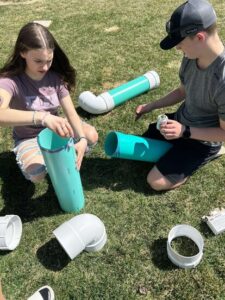
Fishing line left as litter in our watershed has devastating effects on wildlife and can become entangled and difficult to remove. Fishing line receptacles offer anglers the opportunity to properly dispose of their used fishing line before it becomes a problem in the environment. These containers also bring awareness to a major litter issue in our lakes and rivers.

Seven students chose the Eco Pod consisting of three earth-friendly projects, including the pollution prevention project with Trash Free Waters. Kelly Reyer who runs the Trash Free Waters program at Fox-Wolf, met with the students several times throughout the semester, setting a project schedule and helping to coordinate with the Winnebago County Parks Department.
The students researched the best receptacle design, created a budget, submitted their budget request, and bought the needed supplies, and then worked together to built three receptacles. The three receptacles were installed at:

  • Asylum Point Park
  • Ken Robl Conservation Park
  • Butte des Morts Landing

The Trash Free Waters program at Fox-Wolf Watershed Alliance is proud to work with Oshkosh North High School Communities students on this litter prevention project. Thank you to the students, Sawyer, Blake, Shawn, Hammza, Katie, Keira, and Emily.

A quote from Katie Wetterau, Oshkosh North High School Communities Student:

 “Fishing line is not biodegradable. When the monofilament is left in our waterways it stays there for hundreds of years harming the environment and its wildlife. For the future that I and many other children will grow up in, I am glad to have made an impact to help our earth with our partner Kelly Reyer from Trash Free Waters.”

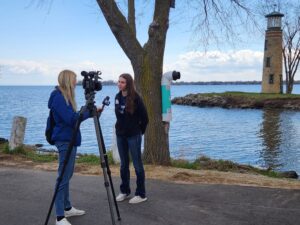
A celebration of the project took place at Asylum Point Park on Tuesday, April 25, 2023 in the afternoon. In attendance were school officials, family members, other Communities students, project partners, and local TV media. The students shared their experience working on this project and were interviewed about their experience by both WLUK Fox-11 and WBAY TV-2.
Here are links to both TV news stories:

Trash Free Waters is a program of the Fox-Wolf Watershed Alliance that works to prevent and reduce trash and litter on our lands and in our waters through targeted campaigns, cleanup events, and outreach and education.
The mission of the Oshkosh North High School communities program is to create a better community through content, communication, collaboration, commitment, creative thinking, and critical thinking.

To learn more about our Fox-Wolf’s Trash Free Waters program, visit: www.trashfreewaters.org or contact Kelly Reyer – 920-915-1502 or kelly@fwwa.org.

The post Trash Free Waters & Oshkosh North Communities Students Partner for Litter Prevention appeared first on Fox-Wolf Watershed Alliance.

Original Article

Fox-Wolf Watershed Alliance

Fox-Wolf Watershed Alliance

https://fwwa.org/2023/04/26/fishing-line-receptacle-project/?utm_source=rss&utm_medium=rss&utm_campaign=fishing-line-receptacle-project

Kelly Reyer

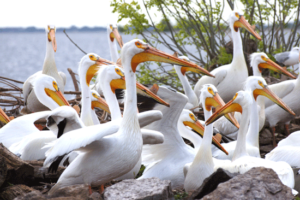
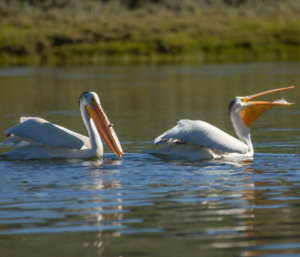
The American White Pelican (Pelecanus erythrorhynchos) used to be a rare sight in Wisconsin, now these birds, with wingspans up to 9 feet, are frequently spotted in large numbers in the Winnebago System! The American White Pelican has an orange, long, pouched bill (beak) that can grow a protrusions during the breeding season. The tips of their bills have a small hook at the tip. Their necks are long, and their bodies are usually snowy white with black flight feathers. Their legs and feet are orange though younger birds’ can appear more gray-pink and darken with age, and their feet are webbed. Adult pelicans can weigh about 16 pounds, making them one of the heaviest flying bird species.

American White Pelicans are piscivorous, meaning they primarily eat fish. The American White Pelican forages for food mostly in shallow waters in open areas of marshes, lakes, rivers, and ponds but can forage in deeper water. American White Pelicans do not submerge or dive for food. Instead, they dip their bill into the water and scoop up prey into their pouch, then tip their bill above their head to swallow. A typical pelican can reach down to about 3 feet below the surface of the water, and can eat about 3 pounds of fish a day! In Wisconsin, pelicans have been recorded eating common carp, as well as other fish species. They can also eat amphibians like frogs and invertebrates like crayfish. Pelicans sometimes work together to forage for food. A group of pelicans can corral fish into shallow areas or to the center of a U formation or circle to more easily catch prey.

Adult American White Pelicans on Water (National Park Service)

Pelicans at a nesting colony (Winnebago Waterways User Submitted Photo)

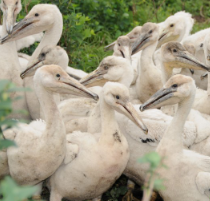
Young Pelicans (USDA)

Pelicans start to breed when they reach about 3-6 years old and travel to their breeding colonies in March – May. These colonies are typically on islands. Nests are built on the ground in colonies with other pelicans, as well as other bird species like cormorants and gulls. Usually pelicans lay 2 eggs. The eggs and hatched young are vulnerable to predators like eagles, foxes, and raccoons. Studies show that pelicans can live up to 30 years.

Historically, American White Pelicans were found in Wisconsin but their population sharply declined in the late 1800s – 1900s due to hunting and habitat loss. In the last 20-25 years, their populations have grown tremendously in Wisconsin, prompted likely by loss of breeding grounds in the West but also due to habitat restoration projects and pollution cleanup. In the lower Green Bay area, the number of white pelicans grew from about 250 in 2005 to more than 3,000 in 2021. Protecting their habitat and water quality is important to their continued success in the Winnebago System.

Winnebago Waterways is a Fox-Wolf Watershed Alliance recovery initiative. Contact us at wwinfo@fwwa.org

The post Species Spotlight: American White Pelican appeared first on Fox-Wolf Watershed Alliance.

Original Article

Fox-Wolf Watershed Alliance

Fox-Wolf Watershed Alliance

https://fwwa.org/2023/04/26/species-spotlight-american-white-pelican/?utm_source=rss&utm_medium=rss&utm_campaign=species-spotlight-american-white-pelican

Katie Reed

By Jenna Mertz 

When first-year UW–Madison student Lily Meisel imagined herself doing research, she pictured white coats and microscopes.

“I’m going to be sitting in a lab,” she said, “working with my Petri dishes, dropping bacteria in them.”

Close up of smiling person leaning against a wall

Lily Meisel is a 2022-23 Undergraduate Research Scholar who pivoted away from Petri dishes to take on a different kind of research–coastal resilience. Submitted photo.

Meisel, a prospective biochemistry and environmental studies major, was curious whether she would like that type of work. To find out, she joined the Undergraduate Research Scholars program, which pairs first- and second-year students with researchers across campus. Meisel was drawn to a Wisconsin Sea Grant project about planning for and preventing Great Lakes bluff erosion, a topic unfamiliar to her.

“I think the thing that attracted me to this project the most was that I didn’t know much about it,” she said.

The project, led by Wisconsin Sea Grant coastal GIS specialist David Hart, explores how “adaptation pathways”—a planning tool used to prepare for and respond to the impacts of climate change—could address bluff erosion and other coastal hazards in the Great Lakes. Unlike traditional planning approaches, adaptation pathways are flexible and built around uncertainty. They allow decision makers to map multiple solutions to a problem and pivot to alternatives when those solutions no longer work or become too expensive.

Hart first learned about adaptation pathways from a Sea Grant colleague using the tool to address sea level rise at Dauphin Island, Alabama. “I hadn’t seen this approach applied in the Great Lakes and thought Lily could explore how it had been used to address coastal hazards in a changing climate around the world,” said Hart.

Meisel’s goal was to identify where and how adaptation pathways have been used, if they were successful, and how they could be applied locally. So she got to work—not by culturing bacteria, but by scouring published research for mention of the topic.

“It’s kind of like a treasure hunt,” she said.

Meisel noted it was difficult to find examples of communities that have used adaptation pathways for long-term climate change planning because the approach is relatively new. She focused her analysis on four communities—Lakes Entrance, Australia; Auckland, New Zealand; Dauphin Island, Alabama; and Santa Cruz, California—and plans to showcase her findings via a multimedia, interactive platform known as a StoryMap.

While Meisel thinks more research is still needed to demonstrate their success in helping communities adapt to climate change in the long term, adaptation pathways have proven an effective method for gauging public opinion, which could be useful for weighing different solutions to bluff erosion.

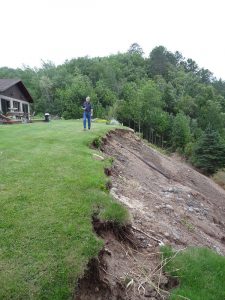
Person walking along a tall bluff that is highly eroded, with a house perched dangerously above the erosion

Under a changing climate, many changes will come to Great Lakes landscapes, such as eroding bluffs like this one near Lake Superior. Photo: Marie Zhuikov, Wisconsin Sea Grant

Meisel also felt a personal connection to her research. Growing up in Neenah, Wisconsin, a town on the shores of Lake Winnebago, she knows what it is like to live in a community where life revolves around the lake. The practical applications of the research excite her. “I would love to help a community that’s so similar to mine,” she said.

Meisel will present her findings at the Undergraduate Symposium on Friday, April 28, at Union South.

The post Undergraduate researcher evaluates adaptation tool to combat Great Lakes coastal hazards first appeared on Wisconsin Sea Grant.

Original Article

News Releases | Wisconsin Sea Grant

News Releases | Wisconsin Sea Grant

https://www.seagrant.wisc.edu/news/undergraduate-researcher-evaluates-adaptation-tool-to-combat-great-lakes-coastal-hazards/?utm_source=rss&utm_medium=rss&utm_campaign=undergraduate-researcher-evaluates-adaptation-tool-to-combat-great-lakes-coastal-hazards

Moira Harrington

Job Opportunities

Great Lakes Commission Position Available: Senior Data Analyst

Application deadline: May 15, 2023  |  Download PDF

Description

The Great Lakes Commission (GLC) has an immediate opening for a self-starting, highly motivated team player to join our staff. This position will work under the direction of GLC project managers, assisting with implementation of various projects and providing support to several issue-specific regional collaboratives coordinated by the GLC. This position will primarily support the GLC’s portfolio of invasive species projects that collect, collate and interpret different datasets to inform invasive species policy and management decisions. A smaller proportion of time will also be dedicated to support projects focused on other Great Lakes issues, such as water use, maritime transportation and others, depending on agency needs.

Responsibilities

The data analyst will work with internal and external teams responsible for implementing projects managed by the GLC. The position will be responsible for a variety of activities, including but not limited to management of large, complex datasets; data analyses, summaries, and visualizations; communication with partner agencies; preparation of presentations and written documents; and meeting support.

Specific responsibilities include:

  • Develop and maintain databases by acquiring data from primary and secondary sources
  • Independently utilize data management and statistical programs to generate data summaries and analyses, and build scripts to improve efficiency in summarizing datasets
  • Manage datasets to support their use in visualization and applications including ArcGIS and Microsoft Power BI and assist in the creation of public-facing data visualizations
  • Utilize written and verbal communication skills to interpret and summarize complex data into easily understood messages
  • Identify opportunities to increase efficiencies in current data management practices
  • Represent the GLC and project teams at workshops, meetings, and conferences

Qualifications

A master’s degree with two years or more of relevant full-time experience; or bachelor’s degree with four years or more of relevant full-time experience is required, along with the following qualifications:

  • Experience with designing and maintain relational databases
  • Knowledge of data mining, cleaning, segmentation and modeling techniques
  • Experience working with APIs and other web services to access and query data
  • Strong SQL or Excel skills, with aptitude for learning other analytics tools
  • Practical experience in data processing and statistical analysis through the use of R
  • Ability to execute project tasks and manage time effectively with minimal supervision
  • Strong writing skills and ability to communicate effectively verbally and in writing to both technical and lay audiences
  • Self-motivated and organized with strong attention to detail
  • Familiarity with natural resources management, ecology, and/or aquatic sciences

The ideal candidate will also bring one or more of the following skills and experience to the position:

  • Experience with a high-level programming language such as JavaScript/Python/C
  • Knowledge of Great Lakes issues and programs, water quality, land use, and/or resource management
  • Familiarity with social media, website content management (e.g., WordPress), and webinar platforms

Appointment

Position Classification
The position is classified as regular – full-time as defined by the GLC’s personnel policies.

Compensation and Benefits
The starting salary range for this position is $64,000 – $66,500 per year depending on education, skills, and experience. The GLC offers a competitive salary and comprehensive benefits, including generous leave time, flexible schedules, medical, dental and vision insurance, and a retirement match program.

Work Environment
The GLC is located in Ann Arbor, Michigan. It is expected that the majority of work will be performed in the GLC’s office; however, telework may be considered. This position requires occasional travel.

Application Process

Applicants must submit a cover letter and resume stating their interest in and qualifications for the position in a single email to vacancy@glc.org. All required items must be provided for an application to receive consideration. No phone calls, please.

About the Great Lakes Commission

The Great Lakes Commission is a binational government agency established in 1955 to protect the Great Lakes and the economies and ecosystems they support. Its membership includes leaders from the eight U.S. states and two Canadian provinces in the Great Lakes basin. The GLC recommends policies and practices to balance the use, development, and conservation of the water resources of the Great Lakes and brings the region together to work on issues that no single community, state, province, or nation can tackle alone. Learn more at www.glc.org.

Equal Opportunity Employer

The Great Lakes Commission strives to create an inclusive, diverse and non-discriminatory workplace. The Great Lakes Commission is an equal opportunity employer; the Great Lakes Commission complies with applicable federal, state and local laws prohibiting discrimination. It is Great Lakes Commission policy that no person shall be discriminated against, as an employee or applicant for employment, because of race, color, religion, age, sex, national origin, disability status, genetics, protected veteran status, marital status, political affiliation, sexual orientation, gender identity or expression, or any other characteristic protected by federal, state or local laws.

Contact

For media inquiries, please contact Beth Wanamaker, beth@glc.org.

Recent GLC News

Upcoming GLC Events

View GLC Calendar

Archives

Original Article

Great Lakes Commission

Great Lakes Commission

https://www.glc.org/news/position-available-sr-data-analyst-2023

Laura Andrews

Forest to MI Faucet: Using trees to keep water sources pristine

By Lester Graham, Michigan Radio

The Great Lakes News Collaborative includes Bridge Michigan; Circle of Blue; Great Lakes Now at Detroit Public Television; and Michigan Radio, Michigan’s NPR News Leader; who work together to bring audiences news and information about the impact of climate change, pollution, and aging infrastructure on the Great Lakes and drinking water.

Read Now at Great Lakes Now.

Original Article

Great Lakes Now

Great Lakes Now

https://www.greatlakesnow.org/2023/04/forest-to-mi-faucet-using-trees-to-keep-water-sources-pristine/

Michigan Radio