New cookbook highlights food of Great Lakes indigenous peoples
Great Lakes Echo
http://greatlakesecho.org/2020/07/29/new-cookbook-highlights-food-of-great-lakes-indigenous-peoples/
Great Lakes Echo
http://greatlakesecho.org/2020/07/29/new-cookbook-highlights-food-of-great-lakes-indigenous-peoples/
Current Watches, Warnings and Advisories for Brown (WIC009) Wisconsin Issued by the National Weather Service
https://alerts.weather.gov/cap/wwacapget.php?x=WI125F59474094.SpecialWeatherStatement.125F59483EE0WI.GRBSPSGRB.494cf03b682e092eb57578d83349b4a7
Current Watches, Warnings and Advisories for Brown (WIC009) Wisconsin Issued by the National Weather Service
https://alerts.weather.gov/cap/wwacapget.php?x=WI125F593AE290.SpecialWeatherStatement.125F593B0A04WI.GRBSPSGRB.d65efe55088dd94d9c460efb2df919a6
Current Watches, Warnings and Advisories for Brown (WIC009) Wisconsin Issued by the National Weather Service
https://alerts.weather.gov/cap/wwacapget.php?x=WI125F593ABF04.SpecialWeatherStatement.125F593AE2F4WI.GRBSPSGRB.37d3280660d800ccc87a1b7b0d248350
Boat traffic through the lock system on the lower Fox River is up over past years, an indication that regional residents are choosing recreational activities closer to home during this time of pandemic. In June of 2020, a total of 1,250 motorized and non-motorized crafts passed through the lock system carrying 5,055 passengers. This is more than twice the number of boats through the locks than at the same time in 2019.

“We’ve had steady growth in lock usage in recent years, but this level of traffic shows us that regional residents are becoming more familiar with the lock system and spending more time on the water,” said Jeremy Cords, CEO of the Fox River Navigational Authority (FRNSA). The Authority manages the 17 locks on the lower Fox River.
Usage statistics show the following trends:
| Boats | Non-motorized | TOTAL | Passengers | |
| June 2018 | 806 | 40 | 846 | 3674 |
| June 2019 | 545 | 28 | 573 | 2661 |
| June 2020 | 1163 | 87 | 1250 | 5055 |
For this past 4th of July weekend, 156 boaters passed through the locks compared to 94 boaters in 2019.
Of the 39-mile lock system about 25 miles are open for navigation. Boaters can travel from the bay of Green Bay to the Rapide Croche lock just south of Wrightstown. The river is also navigable from the Rapide Croche lock south through Little Lake Butte des Morts to the closed Menasha lock. Both the Menasha lock and the Rapide Croche lock are closed to prevent the spread of invasive species.
“As we open more stretches of the river to navigation, we expect these trends will continue to grow for both boaters and pedestrians interested in the lock system,” Cords said. Right now, work is underway to restore the Veterans Memorial Bridge in Kaukauna to working order, which will open the five locks in Kaukauna to boater traffic. Work is expected to be complete in 2021.
The Menasha lock will remain closed to prevent the spread of the invasive round goby. An electric barrier has been proposed for this lock to prevent the fish from entering the Lake Winnebago watershed and research is currently underway to assess the effects of a barrier on all the life stages of the fish.
The lock system on the Fox River is one of the only fully restored, hand-operated lock systems in the nation. From 2005-2015 the Fox River Navigational System Authority (FRNSA) restored 16 of the 17 locks on the system at an investment of $14.5 million.
A 2017 economic impact study conducted by the University of Wisconsin—Oshkosh indicated the lock system could generate as much as $290 million in total economic output over a ten year period and generate as many as 6,300 additional jobs. The study further indicates a fully operational lock system could generate $99 million in additional business investment over the same time period. The Fox Locks operate through Labor Day 2020.
Blog – Fox Locks
http://foxlocks.org/2020/07/28/fox-river-locks-usage-increases-in-june-2020/
This week Traverse City will begin construction of a temporary containment area around the low point of the city’s sewer system that will hold up to 3,700 gallons; the system has seen sanitary sewer overflows totaling 57,000 gallons in three rain events since late May, many more than the single overflow in 2019. Read the full story by Traverse City Record-Eagle.
Great Lakes Commission
https://www.glc.org/dailynews/20200728-traverse-city-sewer
The 118-year-old S.S. Columbia holds a special place in history as it once traveled throughout the Great Lakes, but now sits in a state of disrepair along the Buffalo River. Read and listen to the full story by WBFO-Buffalo, NY.
Great Lakes Commission
https://www.glc.org/dailynews/20200728-buffalo-history
Some potentially harmful blue-green algal blooms have been spotted in recent days in New York’s Chautauqua Lake; the discovery of a bloom at Long Point State Park prompted officials to post “no swimming” signs at the beach. Read the full story by Erie News Now.
Great Lakes Commission
https://www.glc.org/dailynews/20200728-algal-bloom-new-york
New York State’s environmental restrictions on dredging in Olcott Harbor may be lifted as plans come into focus for construction next year of a long-awaited breakwall to protect the harbor from Lake Ontario’s rising waters. Read the full story by The Buffalo News.
Great Lakes Commission
https://www.glc.org/dailynews/20200728-harbor-dredge-dec
A major project to stop PFAS discharges from reaching the Flint River has restarted; the project entails rerouting 3,600 feet of a storm sewer line through Buick City. Read the full story by MLive.
Great Lakes Commission
https://www.glc.org/dailynews/20200728-pfas-flint-river
Milwaukee’s harbor plans to install a trash interceptor in the Kinnickinnic River to catch floating trash before it reaches Lake Michigan. Read and listen to the full story by WUWM – Milwaukee, WI.
Great Lakes Commission
https://www.glc.org/dailynews/20200728-milwaukee-harbor-trash
Color and material design students at the College for Creative Studies in Detroit, MI have come up with an ingenious way to repurpose zebra mussel shells. Read the full story by Fast Company.
Great Lakes Commission
https://www.glc.org/dailynews/20200728-zebra-mussel-glass
The controversial proposed Back Forty open pit metallic sulfide mine on the Michigan-Wisconsin border has suffered major financial and permitting setbacks due to the ongoing COVID-19 pandemic and increasing public concerns over the safety of tailings dams to store mine waste. Read the full story by Urban Milwaukee.
Great Lakes Commission
https://www.glc.org/dailynews/20200728-mine-pollution-concern
A group of Port of Montreal workers plans to walk off the job for four days next week as negotiations over a new labor contract drag on. The walkout will also affect operations at the port’s Contrecoeur terminal. The port serves Canada and several U.S. states. Read the full story by the Montreal Gazette.
Great Lakes Commission
https://www.glc.org/dailynews/20200728-montreal-dock-walkout
This latest grant announcement includes $1.83 million for FishPass, a project in Traverse City, MI that allows native fish to pass through the waterways while blocking invasive species. FishPass is expected to be operational in 2023. Read and view the full story by WWTV-TV-Cadillac, MI.
Great Lakes Commission
https://www.glc.org/dailynews/20200728-funding-traverse-city
A warm winter followed by a hot spell in early summer for the Great Lakes region has left Lake Michigan nearly 10 degrees hotter than normal. Read and listen to the full story by Interlochen Public Radio.
Great Lakes Commission
https://www.glc.org/dailynews/20200728-warming-lakes-michigan
The National Sea Grant office awarded the funds to the new Great Lakes Aquaculture Collaborative, a group aiming to bring together scientists and educators from all eight states in the Great Lakes basin. Read the full story by GreatLakesNow.
Great Lakes Commission
https://www.glc.org/dailynews/20200728-aquaculture-great-lakes
This week: Minorities Trust In The Justice System Continues To Dwindle + DNR Captures 18 Invasive Carp From Southwest Minnesota Watershed + Waasekom Niin Embarks On A 28-day Canoe Quest + Fireflies Boom In Ideal Conditions + EPA Removes Name From Report On Glyphosate After Public Question
The inequities that have been deeply rooted into our environmental justice system have plagued blacks, hispanics, and indigenious communities for decades. Resulting in more distrust of their water quality and disproportionate water rates. Communities facing the discord have joined with organizations such as Freshwater Future and We The People Of Detroit to establish community organized facilities like the Flint Development Center to test the quality of their own water. Due to the current public health crisis and recent racial outcrys the systemic discrimation toward minorities have captured the attention of many including their white counterparts. Disparities have been demonstrated through the reality of these communities and statistically via highly reputable research centers displaying an undeniable truth that can no longer be undermined. Minorities do not need special treatment, they need to be treated equally.
DNR Captures 18 Invasive Carp From Southwest Minnesota WatershedThe DNR fisheries have implemented eight projects including the Illinois Lake electric barrier as a ploy to contain and capture invasive carp. Eighteen invasive carp were fished out of the water at the southwest Minnesota watershed ranging anywhere from 17-35 inches in size. The last recorded capture was in December securing 2 invasive carp, yet no breeding population has been detected in the states. Waasekom Niin Embarks On A 28-day Canoe QuestIn an attempt to bring our waters back to the decision making table Waasekom Niin of the Saugeen Ojibway Nation (SON) embarks on a 28-day canoe quest along the shore of Lake Huron. As a way to revive the relationship between man and water. SON has been a strong proponent of preserving the water’s dignity and respect while remaining aware of the troubles that are faced both by man and water. Niin’s goal with the canoe trip is to highlight and document these occurrences to strategically share with public officials to further understand the lake’s importance. Fireflies Boom In Ideal ConditionsThere have been more fireflies flickering their luminescent lights than usual due to the ideal wet conditions. As we revel in the beauty they present at night they are in danger. We must do our part to protect them by reducing the amount of artificial light that illuminates the night. Decreasing the amount of light at night will give fireflies the opportunity to better spot their mates’ lights and reproduce allowing future generations to flourish. EPA Removes Name From Report On Glyphosate After Public QuestionThe active ingredient in the herbicide Roundup, glyphosate, manufactured by chemical company Monsanto has been concluded to be a major cause for cancer. Thousands of people have been diagnosed with lymphoma after being exposed to glyphosate. Since 2015, the director of the National Center for Environmental Health and the Agency for Toxic Substances and Disease Registry (ATSDR), Dr. Breysse, validated its harmfulness on the EPA’s website which after public questioning was removed by the EPA, protecting the vested interest in Monsanto and the EPA at the expense of the public’s trust. |
Blog – Freshwater Future
https://freshwaterfuture.org/freshwater-weekly/freshwater-weekly-july-27-2020/

This article was republished here with permission from Great Lakes Echo.
By Carin Tunney, Great Lakes Now
A million-dollar grant to study aquaculture aims to boost the number of fish farms in the Great Lakes region.
Aquaculture refers to raising fish both to eat and to stock streams and lakes.
Great Lakes Now
https://www.greatlakesnow.org/2020/07/grant-great-lakes-aquaculture/
On Thursday, Senior U.S. District Court Judge James Carr will continue hearing evidence in a landmark Lake Erie lawsuit, which has implications for how the algae-prone Western Lake Erie will be regulated. Read the full story by The Toledo Blade.
Great Lakes Commission
https://www.glc.org/dailynews/20200727-lake-erie-case
The Great Lakes and St. Lawrence Cities Initiative is asking members of Congress to include water resource priorities in any economic stimulus plans stemming from the coronavirus pandemic. Read the full story by The News-Herald.
Great Lakes Commission
https://www.glc.org/dailynews/20200727-fund-great-lakes-communities
Increasing the global network of scientists who are involved in harmful algal bloom research is important to solving the problems of these blooms in bodies of water such as Lake Erie. Read the full story by The Toledo Blade.
Great Lakes Commission
https://www.glc.org/dailynews/20200727-algal-bloom-research+
The management plan affecting water levels on Lake Ontario may now have a better chance of working more effectively after getting some feedback from the U.S. Government Accountability Office. Read the full story by The Auburn Citizen.
Great Lakes Commission
https://www.glc.org/dailynews/20200727-ontario-management-plan
Chicago Mayor Lori Lightfoot, has emphasized that her environmental priorities are focused on the social justice issues of access to drinking water and clean air. Read the full story by Great Lakes Now.
Great Lakes Commission
https://www.glc.org/dailynews/20200727-environmental-justice
A New York Times staff photographer shares a collection of images from Isle Royale, a remote Michigan island in Lake Superior. Read the full story by The New York Times.
Great Lakes Commission
https://www.glc.org/dailynews/20200727-isle-royale
Michigan’s remaining commercial fishers have major concerns with new state legislation, specifically the provisions that permanently prevent commercial fishers from fishing for perch, walleye, and lake trout. Read the full story by MLive.
Great Lakes Commission
https://www.glc.org/dailynews/20200727-commercial-fishing
The all-time highest recorded water level for Lakes Michigan and Huron happened in October of 1986, when the two lakes reached 582.35 feet. The current level is about 2 inches below that record, but that may be as high as they get this year. Read the full story by Michigan Radio.
Great Lakes Commission
https://www.glc.org/dailynews/20200727-water-levels
The National Museum of the Great Lakes has partnered with the Toledo Zoo to open a temporary exhibition titled “What’s in a Name.” The exhibit is part of a collection of nameboards from Great Lakes ships, each telling its ship’s story and the background on its name. Read the full story by WNWO-TV – Toledo, OH.
Great Lakes Commission
https://www.glc.org/dailynews/20200727-nameboard-exhibit
A 50-foot sailboat sunk on the South Side of Lake Macatawa in Michigan Saturday morning, releasing approximately 50 gallons of diesel fuel into the water. Read the full story by WXMI-TV – Macataka, MI.
Great Lakes Commission
https://www.glc.org/dailynews/20200727-sailboat-spills-fuel
Great Lakes Echo
http://greatlakesecho.org/2020/07/27/podcast-the-future-of-forest-threats/
Current Watches, Warnings and Advisories for Brown (WIC009) Wisconsin Issued by the National Weather Service
https://alerts.weather.gov/cap/wwacapget.php?x=WI125F591BBB90.SpecialWeatherStatement.125F591BE944WI.GRBSPSGRB.ac104c67594d3b10054339bfe2c856a7
ANN ARBOR, MICH. (July 24, 2020) — The Healing Our Waters — Great Lakes Coalition applauds the U.S. House of Representatives and its Great Lakes Delegation for passing the Interior and Environment funding bill this afternoon. The bill’s modest year-over-year increases are bolstered substantially by more than $11 billion in emergency supplemental funding for clean water programs.
“The Healing Our Waters — Great Lakes Coalition fully supports the House Interior and Environment funding bill that was passed today,” said Laura Rubin, director of the Healing Our Waters — Great Lakes Coalition. “The bill substantially boosts federal investments in clean water priorities that will accelerate progress in restoring the Great Lakes, protecting our drinking water, improving access to affordable water, safeguarding public health, and bolstering the economy.
“The priorities in this bill are long-standing Coalition priorities, and we look forward to working with bipartisan members in the Senate to pass this legislation to better our environment and economy and to protect our public health.”
The bill also includes an additional $500 million in emergency supplemental funding for lead pipe replacement through the Reducing Lead in Drinking Water program. Lead by Rep. Tlaib (MI-13) and Rep. Kildee (MI-05), supported by the Coalition and approved by the House, the amendment doubled the funds available for the program.
The Interior and Environment funding bill now heads to the Senate for consideration. The funding bill includes:
Regular Appropriations:
Additional Emergency Supplemental Funding:
The bill includes funding for fiscal year 2021, which begins October 1, 2020, and ends September 30, 2021.
The post Great Lakes Coalition Applauds House Passage of Major Infrastructure Bill appeared first on Healing Our Waters Coalition.
Healing Our Waters Coalition
https://healthylakes.org/great-lakes-coalition-applauds-house-passage-of-major-infrastructure-bill/
Up to $400,000 for fiscal year 2022 will be available for research into groundwater management, quantity and quality through the State of Wisconsin Joint Solicitation for Groundwater Research and Monitoring effort.
Apply by 3 p.m. CDT, Friday, Oct. 30. Click here to a system known as eDrop, managed by the University of Wisconsin Water Resources Institute and Wisconsin Sea Grant.
This research solicitation is a coordinated effort of the University of Wisconsin System and the Wisconsin departments of Natural Resources; Agriculture, Trade and Consumer Protection; and Safety and Professional Services.
It allows interested individuals to prepare project proposals that can be submitted to several different funding sources simultaneously and eliminates the need to submit similar proposals several times for different solicitation efforts. It is the intent that this joint solicitation will make it easier for interested researchers to prepare proposals, promote coordination among state organizations and researchers and enhance the ability of state agencies and the UW System to meet their objectives.
The post Groundwater Research Funding Available first appeared on WRI.
News Release – WRI
https://www.wri.wisc.edu/news/groundwater-research-funding-available/

By John Flesher, AP Environmental Writer
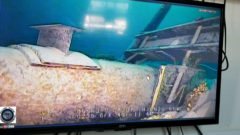
TRAVERSE CITY, Mich. (AP) — Recent damage that prompted the temporary shutdown of an Enbridge oil pipeline in a channel linking two of the Great Lakes may have been done by vessels working for the company, according to an in-house report provided Thursday to The Associated Press.
Great Lakes Now
https://www.greatlakesnow.org/2020/07/ap-enbridge-contractor-vessels-line-5-pipeline-support/
By Elise Ertl, University of Wisconsin-Superior
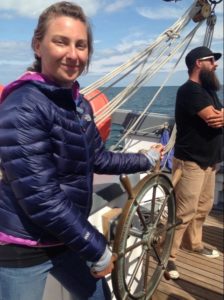
Sarah DeZwarte, education director at YMCA Camp Y-Koda in Sheboygan, Wisconsin, had the opportunity to, not only once, but to twice take part in the Lake Guardian teacher cruise and Shipboard Science Workshop. While each trip entailed a different experience, both provided fundamental learning and education that DeZwarte was able to carry on to the students and residents of the Lake Michigan coastal area.

Sarah DeZwarte
DeZwarte believes that the knowledge of students and community has the power to change how we treat our environment and ecosystems, especially when speaking locally. After her experience with the Lake Guardian teacher cruise and the Shipboard Workshop, DeZwarte is taking her knowledge and collaborating with the Sheboygan Area School District to inform and create field experiences for students to learn about Lake Michigan.
“In the past, they’ve been learning about Arctic ecosystems, which is great, but that is not in their backyard. We’ve been able to provide new textbooks for students to learn about Lake Michigan for about a month and then, I will meet with them at Kohler-Andrae State Park, where we will do three different activities. They will then continue learning about Lake Michigan for the next three weeks,” DeZwarte said.
The most important thing to DeZwarte is that kids in her area are finally able to learn about Lake Michigan.
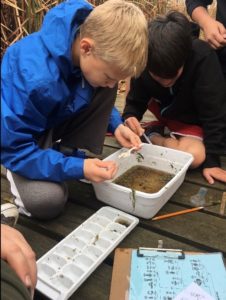
One activity DeZwarte carries out with students is to collect macroinvertebrates using leaf bags, which are mesh bags filled with leaves that soak in a wetland for 21 days prior to the activity. The macroinvertebrates will make their way into the bag and slowly work on decomposing and shredding the material. All the students need to do is pour the bag contents into a pan and then they can pick out and identify the macroinvertebrates present. The other two activities involve piping plovers and sturgeon. These activities show the productivity of the coastal wetlands and just how important every part is to its success.

Students from YMCA Camp Y-Koda learn about macroinvertebrates from Lake Michigan.
Developing these activities for kids has provided them with an early, real-world experience that gives them a taste of what research is like. It inspires them to learn about their local area and protect environmental areas that already exist right before their eyes and in their backyard and hopefully, continue to spread their knowledge throughout their communities.
The Shipboard Science Project has not only impacted local students but also DeZwarte herself. “As an educator, I’ve been impacted in terms of my passion. Whenever you get to be a scientist yourself, I think it just elevates your ambition to share it with children.”
These experiences have elevated DeZwarte’s opportunities and need to reach out to her community about the importance of being aware of local ecosystems and environments.
Blog – Wisconsin Sea Grant
https://www.seagrant.wisc.edu/blog/sea-grant-learning-programs-help-environmental-educator-put-students-in-touch-with-lake-michigan/
Recent damage that prompted the temporary shutdown of an Enbridge oil pipeline in a channel linking two of the Great Lakes may have been done by vessels working for the company, according to an in-house report provided Thursday to The Associated Press. Read the full story by the Associated Press.
Great Lakes Commission
https://www.glc.org/dailynews/20200724-enbridge
The 2000 Great Lakes Consent Decree is set to expire in August, and a court proceeding filed last week by one Michigan Upper Peninsula tribe could end sportfishing as we know it in much of the Great Lakes. Read the full story by the Cedar Springs Post.
Great Lakes Commission
https://www.glc.org/dailynews/20200724-fishing
A member of the Great Lakes Fishery Commission (GLFC) calls the United States House panel backing an Asian carp barrier project as a major step forward to keep the invasive fish from entering the Great Lakes. Read the full story by the Manitoulin Expositor.
Great Lakes Commission
https://www.glc.org/dailynews/20200724-GLFC-carp
For some, the idea of diving the frigid waters of the Great Lakes in winter on a single breath might not be very alluring. But for others, this ice-topped wonderland provides a sanctuary for meditation and exploration. Writer-photographer Geoff Coombs takes us on a dream-like journey beneath the frozen waters of Lake Huron. Read the full story by Oceanographic Magazine.
Great Lakes Commission
https://www.glc.org/dailynews/20200724-huron-diving
A contract has been awarded for dredging of Holland (Outer) Harbor in Holland, Michigan that will continue through September, the U.S. Army Corps of Engineers Detroit District reports. Read the full story by MLive.
Great Lakes Commission
https://www.glc.org/dailynews/20200724-holland-harbor
A pivotal court hearing for the future of western Lake Erie is being held Friday before Senior U.S. District Judge James Carr of Toledo, Ohio. Read the full story by The Toledo Blade.
Great Lakes Commission
https://www.glc.org/dailynews/20200724-lake-erie-cleanup
A new report by Environment Michigan Research & Policy Center and Frontier Group looks at some of the most polluted beaches in Michigan. In 2019, several dozen of Michigan’s beaches tested were unsafe at one point or another. Read the full story by Michigan Public Radio.
Great Lakes Commission
https://www.glc.org/dailynews/20200724-beach-pathogens
Live fire weapons demonstrations will be part of a day’s worth of World War II reenactments, held aboard the USS LST 393 Veterans Museum, the historic warship docked at 560 Mart St. in downtown Muskegon, on Saturday, July 25. Read the full story by MLive.
Great Lakes Commission
https://www.glc.org/dailynews/20200724-muskegon-reenactors
During Erie’s early waterfront years, Rufus and Charles Reed maintained a monopoly hold on the local docks and shipping. The current dock iteration began with the creation of the Bayfront Parkway which provides access to portions of Erie, Pennsylvania’s waterfront that had never been seen by residents and made it possible for commercial ventures to open on or near the water. Read the full story by the Erie Reader.
Great Lakes Commission
https://www.glc.org/dailynews/20200724-erie-docks
The Government Accountability Office released a study Thursday saying that Plan 2014 needs to be fixed. The report says the IJC has taken steps to adjust if necessary. Read the full story by WROC – Rochester, NY.
Great Lakes Commission
https://www.glc.org/dailynews/20200724-ijc-plan

Since taking office in May 2019, Chicago Mayor Lori Lightfoot has emphasized that her environmental priorities are focused on the social justice issues of access to drinking water and clean air.
“The mayor is deeply committed to putting environmental justice at the forefront of her environmental agenda,” spokesperson Hali Levandoski told Great Lakes Now.
Great Lakes Now
https://www.greatlakesnow.org/2020/07/chicago-mayor-environmental-priority-neglected-communities/
Great Lakes Echo
http://greatlakesecho.org/2020/07/24/fish-farmers-find-new-applications-for-old-dairy-farming-equipment/
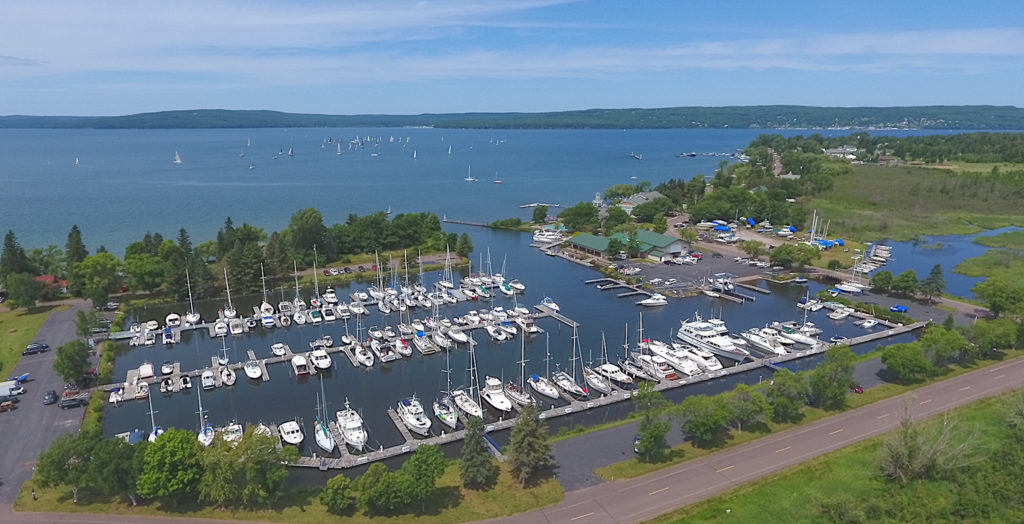
Madeline Island Yacht Club has been certified as a Wisconsin Clean Marina. As such, the yacht club promotes environmentally responsible business practices to minimize pollution and improve water quality.
The Wisconsin Clean Marina Program was launched in 2010, and 20 Wisconsin marinas have since taken steps to voluntarily adopt practices to become certified.

Madeline Island Yacht Club (Submitted photo)
“We commend Madeline Island Yacht Club for following the best management practices set by the Wisconsin Clean Marina Program at their marina,” said Theresa Qualls, Wisconsin Clean Marina Program coordinator.
“We love the lake. We as a club, the membership, the staff and the board felt it was important because we value the great resource that we have been lucky enough to enjoy. Whether having grown up in the area or traveling great distances to get here for a summer get away, we love the lake and call it home,” said Alan Hardie, assistant service manager, Madeline Island Yacht Club.
Marinas, related industries and services contribute more than $2.7 billion to Wisconsin’s economy. Through the Wisconsin Clean Marina Program, marinas will prevent pollution and protect fish, wildlife and public health. They know that clean water is important to boaters and Wisconsin’s coastal communities.
The Wisconsin Clean Marina Program is administered by the University of Wisconsin Sea Grant Program in partnership with the Wisconsin Marine Association, Wisconsin Coastal Management Program, Wisconsin Department of Natural Resources and Fund for Lake Michigan.
News Releases – Wisconsin Sea Grant
https://www.seagrant.wisc.edu/news/madeline-island-yacht-club-is-wisconsins-newest-clean-marina/

By John Flesher, AP Environmental Writer
TRAVERSE CITY, Mich. (AP) — Michigan Gov. Gretchen Whitmer criticized Enbridge Inc. on Wednesday for what she described as the company’s refusal to make an airtight pledge to pay for damages caused by a potential oil spill from its pipeline beneath a Great Lakes channel.
Great Lakes Now
https://www.greatlakesnow.org/2020/07/ap-whitmer-enbridge-dodging-responsibility-line-5-oil-spill/

With two segments in the latest episode of the Great Lakes Now monthly program, producer David Ruck is bringing audiences insight about two major issues in the Great Lakes region: how pollution from farmland impacts water quality and what financial cost current high water levels are having for communities around the region.
Great Lakes Now
https://www.greatlakesnow.org/2020/07/water-great-lakes-now-producer/