Chicago, IL (April 29, 2022) –Earlier today the Senate Environment and Public Works Committee released its version of the Water Resource and Development Act (WRDA). In reaction, the Alliance for the Great Lakes released the following statement from Molly Flanagan, the Alliance’s Chief Operating Officer and Vice President for Programs:

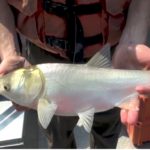
“The Senate Environment and Public Works Committee released its version of the Water Resource and Development Act (WRDA) today. The bill adjusts the federal cost share for construction of the U.S. Army Corps of Engineers’ Brandon Road Lock and Dam project in Joliet, Illinois to 90 percent. This change reflects the importance of the Brandon Road project to ensure invasive carp stay out of Lake Michigan. The Corps—in partnership with Illinois, Michigan and the other Great Lakes states—has already made significant progress in designing innovative technological measures at Brandon Road, which is the choke point for invasive carp traveling from the Mississippi River Basin into the Great Lakes.

However, more still needs to be done. We urge Great Lakes Members of Congress to change the federal cost share to 100 percent in order to ensure the project proceeds to construction without delay. The Alliance for the Great Lakes looks forward to working with our partners in Congress so that the entire country benefits from the new technologies the Corps is implementing as part of this project.”

###

Media Contact: Jennifer Caddick, jcaddick@greatlakes.org

The post Alliance Urges Congress to Fully Fund Project to Stop Invasive Carp appeared first on Alliance for the Great Lakes.

Original Article

News - Alliance for the Great Lakes

News - Alliance for the Great Lakes

https://greatlakes.org/2022/04/alliance-urges-congress-to-fully-fund-project-to-stop-invasive-carp/

Judy Freed

PFAS News Roundup: PFAS in face masks, McDonald’s and Burger King sued for PFAS in packaging

PFAS, short for per- and polyfluoroalkyl substances, are a group of widespread man-made chemicals that don’t break down in the environment or the human body and have been flagged as a major contaminant in sources of water across the country.

Keep up with PFAS-related developments in the Great Lakes area.

Read Now at Great Lakes Now.

Original Article

Great Lakes Now

Great Lakes Now

https://www.greatlakesnow.org/2022/04/pfas-news-roundup-face-masks-fast-food-chains-sued/

Natasha Blakely

River otters return to the Detroit River

On the cool morning of April 25, doctoral student Eric Ste Marie from the University of Windsor’s department of integrative biology went out for a walk with his partner along the Detroit River prior to an anticipated long day in his lab. Much to his surprise, he saw an animal pop its head out of the water.

Read Now at Great Lakes Now.

Original Article

Great Lakes Now

Great Lakes Now

https://www.greatlakesnow.org/2022/04/river-otters-detroit-river/

John Hartig

Mushrooms and Mobsters: The Great Lakes Now Episode Quiz

Great Lakes Now episodes are packed with interesting history and modern discoveries.

In “Mushrooms and Mobsters,” learn about one of the largest organisms in the world, the fungus that put Crystal Falls, Michigan, on the map. Dig into the past as we look at some of the notable gangsters of the ‘30s and ‘40s that vacationed in by the lakes.

Read Now at Great Lakes Now.

Original Article

Great Lakes Now

Great Lakes Now

https://www.greatlakesnow.org/2022/04/mushrooms-mobsters-episode-quiz/

Natasha Blakely

Mushrooms and Mobsters: The Great Lakes Now Episode Quiz

Great Lakes Now episodes are packed with interesting history and modern discoveries.

In “Mushrooms and Mobsters,” learn about one of the largest organisms in the world, the fungus that put Crystal Falls, Michigan, on the map. Dig into the past as we look at some of the notable gangsters of the ‘30s and ‘40s that vacationed in by the lakes.

Read Now at Great Lakes Now.

Original Article

Great Lakes Now

Great Lakes Now

https://www.greatlakesnow.org/2022/04/mushrooms-mobsters-episode-quiz/

Natasha Blakely

As the nation prepares to pour billions of federal dollars into rescuing water systems, the Great Lakes News Collaborative investigates the true cost of water in Michigan with a special series of reports and events during May. Read the full story by Circle of Blue. 

Original Article

Great Lakes Commission

Great Lakes Commission

https://www.glc.org/dailynews/20220429-true-cost-water

Theresa Gruninger

The U.S. Army Corps of Engineers is launching a comprehensive study of the Great Lakes shoreline after securing $1.1 million to begin the long-awaited look at vulnerability to high water and erosion along the inland coast. Read the full story by MLive.

Original Article

Great Lakes Commission

Great Lakes Commission

https://www.glc.org/dailynews/20220429-coastal-resilience

Theresa Gruninger

The U.S. Army Corps of Engineers is launching a comprehensive study of the Great Lakes shoreline after securing $1.1 million to begin the long-awaited look at vulnerability to high water and erosion along the inland coast. Read the full story by MLive.

Original Article

Great Lakes Commission

Great Lakes Commission

https://www.glc.org/dailynews/20220429-coastal-resilience

Theresa Gruninger

Meag Schwartz, network coordinator for the Northeast Michigan Great Lakes Stewardship Initiative, has been leading trash cleanups along the shore of Lake Huron. The most common litter found in her cleanups, cigarette butts. Read the full story by The Alpena News.

Original Article

Great Lakes Commission

Great Lakes Commission

https://www.glc.org/dailynews/20220429-trash-cleanups

Theresa Gruninger

Meag Schwartz, network coordinator for the Northeast Michigan Great Lakes Stewardship Initiative, has been leading trash cleanups along the shore of Lake Huron. The most common litter found in her cleanups, cigarette butts. Read the full story by The Alpena News.

Original Article

Great Lakes Commission

Great Lakes Commission

https://www.glc.org/dailynews/20220429-trash-cleanups

Theresa Gruninger

Years of regulation may have reduced invasive species risks in the Great Lakes, study says

The issue of invasive species has haunted the Great Lakes region for decades, but a recent study shows that regulatory intervention can actually help stem the problem.

The study, released by McGill University and the Great Lakes Institute for Environmental Research, looked at the bi-national regulation of ballast water.

Read Now at Great Lakes Now.

Original Article

Great Lakes Now

Great Lakes Now

https://www.greatlakesnow.org/2022/04/regulation-invasive-species-great-lakes/

Maya Sundaresan

Indigenous women leaders and more than 200 advocacy organizations sent a letter Wednesday demanding that the U.S. Army Corps of Engineers block federal permits for an expansion of Enbridge’s Line 5, a 645-mile-long pipeline that currently transports millions of gallons of crude oil and natural gas liquids per day from Wisconsin to Ontario, Canada. Read the full story by Truthout.

Original Article

Great Lakes Commission

Great Lakes Commission

https://www.glc.org/dailynews/20220429-line-5

Theresa Gruninger

Not surveyed since the 1940s, areas of Lake Erie’s south shore and the Detroit River will be mapped by the National Oceanic and Atmospheric Administration’s (NOAA) deep-water hydrographic survey vessel Thomas Jefferson. Read the full story by the Niagara Fall Review.

Original Article

Great Lakes Commission

Great Lakes Commission

https://www.glc.org/dailynews/20220429-floor-mapping

Theresa Gruninger

The Great Lakes Basin will continue receiving funding with the reauthorization of the Great Lakes Fish and Wildlife Restoration Act. It was approved in the U.S. House with bipartisan support this week. Read the full story by WSJM-TV – Benton Harbor, MI.

Original Article

Great Lakes Commission

Great Lakes Commission

https://www.glc.org/dailynews/20220429-great-lakes-fish

Theresa Gruninger

Coal interests sue to block Pennsylvania’s carbon policy

HARRISBURG, Pa. (AP) — Coal-related interests sued on April 28 to block the centerpiece of Gov. Tom Wolf’s plan to fight climate change, a carbon-pricing policy that will impose a cost for emitting planet-warming carbon dioxide from fossil fuel-fired power plants.

The lawsuit filed in Commonwealth Court by owners of coal-fired power plants, owners of coal mines and labor unions that mine coal and maintain the power plants say the regulation written by Wolf’s administration is “patently unlawful.”

The regulation took effect Saturday after a long regulatory vetting process and fights with a hostile Legislature controlled by Republicans who are historically protective of Pennsylvania’s coal and natural gas industries.

Read Now at Great Lakes Now.

Original Article

Great Lakes Now

Great Lakes Now

https://www.greatlakesnow.org/2022/04/coal-interests-carbon-policy/

The Associated Press

Healing Our Waters-Great Lakes Coalition

Contact:
Lindsey Bacigal, BacigalL@nwf.org, (734) 887-7113
Jordan Lubetkin, Lubetkin@nwf.org, (734) 904-1589

Great Lakes Coalition Releases Funding Priorities in Letters to House Appropriations Leaders

ANN ARBOR, MICH. (April 28, 2022)—The Healing Our Waters-Great Lakes Coalition and more than 90 of its member organizations released its 2023 fiscal year congressional investment priorities to restore and protect the Great Lakes and provide clean, safe, and affordable drinking water to communities, in letters to U.S. House appropriations leaders.

“Federal investments to restore the Great Lakes and provide clean, safe, and affordable dinking water are producing results in communities around the region,” said Laura Rubin, director of the Healing Our Waters-Great Lakes Coalition. “Yet serious threats remain. The ongoing presence of drinking water restrictions, fish consumptions advisories, and beach closures – as well as the rising cost of water – underscore that the federal government cannot let up now. Congress needs to keep funding solutions that protect our drinking water and the health of communities. We look forward to working with the Great Lakes delegation to ensure that we are doing all we can to protect the Great Lakes and the millions of people in the region, especially the communities that have been most impacted by pollution and harm.”

The Healing Our Waters-Great Lakes Coalition is calling on members of Congress to fund:

  • The Great Lakes Restoration Initiative at $400 million to clean up toxic pollution, restore habitat, and reduce runoff pollution;
  • The Clean Water State Revolving Fund at $4.4 billion and Drinking Water State Revolving Funding at $3.9 billion to help communities fix and update drinking water and wastewater infrastructure;
  • Programs to research, monitor, and evaluate progress and challenges of clean-up efforts through programs like the Sea Grant and NOAA’s Great Lakes Environmental Research Lab;
  • Programs to help communities prepare for, and adapt to, the impacts of climate change, such as flooding;
  • Invasive carp action plan to keep the non-native fish out of the Great Lakes; and,
  • Farm conservation programs that pay farmers to take specific actions to improve water quality and soil health and to prevent toxic algal blooms.

Since 2004, the Healing Our Waters-Great Lakes Coalition has been harnessing the collective power of more than 170 groups representing millions of people, whose common goal is to restore and protect the Great Lakes. Learn more at HealthyLakes.org or follow us on Twitter @HealthyLakes.

The post Great Lakes Coalition Releases Funding Priorities in Letters to House Appropriations Leaders appeared first on Healing Our Waters Coalition.

Original Article

Healing Our Waters Coalition

Healing Our Waters Coalition

https://healthylakes.org/great-lakes-coalition-releases-funding-priorities-in-letters-to-house-appropriations-leaders/

Lindsey Bacigal

Mapping the Great Lakes: Where to find your sugar maples

The Great Lakes region may be best known for its freshwater resources, but another resource it has in abundance is its maple syrup. Canada is the world’s leading producer of maple syrup, generating 75% of the global supply. Within Canada, the province of Quebec is the top producer (96.4%) of maple syrup products followed by Ontario.

Read Now at Great Lakes Now.

Original Article

Great Lakes Now

Great Lakes Now

https://www.greatlakesnow.org/2022/04/mapping-the-great-lakes-sugar-maples/

Alex Hill

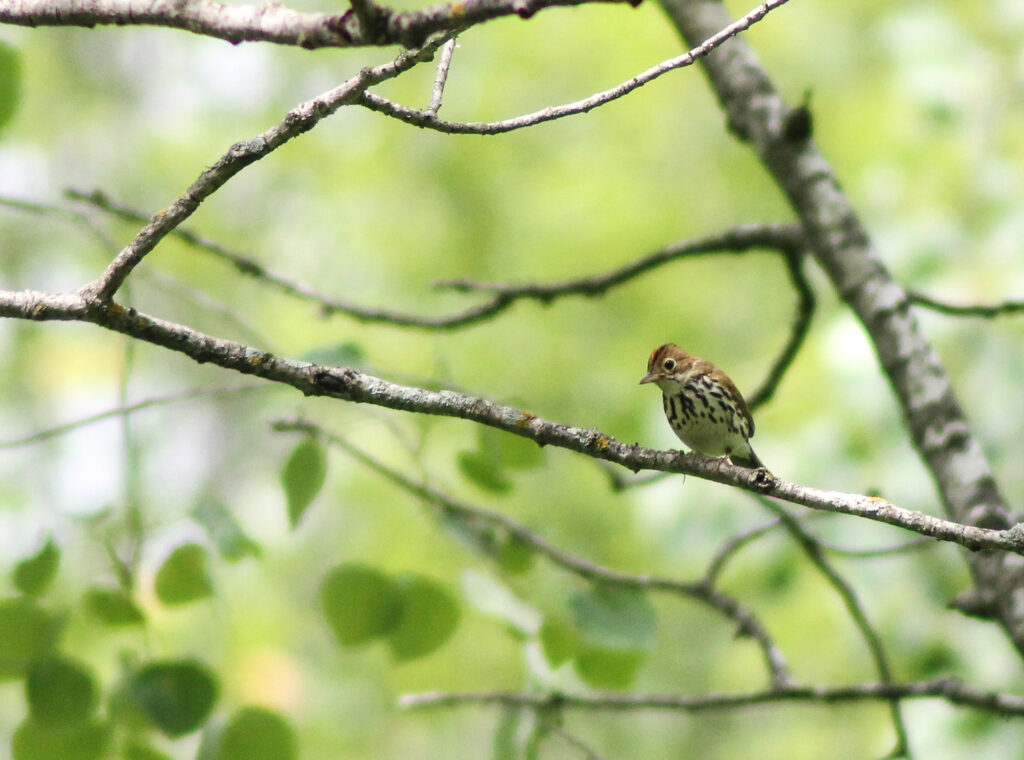
An ovenbird rests on a branch in the St. Louis River Estuary. Image credit: National Lake Superior Estuarine Research Reserve

On April 13, River Talks featured Alexis Grinde from the University of Minnesota Duluth’s Natural Resources Research Institute and Cole Wilson from the University of Wisconsin-Madison. Together, they presented “Black Ash and Birds: Conserving Critical Habitat in the St. Louis River Estuary.” This River Talk gave an in-depth look into the duo’s research and conservation efforts.

Grinde spoke first, highlighting her particular interest in black ash, a tree species abundant in Minnesota, and the organisms that interact with black ash. “At a global scale, we are in the midst of massive losses of biodiversity,” said Grinde. She explained that as we lose biodiversity in different ecosystems, those ecosystems begin to function differently, which in turn causes their resilience to decrease.

This decrease in biodiversity can be attributed to factors like habitat degradation and invasive species. A specific invasive species Grinde mentioned is the emerald ash borer, a wood-boring beetle that attacks native black ash trees. “Because this is an invasive species, all of our ash trees in North America have no defense against this emerald ash borer,” said Grinde, “If an emerald ash borer gets into a tree here in North America, it’s basically a 100% mortality rate.”

 Grinde warned of a bleak future for black ash trees. She noted that since 2002, the emerald ash borer has spread across North America and wiped out the majority of black ash trees. A method of minimizing this issue is to enact quarantines that prohibit the movement of trees or firewood into an area that is home to these trees. This would hopefully reduce the spread of invasive species like the emerald ash borer but has not been very successful thus far.

In Minnesota, where there are nearly 1 million acres of black ash forests, this issue is especially relevant. While emerald ash borers were first found in southern Minnesota, they are migrating north where the majority of the black ash forests are located. This could result in extreme consequences since black ash is a foundational species. This means it regulates ecosystem processes and isn’t easily replaced.

While the black ash population has a multitude of effects on neighboring species in its ecosystem, Wilson decided to delve into the impacts on breeding birds in the St. Louis River Estuary. Wilson focused on both species richness and abundance of birds in black ash forests, planning to use his data to determine the best mode of land management for the future.

“What we know is that the black ash are inevitably going to die off,” Wilson said, “What can we take from these studies to apply to future management and restoration efforts?”

Wilson used 10-minute point counts to characterize breeding bird communities. This means that he and his team occupied a certain space for 10 minutes at a time and recorded everything they observed and heard. In addition, they also recorded vegetation, black ash dominance, and canopy cover. The sites Wilson researched ranged from 50% black ash dominance to over 90% black ash dominance.

The results from the study asserted there is a positive correlation between the abundance of black ash trees in a given area and the total number of bird species observed. “Black ash are these really important species ecologically and they provide habitat for a wide range of birds,” said Wilson.

Looking forward, Wilson emphasized the importance of recognizing invasive species as a threat to black ash, as well as finding a new species suitable to replace them when they inevitably die out. However, black ash trees are not just important to ecosystem function, but also to Indigenous culture.

“It’s important that we include Indigenous knowledge into choosing a replacement species,” Wilson said. He mentioned that black ash trees have been a part of Ojibwe culture for many years.

All in all, supporting black ash communities and conductivity are essential for proper ecosystem function. Determining a viable replacement species for black ash is imperative for a variety of people and wildlife, and both Alexis Grinde and Cole Wilson’s work will help achieve these goals.

To watch a video of this presentation, visit the Lake Superior Estuarine Research Reserve’s YouTube site. The final River Talk of the season will feature a celebration of Wisconsin Sea Grant’s 50th anniversary and will be held May 11. For more information, visit the River Talks page: go.wisc.edu/4uz720.


The post A comprehensive look into the future of black ash and birds from a conservation perspective first appeared on Wisconsin Sea Grant.

Original Article

Blog | Wisconsin Sea Grant

Blog | Wisconsin Sea Grant

https://www.seagrant.wisc.edu/blog/a-comprehensive-look-into-the-future-of-black-ash-and-birds-from-a-conservation-perspective/?utm_source=rss&utm_medium=rss&utm_campaign=a-comprehensive-look-into-the-future-of-black-ash-and-birds-from-a-conservation-perspective

Eva Ryan

There are debates on social media about the harm of disclosing favorite hiking locations: Does sharing favorite locations on social media cause more harm than good? Turns out, there's a lot to consider.

The post Commentary: Does social media threaten our special places? first appeared on Great Lakes Echo.

Original Article

Great Lakes Echo

Great Lakes Echo

http://greatlakesecho.org/2022/04/28/commentary-does-social-media-threaten-our-special-places/

Guest Contributor

Canada lynx protections deal sealed by US, environmentalists

By Matthew Brown, Associated Press

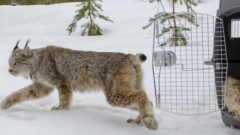
BILLINGS, Mont. (AP) — U.S. wildlife officials have agreed to craft a new habitat plan for the snow-loving Canada lynx that could include more land in Colorado and other western states where the rare animals would be protected, according to a legal agreement made public Tuesday.

Read Now at Great Lakes Now.

Original Article

Great Lakes Now

Great Lakes Now

https://www.greatlakesnow.org/2022/04/ap-canada-lynx-protections-deal/

The Associated Press

Great Lakes News Collaborative examines Water’s True Cost

As the nation prepares to pour billions of federal dollars into rescuing water systems, the Great Lakes News Collaborative investigates the true cost of water in Michigan with a special series of reports and events during May.  Reporters from Bridge Michigan, Circle of Blue, Great Lakes Now, and Michigan Radio have combined their resources for the most extensive coverage on the cost of water in Michigan to date.

Read Now at Great Lakes Now.

Original Article

Great Lakes Now

Great Lakes Now

https://www.greatlakesnow.org/2022/04/great-lakes-news-collaborative-waters-true-cost/

GLN Editor

What’s missing from Doug Ford’s proposed expansion of the Ontario Greenbelt

By Emma McIntosh, The Narwhal

This story first ran on The Narwhal, a non-profit news organization that publishes in-depth stories about Canada’s natural world.

When the Doug Ford government first announced plans to expand Ontario’s Greenbelt, it called the move a “once in a generation opportunity.”

The initial concept, presented by Municipal Affairs Minister Steve Clark in February 2021, involved ambitious plans to include waterways under the Greenbelt’s protection and stretch its boundaries to encompass a large swath of land west of Toronto.

Read Now at Great Lakes Now.

Original Article

Great Lakes Now

Great Lakes Now

https://www.greatlakesnow.org/2022/04/doug-fords-expansion-ontario-greenbelt/

The Narwhal

The Great Lakes Water Quality Agreement between Canada and the U.S. celebrated its 50th anniversary. The agreement has improved and protected the water quality of the Great Lakes and also improved the lives of millions across the basin. Read the full story by The Welland Tribune.

Original Article

Great Lakes Commission

Great Lakes Commission

https://www.glc.org/dailynews/20220427-50th-anniversary

Patrick Canniff

The Great Lakes and St. Lawrence Cities Initiative announced this past week that it will expand its Resilient Coastal Projects Initiative to include shoreline in West Michigan. The initiative will partner with mayors along the Lake Michigan shoreline to create funding-ready implementation frameworks for priority coastal protection projects with the goal of advancing coastal resilience. Read the full story by News-Review.

Original Article

Great Lakes Commission

Great Lakes Commission

https://www.glc.org/dailynews/20220427-coastal-protection

Patrick Canniff

On the eighth anniversary of the beginning of the Flint water crisis, the city of Flint, Michigan, announced the completion of its $17 million water pipeline project. The new system will ensure the city has a backup water source in case of an emergency. Read the full story by Flint Beat.

Original Article

Great Lakes Commission

Great Lakes Commission

https://www.glc.org/dailynews/20220427-flint

Patrick Canniff

Despite 50 years of working jointly to address water quality challenges, the U.S. and Canada are far from declaring “mission accomplished.” We are still up against toxic algal blooms undermining access to safe drinking water, thousands of tons of plastics and microplastics ending up in our waterways and invasive species wreaking havoc on our fisheries and infrastructure. Read the full story by The Hamilton Spectator.

Original Article

Great Lakes Commission

Great Lakes Commission

https://www.glc.org/dailynews/20220427-great-lakes

Patrick Canniff

A Michigan woman started with the goal to pick up one million pieces of trash and instead launched Great Lakes Great Responsibility, a nonprofit dedicated to protecting Great Lakes freshwater sources. Read the full story by WXYZ-TV – Detroit, MI.

Original Article

Great Lakes Commission

Great Lakes Commission

https://www.glc.org/dailynews/20220427-pollution

Patrick Canniff

Started by a former National Parks Service ranger, the first and only tour service authorized to lead tours into the wilderness areas of Sleeping Bear Dunes National Lakeshore is educating and bringing small groups to observe piping plovers. Read the full story by The Ticker.

Original Article

Great Lakes Commission

Great Lakes Commission

https://www.glc.org/dailynews/20220427-piping-plover

Patrick Canniff

The Minnesota Pollution Control Agency is hoping not to see a repeat of last year when it comes to air quality. Much of the smoke that afflicted Minnesotans drifted south from Canada pooling over Lake Superior and then was being cycled back into the Duluth area. Read the full story by Duluth News-Tribune.

Original Article

Great Lakes Commission

Great Lakes Commission

https://www.glc.org/dailynews/20220427-minnesota

Patrick Canniff

As a diver, Tamara Thomsen can see not only down through the waves but also into the past. As it turns out, following a recreational frolic last summer using a type of underwater scooter, she can see quite far into the past.

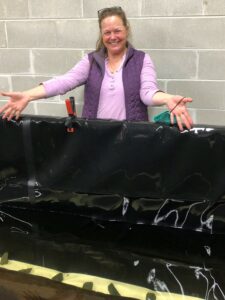
Smiling woman standing in front of black container

Tamara Thomsen beams while standing over a water-filled crib that holds the 1,200-year-old dugout canoe she discovered. The canoe is undergoing a preservation process in the water that will ready it for eventual public display. Photo: Moira Harrington

That day in June 2021 Thomsen, a maritime archeologist with the Wisconsin Historical Society (WHS) and longtime Wisconsin Sea Grant collaborator, discovered a 1,200-year-old dugout canoe, the oldest intact shipwreck found in Wisconsin. It also had artifacts with it.

Thomsen knows shipwrecks. She has prepped dozens of nominations for lakes Michigan and Superior shipwrecks for listing on the National Register of Historic Places. She is the driving force behind the popular WHS/Sea Grant joint website wisconsinshipwrecks.org. She has been inducted into the Women Divers Hall of Fame. Along with fellow marine archeologist Caitlin Zant, she recently worked with educators to create six distinct maritime educational activities based on data from previous Sea Grant projects on Wisconsin maritime archaeology. With Sea Grant project support, in 2021 Zant and Thomsen delivered 11 maritime historic preservation presentations that reached nearly 530 people.

Floating onto this already impressive scene is the dugout canoe. The tale of its first sighting is a lesson in serendipity and the value of strong-arming a colleague to double-check on a chance encounter that Thomsen describes with a chuckle as, “Swimming around under the water, I don’t see logs, I see dugout canoes.”

That discovery day, after she spotted what she thought was a partially submerged-in-sediment canoe in 26 feet of water, Thomsen needed to return to land because her underwater scooter partner at the time had reached the designated turn-around point for the air volume in her tank. Thomsen, however, was itching to go back and pursue her hunch that this was more than any old chunk of wood. On that same Saturday, Thomsen convinced a colleague, Amy Rosebrough, to accompany her in a boat back to the site following the coordinates she had noted on the first go-round.

Rosebrough is not a diver. She is a WHS terrestrial archeologist, but Thomsen knew she would make a good sounding board for assessing the site. At the marked location, Thomsen descended in her diving gear once more, gently shifting sediment to get a better look at the sunken craft. She also resurfaced with seven flat stones, some notched, which had been resting in the canoe. After Rosebrough’s examination, Thomsen replaced the stones in the canoe, and replaced sediment around the canoe to offer it protection. 

The pair returned to shore and Rosebrough spent the evening pondering the assortment of rocks, which she then deduced were sinker weights for a fishing net, a net long since lost in the waters of Lake Mendota, one of Madison, Wisconsin’s, four lakes.

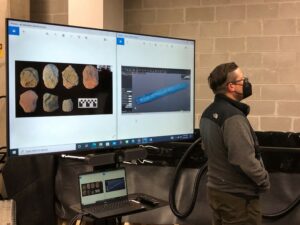
Man in a mask standing near a large electronic display screen

The seven rocks recovered with the canoe are pictured to the left on a large electronic display in the room where the canoe is being preserved. On the right side of the screen is a 3-D image of the canoe. Photo: Moira Harrington

The canoe’s discovery fell at a time of transition for the WHS. James Skibo, the state archeologist, had just come onboard. While giving him a few weeks to settle into his new role, Thomsen and Zant also kept reminding him about the canoe, soon fully enlisting his help in further investigation. Skibo and Thomsen went back to the lake and retrieved what Skibo termed a piece of wood “about the size of a piece of hair” for radiocarbon dating.

The check was necessary, he said, “Because we didn’t want to be fooled. The canoe could have been a Boy Scout project from the 1950s.”

The results showed not a replica built by pre-teen boys but the real deal, a canoe from AD 800. From that point on, Skibo said, WHS Director Christian Overland was all-in with support for recovering, preserving and sharing this amazing object. That is also certainly in keeping with Skibo’s own ethic, as he explained, in his role serving as the people’s archeologist.

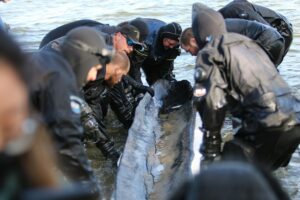
On Nov. 2, 2021, after weeks of planning, preparation and involvement by WHS staff and the Dane County Sheriff’s Office Dive Team, the canoe was recovered from the lake. A WHS video details the process. Recovery was deemed necessary because as sediment had shifted and the canoe was partially uncovered, disintegration would quickly follow.

Several people wearing diving wetsuits standing in knee-deep water holding an object

Bringing the canoe into shore from Lake Mendota in Madison, Wisconsin, represented the culmination of weeks of planning and team contributions. Photo: Wisconsin Historical Society

Skibo said at every step of the process since discovery, Wisconsin’s Indigenous leaders have been consulted, and they also supported the removal, and now, preservation work. Further, Skibo said, repatriating human remains and sacred objects is a well-established practice of the WHS. In this instance, the canoe was in the public domain, is state property and had neither human remains nor sacred objects as part of the site.

On a recent visit to a WHS preservation facility, this writer was fortunate to see the canoe. The old adage, “if this object could talk, what would it say,” came to mind. It was a powerful moment to reflect that it had been more than a millennium since people had used this vessel, which resembles a slightly charred version of a modern-day paddleboard, but one with narrow and shallow sides. It is 15 feet long, weighs 280 pounds and has a gaping and practically symmetrical hole in the base of one end, likely the damage that sealed its sinking fate. At the other end of the canoe, the one that had been exposed from the lakebed and originally caught Thomsen’s eye, it is slightly split.  

Its beginnings? It was hewn from a felled white oak tree. Fire was perhaps used to assist in hollowing it out. It probably sank near to where it was made, offshore from a small seasonal village of a woodland people who hunted, fished and tended gardens of corn, sunflowers and squash. These people were also mound builders.

Its future? The canoe is now resting in a wood-framed crib-like structure layered with three pond liners and filled with 15 inches of purified water as part of a nearly three-year-long preservation process that includes replacing the water that is essentially the only thing maintaining the canoe’s structure via osmosis with polyethylene glycol, which will coat and strengthen the canoe’s interior cells. At the end of the process, the canoe will be freeze-dried at minus 22 degrees Celsius to remove any remaining water. 

It is expected that this ancient shipwreck will be given a place of pride in a new WHS museum anticipated to open in 2026 in Madison. Upon display, this writer looks forward to experiencing the powerful feelings the canoe first elicited. It is also a celebration of the ingenuity and dedication of WHS staff who have done and will continue to tell the story of this canoe and the people who created it.

The post A visit to Wisconsin’s oldest intact shipwreck first appeared on Wisconsin Sea Grant.

Original Article

News Releases | Wisconsin Sea Grant

News Releases | Wisconsin Sea Grant

https://www.seagrant.wisc.edu/news/a-visit-to-wisconsins-oldest-intact-shipwreck/?utm_source=rss&utm_medium=rss&utm_campaign=a-visit-to-wisconsins-oldest-intact-shipwreck

Moira Harrington

The Healing Our Waters-Great Lakes Coalition and a multitude of partners have sent five letters in support of Great Lakes priorities as part of the annual appropriations process. These letters highlight Great Lakes priorities in the annual appropriations process, ensuring our members of Congress understand the wide array of funding priorities essential to clean water and Great Lakes restoration. The letters were sent to five of the twelve Appropriations Committees in Congress, specifically those that fund Coalition priorities.

Read the letters by clicking the links below:

Interior, Environment, and Related Agencies Committee

This subcommittee has jurisdiction over the EPA and the DOI (including USGS and FWS). This includes funding for the GLRI, the USGS and FWS’s invasive species activities and research, and the array of EPA clean water and water infrastructure grant programs. The letter details the importance of these programs and makes our respective FY2023 funding requests.

Energy and Water Development, and Related Agencies Committee

This subcommittee has jurisdiction over funding for the U.S. Army Corp of Engineers. This includes the Corps role in protecting the basin from invasive carp through investments in Brandon Road PED, in addition to enhancing Great Lakes restoration and resiliency through research and coastal infrastructure improvements. The letter details these programs and makes our respective FY2023 funding requests.

Commerce, Justice, Science, and Related Agencies

This subcommittee has jurisdiction over NOAA programs. This includes funding for the Great Lakes Environmental Research Lab, Marine Debris, research into HABs, and several grant programs like Sea Grant and the Coastal Zone Management Grants. The letter details these programs and makes our respective FY2023 funding requests.

Agriculture, Rural Development, Food and Drug Administration, and Related Agencies

This subcommittee has jurisdiction over the USDA and Farm Bill programs. This includes the Natural Resources Conservation Service (NRCS) and its programs important for providing the technical assistance and investments needed to reduce agricultural runoff and its impact on water quality and the growing threat of HABs. The letter details these programs and makes our respective FY2023 funding requests.

State, Foreign Operations, and Related Agencies

This subcommittee has jurisdiction over the State Department who funds and operates the Great Lakes Fisheries Commission. The letter details this program and makes our respective FY2023 funding request.

The post FY2023 Appropriations Letters appeared first on Healing Our Waters Coalition.

Original Article

Healing Our Waters Coalition

Healing Our Waters Coalition

https://healthylakes.org/fy2023-appropriations-letters/

Lindsey Bacigal

In the last few decades, fluctuating temperatures in the late winter or early spring have harmed blueberry production across the state. More of that kind of trouble – and more often – may be in store for the state’s fruit-growers.

The post Commentary: Blueberries, climate and loss of community first appeared on Great Lakes Echo.

Original Article

Great Lakes Echo

Great Lakes Echo

http://greatlakesecho.org/2022/04/27/commentary-blueberries-climate-and-loss-of-community/

Guest Contributor

Lessons to learn from a very big mushroom

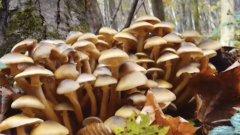
“Listen to your elders” is something we often hear, and what could be more of an elder than a 2,500-year-old fungus that’s alive and well in the Great Lakes region.

In 1992, scientist and forest pathologist Johann Bruhn discovered a very large mycelium – the root-like structure forming a fungal colony – in Crystal Falls, Michigan.

Read Now at Great Lakes Now.

Original Article

Great Lakes Now

Great Lakes Now

https://www.greatlakesnow.org/2022/04/life-lessons-big-mushroom/

Natasha Blakely

Big greenhouse gas state taking biggest climate step yet

By Marc Levy, Associated Press

HARRISBURG, Pa. (AP) — More than two years after he started work on it, Gov. Tom Wolf is set to enact the centerpiece of his plan to fight climate change, making Pennsylvania the first major fossil fuel state to adopt a carbon pricing policy — but it might be a short-lived victory.

Read Now at Great Lakes Now.

Original Article

Great Lakes Now

Great Lakes Now

https://www.greatlakesnow.org/2022/04/ap-greenhouse-gas-state-climate-step/

The Associated Press

Evers creates new office of environmental justice

MADISON, Wis. (AP) — Gov. Tony Evers on Friday signed an executive order creating a new office of environmental justice, announcing the move on Earth Day.

Republicans last year removed the office from Evers’ proposed budget. But the Democrat up for reelection this November got around them by creating it through an executive order.

Read Now at Great Lakes Now.

Original Article

Great Lakes Now

Great Lakes Now

https://www.greatlakesnow.org/2022/04/ap-evers-office-environmental-justice/

The Associated Press

EXPLAINER: Can climate change be solved by pricing carbon?

BILLINGS, Mont. (AP) — As climate change bakes the planet, dozens of nations and many local governments are putting a price tag on greenhouse gas emissions that are increasing flooding, droughts and other costly catastrophes.

Pennsylvania on Saturday becomes the first major fossil fuel-producing state in the U.S.

Read Now at Great Lakes Now.

Original Article

Great Lakes Now

Great Lakes Now

https://www.greatlakesnow.org/2022/04/climate-change-pricing-carbon/

The Associated Press

Episode 2204 Lesson Plans: The Fungus Among Us

This lesson will explore the phenomenon of fungal networks in the city of Crystal Falls, MI to help students learn some of the science of the fungi kingdom. They will learn how fungi help plants to communicate with each other and contribute to everyday foods we enjoy. Learners will engage in experiments to investigate the factors that affect mold growth on bread, how temperature influences yeast growth, and create a model to explain fungal networks.

Read Now at Great Lakes Now.

Original Article

Great Lakes Now

Great Lakes Now

https://www.greatlakesnow.org/2022/04/2204-fungus-lesson-plan/

Gary Abud Jr.