A 15-year-old piping plover, known by researchers as Of,gb:X,Y, or “Gabby,” was confirmed this week as having once again migrated from her wintering grounds in Cumberland Island, Georgia, to the Sleeping Bear Dunes National Lakeshore in Michigan for another summer breeding season. Read the full story by MLive.

Original Article

Great Lakes Commission

Great Lakes Commission

https://www.glc.org/dailynews/20240426-plover-breeding
James Polidori

A project that helps prevent plastic pollution from entering Lake Superior and Thunder Bay’s local waterways is receiving $45,000 in funding from Ontario. Cutting-edge catch basin filters called LittaTraps will be placed at city parks, waterfront areas and parking lots to capture microplastics before they enter marine ecosystems. Read the full story by CBC News.

Original Article

Great Lakes Commission

Great Lakes Commission

https://www.glc.org/dailynews/20240426-plastic-cleanup

James Polidori

The U.S. Environmental Protection Agency kicked off an $84 million dredging project in the lower Rouge River around Zug Island in southeast Michigan this month, aiming to remove the pollution that makes the Rouge one of the most toxic sites in the Great Lakes. Read the full story by The Detroit News.

Original Article

Great Lakes Commission

Great Lakes Commission

https://www.glc.org/dailynews/20240426-dredging-project

James Polidori

A cutting-edge, high-efficiency cement carrier will make its way to the Great Lakes next year. According to Eureka Shipping, the state-of-the-art mechanical/pneumatic cement ship is designed to replace two older vessels while maintaining the same cargo capacity. Read the full story by the Welland Tribune.

Original Article

Great Lakes Commission

Great Lakes Commission

https://www.glc.org/dailynews/20240426-ship-replacement

James Polidori

The Kenosha Sportfishing and Conservation Association has received 40,000 chinook salmon from the Wisconsin Department of Natural Resources to eventually be released into Lake Michigan. Before the chinook salmon arrived, the association made several changes to its salmon rearing pond in hopes of having more fish survive while in their care. Read the full story by Spectrum News 1.

Original Article

Great Lakes Commission

Great Lakes Commission

https://www.glc.org/dailynews/20240426-salmon-release

James Polidori

A new roving trash collector called BeBot will soon hit the shores of Belle Isle State Park in Michigan to not only keep beaches clean for residents, but also prevent harmful trash from ending up in the waterways in the Great Lakes region. Read the full story by CBC News.

Original Article

Great Lakes Commission

Great Lakes Commission

https://www.glc.org/dailynews/20240426-trash-cleanup

James Polidori

The owners of Sunrise Farms in Palmyra Township, Michigan, are helping Michigan State University improve the water quality and reduce toxic algae in the area. The farm is implementing no-till and strip-till systems, cover crops, filter strips and water retention structures to keep nutrients on the farm. Read the full story by The Daily Telegram.

Original Article

Great Lakes Commission

Great Lakes Commission

https://www.glc.org/dailynews/20240426-farm-sustainability

James Polidori

“Place both feet on the ground and take a moment to breathe,” said Malaika Hart Gilpin, executive director of One Art Community Center. “Give ourselves a moment to feel a connection with Mama Earth.” 

Chairs and floor slightly vibrate in response. After a short meditation, the reporters attending a recent Society of Environmental Journalists conference in Philadelphia open their eyes.

The post Reporting on local food systems first appeared on Great Lakes Echo.

Original Article

Great Lakes Echo

Great Lakes Echo

http://greatlakesecho.org/2024/04/26/reporting-on-local-food-systems/

Vladislava Sukhanovskaya

Children of Flint water crisis make change as young environmental and health activists

By Tammy Webber, Associated Press

FLINT, Mich. (AP) — Their childhood memories are still vivid: warnings against drinking or cooking with tap water, enduring long lines for cases of water, washing from buckets filled with heated, bottled water. And for some, stomach aches, skin rashes and hair loss.

Read Now at Great Lakes Now.

Original Article

Great Lakes Now

Great Lakes Now

https://www.greatlakesnow.org/2024/04/children-of-flint-water-crisis-make-change-as-young-environmental-and-health-activists/

The Associated Press

PFAS New Roundup: PFAS are shown to be unique bipartisan voting concern in Wisconsin

Nearly 70% of Wisconsin voters polled by Marquette University Law School showed concern about PFAS in drinking water. A uniquely uniting force from across the political aisle, which is not reflected at the state level. Last week, elected officials were once again deadlocked over how to spend the $125 million that was set aside — in May 2023 — to solve the crisis.

Read Now at Great Lakes Now.

Original Article

Great Lakes Now

Great Lakes Now

https://www.greatlakesnow.org/2024/04/pfas-new-roundup-pfas-are-shown-to-be-unique-bipartisan-voting-concern-in-wisconsin/

Lisa John Rogers, Great Lakes Now

Throughout 2024, NOAA’s Great Lakes Environmental Research Laboratory (GLERL) proudly celebrates its 50th anniversary! NOAA GLERL is one of ten Federal research laboratories in the Oceanic and Atmospheric Research line office of NOAA. Designated on April 25, 1974, GLERL was … Continue reading

Original Article

NOAA Great Lakes Environmental Research Laboratory

NOAA Great Lakes Environmental Research Laboratory

https://noaaglerl.blog/2024/04/25/noaa-glerl-at-50-half-a-century-of-great-lakes-science-in-service-to-society/

Gabrielle Farina

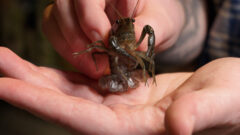
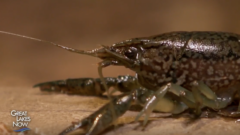
Marbled crayfish raises eyebrows, and concerns

It all started with a mottled little crustacean crawling across a soccer field in Ontario’s Burlington City Park in October 2021, a few miles from Lake Ontario.

The animal may have looked innocuous, but this was the first sign of a costly and grueling ongoing battle against a potentially devastating new invasive species in the Great Lakes.

Read Now at Great Lakes Now.

Original Article

Great Lakes Now

Great Lakes Now

https://www.greatlakesnow.org/2024/04/marbled-crayfish-raises-eyebrows-and-concerns/

Kari Lydersen

Nestled in the heart of an urban and busy city, Wissahickon Valley Park of Philadelphia provides a place for city dwellers to enjoy the sanctuary of nature.

A popular spot for outdoor enthusiasts, historians and even wedding-goers, the park houses over 50 miles of trails and encompasses over 2,000 protected acres along a stretch of the Wissahickon Creek as it passes through northwest Philadelphia. 

The post Journalists hike urban wilderness of Wissahickon Valley Park first appeared on Great Lakes Echo.

Original Article

Great Lakes Echo

Great Lakes Echo

http://greatlakesecho.org/2024/04/25/journalists-hike-urban-wilderness-of-wissahickon-valley-park/

Shealyn Paulis

Michigan gets $290M boost for water upgrades as Flint crisis anniversary nears

By Kelly House, Bridge Michigan

The Great Lakes News Collaborative includes Bridge Michigan; Circle of Blue; Great Lakes Now at Detroit PBS; Michigan Public, Michigan’s NPR News Leader; and The Narwhal who work together to bring audiences news and information about the impact of climate change, pollution, and aging infrastructure on the Great Lakes and drinking water.

Read Now at Great Lakes Now.

Original Article

Great Lakes Now

Great Lakes Now

https://www.greatlakesnow.org/2024/04/michigan-gets-290m-boost-for-water-upgrades-as-flint-crisis-anniversary-nears/

Bridge Michigan

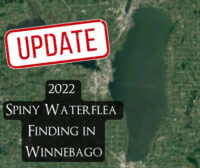
Additional Monitoring Reveals No Other Spiny Waterfleas

Following up from a spiny water flea finding in Lake Winnebago in 2022, the WI Department of Natural Resources and local partners conducted extensive monitoring for spiny water fleas through the summer and fall of 2022. Biologists were searching for additional adult spiny waterfleas as well as eggs that would have been laid in the sediment of the lake. Following analysis of the samples collected, we are please to report that no evidence of spiny waterflea were found which includes not finding any eggs!
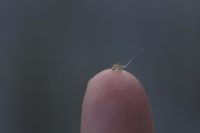
This is fantastic news for our waterways! Currently, there is no evidence that the spiny waterfleas found in 2022 were able to establish a population in Lake Winnebago. Ongoing monitoring by UW-Green Bay as part of the Fox River Navigational System Authority (FRNSA) AIS Monitoring Program will continue to keep an eye out for spiny waterflea and other invasive species.

Remember- an ounce of prevention is worth a pound of cure. It’s easy to help prevent the spread of all aquatic invasive species between lakes. No matter what lake or river you visit, follow these steps to protect your wild places:

Spiny waterflea on a fingertip

· Inspect equipment (boats, fishing line, etc.) for attached aquatic plant, animals, or mud

· Remove all attached plants or animals

· Drain all water from buckets and containers

· Never move live fish away from a waterbody (fish out of water = dead)

Photo Credit: Riley Schultz (UWGB), WI Sea Grant, Donn Brandstrator (UM-Duluth), Chris Acy

Questions? Comments? Contact Chris Acy, the AIS Coordinator covering Brown, Outagamie, Fond du Lac, Calumet, and Winnebago Counties at (920) 460-3674 or chris@fwwa.org!

Follow the Fox Wolf Watershed Alliance’s Winnebago Waterways Program on our Winnebago Waterways Facebook page or @WinnWaterways on Twitter! You can also sign-up for email updates at WinnebagoWaterways.org.

Winnebago Waterways is a Fox-Wolf Watershed Alliance program. The Fox-Wolf Watershed Alliance is an independent nonprofit organization that identifies and advocates effective policies and actions that protect, restore, and sustain water resources in the Fox-Wolf River Basin.

Check out the Keepers of the Fox Program at https://fwwa.org/watershed-recovery/lower-fox-recovery/

Reporting invasive species is a first step in containing their spread. Maintaining and restoring our waters and landscapes can reduce the impacts even when we don’t have other management options to an invasive species.

The post Update: 2022 Spiny Waterflea Findings in Lake Winnebago appeared first on Fox-Wolf Watershed Alliance.

Original Article

Fox-Wolf Watershed Alliance

Fox-Wolf Watershed Alliance

https://fwwa.org/2024/04/24/update-2022-spiny-waterflea-findings-in-lake-winnebago/?utm_source=rss&utm_medium=rss&utm_campaign=update-2022-spiny-waterflea-findings-in-lake-winnebago

Chris Acy

Group of three people standing in a room.

David Hart (center) talks with Sea Grant Fisheries Specialist Titus Seilheimer and Congresswoman Gwen Moore.

David Hart has been named the winner of the 2024 Robert and Carroll Heideman Award for Excellence in Public Service and Outreach for the University of Wisconsin-Madison. The award will be officially conferred during an award ceremony the evening of April 24. 

Hart is the assistant director for extension and is also a specialist in geographic information science, urban planning and coastal managements skills.  

“I’ve had a lifelong fascination with maps and nature. I remember when I realized that fascination could lead to a career. I love applying geographic information science to better understand the Great Lakes and finding those moments when it becomes clear that something you’ve done has had an impact to make things better,” Hart said.

His embodiment of the Wisconsin Idea, the tenet that the boundaries of the university are the boundaries of the state and the expertise of the campus is used for the benefit of the state’s residents, led him to the honor.

 “I work at an organization with great people advancing an important mission to enhance the conservation and health of Great Lakes resources and the well-being of Great Lakes communities,” he said. “I feel the award is a reflection of those people and that mission and I’m humbled and honored of the recognition that comes with it.”

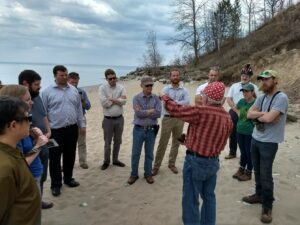
Large group of people standing on a beach with a lake in the background and a high bluff to the right.

David Hart (facing camera and third from the right) convenes field trips and invites speakers, such as this one, where a geoscientist is discussing the effects of Lake Michigan on surrounding beaches and bluffs. This convening of local officials and scientists is one of the hallmarks of Hart’s work to expand the Wisconsin Idea.

This award is given to an individual who reflects the public service mission of the university. That public service was highlighted by those who wrote to support his nomination. One state-level official said, “He led development of the Wisconsin Coastal Atlas and the Wisconsin Coastal Guide, both of which remain important online tools for viewing and exploring information about the Great Lakes. Professional planners and resource managers regularly use the Coastal Atlas to explore and analyze coastal issues, share coastal data and inform decision-making about sustainable use of the Great Lakes. Consistent with the Wisconsin Idea, this tool makes the knowledge and expertise of the university available to a wide range of users.”

The writer continued, “David’s efforts to network Wisconsin’s Coastal Atlas with similar tools via the internet has allowed stakeholders to investigate the effects of complex issues—like climate change and invasive species—more rigorously and on more appropriate scales. Similarly, the Wisconsin Coastal Guide helps recreationalists and tourists find coastal information leading to deeper experiences with our Great Lakes.”

In addition to Hart’s own geospatial technology work, he oversees the efforts of 13 outreach specialists. The specialists both solicit thoughts about local needs, seeking to find solutions and offer resources, as well as share their knowledge and the findings born of Sea Grant research. The team of specialists are leaders in fisheries, coastal engineering, tourism, climate change, coastal community challenges, food fish outreach, aquaculture, social science, emerging contaminants, aquatic invasive species, education and workforce development.

One of Hart’s colleagues who fills a similar role with Michigan Sea Grant said, “David consistently demonstrates his competency and willingness to work effectively with others for the common good. And, when misunderstandings inevitably happen, David humbly invites others into conversations that need to repair any misunderstandings and identify how to move forward together, including when it involves modifying procedures, creating best practices, or reprioritizing current tasks to create an optimal, collaborative working environment that values and includes all perspectives.”

With award-winning work behind him, Hart stressed he will continue efforts to advance the Wisconsin Idea. “I’m currently collaborating with planners, cartographers and environmental educators to address coastal natural hazards, enhance public access to the coast, use story maps to share Great Lakes natural and cultural heritage and apply a process called geodesign that links scenario planning and impact simulation to promote green stormwater infrastructure.”

The post Hart wins prestigious outreach award in honor of service to Wisconsin first appeared on Wisconsin Sea Grant.

Original Article

News Releases | Wisconsin Sea Grant

News Releases | Wisconsin Sea Grant

https://www.seagrant.wisc.edu/news/hart-wins-prestigious-outreach-award-in-honor-of-service-to-wisconsin/

Moira Harrington

Michigan is adding $290 million in infrastructure investments to the MI Clean Water Plan. Municipal and community water systems will be eligible to apply for low-interest loans to help public water suppliers ensure safe and clean drinking water. Read the full story by WXMI-TV – Grand Rapids, MI.

Original Article

Great Lakes Commission

Great Lakes Commission

https://www.glc.org/dailynews/20240424-mi-clean-water

Theresa Gruninger

Twenty-two million pounds of plastic waste end up in the Great Lakes every year. About half of that waste ends up in Lake Michigan alone. Samira Hanessian, energy policy director with the Illinois Environmental Council, discusses why buying sustainable matters. Read the full story by WLS-TV – Chicago, IL.

Original Article

Great Lakes Commission

Great Lakes Commission

https://www.glc.org/dailynews/20240424-plastic-pollution

Theresa Gruninger

This past winter was one of the warmest on record. It led to record-low ice coverage on all five Great Lakes, a sign that the world’s largest freshwater system is not immune to climate change. Read the full story by WLS-TV – Chicago, IL.

Original Article

Great Lakes Commission

Great Lakes Commission

https://www.glc.org/dailynews/20240424-ice-coverage

Theresa Gruninger

The Ohio Department of Agriculture recently hosted a discussion around water conservation with agricultural leaders from Ohio, Indiana, and Michigan to focus on improving water quality in the Western Lake Erie Basin. Read the full story by Outdoor News.

Original Article

Great Lakes Commission

Great Lakes Commission

https://www.glc.org/dailynews/20240424-ag-leaders-meet

Theresa Gruninger

In Michigan, Muskegon County’s newest and largest park, Dune Harbor Park, opened to the public in June 2023. The property was previously used as a sand mining site, which created two inland lakes that can now be used for kayaking and fishing. Read the full story by MLive.

Original Article

Great Lakes Commission

Great Lakes Commission

https://www.glc.org/dailynews/20240424-lake-michigan-park

Theresa Gruninger

The city of Toledo, Ohio, and the Lucas County Board of Commissioners will join the Environmental Law & Policy Center in suing the U.S. EPA over what they believe is a “facially inadequate plan” to reduce phosphorus runoff in the Western Lake Erie Basin. Read the full story by The Blade.

Original Article

Great Lakes Commission

Great Lakes Commission

https://www.glc.org/dailynews/20240424-lake-erie-lawsuit

Theresa Gruninger

The Biggest Week in American Birding draws a worldwide audience to glimpse dozens of species of migrating birds in northern Ohio, though officials say they’ve been seeing changes in recent years. Trends such as warmer winters, habitat loss, and low lake ice coverage may be impacting migrations. Read the full story by Great Lakes Now.

Original Article

Great Lakes Commission

Great Lakes Commission

https://www.glc.org/dailynews/20240424-ohio-birding

Theresa Gruninger

Environmental journalists and educators face a changing media field and systemic barriers that make it difficult to improve the profession.

Experts at a recent Society of Environmental Journalists conference in Philadelphia addressed some of these challenges to reimagine a more sustainable system.

The post Rethinking environmental journalism education first appeared on Great Lakes Echo.

Original Article

Great Lakes Echo

Great Lakes Echo

http://greatlakesecho.org/2024/04/24/rethinking-environmental-journalism-education/

Shealyn Paulis

A Fleeting Wild Taste of Spring Ephemerals: Ramps and Ostrich Fern

This story is a part of “A Year in the Wild Kitchen of the Great Lakes,” a series in partnership with expert forager Lisa M. Rose with the mission of nurturing a deeper connection with the natural world through foraging. 

The Importance of Ecological Awareness in Foraging

As we delve into the world of foraging, it’s crucial to cultivate an understanding of the ecosystems we interact with, especially when harvesting wild plants like ramps (wild leeks) and ostrich ferns.

Read Now at Great Lakes Now.

Original Article

Great Lakes Now

Great Lakes Now

https://www.greatlakesnow.org/2024/04/a-fleeting-wild-taste-of-spring-ephemerals-ramps-and-ostrich-fern/

Lisa M. Rose

Showers and isolated storms will move east across central and east-central Wisconsin early this afternoon. Strongest storms could produce wind gusts up to 50 mph and hail up to half an inch. Gusty winds could knock down tree limbs and blow around unsecured objects. Minor hail damage to vegetation is possible. If outdoors, consider seeking shelter inside a building.

Original Article

Current watches, warnings, and advisories for Brown County (WIC009) WI

Current watches, warnings, and advisories for Brown County (WIC009) WI

https://api.weather.gov/alerts/urn:oid:2.49.0.1.840.0.601caf7fac4c32fefe470bbdd38f35f0febbaeae.001.1.cap

NWS

One of the many challenges of environmental journalism is making the general public care about animals that are not cute or ecosystems that are obscure. 

A recent session of this year’s Society of Environmental Journalists annual conference taught journalists how to do just that. 

The post Making obscure animals and ecosystems compelling characters first appeared on Great Lakes Echo.

Original Article

Great Lakes Echo

Great Lakes Echo

http://greatlakesecho.org/2024/04/23/making-obscure-animals-and-ecosystems-compelling-characters/

Guest Contributor

A band of showers will shift rapidly east across the forecast area this evening. While rainfall amounts will be light, the showers will be accompanied by southwest winds gusting to around 40 mph at times. If you are driving or have outdoor plans this evening, be alert for strong southwest winds gusting to 40 mph, especially when showers are occurring.

Original Article

Current watches, warnings, and advisories for Brown County (WIC009) WI

Current watches, warnings, and advisories for Brown County (WIC009) WI

https://api.weather.gov/alerts/urn:oid:2.49.0.1.840.0.8ba2c9a6b37ea756410ec909a503709d7789c1dd.001.1.cap

NWS

Ohio Birding Transitions

The Biggest Week in American Birding draws a worldwide audience to glimpse dozens of species of migrating birds including the stars of the show, tiny warblers, as well as local birds in northern Ohio — and officials say they’ve been seeing changes in recent years.

“There appears to be a little shifting in the short-distance migrants versus the tropical migrants,” said Mark Shieldcastle, research director at Black Swamp Bird Observatory (BSBO), event host.

Read Now at Great Lakes Now.

Original Article

Great Lakes Now

Great Lakes Now

https://www.greatlakesnow.org/2024/04/ohio-birding-transitions/

James Proffitt, Great Lakes Now

It’s estimated that nearly two-thirds of aquatic invasive species currently in the Great Lakes hitched a ride in the ballast water of cargo ships crossing the ocean. However, the same isn’t true of lakers, or ships that move exclusively within the Great Lakes. While the ballast water of these ships isn’t introducing new species, there’s a good chance it’s spreading invasive species throughout the lakes. Read the full story by Interlochen Public Radio.

Original Article

Great Lakes Commission

Great Lakes Commission

https://www.glc.org/dailynews/20240422-ballastwater-greatlakes

Hannah Reynolds

The National Museum of the Great Lakes located in Toledo, Ohio will break ground on a 5,000-square-foot expansion Monday afternoon to provide additional space for temporary and traveling exhibits, new permanent exhibit spaces, and a community education center. Read the full story by the Toledo Blade.

Original Article

Great Lakes Commission

Great Lakes Commission

https://www.glc.org/dailynews/20240422-nationalmuseum-greatlakes-expansion

Hannah Reynolds

When you walk along the beaches of Lake Erie, you’re going to see litter and a new report found that a lot of that trash is going to be plastic. On average, 86% of the litter collected in a given Adopt-a-Beach season is composed either partially or fully of plastic. Read the full story by Erie Times-News.

Original Article

Great Lakes Commission

Great Lakes Commission

https://www.glc.org/dailynews/20240422-greatlakesbeaches-presqueisle-plasticpollution

Hannah Reynolds

If you spend a lot of time on the water, you might be interested in becoming a water quality monitor. The MiCorps Cooperative Lake Monitoring Program is to help citizen scientists across the state collect water quality information, and other information about their lake’s health, to help understand what’s going on in their lake. Read the full story by WPBN-TV – Traverse City, MI.

Original Article

Great Lakes Commission

Great Lakes Commission

https://www.glc.org/dailynews/20240422-michiganswaterquality-micorp-lakemonitoring

Hannah Reynolds

H2Ohio’s agriculture incentive program is now being offered to producers throughout the state. H2Ohio’s agricultural program, which initially focused solely on farms located in northwest Ohio near Lake Erie, incentivizes farmers to implement science-based, proven best management practices to prevent nutrient runoff and improve water quality. Read the full story by Ohio Ag Net.

Original Article

Great Lakes Commission

Great Lakes Commission

https://www.glc.org/dailynews/20240422-statewideh2ohio

Hannah Reynolds

Lake sturgeon don’t need Endangered Species Act protections, federal wildlife officials announced Monday, saying that stocking programs have helped the prehistoric fish return to areas where they had vanished. Read the full story by WGHP-TV – Madison, WI.

Original Article

Great Lakes Commission

Great Lakes Commission

https://www.glc.org/dailynews/20240422-prehistoric-lakesturgeon

Hannah Reynolds

Dozens of children of the water crisis — now teenagers and young adults — have turned their trauma into advocacy. They provide input on public health initiatives, participate in social issue campaigns, distribute filters and provide free water testing for homeowners. Read the full story by WHNT-TV – Flint, MI.

Original Article

Great Lakes Commission

Great Lakes Commission

https://www.glc.org/dailynews/20240422-flint-environmental-advocacy

Hannah Reynolds

Great Lakes Now talks “Love Canal” with American Experience Executive Producer Cameo George

American Experience’s “Poisoned Ground: The Tragedy at Love Canal” tells the dramatic and inspiring story of ordinary women who fought against overwhelming odds for the health and safety of their families.

In the late 1970s, residents of Love Canal in Niagara Falls, New York discovered that their homes, schools and playgrounds were built on top of a former chemical waste dump.

Read Now at Great Lakes Now.

Original Article

Great Lakes Now

Great Lakes Now

https://www.greatlakesnow.org/2024/04/great-lakes-now-talks-poisoned-ground-the-tragedy-at-love-canal-with-american-experience-executive-producer-cameo-george/

Great Lakes Now

Adopt-a-Beach volunteers and Alliance Ambassadors do so much for the Great Lakes! They organize beach cleanups. They spread the word about how people can protect the lakes. They build community around all five Great Lakes in eight Great Lakes states.

In honor of National Volunteer Month, we asked folks to send our volunteers a few words of appreciation. People across the region showed Great Lakes volunteers their love. Here are just some of the things they said:

“Your work and passion for the Lakes is so appreciated by all those who use and love our lakes! Your work is noticed and appreciated! Thank you!”

Anne S, Minnesota

“Thank you for giving of your time to care for this most amazing planet. Your service and care is most appreciated and a gift to us all.”

Jonathan H, Illinois

“THANK YOU!!  To all of the Team Leaders, Adopt-a-Beach Volunteers and Alliance Ambassadors who help to keep the beaches clean.  You all are the unsung heroes helping to protect the Great Lakes.”

Annette R, Ohio

“From Buffalo, NY, a Great (Lakes) Big Thank You!!”

Jennifer F, New York

“Thank you for your care of creation.”

Carole H, Ohio

“To everyone making a difference by volunteering, THANK YOU! The Great Lakes are a global treasure, and the work you do to improve and protect them while individually small, collectively makes a better planet earth.”

Jim Z, Wisconsin

“Thank you for your valuable time in helping us keep our beaches clean!”

John L, Pennsylvania

“I work at the Alliance, and I know you are the heart of our work! Thank you so much for the time and energy you devote to protecting the Great Lakes. Your work makes a difference every day. I’m grateful to you for your work and look forward to the progress we will make together over the next year.”

Molly F, Illinois

“Thank you for your time & energy to help keep the Great Lakes great. Grateful for you & thank you.”

Anita S, Michigan

“I grew up on Lake Erie, and have lived on Lake Ontario for my adult life.  We go frequently to Lake Huron and Georgian Bay.  Being able to live in this blessed triangle of Ontario is one of the best things in my life. This is why I am writing to thank all the volunteers who look after the lakes and their shores, whether through beach cleanups, or other means. You keep this beloved area safe, and allow it to survive into our challenging and uncertain future, as a refuge and a home for people and creatures of all kinds. Many many thanks from me and my family, and dear friends who are all Great Lakers.”

Mary E, Ontario

Thank you from the bottom of our hearts to all the Adopt-a-Beach volunteers and Alliance Ambassadors working to protect our Great Lakes!

Read all the messages to our volunteers.

The post “Thank you for helping our Great Lakes shine!” appeared first on Alliance for the Great Lakes.

Original Article

News - Alliance for the Great Lakes

News - Alliance for the Great Lakes

https://greatlakes.org/2024/04/thank-you-for-helping-our-great-lakes-shine/

Judy Freed

As part of today’s Earth Day commemorations, the Wisconsin Water Library at the University of Wisconsin-Madison, supported by Wisconsin Sea Grant, and the Wisconsin Library Association announced the books selected for a basin-wide shared-reading experience, Great Lakes, Great Read.

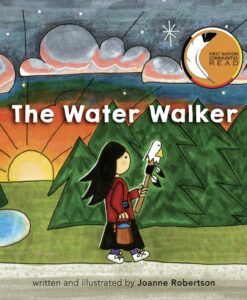
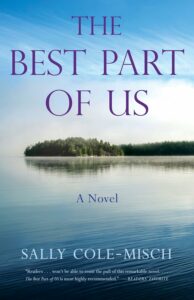
“The Water Walker” by Joanne Robertson is the children’s selection and the adult selection is “The Best Part of Us” by Sally Cole-Misch.

Illustration of person walking past pine trees.

“The Water Walker” is the story of a determined Ojibwe grandmother, a “nokomis,” named Josephine Mandamin who walks to raise awareness of the need to protect “nibi” (water). Robertson wrote and illustrated the book, which was published in 2017.

Published in 2020, Sally Cole-Misch’s award-winning novel, “The Best Part of Us”, explores a family’s ties to an island in the Canadian waters of an inland lake just north of Lake Huron—how those ties are tested both through natural processes and family dynamics.A calm lake and an island in the background.

“The Great Lakes have shaped Wisconsin as we know it. These inland seas provide drinking water and fuel our agriculture, shipping, manufacturing and recreation,” said WWL Senior Special Librarian Anne Moser. “These two books will bring the lakes alive in new and evocative ways. We hope readers will reflect on the lakes and be inspired, become passionate and feel more connected to them.” 

WLA Executive Director Laura Sauser said, “All Wisconsinites are encouraged to read these titles, and we also hope to be a catalyst for libraries throughout the upper Midwestern states and Canadian provinces to engage patrons through a range of activities.”

Both selected authors will be featured in a free webinar series happening on Sept. 25 and Oct. 2 and 9. All events will start at 6 p.m., CT, and will be open to the public.

Both selected authors will be featured in a free webinar series happening on Sept. 25 and Oct. 2 and 9. All events will start at 6 p.m., CT, and will be open to the public. In November, the authors will visit Wisconsin for a variety of events. Please check the Wisconsin Great Lakes, Great Read webpage, https://go.wisc.edu/85b96h, later this summer to learn more.

Currently, the website offers further details on the authors, their books, book discussion questions, an email list signup option and other resources.

This initiative is supported by an Ideas to Action grant from WiLS. Wisconsin Sea Grant and the University of Wisconsin Water Resources Institute support the Wisconsin Water Library. 

The post Great Lakes, Great Read shared-reading initiative announces book selections first appeared on Wisconsin Sea Grant.

Original Article

News Releases | Wisconsin Sea Grant

News Releases | Wisconsin Sea Grant

https://www.seagrant.wisc.edu/news/great-lakes-great-read-shared-reading-initiative-announces-book-selections/

Moira Harrington

The Mississippi River Basin and the Great Lakes-St. Lawrence River Basin supply freshwater and drain wastewater for millions of people.

Two of the largest watersheds in the U.S., they span state and political boundaries. 

The post Covering watershed policy and identity first appeared on Great Lakes Echo.

Original Article

Great Lakes Echo

Great Lakes Echo

http://greatlakesecho.org/2024/04/22/covering-watershed-policy-and-identity/

Kayla Nelsen

Elevated fire weather conditions are expected across all of northeast Wisconsin during the afternoon and into the early evening hours. Mild temperatures in the 60s, low relative humidity values of 20 to 30 percent, and southwest winds of 15 to 25 mph with gusts to 30 mph are expected. Rain showers will arrive this evening, and bring some relief to the fire concerns. Persons are urged to be careful with any activities that could potentially lead to a wildland fire. Campfires, outdoor grills, smoking materials, chain saws, and all-terrain vehicles all have the potential to throw a spark and ignite a fire. Check burning restrictions before burning and make sure to heed any restrictions that are in place in your county.

Original Article

Current watches, warnings, and advisories for Brown County (WIC009) WI

Current watches, warnings, and advisories for Brown County (WIC009) WI

https://api.weather.gov/alerts/urn:oid:2.49.0.1.840.0.0ab21596fabf50c15d528379778fbdff714c5193.001.1.cap

NWS