24 Launches Adopted, More on the Way Have you heard of the Adopt a Launch Program at Fox-Wolf? Concerned local water lovers are volunteering to take care of their favorite boat launches. From individuals to groups to businesses, your friends and neighbors are stepping up to help out. In 2025, five new launches have [...]

The post Adopt a Launch Flourishing in Northeast Wisconsin appeared first on Fox-Wolf Watershed Alliance.

Original Article

Fox-Wolf Watershed Alliance

Fox-Wolf Watershed Alliance

https://fwwa.org/2025/07/16/adopt-a-launch-flourishing-in-northeast-wisconsin/?utm_source=rss&utm_medium=rss&utm_campaign=adopt-a-launch-flourishing-in-northeast-wisconsin

Chris Acy

July marks the time of year when piping plover chicks start to fledge and the adults start to get antsy for migration. Piping plover females are the first to leave the Great Lakes and head south to their wintering site. Read the full story by MLive.

Original Article

Great Lakes Commission

Great Lakes Commission

https://www.glc.org/dailynews/20250716-plover-migration

Nichole Angell

Under the USDA rule aimed at protecting wetlands known as “Swampbuster,” farmers have to agree not to drain or fill their wetlands, in order to receive farm benefits such as crop insurance, disaster relief and USDA loans. The rule is being challenged in court and could impact farmers across the country. Read the full story by Great Lakes Now.

Original Article

Great Lakes Commission

Great Lakes Commission

https://www.glc.org/dailynews/20250716-wetland-protection-rule

Nichole Angell

Advocates at the Alliance for the Great Lakes believe that voluntary measures to reduce algal blooms in Lake Erie have failed to meet phosphorus reduction targets and new regulations are needed to make progress on the issue. Read the full story by Great Lakes Now.

Original Article

Great Lakes Commission

Great Lakes Commission

https://www.glc.org/dailynews/20250716-algal-blooms

Nichole Angell

A federal drinking water rule required Chicago officials to warn approximately 900,000 renters, homeowners and landlords before Nov. 16, 2024, that their drinking water is at risk of lead contamination. But as of early July, Chicago had only notified 7% of the people on its list that their water may be dangerously contaminated. Read the full story by WBEZ, Grist and Inside Climate News.

Original Article

Great Lakes Commission

Great Lakes Commission

https://www.glc.org/dailynews/20250716-lead-drinking-water

Nichole Angell

The Great Lakes Aquarium, now one of Duluth, Minnesota’s most popular attractions, was once an unlikely prospect – and weathered years of turbulence after opening in 2000. It is one of few aquariums in the United States that focuses predominantly on freshwater exhibits. Read the full story by Duluth News Tribune.

Original Article

Great Lakes Commission

Great Lakes Commission

https://www.glc.org/dailynews/20250716-duluth-aquarium

Nichole Angell

At a time when NOAA is under assault in many ways, U.S. Senator Tammy Baldwin has introduced the Digital Coast Act, a bipartisan proposal to help coastal communities prepare for storms, cope with varying water levels and plan for future development. Read the full story by The Cap Times.

Original Article

Great Lakes Commission

Great Lakes Commission

https://www.glc.org/dailynews/20250716-coastal-resiliance-legislation

Nichole Angell

American white pelican sightings have been increasing in Michigan. While the state’s shorelines have been a nesting ground for the past 15 years, the species has been expanding their historic breeding range eastward. Michigan is on the current edge of that range. Read the full story by MLive.

Original Article

Great Lakes Commission

Great Lakes Commission

https://www.glc.org/dailynews/20250716-nesting-pelicans

Nichole Angell

THE NATIONAL WEATHER SERVICE HAS ISSUED TORNADO WATCH 517 IN EFFECT UNTIL 6 PM CDT THIS EVENING FOR THE FOLLOWING AREAS IN WISCONSIN THIS WATCH INCLUDES 10 COUNTIES IN CENTRAL WISCONSIN PORTAGE WAUSHARA WOOD IN EAST CENTRAL WISCONSIN CALUMET MANITOWOC WINNEBAGO IN NORTHEAST WISCONSIN BROWN KEWAUNEE OUTAGAMIE WAUPACA THIS INCLUDES THE CITIES OF ALASKA, APPLETON, ARNOTT, AURORAVILLE, BAKERVILLE, BORTH, CLINTONVILLE, DARBOY, DUNDAS, DUVALL, GREEN BAY, KEWAUNEE, KING, LIND CENTER, MACKVILLE, MANITOWOC, MARSHFIELD, MENASHA, NEENAH, NEW LONDON, NORMAN, NORTHERN LAKE WINNEBAGO, NORTHPORT, OSHKOSH, PLOVER, POINT BEACH STATE PARK, RANKIN, RIO CREEK, ROSTOK, RURAL, SHOTO, SILVER LAKE, STEVENS POINT, TWO RIVERS, WAUPACA, WAUTOMA, WINNEBAGO, WISCONSIN RAPIDS, AND WITTMAN FIELD.

Original Article

Current watches, warnings, and advisories for Brown County (WIC009) WI

Current watches, warnings, and advisories for Brown County (WIC009) WI

https://api.weather.gov/alerts/urn:oid:2.49.0.1.840.0.bf5dcb8196687700d318c47a4aaabe93fef32a32.001.1.cap

NWS

John Ball Zoo Fights for Great Lakes’ Rarest Butterflies

Butterfly populations are in decline across the continental U.S., dropping by 22% between 2000 and 2020 according to a study published in the journal Science. Almost a third of the 342 species studied have seen their numbers fall by more than half. To help combat this, the John Ball Zoo in Grand Rapids, Michigan launched its Great Lakes Rare Butterfly Program in 2021 to protect the region’s most threatened species.

Read Now at Great Lakes Now.

Original Article

Great Lakes Now

Great Lakes Now

https://www.greatlakesnow.org/2025/07/john-ball-zoo-fights-for-great-lakes-rarest-butterflies/

Donte Smith

* WHAT...Flash flooding caused by excessive rainfall continues to be possible. * WHERE...Portions of east central and northeast Wisconsin, including the following counties, in east central Wisconsin, Calumet, Manitowoc and Winnebago. In northeast Wisconsin, Brown, Kewaunee and Outagamie. * WHEN...From 3 PM this afternoon to 10 PM CDT this evening. * IMPACTS...Excessive runoff may result in flooding of rivers, creeks, streams, and other low-lying and flood-prone locations. * ADDITIONAL DETAILS... - Rainfall amounts of 2 to 3 inches are possible this afternoon and this evening, with locally higher amounts possible. The heavy rain in a short period of time will lead to the threat for flooding across east-central Wisconsin. - http://www.weather.gov/safety/flood

Original Article

Current watches, warnings, and advisories for Brown County (WIC009) WI

Current watches, warnings, and advisories for Brown County (WIC009) WI

https://api.weather.gov/alerts/urn:oid:2.49.0.1.840.0.8e4ecdc0b706dc9013bc703ea2aaadd3028c92e3.002.1.cap

NWS

* WHAT...Flash flooding caused by excessive rainfall is possible. * WHERE...Portions of east central and northeast Wisconsin, including the following counties, in east central Wisconsin, Calumet, Manitowoc and Winnebago. In northeast Wisconsin, Brown, Kewaunee and Outagamie. * WHEN...From this afternoon through this evening. * IMPACTS...Excessive runoff may result in flooding of rivers, creeks, streams, and other low-lying and flood-prone locations. * ADDITIONAL DETAILS... - Rainfall amounts of 2 to 3 inches are possible this afternoon and this evening, with locally higher amounts possible. The heavy rain in a short period of time will lead to the threat for flooding across east-central Wisconsin. - http://www.weather.gov/safety/flood

Original Article

Current watches, warnings, and advisories for Brown County (WIC009) WI

Current watches, warnings, and advisories for Brown County (WIC009) WI

https://api.weather.gov/alerts/urn:oid:2.49.0.1.840.0.4c12e1a4995458dd9ef4d780add07fd6734206ca.002.1.cap

NWS

This wetland fight could go to the Supreme Court

A pending court case could impact farmers across the country. At issue is a USDA rule aimed at protecting wetlands called “Swampbuster.” In place since 1985, it’s being challenged in court by an absentee landowner in Iowa.

Under Swampbuster, farmers have to agree not to drain or fill their wetlands, in order to receive farm benefits such as crop insurance, disaster relief and USDA loans.

Read Now at Great Lakes Now.

Original Article

Great Lakes Now

Great Lakes Now

https://www.greatlakesnow.org/2025/07/this-wetland-fight-could-go-to-the-supreme-court/

Great Lakes Now

Grabbing a bottle of water might seem like no big deal. But in Northeast Wisconsin, that same bottle is helping protect the waters we all rely on. Through a partnership between Oneida Nation Retail and the Fox-Wolf Watershed Alliance, every purchase of Oneida-branded water helps fund water restoration in the region. The latest donation [...]

The post Oneida Nation and Fox-Wolf Turn Bottled Water into Clean Water appeared first on Fox-Wolf Watershed Alliance.

Original Article

Fox-Wolf Watershed Alliance

Fox-Wolf Watershed Alliance

https://fwwa.org/2025/07/15/oneida-water-donation-fox-wolf-2025/?utm_source=rss&utm_medium=rss&utm_campaign=oneida-water-donation-fox-wolf-2025

Fox-Wolf Watershed Alliance

Advocacy group challenges “new normal” status of Lake Erie’s algal blooms

It’s the annual peak algal bloom season and the spotlight as usual, is on Lake Erie’s western basin, including Toledo and southeast Michigan.

For the public, that’s because in 2014, Toledo went three days without drinking water as toxic algal blooms forced the city to issue a “do not drink” order.

Read Now at Great Lakes Now.

Original Article

Great Lakes Now

Great Lakes Now

https://www.greatlakesnow.org/2025/07/advocacy-group-challenges-new-normal-status-of-lake-eries-algal-blooms/

Gary Wilson, Great Lakes Now

Chicago was supposed to warn residents about toxic lead pipes last year. Most still have no idea.

By Keerti Gopal & Juanpablo Ramirez-Franco

This story is a partnership between GristInside Climate News, and WBEZ, a public radio station serving the Chicago metropolitan region. This coverage is made possible through an ongoing partnership between Grist and WBEZ.

Read Now at Great Lakes Now.

Original Article

Great Lakes Now

Great Lakes Now

https://www.greatlakesnow.org/2025/07/chicago-was-supposed-to-warn-residents-about-toxic-lead-pipes-last-year-most-still-have-no-idea/

Inside Climate News and Grist

A record year for Great Lakes piping plovers

By Lester Graham, Michigan Public

The Great Lakes News Collaborative includes Bridge Michigan; Circle of Blue; Great Lakes Now at Detroit PBS; Michigan Public, Michigan’s NPR News Leader; and The Narwhal who work together to bring audiences news and information about the impact of climate change, pollution, and aging infrastructure on the Great Lakes and drinking water.

Read Now at Great Lakes Now.

Original Article

Great Lakes Now

Great Lakes Now

https://www.greatlakesnow.org/2025/07/record-year-for-great-lakes-piping-plovers/

Michigan Public

Fluctuations in Great Lakes water levels and ice cover broadly affect coastal communities and contribute to coastal erosion. Coastal resiliency strategies are navigating the best methods to preserve the landscape and the communities from these effects. Read the full story by Northern Express.

Original Article

Great Lakes Commission

Great Lakes Commission

https://www.glc.org/dailynews/20250714-coastal-resiliency

Autumn McGowan

Lake Erie has warmed rapidly over the past month, with surface water temperatures now sitting about four degrees above average for mid-July. While that swift rise is eye-catching, experts say it’s not unusual. Read the full story by the Cleveland Plain Dealer.

Original Article

Great Lakes Commission

Great Lakes Commission

https://www.glc.org/dailynews/20250714-erie-temps

Autumn McGowan

Man-made reefs have become a popular way to provide a habitat for fish in coastal communities. The rubble ridges, however, are also designed as a cost-effective tool to prevent erosion. Read the full story by the Chicago Tribune.

Original Article

Great Lakes Commission

Great Lakes Commission

https://www.glc.org/dailynews/20250714-artificial-reefs

Autumn McGowan

As a result of warming waters, increasingly variable seasonal changes and lakeshore development, walleye numbers in some lakes are dwindling. Losing the species would mean losing a food source for community members, a sovereign right to fish, and a deep connection to tradition and nature for Ojibwe and other Indigenous communities. Read the full story by ICT News.

Original Article

Great Lakes Commission

Great Lakes Commission

https://www.glc.org/dailynews/20250714-spearfishing

Autumn McGowan

The U.S. shipboard maritime workforce is projected to turn over in the coming decades and have more than 35,000 job openings for sailors and marine oilers; 29,000 captains, mates, and pilots; and 9,500 ship engineers. Read the full story by Detroit Free Press.

Original Article

Great Lakes Commission

Great Lakes Commission

https://www.glc.org/dailynews/20250714-sailor-career

Autumn McGowan

Great Lakes energy bills are rising: Federal cuts could add to the pain

This article is the first in a series called The Great Lakes Promise: Cost, Resilience and Refuge. This series was made possible in partnership between Great Lakes Now and Planet Detroit. 

Sherita Hamlin has watched her utility bills more than double in recent years. On Chicago’s West Side, summer air conditioning is a luxury she now rations.

Read Now at Great Lakes Now.

Original Article

Great Lakes Now

Great Lakes Now

https://www.greatlakesnow.org/2025/07/great-lakes-energy-bills-are-rising-federal-cuts-could-add-to-the-pain/

Brian Allnutt

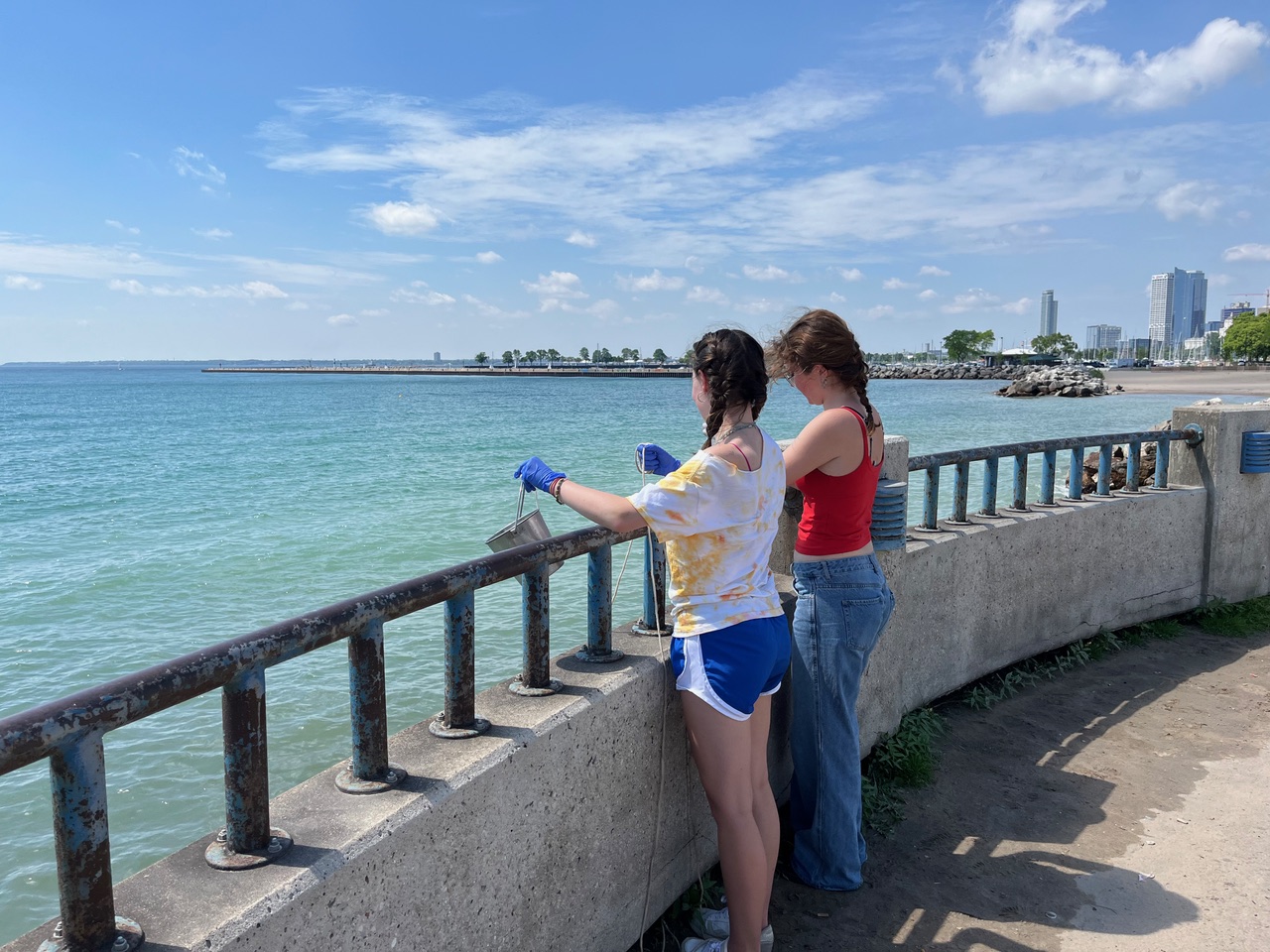
Two undergraduate students collect use buckets to collect water samples from   Lake Michigan.

Two undergraduate students collect water samples from Lake Michigan for E. coli and other microbial DNA testing. Photo: Ryan Newton

Nothing ruins a day at the lake like E. coli. At elevated levels, the bacteria — which is prevalent in the guts and feces of both humans and animals — can make people sick, forcing beach managers to post advisories or close beaches entirely. And while current testing methods provide an accurate snapshot of E. coli levels in beach water, the results aren’t always timely.

“There’s a 24-hour lag before you get those results,” said Ryan Newton, a professor at the University of Wisconsin–Milwaukee School of Freshwater Sciences who studies microbes in aquatic environments. “It’s not ideal because you have to wait 24 hours to close a beach or take some sort of action. And at that point, the conditions may not be the same as what they were when you took the sample.”

That delay in getting results can mean people are swimming in unsafe waters or, alternatively, a beach is needlessly closed, which can have negative economic consequences.

That’s where Newton’s research comes in. With funding from Wisconsin Sea Grant, he and his team are developing a faster way to test for E. coli and identify its source so beach managers can make quick, informed decisions about the safety of their beaches and identify ways to prevent future pollution. 

Rapid results using RNA

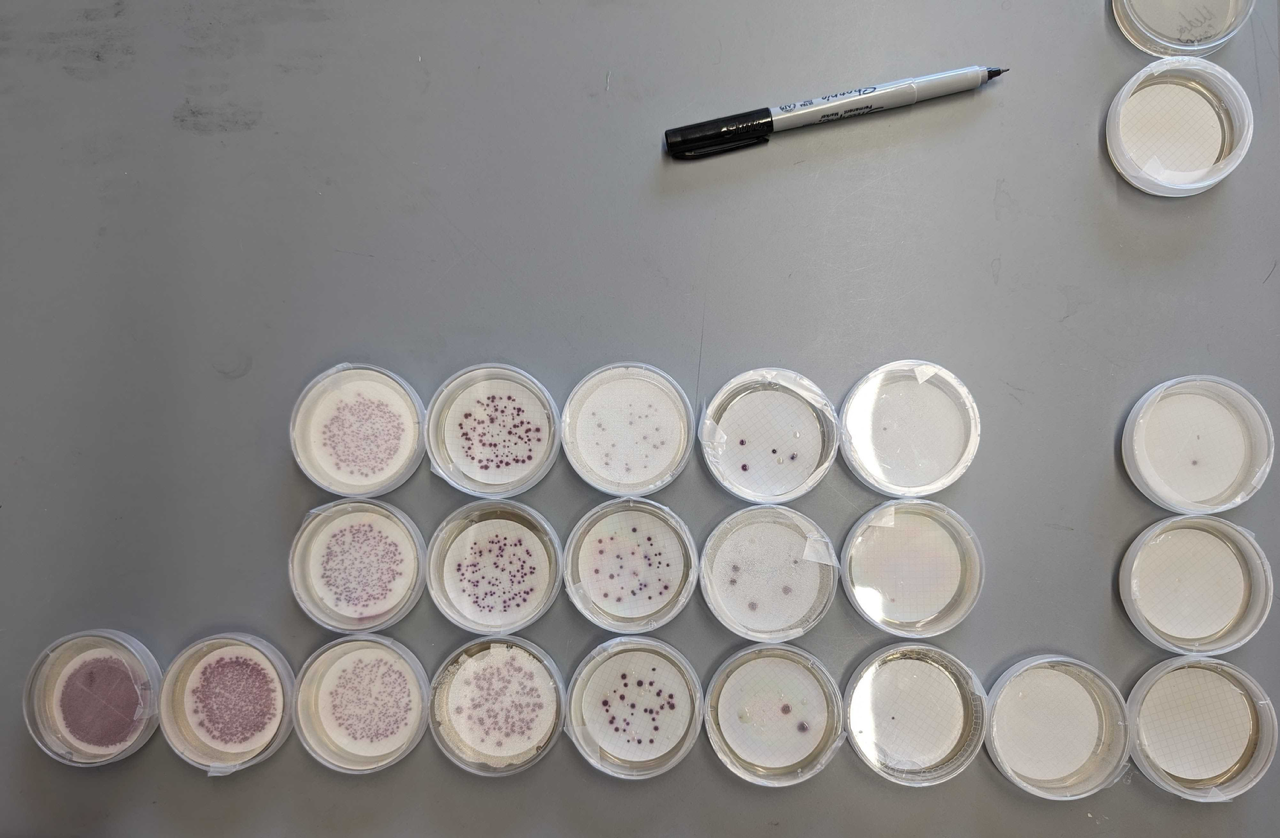
Purple colonies of E. coli grow in Petri dishes

Results from E. coli testing. Each purple colony on the plate represents E. coli from the sample. Photo: Ryan Newton

Professor Ryan Newton wears a gray sweater and glasses

Ryan Newton. Submitted photo.

Newton explained E. coli is traditionally tested by culturing the bacteria: filtering a water sample, swabbing it onto a Petri dish, warming it up, and waiting to see what grows. It’s an accurate method, but the incubation period takes at least 24 hours. The method he’s developing, on the other hand, won’t require incubation. Instead, it will make use of RNA to detect E. coli in water samples.

A quick flashback to high school biology: RNA, or ribonucleic acid, is an essential molecule that helps make proteins in living organisms, including E. coli. Like DNA, RNA features unique molecular sequences, called “signatures,” that can be used to identify organisms.

The new process Newton is developing will be able to quickly identify if E. coli signatures are present, skipping the incubation period that slows down the current process. Currently Newton’s team is fine-tuning the method in the lab before trying it out on lake water, which will present its own set of challenges. 

“Things in nature don’t always play as nicely as clean water in the lab,” he said.

But whose poop is it?

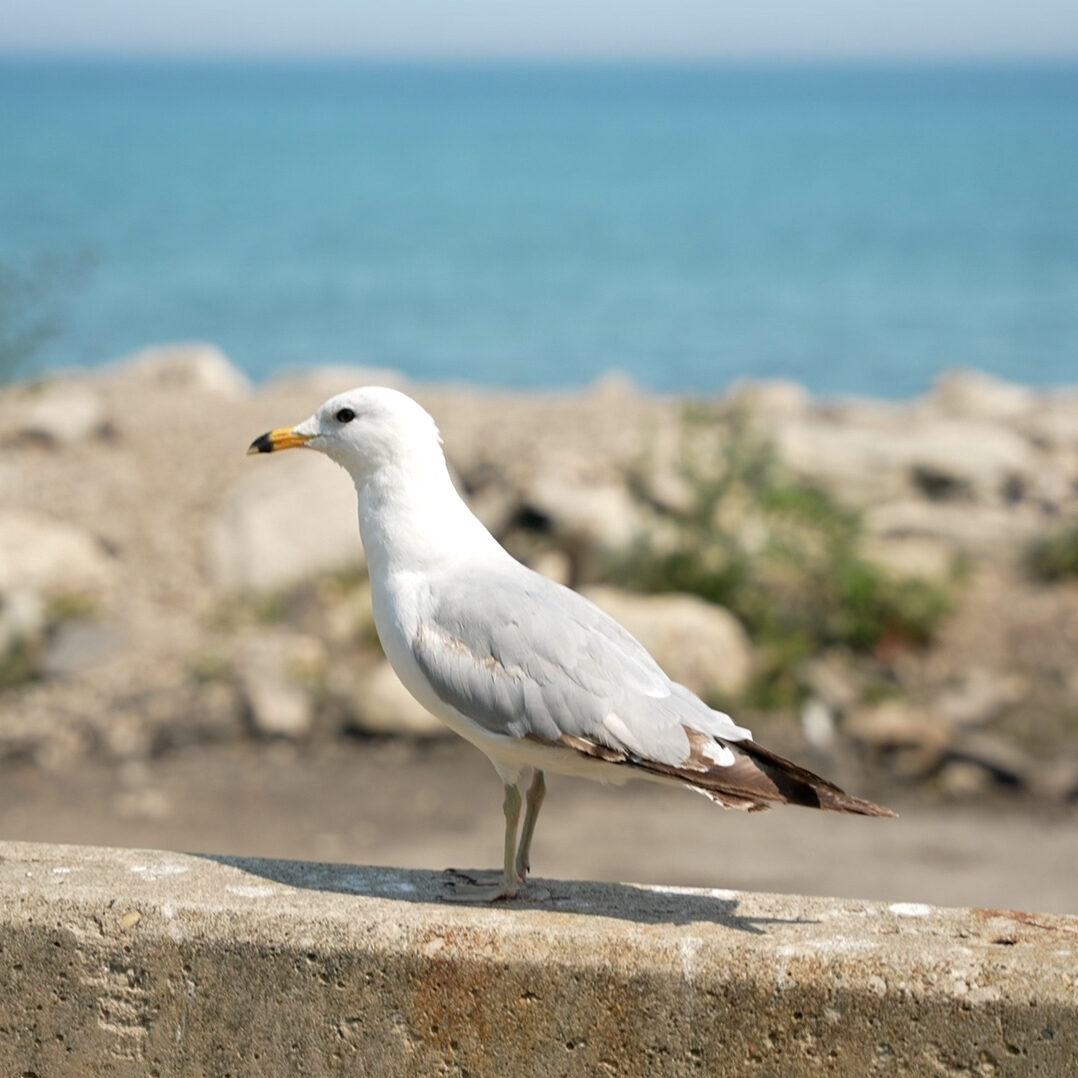
A seagull stands on a concrete ledge near Bradford Beach in Milwaukee

A seagull at Bradford Beach. Photo: Wisconsin Sea Grant

In addition to developing a faster way to detect E. coli in lake water, Newton’s team is also working on a method to identify its source. Such information will help public health officials assess the threat — human feces are generally considered riskier to human health than those of cows or dogs — but also help beach managers prevent future pollution. 

“Right now, we’re envisioning [the test] as a way to do a quick survey of your beach and understand which pollution sources are most likely,” said Newton. “If you know it’s coming from sewage, then you just have to identify where that sewage might be coming from, whether it’s a leaky pipe or infrastructure or misconnection.”

While tests to identify individual sources exist, Newton is developing a method to identify multiple sources in one water sample. He’ll use a handheld, portable DNA sequencer to identify the types of microorganisms present, which can then reveal whether the fecal contamination is coming from humans, cows, dogs, or gulls. 

It’s useful information for municipalities looking to address longstanding E. coli issues at beaches. Newton pointed to the work of colleague and Sea Grant-funded researcher Sandra McLellan, who identified seagulls and stormwater runoff as the primary sources of E. coli at Milwaukee’s popular Bradford Beach a little over 15 years ago. As a result of the study, the city implemented strategies to prevent stormwater from running across the beach during heavy rains and used dogs to scare birds off the beach. 

The changes made a difference.

“Bradford became much, much cleaner after those processes were implemented,” said Newton.

He hopes the methodologies he’s developing will give beach managers timely, accurate information about water quality on their beaches that they can use. His team already works closely with the Milwaukee Health Department. 

“We have a ton of partners that we work with, and our building [School of Freshwater Sciences] contains four nonprofits and three federal agencies. And so I walk down the hall and talk to them,” said Newton. “The work is fulfilling in that you can see actual change.”

***

The University of Wisconsin Aquatic Sciences Center administers Wisconsin Sea Grant, the Wisconsin Water Resources Institute, and Water@UW.  The center supports multidisciplinary research, education, and outreach for the protection and sustainable use of Wisconsin’s water resources. Wisconsin Sea Grant is one of 34 Sea Grant programs supported by the National Oceanic and Atmospheric Administration in coastal and Great Lakes states that encourage the wise stewardship of marine resources through research, education, outreach, and technology transfer.


The post Developing a faster way to detect E. coli and identify its source at public beaches first appeared on Wisconsin Sea Grant.

Original Article

News Releases | Wisconsin Sea Grant

News Releases | Wisconsin Sea Grant

https://www.seagrant.wisc.edu/news/developing-a-faster-way-to-detect-ecoli/

Jenna Mertz

The Wisconsin Department of Natural Resources has issued an Air Quality Advisory for the following counties: Brown, Calumet, Door, Florence, Forest, Kewaunee, Langlade, Lincoln, Manitowoc, Marathon, Marinette, Menominee, Oconto, Oneida, Outagamie, Portage, Shawano, Vilas, Waupaca, Waushara, Winnebago, Wood. WHAT...The PM2.5 AQI is expected to reach the Unhealthy for Sensitive Groups (USG) to Unhealthy level. WHERE...Statewide WHEN...Now through 12:00 PM CDT Monday July 14th Precautionary/Preparedness Actions: Sensitive groups: Consider rescheduling or moving all activities inside. Go inside if you have symptoms. People with asthma: Follow your asthma action plan and keep quick-relief medicine handy. People with heart disease: Symptoms such as palpitations, shortness of breath, or unusual fatigue may indicate a serious problem. If you have any of these, contact your health care provider. Everyone else: Keep outdoor activities shorter and less intense. Go inside if you have symptoms. Additional Details: Canadian wildfire smoke will continue to impact all of Wisconsin into Monday morning. The heaviest smoke is anticipated for locations farther north, with periods of Unhealthy NowCast AQI possible. USG AQI will be more likely for central and southeast Wisconsin. The lowest concentrations are expected across southwest Wisconsin, where Moderate to USG AQI is more likely. For more information on current air quality, please see: https://airquality.wi.gov

Original Article

Current watches, warnings, and advisories for Brown County (WIC009) WI

Current watches, warnings, and advisories for Brown County (WIC009) WI

https://api.weather.gov/alerts/urn:oid:2.49.0.1.840.0.4f56000a10f4f1cba6a6415cc366ec839846479c.001.1.cap

NWS

The Wisconsin Department of Natural Resources has issued an Air Quality Advisory for the following counties: Brown, Calumet, Door, Florence, Forest, Kewaunee, Langlade, Lincoln, Manitowoc, Marathon, Marinette, Menominee, Oconto, Oneida, Outagamie, Portage, Shawano, Vilas, Waupaca, Waushara, Winnebago, Wood. WHAT...The PM2.5 AQI is expected to reach the Unhealthy for Sensitive Groups (USG) to Unhealthy level. WHERE...Statewide WHEN...Now through 12:00 PM CDT Monday July 14th Precautionary/Preparedness Actions: Sensitive groups: Consider rescheduling or moving all activities inside. Go inside if you have symptoms. People with asthma: Follow your asthma action plan and keep quick-relief medicine handy. People with heart disease: Symptoms such as palpitations, shortness of breath, or unusual fatigue may indicate a serious problem. If you have any of these, contact your health care provider. Everyone else: Keep outdoor activities shorter and less intense. Go inside if you have symptoms. Additional Details: Canadian wildfire smoke will impact all of Wisconsin throughout the weekend. Initial impacts will continue to shift east, reaching southeast Wisconsin late this evening. The heaviest smoke is anticipated for locations farther north, with periods of Very Unhealthy NowCast AQI possible. USG to Unhealthy AQI will be more likely for central and southeast Wisconsin. The lowest concentrations are expected across southwest Wisconsin, where Moderate to USG AQI is more likely. By Sunday, PM2.5 concentrations will be generally lower. However, USG to Unhealthy AQI will remain possible statewide, with higher concentrations more likely to the north. For more information on current air quality, please see: https://airquality.wi.gov

Original Article

Current watches, warnings, and advisories for Brown County (WIC009) WI

Current watches, warnings, and advisories for Brown County (WIC009) WI

https://api.weather.gov/alerts/urn:oid:2.49.0.1.840.0.36254c36806ca97058f08a177721452988704a39.001.1.cap

NWS

Summary

Title: Programs Assistant

Status: Full-time, Exempt  

The Programs Assistant supports the Alliance for the Great Lakes’ Programs Team in achieving the goals of our strategic plan. The Programs Team leads research, policy, partnership building, and advocacy at the local, state, and federal levels to promote clean water and healthy communities. Our focus is on issues including flooding and sewer impacts on communities, water use, invasive species, agriculture, and plastic pollution.

The Assistant role involves administrative coordination, event and meeting support, communications assistance, and file/records management. The ideal candidate is detail-oriented, highly organized, and passionate about their work and the mission of our organization. This position reports to the Vice President for Programs and works closely with the Program Directors (including the Directors of Water & Ecosystems, Water Infrastructure, Local Partnerships, Federal Relations, and Media) on meeting logistics and scheduling, document creation and management and travel support, as well as assisting with grant and lobbying reporting, expense management, and other duties that may emerge from our work. The Programs Assistant performs a wide variety of functions independently, exercising confidential discretion and sound judgment in the performance of these duties. The Assistant will collaborate with Operations staff to learn about platforms and how the Alliance utilizes them, as well as to share information, streamline processes, and identify opportunities for improvement. Additionally, this person will assist with projects, including by providing support on organizational initiatives, as assigned by their supervisor and Program Directors.

Representative goals that this position will support, in coordination with the Operations Team, include:

  • By the end of 2025, the Assistant will have efficient administrative systems and processes in place to schedule, prepare for, and execute virtual and in-person meetings involving multiple participants.
  • By early-2026, the Assistant will develop and prepare the Programs Team to adopt, utilize, and maintain a unified file management system that enables easy and consistent access to files across offices.
  • By mid-2026, the Assistant will draft a set of standard operating procedures to document how administrative tasks specific to the Programs Team are performed.

A typical week:

The Assistant plays a key support role in the day-to-day coordination and administration of programs. The weekly routine blends administrative tasks, communication, and event support to ensure successful program delivery.

The week might start with reviewing the Programs Team calendars, scheduling meetings and events on behalf of Programs Team members, organizing priorities, and responding to any outstanding emails. The Assistant may gather updates from recent program activities to share with Communications or the Grants Manager and update internal tracking systems or spreadsheets. They’ll work with the Programs Team to prepare and/or organize agendas, presentations and other meeting materials. They may also attend internal and external meetings to take meeting notes/minutes, organize action items, and help distribute follow-up communications. If there’s an upcoming event, they might spend time clarifying in-person or virtual event needs, formatting or printing materials, assembling supplies, checking technical setups, and confirming final details with presenters or facilitators. As the week winds down, the Assistant makes time for wrap up and reflection. They may meet with their supervisor and Directors to debrief, identify improvements, and plan for the following week.

Throughout the week, the Assistant balances multiple projects, maintains accurate records and filing systems, supports communication among the Programs Team and with other offices, and ensures partners receive timely, helpful information.

Responsibilities


Event and Meeting Coordination:

Organize in-person and virtual logistics for workshops, conferences, and other events, including: prepare agendas based on input/direction from Programs Team staff, send invites to attendees and track responses, reserve space, order food or supplies, take and transcribe meeting minutes, monitor action and follow-up items, prepare materials, and keep permanent records as appropriate.

Communication:

  • Maintain general knowledge of activities and projects of the Programs Team.
  • As directed by supervisor and Directors, draft and distribute basic program materials, track email communication, and accurately respond to routine inquiries from staff and partners.
  • Periodically review website content and identify any necessary updates for the Programs Team to consider.
  • Support collaboration and information sharing across the Programs Team and with other offices.

General Administrative Support:

  • Serve as a liaison between Programs Team and other staff for purposes of contracts, agreements, grants management, and other official documents.
  • Arrange and schedule travel logistics for Programs Team.
  • Prepare expense reports and assist with time entry and approvals.
  • Execute meeting and event logistics, with guidance from and in coordination with the Office Manager and/or Executive Assistant as needed.
  • Compile, clean and prepare basic data sets for analysis, as directed by Programs Team.
  • Proofread documents as directed by Programs Team.
  • Manage and maintain the Programs Team calendar for internal meetings/timelines, and ensure that timely information is shared with the right people.
  • Assist the Programs Team to develop, adopt, utilize, and maintain a unified electronic file management system.
  • Track and support compliance with registration and reporting requirements for lobbying, including managing calendar of reporting requirements and submitting reports based on timekeeping by Programs Team staff. Flag any new or changing lobbying needs for supervisor.
  • Assist Programs Team to create and regularly update contact lists.
  • Provide basic education and technical support on the use of Microsoft Office products.
  • Provide additional administrative support as required.

Additional Duties

As assigned or needed.

Work Relationships

The Programs Assistant will work closely with the Programs Team and coordinate with the Operations Team and the Executive Assistant to carry out job duties.

Supervisory Responsibilities

None

Physical Demands/Work Environment

Occasional evening or weekend work may be required for events or program deadlines. Some travel may be required (e.g., for conferences or partner meetings).

Knowledge/Skills

  • Minimum of 3 years of experience with essential administrative support to an organizational team, including scheduling meetings, managing calendars, and preparing correspondence.
  • Ability to compose, edit and organize documents and presentations using professional, clear and succinct language and structure.   
  • Exceptional organizational and time management skills with a proven ability to prioritize tasks and meet deadlines. Strong problem-solving and critical thinking abilities. 
  • Demonstrated ability to work both independently and collaboratively as part of a team with a positive, solution-focused, can-do attitude. 
  • Experienced in developing systems to build efficiency in processes and quality of deliverables.
  • Willingness and desire to provide customized service for individual program staff based on work style and needs.  
  • Independent worker capable of making decisions on their own; self-motivated, resourceful, and flexible.  
  • Proficiency in Microsoft Office products, particularly Word, Excel, Outlook and PowerPoint.  Experience with SharePoint and Asana is helpful, but not required; however, developing knowledge of these programs will be essential.
  • Ability to learn new software applications quickly.
  • Understands and upholds Alliance for the Great Lakes values of community, relationships, courage, integrity, and optimism. 
  • Demonstrated alignment with our external and internal operating principles of justice, equity, diversity, and inclusion.
  • The selected candidate must be able to pass a background check. 

Job Parameters

  • This position is full-time and consistent with Alliance employment policy. The Alliance has defined salary ranges that are evaluated annually, and it is customary for candidates to join at the lower half of the range to leave room for learning and development in the role. It is uncommon for starting salaries to fall above the mid-point. The salary range for this position begins at $50,000 and we negotiate salaries with final candidates based on their experience in similar roles and expertise related to the qualifications.
  • Excellent benefits, including medical, dental, short- and long-term disability, life insurance, FSA, 11 paid holidays plus the business days between 12/26 and 12/30 (staff who must work on any paid holidays may take those holidays at another time subject to the employee handbook), 3 weeks’ annual vacation to start + PTO, and Fidelity 401(k) with employer match of up to 6% of salary, eligible after 30 days.
  • This position can be performed remotely from anywhere within the Great Lakes region; however, there is a preference for candidates with the flexibility to work from Alliance’s Chicago office as needed.

Application Process

Please e-mail a cover letter, resume, references, and writing or work sample that demonstrates relevant qualifications to hr@greatlakes.org. Include the job title in the subject line.

Applications will be accepted and reviewed on a rolling basis starting on [DATE] and until the position is filled. Materials should be compatible with Microsoft Word or Adobe Acrobat. Applicants will receive confirmation of receipt of their materials, further guidance, and updates about the hiring process by e-mail, with interviews provided for finalists. No phone inquiries, please.

About the Alliance for the Great Lakes

The Alliance for the Great Lakes is an Equal Opportunity Employer. The search process will reinforce the Alliance’s belief that achieving diversity requires an enduring commitment to inclusion that must find full expression in our organizational culture, values, norms, and behaviors.

Our vision is a thriving Great Lakes and healthy water that all life can rely on, today and far into the future. We aspire to be a voice for the lakes, and to support the voices of the communities that depend on the lakes and their waters.

The mission of the Alliance for the Great Lakes is to protect, conserve and restore the Great Lakes ensuring healthy water in the lakes and in our communities for all generations of people and wildlife. We advance our mission as advocates for policies that support the lakes and communities, by building the research, analysis and partnerships that motivate action, and by educating and uniting people as a voice for the Great Lakes.  

To achieve our vision and mission, everyone in our organization will live our values of Community, Relationships, Courage, Integrity and Optimism, and weave the principles of Justice, Equity, Diversity and Inclusion into all our work. Each value and principle is backed by measurable goals and expectations for our Board of Directors and staff. 

 For more information about the Alliance’s programs and work, please visit us online at www.greatlakes.org.

The post Programs Assistant appeared first on Alliance for the Great Lakes.

Original Article

News - Alliance for the Great Lakes

News - Alliance for the Great Lakes

https://greatlakes.org/2025/07/programs-assistant/

Michelle Farley

The Wisconsin Department of Natural Resources has issued an Air Quality Advisory for the following counties: Adams, Ashland, Barron, Bayfield, Brown, Buffalo, Burnett, Calumet, Chippewa, Clark, Columbia, Crawford, Dane, Dodge, Door, Douglas, Dunn, Eau Claire, Florence, Fond du Lac, Forest, Grant, Green, Green Lake, Iowa, Iron, Jackson, Jefferson, Juneau, Kenosha, Kewaunee, La Crosse, Lafayette, Langlade, Lincoln, Manitowoc, Marathon, Marinette, Marquette, Menominee, Milwaukee, Monroe, Oconto, Oneida, Outagamie, Ozaukee, Pepin, Pierce, Polk, Portage, Price, Racine, Richland, Rock, Rusk, Sauk, Sawyer, Shawano, Sheboygan, St. Croix, Taylor, Trempealeau, Vernon, Vilas, Walworth, Washburn, Washington, Waukesha, Waupaca, Waushara, Winnebago, Wood. WHAT...The PM2.5 AQI is expected to reach the Unhealthy for Sensitive Groups (USG) to Unhealthy level. WHERE...Statewide WHEN...Now through 12:00 PM CDT Monday July 14th Precautionary/Preparedness Actions: Sensitive groups: Consider rescheduling or moving all activities inside. Go inside if you have symptoms. People with asthma: Follow your asthma action plan and keep quick-relief medicine handy. People with heart disease: Symptoms such as palpitations, shortness of breath, or unusual fatigue may indicate a serious problem. If you have any of these, contact your health care provider. Everyone else: Keep outdoor activities shorter and less intense. Go inside if you have symptoms. Additional Details: Canadian wildfire smoke will impact all of Wisconsin throughout the weekend. Initial impacts are expected to reach central Wisconsin by early this afternoon, and southeastern Wisconsin by late evening. The heaviest smoke is anticipated for locations farther north, with periods of Very Unhealthy NowCast AQI possible. USG to Unhealthy AQI will be more likely for central and southeastern Wisconsin. The lowest concentrations are expected across southwestern Wisconsin, where Moderate to USG AQI is more likely. By Sunday, PM2.5 concentrations will be generally lower. However, USG to Unhealthy AQI will remain possible statewide, with higher concentrations more likely to the north. For more information on current air quality, please see: https://airquality.wi.gov

Original Article

Current watches, warnings, and advisories for Brown County (WIC009) WI

Current watches, warnings, and advisories for Brown County (WIC009) WI

https://api.weather.gov/alerts/urn:oid:2.49.0.1.840.0.ae5af941473709ea27a8e7f65906e1b0ad030a7b.001.1.cap

NWS

The Wisconsin Department of Natural Resources has issued an Air Quality Advisory for the following counties: Brown, Calumet, Door, Florence, Forest, Kewaunee, Langlade, Lincoln, Manitowoc, Marathon, Marinette, Menominee, Oconto, Oneida, Outagamie, Portage, Shawano, Vilas, Waupaca, Waushara, Winnebago, Wood. WHAT...The PM2.5 AQI is expected to reach the Unhealthy for Sensitive Groups (USG) to Unhealthy level. WHERE...Statewide WHEN...12:00 AM CDT Saturday July 12th through 12:00 PM CDT Monday July 14th Precautionary/Preparedness Actions: Sensitive groups: Consider rescheduling or moving all activities inside. Go inside if you have symptoms. People with asthma: Follow your asthma action plan and keep quick-relief medicine handy. People with heart disease: Symptoms such as palpitations, shortness of breath, or unusual fatigue may indicate a serious problem. If you have any of these, contact your health care provider. Everyone else: Keep outdoor activities shorter and less intense. Go inside if you have symptoms. Additional Details: Canadian wildfire smoke will impact all of Wisconsin throughout the weekend. Initial impacts are expected for northwestern counties starting as early as midnight tonight, reaching central Wisconsin by early Saturday afternoon, and southeastern Wisconsin by late Saturday. The heaviest smoke is anticipated for locations farther north, with periods of Very Unhealthy NowCast AQI possible. USG to Unhealthy AQI will be more likely for central and southeastern Wisconsin. The lowest concentrations are expected across southwestern Wisconsin, where Moderate to USG AQI is more likely. By Sunday, PM2.5 concentrations will be generally lower. However, USG to Unhealthy AQI will remain possible statewide, with higher concentrations more likely to the north. For more information on current air quality, please see: https://airquality.wi.gov

Original Article

Current watches, warnings, and advisories for Brown County (WIC009) WI

Current watches, warnings, and advisories for Brown County (WIC009) WI

https://api.weather.gov/alerts/urn:oid:2.49.0.1.840.0.faa7347ea4053c720a8ba7a1df270b1036761be4.001.1.cap

NWS

Disaster 101: Your guide to extreme weather preparation, relief and recovery

No matter where you live, a disaster can hit and change your life. This comprehensive toolkit — about everything from food access to FEMA to housing — can help you stay ready, informed, and supported.

Read Now at Great Lakes Now.

Original Article

Great Lakes Now

Great Lakes Now

https://www.greatlakesnow.org/2025/07/disaster-101-your-guide-to-extreme-weather-preparation-relief-and-recovery/

Grist

How climate change may be affecting tornadoes

By Amal Ahmed

This story was originally published by Grist. Sign up for Grist’s weekly newsletter here.

This is part of the Disaster 101 toolkit, a comprehensive guide to extreme weather preparation, response, and recovery.

Extreme weather seems to make the headlines almost every week, as disasters increasingly strike out of season, break records, and hit places they never have before.

Read Now at Great Lakes Now.

Original Article

Great Lakes Now

Great Lakes Now

https://www.greatlakesnow.org/2025/07/how-climate-change-may-be-affecting-tornadoes/

Grist

How climate change is worsening extreme heat

By Amal Ahmed

This story was originally published by Grist. Sign up for Grist’s weekly newsletter here.

This is part of the Disaster 101 toolkit, a comprehensive guide to extreme weather preparation, response, and recovery.

Extreme weather seems to make the headlines almost every week, as disasters increasingly strike out of season, break records, and hit places they never have before.

Read Now at Great Lakes Now.

Original Article

Great Lakes Now

Great Lakes Now

https://www.greatlakesnow.org/2025/07/how-climate-change-is-worsening-extreme-heat/

Grist

How climate change is worsening flooding and heavy rainfall

By Amal Ahmed

This story was originally published by Grist. Sign up for Grist’s weekly newsletter here.

This is part of the Disaster 101 toolkit, a comprehensive guide to extreme weather preparation, response, and recovery.

Extreme weather seems to make the headlines almost every week, as disasters increasingly strike out of season, break records, and hit places they never have before.

Read Now at Great Lakes Now.

Original Article

Great Lakes Now

Great Lakes Now

https://www.greatlakesnow.org/2025/07/how-climate-change-is-worsening-flooding-and-heavy-rainfall/

Grist

How climate change is supercharging wildfires

By Amal Ahmed

This story was originally published by Grist. Sign up for Grist’s weekly newsletter here.

This is part of the Disaster 101 toolkit, a comprehensive guide to extreme weather preparation, response, and recovery.

Extreme weather seems to make the headlines almost every week, as disasters increasingly strike out of season, break records, and hit places they never have before.

Read Now at Great Lakes Now.

Original Article

Great Lakes Now

Great Lakes Now

https://www.greatlakesnow.org/2025/07/how-climate-change-is-supercharging-wildfires/

Grist

Great Lakes piping plovers hit a record count of 85 nesting pairs this year, which is four more pairs than in the last two years. Since being put on the Endangered Species Act list in 1984, the plovers are recovering, but only with the protection and assistance of a significant coalition of people and organizations. Read the full story by Michigan Public.

Original Article

Great Lakes Commission

Great Lakes Commission

https://www.glc.org/dailynews/20250711-plover-record

James Polidori

Ohio’s two-year operating budget was officially signed into law by Governor DeWine, solidifying a massive cut to DeWine’s own H2Ohio program, a statewide water quality initiative. The cut has resulted in worries about environmental causes across Ohio, particularly those involving Lake Erie. Read the full story by the Akron Beacon Journal.

Original Article

Great Lakes Commission

Great Lakes Commission

https://www.glc.org/dailynews/20250711-funding-cuts

James Polidori

The advisory council for the Lake Ontario National Marine Sanctuary will meet later this month amid the specter of massive budget and staff cuts to the National Oceanic and Atmospheric Administration, which is charged with managing the sanctuary. Read the full story by Oswego County News Now.

Original Article

Great Lakes Commission

Great Lakes Commission

https://www.glc.org/dailynews/20250711-marine-sanctuary-council-meeting

James Polidori

The Great Lakes whitefish population is in steep decline, particularly in the main waters of lakes Michigan and Huron. Invasive quagga and zebra mussels are largely to blame for the decline, as they have gobbled up the vast majority of the small creatures such as shrimp-like Diporeia that were critical to the Great Lakes food web. Read the full story by The Detroit News.

Original Article

Great Lakes Commission

Great Lakes Commission

https://www.glc.org/dailynews/20250711-whitefish-decline

James Polidori

Several Great Lakes advocacy groups have called for a second Great Lakes icebreaker which could help open up commerce on the Great Lakes during the winter. The funding was briefly included in the U.S. House-passed version of President Trump’s One Big Beautiful Bill – a sprawling reconciliation package – but appears to have been removed from the Senate’s version and what was ultimately signed by Trump. Read the full story by MLive.

Original Article

Great Lakes Commission

Great Lakes Commission

https://www.glc.org/dailynews/20250711-icebreaker-funding

James Polidori

The Robinson Bay, a historic tugboat, was donated by the U.S. Great Lakes Saint Lawrence Seaway Development Corporation to the Great Lakes Maritime Academy in Traverse City, Michigan, providing cadets with new training opportunities. Read the full story by WPBN-TV – Traverse City, MI.

Original Article

Great Lakes Commission

Great Lakes Commission

https://www.glc.org/dailynews/20250711-tugboat-donation

James Polidori