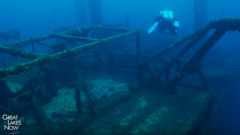
Scientists to explore mysterious Lake Huron sinkholes
Great Lakes Echo
http://greatlakesecho.org/2020/05/29/scientists-explore-mysterious-lake-huron-sinkholes/
Great Lakes Echo
http://greatlakesecho.org/2020/05/29/scientists-explore-mysterious-lake-huron-sinkholes/
April 29, 2020
By Jennifer A. Smith
Now in its fifth year, the annual Water@UW-Madison symposium has become a vital event that gives attendees a chance to hear about a broad swath of cutting-edge water research and outreach. With many short sessions, it’s one of the fastest and most informative ways to learn about the state of Wisconsin’s water and what’s being done to protect this critical resource.

This year, like most other conferences in the era of COVID-19, Water@UW-Madison is going virtual. The online event will take place Tuesday, May 5, from 9:30 a.m. to 12:30 p.m. This year’s theme is “Working Together to Address Water Challenges: UW-Madison and State Government.”
Attendees can participate via Zoom or, if they prefer, by watching the Water@UW-Madison YouTube channel. One need not be affiliated with the university to participate. Currently, over 250 people have registered for the Zoom sessions.
Said David Koser, a project assistant at the UW-Madison Aquatic Sciences Center (home to Wisconsin Sea Grant and the Water Resources Institute), “The symposium is going to be informative and a lot of fun. UW-Madison’s partnerships and collaborations with state government are key to the health and well-being of the people of Wisconsin. Our speakers will have great material to share, and we hope that this event will show the strength of our existing relationships as well as help build new ones.” Koser helps coordinate this signature event.
Numerous Aquatic Sciences Center staff are involved in this year’s event. Director Jim Hurley and Associate Director Jen Hauxwell will both present sessions, and Hauxwell is chair-elect for the Water@UW-Madison group. During intermissions, virtual attendees will see water-related artwork chosen by Anne Moser, senior special librarian for the Wisconsin Water Library.
UW-Madison Chancellor Rebecca Blank will welcome attendees, and Lt. Governor Mandela Barnes has provided a video introduction. There will be an in-depth presentation by Rep. Todd Novak and Rep. Katrina Shankland of the Wisconsin State Assembly. These two legislators lead the Speaker’s Water Quality Task Force.
For complete information, including an agenda, visit https://water.wisc.edu/2020springsymposium/.
News Release – WRI
https://www.wri.wisc.edu/news/asc-plays-key-role-in-water-symposium/
Now in its fifth year, the annual Water@UW-Madison symposium has become a vital event that gives attendees a chance to hear about a broad swath of cutting-edge water research and outreach. With many short sessions, it’s one of the fastest and most informative ways to learn about the state of Wisconsin’s water and what’s being done to protect this critical resource.

The online symposium will be held Tuesday, May 5. (Photo illustration: Water@UW-Madison)
This year, like most other conferences in the era of COVID-19, Water@UW-Madison is going virtual. The online event will take place Tuesday, May 5, from 9:30 a.m. to 12:30 p.m. This year’s theme is “Working Together to Address Water Challenges: UW-Madison and State Government.”
Attendees can participate via Zoom or, if they prefer, by watching the Water@UW-Madison YouTube channel. One need not be affiliated with the university to participate. Currently, over 250 people have registered for the Zoom sessions.
Said David Koser, a project assistant at the UW-Madison Aquatic Sciences Center (home to Wisconsin Sea Grant and the Water Resources Institute), “The symposium is going to be informative and a lot of fun. UW-Madison’s partnerships and collaborations with state government are key to the health and well-being of the people of Wisconsin. Our speakers will have great material to share, and we hope that this event will show the strength of our existing relationships as well as help build new ones.” Koser helps coordinate this signature event.
Numerous Aquatic Sciences Center staff are involved in this year’s event. Director Jim Hurley and Associate Director Jen Hauxwell will both present sessions, and Hauxwell is chair-elect for the Water@UW-Madison group. During intermissions, virtual attendees will see water-related artwork chosen by Anne Moser, senior special librarian for the Wisconsin Water Library.
UW-Madison Chancellor Rebecca Blank will welcome attendees, and Lt. Governor Mandela Barnes has provided a video introduction. There will be an in-depth presentation by Rep. Todd Novak and Rep. Katrina Shankland of the Wisconsin State Assembly. These two legislators lead the Speaker’s Water Quality Task Force.
For complete information, including an agenda, visit https://water.wisc.edu/2020springsymposium/.
News Releases – Wisconsin Sea Grant
https://www.seagrant.wisc.edu/news/aquatic-sciences-center-plays-key-role-in-wateruw-madison-symposium/

By Gillian Flaccus, Associated Press Writer
PORTLAND, Ore. (AP) — Just weeks ago, cities and even states across the U.S. were busy banning straws, limiting takeout containers and mandating that shoppers bring reusable bags or pay a small fee as the movement to eliminate single-use plastics took hold in mainstream America.
Great Lakes Now
https://www.greatlakesnow.org/2020/04/ap-covid-19-plastic-bag-bans-plastic-reduction/
Great Lakes Echo
http://greatlakesecho.org/2020/04/08/eyes-in-the-sky-detect-great-lakes-harmful-algal-blooms/

INDIANAPOLIS (AP) — Drinking water fountains and taps at public and private schools in Indiana will be required to be tested for lead contamination by 2023 under a new state law.
The law requires schools’ drinking water equipment to be tested by Jan. 1, 2023, and take action if results show lead at higher than 15 parts per billion.
Great Lakes Now
https://www.greatlakesnow.org/2020/03/ap-new-law-indiana-schools-test-lead-contamination/

By Kat Stafford, Associated Press Writer
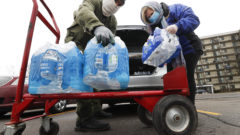
DETROIT (AP) — The advice is simple and universal: Washing your hands with soap and water is one of the most effective ways to stop the spread of the coronavirus. But for millions of people across the country, that’s not simple at all: They lack running water in their houses due to service shutoffs prompted by overdue bills.
Great Lakes Now
https://www.greatlakesnow.org/2020/03/ap-michigan-water-shutoffs-coronavirus-outbreak/

By Amy Forliti, Associated Press Writer
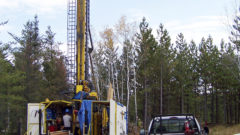
ST. PAUL, Minn. (AP) — The Minnesota Court of Appeals sent an air-emissions permit for the PolyMet copper-nickel mine back to state regulators for further review on Monday, giving another victory to environmental groups who oppose the project.
The appeals court found that the Minnesota Pollution Control Agency did not adequately evaluate whether the air permit requested by PolyMet was a “sham permit” — meaning one that didn’t accurately reflect the size and scope of PolyMet’s proposed mine.
Great Lakes Now
https://www.greatlakesnow.org/2020/03/ap-minnesota-court-appeals-polymet-permit-mpca/

This article was republished here with permission from Great Lakes Echo.
By Hunter Hicks, Great Lakes Now
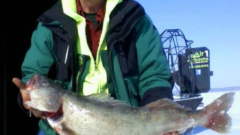
The lack of ice across the Great Lakes region has business booming for those in the ice fishing industry fortunate enough to have safe conditions, but has left others high and dry.
Great Lakes Now
https://www.greatlakesnow.org/2020/03/warm-weather-ice-fishing-industry/

DULUTH, Minn. (AP) — Researchers in Minnesota are trying to find an alternative to road salt in an effort to protect the state’s water bodies from contamination.
The Minneapolis Star Tribune reported Saturday that road salt is the top source of chloride in state waters. Scientists have been ramping up warnings that rising chloride levels could harm aquatic life and turn tap water salty.
Great Lakes Now
https://www.greatlakesnow.org/2020/03/ap-scientists-testing-alternative-road-salt/

With the COVID-19 global pandemic continuing to spread throughout the U.S., Centers for Disease Control and Prevention guidelines have stressed the importance of staying hydrated and rigorously washing hands as a preventative health effort.
But for thousands of residents in Detroit, Flint, Benton Harbor, Hamtramck and other cities around southeast Michigan, following these guidelines is difficult when your water is shut off.
Great Lakes Now
https://www.greatlakesnow.org/2020/03/water-rights-advocates-stations-michigan-governor-mayor/

MINNEAPOLIS (AP) — A federal judge on Tuesday rejected a challenge by environmental groups against the proposed Twin Metals copper-nickel mine in northeastern Minnesota, saying the Interior Department had the authority to reverse itself and renew the project’s federal mineral rights leases.
The Obama administration tried to kill Twin Metals by rejecting the company’s application to renew its leases, citing the risk of acid mine drainage to the nearby Boundary Waters Canoe Area Wilderness.
Great Lakes Now
https://www.greatlakesnow.org/2020/03/ap-judge-minnesota-twin-metals-mine-lease-dispute/
Great Lakes Echo
http://greatlakesecho.org/2020/03/18/rising-waters-threaten-wells-drinking-water-systems/
Great Lakes Echo
http://greatlakesecho.org/2020/03/13/wisconsin-tribe-recognizes-menominee-river-rights/

By Brett Chase, Better Government Association, through the Institute for Nonprofit News network
More than two dozen Chicago young activists Friday called on Mayor Lori Lightfoot to reinstate a city department of environment to combat heavy pollution in black and Latino neighborhoods and increase efforts to fight climate change.
Great Lakes Now
https://www.greatlakesnow.org/2020/03/student-protesters-chicago-lightfoot-campaign-environmental-protection/

By Corey Williams, Associated Press Writer
DETROIT (AP) — Thousands of Detroit residents who have had their water service shut off due to nonpayment of bills can have it restored under a plan that aims to allow them to wash their hands at home as a way to prevent the spread of the new coronavirus.
Great Lakes Now
https://www.greatlakesnow.org/2020/03/ap-detroit-restore-water-service-coronavirus/

By Ed White, Associated Press Writer
DETROIT (AP) — Lawyers urged the Michigan Supreme Court on Wednesday to clear the way for Flint residents to sue state officials over lead-contaminated water.
The case at the state’s highest court is one of many in state and federal courts over the scandal.
Great Lakes Now
https://www.greatlakesnow.org/2020/03/ap-michigan-supreme-court-flint-water-liability/

CHICAGO (AP) — Environmental groups in Illinois and Indiana have filed a federal complaint in hopes of forcing the U.S. Fish and Wildlife Service to complete a review that could designate lake sturgeon as a federally endangered species.
Lake sturgeon are a prehistoric fish that were once plentiful in the Great Lakes but have been reduced to extremely low levels by pollution, overfishing and habitat destruction.
Great Lakes Now
https://www.greatlakesnow.org/2020/03/ap-environmental-groups-sue-lake-sturgeon-status/
Great Lakes Echo
http://feedproxy.google.com/~r/GreatLakesEcho/~3/0poMAYcy5qI/
Great Lakes Echo
http://feedproxy.google.com/~r/GreatLakesEcho/~3/jVxP9XVgoqM/
Earth Day is April 22nd and is celebrating its 45th anniversary this year. This year we want to celebrate the month of April by showcasing our commitment to protecting the environmental health of our local communities, Wisconsin and the planet through environmentally based education, research and outreach at UW—Green Bay, the Original EcoU!
The Northeast Wisconsin Groundwater Management Area (GMA) consists of all of Brown County, as well as parts of Outagamie and Calumet Counties. The GMA has an area of around 700 square miles, lies completely within the Great Lakes drainage basin, and is home to more than 350,000 people. Millions of gallons are pumped from the confined deep aquifer in northeastern Wisconsin each day for industrial, commercial, municipal, and residential uses. Some cities now use Lake Michigan surface water for their water supply. Green Bay switched to surface water in 1957 followed by eight surrounding municipalities in 2007. These communities still retain many of their high capacity wells to serve as alternative sources in case of emergencies. This switch to surface water has caused a significant rise in groundwater level in the deep aquifer.

Groundwater in sandstone in the deep aquifer is isolated or confined in the GMA by 3 different overlying stratigraphic rock layers. Some of these rock layers contain groundwater contaminated by bacteria and nitrate or contain faults or fractures that may permit contaminated water to flow into the deeper aquifer.

UW–Green Bay Graduate student Amanda Hamby is working with Associate Professor John Luczaj from the Department of Natural & Applied Sciences to answer the following questions about water in this deep aquifer:
They are collecting water samples from a number of wells in the GMA to assess for alkalinity and a number of ions in the water. Samples will be radio-carbon dated to get an idea of how old the water in the deep aquifer actually is. Amanda is also collecting stable isotopes of oxygen and deuterium that can be used to follow water movement through the atmosphere, surface waters, and into the aquifer. Amanda is using the isotope data she collected in conjunction with GIS mapping to create a natural isotope landscape or “isoscape” of the Northeast GMA deep aquifer, one of very few such maps of deep aquifers.
The results of this project will increase our understanding of how local faults affect groundwater chemistry and water quality in the northeastern Wisconsin. This project will also aid in our understanding of how groundwater level increase in the confined deep aquifer has affected water quality in the Northeast GMA.
Amanda’s research is supported by a grant from the NAS Heirloom Plant Fund at UW–Green Bay.
Biodiversity
https://blog.uwgb.edu/biodiversity/2015/04/understanding-deep-water/