This week, growers across the Lake Erie grape belt were abruptly informed in a letter that one of their processors, “Refresco,” will no longer buy their grapes effective immediately. According to a representative on the Pennsylvania Farm Bureau board of directors, the agreement termination impacts 126 growers in Pennsylvania and New York, with 2,600 acres of grapes having nowhere to ship; in 2025, that had an economic impact of about $5 million. Read the full story by WJET-TV – Erie, PA.

Original Article

Great Lakes Commission

Great Lakes Commission

https://www.glc.org/dailynews/20260318-grape-growers
James Polidori

Minnesota Historical Society crews began scaffolding around the iconic Split Rock Lighthouse on the North Shore of Lake Superior, part of a three-month restoration project to repair damaged bricks and mortar. To help prevent future cracking, the historical society will also install moisture sensors and a new HVAC system to help circulate air around the building to prevent condensation. Read the full story by Minnesota Public Radio.

Original Article

Great Lakes Commission

Great Lakes Commission

https://www.glc.org/dailynews/20260318-lighthouse-restoration

James Polidori

The Wisconsin Historical Society announced March 11 that the wreck of the 144-foot-long, three-masted schooner F.J. King, which sank in 1886, is now listed on the Wisconsin State Register of Historic Places. The shipwreck is historically significant because the remains are a very intact example of a shipping vessel unique to the Great Lakes and should continue to provide maritime archaeological information. Read the full story by the Green Bay Press-Gazette.

Original Article

Great Lakes Commission

Great Lakes Commission

https://www.glc.org/dailynews/20260318-shipwreck-preservation

James Polidori

As the S.S. Badger car and passenger ferry gears up for its 2026 season, Lake Michigan Carferry, Inc., which owns the Badger, announced that long-time chief engineer Kevin Diedrich is retiring. Since joining the Badger’s crew in 2001, Diedrich has worked every position in the engine department, according to the company. Read the full story by the Manitowoc Herald Times Reporter.

Original Article

Great Lakes Commission

Great Lakes Commission

https://www.glc.org/dailynews/20260318-carferry-season

James Polidori

Pennsylvania State Senator Dan Laughlin, a Republican from Erie, introduced a bill in the Pennsylvania Senate to increase the penalties for anglers who intentionally foul hook or snag a fish in the Commonwealth. The legislation would allow the Pennsylvania Fish & Boat Commission to increase penalties for certain violations, such as snagging, without impacting other regulatory provisions. Read the full story by Erie Times-News.

Original Article

Great Lakes Commission

Great Lakes Commission

https://www.glc.org/dailynews/20260318-fishing-fines

James Polidori

The U.S. Coast Guard is set to reopen multiple regulated waterways in the northern Great Lakes, starting on Thursday, March 19. According to a Coast Guard announcement, the waterways include the Pipe Island Passage, West Neebish Channel and the waters between St. Ignace, Michigan, and Mackinac Island. Read the full story by The Sault Ste. Marie Evening News.

Original Article

Great Lakes Commission

Great Lakes Commission

https://www.glc.org/dailynews/20260318-waterway-reopening

James Polidori

According to the Mayor of Avon Lake, Ohio, residents have informed city officials that they want more access to Lake Erie. Avon Lake’s Planning Commission will consider a proposal to rezone the land where the now-demolished Avon Lake Power Plant stood along the edge of Lake Erie from industrial to special commerce accompanied by a lakefront mixed-use overlay district. Read the full story by The Chronicle-Telegram.

Original Article

Great Lakes Commission

Great Lakes Commission

https://www.glc.org/dailynews/20260318-lakeshore-redevelopment

James Polidori

According to a research scientist at the Large Lakes Observatory on Lake Superior, because lake ice cover is impacted so heavily by weather, and Minnesota’s winter weather has become more variable, so too, has the “ice out” date each year for many lakes across the state. In addition to the ecological impact of ice out variability, the increasingly unpredictable season shift impacts human communities and industry. Read the full story by WTIP – Grand Marais, MN.

Original Article

Great Lakes Commission

Great Lakes Commission

https://www.glc.org/dailynews/20260318-ice-variability

James Polidori

By Leah Borts-Kuperman, The Narwhal

The Great Lakes News Collaborative includes Bridge MichiganCircle of BlueGreat Lakes NowMichigan Public and The Narwhal who work together to bring audiences news and information about the impact of climate change, pollution, and aging infrastructure on the Great Lakes and drinking water. This independent journalism is supported by the Charles Stewart Mott Foundation.

In February 2025, a small freshwater stream in Newmarket, Ont., was saltier than the ocean. The source? Winter road salt, washing off local parking lots and highways into the Lake Simcoe watershed.

As a result, concentrations of chloride — one of two minerals that make up table salt — in Western Creek exceeded 26,000 milligrams per litre of water. Meanwhile seawater typically sits at 19,400 milligrams of chloride per litre of water, according to the local conservation authority

For Christopher Wellen, an environmental scientist focused on hydrology and associate professor at Toronto Metropolitan University, this finding was not surprising: the Simcoe region, and many others across southern Ontario, have big salt problems. 

“It washes away from the roads, but it doesn’t just disappear,” Wellen said. “It goes where the water goes — that’s our groundwater, it’s our lakes, it’s our rivers — and has effects there.” 

For decades, the concentration of road salt in Lake Simcoe has been on the rise: 120,000 tonnes of it are used by communities in the watershed annually, Lake Simcoe Region Conservation Authority has reported. That amounts to roughly 227 kilograms of salt per person in the region every year.

Heavy salting in winter is not unusual, but Lake Simcoe has been monitored for decades, so it can act as a case study of exactly what happens when this much road salt is being applied. And it illuminates the environmental impact across the province where high-traffic areas, surrounded by cities, towns and a dense network of roadways, are inundated with salt.

Road salt and fresh water

Road salt is primarily made up of sodium chloride and is used to remove ice from roadways in the winter. But oversalting has widespread impacts on ecosystems, harming aquatic life and depleting biodiversity year-round.

“Every organism that lives in streams and rivers and lakes … has tolerances for all sorts of things like temperature fluctuations and salt fluctuations,” Wellen said. “If the water becomes too salty, they can find it really difficult to reproduce and thrive and continue to exist, basically.”

All this chloride does not break down, or simply wash away. It accumulates over time. 

“It’s quite possible that, if things don’t change, the food web could be quite affected,” Wellen added. The problem starts at the bottom of the food chain, he said, and makes its way up.

Since fish are mobile, they can generally avoid areas with high salt concentrations. The pronounced impacts are on the more stationary species, like critters that live in riverbeds. They also make up the base of the food chain, so when they are unable to survive the salty water, organisms higher up lose their food supply.

The Lake Simcoe Region Conservation Authority says on its website that winter salt has become a topic of “great concern” in the watershed, particularly because there isn’t an effective way to remove it. And Lake Simcoe, the largest lake wholly in southern Ontario, supplies drinking water for hundreds of thousands of residents — with hundreds of thousands more relying on groundwater aquifers in the watershed.

How salty is Lake Simcoe?

In Canada, the federal government provides long- and short-term guidelines for exposure to chloride before aquatic life is affected. At a concentration of 640 milligrams of chloride per litre of water for as little as 24 hours, aquatic life could be severely affected. For longer-term exposure, concentrations beyond 120 milligrams of chloride​ per litre of water would see harm to aquatic life such as a fish species declining over time.

David Lembcke, director of watershed science and monitoring at Lake Simcoe Region Conservation Authority, jokingly equates the latter threshold to a pack-a-day cigarette habit: “You’re going to have long-term impacts from that. There are some sensitive biota in the lake that will probably have reproductive, developmental, long-term impacts at those levels.” 

The authority produced a report more than a decade ago that already showed chloride concentrations were impacting these aquatic species in 64 per cent of the Lake Simcoe watershed.

In the lake itself, the concentration in February was around 61 milligrams of chloride​ per litre of water, Lembcke said, which is about half of the long-term exposure guideline set by the province. But that level has been steadily increasing by 0.7 milligrams of chloride per litre of water annually, according to the conservation authority. Elsewhere in the watershed, especially in tributaries in urban areas like Hotchkiss Creek and West Holland River, concentrations regularly exceed both guidelines, Lembcke said, and long after winter ends.

“We have this incredibly persistent, relentless increasing trend in lake [salt] concentrations,” Lembcke said. “Certainly the potential is there: if we don’t curb the amount of salt that we’re using, drinking water could be impacted.”

For drinking water, the Ontario objective is 250 milligrams of chloride​ per litre of water, but this is based on taste, not health considerations. For people who need to limit their sodium intake for things like high blood pressure, or kidney or liver diseases, Health Canada recommends that salt in water shouldn’t exceed 20 milligrams per litre.

In Waterloo, Ont., groundwater and consequently drinking water has already been impacted; given high concentrations in some areas, the city has to mix groundwater from different wells to average out chloride levels across the region. They’ve campaigned hard for curbing road salt use, since current water and wastewater treatment doesn’t remove salt, and the municipality explains on their website that removing it requires expensive, energy-intensive treatment. And that would mean higher water costs for the community.

How do you solve a problem like road salt?

While some communities look to solutions such as replacements for road salt, they also carry their own challenges: alternatives like beet juice or sodium acetate can be prohibitively expensive, and their long-term effects on ecosystems aren’t entirely known. 

Some experts and activists are looking to stop the problem at its source. Commercial parking lots are among the biggest culprits for oversalting, likely since they are liable for any injury that occurs on snow or ice on their properties.

“The problem that we keep seeing is that small businesses or big parking lots are oversalting, and it’s a perverse incentive structure where they feel like they have to do it to protect themselves against the slip and fall [lawsuits],” Jonathan Scott, executive director of the Rescue Lake Simcoe Coalition, said. Scott is chair of the Nottawasaga Valley Conservation Authority and a Bradford West Gwillimbury councillor.

“It’s not any safer. It’s worse for the environment. It’s worse for small businesses in terms of increased costs,” he said.

Proponents including Scott and Lembcke are arguing to modernize the law by offering limited liability, or a stronger defence against being sued, to those businesses who get an accepted certification such as Smart About Salt, and learn how to implement best salting practices for public safety and the environment alike. 

“If you’re following best practices and if you’re doing the right thing as a winter maintenance operator, that should be a defence for the operator and the property owner against slip and fall claims,” Scott said. “It seems like such a simple pro-business, pro-environment legal reform that wouldn’t cost us anything.” 

Scott points to New Hampshire, a state with comparable winter conditions to Ontario, as an example. The state reduced its salt pollution by 25 to 45 per cent by granting limited liability protection to certified commercial salt applicators. 

Wellen and his team have done modelling studies to see what would happen if a legal reform like this was adopted in the Lake Simcoe area; he said the results are promising, finding it could decrease the concentrations in the lake significantly by the end of the century.

But the province, who would have to make that regulatory change, has yet to sign on.

“It seems to be one of those problems that’s entirely of our own making, in which case it should be something that we can fix,” Lembcke said. “I’m optimistic that it’s something that we can address.”

— With files from Fatima Syed

The post Winter road salt is threatening Lake Simcoe and Ontario watersheds year-round appeared first on Great Lakes Now.

Original Article

Great Lakes Now

Great Lakes Now

https://www.greatlakesnow.org/2026/03/18/winter-road-salt-is-threatening-lake-simcoe-and-ontario-watersheds-year-round/

The Narwhal

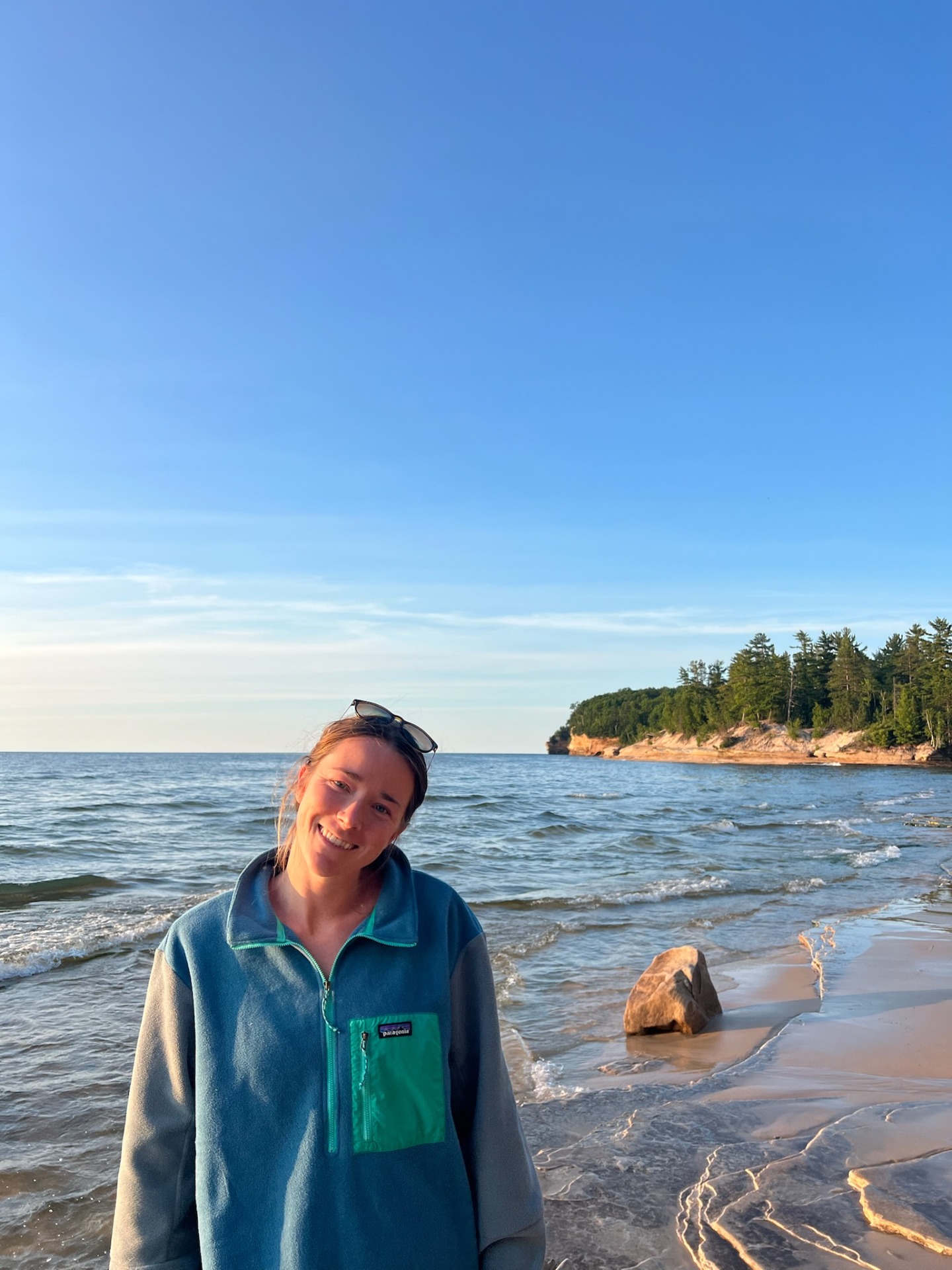
Cailin Young wears a blue jacket and stands on a Lake Superior beach

Cailin Young at the Pictured Rocks National Lakeshore along Lake Superior. (Submitted photo)

Cailin Young grew up watching sunsets on the California coast, but she doesn’t play favorites when it comes to big bodies of water.

“Looking out over Lake Michigan or Lake Superior, it pulls the same feeling out of me that looking at the ocean does,” she said. “I love the Great Lakes.”

As the inaugural Keillor-Wisconsin Great Lakes Coastal Leadership Academy Fellow, Young is busy getting acquainted with Wisconsin’s 800-plus miles of coastline. She’s charged with developing a series of workshops about coastal processes to help communities find ways to adapt to the ever-changing weather and water conditions of Lakes Superior and Michigan.

The Coastal Leadership Academy workshops will include discussions of how to deal with coastal hazards — things like high and low water levels, erosion, flooding, and storms — in ways that make sense for communities. A big city on Lake Michigan, for example, might address bluff erosion differently from a small town on Lake Superior.

“The goal is for attendees to walk away with a broader understanding and awareness of the different range of adaptation strategies they could implement, and how to take into consideration what does your community value and what would work for your shoreline,” she said.

Young, who hails from southern California, became interested in the Great Lakes while attending graduate school at the University of Michigan. Her capstone project explored Great Lakes policy and offered recommendations for protecting the open-water ecosystems of the lakes, which aren’t explicitly protected under any law.

Shipwrecks, on the other hand, are. And they’re often in open water.

“A lot of times, there’s fish habitat or reefs around the shipwreck,” said Young. “So, one of our recommendations to Michigan’s Department of Natural Resources was to open up that legislative language to allow for protection of ecosystems that are also in the same area.”

Her project also introduced her to coastal processes and resiliency, knowledge she’s been building upon as she designs the Coastal Leadership Academy workshops. Right now, Young is tailoring the workshops to be regionally specific. The pilot workshops will be held in three Great Lakes communities in Wisconsin: two on Lake Michigan and one on Lake Superior.

“What’s going to work on Lake Michigan isn’t necessarily going to work on Lake Superior. Even within Wisconsin, communities are completely different,” said Young. “There’s no one-size-fits all solution.”

Great Lakes communities may have different needs and priorities, Young notes, but they’re alike in how they regard the Midwest’s mighty inland seas.

“I love how they’re a uniting force. Everybody loves the Great Lakes. Everybody in this region knows about them,” said Young. “I really like that it’s a shared identity amongst multiple states.”

The post Keillor Fellow helps coastal communities adapt to Great Lakes’ highs and lows first appeared on Wisconsin Sea Grant.

Original Article

News Releases | Wisconsin Sea Grant

News Releases | Wisconsin Sea Grant

https://www.seagrant.wisc.edu/news/keillor-fellow-helps-coastal-communities-adapt-to-great-lakes-highs-and-lows/

Jenna Mertz

Madison: join us for the 17th annual Wild & Scenic Film Festival

For the seventeenth year, River Alliance of Wisconsin and the Barrymore Theatre will be proud hosts of the Wild & Scenic Film Festival in Madison. The evening of films, curated by River Alliance, is guaranteed to leave you inspired to get outside, paddle and be a voice for our waters.

Wild & Scenic Film Festival

Thursday, April 30

Barrymore Theatre, 2090 Atwood Ave. Madison, WI 

Doors open at 6 p.m.

Program begins at 7 p.m.

Buy tickets online or skip the fees and buy tickets from Barrymore Theatre ticket outlets.

2026 film program

A girl sits at the edge of a river on a rafting trip and journals about her experience.

Beyond Beliefs

A young woman from Cleveland, Ohio earns a scholarship to attend a 4-day river trip through the wild Green River’s Gates of Lodore Canyon. The only catch … she doesn’t know how to swim and is terrified of water. Join Danielle and her peers on this wonderful journey, and bear witness to her inspiring first-hand account of what it took to go beyond her beliefs about water, and how that expanded the vision for her future.

Who will love this movie: river rafting enthusiasts and those who know it’s never too late to learn a skill.


A man walks through a lush, green forest

HYPERSCALED

Increased energy and water demands from the rapid development of large data centers driven by technological advancements like AI are increasing threats to communities across the Southeast. HYPERSCALED unearths the real world cost of AI as residents fight to get answers about the costly impacts of this water and energy sucking industry. Much like a vampire, the proposed “Project Marvel” is projected to consume unprecedented amounts of water and energy from the backyards of concerned communities.

Who will love this movie: those who are concerned about the community impacts of data centers.


A man holds a book up so his child can see. His child is sitting and pointing a hair dryer at his dad.

A Little Story About Forever

This short film about forever unfolds from the POVs of father (max) and son (kip) as they attempt to write a book about what forever means. The father feels overwhelmed by all of the threats to forever, like forever chemicals, and calls an unlikely hero – Kenosha’s own Mark Ruffalo – to ask for help seeing the big picture.

Who will love this movie: people who love creative animation in film and parents looking for inspiration on how to talk to their kids about how to take care of our planet.


The Klamath River runs naturally through an area that once was the Iron Gate dam.

Native to the Klamath

The Klamath River is currently going through one of the largest transformations in history. “Native to the Klamath” intertwines environmental restoration, reconciliation ecology, social justice, and traditional ecological knowledge. Hear the story of this river renewal through the words of the Klamath River peoples who live by the sacred obligation of stewardship.

Who will love this movie: paddlers and those inspired by river restoration.


Gigiigemin Baaga’adoweyang “We are healed by stickball”

In its creation story, the game of Baaga’adowewin is given as a gift and tool for life. After forced assimilation, the game was suppressed and remained dormant for almost a century. This film shares the return of Baaga’adowewin, or stickball, as Ojibwe communities walk the path of cultural revitalization and exercise their treaty rights to continue to heal from historical traumas and overcome challenges of today. 

Who will love this movie: la crosse players, athletes and Wisconsin historians.


A man uses an all-terrain wheelchair to hike a trail through the woods.
Accessible travel

Accessible, Inclusive Travel on the Oregon Coast

The Oregon Coast is leading the way in making travel more accessible and inclusive for everyone. From wheelchair-friendly beaches to thoughtful design in coastal towns, this stunning region is ensuring that people of all abilities can experience its beauty. Learn about the innovative programs and community-driven efforts that are changing the travel landscape on the Oregon Coast.

Who will love this movie: anyone who agrees that the outdoors is truly for every body. 


Havasupai Tribal members perform traditional dances and songs in protest of the Canyon Uranium Mine on the south rim of Grand Canyon. "We are on the fronts lines of contamination if this mine leaks. It will contaminate our water and kill our people," says Carletta Tulusi, a former tribal council member attending the gathering below Red Butte, the Havasupai sacred peak.

Monumental Moment

For years, shy teenager Maya Tilousi-Lyttle has protested uranium mining near the Grand Canyon alongside her mother, Havasupai advocate Carletta Tilousi. In August 2023, Maya spoke at the podium as President Biden declared the Baaj Nwaavjo I’tah Kukveni – Ancestral Footprints of the Grand Canyon National Monument — a landmark protection for land sacred to Indigenous peoples for millennia. But lawsuits filed in 2025 now threaten that designation. The fight isn’t over. Maya’s generation must make their voices heard.

Who will love this movie: youth climate justice activists, those who oppose extractive industries, and anyone inspired by Grand Canyon vistas


A man in a button-up shirt stands facing the camera in front of a wall with Explorers Club flags.

The Book of George

George McKenzie Jr. grew up in Brooklyn and found his calling through wildlife photography — swapping street life for the Everglades, capturing everything from city pigeons to elusive panthers. Now a National Geographic Explorer, George is on a deeper mission: empowering kids of color to engage with conservation. In a field that remains predominantly white, he’s living proof that your background shouldn’t limit your dreams or your impact.

Who will love this movie: wildlife photography enthusiasts and those who have a passion for mentoring youth.


This message is made possible by generous donors who believe people have the power to protect and restore water. Subscribe to our Word on the Stream email newsletter to receive stories, action alerts and event invitations in your inbox.  Support our work with your contribution today.

The post Madison: join us for the 17th annual Wild & Scenic Film Festival appeared first on River Alliance of WI.

Original Article

Blog - River Alliance of WI

Blog - River Alliance of WI

https://wisconsinrivers.org/wild-and-scenic-2026/

Allison Werner

A day to rally support for the lakes we all depend on.

For generations, the Great Lakes have shaped life across our region. 

They provide drinking water to more than 40 million people
They support wildlife, recreation, and local economies. 
And for many of us, they hold personal memories: summers at the beach, early-morning fishing trips, quiet walks along the shoreline. 

The lakes are part of who we are. 

But protecting them takes constant work. 

From plastic pollution and agricultural runoff to aging infrastructure and increasing water demands from data centers, the Great Lakes face real challenges that require community action. 

That’s why the Alliance for the Great Lakes is launching something new this year: 

Great Lakes Giving Day

On Wednesday, March 25, supporters across the region will come together for a single day of giving to protect the lakes that connect us all. 

It’s the first year of what we hope will become an annual moment for the Great Lakes community — a day to celebrate these extraordinary waters and support the work needed to protect them. 

Because while the lakes may feel vast and endless, their future depends on the work we do right now to protect them, together

Your support helps the Alliance: 

  • Advocate for policies that protect clean drinking water 
  • Fight pollution that threatens our health 
  • Support community leaders working to protect local waters 
  • Mobilize thousands of people each year to stand up for the lakes 

Spring is a season of renewal through the Great Lakes region. 

Beaches reopen. 
Communities return to the water. 
And people reconnect with the lakes that shape life here. 

Great Lakes Giving Day is an opportunity to turn that connection into action. 

Together, we can ensure these waters remain healthy and thriving for generations to come. 

The post Join Us for Great Lakes Giving Day appeared first on Alliance for the Great Lakes.

Original Article

News - Alliance for the Great Lakes

News - Alliance for the Great Lakes

https://greatlakes.org/2026/03/join-us-for-great-lakes-giving-day/

Michelle Farley

Murky. Soft. Squishy. Punky.

This time of year, there’s a lot of names bandied about to reference the lakes and waterways of Wisconsin and the not-so-frozen layers covering them, but eventually they lead to one term we can all understand.

Thin ice.

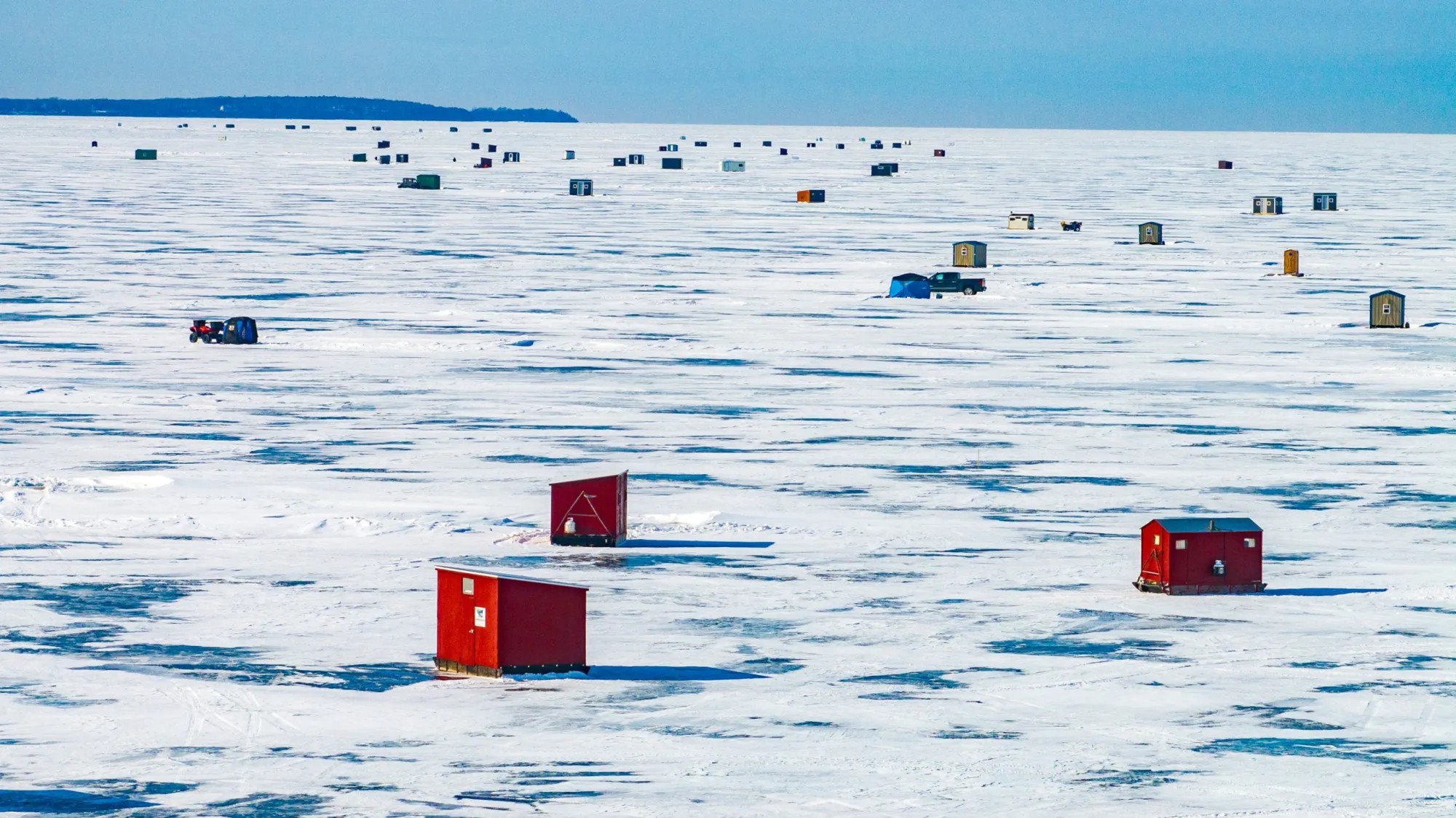
For winter anglers, ice thickness and ice safety are ever-present topics of conversation: at the bait shop, in the shanty, and at everyone’s favorite fish frys and watering holes.

Unfortunately, recent changes in ice cover, not just on the Great Lakes bordering Wisconsin but throughout the state, are creating more hazards for ice anglers. One recent study from the National Oceanic and Atmospheric Administration (NOAA) noted the Great Lakes have experienced a 70% decrease in average annual maximum ice cover between 1973 and 2018. News stories about rescuing anglers from large ice floes in Lakes Michigan and Superior have brought the question of thin or unsafe ice cover more into the public eye. It seems today that murky, soft, squishy ice is not only a late-winter or early-spring focus for anglers but now a season-long concern.

So, what can ice anglers do differently to stay safe? Traditionally, providing information on current ice conditions is as slippery an endeavor as trying to reach your tip-ups on a frozen bay without ice cleats. Most state agencies like the Wisconsin Department of Natural Resources do not provide ice forecasts but rather stick to the mantra that “no ice is 100% safe,” an understandable stance given the vagaries in temperature, wind, and water. One recent stretch this February saw state temperatures swing from 50-60 degrees one day to mid-20’s the next.

Thankfully getting answers to this tricky question has not deterred a team of Wisconsin Sea Grant researchers from looking into ice safety and how to work with the ice angling community, Wisconsin DNR, and other partners. Their goal is not only to improve the information available to ice anglers but also understand how they seek out trusted sources of data and respond to the ice conditions they’re seeing.

Nan Li is one of the lead researchers for the team. An associate professor in Life Sciences Communication at UW-Madison, Li teaches undergraduate and graduate courses in visual communication and risk communication. Her research examines how visual communication shapes the ways people understand and engage with science.

“As ice conditions across the Great Lakes become more unpredictable, we need to move beyond just warning people about risks,” said Li. “The goal is to help anglers better understand what’s changing and develop evidence-based strategies to make safer decisions in real time. This project is really about staying ahead of the problem, not just reacting to it.”

Bret Shaw is Li’s co-lead on the project and also hails from UW-Madison. Like Li, Shaw is a professor with the Department of Life Sciences Communication; he’s also an environmental communications specialist for the Division of Extension.

“This is the first empirical study on how Great Lakes ice anglers perceive emerging risks from warmer winters,” said Shaw. “We hope this collaborative effort will have a practical impact, that our findings will inform the development of impactful and authentic safety-focused messages for ice anglers.”

The two are joined by Tim Campbell and Titus Seilheimer, two long-time members of Sea Grant’s Extension team. Both Campbell and Seilheimer have extensive experience working with anglers all around Wisconsin and the Great Lakes, helping ensure that the materials developed through this project speak directly to the needs of the communities most affected. 

“This approach to data collection is how we can help people and communities make the best science-based decisions using the best information possible,” said Campbell.

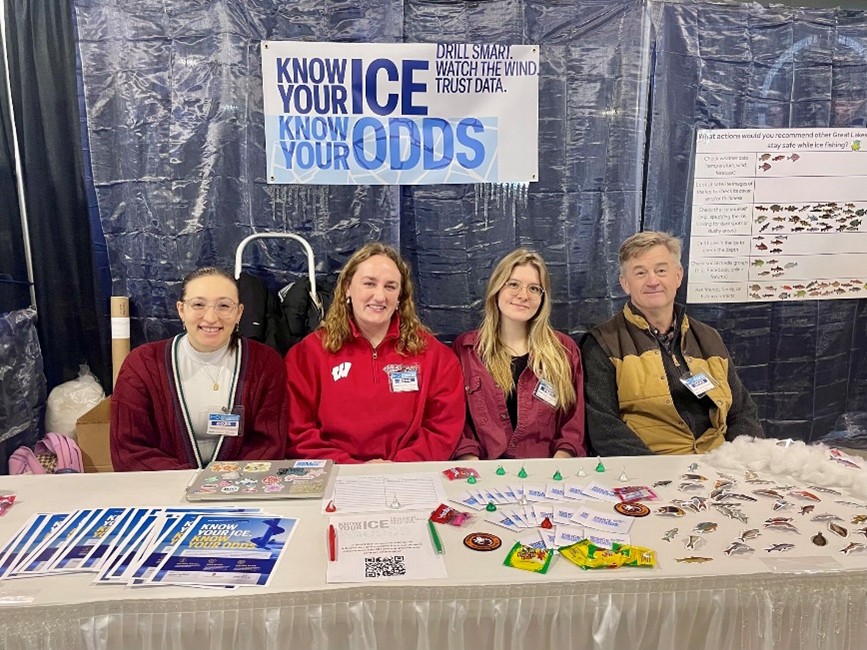
Researcher Bret Shaw and three student researchers sit at a table at the Ice Fishing Expo ready to talk to people about ice safety.

Researcher Brett Shaw (far right) tables a booth with a portion of the student research team at the Ice Fishing Expo last December. (Submitted photo)

First challenge: reaching out

The first big question Li said they had to tackle was: Where can you find ice anglers to interview and survey? At least in enough numbers that will provide meaningful results?

“We thought there’d be a list, but nobody had a list,” said Li. She said they also checked in with ice fishing equipment vendors, but for obvious business reasons they were reluctant to share their customer data. 

They started close to home, focusing on ice anglers around Green Bay, but Li said “It didn’t feel like we were getting enough people” responding to their initial outreach, so they broadened their search to the western Great Lake states – Minnesota, the Upper Peninsula of Michigan, and the rest of Wisconsin. To recruit participants, the researchers used targeted Facebook ads and posted calls for participation in social media groups and online forums frequented by ice anglers.

In the end ice anglers were very cooperative and the team was able to cast a wide net, surveying more than 300 individuals, looking into their current perceptions regarding ice safety and learning not only what they do to keep safe but also identifying the information sources that anglers trust.

Surveys and interviews confirm increase in ice safety concerns

Some of the demographic findings from the survey were not surprising to the researchers. Most respondents were experienced ice anglers, with 68 percent ice fishing for more than 20 years and nearly two-thirds over the age of 44.

The respondents also confirmed the need for the team’s study. Seventy-one percent agreed ice conditions have become increasingly unsafe the past two years, with people most concerned about falling through the ice in deep water, or their vehicle falling through the ice. Some shared personal accounts of accidents and attributed them to unsafe practices.

“There were some biases in the sample group, which also wasn’t surprising,” said Li. “No respondent we selected said they had little or no confidence in their own ability to stay safe on the ice, yet 43 percent of the respondents said they had little or no confidence in others’ ability to stay safe on the ice.”

As far as trusted information sources, the preferred choice for ice anglers based on the survey results are weather data and checking the ice themselves, though 59 percent of respondents check social media groups to decide whether it is safe to go out on the ice.

Additionally, the team conducted in-person interviews with a smaller sample, looking to dig deeper into risk perceptions in Wisconsin.

Li noted, “Across all interviews, anglers consistently described the ice now as highly unpredictable.” Green Bay is one example, added Li, with many respondents citing the winters of 2022 and 2023 – right before the interviews were conducted – as the “worst in decades due to minimal freeze-up, strong currents, and widespread open water.”

Li added that anglers have changed their activities due to concerns of soft ice. “Many described shifting to walking or cautious [utility vehicle] use because driving vehicles is no longer safe,” said Li. “And several highlighted the role of social dynamics, such as inexperienced anglers, risky guide practices, and pressure to follow crowds, in contributing to close calls.” 

Ice angler safety campaign ad with the slogan "Know your ice, know your odds."

Ice angler safety campaign ad.

Turning results into action

With results in hand, the team turned their attention towards practical applications: taking their project into the public realm via a series of outreach materials and finding ways to share them with the ice fishing community.

“One piece is a campaign logo – ‘Know Your Ice, Know Your Odds’ – that will appear on banners, swag items, flyers, social media, and other outreach materials,” said Li. “The design is intentionally neutral and inclusive to ensure it resonates with a wide range of anglers. The messaging focuses on encouraging positive behavioral changes associated with higher risk awareness, rather than trying to scare people away from ice fishing – an approach that is unlikely to be effective given the biases we observed.”

The group also launched a mini campaign at the end of 2025, which included an advertisement published in the 2025 annual issue of “Ice Fishing” magazine and tabling a booth at the Wisconsin Ice Fishing Expo in Oshkosh.  

Li’s graduate and undergraduate students also contributed to the design effort, which was ultimately finalized by a professional marketing agency. As part of a service-learning partnership, students in Li’s Visualizing Science and Technology course developed early drafts of the outreach materials, producing a range of concepts including infographics, maps, and even a comic strip. 

For social media outreach, the researchers developed an animated video featuring NOAA’s ice cover chart alongside key campaign messages. The video is intentionally “brand free so any municipality, fishing clubs or ice fishing Facebook groups can use them,” said Shaw. Finally, the researchers are looking at developing an evidence-based ice safety dashboard.  

Once fully completed, the outreach materials will find a home at the Wisconsin Sea Grant website where it can be easily accessible to the public.

The team’s work is already creating a buzz in the scientific community. They recently presented their study at the annual conferences of the International Association for Great Lakes Research and the Society for Risk Analysis.

The long-term goal for Shaw and Li is to help make ice fishing safer. Through their project, they hope to turn what can feel like a soft, slushy topic like ice safety into clearer, more practical guidance for ice anglers in Wisconsin and across the Great Lakes.

“With our interviews, online surveys, conversations, outreach efforts, and going out on the ice with angling experts, we learned so much,” said Shaw. “And leveraging our expertise about risk communication and translating those concepts to benefit the ice fishing community was not only interesting, I believe we’ve created materials that will resonate with ice anglers. And there’s still room to grow.”

The post New Sea Grant study aims to improve ice angler safety first appeared on Wisconsin Sea Grant.

Original Article

News Releases | Wisconsin Sea Grant

News Releases | Wisconsin Sea Grant

https://www.seagrant.wisc.edu/news/new-sea-grant-study-aims-to-improve-ice-angler-safety/

Andrew Savagian

Winter may have made a reappearance in Northeast Wisconsin, but we can still look forward to spring and our gardens! Consider adding native plants to your garden or landscaping this year to add beauty your yard and help your watershed at the same time. Native plants are [...]

The post Native Plants: Great for your garden, great for your watershed appeared first on Fox-Wolf Watershed Alliance.

Original Article

Fox-Wolf Watershed Alliance

Fox-Wolf Watershed Alliance

https://fwwa.org/2026/03/16/native-plants-march-2026/?utm_source=rss&utm_medium=rss&utm_campaign=native-plants-march-2026

Katie Reed

Illinois Governor JB Pritzker and U.S. Senator Dick Durbin want President Donald Trump to put money where his mouth is on a massive project to help stop invasive carp from entering the Great Lakes — a project the Trump administration paused in December. Read the full story by the Chicago Sun-Times.

Original Article

Great Lakes Commission

Great Lakes Commission

https://www.glc.org/dailynews/20260316-brandon-road

Taaja Tucker-Silva

In December 2025, the Wisconsin Natural Resources Board approved to reduce commercial fishing quotas for whitefish in Lake Michigan by 40% in response to a dramatic population decline. Those quotas went into effect at the beginning of this year. Read the full story by Wisconsin Public Radio.

Original Article

Great Lakes Commission

Great Lakes Commission

https://www.glc.org/dailynews/20260316-whitefish-quota

Taaja Tucker-Silva

From the water crisis in Flint, Michigan, to PFAS contamination and pipeline threats to Michigan waterways, three profiles in honor of Women’s History Month highlight women leading the fight for clean water and environmental justice across Michigan. Read the full story by Michigan Advance.

Original Article

Great Lakes Commission

Great Lakes Commission

https://www.glc.org/dailynews/20260316-ej-women

Taaja Tucker-Silva

The Michigan Department of Natural Resources has intervened in Consumers Energy’s plan to sell its suite of 13 hydroelectric dams to a Maryland private equity firm. It’s the first time the department has gotten involved in a case before Michigan’s energy regulators, who will rule on the sale. Read the full story by The Detroit News.

Original Article

Great Lakes Commission

Great Lakes Commission

https://www.glc.org/dailynews/20260316-dnr-dams

Taaja Tucker-Silva

Scientists and engineers from Woods Hole Oceanographic Institution, NOAA Great Lakes Environmental Research Laboratory, and other organizations are tracking an autonomous underwater vehicle beneath the ice in Lake Erie as part of a research project to better understand the lake’s ecosystems. Read the full story by WEWS-TV – Cleveland, OH.

Original Article

Great Lakes Commission

Great Lakes Commission

https://www.glc.org/dailynews/20260316-erie-auv

Taaja Tucker-Silva

A $5.75 million federal grant has been awarded to the Lake Forest Open Lands Association to support a preservation project along 57 unique ravine systems stretching 22 miles along the Lake Michigan shoreline in Illinois. Read the full story by Great Lakes Echo.

Original Article

Great Lakes Commission

Great Lakes Commission

https://www.glc.org/dailynews/20260316-ravine-preservation

Taaja Tucker-Silva

As the S.S. Badger car and passenger ferry gears up for its 2026 season, its chief engineer of 24 years is retiring. He lived on board for seven months of the year, crossing Lake Michigan from Manitowoc, Wisconsin, to Ludington, Michigan, more than 400 times each season. Read the full story by the Manitowoc Herald Times Reporter.

Original Article

Great Lakes Commission

Great Lakes Commission

https://www.glc.org/dailynews/20260316-badger-retirement

Taaja Tucker-Silva

A man survived after being swept into Lake Michigan by waves while on a closed pier in South Haven, Michigan, last Friday. The life ring used in the rescue came from stations installed in 2023 as part of the city’s ongoing beach safety program. Read the full story by MLive.

Original Article

Great Lakes Commission

Great Lakes Commission

https://www.glc.org/dailynews/20260316-pier-rescue

Taaja Tucker-Silva

Scaffolding will soon surround Split Rock Lighthouse in Two Harbors, Minnesota, as a three‑month restoration begins to repair damaged brick and mortar. The project will also help prevent future cracking by controlling humidity inside the lighthouse. Read the full story by Minnesota Public Radio.

Original Article

Great Lakes Commission

Great Lakes Commission

https://www.glc.org/dailynews/20260316-lighthouse-restoration

Taaja Tucker-Silva

Marian Azeem-Angel got her start in science as a college student in Miami, Florida, schlepping used oyster shells across the city. She collected and dried the shells for workshops and taught people how to use them to fight beach erosion, filter water, and build new oyster reefs. She learned, to her delight, that science doesn’t have to be antisocial.  

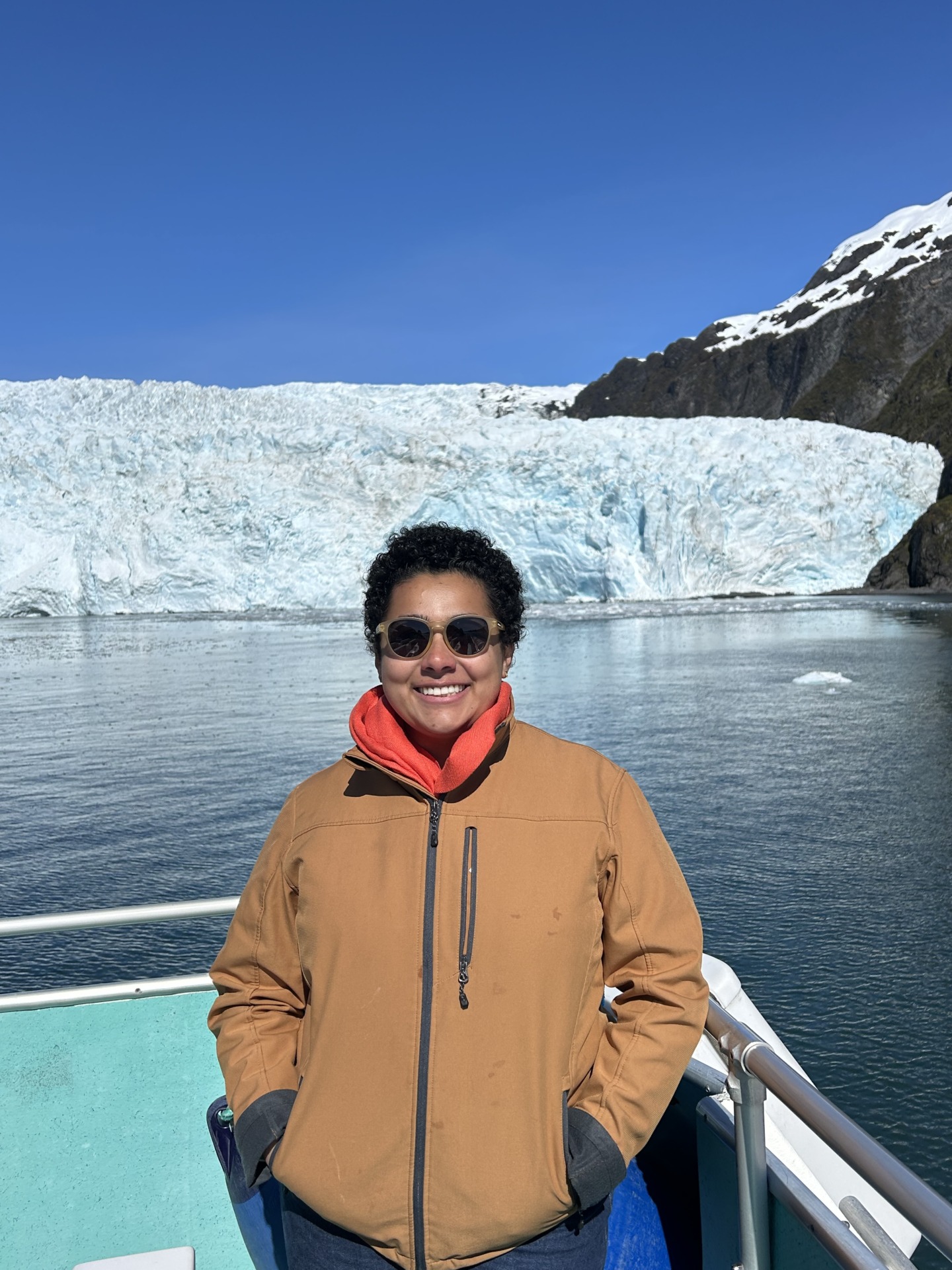
Marian Azeem-Angel wears a brown jacket and stands on a boat overlooking a glacier in Alaska

Marian Azeem-Angel stands in front of the Holgate glacier in Alaska. (Submitted photo)

“That was my first experience of like, wow, you can do things and involve and teach people. And my mind was blown. I was like, oh my god, science with the people!” she said. 

People — and water — have been the throughlines of Azeem-Angel’s academic career. Now the 2025-2026 J. Philip Keillor Wisconsin Coastal Management Fellow, she’s helping Great Lakes coastal communities build resilience to changing weather and water conditions.

“Coastal things are all new to me, which is very exciting and a lot of learning,” she said.

Her big project is updating the “Coastal Processes Manual,” a guide to help coastal managers and homeowners assess the risks that lake levels, storms, and erosion pose to shoreline property. While there are no oysters in this one, the manual, like the recycling workshops, is focused on meeting the audience’s needs.

“What’s really special about the manual […] is that it’s both a technical document and informational, but it’s also a hands-on working document,” Azeem-Angel said, pointing to worksheets people can use to input details from their own properties. “It’s user-friendly.”

She’s also working with Cailin Young, a fellow Keillor Fellow, to develop chapter summary sheets for coastal resilience workshops Young will lead in the fall. The challenge has been striking the right balance between respecting the audience’s knowledge without assuming they know everything — the crux of science communication.

“I trust that [the audience] will understand it,” she said, “But also, I will do my best to communicate it in a clear way.”

Azeem-Angel is no stranger to that conundrum. A recent graduate of the environment and resources master’s program at the University of Wisconsin–Madison Nelson Institute, her thesis focused on extreme summer rainfall in Madison, social vulnerability, and how city residents perceive flooding risk. The technical nature of her research meant she had to take environmental engineering classes as a non-engineer. Hydrogeology was a formidable opponent, but she said taking the class prepared her to better translate complex science.

“I am here to learn and gain the perspective of engineers,” she said. “Not for me to be one, but for when the time comes that I’m working with them. Hopefully one day I’ll understand what their process is, what their concerns are, what they’re thinking and worrying about, so that I can help the coming-together of the interdisciplinary space, so that we can all understand each other better.”

After the fellowship, Azeem-Angel hopes to continue putting people at the center of her work in an extension or outreach position.

“I can see myself as some kind of bridge person,” she said. “Being a bridge for technical information and bringing that to people so that we can decide how we want to live in a better world.”

The post Keillor Fellow wants to bridge the gap between people and science first appeared on Wisconsin Sea Grant.

Original Article

News Releases | Wisconsin Sea Grant

News Releases | Wisconsin Sea Grant

https://www.seagrant.wisc.edu/news/keillor-fellow-wants-to-bridge-the-gap-between-people-and-science/

Jenna Mertz

By Madison Merrell

Upfront costs of clean energy projects such as wind and solar may be high but the long-term savings on fuel and increased reliability more than offset those initial costs, experts say.

The post Green energy boosters stress long-term savings first appeared on Great Lakes Echo.

Original Article

Great Lakes Echo

Great Lakes Echo

https://greatlakesecho.org/2026/03/16/green-energy-boosters-stress-long-term-savings/

Capital News Service

Forester and author Ethan Tapper explains why loving a forest means more than planting trees or criticizing the lumber industry. He argues that caring for forests and using them as a resource don’t have to be at odds. Great Lakes Now’s Lisa John Rogers spoke with Tapper about how forests can thrive when we rethink old ideas about forest management.

#forest #forestecosystem #ecology #forestry #trees #lumber #podcast

===========================================
Website: https://greatlakesnow.org
Facebook: https://www.facebook.com/greatlakesnow
X: https://www.x.com/greatlakesnow
Instagram: https://www.instagram.com/greatlakesnoworg
Newsletter: https://www.greatlakesnow.org/great-lakes-now-newsletter/

To learn more about supporting Detroit PBS and Great Lakes Now, visit https://www.detroitpbs.org/

===========================================

“What does it mean to love a forest?” was produced by Great Lakes Now/Detroit PBS.

Produced and Hosted by
Lisa John Rogers

Edited by
Bill Allesee

Camera
Adam Fox-Long

Additional Materials
Broadleaf Books

The post What does it mean to love a forest? appeared first on Great Lakes Now.

Original Article

Great Lakes Now

Great Lakes Now

https://www.greatlakesnow.org/2026/03/16/what-does-it-mean-to-love-a-forest/

Great Lakes Now

By Samantha Ku

A rare ravine ecosystem on Lake Michigan's western shore is vulnerable to human encroachment. A recent federal grant is supporting restoration efforts in the region.

The post Preservation project launches effort to restore rare ravine ecosystem  first appeared on Great Lakes Echo.

Original Article

Great Lakes Echo

Great Lakes Echo

https://greatlakesecho.org/2026/03/14/preservation-project-launches-effort-to-restore-rare-ravine-ecosystem/

Great Lakes Echo

The State Revolving Fund (SRF) Advocates Forum (Forum) brings together over 200 community leaders from across the country – including many in Great Lakes states – advocating for critical water infrastructure funding needs to replace lead service lines, upgrade storm sewer systems that flood during storms, and address emerging contaminants like PFAS. The forum is organized by the Alliance for the Great Lakes, River Network, and the Environmental Policy Innovation Center (EPIC). 

Each year, the Forum asks the membership about their advocacy strategies, successes, and lessons learned, comparing feedback from surveys and one-on-one interviews. These valuable insights are summarized in our newly released second annual SRF Advocates Engagement Report (the first, 2021-2024 report is available here), including examples from Great Lakes Forum members’ advocacy engaged state policymakers to direct more SRF funding to communities with the highest need. 

SRFs are a significant funding source for local governments and utilities to finance critical water infrastructure projects. SRFs combine state and federal funds to provide low-interest loans for projects that otherwise might not happen – including principal forgiveness or zero-interest loans for communities most in need. Each state administers its own program, so no two states’ priorities and rules for accessing financing and funding are identical. The SRF Forum helps leaders navigate the patchwork of state SRF rules and advocate for ways to make them easier to find, easier to understand, and ultimately provide clean and safe drinking water and necessary wastewater and stormwater services for residents.  

These reports are written first and foremost for other water advocates, with peer-based insights and real-world examples they can use to support their own accountability and policy reform efforts to improve state SRF programs. The report also uplifts the important work of advocates serving your communities to improve access to clean, safe, and affordable water services. For more background on the SRFs and the topics discussed in the report, check out our “Reading List” deep dive, SRF Glossary of terms, topical factsheets, and Resource Bank

Working Together Works – Coalitions are Essential   

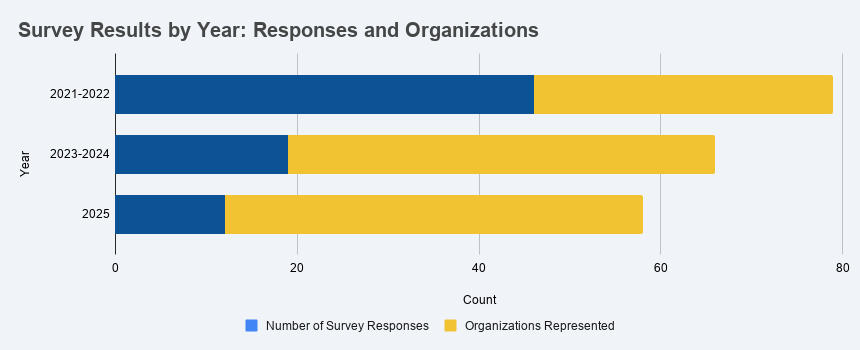
In the latest report, coalition-based advocacy remains a central strategy for successful SRF advocacy. In 2025, 80% of survey respondents said partnering with organizations was an effective strategy for advocacy, and 75% of in-depth interview participants described coalitions as essential for sustaining advocacy efforts. Over three survey periods, the number of organizations represented by our survey has increased (shown in yellow below). In fact, our 2025 survey represented a large number of organizations working together in coalitions, even with fewer surveys submitted, over a shorter period of time. 

This strategy is working in the Great Lakes region. Coalition building helped Milwaukee Water Commons (MWC) in Milwaukee, Wisconsin, strengthen its advocacy and amplify the urgency of policy changes statewide, rooted in community needs. According to MWC, being in coalition with other organizations across the state strengthened direct engagement with utilities and the Wisconsin Department of Natural Resources. The strategy contributed to wins such as improving the state’s definition of disadvantaged communities (DACs) and increasing the amount of principal forgiveness utilities and municipalities could get for lead service line replacement projects in areas with a high burden of lines to replace.  

We Should Know Where the Money Goes 

Transparency is critical to understanding if state SRF policies and funding decisions are leaving some communities behind. Advocates – including in Michigan – asked state administrators to share data in publicly accessible dashboards showing award decisions, which projects were passed over during a funding year, and the share of investments reaching state-defined disadvantaged communities. We the People of Detroit, an advocacy organization based in Detroit, Michigan, noted that the absence of post-award reporting makes it difficult to determine whether investments are reaching the communities that need them most. Sharing data would strengthen public trust in program decisions, which is why advocates emphasized transparency to state administrators, at meetings, and in public comments. 

Sustaining the SRFs is a Long-Term Mission 

In addition to ensuring the U.S. Congress appropriates federal funds for the SRFs each year, advocates recognize that sustaining the health of the largest federal water infrastructure funding program requires long-term, dedicated advocacy. Many advocates emphasized the need to safeguard and strengthen these programs. Others also recognize the need for states to invest in water infrastructure – pairing their SRF advocacy with state legislative outreach to ensure funding stability.  

Why Supporting the Forum and Advocates Matters 

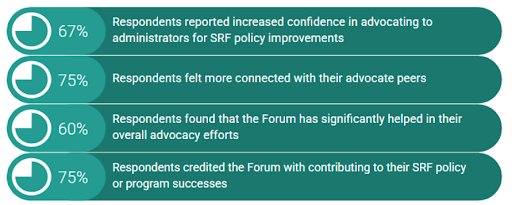
The Forum provides a unique space for advocates to share stories, build relationships, and foster coalitions supporting more equitable water investments in communities like yours. Survey respondents made clear why the Forum’s community of practice is important to building and sustaining advocacy:

If you are interested in engaging with state SRF administrators on your state’s policies, we have resources for you! If you are an advocate interested in SRF policy reform, please join our community of practice. Become a member today. 

To learn more about the SRF Advocates Forum, visit the website

Tell Congress: Fund water infrastructure and SRFs

In 2026, essential drinking water, stormwater, and wastewater infrastructure programs including State Revolving Funds must be reauthorized and funded, with priority given to the communities most in need. Tell Congress: Fund infrastructure and protect the Great Lakes.

Contact Congress

The post Updated Report: Advocates Creating Momentum for Water and Wastewater Investment in the Great Lakes and Beyond appeared first on Alliance for the Great Lakes.

Original Article

News - Alliance for the Great Lakes

News - Alliance for the Great Lakes

https://greatlakes.org/2026/03/updated-report-advocates-creating-momentum-for-water-and-wastewater-investment-in-the-great-lakes-and-beyond/

tfazzini

News

Request for Proposals: Economic Evaluation of Nature-Based Solutions for Stormwater Management

Ann Arbor, Michigan — The Great Lakes Commission (GLC) is seeking proposals for an economic evaluation of the benefits of using nature-based solutions to manage stormwater in Great Lakes communities. The analysis will highlight case studies of projects across the Great Lakes basin, including those from urban, suburban, and rural communities of varying population size, and will provide data-driven results that can be used to inform regional leaders and stormwater managers about the tangible benefits and impacts of implementing nature-based solutions.
In 2025 the GLC relaunched the Great Lakes Stormwater Collaborative (GLSC) to support communities interested in green infrastructure and improving stormwater management practices. The GLSC connects stormwater program managers from Great Lakes states and provinces and coordinates with coastal resilience programs, Indigenous Nations, academic research institutions, local utilities, and regional organizations. The GLC will facilitate a project team of GLSC members to provide valuable input and guidance to the selected applicant. The team will help guide the selected applicant in identifying case studies, compiling relevant data, and considering supplemental benefit impact analyses. 
Up to $200,000 will be awarded for work that will be carried out between June 2026 and February 2027. The deadline for submissions is 5 p.m. Eastern on April 30, 2026. Proposals should be sent electronically as a single PDF attachment to Jill Estrada. More information on proposal requirements is available in the complete request for proposals.

The Great Lakes Commission, led by chair Timothy Bruno, Great Lakes Program Coordinator at the Pennsylvania Department of Environmental Protection, is a binational government agency established in 1955 to protect the Great Lakes and the economies and ecosystems they support. Its membership includes leaders from the eight U.S. states and two Canadian provinces in the Great Lakes basin. The GLC recommends policies and practices to balance the use, development, and conservation of the water resources of the Great Lakes and brings the region together to work on issues that no single community, state, province, or nation can tackle alone. Learn more at www.glc.org.

Contact

For media inquiries, please contact Beth Wanamaker, beth@glc.org.

Recent GLC News

Upcoming GLC Events

View GLC Calendar

Archives

Original Article

Great Lakes Commission

Great Lakes Commission

https://www.glc.org/news/economic-rfp-031326

Beth Wanamaker

A key permit from state energy regulators approving Enbridge’s Line 5 tunnel project sat before the Michigan Supreme Court on Wednesday as the justices heard two cases arguing the permit should be sent back to the Michigan Public Service Commission for further review. Read the full story by Michigan Advance.

Original Article

Great Lakes Commission

Great Lakes Commission

https://www.glc.org/dailynews/20260313-line-5

Taaja Tucker-Silva

A long and complicated court battle over how best to protect western Lake Erie from harmful algal blooms is able to proceed again. The U.S. 6th Circuit Court of Appeals in Cincinnati, Ohio, has upheld a decision to exclude a largely undefined group of industrial interests from being a party to the case. Read the full story by the Toledo Blade.

Original Article

Great Lakes Commission

Great Lakes Commission

https://www.glc.org/dailynews/20260313-erie-court

Taaja Tucker-Silva

The rapid build-out of AI data centers across the Great Lakes basin is reshaping rural communities, straining fragile ecosystems, and forcing states to rethink energy and water policies. New guides have been released to help residents and lawmakers navigate the rapidly expanding industry and the regulatory blind spots that have accompanied it. Read the full story by Circle of Blue.

Original Article

Great Lakes Commission

Great Lakes Commission

https://www.glc.org/dailynews/20260313-data-centers

Taaja Tucker-Silva

Construction of a $23.4‑million water pipeline to the Oneida Nation of the Thames is set to begin after a London, Ontario, company won the federal contract. The project will extend the Lake Huron pipeline to the community’s boundary, providing clean drinking water. The Oneida Nation has been under a boil‑water advisory since September 2019. Read the full story by the CBC.

Original Article

Great Lakes Commission

Great Lakes Commission

https://www.glc.org/dailynews/20260313-oneida-pipeline

Taaja Tucker-Silva

More than 50 years ago, Lake Erie was declared “dead,” and while its environmental health has improved, the shallowest of the five Great Lakes still lags its peers according to the recent State of the Great Lakes 2025 Report. Read the full story by The Plain Dealer.

Original Article

Great Lakes Commission

Great Lakes Commission

https://www.glc.org/dailynews/20260313-erie-ranking

Taaja Tucker-Silva

For years, Illinois state Representative Marcus Evans Jr. has championed a plan to make Illinois’ shores home to the first offshore wind farm in the Great Lakes. But the effort to bring wind power to Lake Michigan stalled again. Read the full story by WBEZ – Chicago, IL.

Original Article

Great Lakes Commission

Great Lakes Commission

https://www.glc.org/dailynews/20260313-lake-turbines

Taaja Tucker-Silva

The Michigan Department of Natural Resources (DNR) recently released new information about the state of fish populations in upper Michigan’s lakes. The manager of the Marquette Fisheries Research Station said that lake trout in Lake Superior are officially recovered. Read the full story by WLUC-TV – Marquette, MI.

Original Article

Great Lakes Commission

Great Lakes Commission

https://www.glc.org/dailynews/20260313-superior-trout

Taaja Tucker-Silva

The USA Today 10BEST Readers’ Choice Awards revealed nominations for Best Recreational Trail this week, listing Minnesota’s Gitchi-Gami State Trail among the top contenders. This Minnesota Department of Natural Resources-built-and-managed paved trail is currently 36 miles, but it will eventually extend to 86 miles spanning five state parks along Minnesota’s North Shore. Read the full story by MLive.

Original Article

Great Lakes Commission

Great Lakes Commission

https://www.glc.org/dailynews/20260313-superior-trail

Taaja Tucker-Silva

Four Illinois residents who vandalized cliffs at Pictured Rocks National Lakeshore in Michigan’s Upper Peninsula have been temporarily banned from the park and fined. The visitors carved large letters into cliff faces and collected more than 100 pounds of rocks, intending to take them home. Read the full story by MLive.

Original Article

Great Lakes Commission

Great Lakes Commission

https://www.glc.org/dailynews/20260313-pictured-rocks-vandals

Taaja Tucker-Silva

Ice coverage on the Great Lakes dropped significantly in recent days as temperatures have been consistently above 32 degrees Fahrenheit. The Great Lakes were at 19.13% coverage as of March 12 according to the National Oceanic Atmospheric Administration. Read the full story by the Detroit Free Press.

Original Article

Great Lakes Commission

Great Lakes Commission

https://www.glc.org/dailynews/20260313-ice-cover

Taaja Tucker-Silva

By Christian Vazquesz

A Michigan state senator is pushing for a statewide vote to expand the 10-cent bottle and can deposit law, while the Midwest Independent Retailers Association is calling for repeal of the law. Meanwhile, the state House approved a bill sponsored by a Clinton Township representative to give an income tax write-off to beverage distributors that move recycled cans and bottles from stores to recycling plants.

The post Bill would expand Michigan’s bottle deposit law while some want to abolish it first appeared on Great Lakes Echo.

Original Article

Great Lakes Echo

Great Lakes Echo

https://greatlakesecho.org/2026/03/13/bill-would-expand-michigans-bottle-deposit-law-while-some-want-to-abolish-it/

Capital News Service

Isle Royale, one of the least visited national parks in the U.S., is home to a unique ecosystem that includes wolves and moose. In 1980, the remote island earned an International Biosphere Reserve designation. Great Lakes Now contributor Ian Solomon made the journey to Lake Superior’s wild island, exploring its rugged trails, stunning scenery, and a memorable encounter with a family of moose.

Find Ian’s full adventure on the Great Lakes Now YouTube channel

#GreatLakes #LakeSuperior #NationalParks #IsleRoyale #Hiking #Wildlife #Nature

===========================================
Website: https://greatlakesnow.org
Facebook: https://www.facebook.com/greatlakesnow
X: https://www.x.com/greatlakesnow
Instagram: https://www.instagram.com/greatlakesnoworg
Newsletter: https://www.greatlakesnow.org/great-lakes-now-newsletter/

To learn more about supporting Detroit PBS and Great Lakes Now, visit https://www.detroitpbs.org/

The post Exploring Isle Royale: Lake Superior’s Wild Island appeared first on Great Lakes Now.

Original Article

Great Lakes Now

Great Lakes Now

https://www.greatlakesnow.org/2026/03/12/exploring-isle-royale-lake-superiors-wild-island/

Great Lakes Now

Summary

The Communications Associate works to advance the Alliance for the Great Lakes’ mission by supporting and implementing digital communications strategies that elevate the organization’s policy priorities, engage supporters, and strengthen the Alliance’s brand across platforms. They help translate complex environmental policy issues into clear, compelling, and accessible content that inspires action and builds public support for Great Lakes protection.

A typical day:

A typical day might include drafting and scheduling social media posts; creating short-form videos and graphics; monitoring and responding to social media comments in a fast-moving digital environment; collaborating with policy and program staff to turn technical information into blog posts or action alerts; building emails; reviewing analytics to inform strategy; and organizing digital assets in the Alliance’s photo and video library.

Responsibilities

Social Media Management and Strategy

Implement social media strategies across platforms, including Instagram, Facebook, LinkedIn, Threads, and Bluesky.

  • Create, schedule, and publish engaging content that is tailored to each platform, is compelling, and reflects the Alliance’s brand voice and values.
  • Monitor comments and messages, respond appropriately and professionally, and demonstrate sound judgment in a fast-moving, multi-platform social media environment.
  • Track analytics and adjust content and strategy based on performance metrics.
  • Identify opportunities for influencer engagement and assist with outreach and relationship building.
  • Collaborate with the Communications Director, Communications and Digital Fundraising Manager, and Senior Communications Manager to refine and evolve digital strategy.

Graphic Design and Video Production

  • Design compelling graphics and edit photos using Canva or similar tools for social media, website, and email campaigns.
  • Produce short-form videos for social media that explain policy issues using tools such as Adobe Premiere, Canva, or similar platforms.
  • Ensure visual consistency with the Alliance’s brand standards across all channels.
  • Manage and organize the Alliance’s photo, video, and graphics library.
  • Record original video and coordinate with staff and external vendors to capture photos and video that support communications campaigns and storytelling efforts.

Content Creation

  • Draft, edit, and provide light proofreading for blog posts, website content, one-pagers, toolkits and other written materials.
  • Translate complex environmental policy concepts into accessible and engaging language for broad audiences.
  • Support email marketing efforts by drafting and building emails using Campaign Monitor.
  • Draft and build action alerts using Engaging Networks or a similar advocacy platform.

General Support

  • Monitor the organization’s inbox and route inquiries to the appropriate staff.
  • Coordinate with other assistant-level staff to coordinate scheduling and logistics across teams.
  • Assist with campaign planning and execution, ensuring timelines are met and deliverables are completed.
  • Manage multiple projects concurrently in a fast-paced environment while maintaining high standards of organization and efficiency.
  • Help triage and maintain speaking / comment requests, determining next steps.
  • Stay current on digital trends, emerging platforms and best practices, and recommend new tools or tactics as appropriate.

Additional Duties

As assigned or needed.

Work Relationships

The Associate reports to the Communications Director and is a part of the Communications Team and the broader Advancement Team (A-Team).

Supervisory Responsibilities

None

Physical Demands/Work Environment

No physical demand. This is a primarily remote position with a strong preference for location in the Chicago area, with an expectation to work from the office once per week. Fully remote staff are expected to travel to the Alliance’s Chicago office a few times a year.

Knowledge/Skills

  • At least 2-5 years of experience in social media management and strategy, graphic design and video production, content creation, and admin support.
  • Strong writer with the ability to communicate complex policy ideas clearly while maintaining brand consistency and organizational voice.
  • Demonstrated experience managing social media accounts and contributing to social media strategy.
  • Ability to create compelling graphics and short-form video content using tools such as Adobe Premiere, Canva, or similar platforms.
  • High level of maturity, judgment, and professionalism in managing and responding to public-facing communications.
  • Experience working within email marketing and advocacy platforms such as Campaign Monitor and Engaging Networks preferred.
  • Familiarity with website content management systems such as WordPress preferred.
  • Exceptional organizational skills and ability to manage a content calendar with multiple concurrent projects.
  • Ability to work independently while collaborating effectively across teams.
  • Understands and upholds Alliance for the Great Lakes values of community, relationships, courage, integrity, and optimism.
  • Demonstrated alignment with our external and internal operating principles of justice, equity, diversity, and inclusion.
  • The selected candidate must be able to pass a background check.

Job Parameters

This position is full-time and consistent with Alliance employment policy. The Alliance has defined salary ranges that are evaluated annually, and it is customary for candidates to join at the lower half of the range to leave room for learning and development in the role. It is uncommon for starting salaries to fall above the mid-point. The salary range for this position begins at $60,000 and we negotiate salaries with final candidates based on their experience in similar roles and expertise related to the qualifications.

Excellent benefits, including medical, dental, short- and long-term disability, life insurance, FSA, 11 paid holidays plus the business days between 12/26 and 12/30 (staff who must work on any paid holidays may take those holidays at another time subject to the employee handbook), 3 weeks’ annual vacation to start + PTO, and Fidelity 401(k) with employer match of up to 6% of salary, eligible after 30 days.

This is a primarily remote position with a strong preference for location in the Chicago area, with an expectation to work from the office once per week. Fully remote staff are expected to travel to the Alliance’s Chicago office a few times a year.

Application Process

Please e-mail a cover letter, resume, references, and writing or work sample that demonstrates relevant qualifications to hr@greatlakes.org. Include the job title in the subject line.

Applications will be accepted and reviewed on a rolling basis starting on March 12th, 2026, and until the position is filled. Materials should be compatible with Microsoft Word or Adobe Acrobat. Applicants will receive confirmation of receipt of their materials, further guidance, and updates about the hiring process by e-mail, with interviews provided for finalists. No phone inquiries, please.

About the Alliance for the Great Lakes

Our vision is a thriving Great Lakes and healthy water that all life can rely on, today and far into the future.

The mission of the Alliance for the Great Lakes is to protect, conserve, and restore the Great Lakes, ensuring healthy water in the lakes and in our communities for all generations of people and wildlife.

To achieve our vision and mission, everyone in our organization will live ourvalues of Community, Relationships, Courage, Integrity, and Optimism, and weave the principles of Justice, Equity, Diversity, and Inclusion into all our work.

 For more information about the Alliance’s programs and work, please visit us online at www.greatlakes.org.

The post Communications Associate appeared first on Alliance for the Great Lakes.

Original Article

News - Alliance for the Great Lakes

News - Alliance for the Great Lakes

https://greatlakes.org/2026/03/communications-associate/

Michelle Farley

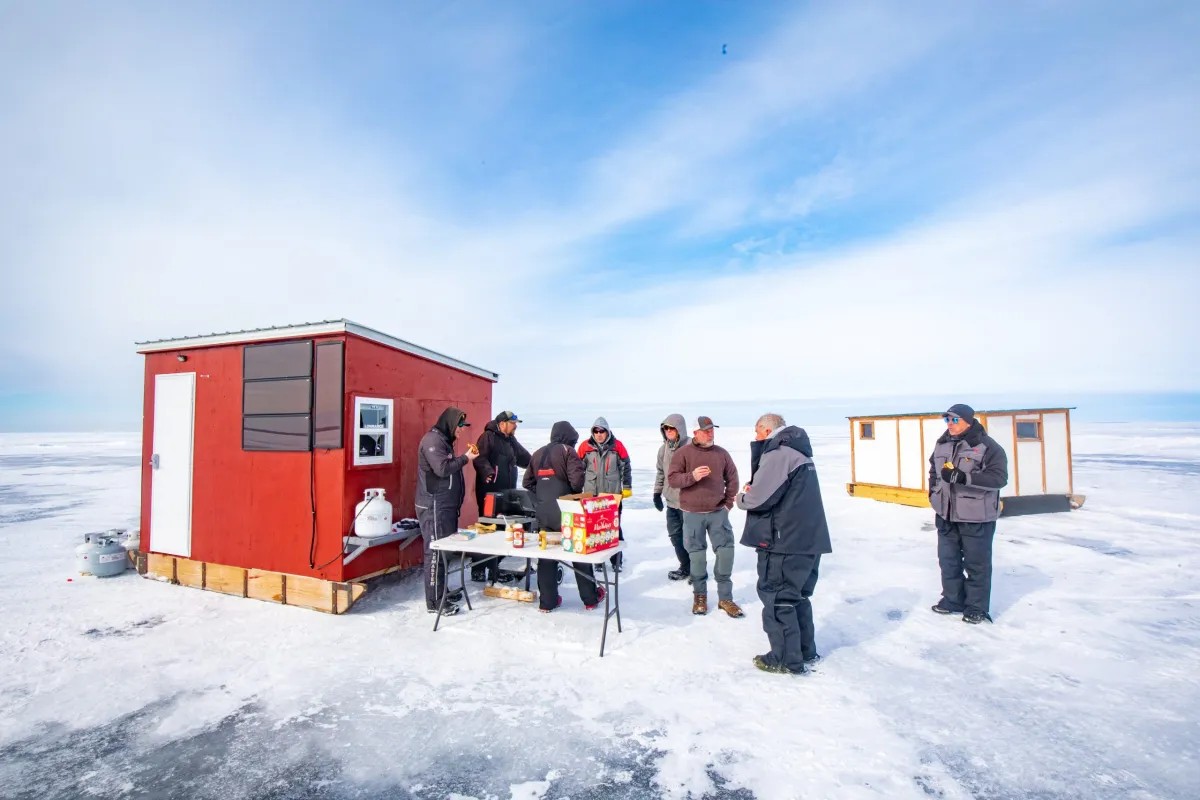
STURGEON BAY, WISCONSIN — It’s midmorning in late February, and Bruce Smith is regaling two ice fishing buddies when a tug on his line interrupts the story.

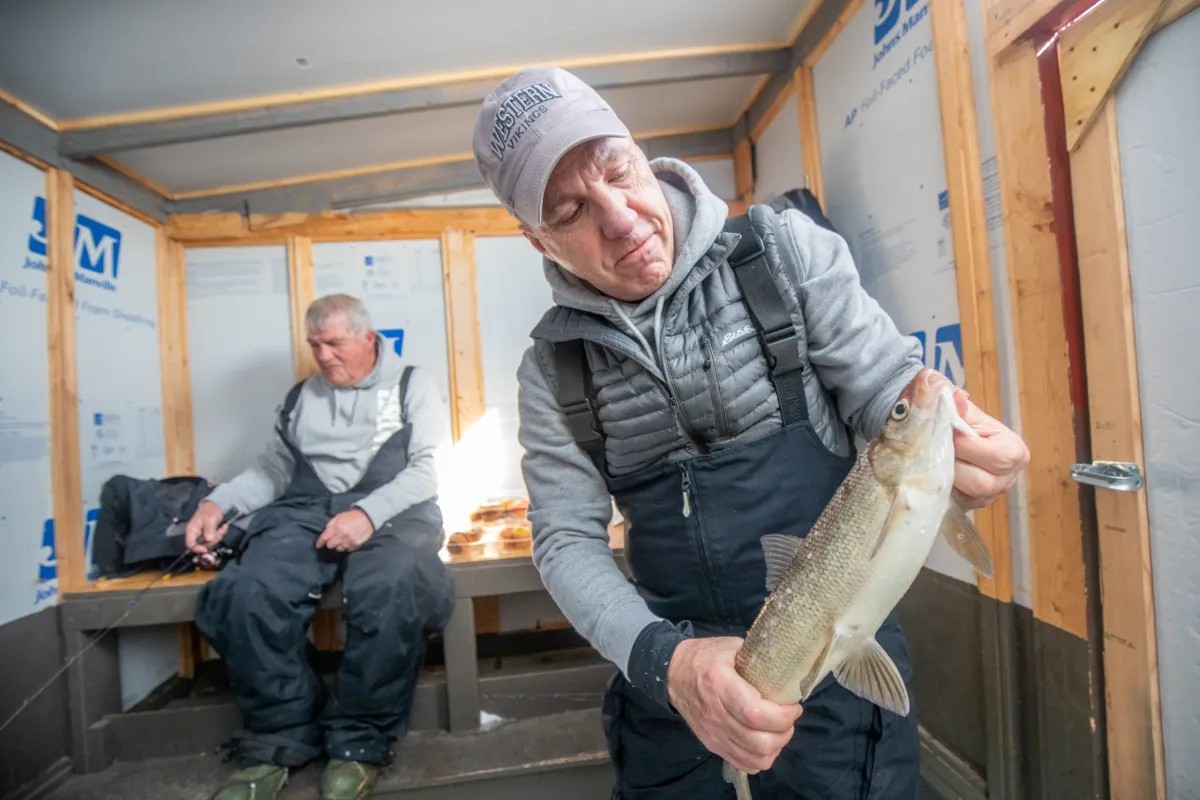
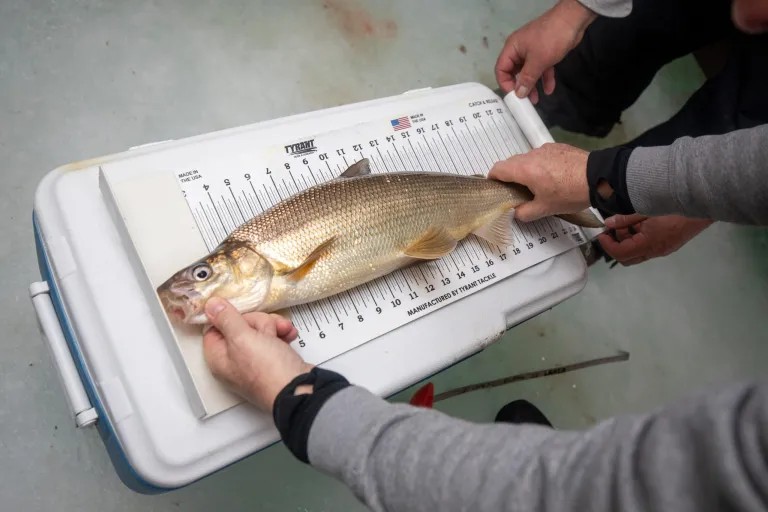
“There we go!” he shouts as a shimmering 23-inch whitefish appears through a hole in the ice. “That’ll make a nice filet.”

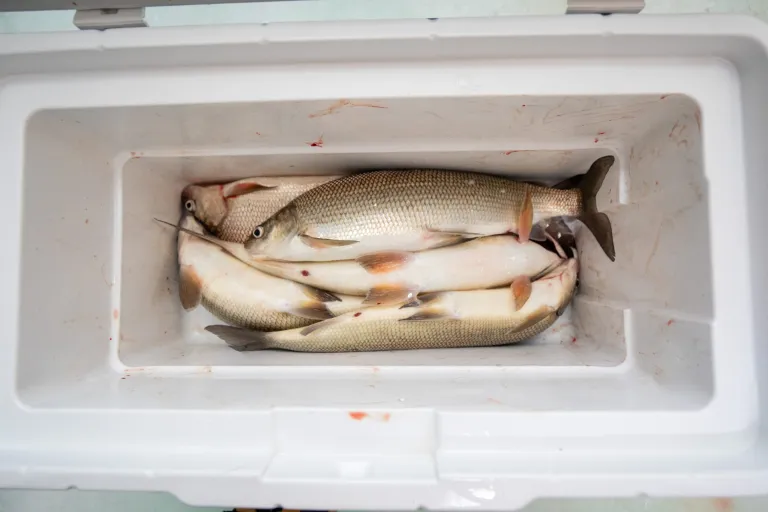
No sooner has Smith tossed it into a cooler than his buddy Terry Gross reels in another one. Five minutes later came another bite, then another, until by 10:30 a.m. the trio had hauled in 15 fish — halfway to their daily limit, even after putting several back. 

Welcome to southern Green Bay. Or as Smith likes to call it, “Whitefish Town, USA.”

Once written off as too polluted to support many whitefish, the shallow, narrow bay in northwest Lake Michigan has produced an unlikely population boom in recent years, even as the iconic species vanishes from most of the lower Great Lakes. The collapse has dealt a blow to Michigan’s environmentcultureeconomy and dinner plates.

Oddly enough, nutrient pollution from farms and factories may help bolster the bay’swhitefish population, spawning a world-class recreational fishing scene while helping a handful of commercial fisheries in Michigan and Wisconsin stay afloat despite the collapse in the wider lake.

“This is a paradise,” Smith said. “The best fishing I can ever remember, for the species I want to catch.”

Terry Gross, 63, hauls in a large whitefish in the ice fishing shanty he shares with Ed Smrecek, 73. Both men are from Appleton, Wisconsin. (Daniel Kramer for Bridge Michigan)

As scientists work to understand what makes Green Bay unique, their findings could aid whitefish recovery efforts throughout the Great Lakes. Michigan biologists, for example, have drawn inspiration from Green Bay’s sheltered, nutrient-rich waters as they attempt to transplant the state’s whitefish into areas with similar characteristics.

“Having places they (whitefish) are doing well … gives us context for the places that they aren’t doing well,” said Matt Herbert, a senior conservation scientist with the Nature Conservancy in Michigan. “It helps us to figure out, how can we intervene?”

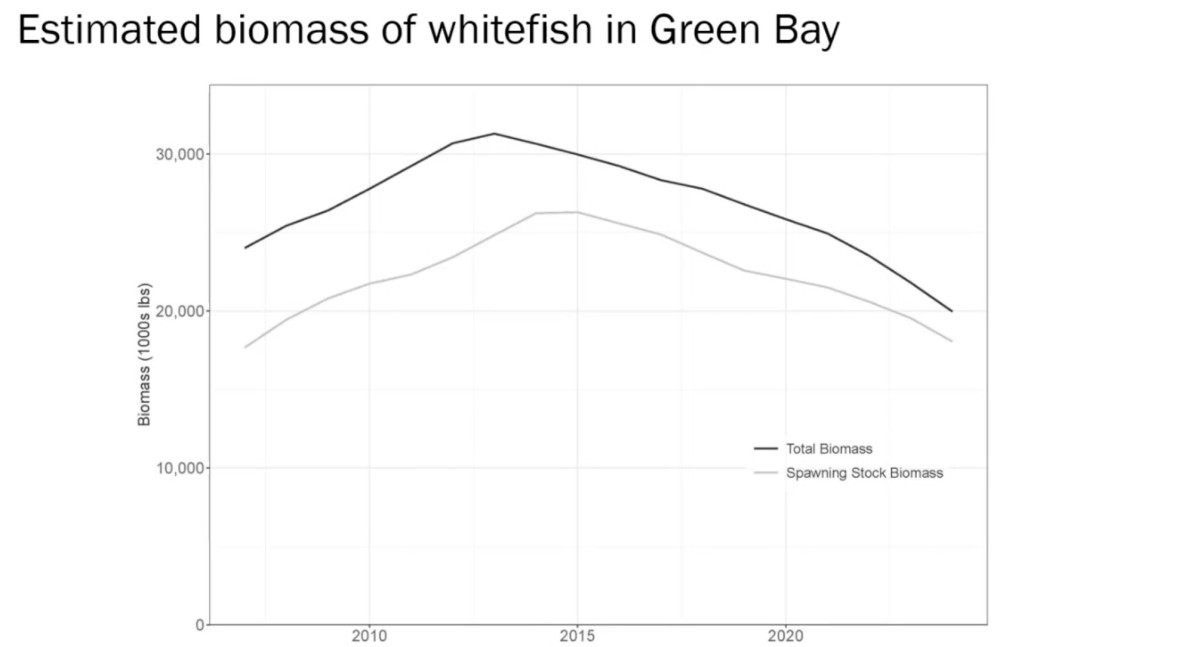
But lately, sophisticated population models have shown fewer baby fish making their way into the Green Bay population, prompting worries that Lake Michigan’s last whitefish stronghold may be weakening.

A Great Lakes miracle

Not long ago, it seemed impossible that a fishery like this could ever exist in Green Bay.

Before the Clean Water Act of 1972 and subsequent cleanup efforts, paper mills along the lower Fox River — the bay’s largest tributary — dumped toxic polychlorinated biphenyls (PCBs) into the water without restraint while silty, fertilizer-soaked runoff poured off upstream farms.

Southern Green Bay was no place for “a self-respecting whitefish,” said Scott Hansen, senior fisheries biologist with the Wisconsin Department of Natural Resources.

Lake Michigan’s much larger main basin, meanwhile, was full of them. 

Commercial fisherman Todd Stuth’s business got 80% of its catch from the open waters of Lake Michigan before the turn of the millenium. Now, 90% comes from Green Bay.

How did things change so dramatically?

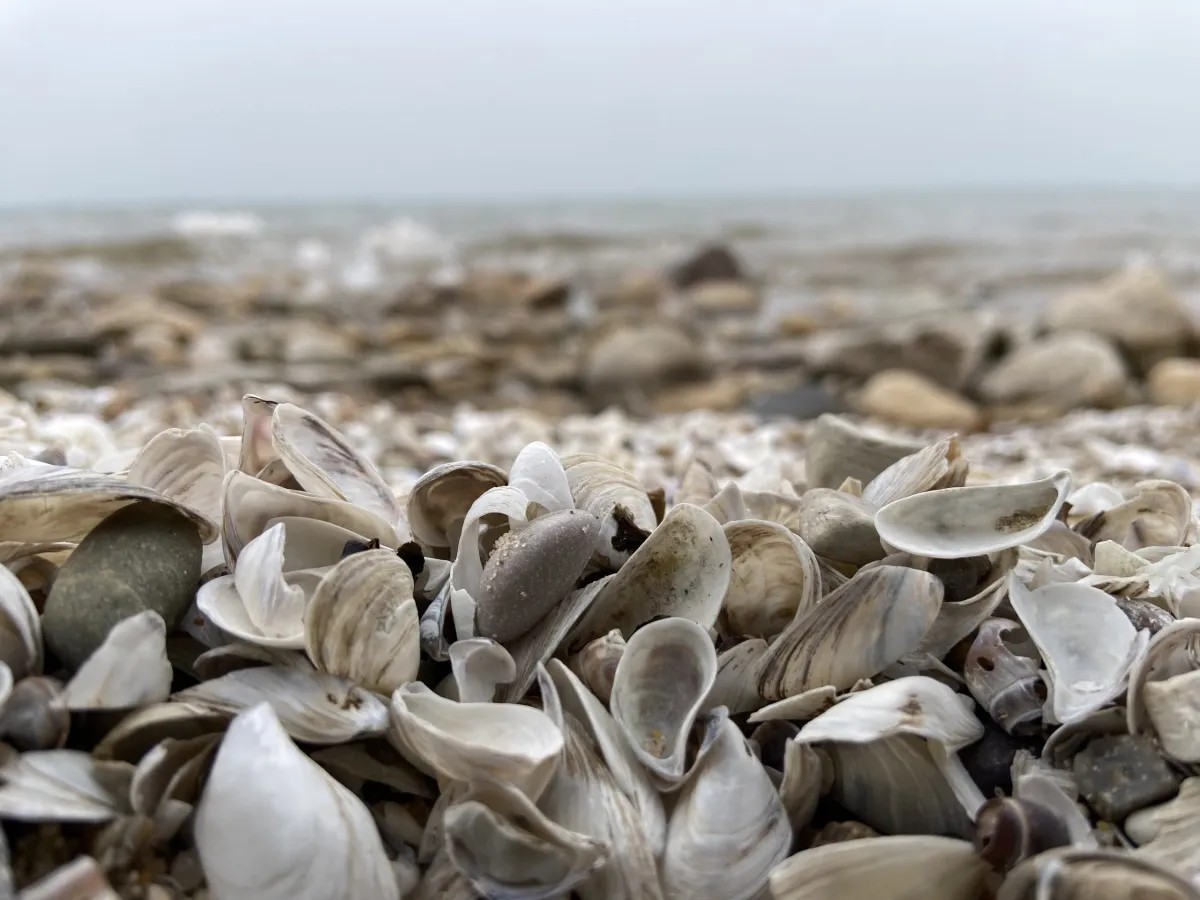
Invasive mussel shells are more common than pebbles on a Lake Michigan beach near Petoskey.  (Kelly House/Bridge Michigan)

First, invasive filter-feeding zebra and quagga mussels arrived in the Great Lakes from Eastern Europe and multiplied over decades, eventually monopolizing the nutrients and plankton that fish need to survive. Whitefish populations in lakes Michigan and Huron have tanked as a result.

Fortunately for Wisconsin and a sliver of Michigan’s Upper Peninsula, Hansen said, “Southern Green Bay kept building.”

In the late 1990s, scientists began spotting the fish in Green Bay area rivers where they hadn’t been seen in a century. Soon the species started showing up during surveys of lower Green Bay. By the early 2010s, models show the bay was teeming with tens of millions of them.

It’s not entirely clear what caused the whitefish revival, but most see cleaner water as part of the equation.

A decades-long restoration project has cleared away more than 6 million yards of sediment laced with PBCs and nutrient-laced farm runoff from the Fox River and lower Green Bay. Phosphorus concentrations near the rivermouth have declined by a third over 40 years — though they’re still considered too high.

“Pelicans are back, and the bird population seems to be thriving,” said Sarah Bartlett, a water resources specialist with the Green Bay Metropolitan Sewerage District, which monitors the bay’s water quality. “And now we have this world-class fishery.”

Hansen’s theory is that back when whitefish were still abundant in Lake Michigan, some wanderers strayed into the newly hospitable bay and decided to stay. Or maybe they were here all along, waiting for the right conditions to multiply.

Either way, the bay has become a lifeline for whitefish and the humans that eat them.

“I feel very fortunate that the bay is doing as well as it is,” said Stuth, who chairs the state commercial fishing board. 

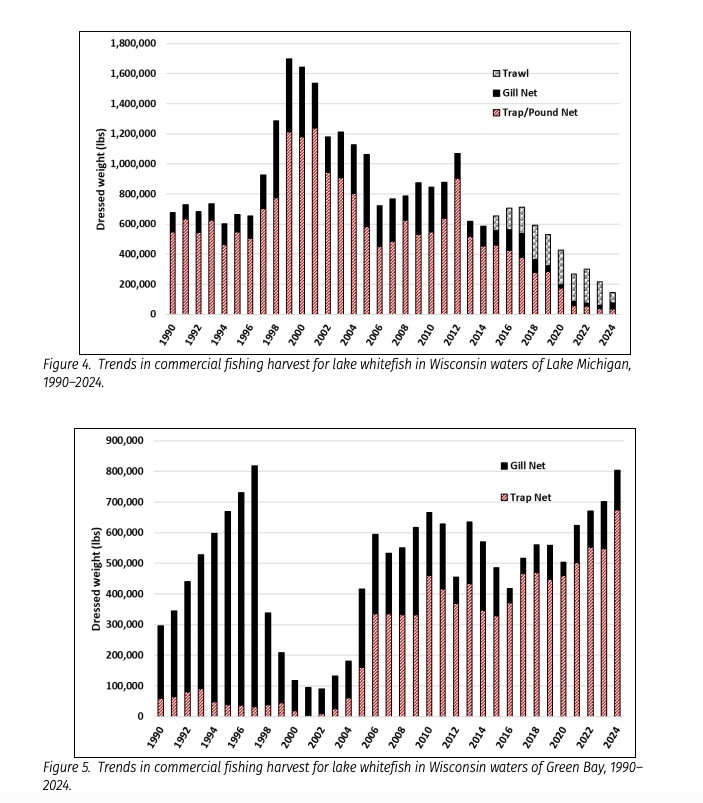
As commercial harvests in the Wisconsin waters of Lake Michigan plummeted from more than 1.6 million pounds in 2000 to less than 200,000 pounds in 2024, harvests in Green Bay skyrocketed from less than 100,000 pounds to more than 800,000.

The bay has also become more important to fishers in Michigan, which has jurisdiction over a portion of its waters.

While the state’s total commercial harvests from Lake Michigan have plummeted 70% since 2009 to just 1.2 million pounds annually, the decline would be steeper were it not for stable stocks in the bay. Once accounting for just a sliver of the catch, the bay now makes up more than half.

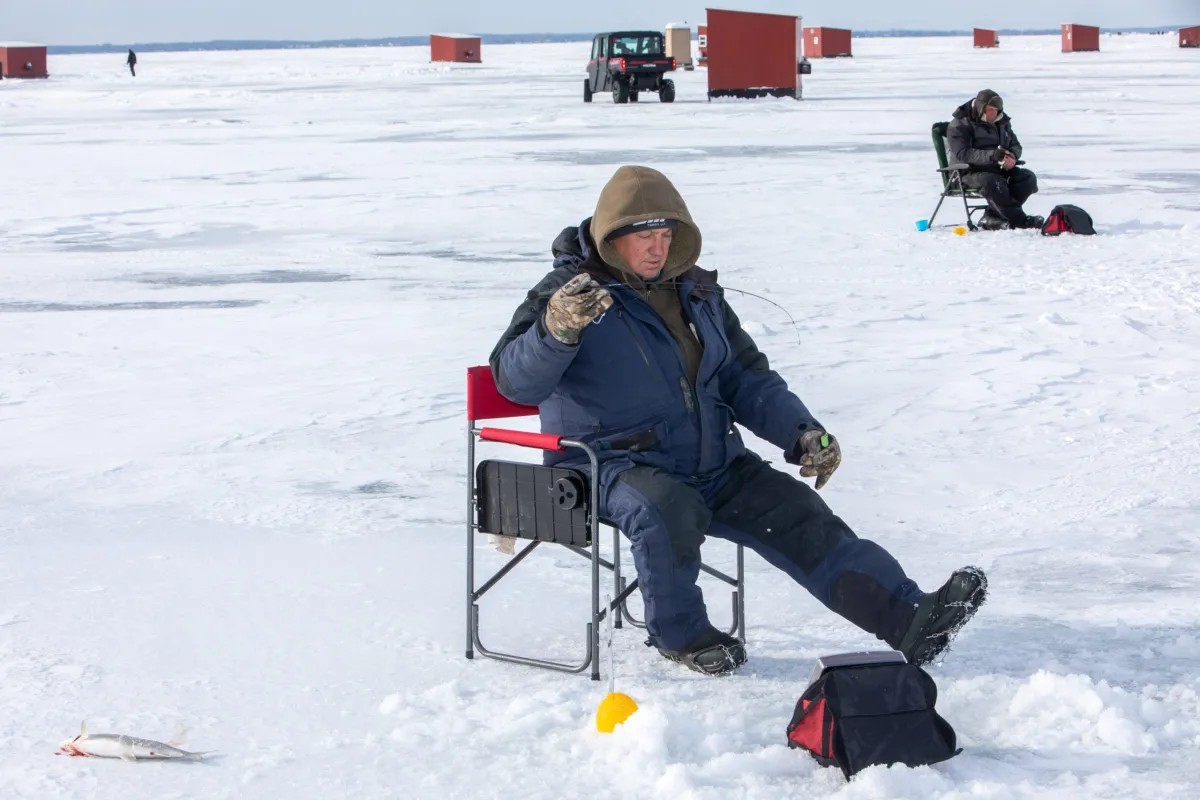
Vytautas Majus, who lives in Chicago, left the city at 2 a.m. to be on the ice fishing for whitefish by 7 a.m. Behind him, the horizon is dotted with ice shanties and anglers also hoping to land a whitefish. (Daniel Kramer for Bridge Michigan)

A recreational ice fishing scene has sprung up too, with thousands of anglers taking to the ice each winter, contributing tens of millions to the local economy.

Ironically, the bay’s lingering nutrient pollution may be helping to some extent – a dynamic also seen in Michigan’s Saginaw Bay. 

Nutrients like phosphorus and nitrogen are the building blocks of life, fueling the growth of aquatic plants and algae at the base of the food web. Plankton eat the algae, small fish eat the plankton, and big fish eat the small fish.

Unlike the main basins, where mussels have hogged nutrients and starved out whitefish, polluted runoff leaves the shallow bays with more than enough for the mussels and everything else. 

Some have even suggested Michigan and its neighbors should start fertilizing the big lakes in hopes of giving whitefish a boost, Herbert said, but “there’s the question of feasibility.” 

First, because the lakes are far deeper and wider than the bays, it would take vast quantities to make an impact. And while excess nutrients may help feed fish, they could also cause oxygen-deprived dead zonesharmful algae blooms and other serious problems.

Green Bay is already offering other lessons for Michigan, though. 

Inspired by whitefish’s return to the bay’s rivers, biologists including Herbert are trying to coax Michigan whitefish to spawn in rivers that connect to nutrient-rich rivermouths like Lake Charlevoix. 

The hope is that if hatchlings can spend a few months fattening up before migrating into the mussel-infested big lake, they’ll stand a better chance of surviving.

Scientists in Green Bay are also tracking whitefish movements, hoping to figure out where they spawn and what makes those habitats special. That kind of information could prove useful to recovery efforts throughout the Great Lakes, said Dan Isermann, a fish biologist with the US Geological Survey.

Living in ‘the good old days’

“We’re really lucky to have what we have here,” said JJ Malvitz, a commercial fishing guide who owes his career to Green Bay’s whitefish resurgence. 

But he lives with fear that “the good old days are now.”

(Courtesy of Wisconsin Department of Natural Resources)

Stocks have shrunk by half since the mid-2010s, according to population models fed with data from DNR surveys and commercial and recreational harvests. The adult whitefish seem to be fat and healthy. But for reasons unknown, fewer of their offspring have been making it to adulthood.  

It’s possible the bay’s population is just leveling off after a period of strong recruitment, Hansen said, “but we want to be vigilant.”

A recent string of lackluster winters adds to the concern. Whitefish lay their eggs on ice-covered reefs. When that protective layer fails to form or melts off early, the eggs can be battered by waves or enticed to hatch early, out of sync with the spring plankton bloom that serves as their main food source.

As whitefish disappeared from the main basin of Lake Michigan, they experienced a resurgence in Green Bay that still isn’t fully understood. (Courtesy of Wisconsin Department of Natural Resources)

While this winter was icier than most, climate change is making low-ice winters more frequent.

“Whitefish are a cold-water species, and we know that’s not where the trends are going,” Hansen said.

Time to cut back?

So far, Wisconsin officials haven’t lowered Green Bay’s annual whitefish quota of 2.28 million pounds, evenly split between the commercial and sport fisheries. Commercial boats are limited to fish bigger than 17 inches, while recreational anglers are limited to 10 fish a day of any size.

But during a recent presentation to the state’s Natural Resources Board, Hansen said it’s time to start keeping closer tabs on the population. 

“If these trends continue,” he said, “We need to have some more serious discussions amongst ourselves about lowering the exploitation rates.”

Malvitz, the guide, believes it’s time for commercial and recreational anglers to collectively agree to harvest fewer fish. He would be satisfied with a five-fish limit for recreational anglers along with smaller quotas for the commercial fishery, which harvests far more fish. 

The bay’s whitefish reappeared quickly and unexpectedly, he said. Who’s to say they couldn’t disappear just as fast?

“I don’t want to be standing on the shore in five years saying ‘remember when,’” he said. 

Stuth, the commercial fishing board chair, isn’t ready to accept tighter quotas in the bay, but said population models should be closely watched. If the declines continue, he said, cuts may be on the table.

“A very conservative approach is going to be necessary,” he said. “Because it’s our last stronghold. If that goes away, what do we have?”

The post A Wisconsin whitefish refuge offers lessons for Michigan. But will it last? appeared first on Great Lakes Now.

Original Article

Great Lakes Now

Great Lakes Now

https://www.greatlakesnow.org/2026/03/12/a-wisconsin-whitefish-refuge-offers-lessons-for-michigan-but-will-it-last/

Kelly House, Bridge Michigan

Catch the latest energy news from around the region. Check back for these monthly Energy News Roundups.

The disputed reroute of the Line 5 pipeline is officially underway. Energy company Enbridge started clearing trees in late February for a segment of pipeline planned to go around the Bad River Reservation, almost seven years after the Bad River Band of Lake Superior Chippewa sued to have the pipeline removed from its land. The tribe has fought against the reroute since then. And while Enbridge is currently free to proceed, new lawsuits could force work to stop.

Separately, Michigan Attorney Dana Nessel and Enbridge lawyers faced off before the U.S. Supreme Court late last month as part of another yearslong legal battle: Nessel wants the part of Line 5 that runs under the Straits of Mackinac shut down over fears a spill could cause ecological disaster in the Great Lakes. The Supreme Court is weighing in on whether the case should continue in state court or be moved to federal court, as Enbridge requested. Meanwhile, key decisions are expected soon on the controversial tunnel Enbridge wants to build beneath the lakebed to house the pipeline.

A group of private equity investors including a BlackRock subsidiary is planning to buy the utility that serves more than 520,000 people around Indianapolis. The parent company of AES Indiana, among the state’s largest investor-owned utilities, announced last Monday it agreed to be purchased and could go private as soon as this year. The $33 billion deal has some state leaders worried private ownership will worsen already rising electric rates.

A major Michigan utility isn’t budging on plans to sell its hydroelectric dams. If state regulators block Consumers Energy from selling 13 dams to a private equity firm, the utility will decommission them all instead, an executive wrote in testimony last week. The sale agreement faces a host of recommended conditions meant to protect Consumers Energy customers. But the utility said it’s not willing to negotiate the terms of the sale despite concerns from state officials and ratepayer advocates.

And who will pay to run the coal plants the Trump administration is keeping open past their retirement dates? Federal regulators will have to decide. The U.S. Department of Energy issued emergency orders in December to delay the closure of two Indiana coal plants, citing an energy reliability emergency. Now the utilities that operate the plants are asking regulators to spread the cost of keeping them open to ratepayers throughout the region, not just local customers.

More energy news, in case you missed it:

The post Legal fights continue as reroute of Line 5 pipeline begins appeared first on Great Lakes Now.

Original Article

Great Lakes Now

Great Lakes Now

https://www.greatlakesnow.org/2026/03/11/legal-fights-continue-as-reroute-of-line-5-pipeline-begins/

Nicole Pollack, Great Lakes Now

This year marked the 20th anniversary of Great Lakes Day, an annual convening of environmentalists, policy experts, scientists, and small business owners on Capitol Hill. A top priority this year is the reauthorization of the federal Great Lakes Restoration Initiative (GLRI), as its five-year authorization is set to expire on September 30. Read the full story by Circle of Blue.

Original Article

Great Lakes Commission

Great Lakes Commission

https://www.glc.org/dailynews/20260311-great-lakes-day

James Polidori

The Ford government of Ontario is moving ahead with its plan to merge 36 conservation authorities into nine—two more than originally proposed—and it has created an agency with a $20-million budget to see it through. Notably, the Lake Erie Regional Conservation Authority and a Huron-Superior Regional Conservation Authority have each been split into two. Read the full story by The Narwhal.

Original Article

Great Lakes Commission

Great Lakes Commission

https://www.glc.org/dailynews/20260311-conservation-authority-merge

James Polidori

According to local officials, a sewage leak in Olcott, New York, is now under control after more than 1 million gallons of raw, untreated sewage leaked into the Olcott Harbor. For six days, sewage had poured into the Eighteen Mile Creek in Olcott, just feet from where the creek leads into Lake Ontario. Read the full story by WKBW-TV – Buffalo, NY.

Original Article

Great Lakes Commission

Great Lakes Commission

https://www.glc.org/dailynews/20260311-sewage-leak

James Polidori