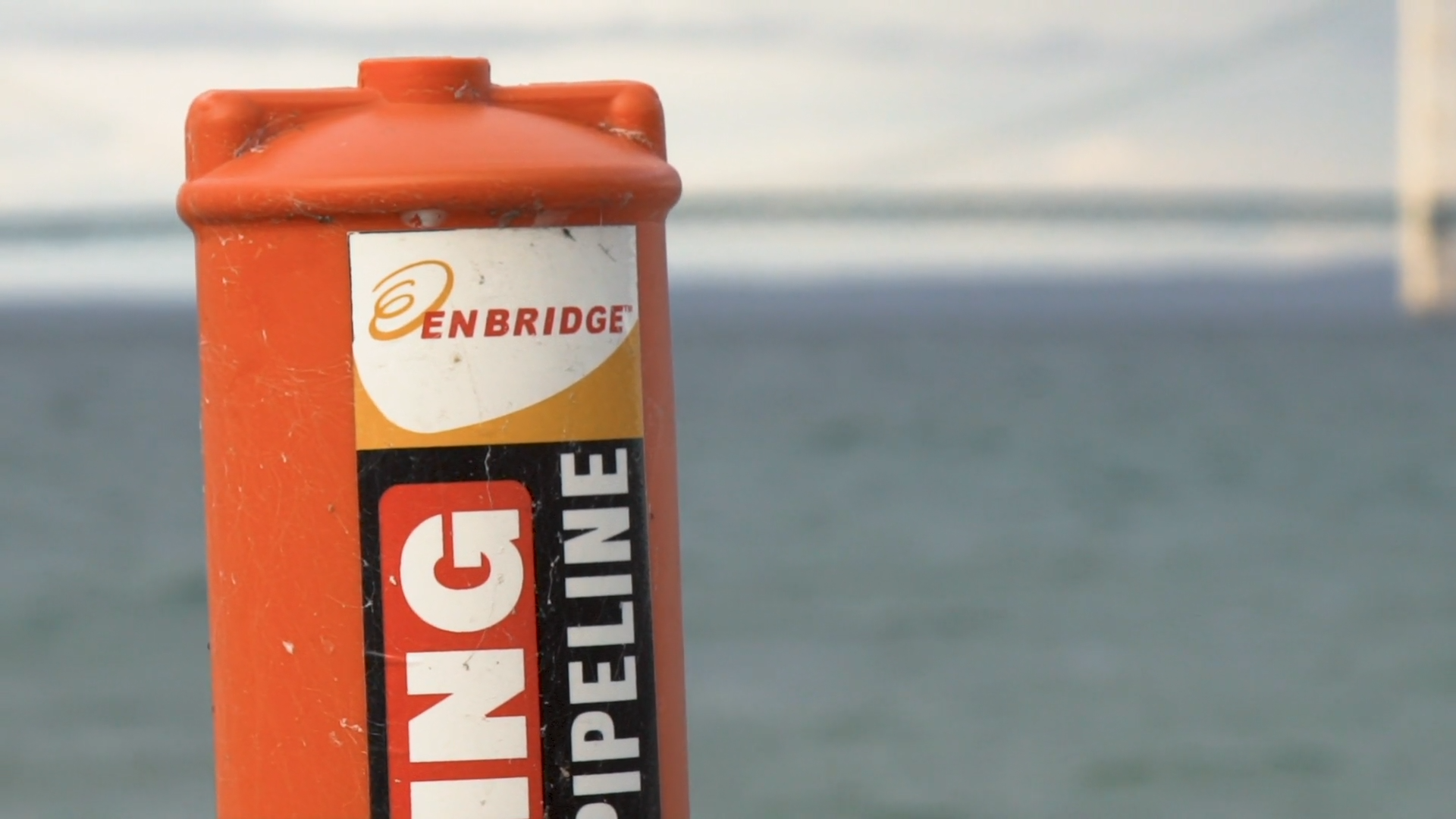
A key permit from state energy regulators approving Enbridge’s Line 5 tunnel project sat before the Michigan Supreme Court on Wednesday as the justices heard two cases arguing the permit should be sent back to the Michigan Public Service Commission for further review. Read the full story by Michigan Advance.

Original Article

Great Lakes Commission

Great Lakes Commission

https://www.glc.org/dailynews/20260313-line-5
Taaja Tucker-Silva

A long and complicated court battle over how best to protect western Lake Erie from harmful algal blooms is able to proceed again. The U.S. 6th Circuit Court of Appeals in Cincinnati, Ohio, has upheld a decision to exclude a largely undefined group of industrial interests from being a party to the case. Read the full story by the Toledo Blade.

Original Article

Great Lakes Commission

Great Lakes Commission

https://www.glc.org/dailynews/20260313-erie-court

Taaja Tucker-Silva

The rapid build-out of AI data centers across the Great Lakes basin is reshaping rural communities, straining fragile ecosystems, and forcing states to rethink energy and water policies. New guides have been released to help residents and lawmakers navigate the rapidly expanding industry and the regulatory blind spots that have accompanied it. Read the full story by Circle of Blue.

Original Article

Great Lakes Commission

Great Lakes Commission

https://www.glc.org/dailynews/20260313-data-centers

Taaja Tucker-Silva

Construction of a $23.4‑million water pipeline to the Oneida Nation of the Thames is set to begin after a London, Ontario, company won the federal contract. The project will extend the Lake Huron pipeline to the community’s boundary, providing clean drinking water. The Oneida Nation has been under a boil‑water advisory since September 2019. Read the full story by the CBC.

Original Article

Great Lakes Commission

Great Lakes Commission

https://www.glc.org/dailynews/20260313-oneida-pipeline

Taaja Tucker-Silva

More than 50 years ago, Lake Erie was declared “dead,” and while its environmental health has improved, the shallowest of the five Great Lakes still lags its peers according to the recent State of the Great Lakes 2025 Report. Read the full story by The Plain Dealer.

Original Article

Great Lakes Commission

Great Lakes Commission

https://www.glc.org/dailynews/20260313-erie-ranking

Taaja Tucker-Silva

For years, Illinois state Representative Marcus Evans Jr. has championed a plan to make Illinois’ shores home to the first offshore wind farm in the Great Lakes. But the effort to bring wind power to Lake Michigan stalled again. Read the full story by WBEZ – Chicago, IL.

Original Article

Great Lakes Commission

Great Lakes Commission

https://www.glc.org/dailynews/20260313-lake-turbines

Taaja Tucker-Silva

The Michigan Department of Natural Resources (DNR) recently released new information about the state of fish populations in upper Michigan’s lakes. The manager of the Marquette Fisheries Research Station said that lake trout in Lake Superior are officially recovered. Read the full story by WLUC-TV – Marquette, MI.

Original Article

Great Lakes Commission

Great Lakes Commission

https://www.glc.org/dailynews/20260313-superior-trout

Taaja Tucker-Silva

The USA Today 10BEST Readers’ Choice Awards revealed nominations for Best Recreational Trail this week, listing Minnesota’s Gitchi-Gami State Trail among the top contenders. This Minnesota Department of Natural Resources-built-and-managed paved trail is currently 36 miles, but it will eventually extend to 86 miles spanning five state parks along Minnesota’s North Shore. Read the full story by MLive.

Original Article

Great Lakes Commission

Great Lakes Commission

https://www.glc.org/dailynews/20260313-superior-trail

Taaja Tucker-Silva

Four Illinois residents who vandalized cliffs at Pictured Rocks National Lakeshore in Michigan’s Upper Peninsula have been temporarily banned from the park and fined. The visitors carved large letters into cliff faces and collected more than 100 pounds of rocks, intending to take them home. Read the full story by MLive.

Original Article

Great Lakes Commission

Great Lakes Commission

https://www.glc.org/dailynews/20260313-pictured-rocks-vandals

Taaja Tucker-Silva

Ice coverage on the Great Lakes dropped significantly in recent days as temperatures have been consistently above 32 degrees Fahrenheit. The Great Lakes were at 19.13% coverage as of March 12 according to the National Oceanic Atmospheric Administration. Read the full story by the Detroit Free Press.

Original Article

Great Lakes Commission

Great Lakes Commission

https://www.glc.org/dailynews/20260313-ice-cover

Taaja Tucker-Silva

By Christian Vazquesz

A Michigan state senator is pushing for a statewide vote to expand the 10-cent bottle and can deposit law, while the Midwest Independent Retailers Association is calling for repeal of the law. Meanwhile, the state House approved a bill sponsored by a Clinton Township representative to give an income tax write-off to beverage distributors that move recycled cans and bottles from stores to recycling plants.

The post Bill would expand Michigan’s bottle deposit law while some want to abolish it first appeared on Great Lakes Echo.

Original Article

Great Lakes Echo

Great Lakes Echo

https://greatlakesecho.org/2026/03/13/bill-would-expand-michigans-bottle-deposit-law-while-some-want-to-abolish-it/

Capital News Service

Isle Royale, one of the least visited national parks in the U.S., is home to a unique ecosystem that includes wolves and moose. In 1980, the remote island earned an International Biosphere Reserve designation. Great Lakes Now contributor Ian Solomon made the journey to Lake Superior’s wild island, exploring its rugged trails, stunning scenery, and a memorable encounter with a family of moose.

Find Ian’s full adventure on the Great Lakes Now YouTube channel

#GreatLakes #LakeSuperior #NationalParks #IsleRoyale #Hiking #Wildlife #Nature

===========================================
Website: https://greatlakesnow.org
Facebook: https://www.facebook.com/greatlakesnow
X: https://www.x.com/greatlakesnow
Instagram: https://www.instagram.com/greatlakesnoworg
Newsletter: https://www.greatlakesnow.org/great-lakes-now-newsletter/

To learn more about supporting Detroit PBS and Great Lakes Now, visit https://www.detroitpbs.org/

The post Exploring Isle Royale: Lake Superior’s Wild Island appeared first on Great Lakes Now.

Original Article

Great Lakes Now

Great Lakes Now

https://www.greatlakesnow.org/2026/03/12/exploring-isle-royale-lake-superiors-wild-island/

Great Lakes Now

Summary

The Communications Associate works to advance the Alliance for the Great Lakes’ mission by supporting and implementing digital communications strategies that elevate the organization’s policy priorities, engage supporters, and strengthen the Alliance’s brand across platforms. They help translate complex environmental policy issues into clear, compelling, and accessible content that inspires action and builds public support for Great Lakes protection.

A typical day:

A typical day might include drafting and scheduling social media posts; creating short-form videos and graphics; monitoring and responding to social media comments in a fast-moving digital environment; collaborating with policy and program staff to turn technical information into blog posts or action alerts; building emails; reviewing analytics to inform strategy; and organizing digital assets in the Alliance’s photo and video library.

Responsibilities

Social Media Management and Strategy

Implement social media strategies across platforms, including Instagram, Facebook, LinkedIn, Threads, and Bluesky.

  • Create, schedule, and publish engaging content that is tailored to each platform, is compelling, and reflects the Alliance’s brand voice and values.
  • Monitor comments and messages, respond appropriately and professionally, and demonstrate sound judgment in a fast-moving, multi-platform social media environment.
  • Track analytics and adjust content and strategy based on performance metrics.
  • Identify opportunities for influencer engagement and assist with outreach and relationship building.
  • Collaborate with the Communications Director, Communications and Digital Fundraising Manager, and Senior Communications Manager to refine and evolve digital strategy.

Graphic Design and Video Production

  • Design compelling graphics and edit photos using Canva or similar tools for social media, website, and email campaigns.
  • Produce short-form videos for social media that explain policy issues using tools such as Adobe Premiere, Canva, or similar platforms.
  • Ensure visual consistency with the Alliance’s brand standards across all channels.
  • Manage and organize the Alliance’s photo, video, and graphics library.
  • Record original video and coordinate with staff and external vendors to capture photos and video that support communications campaigns and storytelling efforts.

Content Creation

  • Draft, edit, and provide light proofreading for blog posts, website content, one-pagers, toolkits and other written materials.
  • Translate complex environmental policy concepts into accessible and engaging language for broad audiences.
  • Support email marketing efforts by drafting and building emails using Campaign Monitor.
  • Draft and build action alerts using Engaging Networks or a similar advocacy platform.

General Support

  • Monitor the organization’s inbox and route inquiries to the appropriate staff.
  • Coordinate with other assistant-level staff to coordinate scheduling and logistics across teams.
  • Assist with campaign planning and execution, ensuring timelines are met and deliverables are completed.
  • Manage multiple projects concurrently in a fast-paced environment while maintaining high standards of organization and efficiency.
  • Help triage and maintain speaking / comment requests, determining next steps.
  • Stay current on digital trends, emerging platforms and best practices, and recommend new tools or tactics as appropriate.

Additional Duties

As assigned or needed.

Work Relationships

The Associate reports to the Communications Director and is a part of the Communications Team and the broader Advancement Team (A-Team).

Supervisory Responsibilities

None

Physical Demands/Work Environment

No physical demand. This is a primarily remote position with a strong preference for location in the Chicago area, with an expectation to work from the office once per week. Fully remote staff are expected to travel to the Alliance’s Chicago office a few times a year.

Knowledge/Skills

  • At least 2-5 years of experience in social media management and strategy, graphic design and video production, content creation, and admin support.
  • Strong writer with the ability to communicate complex policy ideas clearly while maintaining brand consistency and organizational voice.
  • Demonstrated experience managing social media accounts and contributing to social media strategy.
  • Ability to create compelling graphics and short-form video content using tools such as Adobe Premiere, Canva, or similar platforms.
  • High level of maturity, judgment, and professionalism in managing and responding to public-facing communications.
  • Experience working within email marketing and advocacy platforms such as Campaign Monitor and Engaging Networks preferred.
  • Familiarity with website content management systems such as WordPress preferred.
  • Exceptional organizational skills and ability to manage a content calendar with multiple concurrent projects.
  • Ability to work independently while collaborating effectively across teams.
  • Understands and upholds Alliance for the Great Lakes values of community, relationships, courage, integrity, and optimism.
  • Demonstrated alignment with our external and internal operating principles of justice, equity, diversity, and inclusion.
  • The selected candidate must be able to pass a background check.

Job Parameters

This position is full-time and consistent with Alliance employment policy. The Alliance has defined salary ranges that are evaluated annually, and it is customary for candidates to join at the lower half of the range to leave room for learning and development in the role. It is uncommon for starting salaries to fall above the mid-point. The salary range for this position begins at $60,000 and we negotiate salaries with final candidates based on their experience in similar roles and expertise related to the qualifications.

Excellent benefits, including medical, dental, short- and long-term disability, life insurance, FSA, 11 paid holidays plus the business days between 12/26 and 12/30 (staff who must work on any paid holidays may take those holidays at another time subject to the employee handbook), 3 weeks’ annual vacation to start + PTO, and Fidelity 401(k) with employer match of up to 6% of salary, eligible after 30 days.

This is a primarily remote position with a strong preference for location in the Chicago area, with an expectation to work from the office once per week. Fully remote staff are expected to travel to the Alliance’s Chicago office a few times a year.

Application Process

Please e-mail a cover letter, resume, references, and writing or work sample that demonstrates relevant qualifications to hr@greatlakes.org. Include the job title in the subject line.

Applications will be accepted and reviewed on a rolling basis starting on March 12th, 2026, and until the position is filled. Materials should be compatible with Microsoft Word or Adobe Acrobat. Applicants will receive confirmation of receipt of their materials, further guidance, and updates about the hiring process by e-mail, with interviews provided for finalists. No phone inquiries, please.

About the Alliance for the Great Lakes

Our vision is a thriving Great Lakes and healthy water that all life can rely on, today and far into the future.

The mission of the Alliance for the Great Lakes is to protect, conserve, and restore the Great Lakes, ensuring healthy water in the lakes and in our communities for all generations of people and wildlife.

To achieve our vision and mission, everyone in our organization will live ourvalues of Community, Relationships, Courage, Integrity, and Optimism, and weave the principles of Justice, Equity, Diversity, and Inclusion into all our work.

 For more information about the Alliance’s programs and work, please visit us online at www.greatlakes.org.

The post Communications Associate appeared first on Alliance for the Great Lakes.

Original Article

News - Alliance for the Great Lakes

News - Alliance for the Great Lakes

https://greatlakes.org/2026/03/communications-associate/

Michelle Farley

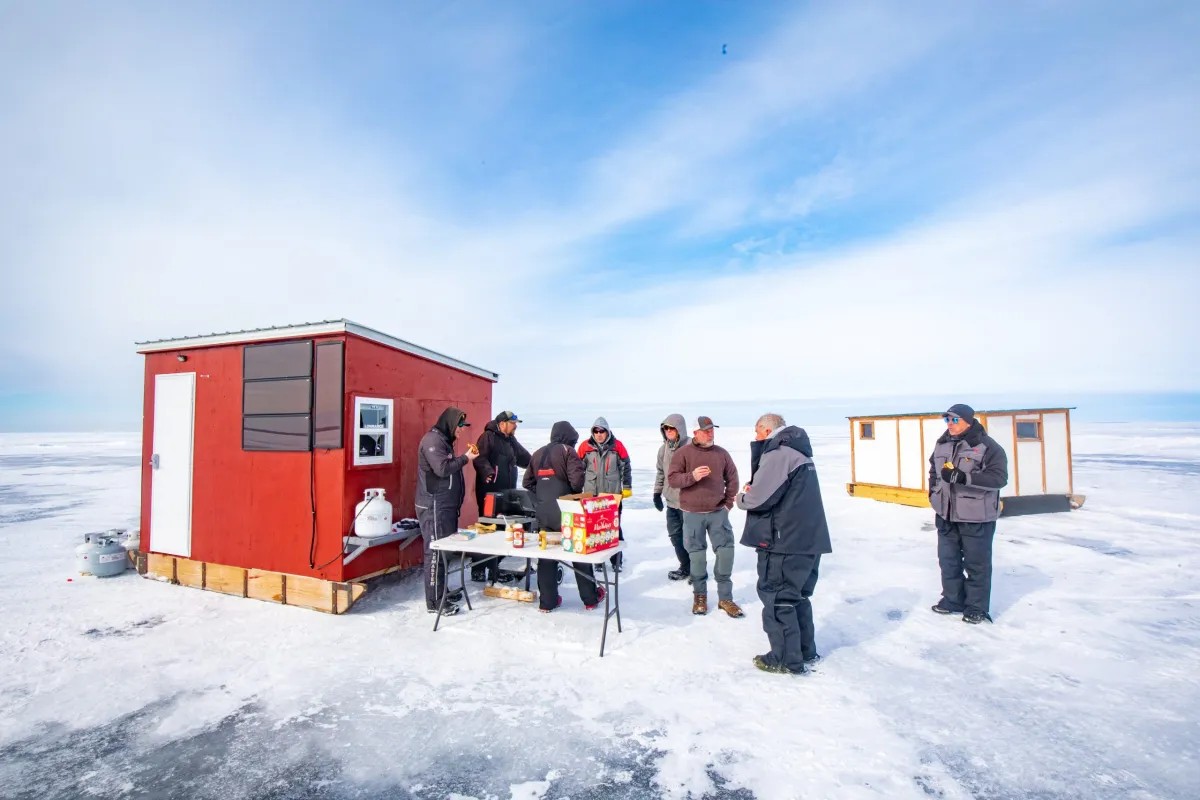
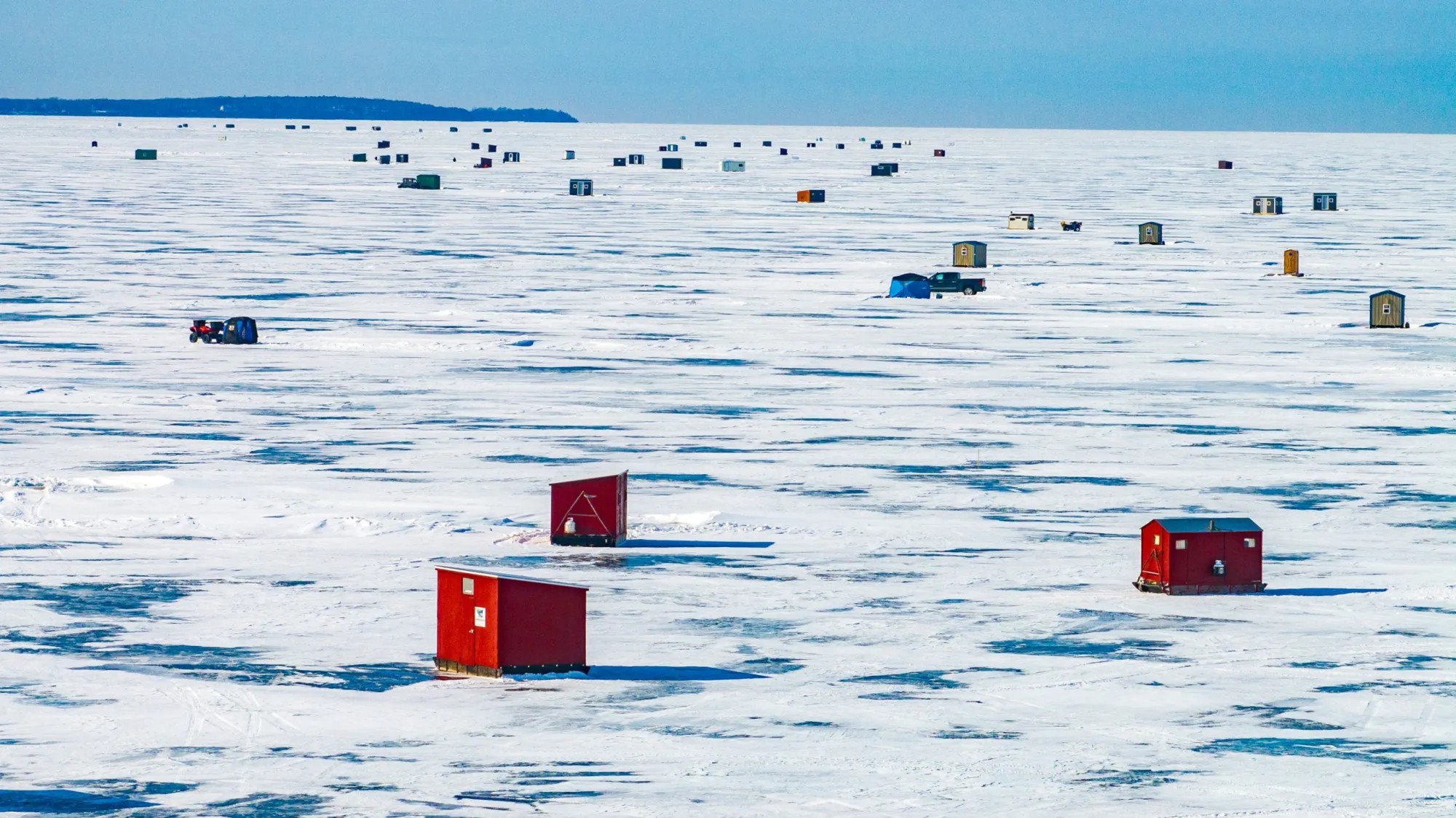
STURGEON BAY, WISCONSIN — It’s midmorning in late February, and Bruce Smith is regaling two ice fishing buddies when a tug on his line interrupts the story.

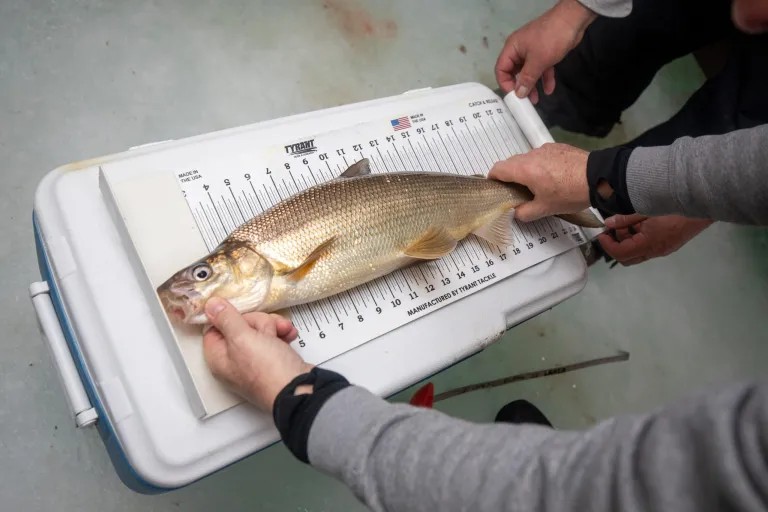
“There we go!” he shouts as a shimmering 23-inch whitefish appears through a hole in the ice. “That’ll make a nice filet.”

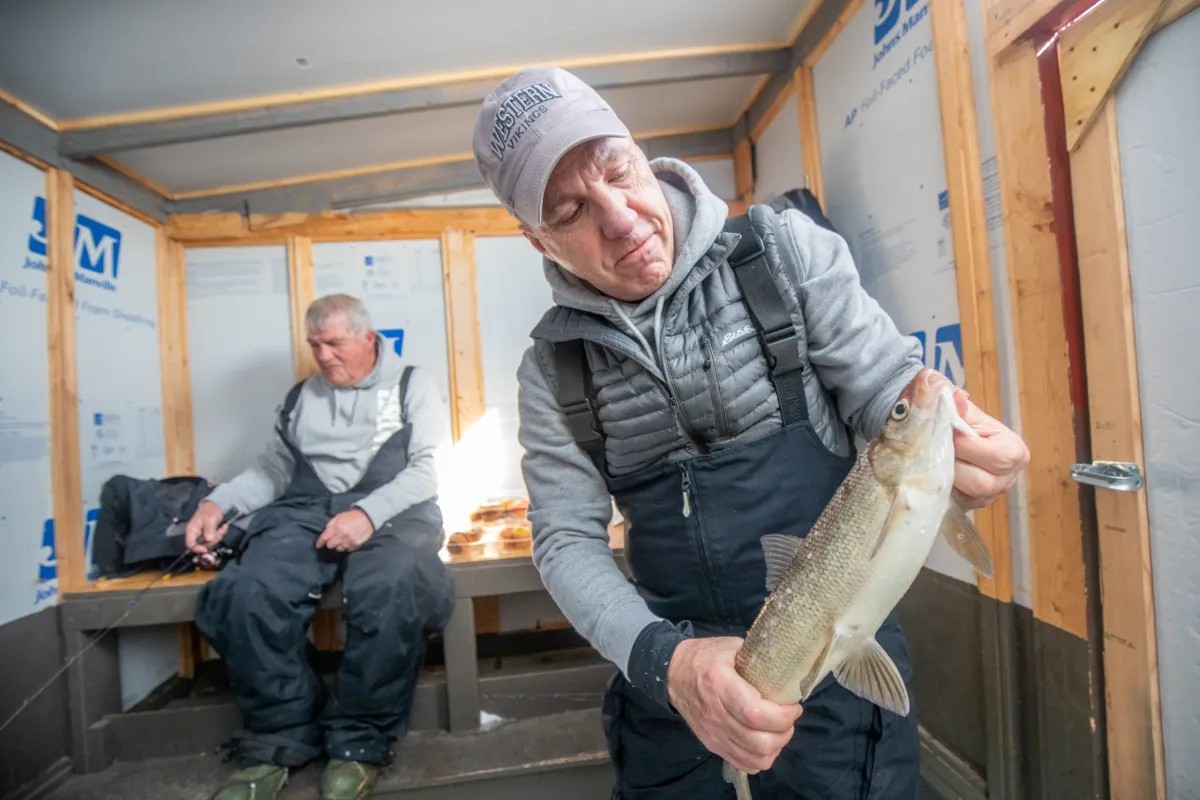
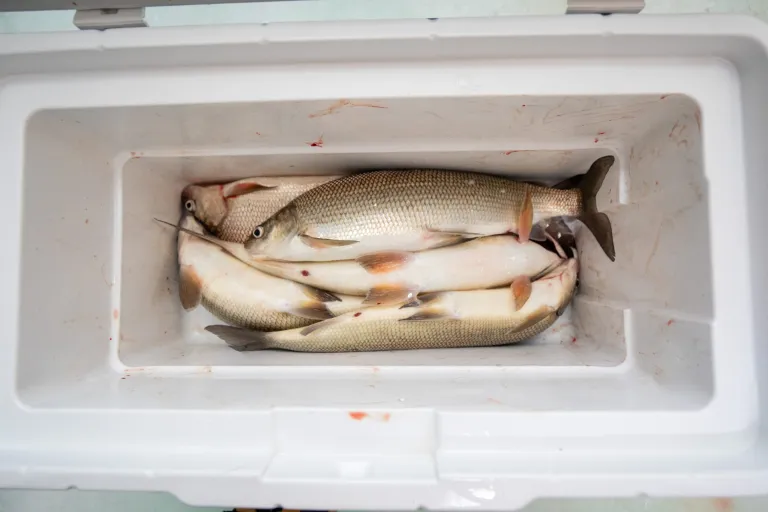
No sooner has Smith tossed it into a cooler than his buddy Terry Gross reels in another one. Five minutes later came another bite, then another, until by 10:30 a.m. the trio had hauled in 15 fish — halfway to their daily limit, even after putting several back. 

Welcome to southern Green Bay. Or as Smith likes to call it, “Whitefish Town, USA.”

Once written off as too polluted to support many whitefish, the shallow, narrow bay in northwest Lake Michigan has produced an unlikely population boom in recent years, even as the iconic species vanishes from most of the lower Great Lakes. The collapse has dealt a blow to Michigan’s environmentcultureeconomy and dinner plates.

Oddly enough, nutrient pollution from farms and factories may help bolster the bay’swhitefish population, spawning a world-class recreational fishing scene while helping a handful of commercial fisheries in Michigan and Wisconsin stay afloat despite the collapse in the wider lake.

“This is a paradise,” Smith said. “The best fishing I can ever remember, for the species I want to catch.”

Terry Gross, 63, hauls in a large whitefish in the ice fishing shanty he shares with Ed Smrecek, 73. Both men are from Appleton, Wisconsin. (Daniel Kramer for Bridge Michigan)

As scientists work to understand what makes Green Bay unique, their findings could aid whitefish recovery efforts throughout the Great Lakes. Michigan biologists, for example, have drawn inspiration from Green Bay’s sheltered, nutrient-rich waters as they attempt to transplant the state’s whitefish into areas with similar characteristics.

“Having places they (whitefish) are doing well … gives us context for the places that they aren’t doing well,” said Matt Herbert, a senior conservation scientist with the Nature Conservancy in Michigan. “It helps us to figure out, how can we intervene?”

But lately, sophisticated population models have shown fewer baby fish making their way into the Green Bay population, prompting worries that Lake Michigan’s last whitefish stronghold may be weakening.

A Great Lakes miracle

Not long ago, it seemed impossible that a fishery like this could ever exist in Green Bay.

Before the Clean Water Act of 1972 and subsequent cleanup efforts, paper mills along the lower Fox River — the bay’s largest tributary — dumped toxic polychlorinated biphenyls (PCBs) into the water without restraint while silty, fertilizer-soaked runoff poured off upstream farms.

Southern Green Bay was no place for “a self-respecting whitefish,” said Scott Hansen, senior fisheries biologist with the Wisconsin Department of Natural Resources.

Lake Michigan’s much larger main basin, meanwhile, was full of them. 

Commercial fisherman Todd Stuth’s business got 80% of its catch from the open waters of Lake Michigan before the turn of the millenium. Now, 90% comes from Green Bay.

How did things change so dramatically?

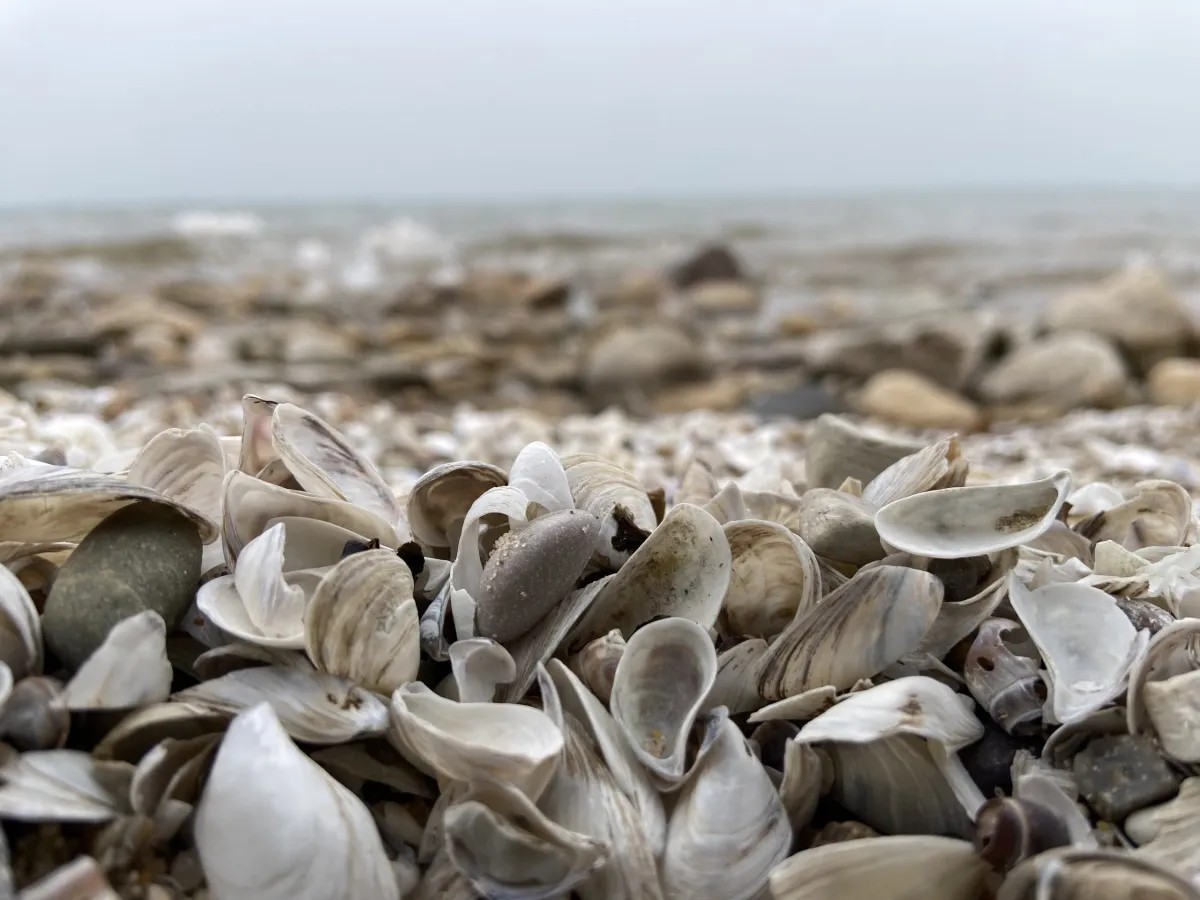
Invasive mussel shells are more common than pebbles on a Lake Michigan beach near Petoskey.  (Kelly House/Bridge Michigan)

First, invasive filter-feeding zebra and quagga mussels arrived in the Great Lakes from Eastern Europe and multiplied over decades, eventually monopolizing the nutrients and plankton that fish need to survive. Whitefish populations in lakes Michigan and Huron have tanked as a result.

Fortunately for Wisconsin and a sliver of Michigan’s Upper Peninsula, Hansen said, “Southern Green Bay kept building.”

In the late 1990s, scientists began spotting the fish in Green Bay area rivers where they hadn’t been seen in a century. Soon the species started showing up during surveys of lower Green Bay. By the early 2010s, models show the bay was teeming with tens of millions of them.

It’s not entirely clear what caused the whitefish revival, but most see cleaner water as part of the equation.

A decades-long restoration project has cleared away more than 6 million yards of sediment laced with PBCs and nutrient-laced farm runoff from the Fox River and lower Green Bay. Phosphorus concentrations near the rivermouth have declined by a third over 40 years — though they’re still considered too high.

“Pelicans are back, and the bird population seems to be thriving,” said Sarah Bartlett, a water resources specialist with the Green Bay Metropolitan Sewerage District, which monitors the bay’s water quality. “And now we have this world-class fishery.”

Hansen’s theory is that back when whitefish were still abundant in Lake Michigan, some wanderers strayed into the newly hospitable bay and decided to stay. Or maybe they were here all along, waiting for the right conditions to multiply.

Either way, the bay has become a lifeline for whitefish and the humans that eat them.

“I feel very fortunate that the bay is doing as well as it is,” said Stuth, who chairs the state commercial fishing board. 

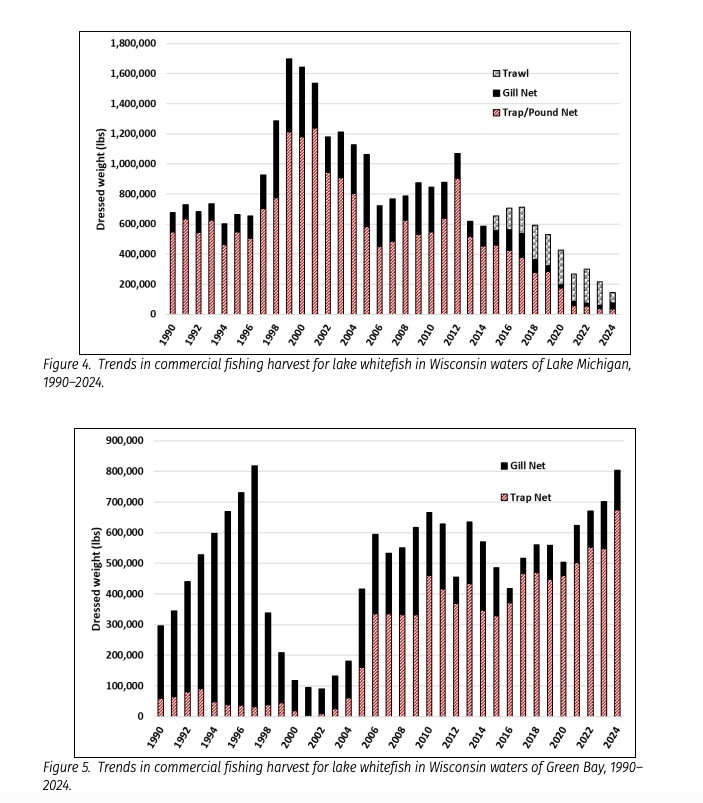
As commercial harvests in the Wisconsin waters of Lake Michigan plummeted from more than 1.6 million pounds in 2000 to less than 200,000 pounds in 2024, harvests in Green Bay skyrocketed from less than 100,000 pounds to more than 800,000.

The bay has also become more important to fishers in Michigan, which has jurisdiction over a portion of its waters.

While the state’s total commercial harvests from Lake Michigan have plummeted 70% since 2009 to just 1.2 million pounds annually, the decline would be steeper were it not for stable stocks in the bay. Once accounting for just a sliver of the catch, the bay now makes up more than half.

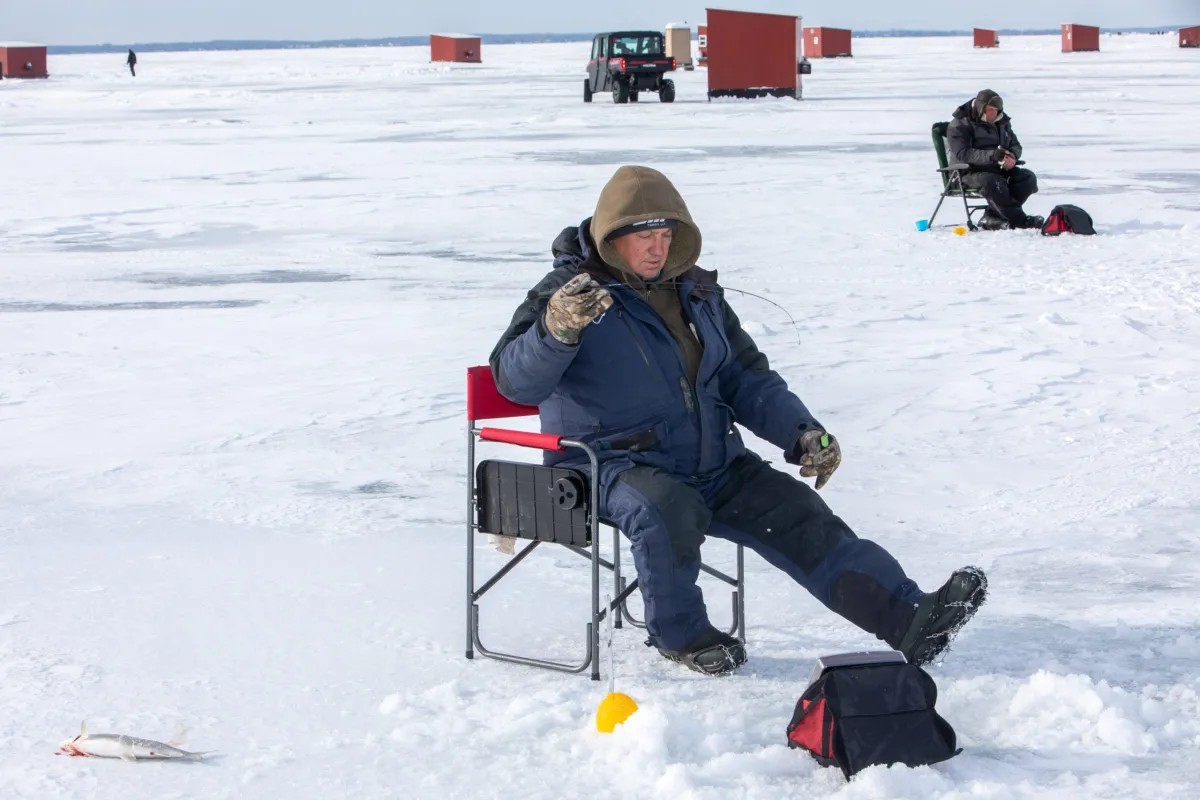
Vytautas Majus, who lives in Chicago, left the city at 2 a.m. to be on the ice fishing for whitefish by 7 a.m. Behind him, the horizon is dotted with ice shanties and anglers also hoping to land a whitefish. (Daniel Kramer for Bridge Michigan)

A recreational ice fishing scene has sprung up too, with thousands of anglers taking to the ice each winter, contributing tens of millions to the local economy.

Ironically, the bay’s lingering nutrient pollution may be helping to some extent – a dynamic also seen in Michigan’s Saginaw Bay. 

Nutrients like phosphorus and nitrogen are the building blocks of life, fueling the growth of aquatic plants and algae at the base of the food web. Plankton eat the algae, small fish eat the plankton, and big fish eat the small fish.

Unlike the main basins, where mussels have hogged nutrients and starved out whitefish, polluted runoff leaves the shallow bays with more than enough for the mussels and everything else. 

Some have even suggested Michigan and its neighbors should start fertilizing the big lakes in hopes of giving whitefish a boost, Herbert said, but “there’s the question of feasibility.” 

First, because the lakes are far deeper and wider than the bays, it would take vast quantities to make an impact. And while excess nutrients may help feed fish, they could also cause oxygen-deprived dead zonesharmful algae blooms and other serious problems.

Green Bay is already offering other lessons for Michigan, though. 

Inspired by whitefish’s return to the bay’s rivers, biologists including Herbert are trying to coax Michigan whitefish to spawn in rivers that connect to nutrient-rich rivermouths like Lake Charlevoix. 

The hope is that if hatchlings can spend a few months fattening up before migrating into the mussel-infested big lake, they’ll stand a better chance of surviving.

Scientists in Green Bay are also tracking whitefish movements, hoping to figure out where they spawn and what makes those habitats special. That kind of information could prove useful to recovery efforts throughout the Great Lakes, said Dan Isermann, a fish biologist with the US Geological Survey.

Living in ‘the good old days’

“We’re really lucky to have what we have here,” said JJ Malvitz, a commercial fishing guide who owes his career to Green Bay’s whitefish resurgence. 

But he lives with fear that “the good old days are now.”

(Courtesy of Wisconsin Department of Natural Resources)

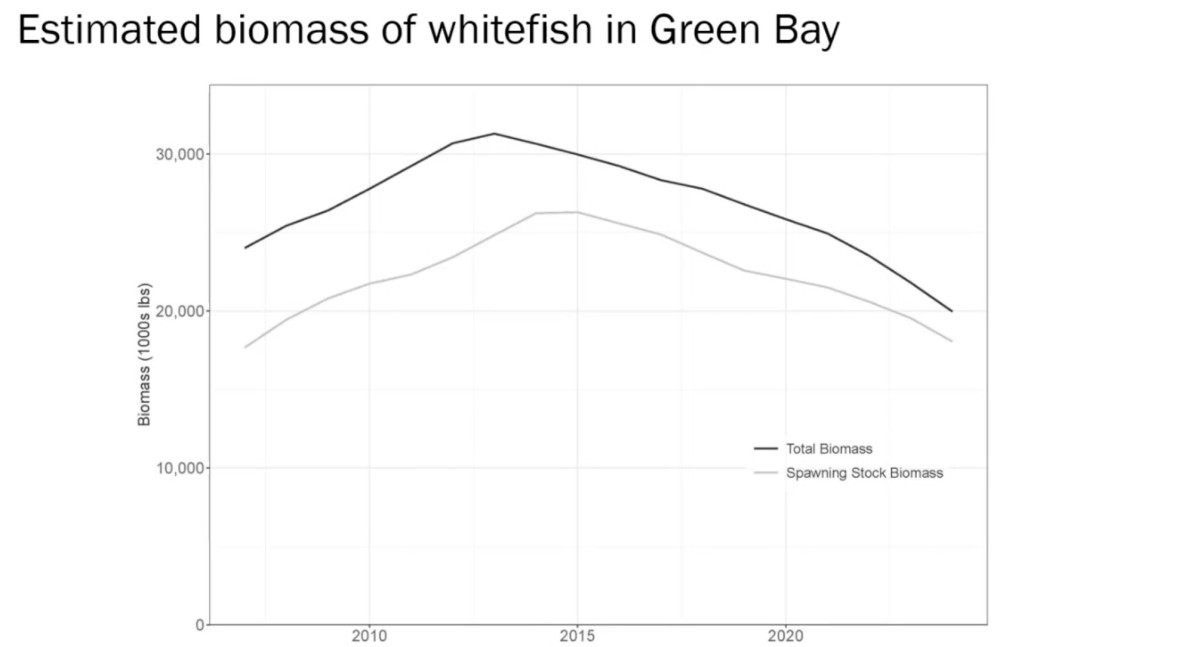
Stocks have shrunk by half since the mid-2010s, according to population models fed with data from DNR surveys and commercial and recreational harvests. The adult whitefish seem to be fat and healthy. But for reasons unknown, fewer of their offspring have been making it to adulthood.  

It’s possible the bay’s population is just leveling off after a period of strong recruitment, Hansen said, “but we want to be vigilant.”

A recent string of lackluster winters adds to the concern. Whitefish lay their eggs on ice-covered reefs. When that protective layer fails to form or melts off early, the eggs can be battered by waves or enticed to hatch early, out of sync with the spring plankton bloom that serves as their main food source.

As whitefish disappeared from the main basin of Lake Michigan, they experienced a resurgence in Green Bay that still isn’t fully understood. (Courtesy of Wisconsin Department of Natural Resources)

While this winter was icier than most, climate change is making low-ice winters more frequent.

“Whitefish are a cold-water species, and we know that’s not where the trends are going,” Hansen said.

Time to cut back?

So far, Wisconsin officials haven’t lowered Green Bay’s annual whitefish quota of 2.28 million pounds, evenly split between the commercial and sport fisheries. Commercial boats are limited to fish bigger than 17 inches, while recreational anglers are limited to 10 fish a day of any size.

But during a recent presentation to the state’s Natural Resources Board, Hansen said it’s time to start keeping closer tabs on the population. 

“If these trends continue,” he said, “We need to have some more serious discussions amongst ourselves about lowering the exploitation rates.”

Malvitz, the guide, believes it’s time for commercial and recreational anglers to collectively agree to harvest fewer fish. He would be satisfied with a five-fish limit for recreational anglers along with smaller quotas for the commercial fishery, which harvests far more fish. 

The bay’s whitefish reappeared quickly and unexpectedly, he said. Who’s to say they couldn’t disappear just as fast?

“I don’t want to be standing on the shore in five years saying ‘remember when,’” he said. 

Stuth, the commercial fishing board chair, isn’t ready to accept tighter quotas in the bay, but said population models should be closely watched. If the declines continue, he said, cuts may be on the table.

“A very conservative approach is going to be necessary,” he said. “Because it’s our last stronghold. If that goes away, what do we have?”

The post A Wisconsin whitefish refuge offers lessons for Michigan. But will it last? appeared first on Great Lakes Now.

Original Article

Great Lakes Now

Great Lakes Now

https://www.greatlakesnow.org/2026/03/12/a-wisconsin-whitefish-refuge-offers-lessons-for-michigan-but-will-it-last/

Kelly House, Bridge Michigan

Catch the latest energy news from around the region. Check back for these monthly Energy News Roundups.

The disputed reroute of the Line 5 pipeline is officially underway. Energy company Enbridge started clearing trees in late February for a segment of pipeline planned to go around the Bad River Reservation, almost seven years after the Bad River Band of Lake Superior Chippewa sued to have the pipeline removed from its land. The tribe has fought against the reroute since then. And while Enbridge is currently free to proceed, new lawsuits could force work to stop.

Separately, Michigan Attorney Dana Nessel and Enbridge lawyers faced off before the U.S. Supreme Court late last month as part of another yearslong legal battle: Nessel wants the part of Line 5 that runs under the Straits of Mackinac shut down over fears a spill could cause ecological disaster in the Great Lakes. The Supreme Court is weighing in on whether the case should continue in state court or be moved to federal court, as Enbridge requested. Meanwhile, key decisions are expected soon on the controversial tunnel Enbridge wants to build beneath the lakebed to house the pipeline.

A group of private equity investors including a BlackRock subsidiary is planning to buy the utility that serves more than 520,000 people around Indianapolis. The parent company of AES Indiana, among the state’s largest investor-owned utilities, announced last Monday it agreed to be purchased and could go private as soon as this year. The $33 billion deal has some state leaders worried private ownership will worsen already rising electric rates.

A major Michigan utility isn’t budging on plans to sell its hydroelectric dams. If state regulators block Consumers Energy from selling 13 dams to a private equity firm, the utility will decommission them all instead, an executive wrote in testimony last week. The sale agreement faces a host of recommended conditions meant to protect Consumers Energy customers. But the utility said it’s not willing to negotiate the terms of the sale despite concerns from state officials and ratepayer advocates.

And who will pay to run the coal plants the Trump administration is keeping open past their retirement dates? Federal regulators will have to decide. The U.S. Department of Energy issued emergency orders in December to delay the closure of two Indiana coal plants, citing an energy reliability emergency. Now the utilities that operate the plants are asking regulators to spread the cost of keeping them open to ratepayers throughout the region, not just local customers.

More energy news, in case you missed it:

The post Legal fights continue as reroute of Line 5 pipeline begins appeared first on Great Lakes Now.

Original Article

Great Lakes Now

Great Lakes Now

https://www.greatlakesnow.org/2026/03/11/legal-fights-continue-as-reroute-of-line-5-pipeline-begins/

Nicole Pollack, Great Lakes Now

This year marked the 20th anniversary of Great Lakes Day, an annual convening of environmentalists, policy experts, scientists, and small business owners on Capitol Hill. A top priority this year is the reauthorization of the federal Great Lakes Restoration Initiative (GLRI), as its five-year authorization is set to expire on September 30. Read the full story by Circle of Blue.

Original Article

Great Lakes Commission

Great Lakes Commission

https://www.glc.org/dailynews/20260311-great-lakes-day

James Polidori

The Ford government of Ontario is moving ahead with its plan to merge 36 conservation authorities into nine—two more than originally proposed—and it has created an agency with a $20-million budget to see it through. Notably, the Lake Erie Regional Conservation Authority and a Huron-Superior Regional Conservation Authority have each been split into two. Read the full story by The Narwhal.

Original Article

Great Lakes Commission

Great Lakes Commission

https://www.glc.org/dailynews/20260311-conservation-authority-merge

James Polidori

According to local officials, a sewage leak in Olcott, New York, is now under control after more than 1 million gallons of raw, untreated sewage leaked into the Olcott Harbor. For six days, sewage had poured into the Eighteen Mile Creek in Olcott, just feet from where the creek leads into Lake Ontario. Read the full story by WKBW-TV – Buffalo, NY.

Original Article

Great Lakes Commission

Great Lakes Commission

https://www.glc.org/dailynews/20260311-sewage-leak

James Polidori

In a Tuesday social media post, President Trump said he is collaborating with Michigan Governor Gretchen Whitmer to fight against invasive carp in the Great Lakes, following a recent meeting with the governor. Read the full story by WLNS-TV – Lansing, MI.

Original Article

Great Lakes Commission

Great Lakes Commission

https://www.glc.org/dailynews/20260311-invasive-carp-collaboration

James Polidori

Spending three days in Washington, D.C., last week, Waukegan Mayor Sam Cunningham and 23 other municipal leaders from the U.S. and Canada spoke to officials at the White House and members of Congress about the importance of fresh water and economic stability. Both Cunningham and Benton Harbor, Michigan, Mayor Marcus Muhammad talked to members of Congress about the importance of the State Revolving Fund programs, which provide low-cost financing for water quality infrastructure, including lead service line replacement. Read the full story by the Chicago Tribune.

Original Article

Great Lakes Commission

Great Lakes Commission

https://www.glc.org/dailynews/20260311-mayoral-advocacy

James Polidori

The U.S. Coast Guard began ice-breaking operations Monday across key Great Lakes waterways to clear shipping channels ahead of the 2026 commercial navigation season. Coast Guard Sector Northern Great Lakes launched the operations in Duluth, Minnesota, and on the St. Marys River, targeting areas critical for vessel traffic when the shipping season begins. Read the full story by WISC-TV – Madison, WI.

Original Article

Great Lakes Commission

Great Lakes Commission

https://www.glc.org/dailynews/20260311-ice-breaking

James Polidori

Once written off as too polluted to support many whitefish, Green Bay, Wisconsin has produced an unlikely population boom in recent years, even as the iconic species vanishes from most of the lower Great Lakes. As scientists work to understand what makes Green Bay unique, their findings could aid whitefish recovery efforts throughout the Great Lakes. Read the full story by Bridge Michigan.

Original Article

Great Lakes Commission

Great Lakes Commission

https://www.glc.org/dailynews/20260311-whitefish-recovery

James Polidori

Lorain Mayor Jack Bradley spent part of last week in Washington, D.C., joining municipal leaders from the United States and Canada to advocate for the future of the Great Lakes. While at the event, Bradley met with congressional offices to urge federal leaders to continue investing in programs that protect the lakes while supporting the communities and industries that depend on them. Read the full story by The Plain Dealer.

Original Article

Great Lakes Commission

Great Lakes Commission

https://www.glc.org/dailynews/20260311-municipal-advocacy

James Polidori

The Michigan Department of Natural Resources (DNR) is working on a possible sea lamprey barrier project in Alger County. The project would see a seasonal sea lamprey control barrier installed on the Sucker River as a joint plan between the DNR, the U.S. Fish and Wildlife Service and other groups. Read the full story by WLUC-TV – Marquette, MI.

Original Article

Great Lakes Commission

Great Lakes Commission

https://www.glc.org/dailynews/20260311-lamprey-barrier

James Polidori

A proposed $5.6 million plan to repair the Black River Canal in Port Huron, Michigan, now depends on whether neighboring townships agree to help fund the project. The canal connects Lake Huron to the Black River and has long served recreational boaters and waterfront businesses. Read the full story by the Port Huron Times Herald.

Original Article

Great Lakes Commission

Great Lakes Commission

https://www.glc.org/dailynews/20260311-canal-repair

James Polidori