NOAA Releases Updated Dataset for Hurricane Analysis
NCEI News Feed
https://www.ncei.noaa.gov/news/noaa-releases-updated-dataset-hurricane-analysis
NCEI News Feed
https://www.ncei.noaa.gov/news/noaa-releases-updated-dataset-hurricane-analysis
The U.S. Coast Guard’s Great Lakes District on Tuesday announced the use of autonomous drones starting this month on the Great Lakes. The so-called “sail drones,” unmanned vessels powered by both wind and solar energy, will be on the lakes from May to October. Read the full story by The Detroit News.
Great Lakes Commission
https://www.glc.org/dailynews/20260506-saildrones
A federal judge has temporarily prevented the Lac du Flambeau Band of Lake Superior Chippewa from restricting musky and walleye fishing on 19 lakes within its reservation in northern Wisconsin. The state’s federal lawsuit came after the tribe passed resolutions seeking to bar musky and walleye fishing by anyone except tribal members, citing “critically low” populations. Read the full story by Wisconsin Public Radio.
Great Lakes Commission
https://www.glc.org/dailynews/20260506-fishing-restrictions
It’s been years since Lake Ontario water levels have drawn concern. However, with a wet spring and heavier-than-normal snowfall, officials in coastal areas along Wayne County, New York, are on the edge of activating emergency plans to protect shorelines. Read the full story by the Finger Lakes Times.
Great Lakes Commission
https://www.glc.org/dailynews/20260506-ontario-rising
Several Great Lakes and Mississippi River conservation groups are urging the federal government to take action against nitrate contamination in drinking water, which they say has reached “crisis levels” and is a public health emergency. Read the full story by the Milwaukee Journal Sentinel.
Great Lakes Commission
https://www.glc.org/dailynews/20260506-nitrate
The proposed fiscal year 2027 U.S. budget includes the elimination of Integrated Ocean Observing System (IOOS) Regional Observations — the backbone of Great Lakes monitoring systems. If enacted, the cuts would significantly disrupt data collection efforts across the Great Lakes. Read the full story by The Observer.
Great Lakes Commission
https://www.glc.org/dailynews/20260506-monitoring-cuts
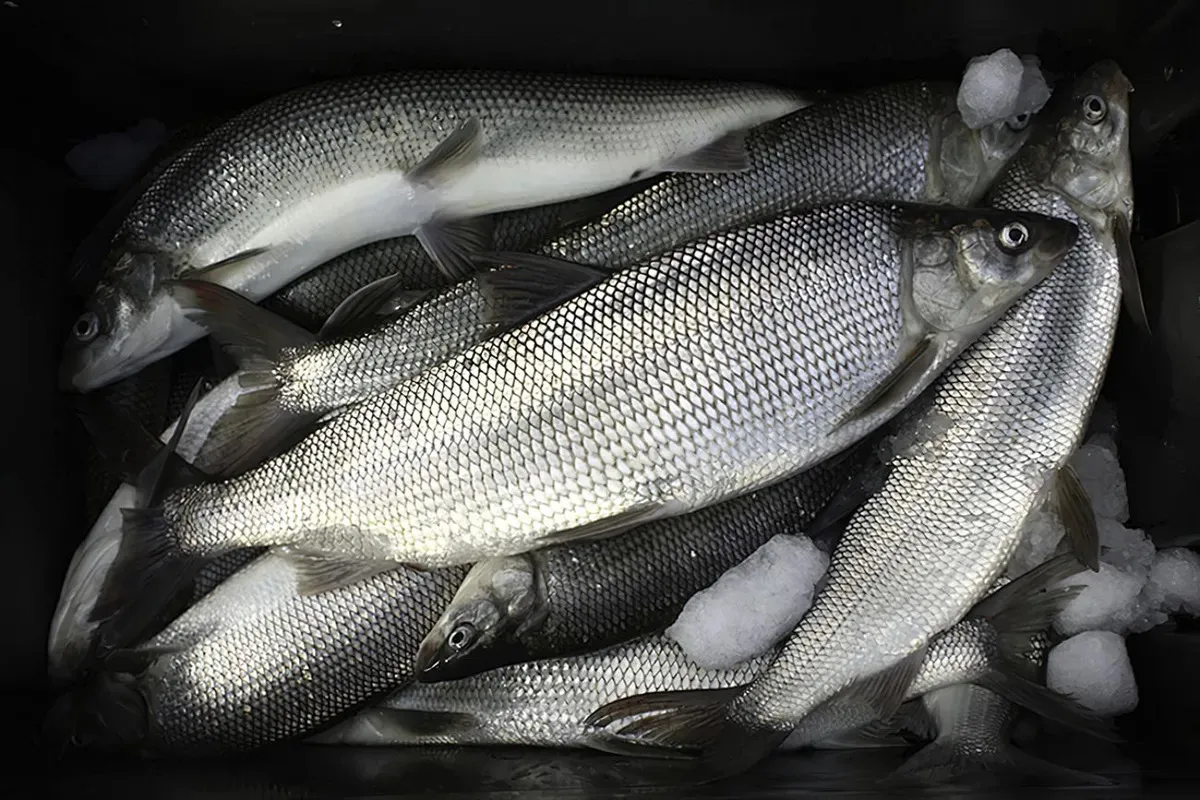
As lake whitefish teeter on the brink of collapse in the lower Great Lakes, Michigan lawmakers are considering investing in a last-ditch effort to save the iconic species before it’s too late. Read the full story by Bridge Michigan.
Great Lakes Commission
https://www.glc.org/dailynews/20260506-michigan-whitefish
Lake Huron yields hundreds of shipwrecks in places such as Thunder Bay’s “Shipwreck Alley.” Scientists and communities are working to explore, protect, and understand these underwater treasures, which face challenges from environmental change and human impact. Read the full story by Michigan Public.
Great Lakes Commission
https://www.glc.org/dailynews/20260506-huron-shipwrecks
The use of an uncrewed vessel known as a Saildrone has helped researchers learn about aquatic life in Lake Erie. The Saildrone proved to be a viable and safer alternative to traditional research boats for collecting data. Read the full story by the Erie Times-News.
Great Lakes Commission
https://www.glc.org/dailynews/20260506-erie-saildrone
Saginaw Bay, Michigan, reportedly generated more than $60 million in economic activity last year via recreational angling; saw the harvest of 500,000-plus walleye; and accounted for 1.84 million angler hours, representing 42% of the total fishing effort in all Michigan waters of the Great Lakes. Read the full story by the Iosco County News-Herald.
Great Lakes Commission
https://www.glc.org/dailynews/20260506-saginaw-bay
Most of Michigan’s Great Lakes are still extremely cold, although ice coverage is minimal. After a weekend of freezing temperatures across Michigan, most of the state lakes are hovering around 40 degrees. Read the full story by the Detroit Free Press.
Great Lakes Commission
https://www.glc.org/dailynews/20260506-cold-lakes
How can we ensure large water users such as data centers use our water resources sustainably and prevent pollution in our communities? As data centers proliferate across the Great Lakes region, federal, state and local governments are proposing new frameworks and policy solutions to manage their impact, including the POWER Act (SB4016/HB5513) in Illinois. At the same time, businesses are innovating sustainable solutions that reduce water use and prevent pollution. Hear from experts about the impact of these water users and solutions. Ask your questions on this virtual event.
This event is part of Chicago Water Week 2026, presented by Current.
The post Webinar: Protecting our water: New policies for data centers and large water users appeared first on Alliance for the Great Lakes.
News - Alliance for the Great Lakes
https://greatlakes.org/2026/05/webinar-protecting-our-water-new-policies-for-data-centers-and-large-water-users/

By Vivian La, IPR
This story is made possible through a partnership between Interlochen Public Radio and Grist, a nonprofit environmental media organization.
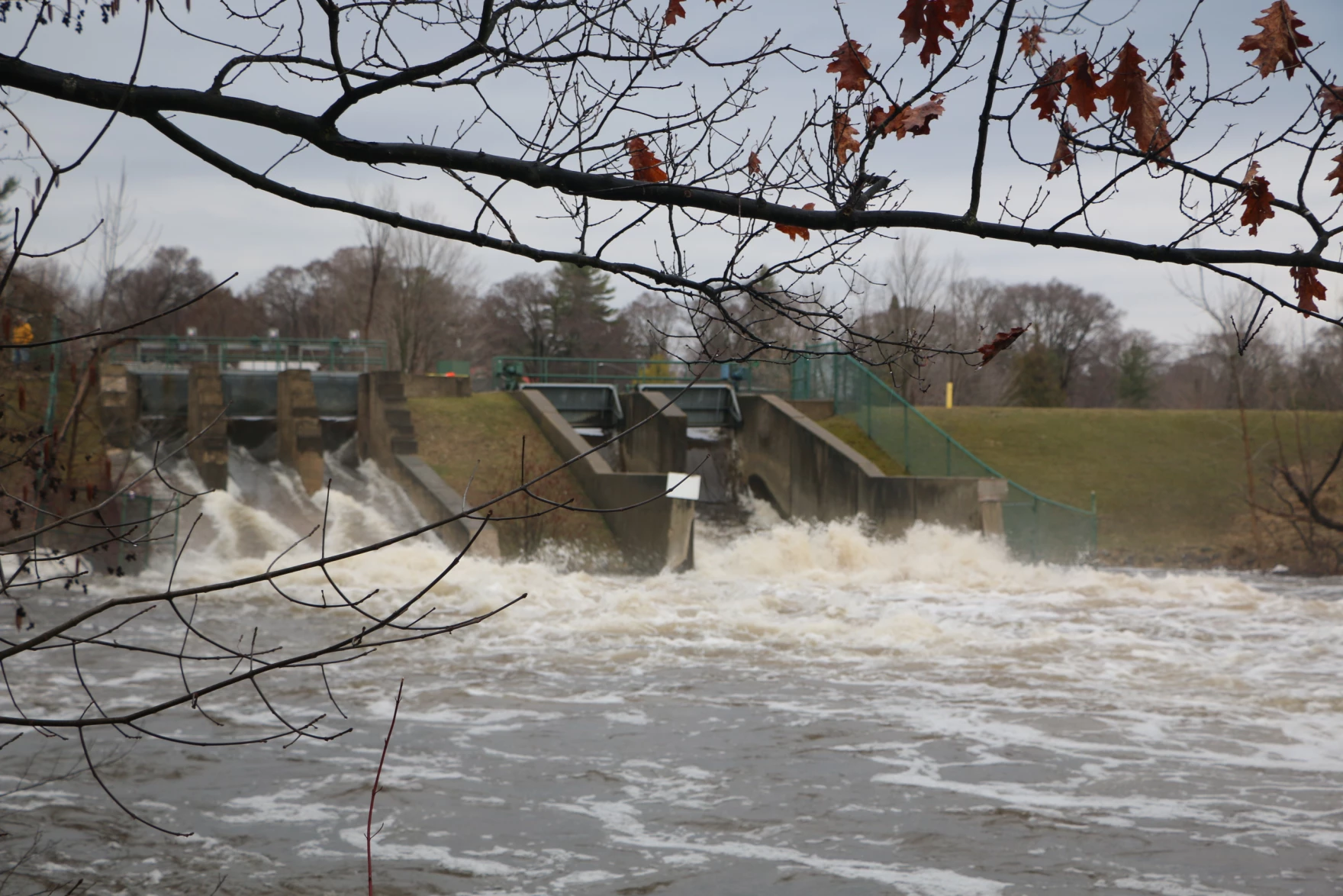
As waters recede across northern Michigan waterways from last week’s historic flooding, local leaders, advocates and experts are renewing calls to bolster safety regulations, upgrade or remove some of the state’s aging dams.
The record-high rainfall for some parts of northern Michigan — combined with melt from March’s above-average snow — pushed infrastructure to the brink across the region in Cheboygan, Bellaire and other cities.
For some, the flooding was a reminder of our vulnerabilities in the face of extreme weather, which is expected to worsen as our climate continues to shift.
“This needs to be considered not the worst we can experience. This needs to be considered as typical of the future,” said Richard Rood, a professor emeritus at the University of Michigan who studies climate change.
More than half of Michigan’s 2,500 dams have reached the end of their 50-year design life, according to state data. And an estimated $1 billion is needed to pay for all the upgrades needed in the state.
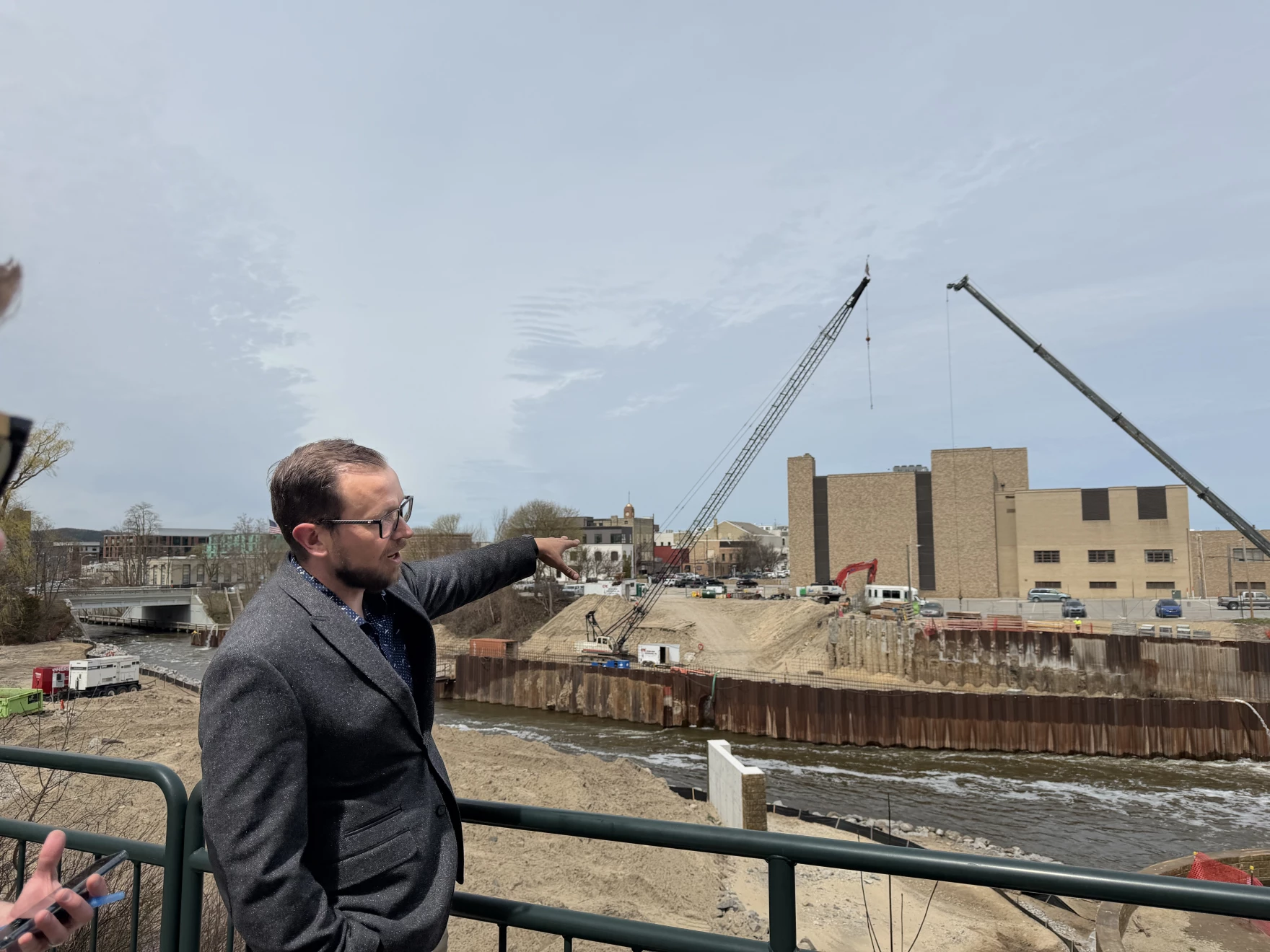
Bob Stuber, executive director of the Michigan Hydro Relicensing Commission, peers at the swollen Boardman-Ottaway River in downtown Traverse City. The river saw record-breaking levels from the flood, which came shy of a 500-year flood, according to the city.
“It’s really remarkable how quickly it’s recovered here,” he said.
That recovery is largely thanks to the 2024 removal of the old Union Street Dam, said engineers at the Great Lakes Fishery Commission (GLFC). The old dam was upgraded to a different structure for FishPass, the final part of a river restoration project on the Boardman.
“Upstream would have been under two more feet of water, which would have been quite devastating,” said Daniel Zielinski, a principal engineer for GLFC. “We actually had a really great stress test of the system. It functioned really well.”

Stuber said the flooding at Boardman-Ottaway River signals what needs to happen across the state: more dam upgrades and dam removals where it makes sense.
“I think every opportunity we have to remove an aging dam, we should take advantage of it because it’s not going to get better. It’s just going to get worse,” he said.
Conservation organizations like Huron Pines help dam owners in northern Michigan remove small dams on their property. They’ve managed nine removals in the last 13 years.
The organization has seen more interest from dam owners in removals after the recent flooding, said Josh Leisen, senior project manager for Huron Pines.
“There are costs associated with repair, and there are risks associated with having a dam,” Leisen said. “Even if it seems to be in good condition, you get extreme weather events like we just had.”
Removal is often a win-win for waterways and dam owners, he said. Ecosystems get reconnected and owners don’t have to pay for expensive upkeep of aging dams.
But some dams are easier to remove than others. People are often reluctant to give up the lakefront access that dams often create.
“A lot of other industries are sustained by the fact that we have built dams in our systems,” said Heather Huffstutler, executive director for the environmental organization Tip of the Mitt Watershed Council.
Some dams also provide electricity, drinking water or are used for transportation. But Huffstutler sees a growing momentum around small dam removal, which could help mitigate future flood impacts.
“When a river is allowed to use its floodplain and then use those associated wetlands and headwater streams, the less flooding we will see,” she said.
Upgrading or removing dams is also expensive. The Boardman-Ottway River dam removal — considered the largest removal effort in the state’s history — cost $25 million for three dams. Huron Pines is managing the removal of Sanback Dam in Rose City next month, with an estimated cost of $4 million.
Funding for half of the Sanback removal comes from a grant program through the Michigan Department of Environment, Energy and Great Lakes (EGLE) — as a response to the 2020 Edenville dam failure. The $44 million state program funded several dam removals, upgrades and engineering studies before it ended last year.
Now, local and state officials are renewing calls for more money and stronger safety regulations.
“Dam safety may be an issue that isn’t partisan,” said Phil Roos, director of EGLE.
Proposed legislation would bolster rules around inspections, private ownership, design standards, and create more funding opportunities for upgrades or dam removals.
“It’s so important to our state that we can come together, and whether it’s passing the legislation that was proposed, or improving procedures or ultimately funding,” Roos said.
State Sen. John Damoose, R-Harbor Springs, said at a Traverse City roundtable discussion on dam safety that he’s concerned about private dam ownership after the close call at Cheboygan Dam. Michigan owns about 1,000 dams in the state, others are privately owned.
“Somebody made a point, ‘Well, we can’t have private companies owning these things.’ I tend to believe in private ownership but they might be right,” Damooose said.
Climate change is likely to bring more frequent and intense storms capable of similar floods.
As the climate warms, more water is evaporating. And an atmosphere with increased moisture can fuel intense precipitation, according Rood at the University of Michigan.
Recent flooding “has shown an incredible vulnerability,” he said. “(Dams) are either going to have to be removed or reengineered. Or they’re going to become a set of slowly unfolding failures.”
Luke Trumble, chief of dam safety for Michigan, agrees we’re living in a different climate than when most dams in the state were built. But flooding will still happen, he said.
“It’s a little bit of a misconception that if we fix the dam issue, there’ll be no more flooding,” Trumble said. “There’s still going to be flooding on rivers whenever we get rain like this, or rain on snow.”
There’s still a solution, though.
“What we can do with dam safety legislation is help ensure that flooding is not made worse by a dam failure,” he said.
The post How do we adapt Michigan’s dams to climate change? appeared first on Great Lakes Now.
Great Lakes Now
https://www.greatlakesnow.org/2026/05/05/how-do-we-adapt-michigans-dams-to-climate-change/
Great Lakes Echo
https://greatlakesecho.org/2026/05/05/rooted-in-community-farmers-markets-continue-to-grow/

As lake whitefish teeter on the brink of collapse in the lower Great Lakes, Michigan lawmakers are considering investing in a last-ditch effort to save the iconic species before it’s too late.
An appropriations bill under consideration in the Democrat-controlled state Senate would allocate money to the Michigan Department of Natural Resources for a rearing and stocking program aimed at “supporting lake whitefish stock recovery.”
The line item includes a $100 allocation, which state Sen. John Cherry, D-Flint, described as a placeholder number pending further deliberations about how much money — if any — to devote to the effort.
“It could potentially be now or never for some of those genetic stocks,” Cherry said, noting that some whitefish bloodlines in lakes Michigan and Huron could vanish within years.
Budget deliberations are in their early phases and proposals from Gov. Gretchen Whitmer and the Republican-led House of Representatives do not include funding for whitefish.
State Reps. Ken Borton and Ann Bollin, who lead committees overseeing the DNR budget in the House, did not return calls from Bridge Michigan seeking comment.
The House approved a $76 billion budget last week that would cut DNR funding by $36.3 million. Whitmer’s budget proposal would increase DNR funding by $63.5 million.
The Senate could pass its version as soon as this week, setting up further negotiations as the two chambers face a September deadline to pass a unified budget.
The funding effort follows extensive reporting on the whitefish collapse in Bridge Michigan over the past year.
“Quite frankly, your guys’s reporting was helpful in highlighting the issue,” Cherry told Bridge. “Otherwise, I think a lot of folks wouldn’t be aware of it.”
The fish are a revered symbol of the Great Lakes and the No. 1 commercial catch for what remains of the region’s once-robust commercial fishery.
Ecosystem changes wrought by invasive quagga and zebra mussels have transformed the Great Lakes, devastating whitefish populations and prompting fears that the species could virtually disappear from lakes Michigan and Huron.
The mussel invasion is considered among the biggest threats to the Great Lakes in history.
Yet Bridge found that, while the US government has spent mightily to combat other threats, the fight against mussels has received a comparative pittance: less than $1 million annually, or about a penny for every dollar devoted to guarding the Great Lakes against invasive carp.
In the wake of that reporting, US Reps. Debbie Dingell and Tim Walberg cosponsored legislation that aims to devote $500 million to mussel control research over the next decade.
State funding for whitefish recovery is likewise limited amid budget constraints and a DNR funding structure that prioritizes game species like salmon and trout ahead of primarily commercial species like whitefish.
At current funding levels, mussel control research may take decades to achieve a breakthrough. The lower lakes’ whitefish “don’t have the time to wait,” said DNR fisheries chief Randy Claramunt.
So tribal, state, federal and university officials have been discussing ways to raise whitefish in captivity until the Great Lakes are hospitable enough for them to thrive again.
The effort likely would involve both a hatchery stocking program and an effort to establish captive whitefish populations for future breeding efforts.
“Who has facility space? Who can do something if funding is available? What could we do without having to build a new facility?” Claramunt said. “That’s what we’re all looking at right now as a stopgap measure to buy us time before we lose some of these stocks.”
There are 18 genetically distinct whitefish populations in lakes Michigan and Huron, 14 of which are considered imperiled.
“The other four that were considered stable are now at risk of declining,” Claramunt said.
That includes stocks in Green Bay, which was once considered a rare stronghold for Great Lakes whitefish.
So far, most recovery efforts have been small-scale, led by tribal natural resources agencies with limited budgets and staff. But as stocks have dwindled, whitefish advocates have increasingly pushed for bigger, bolder rescue efforts.
For each population rescued, Claramunt said, it would cost between $200,000 and $300,000 annually to collect spawning fish from the lakes, raise their offspring for stocking efforts, and hold some adults in captivity for future breeding.
The DNR may have space in its hatchery facilities to rescue up to three populations, Claramunt said. It’s possible other tribal, government or university agencies could lend more space.
“We’re concerned that a genetic rescue is necessary, and if we don’t do it as soon as possible … that these stocks will be lost,” Claramunt said.
Michigan has a long history of rescuing species under threat, Cherry said, from wild turkeys to moose. It has also had failures, such allowing the passenger pigeon to be hunted to extinction.
“We have an opportunity right now to figure out which direction we want to go,” Cherry said. “The direction of the passenger pigeon, or do we want to go the direction of the turkey?”
The post Michigan lawmakers may fund last-ditch effort to save whitefish appeared first on Great Lakes Now.
Great Lakes Now
https://www.greatlakesnow.org/2026/05/05/michigan-lawmakers-may-fund-last-ditch-effort-to-save-whitefish/
Great Lakes Echo
https://greatlakesecho.org/2026/05/05/state-grants-will-boost-stem-education-in-k-12-schools/
Green Bay, WI
https://www.weather.gov/inside.nssl.noaa.gov/tornado-tales/
With Lake Ontario expected to get near its flood stage later this week, lakeshore communities are preparing for the worst. Read the full story by WHEC-TV – Rochester, NY.
Great Lakes Commission
https://www.glc.org/dailynews/20260504-ontario-flooding
A new research paper suggests that the billions of pieces of plastic might be giving algae particles more surface area to bind onto inside Lake Erie. Read the full story by the Toledo Blade.
Great Lakes Commission
https://www.glc.org/dailynews/20260504-erie-algalblooms-microplastics
As fishing season begins, local fishermen and businesses are working together to share the flavors of Lake Superior—while preserving the lake that makes those traditions possible for generations to come. Read the full story by WDIO-TV – Duluth, MN.
Great Lakes Commission
https://www.glc.org/dailynews/20260504-lake-to-table
After Bay City Western Middle School students in Michigan watched and cared for about 150 Chinook salmon that started out as eggs and grew to about two to two and a half inches long, it was time to release them into the Kawkawlin River. Read the full story by MLive.
Great Lakes Commission
https://www.glc.org/dailynews/20260504-class-salmon-release
A fedral court issued a temporary restraining order preventing the Lac du Flambeau Band of Lake Superior Chippewa Indians from restricting fishing of walleye and musky on certain lakes, after the band attempted to prohibit non-members from using forward trolling and forward-facing sonar on all lakes within the reservation’s boundaries. Read the full story by WITI-TV – Milwaukee, WI.
Great Lakes Commission
https://www.glc.org/dailynews/20260504-wisconsin-fishing
Governor Gretchen Whitmer of Michigan announced during a ceremony on Friday that six projects were awarded Governor’s Awards for Historic Preservation. The projects included Isle Royale National Park where the cultural resource program has conducted archaeological survey work along Nipissing beach, a “relic of Lake Superior shoreline approximately five thousand years old.” Read the full story by WLUC-TV – Marquette, MI.
Great Lakes Commission
https://www.glc.org/dailynews/20260504-isle-royale
As waters recede across northern Michigan waterways from last week’s historic flooding, local leaders, advocates and experts are renewing calls to bolster safety regulations, upgrade or remove some of the state’s aging dams. Read the full story by Michigan Advance.
Great Lakes Commission
https://www.glc.org/dailynews/20260504-dams
Northern Indiana’s shorefront steel industry is the largest grouping of steel mills in the country and an economic engine for the local economy. Activists want steel production to transition away from using coal as soon as possible. Read the full story by the Allegheny Front.
Great Lakes Commission
https://www.glc.org/dailynews/20260504-clean-steel-mills
Between shipping and tourism, the Great Lakes generate billions of dollars for the Michigan economy. Read the full story by WDIV-TV – Detroit, MI.
Great Lakes Commission
https://www.glc.org/dailynews/20260504-michigan-economy
Approximately 180 non-native species now live in the Great Lakes, and about a third of them are considered invasive, the three biggest threats are zebra mussels, sea lamprey and invasive carp. Each one is quietly disrupting the ecosystem that millions of people and animals depend on every single day. Read the full story by WDIV-TV – Detroit, MI.
Great Lakes Commission
https://www.glc.org/dailynews/20260504-gl-threats

“SPORT – Ship Dog of the Great Lakes” is the 2026 Great Lakes, Great Read picture book selection.
Join us on Wednesday, May 13 at 6 p.m. CT as Wisconsin Sea Grant’s senior special librarian Anne Moser sits down to talk with Pamela Cameron, author of the 2026 Great Lakes, Great Read picture book, “SPORT – Ship Dog of the Great Lakes.”
“SPORT – Ship Dog of the Great Lakes” is the true story of a puppy rescued during a storm by a sailor working on a Great Lakes tender, a boat that brings supplies to the various lighthouse keepers in the lakes. With lively illustrations, author Pamela Cameron introduces readers to Sport and his human companions as they deliver essentials to keep the lights on and ships safe in Lake Michigan.
Parents, grandparents, educators, librarians, and readers of all types are welcome to join the webinar and learn more about the book. The event is free, but please register in advance.
The Great Lakes, Great Read program is based on the One Book, One Community model where reading programs choose one book for libraries, community groups, and the public to read and enjoy together over the course of a year. This year’s selections also include a book for middle-grade readers and one for adults.
Find announcements of region-wide webinars with each of the authors, as well as toolkits and other resources, on the Great Lakes, Great Read website.
The Great Lakes, Great Read program is a partnership between the Library of the Great Lakes, the Gail Borden Public Library, Saginaw District Library, Swim Drink Fish, Biinaagami Project, Great Lakes Odyssey, and the University of Wisconsin–Madison Wisconsin Water Library. In-kind support was provided by the staff with the Wisconsin Water Library and Wisconsin Sea Grant.
The University of Wisconsin Aquatic Sciences Center administers Wisconsin Sea Grant, the Wisconsin Water Resources Institute, and Water@UW–Madison. The center supports multidisciplinary research, education, and outreach for the protection and sustainable use of Wisconsin’s water resources. Wisconsin Sea Grant is one of 34 Sea Grant programs supported by the National Oceanic and Atmospheric Administration in coastal and Great Lakes states that encourage the wise stewardship of marine resources through research, education, outreach, and technology transfer.
The post Great Lakes, Great Read author to talk about books, dogs, and lighthouses first appeared on Wisconsin Sea Grant.News Releases | Wisconsin Sea Grant
News Releases | Wisconsin Sea Grant
https://www.seagrant.wisc.edu/news/great-lakes-great-read-author-to-talk-about-books-dogs-and-lighthouses/
On Kelleys Island, Tom and Paula Bartlett are on a mission to band 100,000 birds. When winter hits, it’s up to icebreakers and tugboats to keep the lakes moving. Can your yard become a national park?
#Birds #Wildlife #Nature #Ice #Winter #Freighters #Gardening
===========================================
Website: https://greatlakesnow.org
Facebook: https://www.facebook.com/greatlakesnow
X: https://www.x.com/greatlakesnow
Instagram: https://www.instagram.com/greatlakesnoworg
Newsletter: https://www.greatlakesnow.org/great-lakes-now-newsletter/
To learn more about supporting Detroit PBS and Great Lakes Now, visit https://www.detroitpbs.org/
===========================================
00:00 Coming Up
00:30 Support for Great Lakes Now
00:55 Tracking the Birds of the Great Lakes
12:29 How Icebreakers Keep Ships Moving
20:29 Is Your Yard a National Park?
The post Banding Birds and Breaking Ice | Great Lakes Now | Full Episode appeared first on Great Lakes Now.
Great Lakes Now
https://www.greatlakesnow.org/2026/05/04/banding-birds-and-breaking-ice-great-lakes-now-full-episode/
Green Bay, WI
https://www.weather.gov/grb/April26Flooding

By Lauren Cross, Investigate Midwest
Investigate Midwest is an independent, nonprofit newsroom. Our mission is to serve the public interest by exposing dangerous and costly practices of influential agricultural corporations and institutions through in-depth and data-driven investigative journalism. Visit us online at www.investigatemidwest.org.
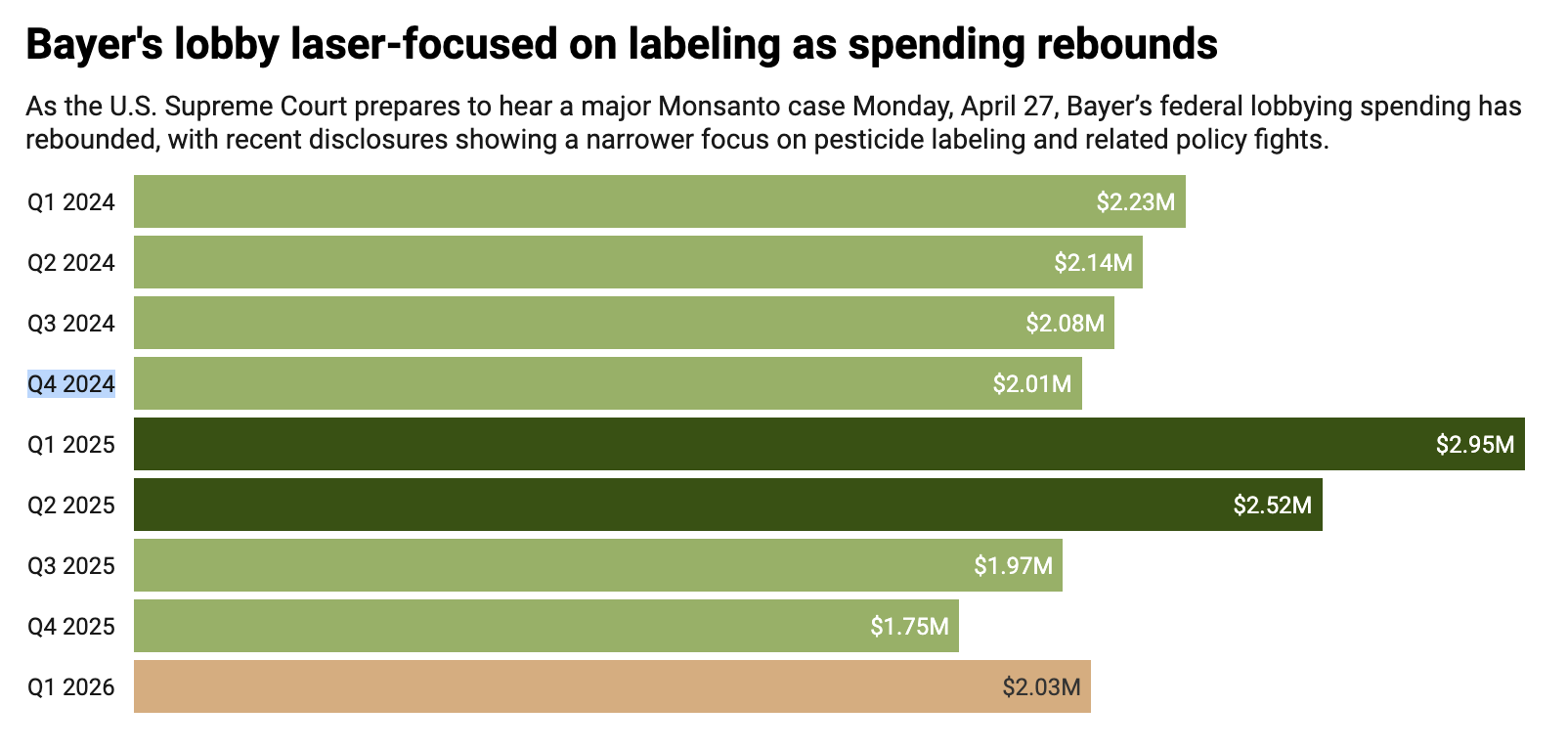
Bayer increased its federal lobbying spending in the first quarter of 2026 ahead of the U.S. Supreme Court hearing arguments on Monday, April 27, in a case involving Monsanto, which Bayer acquired in 2018.
New federal disclosures show Bayer reported just over $2 million in lobbying expenses from January through March, up from $1.75 million in the fourth quarter of 2025. The increase follows a drop in spending during the second half of last year after Bayer’s quarterly lobbying peaked at $2.95 million in early 2025.
While 2025 filings showed the company “monitoring” broad issues like pesticide regulations and biotech innovation, the new 2026 report reveals a laser-focus on specific legislation designed to provide the company with a legal shield against ongoing lawsuits.

Across nine quarterly filings since the start of 2024, Bayer reported spending nearly $19.7 million on lobbying, or about $2.2 million per quarter on average.
The case Monsanto Co. v. Durnell could shape pesticide litigation nationwide. The main question is whether federal pesticide labeling laws can override some state lawsuits claiming companies failed to properly warn people about the risks.
“Failure to warn” is a common argument in such liability cases. Plaintiffs argue a company did not give clear enough warnings or safety instructions about a product.
Bayer has faced years of lawsuits over Roundup, its glyphosate-based weedkiller. Plaintiffs say exposure caused non-Hodgkin lymphoma. Bayer denies those claims and says Roundup labels follow federal law.
Monsanto has pointed to past Environmental Protection Agency findings that glyphosate is not likely to cause cancer. But in a recent court filing, Food & Water Watch and other advocacy groups told the Supreme Court that the EPA review Monsanto relies on was thrown out by a court four years ago.
Bayer’s latest lobbying disclosure filing shows a more focused agenda on issues including “uniformity of pesticide labeling,” EPA budgetary issues, and USDA funding. The company also reported lobbying the White House and the National Economic Council, which advises the president on global economic policy.
According to the filing, Bayer reported lobbying on H.R. 7567, the Farm, Food and National Security Act of 2026. The bill includes pesticide labeling requirement language, which relates directly to the arguments at the center of the Supreme Court case. If approved, such protections could help companies defend against some state-level warning-label lawsuits.
Federal law requires quarterly lobbying reports that disclose lobbying activity and total spending, but filings do not break spending down by each specific issue lobbied. However, the timing of Bayer’s spending rebound comes as the company faces one of the most closely watched ag legal cases of the year.
The post Bayer Increased Lobbying Amid Roundup Supreme Court Case appeared first on Great Lakes Now.
Great Lakes Now
https://www.greatlakesnow.org/2026/05/01/bayer-increased-lobbying-amid-roundup-supreme-court-case/
Lake Ontario has reached a critical threshold along parts of its southern shore, prompting emergency preparations as officials warn water levels will continue rising in the days and weeks ahead. Read the full story by FingerLakes1.com.
Great Lakes Commission
https://www.glc.org/dailynews/20260501-rising-water-levels
With the completion of its latest wetland project, Ohio officials celebrated the enhancement of 43 acres of Lake Erie coastal marsh into high-quality wetlands. The project aims to use natural processes to reduce sediment, phosphorus and nitrogen through the wetland before water returns to nearby ditches and flows back into Lake Erie. Read the full story by Spectrum News 1.
Great Lakes Commission
https://www.glc.org/dailynews/20260501-weland-restoration
A Michigan-based organization is working to transform Greek olive barrels into 58-gallon rainwater collectors with the goal of preventing excess stormwater from running into the Great Lakes. Read the full story by WXYZ-TV – Detroit, MI.
Great Lakes Commission
https://www.glc.org/dailynews/20260501-rain-barrels
Piping plover season is officially underway in Wisconsin, and this year marks a decade since they started nesting in Green Bay after being gone for more than 70 years. Read the full story by WUWM – Milwaukee, WI.
Great Lakes Commission
https://www.glc.org/dailynews/20260501-piping-plover-recovery
Water level sensors at a few points on Michigan’s Great Lakes show a clear picture of accelerated water level rises. While the Great Lakes typically start rising in March, once the snowmelt starts flowing into the Great Lakes and spring rain gets heavier, the magnitude of the water level rise is striking. Read the full story by MLive.
Great Lakes Commission
https://www.glc.org/dailynews/20260501-michigan-water-levels
The Michigan Department of Natural Resources will soon launch its research vessel Lake Char from Marquette, Michigan, to conduct essential lake trout research in Lake Superior. Though the vessel was scheduled to begin its 2026 work April 27, unexpected issues at its current storage facility have delayed launch, affecting this year’s survey schedule. Read the full story by WLUC-TV – Marquette, MI.
Great Lakes Commission
https://www.glc.org/dailynews/20260501-research-vessel
The annual spring walleye run on the Maumee River is coming to a close as late-April water temperatures climb, prompting the fish to finish spawning and begin their journey back to Lake Erie. Read the full story by WTOL-TV – Toledo, OH.
Great Lakes Commission
https://www.glc.org/dailynews/20260501-walleye-run
This weekend, thousands of volunteers will descend on Great Lakes beaches for nurdle counts and clean-up events at their local waterways. The goal is to help identify plastic pellet pollution and make the case for action. Read the full story by the Chicago Sun-Times.
Great Lakes Commission
https://www.glc.org/dailynews/20260501-plastic-cleanup
A viral social media post claiming two great white sharks are headed for the Great Lakes is making the rounds and it’s completely false. The cold freshwaters of the Great Lakes make them inhospitable to most shark species, which need saltwater to survive. Read the full story by WDIV-TV – Detroit, MI.
Great Lakes Commission
https://www.glc.org/dailynews/20260501-shark-free
As Great Lakes cruise lines gain popularity, learn about four different Great Lakes cruise options to explore the region and its waters. Read the full story by USA Today.
Great Lakes Commission
https://www.glc.org/dailynews/20260501-cruise-options

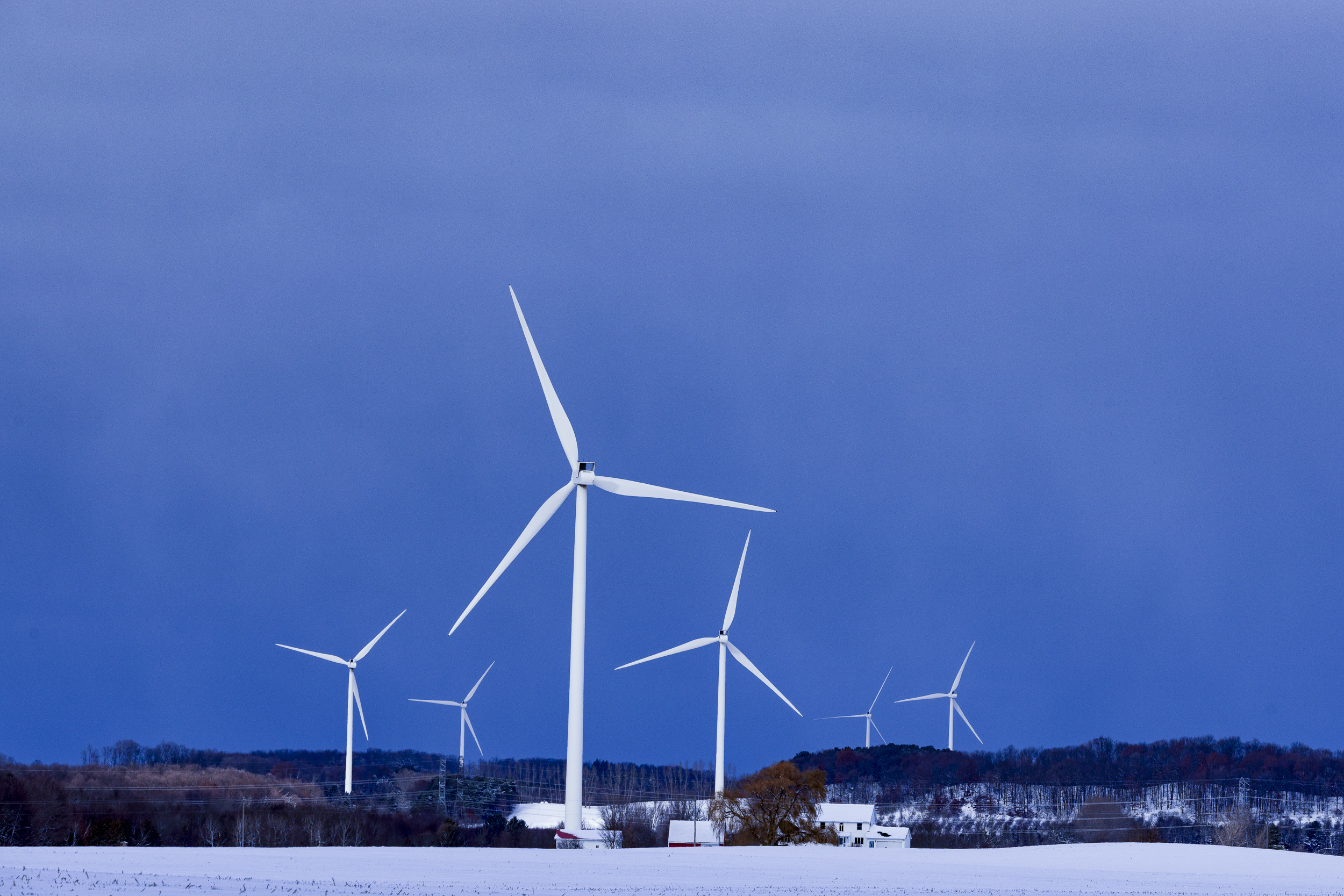
Covering an area the size of the United Kingdom and surrounded by half a dozen large, energy-hungry metropolitan regions, the Great Lakes, surprisingly, boasts not a single offshore wind energy project.
We know that the resource and the demand are there. But no offshore wind effort has ever taken off.
Past efforts at a demonstration project called Icebreaker, slated for Lake Erie off the coast of Cleveland, fizzled out in 2023. In Ontario, which boasts 5,200 miles of Great Lakes coastline, a moratorium on offshore wind has been in place since 2011, with the provincial government having to fork out millions of dollars in damages to one wind energy company for doing so.
But today, with electricity prices surging around the region, is it finally time for offshore wind to take its place? Do communities even want them?
Here, we speak to advocates for and opponents to offshore wind and investigate the myriad challenges such projects in the Great Lakes face.
A perfect storm of events has combined to push electricity prices to record levels for thousands of communities around the region.
Utility companies such as Consumers Energy in Michigan, We Energies, which operates in Wisconsin and Michigan’s Upper Peninsula, and a host of others have embarked on system upgrades that are set to add up to 14% to the cost of monthly electricity bills for consumers, with further rate hikes likely in the years ahead.
On top of that, the federal government has mandated that coal-fired electricity plants in Michigan, Indiana, Pennsylvania and elsewhere that were scheduled to be retired now remain open. That means that federal subsidies that are essential for keeping these loss-making plants running are likely to cost ratepayers billions more dollars.
Then there’s the contentious wave of data centers opening across the region, creating a huge new demand for utility-scale electricity.
All the while, recent years have seen a drive in Great Lakes states and provinces to reach net zero carbon emissions. Michigan, Wisconsin and Minnesota plan to reach that goal by 2050.
Ontario aims to get to 80% below its 1990 level of carbon emissions in the same time. New York state has declared an even more ambitious plan, to reach net zero by 2040.
On top of that, with the federal government banning offshore wind projects in oceans surrounding the U.S., there’s been a renewed push to see the Great Lakes — controlled by eight U.S. states and the Canadian province of Ontario, rather than authorities in Washington D.C. and Ottawa — become a new front in the development of the technology.
Experts say offshore wind generated from the lakes could provide three times the amount of the electricity used by the eight U.S. Great Lakes states in 2023. National Oceanic and Atmospheric Administration (NOAA) data from 2021 crunched by the Woodwell Climate Research Center found that Great Lakes water generates more wind than anywhere else east of the Mississippi River.
“According to reports done for Ontario’s Ministry of Natural Resources, Great Lakes offshore wind can be implemented with minimal aquatic impacts. If the turbines are 10 to 15 km offshore, they will be almost invisible,” said Jack Gibbons of the Ontario Clean Air Alliance.
“Offshore wind in the Canadian section of the Great Lakes has the potential to supply more than 100% of Ontario’s electricity needs.”

Icebreaker, the Cleveland project, got as far as securing a 50-year lakebed lease from the state of Ohio in 2014. Predicted to provide 20 megawatts of electricity, enough to power more than 7,000 homes, its main goal was to function as a trial project.
But Icebreaker is not completely dead, yet. Last year, a Maryland-based company called Mighty Waves Energy acquired the project, raising hopes among Cleveland leaders and many residents around the region that the first steps towards a lake-based wind energy future remain in place.
Mark Hessels, CEO of Mighty Waves Energy, spoke with Great Lakes Now over the phone, but declined to go on the record to discuss the company’s proposed new offshore wind project, and failed to provide a statement when asked.
And yet, the barriers appear immense.
John Lipaj has been sailing and boating on Lake Erie ever since he was a child.
“I spent every summer out there on a boat. In July and August, when the temperatures rise, the wind would die,” he said, illustrating one of several reasons he and others think offshore wind isn’t suitable for Lake Erie.
“If there’s no wind at exactly the time of year when electricity is needed most, for air conditioning, then what’s the point of building offshore wind?”
As a board member of the Lake Erie Foundation, a nonprofit, that’s not the main reason he and the organization he represents opposes offshore wind on Lake Erie.
“One of the things we were most concerned about is that bald eagles were almost extinct, and they’ve really come back along the Lake Erie shore. Now, they’re thriving,” he said.

“In the winter, they’ll fly out a couple of miles [offshore] looking for fish, especially if there’s ice [on the shoreline]. We’ve got real concerns about the bald eagle population being hurt by the wind turbine out on the lake, because that’s their feeding ground.”
In 2022, a wind energy company was fined $8 million and sentenced to probation after its wind turbines were found to have killed more than 150 eagles over the course of a decade across ten U.S. states, including Michigan and Illinois.
Some conservation organizations opposing offshore wind have even come under fire. A report by Grist in 2021 alleged that the American Bird Conservancy, a $30-million non-profit, has been one of the most powerful environment-focused opponents to wind turbine projects across the country, having received around $1 million from fossil fuel interests.
A request by Great Lakes Now for comment from the American Bird Conservancy was not received by the time of publication.
All the while, others believe the potential threat to wildlife can be mitigated.
“Some people are unaware that the National Audubon Society supports Great Lakes offshore wind power. The good news is that offshore wind can be done in a bird-friendly way,” said Gibbons of the Ontario Clean Air Alliance.
“We are recommending that the turbines should be turned off from dusk to dawn during the migratory bat seasons (late April and May and mid-July to the end of September) when wind speeds are less than seven meters per second, since bats fly more when wind speeds are low.”
Threats to wildlife aside, for Professor Melissa Scanlan, director of the University of Wisconsin-Milwaukee’s Center for Water Policy, five leading factors have combined to stall progress in offshore wind:
And there are other challenges.
“There’s definitely misinformation that circulates about offshore wind,” she said.
“From the research we’ve done, we think you can address that through transparent, science-based planning processes,” said Scanlan. “Without doing a more rigorous science-based planning process, if there’s a vacuum of reliable information, that can allow misinformation to be circulated more freely.”
On top of that, there are reservations around the economic return of such projects. Estimates suggest the cost of offshore wind on the Great Lakes could range from 7.5 to 12.9 cents per kilowatt hour. That’s more than double the cost of onshore wind or utility-scale solar.
But while the costs of delivering offshore wind are not inconsiderable, experts such as Scanlon say there’s also both a dollar and environmental cost of continuing to deploy fossil fuels for electricity generation.
Moreover, interest groups have allegedly been at work to make such efforts difficult to bring to fruition.
The former proprietor of the Icebreaker project, the Lake Erie Energy Development Corp., has claimed that corruption within Ohio’s energy regulatory body and state leaders’ close ties to energy giant FirstEnergy made the project unworkable, and has sued FirstEnergy for up to $10 million. Restrictions that the project faced, including calling for turbines to be shut down at night for eight months of the year, essentially torpedoed the project.
Industry innovators say that an easing of regulations at the state level would make a huge difference to the emergence of offshore wind in the Great Lakes. Investment in the form of tax breaks from state governments, which handle the leases and permits for any offshore wind projects in the Great Lakes, are another way.
And while the cost of producing offshore wind is higher than its onshore equivalent, higher winds offshore combined with technological advances mean that energy production capacity from offshore could be up to 60% more than onshore.
Scanlon of the University of Wisconsin-Milwaukee’s Center for Water Policy is among the researchers who say offshore wind projects could play a significant role in meeting our rapidly growing energy needs.
“As a society, we need to develop energy resources that are not in conflict with protecting the environment,” she said.
“Offshore wind is no different from that.”
The post As affordability issues surge, is it finally time for offshore wind? appeared first on Great Lakes Now.
Great Lakes Now
https://www.greatlakesnow.org/2026/04/30/as-affordability-issues-surge-is-it-finally-time-for-offshore-wind/

This article was republished here with permission from Great Lakes Echo.
By Samantha Ku, Great Lakes Echo
A newly restored reef at Channel Island in Saginaw Bay is intended to support native fish spawning and increase their numbers, ensuring the sustainability of local fisheries.
Construction to restore the nearshore fish spawning reef ended last October.
Recreational fishing is an economic boon to the Lake Huron region, according to Jeffrey Jolley, a fisheries unit supervisor with the Michigan Department of Natural Resources.
“The excellent fishery attracts anglers from all over the state, and they spend money on fuel, tackle, restaurants and shops, and hotels and rentals,” Jolley said.
Therefore, protecting fish habitats is crucial to the local economy, he said.
The construction is an additional reef restoration following the restoration of the Coreyon Reef site and is intended to support a network of spawning reefs and nursery habitat, according to Michigan Sea Grant.
The Coreyon Reef site is a 2-acre offshore rocky habitat about 10 miles north of the Quanicassee River, northwest of the Channel Island site.
By studying the Coreyon Reef, researchers gather valuable data on the spawning habitats of native species.
According to Michigan Sea Grant, researchers from the state DNR and Purdue University documented lake whitefish and walleye spawning on the reef between 2020 and 2022.
Initial results from the study indicate that fish species don’t show a particular preference for any specific type of cobble that makes up the reef structure.
Following the completion of the project at the Channel Island Reef, fish activity will be monitored by partners in the restoration, said Meaghan Gass, an MSU Extension educator with Michigan Sea Grant.
“With the two completed sites, researchers are able to compare nearshore and offshore locations,” Gass said.
Channel Island is also called Shelter Island, Spoils Island and the U.S. Army Corps Confined Disposal Facility.
Its newly built reef is about 570 feet long and 190 feet wide. It rises about 3 to 4 feet above the lake bottom and sits at least 5.5 feet below the water’s surface, even when water levels are low.
The artificial reefs are built from a mound of rocks that are distinctly different from coral reefs found in the ocean, Gass said.
Nearly 20,000 tons of natural limestone, delivered by barge, forms the Channel Island Reef, she said.
“Historically, inner Saginaw Bay had rocky underwater reefs formed by glacial deposits,” Gass said.
Gass said the rocky underwater reefs provided safe spaces for native fish to lay eggs because crevices among the rocks protect eggs and young fish from predators and strong currents.
The importance of native fish protection for the Lake Huron fishery lies in preserving the ecological balance that has developed over thousands of years, according to Jolley.
“Our native fish species evolved here through the forces of natural selection over millennia, adapting to local conditions, prey, predators and seasonal changes,” Jolley said.
In contrast, invasive species are often introduced abruptly, without natural checks and balances, allowing them to outcompete or prey on native fish, disrupt habitats and destabilize food webs, Jolley said.
Jolley said although some invasive species can temporarily provide new fishing opportunities, they often reduce long-term stability of ecosystems.
In contrast, native species support more resilient, diverse and sustainable fisheries, delivering lasting ecological and economic benefits.
However, artificial reefs designed to support native fish spawning habitats may also benefit invasive species.
“Round goby, an invasive species that prefers rocky habitats, will likely colonize the reef,” Jolley said.
While gobies can prey on fish eggs, native predators such as smallmouth bass feed heavily on them and are also attracted to the area.
The reef structure and placement support native species like smallmouth bass and walleye, which depend on clean, stable substrate for spawning and feeding, Jolley said.
“This interaction is expected to balance out naturally as predator-prey relationships stabilize,” Jolley said.
According to Jolley, community engagement is crucial for further restoration projects.
Jolley said public opinion often centers on safety, navigation features and aesthetics, as people seek to balance these considerations with the ecological benefits of habitat restoration.
“We have consistently engaged local communities on past, current and future projects,” Jolley said.
The post Lake Huron artificial reef restores fish spawning habitat appeared first on Great Lakes Now.
Great Lakes Now
https://www.greatlakesnow.org/2026/04/30/lake-huron-artificial-reef-restores-fish-spawning-habitat/
NCEI News Feed
https://www.ncei.noaa.gov/news/new-texas-hailstone-record-confirmed-noaa-and-partners
NCEI News Feed
https://www.ncei.noaa.gov/news/new-texas-hailstone-record-confirmed-noaa-and-partners
NCEI News Feed
https://www.ncei.noaa.gov/news/new-texas-hailstone-record-confirmed-noaa-and-partners
NCEI News Feed
https://www.ncei.noaa.gov/news/new-texas-hailstone-record-confirmed-noaa-and-partners
NCEI News Feed
https://www.ncei.noaa.gov/news/new-texas-hailstone-record-confirmed-noaa-and-partners
NCEI News Feed
https://www.ncei.noaa.gov/news/new-texas-hailstone-record-confirmed-noaa-and-partners
NCEI News Feed
https://www.ncei.noaa.gov/news/new-texas-hailstone-record-confirmed-noaa-and-partners