Risks in Michigan’s urban environment
Great Lakes Echo
http://greatlakesecho.org/2020/06/01/risks-in-michigans-urban-environment/
Great Lakes Echo
http://greatlakesecho.org/2020/06/01/risks-in-michigans-urban-environment/
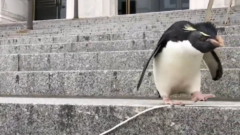
The animals at various aquariums are dealing with their own COVID-19 lockdown struggles as they adjust to new routines, new procedures and a distinct lack of the public, and each animal handles it a little differently.
Thanks to Great Lakes aquariums like Shedd Aquarium in Chicago, the Aquatarium at Tall Ships Landing in Brockville, Ontario, and Belle Isle Conservancy in Detroit, the public can get a peek at the various things staff are doing to keep the animals happy and entertained.
Great Lakes Now
https://www.greatlakesnow.org/2020/05/animal-quiz-great-lakes-aquarium-animal-covid-19-quarantine/
Michigan City, Indiana officials said multiple circumstances factored into the decision to make Washington Park Beach a “swim-at-your-own-risk” area, issuing a news release to clear up “misunderstandings” surrounding the lack of lifeguards on the city’s shores. Read the full story by The Northwest Indiana Times.
Great Lakes Commission
https://www.glc.org/dailynews/20200529-lifeguards
With record high Lake Michigan levels, in the Town of Clay Banks, in Door County, Wisconsin, some areas are seeing erosion among other damages and local leaders are asking the state to help with repair. Read the full story by WLUK-TV – Green Bay, WI.
Great Lakes Commission
https://www.glc.org/dailynews/20200529-erosion-michigan
Victory, which typically sails two ships in the Great Lakes during a six-month season, was scheduled to resume its itineraries in early July. Instead, the company announced this week that it wouldn’t sail this summer at all. Read the full story by Cleveland.com.
Great Lakes Commission
https://www.glc.org/dailynews/20200529-cruise-greatlakes
Scientists at the Great Lakes Environmental Research Laboratory advanced autonomous sensing with the rollout of the Real-Time Coastal Observation Network (ReCON) in 2005, and in response to the 2014 Toledo, OH algal-bloom caused water crisis additional sensors have been deployed throughout the Great Lakes system provide real-time data about episodic events such as incursions of low-oxygen water into municipal water intakes. Read the full story by The Conversation.
Great Lakes Commission
https://www.glc.org/dailynews/20200529-smart-lakes
Scientists with the Thunder Bay National Marine Sanctuary in Alpena, Michigan, used advanced techniques to map underwater environments that helped scientists identify the depressions as sinkholes; continuing studies are occurring to explore the diverse microbial communities and other unique properties of these formations. Read the full story by Great Lakes Echo.
Great Lakes Commission
https://www.glc.org/dailynews/20200529-huron-sinkholes
With record-breaking water levels for Lake Michigan and Huron being reported at 13.4 inches higher than last spring’s water level and nearly three inches higher than a record set in 1986, Escanaba and Gladstone, Michigan officials share how the situation has affected their communities. Read the full story by Daily Press.
Great Lakes Commission
https://www.glc.org/dailynews/20200529-ontario-plastic
A team of Rochester Institute of Technology researchers are studying how microplastic materials end up in Lake Ontario and the types of effects they have on the environment. Read the full story by WHAM-TV – Rochester, NY.
Great Lakes Commission
https://www.glc.org/dailynews/20200529-ontario-plastic
Earlier this year, the Great Lakes-St. Lawrence River Adaptive Management Committee received a combined $3 million from the Canadian and U.S. governments to conduct an expedited review of the water management policy enforced by the International Joint Commission. Read the full story by NNY360.
Great Lakes Commission
https://www.glc.org/dailynews/20200529-IJC-review
The H2Ohio initiative includes projects within the Ohio Department of Agriculture and Ohio EPA, as well as efforts by the Ohio Department of Natural Resources focusing on wetlands; these projects help expand the permanent natural water-quality infrastructure to address nutrient pollution issues. Read the full story by Farm Progress.
Great Lakes Commission
https://www.glc.org/dailynews/20200528-h2oh-wetlands
A Case Western Reserve University researcher has landed $700,000 in grants to try to remove excess nutrients from fertilizer and runoff that flows into Lake Erie and causes harmful algal blooms. Read the full story by Cleveland.com.
Great Lakes Commission
https://www.glc.org/dailynews/20200528-erie-nutrients

As the author of Great Lakes Now’s Collection of Lesson Plans, educational consultant Gary Abud Jr. is now providing more support for parents, teachers and caregivers who want to incorporate Great Lakes learning into their time with children and students. His series of writings can be found HERE along with the lesson plans and a Virtual Field Trip.
Great Lakes Now
https://www.greatlakesnow.org/2020/05/great-lakes-learning-best-of-the-5/
As participants in the University of Wisconsin-Madison’s Undergraduate Research Scholars (URS) program know, it’s never too soon to gain exposure to the kind of research that goes on at a large university.
The URS program is designed as a two-semester course aimed at first- and second-year students. Participants take a weekly seminar and are paired with a research mentor who guides them as they conduct an original research project. Near the conclusion of the academic year, students present their research at a symposium.
While the COVID-19 pandemic meant that students finished out this spring semester at their permanent homes rather than on campus—and that the typical in-person symposium was replaced by virtual presentations—it still proved to be a valuable experience for two students mentored by Wisconsin Sea Grant Assistant Director for Extension David Hart.
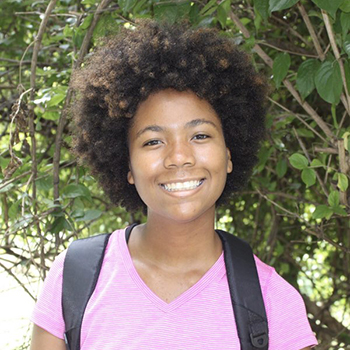
Rykia Amos of Washington, D.C., and Celeste Gunderson of Milwaukee each zeroed in on challenging topics. We checked in with both to hear about their experiences.
Rykia Amos
Topic: A process to prioritize where to plant trees to decrease future stream temperatures to protect brook trout in the Black Earth Creek watershed

Rykia Amos (Submitted photo)
A wildlife ecology major, Amos went into her trout project as someone more focused on mammals. Yet, she said, “I realized I was a lot more interested in looking at fish than I expected.”
Trout fishing is a popular activity that also carries significant economic value in Wisconsin. Yet climate change projections and warming streams are worrisome. Said Amos, “They’re (brook trout) a very vulnerable species because most of them currently live in cold-water conditions.”
If the climate continues to warm as current scientific projections say, what will that mean for fish like the brook trout and brown trout?
Amos focused on the role played by tree cover and whether that can help mitigate warming temperatures in certain stream segments, to the benefit of the fish. “Data shows that tree planting is a cost-efficient and effective way to help temperatures decrease,” said Amos.
She used data from a U.S. Geological Survey program called FishVis to populate a spreadsheet of stream segments in the Black Earth Creek watershed, located west of Madison. She looked at both present conditions and projected conditions for the period 2046-2065.
Important variables that she considered were where the stream was projected to change from a colder to warmer temperature regime and where brook trout populations were being replaced by brown trout, which can tolerate warmer temperatures. She concluded by assessing the existing tree canopy and developing a formula to prioritize the variables.
At semester’s end, Amos presented her research first to Hart and Sea Grant Fisheries Specialist Titus Seilheimer. She then gave a separate presentation to Matt Mitro, a research scientist with the Wisconsin Department of Natural Resources. Mitro had given input earlier in the semester, suggesting to Amos that she compare brook and brown trout.
Even though she’d prefer to focus on hands-on fieldwork in the future, Amos said, the computer modeling she undertook for her research gave her a window into a real-life challenge posed by climate change in our region. This work has relevance for the protection of ecosystems as well as the recreational fishing that many Wisconsinites love.
Said Hart, “I think there’s a lot of promise for this prioritization of the areas where you could plant tree cover and it would make a difference to decrease stream temperatures. As far as methods went, it was a great proof of concept.”
Going forward, this work could be expanded upon by adding more variables to the modeling, such as land ownership (which could impact the feasibility of tree planting). Hart has begun to look into a tool for constructing 3D tree canopy models from LiDAR (Light Detection and Ranging) data and thinking about how that could come into play. “I wouldn’t have thought of this if I hadn’t worked with Rykia on this project,” he said.
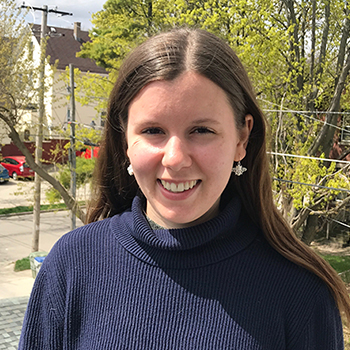
Celeste Gunderson
Topic: Geodesign to guide green infrastructure practices for stormwater management in a changing climate

Celeste Gunderson (Submitted photo)
Gunderson, a resident of Milwaukee’s east side, examined an issue that is literally close to home for her: the impacts of climate change on residents of Great Lakes communities, and how increased precipitation events and severe weather affect lives and property.
It’s an issue her family faced in 2008, when Milwaukee endured widespread flooding caused by heavy precipitation. “It had a lot of effects on the foundation of our house,” said Gunderson, “and we had to get construction done… We’ve already felt the effects of increased precipitation and severe weather events.”
Gunderson is double majoring in environmental studies and people-environment geography. She explored mitigation strategies using a tool called GeoPlanner for ArcGIS, a geographic information systems product that allows users to create and analyze various planning scenarios.
With guidance from Hart and graduate project assistant Kayla Wandsnider, said Gunderson, “We looked at how geodesign—which is a process using GIS technology to look at different planning scenarios—could be used to then guide green infrastructure practices for stormwater management” in the part of the UW-Madison campus that drains to Willow Creek, specifically with an increase in precipitation.
She gave her stakeholder presentation to UW-Madison’s Rhonda James, a senior landscape architect, and Aaron Williams, an assistant planner and zoning coordinator. Both are with the campus Division of Facilities Planning and Management.
Gunderson will continue working on this topic over the summer as a Wisconsin Sea Grant intern.
Said Hart, “Celeste will be a real help. She made a great connection with Kayla, and together they will be able to bounce ideas off of each other and it will also magnify Kayla’s work” as a graduate student with a double focus on urban and regional planning and water resources management. “I think that the methods developed out of this [project] will be really useful for coastal communities.”
Continuing to focus on this area will also be gratifying for the Milwaukeean. Concluded Gunderson, “Sometimes you learn the science behind climate change, and this project explores the direct impacts and ways we’re going to have to adapt in the future… It felt very relevant and important, and that made it a very fulfilling experience.”
News Releases – Wisconsin Sea Grant
https://www.seagrant.wisc.edu/news/undergraduate-research-scholars-tackle-issues-relevant-to-great-lakes-communities/

For three long days, Terri Trotter – president and CEO of the Midland Center for the Arts – waited anxiously for floodwaters to recede far enough that a team of experts could assess the damages at Heritage Park and the Doan Center in downtown Midland, Michigan.
The Midland County Historical Society Doan Center located in Heritage Park houses a research library and archive comprised of thousands of historical documents and photographs, Trotter said.
Great Lakes Now
https://www.greatlakesnow.org/2020/05/rescuing-history-museum-michigan-midland-flooding/
Great Lakes Echo
http://greatlakesecho.org/2020/05/29/scientists-explore-mysterious-lake-huron-sinkholes/

Keep up with energy-related developments in the Great Lakes area with Great Lakes Now’s biweekly headline roundup.
In this edition: Wind farm project in Lake Erie approved by regulators with potentially major handicap, Minnesota legislature approves first-of-its-kind renewable energy project for Prairie Island Indian Community, COVID-19 choking solar power projects in Illinois, and Wisconsin’s Alliant Energy to close 400MW coal plant.
Great Lakes Now
https://www.greatlakesnow.org/2020/05/great-lakes-energy-news-ohio-wisconsin-minnesota-illinois/
Current Watches, Warnings and Advisories for Brown (WIC009) Wisconsin Issued by the National Weather Service
https://alerts.weather.gov/cap/wwacapget.php?x=WI125F4D4EABC4.FloodAdvisory.125F4D4F0F60WI.GRBFLSGRB.0d55bf2071e410b4abc885766639b5d6
Current Watches, Warnings and Advisories for Brown (WIC009) Wisconsin Issued by the National Weather Service
https://alerts.weather.gov/cap/wwacapget.php?x=WI125F4D4E7640.FloodAdvisory.125F4D4EC140WI.GRBFLSGRB.0d55bf2071e410b4abc885766639b5d6
Current Watches, Warnings and Advisories for Brown (WIC009) Wisconsin Issued by the National Weather Service
https://alerts.weather.gov/cap/wwacapget.php?x=WI125F4D4E2D98.FloodAdvisory.125F4D4EA00CWI.GRBFLSGRB.0d55bf2071e410b4abc885766639b5d6
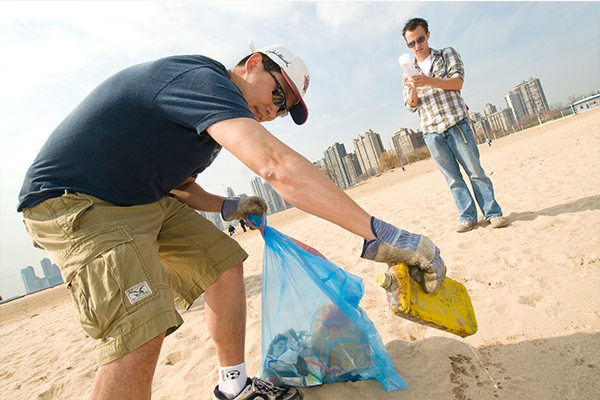
We’re excited to share our new Adopt-a-Beach website with you! Visit www.greatlakesadopt.org to check it out.
The new website will make hosting Adopt-a-Beach events much easier. It also makes it super easy for volunteers to find and sign up to attend your cleanups. To help you get acquainted with the new site, we’ve created a list of Frequently Asked Questions and several short video tutorials.
The Adopt-a-Beach website is currently open to host cleanups in your area. Team Leaders and volunteers must follow federal, state, and local coronavirus-related guidelines and should use their best judgment when planning and attending cleanup events. For now, we encourage Team Leaders to limit group size or hold a solo cleanup on your own or with your immediate household members.
Please take a few minutes to review our list of safety-related best practices for Adopt-a-Beach Team Leaders. The list includes general Adopt-a-Beach safety information along with specific information on COVID-19 safety and high water levels. We are closely monitoring developments around the Great Lakes region and will share any updates or changes with you.
We are hopeful that we will be able to hold the annual September Adopt-a-Beach event, scheduled for Saturday, September 26th. (It’s being held a bit later this year due to the Rosh Hashanah holiday.) We encourage you to test out the new website by creating your September Adopt-a-Beach event. The new site makes it easy to send updates to volunteers if anything changes over the coming months.
Please don’t hesitate to reach out to us by emailing adoptabeach@greatlakes.org if you have any questions in the coming weeks. We’re so grateful for your commitment to the Great Lakes – thank you!
The post New Adopt-a-Beach Website Is Live! appeared first on Alliance for the Great Lakes.
News – Alliance for the Great Lakes
https://greatlakes.org/2020/05/new-adopt-a-beach-website-is-live/
Current Watches, Warnings and Advisories for Brown (WIC009) Wisconsin Issued by the National Weather Service
https://alerts.weather.gov/cap/wwacapget.php?x=WI125F4D4E0AD4.SpecialWeatherStatement.125F4D4E4C10WI.GRBSPSGRB.5b80d3ef83982edbe00df1c0579118db
Anne Moser, senior special librarian and education coordinator at Wisconsin Sea Grant, recently penned this story for the spring 2020 issue of the International Association of Great Lakes Research’s newsletter, “Lakes Letter.” Here’s a reprint for your enjoyment.
While the idea of scientists and artists collaborating may sound like a 21st century concept, the history of these disparate disciplines working in tandem dates back thousands of years. Scientists have long used art to document and illustrate, while artists have sought out science as inspiration. We see it in the prehistoric art in the caves of southern France, the human anatomy drawings of the master Leonardo da Vinci, and the exquisite masterpieces by John Audubon. The link continues today, as scientists and artists connect deeply to mutually inform their work. Artists are studying scientific findings to accurately communicate their concerns and inspirations, while scientists are searching for ways to better translate their research through art to engage a broader public in their findings.
Recent education and outreach projects at the University of Wisconsin Sea Grant Institute (WSG) have taken this interdisciplinary approach by combining art and science to communicate Great Lakes research. We have taken inspiration from our work with children, who dive into scientific learning with an open mind, interdisciplinary nature and artistic flair.

Anne Moser. Image credit: Wisconsin Sea Grant
The three projects featured here highlight opportunities where unique partnerships were forged and surprising common ground found between artists and scientists. Each exemplifies the crossing of disciplinary boundaries, with the goal of a more science-informed society, regardless of age, socioeconomic status or education.
We welcome collaborations from across the Great Lakes watershed. Please contact the author at akmoser@aqua.wisc.edu.
The Poly Pledge
In 2016, J. Leigh Garcia, at the time a student in the University of Wisconsin-Madison Master of Fine Arts program, approached the Wisconsin Water Library looking for information about plastic pollution and fish consumption. Although she was originally concerned about the impact plastic might have on her health, her library reference question eventually led to a public art installation on the UW-Madison campus.
Leigh and a collaborator, Pete Bouchard, created a human-powered vending machine that dispensed reusable screen-printed shopping bags in exchange for pledges not to use plastic bags for one month.
About 130 people took the pledge. WSG then held a symposium that featured Garcia and Bouchard talking about their artistic approach and the goals of their public performance. This artists’ talk was paired with a science presentation by Loyola University Chicago Associate Professor Timothy Hoellein, who gave an overview of his research on the sources and impacts of anthropogenic litter (trash) around Chicago.
Ancient Survivors
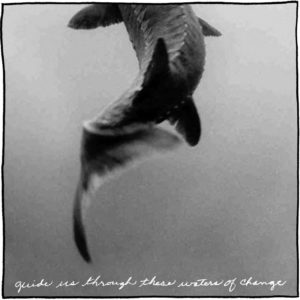
Inspired to generate dialogue and discussion between art and science, two professors at the University of Minnesota Duluth curated almost 50 black and white images of lake sturgeon to help tell the story of the Great Lakes.
These artistic interpretations formed the basis of several outreach programs, including a collaboration with the Thelma Sadoff Center for the Arts in Fond du Lac, Wisconsin. During early 2019, the THELMA mounted an exhibition in conjunction with the winter sturgeon-spearing season on Lake Winnebago.
The exhibition included the artwork as well as artifacts and historical objects never previously collected in one place. Over 10,000 people learned the conservation story of an ancient fish brought back from the brink of extinction through newspapers, decoys and spears, audio recordings, scientific papers, sculpture, and drawings.
Under the Surface
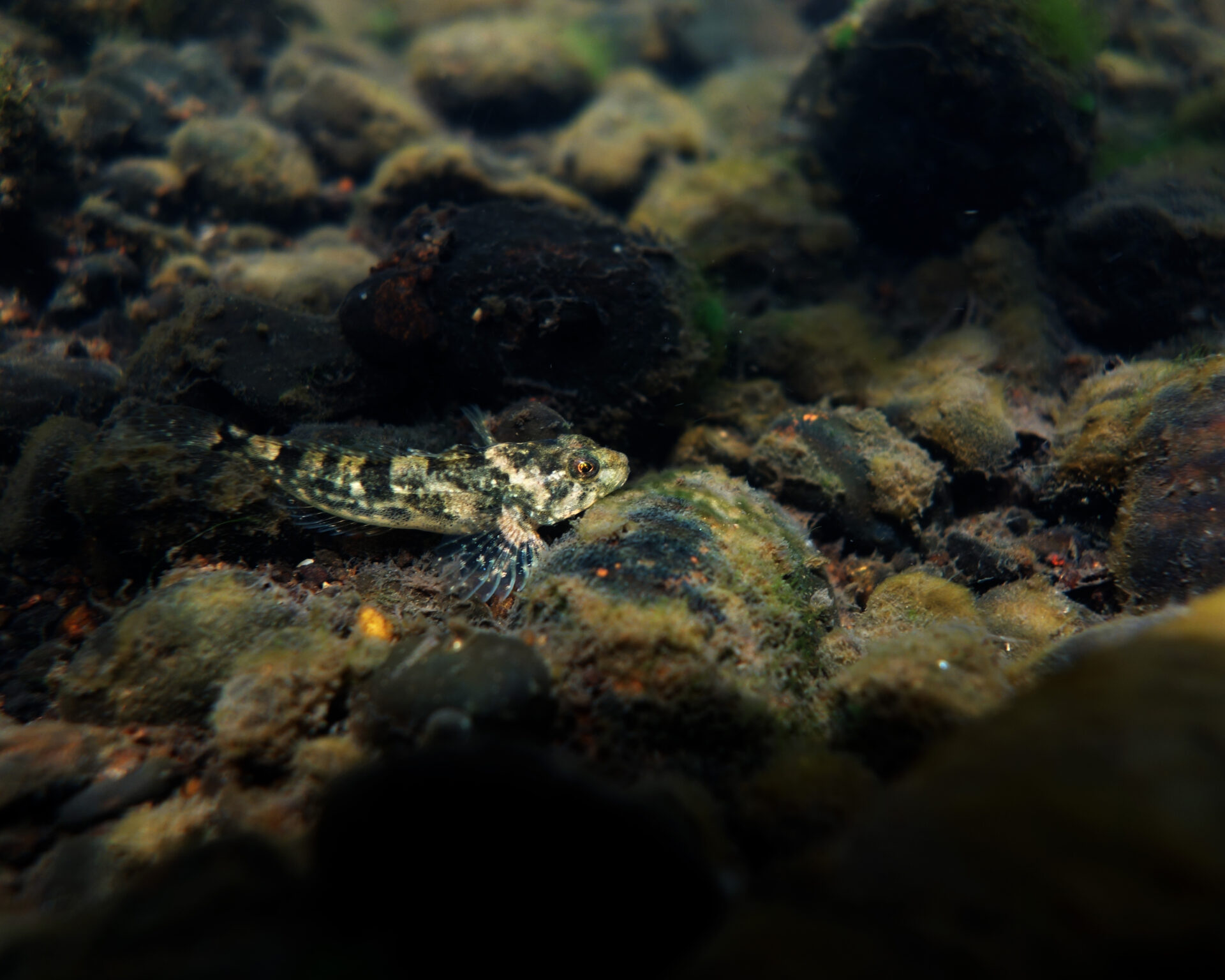
At Northwest Passage in northwest Wisconsin, youth in mental health treatment have the opportunity to go under the surface as part of an innovative curriculum that blends art, science and therapeutic healing using underwater photography.
This WSG-funded project has resulted in a photography exhibition that has traveled to libraries, visitor centers and other public spaces around Wisconsin, showing the power of water to heal and restore. As one visitor to a show noted, “This exhibit took my breath away. I am blown away by how these kids have overcome pain and hardship and channeled emotions and experiences into creating great art.”

An image from the “Under the Surface” project, courtesy of Northwest Passage.
Blog – Wisconsin Sea Grant
https://www.seagrant.wisc.edu/blog/crossing-borders-art-science-and-the-great-lakes/
Michigan will test soil sediments along the Tittabawassee River on Thursday following Midland County’s 500-year flood that some fear could have destroyed the work to remove toxic dioxins at a Superfund site there. Read the full story by The Detroit News.
Great Lakes Commission
https://www.glc.org/dailynews/20200528-superfund
Michigan officials last year — too quietly, some contend — expanded hunting and fishing restrictions near the former Wurtsmith Air Force Base in Oscoda after scientific studies showed excessive levels of PFAS in virtually every living creature tested from the area. Read the full story by the Detroit Free Press.
Great Lakes Commission
https://www.glc.org/dailynews/20200528-pfas
The historic St. Helena Island Light Station in Northern Michigan, just west of the Mackinac Bridge, will receive repairs and restoration from the Great Lakes Lighthouse Keepers Association with the help of a $60,000 Michigan Lighthouse Assistance Program grant from the Michigan State Historic Preservation Office. Read the full story by MLive.
Great Lakes Commission
https://www.glc.org/dailynews/20200528-lighthouse
With Chicago’s lakefront closed to recreation, wildlife has emerged in new ways. Read the full story by the Chicago Tribune.
Great Lakes Commission
https://www.glc.org/dailynews/20200528-wildlife
The COVID-19 pandemic has created a daunting economic situation in the Niagara Falls region, one of the biggest and most important hubs for tourism in Canada. Read the full story by CTV News.
Great Lakes Commission
https://www.glc.org/dailynews/20200528-niagara
The development of the Burns Harbor steel plant in Indiana brought not only economic gain, but also spurred local conservation efforts leading to the creation of the Indiana Dunes National Lakeshore in 1966. Read the full story by The Times of Northwest Indiana.
Great Lakes Commission
https://www.glc.org/dailynews/20200528-steel
A coalition of government entities and advocates in Milwaukee, Wisconsin, is launching an ambitious project to remove contaminated sediment and then restore habitat, improve public access, and spur commercial and residential development. Read the full story by Milwaukee Magazine.
Great Lakes Commission
https://www.glc.org/dailynews/20200528-swimmable
Scientists predict the harmful algal bloom in western Lake Erie this summer will be worse than in 2018, but not as severe as last year. Read the full story by The Plain Dealer.
Great Lakes Commission
https://www.glc.org/dailynews/20200528-bloom
Tourism officials don’t know what kind of summer awaits Pennsylvania’s Erie region tourism industry, which typically generates about $1.2 billion in visitor spending annually. Read the full story by the Erie Times-News.
Great Lakes Commission
https://www.glc.org/dailynews/20200528-tourism
Hopes for the future of renewable energy in Ohio have taken yet another hit, thanks to a decision by the Ohio Power Siting Board, which granted approval for a demonstration wind project in Lake Erie but imposed a condition that renders the project all but impossible. Read the full story by The Columbus Dispatch.
Great Lakes Commission
https://www.glc.org/dailynews/20200528-energy
In Minnesota, the Duluth City Council voted 7-1 Tuesday to approve a $10.1 million contract to fortify and rebuild the Canal Park portion of the Lakewalk, which was damaged by storms in 2017 and 2018. Read the full story by the Star Tribune.
Great Lakes Commission
https://www.glc.org/dailynews/20200528-lakewalk
Current Watches, Warnings and Advisories for Brown (WIC009) Wisconsin Issued by the National Weather Service
https://alerts.weather.gov/cap/wwacapget.php?x=WI125F4D4CFDB0.HydrologicOutlook.125F4D4E3694WI.GRBESFGRB.e28df1b53a8ca548f16867deb5fb1850
Many of the business practices we have at the Fox River Navigational System Authority already take into account social distancing simply due to the nature of our work at the locks. However, to comply with CDC guidelines and state recommendations, we are following these procedures to increase personal safety and limit exposure to the coronavirus.
In our offices:
At the Locks: This summer we will employ 29 lock tenders at the nine locks on the system that are open for boaters.
Our goal is to provide a safe and memorable experience to all boaters traveling through the locks and to pedestrians who want to experience living history in action. For a complete listing of our operating hours and fees to travel the lock system, please visit this link.
Blog – Fox Locks
http://foxlocks.org/2020/05/28/fox-locks-ensuring-your-safety/
Current Watches, Warnings and Advisories for Brown (WIC009) Wisconsin Issued by the National Weather Service
https://alerts.weather.gov/cap/wwacapget.php?x=WI125F4D4BDE94.HydrologicOutlook.125F4D4D196CWI.GRBESFGRB.955893a5ea3961825a01c8478c7ac2c4

Chicago’s Shedd Aquarium is one of the more popular, well-known aquariums around the country with 2 million visitors every year.
But the COVID-19 pandemic has closed it to the public, which is a big change for the penguins, whales, fish and other creatures that live in the Shedd’s various habitats.
Great Lakes Now
https://www.greatlakesnow.org/2020/05/covid-19-shedd-aquarium-visitors/

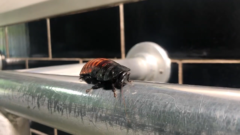
There are cockroaches roaming the aquarium at the Belle Isle Conservancy.
But don’t worry, they’re supposed to be there.
Unlike the smaller, more common roaches you might find in a dirty or old building, these cockroaches are Madagascar hissing cockroaches, who have their own exhibit at the conservancy and were given a chance to say hello to some fish while the aquarium is closed due to the COVID-19 pandemic.
Great Lakes Now
https://www.greatlakesnow.org/2020/05/covid-19-belle-isle-fish-and-insects-visitors/
Current Watches, Warnings and Advisories for Brown (WIC009) Wisconsin Issued by the National Weather Service
https://alerts.weather.gov/cap/wwacapget.php?x=WI125F4D3F4148.SpecialWeatherStatement.125F4D3F5DCCWI.GRBSPSGRB.940d7b3678472919033e33d5c588d613
New program targets youths and educators in Milwaukee to develop Great Lakes literacy skills
May 27, 2020
By Marie Zhuikov
A report released last year showed that Wisconsin has the largest academic achievement gap between African-American and white students in the nation. The National Assessment of Education Progress tested fourth- and eighth-graders in 2019. African-American students in Wisconsin posted the lowest reading and math scores, as well as in science.
A new two-year Water Resources Institute project will work to help close this gap. Set in Milwaukee, home to the largest number of African-American students in the state, the project is a collaboration among the University of Wisconsin Madison Division of Extension Natural Resources Institute staff and three partner schools. Approximately 100 students, ages 10 to 15, and at least two educators will take part in the project.

Extension staff will train teachers in ways to foster student inquiry and science observations skills. They will also travel to the schools — Escuela Verde, La Escuela Fratney and Maryland Avenue Montessori — to facilitate sessions with students to develop water-related research projects.
Justin Hougham, project principal investigator, is director of the university’s Upham Woods Outdoor Learning Center and an associate professor at UW-Madison. Hougham said, in addition to meeting needs identified by the National Assessment survey, the project’s framework comes from a biannual survey Extension conducts on the status and needs of environmental education groups in Wisconsin.
“The No. 1 skill that people wanted was for their organizations to be better at diversity, equity and inclusivity work in environmental education. The No. 1 content area (which is different than a skill), was support for STEM work. They also wanted increased information and opportunity for professional development around using technology in environmental education,” Hougham said.
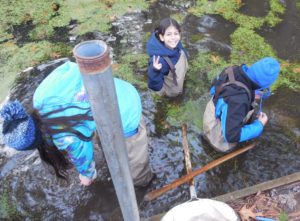
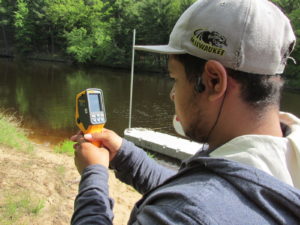
Students will receive hands-on experience using science technology in the field in their local communities. This includes equipment such as thermal imagers, digital microscopes and water testing tools. They will also learn how to apply the scientific method to their projects.
Hougham explained how he and his team of Isabelle Herde and Zoe Goodrow with UW-Madison will take the project one step further. “We realized the more important or impactful thing we can do is not just have people be better at looking at data, but to be more skilled at telling stories with that information. More specifically, telling stories about environmental issues in their community that are important to them. We want to look at environmental issues through the lens of our youth and educators.”

The students can share their stories via social media, science fairs and community events.
Because the rivers flowing through Milwaukee are part of the Great Lakes watershed, the project will connect students to the Great Lakes through their research projects, and so will improve their Great Lakes literacy.
“We’re excited to be doing this work,” Hougham said. “It’s connected to a lot of previous projects that we have had in the Milwaukee area, which will allow it to be successful. It’s important to take the long view on environmental issues, but also with community engagement in them.”
The team hopes these connections will help build a generation invested in the health of one of the largest sources of fresh water in the world – and close academic gaps.
News Release – WRI
https://www.wri.wisc.edu/news/telling-stories-about-science/
Once as many as nine types of ciscoes roamed the Great Lakes, playing a key role in the food web before the fish largely disappeared from the lower four Great Lakes in the mid-1900s. Reintroducing cisco to the Great Lakes could also strengthen the population of several other important fish species. Read the full story by the Great Lakes Echo.
Great Lakes Commission
https://www.glc.org/dailynews/20200527-foodweb
The mayor of Toledo, Ohio, has frequently stated his interest in protecting Lake Erie, however when it came time to pursue an appeal of a court ruling that invalidated a Toledo city charter change that would protect the lake, the administration quietly dropped the case. Read the full story by The Toledo Blade.
Great Lakes Commission
https://www.glc.org/dailynews/20200527-lake-Toledo
The City Council in Lakewood, Ohio, recently approved a resolution allowing a resident to undertake lakeshore protection measures in hopes of staving off coastal erosion of Lake Erie. Read the full story by The Plain Dealer.
Great Lakes Commission
https://www.glc.org/dailynews/20200527-Lakewood-residents
Memorial Day weekend in Chicago is typically the start of boating and beach season, but amid the coronavirus pandemic, this year looked quite a bit different. Read the full story by WGN-TV – Chicago, IL.
Great Lakes Commission
https://www.glc.org/dailynews/20200527-Chicago-drone
The federal government needs to assist the fishing industry in Ontario to transition and thrive in the post-COVID-19 marketplace by including Ontario-based fish processors in programs aimed at addressing the oversupply of commercial fisheries. Read the full story by the Manitoulin Expositor.
Great Lakes Commission
https://www.glc.org/dailynews/20200527-commercial-fishery
Lakes Michigan and Huron water levels have risen a little more than three inches over the past two weeks, meaning an additional 2.4 trillion gallons of water are now in the lakes. Read the full story by MLive.
Great Lakes Commission
https://www.glc.org/dailynews/20200527-lake-levels
At least three different proposed class action lawsuits have been filed in state and federal courts on behalf of residents and business claiming losses that resulted from the Edenville Dam failure in Michigan. Read the full story by MLive.
Great Lakes Commission
https://www.glc.org/dailynews/20200527-dam-failure
The U.S. Army Corps of Engineers is taking entries for the Detroit District’s 2020 photo contest, and are seeking amateur photos of Army Corps projects throughout the Great Lakes. Read the full story by WSJM – St. Joseph, MI.
Great Lakes Commission
https://www.glc.org/dailynews/20200527-Photo-Contest
If your building has been closed or only a few people have been using it, the water in the pipes should be flushed before you start up your business again to reduce the risk of bacterial and heavy metal contamination from stagnant water. Read the full story by Michigan Radio.
Great Lakes Commission
https://www.glc.org/dailynews/20200527-flush-plumbing