International cargoes on the Great Lakes has rebounding as the shipping season draws to a close. Shipments of crops and wind turbine components to Great Lakes ports like the Port of Indiana-Burns Harbor and the Port of Chicago stayed steady in November, while steel shipments picked up the pace. Read the full story by The Times of Northwest Indiana.

Original Article

Great Lakes Commission

Great Lakes Commission

https://www.glc.org/dailynews/20201218-shipping-up
Ned Willig

Republican lawmakers in Wisconsin are seeking to restrict the ability of environmental regulators to regulate chemicals known as PFAS by rescinding parts of an emergency rule and limiting efforts to properly treat foam containing PFAS. Read the full story by Wisconsin Public Radio.

Original Article

Great Lakes Commission

Great Lakes Commission

https://www.glc.org/dailynews/20201218-wi-dnr-pfas

Ned Willig

The National Park Service is spending $1.4 million to remove abandoned structures and roadbeds at Indiana Dunes National Park and restore natural area in the place of razed structures. Read the full story by the Chicago Tribune.

Original Article

Great Lakes Commission

Great Lakes Commission

https://www.glc.org/dailynews/20201218-indiana-dunes

Ned Willig

Republican lawmakers in Wisconsin seek to restrict the ability of environmental regulators to regulate chemicals known as PFAS by rescinding parts of an emergency rule and limiting efforts to properly treat foam containing PFAS. Read the full story by Wisconsin Public Radio.

Original Article

Great Lakes Commission

Great Lakes Commission

https://www.glc.org/dailynews/20201219-state-pfas

Ned Willig

The Pennsylvania Department of Environmental Protection announced over $252,000 in Coastal Zone Grants to help protect and restore the Lake Erie coastal zone in northwest Pennsylvania.  Many coastal zones along Lake Erie are under increased pressure from development, erosion, biodiversity loss and pollution. Read the full story by Erie News Now.

Original Article

Great Lakes Commission

Great Lakes Commission

https://www.glc.org/dailynews/20201217-microplastic-pollution-plastic

Ned Willig

FOR IMMEDIATE RELEASE – December 18, 2020

Media Contact:
Jill Ryan, Executive Director, Freshwater Future
jill@freshwaterfuture.org
(231)348-8200 ext. 2

(Communities across Michigan)- The Michigan Legislature passed legislation yesterday that prohibits water utilities from shutting off water to residents due to non-payment. The legislation, spearheaded by Senator Stephanie Chang (D-Detroit), also requires the restoration of water services to families currently without running tap water. After months without protections due to a court decision removing Michigan’s Governor’s power to require water reconnections during COVID-19, this will at least temporarily fill the gap for those without running water.

“We applaud Senator Stephanie Chang’s leadership in championing legislation to eliminate the inhumane practice of water shutoffs affecting Michigan residents. Water activists have been working tirelessly for more than a decade to bring attention to the rising unaffordability of water resources in our communities and the public health crisis disproportionately affecting underrepresented communities that water shutoff practices by municipalities across Michigan create.” said Monica Lewis Patrick, President & CEO, We the People of Detroit. “We acknowledge Senator Chang’s commitment to ensuring all Michiganders have access to water and we recognize and honor the Water Warriors who have been working hard to raise awareness for years.”

Prior to COVID-19, more than 15 million Americans, or 1 out of every 20 households, had their water shut off due to being unable to pay their water bill, and it is expected that more than a third of the nation will be unable to pay their water bill by the end of 2022. These numbers will be exacerbated due to COVID-19, leaving potentially hundreds of thousands of Michiganders making hard decisions between putting food on the table and paying their water bill if the state does not take steps to work with utilities to make water affordable for everyone.

Escalating water rates are occurring in rural, suburban and urban areas alike. In rural Mancelona, a town of about 1,300 people, an average combined water and sewer rate is nearly double the United Nation’s recommended affordable amount for the median household income.

“This is the first step in protecting public health and ensuring all families across the state have access to running water to wash their hands and for drinking,” said Jill Ryan, Executive Director of Freshwater Future. “Now we must look forward and create a way to ensure the water stays on for everyone in the Great Lakes state and beyond.”

Through a community consensus process conducted by the Water Unity Table, ten principles have been developed outlining what residents want to see in policies to make water affordable for everyone. Based on these principles, a Water Affordability Pledge has been developed that organizations and individuals can endorse to show support for the need for affordable water.

The All About Water collaborative, including the Water Unity Table, We the People of Detroit, Freshwater Future, the Benton Harbor Community Water Council, and others are lifting up this pledge and are committed to securing affordable water for every resident of Michigan and the country. Reverend Edward Pinkney, President of the Benton Harbor Water Council said “he is extremely happy to hear that protections have been extended for access to water for another 90 days, but we need to take the next step and ensure permanent water connections for residents.”

###

We the People of Detroit is dedicated to community coalition building and to the provision of resources that inform, train and mobilize the citizens of Detroit and beyond to improve their quality of life. Learn more at https://www.wethepeopleofdetroit.com/.

Freshwater Future builds a strong and effective environmental community working to protect and restore the waters of the Great Lakes by involving residents in civic decision-making. Learn more at https://freshwaterfuture.org/.

All About Water is a collaboration of community groups that works to further water policies by improving access, quality and affordability of water. Since 2017, the All About Water group has focused on improving water infrastructure and affordability, through regular calls and convenings to strategize, collaborate and create positive action on water issues.

Original Article

Blog – Freshwater Future

Blog – Freshwater Future

https://freshwaterfuture.org/drinking-water/michigan-legislature-passes-bill-to-keep-water-on-through-march-2021/

Leslie Burk

...PATCHY DENSE FOG COULD RESULT IN LOCALLY HAZARDOUS TRAVEL CONDITIONS ACROSS PORTIONS OF EASTERN WISCONSIN EARLY THIS MORNING... Clearing skies and light winds were allowing patchy dense fog to form in eastern Wisconsin early this morning. The fog was reducing the visibility to less than 1/4 mile at a few places. The fog

Original Article

Current Watches, Warnings and Advisories for Brown (WIC009) Wisconsin Issued by the National Weather Service

Current Watches, Warnings and Advisories for Brown (WIC009) Wisconsin Issued by the National Weather Service

https://alerts.weather.gov/cap/wwacapget.php?x=WI125F766D9344.SpecialWeatherStatement.125F766E4050WI.GRBSPSGRB.a855b1cd49ac32256c0b21a0afbc03bf

w-nws.webmaster@noaa.gov

Many joys of the holiday season, such as getting together with loved ones, are on hold this year. As the COVID-19 pandemic continues, restrictions on travel and sizable gatherings remain in place. However, many outdoor venues remain open, including national parks in the Great Lakes region.

The post National parks offer visitors a wintertime escape first appeared on Great Lakes Echo.

Original Article

Great Lakes Echo

Great Lakes Echo

http://greatlakesecho.org/2020/12/18/national-parks-offer-visitors-a-wintertime-escape/

Guest Contributor

Wisconsin releases action plan to reduce PFAS chemical use

MADISON, Wis. (AP) — Wisconsin must prevent pollution from forever chemicals known as PFAS while developing ways to reduce the chemicals’ use, according to a 25-point action plan released Wednesday by Gov. Tony Evers’ administration after a year of study.

Nearly 20 state agencies, along with the University of Wisconsin, worked on the report to tackle the growing pollution and public concern around PFAS, which is shorthand for perfluoroalkyl and polyfluoroalkyl substances.

Read Now at Great Lakes Now.

Original Article

Great Lakes Now

Great Lakes Now

https://www.greatlakesnow.org/2020/12/ap-wisconsin-action-plan-reduce-pfas-chemical-use/

The Associated Press

Flint water settlement borrowing plan approved by lawmakers

LANSING, Mich. (AP) — Michigan legislators on Wednesday finalized a plan to borrow $600 million to finance the state’s proposed settlement with the residents of Flint, whose water was contaminated with elevated levels of the neurotoxin lead.

The legislation received House approval on 105-3 and 104-4 votes and will be signed by Democratic Gov.

Read Now at Great Lakes Now.

Original Article

Great Lakes Now

Great Lakes Now

https://www.greatlakesnow.org/2020/12/ap-flint-water-settlement-borrowing-plan-approved-by-lawmakers/

The Associated Press

News

Great Lakes Commission releases report on uses of Great Lakes water in 2019

Ann Arbor, MI – The Great Lakes Commission released a report detailing the uses of Great Lakes water in 2019. The Annual Report of the Great Lakes Regional Water Use Database includes information on withdrawals, diversions, and consumptive uses by each of the eight states and two provinces in the Great Lakes-St. Lawrence River basin. According to the report, 38.9 billion gallons of water per day were withdrawn from the basin in 2019, an overall decrease in water use from 2018.

For more than 30 years, the Great Lakes and St. Lawrence River states and provinces have submitted water use data to the Great Lakes Commission to support implementation of the Great Lakes-St. Lawrence River Basin Water Resources Compact. Each year, the GLC compiles and summarizes these datasets into an annual report. The 2019 report was published during the Great Lakes-St. Lawrence River Water Resources Regional Body and the Great Lakes-St. Lawrence River Basin Compact Council meeting on December 8.

James Clift, Great Lakes Commissioner and designated chair of the Regional Body for Michigan Governor Gretchen Whitmer, says the database and report highlight the dual regional commitments to conserving water resources and promoting sustainable economic development.

“More than 30 million people in the Great Lakes basin rely on the lakes for drinking water, jobs, industry and more.” Clift said. “The water use data published annually by the Great Lakes Commission helps ensure regional decision-makers are managing our water resources responsibly for all the basin’s residents.”

To read the report, visit waterusedata.glc.org.


The Great Lakes Commission, led by chair Sharon M. Jackson, Deputy General Counsel for Governor Eric J. Holcomb of Indiana, is a binational government agency established in 1955 to protect the Great Lakes and the economies and ecosystems they support. Its membership includes leaders from the eight U.S. states and two Canadian provinces in the Great Lakes basin. The GLC recommends policies and practices to balance the use, development, and conservation of the water resources of the Great Lakes and brings the region together to work on issues that no single community, state, province, or nation can tackle alone. Learn more at www.glc.org.

Original Article

Great Lakes Commission

Great Lakes Commission

https://www.glc.org/news/water-use-121720

Beth Wanamaker

As 2020 winds down, we asked staff members at Wisconsin Sea Grant what their favorite project was this year. Although work was a bit more challenging than usual due to our altered work circumstances, everyone managed to stay productive, and even find fulfillment.

Titus Seilheimer. Image credit: Wisconsin Sea Grant

Our fisheries specialist, Titus Seilheimer’s favorite project is Great Lakes Aquaculture Day. This annual event for the Great Lakes Aquaculture Collaborative was held on October 10. Seilheimer said, “We had to move the event online and had a full day of interactive sessions for new farmers, current farmers and consumers. There was a lot of planning to make it happen, but the most fun part of the day was when Elliot Nelson and I were emcees for a virtual Iron Chef-style cooking contest. Although that sounds strange, it actually worked really well.”

The recordings for Great Lakes Aquaculture Day are available online. Learn more about this Great Lakes Sea Grant Network effort on its website.

Seilheimer said the event was a team effort from Elliot Nelson and Lauren Jescovitch (Michigan Sea Grant), Emma Wiermaa (Wisconsin Sea Grant and Univ. of Wisconsin Stevens Point-Northern Aquaculture Demonstration Facility), Amy Schrank (Minnesota Sea Grant), and himself, with essential help from Cindy Hudson and Geneva Langeland from the Michigan Sea Grant communications team.

The post Sea Grant staff project faves, Titus Seilheimer first appeared on Wisconsin Sea Grant.

Original Article

Blog – Wisconsin Sea Grant

Blog – Wisconsin Sea Grant

https://www.seagrant.wisc.edu/blog/sea-grant-staff-project-faves-titus-seilheimer/

Marie Zhuikov

The International Joint Commission has responsibility over the Great Lakes and Seaway and has to deal with a combination of serious problems that includes a warmer Lake Superior, higher water levels in Lake Ontario and the Upper St. Lawrence River, and the appearance of toxic blue-green algae on Lake Superior and Lake Erie. Read the full story by The Maritime Executive.

Original Article

Great Lakes Commission

Great Lakes Commission

https://www.glc.org/dailynews/20201217-st-lawrence-seaway-ijc

Patrick Canniff

The Great Lakes continue to inch away from the record high water levels of the past few years. Lakes Michigan and Huron have been in the spotlight with the highest water levels recently compared to previous record high water levels. Read the full story by MLive.com.

Original Article

Great Lakes Commission

Great Lakes Commission

https://www.glc.org/dailynews/20201217-water-levels-erosion

Patrick Canniff

The PFAS Action Plan was developed by the Wisconsin PFAS Action Council, a group of nearly 20 state agencies and the University of Wisconsin System. As part of the statewide initiative to ensure Wisconsinites have access to clean, safe drinking water, Gov. Tony Evers signed Executive Order #40 in August 2019 to address the issue of PFAS across the state. Read the full story by WSAW – TV – Wausau, WI.

Original Article

Great Lakes Commission

Great Lakes Commission

https://www.glc.org/dailynews/20201217-wisconsin-pfas

Patrick Canniff

A petition to keep the Edwardian-era SS Keewatin in its home of Port McNicoll, ON has now garnered close to 9,000 signatures. The man behind the petition is involved with an additional campaign designed to lobby all levels of government to consider the ship’s plight. View the full story by OrilliaMatters.com.

Original Article

Great Lakes Commission

Great Lakes Commission

https://www.glc.org/dailynews/20201217-ontario-keewatin-port

Patrick Canniff

Cargo totals on the St. Lawrence Seaway hit nearly 32.3 million metric tons, down 6.6% from 2019. Compared to previous months, the improvement in total cargo figures in November is due in large part to grain shipments, which have been strong since the fall harvest began. Read the full story by WorkBoat.

Original Article

Great Lakes Commission

Great Lakes Commission

https://www.glc.org/dailynews/20201217-shipping

Patrick Canniff

Chicago Piping Plover, a conservation group focused on protecting the endangered species, confirmed that Nish, a chick born on Montrose Beach earlier this year, successfully landed in Florida. The bird was spotted in Anclote Key State Park, just north of Tampa. Read the full story by Chicago Sun Times.

Original Article

Great Lakes Commission

Great Lakes Commission

https://www.glc.org/dailynews/20201217-chicago-piping-plover

Patrick Canniff

An organization of 40 conservation groups say a new Environmental Protection Agency (EPA) rule concerning ballast water discharges under the Vessel Incidental Discharge Act (VIDA) will not protect the Great Lakes from the spread and introduction of invasive species. Read the full story by Water Technology.

Original Article

Great Lakes Commission

Great Lakes Commission

https://www.glc.org/dailynews/20201217-vida-epa-ballast

Patrick Canniff

As of Dec. 11, according to that Parks Foundation of Kalamazoo County, they’ve already raised 65% of their funding goal from private funds and public funding from the Michigan Department of Transportation to finish the last few miles of the 22-mile long trail. Part of a 140-mile regional trail network connecting Lake Michigan with Lake Huron. Read the full story by Second Wave.

Original Article

Great Lakes Commission

Great Lakes Commission

https://www.glc.org/dailynews/20201217-michigan-trail

Patrick Canniff

With Line 5 closure, a ‘game of chicken’ over how to heat Upper Peninsula

By Kelly House, Bridge Michigan, through the Institute for Nonprofit News network

The Great Lakes News Collaborative includes Bridge Michigan; Circle of Blue; Great Lakes Now at Detroit Public Television; and Michigan Radio, Michigan’s NPR News Leader; who work together to bring audiences news and information about the impact of climate change, pollution, and aging infrastructure on the Great Lakes and drinking water.

Read Now at Great Lakes Now.

Original Article

Great Lakes Now

Great Lakes Now

https://www.greatlakesnow.org/2020/12/line-5-closure-upper-peninsula/

Bridge Michigan

Microplastic particles, typically studied as aquatic pollutants, are also common in coastal dunes on Great Lakes’ shorelines, according to a new study. 

The post From lakes to shores, microplastics are spreading everywhere first appeared on Great Lakes Echo.

Original Article

Great Lakes Echo

Great Lakes Echo

http://greatlakesecho.org/2020/12/17/from-lakes-to-shores-microplastics-are-spreading-everywhere/

Guest Contributor

Pipelines and Plastic Bottles: Michigan advocate focuses on Line 5 and Nestle bottled water issue

When Michigan Gov. Gretchen Whitmer took office in January 2019, she immediately put a spotlight on the Enbridge Line 5 oil pipeline and started the process that would eventually lead to her ordering it shut down.

In her 2018 campaign, Whitmer also pledged to remedy the inequities related to water withdrawal issues, specifically a Nestle Waters case being fought by grassroots advocates that originated in the administration of former Gov.

Read Now at Great Lakes Now.

Original Article

Great Lakes Now

Great Lakes Now

https://www.greatlakesnow.org/2020/12/pipelines-and-plastic-bottles-michigan-advocate-focuses-on-line-5-and-nestle-bottled-water-issue/

Gary Wilson

Great Lakes Gift Guide 2020: Remember that road trip, boat ride, microbrew or sweatshirt you should’ve bought with this list

Want to give your loved ones a holiday gift that connects to that summer trip up north or the fall color tour you took together? 

Or maybe you have a trip planned for after the COVID-19 vaccines have been distributed and want to give them something to remind them they have something to look forward to. 

Read Now at Great Lakes Now.

Original Article

Great Lakes Now

Great Lakes Now

https://www.greatlakesnow.org/2020/12/great-lakes-gift-guide-2020-list/

Natasha Blakely

On the surface of Lake Michigan, glistening water rushes over sandy beaches. But underneath the waves is a fragile ecosystem that interconnects a complex food web critical to the overall health of the Great Lakes. Read the full story by WXYZ-TV- Detroit, MI.

Original Article

Great Lakes Commission

Great Lakes Commission

https://www.glc.org/dailynews/20201216-invasive-species

Ken Gibbons

Sheets of ice formed over Lake Superior, on the shores of Ashland, Wisconsin, amid cold weather conditions in the region this week. A local photographer captured footage along the water showing ice on top of the water and the unique sound. Read the full story by Yahoo! News.

Original Article

Great Lakes Commission

Great Lakes Commission

https://www.glc.org/dailynews/20201216-ice-superior

Ken Gibbons

Environmental and farm groups are joining forces to lobby the state for significant funding to support farms across Wisconsin and protect drinking water, but they stopped short of putting a price tag on their request. Read the full story by Wisconsin Public Radio.

Original Article

Great Lakes Commission

Great Lakes Commission

https://www.glc.org/dailynews/20201216-farmers

Ken Gibbons

In Wisconsin, the city of Sheboygan’s Plan Commission approved a conditional use permit for Kohler Co. to move forward with development of its new golf course along Lake Michigan. Community concerns about the course are largely connected to environmental issues that could result, such as pesticide or other chemical runoff into Lake Michigan. Read the full story by Sheboygan Press.

Original Article

Great Lakes Commission

Great Lakes Commission

https://www.glc.org/dailynews/20201216-golf-course

Ken Gibbons

An impounded section of the Kalamazoo River, which drains a portion of southwest Michigan, will become a lake again now that repairs are finished on a hydroelectric dam that allowed huge quantities of sediment to wash downstream after the reservoir was drained. Read the full story by MLive.

Original Article

Great Lakes Commission

Great Lakes Commission

https://www.glc.org/dailynews/20201216-morrow-lake

Ken Gibbons

There are over 4,000 types of PFAS chemicals and most researchers study a handful of these chemicals at most. Carla Ng, a researcher at the University of Pittsburgh, is one of the few scientists trying to find an approach that works for all of them. Read the full story by Public Source.

Original Article

Great Lakes Commission

Great Lakes Commission

https://www.glc.org/dailynews/20201216-pfas

Ken Gibbons

There are over 4,000 types of PFAS chemicals and most researchers study a handful of these chemicals at most. Carla Ng, a researcher at the University of Pittsburgh, is one of the few scientists trying to find an approach that works for all of them. Read the full story by Public Source.

Original Article

Great Lakes Commission

Great Lakes Commission

https://www.glc.org/dailynews/20201216-pfas

Ken Gibbons

Human remains, which likely date back to prehistoric times, were found at Sleeping Bear Dunes, park officials confirmed Tuesday. The park service is now giving notice to the local Native American tribes and organizations as required by law and aims to turn the remains over to the appropriate tribe or tribes once the legal process is completed. Read the full story by the Detroit Free Press.

Original Article

Great Lakes Commission

Great Lakes Commission

https://www.glc.org/dailynews/20201216-prehistoric

Ken Gibbons

Great Lakes steel production rose by 3,000 tons last week, but remains depressed by more than 18% this year with U.S. steel mills only operating at two-thirds of capacity, according to the American Iron and Steel Institute. Read the full story by the Northwest Indiana Times.

Original Article

Great Lakes Commission

Great Lakes Commission

https://www.glc.org/dailynews/20201216-steel-production

Ken Gibbons

Today, the Wisconsin PFAS Action Council (WisPAC) released a final report of statewide initiatives regarding per- and polyfluoroalkyl substances (PFAS) with Gov. Evers to the public. Representing the entire University of Wisconsin System, Christina Remucal, associate professor of civil and environmental engineering at the University of Wisconsin-Madison, is one member of the council composed of representatives from 17 state agencies. The council has been working on the PFAS Action Plan for over a year to identify priority actions in response to growing concerns about PFAS and the hazards this class of chemicals pose to human health. The council was put together in 2019 by the governor to ensure Wisconsinites have access to clean, safe drinking water.

Christina Remucal. Image credit: University of Wisconsin-Madison

Remucal brought her research experience with PFAS to the table, including her most recently funded Wisconsin Sea Grant project, where she is investigating the fate of PFAS in Green Bay and Lake Michigan sediments and water for two years.

“We often think of PFAS as a groundwater contaminant, but here we have an interesting scientific opportunity to learn about how these chemicals move in surface waters,” Remucal said. Her research team is looking in and around the city of Marinette, which has a known PFAS contamination site and also the bay of Green Bay. They plan to collect samples out on Lake Michigan next year.

Unlike other traditional environmental contaminants like PCBs, which tend to be found more in sediment, Remucal said PFAS dissolve easily in water and move about more freely. There are thousands of different kinds of PFAS. Their chemical structure determines where they’re more likely to travel in the environment. “The ones that are longer-chain compounds – the ones that are a little bigger – are more likely to be found in the sediment,” Remucal said.

One mystery her team is focusing on is why the amounts of PFAS measured in sediment in the field are different than what’s been observed in the laboratory. “In the lab we always try to mimic the environment, but I think these compounds, because of their chemical properties, don’t behave very well. That’s why it’s important to make those measurements in the field as well,” Remucal said.

Remucal recently met with Wisconsin Department of Natural Resources staff members to share what her team has found so far, which is that PFAS concentrations in sediment vary widely. “The Tyco facility drainage ditch sites have a lot of PFAS in them, which we knew. The amounts that are ending up in the sediment vary a lot. We’re finding more of the longer-chain compounds in the sediment than the shorter-chain compounds – more of the sulfinates and the carboxylates. It really depends on the chemistry,” Remucal said.

The researchers are analyzing the sediments themselves to see if their composition might explain why the PFAS amounts vary.

Remucal finds all the public interest in PFAS and her research refreshing and in keeping with Sea Grant expectations to engage stakeholders in research. “It’s challenging working with these chemicals and communicating about them because the chemistry is so complex, but it’s been rewarding to have people so interested in what we are doing.”

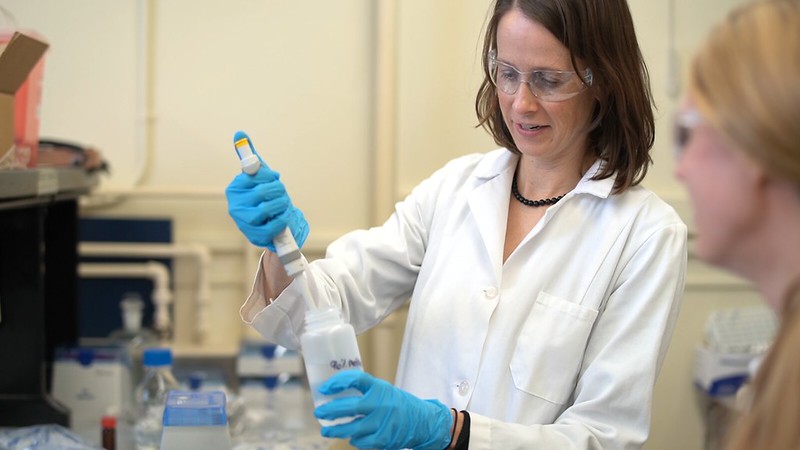
Christina Remucal works with PFAS samples in her lab. Image credit: Bonnie Willison, Wisconsin Sea Grant

The post Investigating the fate of PFAS in Green Bay and Lake Michigan first appeared on Wisconsin Sea Grant.

Original Article

News Releases – Wisconsin Sea Grant

News Releases – Wisconsin Sea Grant

https://www.seagrant.wisc.edu/news/investigating-the-fate-of-pfas-in-green-bay-and-lake-michigan/

Marie Zhuikov

Legislation sponsored by Michigan Senators Gary Peters and Debbie Stabenow would help shoreline communities address rising water levels and erosion by setting up funding mechanism to carry out mitigation projects and reduce natural disaster risk associated with high lake levels. Read the full story by the Huron Daily Tribune.

Original Article

Great Lakes Commission

Great Lakes Commission

https://www.glc.org/dailynews/20201215-peters-bill

Ned Willig

The International Joint Commission (IJC) has announced approval to deviate from the controversial Plan 2014, allowing for increased outflow from Lake Ontario’s waters through the Moses-Saunders dam on the St. Lawrence River to help avoid flooding on Lake Ontario shorelines. Read the full story by Rochester First.

Original Article

Great Lakes Commission

Great Lakes Commission

https://www.glc.org/dailynews/20201215-ijc

Ned Willig

The Michigan DNR relocated a historic shelter building to keep it safe from eroding shoreline on Lake Michigan. The Orchard Beach State Park’s historic shelter building now sits a safe 230 feet back from the eroding Lake Michigan shoreline. Read the full story by Click-On Detroit.

Original Article

Great Lakes Commission

Great Lakes Commission

https://www.glc.org/dailynews/20201215-orchard-beach

Ned Willig

With the aquifer that supplies drinking water to Joliet, Illinois, expected to dry up by 2030, the community is in talks with both the city of Chicago and the city of Hammond to provide water from Lake Michigan. Read the full story by CBS Chicago.

Original Article

Great Lakes Commission

Great Lakes Commission

https://www.glc.org/dailynews/20201215-joilet

Ned Willig

Decades after they gave up the adventure of searching for shipwrecks, two underwater explorers with Alpena roots made a thrilling find in the waters of the Thunder Bay National Marine Sanctuary by discovering a Civil War-era shipwreck not seen in nearly 160 years. Read the full story by the Alpena News.

Original Article

Great Lakes Commission

Great Lakes Commission

https://www.glc.org/dailynews/20201215-shipwreck

Ned Willig

Dickinson County, Michigan adopted a resolution Monday in support of Enbridge’s Line 5 pipeline, urging completion of a tunnel replacement project with no disruption of service. The resolution comes in response to Gov. Gretchen Whitmer’s recent demand the company shut down its oil pipeline that crosses the bottom of the waterway connecting Lake Huron and Lake Michigan. Read the full story by the Daily News.

Original Article

Great Lakes Commission

Great Lakes Commission

https://www.glc.org/dailynews/20201215-dickinson

Ned Willig