The Town of Saugeen Shores on the shores of Lake Huron in southwestern Ontario will renew its membership and pay dues to the Great Lakes and St. Lawrence Cities 2022 Initiative, despite misgivings about the value of the program to local taxpayers. Read the full story by the Owen Sound Sun Times.

Original Article

Great Lakes Commission

Great Lakes Commission

https://www.glc.org/dailynews/20220119-membership

Samantha Tank

By Eva Ryan, University of Wisconsin-Madison

To further celebrate the Wisconsin Sea Grant 50th anniversary, I had the opportunity to interview Ginny Carlton, education outreach specialist. Ginny gave me insights into the changes in her field from the past 50 years and hopeful changes for the next 50.

Carlton provides learning opportunities to an array of different people including K-12 students and teachers, as well as catering to other audiences through programs like Grandparent’s University. The education branch also hosts webinars that are open to the public. Some of these webinars have recently been associated with the Center for Great Lakes Literacy (CGLL). The CGLL allows Sea Grant education specialists from across the Great Lakes basin to collaborate and produce educational products and programs. For example, the Trash Trunk is an educational kit that explores what marine debris is, its impacts and what can be done about it.

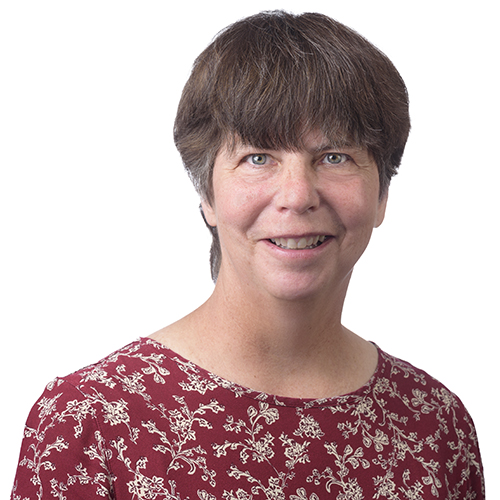
Ginny Carlton. Image credit: Wisconsin Sea Grant

“I think that’s one of the really wonderful things about Sea Grant; the education isn’t just left to me,” Carlton said. “As the education outreach specialist, I have the opportunity to work with a lot of our other colleagues at Sea Grant.” For example, Anne Moser, Adam Bechle and Carlton are collaborating on a NOAA-funded grant project that provides seventh grade students in the Racine Unified School District with educational opportunities related to coastal engineering concepts.

Though Carlton started her position at Sea Grant in 2019, she has observed several changes within the education field from the past 50 years. One of the details she listed was research into neural science, specifically the way people process and retain information.

Another change in the education field is a greater focus on place-based education. While early educational movements, such as nature study and conservation education, acknowledged ecological differences between one location and another, place-based education expands the concept of place beyond just geography. Place-based education uses aspects of the students’ environment like culture, ecology and economy to make connections between their education and local community.

Though the education field has made strides in becoming more inclusive and optimal for student learning, there are always improvements to be made. “I hope we find ways to more fully open learning opportunities to everybody,” Carlton said. She noted that the COVID-19 pandemic has highlighted the fact that not everyone has the same opportunities as others all of the time.

“At Sea Grant, we’re very fortunate because we have wonderful partners who can, and do, help with the work,” Carlton said. Sea Grant works with a variety of partners to design, promote, deliver and evaluate diverse educational offerings and products, which in turn helps all of us to reach a larger audience with important educational messages about the Great Lakes and people’s relationships to them. For example, a recent project, ROVe the Great Lakes, created in partnership with the Wisconsin Historical Society, features the work of maritime archaeologists who use remotely operated vehicles in their work.

Despite this impressive feat, Carlton has her sights set on further improving her field. “We have to work collaboratively to meet the needs of as many people as we possibly can,” said Carlton, “In this way, we advance our mission to promote the sustainable use of Great Lakes resources and reach our vision of thriving coastal ecosystems and communities.”


The post How far education has come and where we hope it’s going first appeared on Wisconsin Sea Grant.

Original Article

Blog | Wisconsin Sea Grant

Blog | Wisconsin Sea Grant

https://www.seagrant.wisc.edu/blog/how-far-education-has-come-and-where-we-hope-its-going/?utm_source=rss&utm_medium=rss&utm_campaign=how-far-education-has-come-and-where-we-hope-its-going

Wisconsin Sea Grant

Holland, Michigan ranks number one in the state for quality of life in “Best Small Cities in America,” a study published by WalletHub, a personal finance website that tracks financial and other trends. It is one of five measures the study used to rank the desirability of small cities. Quality of life was assessed by measures like average commute time, city walkability and number of bars, restaurants and cultural centers per capita.

The post Holland ranks first in quality of life for Michigan small cities first appeared on Great Lakes Echo.

Original Article

Great Lakes Echo

Great Lakes Echo

http://greatlakesecho.org/2022/01/19/holland-ranks-first-in-quality-of-life-for-michigan-small-cities/

Guest Contributor

Soo Locks to close to marine traffic for winter maintenance

SAULT STE. MARIE, Mich. (AP) — The Soo Locks in Sault Ste. Marie are shutting down to marine traffic to allow the U.S. Army Corps of Engineers to perform critical maintenance.

The locks on the St. Marys River between Lake Superior and Lake Huron are expected to be closed from Saturday to March 25, according to the Army Corps of Engineers.

Read Now at Great Lakes Now.

Original Article

Great Lakes Now

Great Lakes Now

https://www.greatlakesnow.org/2022/01/ap-soo-locks-close-winter/

The Associated Press

Great Lakes researchers predict record-low ice coverage

By Michigan Radio

The Great Lakes News Collaborative includes Bridge Michigan; Circle of Blue; Great Lakes Now at Detroit Public Television; and Michigan Radio, Michigan’s NPR News Leader; who work together to bring audiences news and information about the impact of climate change, pollution, and aging infrastructure on the Great Lakes and drinking water.

Read Now at Great Lakes Now.

Original Article

Great Lakes Now

Great Lakes Now

https://www.greatlakesnow.org/2022/01/low-ice-coverage/

Michigan Radio

Contact Your Local Officials to Ensure Your Community Benefits from Recent Federal Investments in Water

With the passage of the Bipartisan Infrastructure Law last year, there is cause to be excited yet focused and vocal in anticipation of a one-time, 5-year program (2022-2026) that will increase the amount of grants and low-interest loans available to local governments, especially those considered disadvantaged communities, to fund lead service line replacements and other large water storage, treatment, and distribution upgrades.

Applications for these “state revolving funds” (learn more here) are time-consuming, very detailed, and often beyond the scope of a local government’s capacity. And while these loans are low-interest, many communities have not been able to afford taking out loans to pay for aging water infrastructure since this program was created by a 1996 amendment to the Safe Drinking Water Act.

We encourage residents to engage NOW with their local officials on this issue because of the upcoming annual deadlines for funding consideration. Many localities have already completed the process, and usually the number of qualified applicants outnumbers the available annual funding. If it is too late this year for your community, it is the perfect time to begin the process for next year to ensure your community has access to safe, affordable drinking water for decades to come.

How can you begin the conversation with your local officials?

  • Ask if the local government has considered applying or has already applied to the state revolving fund for water infrastructure upgrades
  • If not, share your concerns over needed water infrastructure upgrades in your community, such as lead line replacement
  • Not sure if there are problems with your water infrastructure?  Talk to your community about their perspective and ask local officials what upgrades are or will be needed in the future.
  • Emphasize that this is a rare opportunity, time-sensitive, and time-consuming, but can deliver a lot of overdue assistance through both grants and/or loans

Let us know how your conversations go! Contact Kristen at 231-348-8200 x 9 or kristen@freshwaterfuture.org.

Original Article

Blog – Freshwater Future

Blog – Freshwater Future

https://freshwaterfuture.org/call-to-action/the-time-is-now-contact-your-local-officials-to-ensure-your-community-benefits-from-recent-federal-investments-in-water/

Freshwater Future

Work continues on removing lead water lines in Benton Harbor

BENTON HARBOR, Mich. (AP) — More than 400 water service lines in Benton Harbor have been replaced or verified to be free of lead, according to state officials.

City officials also are reviewing bids from contractors for removal of an estimated 3,900 lead service lines, Michigan’s Department of Health and Human Services said this week in a release.

Read Now at Great Lakes Now.

Original Article

Great Lakes Now

Great Lakes Now

https://www.greatlakesnow.org/2022/01/ap-lead-water-lines-benton/

The Associated Press

By Eva Ryan, University of Wisconsin-Madison

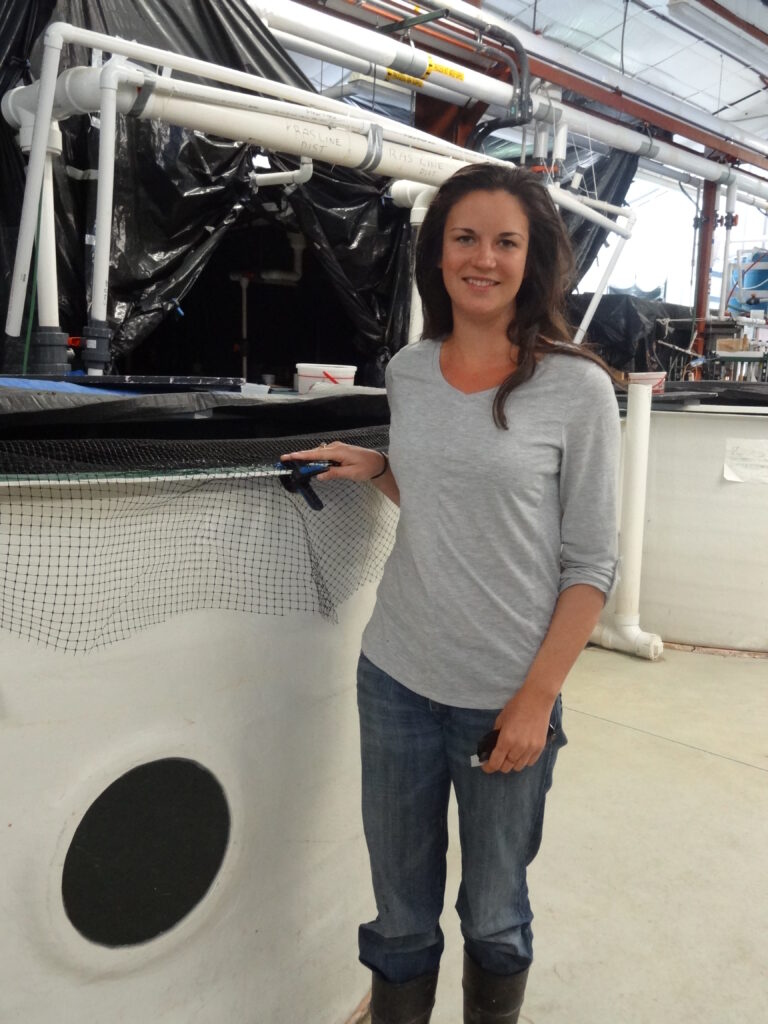
The next specialist I interviewed in celebration of Wisconsin Sea Grant’s 50th anniversary was Emma Wiermaa, aquaculture and education outreach specialist. Together, we discussed details of Wiermaa’s specialty that have changed and details she hopes to see change in the future.

Wiermaa is stationed at the University of Wisconsin-Stevens Point Northern Aquaculture Demonstration Facility (NADF). Her position is in collaboration between Wisconsin Sea Grant and the University of Wisconsin-Stevens Point. NADF is a research and demonstration facility for freshwater finfish that may be used for a variety of food fish, baitfish or conservation species projects. The facility also partners with various organizations, private, public and tribal, looking to engage in sustainable aquaculture.

Emma Wiermaa at the Northern Aquaculture Demonstration Facility. Image credit: Marie Zhuikov, Wisconsin Sea Grant

“My job is to take the research that we’re doing and convert it into a way that’s understandable and usable for various groups,” said Wiermaa. One of Wiermaa’s key audiences are K-12 students. Her duty involves effectively engaging and educating these children on what aquaculture is and why it is important, not only for educational purposes but also as a career pathway.

Though Wiermaa has only been working for the aquaculture industry for eight years, she said, “In the past 50 years from what I’ve seen, there seems to be a lot more interest in the growth of recirculating aquaculture systems (RAS).” Essentially, RAS have the potential to create the best possible circumstances to optimize fish growth throughout the year. This includes control of various environmental factors such as temperature, flow rates, lighting, water quality and biosecurity. She said that temperature control is especially important in our Midwest climate for species that require warmer temperatures for optimum growth, such as the walleye.

“We’re part of these national groups that want to see this (RAS) succeed, and they’re (the NADF) doing it in a sustainable way. They’re thinking about water reuse, effluent (water leaving the site) and optimum control of the fish-rearing environment.”

Not wasting any time in looking forward to the next 50 years of aquaculture, Wiermaa expressed her hope to continue supporting local and sustainable aquaculture, not only aquaculture research but also the farmers working hard to support local communities while providing fresh and local fish. “It is important for consumers to know that purchasing fish and seafood raised in the U.S. ensures a safe, healthy and tastefully fresh option that supports local jobs and communities,” she said.

To help achieve this, Wiermaa notes that misconceptions about the aquaculture industry need to be addressed to erase any stigma. “We need the trust, we need the support, and we need the research,” Wiermaa said.

Wiermaa mentioned one specific detail: farmers know better than anyone that fish are sensitive animals that require a healthy environment with good water quality in order to survive on a daily basis. Farmers must ensure clean living conditions for these fish because otherwise, the fish would not survive. She stressed that maintaining honesty in research and information is essential in eliminating misconceptions.

To cap off the interview, Wiermaa expressed her appreciation for Wisconsin Sea Grant in supporting aquaculture research and sustainable practices. She said, “I think that’s why everyone who works at the facility is so passionate about it because we’re doing cutting-edge research that really helps our partners. It’s all about partnerships and helping to advance sustainable aquaculture.”


The post Support your local fish farms, support sustainability first appeared on Wisconsin Sea Grant.

Original Article

Blog | Wisconsin Sea Grant

Blog | Wisconsin Sea Grant

https://www.seagrant.wisc.edu/blog/support-your-local-fish-farms-support-sustainability/?utm_source=rss&utm_medium=rss&utm_campaign=support-your-local-fish-farms-support-sustainability

Marie Zhuikov

By Anna Traver, Payton Wells and Hope O’Dell Great Lakes Echo Editor’s note: A recent study evaluated the quality of 1,322 U.S. small cities by five measures. This story is part of a series taking a closer look at one measure as it relates to the 39 Michigan cities in the study. HOLT – It’s […]

The post Some Michigan small cities are more affordable than others first appeared on Great Lakes Echo.

Original Article

Great Lakes Echo

Great Lakes Echo

http://greatlakesecho.org/2022/01/18/some-michigan-small-cities-are-more-affordable-than-others/

Guest Contributor

I Speak for the Fish: Meeting the mysterious muskie

Just like serious birders and all manner of naturalists, many divers keep a life list of the species they have seen. Typically, the more elusive the species, the more coveted the sighting. Size also plays a role in desirability, whether it’s a condor or a blue whale.  

When it comes to impressively large and elusive freshwater species, a couple come to mind.  

Read Now at Great Lakes Now.

Original Article

Great Lakes Now

Great Lakes Now

https://www.greatlakesnow.org/2022/01/meeting-mysterious-muskie/

Kathy Johnson

The shortest route to get a ship from Asia to the U.S. is through America’s West Coast ports. But given the pileup there, some ships are going the long way through eastern Canada into the Great Lakes. Read and hear the full story by National Public Radio.

Original Article

Great Lakes Commission

Great Lakes Commission

https://www.glc.org/dailynews/20220117-cargo

Jill Estrada

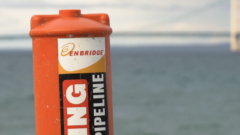
The Wisconsin Department of Natural Resources (DNR) will host a virtual public hearing on Feb. 2 on the Draft Environmental Impact Statement that the department has prepared for the proposed relocation of the Enbridge Line 5 pipeline in Ashland, Bayfield and Iron Counties. Read the full story by The Dunn County News.

Original Article

Great Lakes Commission

Great Lakes Commission

https://www.glc.org/dailynews/20220117-line-5

Jill Estrada

The Beaver River Watershed Initiative (BRWI) is seeking funding to build a fish culvert at the mouth of the Little Beaver Creek in Thornbury, Ontario as part of a series of projects being undertaken to rehabilitate and promote a healthy ecosystem in the river. Read the full story by the Toronto Star.

Original Article

Great Lakes Commission

Great Lakes Commission

https://www.glc.org/dailynews/20220117-fish-culvert

Jill Estrada

State officials are publishing data from 19 Michigan sewage treatment plants and more than 400 wastewater collection systems to create an early warning system for COVID-19 outbreaks.

The post COVID-19 in sewage is new gauge on state dashboard first appeared on Great Lakes Echo.

Original Article

Great Lakes Echo

Great Lakes Echo

http://greatlakesecho.org/2022/01/17/covid-19-in-sewage-is-new-gauge-on-state-dashboard/

Guest Contributor

...LIGHT SNOW WILL RESULT IN SLIPPERY TRAVEL LATE THIS AFTERNOON... A band of light snow will move across the region late this afternoon. Minor snow accumulations are possible, with a dusting for most locations. Motorists should be prepared for hazardous travel conditions late

Original Article

Current Watches, Warnings and Advisories for Brown (WIC009) Wisconsin Issued by the National Weather Service

Current Watches, Warnings and Advisories for Brown (WIC009) Wisconsin Issued by the National Weather Service

https://alerts.weather.gov/cap/wwacapget.php?x=WI1263DCD7B32C.SpecialWeatherStatement.1263DCD83860WI.GRBSPSGRB.fc8c6076cccd3f028608ae46eaa49482

w-nws.webmaster@noaa.gov

...LIGHT SNOW WILL RESULT IN SLIPPERY TRAVEL THIS AFTERNOON... A band of light snow will move across the region this afternoon. Minor snow accumulations are possible, with a dusting for most locations. Motorists should be prepared for hazardous travel conditions this afternoon. Brief reductions in visibility and slippery roads can

Original Article

Current Watches, Warnings and Advisories for Brown (WIC009) Wisconsin Issued by the National Weather Service

Current Watches, Warnings and Advisories for Brown (WIC009) Wisconsin Issued by the National Weather Service

https://alerts.weather.gov/cap/wwacapget.php?x=WI1263DCD73CD0.SpecialWeatherStatement.1263DCD7C330WI.GRBSPSGRB.fc8c6076cccd3f028608ae46eaa49482

w-nws.webmaster@noaa.gov

...LAKE-EFFECT SNOW WILL IMPACT TRAVEL OVERNIGHT INTO SATURDAY... Lake-effect snow showers will continue overnight through about midday Saturday. Accumulations of 2 to 4 inches are expected over Kewaunee and Door counties, with lesser amounts of an inch or two possible in eastern Brown and northern Manitowoc counties. Gusty northeast winds are expected to gradually decrease tonight, but

Original Article

Current Watches, Warnings and Advisories for Brown (WIC009) Wisconsin Issued by the National Weather Service

Current Watches, Warnings and Advisories for Brown (WIC009) Wisconsin Issued by the National Weather Service

https://alerts.weather.gov/cap/wwacapget.php?x=WI1263DCC63ED0.SpecialWeatherStatement.1263DCC6FA50WI.GRBSPSGRB.176ff32f6d68e42ba8c58090bd33adbe

w-nws.webmaster@noaa.gov

THIS WEEK: You Are Invited: All About Water Symposium, Securing Federal Infrastructure Dollars + Personal and Organizational Wellness Online Series 2022 + Ontario government plans to build new highways through provincial Greenbelt + You May Be Eligible for Financial Assistance for Your Water Bill


You Are Invited: All About Water Symposium, Securing Federal Infrastructure Dollars

Freshwater Future and All About Water invite you to join experts, peer groups and municipal officials to learn about federal dollars that will be coming to states for water infrastructure projects, and how your municipality can benefit. This is a once in a lifetime opportunity to secure funding through State Revolving Funds that are provided by Congress to help replace lead lines, update water and wastewater treatment plants, utilize green infrastructure to prevent or reduce flooding and more. SAVE THE DATE!  February 17th, 10:30 am – noon EST.  Registration information will be in next week’s Weekly.


Personal and Organizational Wellness Online Series 2022

https://lh5.googleusercontent.com/hzTlRUCDEE6AA1OqY-wtVXcTl5Q27TVu4VNnQrtvoMEgD2b-2jU3tlxM3596pbqOYjrhBQSeEKAleP5bUhyuZV6KZKZPUPLscBC58HTiZaJSxPdrahBFNZ_kVqEhcuFV9aUJldLu

Water Watchers & Wellness is a FREE program designed to support individuals and organizations working to protect and restore water.  This free online forum series is designed to help connect you to others doing similar work, provide you with expert and peer conversations about issues of importance to you, and offer one-on-one consulting assistance to help you speed past the bumps in the road we all experience in building, organizing and conducting our water work. Monthly forums are scheduled on the 4th Thursday of every month beginning January 27th, 2022, from 11:30am-1pm ET.  Register today!


Ontario Government Plans to Build New Highways Through Provincial Greenbelt

Planning for two new highways, Highway 413 and the Bradford Bypass, is underway.  While the provincial government claims that the highways are needed to reduce commute times through the Greater Toronto Area, conservation organizations and many local communities (including Toronto, Markham, and Vaughan) are opposed to the proposed highways.  The proposed routes are through the Greenbelt and will have potential impacts on fish and wildlife habitat, water quality and will increase greenhouse gas emissions.    The provincial environmental assessment process has been streamlined, and there are concerns that environmental issues are not being adequately considered and addressed.  Additionally, there have been concerns with the consultation process.  The federal Impact Assessment Agency of Canada will be reviewing the process and deciding whether a full federal impact assessment is required.  


You May Be Eligible for Financial Assistance for Your Water Bill

Are you or someone you know struggling to pay their water bill? You may be eligible to receive financial assistance.  Most states are providing assistance to prevent water shut offs during COVID-19.  Water is a human right, and water utility bills have in some cases skyrocketed, so we want to be sure residents have easy access to the programs that may be able to help.  Visit our list of assistance programs available in Great Lakes states and Cities.

Original Article

Blog – Freshwater Future

Blog – Freshwater Future

https://freshwaterfuture.org/uncategorized/freshwater-future-weekly-january-14-2022/

Alana Honaker

PFAS News Roundup: PFAS in Lake Superior fish, two Michigan locations could land on Superfund list

PFAS, short for per- and polyfluoroalkyl substances, are a group of widespread man-made chemicals that don’t break down in the environment or the human body and have been flagged as a major contaminant in sources of water across the country.

Keep up with PFAS-related developments in the Great Lakes area.

Read Now at Great Lakes Now.

Original Article

Great Lakes Now

Great Lakes Now

https://www.greatlakesnow.org/2022/01/pfas-news-lake-superior-fish-michigan-superfund-list/

Natasha Blakely

...LAKE-EFFECT SNOW WILL IMPACT TRAVEL TONIGHT INTO SATURDAY... Lake-effect snow is expected to become more organized this evening, then continue through about midday Saturday. Accumulations of 2 to 4 inches are expected over Kewaunee and Door counties, with lesser amounts of an inch or two possible in eastern Brown and northern Manitowoc counties. Gusty northeast winds are expected to

Original Article

Current Watches, Warnings and Advisories for Brown (WIC009) Wisconsin Issued by the National Weather Service

Current Watches, Warnings and Advisories for Brown (WIC009) Wisconsin Issued by the National Weather Service

https://alerts.weather.gov/cap/wwacapget.php?x=WI1263DCB98F28.SpecialWeatherStatement.1263DCC63700WI.GRBSPSGRB.176ff32f6d68e42ba8c58090bd33adbe

w-nws.webmaster@noaa.gov

U.S. Army Corps of Engineers researchers are working with the Lac Vieux Desert Band of Lake Superior Chippewa Indians and other Native American tribes to help improve wild rice productivity in Michigan’s Upper Peninsula. Read the full story by Midland Daily News.

Original Article

Great Lakes Commission

Great Lakes Commission

https://www.glc.org/dailynews/20220114-rice

Theresa Gruninger

The ice on Lake Erie, Lake Ontario and the St. Lawrence River is weak for this time of year, according to the U.S. Coast Guard, and the public is advised not to go onto the ice. Read the full story by WJET-TV – Erie, PA.

Original Article

Great Lakes Commission

Great Lakes Commission

https://www.glc.org/dailynews/20220114-ice

Theresa Gruninger

On any winter day in Cleveland, hundreds and sometimes thousands of gulls can be spotted in the shipping channels. But what brings them all to the area? Dr. Andy Jones, the curator of ornithology at The Cleveland Museum of Natural History, says the gulls are there to eat. Read the full story by WEWS-TV – Cleveland, OH.

Original Article

Great Lakes Commission

Great Lakes Commission

https://www.glc.org/dailynews/20220114-gulls

Theresa Gruninger

Drinking Water News Roundup: Toxic algae blooms in Indiana, First Nations $8B settlement, Wisconsin lead pipe replacement funding

From lead pipes to PFAS, drinking water contamination is a major issue plaguing cities and towns all around the Great Lakes. Cleaning up contaminants and providing safe water to everyone is an ongoing public health struggle. 

Keep up with drinking water-related developments in the Great Lakes area. 

Click on the headline to read the full-story:

Indiana: 

  • More blue-green algae could drive up drinking water bills in Indiana’s larger cities —WFYI Indianapolis 

The increasingly warm air and heavy rain showers have caused a rise in toxic algae blooms, which has led to fish sickness, beach closures, and drinking water pollution.

Read Now at Great Lakes Now.

Original Article

Great Lakes Now

Great Lakes Now

https://www.greatlakesnow.org/2022/01/drinking-water-news-roundup-toxic-algae-blooms/

Maya Sundaresan

Every year, the Corps of Engineers uses the winter period to perform maintenance to keep the Soo Locks operating. This year, the Soo Locks will close to marine traffic beginning 11:59 p.m. Jan. 15 through 12:01 a.m. March 25. Read the full story by WLUC-TV – Negaunee, MI.

Original Article

Great Lakes Commission

Great Lakes Commission

https://www.glc.org/dailynews/20220114-soo-locks

Theresa Gruninger

My favorite project in 2021 was a workshop I organized at the invitation of the South Central Library System. This organization provides training and support to public libraries in seven southern Wisconsin counties. My colleagues in the workshop were youth services librarians gearing up for the 2022 national summer reading program, which has a theme of “Oceans of Possibilities.”

Anne Moser, senior special librarian and education coordinator

I modified the theme to “Oceans of Possibilities in Our Backyard” because the watersheds that surround us provide a wealth of opportunities to explore literacy and have fun. There is no need to go any farther.

At the workshop, I was honored to be joined by Hannah Arbuckle, outreach coordinator with the Great Lakes Indian Fish and Wildlife Commission and member of the Bad River Band of Lake Superior Chippewa. We began with an overview of the Great Lakes and waters of Wisconsin, integrating traditional ecological knowledge into the presentation. We engaged attendees with hands-on learning to explore the terrific properties of water. We finished the morning traveling in a time machine to learn about Great Lakes shipwrecks. We spun the tragic tale of the Silver Lake, a scow schooner that went down in Lake Michigan in the late 1800s.

At the end of the morning, a skilled youth services librarian approached and told me she was thankful for the workshop. The summer reading program recycles themes every 10 or 15 years, and she had already dusted off old storytimes and activities in her files. She now planned to turn to the creek behind the library and use that as her watershed for the summer.

I can’t think of a better outcome!


The post Sea Grant project faves, Anne Moser first appeared on Wisconsin Sea Grant.

Original Article

Blog | Wisconsin Sea Grant

Blog | Wisconsin Sea Grant

https://www.seagrant.wisc.edu/blog/sea-grant-project-faves-anne-moser/?utm_source=rss&utm_medium=rss&utm_campaign=sea-grant-project-faves-anne-moser

Anne Moser

On Record: Enbridge returns to court to try to get Line 5 permit

A new round of court proceedings commences in the long-running Enbridge Inc. Line 5 saga as Administrative Law Judge Dennis Mack oversees the cross-examination of a series of witnesses starting on Jan. 14.

The results of this cross-examination will play a role in the Michigan Public Service Commission’s decision on whether or not to grant Enbridge one of the key permits it needs to construct the Line 5 tunnel.

Read Now at Great Lakes Now.

Original Article

Great Lakes Now

Great Lakes Now

https://www.greatlakesnow.org/2022/01/enbridge-court-michigan-public-service-commission-line-5-permit/

Natasha Blakely

With art ranging in size from giant mobiles to miniature paintings, artists from across the country are collaborating to face the climate crisis with a new exhibit in metro Detroit.

The post New Detroit art exhibit addresses climate crisis with hope first appeared on Great Lakes Echo.

Original Article

Great Lakes Echo

Great Lakes Echo

http://greatlakesecho.org/2022/01/14/new-detroit-art-exhibit-addresses-climate-crisis-with-hope/

Guest Contributor

...FREEZING DRIZZLE COULD MAKE SOME ROADS AND SIDEWALKS SLICK... Light freezing drizzle has been reported in some parts of the Fox Valley and Lakeshore areas. It could make roads and sidewalks slick, so travel with care if there is freezing drizzle in your area.

Original Article

Current Watches, Warnings and Advisories for Brown (WIC009) Wisconsin Issued by the National Weather Service

Current Watches, Warnings and Advisories for Brown (WIC009) Wisconsin Issued by the National Weather Service

https://alerts.weather.gov/cap/wwacapget.php?x=WI1263DCB6DE7C.SpecialWeatherStatement.1263DCB748BCWI.GRBSPSGRB.54e5ef070b45e49081402cfe9ce09122

w-nws.webmaster@noaa.gov

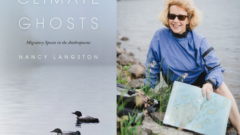
Climate Ghosts author: To save more species, treat them like kin

For Professor Nancy Langston, our intransigence in protecting struggling species like caribou and others is a puzzle. These species exist in our memories and culture, and we’ve invested in protecting them, so why do their populations continue to crash? 

That’s the question at the core of Langston’s latest book, “Climate Ghosts: Migratory Species in the Anthropocene”.

Read Now at Great Lakes Now.

Original Article

Great Lakes Now

Great Lakes Now

https://www.greatlakesnow.org/2022/01/climate-ghosts-author/

Gary Wilson