Fred Wiseman, of Findlay, OH (located about 100 miles south of Detroit, MI) sailed from Detroit to Florida last year. The 3,800-mile trip took around two months and included travel through Lake Erie, Lake Ontario, the St. Lawrence Seaway and along the coast of the Atlantic Ocean. Read the full story by The Courier.

Original Article

Great Lakes Commission

Great Lakes Commission

https://www.glc.org/dailynews/20220509-ship-travel
Patrick Canniff

Many local organizations have turned Earth Day into “Earth Month” by dedicating the month of April to cleaning up the community. The Lakeshore Cleanup Coalition participated in the 2022 Great Lakes CleanUP, a collaborative trash removal effort to protect habitats throughout the Great Lakes Basin. Read the full story by ODC Network.

Original Article

Great Lakes Commission

Great Lakes Commission

https://www.glc.org/dailynews/20220509-cleanup

Patrick Canniff

Wisconsin Sea Grant is announcing the launch of a new podcast series, The Water We Swim In. The trailer can be found here and it features stories about the Great Lakes and people working toward equity.

In the series, Sea Grant’s Digital Storyteller Bonnie Willison and Hali Jama, podcast intern, share inspiring interviews from community organizers, researchers and leaders navigating Wisconsin’s waters.

Sea Grant has long been invested in audio storytelling, starting in 1972 with the environmental news program Earthwatch Radio. In recent years, the program has produced a number of podcast series — Wisconsin Water News, Undercurrents: The Hidden Knowledge of Groundwater, The Fish Dish, and Introduced— several of which are award-winning.

On this upcoming season of the new podcast, Willison and Jama will:

  • Explore how redlining created the Great Lakes communities of today
  • Trace the alarming trend of swimming pool closures across the country and learn about the fight to save a Milwaukee pool
  • Talk with leaders who are working to make Wisconsin’s outdoors more accessible for people with disabilities
  • Travel to Lake Winnebago to hear about a culturally guided inter-tribal project focused on lake health and wild rice restoration
  • Cook fish and tofu soup and speak with a research group focused on the importance of fish to Asian women in Milwaukee
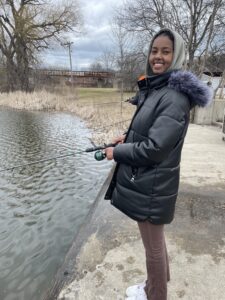
  • Go fishing with the Midwest Crappie Hunters, who are teaching Milwaukee’s central-city youth, elderly and veterans about fishing, the outdoors and aquatic resources
smiling woman in winter coat fishing

Jama attends a fishing clinic with Midwest Crappie Hunters in Milwaukee. Jama is a UW-Madison student studying marketing and international business with a certificate in environmental studies. (Photo: Bonnie Willison)

The series’ title, The Water We Swim In, was inspired by an interview with Brenda Coley, co-executive director of Milwaukee Water Commons. “Brenda had this great quote where she said that ‘racism is the water we swim in,’” said Willison. “People might not realize that systemic racism impacts everything in our society, just like a fish might not realize that it is swimming in water.”

The post Launch of new podcast about equity and the Great Lakes first appeared on Wisconsin Sea Grant.

Original Article

News Releases | Wisconsin Sea Grant

News Releases | Wisconsin Sea Grant

https://www.seagrant.wisc.edu/news/launch-of-new-podcast-about-equity-and-the-great-lakes/?utm_source=rss&utm_medium=rss&utm_campaign=launch-of-new-podcast-about-equity-and-the-great-lakes

Moira Harrington

Short-changing Michigan local governments has resulted in deteriorating water systems and other services

By Lester Graham, Michigan Radio

This story is part of “Water’s True Cost,” a series by the Great Lakes News Collaborative focused on the rising cost of water in Michigan and the various causes leading to the state of water systems today. Find the rest of the stories in the series here.

Read Now at Great Lakes Now.

Original Article

Great Lakes Now

Great Lakes Now

https://www.greatlakesnow.org/2022/05/short-changing-michigan-local-governments-deteriorating-water-systems/

Michigan Radio

...STRONG WINDS AND ELEVATED FIRE WEATHER CONDITIONS TODAY... Even though relative humidity is expected to rise today, strong southeast winds will keep fire danger elevated across much of the region. Wind gusts will reach 35 to 45 mph this afternoon, with a few gusts near 50 mph possible in the eastern Fox Valley and lakeshore areas. Wind gusts this strong can cause minor damage to

Original Article

Current Watches, Warnings and Advisories for Brown (WIC009) Wisconsin Issued by the National Weather Service

Current Watches, Warnings and Advisories for Brown (WIC009) Wisconsin Issued by the National Weather Service

https://alerts.weather.gov/cap/wwacapget.php?x=WI1263F4431E20.SpecialWeatherStatement.1263F450D95CWI.GRBSPSGRB.3b77a733acfe35fc01f412b80021d336

w-nws.webmaster@noaa.gov

...ELEVATED FIRE WEATHER CONDITIONS TODAY AND POSSIBLY INTO MONDAY.. Even though relative humidity is expected to rise over the next couple days, increasing southeast winds will keep fire danger elevated across the region. Southeast winds are expected to gust to 25 to 30 mph this afternoon, and could get as high as 35 to 45

Original Article

Current Watches, Warnings and Advisories for Brown (WIC009) Wisconsin Issued by the National Weather Service

Current Watches, Warnings and Advisories for Brown (WIC009) Wisconsin Issued by the National Weather Service

https://alerts.weather.gov/cap/wwacapget.php?x=WI1263F433DD0C.SpecialWeatherStatement.1263F4419140WI.GRBSPSGRB.3b77a733acfe35fc01f412b80021d336

w-nws.webmaster@noaa.gov

...ELEVATED FIRE WEATHER CONDITIONS EXPECTED THROUGH THE WEEKEND... Mild temperatures and very low relative humidity will result in elevated fire weather conditions this afternoon and early evening. Even though relative humidity is expected to be a bit higher on Sunday, increasing southeast winds will keep fire danger elevated across the region.

Original Article

Current Watches, Warnings and Advisories for Brown (WIC009) Wisconsin Issued by the National Weather Service

Current Watches, Warnings and Advisories for Brown (WIC009) Wisconsin Issued by the National Weather Service

https://alerts.weather.gov/cap/wwacapget.php?x=WI1263F4247AC4.SpecialWeatherStatement.1263F4266820WI.GRBSPSGRB.3b77a733acfe35fc01f412b80021d336

w-nws.webmaster@noaa.gov

Drinking Water News Roundup: First Nation residents call settlement restrictive, Wisconsin towns try regulating big farms, Chicago cans tap water

From lead pipes to PFAS, drinking water contamination is a major issue plaguing cities and towns all around the Great Lakes. Cleaning up contaminants and providing safe water to everyone is an ongoing public health struggle.

Keep up with drinking water-related developments in the Great Lakes area.

Click on the headline to read the full story:

Illinois:

  • Illinois American Water Ranks #1, J.D.

Read Now at Great Lakes Now.

Original Article

Great Lakes Now

Great Lakes Now

https://www.greatlakesnow.org/2022/05/drinking-water-news-roundup-first-nation-settlement-wisconsin-towns-chicago-water/

Natasha Blakely

...VERY DRY AIR COULD INCREASE FIRE DANGER IN CENTRAL AND NORTHERN WISCONSIN SATURDAY AFTERNOON AND EVENING... Temperatures from 65 TO 70 combined with relative humidity values of 15 to 25 percent could create conditions suitable for fire activity Saturday afternoon. Please use caution with anything that can create a spark or fire outdoors. Burning restrictions may be

Original Article

Current Watches, Warnings and Advisories for Brown (WIC009) Wisconsin Issued by the National Weather Service

Current Watches, Warnings and Advisories for Brown (WIC009) Wisconsin Issued by the National Weather Service

https://alerts.weather.gov/cap/wwacapget.php?x=WI1263F416C30C.SpecialWeatherStatement.1263F4174CF0WI.GRBSPSGRB.c7af4845f2e9eb88e57e1747a63d15f5

w-nws.webmaster@noaa.gov

Winning Work: Great Lakes Now collects 12 journalism awards

From TV segments to news articles, collaborative work with partners to social media strategy, environmentally focused coverage to community news, Great Lakes Now walked away from the Society of Professional Journalists – Detroit Chapter’s 2022 Excellence in Journalism award ceremony with a dozen acknowledgements for the work the regional team did in 2021.

Read Now at Great Lakes Now.

Original Article

Great Lakes Now

Great Lakes Now

https://www.greatlakesnow.org/2022/05/great-lakes-now-collects-12-journalism-awards/

GLN Editor

AP analysis finds growing number of poor, high-hazard dams

By David A. Lieb, Michael Casey and Michelle Minkoff, Associated Press

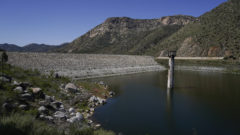
Constructed four generations ago, the massive rock and clay dam at El Capitan Reservoir is capable of storing over 36 billion gallons of water, enough to supply every resident in San Diego for most of a year.

Read Now at Great Lakes Now.

Original Article

Great Lakes Now

Great Lakes Now

https://www.greatlakesnow.org/2022/05/ap-analysis-growing-number-of-dams/

The Associated Press

A new plan to restore the Lake St. Clair coastline at Ford’s Cove would rebuild the nearby wetland, expand the shore, while also building out shoals to buffer the area from the Great Lakes battering waves. Read and hear the full story by WJBK-TV – Detroit, MI.

Original Article

Great Lakes Commission

Great Lakes Commission

https://www.glc.org/dailynews/20220506-ford-cove

Jill Estrada

Even though the Great Lakes ice-breaking season has ended, some members of the U.S. Senate Committee on Commerce, Science, and Transportation are continuing to push for funding for a new heavy icebreaker on the Great Lakes to reduce shipping delays during the winter months. Read the full story by Michigan Radio.

Original Article

Great Lakes Commission

Great Lakes Commission

https://www.glc.org/dailynews/20220506-ice-breaker

Jill Estrada

President Joseph Biden nominated Southfield, Michigan attorney Gerald Acker to be commissioner and chair of the International Joint Commission, a binational group that regulates uses of the Great Lakes and other waters shared by the U.S. and Canada. Read the full story by The Detroit News.

Original Article

Great Lakes Commission

Great Lakes Commission

https://www.glc.org/dailynews/20220506-ijc

Jill Estrada

Federal regulators recommended Tuesday that the Army Corps of Engineers decline to reissue a key permit for the proposed PolyMet copper-nickel mine, saying the project could raise levels of mercury and other pollutants downstream from the site in northeastern Minnesota. Read the full story by The Associated Press.

Original Article

Great Lakes Commission

Great Lakes Commission

https://www.glc.org/dailynews/20220506-polymet

Jill Estrada

The Ozaukee Washington Land Trust looks to be in competition with a private buyer for a pristine piece of property along Lake Michigan. Read the full story by the Milwaukee Journal Sentinel.

Original Article

Great Lakes Commission

Great Lakes Commission

https://www.glc.org/dailynews/20220506-lake-michigan

Jill Estrada

The oldest know pair of common loons have nested together at the Seney National Wildlife Refuge in the Upper Peninsula of Michigan for a quarter century and are back this spring for their 26th year as a breeding pair. Read and hear the full story by WKAR – East Lansing, MI.

Original Article

Great Lakes Commission

Great Lakes Commission

https://www.glc.org/dailynews/20220506-loons

Jill Estrada

Nonprofit report points to outdated Clean Water Act for the miles of polluted rivers across the U.S.

In 1972, the federal Clean Water Act proclaimed an ambitious goal – “fishable, swimmable” waters across the U.S. by 1983. Today, just over half of assessed river and stream miles across the U.S. remain too polluted for swimming and recreation, aquatic life, fish consumption, or as drinking water sources.

That assessment comes from a newly released report from the Environmental Integrity Project (EIP), a non-profit group founded in 2002 by former EPA enforcement attorneys.

Read Now at Great Lakes Now.

Original Article

Great Lakes Now

Great Lakes Now

https://www.greatlakesnow.org/2022/05/outdated-clean-water-act-polluted-rivers/

Sharon Oosthoek

May is a good time to look for sunfish nests. The sunfish family includes some of Michigan’s most popular sport fish: largemouth and smallmouth bass, bluegills, pumpkinseeds, crappies, rock bass and others. They are also among the world’s worst invasive fish species.

The post May: Good fish, fun fish, bad fish, sunfish first appeared on Great Lakes Echo.

Original Article

Great Lakes Echo

Great Lakes Echo

http://greatlakesecho.org/2022/05/06/may-good-fish-fun-fish-bad-fish-sunfish/

Guest Contributor

Who’s at fault for Midland dam failures? Pretty much everyone, report says

By Kelly House, Bridge Michigan

The Great Lakes News Collaborative includes Bridge Michigan; Circle of Blue; Great Lakes Now at Detroit Public Television; and Michigan Radio, Michigan’s NPR News Leader; who work together to bring audiences news and information about the impact of climate change, pollution, and aging infrastructure on the Great Lakes and drinking water.

Read Now at Great Lakes Now.

Original Article

Great Lakes Now

Great Lakes Now

https://www.greatlakesnow.org/2022/05/midland-dam-failures-report/

Bridge Michigan

The report on Ontario’s natural resources the government didn’t want you to read

By Emma McIntosh, The Narwhal

This story first ran on The Narwhal, a non-profit news organization that publishes in-depth stories about Canada’s natural world.

From warming water to shifting growing seasons, Ontario is already seeing the effects of climate change. But for the most part, Doug Ford and his government say, the province’s natural resources are doing just fine.

Read Now at Great Lakes Now.

Original Article

Great Lakes Now

Great Lakes Now

https://www.greatlakesnow.org/2022/05/report-ontario-natural-resources/

The Narwhal

By Eva Ryan, University of Wisconsin-Madison

The Sea Grant Knauss Fellowship is a nationally competitive opportunity that sends graduate students interested in ocean, coastal and Great Lakes resources and policy to the historical hub that is Washington, D.C. There, these students are paired with , o r a mentor in a federal agency in order to learn more about the policies surrounding the nation’s natural resources.

For the last but certainly not least of the Knauss fellow spotlight articles, I interviewed Theresa Vander Woude. Vander Woude received two Master of Science degrees in Life Sciences Communication and Environment and Resources at the University of Wisconsin-Madison, where she studied the human dimensions of land and water resource issues.

Smiling young woman with long hair

Theresa Vander Woude is one of four 2022 Knauss Fellows from Wisconsin. She is exploring policy in her posting to the Office of Water in the U.S. Environmental Protection Agency. Contributed photo.

“Before I returned to school, I was an environmental communications professional specifically working on lake nutrient pollution issues in the Madison area,” Vander Woude said. She noted that during her time as an environmental communications professional, her bosses urged her to support her decisions with evidence. This led Vander Woude to an increased intake of research, further learning about what makes environmental efforts successful. Eager for more information, Vander Woude found herself back at UW-Madison.

“I had read all this research and I wanted to know how I could figure out answers to the questions that I wanted to know,” she said, “What makes me so passionate about the human dimensions is that they’re so easy to leave out of environmental decisions because they can be hard to study.”

For example, Vander Woude was able to help out with a project with the Wisconsin Department of Natural Resources. This project focused on how lakefront property owners think about the risks of aquatic invasive species as well as the risks of potential treatment approaches, informing communication with stakeholders when new invasive species are discovered. Vander Woude has also collaborated with Wisconsin Sea Grant’s aquatic invasive species outreach specialist, Tim Campbell.

After gaining experience in working on water issues locally and regionally, Vander Woude was intrigued to see and understand how federal policy came into play for larger water issues with local impact. This led her to the Knauss Fellowship. After mainly focusing her studies on the Midwest, Vander Woude was pleased to expand her knowledge of the U.S. through a placement in the Office of Water at the Environmental Protection Agency’s headquarters in Washington, D.C. “Now I’m able to fit the puzzle pieces together on a broader scale by asking, how do things work elsewhere?” said Vander Woude.

As for her time participating in the Knauss Fellowship, she noted there is a big difference between simply learning about policy versus actually seeing it in action. Vander Woude was able to see several different examples of policy in motion and defined this as one of her biggest takeaways from the fellowship so far. She also touched on the uniqueness of the Knauss Fellowship in that she is able to focus on her own professional development while gaining postgraduate experience, rather than diving straight into the workforce.

While Vander Woude prefers to take life one step at a time and unfold what the future has to offer as she goes, she said, “I do hope to become more comfortable analyzing and commenting on the policy, contributing to discussions, and helping make decisions.”

Vander Woude, among the other fellows, began the Knauss Fellowship on Feb. 1.

The post Meet the Knauss fellows: Theresa Vander Woude first appeared on Wisconsin Sea Grant.

Original Article

News Releases | Wisconsin Sea Grant

News Releases | Wisconsin Sea Grant

https://www.seagrant.wisc.edu/news/meet-the-knauss-fellows-theresa-vander-woude/?utm_source=rss&utm_medium=rss&utm_campaign=meet-the-knauss-fellows-theresa-vander-woude

Moira Harrington

Contact: Lindsey Bacigal, BacigalL@nwf.org, (734) 887-7113
Jordan Lubetkin, Lubetkin@nwf.org, (734) 904-1589

Senate Committee Passes Water Bill with Great Lakes, Invasive Carp Provisions

ANN ARBOR, MICH. (May 4, 2022)—The U.S. Senate Environment and Public Works Committee today advanced the Water Resources Development Act of 2022, a key step in ensuring Congress passes this critical biennial water infrastructure legislation. The bill contains provisions that support Great Lakes restoration priorities, such as preventing the spread of invasive carp into the lakes and helping communities prepare for and adapt to climate change. The Healing Our Waters-Great Lakes Coalition is supporting several provisions in the bill.

“This bill will help local communities restore and protect the Great Lakes—and will be essential as the region tries to adjust to the increasing impacts of climate change,” said Laura Rubin, director of the Healing Our Waters-Great Lakes Coalition. “We support investments in the bill that will help communities prepare for, and adapt to, climate impacts stemming from intense storms and flooding. We also applaud the focus on preventing invasive carp from entering the Great Lakes.”

The Water Resources Development Act, a federal bill that funds water infrastructure projects undertaken by the U.S. Army Crops of Engineers, contains funding to prevent the spread of invasive carp into the Great Lakes, by funding the construction of a lock and dam to halt the advance of the non-native species. The legislation, if passed, would call for the federal government to pay for 90 percent of the cost. The Healing Our Waters-Great Lakes Coalition is urging Congress to amend the bill so that the federal government covers the full cost of the project.

You can find the Coalition’s full comments to the Senate Environment and Public Works Committee in support of these key Great Lakes provisions on our website.

Since 2004, the Healing Our Waters-Great Lakes Coalition has been harnessing the collective power of more than 170 groups representing millions of people, whose common goal is to restore and protect the Great Lakes. Learn more at HealthyLakes.org or follow us on Twitter @HealthyLakes.

The post Senate Committee Passes Water Bill with Great Lakes, Invasive Carp Provisions appeared first on Healing Our Waters Coalition.

Original Article

Healing Our Waters Coalition

Healing Our Waters Coalition

https://healthylakes.org/senate-committee-passes-water-bill-with-great-lakes-invasive-carp-provisions/

Lindsey Bacigal

Storms strain Ohio’s electric grid, and climate change could make it worse

By Kathiann M. Kowalski, Energy News Network

This story was first published on the Energy News Network and was republished here with permission.

Major weather events accounted for more than a third of the time Ohio customers of regulated electric utilities went without power last year, according to an Energy News Network review of data filed with state regulators.

Read Now at Great Lakes Now.

Original Article

Great Lakes Now

Great Lakes Now

https://www.greatlakesnow.org/2022/05/storms-ohio-electric-grid-climate-change/

Energy News Network

Ohio state regulation of streams that flow temporarily after rainfall will be restricted under legislation signed into law by the governor. Environmental groups largely opposed the legislation, saying the streams play an important role in maintaining water quality. Read the full story by The Associated Press.

Original Article

Great Lakes Commission

Great Lakes Commission

https://www.glc.org/dailynews/20220504-stream-regulation

Samantha Tank

The Michigan Department of Natural Resources (DNR) first decided to introduce coho and Chinook salmon in the 1960s to control an invasive fish called alewife. Most of the salmon are naturally reproduced but the DNR still stocks salmon to keep up with demand, with plans to release 1.6 million fish this year. Read the full story by WOOD-TV – Grand Rapids, MI.

Original Article

Great Lakes Commission

Great Lakes Commission

https://www.glc.org/dailynews/20220504-salmon

Samantha Tank

Failing septic systems can allow contaminated water to seep through the earth into nearby bodies of water, causing water quality issues throughout Michigan. This problem is made worse by the state’s lack of septic system regulations. Listen to the full story by Great Lakes Now.

Original Article

Great Lakes Commission

Great Lakes Commission

https://www.glc.org/dailynews/20220504-septic-systems

Samantha Tank

Michigan officials have released their 2022 “Eat Safe Fish” guides and there are several notable updates.  The state says the guides can help Michiganders plan their fish consumption to minimize exposure to chemicals that can build up in fish, while still getting all the health benefits of eating fish. Read the full story by MLive.

Original Article

Great Lakes Commission

Great Lakes Commission

https://www.glc.org/dailynews/20220504-eat-safe-fish

Samantha Tank

Thanks to $20,000 earmarked by Congress, the U.S. Army Corps of Engineers will be looking at the Two Rivers Harbor located on Wisconsin’s Lake Michigan shore to determine federal interest in further studying the harbor’s infrastructure. Read the full story by Manitowoc Herald Times Reporter.

Original Article

Great Lakes Commission

Great Lakes Commission

https://www.glc.org/dailynews/20220504-two-rivers-harbor

Samantha Tank

As one of the longest running and most successful American Water Resources Association (AWRA) chapters in the country, the Wisconsin chapter provides a structure for water professionals and those studying to enter the discipline to learn from each other and a broader, national water community about the latest in research and management. The chapter is made up of those in private industry, scientists, students and water managers at the local, state and federal level.


A hallmark of the Wisconsin chapter’s educational commitment to professional development and informational exchange is an annual conference, conducted in the state continuously since 1977. Each year, the University of Wisconsin Water Resources Institute (WRI) is a co-sponsor of the event.


Recently, to preserve and share 45 years of Wisconsin’s water resources legacy, Mike Parsen and Brad Gottschalk of the Wisconsin Geological and Natural History Survey (WGNHS) assembled the collection of conference proceedings. The pair collaborated with Anne Moser and Maya Reinfeldt of the Wisconsin Water Library, which is housed at WRI, to create a permanent digital repository.

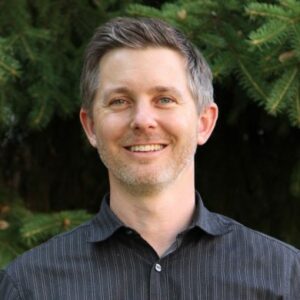
Smiling man, head and shoulders.
Mike Parsen, hydrogeologist at the Wisconsin Geological and Natural History Survey (contributed photo).


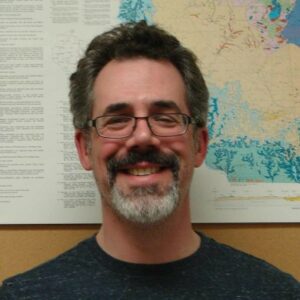
Smiling man with beard, wearing glasses.
Brad Gottschalk, archivist at the Wisconsin Geological and Natural History Survey (contributed photo).

Maureen Muldoon, a hydrogeologist at WGNHS, generously donated her hard-copy programs as a starting point and the team filled in historical gaps where needed.


The collection now resides at MINDS@UW and includes digital copies of the proceedings from 1978 to today. It is accessible through the University of Wisconsin-Madison’s online library catalog.


The post Decades of proceedings from annual water meetings now available first appeared on WRI.

Original Article

News Release | WRI

News Release | WRI

https://www.wri.wisc.edu/news/decades-of-proceedings-from-annual-water-meetings-now-available/

Moira Harrington

Michigan’s lack of septic system regulations is causing problems for some of its most pristine lakes

By Lester Graham, Michigan Radio

This story is part of “Water’s True Cost,” a series by the Great Lakes News Collaborative focused on the rising cost of water in Michigan and the various causes leading to the state of water systems today. Find the rest of the stories in the series here.

Read Now at Great Lakes Now.

Original Article

Great Lakes Now

Great Lakes Now

https://www.greatlakesnow.org/2022/05/michigans-septic-system-problems-lakes/

Michigan Radio

Michigan’s Lower Peninsula has seen a dramatic increase in ticks in the past 10-15 years due to climate change. Blacklegged ticks, also called deer ticks, can spread Lyme disease to people.

The post Commentary: Climate change is buggin’ me. And you first appeared on Great Lakes Echo.

Original Article

Great Lakes Echo

Great Lakes Echo

http://greatlakesecho.org/2022/05/04/commentary-climate-change-is-buggin-me-and-you/

Guest Contributor

16 states that want to electrify USPS fleet file lawsuits

By David Sharp, Associated Press

California and 15 states that want the U.S. Postal Service to electrify its mail delivery vehicles are suing to halt purchases of thousands of gas-powered trucks as the agency modernizes its delivery fleet.

Three separate lawsuits, filed Thursday by the states and environmental groups in New York and California, ask judges to order a more thorough environmental review before the Postal Service moves forward with the next-generation delivery vehicle program.

Read Now at Great Lakes Now.

Original Article

Great Lakes Now

Great Lakes Now

https://www.greatlakesnow.org/2022/05/ap-states-electrify-usps-lawsuits/

The Associated Press

Michigan’s 20th Century water systems too big for its shrinking city populations

This story is part of “Water’s True Cost,” a series by the Great Lakes News Collaborative focused on the rising cost of water in Michigan and the various causes leading to the state of water systems today. Find the rest of the stories in the series here.

In 2014, the legacy problem of lead pipes throughout the nation came to a head in Flint, Michigan, when the city emergency manager’s decision to switch the water source and not treat it to prevent corrosion led to lead leaching from the pipes into the city’s drinking water.

Read Now at Great Lakes Now.

Original Article

Great Lakes Now

Great Lakes Now

https://www.greatlakesnow.org/2022/05/michigans-water-systems-city-populations/

Natasha Blakely

Water woes loom for Michigan suburbs, towns after decades of disinvestment

By Kelly House

This story is part of “Water’s True Cost,” a series by the Great Lakes News Collaborative focused on the rising cost of water in Michigan and the various causes leading to the state of water systems today. Find the rest of the stories in the series here.

Read Now at Great Lakes Now.

Original Article

Great Lakes Now

Great Lakes Now

https://www.greatlakesnow.org/2022/05/water-woes-michigan-suburbs-disinvestment/

Bridge Michigan