He’ll try, but Trump can’t stop the clean energy revolution

By Matt Simon

This story was originally published by Grist. Sign up for Grist’s weekly newsletter here.

During his first time around as president, Donald Trump rolled back a bevy of environmental rules, withdrew from the Paris Agreement, and boosted the fossil fuel industry.

Read Now at Great Lakes Now.

Original Article

Great Lakes Now

Great Lakes Now

https://www.greatlakesnow.org/2024/11/hell-try-but-trump-cant-stop-the-clean-energy-revolution/

Grist

Can environmental law move beyond bedrock 1970’s legislation, while adapting to current and future challenges?

A 2022 report titled Promises Half Kept at the Half Century Mark, by the Environmental Integrity Project, released on the Clean Water Act’s 50th anniversary said the law is “falling short of its original goals.”

Michigan, for example, has the 4th largest number of impaired lakes, reservoirs and streams assessed for water contact recreation in the U.S.

Read Now at Great Lakes Now.

Original Article

Great Lakes Now

Great Lakes Now

https://www.greatlakesnow.org/2024/11/can-environmental-law-move-beyond-bedrock-1970s-legislation-while-adapting-to-current-and-future-challenges/

Gary Wilson, Great Lakes Now

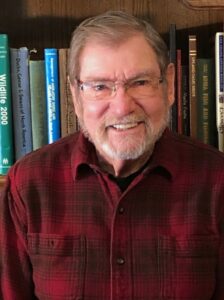
Retired professor Bud Harris devoted his career to improving water quality.

Once upon a time, not so long ago, the Fox River had so much bacteria in the sediment that anaerobic activity produced hydrogen gas. Large bubbles rose to the surface as a reminder that something was really wrong.

“The conditions of the river were actually frightening,” said Bud Harris, retired professor. “At one point, the Fox and East Rivers were just plain open sewers. People demanded change as far back as the 1930s and 40s. But only after the Clean Water Act were serious efforts at cleanup made.”

Bud’s first connection with water quality came because of his passion for teaching. He came to UW-Green Bay as a professor when the school was informally known as Eco-U.

“We all had the same ideas about nature, and ecology, and sustainability,” Bud remembered. “That was the theme at that time. There was a mission to focus on the environment,” even across disciplines.

So it wasn’t much of a leap when several researchers from UW Green Bay and commissioners from the Green Bay Sewer District started working together to improve the water in the bay of Green Bay. The water was visibly polluted, and this team was concerned that people were thinking too small as they planned interventions. They wanted to ensure that the time and money invested would have a significant impact.

That’s how Fox-Wolf Watershed Alliance was born. From the beginning, folks like Bud and other early supporters established two priorities for Fox-Wolf. First, focus on the entire watershed, and the way that all our waters and communities are connected. “It is more effective to manage problems at the source than to make changes further downstream,” Bud explained.

And second, prioritize working with all stakeholders, including farmers, businesses and manufacturers, municipalities, and concerned residents. After all, as Bud said, “What’s the common goal? Sustainability. The advantage of working together is we don’t all have the same ideas, so you have this mixture of potential solutions!”

Bud’s contributions to our water went beyond his work with Fox-Wolf, including direct connection to the massive project of removing PCBs from the Fox River. Bud provided testimony that helped hold insurance companies accountable for paying out for the environmental damage.

People often questioned his tactics to partner with sectors that were not conservation focused, but it was important for Bud to work even with the paper mills that people pointed to for causing the pollution.

“No one is cast as a villain,” he said. “The paper companies had a role to play,” Bud explained. “And they proved themselves to be responsible. We needed a common goal of cleaning up the past.

Reflecting on all his life experiences – farming, military service, teaching – he sees a common thread of collaboration. “Life’s tough,” Bud said, “but if you work together, you get the work done.”

Looking to the future, Bud feels guardedly positive. “Leaders like [Fox-Wolf Executive Director] Jessica are changing things. I’m glad to see the return of team efforts and involving the community.”

All of us who live in northeast Wisconsin have cleaner water than what Bud saw at the beginning of his career. And though he didn’t do it alone, we can all be grateful for Bud and the work he has accomplished on our behalf. His extraordinary impact on making our waters safer and cleaner is why he was honored with the Fox-Wolf Watershed Alliance Lifetime Achievement award.

There’s More to the Story!

In October, Fox-Wolf Watershed Alliance held an event to celebrate all the things that are going right for our local waters and to honor individuals and organizations that are making a difference. This issue of Watershed Moments highlights three of the individuals honored with a 2024 Impact Award. You can see the short videos for these and other honorees at our YouTube channel.

Watershed Moments is a publication of Fox-Wolf Watershed Alliance, sharing the stories of how your donations have impacted lives in our community. Read our latest project updates, make a secure online donation, or become a member at www.fwwa.org

The post Watershed Moments: Cleaning up the Past appeared first on Fox-Wolf Watershed Alliance.

Original Article

Fox-Wolf Watershed Alliance

Fox-Wolf Watershed Alliance

https://fwwa.org/2024/11/12/watershed-moments-cleaning-up-the-past/?utm_source=rss&utm_medium=rss&utm_campaign=watershed-moments-cleaning-up-the-past

Sharon

Amish Farmers’ Partnership With Beef Giant Produces Manure Mess

By Keith Schneider, Circle of Blue

The Great Lakes News Collaborative includes Bridge Michigan, Circle of Blue, Great Lakes Now at Detroit PBS, Michigan Public and The Narwhal who work together to bring audiences news and information about the impact of climate change, pollution, and aging infrastructure on the Great Lakes and drinking water.

Read Now at Great Lakes Now.

Original Article

Great Lakes Now

Great Lakes Now

https://www.greatlakesnow.org/2024/11/amish-farmers-partnership-with-beef-giant-produces-manure-mess/

Circle of Blue

It was 49 years ago from Sunday, November 10, that the Edmund Fitzgerald was being loaded with 26,000 tons of iron ore, prepped for what would become its tragic final voyage. Once the largest ship on the Great Lakes, the 728-foot ship left Superior, Wisconsin, on November 9, 1975; a day later, the ship was gone, broken in two and laying on the bottom of Lake Superior in 530 feet of water. All 29 souls aboard were lost. Read the full story by MLive.

Original Article

Great Lakes Commission

Great Lakes Commission

https://www.glc.org/dailynews/20241111-edmundfitzgerald-anniversary

James Polidori

Gusty northwest winds to 30 to 40 mph are expected to continue through late this afternoon, subsiding from west to east. A few higher gusts are possible in far northeast Wisconsin. The gusty winds will blow around lightweight outdoor objects and make driving high profile vehicles more difficult. A few power outages are also possible.

Original Article

Current watches, warnings, and advisories for Brown County (WIC009) WI

Current watches, warnings, and advisories for Brown County (WIC009) WI

https://api.weather.gov/alerts/urn:oid:2.49.0.1.840.0.3a4050569179be31dc18ba389d8ee5b432d71a6c.001.1.cap

NWS

The water levels of the Great Lakes have gone down significantly in the past few months, partly because of the natural annual lowering of water levels in most fall seasons and partly because of the lack of rain in the past couple months. Read the full story by WOOD-TV – Grand Rapids, MI.

Original Article

Great Lakes Commission

Great Lakes Commission

https://www.glc.org/dailynews/20241111-water-levels

James Polidori

The National Museum of the Great Lakes in Toledo, Ohio, is hosting a micro exhibit which tells a story of the community’s investment into the Great Lakes Museum through donations of one-of-a-kind artifacts, which helps educate visitors about the history of the Great Lakes. Read the full story by The Toledo Blade.

Original Article

Great Lakes Commission

Great Lakes Commission

https://www.glc.org/dailynews/20241111-artifact-donations

James Polidori

The Pennsylvania Steelhead Association and the Pennsylvania Fish and Boat Commission shared concerns about anglers trespassing and littering at one of Erie’s most popular steelhead creeks. Anglers are being reminded to observe the signs if they want the area to remain open to fishing. Read the full story by the Erie Times-News.

Original Article

Great Lakes Commission

Great Lakes Commission

https://www.glc.org/dailynews/20241111-fishing-creek-concerns

James Polidori

Over the last two centuries, more than 70 ships have plunged to their demise on the Great Lakes during November. Some, like the iron ore carrier the Edmund Fitzgerald, went down and took the entire crew down with them. Read the full story by the Detroit Free Press.

Original Article

Great Lakes Commission

Great Lakes Commission

https://www.glc.org/dailynews/20241111-november-shipwrecks

James Polidori

The U.S. Environmental Protection Agency plans to finalize more than $200 million in grant funding through its Clean Ports Program in the coming weeks to accelerate the clean energy transition at three Great Lakes shipping ports. Read the full story by the Energy News Network.

Original Article

Great Lakes Commission

Great Lakes Commission

https://www.glc.org/dailynews/20241111-clean-port-funding

James Polidori

Waterfront Toronto has removed the last pieces of the wall that once separated the mouth of the Don River and Lake Ontario as a next step in a project featuring a new island that could become home to thousands of people. Read the full story by CBC News.

Original Article

Great Lakes Commission

Great Lakes Commission

https://www.glc.org/dailynews/20241111-waterfront-project

James Polidori

The sinking of the SS Edmund Fitzgerald took the lives of all 29 crew members, including the ship’s cook. His daughter and Abilene, Kansas, resident Pamela Johnson, now 73, remains a yearly advocate for her father along with those who perished at memorials and for various interviews. Read the full story by the Abilene Reflector Chronicle.

Original Article

Great Lakes Commission

Great Lakes Commission

https://www.glc.org/dailynews/20241111-edmundfitzgerald-crew-descendent

James Polidori

“Beach season,” per the Chicago Park District, runs from the Friday before Memorial Day through Labor Day. Outside of this period, swimming is not permitted. Historically, this made a lot of sense; however, many people can still be seen swimming into October as Chicago has had at least 17 days since September 1 with temperatures greater than 80 degrees Fahrenheit. Read the full story by the Chicago Sun-Times.

Original Article

Great Lakes Commission

Great Lakes Commission

https://www.glc.org/dailynews/20241111-climate-risks

James Polidori

The Mariners’ Church of Detroit held its 59th annual Great Lakes Memorial Service on Sunday. The occasion honors and remembers 30,000 people who have died in the Great Lakes and on Michigan’s waters over the years. Read the full story by WDIV-TV – Detroit, MI.

Original Article

Great Lakes Commission

Great Lakes Commission

https://www.glc.org/dailynews/20241111-mariners-memorial-service

James Polidori

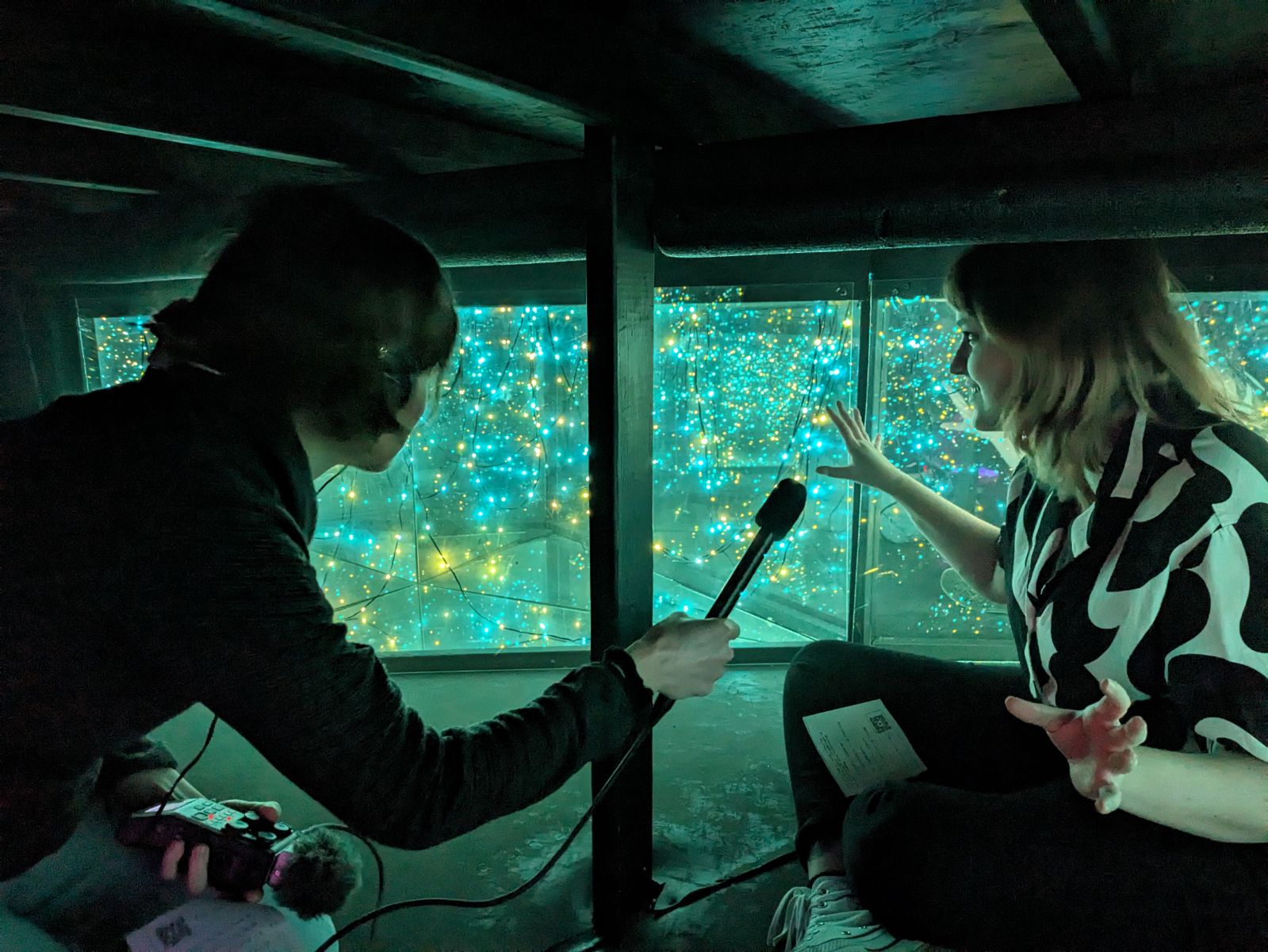
Jenna Mertz conducts an interview at the Deep Lake Future Exhibit

The “Introduced” team explores an interactive art exhibit in Milwaukee. Photo: Wisconsin Sea Grant

“Introduced,” Wisconsin Sea Grant’s award-winning podcast about aquatic invasive species and the Great Lakes, returns for a third season on Nov. 11. The six new episodes feature stories of artists, students and scientists making sense of the ways that AIS impact Wisconsin’s waters.

“In the Midwest, we love our lakes. And you can’t fully understand our lakes if you don’t understand aquatic invasive species,” said Bonnie Willison, Wisconsin Sea Grant’s video and podcast producer. “I love being able to tell the human stories behind invasive species on ‘Introduced.’ We interview so many different people who are working to keep our lakes healthy and working to do better science.”

This season, Willison co-hosts the podcast with Jenna Mertz, a writer with Wisconsin Sea Grant. The pair highlight stories that touch on themes of science communication and community.

“This season really explores the way that stories, words and art shape the way people respond to introduced species, whether it’s with fear, curiosity or acceptance. As a writer who thinks about words a lot, it was fascinating to dig into those ideas,” said Mertz.

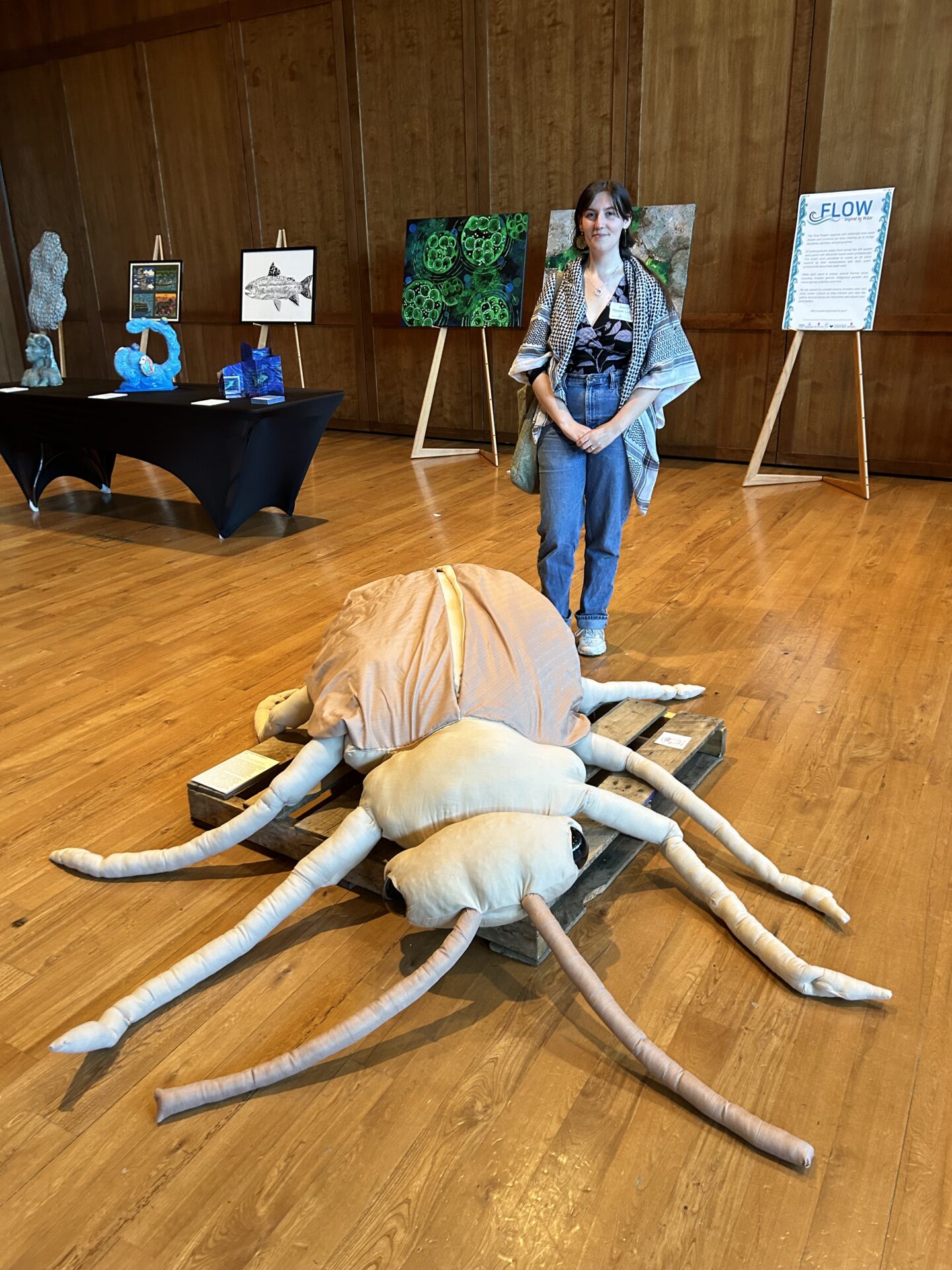
FLOW artist Astrid stands next to her creation: a 5 foot beige beetle stuffed animal

Astrid Hooper Lofton stands next to her creation for the FLOW Project: a giant, stuffed cella beetle. Photo: Wisconsin Sea Grant

The first episode grapples with common names for plants and animals, which can be scientifically inaccurate or, at worst, offensive. Listeners will hear from Tyler Muller, a Ph.D student who discovered — and now, has the opportunity to name — two new species of fish.

Other episodes tell the stories of artists inspired by AIS; a waterfront property owner who contended with the state’s first population of starry stonewort; and the origin of the Clean Boats, Clean Waters Program, which was inspired by three middle school students in northern Wisconsin.

“Podcasts are a great medium for talking about introduced species. Through friendly conversation, you talk about science — but you can also have some fun, you can share personal reflections and you can let guests speak in their own words. I find it really rewarding,” Willison said.

Listen to the new season on the Wisconsin Sea Grant website and wherever you listen to podcasts.

Introduced is also supported by the Great Lakes Commission.


The post Award-winning podcast returns with new stories about aquatic invasive species first appeared on Wisconsin Sea Grant.

Original Article

News Releases | Wisconsin Sea Grant

News Releases | Wisconsin Sea Grant

https://www.seagrant.wisc.edu/news/award-winning-podcast-returns-with-new-stories-about-aquatic-invasive-species/

Jenna Mertz

A cold front will move across the area this morning. It will be followed by northwest winds gusting to 30 to 40 mph in most places. A few higher gusts are possible near the Michigan border, and across Door county. The winds could blow around lightweight outdoor objects and make driving high profile vehicles more difficult.

Original Article

Current watches, warnings, and advisories for Brown County (WIC009) WI

Current watches, warnings, and advisories for Brown County (WIC009) WI

https://api.weather.gov/alerts/urn:oid:2.49.0.1.840.0.53128ca8ea87101507b856d84f983a87058e9c36.001.1.cap

NWS

What Trump can do to reverse US climate policy − and what he probably can’t change

By Gautam Jain, Columbia University

 is an independent and nonprofit source of news, analysis and commentary from academic experts.

As the U.S. prepares for another Trump administration, one area unambiguously in the incoming president’s crosshairs is climate policy.

Although he has not released an official climate agenda, Donald Trump’s playbook from his last stint in the Oval Office and his frequent complaints about clean energy offer some clues to what’s ahead.

Read Now at Great Lakes Now.

Original Article

Great Lakes Now

Great Lakes Now

https://www.greatlakesnow.org/2024/11/trump-climate-policy-impact/

The Conversation

By Sally Cole-Misch

Join Wisconsin Sea Grant’s Titus Seilheimer in conversation with Sally Cole-Misch, author of Great Lakes, Great Read’s Adult Selection, “The Best Part of Us,” Monday, Nov. 11, at Manitowoc Public Library’s Balkansky Community Room from 6-7:30 p.m.

I’ve always believed that words are magical. Strung together in myriad ways, they transport us into entirely new worlds, bodies and experiences. They teach us about ourselves and the world around us and challenge us to think and act in new ways.

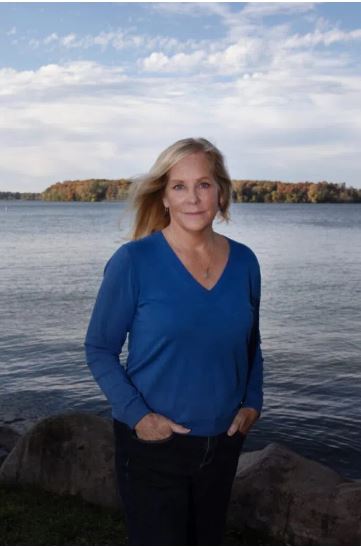
Sally Cole-Misch, submitted photo.

So, it’s no surprise I’ve spent my life surrounded by words. First as a reporter, then in environmental and Great Lakes communications and now as an author. “The Best Part of Us” tells the story of a family with deep bonds to each other and the lake and island near northern Lake Huron where they spend their summers. When that bond is threatened and then torn apart, each family member must consider who, what and where is most important in their lives. A coming-of-age story no matter the character’s age, the novel immerses readers in the breathtaking nature of the Great Lakes region, provides a fresh perspective on loyalty, and considers the essential roles that family, nature and place hold in all our lives.

I know science and magic are not usually used in the same sentence. One disavows the other, believing its principles and beliefs are the only truth. And yet, science — and particularly its findings about nature and the Great Lakes — became the magic I needed to write the fictional story in “The Best Part of Us.” Let me explain.

Thirty years ago, Great Lakes communicators thought we had to report all the horrible ways we were ruining our majestic lakes to spur people into action. The information was and is important and needs to be told. But how it’s told is just as important, and our emphasis on the extremes froze much of the public into fear and inaction.

Science provided the answers to change our approach: more than 1,000 studies over the past 40 years show that time spent in nature lowers our blood pressure and stress hormone levels, reduces anxiety and isolation, and improves mood and cognitive function. We absorb ions nature sends into the air near mountains and moving water as well as phytoncide chemicals from trees that further enhance our health and well-being. Scientific studies also show that the more connected we feel to and a part of the natural world, the more we believe we are living lives with purpose and satisfaction, feel part of something larger than ourselves, and have a stronger sense of generosity and commitment to protect nature.

We changed our environmental messaging to focus first on getting people outside so they can realize nature’s value in their lives, and scientific studies again told us that nature’s magic worked. Once it feeds the soul and body, we’re more interested in learning about our planet and changing our actions to reflect nature’s value in our lives. What humans value, we act to protect.

As a lifelong resident of the Great Lakes region, working with scientists, policymakers and advocate — who share a deep dedication to the lakes — has given my writing purpose in ways I never expected. I am indebted to every scientist like Titus Seilheimer of Wisconsin Sea Grant for sharing their research and our mutual passion for the lakes, which helped to improve our messaging to the public and provided the clues to writing “The Best Part of Us.”

Just as science proved the benefits of nature, recent studies have shown that reading fiction is as beneficial as meditation or deep relaxation exercises for reducing stress, improving sleep and our self-esteem, building vocabulary, expanding our imagination and slowing mental decline later in life. Fiction readers also deal with life’s ambiguities better because they’re used to unanswered questions. Sound familiar?

These results provided the final push to try writing fiction. Could I write a story that helps readers connect with nature and our precious Great Lakes, as I’d done in my factual writing? Where the setting is as much a character as the people in it and inspires readers to remember places and parts of nature they care about? With characters created based on their inherent connection with nature? And, like any good piece of fiction, provides the intellectual and emotional satisfaction of a good read, with the same benefits found in the scientific studies?

Seven years and 11 drafts later, “The Best Part of Us” was published. Science provided the inspiration and data to imagine the story, and as the setting and characters came to life in my imagination, they provided the enthusiasm to finish it. All of them reflecting the magic of nature, in their own way.

The post When the magic in science, nature and words creates the best part of us first appeared on Wisconsin Sea Grant.

Original Article

Blog | Wisconsin Sea Grant

Blog | Wisconsin Sea Grant

https://www.seagrant.wisc.edu/blog/when-the-magic-in-science-nature-and-words-creates-the-best-part-of-us/

Wisconsin Sea Grant

Michigan is stepping up efforts to analyze the flow of harmful nutrients into the Western Basin of Lake Erie. Water quality monitors have been set up in five sub-watersheds in the southeast corner of the state that either feed directly into the lake or one of its tributaries. Read the full story by The Plain Dealer.   

Original Article

Great Lakes Commission

Great Lakes Commission

https://www.glc.org/dailynews/20241108-michigan-watershed-monitors

Hannah Reynolds

The Edmund Fitzgerald sank nearly half a century ago in “the gales of November.” The lake has taken hundreds of other ships, too. The Great Lakes Shipwreck Historical Society has its own underwater research vessel that scours the lake for shipwrecks. Read the full story by The Minnesota Star Tribune. 

Original Article

Great Lakes Commission

Great Lakes Commission

https://www.glc.org/dailynews/20241108-lakesuperior-shipwrecks-dramatictales

Hannah Reynolds

The Great Storm of 1913 was easily the Great Lakes region’s largest natural disaster ever. Fast-moving “trains” of huge waves — some topping 30 feet high — lashed ships making their late-season runs. Read the full story by MLive.

Original Article

Great Lakes Commission

Great Lakes Commission

https://www.glc.org/dailynews/20241108-whitehurricane-november-1913-greatlakes

Hannah Reynolds

Volunteers for the Hancock Trails Club, Weubben Construction and the City of Hancock, Michigan, are collaborating together in the improvements of Maasto Hiihto’s Trail 17 with a bridge, boardwalk and more accessible trail conditions. Read the full story by the Daily Mining Gazette.

Original Article

Great Lakes Commission

Great Lakes Commission

https://www.glc.org/dailynews/20241108-maastohiihto-improvements

Hannah Reynolds

Restoration of the historic Belle Isle Boathouse is progressing, as the Michigan Department of Natural Resources has selected a proposal after years of debate on preserving the structure. Read the full story by the Detroit Free Press.

Original Article

Great Lakes Commission

Great Lakes Commission

https://www.glc.org/dailynews/20241108-belleisle-boathouse

Hannah Reynolds

Presenting Atlas Obscura: The Mysterious Sinkholes of Mount Baldy

By Daniel Wanschura

Points North is a biweekly podcast about the land, water and inhabitants of the Great Lakes.

This episode was shared here with permission from Interlochen Public Radio. 

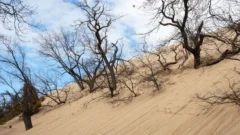
On July 12, 2013 the Woessner family was hiking in Indiana.

Read Now at Great Lakes Now.

Original Article

Great Lakes Now

Great Lakes Now

https://www.greatlakesnow.org/2024/11/presenting-atlas-obscura-the-mysterious-sinkholes-of-mount-baldy/

Interlochen Public Radio