Ancient human remains unearthed at proposed Kohler golf course site in Wisconsin

This article, first posted here, was republished with permission from Wisconsin Watch.

By Jim Malewitz, Wisconsin Watch

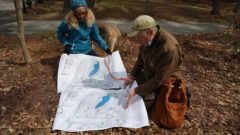
Archeologists have unearthed human remains of Native Americans who lived up to 2,500 years ago during excavations of the Sheboygan County site along Lake Michigan where Kohler Co.

Read Now at Great Lakes Now.

Original Article

Great Lakes Now

Great Lakes Now

https://www.greatlakesnow.org/2021/06/ancient-human-remains-kohler-golf-course-wisconsin/
Wisconsin Watch

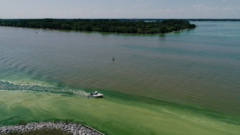
Marine Blooms of Harmful Algae Increasing in Europe, Much of the Americas

By Brett Walton, Circle of Blue

The Great Lakes News Collaborative includes Bridge Michigan; Circle of Blue; Great Lakes Now at Detroit Public Television; and Michigan Radio, Michigan’s NPR News Leader; who work together to bring audiences news and information about the impact of climate change, pollution, and aging infrastructure on the Great Lakes and drinking water.

Read Now at Great Lakes Now.

Original Article

Great Lakes Now

Great Lakes Now

https://www.greatlakesnow.org/2021/06/marine-blooms-harmful-algae-increasing/

Circle of Blue

A new, preliminary flood map released by FEMA would mean that anyone included in the yellow boxed areas would have ‘flood-prone’ property. That would mean those individuals would need to obtain flood insurance. Read the full story by Finger Lakes 1.

Original Article

Great Lakes Commission

Great Lakes Commission

https://www.glc.org/dailynews/20210616-fema-floodzone

Jill Estrada

Whether you’re loyal to charcoal or have a gas grill with all the bells and whistles, summer means grilling in Wisconsin. An online event involving Wisconsin Sea Grant will help people make the most of grilling fish from the Great Lakes region.

Eat Wisconsin Fish Outreach Specialist Sharon Moen. (Photo: Marie Zhuikov)

“Fish to Fork: Grilling in the Great Lakes” will take place Wednesday, June 23, at noon central time. The one-hour event will include Sharon Moen of Wisconsin Sea Grant’s “Eat Wisconsin Fish” project. She will talk about proper seafood preparation and grilling techniques, as well as what to do with your leftovers.

Participants may register for this free, online event on Ohio Sea Grant’s website. Please note that the registration page lists Eastern time; the event begins at noon Wisconsin time.

“While people love burgers and brats on the grill, it’s fun to switch it up and offer your guests a fish or seafood skewer with colorful veggies. Kabobs are great for family gatherings since you can make individual ones to suit people’s tastes,” said Moen.

Moen will be joined by Sea Grant colleagues from a neighboring state: Lauren Jescovitch and Elliot Nelson of Michigan Sea Grant. Jescovitch will talk about food safety considerations when selecting your seafood, and Nelson will cover food safety at home.

Shrimp and veggie kabobs ready for the grill.

The event will focus on seafood raised sustainably in the Midwest through aquaculture. Featured species are shrimp, rainbow trout and catfish.

Moen, who is based in Wisconsin Sea Grant’s Lake Superior Field Office, works with Wisconsin’s commercial fishers, fish farmers and fish consumers.

An earlier webinar from the same series on cooking Great Lakes fish is now available for viewing on YouTube. That April webinar featured Wisconsin Sea Grant Fisheries Specialist Titus Seilheimer and Peter Fritsch, president of Wisconsin’s Rushing Waters Fisheries. View “Fish to Fork: Cooking Great Lakes Fish” here.

The June 23 event is hosted by the Great Lakes Aquaculture Collaborative, of which Wisconsin Sea Grant is a part, and Ohio Sea Grant. The National Sea Grant College Program is a federal-state-university partnership with 34 programs across the nation, including in each of the Great Lakes states. These science-based programs are centered on research, education and outreach to foster the sustainable use and care of Great Lakes resources.

For questions about this event, contact Moen at smoen@aqua.wisc.edu.

The post “Fish to Fork” event provides tips for grilling Great Lakes fish and seafood first appeared on Wisconsin Sea Grant.

Original Article

News Releases | Wisconsin Sea Grant

News Releases | Wisconsin Sea Grant

https://www.seagrant.wisc.edu/news/fish-to-fork-event-provides-tips-for-grilling-great-lakes-fish-and-seafood/?utm_source=rss&utm_medium=rss&utm_campaign=fish-to-fork-event-provides-tips-for-grilling-great-lakes-fish-and-seafood

Jennifer Smith

Dune Dispute: Wisconsin Lake Michigan shoreline threatened by adjacent golf course development

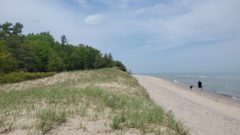
A Wisconsin State Park bordering the shoreline of Lake Michigan is teeming with dunes, preserved wetlands and protected plant species. It’s a great view – making it an ideal neighbor for a new golf resort that one of the state’s manufacturing giants has been fighting for years to build.

Kohler-Andre State Park is located in Sheboygan County and comprised of two state parks, Terry Andrae State Park and John Michael Kohler State Park.

Read Now at Great Lakes Now.

Original Article

Great Lakes Now

Great Lakes Now

https://www.greatlakesnow.org/2021/06/wisconsin-lake-michigan-dune-shoreline-golf-course-development/

John McCracken

Chicago man jumps into Lake Michigan for 365th straight day

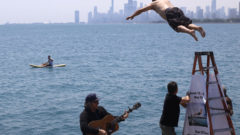
CHICAGO (AP) — A Chicago bus driver looking for a way to relieve stress during the coronavirus pandemic jumped into Lake Michigan for a 365th straight day on Saturday.

Dan O’Conor said he started jumping into the lake at Montrose Harbor on the city’s North Side last year to relieve stress.

Read Now at Great Lakes Now.

Original Article

Great Lakes Now

Great Lakes Now

https://www.greatlakesnow.org/2021/06/ap-chicago-man-jumps-into-lake-michigan-for-365th-straight-day/

The Associated Press

Chicago man jumps into Lake Michigan for 365th straight day

CHICAGO (AP) — A Chicago bus driver looking for a way to relieve stress during the coronavirus pandemic jumped into Lake Michigan for a 365th straight day on Saturday.

Dan O’Conor said he started jumping into the lake at Montrose Harbor on the city’s North Side last year to relieve stress.

Read Now at Great Lakes Now.

Original Article

Great Lakes Now

Great Lakes Now

https://www.greatlakesnow.org/2021/06/ap-chicago-man-jumps-into-lake-michigan-for-365th-straight-day/

The Associated Press

Minnesota court affirms approval of Line 3 oil pipeline

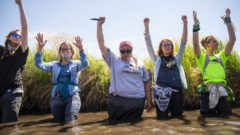
ST. PAUL, Minn. (AP) — The Minnesota Court of Appeals on Monday affirmed state regulators’ key approvals of Enbridge Energy’s Line 3 oil pipeline replacement project, in a dispute that drew over 1,000 protesters to northern Minnesota last week.

A three-judge panel ruled 2-1 that the state’s independent Public Utilities Commission correctly granted Enbridge the certificate of need and route permit that the Canadian-based company needed to begin construction on the 337-mile (542-kilometer) Minnesota segment of a larger project to replace a 1960s-era crude oil pipeline that has deteriorated and can run at only half capacity.

Read Now at Great Lakes Now.

Original Article

Great Lakes Now

Great Lakes Now

https://www.greatlakesnow.org/2021/06/ap-minnesota-court-approves-line-3-oil-pipeline/

The Associated Press

Fight over Canadian oil rages on after pipeline’s demise

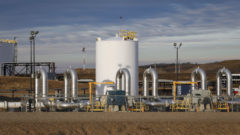
BILLINGS, Mont. (AP) — The Keystone XL is dead after a 12-year attempt to build the oil pipeline, yet the fight over Canadian crude rages on as emboldened environmentalists target other projects and pressure President Joe Biden to intervene — all while oil imports from the north keep rising.

Read Now at Great Lakes Now.

Original Article

Great Lakes Now

Great Lakes Now

https://www.greatlakesnow.org/2021/06/ap-fight-canadian-oil-pipelines/

The Associated Press

EXPLAINER: Why a rural pipeline is a climate battleground

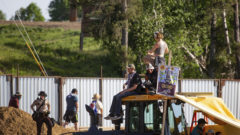
As Enbridge Energy prepares to finish rebuilding an oil pipeline across rural northern Minnesota, protesters are occupying part of the construction area and pledging a “summer of resistance” on the ground and in court.

Enbridge, which has obtained all necessary state and federal permits for the Line 3 project, says it will be finished by year’s end.

Read Now at Great Lakes Now.

Original Article

Great Lakes Now

Great Lakes Now

https://www.greatlakesnow.org/2021/06/ap-explainer-line-3-pipeline-climate/

The Associated Press

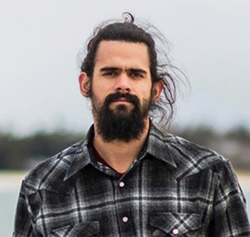
Making tracks is nothing new for Jackson Parr, the J. Philip Keillor Flood Resilience-Wisconsin Sea Grant Fellow. A serious athlete who once committed to walking across the entire United States (his plan has morphed to running it in segments), he has also traversed the scenic towns of Wisconsin’s Door Peninsula as a newspaper reporter and editor.

Jackson Parr (Photo: Len Villano)

Now, he’s getting acquainted with dozens of small communities statewide to help them build resilience to flooding hazards.

Parr began his one-year Keillor Fellowship in April. The position stems from a partnership between Wisconsin Sea Grant and the Climate and Health Program at the Wisconsin Department of Health Services (DHS).

He’ll work extensively with the Flood Resilience Scorecard, a toolkit that measures how well prepared a community is to cope with the effects of flooding—and identifies steps they can take to boost that preparedness.

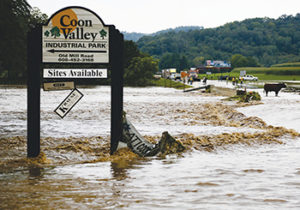
The Illinois native brings a varied set of skills to this work. Parr holds two master’s degrees from the University of Wisconsin-Madison: one in public affairs and one in water resources management. His capstone project for the water resources degree involved analyzing the severe flooding of Coon Creek in Vernon County in August 2018. The project was suggested and advised by UW research scientist Eric Booth.

The village of Coon Valley was downstream from the breached dams during the August 2018 flood event. (Photo: John Lee)

“There were a few dam breaches in that region during that flooding event, and it devastated the area,” said Parr. Flash flooding brought on by torrential rains displaced residents and caused major damage to homes, businesses and public infrastructure. “While I didn’t have an academic interest in flooding before working on that capstone project,” said Parr, “I found myself fascinated with the ways that rural communities navigate these issues.”

As he noted, sometimes smaller communities lack the administrative capacity or technical expertise required to fully address issues or tap into available funding sources that might help them. As a Keillor Fellow, Parr will be in a position to link communities with needed resources.

By March 2022, when his fellowship concludes, Parr hopes to have worked through the Flood Resilience Scorecard with 30 communities. Those locations will be chosen through collaboration with Wisconsin’s nine regional planning commissions.

First rolled out in 2019, the scorecard focuses on three key areas that affect a community’s resilience to flooding: environmental factors (such as precipitation patterns and soil composition), institutional factors (such as city planning documents) and social factors. Social factors include the socioeconomic makeup of the community, which may affect what happens after flooding.

“Since this effort is a partnership with the Department of Health Services, they’re definitely interested in the public health aspect of flooding. Demographic data is important in considering populations that might have socioeconomic vulnerabilities that would exacerbate their health outcomes related to flooding,” said Parr.

As an example, he noted that residents in low-income communities often lack the resources to find other housing when displaced. As a result, those populations face not only physical injuries related to flooding, like blunt-force trauma and hypothermia, but extreme stress and other mental health impacts.

“The goal is to identify communities that face these vulnerabilities and hopefully target more resources toward those communities to achieve health equity,” he said.

As Parr conducts this work, he has a trio of mentors. At DHS, he reports to Climate and Health Program Coordinator Margaret Thelen. On the Sea Grant side, he’s working with Climate and Tourism Outreach Specialist Natalie Chin and Coastal Engineering Specialist Adam Bechle.

Said Thelen, “The partnership between the Department of Health Services and Sea Grant has allowed us to work together to integrate our flood resiliency tools for local decision makers. These resources allow Wisconsin to better prepare for and respond to increased extreme precipitation events due to climate change. We are fortunate to have Jackson Parr, through the Keillor Fellowship, working to improve these tools and make them more accessible to municipalities across the state.”

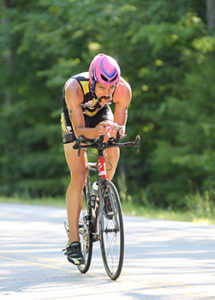
Parr in his triathlon days. Though he no longer competes, he’s running across the United States in segments. (Submitted photo)

As university travel restrictions related to the pandemic ease, Parr hopes to complete in-person assessments, arranging visits to work through the scorecard with elected officials, administrators and planning staff in the selected communities.

“There’s a huge value in having these conversations face to face; it takes collaboration from people of different backgrounds” who actually live in those communities, said Parr.

But completing the scorecard with a community is not an end point, Parr stressed. Rather, he hopes it is a springboard for taking action.

“While community leaders would immediately get some high-level recommendations on ways to improve resilience, I’d go back and look through our conversations and come back to the municipality and work with them on implementing recommendations. It’s a whole other ballgame to actually pass an ordinance or apply for a grant or participate in a buyout program. The goal is for communities to act on the recommendations they receive,” said Parr.

Parr can be reached at jackson.parr@dhs.wisconsin.gov.

The post Keillor Fellow will enhance flood resilience in Wisconsin communities first appeared on Wisconsin Sea Grant.

Original Article

News Releases | Wisconsin Sea Grant

News Releases | Wisconsin Sea Grant

https://www.seagrant.wisc.edu/news/keillor-fellow-will-enhance-flood-resilience-in-wisconsin-communities/?utm_source=rss&utm_medium=rss&utm_campaign=keillor-fellow-will-enhance-flood-resilience-in-wisconsin-communities

Jennifer Smith

Tests show PFAS contamination in 500 French Island wells

LA CROSSE, Wis. (AP) — More than 500 wells on French Island have been contaminated with some level of PFAS chemicals, according to final results of state testing.

The La Crosse Tribune reported Friday that 538 wells on the island just west of La Crosse showed some level of the chemicals and 165 of them had levels above the state’s recommended 20 parts per trillion hazard standard.

Read Now at Great Lakes Now.

Original Article

Great Lakes Now

Great Lakes Now

https://www.greatlakesnow.org/2021/06/ap-tests-pfas-contamination-500-french-island-wells/

The Associated Press

Indigenous tribes are asserting their rights under a treaty that predates Michigan’s statehood while pursuing strategies to stop the construction of a new oil pipeline under the Straits of Mackinac. Read the full story by MLive.

Original Article

Great Lakes Commission

Great Lakes Commission

https://www.glc.org/dailynews/20210614-tribespipeline

Laura Andrews

Those responsible for monitoring and managing water flow in the Great Lakes have deviated from their usual flow controls to address lower-than-average rainfall totals they say raise concerns for water levels in Lake Ontario and the St. Lawrence River. Read the full story by WBFO – Buffalo, NY.

Original Article

Great Lakes Commission

Great Lakes Commission

https://www.glc.org/dailynews/20210614-monitors

Laura Andrews

A $2.7 million project to mitigate flooding in the town of Sterling, New York, has been completed. The goal of the project was to prevent flooding along West Bay Road, which has been affected by Lake Ontario’s high water levels. Read the full story by the Auburn Citizen.

Original Article

Great Lakes Commission

Great Lakes Commission

https://www.glc.org/dailynews/20210614-westbayroad

Laura Andrews

A new book shares details of a Michigan couple’s decades-long search for the ship, Le Griffon, which they believe sank near the Huron Islands, a group of small, rocky islands northeast of Green Bay. Read the full story by Cleveland.com.

Original Article

Great Lakes Commission

Great Lakes Commission

https://www.glc.org/dailynews/20210614-legriffon

Laura Andrews

Three undergraduates and two recent graduates with bachelor’s degrees were selected through a competitive process that drew interest from students across the nation for a Wisconsin Sea Grant summer internship.

They are joined by an additional two recent graduates, one with a B.A. and the other with a certificate in geographic information services (GIS), to make up the summer intern cohort. Now that Memorial Day 2021—the unofficial start of summer—has passed, the young people have begun their summer experiences in earnest, which include:

  • Helping tribal communities understand flooding vulnerability.
  • Sharing dangerous current information with Great Lakes beachgoers.
  • Cataloging plant species on University of Wisconsin-Green Bay-owned property through the lens of traditional ecological knowledge.
  • Communicating about Wisconsin farm-raised and wild-caught fish through videos and a souped-up map indicating where consumers can locate their favorite meal.
  • Coordinating on GIS projects to understand ecosystems for the U.S. Environmental Protection Agency (EPA).
  • Assessing coastal access sites statewide through the Americans with Disabilities Act lens.
  • Creating communications tools in partnership with the Great Lakes Indian Fish and Wildlife Commission (GLIFWC).

Meet the interns who are demonstrating not only proficiency in their chosen internships, but also flexibility in the face of evolving conditions as the pandemic wanes.

Meghan Wilhelmi will work with the Wisconsin Department of Health Services on a tool that builds tribal communities’ flood resiliency. Submitted photo.

Meghan Wilhelmi is a brand-new graduate from the University of Wisconsin-Madison, where she majored in both history and gender and women’s studies. Over the coming three months, she and mentor Natalie Chin, Sea Grant’s climate and tourism outreach specialist, will offer tribal communities training in use of the resiliency features of an assessment tool developed last year in partnership with the Wisconsin Department of Health Services. The tool provides strategies and tactics for communities to mitigate the effects of flooding. Wilhelmi plans to take a gap year or two before pursuing a Ph.D. in history and is looking forward to the learning experience of this internship. As for her contribution, she said, “I care about the protection of Indigenous peoples and their knowledge and feel passionate about doing anything I can to help work with tribal communities about vulnerabilities to flooding.” Wilhelmi’s passion builds on her extensive college coursework and extracurricular activities focused on understanding communities of color and the importance of a protected environment.

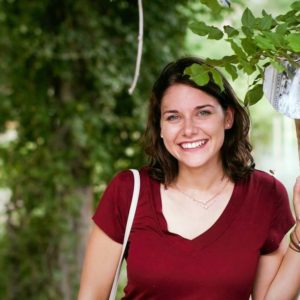
Jumana Tanner will work in Milwaukee to educate Lake Michigan beachgoers about water safety. Submitted photo.

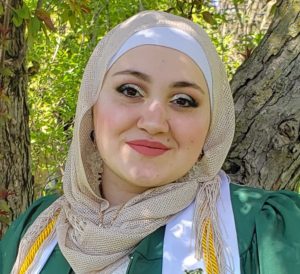
Jumana Tanner is relocating from her home in Madison to Milwaukee for the summer so she can hit the city’s Lake Michigan beaches and share information with McKinley and Bradford beach visitors, talking with them about water quality, staying hydrated and staying safe while swimming in the lake’s powerful waves and currents. It’s part of a beach ambassador program Sea Grant is engaged with along with Milwaukee Riverkeeper and the Milwaukee Sailing Club. This sophomore enrolled at UW-Madison is studying marine biology. She said, “The beach ambassador program for Great Lakes Water Safety internship reflects an adequate practice of my enthusiasm to learn and allows me to gain leadership skills.” She continued, “To understand more about our community waters and be able to spread that knowledge by interacting with others with the same excitement provides great opportunity for my growth in the scientific community. It is a way for everyone to care about science the way it cares for us and it breaks the comprehensive disconnect between science and society to live in a more united world.”

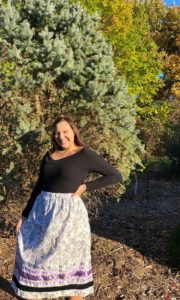
Paige Skenandore will identify and catalog native plants in a Green Bay-area restoration area and through an Indigenous lens. Submitted photo.

Paige Skenandore, along with mentors Julia Noordyk and Stephanie Dodge, will conduct a survey of native plants and apply Native American names to the species as part of an overall restoration project of the Wequiock Creek Natural Area near the University of Wisconsin-Green Bay. Skenandore is a member of the Oneida Nation of Wisconsin and is turtle clan. Noordyk is a water quality outreach specialist and Dodge is a First Nation’s graduate student. Skenandore will be a senior in the fall when she returns to UW-Madison where she is completing a major in Community and Nonprofit Leadership and certificates in American Indian Studies and Environmental Studies. Skenandore said, “This internship will be restoring the traditional languages of a few Wisconsin Tribes around the UW-Green Bay area. Harvesting practices, plant identification and the academics of medicinal plant species is great knowledge that I will be able to bring to the new Indigenous garden on campus, it will complement my major interests, and it will keep me connected in learning and practicing more of my own Indigenous language. While attending workshops and connecting with the surrounding Wisconsin tribal communities, I will be able to help preserve the environment through language and have the ability to connect with other tribal nations  throughout the summer.”

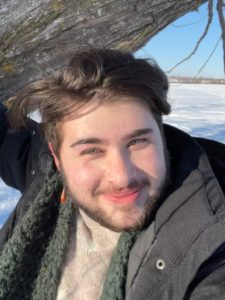
Hunter Goldman will provide online mapping upgrades to the Eat Wisconsin Fish initiative website, as well as produce cooking videos. Submitted photo.

Hunter Goldman will get deep into the Eat Wisconsin Fish initiative—coordinating with mentor Sharon Moen, the initiative’s outreach specialist. They will collaborate on improving a web-based fish-finding map and producing cooking videos under the theme “get saucy with Sea Grant.” Goldman is pursuing a degree in Sustainable Community Development with an emphasis on international development at Northland College. He is a junior. Goldman is also securing a minor in GIS, which will contribute the mapping portion of his summer work. He said, “A requirement for my GIS minor is internship experience, so being able to be a part of this internship program would help me work toward my degree. In addition, the program I am planning for grad school has GIS listed as a desired skill, so being able to accomplish this internship would help me achieve technical skills in a setting other than academic.”

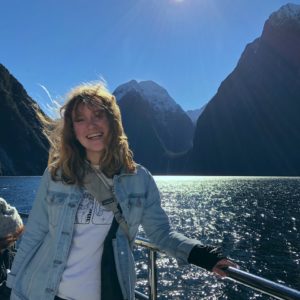
Sophie Glabius will work on GIS projects with the U.S. EPA. Submitted photo.

Sophie Glabius will work with mentor Tom Hollenhorst, a research landscape ecologist at the U.S. EPA lab in Duluth, Minnesota, on GIS projects. A May 2021 Beloit College graduate, Glabius has a degree in geology. She said the internship appeals to her because it is, “A chance to build on my existing GIS and underwater mapping knowledge and explore how geospatial data can be used in conjunction with natural and social science datasets.” As a student, Glabius completed an imaging research project that compared the spatial distribution of temperature in two different types of springs. She also studied abroad and explored the sea floor with sediment cores, grab samples, multibeam images and boomer seismic profiles. That semester allowed her to, “Engage with perspectives, values and even educational traditions that I was unfamiliar with. In New Zealand, there is a growing focus on traditional Indigenous knowledge, especially in the realm of environmental stewardship. My time there inspired a continued interest in traditional ecological knowledge and how it can influence Western science and my own scientific career,” she said.

Courtney Gunville will assess the disability access to both coastal attractions and online coastal visualization tools. Submitted photo.

UW-Madison spring 2021 recipient of a fundamental GIS certificate Courtney Gunville has long had an interest in GIS, tourism and ecology. She’ll combine those interests into an internship that’s titled, Using GIS to Examine ADA Accessibility at Coastal Access Sites in Wisconsin. This graduate of Gallaudet University will survey existing websites, the Wisconsin Coast Atlas and Wisconsin Coastal Guide, both of which were built and are maintained by Sea Grant’s Associate Director for Extension and GIS Specialist David Hart. Hart and Chin will act as Gunville’s mentors. Farther down the road could be a coffee table book version of the Wisconsin Coastal Guide. Including disability accessibility information will be critical for that print format, as well as the current online one. For her part, Gunville said, “This project is essential. We need to ensure that for anyone with a disability, the web resources are meeting their needs. We need to be inclusive.” She continued, “I want to develop more inclusion for our future generations.” 

Morgan Coleman will work on building Great Lakes literacy projects. Submitted photo.

With a fresh degree in literature from UW-River Falls, Morgan Coleman will embed herself at GLIFWC for her internship, Great Lakes Literacy and Ojibwe Culture. Coleman and mentors Sea Grant’s Senior Special Librarian and Education Specialist Anne Moser and Paula Maday plan to tap into her writing and reading strengths to create content for GLIFWC’s quarterly newspaper and presentations. Maday is the public information officer for the organization. Coleman will also develop a special project (to be determined) and capitalizes on her skills and interests. She said, “I’m really excited to see what I can do with GLIFWC and Sea Grant this summer. This internship is a great opportunity to develop my skills and use them to help increase Great Lakes literacy.”

The post Meet the summer 2021 interns first appeared on Wisconsin Sea Grant.

Original Article

News Releases | Wisconsin Sea Grant

News Releases | Wisconsin Sea Grant

https://www.seagrant.wisc.edu/news/meet-the-summer-2021-interns/?utm_source=rss&utm_medium=rss&utm_campaign=meet-the-summer-2021-interns

Moira Harrington

...SIGNIFICANT WEATHER ADVISORY FOR BROWN...KEWAUNEE...SOUTHERN DOOR...CALUMET...NORTHEASTERN WINNEBAGO...NORTHEASTERN WAUPACA... SOUTHERN OCONTO...OUTAGAMIE...EASTERN SHAWANO AND MANITOWOC COUNTIES UNTIL 1030 PM CDT... At 934 PM CDT, Doppler radar was tracking strong thunderstorms along a line extending from 11 miles east of Oconto to 7 miles northwest of

Original Article

Current Watches, Warnings and Advisories for Brown (WIC009) Wisconsin Issued by the National Weather Service

Current Watches, Warnings and Advisories for Brown (WIC009) Wisconsin Issued by the National Weather Service

https://alerts.weather.gov/cap/wwacapget.php?x=WI1261A678354C.SpecialWeatherStatement.1261A6785A68WI.GRBSPSGRB.5028ff567dbee03ebccd90929eb41c68

w-nws.webmaster@noaa.gov

Raining PFAS: Amount of PFAS found is outpacing legacy contaminants

A decades-long monitoring project in the Great Lakes basin has started checking for PFAS in rain. It’s finding the forever chemicals across the basin in large amounts.

Those numbers aren’t published yet, but PFAS are showing up in concentrations higher than legacy contaminants like mercury, PCBs (polychlorinated biphenyls) and pesticides.

Read Now at Great Lakes Now.

Original Article

Great Lakes Now

Great Lakes Now

https://www.greatlakesnow.org/2021/06/raining-pfas-outpacing-legacy-contaminants/

Andrew Blok

Attachment to your community can motivate climate change action

This article was republished here with permission from Great Lakes Echo.

By Chioma Lewis, Great Lakes Echo

How attached you are to your community can determine how motivated you are to tackle climate change.

Residents who are more socially attached to their community are more likely to plan for climate change adaptation to support it, according to a recent study in the Journal of Coastal Conservation.

Read Now at Great Lakes Now.

Original Article

Great Lakes Now

Great Lakes Now

https://www.greatlakesnow.org/2021/06/attachment-community-motivate-climate-change-action/

Great Lakes Echo

The National Sea Grant College Program is a federal-state-university partnership with 34 programs across the nation, including the program here in Wisconsin.

Wisconsin Sea Grant Director James Hurley. Image credit: Wisconsin Sea Grant

Because federal dollars contribute to our ability to meet the needs of Wisconsin’s coastal communities, and in service to the Great Lakes ecosystem as a whole, we pay attention to funding levels proposed by the administration. Recently, the president released his Fiscal Year 2022 budget and it included a request to support the national Sea Grant program at the level of $116 million with an additional $13.1 million for Sea Grant Aquaculture, for a total request of $128.8 million. 

Wisconsin Sea Grant can demonstrate over and over the merit of its efforts and how it would put those dollars to good use. There are numbers: From 2018 to 2020, Sea Grant received $4.1 million in core federal dollars that were matched by $2 million in state investment. That leveraged investments of $4.5 million in additional state, federal and outside funding.

Currently, those funds are supporting 15 Sea Grant research projects, three education projects and 32 outreach efforts happening from a base on seven Wisconsin campuses. Initiatives include addressing record-high Great Lakes water levels, the “forever” chemicals PFAS, and the transfer of skills and knowledge to the state’s growing $21 million-aquaculture industry.

It’s good news that the president recognizes the value of work such as this, and at similar Sea Grant programs throughout the U.S. The administration’s budget is considered a starting point and Congressional committees will now shape the final spending plan that, by law, needs approval in time for the new federal fiscal year beginning on Oct. 1.

We are deeply grateful for the confidence President Biden has shown in Sea Grant’s promise and delivery, particularly in the areas of resiliency and addressing the needs of underserved communities.

We are deeply grateful for confidence that members of Congress have shown in the past in our ability to make a difference in coastal communities and on behalf of the Great Lakes themselves.

Finally, and just as importantly, we are deeply grateful to our stakeholders, partners, collaborators and friends who offer an outpouring of support for our work. You know full well that Sea Grant funds lakes Michigan and Superior research, and the application of the research to ensure the sustainable use of these crown jewels that underpin the quality of life and economy of our state. 

If you would like to make a comment to members of Congress regarding the value of Sea Grant and the budget being proposed for what is known as FY22, you can find your House of Representatives member at house.gov/representatives/find. Find your senators at senate.gov

And to learn more about our current projects and impacts, check out this fact sheet. 

Thank you,

Jim Hurley
Director, Wisconsin Sea Grant

The post A special message from the Sea Grant Director first appeared on Wisconsin Sea Grant.

Original Article

Blog | Wisconsin Sea Grant

Blog | Wisconsin Sea Grant

https://www.seagrant.wisc.edu/blog/a-special-message-from-the-sea-grant-director/?utm_source=rss&utm_medium=rss&utm_campaign=a-special-message-from-the-sea-grant-director

Wisconsin Sea Grant

The rare piping plovers nesting on Montrose Beach are getting a second chance to become parents this year. “Rose and Monty” lost their eggs just days ago to a skunk that managed to get into their protected area, but they have built another nest and Rose laid a new egg. Read the full story by WLS – TV – Chicago, IL.

Original Article

Great Lakes Commission

Great Lakes Commission

https://www.glc.org/dailynews/20210611-piping-plover

Patrick Canniff

Central Michigan University received a $10 million grant from the U.S. Environmental Protection Agency, the latest in a series of grants from the EPA with $30 million being awarded to CMU since 2010 in support of coastal wetland monitoring. Read the full story by Epicenter Mt. Pleasant.

Original Article

Great Lakes Commission

Great Lakes Commission

https://www.glc.org/dailynews/20210611-wetlands-epa

Patrick Canniff

The Great Lakes News Collaborative noted in February that experts view the state, with its abundant supply of fresh water, as a likely refuge for climate migrants. Though the collaborative found that, in many cases, the coordinated, long-range preparation for climate change has not been done. Read the full story by GreatLakesNow.

Original Article

Great Lakes Commission

Great Lakes Commission

https://www.glc.org/dailynews/20210611-great-lakes-climate-change

Patrick Canniff

The USACE Buffalo District and its contractor Michigan-based Great Lakes Dock & Materials, L.L.C have completed the repair work to the east breakwater in Great Sodus Harbor in Wayne County, NY. Repairs include 525 feet steel sheet pile wall providing protection critical to reduce the rate of erosion. Read the full story by DredgingToday.com.

Original Article

Great Lakes Commission

Great Lakes Commission

https://www.glc.org/dailynews/20210611-erosion-new-york

Patrick Canniff

During a virtual meeting with people from Niagara and Orleans counties, the New York Department of State explained the Clear Program, and its goal of creating long term measures to protect the shoreline from extreme lake water levels. Read the full story by Spectrum News 1.

Original Article

Great Lakes Commission

Great Lakes Commission

https://www.glc.org/dailynews/20210611-ontario-water-levels

Patrick Canniff

Researchers from the Rensselaer Polytechnic Institute in Troy, N.Y. found that from 1980 to 2017, oxygen levels fell by about five per cent near the surface and 19 per cent in deep waters. Raising concern among scientists about the health of aquatic life. View images by CBC News.

Original Article

Great Lakes Commission

Great Lakes Commission

https://www.glc.org/dailynews/20210611-climate-change-oxygen

Patrick Canniff

Rebecca Esselman, a 20-year conservation veteran and executive director of the nonprofit Huron River Watershed Council discusses the status of PFAS, per and polyfluoroalkyl chemicals known to be persistent in the environment and Michigan’s recent lack of transparency in alerting citizens about PFAS. Read the full story by GreatLakesNow.

Original Article

Great Lakes Commission

Great Lakes Commission

https://www.glc.org/dailynews/20210611-pfas-pollution

Patrick Canniff

The University of Wisconsin-Superior is studying whether year-round shipping might someday be possible at the Twin Ports of Duluth/Superior. The study will look at decreasing ice on the Great Lakes due to climate change and the construction of a new lock in the Soo Locks. Read the full story by KBJR TV Channel 6 in Duluth.

Original Article

Great Lakes Commission

Great Lakes Commission

https://www.glc.org/dailynews/20210611-shipping

Patrick Canniff

Wisconsin DNR issues fish consumption warnings for Yahara chain

MADISON, Wis. (AP) — The state Department of Natural Resources issued new consumption warnings Wednesday for fish taken from the Yahara chain of lakes and waterways in Dane and Rock counties after tests showed elevated levels of PFAS contamination.

The advisories apply to fish taken from Wingra and Starkweather creeks, lakes Monona, Kegonsa, Waubesa, Upper and Lower Mud lakes and the Yahara River downstream to the Rock River.

Read Now at Great Lakes Now.

Original Article

Great Lakes Now

Great Lakes Now

https://www.greatlakesnow.org/2021/06/ap-wisconsin-dnr-pfas-fish-consumption-warning/

The Associated Press

Energy News Roundup: Illinois Senate votes on energy plan, Enbridge protests in Minnesota, Solar-Panel factory in Ohio

Keep up with energy-related developments in the Great Lakes area with Great Lakes Now’s biweekly headline roundup.

Click on the headline to read the full story:

Illinois:

  • Lawmakers headed back to Springfield for votes on an elected Chicago school board and an energy package that includes bailout for nuclear plants – Chicago Tribune

State lawmakers will return to Springfield next week to take up two controversial issues that stalled in the final hours of the spring session: a statewide energy package and an elected Chicago school board.

Read Now at Great Lakes Now.

Original Article

Great Lakes Now

Great Lakes Now

https://www.greatlakesnow.org/2021/06/energy-illinois-senate-energy-plan-enbridge-protests-minnesota-solar-ohio/

Rachel Duckett

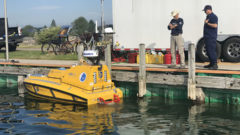
BEN is back! Autonomous vessel launches into Lake Huron from Rogers City, Michigan

By Darby Hinkley/The Alpena News

This article is part of a collaboration between The Alpena News and Great Lakes Now at Detroit Public Television to bring audiences stories about the Great Lakes, especially Lake Huron and its watershed.

ROGERS CITY — BEN gets around.

Read Now at Great Lakes Now.

Original Article

Great Lakes Now

Great Lakes Now

https://www.greatlakesnow.org/2021/06/autonomous-vessel-rogers-city-lake-huron/

The Alpena News

June 11, 2021

THIS WEEKBills Will Allow Sand and Gravel Mining Near Residential Areas +  Scientists are Awarded $1 million to Fight Microplastics + Low Precipitation Contributes to Loss of 25 Trillion Gallons in Great Lakes + Federal Ban on PFAS in Food Packaging Introduced


Bills Will Allow Sand and Gravel Mining Near Residential Areas

Michigan Senate Minority Leader Jim Ananich, D-Flint, announced he has introduced new bills that would permit gravel companies to operate closer to residential areas and move the approval process of mining permits away from local governments to the Department of Environment, Great Lakes and Energy (EGLE). We fear the proposed legislation lacks strong language that would allow EGLE to deny a permit based on impact to water quality and other community concerns. Michigan residents please contact your representative to encourage them to vote no and allow communities the few protections they currently have around sand and gravel mining.


Scientists are Awarded $1 Million to Fight Microplastics

Where microplastics originate and how they travel will be the focus of a $1 million study by a group of Canadian universities. One component of the study is to identify microplastic’s fingerprints, allowing them to determine where they came from and more about how this pervasive pollution migrates. 


Low Precipitation Contributes to Loss of 25 Trillion Gallons in Great Lakes

After staggering high lake levels last year, there is a noticeable drop in lake water levels. Mainly due to below-average rain and snow, the Great Lakes lost 25 trillion gallons of water in one-year. Rivers connecting one Great Lake to another continue to have average flows whereas tributaries to the Great Lakes have greatly reduced flows. For example, the Detroit River has an average flow of 111% and the Grand River in Grand Rapids, a tributary to Lake Michigan, is at 48% flow. These wild swings are another symptom of climate change.


Federal Ban on PFAS in Food Packaging Introduced

One of the most direct ways people are exposed to the toxic chemicals called PFAS is in food packaging and water. Exposure to these chemicals builds in our body and can lead to a variety of health problems. A federal ban on the use of PFAS in food packaging may soon be introduced by Michigan Congresswoman, Debbie Dingell.


Original Article

Blog – Freshwater Future

Blog – Freshwater Future

https://freshwaterfuture.org/freshwater-weekly/freshwater-weekly-june-11-2021/

Freshwater Future

...SIGNIFICANT WEATHER ADVISORY FOR SOUTHERN WOOD...WESTERN BROWN... CALUMET...WINNEBAGO...WAUSHARA...SOUTHEASTERN WAUPACA...OUTAGAMIE AND EASTERN SHAWANO COUNTIES UNTIL 1000 PM CDT... At 853 PM CDT, Doppler radar was tracking a gust front from a thunderstorm along a line extending from near Pulaski to near New London to Napowan Scout Camp to near Plainfield to 9 miles southwest

Original Article

Current Watches, Warnings and Advisories for Brown (WIC009) Wisconsin Issued by the National Weather Service

Current Watches, Warnings and Advisories for Brown (WIC009) Wisconsin Issued by the National Weather Service

https://alerts.weather.gov/cap/wwacapget.php?x=WI1261A64A4F4C.SpecialWeatherStatement.1261A64A87F0WI.GRBSPSGRB.76247907d4fa9f04f3b904dfebbea15d

w-nws.webmaster@noaa.gov