By Fatima Syed and Will Pearson, The Narwhal

The Great Lakes News Collaborative includes Bridge MichiganCircle of BlueGreat Lakes NowMichigan Public and The Narwhal who work together to bring audiences news and information about the impact of climate change, pollution, and aging infrastructure on the Great Lakes and drinking water. This independent journalism is supported by the Charles Stewart Mott Foundation.


Any day now, a piping plover will make its seasonal return to Wasaga Beach, as it has done every spring for nearly 20 years. This time, its beachfront home could be a little less secure, which is why a new court case is pressuring the federal government to ensure the plover is kept safe. 

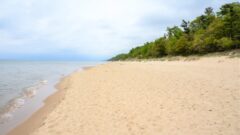
The world’s longest freshwater beach provides the perfect habitat for the tiny endangered birds, offering natural sand dunes and shrubbery for nesting and growing their population. 

For decades, both the Georgian Bay beach and the plover have been protected by the Ontario government through two main tools. First, the designation of Wasaga Beach as a provincial park, which meant  development and disruption of the sandy shore was off-limits. Second, the plover was offered extra protection under the provincial Endangered Species Act. 

Neither of those protections stand anymore.

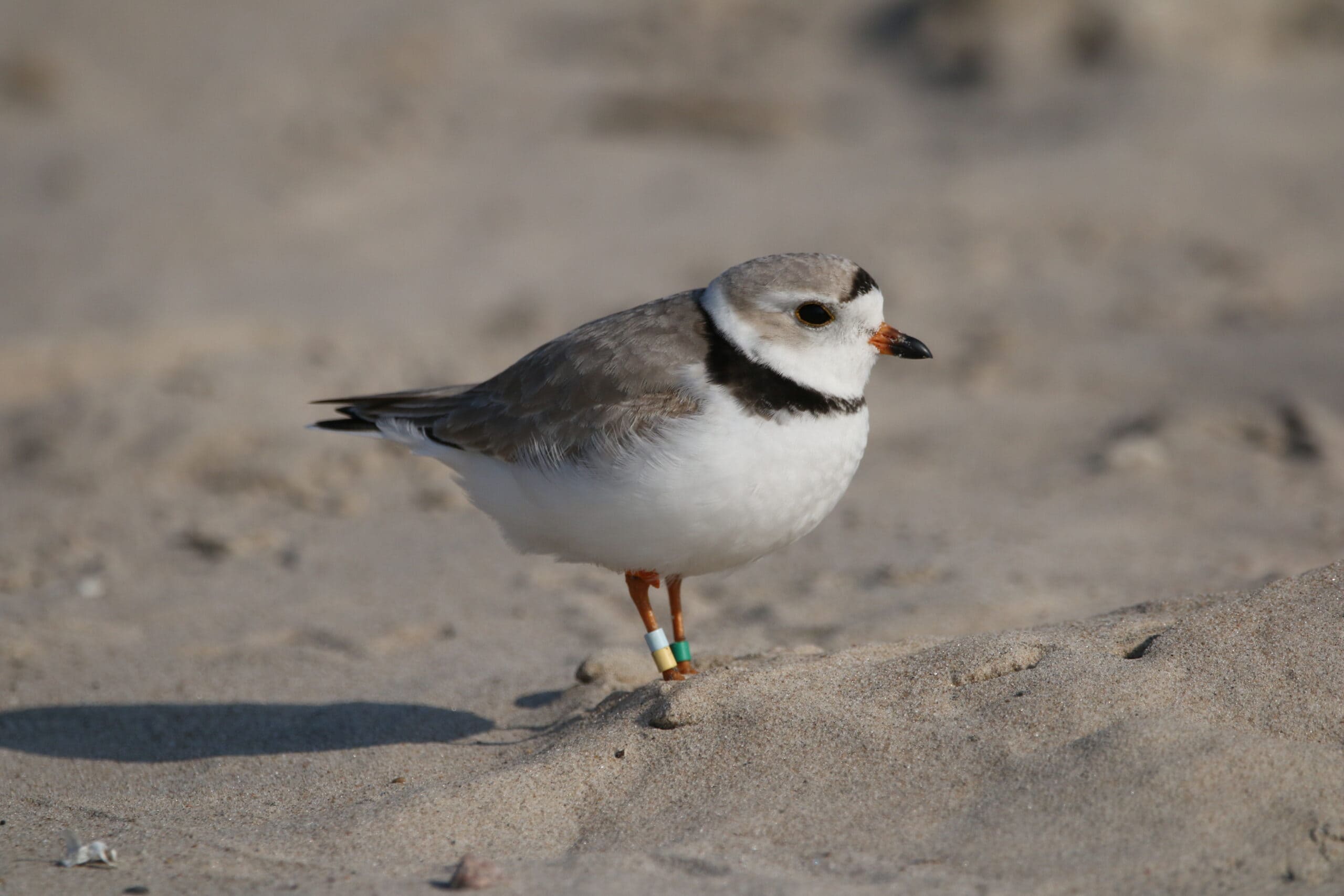
Piping plovers were considered extinct in Ontario by the 1980s, but the species has been making a tentative comeback in the Great Lakes region in recent decades. Photo: Supplied by Birds Canada

Last fall, the Doug Ford government removed a majority of the beachfront from Wasaga Beach Provincial Park and transferred it to the local municipality in an effort to boost tourism development. And just last month, the government officially repealed the Endangered Species Act and replaced it with much weaker legislation that no longer recognizes the plover on its list of protected species.

The town has promised it will protect the plover after the transfer — and has begun working with Birds Canada on its habitat protection — but residents are not convinced. Two local officials agreed to speak to The Narwhal on the condition their names be kept confidential, for fear of retribution. They said on Apr. 13, a tractor owned by the municipality was seen raking more beachfront than was previously permitted — an action that could damage habitat and destroy plover nests. Though the raking hasn’t been repeated, many are concerned the beach is unprotected. The town did not respond to The Narwhal’s request for comment by the time of publication. 

As a result, environmental groups are taking the matter to federal court. 

In January, Ecojustice, on behalf of Environmental Defence and Ontario Nature, petitioned the federal government for an emergency order to offer protections for the piping plover by March, before machines are brought in to clear the beach after winter, and the birds begin migrating back. The federal government did not respond by that deadline.

In response, the groups have asked for a judicial review by the Federal Court of Canada into the delay and to compel Environment Minister Julie Dabrusin to make a recommendation to cabinet to issue the emergency protection.

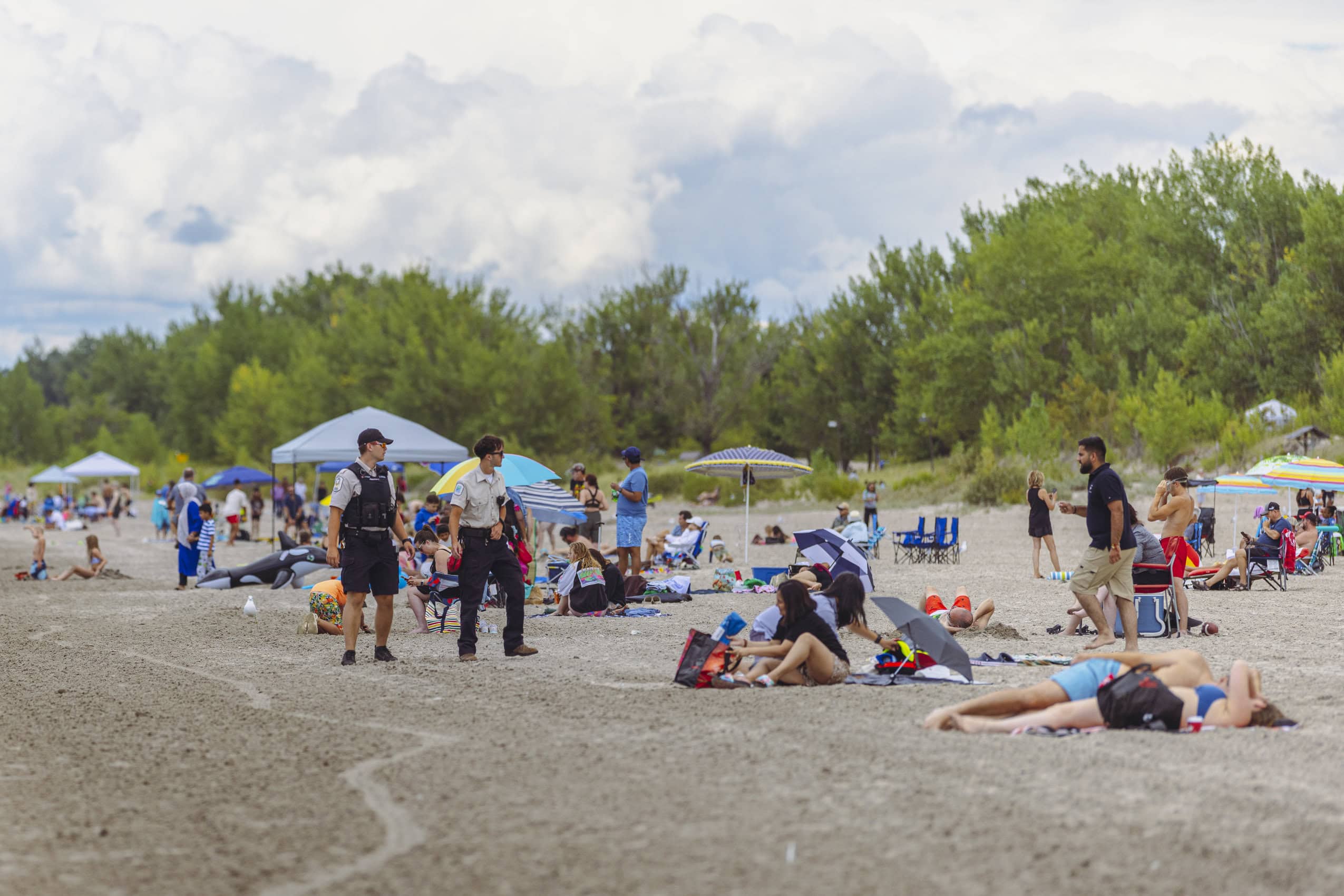
At Wasaga Beach, the endangered piping plover is forced to share space with an increasing number of vacationing beachgoers. Until recently, Ontario Parks staff were responsible for managing that tension. Photo: Carlos Osorio / The Narwhal

The groups have also asked the court for an urgent, temporary order — or an injunction — to prohibit any raking or harmful development on the beach, which is federally recognized as a critical habitat. 

Here’s what you need to know about the tiny bird and its fate in Wasaga Beach.

What are piping plovers? And why are they endangered?

Piping plovers are sprightly shorebirds, each no bigger than a cotton ball, that can sometimes be seen bounding over Great Lakes beaches in the summertime. But seeing them isn’t easy — their sandy colour blends into their surroundings and they’ve become extremely rare in Ontario due to human encroachment.

The main threat to the piping plover is human disturbance,” according to the Government of Ontario, “since the sandy beaches where plovers live are also popular for human recreation which can destroy nests.”

Plovers generally spend winters in the United States and Mexico, but return to more northern climates to nest for the summer.

For a long time, the Great Lakes were a prime destination for would-be plover parents. It’s been estimated that the region was once home to up to 800 breeding pairs. But the Great Lakes plover population cratered in the 1960s and ’70s, and the bird was considered extinct in Ontario by 1986.

But in recent decades, plovers have been staging a tentative comeback in the Great Lakes. A breeding pair returned to Sauble Beach (now Saugeen Beach) in 2007, sparking hope and enthusiasm among bird watchers and conservationists in the area. The birds have been spotted in the region annually since then.

But plovers’ hold is anything but secure. Some years pass with only a handful of breeding pairs observed, and other years come and go with no fledglings reaching maturity.

Why is Wasaga Beach important to plovers? And what do they like about it?

“Wasaga Beach is the most important and most productive nesting site for piping plovers in our province.”

That’s what Sydney Shepherd, the Ontario piping plover coordinator for Birds Canada, told The Narwhal last summer. The beach has been home to 59 nests and 87 fledglings since the birds returned about two decades ago, according to Birds Canada, a national conservation group. 

While plovers have been observed on other beaches in the Great Lakes region, none are anywhere near as popular with plovers as Wasaga Beach. The plovers that have been born on Wasaga Beach make up nearly 50 per cent of all fledglings in Ontario, and many of them have gone on to establish their own nests elsewhere in the region. 

Plovers tend to value Wasaga Beach for different reasons than human beachgoers. While tourists might prefer a well-groomed beach for lounging, plovers require naturalized shorelines: shrubbery and sand dunes offer cover from predators. That means of all the 14 kilometres of beachfront at Wasaga, only a small fraction near the northeastern tip of the park is suitable plover habitat.

What’s happening at Wasaga Beach?

The fortunes of the Town of Wasaga Beach have long been tied to the sandy shoreline that gives the town its name. Tourism to the area is the main economic driver, drawing more than 1.6 million visitors a year according to the municipality’s website.

But while tourism brings opportunity to the residents of Wasaga Beach, it also puts pressure on plover habitat. Until recently, that tension was managed by staff at Wasaga Beach Provincial Park, who were mandated to preserve and protect the sand dunes and other beach areas that plovers frequent.

The vast majority of the beachfront had long been within the boundaries of Wasaga Beach Provincial Park, and some in the town believed the park hindered efforts to spruce it up and develop new amenities and attractions to boost tourism revenue.

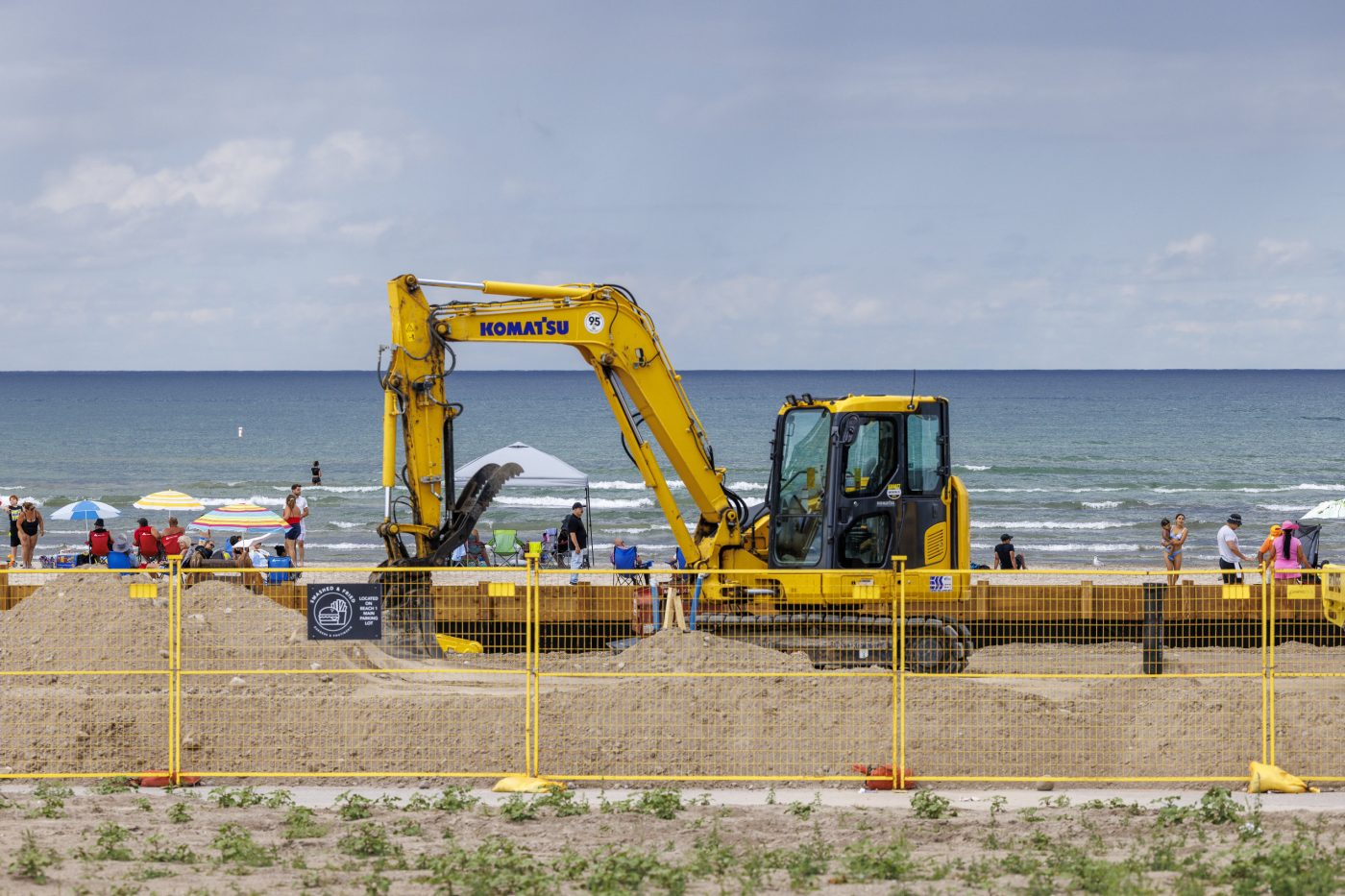
The Town of Wasaga Beach is moving ahead with a plan to redevelop a portion of its beachfront. To facilitate the process, the Government of Ontario has removed 60 hectares of beachfront from Wasaga Beach Provincial Park, limiting provincial protections of piping plover habitat in the process. Photo: Carlos Osorio / The Narwhal

The Doug Ford government heard those concerns and acted on them. Ontario would sever more than half of the beachfront from the park and hand it over to the town to manage, Ford announced in 2025. Earlier this year, the province confirmed its intention to move forward with that plan, despite 98 per cent of formal citizen feedback on the plan being negative.

The Narwhal confirmed that transfer has now happened. 

All of the suitable plover habitat on Wasaga Beach is within the land set to be removed from the provincial park, meaning the habitat will no longer be protected by a provincial park designation.

The town, for its part, says it’s committed to protecting piping plovers. But it has yet to release its full redevelopment plans, and that leaves conservationists worried that the beach’s plover habitat is threatened.

Shepherd told The Narwhal this week that Birds Canada is in the process of formalizing their role with the Town of Wasaga Beach. The group is “seeking a committed partnership” to support the long-term protection and recovery of piping plovers that would enable them to monitor and protect the nests and the birds, and also increase education and awareness of the species. 

“So far, we have collaborated for one training session for [town] staff to begin to introduce what piping plover conservation entails,” she said in an email.

Are piping plovers otherwise protected?

The removal of provincial park designation from plover habitat on Wasaga Beach comes on the heels of other policy changes that weaken species protection in Ontario.

In 2025, Ontario repealed its Endangered Species Act and replaced it with new legislation called the Species Conservation Act, a weaker set of rules that drops some key protections.

One difference between the two acts is the newer one adopts a more narrow definition of “habitat” than the former act. When it comes to legal protections for the habitats of endangered species, the new legislation’s scope is limited to the specific area an animal nests or dens in, rather than the larger area it uses to travel or find food.

But even that limited protection doesn’t stand for piping plovers, which have been removed from Ontario’s list of protected species. With the loss of provincial park status, the plover habitat has been stripped of another protection that could have restricted the beach grooming activities that render Wasaga Beach unsuitable for plovers — and appear to have already begun.

That’s why environmental groups are now turning to the federal government to fill the gap. Nationally, there is a species-at-risk law that can be invoked for the protection of an endangered species and the broader habitat it needs to survive. The question is whether the federal government will use it to save the piping plover’s favourite Ontario beach.

Updated on April 22, 2026, at 2:55 p.m. ET: this story has been corrected to note that piping plovers have been removed from the Government of Ontario’s list of protected species, meaning even the individual and its nest are not provincially protected.

The post Will Canada protect the piping plover before it returns to Wasaga Beach? appeared first on Great Lakes Now.
Original Article

Great Lakes Now

Great Lakes Now

https://www.greatlakesnow.org/2026/04/29/will-canada-protect-the-piping-plover-before-it-returns-to-wasaga-beach/

The Narwhal

By Paula Gardner, Kelly House and Ron French, Bridge Michigan

The Great Lakes News Collaborative includes Bridge Michigan; Circle of Blue; Great Lakes Now at Detroit PBS; Michigan Public, Michigan’s NPR News Leader; and The Narwhal who work together to bring audiences news and information about the impact of climate change, pollution, and aging infrastructure on the Great Lakes and drinking water. This independent journalism is supported by the Charles Stewart Mott Foundation. Find all the work HERE.


CHEBOYGAN — Local, state and federal officials were aware of the dangers posed by the Cheboygan Lock and Dam for years before floodwaters pushed it to the brink of collapse, records show.

Yet they failed to compel private owners to repair the nonfunctional hydro plant connected to the publicly-owned dam —  a critical piece of its ability to pass floodwaters downstream. 

The facility that houses the plant, once a Charmin toilet paper mill, changed hands repeatedly over decades as it fell into disrepair. 

Now taxpayers are helping bankroll a desperate effort to bring the plant back online before the dam fails and sends a wall of water toward downtown Cheboygan.

“I’m very concerned that this was not handled properly,” said Richard Sangster, a Cheboygan County commissioner and former Cheboygan mayor, about federal regulatory actions over several years.

The property is now owned by Hom Paper XI, LLC, a business controlled by former NFL linebacker Thomas Homco. He did not return voicemails left by Bridge Michigan. 

State and local officials did what they could, Cheboygan County Sheriff Todd Ross said Thursday.

“We didn’t wait ‘til the last minute,” Ross said. “It’s privately owned. There’s only so much we can do.”

A public tally of taxpayer costs associated with the round-the-clock repair wasn’t available Thursday, but estimates from a few years ago indicated the plant needed at least $1 million in repairs.

‘Safety concerns have been raised many times’

Records show the agency that primarily regulates hydropower dams, the Federal Energy Regulatory Commission, sent warning letters for years to a shifting cast of owners while granting multiple extensions.

Among the issues they cited: missing inspection records and malfunctioning equipment that was crucial to passing water in the event of a flood.  

As far back as 2019, regulars warned about cracked concrete and damaged retaining walls and gates that could help the dam manage flooding, records show.

In 2021, FERC told the plant’s then owners that “multiple items are overdue and completion dates are rapidly approaching.”

The plant was cited 16 times in 10 months for safety violations by Occupational Safety and Health Administration before a fire closed it altogether in September 2023, records indicate.

That prompted more orders for repairs and more extensions from FERC. Records indicate state officials said they were aware of the issues but had no role in enforcement.

“Safety concerns have been raised many times,” Sangster said, adding “you wouldn’t even be able to measure how detrimental” a dam failure would be. 

“In my eyes, it appears like total neglect on their behalf,” he added about FERC.

‘No simple answer’

FERC spokesperson Celeste Miller did not respond to detailed questions from Bridge about oversight of the hydro plant property and instead put out a statement noting the agency’s role in the ongoing emergency response in Cheboygan.

“Above all, our priority is to coordinate with all involved partners to safeguard both the community and the environment,” Miller wrote.

The crisis comes six years after the privately-owned Midland dams failed following a similar pattern of regulatory delay. Michigan legislators vowed to make dam safety a priority after Midland, but ultimately didn’t act on proposed reforms.

A solution “keeps getting kicked down the road …  now we’ve got a whole community in peril because it was mismanaged by (private owners),” state Sen. John Damoose, R-Harbor Springs, said after touring the dam with Gov. Gretchen Whitmer.

“This is a problem that could happen all over the state,” Damoose said. “‘It got our attention a few years ago in Midland, but now we’re seeing that it was not an isolated thing and we need to take some serious looks at how we allow this to go on.”

Whitmer said “there’s no simple answer” due to a “complicated web of privately owned and publicly owned (dams.)”

“We have made some long overdue investments in some of our infrastructure,” she said.

Complicated history

Like many dams in Michigan, the Cheboygan complex was once owned by utilities to generate power for the region. 

By 1967, when Consumers Energy sold it to the state of Michigan for $1, it was no longer generating power but the deeper Cheboygan River created by the dam had become a valued link between Lake Huron and the Inland Waterway, a 40-mile-long network of popular rivers and lakes.

In 1983, Procter & Gamble took over the hydroelectric side of the facility, securing a licensing exemption from FERC and striking a deal to give the state some continued say over water flows through the now-privatized portion of the complex. 

But soon after pouring millions into upgrading the hydro facility, the company shuttered its Cheboygan operation in 1990, eliminating 300 jobs and commencing the slow decline of the historic mill. 

Eventually, a company named Great Lakes Tissue bought the plant and was urged by FERC for years to make repairs.

It sold the business before a June 2022 deadline to ensure the gates that allowed water to flow through the hydro plant were functioning properly.

It’s not clear whether the work was ever completed. Nor is it clear whether federal regulators were aware of subsequent ownership changes.

Great Lakes Tissue Company was still the listed owner on FERC’s license exemption well into 2025.

Tug-of-war

While the hydro side of the dam complex sat idle following the fire, state Department of Natural Resources officials in charge of the rest of the dam publicly warned its closure would make it hard to manage water levels in the Cheboygan River.

The plant had accounted for about 30% of the river’s flow to Lake Huron, they said.

“Boaters and residents … may experience larger water level fluctuations,” stated a 2024 agency announcement.

Bridge Michigan was not able to discern what steps, if any, DNR officials took to try to compel action.

Agency spokesperson Ed Golder said he was not able to immediately answer related questions from Bridge Michigan while the agency deals with emergency response in Cheboygan.

Josef Greenberg, a spokesperson for the Michigan Department of Environment, Great Lakes and Energy, which regulates dams in the state that are not regulated by FERC, said state officials had communicated with federal counterparts about the issues at the dam, but did not play a regulatory role.

In the fire’s aftermath, federal officials continued issuing letters flagging unresolved safety issues at the hydro plant, some of them dating back years.

They pressed current and past owners for clarity about who was in charge, a process complicated by a flurry of legal disputes between parties with a stake in the floundering business.

Eventually, Hom Paper emerged as the rightful owner in FERC’s eyes, and the agency ordered the company to either restore the hydro plant to working condition or risk losing the license exemption that allows it to generate hydropower.

Company lawyer Tyler Tennent initially responded that doing so was no longer economically feasible: “Hom Paper XI, LLC no longer intends or desires to operate the hydroelectric machinery,” Tennent wrote in August 2025.

Then Hom Paper found a potential buyer, asking FERC for repeated extensions of time to repower the plant while it worked to finalize the deal.

The would-be buyer: HydroMine Cheboygan LLC, a Wyoming-based corporation spearheaded by Roy Davis, a self-proclaimed  “blue-collar mechanic that fixes things,” who has restarted power operations at other aging dams in Eaton Rapids and Hubbardston.

“Hom Paper and HydroMine are very near to having a signed agreement,” Hom’s lawyer, Tyler Tennent, wrote to FERC in January.

Tennent told regulators HydroMine was negotiating water management agreements with the DNR and working with Consumers Energy to repower the site.

“We appreciate FERC’s continued patience,” he wrote.

Three months later, the plant remained nonfunctional Thursday night, reducing the Cheboygan dam’s ability to pass floodwater that had climbed within five inches of its crest.

Residents in the floodzone have been urged to prepare for evacuation in case of dam failure.

Looking ahead

An estimated 75 Consumers Energy workers have been at the dam to get the privately owned hydroelectric power plant running, Michigan State Police said Thursday. 

By Thursday evening, signs pointed that restoration would be imminent, said Bruce Straub, Consumers’ incident commander.

Preserving dam integrity across northern Michigan will be important to the region once the crisis abates, said Sharen Lange, a Cheboygan business owner active in economic development, including on Cheboygan Commons.

Many in the area keep talking about who should own the hydro plant, Lange said. Others are saying that the city or county could take action. 

“We know that it being in private hands has produced a really bad result,” Lange said. 

The post Michigan feared Cheboygan Dam danger for years before rains pushed it to brink appeared first on Great Lakes Now.

Original Article

Great Lakes Now

Great Lakes Now

https://www.greatlakesnow.org/2026/04/17/michigan-feared-cheboygan-dam-danger-for-years-before-rains-pushed-it-to-brink/

Bridge Michigan

By Danielle Kaeding, Wisconsin Public Radio

This article was republished here with permission from Wisconsin Public Radio.


A union leader representing federal Forest Service employees in Wisconsin says workers may have to move as part of the Trump administration’s plan to shutter regional offices.

The Forest Service announced Tuesday that the agency is moving its headquarters to Salt Lake City and closing nine regional offices, including in Milwaukee. Administrative and technical support in those offices will shift to six operational service centers, one of which will be located in Madison. The overhaul will also include 15 state directors to oversee operations in one or more states.

Brian Haas is president of the National Federation of Federal Employees Local 2165. The union represents employees in the Milwaukee regional office and the Chequamegon-Nicolet National Forest. He said the restructuring mostly affects Milwaukee-area employees. Union officials estimate around 50 employees may be affected.

“The regional office actually already was hit a lot harder by people leaving, retiring, taking the different buyouts,” Haas said. “They’re already really down in their numbers.”

Haas said workers have been told they can continue working for the service as long as they’re willing to relocate or change job descriptions. When the reorganization was first announced last year, he said many employees transferred or relocated amid Trump’s return-to-office order.

The number of Forest Service employees in Wisconsin dropped from 645 to 539 between federal fiscal year 2025 and 2026, according to federal workforce data.

The U.S. Department of Agriculture, which houses the Forest Service, has been shifting thousands of employees out of Washington. Around 260 employees in the nation’s capital will be expected to relocate to Salt Lake City, according to the Associated Press.

“This is about building a Forest Service that is nimble, efficient, effective and closer to the forests and communities it serves,” Forest Service Chief Tom Schultz said in a statement.

Trump administration officials said the move will improve forest management, save taxpayer money and boost employee recruitment.

“The official stance from the administration is that it is not a reduction in force, but the reality on the ground is that it is going to continue to drive people to leave the agency,” Haas said.

A USDA spokesperson said employees will receive information about relocation timelines, options and resources to support their decisions. The agency said the number of staff that will be moved beyond the nation’s capital is unknown at this time.

Current and former Forest Service employees say the Trump administration’s actions over the past year have created chaos and uncertainty with few answers. The elimination of regional offices and shift to state-based hubs will take place over the coming year.

No changes for national forest in Wisconsin, research facilities close

The Chequamegon-Nicolet National Forest, or CNNF, has 235 employees who would be unaffected, according to Kaleigh Maze, a forest spokesperson. Maze said the forest and its district offices would see no changes to staffing.

“The Chequamegon-Nicolet National Forest is committed to ensuring that all operations — including wildfire readiness and response — continue without interruption,” Maze said.

Forest Service research facilities in 31 states will also close and be combined under a single research organization in Colorado. The agency’s website shows Rhinelander and Madison research sites would not be affected, but Haas said Rhinelander employees may also be required to move. As of 2023, the agency’s Forest Products Lab in Madison had 80 research scientists and 168 support staff.

Two other facilities are slated for closure in Wisconsin Rapids and Prairie du Chien. Paul Strong, former forest supervisor of the CNNF, said he’s unfamiliar with those sites and questioned whether USDA facilities may have been mistakenly included.

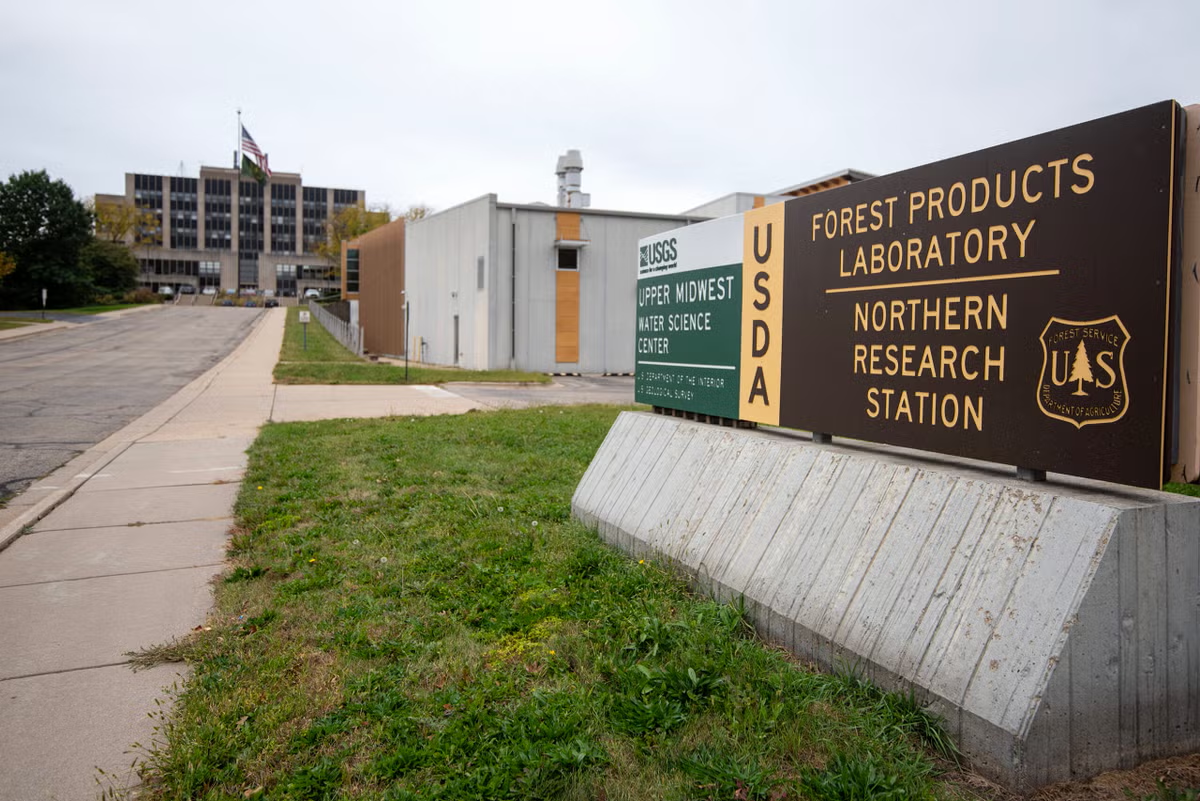
The USDA Forest Products Laboratory on Thursday, Oct. 16, 2025, in Madison, Wis. Angela Major/WPR

The Forest Service said a single research organization would speed up the use of science in forest management and reduce duplication. Strong told WPR’s “Wisconsin Today” it’s unclear what the move will mean for existing and long-term research projects.

“What I think we should be concerned about is what kind of pressure and stress this puts on employees and how they’re being treated as public servants,” Strong said.

Under the reorganization, the Forest Service said there will be no changes to firefighters or their positions. But the Trump administration is seeking to bring firefighting efforts under a single agency, which would affect thousands of employees if implemented.

Former U.S. Forest Service Chief Mike Dombeck served during the Clinton administration and lives in Wisconsin. He said he supports efforts to streamline the agency, noting past proposals to reorganize offices failed due to lacking support from congressional lawmakers.

Even so, he noted a similar attempt to move the Bureau of Land Management during Trump’s first term was later reversed. Dombeck said restructuring will likely cause the agency to lose more staff who choose not to uproot their families. He also fears the agency will lose ground on managing 193 million acres of national forests, climate change and wildland firefighting issues.

“I think this will be a real wake-up call to what the real values of national forests are,” Dombeck said. “We need to really ask this administration: what is the end game when we take a look at this level of chaos?”

Editor’s note: This story was updated with staffing figures on the Chequamegon-Nicolet National Forest from the U.S. Forest Service.

Wisconsin Public Radio, © Copyright 2026, Board of Regents of the University of Wisconsin System and Wisconsin Educational Communications Board.

The post Forest Service workers in Wisconsin may have to move after reorganization, union leader says appeared first on Great Lakes Now.

Original Article

Great Lakes Now

Great Lakes Now

https://www.greatlakesnow.org/2026/04/08/forest-service-workers-in-wisconsin-may-have-to-move-after-reorganization-union-leader-says/

Wisconsin Public Radio

The Trump administration plans to close four US Forest Service research facilities in Michigan, shifting scientists out of the state as it reorganizes and consolidates the agency.

Officials have not announced a closure date for the facilities, located in the Lower Peninsula communities of East Lansing and Wellston, between Manistee and Cadillac, and the Upper Peninsula communities of Houghton and L’Anse, saying changes will be implemented over the next year.

The Forest Service headquarters will also move from Washington, DC, to Salt Lake City in what Agriculture Secretary Brooke Rollins described as a measure to save money, boost logging and put workers “closer to the landscapes we manage.”

“Establishing a western headquarters in Salt Lake City and streamlining how the Forest Service is organized will position the Chief and operation leaders closer to the landscapes we manage and the people who depend on them,” Rollins said in a news release.

The announcement prompted dismay in Houghton, where workers with the US Forest Service Northern Research Station collaborate closely with researchers at Michigan Technological University and the Michigan Department of Natural Resources. A smaller group in L’Anse conducts forest inventories and analysis.

“It’s very disappointing,” said David Flaspohler, dean of the university’s College of Forest Resources and Environmental Science. “I understand priorities change from one administration to the next, and this administration is interested in increasing the volume of timber that is coming off of the national forests. To do that in a sustainable, safe way, you have to have people that are trained in the latest science and silviculture.”

Flaspohler estimated between 20 and 25 people work at the Houghton station, including scientists and other staff. The station has a “multidecadal history of partnerships” with researchers and foresters in the UP, he said. 

The heavily forested Upper Peninsula contains more than 8 million acres of forestland, split roughly evenly between private or locally owned timberland and state and federal forests.

Beyond conducting research that aims to keep northern forests healthy and productive, Flaspohler said, the lab is an important economic contributor to a region with scarce jobs.

“This lab with its many employees — who all had salaries and invested in the region just like any employed person does — that’s going to be lost.”

Two-thirds of facilities cut 

The Michigan facilities are part of a network of 57 nationwide. Nineteen will remain following the closures, with the Forest Service instead establishing regional hubs that serve multiple states. 

A Madison, Wisconsin, hub will serve Michigan, Illinois, Indiana, Iowa, Wisconsin, Minnesota and Missouri.

Michigan DNR spokesperson John Pepin said leaders in the state Forestry Resources Division are not yet sure how the changes will affect the state agency, which works closely with federal partners. 

“It’s pretty apparent that the details and individual impacts to a lot of programs are not worked out yet,” Pepin said. 

The biggest change appeared to be in Houghton, Pepin said. The facility houses the Northern Institute for Applied Climate Science, which Pepin said is relocating to Fort Collins, Colorado.

He said DNR and university officials in Michigan and other Great Lakes states “have worked closely” with the institute for many years assessing the climate vulnerability of forests, developing adaptation strategies and applying it to forest management.

It wasn’t clear whether layoffs would occur as part of the reorganization, but the administration’s announcement emphasized the reduction of “administrative duplication.”

“The Forest Service will provide employees and partners with detailed transition guidance as different milestones approach,” stated an agency release.

Agency spokespeople did not immediately respond to emailed questions from Bridge Michigan. 

Phone calls to Forest Service facilities in Houghton and Lansing were not answered. A person who picked up the phone in the Huron-Manistee National Forest, which includes the Wellston office, declined to comment. Bridge Michigan was unable to locate a phone number for the L’Anse facility.

While an agency press release described the move as a “structural reset and a common-sense approach to improve mission delivery,” some critics have described it as an effort to shrink the Forest Service and shift its mission away from protecting forests and toward logging and privatization.

Utah has been a frequent battleground for debates about public lands, from the fight over Bears Ears National Monument to a lawsuit by the state of Utah that aimed to take control of millions of acres of federal land and Utah Senator Mike Lee’s repeated efforts to sell off public land

“This reorganization will wreak havoc on the Forest Service management and organization, adding fuel to the unpopular narrative by officials like Senator Mike Lee that public lands should be sold off to private industry” said Josh Hicks, Conservation Campaigns Director at The Wilderness Society. “At a time when wildfires are getting worse, and access to public lands is already under strain, the last thing we need is an unnecessary reorganization.”

The post Trump administration plans closure of 4 Michigan forestry research centers appeared first on Great Lakes Now.

Original Article

Great Lakes Now

Great Lakes Now

https://www.greatlakesnow.org/2026/04/06/trump-administration-plans-closure-of-4-michigan-forestry-research-centers/

Bridge Michigan

After Trump cuts, Michigan helps pay for remainder of climate work program

By Izzy Ross, Interlochen Public Radio

This coverage is made possible through a partnership between Interlochen Public Radio and Grist, a nonprofit environmental media organization.

Lucas Roff met his then-girlfriend when he was going to college at Lake Superior State University in Sault Ste.

Read Now at Great Lakes Now.

Original Article

Great Lakes Now

Great Lakes Now

https://www.greatlakesnow.org/2025/06/after-trump-cuts-michigan-helps-pay-for-remainder-of-climate-work-program/

Interlochen Public Radio

A guide to the federal review of the Line 5 tunnel

By Izzy Ross, IPR and Teresa Homsi, WCMU

This coverage is made possible through a partnership between Interlochen Public Radio and Grist, a nonprofit environmental media organization.

The final day for the public to comment on a federal environmental review of the Line 5 tunnel is approaching on June 30.

Read Now at Great Lakes Now.

Original Article

Great Lakes Now

Great Lakes Now

https://www.greatlakesnow.org/2025/06/a-guide-to-the-federal-review-of-the-line-5-tunnel/

Interlochen Public Radio

Thunder Bay is bringing its Great Lake shoreline back

My first glimpse of Lake Superior, in all its lore-and-song-inspiring glory, is a blurry one from the backseat of a taxi driving through Thunder Bay. 

Superior, or Gitchigumi, which means Great Lake in Anishinaabemowin, is the largest of those lakes, and the second largest lake in the world, containing 10 per cent of the planet’s fresh surface water.

Read Now at Great Lakes Now.

Original Article

Great Lakes Now

Great Lakes Now

https://www.greatlakesnow.org/2025/05/thunder-bay-is-bringing-its-great-lake-shoreline-back/

Fatima Syed, The Narwhal

Conflict Over A Blockbuster Farm Chemical

Not since DDT was introduced to U.S. agriculture to kill insects after World War Two has a farm chemical been as important to American crop production, and come under more scientific, political, and legal scrutiny as the weedkiller Roundup, and its active ingredient, glyphosate.

With the election of President Donald Trump, the conflict over glyphosate’s risks and benefits entered a new realm of confrontation that has the potential to alter its stature as the favored chemical tool in agriculture, the largest user of fresh water in the blue economy of Michigan and the Great Lakes.

Read Now at Great Lakes Now.

Original Article

Great Lakes Now

Great Lakes Now

https://www.greatlakesnow.org/2025/05/conflict-over-a-blockbuster-farm-chemical/

Keith Schneider, Circle of Blue

Millions of People Depend on the Great Lakes’ Water Supply. Trump Decimated the Lab Protecting It.

By Anna Clark, ProPublica

This story was originally published by ProPublica.

Just one year ago, JD Vance was a leading advocate of the Great Lakes and the efforts to restore the largest system of freshwater on the face of the planet.

As a U.S.

Read Now at Great Lakes Now.

Original Article

Great Lakes Now

Great Lakes Now

https://www.greatlakesnow.org/2025/05/millions-of-people-depend-on-the-great-lakes-water-supply-trump-decimated-the-lab-protecting-it/

ProPublica

Sea lamprey control program receives OK to rehire federal workers, after initial scare

By Ellie Katz, Interlochen Public Radio

This article was republished with permission from Interlochen Public Radio.

The Great Lakes’ sea lamprey control program has the OK to rehire three dozen federal employees it needs to combat the eel-like, invasive fish species.

That’s after staffing cuts and hiring freezes from the Trump administration last month threatened the work, which the Great Lakes Fishery Commission said would have led to more than $200 million in lost fishing potential.

Read Now at Great Lakes Now.

Original Article

Great Lakes Now

Great Lakes Now

https://www.greatlakesnow.org/2025/03/sea-lamprey-control-program-receives-ok-to-rehire-federal-workers-after-initial-scare/

Interlochen Public Radio

What would the Great Lakes region be like with bullet trains?

A few months ago, I was riding on Amtrak’s new Borealis line from St. Paul, Minn., to Chicago. The train was packed that day, and the new line has proved popular.

My coach seat was much nicer than any airline. Plus, I didn’t have to go through security.

Read Now at Great Lakes Now.

Original Article

Great Lakes Now

Great Lakes Now

https://www.greatlakesnow.org/2025/03/what-would-the-great-lakes-region-be-like-with-bullet-trains/

Sean Ericson, Great Lakes Now

National parks see a record number of visitors, including in Wisconsin

By Danielle Kaeding, Wisconsin Public Radio

This article was republished here with permission from Wisconsin Public Radio.

Wisconsin saw more visitors at sites managed by the National Park Service last year, and America’s national parks had a record number of visitors.

News of the growing demand at the parks comes as the Trump administration has cut staff to manage them.

Read Now at Great Lakes Now.

Original Article

Great Lakes Now

Great Lakes Now

https://www.greatlakesnow.org/2025/03/national-parks-see-a-record-number-of-visitors-including-in-wisconsin/

Wisconsin Public Radio

How Trump’s trade war could impact US electricity prices — and state climate plans

By Zoya Teirstein

This story was originally published by Grist. Sign up for Grist’s weekly newsletter here.

On Tuesday, President Donald Trump initiated a trade war with Canada and Mexico, America’s two largest trading partners. Following through on weeks of threats, he imposed 25 percent tariffs on imported goods from Mexico and Canada and a lower 10 percent tariff on imports of Canadian energy resources.

Read Now at Great Lakes Now.

Original Article

Great Lakes Now

Great Lakes Now

https://www.greatlakesnow.org/2025/03/how-trumps-trade-war-could-impact-us-electricity-prices-and-state-climate-plans/

Grist

Will JD Vance save the Great Lakes from Trump?

By Izzy Ross and Juanpablo Ramirez-Franco

This coverage is made possible through a partnership between GristInterlochen Public Radio in Northern Michigan, and WBEZ, a public radio station serving the Chicago metropolitan region.

Read Now at Great Lakes Now.

Original Article

Great Lakes Now

Great Lakes Now

https://www.greatlakesnow.org/2025/02/will-jd-vance-save-the-great-lakes-from-trump/

Grist

What the recent tariff news means for the Great Lakes

President Donald Trump has made rethinking international trade policy a centerpiece of his second administration. While Congress generally has the authority to regulate international trade, it has also delegated some of this authority to the president. On Feb. 1, Trump announced he would be imposing 25% tariffs on imports from Canada and Mexico, with a 10% tariff on Canadian energy.

Read Now at Great Lakes Now.

Original Article

Great Lakes Now

Great Lakes Now

https://www.greatlakesnow.org/2025/02/what-the-recent-tariff-news-means-for-the-great-lakes/

Sean Ericson, Great Lakes Now

Tackling environmental racism in Chemical Valley

By Emma McIntosh, The Narwhal

The Great Lakes News Collaborative includes Bridge Michigan, Circle of Blue, Great Lakes Now at Detroit PBS, Michigan Public and The Narwhal who work together to bring audiences news and information about the impact of climate change, pollution, and aging infrastructure on the Great Lakes and drinking water.

Read Now at Great Lakes Now.

Original Article

Great Lakes Now

Great Lakes Now

https://www.greatlakesnow.org/2025/02/tackling-environmental-racism-in-chemical-valley/

The Narwhal

Trump tries to block EV charger money — again. Michigan impact ‘clear as mud’

By Kelly House, Bridge Michigan

The Great Lakes News Collaborative includes Bridge Michigan; Circle of Blue; Great Lakes Now at Detroit PBS; Michigan Public, Michigan’s NPR News Leader; and The Narwhal who work together to bring audiences news and information about the impact of climate change, pollution, and aging infrastructure on the Great Lakes and drinking water.

Read Now at Great Lakes Now.

Original Article

Great Lakes Now

Great Lakes Now

https://www.greatlakesnow.org/2025/02/trump-tries-to-block-ev-charger-money-again-michigan-impact-clear-as-mud/

Bridge Michigan

Iced out? Research on the Great Lakes goes ahead amid funding chaos.

By Izzy Ross, Grist

This coverage is made possible through a partnership with Grist and Interlochen Public Radio in Northern Michigan.

The chaos surrounding the future of scientific research in the Trump administration’s first weeks has meant a bumpy beginning for a new program where ice fishing anglers and others on the frozen Great Lakes record ice thickness for research.

Read Now at Great Lakes Now.

Original Article

Great Lakes Now

Great Lakes Now

https://www.greatlakesnow.org/2025/02/iced-out-research-on-the-great-lakes-goes-ahead-amid-funding-chaos/

Grist

Life on the frontlines of Ontario’s critical mineral boom

By Emma McIntosh, The Narwhal

Photography by Christopher Katsarov Luna

The Great Lakes News Collaborative includes Bridge Michigan, Circle of Blue, Great Lakes Now at Detroit PBS, Michigan Public and The Narwhal who work together to bring audiences news and information about the impact of climate change, pollution, and aging infrastructure on the Great Lakes and drinking water.

Read Now at Great Lakes Now.

Original Article

Great Lakes Now

Great Lakes Now

https://www.greatlakesnow.org/2025/01/life-on-the-frontlines-of-ontarios-critical-mineral-boom/

The Narwhal

He’ll try, but Trump can’t stop the clean energy revolution

By Matt Simon

This story was originally published by Grist. Sign up for Grist’s weekly newsletter here.

During his first time around as president, Donald Trump rolled back a bevy of environmental rules, withdrew from the Paris Agreement, and boosted the fossil fuel industry.

Read Now at Great Lakes Now.

Original Article

Great Lakes Now

Great Lakes Now

https://www.greatlakesnow.org/2024/11/hell-try-but-trump-cant-stop-the-clean-energy-revolution/

Grist

What Trump can do to reverse US climate policy − and what he probably can’t change

By Gautam Jain, Columbia University

 is an independent and nonprofit source of news, analysis and commentary from academic experts.

As the U.S. prepares for another Trump administration, one area unambiguously in the incoming president’s crosshairs is climate policy.

Although he has not released an official climate agenda, Donald Trump’s playbook from his last stint in the Oval Office and his frequent complaints about clean energy offer some clues to what’s ahead.

Read Now at Great Lakes Now.

Original Article

Great Lakes Now

Great Lakes Now

https://www.greatlakesnow.org/2024/11/trump-climate-policy-impact/

The Conversation

4 things to know about a youth-led court case against Ontario’s climate plans

By Fatima Syed, The Narwhal

The Great Lakes News Collaborative includes Bridge Michigan, Circle of Blue, Great Lakes Now at Detroit PBS, Michigan Public and The Narwhal who work together to bring audiences news and information about the impact of climate change, pollution, and aging infrastructure on the Great Lakes and drinking water.

Read Now at Great Lakes Now.

Original Article

Great Lakes Now

Great Lakes Now

https://www.greatlakesnow.org/2024/11/4-things-to-know-about-a-youth-led-court-case-against-ontarios-climate-plans/

The Narwhal

Trump Wins, Planet Loses

By Tik Root, Grist

This story was originally published by Grist. Sign up for Grist’s weekly newsletter here.

Donald J. Trump will once again be president of the United States.

The Associated Press called the race for Trump early Wednesday morning, ending one of the costliest and most turbulent campaign cycles in the nation’s history.

Read Now at Great Lakes Now.

Original Article

Great Lakes Now

Great Lakes Now

https://www.greatlakesnow.org/2024/11/trump-wins-planet-loses/

Grist

Public hearing draws on big questions about Upper Peninsula copper mining

By Izzy Ross, Interlochen Public Radio

This coverage is made possible through a partnership with IPR and Grist, a nonprofit independent media organization dedicated to telling stories of climate solutions and a just future.

In Gogebic County, on the western end of Michigan’s Upper Peninsula, towering old-growth evergreens carpet the landscape as it rolls down toward the deep blue of Lake Superior.

Read Now at Great Lakes Now.

Original Article

Great Lakes Now

Great Lakes Now

https://www.greatlakesnow.org/2024/11/public-hearing-draws-on-big-questions-about-upper-peninsula-copper-mining/

Interlochen Public Radio

The race for clean energy is local

By Emily Jones and Gautama Mehta, Grist

This story was originally published by Grist. Sign up for Grist’s weekly newsletter here.

The U.S. power grid is at a critical crossroads. Electricity generation, like every other industry, needs to rid itself of fossil fuels if the country is to play its role in combating the climate crisis — a transition that will have to happen even as energy providers scramble to meet what they claim is an unprecedented spike in electricity demand, attributed to the rise of AI.

Read Now at Great Lakes Now.

Original Article

Great Lakes Now

Great Lakes Now

https://www.greatlakesnow.org/2024/11/the-race-for-clean-energy-is-local/

Grist

2024 Election: State and Local Voters Consider Tax Increases for Water Protection

By Brett Walton, Circle of Blue

The Great Lakes News Collaborative includes Bridge Michigan; Circle of Blue; Great Lakes Now at Detroit Public Television; Michigan Public, Michigan’s NPR News Leader; and The Narwhal who work together to bring audiences news and information about the impact of climate change, pollution, and aging infrastructure on the Great Lakes and drinking water.

Read Now at Great Lakes Now.

Original Article

Great Lakes Now

Great Lakes Now

https://www.greatlakesnow.org/2024/10/election-state-and-local-voters-consider-tax-increases-for-water-protection/

Circle of Blue

Climate change isn’t a top issue in this election. Some Wisconsin voters say it should be.

By Danielle Kaeding, Wisconsin Public Radio

This article was republished here with permission from Wisconsin Public Radio.

Outside a September rally with Minnesota Gov. Tim Walz at the University of Wisconsin-Superior, Ashland business owner and Democrat Will Pipkin set up signs with a cavalcade of slogans, including “Another cat lady for democracy” and “Without a healthy climate, there’s no freedom.”

Pipkin said he’s backing Vice President Kamala Harris and Walz in the presidential race because they’re the most progressive choice, and he thinks they would continue President Joe Biden’s work on green initiatives and climate change.

Read Now at Great Lakes Now.

Original Article

Great Lakes Now

Great Lakes Now

https://www.greatlakesnow.org/2024/10/climate-change-isnt-a-top-issue-in-this-election-some-wisconsin-voters-say-it-should-be/

Wisconsin Public Radio

The climate stakes of the Harris-Trump election

This story was originally published by Grist. Sign up for Grist’s weekly newsletter here.

Helene and Milton, the two massive hurricanes that just swept into the country — killing hundreds of people, and leaving both devastation and rumblings of political upheaval in seven states — amounted to their own October surprise.

Read Now at Great Lakes Now.

Original Article

Great Lakes Now

Great Lakes Now

https://www.greatlakesnow.org/2024/10/the-climate-stakes-of-the-harris-trump-election/

Grist

Virtual Town Hall: What does the election mean for Great Lakes climate and environment?

Great Lakes Now, Ideastream Public Media, Native News Online, Planet Detroit, Wisconsin Public Radio, and Grist held a discussion last week about the national, regional and statewide climate implications of the upcoming election.

Great Lakes Now Host Anna Sysling moderated a panel of journalists as they spoke about the big topics they are covering and thinking about in advance of voting day.

Read Now at Great Lakes Now.

Original Article

Great Lakes Now

Great Lakes Now

https://www.greatlakesnow.org/2024/10/virtual-town-hall-what-does-election-mean-for-great-lakes-climate-and-environment/

Great Lakes Now

Michigan a top winner of climate funds Trump wants to revoke

By Kelly House, Bridge Michigan

The Great Lakes News Collaborative includes Bridge Michigan; Circle of Blue; Great Lakes Now at Detroit Public Television; Michigan Public, Michigan’s NPR News Leader; and The Narwhal who work together to bring audiences news and information about the impact of climate change, pollution, and aging infrastructure on the Great Lakes and drinking water.

Read Now at Great Lakes Now.

Original Article

Great Lakes Now

Great Lakes Now

https://www.greatlakesnow.org/2024/10/michigan-a-top-winner-of-climate-funds-trump-wants-to-revoke/

Bridge Michigan

Environmental groups and industry at odds over plan to conserve old-growth forests

By Danielle Kaeding, Wisconsin Public Radio

This article was republished here with permission from Wisconsin Public Radio.

Some Wisconsin groups are urging the Biden administration to do more to protect mature and old-growth forests under its proposal to conserve those trees as logging interests are pushing back against changes.

Read Now at Great Lakes Now.

Original Article

Great Lakes Now

Great Lakes Now

https://www.greatlakesnow.org/2024/10/environmental-groups-and-industry-at-odds-over-plan-to-conserve-old-growth-forests/

Wisconsin Public Radio

Missed calls, forgotten instructions: Inside an oil spill cleanup on Toronto waterways

By Emma McIntosh, The Narwhal

The Great Lakes News Collaborative includes Bridge Michigan; Circle of Blue; Great Lakes Now at Detroit Public Television; Michigan Public, Michigan’s NPR News Leader; and The Narwhal who work together to bring audiences news and information about the impact of climate change, pollution, and aging infrastructure on the Great Lakes and drinking water.

Read Now at Great Lakes Now.

Original Article

Great Lakes Now

Great Lakes Now

https://www.greatlakesnow.org/2024/08/missed-calls-forgotten-instructions-inside-an-oil-spill-cleanup-on-toronto-waterways/

The Narwhal

‘Containment breached’: How an oil spill in northwest Toronto made its way to Lake Ontario

By Emma McIntosh, The Narwhal

The Great Lakes News Collaborative includes Bridge Michigan; Circle of Blue; Great Lakes Now at Detroit Public Television; Michigan Public, Michigan’s NPR News Leader; and The Narwhal who work together to bring audiences news and information about the impact of climate change, pollution, and aging infrastructure on the Great Lakes and drinking water.

Read Now at Great Lakes Now.

Original Article

Great Lakes Now

Great Lakes Now

https://www.greatlakesnow.org/2024/07/containment-breached-how-an-oil-spill-in-northwest-toronto-made-its-way-to-lake-ontario/

The Narwhal

EPA head Regan defends $20B green bank: ‘I feel really good about this program’

By Matthew Daly, Associated Press

PHILADELPHIA (AP) — The head of the Environmental Protection Agency on Friday defended a new $20 billion federal “green bank” program, saying it will finance a variety of projects to create low-carbon solutions to combat climate change, including in disadvantaged communities that are most affected by pollution.

Read Now at Great Lakes Now.

Original Article

Great Lakes Now

Great Lakes Now

https://www.greatlakesnow.org/2024/04/epa-head-regan-defends-20b-green-bank-i-feel-really-good-about-this-program/

The Associated Press

‘You start with us’: Conservation authority head has parting message for Ontario government

By Fatima Syed, The Narwhal

The Great Lakes News Collaborative includes Bridge Michigan; Circle of Blue; Great Lakes Now at Detroit Public Television; Michigan Public, Michigan’s NPR News Leader; and The Narwhal who work together to bring audiences news and information about the impact of climate change, pollution, and aging infrastructure on the Great Lakes and drinking water.

Read Now at Great Lakes Now.

Original Article

Great Lakes Now

Great Lakes Now

https://www.greatlakesnow.org/2024/04/you-start-with-us-conservation-authority-head-has-parting-message-for-ontario-government/

The Narwhal

Ontario weakens watershed protections (again) as natural resources minister gets new powers

By Fatima Syed, The Narwhal

The Great Lakes News Collaborative includes Bridge Michigan; Circle of Blue; Great Lakes Now at Detroit Public Television; Michigan Public, Michigan’s NPR News Leader; and The Narwhal who work together to bring audiences news and information about the impact of climate change, pollution, and aging infrastructure on the Great Lakes and drinking water.

Read Now at Great Lakes Now.

Original Article

Great Lakes Now

Great Lakes Now

https://www.greatlakesnow.org/2024/03/ontario-weakens-watershed-protections-again-as-natural-resources-minister-gets-new-powers/

The Narwhal

Harris announces $5.8 billion for water infrastructure projects, says clean water is a right

WASHINGTON (AP) — The Biden administration announced Tuesday that states will share $5.8 billion in federal funds for water infrastructure projects around the country, paid for by one of its key legislative victories.

The new round of funding will help pay for projects nationwide, bringing the total awarded to states for water infrastructure improvements to $22 billion.

Read Now at Great Lakes Now.

Original Article

Great Lakes Now

Great Lakes Now

https://www.greatlakesnow.org/2024/02/ap-harris-announces-5-8-billion-for-water-infrastructure-projects-says-clean-water-a-right/

The Associated Press

The Supreme Court wrestles with major challenges to the power of federal regulators

By Mark Sherman, Associated Press

WASHINGTON (AP) — Conservative Supreme Court justices on Wednesday voiced support for weakening the power of federal regulators, but it was not clear whether a majority would overturn a precedent that has guided American law for four decades over everything from the safety of food and drugs to environmental protection.

Read Now at Great Lakes Now.

Original Article

Great Lakes Now

Great Lakes Now

https://www.greatlakesnow.org/2024/01/ap-supreme-court-wrestles-with-major-challenges-to-power-of-federal-regulators/

The Associated Press

Biden administration moves to protect old-growth forests as climate change brings fires, pests

By Matthew Brown, Associated Press

BILLINGS, Mont. (AP) — The Biden administration moved on Tuesday to conserve groves of old-growth trees on national forests across the U.S. and limit logging as climate change amplifies the threats they face from wildfires, insects and disease.

Agriculture Secretary Tom Vilsack said the agency was adopting an “ecologically-driven” approach to older forests — an arena where timber industry interests have historically predominated.

Read Now at Great Lakes Now.

Original Article

Great Lakes Now

Great Lakes Now

https://www.greatlakesnow.org/2023/12/ap-biden-administration-moves-to-protect-old-growth-forests-as-climate-change-brings-fires-pests/

The Associated Press

Enbridge: Federal review of Line 5 tunnel permit is ‘inexplicably lethargic’

By Kelly House, Bridge Michigan

The Great Lakes News Collaborative includes Bridge Michigan; Circle of Blue; Great Lakes Now at Detroit Public Television; and Michigan Radio, Michigan’s NPR News Leader; who work together to bring audiences news and information about the impact of climate change, pollution, and aging infrastructure on the Great Lakes and drinking water.

Read Now at Great Lakes Now.

Original Article

Great Lakes Now

Great Lakes Now

https://www.greatlakesnow.org/2023/10/enbridge-federal-review-of-line-5-tunnel-permit-is-inexplicably-lethargic/

Bridge Michigan

Great Lakes Moment: University of Windsor to build capacity for Canada’s national urban parks

Eighty percent of Canadians live in urban areas, and most are disconnected from nature. To help address this, Canada is creating a network of national urban parks not only to conserve nature, but to connect people with it, and advance reconciliation with Indigenous peoples.

Now, the University of Windsor has become a partner by creating the first university-based National Urban Park Hub.

Read Now at Great Lakes Now.

Original Article

Great Lakes Now

Great Lakes Now

https://www.greatlakesnow.org/2023/09/great-lakes-moment-university-windsor-build-capacity-canada-national-urban-parks/

John Hartig

New federal money is the start of an effort to make Great Lakes coasts more resilient

By Lester Graham, Michigan Radio

The Great Lakes News Collaborative includes Bridge Michigan; Circle of Blue; Great Lakes Now at Detroit Public Television; and Michigan Radio, Michigan’s NPR News Leader; who work together to bring audiences news and information about the impact of climate change, pollution, and aging infrastructure on the Great Lakes and drinking water.

Read Now at Great Lakes Now.

Original Article

Great Lakes Now

Great Lakes Now

https://www.greatlakesnow.org/2023/08/new-federal-money-start-effort-make-great-lakes-coasts-more-resilient/

Michigan Radio

Amendment to Clean Water Act improves Great Lakes through critical observation, collaboration

From fishing to enjoying a summer day at the beach, the Great Lakes provide enjoyment, comfort and a sense of home to the region. But these bodies of water were not always secure, as the lakes and connecting rivers were considered dangerous due to high pollution spots. 

The Great Lakes region has seen some of the most historic river fires.

Read Now at Great Lakes Now.

Original Article

Great Lakes Now

Great Lakes Now

https://www.greatlakesnow.org/2023/08/amendment-to-clean-water-act-improves-great-lakes-through-critical-observation-collaboration/

Jada Vasser

What are wetlands for, anyway?

On May 25, the Supreme Court ruled 9 to 0, changing wetland protection in The Clean Water Act. The Sackett family, who took on the Environmental Protection Agency (EPA), were being fined $40,000 a day for building their Idaho property too close to an unnamed tributary. That tributary feeds into a creek, and that creek feeds into Priest Lake.

Read Now at Great Lakes Now.

Original Article

Great Lakes Now

Great Lakes Now

https://www.greatlakesnow.org/2023/07/what-are-wetlands-for-anyway/

Lisa John Rogers

It isn’t arson: untangling climate misinformation around Canada’s raging wildfires

By Drew Anderson and Fatima Syed, The Narwhal

This story originally appeared in The Narwhal and is republished here as part of Covering Climate Now, a global journalism collaboration strengthening coverage of the climate story.

Space lasers. That’s the reason some people gave for the catastrophic burning of Lytton, B.C., in 2021 after a historic heat wave set a new temperature record in Canada, exacerbating a wildfire that essentially destroyed the town.

Read Now at Great Lakes Now.

Original Article

Great Lakes Now

Great Lakes Now

https://www.greatlakesnow.org/2023/06/it-isnt-arson-untangling-climate-misinformation-around-canadas-raging-wildfires/

The Narwhal

What does the Supreme Court’s wetland ruling mean for Michigan?

This article was republished here with permission from Planet Detroit.

By Brian Allnutt, Planet Detroit

The Supreme Court’s recent ruling to significantly reduce Clean Water Act wetlands protections has caused alarm among environmental advocates who fear it will endanger crucial habitats and human health and safety.

Read Now at Great Lakes Now.

Original Article

Great Lakes Now

Great Lakes Now

https://www.greatlakesnow.org/2023/06/what-does-the-supreme-courts-wetland-ruling-mean-for-michigan/

Planet Detroit

The Endangered Species Act turns 50: Congress is working to weaken it

By Lester Graham, Michigan Radio

The Great Lakes News Collaborative includes Bridge Michigan; Circle of Blue; Great Lakes Now at Detroit Public Television; and Michigan Radio, Michigan’s NPR News Leader; who work together to bring audiences news and information about the impact of climate change, pollution, and aging infrastructure on the Great Lakes and drinking water.

Read Now at Great Lakes Now.

Original Article

Great Lakes Now

Great Lakes Now

https://www.greatlakesnow.org/2023/06/endangered-species-act-turns-50-congress-working-weaken-it/

Michigan Radio

Former U.N. adviser warns on water futures trading, elevates water crisis to level of climate

There were two differing visions on how to deal with the global water crisis at the recent United Nations World Water Conference, according to former U.N. water adviser Maude Barlow.

One, would “treat water as a commodity like oil and gas and put it on the open market for sale,” Barlow said.

Read Now at Great Lakes Now.

Original Article

Great Lakes Now

Great Lakes Now

https://www.greatlakesnow.org/2023/04/former-adviser-warns-water-futures-trading-water-crisis-level-climate/

Gary Wilson

Great Lakes Take Global Stage

By Brett Walton, Circle of Blue

The Great Lakes News Collaborative includes Bridge Michigan; Circle of Blue; Great Lakes Now at Detroit Public Television; and Michigan Radio, Michigan’s NPR News Leader; who work together to bring audiences news and information about the impact of climate change, pollution, and aging infrastructure on the Great Lakes and drinking water.

Read Now at Great Lakes Now.

Original Article

Great Lakes Now

Great Lakes Now

https://www.greatlakesnow.org/2023/04/great-lakes-take-global-stage/

Circle of Blue

Enbridge Line 5 tunnel project in Michigan delayed another 1.5 years

By Kelly House, Bridge Michigan

The Great Lakes News Collaborative includes Bridge Michigan; Circle of Blue; Great Lakes Now at Detroit Public Television; and Michigan Radio, Michigan’s NPR News Leader; who work together to bring audiences news and information about the impact of climate change, pollution, and aging infrastructure on the Great Lakes and drinking water.

Read Now at Great Lakes Now.

Original Article

Great Lakes Now

Great Lakes Now

https://www.greatlakesnow.org/2023/03/enbridge-line-5-tunnel-project-michigan-delayed/

Bridge Michigan