By James Bruggers, Inside Climate News

This article originally appeared on Inside Climate News, a nonprofit, non-partisan news organization that covers climate, energy and the environment. Sign up for their newsletter here.


Belching smoke from a new plastic waste processing plant in central Ohio has stirred opposition to an even larger “chemical recycling” factory planned for Arizona by the same company.

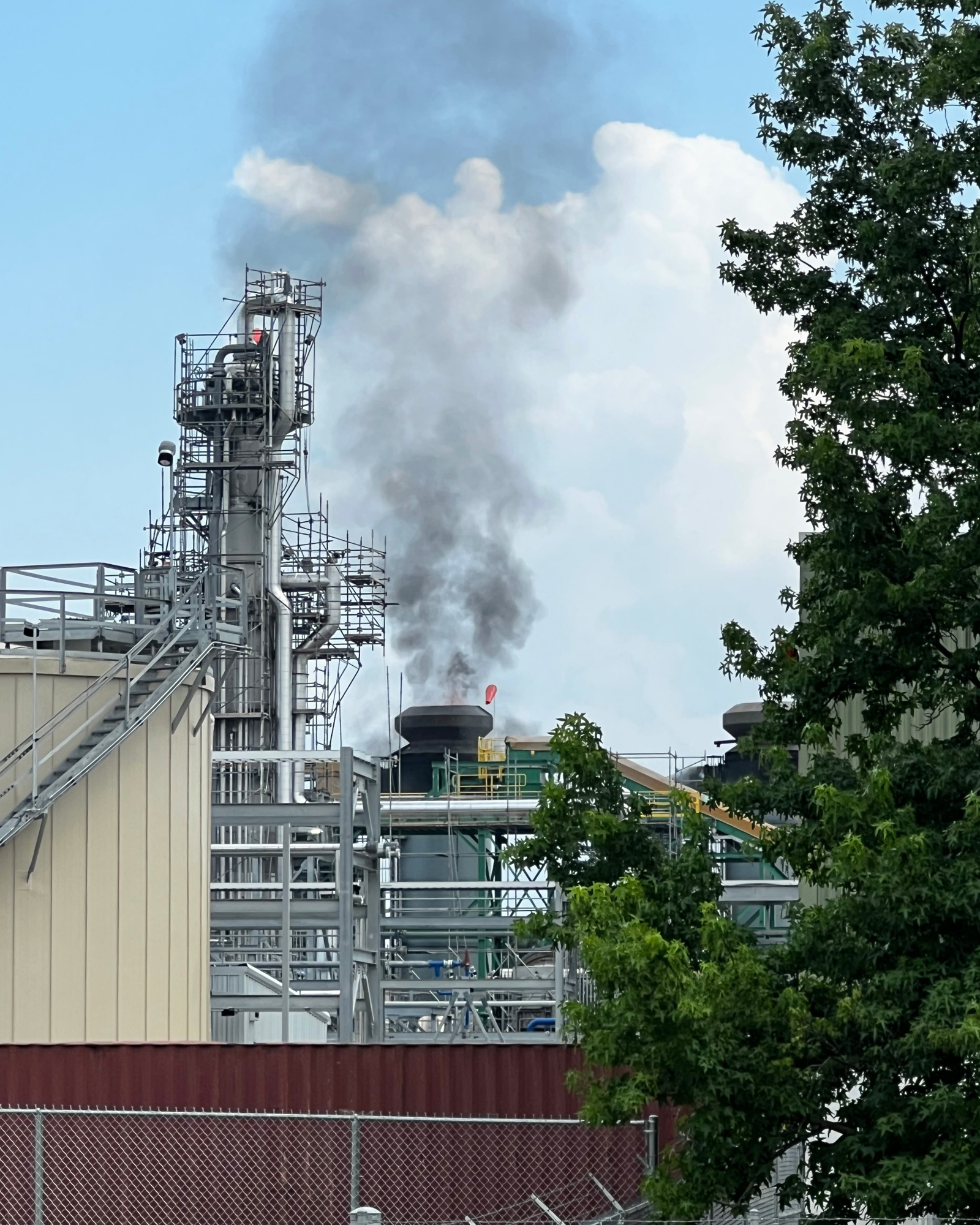
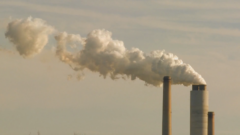
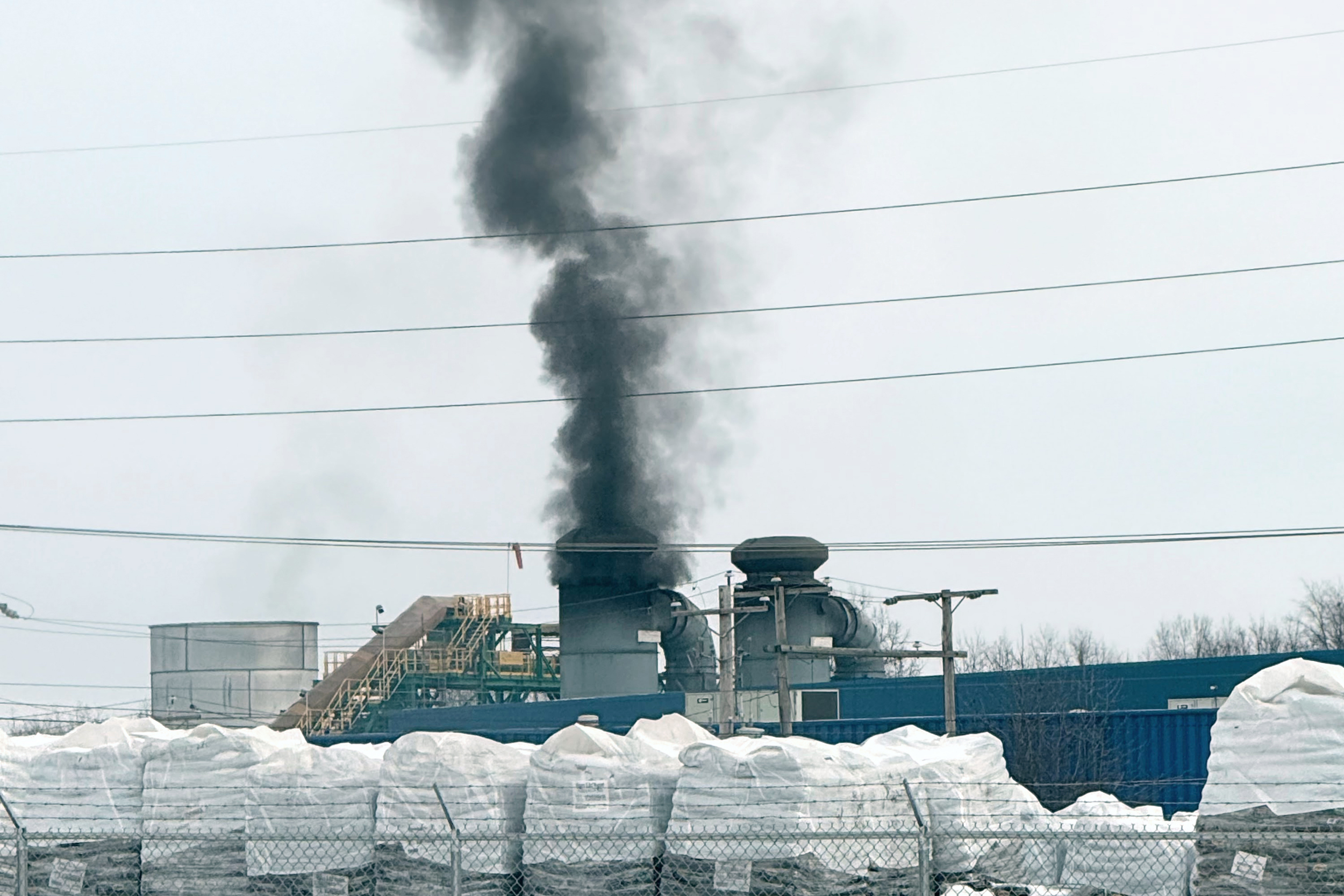
The Freepoint Eco-Systems plant near Hebron, Ohio, fired up its processing kilns for the first time in 2024. Since then, it’s faced multiple citizen complaints about sooty emissions, from black clouds of smoke to flames. Dozens of times, plant operators have bypassed normal pollution controls to vent gases through a flare after upsets in their manufacturing processes, including emergency shutdowns, according to the Ohio Environmental Protection Agency.

The state regulator has issued four notices of violation to the company, according to an agency database, and launched an enforcement case after the latest one in December.  

The Ohio plant’s troubled track record should be a red flag to officials who oversee permitting for the company’s plans for Eloy, Arizona, about 60 miles south of Phoenix on Interstate 10, said Kevin Greene, a pollution-prevention expert who lives in nearby Tucson and retired from the Illinois Environmental Protection Agency.

Another warning should be the industry’s “troubling” underperformance when attempting to use chemical processes to turn mixed plastic waste into fuels or new plastic feedstocks, said Greene. 

“How about a six-month pause on this project while they investigate what’s going on in Hebron and take another look at the industry in general?” Greene suggested in an interview with Inside Climate News.

At least one Eloy city councilmember, Josephine “JoAnne” Galindo, said she’s concerned enough to want to be part of a potential Eloy delegation to visit Ohio, tour the Freepoint plant there and meet with local government and company officials.

“I would want to know more,” Galindo said. “I’m always concerned about the safety of my community.”

Freepoint officials declined a request for an interview on either their Ohio plant’s environmental performance or their proposed Arizona facility. 

In a written statement, the company said it has “invited officials from Arizona to tour our Ohio facility to see the sophistication of our operations and the scale of the plastic waste we are working to process. We’re currently scheduling this visit.”

In Ohio, the company is working with environmental and occupational safety and health officials and the local fire department “to ensure compliance with health, safety and environmental requirements,” the statement said. Freepoint officials, the statement added, “have implemented a number of operational improvements.”

In February, at public meetings in Arizona, a Freepoint representative put a positive spin on the situation.

“You get the benefit of being the second mover,” Geof Storey, the company’s chief development officer, told the Pinal County Board of Supervisors. “We are only going to build this one if the first one works. You are going to get all [the] learnings and all the benefits of that [Ohio] project.”

To the Eloy City Council the same week, he added, “We are still working out some of the kinks.”

The Ohio plant, located about 30 miles east of Columbus near Interstate 70, is designed to process up to 175 million pounds of plastic waste annually. The waste is sourced from plastic packaging companies and community recycling programs throughout the region, including as far away as Louisville, Kentucky. 

Freepoint Eco-Systems, a subsidiary of global trading and finance firm Freepoint Commodities, envisions at least a half-dozen facilities in the United States, Storey told Arizona officials. The Eloy facility would collect waste plastic from as far away as California and Colorado, as well as from Phoenix and Tucson, he added. A company PowerPoint presentation said its capacity would be more than twice the Ohio plant’s.

That would make the Eloy plant one of the largest in the world, said Rita O’Connell, a national organizer with the environmental group Beyond Plastics. But O’Connell also noted that the company’s PowerPoint contains a disclaimer that “there can be no assurances that information relied upon in preparing this presentation will prove accurate or any of the projections will be realized.”

The Freepoint Eco-Systems Hebron chemical recycling plant is seen in July 2025. Photo: Courtesy of Shawn Jones via Inside Climate News

Deregulatory Agenda Boosts Chemical Recycling

Industry officials have advocated for chemical recycling of plastics for years—often under the umbrella term of “advanced recycling”—as a solution to the global plastic waste crisis. 

Typically, that’s done with a technology called pyrolysis, the process of decomposing materials at very high temperatures in an oxygen-free environment. Traditional uses range from making tar from timber for wooden ships to transforming coal into coke for steelmaking.

More recently, major oil companies and small startups alike have sought to develop the technology as an alternative for recycling a wide variety of plastic waste. So far, they’ve been met with limited success and serious pushback from environmental groups viewing it as akin to incineration.

But one of the biggest criticisms is the paucity of plastic waste that pyrolysis actually turns into new plastic. 

For example, a 2024 lawsuit by California Attorney General Rob Bonta—against ExxonMobil’s pyrolysis-based chemical recycling operation at its Baytown complex near Houston—claimed decades of recycling deception contributed to a plastics crisis in California and around the world. In the lawsuit, which is still pending, Bonta asserted that no more than 8 percent of the incoming plastic waste to ExxonMobil’s plant is converted to feedstocks for new plastic. 

The lawsuit claimed the remaining waste becomes fuel, which is subsequently burned. 

After the lawsuit was filed, ExxonMobil responded that “advanced recycling works. To date, we’ve processed more than 60 million pounds of plastic waste into usable raw materials, keeping it out of landfills.”

The United Nations estimates that the world produces roughly 882 billion pounds of plastic waste each year.

Freepoint, which also uses pyrolysis, declined to say how much of the waste plastic it takes in becomes new plastic.

Storey told Arizona officials its plants divert waste from landfills and offset in-the-ground oil demand. 

Company officials said 70 percent of incoming plastic waste is converted into something called pyrolysis oil, or pyoil, which is used as a feedstock to create new products. About 25 percent is converted into gas used to heat the kilns. The rest becomes something called char, what Storey described as “black carbon.”

Storey said the pyoil gets sent to petrochemical customers on the Gulf Coast. There, company officials said, it serves as a “substitute for crude oil to create new plastics and other products.”

“What products our customers manufacture and where they distribute them,” the company said, “is up to our customers.”

The chemical industry has already worked to ease regulations on advanced recycling in dozens of states, including Arizona and Ohio. And in March, after groups of chemical and plastics industry lobbyists visited the U.S. Environmental Protection Agency’s headquarters, the EPA took an initial step to exempt pyrolysis from federal Clean Air Act regulations.

Beyond Plastics’ O’Connell, who is based in New Mexico, said the chemical industry seems to have accelerated its push for chemical recycling as the Trump administration rolls back a wide range of environmental rules. At least three recycling and chemical regulation bills pending in Congress aim to boost chemical recycling of plastic waste, she said.

Fewer than 10 chemical recycling plants are operating in the United States, often in a limited capacity, said O’Connell, whose group follows the industry’s performance.

But Oil and Gas Watch, a petrochemical tracker created by the Environmental Integrity Project, identifies about 40 potential new chemical recycling facilities in the works. Some are proposed, some are in the permitting process and some are approved for construction.

“Given the national atmosphere, it’s possible we’re about to see the lights go on on a bunch of these proposals that haven’t moved in a while, because there seems to be a lot of energy in this direction,” O’Connell said. “It all points to a huge industry push to leverage this Congress and EPA to get chemical recycling rolling nationally.”

Children play in Hebron’s Evans Park with black smoke emitting from a nearby chemical recycling plant about a mile and a half away in July 2025. Photo: Courtesy of Shawn Jones via Inside Climate News

Ohio EPA Opens an Enforcement Case

It was a little more than a year ago when Amanda Rowoldt, an Ohio organizer with the environmental group Moms Clean Air Force, was driving by the Freepoint facility near Hebron and saw black smoke billowing out of the stacks. She took a video and filed a complaint with the Ohio EPA.

“Long story short, they were found in violation of exceeding their particulate limits,” Rowoldt.

Numerous pollution incidents followed. A local nonprofit newsroom covering Licking County, The Reporting Project, affiliated with Denison University’s journalism program, took notice.

Denison is a small private liberal arts college located about 10 miles away in Granville. Doug Swift, who teaches at Denison and is an advisor of The Reporting Project, said a plastics recycling theme in an investigative reporting track resulted in a series of articles. 

One of the stories, published Feb. 26, revealed the citizen complaints, the state’s violation notices and a 911 call last May from a resident a quarter-mile away reporting “a factory on fire.”

“It was a great series to push out into the community, and it did alert some of our most engaged and knowledgeable citizens to the plant and to a technology most didn’t know anything about,” Swift said. He described the Hebron area as something of a local news desert, often ignored by commercial news outlets in the region.

Hebron Mayor Valerie Mockus said her municipality has no jurisdiction over the plant because it’s located just outside city limits, in an industrial park in Union Township. Still, she said she’s been concerned about environmental incidents there, though she is working to keep an open mind.

“I am very interested in finding ways to address problems with novel solutions,” Mockus said. “We have a problem with too much plastic. Is this a way to address that? But I was disappointed to hear about the negative side effects.”

She described her community as working class, its residents familiar with plumes of evaporated vapor coming from industrial stacks. “When it comes out black,” she added, “everybody pauses.”

According to the company’s air-quality permit from the Ohio EPA, the plant is allowed to emit certain levels of toxic fine particles, volatile organic compounds, nitrogen oxides, hydrochloric acid, and dioxins—pollutants that collectively can damage lungs, cause cancer and create havoc with other bodily systems.

Ohio EPA’s most recent notice in mid-December alleges air-permit violations including excess emissions of particulates, a toxic mix that can include soot, smoke and a variety of chemicals. Since then, the agency has opened an enforcement case against the company, said Max Moore, a spokesman for the Ohio EPA.

The state agency required the company to conduct emissions testing to get a clearer picture of what’s being released into the air, Moore said. Visible particulate emissions exceeded an opacity limit 18 times from Feb. 1 through March 31, he said. Nitrogen oxides from a test in February also exceeded a permit limit, he added.

On April 3, an Ohio EPA official chastised Freepoint for repeatedly failing to quickly notify the agency of plant malfunctions, according to an email that Inside Climate News obtained through a public-records request.

“This issue has been beaten to death at this point, but we still are not receiving immediate notifications of malfunctions,” the state official wrote, citing an example of a late afternoon March 30 notice to regulators of an early morning March 27 malfunction. 

“If it helps, think of it like calling the fire department when there’s a fire,” the official told the company representatives. “That’s immediate. You wouldn’t wait eight hours or until the next day.”

A company representative said that afterward, “we promptly changed our reporting process to ensure it’s in line with their requirements.”

The Ohio EPA’s Moore said the goal “is to get the facility back into compliance.”

Pollution and Fire Videos

Cat Adams, a Columbus-based organizer with the Buckeye Environmental Network, said several workers have sought her out to describe unsafe working conditions, including dust, chemical spills and fire hazards. She hears from area residents about the plant, too.

“There’s a group of people in the community who are worried about it, and they want something done,” Adams said.

Shawn Jones is one of them. He was an eyewitness to the May 27 fire and took a video of it. In subsequent months, he’s kept a close eye, documenting other incidents of billowing smoke. “I’ve probably seen that 15 times,” Jones said, adding that he’s concerned about the health and safety of both people in the community and workers inside the plant.

He said he’s not sure what, if anything, Ohio EPA officials will do to force the company to comply with environmental regulations.

“I’d like them to shut the whole place down,” Jones said. “It’s such a new process. They clearly don’t have it figured out yet.”

He said it feels like Freepoint is “doing sandbox experiments in the backyards of thousands of people. They can, because of the lack of zoning here.”

In Arizona, Greene, the former Illinois environmental official, said he and an Eloy resident, Ralph Atchue, are asking Pinal County air quality officials to strengthen a permit they issued the company three years ago. The reason they’re citing: the company’s pollution record in Ohio. 

Greene also suggests that the city of Eloy should ask for fenceline air-quality monitoring to give the community real-time data on any leaks and equipment failures.

Noting that the company has essentially described its Ohio plant as a test case, Greene added: “I’d like to know what’s going to be redesigned [for Eloy], or what’s going to be improved. But I also want to make sure there will be the appropriate safeguards in place to ensure that it doesn’t happen in Eloy—and that it doesn’t recur in Hebron.”


The post Ohio Plastic Waste Plant to Expand Nationally appeared first on Great Lakes Now.
Original Article

Great Lakes Now

Great Lakes Now

https://www.greatlakesnow.org/2026/04/24/ohio-plastic-waste-plant-to-expand-nationally/
Inside Climate News

Catch the latest energy news from around the region. Check back for these monthly Energy News Roundups.

Ohio prosecutors are back to square one in their corruption case against two former FirstEnergy executives. Prosecutors accused former CEO Chuck Jones and senior vice president Mike Dowling of paying a state energy regulator a $4.3 million bribe. But the high-profile case ended in a mistrial after the jury couldn’t agree whether Jones and Dowling were guilty, even though others (including Ex-Ohio House Speaker Larry Householder) have been convicted and sentenced to prison in connection with the energy bribery scandal. A retrial is expected.

The Trump administration ordered two aging Indiana coal plants to be kept open another 90 days, through mid-June, at a cost utilities say is climbing into the hundreds of millions. The U.S. Department of Energy first moved to block the plants’ planned retirement in December, citing a need to prevent electricity shortages. Days after the administration extended its order, the Illinois and Minnesota attorneys general sued, arguing in separate filings that keeping the plants open would increase costs for ratepayers in their states.

A Wisconsin coal plant’s retirement is being delayed — again. Utility We Energies said it will continue operating the Oak Creek Power Plant’s two remaining coal units through the end of 2027 to ensure energy reliability and affordability. The utility previously pushed back the units’ retirement from 2024 to 2025, then to 2026, citing high energy demand. Groups opposed to extending the plant’s life said it will have negative environmental and health impacts and lead to higher costs for ratepayers.

The Trump administration and Japanese partners plan to build a massive data center in Ohio powered by its own gas plant, at a cost in the tens of billions of dollars. If completed as planned, the Pike County technology campus would be the largest single private-sector investment in state history, Cleveland.com reported. There are already questions, though, about the kinds of delays a project of this scale could face.

And northwest Indiana could lose 12,000 jobs by the mid-2030s if the steel sector continues business as usual, according to a new report from the Indiana University Environmental Resilience Institute. If companies instead adopt cleaner technologies, the state could gain jobs while reducing carbon emissions and negative health impacts, the report found. Steelmaker, U.S. Steel, challenged some of the findings in the report that comes as Cleveland-Cliffs, another steelmaker, appears poised to recommit to coal at an Ohio steel mill.

More energy news, in case you missed it:

The post Ohio energy corruption case goes nowhere after jury deadlocks over bribery charges appeared first on Great Lakes Now.

Original Article

Great Lakes Now

Great Lakes Now

https://www.greatlakesnow.org/2026/04/08/ohio-energy-corruption-case-goes-nowhere-after-jury-deadlocks-over-bribery-charges/

Nicole Pollack, Great Lakes Now

By Maria Gallucci and Kathiann M. Kowalski

This story was originally published by Canary Media.


Cleveland-Cliffs appears poised to lock its Middletown Works steel mill into using fossil fuels for at least the next two decades.

The steel manufacturer had already abandoned its plan to replace a coal-based blast furnace at the southwest Ohio plant with cleaner, hydrogen-ready technology and electric furnaces. That project, which won a $500 million federal grant during the Biden administration, was meant to mark America’s entry into the global race to make greener steel.

Now, Cliffs seems ready to refurbish its old Middletown blast furnace so that it can keep running on coal, and to add a cogeneration plant that makes electricity and steam from waste gas. The company has not ruled out the possibility that it might pay for part or all of the work using money from the grant — which Congress required the Department of Energy to spend for the purpose of accelerating industrial decarbonization.

Cliffs described the project in an air-permit application submitted in late February to the Ohio Environmental Protection Agency, though the steelmaker hasn’t yet publicly announced the initiatives.

The filings represent the latest twist for the Middletown steel mill, the longtime economic engine of Vice President JD Vance’s hometown.

Cliffs’ plans have been murky ever since the company ditched its hydrogen ambitions last year. In a July earnings call, CEO Lourenco Goncalves said only that Cliffs was working with the DOE to develop a new scope for the federally funded project, in a way that will ​“preserve and enhance” Middletown’s use of coal and fossil gas. Goncalves later confirmed that Cliffs’ grant remained intact, having been spared from the Trump administration’s sweeping cancellation of other DOE-backed efforts to decarbonize U.S. industrial facilities.

It is unclear whether the company and energy agency will come to any agreement on revamping the project, and if they do, how much of the federal funding the company might use for the work now planned at Middletown. The DOE has not responded to Canary Media’s repeated requests for comment.

Cliffs received its award in 2024 through the $6.3 billion Industrial Demonstrations Program, which was primarily funded by the 2022 Inflation Reduction Act. In appropriating those dollars, Congress stipulated that the DOE should help companies deploy ​“advanced industrial technology” that is ​“designed to accelerate greenhouse gas emission reduction progress to net zero” at U.S. manufacturing facilities.

The steelmaker’s plan to adopt hydrogen-ready technology could have eliminated roughly 1 million tons of greenhouse gas emissions per year from Middletown Works. It was also expected to create 170 new permanent jobs, in addition to safeguarding 2,500 positions at the facility. Cliffs’ latest proposal, which focuses on energy-efficiency improvements, is unlikely to deliver anywhere near the potential emissions reductions that would have resulted from the original project.

For green-steel proponents, Cliffs’ effort to squeeze more life out of its existing coal-based capacity is a missed opportunity to invest in cleaner and modern alternatives.

Relining blast furnaces is typically done about every 20 years, while building cogeneration plants is a fairly standard way for heavy industry to boost energy efficiency and improve the performance of older factories. Neither step represents the sort of transformative solutions that the federal awards were meant to support, according to former energy staffers who worked on the industrial-decarbonization initiative.

The DOE program’s goal ​“was to invest in early-stage, commercial-scale deployments of next-generation industrial technologies that can help plants be more efficient — and also to reduce emissions and make air and water cleaner for the people who live around these facilities, and the workers who work in them,” said Ian Wells, a senior advocate for the Natural Resources Defense Council.

Wells said he was concerned about the possibility of federal grants ​“being used to double down on more legacy technologies, instead of using public funding to take the risk on new approaches that could be better in the long term.”

The Ohio Environmental Protection Agency will have until mid-August, or 180 days from the filing of the application, to either approve or deny a permit to Cliffs. The company has not received funding from the Ohio EPA for any part of the project, said Anthony Chenault, a public information officer for the agency.

Cliffs intends to start construction on its so-called Energy Recovery and Advanced Efficient Ironmaking Project on Sept. 29, according to its application. As for its federal grant, any DOE money provided through the Inflation Reduction Act must be obligated by the end of this fiscal year, on Sept. 30, and spent within five years.

The decarbonization that might have been

Cliffs’ pivot away from hydrogen in Middletown is a major about-face for a company that previously won recognition from the DOE for cutting its U.S. operations’ greenhouse gas emissions by nearly a third.

In March 2024, the energy agency chose the steel mill as the place to unveil its broader effort to decarbonize and modernize key U.S. manufacturing sectors for steel, cement, chemicals, and even food processing. ​“What you do here in Middletown, we’ll be looking at how we can replicate that in places all across the country,” then–Energy Secretary Jennifer Granholm said at the 2,800-acre site.

At the time, Cliffs planned to replace Middletown’s old blast furnace — a hulking facility that melts iron ore with purified coal, or ​“coke,” and limestone to make molten iron. About 70% to 80% of the planet-warming emissions that result from conventional steelmaking are associated with using coke and coal in blast furnaces.

In its stead, Cliffs intended to build a ​“direct reduced iron” facility that could be fueled by fossil gas, which would reduce the carbon-intensity from ironmaking by more than half. The plant would also be able to use a mix of gas and hydrogen, or hydrogen alone. If the hydrogen was made using renewable electricity, then it could have reduced the facility’s carbon-intensity by over 90%.

The steelmaker also planned to install two electricity-powered melting furnaces that would feed iron from the new DRI facility into an existing basic oxygen furnace — a heated vessel that blows oxygen over iron to produce steel. Cliffs said it expected to invest $1.3 billion, on top of the $500 million federal grant, and complete the project by 2029.

That was all before President Donald Trump took office in January 2025 and began gutting federal investments in clean domestic manufacturing.

To be sure, shifting to hydrogen-based production was always going to be challenging for Cliffs and other steelmakers, in large part because green hydrogen is expensive and in scarce supply. The Swedish firm SSAB backed out of its own $500 million DOE grant during Biden’s term after the company’s green-steel project in Mississippi ran into hydrogen supply troubles.

Still, the Trump administration canceled several of the hydrogen hubs meant to boost domestic production of the fuel and bring down its cost. The Mid-Atlantic Clean Hydrogen Hub, which would have supplied Middletown Works, remains approved but in limbo. Nonetheless, Cliffs decided to call it quits.

“It’s clear by now that we will not have availability of hydrogen,” Goncalves said during that July earnings call. ​“So, there is no point in pursuing something that we know for sure that’s not going to happen.”

Cliffs’ application with the Ohio EPA proposes replacing and repairing major equipment at the 73-year-old No. 3 blast furnace. Cliffs said the fixes could lower energy consumption and reduce the amount of coke that’s used for every ton of hot metal the furnace produces. The steelmaker is separately preparing to reline a blast furnace at its Burns Harbor facility in Indiana in 2027, which will likely cost hundreds of millions of dollars.

Cliffs’ new plan for Middletown also include installing a cogeneration plant with four industrial boilers that would primarily burn blast furnace gas — a by-product of ironmaking that is otherwise flared — to supply high-pressure steam and drive turbines that can generate about 70 megawatts of net electricity for use at the steel mill. The company already produces power this way at its Burns Harbor and Indiana Harbor sites, which get 75% and 100% of their electricity from by-product gases, respectively.

Cliffs isn’t the first to contemplate cogeneration for the Middletown mill. AK Steel, which owned the site before Cliffs acquired the company in 2020, considered installing such a system in 2010, which would have also harnessed blast furnace gas to produce electricity and steam. But AK Steel and its partner, Air Products, later determined their $315 million project wasn’t economically viable and canceled it in 2012.

It’s hard to say how the latest plan will affect the significant amounts of carbon dioxide and air pollution that stem from the Middletown facility. Among more than 600 major emitters in Ohio, the steel mill ranked ninth for its output of ozone-causing and lung-irritating nitrogen oxides (NOx) and health-harming particulate matter (PM2.5), according to a 2024 analysis by the decarbonization advocacy group Industrious Labs.

The new cogeneration plant will improve the mill’s energy efficiency, according to Cliffs. It should also offset greenhouse gas emissions that otherwise would have been released by buying electricity from the grid.

Still, in its filings, Cliffs indicated that Middletown could possibly see elevated emissions of NOx, PM2.5 and other pollutants, owing largely to the increased use of its renovated blast furnace.

The overall plan might ultimately be more financially feasible for the steelmaker than a dramatic overhaul in its operations. But the newer projects fall far short of what might have been achieved under Cliffs’ initial DOE grant proposal, said Ariana Criste, the deputy communications director for Industrious Labs.

“This was supposed to be a blueprint for how the industry can move beyond coal and transition an existing facility, without leaving its workers behind,” she said.

The post What’s next for Ohio’s former green steel project? More coal, it seems. appeared first on Great Lakes Now.

Original Article

Great Lakes Now

Great Lakes Now

https://www.greatlakesnow.org/2026/04/01/whats-next-for-ohios-former-green-steel-project-more-coal-it-seems/

Canary Media

Stroll along Cleveland’s Edgewater Pier on a summer evening, and you’ll hear Arabic, Spanish, and other languages wafting through the lake air. For decades, international immigrants have found a home in the city of Lake Erie.

But now, there’s an increasing chance that future waves of migrants — from Florida, Arizona, California, and beyond — could move here as extreme weather events caused by climate change in those regions prompt people to rethink where they want to live.

Read Now at Great Lakes Now.

Original Article

Great Lakes Now

Great Lakes Now

https://www.greatlakesnow.org/2025/09/how-great-lakes-cities-are-preparing-for-climate-migration/

Stephen Starr, Great Lakes Now

Cleveland, NOACA seek public input on climate action plan

By Zaria Johnson, Ideastream Public Media

This story was originally published by Ideastream.

Several northeast Ohio counties will soon have a regional climate action plan with recommendations for reducing greenhouse gas emissions that worsen the effects of climate change like extreme heat, severe storms and worsened water quality.

Read Now at Great Lakes Now.

Original Article

Great Lakes Now

Great Lakes Now

https://www.greatlakesnow.org/2025/08/cleveland-noaca-seek-public-input-on-climate-action-plan/

Ideastream Public Media

Local health group seeks Northeast Ohio climate resilience solutions from those most at risk

By Zaria Johnson, Ideastream Public Media

This story was originally published by Ideastream.

The Northeast Ohio Black Health Coalition is exploring the climate resilience of Northeast Ohio by identifying those most at risk and provide possible solutions.

The coalition, through a partnership with the National Oceanic and Atmospheric Administration and Ohio State University’s Center for Health Outcomes and Policy Evaluation Studies, has hosted Reimagining Communities Conversations in Ashtabula, Cuyahoga, Lake and Mahoning counties so far to see how prepared residents feel in the face of severe weather made worse by climate change.

Read Now at Great Lakes Now.

Original Article

Great Lakes Now

Great Lakes Now

https://www.greatlakesnow.org/2025/07/local-health-group-seeks-northeast-ohio-climate-resilience-solutions-from-those-most-at-risk/

Ideastream Public Media

Advocacy group challenges “new normal” status of Lake Erie’s algal blooms

It’s the annual peak algal bloom season and the spotlight as usual, is on Lake Erie’s western basin, including Toledo and southeast Michigan.

For the public, that’s because in 2014, Toledo went three days without drinking water as toxic algal blooms forced the city to issue a “do not drink” order.

Read Now at Great Lakes Now.

Original Article

Great Lakes Now

Great Lakes Now

https://www.greatlakesnow.org/2025/07/advocacy-group-challenges-new-normal-status-of-lake-eries-algal-blooms/

Gary Wilson, Great Lakes Now

Great Lakes scientists discover new lifeform microbe, name it ShipGoo1

By Emilio Perez Ibarguen, Bridge Michigan

The Great Lakes News Collaborative includes Bridge Michigan; Circle of Blue; Great Lakes Now at Detroit PBS; Michigan Public, Michigan’s NPR News Leader; and The Narwhal who work together to bring audiences news and information about the impact of climate change, pollution, and aging infrastructure on the Great Lakes and drinking water.

Read Now at Great Lakes Now.

Original Article

Great Lakes Now

Great Lakes Now

https://www.greatlakesnow.org/2025/07/great-lakes-scientists-discover-new-lifeform-microbe-name-it-shipgoo1/

Bridge Michigan

Cleveland Metroparks breaks down accessibility barriers with all-terrain wheelchairs

By Zaria Johnson, Ideastream Public Media

This story was originally published by Ideastream.

Cleveland Metroparks is expanding access to its trail network for visitors with disabilities. It’s acquired two new wheelchairs – one a motorized Action Trackchair, the other, a manual GRIT Freedom Chair, for use on and off the beaten paths.

Read Now at Great Lakes Now.

Original Article

Great Lakes Now

Great Lakes Now

https://www.greatlakesnow.org/2025/06/cleveland-metroparks-breaks-down-accessibility-barriers-with-all-terrain-wheelchairs/

Ideastream Public Media

How much plastic is in the Great Lakes?

Microplastics are turning up everywhere, including our water, our food, and even our bodies. And the Great Lakes are no exception.

Ripples of Plastic is a documentary from Ohio filmmakers Chris Langer and Josh Heese that investigates how plastic pollution is making its way into the largest freshwater system in the world.

Read Now at Great Lakes Now.

Original Article

Great Lakes Now

Great Lakes Now

https://www.greatlakesnow.org/2025/06/how-much-plastic-is-in-the-great-lakes/

Great Lakes Now

Why an Ohio ban on settlements to close ​‘base load’ power plants matters for clean energy

By Kathiann M. Kowalski

This story was originally published by Canary Media.

A decade ago, the Sierra Club and other environmental groups, trade organizations, and companies found themselves in a regulatory standoff with American Electric Power over operating costs for six coal-fired power plants in Ohio.

Read Now at Great Lakes Now.

Original Article

Great Lakes Now

Great Lakes Now

https://www.greatlakesnow.org/2025/06/why-an-ohio-ban-on-settlements-to-close-base-load-power-plants-matters-for-clean-energy/

Canary Media

Why the solar industry is counting Ohio’s newest energy law as a win

By Kathiann M. Kowalski

This story was originally published by Canary Media.

A new state law aimed at expanding gas and nuclear power plants in Ohio may also provide opportunities for solar developers — if they can overcome other policy and political barriers.

Read Now at Great Lakes Now.

Original Article

Great Lakes Now

Great Lakes Now

https://www.greatlakesnow.org/2025/05/why-the-solar-industry-is-counting-ohios-newest-energy-law-as-a-win/

Canary Media

‘Forever chemicals’ found nationwide in Canada, CBC map shows

Catch the latest updates on what’s happening with PFAS in the Great Lakes region. Check back for more PFAS news roundups every other week on our website.


CBC News released an interactive map illustrating PFAS hotspots across Canada, revealing widespread “forever chemical” contamination in every province and territory.

Read Now at Great Lakes Now.

Original Article

Great Lakes Now

Great Lakes Now

https://www.greatlakesnow.org/2025/05/forever-chemicals-found-nationwide-in-canada-cbc-map-shows/

Donte Smith

Everything you need to know about the Biggest Week in American Birding

A fledgling birding festival that hatched 15 years ago has become an international event drawing visitors from around the world to northwest Ohio. While the stars of the show at the Biggest Week in American Birding (BWIAB) are migrating warblers, there are dozens of other species which draw crowds from every state and continent including wading and shore birds, tanagers, songbirds, waterfowl and raptors.

Read Now at Great Lakes Now.

Original Article

Great Lakes Now

Great Lakes Now

https://www.greatlakesnow.org/2025/05/everything-you-need-to-know-about-biggest-week-in-american-birding/

James Proffitt, Great Lakes Now

Could Lake Erie really become Lake Ohio?

On March 14, Ohio gubernatorial candidate Vivek Ramaswamy said that perhaps Lake Erie should be changed to Lake Ohio. 

According to reporting from Cleveland.com:

“Anybody think if there’s a Lake Michigan, maybe there should be a Lake Ohio around here?” Ramaswamy said, about 13 miles away from Lake Erie.

Read Now at Great Lakes Now.

Original Article

Great Lakes Now

Great Lakes Now

https://www.greatlakesnow.org/2025/03/could-lake-erie-really-become-lake-ohio/

Lisa John Rogers, Great Lakes Now

Cleveland Hopkins Airport sets 100% emission reduction goal by 2050

By Zaria Johnson, Ideastream Public Media

This story was originally published by Ideastream.

Cleveland Hopkins International Airport has announced a sustainability plan as part of larger, city-wide efforts to reduce greenhouse gas emissions.

The plan outlines six focus areas to improve energy efficiency, including incorporating EV charging infrastructure and expanding solar and renewable energy options.

Read Now at Great Lakes Now.

Original Article

Great Lakes Now

Great Lakes Now

https://www.greatlakesnow.org/2025/03/cleveland-hopkins-airport-sets-100-emission-reduction-goal-by-2050/

Ideastream Public Media

Ice fishing returns to Lake Erie after years of thin ice and open water

This article was republished here with permission from Great Lakes Echo.

By Clara Lincolnhol, Great Lakes Echo

This year’s winter has been a breath of fresh air for ice fishing enthusiasts and businesses around Lake Erie.

“There were over 300 huts out on the ice on Presque Isle Bay one weekend in January,” said Jerry Skyrpzak, president of the S.O.N.S.

Read Now at Great Lakes Now.

Original Article

Great Lakes Now

Great Lakes Now

https://www.greatlakesnow.org/2025/02/ice-fishing-returns-to-lake-erie-after-years-of-thin-ice-and-open-water/

Great Lakes Echo

Are the ash trees doomed?

The emerald ash borer (EAB) has devastated ash trees across North America. But researchers in Ohio discovered something unexpected — some ash trees are surviving. These ‘lingering ash’ not only resist EAB but can even kill its larvae.

Scientists suspected genetic resistance and tested their theory by cloning and crossbreeding surviving trees.

Read Now at Great Lakes Now.

Original Article

Great Lakes Now

Great Lakes Now

https://www.greatlakesnow.org/2025/02/are-the-ash-trees-doomed/

Great Lakes Now

From Madigan’s Conviction to ComEd’s EV Rebate Program: How Illinois is Shaping Its Energy Future

Catch the latest energy news from around the Great Lakes region. Check back for these biweekly Energy News Roundups

Chicago Democrat Michael Madigan — known for being the longest-serving legislative leader in United States history — was convicted last week of conspiracy, bribery and wire fraud.

Read Now at Great Lakes Now.

Original Article

Great Lakes Now

Great Lakes Now

https://www.greatlakesnow.org/2025/02/from-madigans-conviction-to-comeds-ev-rebate-program-how-illinois-is-shaping-its-energy-future/

Nicole Pollack, Great Lakes Now

Toledo’s community art highlights importance of native plants for safe drinking water

This article was republished here with permission from Great Lakes Echo.

By Clara Lincolnhol, Great Lakes Echo

Toledo, Ohio, has a rich Rust Belt history that influences its present-day culture. Local environmental groups and agencies are turning to public art to teach residents that the area’s natural history is just as important.

Read Now at Great Lakes Now.

Original Article

Great Lakes Now

Great Lakes Now

https://www.greatlakesnow.org/2025/02/toledos-community-art-highlights-importance-of-native-plants-for-safe-drinking-water/

Great Lakes Echo

How Ducks Unlimited Became Heroes of the Conservation Movement

In the Great Lakes region alone, Ducks Unlimited (DU) has been involved in hundreds of projects in the past decade that involve either the conservation of wetlands through acquisition, or the restoration and management of wetlands. These projects — always in concert with public and private partners, universities and other organizations — seek to establish or conserve the maximum amount of acreage possible with available funds.

Read Now at Great Lakes Now.

Original Article

Great Lakes Now

Great Lakes Now

https://www.greatlakesnow.org/2025/01/how-ducks-unlimited-became-heroes-of-the-conservation-movement/

James Proffitt, Great Lakes Now

Many elderly Ohioans feel unprepared for severe weather, study finds

This article was republished here with permission from Great Lakes Echo.

By Clara Lincolnhol, Great Lakes Echo

Ohio took a beating from a record-breaking 73 tornadoes in 2024. Twisters and other severe weather events are becoming more common in the Midwest due to climate change, and seniors are more at risk.

Read Now at Great Lakes Now.

Original Article

Great Lakes Now

Great Lakes Now

https://www.greatlakesnow.org/2025/01/many-elderly-ohioans-feel-unprepared-for-severe-weather-study-finds/

Great Lakes Echo

Cuyahoga Valley National Park celebrates 50 years of environmental stewardship

By Zaria Johnson, Ideastream Public Media

This story was originally published by Ideastream.

Cuyahoga Valley National Park is turning 50, and celebrating the milestone by highlighting decades of expansion, development and environmental preservation.

In September, the park kicked off hikes, happy hours and scavenger hunts — events that will continue through the end of 2025 — to showcase how far Northeast Ohio’s national park has come since its founding in 1974.

Read Now at Great Lakes Now.

Original Article

Great Lakes Now

Great Lakes Now

https://www.greatlakesnow.org/2024/12/cuyahoga-valley-national-park-celebrates-50-years-environmental-stewardship/

Ideastream Public Media

The fight to keep grass carp out of the Great Lakes

By Matt McIntosh, The Narwhal

The Great Lakes News Collaborative includes Bridge Michigan, Circle of Blue, Great Lakes Now at Detroit PBS, Michigan Public and The Narwhal who work together to bring audiences news and information about the impact of climate change, pollution, and aging infrastructure on the Great Lakes and drinking water.

Read Now at Great Lakes Now.

Original Article

Great Lakes Now

Great Lakes Now

https://www.greatlakesnow.org/2024/11/the-fight-to-keep-grass-carp-out-of-the-great-lakes/

The Narwhal

Navigating Northeast Ohio without a car? Planning group wants your ideas on better parks connections

By Zaria Johnson, Ideastream Public Media

This story was originally published by Ideastream.

The Northeast Ohio Areawide Coordinating Agency is seeking feedback on a proposed plan to better connect the region’s county parks systems to each other, and to community resources.

Read Now at Great Lakes Now.

Original Article

Great Lakes Now

Great Lakes Now

https://www.greatlakesnow.org/2024/11/navigating-northeast-ohio-without-a-car-planning-group-wants-your-ideas-on-better-parks-connections/

Ideastream Public Media

New Federal Funds Aim to Cut Carbon Emissions and Air Pollution From US Ports

By Kristoffer Tigue, Inside Climate News

This article originally appeared on Inside Climate News, a nonprofit, non-partisan news organization that covers climate, energy and the environment. Sign up for their newsletter here.

Raquel Garcia has been fighting for years to clean up the air in her neighborhood southwest of downtown Detroit.

Read Now at Great Lakes Now.

Original Article

Great Lakes Now

Great Lakes Now

https://www.greatlakesnow.org/2024/11/new-federal-funds-aim-to-cut-carbon-emissions-and-air-pollution-from-us-ports/

Inside Climate News

Amish Farmers’ Partnership With Beef Giant Produces Manure Mess

By Keith Schneider, Circle of Blue

The Great Lakes News Collaborative includes Bridge Michigan, Circle of Blue, Great Lakes Now at Detroit PBS, Michigan Public and The Narwhal who work together to bring audiences news and information about the impact of climate change, pollution, and aging infrastructure on the Great Lakes and drinking water.

Read Now at Great Lakes Now.

Original Article

Great Lakes Now

Great Lakes Now

https://www.greatlakesnow.org/2024/11/amish-farmers-partnership-with-beef-giant-produces-manure-mess/

Circle of Blue

Energy News Roundup: More energy transition ups and downs

Ford is suspending production of the F-150 Lightning electric pickup truck at its plant in Dearborn, Michigan, from mid-November until early 2025 as EV sales continue to lag behind expectations. Since the electric pickup’s launch a couple of years ago, when Ford fielded more demand than it was able to meet, momentum has slowed, and the automaker has this year halved production of the Lightning and reduced its hourly workforce at the Dearborn plant by two-thirds.

Read Now at Great Lakes Now.

Original Article

Great Lakes Now

Great Lakes Now

https://www.greatlakesnow.org/2024/11/energy-news-roundup-more-energy-transition-ups-and-downs/

Nicole Pollack, Great Lakes Now

Ohio environmental advocates weigh in on 2024 presidential candidates’ stance on climate change

By Zaria Johnson, Ideastream Public Media

This story was originally published by Ideastream.

As election day approaches, presidential candidates Donald Trump and Kamala Harris continue to campaign on issues that are top of mind for many voters like the economy, crime and immigration.

Read Now at Great Lakes Now.

Original Article

Great Lakes Now

Great Lakes Now

https://www.greatlakesnow.org/2024/10/ohio-environmental-advocates-weigh-in-2024-presidential-candidates-stance-on-climate-change/

Ideastream Public Media

What a Trump vs. Harris presidency might mean for the Great Lakes

The 2024 presidential election campaign is in the homestretch and results in the Great Lakes states of Michigan and Wisconsin could determine the winner. Vice-President Kamala Harris and former President Donald Trump covet the electors in both states and polling indicates they could go either way.

Great Lakes Now selected three key topics — Great Lakes restoration, Line 5 and groundwater — and asked veteran policy experts Rob Sisson and Lana Pollack for their views on how a Harris or Trump presidency may deal with them.

Read Now at Great Lakes Now.

Original Article

Great Lakes Now

Great Lakes Now

https://www.greatlakesnow.org/2024/10/what-a-trump-vs-harris-presidency-might-mean-for-the-great-lakes/

Gary Wilson, Great Lakes Now

Ohio Department of Agriculture is working to stop the spread of the spotted lanternfly

A dozen Ohio counties are currently under a quarantine for transporting plant material as the state works to get a handle on its growing spotted lanternfly problem.

The invasive spotted lanternfly is being spread primarily by hitchhiking. The quarantine aims to stop by putting in place requirements for businesses that ship goods across county lines, Ohio Department of Agriculture Division of Plant Health Chief Dan Kenny said.

Read Now at Great Lakes Now.

Original Article

Great Lakes Now

Great Lakes Now

https://www.greatlakesnow.org/2024/10/ohio-department-of-agriculture-is-working-to-stop-the-spread-of-the-spotted-lanternfly/

Ideastream Public Media

Midwest States Struggle to Fund Dam Safety Projects, Even as Federal Aid Hits Historic Highs

By Kristoffer Tigue, Inside Climate News

This article originally appeared on Inside Climate News, a nonprofit, non-partisan news organization that covers climate, energy and the environment. Sign up for their newsletter here.

MINNEAPOLIS—A record amount of federal aid will soon flow to states to help fix, replace or demolish their aging dams, many of which are under increasing pressure as climate change fuels more frequent and severe extreme weather events.

Read Now at Great Lakes Now.

Original Article

Great Lakes Now

Great Lakes Now

https://www.greatlakesnow.org/2024/10/midwest-dam-safety-projects-funding/

Inside Climate News

PFAS Roundup: Minnesota PFAS regulation said to be the strictest

In a few months, many products with “forever chemicals” will be officially banned in Minnesota. Known as Amara’s Law, starting January 1, 2025 resident’s won’t be able to sell or distribute products with intentionally added PFAS from cookware, cosmetics, dental floss, juvenile products, menstruation products, textile furnishing, ski wax, upholstered furniture, cleaning products, or carpets and rugs — accirding to Vice Magazine.

Read Now at Great Lakes Now.

Original Article

Great Lakes Now

Great Lakes Now

https://www.greatlakesnow.org/2024/09/pfas-roundup-minnesota-pfas-regulation-said-to-be-the-strictest/

Lisa John Rogers, Great Lakes Now

Points North: The Last to Leave

By Daniel Wanschura

Points North is a biweekly podcast about the land, water and inhabitants of the Great Lakes.

This episode was shared here with permission from Interlochen Public Radio.

Kathleen Knight was doing some research in a forest in Ohio.

Read Now at Great Lakes Now.

Original Article

Great Lakes Now

Great Lakes Now

https://www.greatlakesnow.org/2024/09/points-north-the-last-to-leave/

Interlochen Public Radio

Northeast Ohio composters reduce emissions from food waste, one pile at a time

By Zaria Johnson, Ideastream Public Media

This story was originally published by Ideastream.

In Northeast Ohio, composting is becoming more common due, in part, to local organizations sharing knowledge, resources and the benefits of composting for the planet.

Leftovers often end up in the trash rather than in our stomachs.

Read Now at Great Lakes Now.

Original Article

Great Lakes Now

Great Lakes Now

https://www.greatlakesnow.org/2024/09/northeast-ohio-composters-reduce-emissions-from-food-waste-one-pile-at-a-time/

Ideastream Public Media

Great Lakes Moment: Ten natural wonders of The Great Lakes Way

Great Lakes Moment is a monthly column written by Great Lakes Now Contributor John Hartig. Publishing the author’s views and assertions does not represent endorsement by Great Lakes Now or Detroit PBS.

The Great Lakes Way is an interconnected set of greenways and water trails stretching from Port Huron, Michigan (at the head of the St.

Read Now at Great Lakes Now.

Original Article

Great Lakes Now

Great Lakes Now

https://www.greatlakesnow.org/2024/09/great-lakes-moment-ten-natural-wonders-of-the-great-lakes-way/

John Hartig

Oberlin Food Hub brings fresh produce to Ohio’s food banks while supporting local farmers

By Zaria Johnson, Ideastream Public Media

This story was originally published by Ideastream.

One in seven Ohioans faces food insecurity, according to Feeding America. This story is part of a “Sound of Us” series in partnership with Lorain County’s Second Harvest Food Bank.

Read Now at Great Lakes Now.

Original Article

Great Lakes Now

Great Lakes Now

https://www.greatlakesnow.org/2024/08/oberlin-food-hub-brings-fresh-produce-to-ohios-food-banks-while-supporting-local-farmers/

Ideastream Public Media

A Decade After Crisis, Algal Blooms Persist

On August 2, it will be 10 years since officials in Toledo alerted residents in the early morning hours not to drink, bathe in or otherwise come into contact with tap water from the Collins Park Water Treatment Plant. For nearly three days chaos reigned, as bottled water sold out that first day before dawn and disappeared from shelves in the region the next day.

Read Now at Great Lakes Now.

Original Article

Great Lakes Now

Great Lakes Now

https://www.greatlakesnow.org/2024/08/a-decade-after-crisis-algal-blooms-persist/

James Proffitt, Great Lakes Now

Lake Erie Charter Life

Captains were few and far between in 1979, when Tibbels Marina in Marblehead, Ohio got into the fishing charter business on Lake Erie. A few years earlier, in 1975, the state had 46 captains on Lake Erie. A few years later, when the Tibbels family launched its first boat, there were about 156.

Read Now at Great Lakes Now.

Original Article

Great Lakes Now

Great Lakes Now

https://www.greatlakesnow.org/2024/07/lake-erie-charter-life/

James Proffitt, Great Lakes Now

A cleaner Cuyahoga River faces a growing threat from stormwater runoff

By Zaria Johnson, Ideastream Public Media

This story was originally published by Ideastream.

The recent 55th anniversary of the 1969 Cuyahoga River fire serves as a reminder to Northeast Ohio residents of the benefits from decades of work cleaning up industrial contamination in the river.

Read Now at Great Lakes Now.

Original Article

Great Lakes Now

Great Lakes Now

https://www.greatlakesnow.org/2024/07/a-cleaner-cuyahoga-river-faces-a-growing-threat-from-stormwater-runoff/

Ideastream Public Media

Ohio Birding Transitions

The Biggest Week in American Birding draws a worldwide audience to glimpse dozens of species of migrating birds including the stars of the show, tiny warblers, as well as local birds in northern Ohio — and officials say they’ve been seeing changes in recent years.

“There appears to be a little shifting in the short-distance migrants versus the tropical migrants,” said Mark Shieldcastle, research director at Black Swamp Bird Observatory (BSBO), event host.

Read Now at Great Lakes Now.

Original Article

Great Lakes Now

Great Lakes Now

https://www.greatlakesnow.org/2024/04/ohio-birding-transitions/

James Proffitt, Great Lakes Now

Campbell Soup pollution lawsuits raise concerns about additional Northeast Ohio phosphorus sources

By Zaria Johnson, Ideastream Public Media

This story was originally published by Ideastream.

A recent lawsuit suit accusing Campbell Soup of discharging excessive amounts of phosphorus and other contaminants into Northwest Ohio waterways is highlighting challenges the state faces in targeting harmful algal blooms in Lake Erie.

Read Now at Great Lakes Now.

Original Article

Great Lakes Now

Great Lakes Now

https://www.greatlakesnow.org/2024/04/campbell-soup-pollution-lawsuits-raise-concerns-about-additional-northeast-ohio-phosphorus-sources/

Ideastream Public Media

Bald eagle return exceeds expectations

In 1979, there were just four nesting pairs of bald eagles in the entire state of Ohio. Today there are more than 900 pairs spread throughout all but three of Ohio’s 88 counties, not including the immature birds that still appear mottled with brown and white because haven’t yet developed white plumage on their heads.

Read Now at Great Lakes Now.

Original Article

Great Lakes Now

Great Lakes Now

https://www.greatlakesnow.org/2024/04/bald-eagle-return-exceeds-expectations/

James Proffitt, Great Lakes Now

Where to see rare solar eclipse in Ohio

The path of totality during the April 8 solar eclipse is expected to run directly across northwest Ohio, keeping tourism officials in the area, who normally plan for crowds to begin arriving in May, extra busy.   

Some private campgrounds in the area that are opening early for the eclipse and have sites available, including Crystal Rock, Erie and Ottawa County fairgrounds, Cedarlane RV Resort, Camp Sandusky and Camp Perry RV Park.

Read Now at Great Lakes Now.

Original Article

Great Lakes Now

Great Lakes Now

https://www.greatlakesnow.org/2024/03/where-to-see-rare-solar-eclipse-in-ohio/

James Proffitt

Teachers and scientists work together on the Lake Guardian 

The Lake Guardian is currently in its winter home, nestled along the docks in Milwaukee, Wisconsin. In warmer months, the Environmental Protection Agency (EPA) uses this ship to gather data on water quality, and has for over forty years. And each year since 1991, a group of lucky educators has squeezed on board and, for nine days, also called this ship home. 

Read Now at Great Lakes Now.

Original Article

Great Lakes Now

Great Lakes Now

https://www.greatlakesnow.org/2024/02/teachers-and-scientists-work-together-on-the-lake-guardian/

Lisa John Rogers, Great Lakes Now

Cleveland, Cuyahoga County leaders urge EPA to finalize federal clean car standards

By Stephanie Metzger-Lawrence, Ideastream Public Media

This story was originally published by Ideastream.

Cleveland Mayor Justin Bibb and Cuyahoga County Executive Chris Ronayne want stronger federal clean car standards to protect Northeast Ohioans from health problems resulting from air pollution.

“We call on the EPA to enact the strongest possible clean car standards and urge them to finalize this rule this March,” Bibb said at a press conference Friday.

Read Now at Great Lakes Now.

Original Article

Great Lakes Now

Great Lakes Now

https://www.greatlakesnow.org/2024/02/cleveland-cuyahoga-county-leaders-urge-epa-to-finalize-federal-clean-car-standards/

Ideastream Public Media

Points North: Doe, A Deer, A (Sterilized) Female Deer

By Ellie Katz, Interlochen Public Radio

Points North is a biweekly podcast about the land, water and inhabitants of the Great Lakes.

This episode was shared here with permission from Interlochen Public Radio. 

White-tailed deer are one of a few species that have managed to thrive as we urbanize and suburbanize the Midwest.

Read Now at Great Lakes Now.

Original Article

Great Lakes Now

Great Lakes Now

https://www.greatlakesnow.org/2024/02/points-north-doe-a-deer-a-sterilized-female-deer/

Interlochen Public Radio

Mandated East Palestine creek cleanup is entering final phase, environmental officials say

By Zaria Johnson, Ideastream Public Media

This story was originally published by Ideastream.

Norfolk Southern is making progress on the next phase of its mandated cleanup of East Palestine’s creeks, according to Ohio environmental officials, following the company’s train derailment nearly a year ago.

Read Now at Great Lakes Now.

Original Article

Great Lakes Now

Great Lakes Now

https://www.greatlakesnow.org/2024/01/mandated-east-palestine-creek-cleanup-is-entering-final-phase-environmental-officials-say/

Ideastream Public Media

Smart buoys help brace Great Lakes for environmental challenges

This article was republished here with permission from Great Lakes Echo.

By Daniel Schoenherr, Great Lakes Echo

Lake Erie is the first of the Great Lakes getting connected to the internet with a series of offshore “smart” buoys.

And it’s not just for sending texts on the water.

Read Now at Great Lakes Now.

Original Article

Great Lakes Now

Great Lakes Now

https://www.greatlakesnow.org/2024/01/smart-buoys-help-brace-great-lakes-for-environmental-challenges/

Great Lakes Echo

Consortium of Great Lakes universities and tech companies gets $15M to seek ways to clean wastewater

MADISON, Wis. (AP) — The National Science Foundation has given a consortium of Great Lakes-area universities and tech companies $15 million to develop ways to extract harmful substances from wastewater.

The foundation announced Monday that it has named the Great Lakes ReNEW group as one of 10 regional innovation engines across the country.

Read Now at Great Lakes Now.

Original Article

Great Lakes Now

Great Lakes Now

https://www.greatlakesnow.org/2024/01/ap-consortium-of-great-lakes-universities-and-tech-companies-gets-15m-to-seek-ways-to-clean-wastewater/

The Associated Press